Doyles River-Jones Run

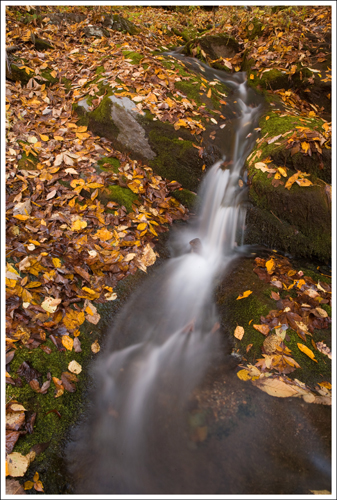
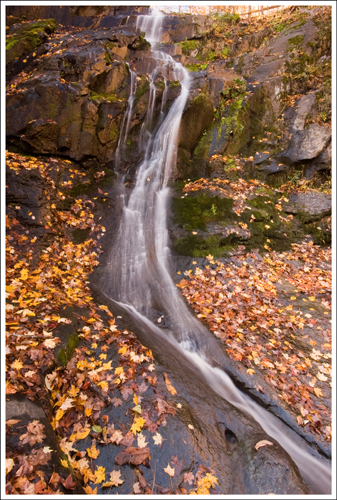
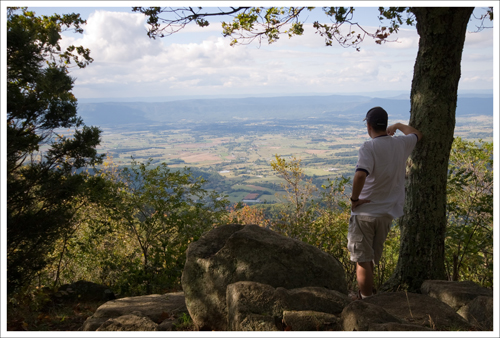
The Doyles River-Jones Run loop is a nice six-mile hike that takes you past three sizable waterfalls and a lot of beautiful stream scenery.
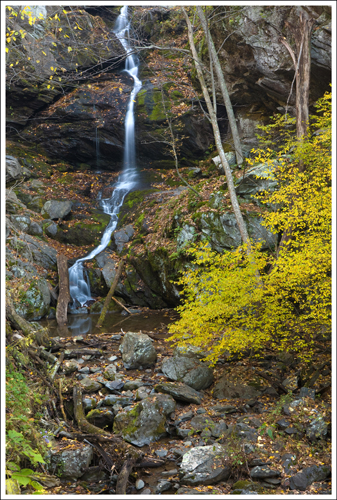
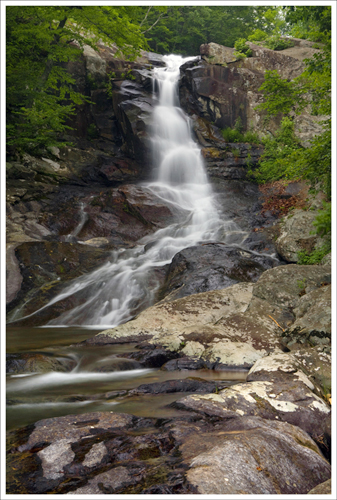
Lower Doyles River Falls didn't have much water, but was surrounded by foliage.
There are three significant waterfalls along the Doyles River – Jones Run trail.

Christine Says…

Although, the wind, rain and (yes!) snow stripped the fall color from Shenandoah rather early this year, Adam and I still wanted to get out and hike on at least one glorious, sunny autumn day.  There was still a little bit of colorful foliage hanging on in the south district of Shenandoah National Park, so we decided to hike the Doyles River- Jones Run loop on Sunday morning.
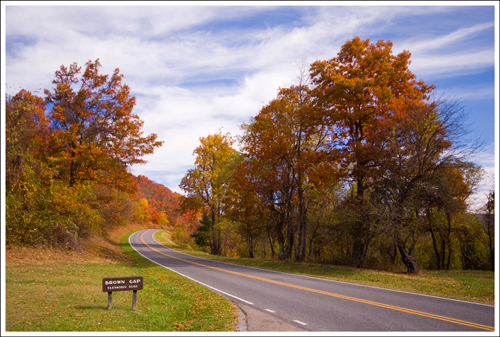
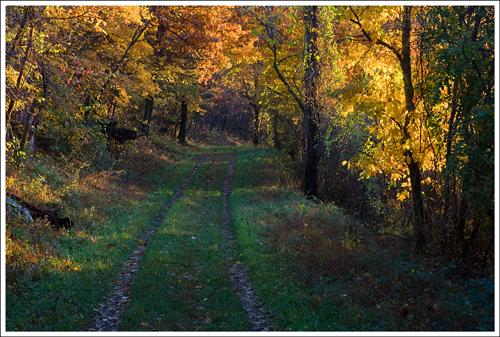
Park at the Brown Gap lot
Parking is available at Brown Gap. Pictured Below: The fire road leading down from the parking lot is one of the prettiest in the park; the Shenandoah area has tons of Civil War history. We passed the grave of confederate solder, William Howard, along the way.

We started the hike along the Brown Gap fire road. William Howard, a confederate soldier, is buried along the Brown Gap fire road.

We got to the trailhead at Brown Gap right as the sun was coming up.  It was f-f-freezing and windy.  I carelessly left my hat and gloves at home, so I flipped up the collar of my fleece and retracted my hands into my sleeves.  We set out down the Brown Gap fire road, which is one of Shenandoah’s prettier fire roads.  It’s also where I used to ride my horse, “Friday”, whenever we trailed to the park.  The morning sun was filtering through the golden leaves, and soon the activity of walking warmed me up enough that I didn’t miss my gloves at all.  The fire road was really muddy, so I took that as a good sign that there would be plenty of water flowing in the three waterfalls we’d be passing along the route.

In fact, I was so sure that the waterfalls would be impressive, that I carried all the “big guns” in my photography arsenal – two camera bodies, three lenses, a shutter remote, a collection of neutral density and polarizing filters, extra batteries, memory card and my tripod (the one that feels like it weighs close to 100 pounds when I carry it on long hikes).  I also brought my new tripod bag (by Kinesis) that allows me to carry the tripod backpack style – evenly centering the weight on my back.  The sling style carrier I’ve been using for the past few years twists my neck and shoulders, so I try not to carry it on long hikes.  The new bag was really nice, but it perfectly lined up the camera mount lock lever with my butt.   Every step I took, the lever poked me quite rudely.  I ended up giving the tripod to Adam.  He’s taller, so he escaped the constant prodding.  I ended up carrying the bag with the rest of the gear.  It was much heavier, but still more comfortable.

When we reached the bridge at the junction of the fire road and the Doyles River trail, I groaned in dismay at the dry stream before us.  We walked along the river, or at least where the river should have been for another .3 miles to get to the base of Upper Doyles River Falls.  Normally, there are pretty little cascades leading down to the main double-terraced waterfall.  This time the waterfall was barely a trickle.  We ate our breakfast at the base of “Disappointment Falls” and headed on to the lower falls.
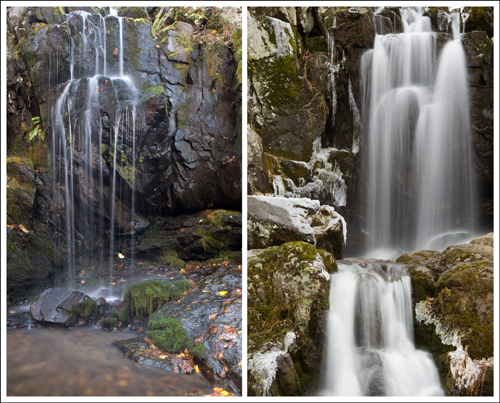
The water is Upper Doyles Falls was low - compare January 2009 to October 2009.
The photo above shows Upper Doyles Falls is October 2009 (left) compared to January 2009 (right).

Surprisingly, the lower falls were running quite a bit more than the upper falls.  I think narrower chasm through the rocks allows the second falls to hold onto more water flow.  The second falls is thin and almost chute-like.   Even though the second waterfall had more water, it still wasn’t anything spectacular.  When you’re a photographer hiking with 40+ pounds of gear and realizing the shots you had planned aren’t going to happen, the gear instantly feels twice as heavy.  I think this is the point that I started to feel like Atlas with the world resting on my shoulders.  🙂

Adam perches on a rock along lower Doyles River Falls.
Lower Doyles Falls was a bit nicer than the upper falls.

Leaving the lower falls, the trail became incredibly beautiful.  It followed a babbling brook through near-peak foliage.  The trees were a spectacular mix of gold, orange and red – all set off by the brilliant blue sky above.   This was, without a doubt, my favorite section of the trail.

So far, the hike had been relatively easy – just gentle up-and-down grades along the stream.  At the junction of the Jones Run Trail, the real work started.  In just under 2 miles, we picked up most of the elevation gain on the whole hike.  It was steep, hard climbing to reach Jones Run Falls.

The trees above displayed beautiful fall colors
The foliage along the Jones Run Trail was spectacular. Pictured Below:  Jones Run and Jones Run Falls.

Jones Run is a beautiful stream The water was low in Jones Run Falls

The waterfall on Jones Run was running low, but it was still really pretty.  From the waterfall back up to Skyline Drive, the grade of the trail moderates a bit.  It’s still a lot of uphill mixed with periods of flat terrain.  Eventually, you reach the junction with the Appalachian trail and follow it north for a little over a mile back to the Brown’s Gap parking lot.  This section of the AT follows closely to the road, so you constantly hear cars and smell exhaust.  The walk along this section is easy, but rather uneventful.

Overall, I think this was a great hike.  I’m so glad we had a chance to be outdoors on a beautiful fall day, but I wish the waterfalls had been nicer.  We’ll have to try hiking it again in the spring after heavier, more sustained rains.

Adam Says…

While we’ve hiked Doyles River a number of times, this was the first time that we had made a loop of the hike and added Jones Run.   When we have done this before, we parked at the Doyles River parking lot around mile marker 81.  We would normally hike down to both of the falls and then head back.

On this hike, we parked around mile marker 83 at the Brown Gap lot.  We crossed the road and headed down the Brown Gap fire road.  At about .4 miles, you see a short path leading up to the gravesite pictured above.  In about 1.7 miles you will reach the junction with the Doyles River Trail.  Take a right on this trail.   After about two tenths of a mile, you will reach the Upper Doyles River Falls.  There is a short spur path to lead down to the base of the falls.  Once you rejoin the trail, you will then see the Lower Doyles River Falls after a tenth of the mile.  Don’t try to blaze down off the trail to reach the falls.  The trail loops around to bring you closer to the falls.  When you reach near the base of the falls, there is a short, treacherous climb down to the base of these falls.  When you join back to the trail, continue south down the Doyles River Trail.  You will reach the Junction with the Jones Run Trail in about .6 miles from leaving the Lower Doyles River Falls.  You begin your hike up to the Jones Run Falls and will reach them about .7 miles on this trail.  After the falls, you will have a 1.2 mile hike up to the Jones Run Parking lot.  Before you enter the parking lot, there will be a junction with the Appalachian Trail.  Take a right on the AT, heading north until you reach the Brown Gap parking lot.  The AT portion is about 1.3 miles back to your car, leading you to this overall hike of 6 miles.
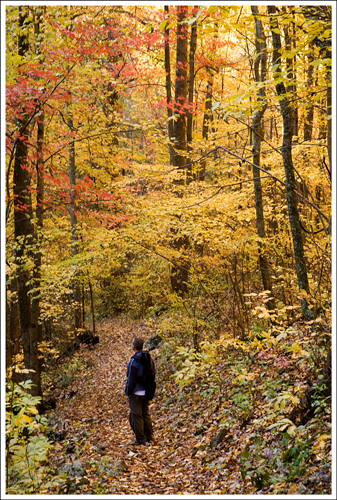
The woods on the Doyles River - Jones Run trail were gold and red.
The woods were very colorful at the lower elevations. Pictured Below: One downed tree we came across was so large that Adam could climb inside.

This fallen tree was big enough for Adam to crawl into.

The hike is not that long being only six miles, but there is a lot of elevation gain from the base of the Doyles River Trail, leading up to the Jones Run Parking lot.  Christine felt that it may be better to do this hike in reverse, but based on contours, I think either hike has a tough trip back at the end.

The waterfalls along the way on normal days are really some of the nicer waterfalls in Shenandoah National Park.   The water flow didn’t allow us to see them at their best today, but we enjoyed them nonetheless.  The Upper Doyles River Falls stands at 28 feet;  the Lower Doyles River Falls plummets 63 feet.; the Jones Run Falls plunges 42 feet.  If you’re looking for a hike to see multiple falls, this is the best one to do in Shenandoah.
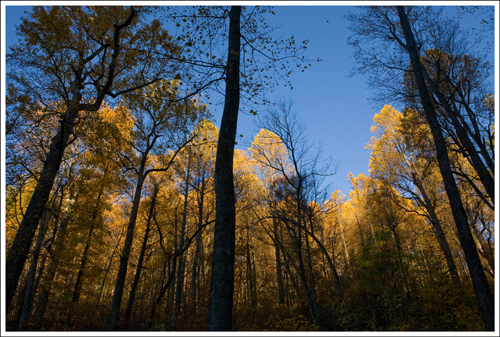
The morning light made the trees glow golden.
More golden foliage along the trail.

On our way back to the car on the AT, we ran into a woman doing the trail in the opposite way.  She had two pugs with her on the hike, named Titan and Zoot.  They were eager to greet us, since they must have known we had three pugs of our own.  They were very energetic to begin their hike to the falls, but we wondered how they fared on the steep way back.  We wish we had taken some pictures of these boys, because they looked like they were ready for a great adventure that day.

Cars waiting to get into Shenandoah National Park
There was a very long line of cars waiting to get into Shenandoah National Park

The foliage was just slightly after peak today.  We decided to exit the south entrance of the park to reward ourselves with some frozen treats from Sonic.  On our way out, we saw the longest line of cars we’ve ever witnessed trying to enter the park at the south gate.  Cars were at a stand-still all the way down to the interstate.  Three rangers were walking down the line, handing out information to make the fee stations handle things quickly.  I guess everyone felt that it would be a nice day to see color in the park and hopefully they weren’t too disappointed in the color.

Trail Notes

  • Distance – 6 miles – loop.
  • Elevation Change –1875 feet
  • Difficulty – 4. The climb up from the bottom of Jones Run is tough!
  • Trail Conditions – 3.5 The trail is well-maintained and traveled.
  • Views –0. You might get a few glimpses of vistas through the woods along the fire road.
  • Waterfalls/streams –4. The waterfalls and streams along this trail are beautiful, especially when there is plenty of rain.
  • Wildlife – 1. Just a couple deer.
  • Ease to Navigate – 4. Trails are well marked and easy to follow.
  • Solitude – 3. You will likely see several other groups of hikers along the way, but it’s not as heavily trafficked as other waterfall trails in the park.

Directions to trailhead:
From Skyline Drive, follow the drive to Brown Gap (near mile marker 83).  The parking lot is on the west side of the drive.  To begin the hike, walk across Skyline Drive and follow the Brown Gap fire road downhill.
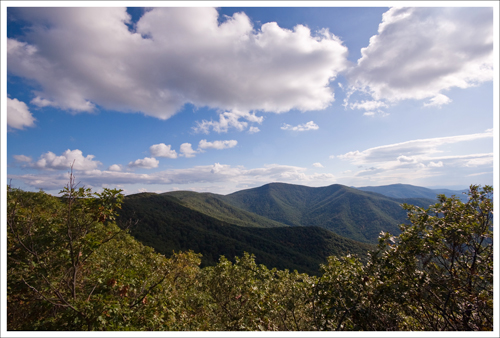
Millers Head

Millers Head is a beautiful little hike that starts out from the amphitheater at Skyland Resort.  There are three nice overlook spots along the way.

The view from a small rock outcropping before the observatory was prettier than the actual Millers Head

Christine Says…

Millers Head is a perfect leg-stretcher with wonderful scenic payoffs.  It’s also a bit of an oddity for Shenandoah hiking.   One unusual thing about this hike is that the trail is mostly downhill as you walk out to the observatory.  In Shenandoah,  it’s very uncommon to have a steady descent on hikes that offer panoramic vistas.   In fact, I can’t think of a single other “view hike” that goes downhill quite as much as Millers Head.  Another interesting fact about this trail; it’s one of only three places in the park that are authorized launch points for hang gliders.  If you’re lucky, you might get to see some gliders taking off and sailing over the valley.

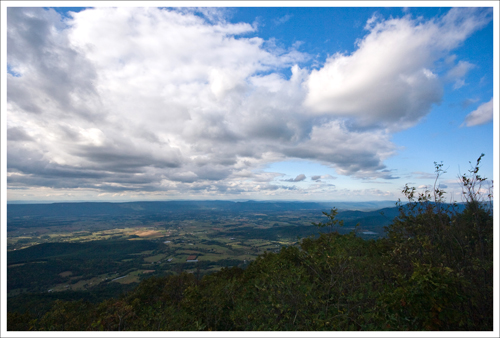
The first of the viewpoints comes atop Brushytop Mountain, just .2 miles into the hike.  There is a lovely shady spot with large boulders to sit and take in the view.   Near Brushytop, you’ll also get a nice look at Skyland Resort built into the mountainside to the east.  In the afternoon, the sun hits the lodge beautifully and Stony Man looms impressively over the resort area.

Brushytop offers a nice view of the valley.
Brushytop offers a nice view of the valley. Below: the signpost at the trailhead, view of Skyland Resort looking back from the trail

signpost skyland

I wasn’t so lucky with the lighting conditions for photography on the day we hiked.  The clouds were dark and moving quickly across the sky.  Whenever the sun came out, it was fleeting.  I missed the afternoon light on Skyland by mere moments.

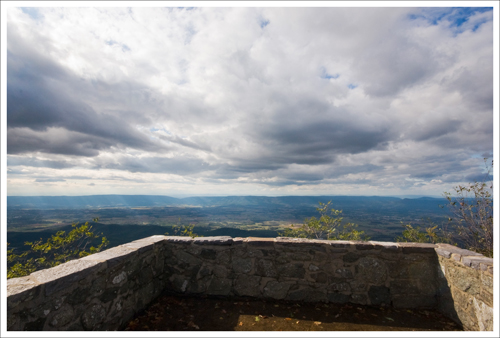
In my opinion, there are two viewpoints even nicer than Brushytop on this hike.   One is an unnamed rock ledge close to the Millers Head observatory.  It’s not marked, but you can’t miss the well worn footpath up to the rocks.  It looks back to the east.  The other is right at the end of the trail and includes a stone observatory deck built by the CCC.    The observatory is starting to crumble and the handrail is loose and rusty.  Nonetheless, the views are wonderful from this spot.    If you’re into photography, I’d recommend (unlike us) doing this hike in the morning.  I had to shoot right into the sun on this particular day, and didn’t really get any nice photos at Millers Head.

On the hike back, I was really cold!  I can’t remember ever being cold on a September hike before.  We’re having such odd weather this fall, but odd in a good way.  I love the crisp snap in the air after the heat of summer.  Without a doubt, this is my favorite time of year to hike.

Adam Says

This was a great hike that we combined with the Traces Trail in the North District to get a couple of short hikes in one afternoon.  For the shortness of the hike, you really do get some nice views.

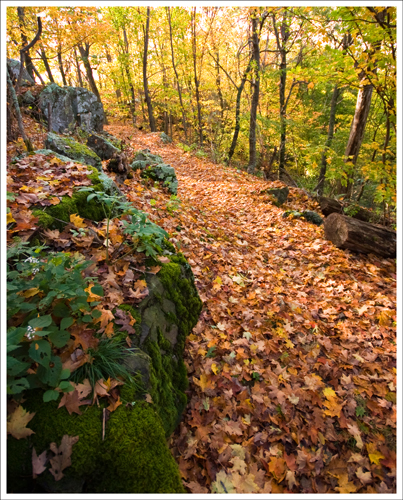
The fall leaves provided a gorgeous blanket of color on the trail.  Fall hiking is some of the prettiest hiking when you have a nice clear day for views.  However, leaves can also cover trails easily, so you have to be aware of where you are.  I don’t think anyone could get lost on this particular trail, but it is something to keep in mind while hiking.

The trail was covered with fall leaves.
The trail was covered with fall leaves. Below: A couple views from the Millers Head Observatory. The clouds were changing so quickly.

observatory view_1 observatory view_4

Once you start the hike, you will go up a short distance until you reach a building that I think was either a radio tower or weather station.  Shortly after that at .2 miles, you will come to a cement post.  Heading straight ahead for a few feet will lead you to the Brushytop overlook.  From here, you will get nice views of farmlands and small communities in the Shenandoah Valley.  Backtrack to the post and head down.  You will pass by a few boulder falls along the side.  There are a few views off to both sides of the trail along the way before you reach the observation outpost at .8 miles.  We had some overhanging clouds from the storm front that was slowly moving through, but we still were able to get gorgeous 180 degree views to the east.  We were also fortunate enough to see a peregrine falcon swoop by, reminding us of our  Hawksbill Summit Loop hike.

This is another good hike for families or with pets.  While the trip back from the observation outpost was more uphill, it was easier to do than we thought it would be.  I would recommend this hike to anyone looking for a short hike with a decent payoff for views.

Trail Notes

  • Distance – 1.6 miles out and back
  • Elevation Change –475 feet
  • Difficulty 1.5.  There are some rolling ups and downs on this trail, but overall it’s an easy walk.
  • Trail Conditions 3.  The trail is well-maintained, but rocky.  When we hiked the trail, it was covered by a lot of wet, slippery leaves.
  • Views –3.5 The view from Millers Head is beautiful.  You also get a pretty view of the valley and Skyland Resort from atop Bushytop Mountain, located .2 miles into the hike.
  • Waterfalls/streams 0. Non-existent.
  • Wildlife 0 We didn’t see anything.
  • Ease to Navigate 4.  Just stay straight on the trail.
  • Solitude2. This trail’s short length and proximity to Skyland Resort make it quite popular.

Directions to trailhead:
Follow Skyline Drive to the Skyland Resort area, between mile markers 42 and 43.  Pass the Skyland stables and continue up the road until you reach the amphitheater.  You’ll see a sign for the Millers Head Observatory next to the theater.

Traces Trail

The Traces Trail is a short, easy stroll through the woods.  Located near Mathews Arm Campground in Shenandoah National Park, this hike is perfectly suited for families with young children and novice hikers.

The Traces Trail has some hints of the area's bygone mountain people.
The Traces Trail has some hints of the area’s bygone mountain people.

Adam Says…

We decided to do a couple of short hikes on a Sunday afternoon.  Since we had just been pounded with rain the last few days, we were worried that hiking would be a little muddy, but that didn’t seem to be the case.

We had read about the Traces Trail in the North District of Shenandoah National Park in a hiking guide we had at home.  The write-up in the book seemed to make this out to be a wonderful hiking trail where you would see glimpses of life from a bygone era and hints of mountainous views.  You do get to see a few stone walls along the way and a glimpse or two of views through thick tree growth, but the overall hike doesn’t have much of a payoff.

I would recommend this hike if you just want to enjoy a nice walk through the woods, but there is not a lot to see here.

You start the hike from the eastern side of the parking lot (the post is painted with Traces Trail on it).  You’ll pass a few concrete posts that mark where the trail intersects with other trails, but just stay on the Traces Trail throughout.

One interesting thing on the trail is you will eventually come to a sign in front of a fenced-in area.  The area is being fenced to determine if white-tailed deer are damaging local flora.  The fences are high enough that deer can not jump them.  We didn’t see much difference from the fenced-in area and where we were, so it will be interesting to see if the research leads to any findings.

We didn't see much wildlife on the hike.
We didn’t see much wildlife on the hike.

Christine Says

There really aren’t too many things to say about this trail.  It was short and pleasant, but had little in the way of scenery or unique features.  On the day we walked this trail, a big storm system was just leaving the area, so the weather was cool and very breezy.  I actually remember the sound of the wind rustling in the trees more than I remember anything about the trail.  It was a beautiful day to be outdoors.

The ferns are already going to gold.

As Adam mentioned, there were some historical artifacts along the trail.  We saw crumbling stone walls, overgrown old roads and remnant apple trees mixed in with newer growth.  The cultural history of the park is interesting and still somewhat controversial.  Many people aren’t aware that Shenandoah’s land was essentially stolen from the mountain people who had lived there long before the idea for this national park was born.  The park was authorized in 1926.  From that point on, government officials systematically (and often forcefully) removed families from their land.  The mountain people were portrayed in the media as ignorant and uneducated.  Newspaper articles made it sound like the government was doing these people a favor by relocating them to settlements outside the park.  If you read the history and letters from the original park residents, you’ll see that these people were not country bumpkins who needed the government’s care.  They were mostly hardworking families who loved the land they had long called home.

Trail Notes

  • Distance – 1.7 miles loop
  • Elevation Change – Maybe a couple hundred feet
  • Difficulty 1.  Other than two short climbs near the beginning of the trail, this hike is relatively level.
  • Trail Conditions 4.  The trail is well-maintained and easy to walk.
  • Views –1. You get a few glimpses of a view through the trees, but mostly this is just a pleasant walk through the woods.
  • Waterfalls/streams 0. Non-existent.
  • Wildlife 1 A few birds and squirrels.
  • Ease to Navigate 3.  There are a few junctions along this trail, but if you keep following the markers for the Traces Trail, you can’t go wrong.
  • Solitude2. This trail’s easy terrain, short distance and location next to Mathews Arm Campground make this a popular trail, especially for families.

Directions to trailhead:
Follow Skyline Drive to the Mathews Arm Campground at mile marker 22.  Park at the amphitheater and follow the blue-blazed Traces Trail that departs from the east end of the parking lot.

Hightop Mountain

Hightop Mountain is a nice hike along the Appalachian Trail in the Southern District of Shenandoah National Park.  It features a super view and you can take a short spur trail to view an Appalachian Trail shelter.

It wasn't the prettiest day for hiking, but the view from Hightop was still impressive.  Hightop is the tallest peak in the south district of the park.
It wasn’t the prettiest day for hiking, but the view from Hightop was still impressive. Hightop is the tallest peak in the south district of the park.

Adam Says…

Wow, it’s been a while.  Sorry for the delay in posting anything new for a while, but life has just gotten in the way.  We did get to go for a week in the White Mountains of New Hampshire and our annual trip to Acadia National Park in Maine, but we haven’t hiked in Virginia for a while.  We’re just now getting back into the swing of things.  We had a limited time on Sunday to do a hike, so we decided to pick something close by and relatively short.  It was great to get back on the trails!

The hike was very nice.  The trail had a steady uphill the entire way up, but it felt very manageable.  We noticed that the trail was a little more overgrown than normal.  This year has seemed to be great for weeds growing early on in the summer.  Usually we have better views along the side of Skyline Drive and the trails, but things seem to have grown wilder this year.  I’m sure the rain and cooler summer temps have caused this.  The grass and weeds along the way tended to tickle our legs.  The hike didn’t have a lot to view along the way, but it was nice to take a side trip and view the AT cabin and log.  Around 1.2 miles, you will reach the intersection with the Smith Roach Gap Fire Road.  Just cross the road to continue on the AT.  You can reach the AT cabin by taking the spur trail shortly after the intersection with the Smith Roach Gap Fire Road.  I always enjoy reading through the logs of those that have passed through.  In this logbook there was some entries about people bringing the thru-hikers food, some card game scores, and a tale about how a bunch of them danced naked in the evening.

The views at the top really do show you a lot of mountains to the south and you can get nice glimpses of Skyline Drive.  On a nice fall day, this could be a great photo opportunity when the leaves change color.

On the way back after .6 miles, you can take the option of taking the Smith Roach Gap Fire Road back to your car by taking a left, but the fire road looked very overgrown, so we opted to just go back the way we came.

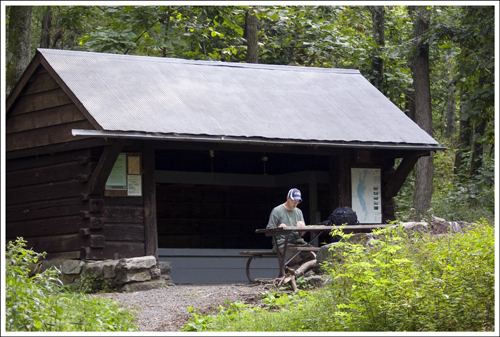
Hightop Hut
Hightop Hut offers a nice rest stop for weary hikers and backpackers. Below: The hut has a trail journal.  They are always a lot of fun to read.

Journal

Christine Says…

It was so great to get back out on the trail again!  I loved lacing my boots up, feeling the trail crunching under my soles and hearing the sounds of late summer bees buzzing lazily through the wild flowers.  I’ve been out of the woods for far too long.

The hike up Hightop is one we’ve done several times now, but we’ve always approached the summit as an out-and-back from the northern end of the trail.  It’s shorter and steeper, but gets you to the same viewpoint.  I actually enjoyed this southern approach quite a bit more.  The grade was very gentle and gradual.  This route also gave us the opportunity to visit the Hightop Hut.  I always like to stop by the AT shelters and read the trail journals.

This cute little toad was one of the few wildlife specimens we saw along our walk.

The view from the summit of Hightop was beautiful.  The sky may have been cloudy, but we could still see ten layers of mountain ridges fading into the distant southwest.  We also got a nice view of our “home” mountain – Massanutten.

After the hike, Adam and I started casually tossing around the idea of doing a long backpacking trip next summer.  We might try to hike the 101 miles of the Appalachian Trail through Shenandoah National Park sometime next spring.  The more we talk about it, the less casual the idea seems.  We’ll see…

Trail Notes

  • Distance – 3.8 miles out-and-back which includes an optional .2 mile trip to an AT shelter
  • Elevation Change 967 feet
  • Difficulty 2.  While it is a steady uphill the way up, it’s not too steep of a grade.
  • Trail Conditions 4.  The trail is well-traveled and well-maintained.
  • Views –3. At the summit, you do have a chance to get some nice views of Skyline Drive and beyond.  We counted a series of 10 ridges of depth at the top.
  • Waterfalls/streams 0. Non-existent.
  • Wildlife .5 Other than a toad, we only saw one doe.  There also didn’t appear to be a lot of birds on this trail.
  • Ease to Navigate 4.  Just stay straight on the trail.
  • Solitude3.5 This trail doesn’t see a lot of traffic, but would be busier during the AT thru-hiking in the summer.

Directions to trailhead:
Park on the east side of Skyline Drive at Smith Roach Gap (around mile marker 68.5).  At the end of the parking lot, go on the fire road.  The trail takes off about 10 yards on the left.

Lewis Spring Falls

Lewis Spring Falls is a hike leading to the fourth tallest waterfall in the park.  It starts out from the Big Meadows amphitheater.

This nice view of the layered mountains comes near the end of the hike. This view is much more impressive than the waterfall this trail is named for.

Adam Says…

In my opinion, Lewis Spring Falls is decent for a waterfall hike.  If you are visiting Shenandoah National Park, I would recommend Dark Hollow Falls, Rose River Falls, South River Falls, Doyles River or White Oak Canyon before this one.

We started this trail from the amphitheater at Big Meadows.  You can also take off from the Big Meadows Campground, adding an extra .8 miles to your trip, but we feel this is the best way to see what is necessary. From the parking lot, you’ll go down a very short spur to connect with the Appalachian Trail.  After a short distance, there is a cement post to let you know to leave the AT and proceed on the trail to the right for the Lewis Spring Falls.

The Barred Owl
The Barred Owl

Shortly after we started the Lewis Spring Falls trail, we had a great barred owl viewing.  We heard a bunch of birds causing quite a racket.  We stopped to try to identify the birds, when I spotted the barred owl on the tree.  There were at least six chickadees that were dive-bombing the owl.  Our guess is that they were trying to protect chicks nearby.  As the owl looked in one direction, the chickadees took turns diving down to snip on the owl’s back.  It reminded me of the old elementary school trick, when you would tap on someone’s shoulder to make them look behind their shoulder when nobody was there.  We got to watch this interaction for several minutes before the owl finally flew away to a different tree, giving the chickadees a moment of victory.  However, the owl may ultimately win the war when the sun sets.

The trail down to the falls is quite rocky.  While it is well-traveled, the trail is very steep downhill.  This will make you constantly have to watch where you are placing your feet, as rocks and gravel are very loose.  Once you have traveled 1.2 miles, you will come to a post showing that the viewpoint is shortly ahead.  This post also includes the junction of the trail for your return loop.  You will cross a stream but there are tons of rocks in the trail to make this an easy crossing.
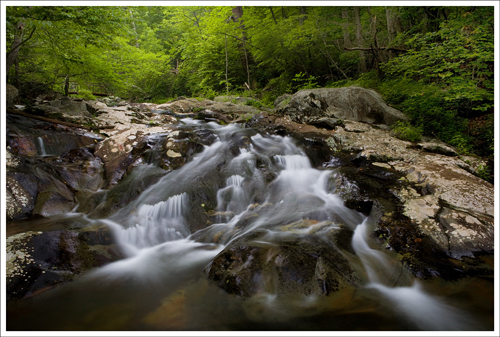
On your return trip from the viewpoint, shortly after crossing the stream, you will take the spur trail to the right that connects to the Appalachian Trail.  This is a constant uphill through more rocky terrain for .7 miles.  You will come to a gravel road and a cement post showing that the AT trail junction is up ahead 70 yards.  Take the AT to the left (north) to get back to the parking lot.  The AT is definitely easier to walk, but the trail stays uphill at a slightly lesser grade.  You will eventually come up behind the Big Meadows Lodge.  There is a nice viewpoint to the west from a rocky overlook, which may give you a nice place to view a sunset and still be close to the parking lot.

Along with the owl, lots of birds and several deer - we saw lots of chipmunks along the way.
Along with the owl, lots of birds and several deer – we saw lots of chipmunks along the way.

One side note is that before you reach the Lodge, there is a side trail to Blackrock, another popular trail to view a sunset.  This has been closed until further notice due to Peregrine Falcons nesting.

Christine Says…

I told Adam I was going to write a one word entry for this hike and that word was going to be “lame”!  Maybe I was in a crabby mood on this particular evening, but I still think there are so many nicer waterfall hikes in the park.  We hadn’t hiked to Lewis Spring Falls in three or four years.  I had remembered the falls being substantially more impressive than what we encountered on this particular night.  Even with all the wet weather we’ve had this spring/summer, the waterfall was down to a trickle.  When we got to the viewing point, I told Adam that the faucet in our bathtub has a more impressive flow.  My other problem was the light.  Even in late evening, the sun was still high enough in the western sky to put the waterfall in direct sunlight – so, alas – no nice photos of the falls.

Lewis Spring Falls
Lewis Spring Falls

The terrain on the trail down to the falls is tough going – steep, scrabbly rocks that force you to look down and pay attention to every step you take.  I always prefer to hike places where I can look around and enjoy the trail-side scenery instead of constantly following every move of my hiking boots.

We only saw one other pair of hikers along the trail – a couple guys trying to find their way down to the base of the falls. Another drawback to the Lewis Spring Falls is the fact that there is no good, safe way to reach the base of the falls.  Our hiking book advises explicitly not to attempt to climb down – there is no trail and there have actually been fatalities at this waterfall. I do know a few people who have climbed to the bottom, none of them said it was worthwhile. We watched the two guys make a couple unsuccessful attempts to descend before they eventually gave up.

The hike back up is on the long arm of the loop, so it’s a long, steady uphill back to the amphitheater.  By the time we got back, I was pretty tired and hungry.  I’m definitely a morning person through and through.  Evening hikes, even the short and easy ones,  really have a tendency to kick my butt.  If I was pressed to share my favorite thing about this hike, it would have to be the owl sighting.  That was pretty cool.

Trail Notes

  • Distance – 3.0 mile loop trail (longer options are also possible depending on how you connect to the trail)
  • Elevation Change – 990 feet.
  • Difficulty 3.  The route we hiked was moderate.
  • Trail Conditions 2.  The AT section is nice footing, but the trail down to the falls and back up is quite treacherous.
  • Views –2. There are views from the overlook near the falls, but the nicest mountain views are near the end of the hike.
  • Waterfalls/streams 3. Decent waterfall views, but because you can’t get to the bottom easily, you can only appreciate it from afar.
  • Wildlife 3. We have heard a bear on this trail before.  We saw a barred owl and several deer near the Big Meadows area.
  • Ease to Navigate 4.  The trail is easy to follow and marked with blue blazes.
  • Solitude2. You’re likely to see some people here since the close proximity to Big Meadows.

Directions to trailhead:

Follow Skyline Drive to the Big Meadows Area near mile 51.2.  Follow the signs to the amphitheater.  At the parking lot near the amphitheater, you will see the post marking the trailhead.

White Oak Canyon

White Oak Canyon is one of Shenandoah’s most popular waterfall hikes.  The trail begins directly across Skyline Drive from Skyland Resort.

Upper Falls of White Oak Canyon
The upper falls of White Oak Canyon plunge 86 feet to a pool below.

Christine Says…

Adam and I set out early on Saturday morning to hike the White Oak Canyon trail.  Our primary goal was to avoid the holiday crowds, so we were quite pleased to arrive at 7:30 and find just one other car in the parking lot.

The park is always quiet and beautiful in the early morning.

The morning was almost chilly – sunny, no humidity and a crisp breeze blowing.  It felt more like mid-May than the Fourth of July.  I don’t know about you, but I always associate the 4th with sultry, hazy, buggy weather.  Since I’m not a fan of typical Virginia summer weather, I thought the conditions were perfect for our hike.  The only thing I wasn’t thrilled about was the bright sun shining up above in the sky.  Sunny weather is great for hiking and enjoying the outdoors, but it complicates opportunities for waterfall and forest photography.  The strong overhead light makes it nearly impossible to properly expose images.  I was kind of bummed about that, but decided I was just going to enjoy the hike and not worry about getting good photos.

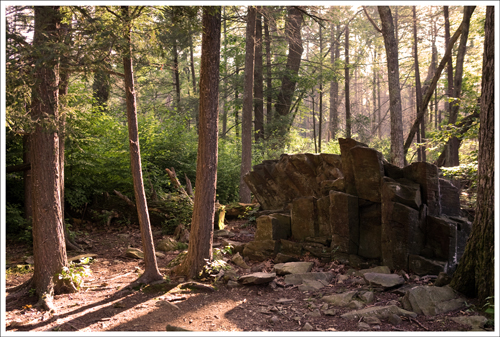
This rock formation sits at the junction of the Limberlost and the White Oak Canyon trail.
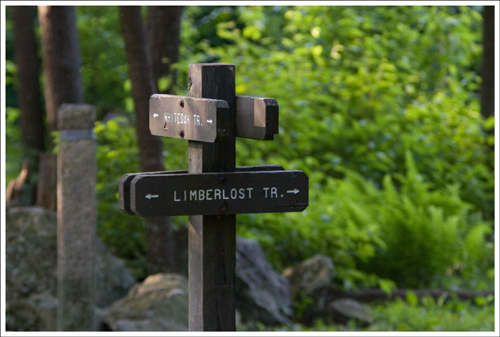
This rock formation sits at the junction of the Limberlost and the White Oak Canyon trail. Pictured below: the trail junction.

The trail makes its way down from the parking lot, crossing the Limberlost Trail twice.  After leaving the remains of the hemlock forest around Limberlost, the trail quickly descends into White Oak Canyon.  Ship-sized boulders start coming into view as you approach the stream.  The stream starts off as a trickle, but quickly picks up energy as little rivulets of run-off join the flow.  There are many small falls along the stream.  In places, the sheer canyon walls soar upward from the water.  The canyon is a rugged and wild place.

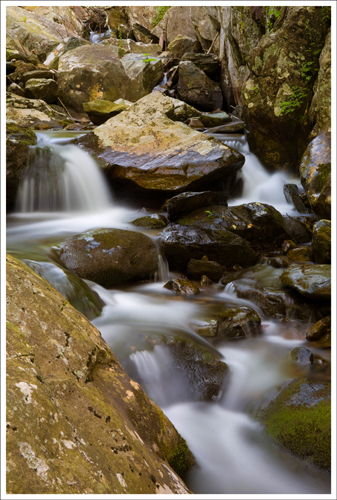
A pool along the White Oak Canyon stream.
A pool along the White Oak Canyon stream. Pictured below:  the stream passes through a narrow, rocky slot.

As you approach the upper falls, the sound of running water becomes increasingly audible in the woods.  There are two footbridges to cross before you come to the viewpoint of the upper falls.  This view is beautiful, but with a little extra effort you can reach the base of the waterfall and have an even nicer view.  On warm days, the pool at the base of the falls is a popular swimming spot.

A footbridge across the stream.

Luckily, the weather decided to throw a favor my way.  Just as we reached the falls, a large band of clouds passed over the area.  It literally went from crystal clear blue skies to thick overcast in the span of five minutes.  I was able to photograph several spots along the waterfall before the clouds blew out as quickly as they appeared.  I even got knee-deep in the water at one spot to get the composition I wanted.  It was so slimy and slippery, so I used my tripod as a crutch.  I saw lots of brook trout darting in the pool.  They’re so pretty and colorful.  They almost look like autumn leaves swimming in the water.

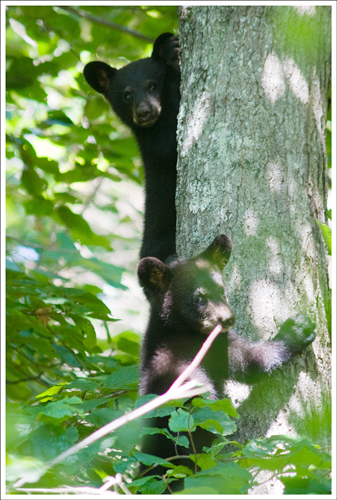
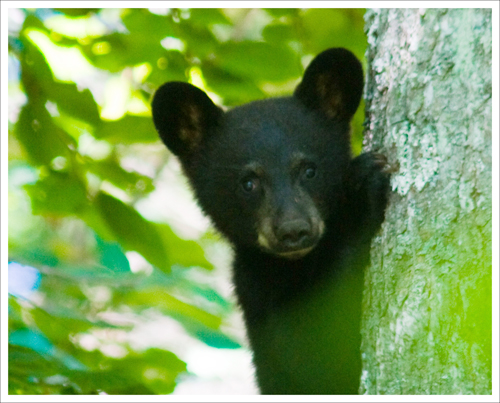
Cubs on the White Oak Canyon Trail.
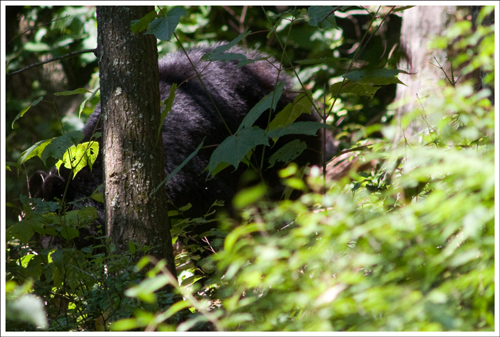
Cubs on the White Oak Canyon Trail. Pictured below: another shot of one cub and a view of momma bear’s back.

cub_2

On the hike back, I stopped to take a water break.  As I was sitting on a trail-side rock, I noticed a glossy, black shape moving quietly through the woods about 50 feet uphill from the trail.  I mouthed “BEAR!” to Adam.   A moment later, the sow and her two young cubs came into clear view.  We sat and watched the family for about ten minutes.  The momma bear moved parallel to the trail, turning over rocks looking for food.  The cubs bounced along behind her.  When they finally noticed us watching them, the cubs darted up a tree and watched us curiously.  Momma bear glanced up a few times, but mostly continued feeding along the way.  She soon ambled uphill and away from the trail.  With just a quick look over her shoulder, she called the cubs to her.  The cubs slid down the tree and scampered off into the woods with their mother.  Seeing the bears was the highlight of the hike.

As we continued our return trip, we passed dozens of hikers.  When we got back up to the Limberlost, there was even a church group hiking with 40+ members, lawn chairs, musical instruments.  I’m so glad we hiked the trail early and were able to enjoy the solitude.  You really can’t beat having a gorgeous waterfall and a great bear sighting all to yourselves!

Adam Says…

The White Oak Canyon trail is a great hike if you’re into streams and waterfalls.  This hike and Dark Hollow Falls are probably the two most popular trails in all of Shenandoah National Park.  Since this trail is so close to Skyland, it appeals to a lot of people.  There is a reason why the parking lot for this trail is so large.  This was the first time that we had hiked this trail from Skyline Drive.  Typically, we have visited the lower section of falls and approached the hike from State Road 600 near Syria, VA and Graves Mountain.  Going from the lower falls to the upper falls is quite steep, so if you want an easier day hike, I would recommend doing either the hike to the upper falls or the hike to the lower falls (instead of the full 8.2 mile loop).

Upper Falls of White Oak Canyon

Taking off from the parking lot on Skyline Drive, the trail is very well-traveled and smooth until you start seeing the water to your side.  At .3 miles, you will cross the Limberlost Trail which you could add to your trip if you desire.  The trail then presents more rocky conditions and you do have to watch your feet.  As you hike along the water, you will see several spots to pause and admire the rushing water.  At 2.2 miles, you will reach the top of the Upper Falls.  There is a horse trail that cuts the trail perpendicularly and you will notice the hitch posts for horses on the trail.  The water looks very peaceful here, but it soon rushes down into a deep chasm.

Scenery near the top of the first falls.

The viewpoint at 2.4 miles has some great views of the falls from above and the canyon cutting through the forest below.  You will also see some dead hemlocks standing along the gorge.  I can just imagine how magnificent this would have looked with the hemlocks still there.  From the viewpoint, continue on the trail for another .3 miles.  This is a sharp descent, but it will lead to the view from the base of the falls.  You will come to a cement post which lets you know you are .2 miles from the next set of falls.  This is also the marker that states you’ve reached the base of the falls.  I think the park has abandoned an official trail to the pool at the bottom of the Upper Falls, but if you make your way along the rocks heading north from the cement marker, you will shortly come to a “No Camping” sign.  Continue a little further and you will be able to see the impressive falls from the base, which includes the pool where the waterfall plunges.  This is definitely worth taking the time to view.

The pool at the base of the falls is a perfect swimming hole.

We headed back from this point, since the other falls are not quite as impressive.  This made for about a 5.4 mile hike.  I have a feeling that a lot of people continue to do the whole hike without planning ahead.  There is even a sign at the base of the Upper Falls warning hikers not to overestimate their hiking skills.  Once you pass the upper falls, the continuation of the hike down is quite steep.  The phrase in hiking, “What goes down, must come up” definitely applies here.  The hike back up would be a steady uphill climb that would likely exhaust people who haven’t planned appropriately.

We both enjoyed seeing the momma bear and two cubs frolicking near the trail.  We were able to show/warn two other hikers about the bears presence.   I could tell they really enjoyed the viewing, too.  The bear wisely moved away from the trail, probably sensing that many more hikers were headed in her direction.

Trail Notes

  • Distance – Anywhere from 4.6 to 8.2 miles (we hiked about 5.4 miles)
  • Elevation Change – Around 1200 feet. (2450 if you do the entire 8.2 miles)
  • Difficulty 3.  The route we hiked was moderate.
  • Trail Conditions 4.  The trail is well-traveled and well-maintained.
  • Views –0. No views – the entire hike is down in the woods.
  • Waterfalls/streams 4. One of the park’s nicest waterfall hikes.  If you do the shorter out-and-back, you’ll see one large waterfall and many smaller ones.  If you hike the full loop, there are six waterfalls.
  • Wildlife 4. We saw a bear with her cubs, lots of chipmunks and a rabbit.
  • Ease to Navigate 4.  The trail is easy to follow and marked with blue blazes.
  • Solitude0. Unless you hike this trail very early in the morning, expect to see substantial crowds. It’s one of the most popular hikes in the park.

Directions to trailhead:

Follow Skyline Drive to the Skyland Resort area.  The parking lot for White Oak Canyon is on the east side of the drive between mile markers 42 and 43.  It’s almost directly across the drive from the south entrance to Skyland.

Turk Mountain

Turk Mountain is a 2.2 mile hike of moderate difficulty.  The trail is located at the far southern end of the park, and is less-traveled than many of the park’s other hikes.

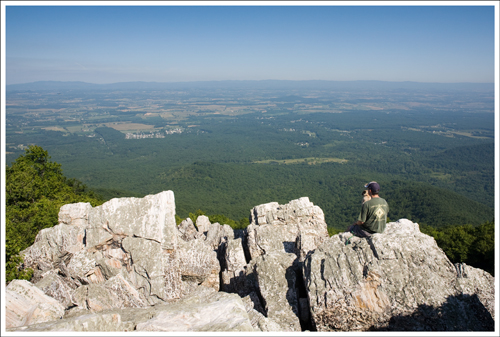
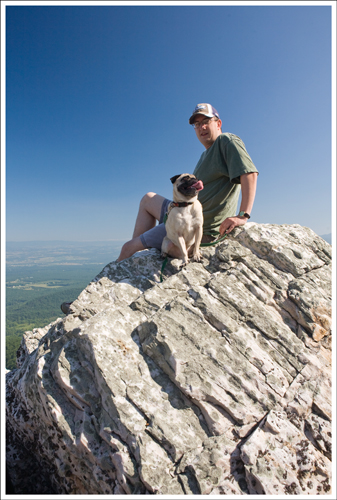
Wookie and Adam enjoy the summit of Turk Mountain.

Adam Says…

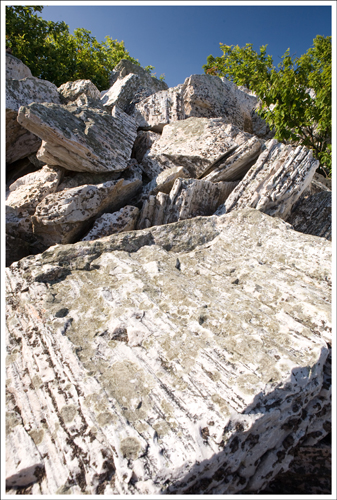
We weren’t feeling terribly energetic on Saturday, so we decided to do a short hike in the southern district of Shenandoah National Park.  Since it was cool, we even got to bring our pug, Wookie, along.  The Turk Mountain trail is only 2.2 miles long, but it seems a bit longer due to the uphill portion.  When you start, you will be on the Appalachian Trail for .2 miles. Then you will split off to join the Turk Mountain trail (marked by blue blazes).  The last half of a mile is all uphill.  During the climb, the side of the mountain blocks all breezes. We recommend hiking this on a cooler day with low humidity.  Most of the times we have hiked this trail, it has been hot and humid, and when the breeze is blocked it feels stifling.  There are some views to the east at about .9 miles into your hike at the last switchback, but the views are much better ahead.  When you reach the summit, the breeze will instantly greet you again.  Continue just past the marker to climb onto the summit rocks.  You will get some great views of a large talus slope and the valley below to the west.
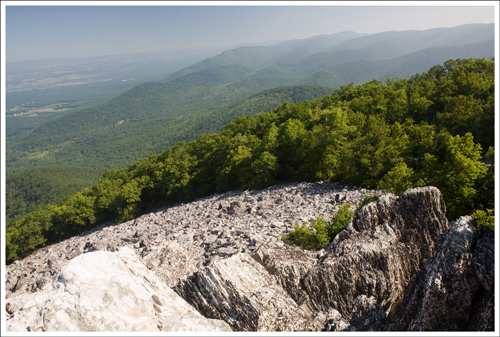
The talus slope below the summit is expansive and impressive.

This is a fun hike that a lot of people try due to the shortness in distance and close proximity to the southern entrance to Shenandoah National Park.

Christine Says…

As we entered the park on Saturday morning, I was telling Adam that I don’t feel like we see as much wildlife in the southern district as we do elsewhere in the park.  Wouldn’t you know, as soon as the words finished coming out of my mouth, we passed a huge bear sitting right on the side of the road.  I like to think he was serving as the park’s official greeter that day.  A little later we passed a doe and fawn and a turkey with her brood of babies.  What are baby turkeys called  – turklings? turklets?

Baby Turkey? Turkling? Turklet?

I digress… and now onto the hike!  Turk Mountain is a fun, short hike that we’ve done several times in the past year.  It’s a hike I choose a lot when I want an excuse to go to Sonic (this hike is near the Waynesboro park entrance.  That town is home to our area’s only Sonic).  I just love their coconut creme pie milkshakes.  🙂

Wow, I digress again.  We had beautiful weather for this trip along the Turk Mountain trail.  For the first half of the hike, we enjoyed cool, pleasant, breezy weather. The conditions were ideal for hiking, and I started wondering if we’d made a mistake in not selecting a longer hike.  By the time we passed through the saddle and started our uphill climb, I was glad we’d decided to keep things short.  The uphill portion of Turk Mountain isn’t terribly steep, I think I was just a bit tired from my busy week.

Indian Pipes along the trail.
Indian Pipes along the trail.  Pictured below:  Butterflies and other wildflowers were also seen along the trail.

When we arrived at the summit of Turk Mountain, we had the entire rocky jumble all to ourselves.  We climbed around on the rocks and enjoyed the crisp, gentle wind. The rocks at the summit of Turk Mountain are somewhat different looking than other rocks in the park.  I don’t know much about geology, but the color seems to have more pink and gray undertones than other summits.  Because this summit receives less foot-traffic than other SNP hikes, the rocks are in better shape – still covered with lichen and other plants.  When you visit more popular summits like Old Rag or Stony Man, be sure to notice barren the rocks are.

The rocks on the Turk Mountain summit are different.

Wookie was so cute climbing around like a tiny mountain goat.  I’m always amazed by how confident and agile he is on rock scrambles.  The view from the top was a bit hazy, so I didn’t get any great photos.  But it was still a fun hike and a very pleasant morning in the park.

wookieWookie Says…

It’s been a while since I’ve gotten to accompany my masters on a hike.  The last hike I did with them was the Dry Run Falls hike and I got a lot of ticks that day.  Since the temperature was cool for late June, I was allowed to come along.  This hike had a few things that I like – scrambling over rocks and views.  I’m really good at climbing over rocks, so I was able to do this pretty well.  I wouldn’t recommend all dogs to attempt this hike, since you really have to watch your paws or you could hurt yourself.  Adam had to carry me over a few precarious rocks because I have short legs.  However, I was able to confidently go back quicker than he could.  On the way back down from the summit, I ran across a couple hiking up.  For some reason, the woman cowered behind her husband and didn’t want to be near me.  I tried to sniff her leg and she jerked it back quickly.  I guess she thought I was really scary or vicious.  Or maybe she was intimidated by my colorful Aztec-pattern collar.  The bonus for the day is that I didn’t get any ticks on me.

Trail Notes

  • Distance –2.2 miles out-and-back
  • Elevation Change – 690 feet
  • Difficulty 3.  This hike has some nice flat parts to it, but the elevation change is over a short distance, making this a strong uphill for a portion.
  • Trail Conditions 3.  Some of the trail is very smooth, but other parts are covered by sharp, pointy rocks.
  • Views –3. There are some nice views from the top, but there are better hikes with more expansive views.  The talus slope makes for some interesting scenery to add to the view.
  • Waterfalls/streams 0. Non-existent.
  • Wildlife 1. You likely won’t see a lot here due to the steepness of the trail.  The summit does provide for nice hawk and bird viewing.

  • Ease to Navigate 4.  Just one turn from the AT on to the Turk Mountain Trail.
  • Solitude3. There aren’t as many visitors to the southern section as other areas of SNP, but it is fairly popular.  The summit rocks don’t lead to a lot of room to get views, so you may be sharing the beauty with others during mid-day hikes.

Directions to trailhead:

Follow Skyline Drive to mile 94.1.  Park at the Turk Gap parking lot.  Cross the drive and pick up the trail.

Mary’s Rock

This hike to Mary’s Rock starts from Jewell Hollow.  The route follows the Appalachian Trail for roughly three miles to Mary’s Rock.  After spending some time enjoying the views, simply retrace your steps back to Jewell Hollow for a total hike of roughly six miles.  There are other ways to reach the summit, but in our opinion, this route offers the best scenery and the most pleasant trail conditions.

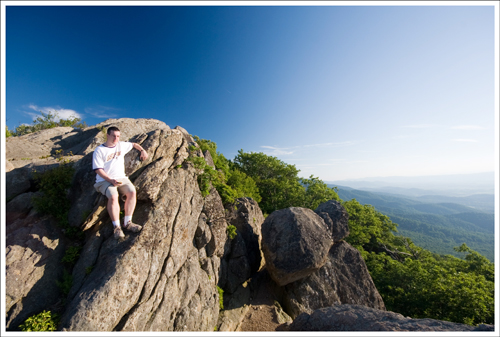
Adam enjoys the view from Mary's Rock.
Adam enjoys the view from Mary’s Rock. Below: Check out this photo from one of our website visitors, Martine Zimmer.  She spotted a rock on the Mary’s Rock summit that looked like a bear!  It really does!

Adam Says…

Mary’s Rock is a great view hike on the Appalachian Trail.  There are many theories on how the summit got its name, but my favorite one is that Francis Thornton’s daughter Mary climbed up to the rock and came back down carrying a bear cub under each arm.   Francis Thornton III owned a lot of land to the east of the Blue Ridge Mountains and Thornton Gap is named for him.

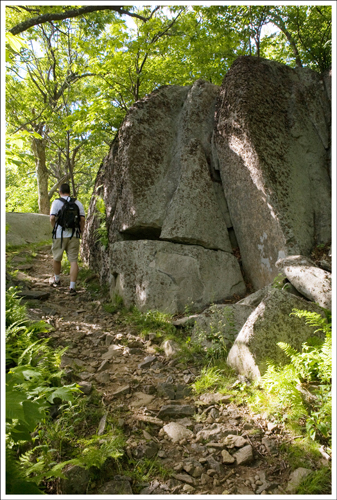
The trail is rocky and passes many large boulders.

We have hiked to Mary’s Rock numerous times in the traditional way, from the trailhead at Panorama, but the trail from Jewell Hollow is not one to be missed.  In my opinion, this is definitely one of the best hikes to do in the park for scenery.  In the fall, you will be able to see great colorful views looking into the western valley below.

The trail is probably roughest during the first .75 miles, but then the rocks tend to give way to easier footing.  There are great places to take in the views at .85 miles at the Pinnacle and at another overlook at 2.0 miles.  You will also pass a AT hiker hut (Byrd’s Nest #3) about halfway through the trip.

The columbine is starting to bloom all over the park. We saw tons of it along the trail.

Despite the fact that we had to rush to make it back to the car by sunset, we really enjoyed this trail.  We saw a bear on the trail going up and probably the same one again coming back.   On the way back, I was probably only 75 feet away when the bear crossed our path, but he quickly took off as soon as he realized we were nearby.  We also encountered two large bucks on the trail, too.  When we saw the first one, we were coming downhill and it appeared that the buck wanted to stand his ground and approach us.  So, we yelled at him and shooed him back into the forest.

The Byrd's Nest #3 Shelter is a popular camping spot for backpackers.
The Byrd’s Nest #3 Shelter is a popular camping spot for backpackers.  The shelter was day-use only until 2008.  It has since been remodeled for overnighters.

There is a geocache at the top of Mary’s Rock requiring you to identify dates on the USGS markers.  You will have to climb up on the steep rocks to find them, but if you feel comfortable scrambling on rocks, this isn’t too tough.

Christine Says…

What can I say… we didn’t do a very good job using the distance scale on our map for this hike! I would have sworn that our PATC map made the hike look like 3.5 – 4 miles total, rather than the 6 miles it actually turned out to be. Normally, that wouldn’t be a big deal, but we didn’t start walking until 5:45 p.m.

This was the first time we’ve accessed Mary’s Rock via the Appalachian Trail. In the past, we’ve always gone by-the-book, and followed the designated Mary’s Rock trail. That trail begins at the Panorama parking lot, and makes its way up the mountain via a series of switchbacks. The Mary’s Rock trail is fine, but it’s really quite boring in way of scenery and views. The hike we did along the AT is longer, but it’s also flatter and tremendously more scenic.

The Pinnacle offers spectacular views.

The trail we hiked primarily follows the ridgeline, making one dip down through a saddle between the mountains. The trail is lined with ferns, mountain laurels and rhododendrons. There are many truck-sized boulders along the trail. They kind of look like graveyard headstones for giants. At the .85 mile mark, hikers are treated to an absolutely spectacular view from the Pinnacles, which is the highest point in Rappahannock County. The craggy, boulder-strewn mountains sweep down into the valley, hawks soar below and you get a nice look at Mary’s Rock way off in the distance. As I was enjoying the Pinnacles view, I said to Adam “You know… Mary’s Rock still looks pretty far off. Are you sure we got the distance right? We’re not going to be hiking back in the dark, are we?” He responded “Nah, we’re fine! You need to trust my map reading skills.”

A while later, we passed the Byrd’s Nest #3 Shelter, which was close to the halfway point of the walk up to Mary’s Rock. Time was passing quickly, and I was getting the distinct feeling that the hike was longer than the mileage we estimated. I started to get a bit squirrely at this point. We didn’t have headlamps or a flashlight, and I seriously did not want to get stuck out on the trail after sun down. A lot of the trail’s footing is made up of loose rocky terrain that twists its way through dense mountain laurel thickets. Also, there was a bear lurking in the area – we had heard him crashing through the woods and seen his rounded ears peeking up through the brush.

A back view of Mary's Rock.
A back view of Mary’s Rock.

After passing the shelter, we started almost jogging the trail to make sure we’d have ample daylight for the return trip. We got to the summit around 7:20, just a little over an hour before sunset. Mary’s Rock is an impressive rock outcropping that overlooks both the Shenandoah Valley and a little bit of the eastern Piedmont. In the late afternoon, the light is so warm and lovely on the rock. We enjoyed the vista for a couple minutes, and then promptly began our return trip. Along the way back, we crossed paths with about a half dozen thru-hikers. Many of them were setting up camp at the Byrd’s Nest shelter. We hiked the entire return trip very quickly, and made it back to our car just about ten minutes before the sun set.  As we stepped off the trail onto Skyline Drive, I noticed a bear with cubs in the woods on the other side of the road.  It was nice to see the bear family as a grand finale for our hike.

We saw this adorable cub and his mother right as we finished the hike.

Under normal, non-rushed circumstances, I’d have to say this is one of the prettiest and most pleasant hikes I’ve ever done in the park. I’d love to go back and re-hike it in the fall. I think the views along the way would offer some amazing places to photograph the fall foliage. And from now on, we’re not hiking anything over three miles in the evening.

Trail Notes

  • Distance – 6 miles total,  out-and-back
    (Check out the stats from MapMyHike)*
  • Elevation Change – About 800 ft.
  • Difficulty – 2. Nice and mostly level, with only a few very moderate climbs.
  • Trail Conditions – 3. There are some loose and pointy rocks along several sections of the trail.  If you don’t pay attention, this trail can be an ankle-turner.  But overall the trail is smooth and well-maintained.
  • Views – 4. On a clear day – the views are amazing!
  • Waterfalls/streams – 0. Non-existent
  • Wildlife – 5. Bears, bucks, chipmunks, rabbits, squirrels and many species of birds.  It was a great trail to see animals.
  • Ease to Navigate – 4. After a very brief walk on the Leading Ridge trail, you follow the AT all the way up to Mary’s Rock.  You will not see signs for Mary’s Rock until the cement marker post at the Meadow Springs trail junction.
  • Solitude – 3. You probably won’t see many hikers between Jewell Hollow and the Meadow Springs Trail junction (with the exception of AT hikers in June).  However, the officially designated Mary’s Rock is very popular.  It is likely you will see many people in the last mile before reaching Mary’s Rock.

Directions to trailhead: The trail is located on Skyline Drive at mile marker 37.  Park at the Jewell Hollow Overlook.  Walk 50 yards north on Skyline Drive.  You’ll see a cement marker for the Leading Ridge trail on the west side of the drive.  Follow the Leading Ridge trail for .1 of a mile to a junction with the AT.  Turn right and proceed from there.

* MapMyHike is not necessarily accurate, as the GPS signal fades in and out – but it still provides some fun and interesting information.

Stony Man and Little Stony Man

This hike is an easy, 2.9 mile walk along (mostly) the Appalachian Trail to the summit of Shenandoah’s second highest peak. The two main vantage points along the way provide nice views of Skyline Drive and Skyland Resort below.

Little Stony Man Cliffs

Christine Says…

We chose this hike for a quick evening trip to the park. Before I get started on the trail description, let me share what an amazing night we had for wildlife watching. We saw eleven bears (four of them were young cubs), a couple pairs of twin fawns, many large bucks and a beautiful barred owl. No matter how many times we visit Shenandoah, the park always has something new to offer in form of scenery or wildlife.

Now, onto the hike! We started out at the Little Stony Man Cliffs parking area, a few miles north of Skyland Resort. The route is all uphill with 750 feet of elevation gain. For that bit of climbing, you get to enjoy the views from Little Stony Man Cliffs, which (in my opinion) are far prettier than the Stony Man summit. I love the way Skyline Drive looks winding through the woods from the cliffs’ vantage point. In autumn, the afternoon light sets the foliage ablaze at this spot. If the sky is clear, you get a beautiful view of the Page Valley. The lake you see down on the valley floor is Lake Arrowhead. We had a lot of haze on our trip, which was no surprise – thick, milky skies are the norm during Virginia summers. Until this week, we had been lucky and had been enjoying unseasonably clear skies (on the days it wasn’t raining, at least). 🙂

The haze seen from Stony Man Summit was so milky and thick.

There are several trail junctions along this route, so pay attention to the cement trail markers. If you keep following the arrows for the Stony Man summit, you can’t get lost. The climb to Little Stony Man Cliffs is short – less than a half mile of the hike. After crossing the cliffs, the grade of the trail moderates. At around the 1.3 mark, the Appalachian Trail crosses the blue-blazed Stony Man loop trail. You can take either arm of the loop at this point. We usually follow the right side of the loop up and take the other side back down. This section of the hike includes an interpretive nature trail. If you pick up a brochure at Skyland, you can read information coinciding with a series of numbered markers along the way.

When we got to the summit of Stony Man, it was cloudy, chilly and exceedingly windy. I could hardly take a photo without feeling like I was going to blow off the mountainside. We could still see all the cabins and main lodge of Skyland, but most of the valley view was completely obscured by the haze. We noticed that one small section of the cliff-side was closed for peregrine falcon activity. We didn’t stay long at the summit because sundown was rapidly approaching and I didn’t want to hike in the dark. On our way down, we crossed paths with a doe and her twin fawns. They were very cute, but quite skittish. They darted off into the woods before I could manage any photos. The entire walk back to the car was easy and downhill, and retraced the same route we had taken up.

These twin fawns quickly disappeared into the woods.

Adam Says…

This was a great hike to get big view payoffs with minimal effort.  We were able to do this after dinner in a little over an hour.

Stony Man is the highest point on the AT in Shenandoah.

The Little Stony Man Cliffs are a popular spot for Virginia rock climbing.   The cliffs provide several different paths to climb and rappel off the cliffs.  We once ran into a group of college students from The College of William & Mary that were learning rock climbing skills.

We encountered a pair of hikers as soon as we got to the first junction.  The two hikers shown below were from Louisiana and they were taking seven days to hike the entire stretch of the Appalachian Trail that goes through Shenandoah National Park.  They were averaging about 15-16 miles per day and were on their way to Skyland.  Their backpacks were quite heavy, since they were packing for their entire trip.  They told us they weren’t regular hikers, so we wondered afterward what compelled them to do this trip.  It sounds like a fun trip!

We met two guys who were hiking the 105 miles of the AT through Shenandoah.

From Little Stony Man Cliffs, you can get a good look at the “stony man”.  If you look to the south from the overlook, you can see the profile of what looks like a face.  The Appalachian Mountains are some of the oldest mountains on the planet.   The volcanic activity that occurred when tectonic plates moved against each other formed these mountains.  Once you can picture the nose of Stony Man, you can quickly see the forehead, eye, mouth, and beard.

Stony Man from Skyline Drive - Can you see the face?
Stony Man from Skyline Drive – Can you see the face?

If you are interested in geocaching, there is a geocache through the Little Stony Man trail that gives you a lot of information about the geology of the area.

Trail Notes

  • Distance – 2.9 miles for the round-trip
  • Elevation Change – 750 feet
  • Difficulty – 2. This is a relatively easy walk with a little moderate uphill walking.
  • Trail Conditions – 3.5. There are some rocky sections and a little rock scrambling at viewpoints, but the trail is well-maintained.
  • Views – 3.5. Pretty views of the drive, Skyland Resort and the Page Valley
  • Waterfalls/streams – 0. None.
  • Wildlife – 2.5. Maybe some deer and birds.  There are a lot of bears around Skyland, but we’ve never seen them along the Stony Man trail.
  • Ease to Navigate – 3.5. Pay attention at the cement markers. As long as you follow the arrows pointing to Stony Man, you won’t get lost.
  • Solitude – 1. This trail is one of the park’s most popular short hikes. If you want to avoid crowds, hike it on a weekday or very early on a weekend morning.

Directions to trailhead: The trail starts at the Little Stony Man Cliffs parking area along Skyline Drive. The lot is near mile marker 39.

Limberlost Trail

The Limberlost Trail is a very short loop through a once beautiful area of Shenandoah National Park.

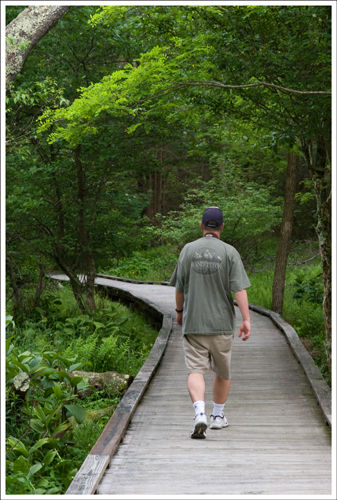
Part of the Limberlost Trail is along a boardwalk.

Adam Says…

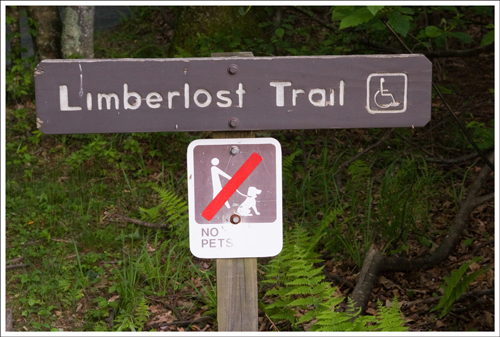
This is a trail that absolutely anyone should be able to do.  I would actually classify this as a walk rather than a hike.  It’s a flat, gravel trail with basically no change in elevation.  Pets and bikes aren’t allowed here, so leave them at home.  Camping is also not permitted.

No dogs allowed! What a bummer.

The trail is probably best known for its views of trees, birds, and other wildlife. The trail crosses the White Oak Canyon trail in case you would like to branch off and combine that for  a longer hike.

This trail has a little history to it.  Addie Pollack bought 100 of the large hemlock trees in the area for $1000 to help preserve this land in 1920 from logging.  Her husband named it the Limberlost Forest after the novel A Girl of the Limberlost.  The Pollocks were responsible for establishing Skyland as a resort destination.  The large hemlock trees are now gone (killed by an accidentally imported insect – the  hemlock wooly adelgid), but there are still some large spruce trees in the area.

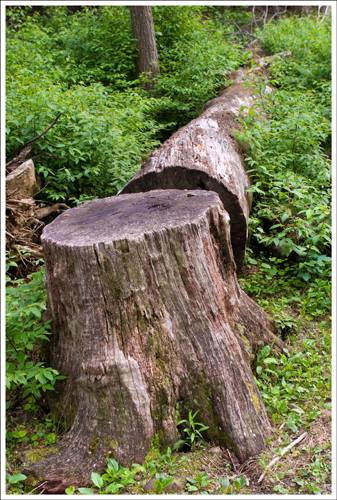
There are many fallen hemlocks along this trail. They used to be the giants of the forest.

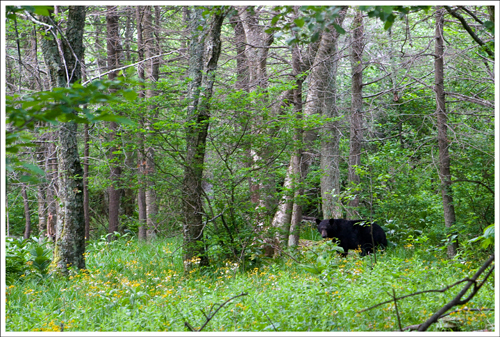
Since we live near Shenandoah National Park, we decided to go up in the evening after dinner to explore for wildlife and try a quick hike.  We didn’t spot any bears along the way, and got to the trail around 7:00PM.  While Christine was taking a photo of me on the boardwalk, I rounded a corner and saw a huge black bear about 100 feet away from me.  We’ve heard that lots of people have seen a bear in the Limberlost area, but this was the first time we spotted him.  I exclaimed “Bear!” to Christine, but she didn’t believe me because she couldn’t see him due to the trees around us.  The bear looked at me for a few seconds and then turned away.  We stood around the same area, hoping he would circle around and pose for some good photos, but he wasn’t feeling too photogenic that night and slowly moved along deeper into the woods.  We also saw four rabbits along the trail.  They are so used to people that they let you get within a few feet before hopping away.  As we were getting further along the trail, I paused because I thought I heard something in the woods.  There was a big crash in the bushes.  Christine was quite startled after seeing the bear, but this crash turned out to only be a doe.

The bear as about 100 feet off the trailside.
The bear at about 100 feet off the trailside. Unfortunately, I just had my wide angle landscape lens when we saw the bear.

Christine Says…

I remember the Limberlost of my youth being a very different place than it is now.  When I was a kid, the hemlocks still towered over the trail, making a cool, green umbrella of shade over the path.  There was very little undergrowth and the area always felt quiet and sylvan.

Although I still really enjoy a stroll along Limberlost, I must admit that the area makes me feel a little sad for the loss of what once was.

Although the hemlocks are gone, the trail is still lined by beautiful mountain laurel.

The best part about our walk last night was all the wildlife we saw along the short walk.  I totally didn’t believe Adam at first when he saw the bear.  He jokes about stuff a lot, and he said “Bear” in such a dramatic fashion, that I was sure he was kidding.  I don’t really feel nervous or scared when we encounter bears on hikes, but I still jumped when we heard that second crash in the woods.  I guess I’m comfortable with the bears I can see, but I don’t want one to come bursting out of the underbrush right into our path.  That would be scary!

Unlike mystery crashes in the woods, bunnies are not scary.

Trail Notes

  • Distance – 1.3 miles loop trail
  • Elevation Change – insignificant
  • Difficulty – 0.5. This is about as easy of a hike as anyone could do.  The trail is completely covered by gravel and you could even push a wheelchair through the area.
  • Trail Conditions – 5. The trail is in great shape.
  • Views – 1. Only views are of birds, trees, and wildlife.
  • Waterfalls/streams – 0. Non-existent
  • Wildlife – 4. I would suggest going early in the morning or near dusk for the best wildlife.  We saw deer, a bear, rabbits, and lots of different bird species from pileated woodpeckers to eastern towhees.
  • Ease to Navigate – 4.5. Just follow the gravel.
  • Solitude – 1.5. Expect to see people due to the short distance and proximity to Skyland Resort.

Directions to trailhead: The parking lot is located around mile marker 43 in the central section of Shenandoah National Park.  The trail is a loop that starts at the end of the parking lot.  It’s a loop with no elevation difference, so it doesn’t matter which way you proceed.