(instead of doing both a Christine Says and an Adam Says section for this series, we’ll be taking turns with writing. We’ll be back to team blogging when we hit the trails again)
Anyone who has read the About section of our website already knows that we’re not backcountry campers/backpackers. Although I grew up camping with my family, we were always strictly “frontcountry.” We had a pop-up camper and spent a lot of vacations in developed campgrounds with electricity, playgrounds and hot showers. Adam definitely has more experience roughing it than I do. He did a lot of primitive camping in high school and college.
The first session of Backpacking 101 was held at the Potomac Appalachian Trail Club’s headquarters in Vienna, Virginia.
My only backpacking experience came when I was ten years old and attending summer camp with the National Wildlife Federation (Ranger Rick Wildlife Camp). We did a couple one-night backpack trips in the woods of western North Carolina. I don’t remember anything from those trips other than the poison ivy. Our hippie camp counselor encouraged us to walk barefoot through the forest to “be one with nature.” That was one of the worst ideas ever.
The last time I camped in any way, shape or form was in the mid 90’s. Adam and I had just started dating, and decided to go camping on one of our first trips together. The weather was supposed to be nice, but we ended up having freak storms with torrential downpour. Our tent leaked, we couldn’t get a fire going, Adam got hypothermia – basically everything went wrong. We ended up bailing out and sleeping in the car. The next day, we broke camp and moved back into the great indoors. I’ve never looked back, because honestly… I love a soft mattress, a hot bath and access to a microwave.
Recently, I’ve decided to give sleeping outdoors another chance. I’ve been on so many hikes with places that I’ve stopped and thought “Wow – I’d love to wake up right here and see the sunrise!” So, when we got a Potomac Appalachian Trail Club (PATC) newsletter, we were intrigued by a workshop called Backpacking 101. It’s an adult class for backpacking newbies. I’m hoping that their expert instructors will be able to show us how to backpack and camp in a way that makes it safe, fun and comfortable.
Last Monday, we had our first class meeting to go over course expectations, physical conditioning and how to choose boots. The class has 28 participants – all very diverse in age, gender, experience and fitness level. We’ll be spending the next two class sessions doing field learning – everything from how to purify water to how to load your backpack properly to how to choose a campsite. The class will conclude with a weekend-long backpack trip to put everything we learn into practice. At this point, my ankle sprain is still too painful to hike. I’m really hoping it will be healed enough by May for the weekend trip. Keep your fingers crossed for me!
We’ll be blogging about each of the sessions… so stay tuned! Maybe we’ll become backpackers yet!
This 4.2 mile hike leads you to a PATC cabin as well as a cabin once owned by a family from the mountain.
The Corbin Cabin sits alongside the Hughes River in what used to be known as Freestate Hollow.
Adam Says…
It was great to finally get out and do some hiking after the harsh winter! I think it had been since November since we were able to actually enjoy a hike. After some debating on which trail would be “less muddy”, we decided to try this hike. We were surprised that the ground was actually in good shape and not muddy like we were expecting. The hike’s main draw is the historical interest. The Corbins and Nicholsons were two families that lived in this area since the end of the Revolutionary War until the park authorities made them leave.
You begin the trail from the cement post across from the parking lot. You start the trail walking through an area of mountain laurel that will bloom nicely in the Spring. The trail descends through an elevation loss of 1500 feet over 1.4 miles. Around the first half of a mile, you will begin to see a stream off to your left. At .9 miles, you will come across some of the remnants of the families that inhabited this hollow through views of a rock wall to your right. Downhill to the left you will see ruins of John “Russ” Nicholson’s cabin. At 1.4 miles, you will hear the rushing of the Hughes River and see the ruins of an old cabin to the right that belonged to John T. Nicholson. You can walk over to this area and peek inside to see the small one-room dwelling. There is lots of glass and rusty metal, so be careful if you inspect this area. You will see the Corbin cabin across the river. You will need to rock-hop across the river, which is usually not too difficult. This time, the water was higher than normal and we only had to partially put our feet in the water to get across.
The Corbin cabin is available to rent from the Potomac Appalachian Trail Club. There are access points here to connect to Old Rag. We plan on trying that out in the future sometime for a weekend of living like mountain folk.
The Nicholson Cabin is across the river from Corbin Cabin. It’s slowly sinking back into the forest.
After you cross the creek to the cabin, take a right to join the Nicholson Hollow Trail. After a short distance, you will have to do a little more rock-hopping as it crosses Indian Run. You will start your steep ascent back up to Skyline Drive and at 3.6 miles you will reach the road. When you come to Skyline Drive, take a left, heading south for about 75 yards. You will cross the road and join a short spur trail. After less than .1 mile, you will come across an intersecting trail with a cement post. This is the Appalachian Trail. Take a right, heading North on the Appalachian trail, you will descend and ascend for another .6 miles until you reach the parking lot.
Christine Says…
While this hike doesn’t offer any waterfalls or sweeping views, it does provide one of the park’s best peeks into area history. The trail begins steeply downhill for about a mile until you reach the bottom of the hollow. It’s a big drainage area with many small streams that pour into the Hughes River.
I love seeing all the remnants of old homesteads tucked into the woods. The main homesite, which lies on both sides of the Hughes River is such a perfect and idyllic spot. If I were to choose anywhere in the park to build a home, I think it would be right here. I can understand why John Nicholson was so heartbroken to leave. I love to imagine what it would be like to go to bed each night listening to the bubbling sounds of the river and see the sun rise each morning between the mountain folds visible from the front porch.
We had the homesite to ourselves for a little while. Fifteen minutes later, a couple guys with fishing poles arrived and we were on our way. The long arm of the loop starts from Corbin Cabin and climbs steadily uphill for about two miles. Most of it is moderate uphill climbing, but one section that passes through a thicket of mountain laurel is quite steep. The final .6 miles of the hike follows the Appalachian Trail.
On the AT, we encountered a lost beagle. She leapt out of the woods at us, probably expecting to see her people. She had a collar, an identification tag and the remnants of a broken/frayed leash. As soon as she realized she didn’t know us, she darted back into the woods.
We love dogs, and there was no way we were going to leave the beagle behind. We tried to corral her in, using low voices and lots of “Good dog!” calls. However, she was obviously terrified of strangers and started howling pitifully. Bit by bit, we were able to get closer and closer to her. We were just about to catch her when heard voices shouting down the trail, and the dog sprinted away. Thankfully, this time she was running toward the call of her owners. They were all happily reunited. It turns out the dog broke her leash four hours earlier when she chased something away from camp.
I guess even when they’re leashed, dogs can get into trouble in the park. I’m always surprised how many dogs we see running free with hikers. It’s both good practice and park policy to keep dogs leashed on park trails.
Since this was our first real hike of the season, we were both pretty tired at the end. We’re definitely looking forward to hitting the trails more regularly now that the weather is turning warmer.
Trail Notes
Distance – 4.2 miles – loop.
Elevation Change –1500 feet.
Difficulty – 3.5 The hike descends and ascends fairly steeply.
Trail Conditions – 4. The trail is in good shape. There were a few blown-down trees covering the trail due to the winter. Leaves on the trail make for a slick surface when going downhill.
Views –0. You are deep in the woods for the entire hike.
Waterfalls/streams –2. Near the cabins, you have a nice opportunity to see the Hughes River.
Wildlife – 1. We didn’t see anything alive, but found remnants of deer that didn’t survive the winter. Expect to possibly see bear in the area. Heard pileated woodpeckers and saw juncos.
Ease to Navigate – 4. Trails are clearly marked.
Solitude – 3. This trail isn’t the most popular due to the steep terrain, so you should likely only encounter people around the cabin and river.
Directions to trailhead: From Skyline Drive, park on the western side at mile marker 37.9. Cross the road. The trailhead begins at the cement post across from the parking lot.
This 4.6 mile hike leads you along the South River to an impressive waterfall that plunges deep into a canyon. When the park has experienced lots of rain, this waterfall hike is one of the nicest Shenandoah has to offer.
The South River is impressive in times of heavy rain.
Adam Says…
We have kept with a tradition the last few years of doing a hike on Thanksgiving morning. It’s a great way to appreciate nature and try to do something active before a big meal. This year, we decided to break the tradition of having a huge Thanksgiving meal with turkey and all the trimmings. We decided to have an easier meal that we would both enjoy – homemade pizza.
We’ve hiked South River Falls before, but we’ve never had as much water in the falls before. We thought it would be impressive, since we could hear rushing water through the South River a lot earlier than normal. Waterfall hikes in Shenandoah National Park tend to be fairly tough ones. Since you park on Skyline Drive at a high elevation, you have to hike down to the valleys where the falls are created. What makes it difficult, at least psychologically, is that you get to the payoff fairly easily and then have to do the hard work on your way back to your vehicle.
The beauty of the South River is found mostly in its small details. The cascades and little falls leading the large waterfall are prettier than the main waterfall. Pictured below: South River Falls from the overlook at the top of the canyon; the falls from the base. You’ll see neither vantage point of the waterfall is terribly photogenic (especially after the leaves have come down). Both of the small photos below are from another date. This time, the falls were much bigger – but it was too sunny to photograph them.
The hike begins at the South River Picnic Area. Look for the large sign about the hike on the northeastern side of the picnic area. At slightly over .1 mile, you will cross the Appalachian Trail. You will continue your descent and around 1 mile, you will rock-hop across a small creek that drains into the South River. Usually this is not much of a challenge due to the water, but we found the water was higher than normal this time. At 1.3 miles, you will come to a nice overlook for the South River Falls. You really get a great view of the 83 foot waterfall. It plunges to a rocky ledge and splits in two about half of the length of the waterfall. If you continue on the trail for another .2 miles, you will arrive at a cement post and join a spur to the South River Fire Road. If you continue on for another .2 miles, you will descend even further and arrive at another cement post. Following the path from the cement post for another .1 mile, you will arrive at the base of the falls. For any adventurous shutterbugs, there are ample opportunities near the base of the falls for long-exposure photography. Make sure you have your strength up, because you have 2.2 miles to hike at a steady incline back to your vehicle.
To follow the trail as a loop as we did, once you make your return from the base of the falls, go .7 miles until you reach the cement post and the junction with the South River Falls Trail. Stay on the fire road instead and after .4 miles more, you will reach the yellow-blazed South River Fire Road. Take a left on the road. In about a mile, you will reach the junction with the Appalachian Trail. Take a left on the white-blazed AT, heading south for about .4 miles. You will then reach the junction with the South River Falls Trail and only have about .1 mile to reach the picnic ground.
The hike was a tough one, but it was nice to get some exercise. The thought of carving into our pizza helped us muster the energy to make it back.
Christine Says…
This was a great trail to burn off Thanksgiving calories! The terrain is rugged and the return arm of the loop is nothing but steady, tough uphill climbing. Even Wookie, who is normally a bundle of boundless energy, got quite tired on this hike. By the time we got to the Appalachian Trail junction, his corkscrew tail was completely unfurled. Even though there are some hikes in the park with more elevation gain, I think the 1300+ feet on the South River trail provides some of the park’s tougher climbing. Anyone looking for an easier version of this hike should consider doing the short loop (3.2 miles) that returns after the overlook at the top of the falls. By taking that route, you reduce the elevation gain to a very manageable 850 feet.
Despite the hard work required to get there, I really enjoyed seeing the South River and its namesake falls so flush with water. The Shenandoah area has had over five inches of rain in the month of November – more than double the normal amount. All of the park’s streams, rivers and waterfalls are flowing beautifully right now. It’s a great time to get out and enjoy the scenery and the less-crowded conditions in the park.
There are many small, but beautiful, waterfalls along the trail. Pictured below: Another pretty spot along the river.
I had hoped to get some photo opportunities along the river on our Thanksgiving hike. I did take a few shots, but the weather was less than cooperative. It was too sunny to take shots of the moving water. Every now and then, I found a shady spot down in a deep ravine. I did a bit of bushwhacking to get to a few pretty spots, but overall I don’t feel like I came home with any special photos.
Honestly, while South River falls is probably the park’s most impressive waterfall, it is not one that translates nicely on film. The falls plunge into an enormous natural amphitheater. The sheer rock walls are amazing, but they aren’t photogenic. I’ve seen a few nice shots of South River Falls in the spring, when the water is flowing and the falls are surrounded by the lush new green of the trees and plants. In the late fall and winter, the falls are really scrubby and barren looking.
I think some of the prettiest and most dramatic places along the South River come at the bottom of the falls. In the last .1 mile of the trail, leading to the base of the falls, the water tumbles over a hundred feet down over giant boulders. There are many small, beautiful waterfalls to enjoy before you get to work climbing back up to your car.
When we got home from our hike, we found several TICKS! Can you believe it – ticks in late November; ticks after the mountains have had snow and temperatures at night are regularly below freezing? These were tiny ticks – about the size of a pinhead. We pulled one off Adam’s sweatshirt and two off of Wookie. I hate having to watch for ticks year round, but it seems that we must.
Wookie Says… Hey all of you fellow hiking dogs. It’s been a while since I’ve been hiking, so I’m going to let you know what I thought of the trail. I enjoy getting the chance to get in the outdoors and I usually run laps around the house when my masters ask, “Would you like to go on a car ride?”
The hike on South River Falls was pretty fun for the most part. I enjoyed going downhill until I reached the stream to try and rock-hop. I’ve done this hike before with my masters, but there was a lot of water this time around. I don’t really like to get my feet wet and when I see any water on the hike, I try to take the driest option. After Adam crossed the creek, I really didn’t want to follow him. Only after Christine gave me a little nudge with her trekking poles, did I take the plunge and hop across the rocks.
Wookie enjoyed the hike, but was exhausted the rest of the day.
All the rushing water on the trail, really made me need to go to the bathroom. I tried to make my mark as much as possible to let all my fellow canines know that Wookie was here. The hike back from the falls was pretty brutal for a small dog like me. My tail was down a lot of the trip back, because it was exhausting. At least I got some pizza scraps and a taste of sausage instead of turkey scraps this year. For that, I was truly thankful.
Difficulty – 3. The return arm of the circuit climbs steeply uphill along a fire road for two straight miles.
Trail Conditions – 4. The trail is in great shape.
Views –0. You are deep in the woods for the entire hike.
Waterfalls/streams –4. In times of heavy rain, the South River is an impressive stream.
Wildlife – 0. We didn’t see *anything*, but over the summer there was a bear with three cubs in the area.
Ease to Navigate – 4. Trails are clearly marked.
Solitude – 2. This trail’s proximity to a park entrance makes it a popular hike.
Directions to trailhead: From Skyline Drive, follow the drive to the South River Picnic Area (near mile marker 62). The trailhead is located at the back end of the picnic grounds, across from the restroom facilities.
Big Run is a pretty (almost) six mile walk along one of the park’s less-trafficked trails. Although this hike does not offer any grand scenery, it offers plenty of solitude and nice options for backcountry camping.
These lichen covered cliffs are found along the Appalachian Trail segment of the Big Run Loop.
Christine Says…
We said we were going to take a weekend off of hiking so we could catch up on yardwork and housework, but the weekend was far too beautiful to spend it being productive adults. We decided to have breakfast at Big Meadows before hitting the trail. Most of the park facilities closed for the season on Sunday, and the remainder will close the last weekend in November. It was nice to have one final round of pancakes and sausage in the lodge dining room.
After our big meal, we headed south on Skyline Drive to hike the Big Run Loop. Last time we did this trail, it was in the midst of an August heat wave. It was in the nineties and we had to rest and drink water every ten minutes. This time, the weather was considerably cooler – but still unusually warm for November. I couldn’t believe it, but there were actually swarms of bugs pestering me every time I stood still. I even got a giant mosquito bite on my collarbone. It’s not supposed to be buggy in November!
The trail was covered with dry, brown leaves. Pictured below: The only color left in the woods was from moss and a few hardy ferns.
The trail started off with a couple miles of steady downhill. The trees had completely shed their fall foliage, so the trail was covered with a thick blanket of crispy fallen leaves. As we crunched along the trail, I remarked to Adam that we would certainly not be sneaking up on any wildlife on this hike. The leaves made it hard to see obstacles on the trail, and we both stumbled over rocks and branches hidden under the leaf layer.
At around the two mile mark, we reached Big Run. The water was very low and the stream was mostly obscured by several newly fallen trees. Although the trail is named for this stream, I think Big Run is fairly unremarkable. We didn’t stay long at this spot.
Big Run was prettier last summer. Since this photo was taken, several large trees have fallen across the stream where the trail crosses.
Shortly after the stream, the trail took a distinct uphill turn. For about a mile and half, we climbed steadily uphill. Some parts were rather steep, but overall it’s really not too bad of a climb. I used my trekking poles on this hike and they made the ascent markedly easier. I think the poles help me hike more efficiently and take pressure off my knees. Whenever I use them I feel like I have extra magical energy.
We eventually came to a four-way trail junction at the top of the ridge. The remainder of the hike followed the Big Run Loop trail until it joined the Appalachian Trail. The last segment along the AT took us past some impressive granite cliffs and crossed the Doyles River Overlook on Skyline Drive. After about a mile and a half along the AT, we completed the loop and returned to our car.
Adam Says…
We were debating a few different options for our hike today, but we decided to do Big Run. One of the reasons that we chose this hike is due to the challenge of trying to find one of Hiking Upward’s hiking sticks. A few hand-carved hiking sticks are placed along the trails that are up for grabs to whoever can find them. They provide GPS coordinates for any geocachers out there. I wasn’t able to find one, I believe due to a typo on the website.
Buck in the rutting season. Pictured Below: Most places in the park allow catch and release fishing. Big Run actually allows fish to be harvested.
Due to all of the leaves falling, the hike was a little more challenging than normal. We started the trail going downhill fairly quickly and the leaves made it for tricky footing. The swoosh of the leaves with every step drowned out our own voices and everything else. We had to stop to hear each other when we wanted to talk along the hike.
The blue-blazed trail descends about 1500 feet in 2.2 miles when you reach the branch of Big Run. The water was still and barely more than a trickle this time. After rock-hopping the stream, you will come to a cement post. Take the left branch of the fork. The trail is now marked by yellow blazes and starts a steep ascent. You will gain about 1000 feet of elevation in a little over a mile. At 3.5 miles, you will come to another cement post. Turn left, heading east, to continue on the Big Run Loop Trail, which is now marked by blue blazes again. While you still are going uphill for most of the rest of the hike, it is definitely more manageable. At 4.2 miles, you will reach the junction with the Appalachian Trail. You will take a left, heading north, to follow this white-blazed trail. At 4.5 miles, you will cross Skyline Drive, to stay on the AT. At 4.7 miles, you will reach the Doyles River Overlook, which provide you the best views on the hike. The AT continues on the north side of the parking lot. You will stay on this trail for another mile. When you reach the cement post at 5.7 miles, you will take a left which will take you back to your car at the Doyles River Parking Lot only about 30 yards away.
While this hike is not spectacular for streams or views (until you reach the Doyles River Overlook), it was still an enjoyable walk through the woods. As I mentioned earlier, the leaves led to some difficulty with seeing the trail. At one point on the AT, I slipped on a rock hidden by the leaves and went tumbling down. Luckily, I was unscathed and more importantly, I was able to protect Christine’s camera gear I was lugging on my back.
Trail Notes
Distance – 5.8 miles
Elevation Change – 1400 feet
Difficulty – 3.5. There is a mile and a half of steady uphill shortly after crossing Big Run stream.
Trail Conditions – 4. The trail is in great shape. It was a little trickier than it should have been with all the downed leaves covering the trail. Footing was tough at times because we couldn’t see rock and branches on the trail.
Views –1.5. You get one nice view when the Appalachian Trail crosses the Doyles River Overlook. If you hike when leaves are down, you get some other glimpses of views along the way.
Waterfalls/streams – 1. Big Run is not as impressive as it sounds. It’s not big and it doesn’t really run much either. 🙂
Wildlife – 2. We saw deer and lots of different kinds of birds.
Ease to Navigate – 4. Although there are turns, this trail is very well marked.
Solitude – 4. Because this trail lacks grand views and waterfalls, it tends to be more lightly trafficked than other Shenandoah trails. The area is popular with backcountry campers.
Directions to trailhead: Follow Skyline Drive to the Doyles River Trail Parking area near mile marker 81. Cross the drive and begin your hike on the western side of the road. The hike departs from the Big Run Overlook. There may be room for a car or two at the overlook, but we recommend parking in the larger Doyles River parking area.
The Doyles River-Jones Run loop is a nice six-mile hike that takes you past three sizable waterfalls and a lot of beautiful stream scenery.
There are three significant waterfalls along the Doyles River – Jones Run trail.
Christine Says…
Although, the wind, rain and (yes!) snow stripped the fall color from Shenandoah rather early this year, Adam and I still wanted to get out and hike on at least one glorious, sunny autumn day. There was still a little bit of colorful foliage hanging on in the south district of Shenandoah National Park, so we decided to hike the Doyles River- Jones Run loop on Sunday morning.
Parking is available at Brown Gap. Pictured Below: The fire road leading down from the parking lot is one of the prettiest in the park; the Shenandoah area has tons of Civil War history. We passed the grave of confederate solder, William Howard, along the way.
We got to the trailhead at Brown Gap right as the sun was coming up. It was f-f-freezing and windy. I carelessly left my hat and gloves at home, so I flipped up the collar of my fleece and retracted my hands into my sleeves. We set out down the Brown Gap fire road, which is one of Shenandoah’s prettier fire roads. It’s also where I used to ride my horse, “Friday”, whenever we trailed to the park. The morning sun was filtering through the golden leaves, and soon the activity of walking warmed me up enough that I didn’t miss my gloves at all. The fire road was really muddy, so I took that as a good sign that there would be plenty of water flowing in the three waterfalls we’d be passing along the route.
In fact, I was so sure that the waterfalls would be impressive, that I carried all the “big guns” in my photography arsenal – two camera bodies, three lenses, a shutter remote, a collection of neutral density and polarizing filters, extra batteries, memory card and my tripod (the one that feels like it weighs close to 100 pounds when I carry it on long hikes). I also brought my new tripod bag (by Kinesis) that allows me to carry the tripod backpack style – evenly centering the weight on my back. The sling style carrier I’ve been using for the past few years twists my neck and shoulders, so I try not to carry it on long hikes. The new bag was really nice, but it perfectly lined up the camera mount lock lever with my butt. Every step I took, the lever poked me quite rudely. I ended up giving the tripod to Adam. He’s taller, so he escaped the constant prodding. I ended up carrying the bag with the rest of the gear. It was much heavier, but still more comfortable.
When we reached the bridge at the junction of the fire road and the Doyles River trail, I groaned in dismay at the dry stream before us. We walked along the river, or at least where the river should have been for another .3 miles to get to the base of Upper Doyles River Falls. Normally, there are pretty little cascades leading down to the main double-terraced waterfall. This time the waterfall was barely a trickle. We ate our breakfast at the base of “Disappointment Falls” and headed on to the lower falls.
The photo above shows Upper Doyles Falls is October 2009 (left) compared to January 2009 (right).
Surprisingly, the lower falls were running quite a bit more than the upper falls. I think narrower chasm through the rocks allows the second falls to hold onto more water flow. The second falls is thin and almost chute-like. Even though the second waterfall had more water, it still wasn’t anything spectacular. When you’re a photographer hiking with 40+ pounds of gear and realizing the shots you had planned aren’t going to happen, the gear instantly feels twice as heavy. I think this is the point that I started to feel like Atlas with the world resting on my shoulders. 🙂
Lower Doyles Falls was a bit nicer than the upper falls.
Leaving the lower falls, the trail became incredibly beautiful. It followed a babbling brook through near-peak foliage. The trees were a spectacular mix of gold, orange and red – all set off by the brilliant blue sky above. This was, without a doubt, my favorite section of the trail.
So far, the hike had been relatively easy – just gentle up-and-down grades along the stream. At the junction of the Jones Run Trail, the real work started. In just under 2 miles, we picked up most of the elevation gain on the whole hike. It was steep, hard climbing to reach Jones Run Falls.
The foliage along the Jones Run Trail was spectacular. Pictured Below: Jones Run and Jones Run Falls.
The waterfall on Jones Run was running low, but it was still really pretty. From the waterfall back up to Skyline Drive, the grade of the trail moderates a bit. It’s still a lot of uphill mixed with periods of flat terrain. Eventually, you reach the junction with the Appalachian trail and follow it north for a little over a mile back to the Brown’s Gap parking lot. This section of the AT follows closely to the road, so you constantly hear cars and smell exhaust. The walk along this section is easy, but rather uneventful.
Overall, I think this was a great hike. I’m so glad we had a chance to be outdoors on a beautiful fall day, but I wish the waterfalls had been nicer. We’ll have to try hiking it again in the spring after heavier, more sustained rains.
Adam Says…
While we’ve hiked Doyles River a number of times, this was the first time that we had made a loop of the hike and added Jones Run. When we have done this before, we parked at the Doyles River parking lot around mile marker 81. We would normally hike down to both of the falls and then head back.
On this hike, we parked around mile marker 83 at the Brown Gap lot. We crossed the road and headed down the Brown Gap fire road. At about .4 miles, you see a short path leading up to the gravesite pictured above. In about 1.7 miles you will reach the junction with the Doyles River Trail. Take a right on this trail. After about two tenths of a mile, you will reach the Upper Doyles River Falls. There is a short spur path to lead down to the base of the falls. Once you rejoin the trail, you will then see the Lower Doyles River Falls after a tenth of the mile. Don’t try to blaze down off the trail to reach the falls. The trail loops around to bring you closer to the falls. When you reach near the base of the falls, there is a short, treacherous climb down to the base of these falls. When you join back to the trail, continue south down the Doyles River Trail. You will reach the Junction with the Jones Run Trail in about .6 miles from leaving the Lower Doyles River Falls. You begin your hike up to the Jones Run Falls and will reach them about .7 miles on this trail. After the falls, you will have a 1.2 mile hike up to the Jones Run Parking lot. Before you enter the parking lot, there will be a junction with the Appalachian Trail. Take a right on the AT, heading north until you reach the Brown Gap parking lot. The AT portion is about 1.3 miles back to your car, leading you to this overall hike of 6 miles.
The woods were very colorful at the lower elevations. Pictured Below: One downed tree we came across was so large that Adam could climb inside.
The hike is not that long being only six miles, but there is a lot of elevation gain from the base of the Doyles River Trail, leading up to the Jones Run Parking lot. Christine felt that it may be better to do this hike in reverse, but based on contours, I think either hike has a tough trip back at the end.
The waterfalls along the way on normal days are really some of the nicer waterfalls in Shenandoah National Park. The water flow didn’t allow us to see them at their best today, but we enjoyed them nonetheless. The Upper Doyles River Falls stands at 28 feet; the Lower Doyles River Falls plummets 63 feet.; the Jones Run Falls plunges 42 feet. If you’re looking for a hike to see multiple falls, this is the best one to do in Shenandoah.
More golden foliage along the trail.
On our way back to the car on the AT, we ran into a woman doing the trail in the opposite way. She had two pugs with her on the hike, named Titan and Zoot. They were eager to greet us, since they must have known we had three pugs of our own. They were very energetic to begin their hike to the falls, but we wondered how they fared on the steep way back. We wish we had taken some pictures of these boys, because they looked like they were ready for a great adventure that day.
There was a very long line of cars waiting to get into Shenandoah National Park
The foliage was just slightly after peak today. We decided to exit the south entrance of the park to reward ourselves with some frozen treats from Sonic. On our way out, we saw the longest line of cars we’ve ever witnessed trying to enter the park at the south gate. Cars were at a stand-still all the way down to the interstate. Three rangers were walking down the line, handing out information to make the fee stations handle things quickly. I guess everyone felt that it would be a nice day to see color in the park and hopefully they weren’t too disappointed in the color.
Trail Notes
Distance – 6 miles – loop.
Elevation Change –1875 feet
Difficulty – 4. The climb up from the bottom of Jones Run is tough!
Trail Conditions – 3.5 The trail is well-maintained and traveled.
Views –0. You might get a few glimpses of vistas through the woods along the fire road.
Waterfalls/streams –4. The waterfalls and streams along this trail are beautiful, especially when there is plenty of rain.
Wildlife – 1. Just a couple deer.
Ease to Navigate – 4. Trails are well marked and easy to follow.
Solitude – 3. You will likely see several other groups of hikers along the way, but it’s not as heavily trafficked as other waterfall trails in the park.
Directions to trailhead: From Skyline Drive, follow the drive to Brown Gap (near mile marker 83). The parking lot is on the west side of the drive. To begin the hike, walk across Skyline Drive and follow the Brown Gap fire road downhill.
The summit of Mount Rogers, Virginia’s highest peak, can be reached via a nine mile (total, out-and-back) hike starting from Grayson Highlands State Park. The hike follows the Appalachian Trail for most of the way and crosses into Jefferson National Forest.
Mount Rogers has beautiful and rugged terrain. The area is home to several herds of wild ponies.
Christine Says…
Mount Rogers has long been on my list of must-do hikes. The peak’s status as the state’s highest point was one draw, but personally, I wanted a chance to see the feral highland ponies that roam the area.
Our trip started under rather inauspicious conditions. We missed a turn on our way to the park, and ended up an hour out of the way. The weather had been forecast to be sunny, but the morning dawned with a thick, wet, windy cloud of bleakness blanketing the entire area. But when you have driven almost four hours to do a long-anticipated hike, you’re going to do it regardless of minor complications like gloominess and getting lost.
The trail starts out from Massie Gap in Grayson Highlands State Park.
We parked at Massie Gap in Grayson Highlands State Park. From there, we walked across a wide pasture, passed a sign warning of extremely erratic weather in the area and went through a horse gate. The trail climbed upward along a wide, gravel path.
We almost immediately saw our first small group of wild ponies, clustered under the trees on a hillside next to the trail. The fog was so thick; they looked like silhouettes in the mist. I quickly got my camera out and started snapping shots. The ponies were so small and rugged looking. Their coats were thick and their manes long and wavy. Some were solid colored and some were spotted. They also turned out to be incredibly inquisitive and gentle. While I was squatting down to take photos, a dark brown pony walked up to me and nuzzled her soft nose onto the back of my hand. I know she was looking for food, but I had nothing to offer. We lingered with the ponies for a while, and then moved on.
(note: The park rules prohibit feeding the ponies.)
The ponies are very friendly. They come right up to you, especially if they think you have food. Although it may look like Adam is feeding the pony, he’s actually just unzipping his backpack. Pictured Below: More ponies; State park rules!
We soon reached the junction with the Appalachian Trail, followed the white blazes and headed south. The fog was such a transformative element on the morning of our hike. Instead of the amazing mountain views we’d heard about, the thick mist made the scenery feel closer and more intimate. I told Adam several times that I didn’t feel like I was in Virginia at all. I felt like I was walking through some storybook version of the Scottish Highlands. It was so quiet and mysterious-feeling – no people, no tall trees rustling in the wind, no birds chirping. The terrain was open, studded with rocks and covered with scrubby low-lying brush.
The Wilburn Rock scramble was slippery, but fun.
The Appalachian Trail exits Grayson Highlands State Park at around the 1.5 mile mark. The trail becomes increasingly rugged and rocky at this point. There are a couple route options for the middle section of the trail. Hikers can continue along the AT, or choose to branch off on the Wilburn Ridge Trail for a short rock scramble (and nice views on a clear day). We chose to scramble. In retrospect, we probably should have stuck to the AT. The boulders on Wilburn Ridge were quite slippery. After we finished scrambling, we passed through a thick tunnel of rhododendron that spilled us back out into another open pasture area.
When we rejoined the AT, we started to see signs of the sun burning through the cloud layer. We soon reached a horse camp next to an enormous rock outcropping . When we climbed to the top of the rocks, we both gasped in awe at the view. The valley below us had been mostly cleared of clouds and fog, and a blanket of fall color spread out before us, as far as the eye could see. Only a few wisps of mist were left hanging on the ridges below. We sat on the rocks and took a break from walking. A couple backpackers passed below, and we overheard them talking about hearing coyotes howling in the night before. Instead of coyotes, we heard the distant squeal of ponies whinnying ahead on the trail.
We got our first clear view from atop a huge rocky outcropping. Pictured Below: fog and clouds lift off the colorful mountainside; the ferns along the trail were turning gold; one of the pony stallions we saw along the way.
After a short break atop the rocks, we continued along, passing through another thicket of rhododendron. The area was completely shaded and nearly ankle deep in mud. My trekking poles came in very handy traversing the sloppy footing. This section of the trail runs almost parallel to the Mount Rogers horse trail. There are many beautiful backcountry campgrounds nestled into the trees along this stretch. We saw about a dozen more wild ponies near the campsites, including a couple stallions.
This gorgeous gray was hanging out near the campsites. Pictured Below: More ponies – they are everywhere along the trail through Rhododendron Gap.
By this point in the hike, all the fog and clouds had blown off the mountain, giving us a great look at the gentle rolling terrain and spectacular open views. You can’t help but feel like you’re on top of the world walking along this ridge. The fall color was amazing! We stopped for lunch at the Thomas Knob Appalachian Trail hut. We shared the picnic table with several groups of day hikers and backpackers. We read the logbook, stretched a bit and then made our final push for the summit.
The spur to the summit departs the AT and heads into a dense, rainforest-like grove of spruce-fir trees. It was damp and green and draped with moss. It reminded Adam and I of the forests in the Pacific Northwest. The summit of Mt. Rogers is rather anticlimactic after passing by so many sweeping panoramic views and rocky pinnacles. The marker lays set in stone, tucked into a shady spot in the woods. There is no view to speak of, just a quiet little spot under the trees.
We only stayed at the summit for a few minutes, as there were quite a few people there. We hiked the return trip to Massie Gap fairly quickly, stopping briefly along the way to admire ponies and take in views that had been obscured by fog earlier in the day. The hike almost felt like a loop because the weather changed so dramatically between the hike up and the hike down. My final treat along the hike came less than a mile from the end, when a young foal came bounding out of the brush, nickering loudly for his mother. The foal was absolutely adorable. I wanted to pack him up and take him home with me! (Incidentally, the wild ponies are periodically rounded up and sold to keep the herd at a sustainable size. Although, I don’t think our property owners association would appreciate me bringing a miniature horse home, so I’ll just have to keep the pony ownership idea in the realm of fantasy for now.)
We had beautiful autumn views hiking back down Mount Rogers. Pictured Below: A foal is curious; View from the trail on our return.
We got back to our car, tired and happy. The entire hike took around six hours – even with lots of breaks and dawdling along the way. For its nine mile length, it’s a surprisingly easy hike.
I really can’t fully put into words how much I loved this hike. I went to sleep that night dreaming of wild ponies and gorgeous fall views. I know I’ll revisit Mt. Rogers often in my mind until I have a chance to hike it again.
Adam Says…
We had such a great hike up Mount Rogers! A co-worker that had previously hiked the mountain had described the scenery as God’s country and I couldn’t agree more. While walking across the highlands, you can’t help but feel reflective about the beauty before you. The land around you is vast and I guarantee you will be humbled by the nature.
The trail along the top of Mt. Rogers is surprisingly level.
Mount Rogers was originally named Balsam Mountain, but the name was changed to honor Virginia’s first state geologist and first president of MIT, William B. Rogers. With the peak being the highest in Virginia at 5,729 feet, this is quite an honor.
One thing that does make this a special hike is the ponies. Another co-worker of mine didn’t believe that there were wild ponies here (even with photographic evidence). The ponies were originally placed here by the park service in 1974, but are currently maintained by the Wilburn Ridge Pony Association. The ponies help protect the area from wildfires by eating grasses and underbrush. The Wilburn Ridge Pony Association takes care of their veterinary needs and provides supplements of salt and hay in winter months. There are close to 150 ponies, that are separated into three herds – some are in Grayson Highlands State Park, more are in the Scales area of Pine Mountain, and the most are near Rhododendron Gap on the Mount Rogers trail. The proceeds from the sale of the ponies at the end of September supports the vet and winter feed costs.
Adam points out the only sign of humans he can see for miles from Mt. Rogers. Picture Below: a pair of palominos; beautiful clouds and blue skies over the rocky vista.
The geology of Mount Rogers provides an interesting tale of how things were formed over the years. Geologists will be able to see evidence of gneiss, sandstone, rhyolite, and shale on their hike along the trail.
For people that like a little more direction for the route that we took, here are some points of interest along the way:
Cross the field at the Massie Gap parking lot and go through the gate to start the trail.
You will now be on the Rhododendron Trail for .8 mile until it intersects the Virginia Highlands Connector Trail. Take a left on this trail for just .2 miles.
When you reach the junction with the Appalachian trail, head south. You will shortly leave Grayson Highlands State Park and enter Mount Rogers National Recreation Area through a gate – continue straight on the AT at this point. After another .25 mile, you will have the option to stay straight on the Appalachian Trail or turn left and proceed on the Wilburn Ridge Trail. The distance is about 1 mile either way. The Wilburn Ridge Trail does join back to the AT. It is a tougher rock scramble, but I would recommend doing it on the way up rather than the way down.
Once you are back on the AT, proceed for another mile until you reach a junction of trails. This area is known as Rhododendron Gap and comes to an elevation of 5526 feet. At this junction, there is a large pinnacle rock. Climbing up the rock will give you gorgeous panoramic views that are a must-see of the hike. This area joins the AT with the Pine Mountain Trail and Crest Trail. Once you enjoy the view, make sure you follow the white blazes to stay on the AT.
You will then proceed on the AT for about 1.5 miles, walking through the bald area known as the Crest Zone, until you reach the Thomas Knob Shelter, protected by gates on both sides. This is a great place to grab a snack. There are also great views behind the cabin. This cabin sleeps plenty, since there is a ladder that goes to a second floor, allowing a little light through two small windows on the side.
Once you leave the shelter through the gate, you will be entering Lewis Fork Wilderness. Shortly after this point, to reach the summit you will need to leave the AT and proceed to the summit by taking the Mount Rogers Spur Trail for .5 mile straight ahead. The summit is marked by a simple USGS benchmark in the stone. There are two within 100 feet of each other, so make sure you find the correct one for any of you peakbaggers.
The Summit of Mt. Rogers resembles a rainforest. Pictured Below: the Thomas Knob Appalachian Trail Shelter; Adam on the summit.
Overall, the trail was really quite manageable for a 9-mile hike. The terrain is very nice in some points walking across flat lands, but there are some rocky parts, especially around the Wilburn Ridge Trail. My back and feet were in pain from having too much weight on my pack, but my muscles didn’t feel sore at all the next day.
There are just a few geocaches that you can find along the way. A couple of them are earthcaches, which do not have you finding a physical cache, but it teaches you about the geology of the area.
Christine told me that this hike has been her favorite ever. While there are a lot of contenders for me, this would definitely be a strong candidate for me as well. I feel that anyone interested in hiking in Virginia should make this a trail you must do. It is a day you will remember forever.
Trail Notes
Distance – 9 miles the way we went making a partial loop in the middle with the Wilburn Ridge Trail.
Elevation Change –About 1100 feet
Difficulty – 4. The actual trail wasn’t too tough, but due to the length we upped the difficulty. The Wilburn Ridge Trail does include a few rock scrambles, but is also manageable for most people that are the slightest bit nimble.
Trail Conditions – 3.5 The trail is well-maintained and traveled. There are muddy spots, especially through the Mount Rogers Spur Trail. The hike on the AT and Wilburn Ridge before the Rhododendron Gap area is quite rocky, causing you to watch your feet.
Views –5. Great views walking along the trail in all directions. The views from Rhododendron Gap are especially beautiful.
Waterfalls/streams –0. Non-existent.
Wildlife – 5. It doesn’t get much better than wild ponies. Bears and coyotes have been spotted also. Lots of bird-watching available also.
Ease to Navigate – 3. It is easy to get a little confused at Rhododendron Gap, but overall things are very well-maintained. Make sure you grab a map to have a backup plan.
Solitude – 2. You will get good spacing due to the length, but you will see other people due to the backpackers, AT hikers, and day visitors. It is the highest summit, which is going to draw crowds, especially at the shelter and summit.
Directions to trailhead: From Abingdon, take 58 East until you reachGrayson Highlands State Park on the left through SR 362. Continue for three miles to reach the Massie Gap parking area. The start of the trail at the gate is across the field to the north.
Amherst County’s Cole Mountain Loop is a moderate 6 mile hike with serious payoffs at the summit. Situated in George Washington National Forest’s Pedlar Ranger District, this trail (also know as “Cold Mountain”) is one of Central Virginia’s only hikes to cross a bald, pasture-like summit. Views of the valley from the saddle and summit are open in every direction.
The Cole Mountain summit is open and offers panoramic views in every direction. In this shot you can see the white Appalachian Trail blaze and the USGS benchmark.
Christine Says…
Despite the busyness of our weekend, Adam and I made time to hike the Cole Mountain loop on Sunday morning. We had read a description of the trail on another hiking site. Their reviewer compared the summit to Scotland or Switzerland. I don’t know about that, but it was definitely some of the prettiest Virginia summit scenery I’ve ever seen.
We started out from home at 5:30 in the morning. It was still dark, but we wanted to hike before the crowds and heat got too bad. We made a short detour before the hike to visit Statons Creek Falls. It was just a couple miles from the trailhead, and was well worth a look.
The Appalachian Trail crossing is well-marked. Park across from this sign in a small lot.
The forest service road to the Cole Mountain trailhead is unpaved and bumpy. There is only room for five or six cars at the parking area, which is located right at an Appalachian Trail crossing.
The hike starts out downhill along the forest service road for a couple tenths of a mile. You’ll soon pick up the blue-blazed Hotel Trail on the right side of the road. The route follows the Hotel Trail for about 3.5 miles until a junction with the Appalachian Trail (AT). The AT takes you up a series of switchbacks, across the Cole Mountain summit and eventually back down to the parking lot where you started out.
Just a few of the gorgeous wildflowers on display in the meadow. Pictured below: The old hog wall, the open meadow along the Hotel Trail, a beautiful tree sheltering one of the loveliest backcountry campgrounds in Virginia.
The thing I loved about this hike was the ever-changing landscape along the way. It was a perfect sampling of Virginia’s varied scenery. The trail started off winding its way down through lush, green beds of ferns sheltered by old hardwoods. After passing through a short tunnel of pines, the forest gave way to a wide meadow-like clearing filled with shoulder high wildflowers in every shade of pink, purple, yellow and white. Descending back into the forest, we saw numerous remnants from a bygone mountain farm. Crumbling stone “hog walls” and errant apple trees were easily spotted along the trail.
The Cow Camp Gap Shelter. Pictured below: a checkerboard is painted onto the shelter floor, Adam enjoys reading the shelter journal
We took a snack break along a small stream just before the 3 mile mark. There was a fire pit and log seats that made a perfect place to enjoy some trail mix and water. We ended up taking another break a few tenths of a mile down the trail when we arrived at the Cow Camp Gap Shelter. This shelter is just one of many three-sided huts located along (or near) the Appalachian Trail. This one was especially nice. There was a checkerboard painted on the floor, with acorn cap and twig game pieces. The shelter had a newer log book, so there weren’t many entries to enjoy this time. The site also had the biggest picnic table I’ve ever seen. It made Adam look like he was hobbit-sized.
The shelter marks the beginning of the only serious uphill climb on this hike. About a half mile after leaving the shelter, you meet up with the Appalachian Trail and head north. Along the way, the forest begins to thin out, giving you glimpses of a view from rocky ledges along the trail.
Upon reaching the saddle of Cole Mountain, the terrain changes radically and instantly. The trees disappear and a wide, pasture-like alley appears across the summit. The field is dotted with giant boulders and speckled with wildflowers. It’s a great place for a picnic lunch. You certainly can’t beat the sweeping views in every direction.
Adam Says…
This truly was a wonderful hike! I don’t think this hike is very well known to those that don’t live in Central Virginia, but it is a true gem and definitely worth a trip no matter where you live. We had absolutely perfect hiking weather with beautiful blue skies, dappled with an occasional cloud. We plan on coming back down to this area soon to try the nearby hike of Mount Pleasant.
Cole Mountain is also commonly known as Cold Mountain (and is listed as such on Hiking Upward), but when we saw its official name through the USGS was Cole Mountain, we are sticking with their name. I know when I told my family about hiking Cold Mountain, they thought about the movie with Nicole Kidman and Jude Law. That Cold Mountain is actually in North Carolina, along the Blue Ridge Parkway.
The first lookout point along the Appalachian Trail was already showing some signs of fall.
To begin the circuit that we chose, we took the Hotel Trail. The origin of the name is supposedly derived from the landowner Joseph Richeson, whose house was known as The Hotel, due to the number of frequent guests.
Once you start the Hotel Trail, you will almost immediately come to a horse gate. Go through the horse gate and continue to follow the blue blazes. You will follow these blue blazes until you reach the junction with the Appalachian Trail. At .9 miles, you will reach the beautiful field of wildflowers on your left that Christine mentioned. At around 1.3 miles, you will reach a gorgeous spot for an overnight camp. I would highly recommend this to anyone that is planning on doing a backpacking trip. There is a large firepit formed with logs to sit and enjoy some S’mores over an open fire.
From the firepit, look to the northeast and you will see the blue blazes continue. At 1.7 miles, you will come across the “hog wall”, which is neat to think about people that used this area in the past. Continue down the trail until you reach the bottom of Cow Camp Gap at 2.9 miles. On our way down, I heard some strong howling off in the distant which sounded like coyotes. Since we’ve heard of this from other hikers, there must be some nearby. You will see on the other side of a small stream, the Cow Camp Gap Shelter. This is a great spot for any thru-hikers or people that just want to have a packed lunch, rest, or fill up water from the spring. We always enjoy reading the logs that thru-hikers and backpackers leave during their trips there. Once you see the shelter on the right, just stay on the trail until you reach the junction just ahead. The path to the right will take you to the shelter and the spring, but after your stop, you will take the path to the left. I imagine that during rainier times, this would be a nice spot to hear a trickling stream, but it was dried out when we were there.
From the junction at the shelter, you will have another .5 miles to reach the junction with the Appalachian Trail. At 3.5 miles, take a right (North) on the Appalachian trail. You will continue your ascent through a few switchbacks. At 3.7 miles, you will reach the first of two nice spots for an overlook at the edge of the switchback. Continue on the trail until you reach the large meadow with the summit. You will see a few vertical 4 foot high rocks sticking out of the ground. On the ground in the rock, you will see the USGS benchmark which marks the summit of Cole Mountain at 4,033 feet. Take a moment to enjoy the views at the summit and continue to follow the AT white blazes going north. You will see many gorgeous panoramic 360 degree views as you cross along the highlands for a few tenths of a mile. The scenery was truly breathtaking as we trekked across the highlands of the saddle, across the bald summit. (Note: camping and/or fires are not allowed on the bald of Cold Mountain.) At the end of the meadow at 5.2 miles, you will begin your descent into the woods and back to your vehicle. You will cross over a fire road, but stay on the white-blazed trail until you reach your vehicle.
Adam makes his way across the bald summit of Cole Mountain. Pictured below: this bush was heavy with berries.
If you are into geocaching, there are a two that you can find along the way. The first is at the “hog wall” and the second is near the summit. There was also another at Statons Creek Falls, which I feel is one of the prettiest waterfalls in Virginia. Here are links to the sites for those that are interested:
As a slightly humorous aside, we did see a couple of guys hiking that came over from another mountain. They had already hiked for about 8 miles, making this hike their second summit. They were planning on going back the way they came and making it a 17 mile hike to do in one day. We saw them around noon and they were hoping to make it back to their car around dinner time. They had a poor map and we tried to show them directions, but they were off quickly. However, they ended up going the opposite way away from their vehicle. We thought we should probably check the news to see if they became lost. I hope they got back safely, but I’m sure they had to reheat their dinner.
I would definitely say that this hike is one of my favorites in Virginia. The views were exceptional and the scenery along the entire trail was magnificent. Make this a “must-do” hike in your future planning! You won’t regret it.
Trail Notes
Distance – 6 miles loop
(Check out the stats from Map My Hike)* Note – the MapMyHike stats show the loop in reverse. When we rehiked the route on 6/25/16, we did it the opposite way so we hit the meadow views first.
Elevation Change – 1490 feet – The trail starts out both up and down, but the ascent to the summit is about 1.5 miles uphill.
Difficulty – 3. The trail starts with some ascents and descents. Once you meet the AT, you have about a steady uphill for 1.5 miles, but it wasn’t too tough.
Trail Conditions – 4. The trail is well-maintained and not too hard on the feet. There are some downhill portions that have some loose rock.
Views – 5. It doesn’t get better than panoramic 360 degree mountain views. We felt the scenery throughout the trail was gorgeous.
Waterfalls/streams – 0.5. There is a stream near the Cow Camp Gap shelter, but it was down to a trickle for us.
Wildlife – 1.5. We only saw a deer around here.
Ease to Navigate – 3. There aren’t a lot of turns here, but you may feel a little confused starting off.
Solitude –3.5. We did encounter a few people, but we had a lot of beauty to ourselves. Expect to see a few people along the highlands at the top, but there is a ton of room to enjoy the scenery privately.
* MapMyHike is not necessarily accurate, as the GPS signal fades in and out – but it still provides some fun and interesting information.
Directions to trailhead: Take Exit 188A off of Interstate-81, merging on to US-60 towards Buena Vista. After going through Buena Vista, take a left at Coffeytown Road/Rte 634. After 1.6 miles, take a right on to Wiggins Spring Road/Rte 755. While four-wheel drive isn’t necessary, I would recommend it since it is a rough gravel road. Stay on this for about 2.5 miles until you reach parking on the left side of the road. (GPS Coordinates for parking: 37.759652, -79.195336) Park your vehicle and then proceed further down the road for .2 miles. Before the road splits, you will see two posts marked with blue blazes which will begin the Hotel Trail.
Hightop Mountain is a nice hike along the Appalachian Trail in the Southern District of Shenandoah National Park. It features a super view and you can take a short spur trail to view an Appalachian Trail shelter.
It wasn’t the prettiest day for hiking, but the view from Hightop was still impressive. Hightop is the tallest peak in the south district of the park.
Adam Says…
Wow, it’s been a while. Sorry for the delay in posting anything new for a while, but life has just gotten in the way. We did get to go for a week in the White Mountains of New Hampshire and our annual trip to Acadia National Park in Maine, but we haven’t hiked in Virginia for a while. We’re just now getting back into the swing of things. We had a limited time on Sunday to do a hike, so we decided to pick something close by and relatively short. It was great to get back on the trails!
The hike was very nice. The trail had a steady uphill the entire way up, but it felt very manageable. We noticed that the trail was a little more overgrown than normal. This year has seemed to be great for weeds growing early on in the summer. Usually we have better views along the side of Skyline Drive and the trails, but things seem to have grown wilder this year. I’m sure the rain and cooler summer temps have caused this. The grass and weeds along the way tended to tickle our legs. The hike didn’t have a lot to view along the way, but it was nice to take a side trip and view the AT cabin and log. Around 1.2 miles, you will reach the intersection with the Smith Roach Gap Fire Road. Just cross the road to continue on the AT. You can reach the AT cabin by taking the spur trail shortly after the intersection with the Smith Roach Gap Fire Road. I always enjoy reading through the logs of those that have passed through. In this logbook there was some entries about people bringing the thru-hikers food, some card game scores, and a tale about how a bunch of them danced naked in the evening.
The views at the top really do show you a lot of mountains to the south and you can get nice glimpses of Skyline Drive. On a nice fall day, this could be a great photo opportunity when the leaves change color.
On the way back after .6 miles, you can take the option of taking the Smith Roach Gap Fire Road back to your car by taking a left, but the fire road looked very overgrown, so we opted to just go back the way we came.
Hightop Hut offers a nice rest stop for weary hikers and backpackers. Below: The hut has a trail journal. They are always a lot of fun to read.
Christine Says…
It was so great to get back out on the trail again! I loved lacing my boots up, feeling the trail crunching under my soles and hearing the sounds of late summer bees buzzing lazily through the wild flowers. I’ve been out of the woods for far too long.
The hike up Hightop is one we’ve done several times now, but we’ve always approached the summit as an out-and-back from the northern end of the trail. It’s shorter and steeper, but gets you to the same viewpoint. I actually enjoyed this southern approach quite a bit more. The grade was very gentle and gradual. This route also gave us the opportunity to visit the Hightop Hut. I always like to stop by the AT shelters and read the trail journals.
This cute little toad was one of the few wildlife specimens we saw along our walk.
The view from the summit of Hightop was beautiful. The sky may have been cloudy, but we could still see ten layers of mountain ridges fading into the distant southwest. We also got a nice view of our “home” mountain – Massanutten.
After the hike, Adam and I started casually tossing around the idea of doing a long backpacking trip next summer. We might try to hike the 101 miles of the Appalachian Trail through Shenandoah National Park sometime next spring. The more we talk about it, the less casual the idea seems. We’ll see…
Trail Notes
Distance –3.8 miles out-and-back which includes an optional .2 mile trip to an AT shelter
Elevation Change –967 feet
Difficulty – 2. While it is a steady uphill the way up, it’s not too steep of a grade.
Trail Conditions – 4. The trail is well-traveled and well-maintained.
Views –3. At the summit, you do have a chance to get some nice views of Skyline Drive and beyond. We counted a series of 10 ridges of depth at the top.
Waterfalls/streams –0. Non-existent.
Wildlife – .5 Other than a toad, we only saw one doe. There also didn’t appear to be a lot of birds on this trail.
Ease to Navigate – 4. Just stay straight on the trail.
Solitude – 3.5 This trail doesn’t see a lot of traffic, but would be busier during the AT thru-hiking in the summer.
Directions to trailhead:
Park on the east side of Skyline Drive at Smith Roach Gap (around mile marker 68.5). At the end of the parking lot, go on the fire road. The trail takes off about 10 yards on the left.
Turk Mountain is a 2.2 mile hike of moderate difficulty. The trail is located at the far southern end of the park, and is less-traveled than many of the park’s other hikes.
Wookie and Adam enjoy the summit of Turk Mountain.
Adam Says…
We weren’t feeling terribly energetic on Saturday, so we decided to do a short hike in the southern district of Shenandoah National Park. Since it was cool, we even got to bring our pug, Wookie, along. The Turk Mountain trail is only 2.2 miles long, but it seems a bit longer due to the uphill portion. When you start, you will be on the Appalachian Trail for .2 miles. Then you will split off to join the Turk Mountain trail (marked by blue blazes). The last half of a mile is all uphill. During the climb, the side of the mountain blocks all breezes. We recommend hiking this on a cooler day with low humidity. Most of the times we have hiked this trail, it has been hot and humid, and when the breeze is blocked it feels stifling. There are some views to the east at about .9 miles into your hike at the last switchback, but the views are much better ahead. When you reach the summit, the breeze will instantly greet you again. Continue just past the marker to climb onto the summit rocks. You will get some great views of a large talus slope and the valley below to the west.
The talus slope below the summit is expansive and impressive.
This is a fun hike that a lot of people try due to the shortness in distance and close proximity to the southern entrance to Shenandoah National Park.
Christine Says…
As we entered the park on Saturday morning, I was telling Adam that I don’t feel like we see as much wildlife in the southern district as we do elsewhere in the park. Wouldn’t you know, as soon as the words finished coming out of my mouth, we passed a huge bear sitting right on the side of the road. I like to think he was serving as the park’s official greeter that day. A little later we passed a doe and fawn and a turkey with her brood of babies. What are baby turkeys called – turklings? turklets?
Baby Turkey? Turkling? Turklet?
I digress… and now onto the hike! Turk Mountain is a fun, short hike that we’ve done several times in the past year. It’s a hike I choose a lot when I want an excuse to go to Sonic (this hike is near the Waynesboro park entrance. That town is home to our area’s only Sonic). I just love their coconut creme pie milkshakes. 🙂
Wow, I digress again. We had beautiful weather for this trip along the Turk Mountain trail. For the first half of the hike, we enjoyed cool, pleasant, breezy weather. The conditions were ideal for hiking, and I started wondering if we’d made a mistake in not selecting a longer hike. By the time we passed through the saddle and started our uphill climb, I was glad we’d decided to keep things short. The uphill portion of Turk Mountain isn’t terribly steep, I think I was just a bit tired from my busy week.
Indian Pipes along the trail. Pictured below: Butterflies and other wildflowers were also seen along the trail.
When we arrived at the summit of Turk Mountain, we had the entire rocky jumble all to ourselves. We climbed around on the rocks and enjoyed the crisp, gentle wind. The rocks at the summit of Turk Mountain are somewhat different looking than other rocks in the park. I don’t know much about geology, but the color seems to have more pink and gray undertones than other summits. Because this summit receives less foot-traffic than other SNP hikes, the rocks are in better shape – still covered with lichen and other plants. When you visit more popular summits like Old Rag or Stony Man, be sure to notice barren the rocks are.
The rocks on the Turk Mountain summit are different.
Wookie was so cute climbing around like a tiny mountain goat. I’m always amazed by how confident and agile he is on rock scrambles. The view from the top was a bit hazy, so I didn’t get any great photos. But it was still a fun hike and a very pleasant morning in the park.
Wookie Says…
It’s been a while since I’ve gotten to accompany my masters on a hike. The last hike I did with them was the Dry Run Falls hike and I got a lot of ticks that day. Since the temperature was cool for late June, I was allowed to come along. This hike had a few things that I like – scrambling over rocks and views. I’m really good at climbing over rocks, so I was able to do this pretty well. I wouldn’t recommend all dogs to attempt this hike, since you really have to watch your paws or you could hurt yourself. Adam had to carry me over a few precarious rocks because I have short legs. However, I was able to confidently go back quicker than he could. On the way back down from the summit, I ran across a couple hiking up. For some reason, the woman cowered behind her husband and didn’t want to be near me. I tried to sniff her leg and she jerked it back quickly. I guess she thought I was really scary or vicious. Or maybe she was intimidated by my colorful Aztec-pattern collar. The bonus for the day is that I didn’t get any ticks on me.
Trail Notes
Distance –2.2 miles out-and-back
Elevation Change – 690 feet
Difficulty – 3. This hike has some nice flat parts to it, but the elevation change is over a short distance, making this a strong uphill for a portion.
Trail Conditions – 3. Some of the trail is very smooth, but other parts are covered by sharp, pointy rocks.
Views –3. There are some nice views from the top, but there are better hikes with more expansive views. The talus slope makes for some interesting scenery to add to the view.
Waterfalls/streams –0. Non-existent.
Wildlife – 1. You likely won’t see a lot here due to the steepness of the trail. The summit does provide for nice hawk and bird viewing.
Ease to Navigate – 4. Just one turn from the AT on to the Turk Mountain Trail.
Solitude – 3. There aren’t as many visitors to the southern section as other areas of SNP, but it is fairly popular. The summit rocks don’t lead to a lot of room to get views, so you may be sharing the beauty with others during mid-day hikes.
Directions to trailhead:
Follow Skyline Drive to mile 94.1. Park at the Turk Gap parking lot. Cross the drive and pick up the trail.
This hike to Mary’s Rock starts from Jewell Hollow. The route follows the Appalachian Trail for roughly three miles to Mary’s Rock. After spending some time enjoying the views, simply retrace your steps back to Jewell Hollow for a total hike of roughly six miles. There are other ways to reach the summit, but in our opinion, this route offers the best scenery and the most pleasant trail conditions.
Adam enjoys the view from Mary’s Rock. Below: Check out this photo from one of our website visitors, Martine Zimmer. She spotted a rock on the Mary’s Rock summit that looked like a bear! It really does!
Adam Says…
Mary’s Rock is a great view hike on the Appalachian Trail. There are many theories on how the summit got its name, but my favorite one is that Francis Thornton’s daughter Mary climbed up to the rock and came back down carrying a bear cub under each arm. Francis Thornton III owned a lot of land to the east of the Blue Ridge Mountains and Thornton Gap is named for him.
The trail is rocky and passes many large boulders.
We have hiked to Mary’s Rock numerous times in the traditional way, from the trailhead at Panorama, but the trail from Jewell Hollow is not one to be missed. In my opinion, this is definitely one of the best hikes to do in the park for scenery. In the fall, you will be able to see great colorful views looking into the western valley below.
The trail is probably roughest during the first .75 miles, but then the rocks tend to give way to easier footing. There are great places to take in the views at .85 miles at the Pinnacle and at another overlook at 2.0 miles. You will also pass a AT hiker hut (Byrd’s Nest #3) about halfway through the trip.
The columbine is starting to bloom all over the park. We saw tons of it along the trail.
Despite the fact that we had to rush to make it back to the car by sunset, we really enjoyed this trail. We saw a bear on the trail going up and probably the same one again coming back. On the way back, I was probably only 75 feet away when the bear crossed our path, but he quickly took off as soon as he realized we were nearby. We also encountered two large bucks on the trail, too. When we saw the first one, we were coming downhill and it appeared that the buck wanted to stand his ground and approach us. So, we yelled at him and shooed him back into the forest.
The Byrd’s Nest #3 Shelter is a popular camping spot for backpackers. The shelter was day-use only until 2008. It has since been remodeled for overnighters.
There is a geocache at the top of Mary’s Rock requiring you to identify dates on the USGS markers. You will have to climb up on the steep rocks to find them, but if you feel comfortable scrambling on rocks, this isn’t too tough.
What can I say… we didn’t do a very good job using the distance scale on our map for this hike! I would have sworn that our PATC map made the hike look like 3.5 – 4 miles total, rather than the 6 miles it actually turned out to be. Normally, that wouldn’t be a big deal, but we didn’t start walking until 5:45 p.m.
This was the first time we’ve accessed Mary’s Rock via the Appalachian Trail. In the past, we’ve always gone by-the-book, and followed the designated Mary’s Rock trail. That trail begins at the Panorama parking lot, and makes its way up the mountain via a series of switchbacks. The Mary’s Rock trail is fine, but it’s really quite boring in way of scenery and views. The hike we did along the AT is longer, but it’s also flatter and tremendously more scenic.
The Pinnacle offers spectacular views.
The trail we hiked primarily follows the ridgeline, making one dip down through a saddle between the mountains. The trail is lined with ferns, mountain laurels and rhododendrons. There are many truck-sized boulders along the trail. They kind of look like graveyard headstones for giants. At the .85 mile mark, hikers are treated to an absolutely spectacular view from the Pinnacles, which is the highest point in Rappahannock County. The craggy, boulder-strewn mountains sweep down into the valley, hawks soar below and you get a nice look at Mary’s Rock way off in the distance. As I was enjoying the Pinnacles view, I said to Adam “You know… Mary’s Rock still looks pretty far off. Are you sure we got the distance right? We’re not going to be hiking back in the dark, are we?” He responded “Nah, we’re fine! You need to trust my map reading skills.”
A while later, we passed the Byrd’s Nest #3 Shelter, which was close to the halfway point of the walk up to Mary’s Rock. Time was passing quickly, and I was getting the distinct feeling that the hike was longer than the mileage we estimated. I started to get a bit squirrely at this point. We didn’t have headlamps or a flashlight, and I seriously did not want to get stuck out on the trail after sun down. A lot of the trail’s footing is made up of loose rocky terrain that twists its way through dense mountain laurel thickets. Also, there was a bear lurking in the area – we had heard him crashing through the woods and seen his rounded ears peeking up through the brush.
A back view of Mary’s Rock.
After passing the shelter, we started almost jogging the trail to make sure we’d have ample daylight for the return trip. We got to the summit around 7:20, just a little over an hour before sunset. Mary’s Rock is an impressive rock outcropping that overlooks both the Shenandoah Valley and a little bit of the eastern Piedmont. In the late afternoon, the light is so warm and lovely on the rock. We enjoyed the vista for a couple minutes, and then promptly began our return trip. Along the way back, we crossed paths with about a half dozen thru-hikers. Many of them were setting up camp at the Byrd’s Nest shelter. We hiked the entire return trip very quickly, and made it back to our car just about ten minutes before the sun set. As we stepped off the trail onto Skyline Drive, I noticed a bear with cubs in the woods on the other side of the road. It was nice to see the bear family as a grand finale for our hike.
We saw this adorable cub and his mother right as we finished the hike.
Under normal, non-rushed circumstances, I’d have to say this is one of the prettiest and most pleasant hikes I’ve ever done in the park. I’d love to go back and re-hike it in the fall. I think the views along the way would offer some amazing places to photograph the fall foliage. And from now on, we’re not hiking anything over three miles in the evening.
Difficulty – 2. Nice and mostly level, with only a few very moderate climbs.
Trail Conditions – 3. There are some loose and pointy rocks along several sections of the trail. If you don’t pay attention, this trail can be an ankle-turner. But overall the trail is smooth and well-maintained.
Views – 4. On a clear day – the views are amazing!
Waterfalls/streams – 0. Non-existent
Wildlife – 5. Bears, bucks, chipmunks, rabbits, squirrels and many species of birds. It was a great trail to see animals.
Ease to Navigate – 4. After a very brief walk on the Leading Ridge trail, you follow the AT all the way up to Mary’s Rock. You will not see signs for Mary’s Rock until the cement marker post at the Meadow Springs trail junction.
Solitude – 3. You probably won’t see many hikers between Jewell Hollow and the Meadow Springs Trail junction (with the exception of AT hikers in June). However, the officially designated Mary’s Rock is very popular. It is likely you will see many people in the last mile before reaching Mary’s Rock.
Directions to trailhead: The trail is located on Skyline Drive at mile marker 37. Park at the Jewell Hollow Overlook. Walk 50 yards north on Skyline Drive. You’ll see a cement marker for the Leading Ridge trail on the west side of the drive. Follow the Leading Ridge trail for .1 of a mile to a junction with the AT. Turn right and proceed from there.
* MapMyHike is not necessarily accurate, as the GPS signal fades in and out – but it still provides some fun and interesting information.

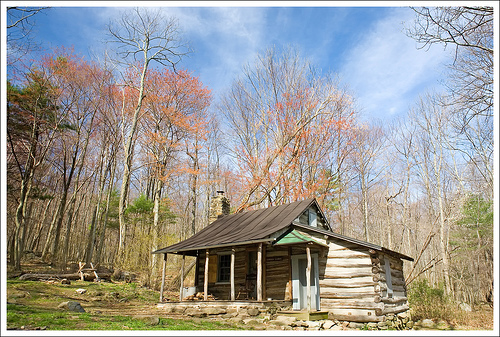

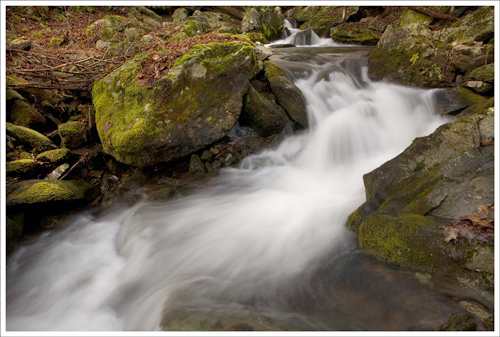


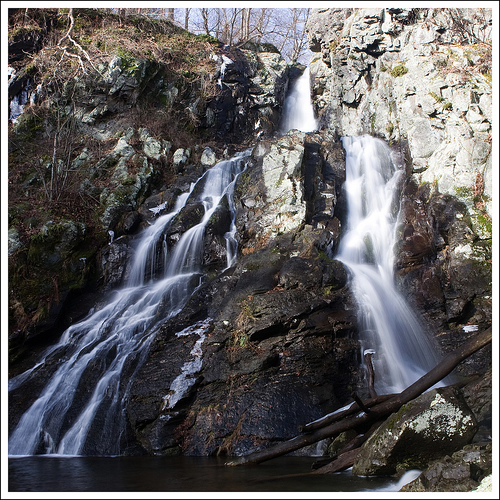



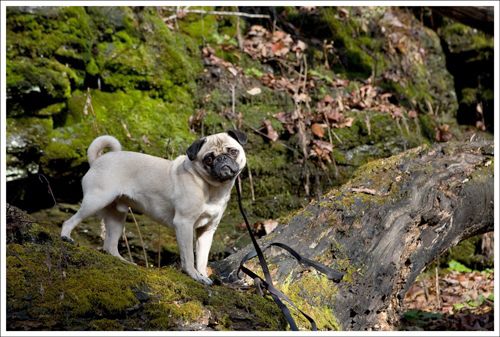
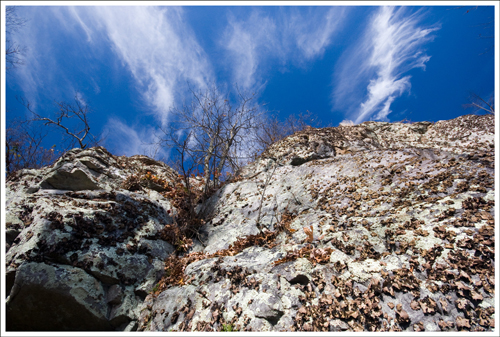

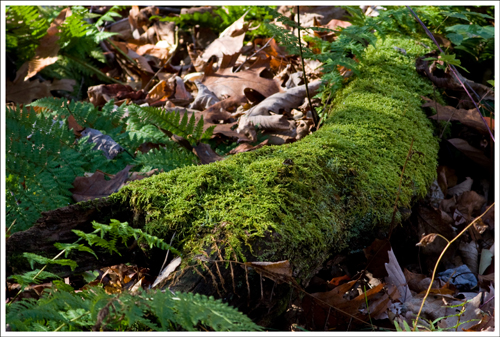


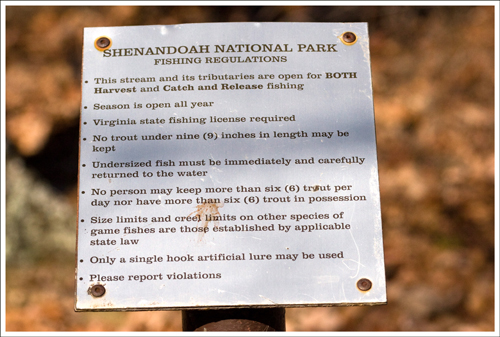
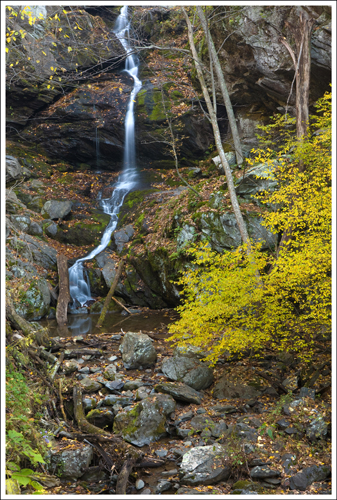
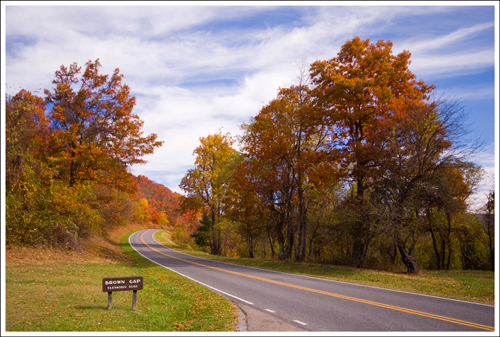
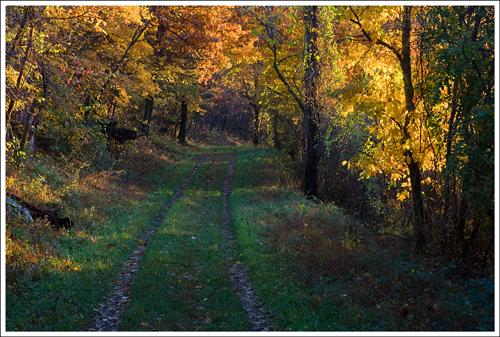

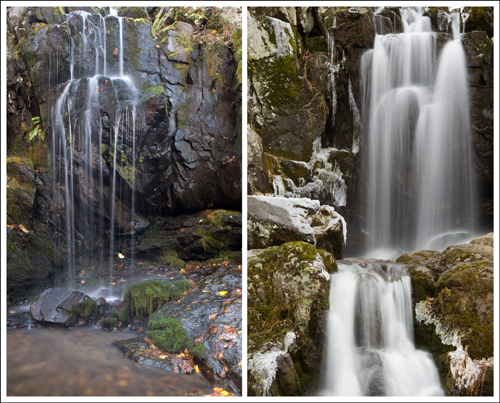

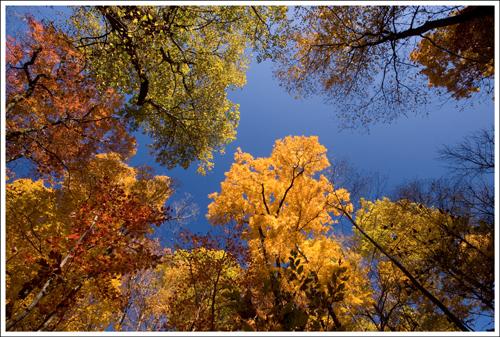
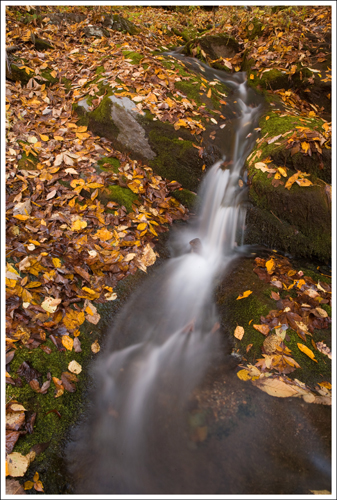
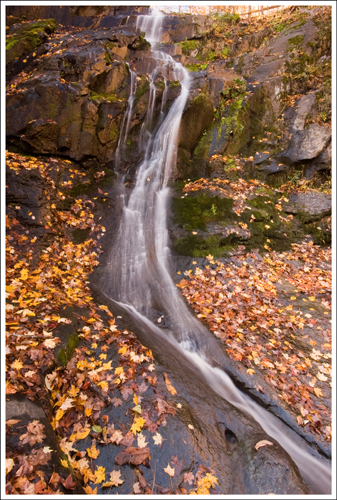
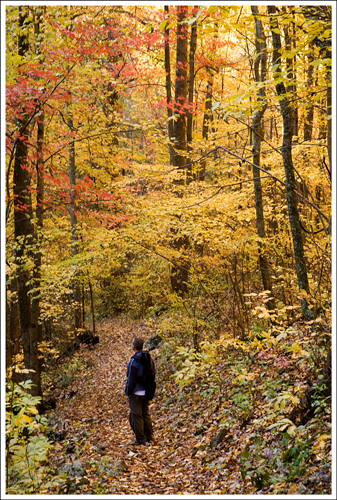

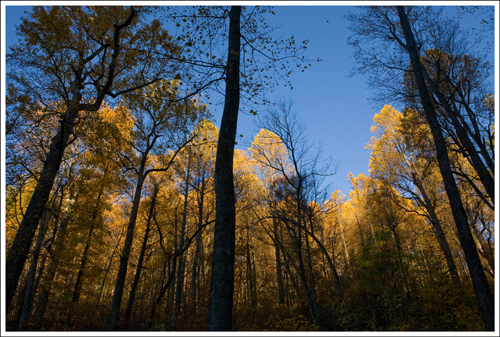


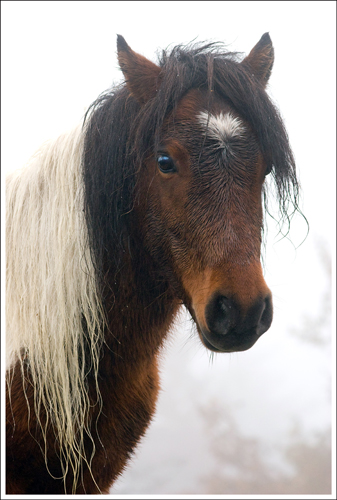


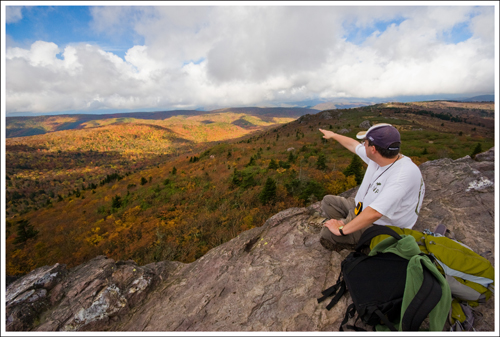

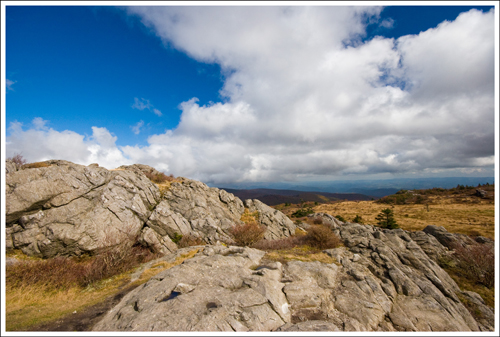
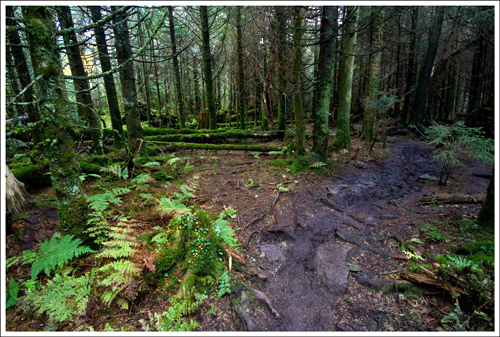

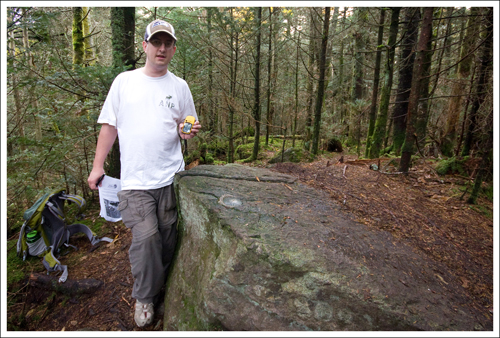


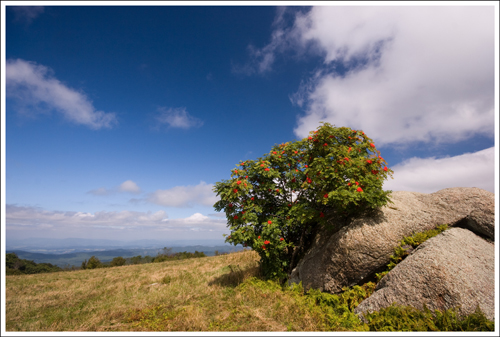

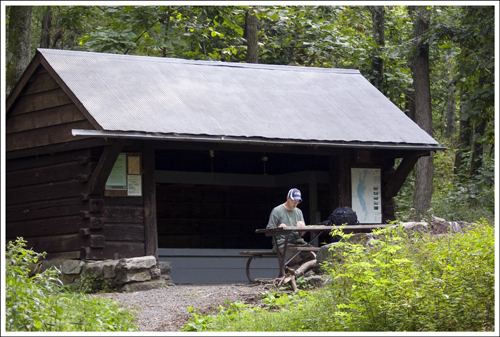


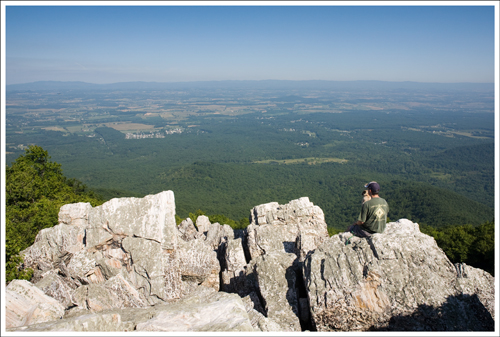
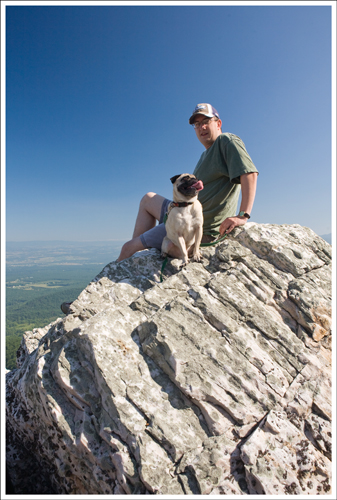
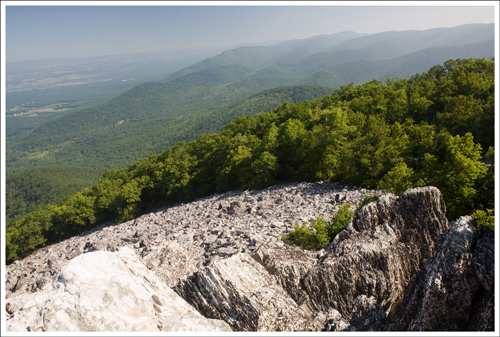
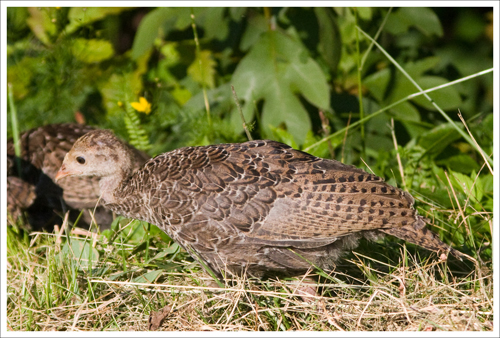
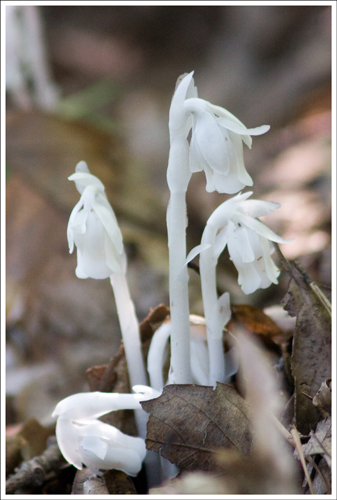

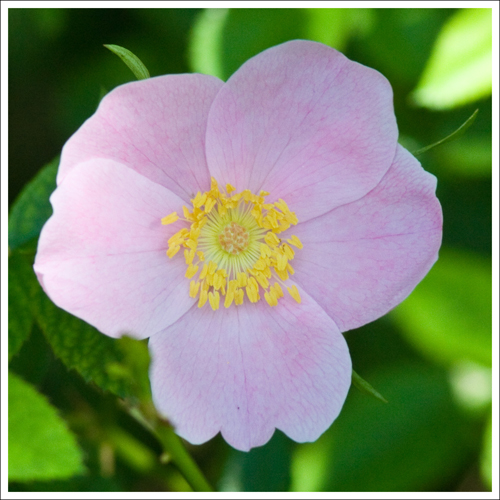
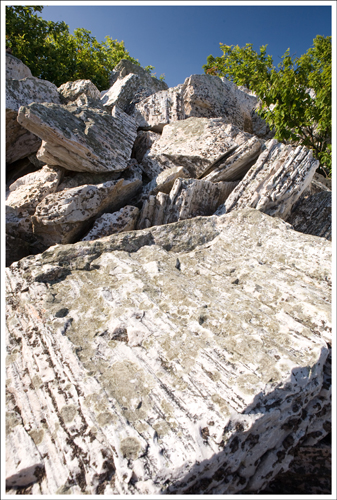
 Wookie Says…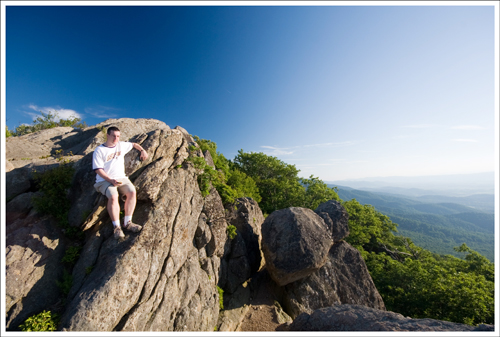

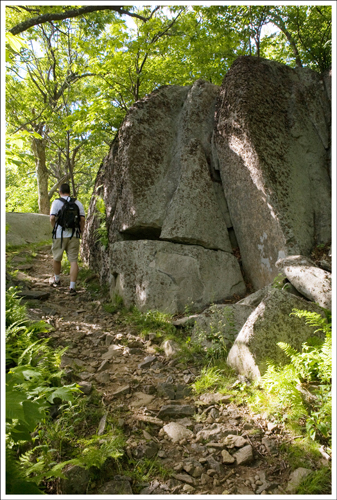
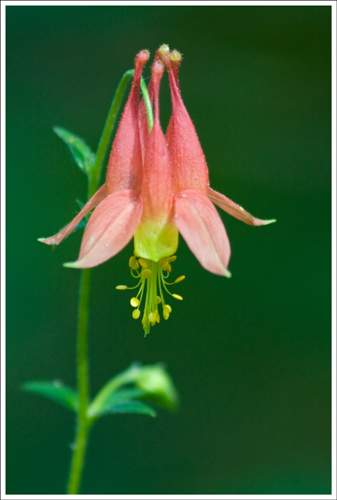
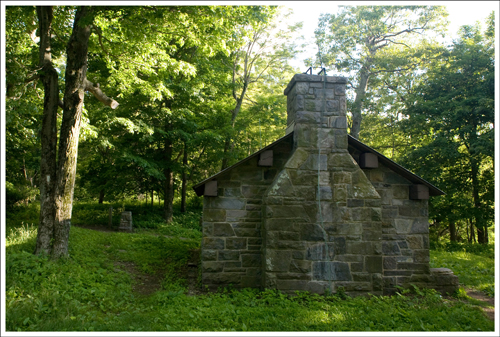
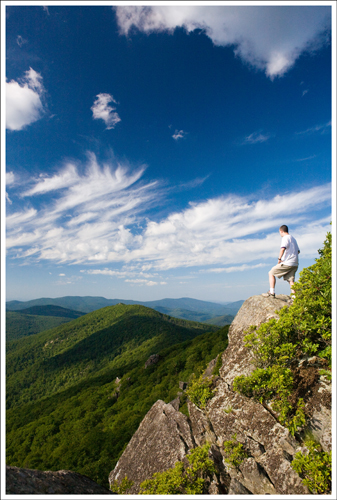

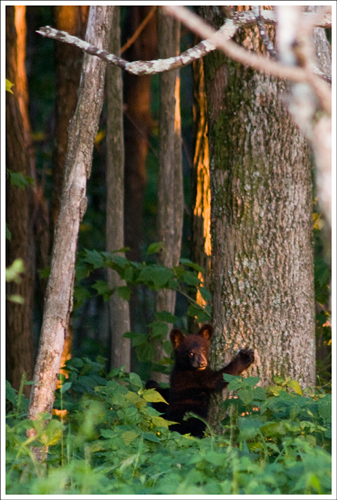
 Virginia Trail Guide


