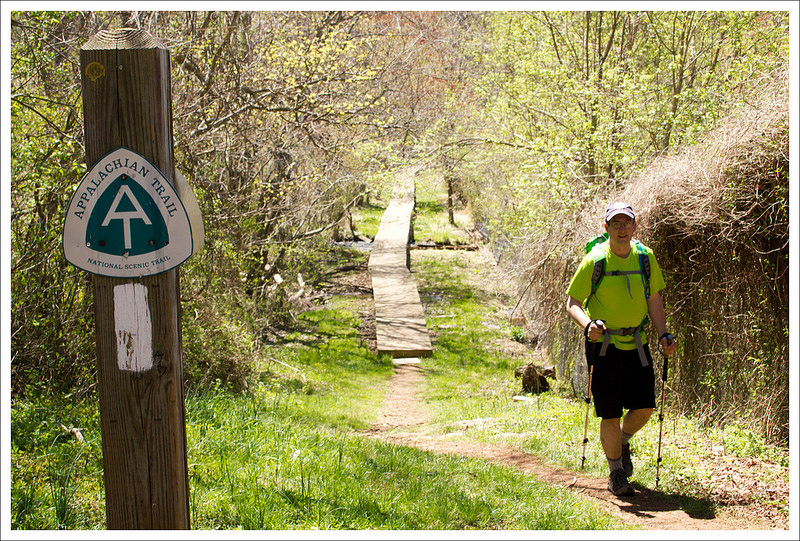
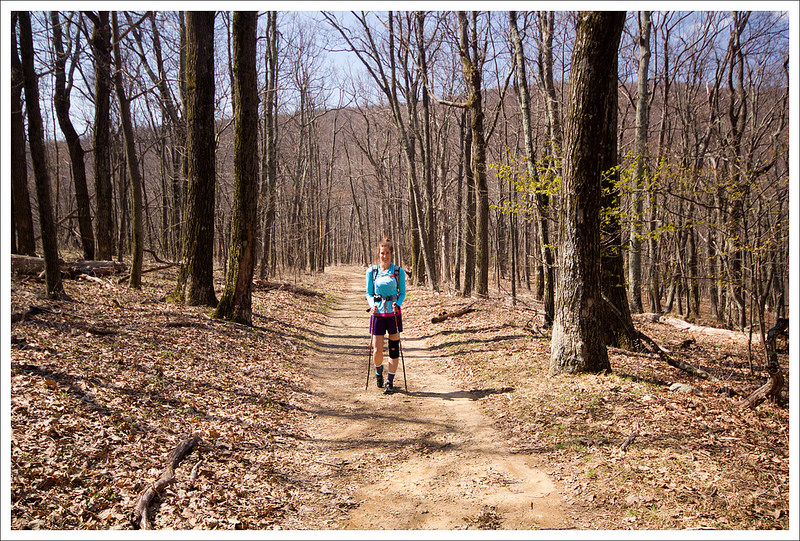
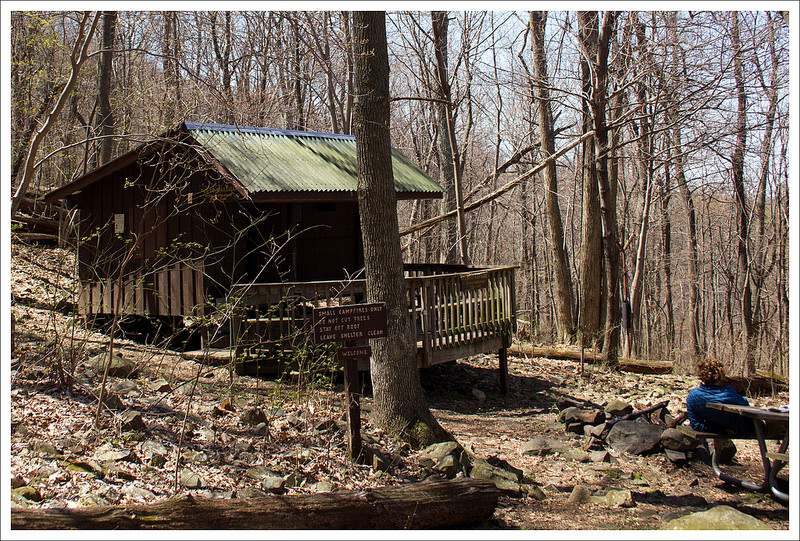
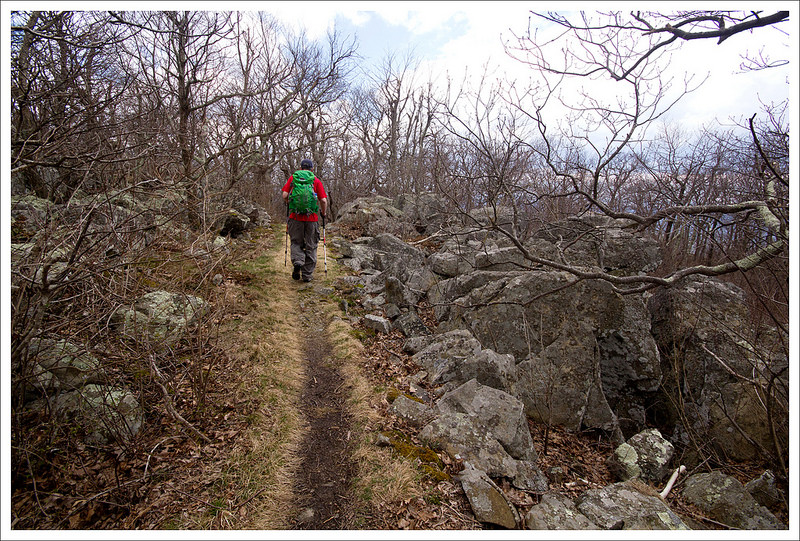
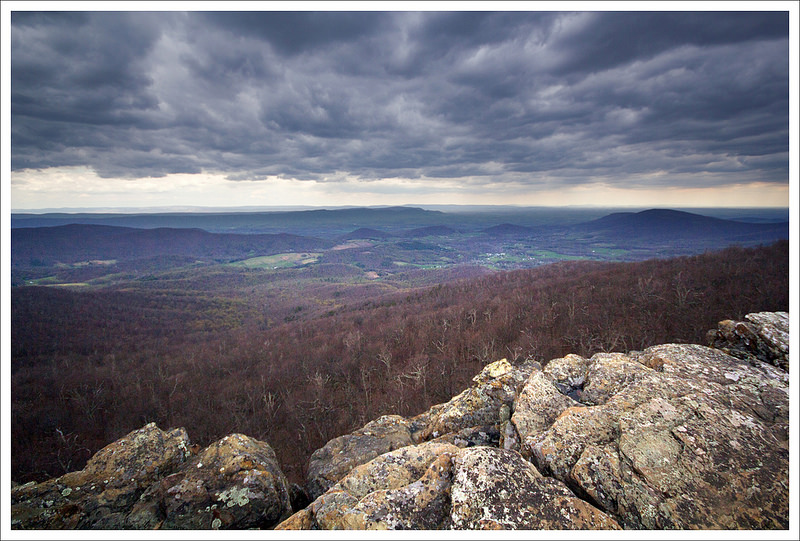
Appalachian Trail – Hog Camp Gap to the Tye River

This 19.1 mile overnight backpacking trip has amazing views and pretty stream scenery.  The terrain is relatively easy, so it’s a great stretch if you’re looking to cover higher miles without a ton of uphill climbing. Since this is a longer post, Adam is going to cover day one, and Christine will cover day two.

View the Full Album of Photos From This Hike

First Views
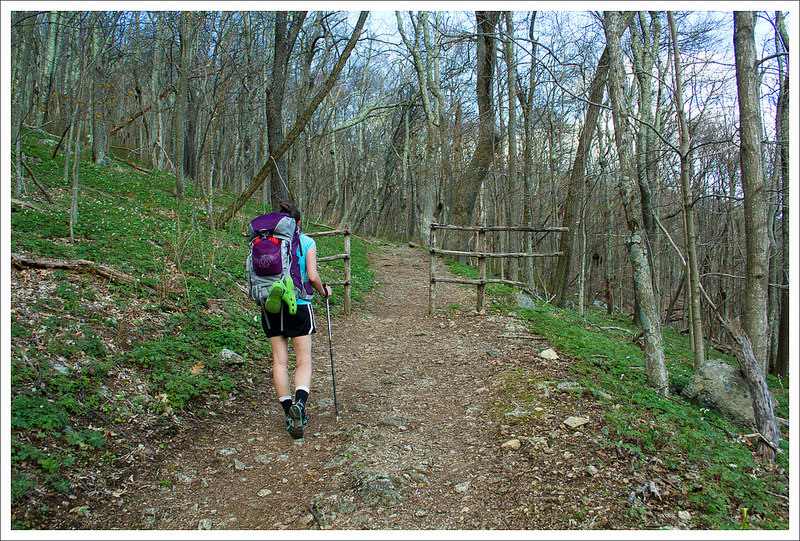
The first views on our hike came within about a mile! Notice Christine’s new purple backpack! She upgraded from her Gregory Z55 to an Osprey Viva 65. It has a lot of useful features – her favorite: the hydration sleeve is on the outside of the pack, which is very convenient!  Below: Parking at Hog Camp Gap; Adam climbs out of the gap; Old stone walls.

Parking at Hog Camp Gap Climbing Out of the Gap Old Farm Wall

Day One (10.4 miles)…

This hike had a very rough start and almost became the hike that never happened.  The morning of our trip, we loaded up our cars and headed out.  We needed to take two cars since we were doing a shuttle.  About ten minutes into the drive, I looked in the rearview mirror and saw Christine turning back around and heading home.  She had forgotten her hiking shoes and was only wearing flip-flops in the car – not the best idea for a backpacking trip.  We made a quick return home. When I pulled into the driveway, black metallic smoke started rolling out from underneath our hood.  Not good at all!  But we didn’t want to throw in the towel yet.  We took the smoking car to Bob Wade Auto World (the Subaru dealership where we bought the car), but found they weren’t open yet.  So, we decided to fill up on a big breakfast at Cracker Barrel and stop by again when they opened at 9:00.  We got to the dealership and explained the problem.  They have great customer service! We ended up with a free loaner car to use while our Outback was in the shop. They were so quick with the paperwork and processing that we were back on the road in less than 15 minutes. Saved!!

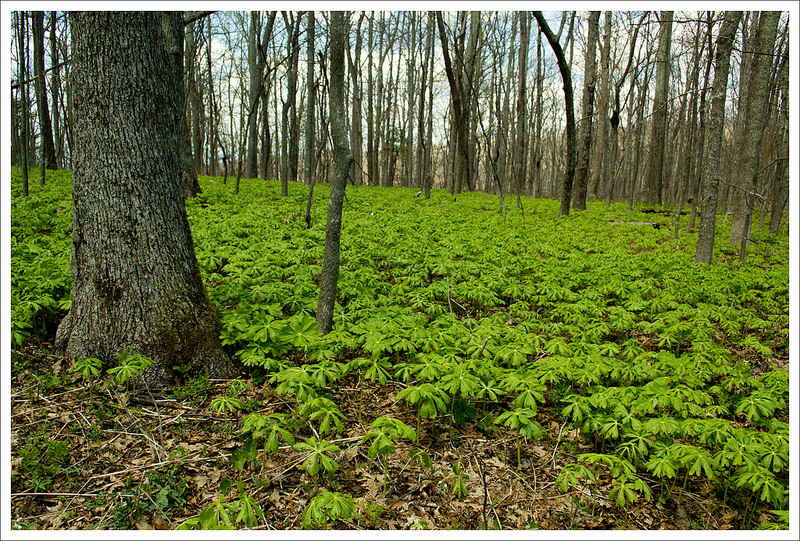
Mayapples
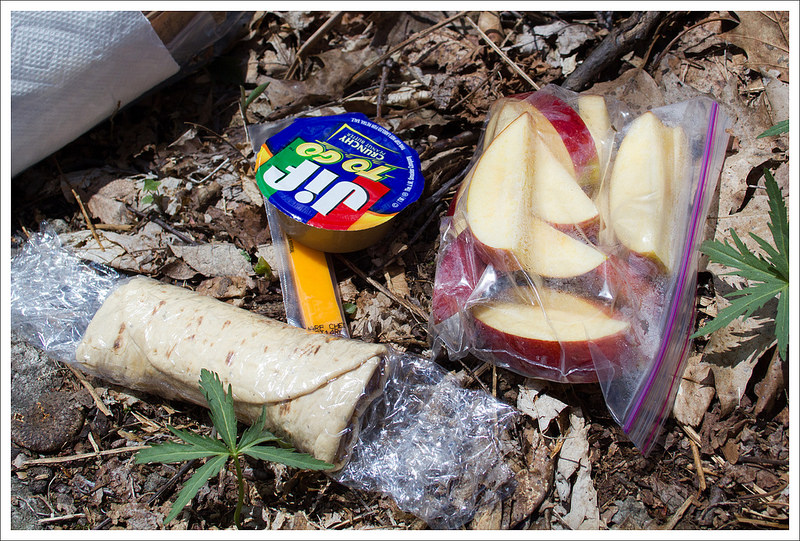
Beautiful green mayapples! Spring is finally here!  Below: Trillium along the trail;  Lunch stop!; A perfect swallowtail.

Trillium Lunch Butterfly

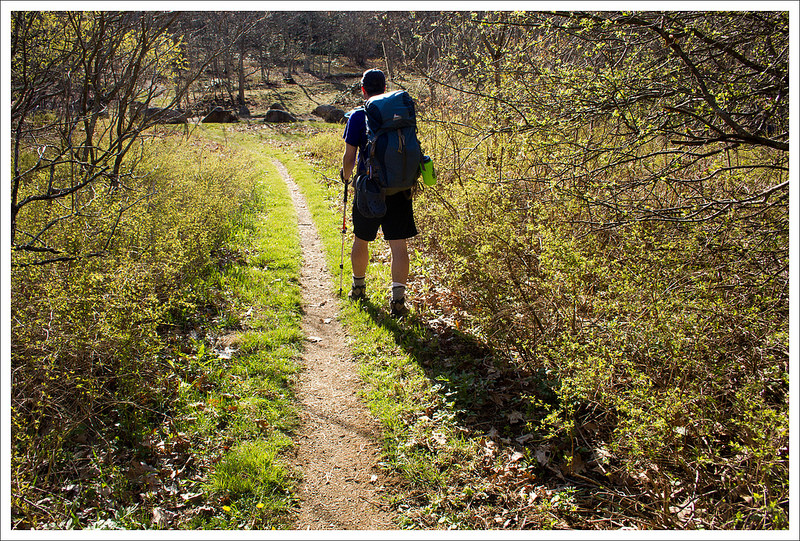
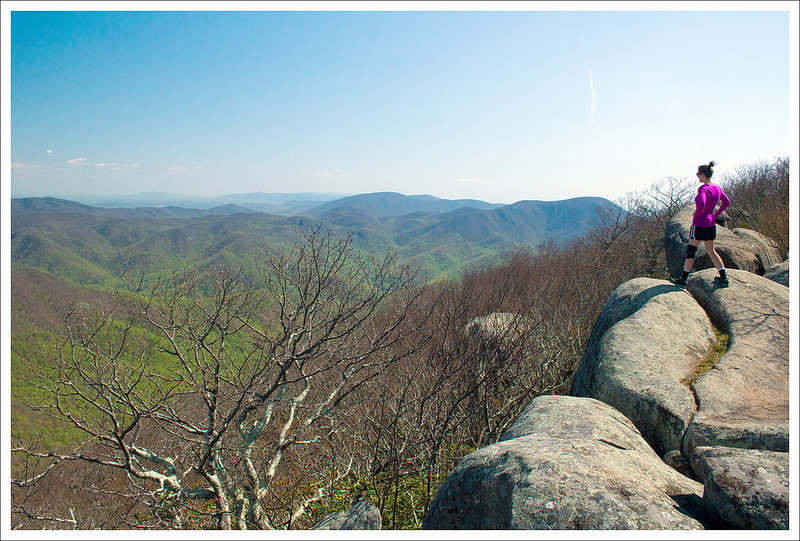
We dropped our first car at our finish line where the Appalachian Trail crosses VA Route 56.   We then headed to the starting point.  It took us about 50 minutes to get to Hog Camp Gap, since there is no direct road that parallels the AT.  The last piece of road to get to Hog Camp Gap is very rocky and filled with potholes, but we made it there safely.  The parking lot was already crowded as this is a great starting point for many hikes, whether you’re going to Mt. Pleasant, Cole Mountain, Spy Rock, or camping near Cow Camp Gap shelter.  We got all of our gear together quickly and walked through the large break in the fence to start our hike on the white-blazed Appalachian Trail, heading north.   The trail began to climb up a hillside and within 1 mile, we were blessed with astonishing views, looking over the Tar Jacket Ridge to catch views of the bald on Cole Mountain, Mount Pleasant, and Pompey Mountain.  I knew at this point our luck was turning for the best.  I found it hard to pry myself away from the views, but knowing that we had a lot of distance to cover,  we pressed on.  The trail then begins to gradually descend from the ridgeline and we crossed USFS 62 and Salt Log Gap at 2.2 miles.

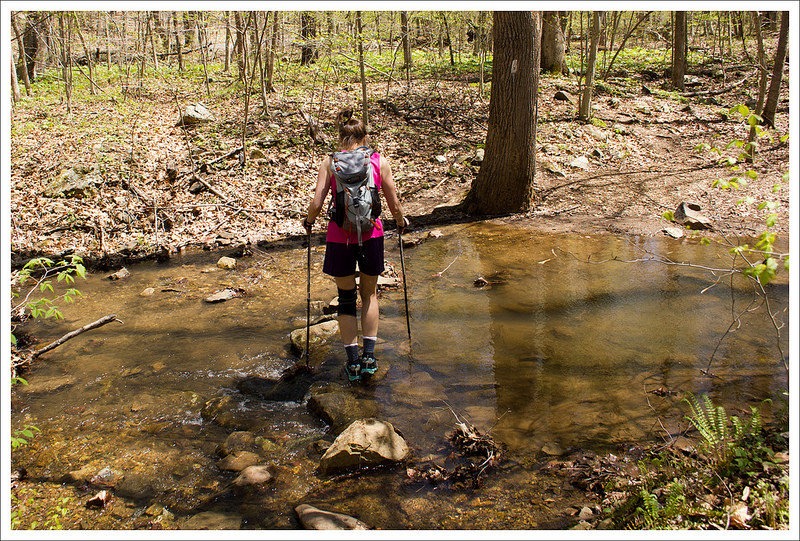
Stream Crossing
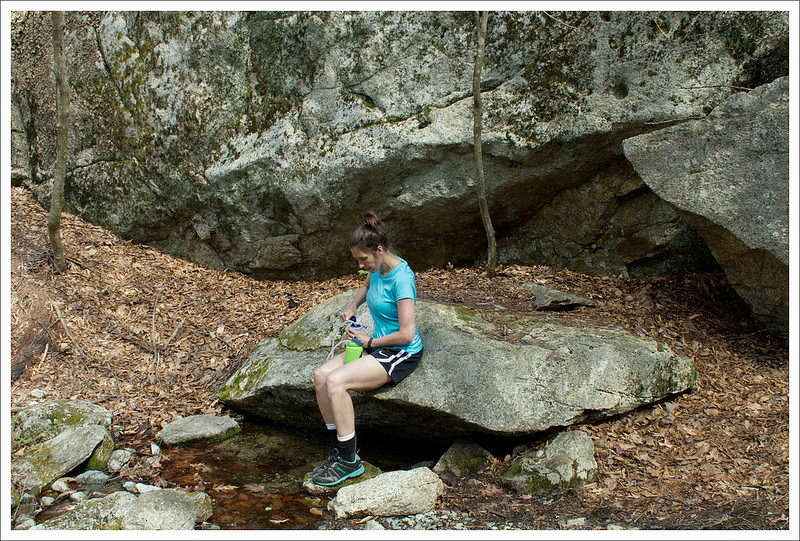
One of the few, small stream crossings on the hike.  Below: Seely-Woodworth Shelter; Christine filters water at Porters Field; Porters Field has space for lots of tents; Through the trees, we could see the ascent still ahead of us after dinner; Christine ascends the trail near Spy Rock; Finally at camp!

Seely Woodworth Shelter Filtering Water Porters Field
Mountain Ahead Spyrock Trail Camp

The trail was relatively flat for a good stretch of the trail going forward.  There were some views through the trees occasionally as we walked on, but the true treat was all the trillium that was on the trail.  This is by far Christine’s favorite wildflower.  She was hoping to see some along the trail and we were pleased to find entire hillsides filled with these flowers in perfect bloom.  We crossed USFS 246 at mile 3.6, Greasy Spring/USFS 1176A at mile 4.1 and reached the crossing of the North Fork of Piney River at mile 5.9.  We stopped and ate our lunch on the side of the trail.  The only excitement along this piece of trail was Christine swore she saw a bear, but it was just a person (dressed all in black) taking a lunch break far uphill from the trail (which we thought was an odd place to stop).  We pressed on along the trail and finally reached the Seely-Woodworth Shelter at mile 7.4.  When we arrived at the shelter there were several backpacks at the shelter, but no sign of people anywhere.  We took a long break and rested our feet.  We were joined shortly by Christine’s “bear man” who was doing a longer section hike and covering a lot of Virginia.  We shared some hiking stories (like how he never purifies water but has only got sick once).  Knowing that we had more miles to cover today, we strapped our heavy packs back on and continued.

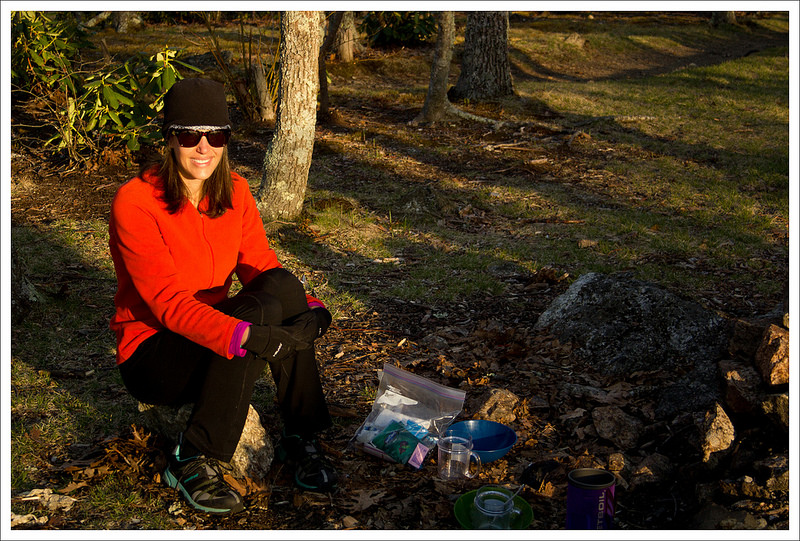
We reached a junction with Porters Field (a fire road that used to be a railroad trail) at mile 8.4.  We had read on the hiking blog of a friend (thanks, Wandering Virginia), about a water source near this junction.  We took this short side trail past a campsite and then headed downhill towards the sound of water.  Water was coming out steadily from under a large rock.  We decided to cook some dinner here.  While we both weren’t overly starving since we had eaten lunch not too long ago, this seemed like the best place to cook some dinner and refill water.  We were shooting to camp at Spy Rock, which is a dry camp, so we needed to carry enough water for breakfast After dinner, we made our way back to the AT.  Christine typically doesn’t like hiking with a full stomach, but because we needed to get to our camp site for the night, we pushed on.  We crossed over the Fish Hatchery Road at Montebello at 9.6 miles.  On the other side of the road, we saw the steep ascent up to Spy Rock.  The trail climbed up about 400 feet in .5 miles, but when we reached the top of the hill, we found our perfect campsite at the base of Spy Rock.

NOTE:  Hikers are no longer allowed to camp at the base of Spy Rock. Usage rules for this area were changed in 2019.  We camped there long before the rule change, and we’re thankful we had that opportunity!

Spy Rock View
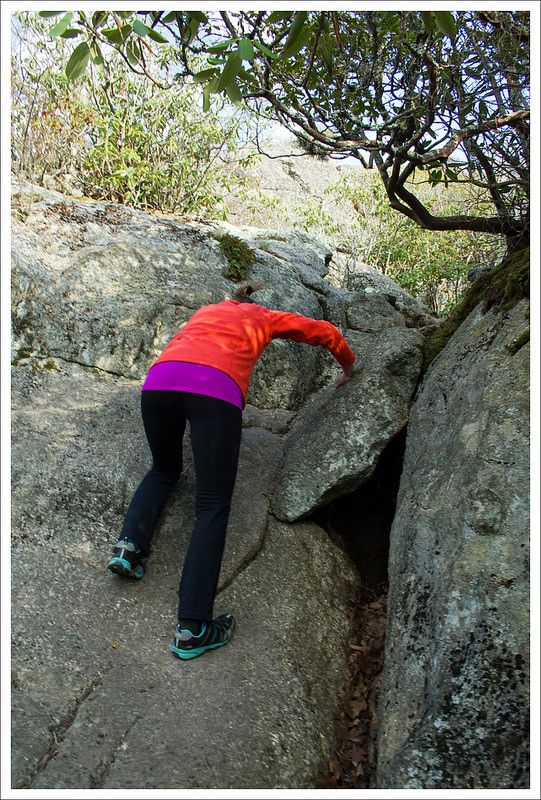
Spectacular views from Spy Rock. Below: Getting to the top takes some scrambling; Christine reaches the dome; Beautiful evening light on Spy Rock.

Climbing Climbing Beautiful Spot

We took off our packs and began to set up camp.  There were already a few campsites already claimed, but we found a nice flat spot with no rocks or protruding roots.  We had just bought a new two-person tent, the Big Agnes Copper Spur UL2, which was much lighter than our 3-person tent, and we were excited to try it out.  We set the tent and fly up and then made our way to check out the views from the summit of Spy Rock.  There is a little rock scramble up to the top of Spy Rock, but the 360-degree views from this spot are not to be missed.  We stayed up there a while to soak in as many views as we could, before making our way back to camp.  We had a long, tiring, day that started off stressful, so we were ready to go to sleep before the sun fully set.  We both read books for a while and then went to sleep.  Or rather, tried to go to sleep.  Right after sunset, the wind started to pick up.  At first it was an occasional rustle across the treetops, but by midnight it was moaning and howling over the mountains.

Beautiful Spot
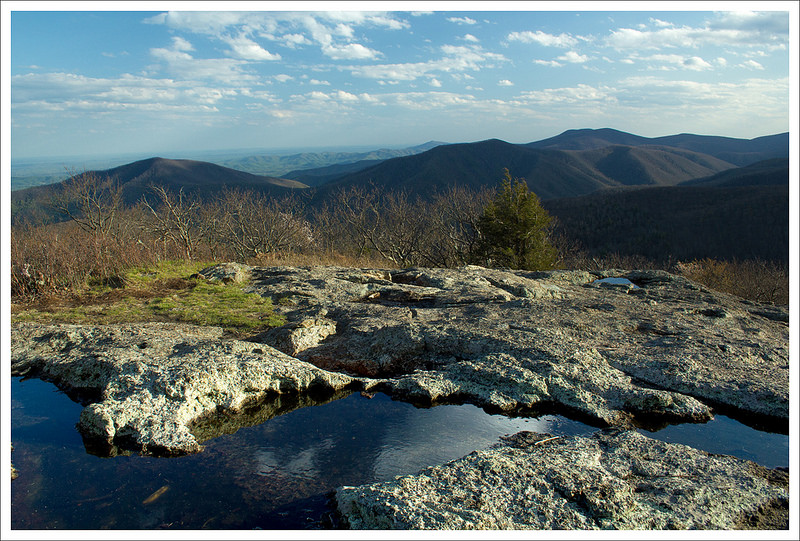
Adam enjoying a beautiful spot! Below: Reflecting pools on Spy Rock;  Sunset is ‘hiker midnight’.  By the time the sun went down, it was already cold and windy.  Christine was glad for the hood on her sleeping bag!

Spy Rock Bedtime

Day Two (8.7 miles)…

That was a rough night to spend in a tent!  Even with it staked and guylined, it rattled and shook all night long.  The wind continually caught under the fly and funneled through the tent’s mesh.  Even in long pants, a hat, and layers of fleece, I was cold in my 35 degree bag.  It wasn’t even that cold outside – the wind was just really brutal!  Neither Adam nor I got much sleep.  I found myself wide awake when the first hints of dawn light started to brighten the tent.

NOTE:  Hikers are no longer allowed to camp at the base of Spy Rock. Usage rules for this area were changed in 2019.  We camped there long before the rule change, and we’re thankful we had that opportunity!

Sunrise on Spy Rock
I had some canine companionship at sunrise. This beautiful dog is half German shepherd, quarter Malamute and a quarter wolf! Below: Day Two got off to a very cold start; Spy Rock has several spacious, flat campsites; Adam checks out the few from Maintop Mountain.

Cold Camp Maintop

I told Adam I wanted to climb Spy Rock again to watch the sun come up.  He decided to stay back.  I grabbed my camera, scaled the rock and found a perch facing east.  It was a beautiful, though cloudless, sunrise.  I thought I was alone on the top of the rock, but suddenly a huge white dog we had met the night before came bounding across the rock and decked me.  He was friendly, and I was fine, but his owner was embarrassed and came chasing after the dog.   I stayed on Spy Rock watching the sun come up until I couldn’t take the wind and cold anymore.

When I came down, Adam was already in the process of breaking down camp.  We had a quick breakfast of oatmeal and coffee, and were back on the trail by around 7:30.   Day two of this trip had a bit more climbing than the first day.  Our first ascent was that of Maintop Mountain.  It was a moderate ascent with one nice view near the summit. I started the morning in a fleece jacket and gloves.  By the time we reached the summit, I had stripped them off.  Climbing really warms you up!

Confessions
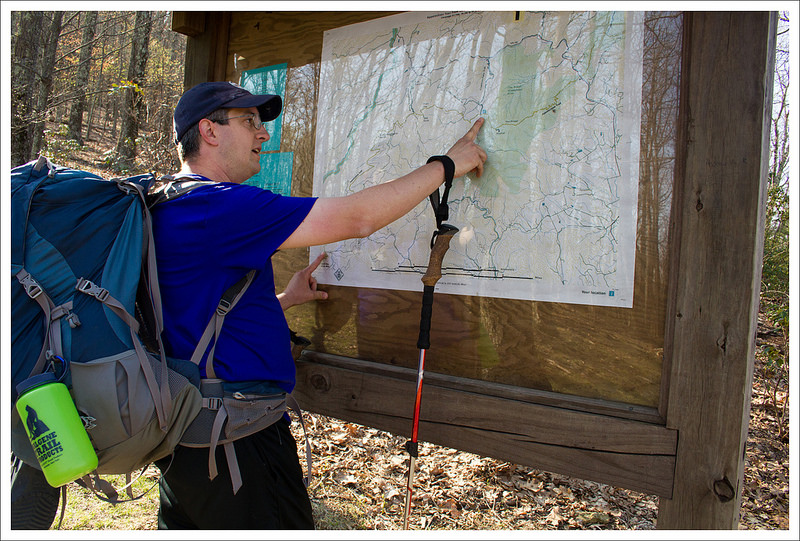
Adam writes his confession in the Priest Shelter journal.  Below: Adam approaches FR826; Adam checks out the distance covered at the information board marking the beginning of the Priest Wilderness; The Priest Shelter.

Approaching the Fire Road Priest Wilderness Priest Shelter

From there, we descended into Cash Hollow.  We passed a southbound section hiker and a group of Boy Scouts.  We crossed a couple gravel roads – 826 and 526.  Off-roaders really enjoy these roads – they’re very rugged and tough to drive unless you have a serious 4WD vehicle.   After the second road crossing, signs and an informational board informed us that we had just entered The Priest Wilderness.

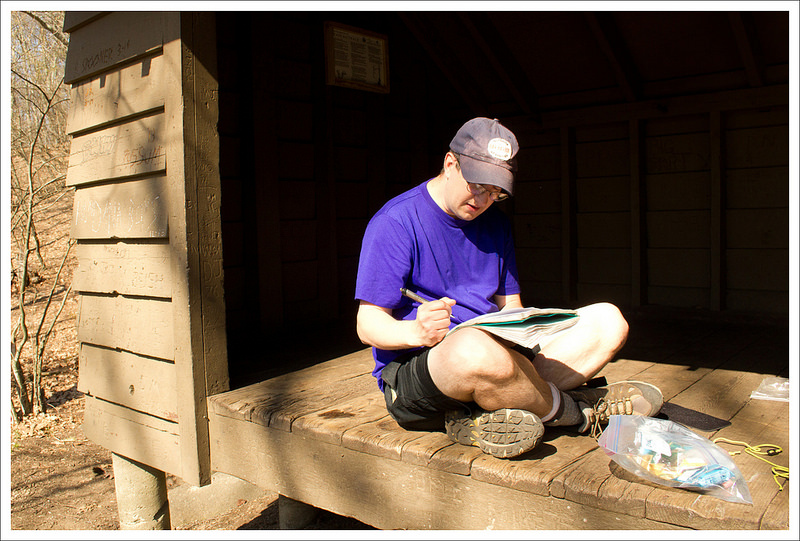
We had about a mile of climbing to reach the Priest shelter and the ridgeline of the mountain.  The climbing is really pretty moderate, but it seemed tough to my tired legs and sleepy mind.  We stopped at The Priest shelter for a snack and rest.  I changed into shorts – the day was warming very quickly!  Adam and I both made our ‘confessions’ in the Priest journal.  It’s one of the funniest we’ve seen along the AT – reading everyone’s confessions is definitely worth a stop!

Priest Summit
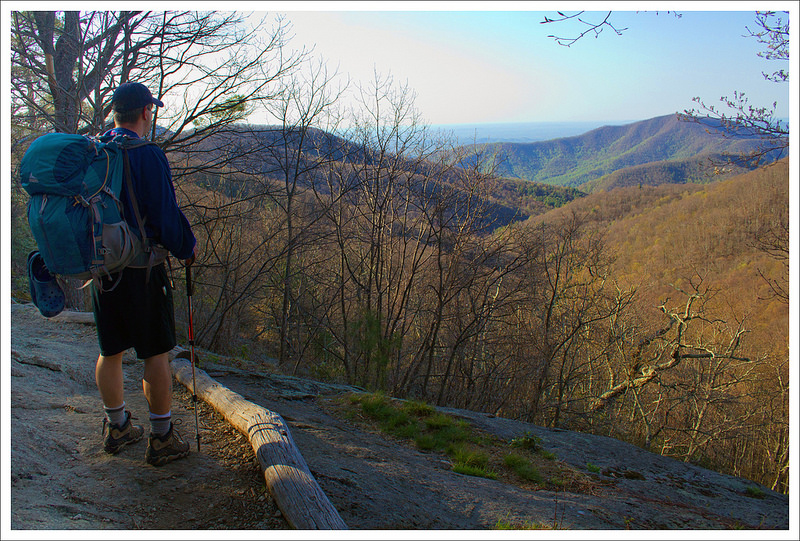
Christine enjoys the view near the Priest summit. Below: Spring slowly creeps up the mountainsides; Trillium were everywhere; Adam approaches a nice view from the Priest.

Priest Trillium Descending

From there, we completed our last couple hundred feet of ascent to the top of the Priest.  Near the top, we enjoyed amazing views of the valley and had a chance to see an adult bald eagle soar by on the wind.  The rest of our hike was a long, 4-mile, 4,000 foot descent to the Tye River.

We took it slowly, enjoying wildflowers along the way! The trail was abundantly lined with trillium, wild violets, and wild geraniums. Both of us remarked that we were glad to not be climbing up this side of the mountain! Southbound AT hikers experience one of Virginia’s toughest climbs when they encounter the Priest!

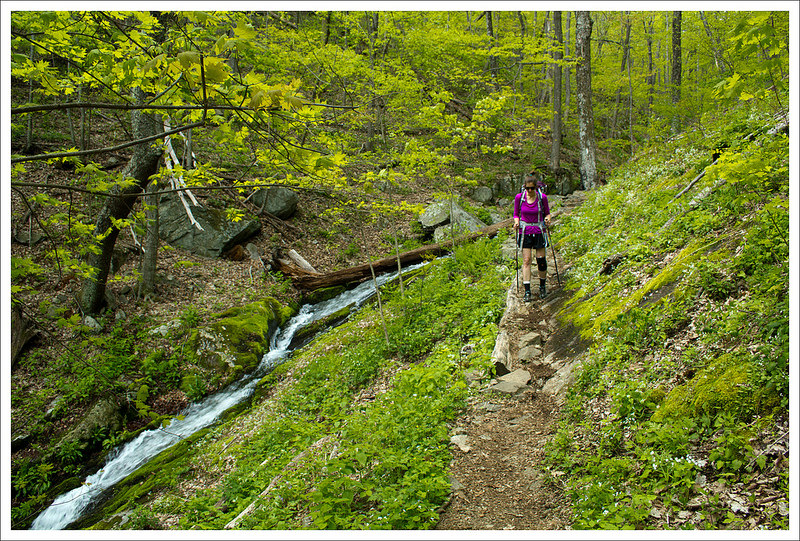
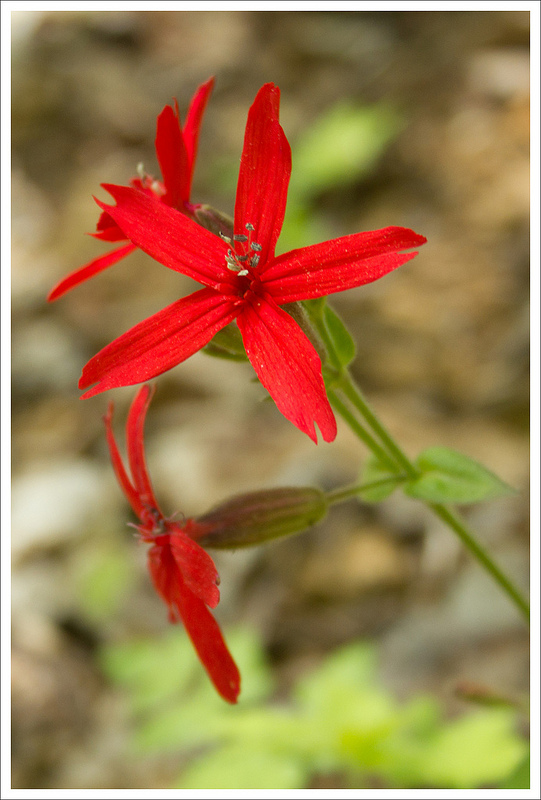
The first mile of the descent was the steepest.  As the grade moderated, we came to another outstanding overlook.  The opening in the trees revealed lush Virginia countryside – farms and ponds.  At this elevation, the trail was much greener.  Leaves were opening in the canopy and the ground cover was brilliant green.  We crossed Cripple Creek in several places.  The rain a couple days earlier had filled the stream and created several beautiful waterfalls.  We enjoyed walking through the woods and listening to the sounds of falling water.  We saw even more wild flowers – a hillside of scarlet catchfly was especially beautiful!

Priest Views
Classic Virginia terrain! Below: Walking alongside Cripple Creek; The latter part of the descent was smooth and gentle; Scarlet Catchfly wildflowers; Post-hike at Devil’s Backbone.  Is it totally horrifying that we go out to eat without showering?  Nah!

Cripple Creek Descent
Scarlet Catchfly Devil's Backbone

Eventually, we could see the sunlight catching on car windshields through the trees.  We were both pretty tired and happy to be back at the car!  We had covered almost 20 miles in roughly 24 hours.  It’s the furthest we’ve ever hiked in that time period, so we felt pretty accomplished.

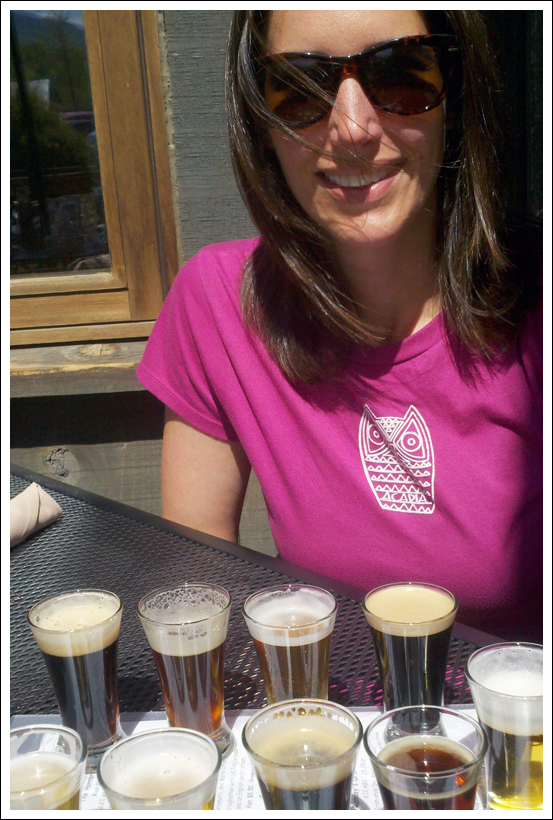
We had a long car shuttle to get back to Hog Camp Gap.  After picking up the other car, we drove along the Blue Ridge Parkway to Reed’s Gap so we could have lunch at Devil’s Backbone.  It’s always great to eat a HUGE plate of food after a big hike – fries, a grilled brat and beer for me!

Trail Notes

  • Distance – 19.1 miles [Day One] [Day Two]
  • Elevation Change – About 3172 ft.
  • Difficulty – 4.  Mostly for distance.  This section of the AT has little climbing uphill overall, but the hike down The Priest is quite steep. 
  • Trail Conditions –  3.5.  The trail is well maintained and in good shape.  We did feel the hike down from The Priest was really rocky and hard on the feet and ankles. 
  • Views – 5.  This hike has AMAZING views from Tar Jacket Ridge, Spy Rock, and The Priest.
  • Streams/Waterfalls – 3.5.  The best views are along Cripple Creek, near the end of the hike, where you can see a small waterfall and a scenic creek surrounded by wildflowers.   There are options for filling up water near Greasy Spring, Porters Field, the Seeley-Woodworth Shelter, and Cripple Creek.
  • Wildlife – 2.  We didn’t see much wildlife other than birds along the trail.  We did have a great encounter with a male black-headed grosbeak, who was singing beautifully along the side of trail.
  • Ease to Navigate – 4.  Just keep following the white-blazes and pay attention to junctions to stay on the Appalachian Trail. 
  • Solitude – 3.  We didn’t run into too many people on our trip.  Spy Rock had a decent number camping at the top.

Download a Trail Map (PDF)

Directions to trailhead:  Requires a shuttle.  Park one car at the finish.  From the Blue Ridge Parkway, head east on VA-56/Crabtree Falls Highway for 11.2 miles.  Park car in large parking lot where the AT crosses the road.  From this point to reach Hog Camp Gap with your second car to start the route, continue east on VA-56/Crabtree Falls Highway for 6.9 miles.  Turn right on to VA-151S/VA-56E.  In 10.5 miles, take a right on to US-29 South.  In 3.1 miles, take the US-60 exit towards Amherst.  Take a right at the exit ramp to go on US-60 heading west.  In 18 miles, take a right on to State Route 634.  In 1.6 miles, take a right on to State Route 755/Wiggins Spring Road.  This road turns to gravel with large pot holes.  Follow this for 2.7 miles until you reach the parking lot where the Appalachian Trail crosses.  Park your second car here.  Go through the wooden fence and pick up the Appalachian Trail, heading north.

Appalachian Trail – Jenkins Gap to Front Royal (Route 522)

This 8-mile hike completes our Appalachian Trail mileage in Shenandoah National Park.   There isn’t much to see along this section of trail – the views aren’t great and the stream is fairly run-of-the-mill, but we’re still happy to say we’ve walked every step of the AT in Shenandoah!

View the Full Album of Photos From This Hike

Adam Finishes
Adam coming off the trail on Route 522 in Front Royal.

Christine Says…

We finally finished hiking the Appalachian Trail through Shenandoah!  For two years, less than 5 trail miles were keeping us from that distinction.  It’s really quite silly, but this final stretch of trail has been somewhat of a mental burden for me! The reason was sort of two-fold.  The first sticking point – in order to most efficiently cover the miles, we needed to do a car shuttle. I didn’t want to spend the gas money, and honestly, I just don’t like to drive by myself.  Shuttles are just a pain when both cars are yours! The second problem was that this stretch of trail just seemed… boring. I will admit that a bad day hiking is still better than a good day doing many other things, but I had a hard time getting myself psyched-up to hike this stretch.

Finally, faced with a beautiful spring day and a lack of plans, I acquiesced.  We dropped our first car off in a small AT parking lot on the side of 522.  Then we headed into the park and left a second car at Jenkins Gap –where we came off the trail after our last section of the AT in SNP.

From Jenkins Gap, we had a steady uphill to the summit of Compton Peak.  At the summit of Compton, there are blue-blazed trails leading to viewpoints on both the east and west sides of the mountain.  Each viewpoint lies .2 miles off the AT.  We decided to only visit the west summit (it has better views.)  The east summit has some interesting columnar rock formations.  If you’re into geology, they’re definitely worth a peek!

Compton Peak
The summit of Compton Peak offers two viewpoints – each about .2 miles off the AT. We went to to just the western view. Below: Ascending Compton Peak on the Appalachian Trail; Adam passes one of several large boulders on the trail; After Compton Gap, the trail is blazed both white (AT) and yellow (horse trail) for a while as it follows a fire road.

Ascending Compton Descending Compton Appalachian Trail at Compton Gap

After the summit, we descended for almost a mile into Compton Gap.  After Compton Gap, the AT is shared with the yellow-blazed Compton Gap trail for about 1.7 miles.  The hiking is along this section is wooded trail without many distinguishing features – no streams or overlooks to speak of.  The trail is wide, flat and very easy to walk.  You’ll likely pick up a lot of speed along this stretch!

At roughly 4.9 miles into the hike, we reached the park boundary.  There is a sign marking the beginning of private land.  Just south of the park boundary, there is also a backcountry permit station.  Permits are free and self-service in Shenandoah.  If you’re going to camp in Shenandoah’s backcountry, all you need to do  is fill out a tag and tether a copy to your pack.  It’s really easy!

Right after we departed the park, we came to the one viewpoint from this stretch of Appalachian Trail.  Possums Rest has a decent, but slightly obstructed view, of rolling foothills.  It’s worth a stop, but there are definitely many better views along the AT in Shenandoah.

From Possums Rest, the trail descended briefly but steeply through a jumble of rocks.  In about another .7 miles, we reached the Tom Floyd Wayside – the first backcountry shelter located north of the park.  It’s a nice spot with a nearby water source.  We chatted with a section hiker from Washington, DC.  He had completed a thru-hike the year before, but evidently the trail called him back!

Possums Rest
There is one obstructed viewpoint, called Possums Rest, shortly after passing out of the park boundary. Below: Just inside the boundary, there is a backcountry permit registration station; Park boundary; Descending a short, rocky section after Possums Rest.

Permit Station Park Boundary Descent from Possums Rest

After Tom Floyd, the trail continued very gradually downhill.  As we walked along, we could see the advance of spring on the lower elevations.  Redbuds were blooming, tiny green leaves were opening in the canopy and the grass along the trail was growing quickly.  We crossed Rt. 601, and a little over a mile later, Moore Run and then Rt. 602.   The stream was crossing was just an easy rock-hop.

After crossing 602, we had a short uphill before one final descent to Rt. 522 in Front Royal.  The last part of the hike followed a chain link fence for over a mile.  I’m not sure if the fence was just marking private land, or if it was part of the Smithsonian Conservation Biology Institute.  Either way, it is one of the less scenic parts of the AT.

The last quarter mile of the hike passed between fenced pasture land and a residential neighborhood.  After crossing a small wooden footbridge, we found ourselves back at the car.  On our way out, we saw a few of the Smithsonian’s animals walking down a hillside.  They appeared to be some type of antelope – kind of neat!  Before going back to pick up our second car, we stopped at Spelunker’s in Front Royal for lunch.  They make fantastic burgers and milkshakes!  I was thrilled to see gingersnap was their shake flavor of the day!

While this hike didn’t provide much reward with views or waterfalls, I’m still really glad we did it.  I’m happy to be officially and technically finished with Shenandoah’s AT miles!

Adam Says…

It was great to finally finish the AT section through Shenandoah National Park!  With the entire trail being 2180 miles from Georgia to Maine, the section through Shenandoah National Park is less than 5% of the entire trail.  Daunting to say the least, but we still feel we have accomplished something measurable.  There are about 550 miles of the AT through Virginia, making it the longest section through any one state.  Virginia is also a state where a lot of thru-hikers quit, feeling that they will never get through the state (often called the “Virginia Blues”).  The section through Shenandoah is more like 19% of the AT through Virginia.  Most of the thru-hikers fly through Shenandoah National Park, averaging over 20 miles per day.  The climbs are not as tough as in many sections and they have worked into their “trail legs”, gaining the strength to cover many miles per day.

Tom Floyd Wayside
Tom Floyd Wayside is outside the park boundary and is the last shelter before reaching Front Royal.  Below: Redbuds blooming at the lower elevations; Christine crossing Moore Run; The last mile or so of the trail followed a long, chain link fence.

Redbuds Moore Run
Fenceline Fenceline

After we dropped our car off at the trail crossing of Route 522, we made our way into the park and parked at Jenkins Gap.  While you will drive about 12.4 miles on Skyline Drive, the trail through the park and out is a lot shorter.  From the parking lot, you join the Jenkins Gap Trail for just about 100 feet and then take a right to join the white-blazed Appalachian Trail, heading north.  The trail took us through some storm-damaged areas of trees, leading us through one of the two ascents on this trail.  We gained about 500 feet up to Compton Peak.  At 1.4 miles, we reached a post which pointed out to two short blue-blazed trails that lead to views from Compton Peak.  Since we knew there wasn’t going to be many views on this trail, we decided to take a left and check out the West Compton Peak view.  This side trail of .2 miles was a rocky uphill trail that led to a small, but scenic viewpoint.  We made our way back the way we came to reach the post and then took a left to continue on the Appalachian Trail heading north.  The trail descended again, as we dropped 500 feet in about .8 miles.  If you did the side trail to Compton Peak, add another .3 miles to any of the distances given from this point forward.  At 2.2 miles on the AT, you cross over Skyline Drive at Compton Gap.  At 2.4 miles, you reach a junction with the Dickey Ridge Trail and at 2.7 miles, you reach a junction with the Springhouse Trail.  The Springhouse Trail allows for horses and actually shares the next section of the AT, which is why you will see both yellow and white blazes.  The trail is fairly level at this point.

At 3.8 miles, you reach a junction with the Compton Gap Trail.  This is where horse-riders would come off the AT, since they are not allowed further on the trail.  Take a left here to stay on the white-blazed AT.  You will soon come across an area where backpackers can fill out paperwork for backcountry camping permits and continuing further, you will reach the Shenandoah National Park boundary at 4.0 miles.  Within a short distance, you reach the area known as Possums Rest, a very small overlook that has some views.  The trail at this point goes down a very steep and rocky area as you go below Possums Rest.  The trail descends for most of the rest of the way At 4.7 miles, you reach the Tom Floyd Wayside shelter, which also has tent sites, a privy, and a nearby spring.  Continuing from the Tom Floyd Wayside, you descend further, passing by other signs for the spring.  At 5.1 miles, you reach a junction with a side trail to VA-601.  From here, you have a couple of stream crossings over Moore Run and at 6.5 miles, the trail crosses VA-602.  The trail at this point goes up a steep upgrade, as you gain over 300 feet in .4 miles.  Once you reach the crest of the hill at 6.9 miles, the trail descends again as you go through a grassy area.  You walk along a long fenceline and behind some people’s houses before reaching the boardwalk which takes you back to your car at 7.7 miles.

Spelunkers
Decadent lunch at Spelunker’s in Front Royal – cheeseburger and a gingersnap milkshake!  Below: The Smithsonian National Zoo has a conservation facility in Front Royal; If you’re lucky, you might catch a glimpse of the animal – we saw some kind of antelopes; A sweaty selfie at the finish line.

Smithsonian Antelope Selfie

Once we made our way back to the car, we stopped at Spelunkers.  There was a large bike ride being conducted nearby, so the place was quite crowded.  One of the great things about hiking for us is that it allows us to eat whatever we want after a hike and not worry about the calories.  We made our way from there back to our first car and then headed out of the park.  It was a gorgeous day for a hike with perfect temperatures.

While this hike isn’t the most scenic, this was definitely one I will remember since it was our “finish line” though SNP.  I’m so grateful to have a wonderful hiking partner to share all of these experiences.

Trail Notes

  • Distance – 8 miles (includes a visit to the Compton Peak viewpoint)
  • Elevation Change – About 1900 ft. but mostly downhill.
  • Difficulty – 2.5.  There are really only two climbs on this hike – one up Compton Peak and one shorter one near the end of the hike.  All in all, it’s a moderate, mostly downhill hike.
  • Trail Conditions –  4.  Nicely maintained section of the Appalachian Trail.  In fact, we saw a crew member trimming grass back when we hiked.
  • Views – 2. The view from Compton Peak is decent, but it’s not actually on the trail.  Possums rest is small and a bit obstructed.
  • Streams/Waterfalls – 2.  Moore Run was flowing nicely when we visited.
  • Wildlife – 2.  You may get to catch a glimpse of zoo animals at the Smithsonian facility at the end of this hike!
  • Ease to Navigate – 3.  There are lots of trail junctions and shared paths.  Just make sure you follow the white blazes and you’ll be fine.
  • Solitude – 2.  We saw many dayhikers and backpackers on this stretch of trail.

Download a Trail Map (PDF)

Directions to trailhead:  We parked one car at the parking lot on US-522 in Front Royal, which is 4.7 miles from where US-340 intersects with US-522.  We then drove to northwest on US-522 for 2.8 miles.  Take a left on E. Criser Road.  In .7 miles, take a left on US-340.  In .2 miles, take a left to enter Shenandoah National Park.  Drive 12.3 miles to park at the Jenkins Gap parking lot on the right.  Join the Jenkins Gap Trail from the parking lot for a short distance, before taking a right on to the Appalachian Trail, heading north.

The Marshalls

This easy 4.5 mile out-and-back along the Appalachian Trail offers great views in many places!  It would be a perfect family hike or a leg-stretcher for folks riding along Skyline Drive.

View the Full Album of Photos From This Hike
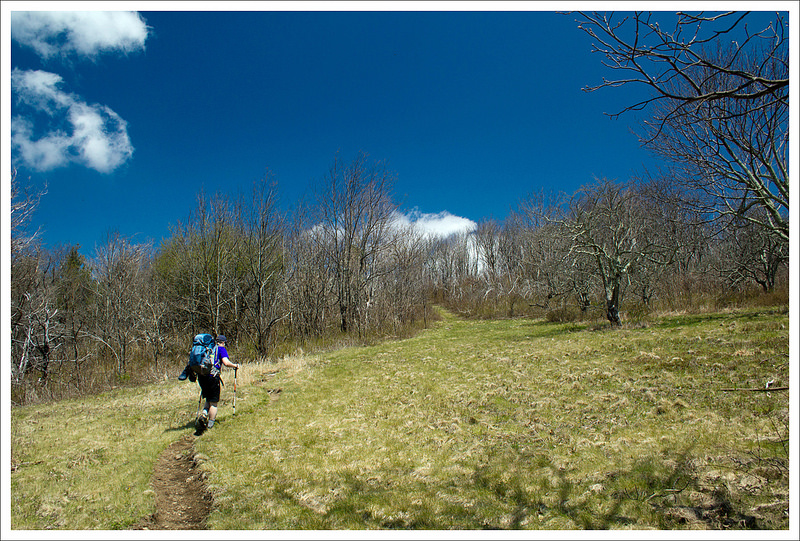
Adam on North Marshall
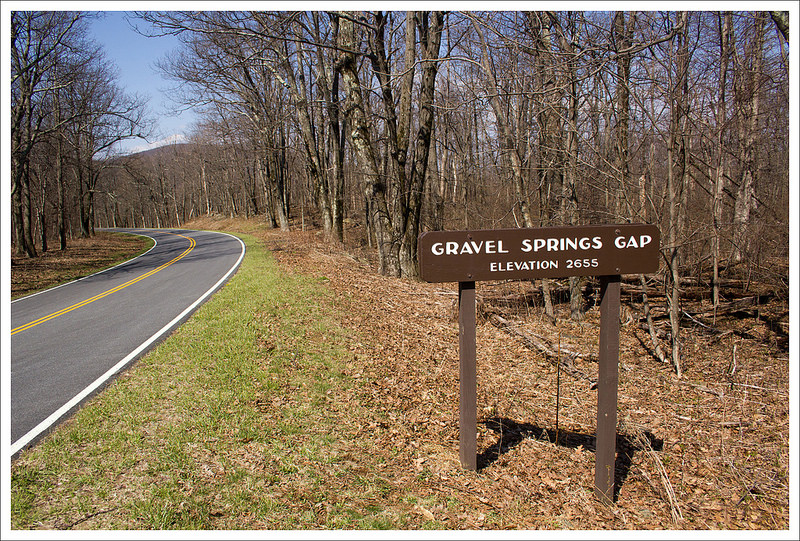
Adam takes in the view from North Marshall. Below: This hike starts from Gravel Springs Gap; Christine on the AT; Adam approaching South Marshall’s summit.

Start Point On the Appalachian Trail On the Appalachian Trail

Adam Says…

This is one of those hikes where you get a lot of payoff for minimal effort.  There are some great views from both South Marshall and North Marshall along the way, making this an excellent family hike.  Technically, both peaks are part of the larger Mount Marshall, though they feel like two distinct mountains. We had covered the Marshalls on a longer section hike along the Appalachian Trail, but we felt this would be a great out-and-back that most people could do.

We started our hike from the Gravel Springs Gap parking lot.  We crossed the road and picked up the white-blazed Appalachian Trail heading north.  The trail goes through a wooded area and has a gradual ascent.  After .9 miles, you reach your first grand set of views on your climb up South Marshall.  Continuing a little further, there are a couple of other viewpoints along the ridge.  At 1.1 miles, you reach the highest point of the trail over South Marshall and begin your descent.  At 1.6 miles, you cross Skyline Drive to continue on the Appalachian Trail and begin your ascent up North Marshall.

South Marshall Views
These views from South Marshall are the first on the trail.  Below: Great view from South Marshall; Christine enjoys the rocky summit; There is another viewpoint along South Marshall’s ridge.

South Marshall Views South Marshall Views from South Marshall Ridge

The trail up North Marshall is a steeper section than what you experienced at South Marshall.  Around 1.7 miles, you reach a very steep, rocky section, resembling a stony staircase up the side of a hill.  At the top of this staircase, you see a large, monolithic rock.   On our climb towards this rock, we heard a loud crow that was cawing at us madly.   The toughest part of the climb was now over.   I noticed a small, unmarked path around this monolithic rock and decided to explore.  I was pleased to find a few rock outcroppings on this path that led to more spectacular views and you can even see Skyline Drive snake through the mountains.  The crow continued to announce his displeasure and I’m guessing there was a nest we were nearing.  As I made my way around one of the rock outcroppings, I stuck my hand in a big pile of bird droppings – I’m guessing the crow got his last laugh.  After cleaning up, we rejoined the trail.  Around 2.2 miles, we reached the last set of views from North Marshall.  We continued just a little further to reach the summit, marked only by a small metal survey marking post in the ground, to bag a second peak on the trail.  We made our return trip from this point, reaching our car at 4.5 miles.

Ascending North Marshall
After crossing Skyline Drive, the climb of North Marshall begins.

The North and South Marshall Mountains were once known as Bluff Mountain, but were renamed in honor of John Marshall, who served as the fourth Chief Justice of the United States, serving for 35 years (the longest-serving justice in our history).  He was appointed by President John Adams and previously served as Secretary of State and leader of the Federalist Party.

Christine Says…

We’ve been spending a lot more time hiking than writing lately!  That’s a great thing (for us), but it’s leaving us quite a backlog of posts to pull together.  This hike of The Marshalls is a route I wanted to cover for families and other people looking for shorter/easier hikes.  I feel like most of the moderate hikes in Shenandoah are already heavily traveled and well-known.  The Marshalls offer spectacular views, but I doubt many casual hikers even know they’re there!

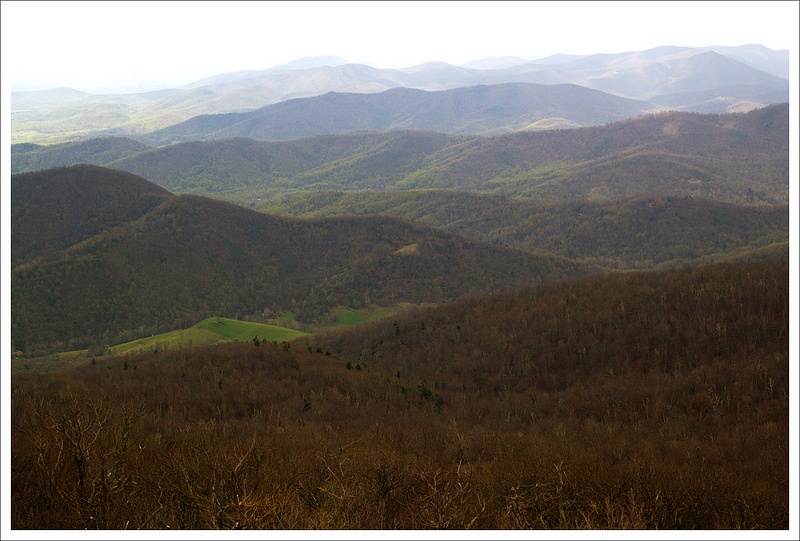
We had great weather at the beginning of our hike.  It was sunny and breezy – perfect for hiking.  It was still early enough in the season that trees in the mountains were bare and only a few wildflowers were starting to bloom.  Whenever we came to open vistas, we could see the vivid green color of spring trees starting to creep up the mountainsides from the lower elevations in the valley.  It was beautiful!

Mountain Layers
More great views are to be found along an unmarked path that departs the Appalachian Trail. Below: The views from the unmarked path were fantastic; Adam making his way down from his perch.

Off Trail Off Trail Off Trail

When we hiked this area last time – on a backpacking tip in 2012, we skipped climbing the unmarked trail to the cliff-sides on North Marshall.  I’m glad we stopped on this trip, because the rocks were fun to climb and provided some especially nice off-trail views.

After the cliff views, we reached the trailside view from North Marshall pretty quickly.  I couldn’t remember if there were any additional views along the ridge, so we walked along a couple more tenths of a mile until we found the survey marker.  After the survey marker, the trail descends into the deeper woods.

North Marshall View
The view from North Marshall with the approaching front. Below: Walking the North Marshall ridge; South Marshall’s view was a lot different when we passed by on the return leg of our trip!

Walking North Marshall Ridge Stormy Weather

On our return hike, the weather shifted quickly.  What had been a pleasant, sunny day quickly turned cloudy and windy as a front approached.  We could see shadowy columns of rain off in the distance and the clouds looked dark and angry.  We hiked faster than usual back to the car.  We made it back to the car before any rain fell.

We decided to drive home through Luray so we could grab something quick for lunch.  In this case – fried chicken!  It’s not something I eat very often, but I always feel that hiking earns me an occasional indulgence.  🙂

Trail Notes

  • Distance – 4.5 miles
    (Check out the stats from Map My Hike)*
  • Elevation Change – About 900 ft.
  • Difficulty – 2.  There is only one steeper section on the North Marshall Mountain, but it a short stretch. 
  • Trail Conditions – 4.  The trail was in excellent shape. 
  • Views – 5.  There are so many spots to get views on this hike. 
  • Streams/Waterfalls – 0.  Non-existent.
  • Wildlife – 2.  You may see deer on this hike and a few soaring birds. 
  • Ease to Navigate – 4.  Just follow the white-blazed AT.  Be careful and keep your bearings if you venture off the trail to get the views near the monolithic rock climbing up North Marshall. 
  • Solitude – 3.   Since this trail is in the northern section, expect to see more people that are visiting from Northern Virginia/DC.  You should expect to see others near some of the view outcroppings.

Download a Trail Map (PDF)

Directions to trailhead:  In the northern district of Shenandoah National Park.  Park at Mile Marker 17.6 at the Gravel Springs Gap parking lot.  Cross Skyline Drive to pick up the Appalachian Trail, heading north-bound.

MapMyHike is not necessarily accurate, as the GPS signal fades in and out – but it still provides some fun and interesting information.