Ramsey Cascades (TN)

Special: Smokies Edition

Introductory Guide to Visiting Great Smoky Mountains National Park Area

We’re back in the Smokies region for the next three hikes! Ramsey Cascades is the tallest waterfall in the park.  It’s also one of the most popular – despite the fact that the hike is a strenuous 8-miler!

View the Full Album of Photos From This Hike
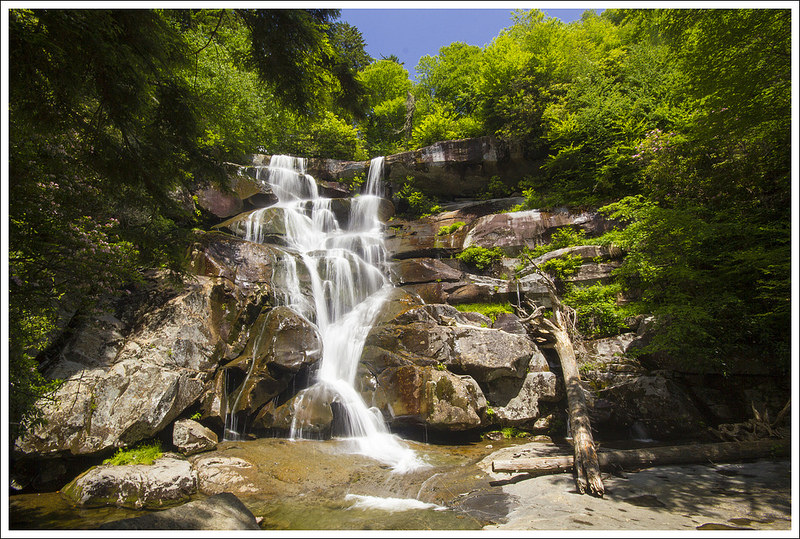
Beautiful Ramsey Cascades
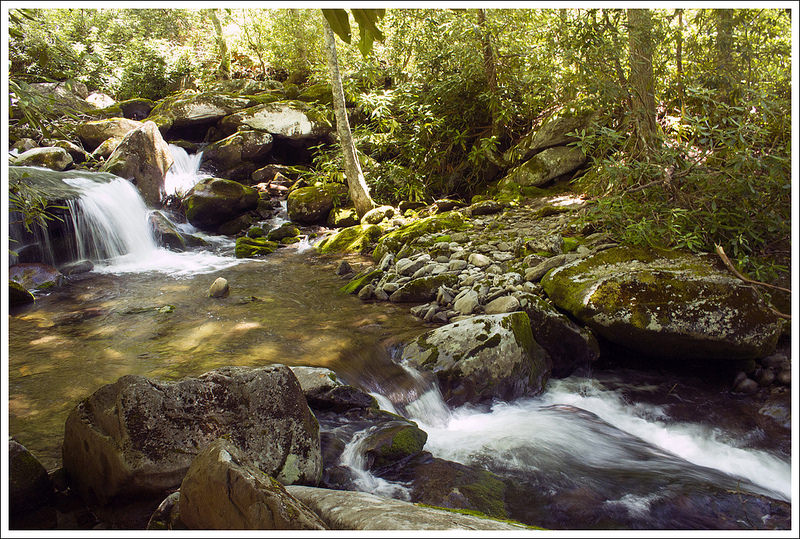
We’ve seen a number of the big waterfalls in the Smokies. Ramsey Cascades might be one of the prettiest. Below: Adam at the trailhead; The first part of the trail was along an old road; You could see and hear water for most of the hike.

Ramsey Cascades Trailhead Easy Start to Ramsey Cascades Hike Pretty Stream Along the Trail

Adam Says…

Our May vacation plans fell through due to a sick pet, but we were fortunate enough to slip away on a last-minute four day trip to the Smokies in mid-June. When we vacation, we tend to go hard.  We try to pack in as much as we can during every waking moment of the day. While it may not be as relaxing as some people like on vacation, we feel we want as many experiences as possible.  We like to tell each other that we can be tired and act like zombies at work for the first day back, so we stay “on the go” during vacation.  So, to maximize our time, we woke up around 4:30 a.m., packed up the car, and headed out to the Smokies.  When we got to the trailhead, it was a little after noon and the temperature and humidity made it feel like over 100 degrees.  We typically like to start hiking (especially in the warmer months) early in the morning before you can feel the height of the day’s heat.  This time, we were stuck with it.  The small parking lot for the trail was packed with cars, so we ended up having to park a little down the road.  So, we quickly got on the trail and pushed on.  Most of the trail was fairly shady, so not being in direct sunlight helped.

Scary Bridge
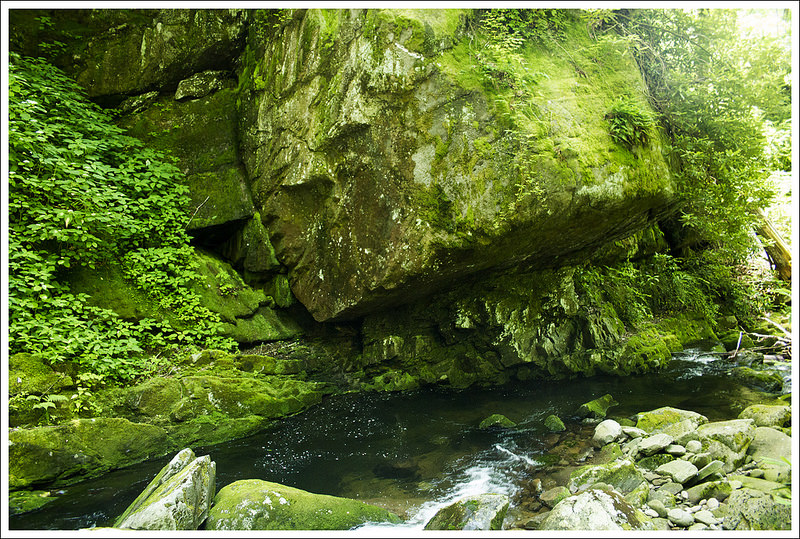
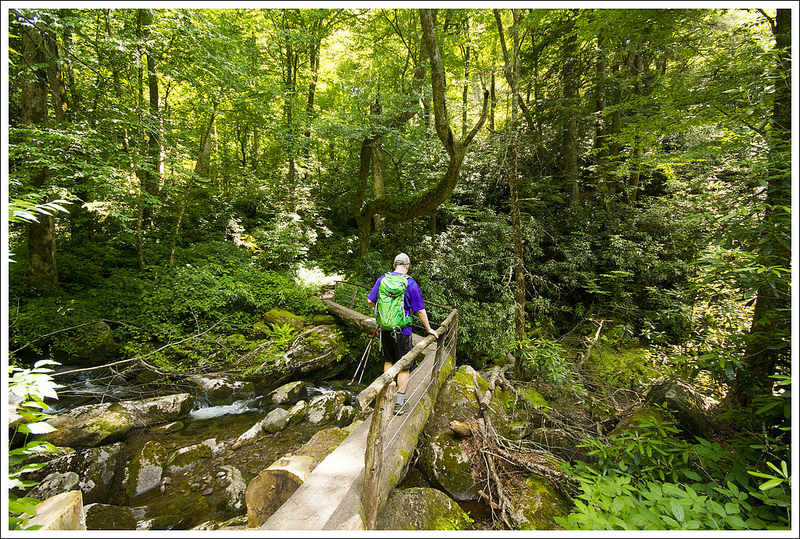
The foot log across this chasm was narrow and long. Below:  The chasm beneath the log bridge; Another view of the bridge’s narrowness; Christine under the giant tulip poplar.

Stream Below the Bridge Almost Across Tulip Poplar

The trail starts on a wide gravel fire road which made for easy footing.  One family had ventured out before us when we were trying to find parking. We saw the mother of the family doubling back along the trail, looking for the rubber foot that was lost on one of her children’s trekking poles.  When we came upon the rest of the family, it looks like they sent the mom off about a mile to look for it.  We felt bad that the mom was spending all of this time searching while the rest of the group was just relaxing.  At 1.5 miles, you reach an area that comes to edge of the stream.  To the left, the trail goes through a deep tunnel of rhododendron.  It is here the trail begins to climb and the trail becomes narrower.

At 2.1 miles, we reached a long foot log bridge.  As I’ve stated before, I hate man-made things when it comes to heights.  We had just passed another family on the hike, so I thought I would try to cross before they got there.  I got a little ways along, chickened out, and returned to the start of the bridge.  I knew it would take me a while to muster the strength to do it and I didn’t want to feel the pressure of judging eyes as I made my way across.  I debated internally if I should just wait here and let Christine continue on, but I knew I would regret not making it to the falls.  We let two families go by, one boldly taking selfies on the log.  After they were out of sight, I decided to give it another try.  As you can tell from the picture above, the bridge is only wide enough for an average person’s feet.  I’m not sure how far the drop would be if you fell off, but I would guess you would likely break something if you fell.  I decided to shuffle my feet side-by-side, while gripping the handrail white-knuckled.  During half of the traverse, I could feel the bridge bounce slightly up and down with each step, not easing my comfort-level at all.  I finally made it across and double-checked my map.  I was hoping there was a loop on this hike, but since this is a straight out-and-back hike, I’d have to face this beast again.  I rested on the other side a while, because I felt like I had just burned 2000 calories through the stress and adrenaline used crossing the log.

Stone Stairs
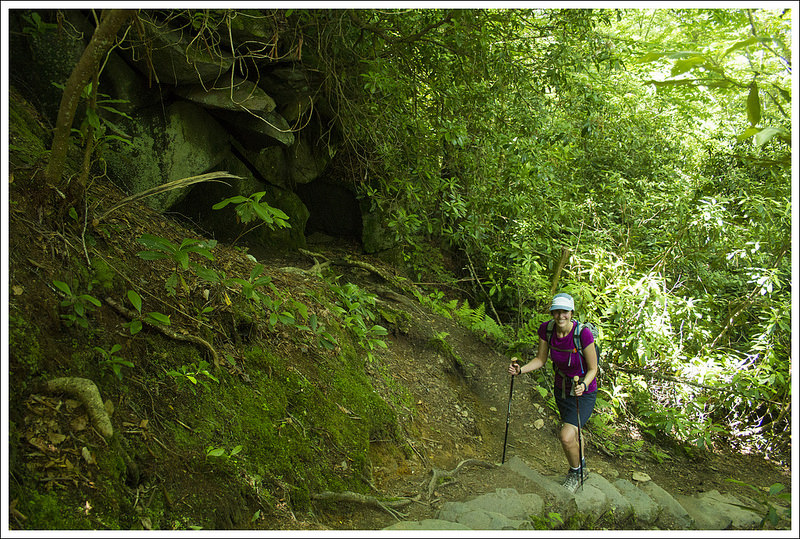
After crossing the narrow log bridge, the trail became increasingly steep and rugged. Below: Hiking along the rocky part of the trail; The second L-shaped log footbridge; Rocky trail; Arriving at the falls.

Rocky Trail Another Easier Log Bridge
Steep and Rocky Warning Sign

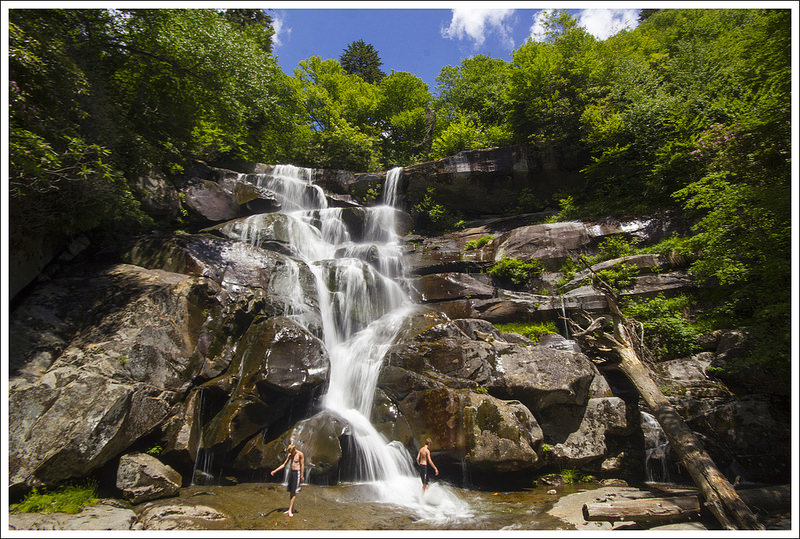
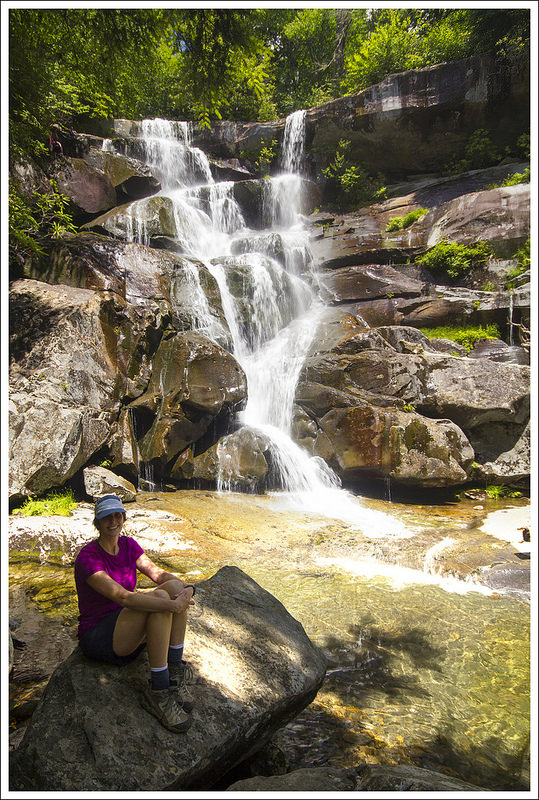
At 2.6 miles, we came across the three large tulip poplars.  The size of these trees was truly impressive!  There was a large group of high school JROTC students stopping here, so we decided to take time to appreciate them more on the way back.  We continued up the steep trail, which was very tough in this muggy, hot weather.   Eventually, at 4.0 miles, we arrived at Ramsey Cascades.  The waterfall is probably 90 feet across and plunges down through cascading rocks over 100 feet.  The rock outcropping to view the falls was packed with people, but we waited a while and eventually most of them left.  This is one of the prettiest waterfalls in the Smokies, so it was worth the sweat and effort (and maybe even crossing that log bridge).

We made our way back fairly quickly since the hike was mostly downhill.  We stopped to enjoy the large tulip trees along the way.  When I got to the bridge this time, I folded up my trekking poles (which I didn’t do on the way across initially) and immediately went across.  I was much quicker this time across, but it still took a toll on me.  I rested again, ate some jelly beans to replenish my sapped energy, and continued back.  The rest of the trip was easy and we made quick time back to our car.

We cranked up the AC in the car and drove to our hotel in Gatlinburg.  Gatlinburg was even hotter than the trail, so it was hard to get cooled down for the rest of the day.  But, we were so glad we made the trip out to view Ramsey Cascades.

Christine Says…

It was a little nuts to hop into the car at five in the morning just so we could pack one more day of hiking into our whirlwind, too-short, almost-completely-unplanned trip to the Smokies.  We’ve visited the area for three consecutive years, but there are still so many mountains and streams for us to explore.  We love coming back to this area!

The first hike on deck was Ramsey Cascades.  It’s one of the park’s most popular and impressive waterfalls, and we’ve wanted to hike it for a while now.  We arrived to the area a little before mid-day, so we decided to fuel up with a quick lunch at The Sub Station.  It had great reviews on Yelp and it was right along our route.  We scarfed down pulled pork sandwiches and then made our way to the Greenbrier section of the Smokies.

Arriving right at noon, the parking lot was already jam-packed with cars, so we had to find a pull off further down the road.  As soon as I stepped out of the car, the heat and humidity hit me like a sucker punch. I looked at Adam and said, “We’re not used to this heat… this is going to be a brutal hike!”  The area went on to set several heat records during our visit.

The first part of the hike followed an old gravel road.  It climbed steadily uphill, but was nicely graded and easy to traverse.  We saw lots of rosebay rhododendron starting to bloom along the trail.  We also enjoyed the constant sound of running water from the Little Pigeon River.

Swimmers at Ramsey Cascades
Some people opted to swim in the basin beneath the falls.  Below: A vertical version.

Christine at the Falls

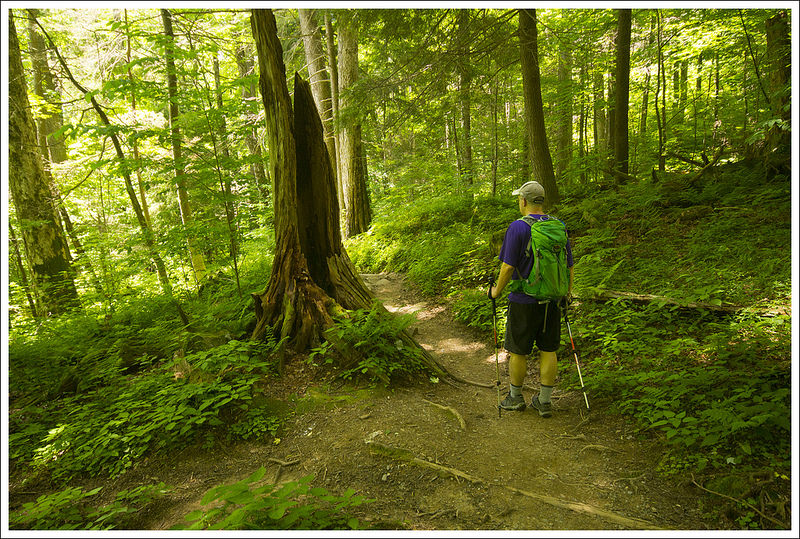
About a mile and a half in, the gravel road ended and the route became a narrow footpath through the lush green forest.  This section of the hike followed alongside the Ramsey Prong which drains down the side of 6621-foot Mt. Guyot – the second tallest mountain in the park.   As we walked, I tried to focus on the loveliness of the trail instead of how I was feeling.  I was utterly gassed.  The heat was getting to me and making me feel weak and lightheaded. I kept drinking water, but it just made the sandwich I’d had for lunch churn in my stomach. Maybe eating had been a bad idea.  I kept pushing my physical discomfort to the back of my mind and focusing on putting one foot in front of the other.  Sometimes, it just what you have to do!

At 2.1 miles, we reached the narrow log bridge that Adam described so thoroughly.  The Smokies are full of these split log bridges, but this was the longest and highest one we’ve seen!  I suppose these log bridges keep streams cross-able when water is high (as opposed to a rock hop) and are less expensive than real bridges to build/maintain.  I like the way they blend into the natural scenery so nicely.

After crossing the bridge, we soon reached a grove of giant, old growth trees.  There are three tulip poplars that you’ll notice immediately.  They rise, straight and proud, from the forest floor – all of them dwarfing the other trees around them.  They were such impressive trees!

The last mile to the falls was increasingly steep and rocky.  We climbed stone steps, crossed another L-shaped log bridge, scrambled over boulders, and stepped over a couple shallow streams before reaching the falls.  At first, we could just see it through the woods, but after climbing over one last large boulder, we came to a big clearing.

Giant Tulip Poplar
We stopped by the three giant tulip poplars again on the hike back. Below: Adam crossing one of the small streams; Back across the scary footbridge; Pretty green Smokies forest.

Hike Back Hike Back green smokies

The falls were so impressive, plunging over 100 feet down the mountainside into a beautiful pool.  There were tons of people gathered on the rocks.  It was hard to find a place to sit and relax, but we eventually did.   Despite warning about treacherous conditions, people were still swimming, wading, and climbing on rocks around the falls.  We saw one young teenager come very close to taking a terrible fall onto the rocks.  He was lucky that he caught himself at the last minute.

We stayed and enjoyed the falls for quite a while. This gave me a chance to cool off and eat a little sugary snack.  That definitely made me feel better and helped my dizziness and fatigue.  Eventually, the crowd thinned and we had the falls to ourselves.  Or I should say mostly to ourselves with the exception of bees!  I don’t know why it is, but there are massive numbers of bees living in hives around the falls.  There are hundreds of them and they’re constantly buzzing around.  Fortunately, they’re not aggressive and seemed happy to share the falls.   Just be careful about sitting or putting your hands down. I’m sure they’d sting if someone tried to squish them!

After taking a bunch more photos, we made our way back down the trail.  The downhill hiking went really quickly.  Adam crossed the scary log bridge boldly on the return trip. We were back at the parking lot in half the time it took us to climb up!

Post Hike Dinner
Great steak dinner at Smoky Mountain Brewery post-hike. Below: Smoky Mountain Brewery flight; Pretzels and beer cheese!

Beers pretzels

Before we got in the car, I was very tempted to jump into the Little Pigeon River.  The spot where we parked was right next to a deep, cool swimming hole.  Adam told me it was a bad idea and that I’d be soaking wet in the car – so phooey – I passed on my chance to plunge in!

We had a short drive into Gatlinburg from the hike.  Because we didn’t plan ahead for this trip, our choices for lodging were fairly limited – but we picked a winner.  We ended up stayed at the Mountain House Motor Inn.  It was clean and comfortable, with a super-strong air conditioner.  It was also located within walking distance of all the downtown restaurants and shops.

We checked in, showered, and headed out for a great dinner at the Smoky Mountain Brewery!  What a great first day of this mini vacation.

Trail Notes

  • Distance – 8 miles
    (Check out the stats from Map My Hike)*
  • Elevation Change – 2240 ft.
  • Difficulty – 4.5.  The trail starts off fairly easy and gradual, but becomes steeper and rockier after the first 1.5 miles.  The last few tenths of a mile to the falls are a scramble over boulders.
  • Trail Conditions – 3.  The trail is rocky in places.  There is also a long, narrow log bridge that might intimidate some hikers.  It crosses a chasm over a stream and feels precipitous to anyone afraid of heights.
  • Views  0.  No views here – it’s all about the stream scenery!
  • Streams/Waterfalls – 5.  The stream is beautiful and Ramsey Cascades is one of the park’s prettiest waterfalls.
  • Wildlife – 0. There were so many people on the trail we didn’t see any animals.
  • Ease to Navigate – 4. The trail is simple to follow. There aren’t any turns or junctions.
  • Solitude – 1.  The trail is one of the park’s most popular.

Download a Trail Map (PDF)

Directions to trailhead: From Gatlinburg, TN, take US-321 N/East Parkway for about 5.5 miles.  Turn right onto Greenbriar Road.  Follow this for 3.1 miles before turning left onto Ramsey Prong Road.  Go 1.5 miles and you should reach the parking lot for the trailhead.  The trailhead starts at the end of the parking area. Coordinates: 35.702730, -83.357599

Signal Knob

This 10.2 mile hike in the George Washington National Forest has nice views of Strasburg.  It also has rocks – lots and lots of pointy rocks.

View the Full Album of Photos From This Hike

Christine on Signal Knob
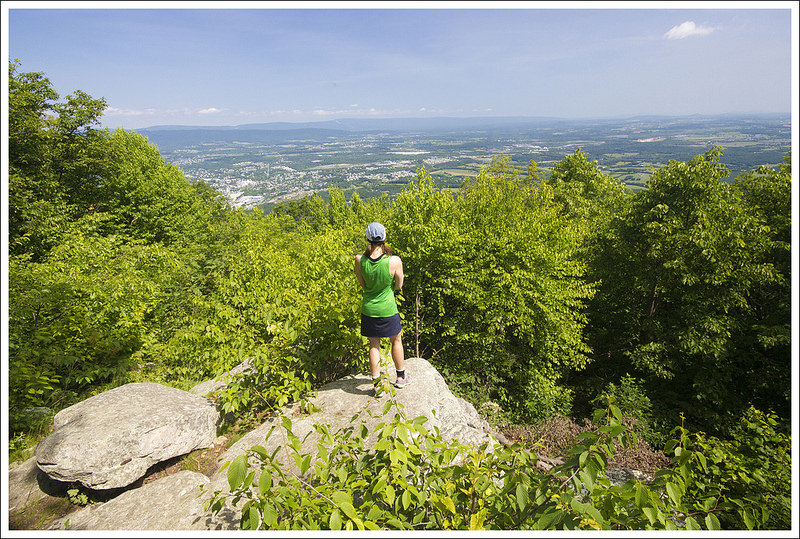
Christine takes in the view on Signal Knob.  Below: Adam checks out the GWNF information board; The stone cottage; Wild rose.

Trail Sign at the Beginning of Signal Knob Hike Stone Cottage Along the Trail Wild Rose

Christine Says…

Picking day hikes is getting challenging for us – we’ve done most of the popular ones in the area. Yet, somehow, Signal Knob had repeatedly escaped our notice.  We figured a pleasant Sunday in early June was a perfect day to tackle something new!

We started our day early with a big breakfast in Harrisonburg.  Then we stopped for donuts at Holy Moly in Strasburg.  We decided to save the donuts for post-hike, but Holy Moly is so popular (especially on the weekend) that we didn’t want to take the risk of them selling out.

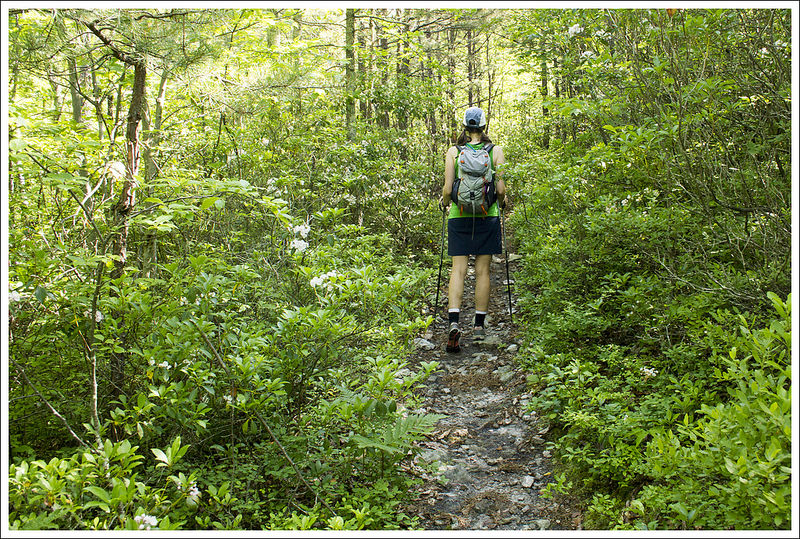
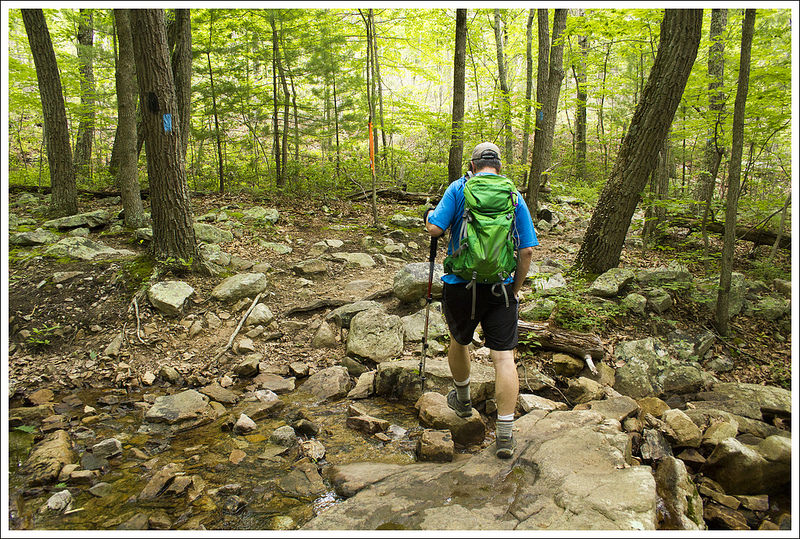
Parking at the Signal Knob trailhead is abundant and completely off-road.  When we arrived there was a small handful of other cars there.   We started out from the trail on the north side of the parking area – look for orange blazes (Massanutten Trail) and a GWNF information board.  The trail climbed steadily right away. We passed a really neat stone cottage right along the trail very early in our hike.  It was in great condition and still looked in-use.   Right after the cottage, we stepped over a small stream and continued uphill.  The lower parts of the trail were lined with wild roses and sweetpeas.  As we climbed higher, mountain laurel became abundant.   The trail was openly exposed to the sun and offered some nice views along the way.

Views Along the Climb to Signal Knob
There were some pretty views through the trees on the climb to Signal Knob. The higher we climbed, the prettier the mountain laurel became. Low elevation laurel had already gone to seed. Below: A neat tree before the Buzzard Rock Overlook; Buzzard Rock Overlook; Fort Valley Overlook.

A Cool Tree on Signal Knob Hike View from Buzzard Rock Fort Valley Overlook

At 1.5 miles, we reached an opening in the trees which gave a backlit view of Buzzard Rocks on the other side of the valley.  I can’t look at Buzzard Rocks without recalling the horrible ankle sprain I suffered there several years ago!  We chatted with an older gentleman at the overlook – he warned us that the trail was about to get rocky!  He wasn’t kidding!  For the next 1.25 miles, the trail was a loose jumble of pointy, shifting rock.

At about 2.5 miles, we passed the marked Fort Valley Overlook.  The view was mostly overgrown, but I can imagine it lovely when the trees were smaller!  Gradually the rockiness tapered off; and so did the climbing.  The trail became a pleasant stroll through the woods.  We passed several nice campsites and passed the junction of the Meneka Peak trail at about 3.5 miles.  The last .8 of a mile to Signal Knob was ever-so-slightly downhill.

When we reached the WVPT building, we thought the open vista behind the building might be the view.  We chatted with a pair of hikers there and asked ‘Is this the only view up here?’  Both of them said ‘Yes… it’s the only view we’ve ever seen and we’ve hiked here lots of times.’  We took them at their word and felt a little underwhelmed by the view – it was obstructed by powerlines and disrupted by a steady buzz from the broadcast tower.  Not wanting to doubt them directly, I whispered to Adam ‘This can’t be it… there’s no view of Strasburg and there’s supposed to be one!’  We decided to explore further before hiking down the fireroad.  I’m glad we did!

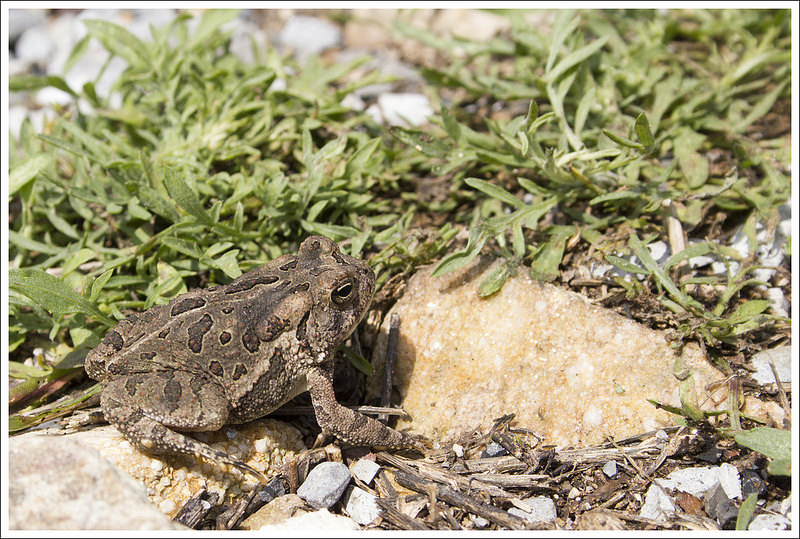
Leaving the WVPT tower, do not follow the fire road downhill.  Go past the tower and look for a trail than runs parallel to the ridge.  If you follow it a short distance, you’ll come to a marked overlook – Signal Knob.  We spent some time at the knob relaxing and enjoying a bit of breeze.  Signal Knob is a nice overlook, but not a spectacular one.   It’s a bit closed in and overgrown.  And, if I’m being 100% honest, looking down into Strasburg with its housing developments, water towers, and roads just isn’t as breathtaking as looking out into raw wilderness.   I did also enjoy our ‘company’ at the summit – for whatever reason, Signal Knob was hopping with toads.  We saw dozens of them!  I’ve never seen so many together!

The Signal Knob Trail is Very Rocky
The trail up Signal Knob is extremely rocky.  Below: Once you reach the ridge it’s a bit less rocky; WVPT broadcast; A view behind the tower.

Walking Along the Signal Knob Ridge WVPT View From WVPT

After enjoying the view, we followed the trail slightly downhill past the overlook.  A trail marker directed us toward the Tuscarora Trail. We soon merged onto the fire road we had seen near the broadcast tower.  We followed it downhill for almost a mile before reaching another trail junction.

The turn onto the Tuscarora trail is marked with another national forest information board.  There is also a nice bench at the junction – probably an Eagle Scout project!   Turning onto the Tuscarora Trail, you’ll immediately cross Little Passage Creek.  It was a very easy rock hop.  From there the trail climbs uphill for a little less than a mile. This section was a bit steeper than what was required to reach Signal Knob, but still squarely moderate.

Along the ridge, we passed the other side of the Meneka Peak trail.  Looking at how these trails interconnect is interesting and definitely opens up some longer loop options.   At about 6.4 miles, the trail passed through a small grassy area and began to descend steadily.  There really wasn’t anything remarkable about the rest of the hike.  It was just a walk through the woods.  We saw a big bird’s nest of some sort.  We saw tons of ripening blueberries.  We passed some boy scouts on a weekend backpacking trip. We passed the pink blazed Sidewinder trail at 8.1 miles.  We crossed a stream. At around 9.5 miles we passed a spur trail to Elizabeth Furnace.  At this point the blazes went back to orange.

We found this part of the hike a bit confusing.  Our maps and GPS disagreed on distances for waypoints late in the hike.  There was also a lot of trail construction and rerouting going on.  New paths were cut into the woods all over the place.  Fortunately they all went in the same general direction.  We tried to follow the most established paths.  A little over a half mile past our last trail marker, we spotted a parking lot through the trees.  Adam thought it was a different one from where we started, but our MapMyHike app indicated we made a full loop and we popped out on the south side of the lot where we had started our hike several hours earlier.

The day had become hot, humid, and overcast, so we were glad to be back at the car! We shared just one of the donuts (Peach Bellini!) so we could save room for a big lunch at Spelunker’s in Front Royal.  On the way to lunch, we talked about the hike a bit.  We both agreed that it wasn’t one of our favorites.  I think it’s popular because of its vicinity to northern Virginia, but of the knobs in the Massanutten/Fort Valley area – I like Strickler and Duncan quite a bit more!

Adam Says…

We have had many people recommend Strickler Knob to us over the years.  Knowing of its popularity, we thought it would be a good idea to get an early start.  When we arrived, there were not many cars there, but from the size of the parking lot we knew it was a matter of time.

We started out on the north (right) side of the parking lot.  The orange-blazed Massanutten trail started off our loop hike.  The trail starts uphill and soon passes a large stone cabin on the left, while you can see a stream below to the right.  You cross over the stream and then loop back in a northerly direction.  At 1.5 miles, we reached Buzzard Rocks overlook.  We talked there to an older man who was out for some morning exercise.  He warned us of about a mile of pointy rocks ahead.  Since he was hiking solo, he told us he doesn’t want to risk hurting himself and just goes to this overlook and back.

The trail takes a sharp left turn and then within a few minutes, we found the rocky area we had been warned about.  Wear comfortable shoes, as the rocks were pointy and you always had to look at your feet to navigate through safe footing.

The View from Signal Knob
You can see the town of Strasburg from Signal Knob. We weren’t terribly impressed with the view.  Below: Toads everywhere; The fire road; The information board at the junction with the Tuscarora Trail; A glimpse of a view.

Cute Toad The Fire Road Descending Signal Knob
Junction of the Massanutten and Tuscarora Trails View from the Tuscarora Trail

At 2.4 miles, we arrived at the sign for the Fort Valley overlook.  The trees and leaves have this very obstructed now, but you can get a glimpse of the valley below.  At 3.4 miles, we arrived at the junction with the white-blazed  Maneka Peak trail, but continue on the orange-blazed Massanutten Trail.  The trail leveled out at this point, giving us a nice forest walk until we reached the broadcast tower at 4.3 miles.   We walked behind the building on a small path and saw nice views on the backside of the tower.  We were feeling disappointed when the two girls had said this was the view.  My idea of views doesn’t include power lines cutting through the landscape.  There were lots of bugs flying around us, so we didn’t stay here long.

We pushed on from the tower and saw that there was a huge fire road leading down, but the trail blazes seemed to continue forward back into the woods.  We decided to take this route and then within a short distance came to the real view.  We both felt bad that these girls, who had been up here several times, had always missed the real view up here.  The view here did give us nice views of Strasburg below.  I noticed that one of the rocks had a plaque below it that was put in here for a couple that loved coming up here.

Walking the Tuscarora Trail
Adam walks along the Tuscarora Trail. Below: Stream crossing near the end of the hike; Pretty butterfly; Holy Moly!

Crossing Little Passage Creek Pretty Butterfly Holy Moly Donuts

The trail then loops back and does join the fire road very shortly.  We walked down the steep fire road and came upon another hiker who had just hiked up the fire road to the summit.  The fire road was a fairly steep descent and had nice wildflowers along both sides.  At 5.5 miles, we came across a bench and a junction with the blue-blazed Tuscarora trail.  We took this trail to start our return trip.  The Tuscarora Trail was more overgrown and the climb up Meneka Peak was the steepest climb on this hike.  We were finally finished with the uphill at 6.4 miles and then the trail descends on the other side of the ridgeline just as steeply.

The trail descends for a good distance.  At 8.1 miles, we passed by the pink-blazed Sidewinder trail and the trail leveled out a little more.  We continued on and the trail became orange-blazed again at 9.5 miles.  We followed the orange-blazed trail through the tricky section mentioned above and then arrived back at a lower section of the parking lot at 10.2 miles.

Overall, I was underwhelmed on this hike.  The views were nice, but I have seen a lot better view hikes.  I can imagine that in a few years, the trees and bushes may obstruct the main view even further.

Because of the inner-connectivity of all the trails in this area, there are many options for backpacking loops through this trail system.  The loop that we chose didn’t have a lot to offer after the summit.  If I was doing this again, I would likely do just an out-and-back hike to the summit, making this an 8.6 hike.

Trail Notes

  • Distance – 10.2 miles
    (Check out the stats from Map My Hike)*
  • Elevation Change – 2159 ft.
  • Difficulty – 3.  The climbing on this trail is all easy to moderate, but the distance and loose/rocky footing increase the difficulty rating.
  • Trail Conditions – 2.5.  The trail is rocky and shifty – especially the middle part.
  • Views  3.  There are descent views from Signal Knob and the WVPT broadcast facility.  While other reviews give the vistas on this hike top marks, we thought they were just OK.  The WVPT view had powerlines and the Signal Knob view is starting to get a bit overgrown and looks out toward an suburban area. 
  • Streams/Waterfalls – 2.  There were a couple small streams that could be used as water sources.  We believe they dry out pretty quickly based on the fact that they were already on the low side after a week of rainy days.
  • Wildlife – 3. We saw lots of cute toads hopping around, and supposedly this is a good place for a potential bear sighting.
  • Ease to Navigate – 2.5. The blazing in this area is very thorough, but trail junctions are inconsistently marked.  As of June 2015, it appears the forest service is working on a reroute of the last .5-.75 miles of the hike.  There are lots of unmarked trails that criss-cross the established, blazed trail.
  • Solitude – 3.  We saw a good number of couples and solo hikers out for a day hike.  We also saw a group of college students and a boy scout troop out backpacking.

Download a Trail Map (PDF)

Directions to trailhead:  From I-66, take exit 6 for US-340/US-522 for Front Royal/Winchester.  Turn on to US-340S/US-522S/Winchester Road.  Go 1.2 miles and take a right on to VA-55W/W Strasburg Road.  Go 5.1 miles and take a left on to State Route 678/Fort Valley Road.  Go 3.4 miles until you reach the large parking lot on the right.  Park here.  The trail starts on the right side of the lot.  You will see the wooden information board that will mark the beginning of your hike. Parking coordinates: 38.93503, -78.31956