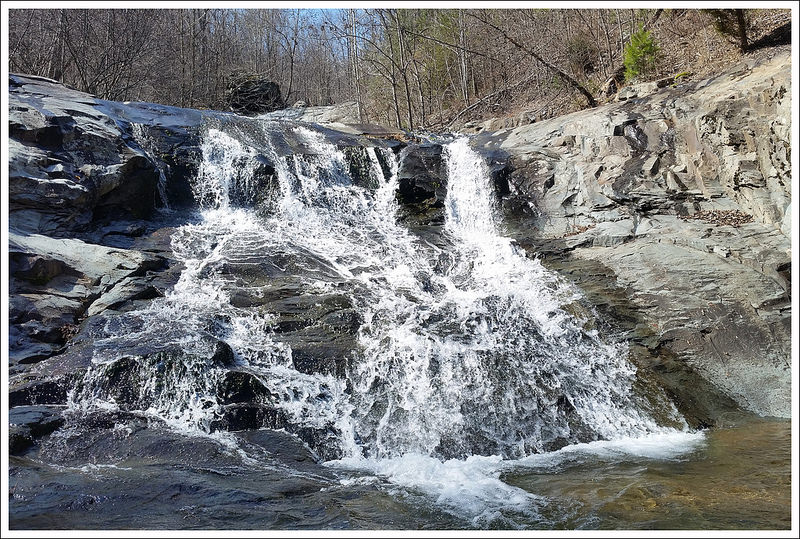
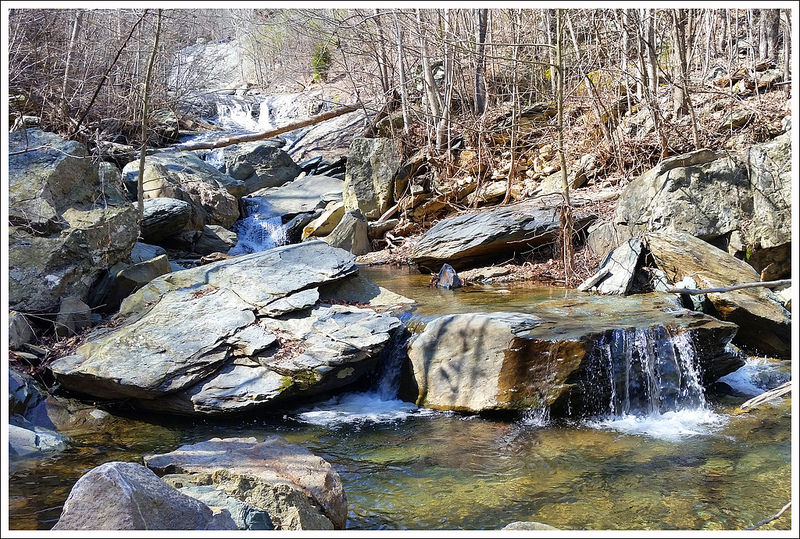
Moormans River & Big Branch Falls

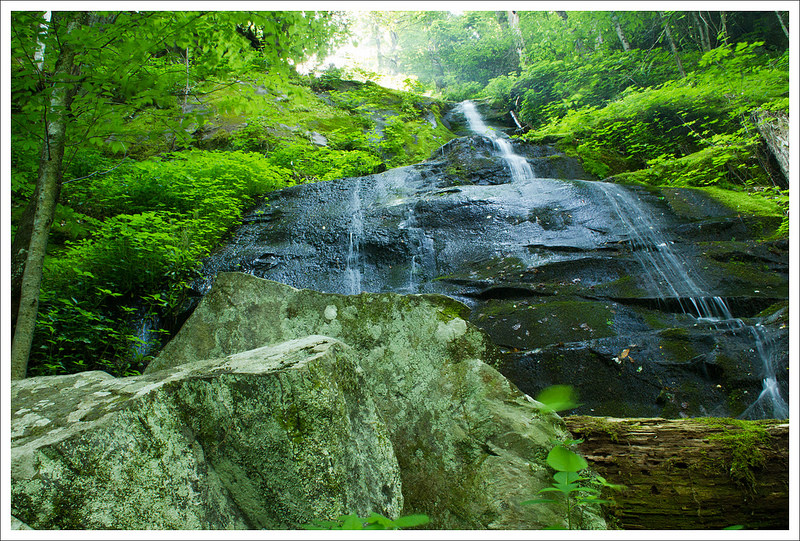
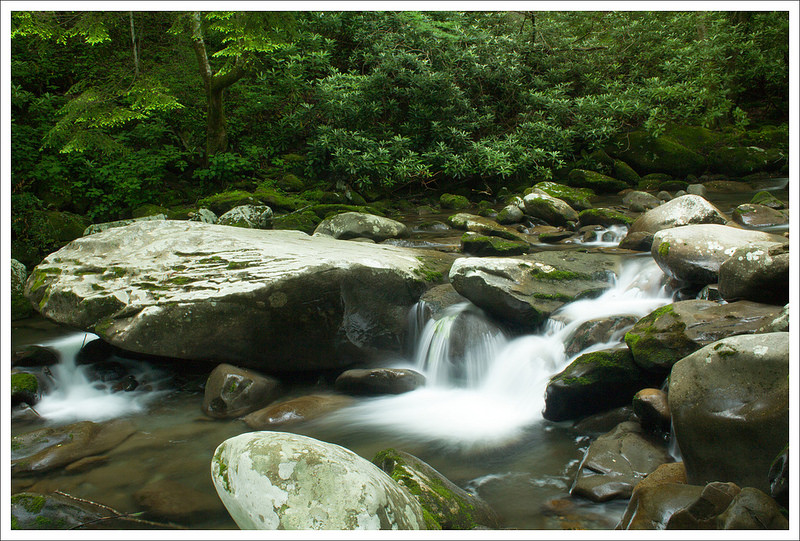
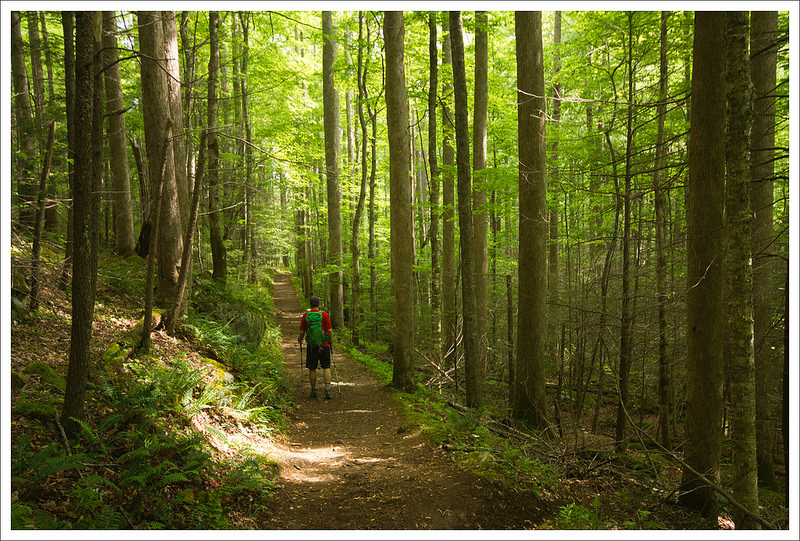
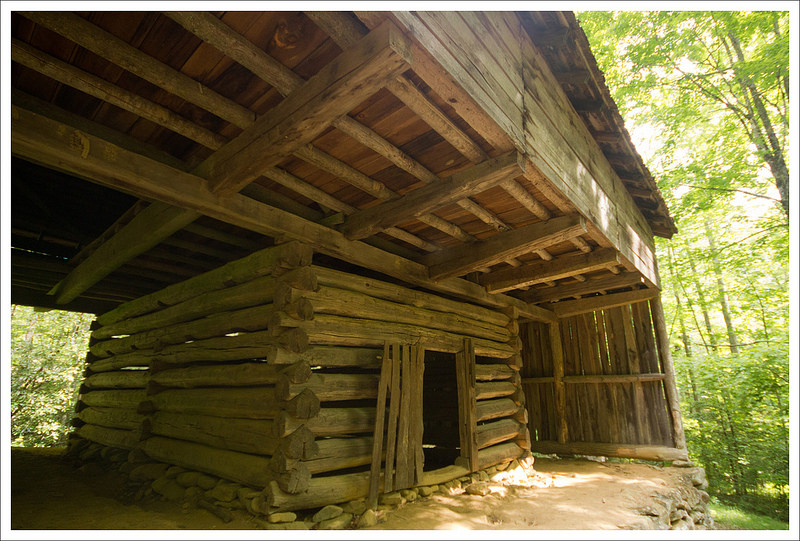
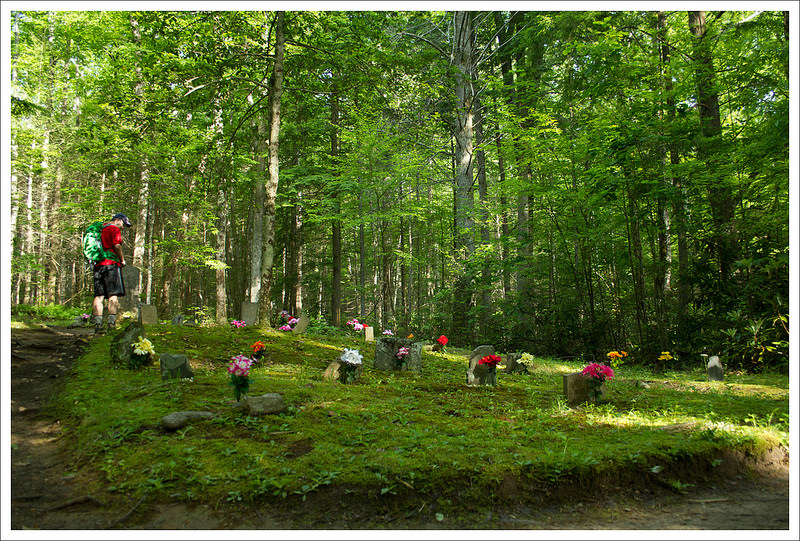
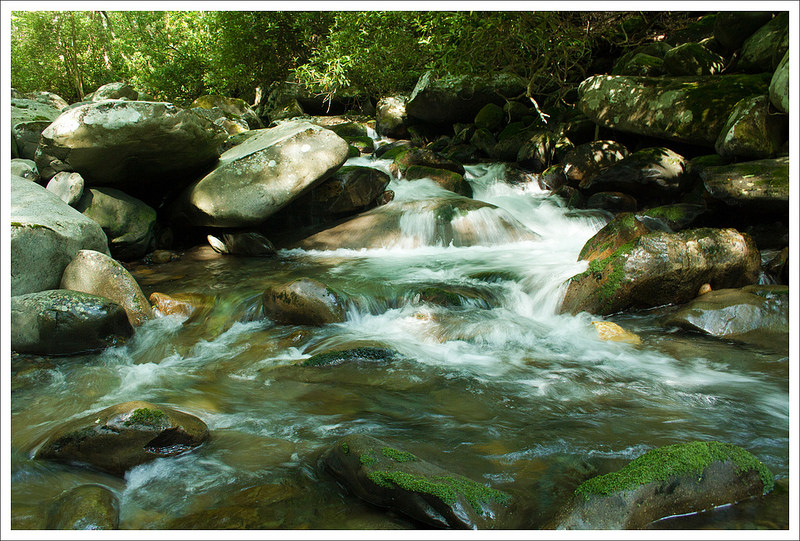
This 4.5-mile hike is close to Charlottesville and is extremely popular for its beautiful river scenery, swimming holes, and waterfalls.

View the Full Album of Photos From This Hike
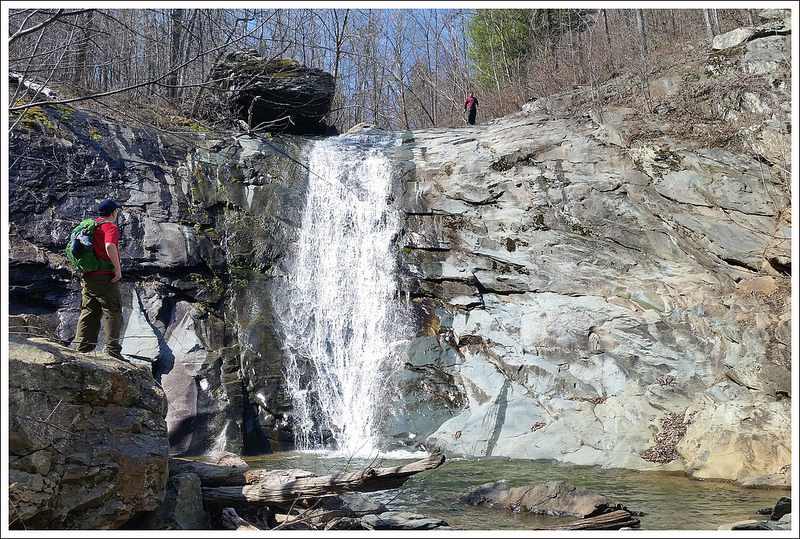
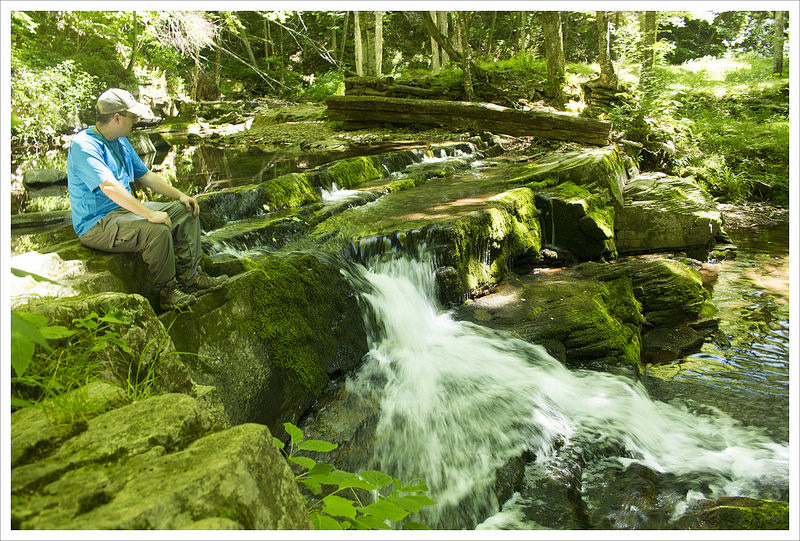
Adam at the Falls
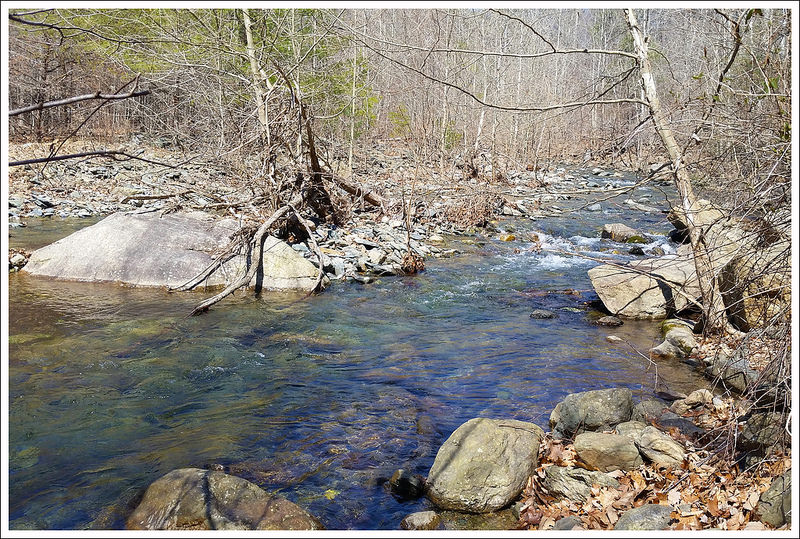
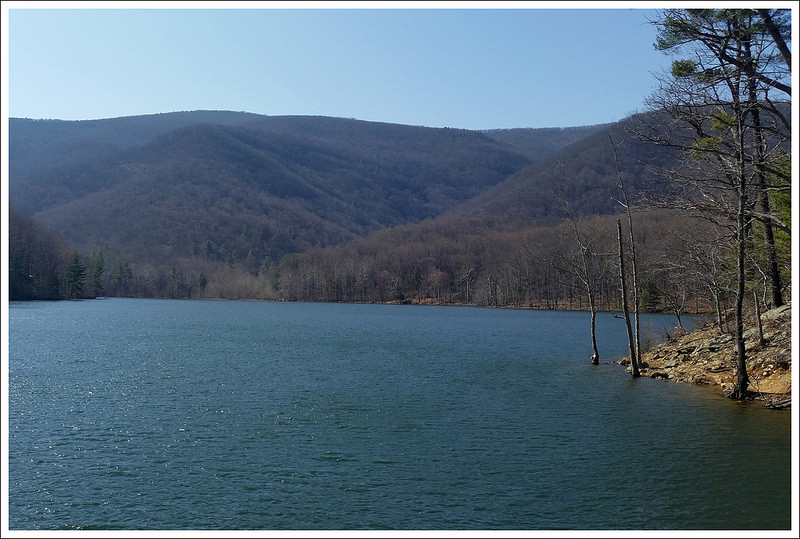
Adam at the Falls. Below: The beautiful Moormans River; Sugar Hollow Reservoir; Lunch stop after the hike.

Moorman's River Reservoir Crozet Pizza

Adam Says…

For people that are looking for a nice family-friendly waterfall near Charlottesville, look no further than this hike.  In fact, it was rare to not see groups of people that weren’t hiking as a family.  Most of the families with smaller children tended to stop along the river at some of the crossings to eat a snack or try and skip stones.  And I can’t think of any hike that I’ve been on where I have as many dogs on a trail.  So, if you want to take Fido for a walk (and a possible dip in the river) near Charlottesville, this would be a great spot as long as your dog is friendly with other dogs.  We saw a couple of dogs that were running full speed chasing each other and crashing into the water.  The park requires all dogs to be leashed, but we saw many (most!) people breaking this rule.

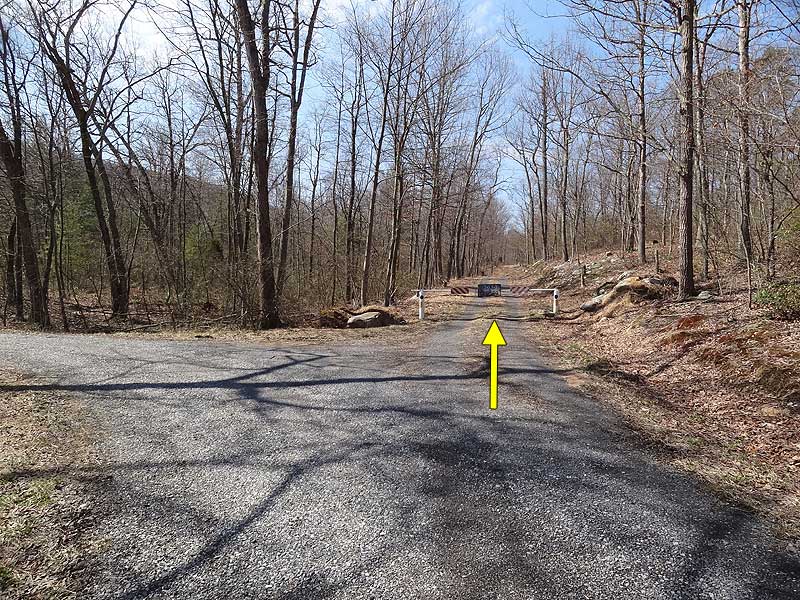
When we arrived at the trailhead, there were a ton of other cars here.  There are two parking lots on this hike – the first being the larger lot and the second being a half-mile further up a rough road, but I would recommend having a four-wheel drive due to the uneven ground (even though we did see a convertible BMW driving on here with reckless abandon).   The first, main parking lot was full, so we ended up parking along the roadside just a short distance prior to the first large parking lot.  From the parking lot, there are two trails.  You want to take the one that continues up the gravel road heading north (North Fork Trail).  Walking up the gravel road, we came to the second parking area at .5 miles.  There is a large closed gate directly behind the lot where the trail continues.

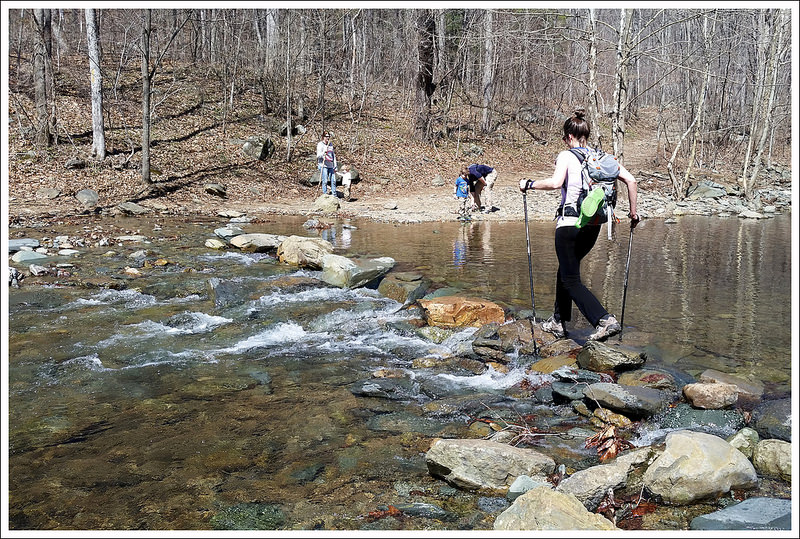
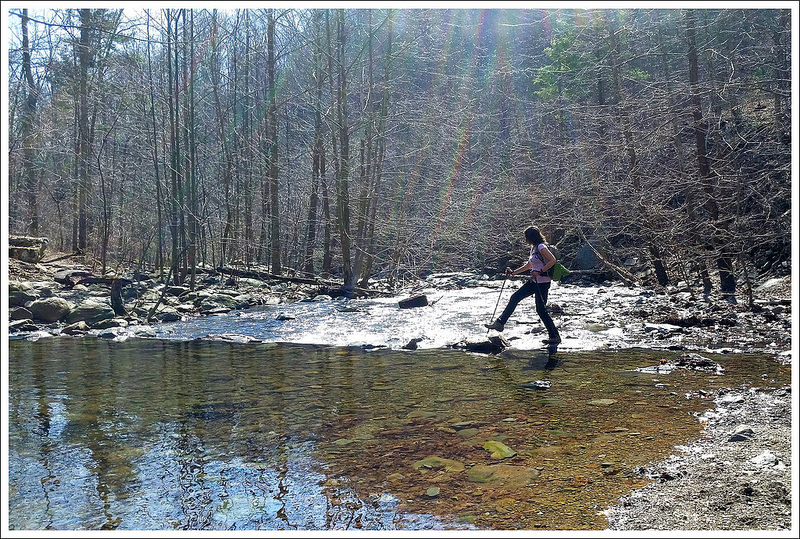
Stream Crossing
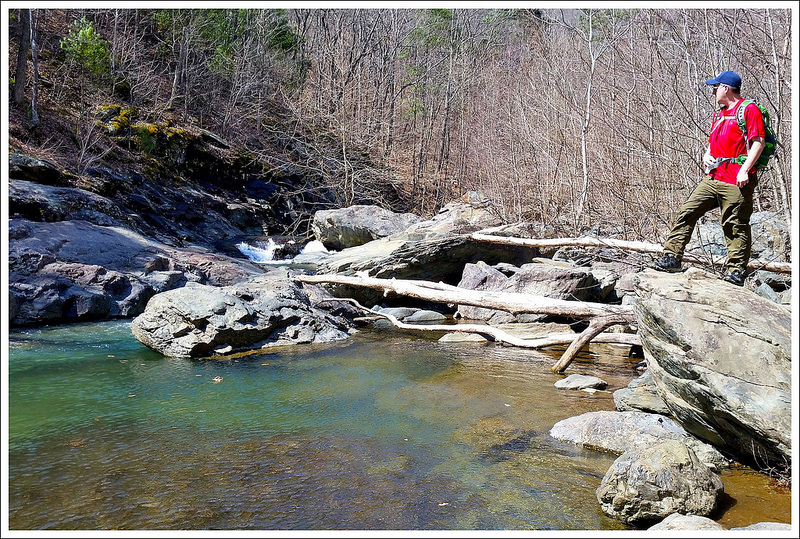
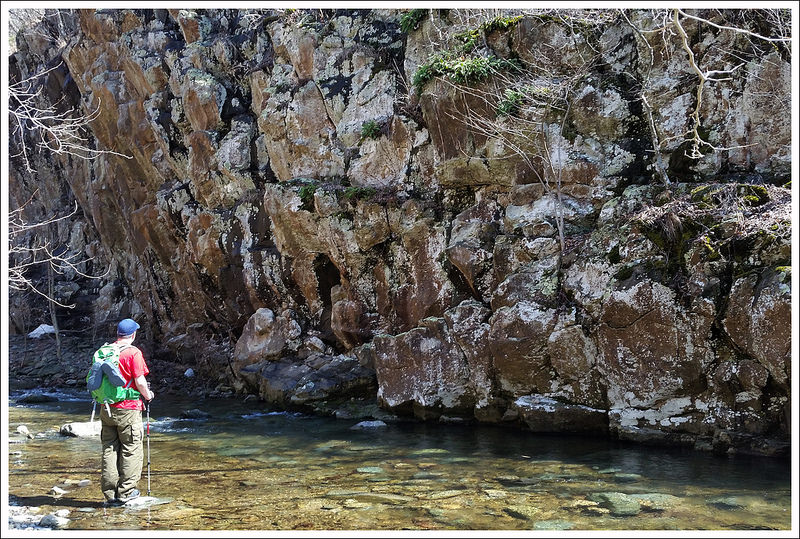
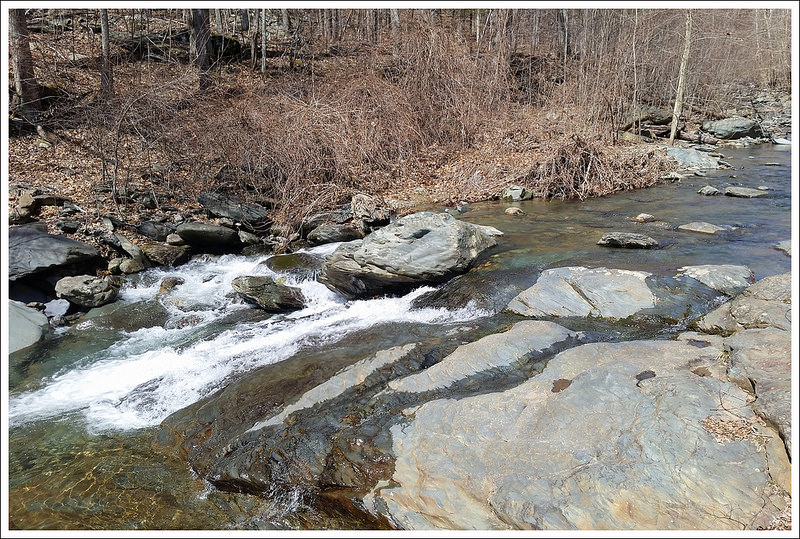
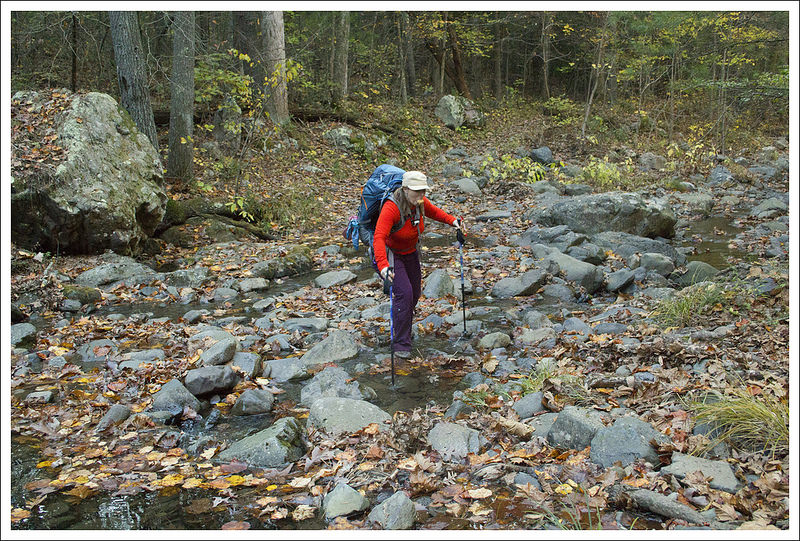
Christine rock hops across the stream. Below: The river was beautiful and clear; Adam checks out the rock wall at one of the crossings; Rapids from above.

Pretty River Rock Wall Scenic River

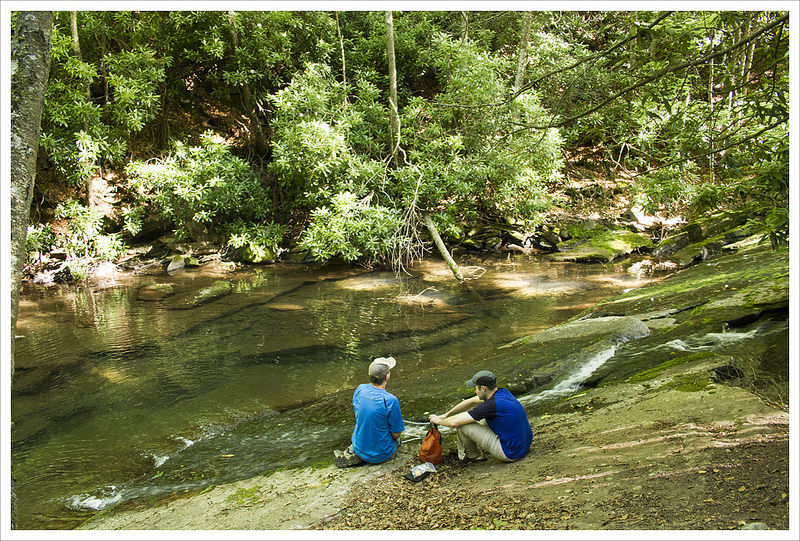
Most of the trail gives you nice views of the Moormans River as you are walking by.  In .75 miles, you reach your first of four river crossings.  There had been a recent, heavy rain so we were expecting these to be a little challenging.  The first three of the rock crossings were fairly easy to rockhop across.  The fourth crossing however required us to get our feet wet in the fast-flowing current.  We brought our crocs to change into for just this occasion and the cold water was refreshing.  It always makes us a little nervous carrying camera equipment though when the water is moving fast and you are not 100% sure of how deep the water is or if the rock you are putting your foot on is stable.  The water ended up halfway up my calf at one point, so if there has been a lot of rain, be careful.

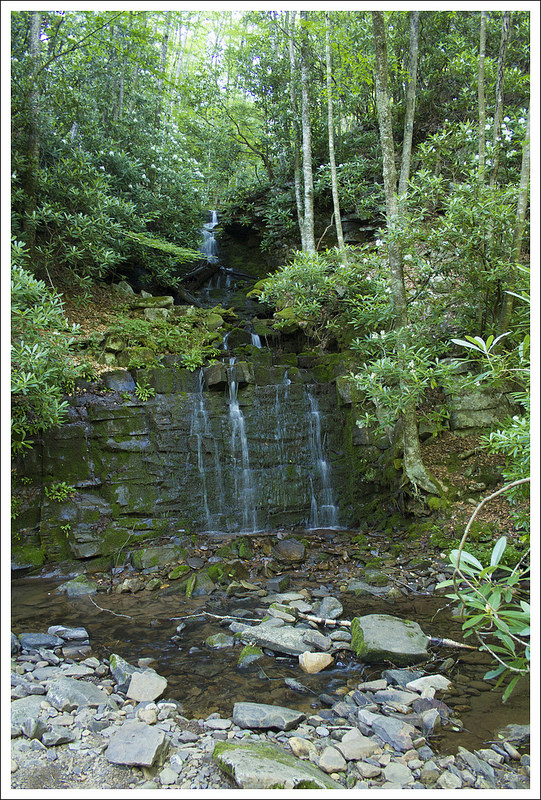
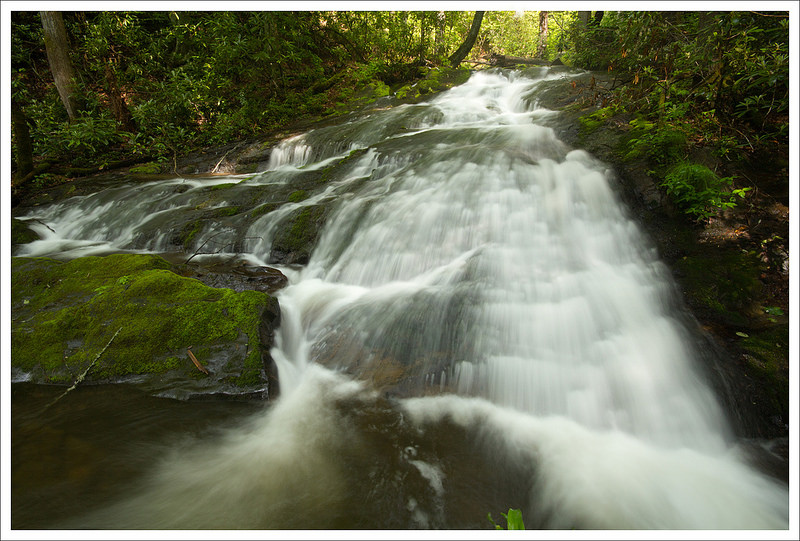
At the 2.0 mile marker, the trail starts to gain some elevation.  At 2.15 miles, we took the side trail to Big Branch Falls.  You arrive at the lower falls fairly quickly, but continue further and you will see the larger Big Branch Falls at 2.25 miles.  Because of the recent rains, the water was flowing nicely over the top, but probably during the dry summer months, this would be less impressive.  After we took some time to enjoy the falls, we headed back the way we came to get back to our car at 4.5 miles.

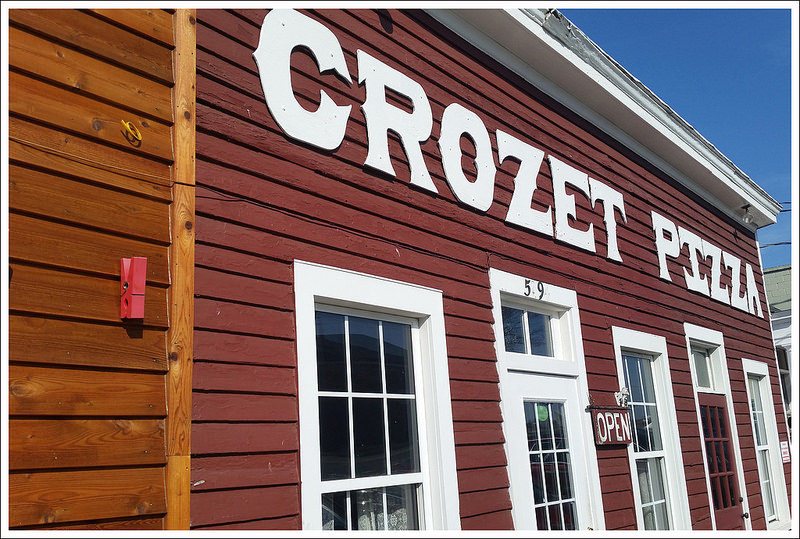
After our trip, we headed to nearby Crozet, VA to try Crozet Pizza.  We had heard about how wonderful their pizza was for about 25 years now and I’m glad to say that we finally got to try it.  Then, we stopped right down the road at Starr Hill brewery to sample a few post-hike beers.

Christine Says…

What a beautiful March day we had to hike Moormans River!  It was the first day in a long time that actually felt warm.  Early wildflowers were starting to bloom and the sunshine felt great.  We started out pretty early, but found the parking lot already completely full at the trailhead.  We had to find a place alongside the gravel road with enough room to park our car.  After we were situated, I started MapMyHike, grabbed my camera, and started hiking.

I pointed my camera up to take a shot of the first trail marker, and the camera wouldn’t even turn on! Hmm… I had recently charged the battery, so it didn’t really make sense.  I pulled out the battery and memory card to reset everything, and still no power.  I figured that I had finally killed my Canon Rebel T2i.  That camera has accompanied me on countless hikes.  It’s been rained on, bumped against rocks, left sitting out overnight in the damp.  I’m not careful with it at all, because I find I just don’t take photos when my camera is safely packed away in its padded, waterproof bag.  I knew it would eventually meet this end.  So… today, you get photography from my cell phone!  Honestly, my phone takes decent photos – just not quite as nice as my dSLR. (Fortunately, when I got home, I found that the battery was drained after all.  I guess I stored it accidentally with the power button depressed.  The Rebel lives to fight another day!)

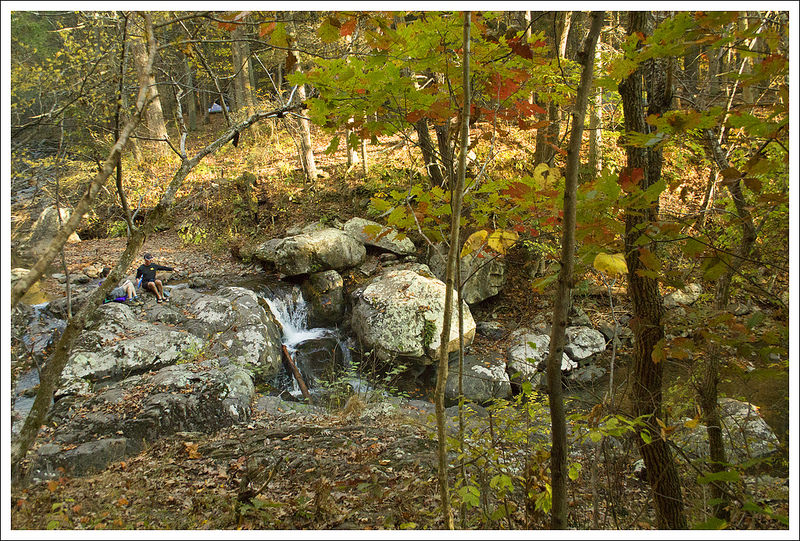
Lower Falls
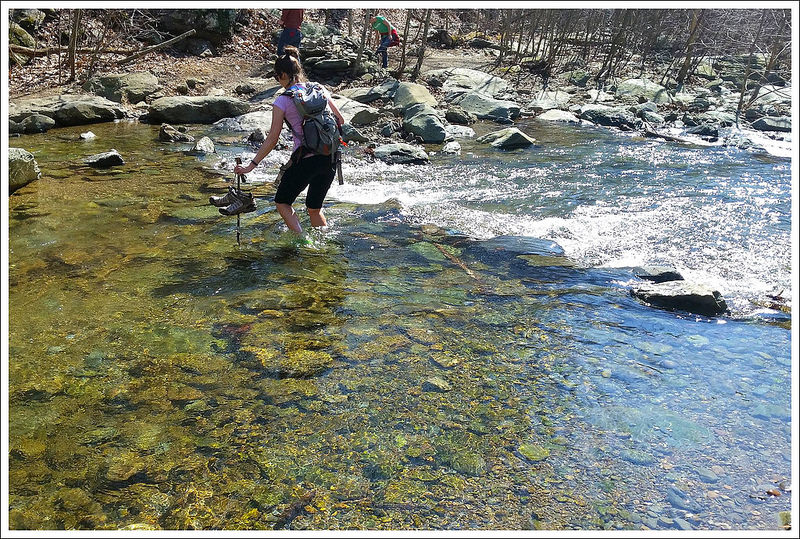
The lower falls are really pretty. Below: A view of the upper and lower falls; Rock hopping; One crossing was too deep to rock hop – so we waded.

Looking up the Falls First Attempt  Better Wading

The water was flowing beautifully and we really enjoyed the sights and sounds of running water all through our hike.  The trail was one of the easiest we’ve hiked in a long time. It’s relatively level and not too rocky.  The stream crossings were all moderate to easy, with the exception of the final one. The last crossing required us to put on water shoes and wade across.  We saw several people attempt to rock hop, but they all ended up with wet boots.

When we reached the spur trail to the falls, there were several groups of people at each viewing point.  We waited our turn and spent a few minutes enjoying and taking photos of the upper falls. One group had climbed up to the top of the falls and was picnicking on the rocks alongside the cascade.  A man with the group walked out to the precipitous, domed edge of the falls several times. We were worried he might slip and have a nasty fall to the rocks below. Thankfully that didn’t happen!

On our way back down, we scrambled off the trail to a rock shelf beneath the lower falls. On the climb back up, I stuck my trekking pole in a hidden hole.  When the pole suddenly dropped and vanished under the weight of me climbing up, I slipped and smashed the bridge of my nose into the trekking pole handle.  Wow – did that hurt!  I thought I hit hard enough to break the skin open, but thankfully it was just swollen and lightly bruised.  Between that and the broken camera, it was not one of my luckier days on the trail!

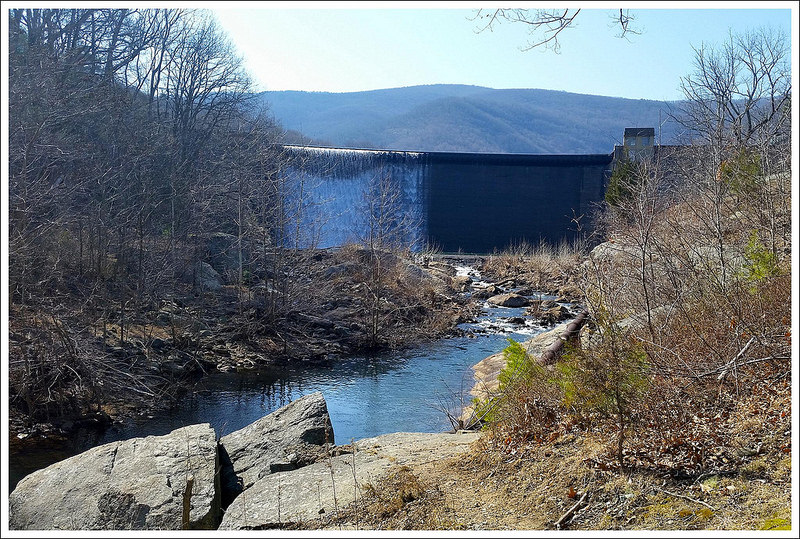
Dam and Reservoir
The dam and reservoir. Below: Yum – Crozet Pizza; Flight at Starr Hill.

Crozet Pizza Starr Hill Beer

The hike back went very quickly.  After we got back to the car, we made our way to a great lunch at Crozet Pizza and a flight of beers at Starr Hill.  It was a fun day!  I would definitely recommend this hike when there has been significant, recent rain.  The falls dry up pretty quickly.

Trail Notes

  • Distance – 4.5 miles
    (Check out the stats from Map My Hike)*
  • Elevation Change – 625 ft.
  • Difficulty –  2.  The hike is not difficult with the distance and elevation, but the stream crossings could be a challenge.
  • Trail Conditions – 4.  The trail is heavily-used and well-maintained. 
  • Views  1.5.  You do get some elevated views of the river.  Views from the top of the dam (after the hike) are really nice too, but don’t count in the score because they’re not technically part of the hike!
  • Streams/Waterfalls – 4.  The waterfalls are nice to see (but could be disappointing in dryer months), but the highlight is probably walking along Moormans River. 
  • Wildlife – 0.  Due to the location and popularity, I wouldn’t expect to see much. 
  • Ease to Navigate – 4.  Once we knew where to go from the parking lot, it was easy to navigate. 
  • Solitude – 1.5.  I would expect on a nice day, you should see lots of people.  Go early to beat the crowds and to get parking. But, there weren’t as many people going all the way to Big Branch Falls.

Download a Trail Map (PDF)

Directions to trailhead:  From I-64 near Charlottesville, take exit 124 for US-250W.  Turn right on 250-W and go 5 miles.  Take the Country Road 654/Barracks Road exit.  Turn right on Barracks Road and go 2 miles.  Continue on SR 601/Garth Road for 9 miles.  Continue straight on to Sugar Hollow Road for 5.5 miles.  When you pass the Sugar Hollow Reservoir on the left, you are getting close.  The road turns into gravel and you will eventually arrive at the first large parking area.   Park here and walk further up the road for .5 miles until you reach the second parking area and closed gate.

Kepler Overlook

This easygoing 6-mile hike offered solitude, great backcountry campsites, and nice views at the top! It was a perfect hike to tackle with a group of friends and dogs.

View the Full Album of Photos From This Hike
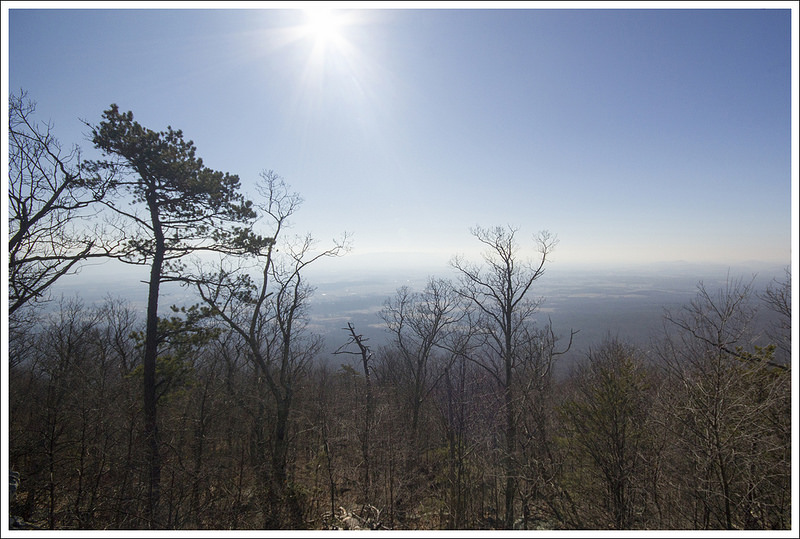
Adam takes in the beautiful ,but hazy, view from the top.
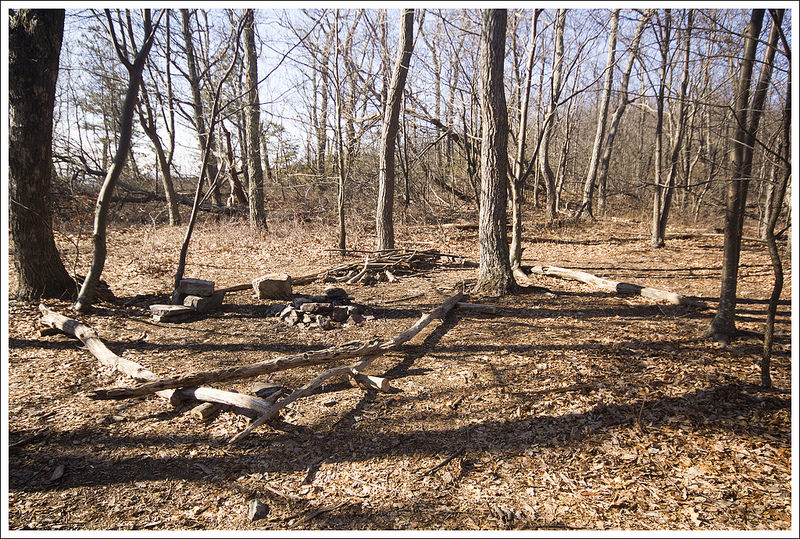
Adam takes in the beautiful, but hazy, view from the top. Below: Walking to the trail from the parking area.  This was really the only confusing part of the hike; Crossing Cedar Creek; Right after crossing the creek there is a superb campsite with hewn benches and a high hewn counter-top for cooking.

Start of Hike Crossing Cedar Creek Nice Campsite

Christine Says…

Back in January, we planned a little section hike along the Appalachian Trail with a group of friends. However, icy conditions closed the Blue Ridge Parkway, leaving us scrambling for an alternate plan. We stumbled across the Kepler Overlook on Hiking Upward and decided it would be a good ‘plan B’. Our group met for breakfast at Mr’ J’s Bagels (yay carbs!) in Harrisonburg before heading up to the trailhead.

We expected to have to park about a third of a mile from the official trailhead, but we found the forest service gate open and were able to leave our cars right at the hike’s start point.   From the parking area, there are trails and forest service roads leading in several directions.  This was probably the most confusing part of the hike.  You want to go straight up the forest road with the permanently closed gate.  If you don’t reach the blue-blazed Tuscarora trail within the first .3 mile of your hike up the road, you’ll know you’ve gone the wrong way!

Hiking Along
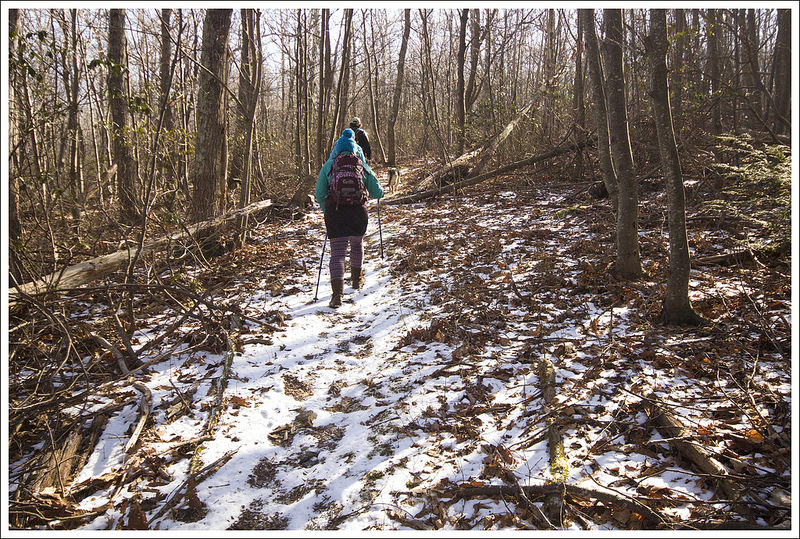
The group hikes along the trail. Below: Crossing a small footbridge: Clark and Maia on the trail; Adam makes his way uphill.

Stream Crossing Clark & Maia Adam Climbs Uphill

At the junction with the Tuscarora trail, go left.  You’ll pass another closed gate before coming to Cedar Creek.  The crossing of Cedar Creek is fairly wide and might be tricky in wet conditions.  We were able to negotiate the crossing with some careful rock hopping.  Shortly after the crossing, you’ll come to one of the nicest backcountry campsites I’ve seen.  Someone has taken the time to build wide benches, a large fire pit, and even a high counter-top for cooking.  It would be a great group campsite with easy access to water.

From the campsite, continue to follow the blue-blazed trail.  There was one place that the trail appeared to go straight, but actually turned.  We all missed the turn and had to backtrack a few hundred feet where the trail crosses the stream again using a footbridge made of branches.

After crossing the stream, the trail climbs Tea Mountain.  It’s never a tough climb, but it’s a steady uphill.  The trail alternates between narrow footpath and wider road-like conditions.  The trail follows along several switchbacks.  At about 1.9 miles into the hike, you should see an unmarked side trail on the left.  If you follow this side trail for a few hundred feet, you’ll reach a large rock jumble.  From the top of the rock jumble you get a great view of the mountains beyond.

Spur Trail
Adam enjoys the first view of the hike. Below: A light dusting of snow on the shady side of the mountain; There were plenty of nice campsites along the ridge; The view was pretty but very hazy.

Dusting of Snow Campsite on the Ridge Hazy View

After taking in the view, return to the Tuscarora trail and continue uphill for about another mile or so until you reach the saddle between Tea and Little North Mountains.  Along this ridge, there are several nice viewpoints and lots of open, flat space for camping.  We took some time to explore a couple different vistas.  The views were nice, but the sky conditions were really hazy.

After enjoying the mountaintop, we descended the way we came up.  On our way home, we decided to check out a new farm brewery near Edinburg.  Swover Creek is a working farm – they grow fruit and hops, raise chickens, and make sausage from locally produced meat.  They’ve recently started a brewery and are working on building a tasting room in their old barn.  We all tried a flight of their four beers (the persimmon ale was my favorite).  We also had their house-made soft pretzels and mustard and enjoyed a sampling of their different sausages.  It was a fun stop and I definitely recommend checking them out if you’re in the area!

Adam Says…

The Kepler Overlook hike was one that we had been wanting to do since we heard about it from our friends at Hiking Upward.  This hike leads to nice views as you climb up to Little North Mountain.

The trail started off as we went past the closed gate up the fire road.  There is a sign just past the gate showing the inter-connected trail system.  Continue up the fire road for about .3 miles and then take a right on the blue-blazed Tuscarora Trail.  The Tuscarora Trail leads down to Cedar Creek.  Cross a small stream at .5 miles and you will reach a nice campsite.  Continue along the trail and the trail takes another stream crossing (this time over a small log bridge with a branch handrail).  The trail turns quickly to the left as you begin your climb up Tea Mountain.  At 1.9 miles on a switchback, you reach an unmarked  side trail.  Following this for about .1 miles will take you to a rock outcropping with some views to the west.  Backtrack to rejoin the Tuscarora Trail.

Nice View - Kepler Overlook
One of the rocky outcroppings along the ridge. Below: Time for a group selfie; Kris takes in the view; Descent.

Selfie More Views Descending

At 2.5 miles, the trail reaches a Saddle between Tea Mountain and North Mountain.  From here, climb up North Mountain.  The trail levels out at 3.0 miles at a large area for backcountry camping.  From here, you have two options for views.  Cut through the campsite to the right along the ridge for a nice view.  You can also go to the left and make your way again towards the ridge to get more views to the east.

We enjoyed our hike with friends and dogs.  You can check out Clark’s YouTube video below.  We were amazed at how much he was enjoying the hike and even took some time to enjoy the view himself.

Van Buren Furnace
Van Buren Furnace sits near the trailhead. Below: Post-hike beers at Swover Creek;  Pretty farm chicken!

Beers at Swover Creek Swover Creek Chicken

After the hike we hit Swover Creek Farm to try out their brewery.  Since the tasting room is not yet built, we enjoyed our beer in the farmhouse.  I have described this when talking to friends as if you were to go over to your grandmother’s house and drink beer.  We got our flight of beers from the small room downstairs and then took them upstairs to the larger “living room”.  There were some large tables and older furniture, so it really felt like a visit to your grandmother’s.  All of the people that were there were local people and one man brought a thermos to fill with beer instead of a growler.  They brought out samples of their sausage they made on the farm and we ended up buying some to take home.  It was such a warm, home environment and we thought they did a great job with the small-batch beers they had made.  This was a perfect post-hike stop.

guestdogsClark and Maia Say…

Our friends brought their lab (Clark) and shepherd (Maia) along on the hike!  They were great trail dogs to have along for the day!

Clark was fitted with a GoPro — so don’t miss seeing the hike from his point of view!  🙂

Trail Notes

  • Distance – 6 miles
    (Check out the stats from Map My Hike)*
  • Elevation Change – 1120 ft.
  • Difficulty –  3.  A pretty easy hike with a bit of steady, moderate climbing.
  • Trail Conditions – 4.  Trail was in great shape.
  • Views  3.5.  Nice, but slightly obstructed by trees.  
  • Streams/Waterfalls – 3.  Cedar Creek is pretty and a solid water source.
  • Wildlife – 2.  We didn’t see anything, but there are plenty of deer and bear in the area.
  • Ease to Navigate – 2.  There are a couple places where it’s easy to lose the trail.  Also, there are several trails and fire roads from the parking area that can easily be confused.
  • Solitude –4.  We saw only a small handful of people on a nice, sunny, winter weekend day.

Download a Trail Map (PDF)

Directions to trailhead:  Take exit 291 on I-81 heading west on SR 651.  Go 1.5 miles and take a left on SR 623.  Go 4 miles and take a right on to SR 600.  Go 4.4 miles and take a left on SR 603/Van Buren Road.  Continue on Van Buren Road for 2.7 miles and you will see parking on the left.  There are two parking areas here, but pass the first parking area to get to the second parking area which is on the lefthand side.  Park here and retrace your path a short distance to see the closed gate and the fire road where your hike will start.

MapMyHike is not necessarily accurate, as the GPS signal fades in and out – but it still provides some fun and interesting information.

Neighbor Mountain – Jeremy’s Run Loop

This 14.7 mile route offers wilderness, beautiful views, and stunning stream scenery (even a small waterfall!)  It’s a wonderful, moderate overnight backpacking loop; or a really challenging day hike.  We set out intending to camp along Jeremy’s Run, but it didn’t quite go as planned!

View the Full Album of Photos From This Hike
Views from the Neighbor Mountain Trail
The views on this loop hike come along the descent of Neighbor Mountain. Below: The trailhead at Elkwallow Picnic Area;  Hiking along in golden woods; Adam and Kris at the junction of the Appalachian Trail and Neighbor Mountain Trail.

Neighbor Mountain - Jeremys Run Start Hiking Along Junction of AT and Neighbor Mountain Trail

Christine Says…

The final weekend of October 2014 was so beautiful – perfect, made-to-order backpacking weather. We decided to head out on one more overnighter before the weather turned cold. We invited our friend, Kris, to come along. She loves the outdoors as much as we do, and I was sure she’d enjoy this loop. Don’t miss her guest blogger entry later in this post! It had been several years since we last hiked in the vicinity of Jeremy’s Run, and I was really looking forward to camping along the beautiful stream.

After stocking up on some lunch provisions at Elkwallow Wayside, we finally hit the trail around 11:00. We figured we had a little over eight miles of hiking on our first day, so starting late morning would get us to camp before 3:00, with plenty of daylight left to pitch tents, cook dinner, and relax.

Neighbor Mountain Trail
Hiking along the Neighbor Mountain Trail. Below: The fall color was still close to peak; Adam checks out a rock formation; At the summit of Neighbor Mountain.

Golden Woods Rock Formation Summit of Neighbor Mountain

We started out at the Elkwallow Picnic Area. A short spur trail leads downhill to the junction with the white-blazed Appalachian Trail. The AT descends for about .3 of a mile before coming to a junction with the blue-blazed Jeremy’s Run Trail. Follow the Appalachian Trail, veering to the left. The trail ascends for a little over a mile before coming to a more level ridge. You’ll pass the junction with the Thorton River trail, continuing south on the AT. At just over four miles into the hike, you’ll reach the junction with the yellow-blazed Neighbor Mountain trail.

We decided this junction would be a nice place to stop for lunch (hummus – my favorite trail lunch of late – easy to eat and lots of quality calories!). After a relaxing, thirty-minute break, we took the turn onto the Neighbor Mountain trail. The path meandered across the ridge. For the first couple miles, it was mostly walking in the woods. There was a nice breeze and gorgeous sparkling sunshine was filtering through golden leaves. It was everything you want fall to be!

Even though there is no view, the summit of Neighbor Mountain is marked with a cement post. At the summit, I noticed I had picked up a ‘hitchhiker’ along the way – a walking stick bug was clinging to my pants. I wonder how far he had come with me. I picked him off, and set him on a fallen log off the trail.

Between six and seven miles into the hike, there are a few excellent views of the Massanutten ridge and Three Sisters. There was a forest fire in this area several years ago, so the view was pretty open and expansive. We all paused a while to enjoy the fall foliage.  It was so wonderful to see colorful mountains rolling our before us. We talked about how privileged and blessed we all felt to be out on such an amazing day!

View of Valley
Adam enjoys a view of the valley and mountains to the west. Below: This part of Neighbor Mountain burned in 2012.  Alot of damage is still evident; Fall color; Adam descends Neighbor Mountain toward Jeremys Run.

Neighbor Mountain Descent Neighbor Mountain Descent Neighbor Mountain Descent

The last mile and a half of the day was steady downhill, meandering across switchbacks until the Neighbor Mountain trail reached the bottom of the valley and Jeremy’s Run. As soon as you reach the stream, campsites are everywhere. The first few we passed were already taken, so we ended up returning to the hidden campsite we used several years earlier. It’s a flat spot under the trees shortly before the first water crossing.

And here’s where the story takes an unexpected turn…

Adam Says…

We all worked on pitching our tents and setting up camp. I set up our tent while Christine worked on inflating our sleeping pads. Kris was on the other side of the clearing working on setting up the one-person tent she had borrowed, when she suddenly she groaned, “Uh… guys – I think we might have a little problem.”

As it turned out, the tent bag only held the rain fly and the poles. The ground cloth and the actual tent were missing in action. She hadn’t checked the bag before hitting the trail.  We spent the next 45 minutes trying to improvise a shelter with everything and anything we had. We tried piling three people in our Big Agnes Copper Spur UL2 (bad idea). We discussed whether or not the evening would be suitable for cowboy camping under the stars. We talked through a few different scenarios: 1) we all hike back immediately, 2) I sleep under the tarp while Kris and Christine sleep in the tent, or 3) I hike back to the car tonight and pick them up in the morning.  I was least excited about the second option because the area felt tick-infested with the wet leaves.  We debated the options for a few minutes, but ultimately, we decided the best choice was to keep the group together and make our backpacking trip into a very long day hike.

Failed Camp
We tried to find a way to rig up shelter, but in the end we decided it was better to hike out. Below: Crossing the first stream and trying to eat something with enough calories to hike out happily; Adam doing one of many stream crossings; The best campsite along Jeremys Run sits above a waterfall.

Crossing Jeremys Run Crossing Jeremys Run Waterfall Campsite on Jeremy Run

We knew we only had a little over an hour of daylight left – the sun sets early behind the mountains surrounding Jeremy’s Run.  We rushed to pack everything up as quickly as we could. Cooking a hot dinner would have required getting more water, so we opted to just eat a few snacks from our bags.   We started off at a quick pace.  I twisted my knee at the first major water crossing we had to make, which made the rest of the trip pretty painful. But sometimes, you just have to suck it up and hike.

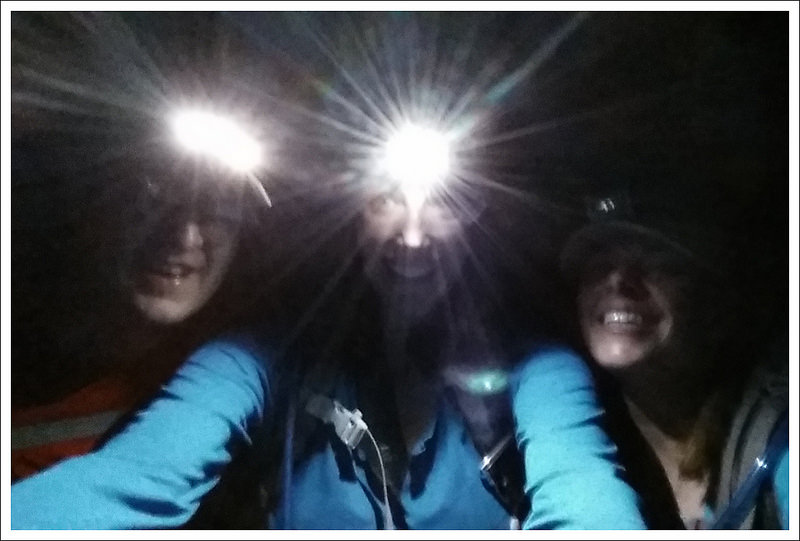
We soon passed another great campsite next to a small waterfall.  The trail meanders along and across Jeremy’s Run, requiring lots of rock-hopping across the stream.  The sun was dipping down quickly and we soon found that we needed to put on our headlamps.  Christine and Kris had legit headlamps, but I was using a small clip-on headlight that didn’t have the lumen output needed for a night hike.  When it reached dusk a few miles from our campsite, we came across a couple with a dog.  They asked us how far it was to the campsites and if they were all taken.  The guy was carrying an outrageous amount of gear and the girl looked completely miserable.  We knew they were going to be hiking to the campsites by nightfall and setting up camp in the dark.  I’m not sure if this was her first venture into overnight camping, but based on the daggers she was shooting him with her eyes, it may be their last.  They warned us they had seen a couple of bears just ahead of us, so we were on full alert.

Headlamps
We hiked by headlamp the last hour. Below: Jeremys Run in twilight; A large pool along the run; One of the last few stream crossings before it became too dark to take photos.

Jeremys Run Jeremys Run Jeremys Run

As it became fully dark, we still had a few stream crossings to make, which made it quite hazardous.  I reminded myself that the water wasn’t that deep so if we stepped in the water, we would probably be OK.  Another danger of night-hiking is the ability to lose the trail.  We really had to pay attention to the ground and try to keep an eye out for occasional blazes to make sure we would stay on the trail.  Hiking in the fall after most of the leaves have covered the trail provides an extra challenge.  Because I had a weaker headlamp, it was hard for me to lead along the trail since the lights from Christine and Kris were blasting my shadow ahead of me on the ground.  And then, I heard large noises in the woods, which I’m guessing was the bears that we had been warned about.  We kept talking loudly and playing some games to keep our minds sharp (animals/foods/colors that start with each letter of the alphabet) as we hiked along.

At 4.25 miles from our intended campsite, we finally came across a concrete marker post.  This post marked the junction with the Knob Mountain cutoff trail, so we knew were getting closer.  We kept straight on the Jeremy’s Run Trail and at 5.15 miles, we reached our first junction with the Neighbor Mountain Trail.  It was now just .3 miles straight ahead until we reached the parking lot where we started.  We made the last climb with renewed energy and celebrated that we made it through this adventure.

It was definitely one of the longest hikes we have done in a day and with the extra weight on our back, was one of the toughest.  We got back in the car and decided to go out to dinner to celebrate with drinks and food at Ciro’s in Elkton, VA.  We were physically exhausted and hungry, but it was quite an adventure we will never forget.

One takeaway I had from this trip was that we were all great at hiking together.  When we faced the challenge of not having two functional tents, we kept our wits about us, made a quick decision and went with it.  There was no complaining and we just relied on each other to get through.  If we had panicked or become overly upset, it could have led to a dangerous situation.  It is through this challenge, that we learned that having good hiking partners that work well together is a great trait to have for survival.  We all vowed to come back to this spot to camp together sometime in the spring to get the full experience through camping on Jeremy’s Run.  After the hike, Kris bought her own tent and I bought a better headlamp.

kris Kris Says…

Backpacking 101- It doesn’t matter if you were up late celebrating your birthday and borrowing some equipment…ALWAYS double check your equipment or your trip will not be so fly!

I was excited to be hiking with friends on a beautiful fall day.  We have always shared an appreciation of nature, lots of conversations and tons of laughter. I guess that is why we handled our little upset so calmly and reasonably. Although, I’m pretty sure I said  “Adam, just because I am a girl doesn’t mean you have to give up your tent.  I will cowboy up. Now, everyone hand over any booze or sleep aides you may have!” Of course that didn’t fly.

Ultimately we laughed at the situation, even as we crossed that creek 14 or so times and in the dark.  And I learned a few things on this trip: I am capable of hiking 15 miles with a 25 lbs pack in a day, Little Debbie Peanut Butter pies are so tasty and 400 calories, it was time to purchase my own backpacking tent, a packing checklist is important and a good attitude goes a long way.

I vowed to return to Jeremy’s Run and hike early enough to snag the sweet waterfall camp spot, I also plan to cowboy camp sometime just to prove I can (my dog will protect me).

Christine and Adam- you two are SuperFly!

Trail Notes

  • Distance – 14.7 miles
    (We had issues with MapMyHike on this trip, so we have partial stats. We have the Neighbor Mountain segment and most of the Jeremys Run to Elkwallow segment. We’re missing the portion along the Appalachian Trail and a few early tenths of a mile along Jeremy’s Run.  Technical issues!)*
  • Elevation Change – 2610 ft.
  • Difficulty –  4.  The terrain is fairly moderate throughout the hike, but the length ups the difficulty rating.
  • Trail Conditions – 3.  Sections along the Appalachian Trail and Neighbor Mountain are in great shape.  The Jeremy’s Run trail is rocky and has at least 14 water crossings – some of them can be challenging!
  • Views  3.5.  The views descending Neighbor Mountain are beautiful, but never fully open/panoramic.
  • Streams/Waterfalls – 3.5.  The stream is beautiful and scenic.
  • Wildlife – 5.  We saw a bobcat!  Hikers we passed at sunset told us there was a bear ahead, but we couldn’t see anything in the dark.  But, the last time we hiked in this area, we saw three bears.  We have also seen/heard owls, pileated woodpeckers, and whippoorwills.
  • Ease to Navigate – 4.  The junctions are clearly marked and easy to follow — unless you’re hiking in the dark!  🙂
  • Solitude –1.  It’s the most popular backpacking loop in the park’s northern district.

Download a Trail Map (PDF)

Directions to trailhead:  From the US-211 entrance of Shenandoah National Park, head north for 9 miles on Skyline Drive.  Take a left towards the Mathews Arm Campground.  In .7 miles, you will reach a parking lot.  The trail takes off next to the outdoor bathroom.

MapMyHike is not necessarily accurate, as the GPS signal fades in and out – but it still provides some fun and interesting information.

Veach Gap – Morgan’s Road

This hike is easy for a 7-miler!  Gentle grades along an old roadbed take you to a lovely view of the Shenandoah River and mountains beyond!

View the Full Album of Photos From This Hike
Veach Gap Hike
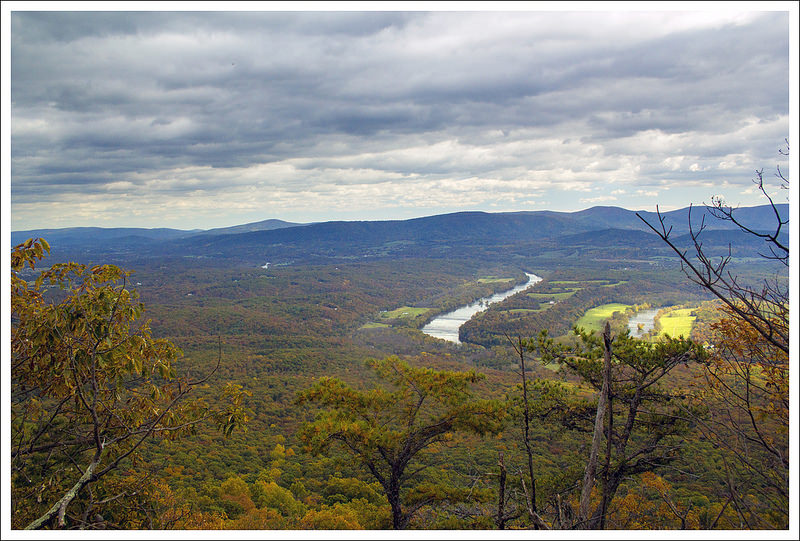
The Point overlook on the Veach Gap hike offers nice views of the bends of the Shenandoah River and the mountains of the national park beyond. Below: Adam crosses the closed gate at the beginning of the trail;  Christine hikes the Veach Gap trail; The main trail junction on this hike.

Start of Hike Veach Gap Hike Signs

Christine Says…

Throughout fall 2014, our employer (and alma mater), James Madison University, participated in the Outdoor Nation Campus Challenge.  Basically, students and employees accrued points for outdoor activities. The school that compiled the most points in the end won a prize of cash and outdoor gear. One component of the competition was completing a collection of eight local hikes.  The list included many hikes we had already done (Old Rag, Humpback Rock, Fridley Gap, High Knob Fire Tower).  Veach Gap was one of the only hikes on the list we hadn’t done, so we decided to check it out.

From the end of Veach Gap Rd. in Fort Valley, the hike begins along the Veach Gap Trail (blazed in gold), which is an old road bed.  Supposedly, this trail is what remains of the historical Morgan’s Road.  General George Washington requisitioned the road during the Revolutionary War.  It was built to be used as a path of retreat from Yorktown.  As we all know from history, the war went America’s way, and the retreat route was never needed. The road was still used locally for many years before falling into disuse and transitioning into a trail.

At one mile in, the Veach Gap trail crosses Mill Run.  This is really the only potentially confusing spot to navigate on the hike.  The trail crosses at a diagonal, so look carefully for the gold blazes on a tree slightly upstream.  Shortly after crossing the stream, you may notice a rock formation in the shape of an upside down ‘U’.  This is called an anticline, and it’s a very unusual geological feature in our area. I’m kind of ashamed to admit this, but we didn’t even stop to look at the anticline.  I forgot it was there, and my mind was more focused on fall colors, lofty views, and potential wildlife sightings.  But, if you’re a geology buff – don’t miss this feature!

Crossing Mill Run
Crossing Mill Run. You can see the blaze on the tree on the opposite bank. Below: Pretty fall leaves on the water; Blazes for Veach Gap, Tuscarora, and the Massanutten Trails; After the main trail junction, the Massanutten Trail became a little steeper and rockier.

Fall Leaves on Water Blazes Rockier Massanutten Trail

A short distance after crossing the stream, the Veach Gap trail merges and becomes jointly blazed with the orange-blazed Massanutten Trail and the blue-blazed Tuscarora Trail. The three trails share the route for (at most) a couple tenths of a mile. AT 1.2 miles,  you’ll come to another trail sign.  To the right, the trail heads in the direction of the Little Crease Shelter.  Stay to the left (blazed orange and blue), headed up Little Crease Mountain and toward Sherman Gap.  About a half mile after this intersection, you’ll pass a marked group campsite on the right.

Continue meandering uphill along a gentle grade.  At three miles, the trail becomes a bit steeper with switchbacks.  There was a significant forest fire here in 2012, so the canopy is thin and allows nice views along the climb.  We saw lots of charred stumps and blueberry bushes along the increasingly rocky trail.  Eventually, the trail leveled out along the ridge.  We soon reached The Point Overlook – a small outcropping of rocks overlooking a sweeping bend on the Shenandoah River.

We had a snack, took a few photos, and spent some time chatting with a fellow hiker (Hi, DJ!) before heading back down the way we came. Veach Gap was really a lovely hike to enjoy at the peak of fall foliage season.  After getting back to our car, we made the short drive into Front Royal so we could enjoy burgers and shakes at Spelunkers.  Great day!

Adam Says…

When we were reviewing the peakbagging hikes that were listed for JMU students/faculty to try for the Outdoor Nation competition, we were surprised to see this one on there.  My guess is the coordinators looked up hikes that were close to Harrisonburg without thinking of what would be seen on the hike.  We initially thought this wouldn’t be that nice of a hike, since we hadn’t heard anyone mention it before to us, but the views made this a pleasant surprise.

When we pulled up to the parking lot, we saw a few cars already in the parking lot and a group getting ready to hit the trail when we did.  Of course, we saw vehicles for hunters, so we were a little worried about how this trail was being used overall.  We were glad that we had brighter clothes on, which is always a precaution to consider during hunting season.  We started off on the gold-blazed Veach Gap trail by crossing through the gate and walking on the fire road.  The trail was very flat and passed through some younger forest.  We were greeted with sights and sounds of Mill Run to the left of the trail.

Opening Views
The higher we hiked, the more views we got through the trees. Below: Adam takes in the view; The ridge was burned by a forest fire in 2012.  The damage is still fresh and evident; Adam descends.

Another Take on the View Rocky Ridge Descending

We soon came across two bow hunters, that seemed to be milling around, more about enjoying the outdoors than they were about hunting.  At .35 miles, the fire road turns into trail.  At 1.2 miles, take a left at the junction and join the blue and orange-blazed Massanutten Trail.  The trail continued a slow, gradual climb heading northeast.  At 3.0 miles, the trail takes a sharp, southern route and at 3.2 miles, it switches back to the normal northeastern direction.  On our climb up, we passed by a large group of boy scouts that were covering some miles over the weekend, but were looking to camp near the crossing at Mill Run.  The slightly-obstructed views of the mountains beside us were so colorful in this peak fall setting.

As you climb up to the ridge, you start seeing a lot of the forest fire damage.  Since this happened in 2012, you start seeing some of the plants starting to grow in place of those that burned.  We reached the ridge and followed it for about .15 miles.  At 3.5 miles, we found a pile of rocks marking a short climb to the overlook where we stopped.  The true highlight of the view is seeing the bends of the Shenandoah River from this rocky perch.  There wasn’t a ton of room at the top that was unobstructed, but it was enough for a few people to take in the view.

If you feel like you would like a view hike with a good amount of solitude, this may be a great selection.

Trail Notes

  • Distance – 7 miles
    (Check out the stats from Map My Hike)*
  • Elevation Change – 1100 ft.
  • Difficulty –  2.  This is an easy hike to a nice viewpoint.
  • Trail Conditions – 4.  The trail was in great shape in most places.  Dry, fallen leaves made some of the descents slippery.
  • Views  3.5.  The view of the bends of the Shenandoah River is nice, but slightly obstructed.
  • Streams/Waterfalls – 2.  The stream along the early part of the trail is really pretty.
  • Wildlife – 2.  We didn’t see anything but a few birds and squirrels.
  • Ease to Navigate – 3.  There are a few junctions and a few unmarked trails that cross the route, but you should be fine if you follow the blazes.
  • Solitude –4.  We did see a troop of Boy Scouts and a handful of others hiking in this area on a perfect fall weekend near peak foliage color, but generally this area is very quiet.

Download a Trail Map (PDF)

Directions to trailhead:  From Luray, VA, take SR 675/Camp Roosevelt Road.  Go .8 miles and take a left to stay on SR 675.  In 2.2 miles, take a right to stay on SR 675.  In 7.8 miles, take a right on to SR 678/Fort Valley Road.  Follow this for 9.7 miles and then take a right onto SR 774/Veach Gap Road.  Follow this about .75 miles to the end of the road, where you arrive at a parking area.  The trail starts after you walk around the gate.
MapMyHike is not necessarily accurate, as the GPS signal fades in and out – but it still provides some fun and interesting information.

Appalachian Trail – Hog Camp Gap to Punchbowl Mountain

This 17 mile overnight backpacking trip had beautiful views from Cole Mountain within the first two miles of the hike.  The rest of the hike was less scenic – mostly walking through quiet woods and along seasonally low streams.  The Lynchburg Reservoir and the swinging bridge over the Pedlar River were noteworthy features on the second day.  Adam will cover day one and Christine will take over with day two!

View the Full Album of Photos From This Hike

Adam Takes in the View from the Summit of Cole Mountain
Adam takes in the view from the summit of Cole Mountain.  Below: Coming out of the woods onto the grassy meadow is always breathtaking;  Great views from the top of Cole Mountain; Hints of fall color near the summit.

Breaking Out of the Trees Cole Mountain Summit Coming Fall Color on Cole Mountain

Day One (8.1 miles)…

We started off our trip by leaving one car where the AT crossed the Blue Ridge Parkway at the Punchbowl Mountain overlook.  From the lot, we could see the AT  southbound, but we didn’t see where we would return to our car from the north. It turns out it was just below us on the other side of the parking lot, but the morning fog made it a little hard to spot.  We dropped our car off and then headed to Hog Camp Rd, to start our journey.

From Hog Camp Gap, we headed south on the Appalachian Trail.  The trail started off through a wooded section uphill, fairly steeply in some parts.  Around 1.1 miles, the trail opened up to the beautiful, wide-open bald clearing that is Cole Mountain.  We have hiked Cole Mountain before as a loop and I do think it is one of the more under-appreciated hikes in Virginia.   The panoramic vistas make this look like something you would picture in an outdoors magazine.  You can’t help but want to stop and take a look at the scenery around you.  The way we split this section might not have been the best plan for enjoying vistas.  We knew we had the best views of the trip done in the first 1.5 miles of the hike.  But that is one of the biggest lessons I learned from hiking this section – you have to hold on to what you may have just seen, because there is no certainty about what is to come ahead.

Climbing Bald Mountain
The climb of Bald Mountain wasn’t terribly long or difficult. Bald Mountain also is not Bald!  Below: Adam checks out the map at our lunch stop – a clearing near the top of Bald Mountain; A little snip of a view through the trees along the top of Bald Mountain; Huge tree!

Lunch Stop Snip of a View Huge Tree

After reaching the summit of Cole Mountain, the trail descends and again enters the forest.  Around 2.5 miles, we reached a junction with a spur trail that led to the Cow Camp Gap overnight shelter and a water source.  We continued on the trail which starts an ascent up Bald Mountain.  We reached the summit at 3.5 miles and were hoping for some nice views at the top, but found that Bald Mountain wasn’t very bald (there were a few obstructed views through the trees).  We found a clearing and camp spot and had our lunch there before continuing on.  The rest of the day, the trail was a descent so our climbing was done (at least until tomorrow).

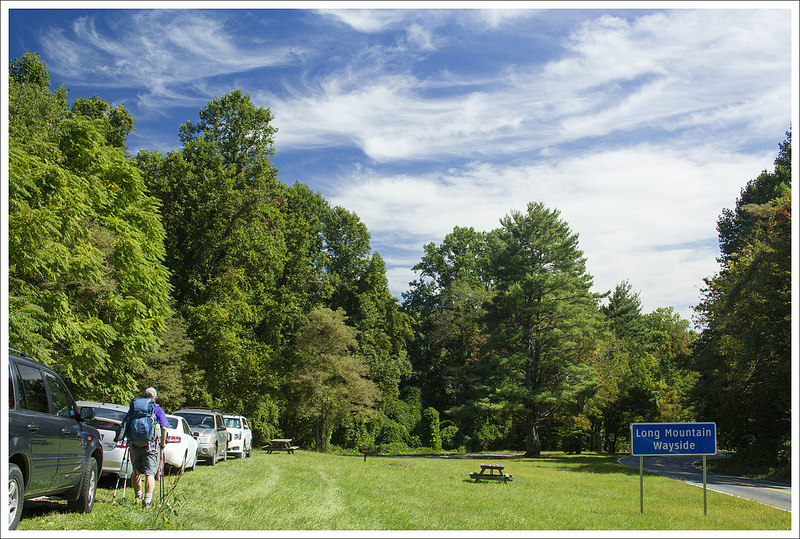
We crossed over USFS 507 at 5.5 miles and eventually came to US 60 and the Long Mountain wayside at mile 6.3.  We stopped at one of the picnic tables and took a break to eat a snack and give our backs a relief from the weight.  Local people just park on the roadside here and have a picnic at this spot.  It is also a way to do a longer out-and-back to Cole Mountain without parking or driving on a rough, gravel road.  After resting, we crossed US 60, spotting a sign for the continuation of the Appalachian trail to the right.  We continued our descent and at 7.1 miles, we reached Browns Creek, a reliable water source for a good stretch of trail.  At 8.2 miles, we reached the Brown Mountain Creek Shelter, our stop for the night.

The Brown Mountain Creek area is interesting from a historical/archaeological standpoint.  Much of the land along the creek was part of a large plantation predating the Civil War.  After the war, the land was primarily a settlement for freed African-Americans.  Houses, farms, orchards and even a gristmill could be found along the creek.  You can still see stone walls/stairs, pieces of metal, and other artifacts along the creek.

Long Mountain Wayside
The trail crosses US 60 at the Long Mountain Wayside.  Below: Information at the wayside: Descending to Brown Mountain Creek; Arriving at Brown Mountain Creek Shelter.

Wayside on Rt. 60 Descending to Brown Mountain Creek Arriving at Brown Mountain Creek Shelter

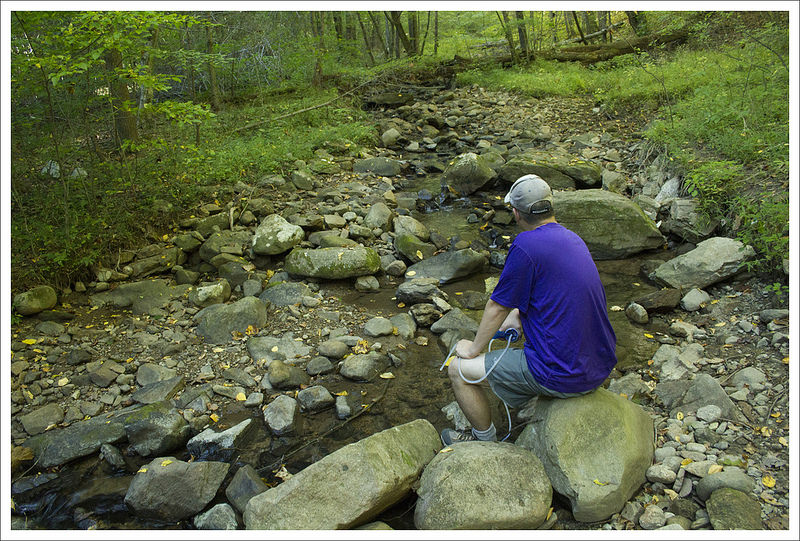
When we first got to the shelter, there was still a smoldering fire in the fire pit, so we realized someone had been there recently.  We also noticed a large pile of fresh bear scat next to the shelter.  While we didn’t think a bear had been roasting marshmallows by the fire, we felt it may be wise to not set up camp directly at the shelter.  We found a nice campsite right by the creek and decided that would be a better spot.  There was a boy scout troop that was camping on the other side of the creek.  We worried about them being too loud over the course of the night, but they were fairly well-behaved (except for trashing the privy – but that’s another story).  We set up our tent, filtered water for tonight and tomorrow, and began to unwind.

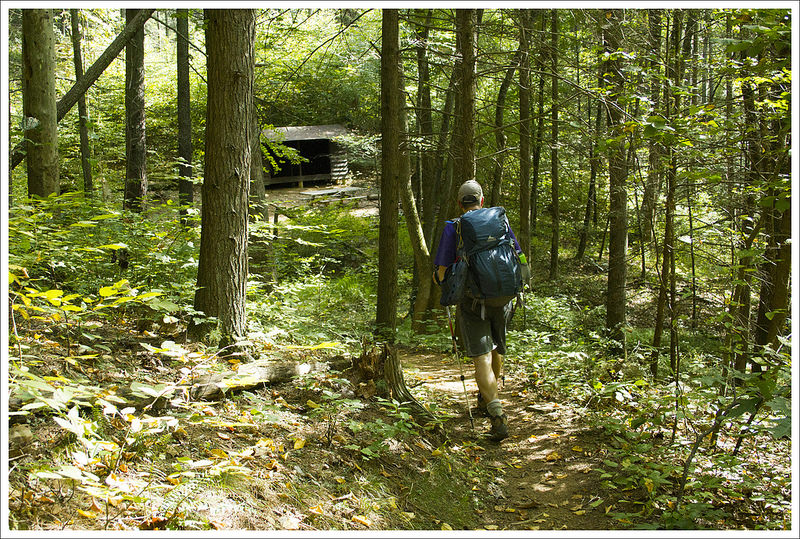
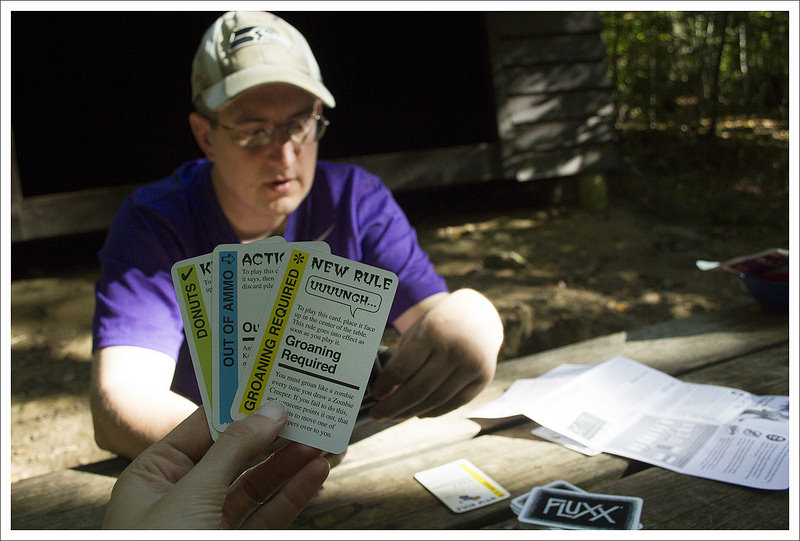
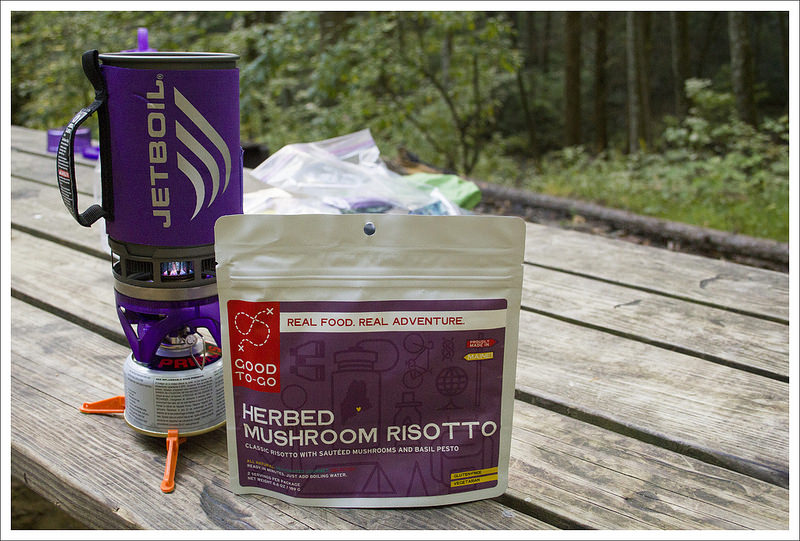
We cooked dinner up at the shelter (Good To-Go Herbed Mushroom Risotto)* and played Zombie Fluxx, a card game where the rules and objectives for winning constantly changed.  I always enjoy bringing a card game along the trail – the weight isn’t too bad for the entertainment it can provide.  We played a few hands (I recall Christine being better at killing zombies than I was) and then went back to our campsite after I hung our bear bag.  We started off reading books by headlamp outside our tent (continuing with the zombie trend I was reading Night of the Living Trekkies), but the bugs were awful.  We retired to our tent probably around 7:30, read for a little while longer, and went to bed very early.  We always typically go to bed around nightfall when backpacking, but hiking with the extra weight always makes you feel a little more physically exhausted.

* Good to Go is a new backpacking food manufacturer.  They use healthy ingredients and much less sodium.  We thought it was one of the best dehydrated meals we’ve had on the trail!  We added a foil packet of chicken breast to our dinner.

Games
We arrived at camp fairly early, so after the tent was pitched and water collected, we spent some time playing Zombie Fluxx. Below: A group of 14 Boy Scouts camped along the opposite bank; Collecting water for cooking and drinking; We tried a new brand of dehydrated meal – Good to Go (tasty!)

Scouts Water Source Good to Go Risotto

Day Two (9.1 miles)…

Day two started earlier than expected (and with the added bonus of a huge, swollen mosquito bite on my eyelid – I looked like I’d been punched!) Like most Boy Scout troops we’ve met along the trail, the one camping near us on this trip was awake, packed up, and on their way before sun-up. This had pros and cons.  One con was all the crunching boots and headlamps moving around our tent in the dark.  A pro was the opportunity we had to enjoy the creekside in peace and solitude before starting our hike for the day. The solitude also meant I could find a place to dig a cat hole in complete privacy without having to worry about Boy Scouts spotting me!  I would have used the privy near the shelter, but let’s just say the privy turned out to be another con of camping near a big scout group. One of them had completely defiled the privy and there was no way I was going in there!

Breakfast was instant oatmeal, honey buns and coffee.  I’ve learned the hard way after running out of gas on past backpacking trips that one packet of instant oatmeal (140 calories) is not enough to fuel me across nine miles.  The Little Debbie Honey Bun has been a revelation for me.  I think it has the magical balance of fat and sugar I need to power through my morning miles.  They also hold up great in my pack – no smushing and no crumbling.  Some people like a healthier, protein-packed breakfast, but give me a honey bun!

Morning on Brown Mountain Creek
The morning was beautiful and quiet (after the Scouts left). Below: When water is running higher, this is probably a pretty little waterfall; Adam hikes along the Appalachian Trail: One of several small stream crossings.

Plunge Pool Walking Along the AT Stream Crossing

The first five miles of our second day were easy. The terrain was a very gradual overall descent with a couple brief uphill climbs.  The first mile or so followed Brown Mountain Creek.  The trail followed roughly parallel to the stream for much of the way.  I kept thinking how beautiful this area would be when water levels were higher.  We eventually crossed the creek via a wooden footbridge.  At this spot there was a small, but pretty, waterfall cascading into a plunge pool.  The flow was down to a trickle, but it was still a lovely spot.

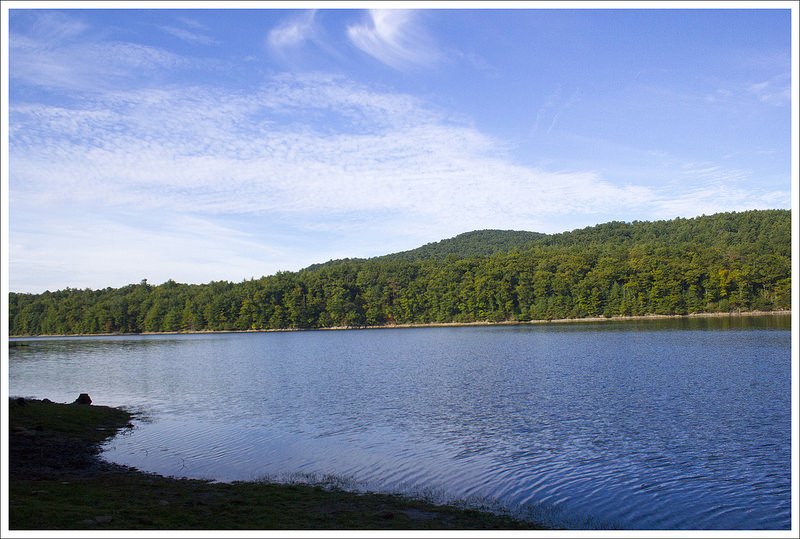
Departing Brown Mountain Creek, we walked through serene, quiet forest for a couple more miles.  There were two small stream crossings along the way.  The first didn’t seem to have a name, but the second was Swapping Camp Creek.  Both of these creeks end up flowing into the Lynchburg Reservoir.  At around 3 miles into our hike, we started seeing glimpses of the reservoir through the trees.  We followed an off-trail footpath steeply down to the shores of the water for a couple photos.  We saw several herons hunting in the mud.  There were ‘no camping’ signs posted everywhere, but there were also several well-used fire rings.  I’m guessing there are quite a few people that ignore the regulations and attempt to stealth camp in this area.

Lynchburg Reservoir
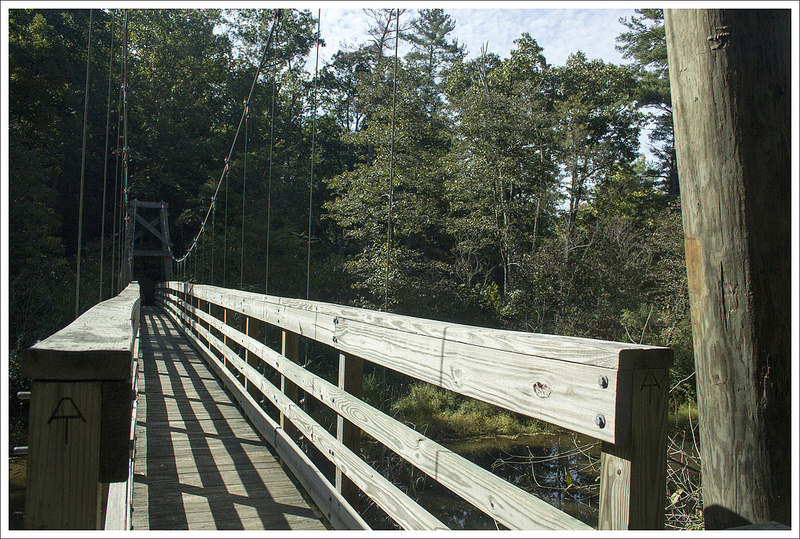
The trail skirts around the Lynchburg Reservoir. Below: The dam at the south end of the reservoir; The Pedlar River; The Pedlar River footbridge.

Dam Pedlar River Pedlar River Bridge

We climbed back up to the Appalachian Trail and continued south, skirting the eastern side of the reservoir.  At around 4.8 miles we came to the lowest elevation point of our hike – the Pedlar River crossing.  The trail crosses the river on a picturesque, bouncy suspension bridge.  From the middle of the bridge, we could see early fall colors reflecting from the trees onto the water’s surface.  After crossing the bridge, we came out on gravel-surfaced Reservoir Road.  We followed that briefly until we spotted another white blaze for the Appalachian Trail.

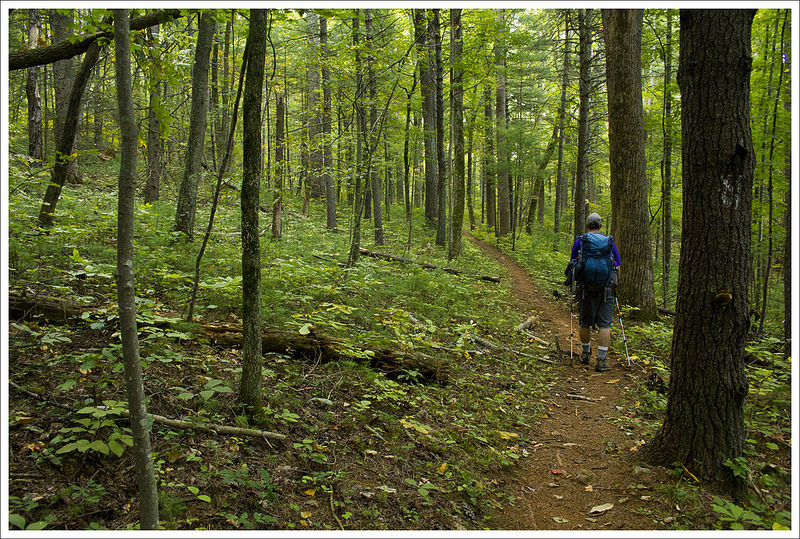
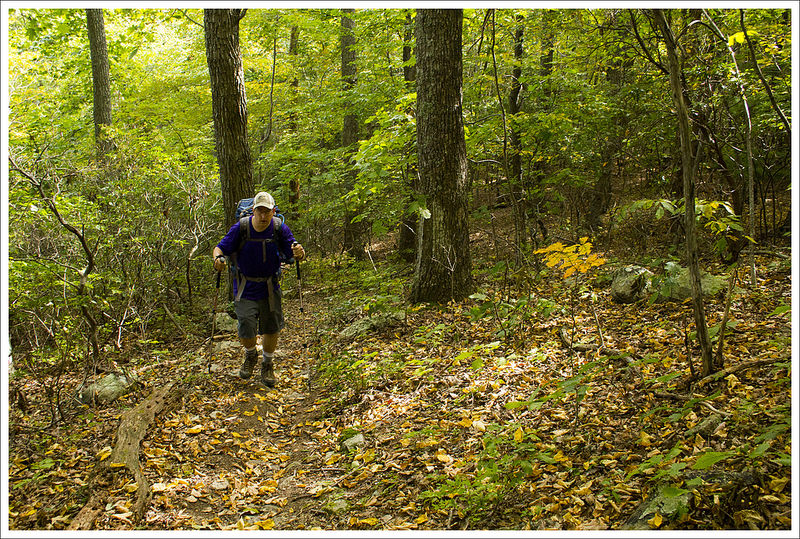
At this point, we began our toughest climb of the whole 17 miles.  The 2-mile ascent of Rice Mountain begins pleasantly enough.  The trail follows parallel to Little Irish Creek (which was running low and barely noticeable) and passes through a small plot of old growth forest.  There is an extremely weather-beaten sign explaining tree sizes in the area and how the area is used to study the local watershed.  Early parts of the climb are well-graded and moderate, but about .75 mile in, the trail pretty much goes straight up the mountain without the moderating benefit of switchbacks.  I wanted to push through the climbing and put it behind me, but Adam was ready for a snack.  We found some big rocks about 1.5 miles up the mountain and took a candy break.  After a half mile more climbing, we reached the ridge of Rice Mountain.  The forest was especially pretty along the top of the mountain – very open with lots of nice shade trees.

Climbing Rice Mountain
Climbing Rice Mountain was tougher than it looked on the topo map. Below: Another little peek at a view through the trees; A curly laurel thicket; The finish line!

Peek of a View Laurel Thicket The End

On the descent of Rice, we had one nice view through the trees.  We also saw more brilliant red fall colors and a lot more thickets of rhododendron and mountain laurel.  There really wasn’t anything remarkable to see or say about our last couple miles of hiking.  The terrain was rolling – there was a general uphill trend, but with small downhills as well.  There were no views or streams to speak off.  The lack of scenery gave me lots of time to fret over my feet. Two toes on my right foot had dislocated earlier in the day and were becoming increasingly painful.  With each step, it got a little harder to bear my weight plus the weight of my pack. I think if there had been waterfalls or great views, I would have been more easily able to distract myself.  But on this particular day, all I could think was ‘Ouch – when will this hike be over?’

At almost the end, we had one final road crossing at the junction of Robinson Gap Rd. and Panther Falls Rd.  After just another third of mile, we came up a small hill and found ourselves back at the parking area for Punchbowl Mountain on the Blue Ridge Parkway.  I don’t think I’d ever been so happy to end a hike. It felt great to take my boots off and change into a pair of Oofos.  While I enjoyed the great weather, the opportunity to be out, and the nice views from Cole Mountain, this wasn’t one of my favorite backpacking trips.

Trail Notes

  • Distance – 17.2 miles [Day One] [Day Two]
  • Elevation Change – About 2900 ft.
  • Difficulty – 4.  Mostly for distance, but the descent of Bald Mountain is a real knee-grinder and  the climb up Rice Mountain  (Day 2) is surprisingly challenging.  
  • Trail Conditions –  4.  The trail is in nice condition all across this stretch of AT.
  • Views – 5 (for Day 1) The views from Cole Mountain are indisputably spectacular.  Enjoy them early in your hike… they’ll be the last real views of the trip.
  • Streams/Waterfalls – 3.  This was hard to judge because of the unusually dry late summer/early fall.  I think under normal circumstances, Brown Mountain Creek would be beautiful with lots of small cascades and rapids.
  • Wildlife – 2.  We didn’t see any wildlife beyond a cute bullfrog in the creek.  But, there was LOTS of bear scat around Brown Mountain Creek Shelter.
  • Ease to Navigate – 4.  Just keep following the white-blazes and pay attention at road crossings/trail junctions to stay on the Appalachian Trail. 
  • Solitude – 3.  We saw quite a few people around Cole Mountain and spent the night at Brown Mountain Creek with a Boy Scout Troop.  We saw only one person along the trail on the second day.

Directions to trailhead:  Requires a shuttle.  We parked one car where the AT crosses the Blue Ridge Parkway near Punchbowl Mountain.  This is mile 51.7 on the Blue Ridge Parkway, about 6 miles south of where the Blue Ridge Parkway meets with US 60.  From this point, we drove our other car back north on the Blue Ridge Parkway for 6.0 miles and took the exit leading us to US-60 East.  We headed 4.3 miles on US 60 E before taking a left on SR 634/Coffeytown Road.  Follow this for 1.6 miles before taking a right on SR 755/Wiggins Spring Road.  Follow this gravel, bumpy road for 2.7 miles until you reach the parking area where the AT crosses the road.  Follow the white-blazed Appalachian trail heading south.

Mt. Madison (NH)

Special: New Hampshire Edition

Introductory Guide to Visiting the White Mountains

This 8.8 mile hike takes you past Madison Spring Hut and up to the summit of majestic Mt. Madison.  The Valley Way Trail is known for being one of the safer, more protected routes into the heart of the White Mountains.  While the terrain is less extreme than other trails in the area, the hike still requires a little over 4,100 feet of climbing.  It’s a tough hike, but the views make it well worth the effort.

View the Full Album of Photos From This Hike

Hiking Mt. Madison
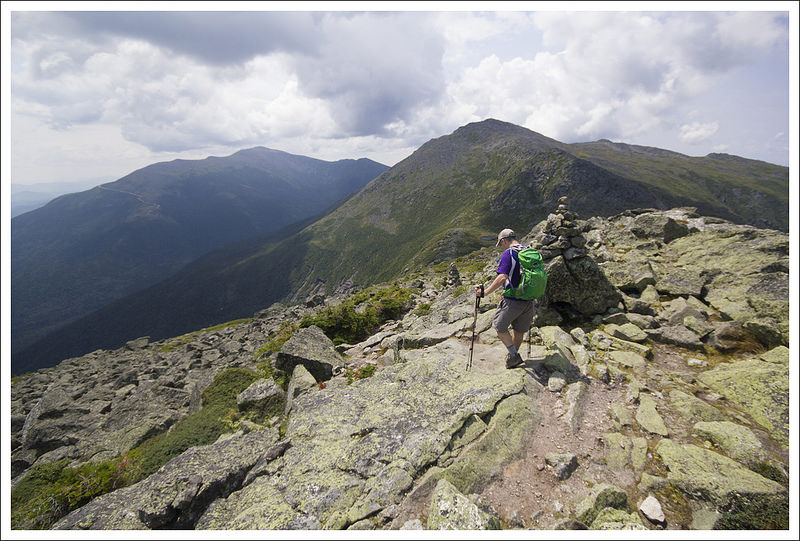
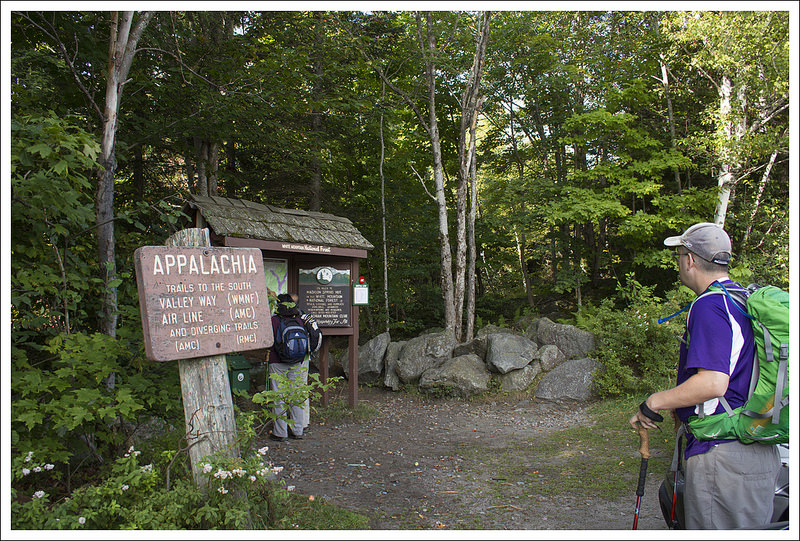
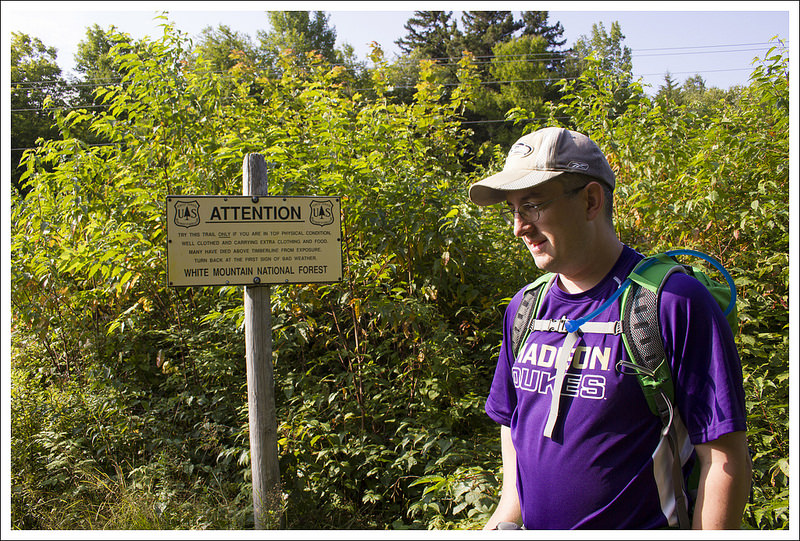
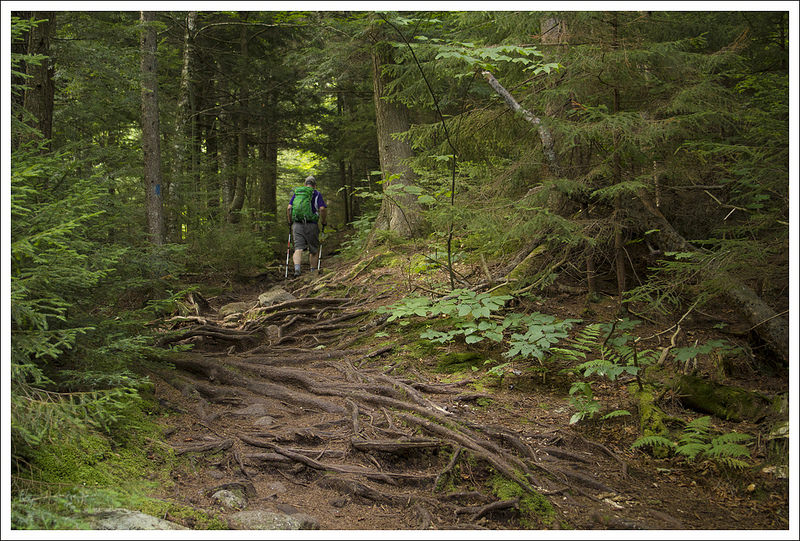
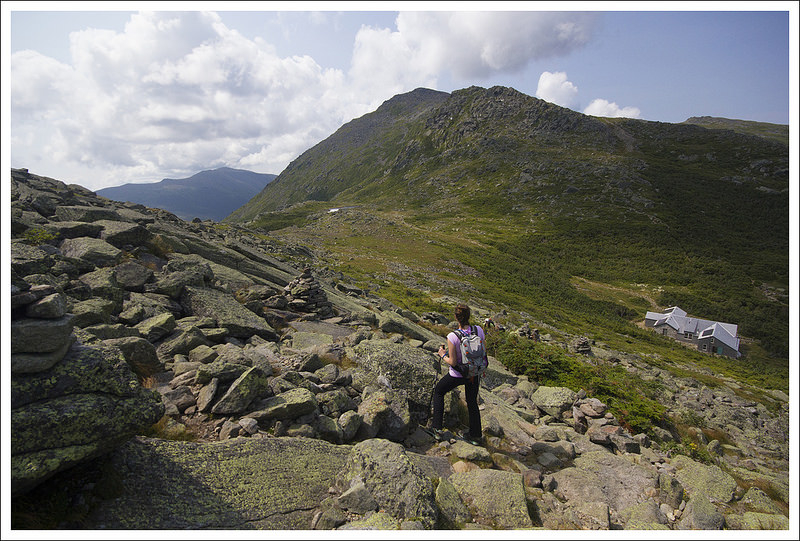
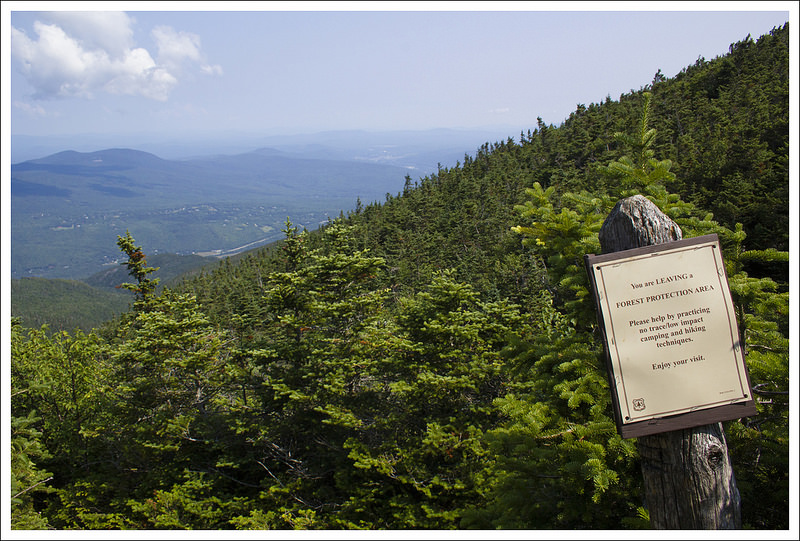
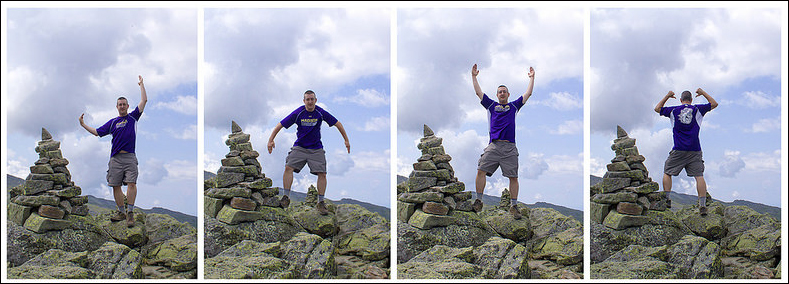
Adam makes his way across the summit ridge of Mt. Madison. The big mountain in the background is Mt. Washington.  If you look closely, you can see the Auto Road snaking down the peak.  Below:  Plenty of parking and access to many trailheads at the Appalachia Parking area;  Warning…. danger ahead – seriously, the White Mountains can be pretty extreme; The early part of the trail was fairly soft and gentle.

Appalachia Parking Death Awaits Early Terrain on the Valley Way Trail

Adam Says…

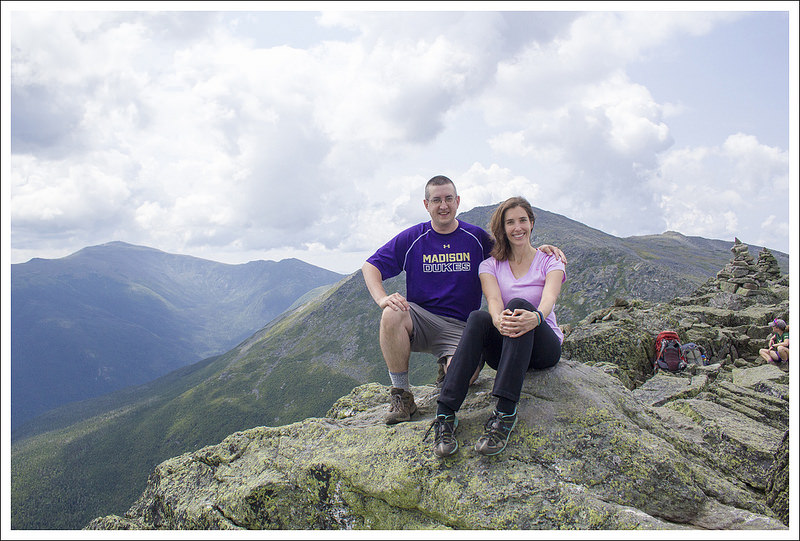
My top goal for our 2014 New Hampshire trip was to hike up Mt. Madison.  We both went to James Madison University and have worked there for years, so it only seemed fitting to take on the mountain that shared a name with our college.  I even wore JMU Dukes gear almost like the guy that goes to a concert wearing a t-shirt for the band’s previous tour to show his super-fandom.

We started out the day on a rough note.  Christine had put her hiking shoes and socks in the back of our car, so she could wear sandals on the car ride up.  When we pulled over at one point, we realized one of our Camelbak tubes had pressed open and leaked all over the car, soaking her shoes and socks.  We debated about if we would have been able to even do the hike in fear of blisters, but Christine decided to push forward.

There are a lot of ways up Mt. Madison, but in our research we found the most popular way was to make our approach by going up the Valley Way trail.  We parked at the large Appalachia parking lot (which was so full we needed to park on the road) directly on US-2.  We were worried there would be so many people on the trail, but this parking lot holds the beginnings of lots of trails that lead up to many peaks (including Mt. Adams and Mt. Quincy Adams).

Tama Falls
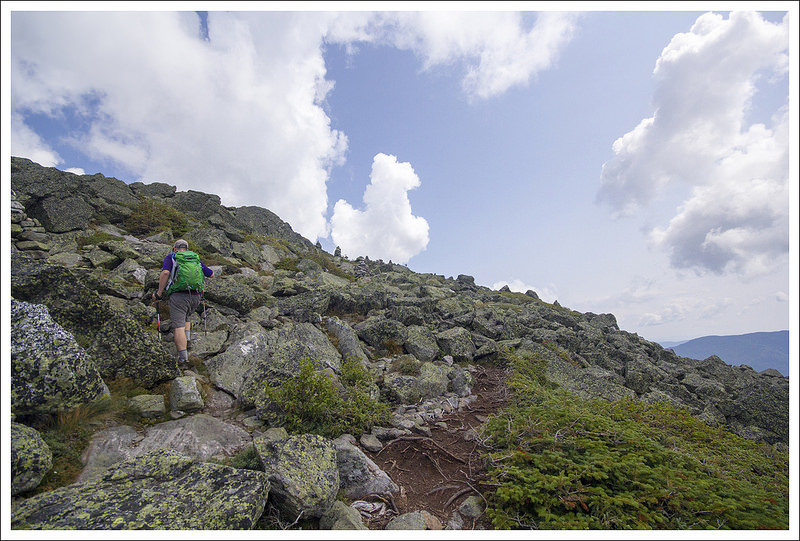
The early part trail follows Snyder Brook. By taking a short spur trial, you can visit beautiful 25′ Tama Falls.  Below: We saw a couple Croo members on their way down from the Madison Spring Hut; Adam checks out all the rocks on the ‘not as rocky’ New Hampshire trail;  The final push to the Madison Spring Hut was very steep and rugged.

Croo Getting Rockier Steep to the Top

The trail starts off from the back of the parking lot.  The trail branches off in different directions but follow the signs for the Valley Way trail.  The trail begins relatively flat and easy walking, as it runs along Snyder Brook.  There were a few places where we could get some nice stream views and even a glimpse at the picturesque Tama Falls at .4 miles.  At .7 miles, you reach another large junction, but continue to follow the signs to the Valley Way trail.  The trail then begins the steeper uphill climb.  Overall, I felt that the trail, while very rocky was not as steep and rocky as some of the other trails in the White Mountains.  There is a relentless amount of climbing and many rocks to navigate, but it wasn’t as grueling on my feet as some hikes in New Hampshire have felt to me.  At 3.0 miles, the trail gets very steep and rocky (often filled with larger small boulder-sized rocks to hoist onto) and will remain so until you reach the Madison Spring Hut at 3.8 miles. If you’re interested in camping on the mountain, but don’t want to stay at the hut, the Valley Way tentsite is at mile 3.1 on this hike.

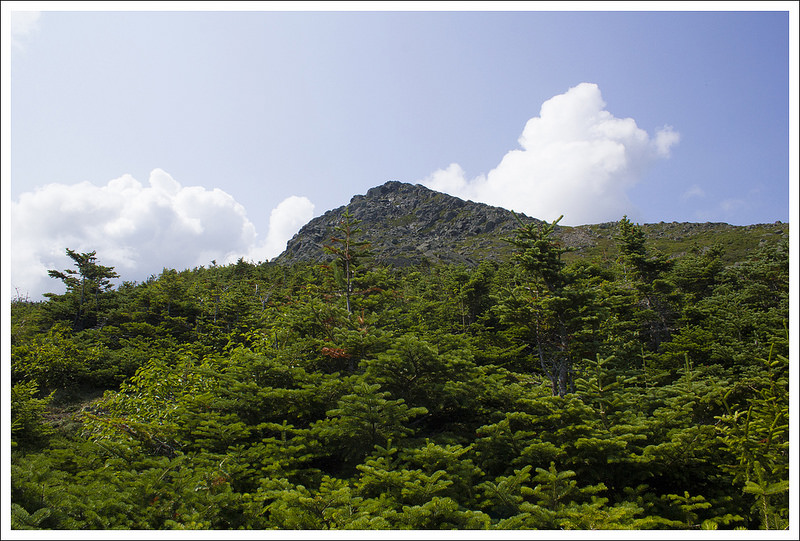
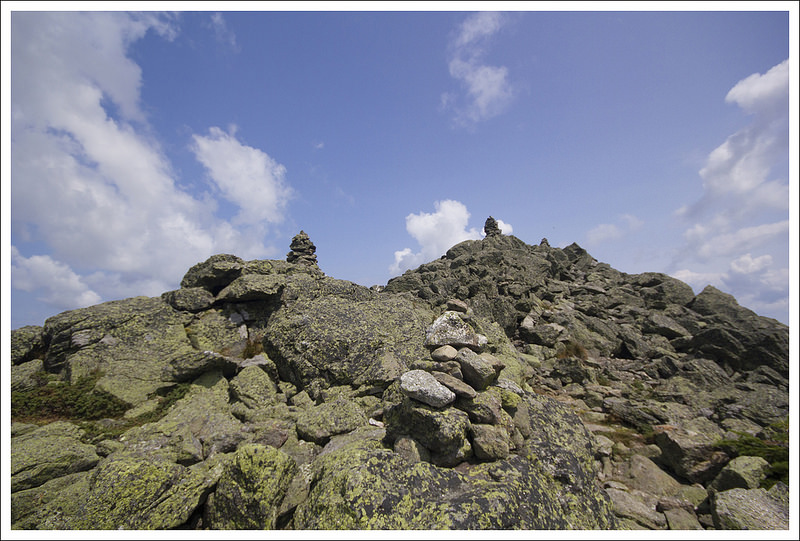
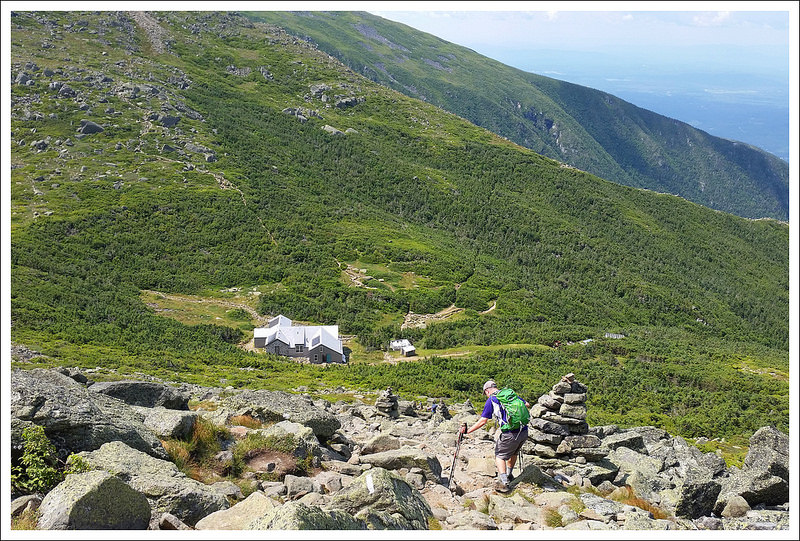
Once we arrived at the hut, we saw there were a couple of ways up to the summit of Mt. Madison.  At this point, we were above treeline, so we saw the rocky summit up above us.  I went in and found one of the Croo members and she told me the Osgood Trail had the most direct route and was a little easier than making our way via the Watson Path.  The final ascent up to Mt. Madison was .5 miles along the Osgood Trail (which is also the Appalachian Trail in this area).  You basically needed to walk acrpss large boulders, following cairns along the way until you reached the summit.  When you are above treeline, the summits of mountains seem so close to reach, but it is very misleading.  As we climbed up, we looked back and saw the hut shrink with each step, finally giving us some perspective of how far we had come.  We stayed a while at the summit.  The views were breathtaking and you could see for miles all around.  It definitely was one of the most beautiful scenes I have witnessed hiking and to realize the work we had put in to attain the peak, made it feel even more worthwhile.

Looking Back to the Hut
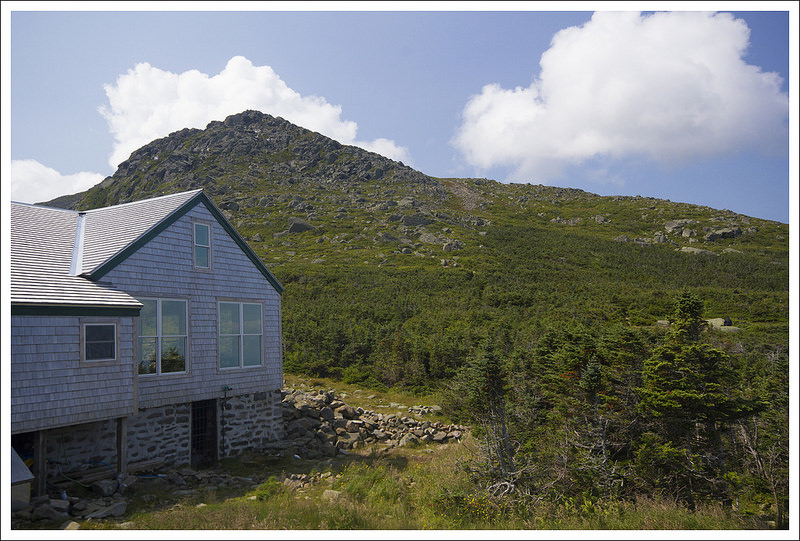
Christine makes her way up the Osgood Trail to the summit of Mt. Madison.  Below: About to go above treeline; Even though the summits are far away, they always look close;  A view of Madison Spring Hut with Mt. Adams in the background.

Alpine Zone Looks Close Madison Spring Hut

While we were at the summit, we met a woman who had a sign pinned to her that had 48 over 50 written on it.  She was over 50 years old and she had a goal to do all 48 peaks over 4000 ft. in elevation in New Hampshire.  She had saved Mt. Madison as her last hike to meet her goal, so we were thrilled to be able to see her experience accomplishing her goal.  What an inspiration!  We also talked to a gentleman at the summit who was from Colorado that had done this same hike 30 years ago.  He was staying at the nearby Crag Camp, run by the Randolph Mountain Club, just as he had done when we was a teenager.  He wanted to see if this hike was just as amazing as he had remembered and he told us it definitely was.  It made me further realize that everyone likes to hike for their own reasons and it is always a privilege to get to hear people’s stories on the hike.

We made our way back down and ate some lunch at the Madison Spring Hut.  We then ventured .2 miles on the Parapet Trail to see Star Lake.  This is a spot you definitely shouldn’t miss.  The lake is more like a small pond, but it was so beautiful to view the summit of Mt. Madison, as it reflected into Star Lake.  We debated about tackling Mt. Adams to bag another peak, but we realized that the summit looked close, but it was still a steep 1 mile away.  Not wanting to add even more to our hike, we decided to make our way back down.  The trail seemed to be even rockier on the way back down.  While you can normally fly down some parts of downhill trails, you need to take your time on this one to navigate all the rocks.  On our way down, we came into a rain shower, making the rocks a little slick.   The last .8 miles were quite easy again and we did pick up some time at this point.  We made our way back to the parking lot to make the round trip 8.8 miles.

Christine Says…

The morning of our Mt. Madison hike started off cheerfully enough.  We stopped for breakfast at Dunkin Donuts.  I ate both a bagel with cream cheese and a Boston Cream donut.  If I’m going to hike almost nine miles with over 4,000 feet of climbing, I’m going to enjoy any and all the baked goods I want!  However, I was jolted out of my happy post-carb afterglow when I discovered my socks and sock liners completely soaked in the back of the car.  A tough hike with wet socks sounded like a really bad idea.  But, driving out of our way to find an outfitter with Thorlo socks seemed like an even worse idea.  I’m super picky about socks, and Thorlo’s thick-cushion hiker socks are the only ones that keep my feet happy.  I decided wet Thorlo socks were better than dry socks of another brand. (and they were … I hiked all day in wet socks and didn’t get a single blister!)

As Adam said in his post, the Valley Way trail is pretty moderate for White Mountain terrain.  The trail is not as rocky and stays under the shelter of trees until you get to Madison Spring Hut.  It’s a great choice if you want to visit the northern Presidentials, but stay largely sheltered from wind and other weather.  There is still plenty of climbing, but until the last mile, it’s all gradual and moderate.  Trails like the Valley Way exist due in part to people like J. Rayner Edmands.  He was an early volunteer for the Appalachian Mountain Club.  Starting in the 1880’s, he spent over 20 summers building trails in the White Mountains.  He believed trails to the high peaks should be passable without stumbles, even in the dark.  Backpacker Magazine did a neat article about Edmands in their October 2014 issue.  Check it out if you have a few free minutes.
JMU Dukes
We paid tribute to our alma mater (James Madison University) on the namesake mountain. Go Dukes!  Below: The trail was extremely rocky and rugged between the hut and the summit of Mt. Madison; Cairns mark the way; Christine and Adam enjoy a summit view; The descent.

Climbing Mt. Madison  Rocks on Mt. Madison
Summit of Mt. Madison  Descent

I very much enjoyed the little rapids and waterfalls along Snyder Brook early in the hike.  Tama Falls was especially impressive.  After we moved away from the stream, the hike was basically just a climb in the woods.  As we ascended the trail got rockier, bit by bit.  The last half mile to the hut was insanely steep and rocky.  In one spot, my shoe got so solidly wedged between two rocks that I had to unlace it and contort my ankle to free myself.  It took efforts from both of us to release my shoe from the rocks.  It’s a good thing trail runners are so soft and flexible, because my feet definitely needed both shoes on this hike!  I think the steepness of the terrain is actually what stopped me from getting hurt when my foot got caught.  We were moving very slowly, picking our way across the rocks. Had I been moving at any significant speed, I think I could have easily broken my ankle.

When we arrived at Madison Spring Hut, it was already starting to cloud up a little. It wasn’t really overcast, but the sky had that heavy, hazy look about it.  The weather was definitely changing and I wanted to make sure we enjoyed the best views possible.  We headed up the Osgood Trail toward the summit of Madison.  I don’t know if you can really call the path to the top a ‘trail’.  It’s more of a scramble across rocks, following cairns leading you to the summit.  The climb to the top is slow going, simply because there is never a simple place to put your feet. On our way up it was fun to look back and marvel at the towering peaks and the tiny hut tucked into the col.

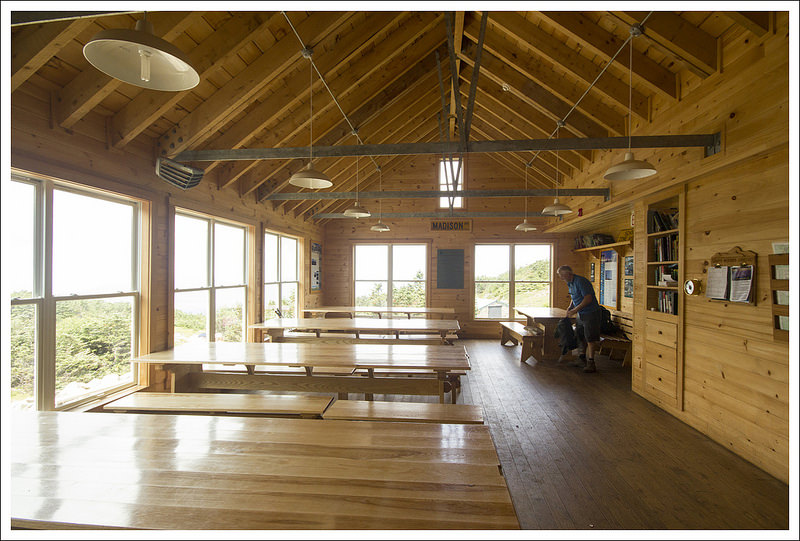
Inside Madison Spring Hut
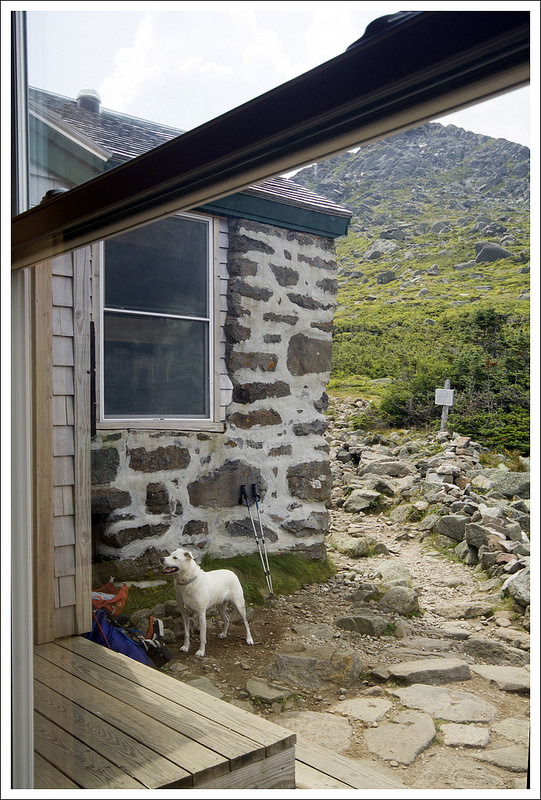
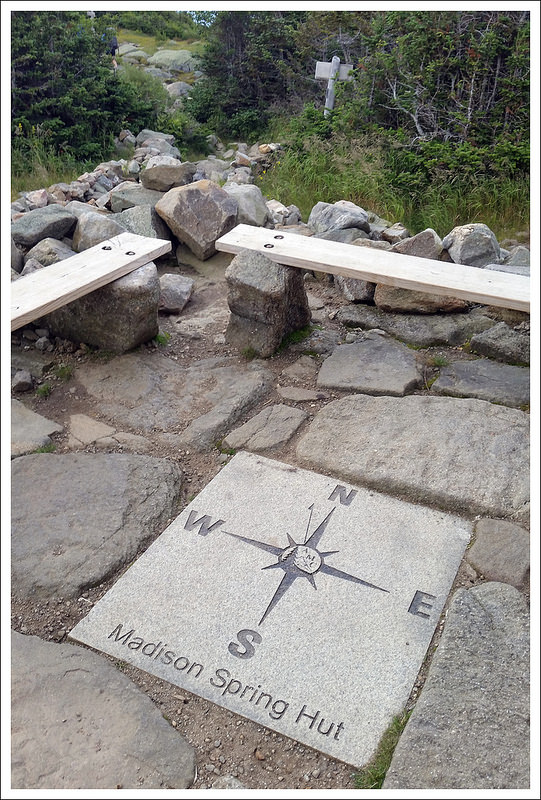
We decided to eat lunch at Madison Spring Hut.  Below: Even pretty dogs aren’t allowed inside AMC huts;  We always enjoy the baked goods for sale at huts; Compass on the hut porch.

No Dogs Allowed in AMC Huts Goodies Compass

At the top we enjoyed spectacular views of the Presidentials.  Seeing the Mt. Washington Auto Road snaking down the mountain was really impressive!  While the wind was a little brisk at the summit, it was really a warm, mild day for the White Mountain high peaks.  Lots of people were hiking in shorts and t-shirts.  Some people even basked shirtless in the summit sunshine.  My blood is a little thin for that, but I wasn’t cold like I had been on the summit of Mt. Washington in 2013.

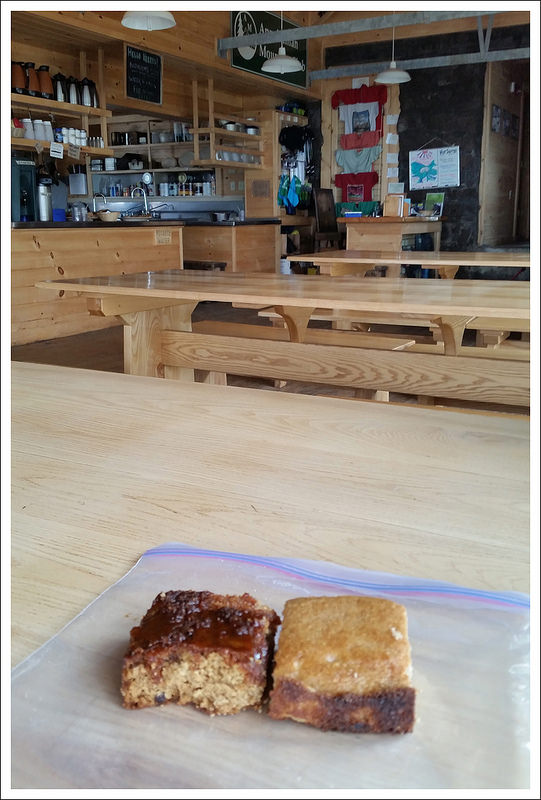
After taking lots of photos and doing our JMU rituals, we climbed back down and enjoyed our packed lunch at Madison Spring Hut.  Of course, we supplemented our packed food with baked goods from the Croo.  I always hear people talking about how huts are packed with dayhikers all summer long. I’m not sure if it’s our timing (we hike early), but we’ve found almost every hut we’ve visited nearly empty.

Star Lake
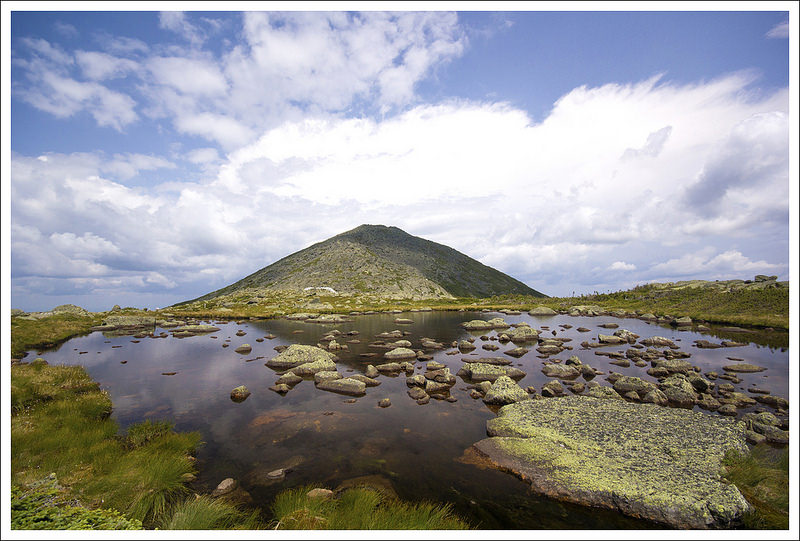
Beautiful star lake sits near Madison Spring Hut. Below: As we were leaving the lake, clouds started to roll in and we heard distant rumbles of thunder… time to leave the peaks and head back to the valley below.

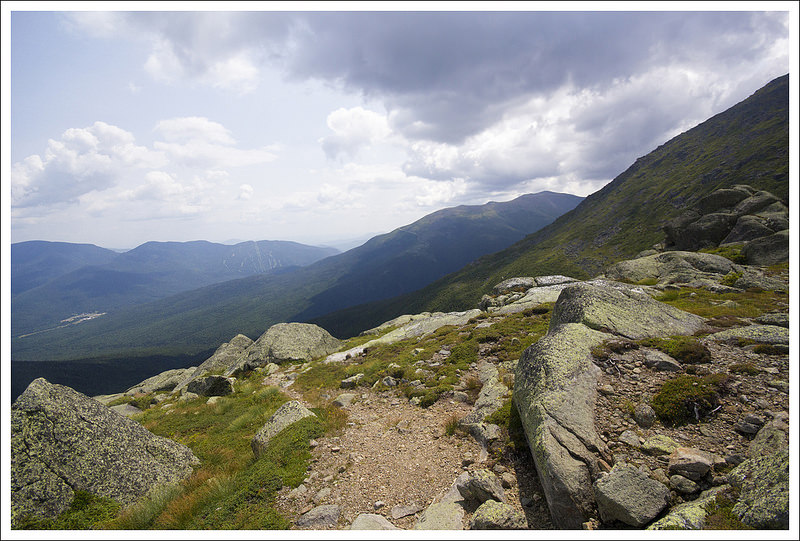
Walk to Lake Approaching Storms

After lunch, we walked out to Star Lake.  What a beautiful spot.  The lake itself is small and shallow, but it makes a gorgeous reflecting pool for Mt. Madison.  We were lucky to visit on a picture perfect day!  While we were admiring the lake and taking in our final peak views, we started to hear distant rumbles of thunder in the distance.

Being caught in a thunderstorm in the Whites is definitely something I’d be happy to NEVER experience.  Lightning strikes happen frequently, wet granite is very slick, and stream levels can change drastically in mere minutes.  In fact, just last week I read a harrowing account from a solo hiker caught by storms in the White Mountains.  Seriously scary!

We made our way down as quickly as we safely could.  With a couple miles of hiking left, the rain started to fall.  Fortunately, it was light rain and none of the thunder/lightning seemed close.  We got back to the car right before the skies opened up and poured!  What a great day with perfect timing. I’m really thankful that we had weather that allowed us to visit two more Presidentials on our 2014 trip!

Trail Notes

  • Distance – 8.8miles
    MapMyHike Stats *
  • Elevation Change –  4150 feet
  • Difficulty –  5.  The trail started off easier, but it is still a very tough, uphill climb.
  • Trail Conditions – 2.5.  The trail was well-maintained, but the rocky parts of the trail make this a challenge.  The final push to the summit on the Osgood Trail also took a lot of precision.  Bring trekking poles.
  • Views – 5.  It doesn’t get much better than this.  If you are lucky enough to catch this on a day where clouds are off the mountain summits, you will be able to see all around you for miles. 
  • Waterfalls/streams 3.  The Snyder Brook runs alongs the trail early on the hike and you can see a few smaller waterfalls along the trail. 
  • Wildlife – 1.  We didn’t really see any wildlife on the trail.  I wouldn’t expect much at all once you get above treeline. 
  • Ease to Navigate – 2.5.  There are a lot of junctions and side trails on the route because there are a lot of trails in this area.  Keep following the signs for the Valley Way Trail until you reach the hut and then follow the Osgood Path via the cairns to the summit. 
  • Solitude – 2.  We picked a gorgeous day in the summer to do this hike, so we weren’t surprised to see lots of people.  We saw the most at the summit and the hut, but there was still places to find our own bit of solitude. 

Download a trail map (PDF)

Directions to trailhead: From I-93: Take Exit 35 for Twin Mountain. Follow 3N for 12.4 miles. Turn right onto 115N for 9.7 miles. Turn tight onto 2E for 8 miles. The parking lot will be a large gravel area on the right.

* MapMyHike is not necessarily accurate, as the GPS signal fades in and out – but it still provides some fun and interesting information.

Spruce Knob – Seneca Creek (WV)

This 16.5 mile overnight backpacking trip has cooler temperatures in the summer, beautiful streams and waterfalls, high mountain meadows, abundant berry bushes, and even an old plane wreck to explore. It’s a great change of pace from hiking the Appalachian Trail.

View the Full Album of Photos From This Hike

Hiking Along the Huckleberry Trail
The high meadows along this hike were beautiful! Below: Backpacks in the car; Everyone checks out the information at the trailhead; Suzanne picks ripe blueberries along the Huckleberry Trail; The Huckleberry Trail passes through several small meadows; Spruce-shaded areas on the Huckleberry Trail; Signage along the way.

Backpacks in the Car Getting Started Blueberry Picking
Views from the Huckleberry Trail Spruce Trees in the Sun Trail Sign

Day One…

Initially, we  planned on doing very little hiking in July this year.  Our goal was to stay out of the heat and to rest up a bit so we wouldn’t overdo things before we tackle our trip to New Hampshire later this summer.  But the weather was too nice and we had lots of invitations to go hiking.  Over the 4th of July weekend, our friends Anthony and Suzanne suggested we go on a backpacking trip together.  We always enjoy hiking with them, so plans were made to hike in the Spruce Knob area.  This was actually the second 4th of July weekend we’ve spent on the trail with Anthony and Suzanne.  A couple years ago, we did a trip to Dolly Sods.

Our friends came down and spent the night before the trip at our house. We divided up some group gear and then packed the car and headed out fairly early to start our trip.  We arrived at the trailhead mid-morning.  We saw the short trail to the Spruce Knob summit fire tower, but we decided to visit that at the end of the loop the next day to feel like we had truly earned it.  Spruce Knob is the highest peak in West Virginia.

The printed maps we have found of this area are fairly outdated and online maps also don’t have the trails completely accurate.  The best map I have found of the entire area has been from Mid-Atlantic Hikes and it may be helpful to bring that along since there are lots of trail options here.
Descending to Junction
Adam descends to our junction with the Lumberjack Trail. Below:  Anthony makes his way along the Lumberjack Trail.  The trail has a reputation of being sloppy/muddy, but it wasn’t too bad when we visited; Someone moved a piece of the plane from the wreck site up to the trail – probably to mark the spot; Even after 4+ decades on the mountainside, the plane wreck is still mostly intact.

Walking the Lumberjack Trail Plane Window Fuselage
Mud Nettles First Large Meadow

We started off our first day of the hike on the Huckleberry Trail (TR533).  The trail starts off with a little bit of crushed gravel on the trail, but that goes away in a short distance.  This first section of the trail was fairly flat or downhill and alternates from going from dense Spruce forests to more open fields. There are numerous dry campsites along the trail. In the fields, we found tons of blueberries that were just starting to ripen.  We stopped along the way for a few handfuls before pressing on.  At 3.4 miles, you will reach a campsite and a sign that points to the trail going right.  Follow this trail and in another short distance, you’ll come to another sign pointing you to go left as the trail winds around a dense forest area.  You’ll soon reach another sign that shows that the Lumberjack Trail is .4 miles away.  The last .4 miles of the Huckleberry trail drops rather steeply to the large trail junction at 4.7 miles.  Take a right at this junction to join the Lumberjack Trail (TR534).

The Lumberjack Trail is a relatively flat trail.  We were warned that it can be very muddy and wet, but we found that even after some recent heavy rains there were only a few 20-foot sections that had mud to slog through.  Most of the trail had rocks or logs placed that saved us from having to get our shoes wet or muddy.  Around mile 5.8, we saw a plane door hung on a tree and a short, yet steep trail that led down to plane wreckage (a Piper PA-23 that crashed here in 1973 with two casualties).  Be respectful if you decide to visit this site.  We stayed on the Lumberjack Trail until it came to a junction with the High Meadows Trail at mile 6.7.  Take a left to join the High Meadows Trail (TR564).
The High Meadows Trail was the most overgrown trail we came across.  There were times that it felt like we were bushwhacking.  There are stinging nettles everywhere along the trail and grass was up to our knees in some portions.  The High Meadows Trail also has alternating landscapes; you will go from dense forests to large open meadows several times.  Keep an eye out for blue blazes on posts or trees as you navigate through these high grass areas.  The trail descended through these gorgeous meadows and it is not surprising that we were thinking of the Sound of Music when we were walking through these fields surrounded by mountains.

High Meadows
The high meadows on this hike were so beautiful!  Below: Adam admires the high meadows; Grass in the meadows was tall;  There were several meadows separated by short sections of shade;  Most of the shady spots were densely overgrown with berry brambles; Black-eyed susans; Adam crosses out of the final meadow.

Adam in Meadow Meadow Walking Shade Between Meadows
Overgrown Susans Leaving the Meadows

Eventually, you will enter into the woods again and cross a small creek.  At 8.6 miles, you will reach another trail junction. Take a right here and you will descend even more as you make your way through a scenic forest landscape.  You will soon hear water flowing from Seneca Creek below you.  The trail crosses the creek and comes to a junction with the Seneca Creek Trail at 9.1 miles.   At this point, you will cross Seneca Creek to reach the trail on the other side.  The water was flowing to make a nice small waterfall.  Before we crossed, we ventured just a short distance (about 75 yards) to the right down the Seneca Creek Trail and came across one of the most beautiful waterfalls/swimming holes I’ve seen – Seneca Falls.  We dropped our bags on the trail and scrambled down to reach the base of the falls.  There was a large cavernous rock overhang to the right of the falls.  In the water, we could see brook trout swimming around, occasionally breaching the water to catch flies that were dancing along the water surface.  Once we climbed back up from the basin, another group came down to the falls jumped into the swimming hole at the base of the falls.  From the screams when they jumped in, we could tell the water was extremely cold.  We made our way back to our original junction and then determined the best place to cross the creek was at the very top of the small waterfall.  We all made it across safely.
Christine hit a wall with her energy level, so we stopped a few minutes to eat a snack on the opposite side of the creek at a nice campsite.  Knowing we still had a distance to go, we pressed on further.  The Seneca Creek Trail went to the side of Seneca Creek for the entire way.  We crossed the creek in a couple of places.  Around mile 10.4, we began to see a ton of campsites.  We were surprised to see that there were so many people that were camped here overnight.  When we kept passing people on the trail, we felt that we would have our picks of campsites, but we didn’t realize how many people come here a different way (mostly from the lower Spruce Knob parking lot and taking the Seneca Creek Trail to these campsites).  Anthony and Suzanne hurried ahead, while I waited a while for Christine to try and regain her strength.

Seneca Falls
Seneca Falls is an impressive waterfall with an emerald green plunge pool. Below: Leaving the high meadows for Seneca Creek; A small waterfall above Seneca Falls; A side view of the falls; The trickiest of the stream crossings; Pretty wildflower; Lovely Seneca Creek.

Start of the Seneca Creek Trail Small Waterfall Seneca Falls
Crossing Wildflower Seneca Creek

We caught back up with our friends soon and they had claimed a gorgeous campsite (even though it was hard to imagine a bad one here) at 10.6 miles that was near a waterfall that plunged into the creek.  While there were lots of larger groups out here, we found a nice, secluded campsite that had a nice waterslide that created a babbling brook sound throughout the night.  We set up camp and started to make some dinner.  I always enjoy bringing a card game with us when we do an overnight backpack and this time I brought the game Hike.  It was pretty brainless fun and plays similar to Uno with specialty cards that create twists in the game.  It was starting to get dark, so we created a small, but nice fire in the pit.  Once the sun set and the fire died out, we retired to our tents.  It may have been the sound of the brook, but I probably slept the best I have ever slept backpacking that night.  What a great first day!

Campfire
The evening concluded with dinner, card games and a great campfire. Below: There were abundant rosebay rhododendron all along the stream; Our campsite had nice, flat space enough for 2-3 tents; We also had a pretty waterfall and pool for our water source.

Rosebay Camp Filtering

Day Two…

As usual on backpacking trips, we both woke up right around first light. We spent a little while longer in our sleeping bags, chatting and stretching.  It was a chilly morning, so we weren’t quite ready to climb out into the cold.

Eventually we emerged from our tent to start the day.  I put on gloves and a light jacket and  headed downstream to take a few photos of the big waterfall at the next campsite over.  The folks camping there had packed up and departed very early.  Adam went to get the bear bags down while I took photos.

Campsite Falls
One lucky group gets to camp on a site right across from this pretty waterfall.  Below: Our campsite in the morning; You can see smoke from other campsites downriver; Crossing the footbridge across Seneca Creek before our big uphill climb.

Campsite in the Morning Downriver Footbridge

We got everything out for breakfast and started taking down our tent, rolling up sleeping pads and stuffing our sleeping bags back into compression sacks.  I decided that I was going to eat a huge breakfast, so I wouldn’t bonk again on our second day of hiking.  Adam didn’t go into much detail in his day one post, but right around mile ten of our hike the day before, I hit a wall – HARD! It was right after we visited Seneca Falls and crossed the stream.  I sat on the ground and told everyone that I was feeling really lightheaded and sick.  I didn’t feel hungry.  I had been drinking water all day.  Regardless, my legs just felt like jelly and I just didn’t want to walk another single step.  Adam, Suzanne and Anthony all told me that they thought I needed to eat.  Turns out they were right – I had been hiking for ten miles with a 25 lb. pack on under 700 calories.  I guess I just didn’t realize how little I had eaten until I did the calorie math.  My appetite always goes away when I’m doing strenuous activities.  Usually, it doesn’t cause problems and I just eat when I get to camp.  I guess this time I just expended all my short term energy before we finished for the day.  I need to do a better job forcing myself to eat enough.

Alright… off that tangent and back to breakfast!  As promised, I ate a large breakfast – oatmeal, cheese, a honeybun and coffee.   It was about 600 calories of food and much more in line with my energy needs for a tough uphill and 6 miles of hiking.  Everyone had eaten and packed up camp by around 9:45 and we were on our way again.

Final Meadow
Adam climbs steeply uphill across our final large meadow of the hike.  Below: Anthony and Suzanne take a look back toward Seneca Creek;  We had spectacular skies; Making progress back to our start point.

One Last Look Toward the Creek Beautiful Skies Trail Sign

We had a short distance left to walk along Seneca Creek.  Within about a quarter mile, we reached a small wooden footbridge across the stream.  We crossed and continued uphill on the Seneca Creek Trail.  The steepest climbing was across a beautiful, expansive meadow.  We got great views of the valley and our last glimpse into the Seneca Creek watershed.  The high meadows on this hike are truly majestic and are definitely one of the trip’s highlights.

After crossing out of the meadow, we continued uphill through the woods back to the four-way junction of Seneca Creek/Lumberjack/Huckleberry.  Staying straight took us back onto the Huckleberry Trail.  From there, we retraced our steps from the day before.  It was a little slower going and felt longer on the second pass.  It was all uphill and everyone was a little tired.  It’s always funny how different the same four miles can feel under different circumstances.

Adam on the Huckleberry Trail
Hiking the Huckleberry Trail reminded us of hiking in New England.  Below: More lovely views from the Huckleberry Trail;  The trail was often paved with rock; A well-appointed campsite on the Huckleberry Trail; Ripe berries; A view from the talus slope.

Huckleberry Views Laurels Campsite
Ripe Berries Talus

We enjoyed the sunny, unseasonably cool July weather.  We stopped and picked many blueberries along the walk back.  I also took a little side trail from one of the meadows and found a talus slope with nice views across the mountains.

We got back to the car around noon.  We threw our packs into the back of the car and took the short, flat walk to check out views from the observation tower atop Spruce Knob.  It’s just a short quarter mile walk and well-worth the extra time and steps.  We spent some time enjoying the lofty views and cool breezes.  Anthony, Adam and Suzanne decided to walk to one more nearby viewpoint on the Whispering Spruce Trail.  It was just a tenth of a mile down the trail and provided even more spectacular views.  I headed back to the car to eat some more candy and switch my trail shoes for flip flops.

Tower Views
Anthony and Adam take in views from the observation tower on Spruce Knob.  Below: Views from the tower; The hiking crew; Views from the Whispering Spruce Trail; The tower.

Views Hikers Whispering Spruce
Observation Tower

After a few minutes, everyone was back at the car and we were on our way back to Harrisonburg for a celebratory meal and beer.  We all decided that Jack Brown’s was the best spot for lunch.  They have fantastic gourmet burgers and a great beer list.  It’s a perfect post-hike indulgence.

We couldn’t have asked for better weather, scenery, or company for this 4th of July weekend backpacking trip.  After lunch, we bid farewell to Anthony and Suzanne.  They’re such great hiking buddies and we always feel lucky when we get to hit the trail together.

Trail Notes

  • Distance – 16.5 miles [Day One] [Day Two]
  • Elevation Change – About 2300 ft.
  • Difficulty –  4.  The distance makes it fairly tough and the second day has a lot of uphill on the trail. 
  • Trail Conditions – 3.  Most of the trail was well-maintained.  The High Meadows Trail was quite overgrown.  There are some rocky, loose sections on this trail too, which can be a little rough on the feet.
  • Views – 5.  The best views are from the Spruce Knob trail near the fire tower.  The fire tower has wonderful views, but once you take the .5 mile trail around the fire tower, you will have gorgeous, breathtaking views from the highest point in West Virginia.  The views along the main backpacking trip were mostly during the High Meadows Trail.  There are gorgeous mountain views and no sign of civilization. 
  • Wildlife – 3.  There were lots of birds to be found on the High Meadows Trail.  We did have a deer visit us several times at camp. 
  • Ease to Navigate – 2.  The Huckleberry Trail and High Meadows Trail could use more signage.  I would suggest printing out our step-by-step desciption and bringing the midatlantichikes map to help guide your way. 
  • Solitude – 2.  This is a popular spot for people to do overnight camping.   Expect to see lots at the campsites, but you will have more solitude until you get to Seneca Creek. 

Download a Trail Map (PDF)

Directions to trailhead:  Directions vary so greatly depending on the direction you’re coming from.  Please refer to the trailhead marked on the map below to determine your best route.

Porters Creek to Fern Branch Falls (TN)

Special: Smokies Edition

Introductory Guide to Visiting Great Smoky Mountains National Park

This 4 mile out-and-back follows beautiful Porter Creek to a small waterfall at Fern Branch.  The waterfall itself was barely a trickle when we visited, but the lush Smoky Mountain forest was especially beautiful here.  This hike also takes you by a historic barn and an old hiking club cabin.

View the Full Album of Photos From This Hike

Fern Branch Falls
Fern Branch Falls was running low, but it was still beautiful! Below: Pretty rapids on Porters Creek; Tall trees provided a wonderful canopy of shade; The Messer Barn.
Porters Creek
Tall Trees
Messer Barn

Christine Says…

With our week in the Smokies winding down, we wanted to hike something special and something we had never hiked before.  I found myself referring to the ‘Hiking In the Smokys‘ website again.  They have a list of their personal top 10 favorite hikes.  We didn’t want anything over 10 miles, so that ruled out Gregory Bald, Rocky Top and Mt. Cammerer.  We had already hiked six of the others (LeConte, Charlies Bunion, Andrews Bald, Chimney Tops, The Jump Off, and Alum Cave).  So that left just one from the favorites list – Porters Creek.  It sounded like a lovely trail – old growth forest, streams, a waterfall and lots of history.

Before setting out on our hike, we got donuts from The Donut Friar.  This made me exceedingly happy and was the perfect start to the day.  There is something magical about their chocolate crullers.  After donuts, we were on our way to the Greenbrier section of the Smokies.  We’d never hiked anything in that area before, so we were excited to try someplace new.

The road into Greenbrier is mostly gravel, but is well-maintained and easy to drive.  It’s also very scenic and follows the Little Pigeon River.  The trailhead is about 4 miles down the road.  It’s clearly marked and there is plenty of parking.

Lush Green Woods
Adam hikes along the early parts of the Porters Creek Trail. Below: Porters Creek Trailhead – it ties into the larger trail system in the park; Overhead view of Porters Creek; Old stone walls.
Trailhead
Porters Creek from Above
Old Stone Wall

The trail starts off as a wide, gravel road through the woods.  Porters Creek runs along the trail, offering plenty of scenic water views. About .6 of a mile along the way, you’ll see signs of old stone walls and stairs on the right side of the trail.   The remnants date back to the early 1900’s when Elbert Cantrell built a farm in this area.  Immediately past the farm, you’ll pass the Ownby cemetery.  Adam and I walked around the cemetery and noticed that most of the graves belonged to very young children.  Sad – it really makes one appreciate modern medicine and vaccinations.

About a mile into the hike, you’ll cross a log footbridge over the creek and come to a Y-junction in the gravel road.  The trail to the right goes to more historical structures, but we’ll cover those on the way back.   We took the trail to the left and arrived almost immediately to another trail junction – continue bearing left on the Porters Creek Trail.  At this point, the gravel road ends and becomes a ‘real’ trail.

This section of the hike is beautiful – lots of big old, trees.  It’s so green, shady and peaceful. At 1.6 miles we crossed another log footbridge.  This one was much longer and crossed the stream crookedly.  From there, the trail ascended gently until we reached Fern Branch falls at 2 miles.  The falls are on the left side of the trail and set back a bit in the woods.

Log Foot Bridge
The first log foot bridge you come to is short and easy to cross.  Below: The Ownby Cemetery; Adam at the trail junction before the path goes from old road to real trail; Little cascades on the creek.
Ownby Cemetery
Junction
Pretty Porters Creek

When we visited the falls were not flowing very heavily.  It was still a beautiful spot – especially with the sunlight filtering into the woods at the crest of the falls.  We took some photos and then headed back the way we came.

On the return arm of the trip, we stopped at the Y-junction and visited the John Messer farm site.  The cantilevered barn is in excellent condition.  Just past the barn, you can visit a springhouse and an old cabin built by the Smoky Mountain Hiking club.  Overnight stays at the cabin are no longer permitted.

After visiting the barn and cabin, we made our way back to the car and headed back into town for lunch.  We ended up at Hungry Bear Barbecue.  It was great and definitely deserves the top ratings it has online.

Porters Creek was definitely beautiful and we would recommend the hike for a low-key, easy day. It would also be our last new hike of our 2014 spring trip. The next day, we chose to re-hike an old favorite – Charlies Bunion.

Adam Says…

Staying in Gatlinburg, TN for a few days, we wanted to explore some different sections of the Great Smoky Mountains National Park.  We decided to check out the Porters Creek after reading about Fern Branch Falls and the wildflowers on the trail.  When we got out of our car, we could tell from the wetness of the area and the humidity that it would be a good idea to douse ourselves in bug spray.

We crossed the gate and started along the wide fire road.  As Christine mentioned, during the first mile you do get some stream views, ruins of an old farm, and a family cemetery.  The trail does ascend, but very slowly, so it is not very challenging.

Trail After Junction
After the trail junction, the path became narrower and steeper.  Everything was so green!  Below: The second log foot bridge was segmented and much longer; wildflowers; Adam at the base of Fern Branch Falls.
Crooked Foot Log
Wildflowers
Fern Branch Falls

At the .9 mile mark, there is a small footbridge you can use to cross a small stream (or you can rockhop across).  At the 1.0 mile marker, you reach a large junction.  There is a side trail to the Messer Barn and hiking club cabin and also a junction with the Brushy Mountain Trail.  Take the left Porters Creek Trail.  At 1.5 miles, you come to a large footbridge that crosses Porters Creek.  This footbridge was much longer and can be a little unsettling since it is fairly high above the creek in some points.  The railing for me was also below my hip in some spots, which didn’t give me the feeling that it would protect me if I did slip.  After you cross the footbridge, the trail seems to change environments as you walk through a large area of wildflowers and fern.  The forest floor was exploding in green!  The trail then becomes steeper, narrower, and rocky through this portion until you reach the falls.

As we were walking along, we could hear a waterfall off to our right and got a faint glimpse from a distance, but this was not Fern Branch Falls.  Instead, at 1.8 miles, we reached the large waterfall on our left.  The trickle from the waterfall wasn’t overly impressive, but it was a nice scenic spot.  We made our way back the way we came.

Hiking Club & Spring House
The Smoky Mountain Hiking Club used this cabin as an overnight camp until 1981.  Below: Crossing the bridge on the return trip; The Messer barn is well-preserved example of a cantilevered barn; Adam checks out the interior of the hiking club cabin.
Crossing
Messer Barn
Inside the Hiking Club

When we returned to the junction with the Brushy Mountain Trail, we took the short side trail that led to the barn.  Behind the barn, you cross a small stream and then can find the hiking cabin and springhouse.  Both the cabin and barn are open, so we enjoyed exploring the abandoned buildings.

We made our way back to our car and found several cars that were arriving to hike this trail.  With the cabin, farm, ruins, and graveyard, this hike really does give you a glimpse into the life and environment of families that lived in this area and used these facilities in the late 1800s through the early 1900s.  The hiking cabin actually permitted members to stay here until 1981.

Trail Notes

  • Distance – 4 miles
    MapMyHike Stats
  • Elevation Change – About 800 ft.
  • Difficulty – 2.  The climbing is gradual and gentle.
  • Trail Conditions –  3.5.  The section from the trailhead to the Messer farm is essentially a road.  The section from the farm to the falls is trail, but it’s in good shape.  The only part that may challenge some hikers are the two log footbridges.
  • Views – 0. None
  • Streams/Waterfalls – 3.5.  Porters Creek is lovely.  Fern Branch falls would probably be more impressive in wetter weather.  It was fairly small when we visited. 
  • Wildlife – 3.  We saw a couple salamanders and a big black snake.  There are bear sightings in all parts of the Smokies.
  • Ease to Navigate –  4.  Trails are well-marked and easy to follow.  You may miss some of the historical remnants if you’re not paying attention.
  • Solitude – 3.  We hiked on a pretty Thursday in late May and only saw a few other people.

Download a Trail Map (PDF)

Directions to trailhead:   From Gatlinburg, go east on 321 for 6 miles.  Take a right at the Greenbrier entrance to GSMNP.  The road will turn to gravel.  The road will fork at 3.1 miles, but continue straight at the fork to reach the Porters Creek parking area at about 4 miles.

Rich Mountain Loop (TN)

Special: Smokies Edition

Introductory Guide to Visiting Great Smoky Mountains National Park

This 8.7 mile loop didn’t offer much in the way of natural scenery – no great views, no plunging waterfalls, but we did see a bear!  Apparently, this is a great trail to spot bears, as all ten hikers we spoke to on the loop saw at least one bear over the course of their hike.  This trail also passes the historic John Oliver cabin.

View the Full Album of Photos From This Hike

View Into Cades Cove
There was one decent view into Cades Cove on the Rich Mountain Loop. Most views were obscured by trees.

Adam Says…

The Cades Cove section of Great Smoky Mountains National Park has a lot to offer – camping, drives around the loop to view wildlife, biking (covered in a previous post), and a historic view into the way people lived and farmed in this area.  Honestly, I have a little love/hate relationship with this section.  The biking and wildlife viewing can’t be beat around this area.  However, the traffic is so incredibly slow through this area.  Expect people to go WAY below the posted speed limit, so getting to Cades Cove can take a lot longer than expected.  I think most of the way traveling from the Sugarlands Visitors Center, multiple people were driving about 10-15 mph for the entire 17 miles, so it was a drag getting there.  Christine and I typically like to get out early in the morning to beat traffic and heat through the day, so I would recommend the same if visiting Cades Cove.

Since we had biked the loop and hiked Abrams Falls (also on the Cades Cove loop) before, we looked for some other options for hikes.  Our book Day Hikes in the Smokies (by Carson Brewer) had this listed as a nice option for a hike.  According to the description, there was a waterfall, some views, and a historic homestead so we felt this would be a nice option to take.

The open meadows and mountain backdrops define Cades Cove.
The open meadows and mountain backdrops define Cades Cove.  Below: Adam at the trailhead; A meadow view early in the hike; Stream crossings were shallow and easy when we hiked.

Trailhead Meadow View Stream Crossing

We parked in the lot past the information kiosk as you enter the Cades Cove loop.  There was plenty of parking in the lot, as most people either park their car to bike the loop or just ask the rangers at the kiosk some questions about the area.  We parked at one of the furthest parking spots and then crossed the road.  In a short distance, the trailhead appeared and we started off on the Rich Mountain Loop trail.  This trail was relatively flat.  It was mostly wooded, but there were a few spots where it opened up to views of meadows.  In .5 miles, the trail reached a junction with the Crooked Arm Ridge trail.  We took a right here to start the Crooked Arm Ridge trail.  At .8 miles, you reach the Crooked Arm Cascade, which was no more than a small trickle when we viewed it.  This trail is the steepest section of the hike, as you are climbing up the entire trail gaining close to 1800 feet by the time you reach the end of the trail at mile 2.7.  The humidity this day was very high and there was no breeze, so we felt like we were pouring buckets of sweat on our relentless climb through many switchbacks along the trail.

At 2.7 miles, we passed the junction with the Scott Mountain Trail, but the junction wasn’t clearly marked to let you know it was the Scott Mountain Trail (Note: This might be because the Scott Mountain Trail is closed from campsite #6 to Schoolhouse Gap.  However, Campsite #6 is still open.  Check park information for the latest updates on trail closures.)  Staying straight, the trail turns into the Indian Grave Gap Trail.  It continues to climb gradually, and there are some occasional obstructed views from the ridge.  You finally reach the peak of climbing around mile four,  near Cerulean Knob (3686 ft. – no views).  We continued walking the ridge for a while, then the trail then starts its descent.   At 5.3 miles, the Indian Grave Gap Trail reaches a junction.  Continue on the Rich Mountain Loop trail.

Crooked Arm Falls
Our hiking guide said that Crooked Arm Falls ‘was no Niagara’. They really weren’t kidding!  Below: The trail was eroded and had a deep chute in the middle; The ridge walking was pleasant and breezy; We saw several of these cute toads.

Eroded Trail Ridgewalking Cute Toad

The trail continues to descend and you do get some nice views along the way of a branch that leads to Abrams Creek.  Around 7.2 miles, the trail leads to the John Oliver Place, a historic cabin.  If you are interested in learning more about the Oliver family and life in the 1800’s in Cades Cove, I would recommend checking out the history of the Olivers and the cabin and what pioneer life was like in Cades Cove.  We paused to check out the cabin and as you face the house, take the rightmost trail behind the house (there are several small paths here) to continue on to the Rich Mountain Loop.  You will have a few stream crossings (minor rock hopping is required) until you reach the first junction you met at mile 8.2.  Continue straight to take the Rich Mountain Loop trail to arrive back at your car at mile 8.7.

As mentioned in the short description at the top, we kept coming across people that had seen bears along the trail.  Until we started the descent from Cerulean Knob, everyone we crossed told us they had seen various bears across the trail.   Of course everyone also said they watched the bears and then they ran off.  Always excited to see bears, we felt like everyone else had chased them away.  As we were descending we were convinced that we probably wouldn’t see anything, but as soon as we voiced this doubt, Christine spotted a bear right off the side of the trail.  The bear just watched us indifferently while it ate some leaves.  Then it took a slow walk and then squatted to do what bears do in the woods.  As soon as it was done, it shot through the woods at a breakneck pace like its poop had scared him.  I guess that is why they call it “bear scat”, because he really did scat after doing his business.

One lesson that I quickly learned on this trail was that humidity is relative.  While we were doing the tough climb up to the ridgeline, we came across another couple (who of course were telling us about a bear they saw).   Feeling that I was quite the sight from all the sweat coming off my body, I commented on how hot and humid it was.  They said, “Wow.  We haven’t been sweating at all today.”  They then explained they were from Mississippi so they were more accustomed to the heat and humidity and thought it was quite comfortable.  Of course this reminded me on some of our trips to Maine and talking to people that couldn’t handle the heat of 85 degrees without humidity and we thought it was quite pleasant.

While we felt the hike wasn’t overly impressive based on the description we originally read, we felt grateful that we saw a bear in the Smokies.  If you’re looking for a bit of a challenge and some variety of terrain in this area of the Smokies, this is a hike to consider.

Christine Says…

After a third day of shorter, easier hikes, I was finally feeling better and we were on the move from Bryson City to Gatlinburg for the remainder of our week in the Smokies. We decided it was time to hike something a little longer/tougher. We considered a few trails on the northern side of the park, including Gregory Bald, Ramsey Cascades, and Rich Mountain. In the end, we settled on Rich Mountain because our guidebook said it had views, a waterfall and a historic cabin. I like trails with a variety of attractions, so it seemed like the perfect choice for the day.

Another perk of the Rich Mountain loop is that the trailhead can be accessed at the head of Cades Cove, before the start of one-way traffic.   The Cades Cove loop is something every GSMNP visitor should drive (or bike) at least once. It’s a great place to spot wildlife and it showcases the park’s fascinating human history. But, if I’m being fully honest, the traffic in Cades Cove can be insufferable when you just want to get to a trailhead and start your hike. On this particular day, I was very happy to be avoiding the gridlock!

We followed the Rich Mountain Loop trail for about half a mile to our first junction. At the marker, we took a right onto the Crooked Arm Ridge Trail. Most people seem to hike the trail clockwise, but we decided to go the other way for to get the climbing done a little earlier and a little faster in the loop.

One of the first landmarks we passed was Crooked Arm Falls, which our hiking guidebook described as ‘not Niagara, but still very nice’. That turned out to be quite the understatement! The ‘waterfall’ was barely a trickle of water over a short rock shelf. Maybe it’s more impressive when there has been a ton of rain!

Bear
We spotted an adolescent bear along the trail!  Below: Adam checking out trail distances at one of the junctions; Flame azalea; Mountain laurel.

Trail Junction Flame Azalea Mountain Laurel

After passing the waterfall, our climb began in earnest. Neither of us was used to hiking in the heat and humidity. Virginia had been having lots of cool, pleasant days that spring, so it was very tough going. When we got back to the car and had smartphone access again, I checked the temperatures and real feel estimates – it had been about 88 degrees with a real feel of 95. Honestly, that’s kind of the outer limit of heat in which I’m willing to hike.

We slogged along uphill for a couple miles. The air was really still and steamy, with any chance of a breeze blocked by the shoulder of the mountain. The trail was deeply eroded in several sections, with the middle of the footpath looking like a chute in the ground. The views promised by our guidebook were mostly closed in by the leaves on the trees and we started to think we may have picked a dud of a hike. I was feeling really overheated and crabby.

Eventually we reached the junction with the Indian Grave Gap Trail. At this point, the climbing became easier and we felt a breeze across the ridge. We started to see more wildflowers – mountain laurel and flame azalea. We spotted several cute toads hopping across the trail. We stopped for a snack near an opening in the trees. We had a decent view into Cades Cove. Along this section of trail, we passed two other hiking parties – both mentioned that they’d had bear sightings before the junction with the Rich Mountain Loop. One group had spotted an adolescent bear and the other a mother bear with two cubs.   Between the breeze, the wildflowers, and the likelihood of a bear spotting; my attitude turned a little more positive. Adam was more skeptical than I was, saying ‘If all these people already saw bears, we’ll probably be the only ones who don’t!’

We walked along, trying to stay quiet for the wildlife. We reached the junction of the Indian Grave Gap Trail and the Rich Mountain Loop Trail without spotting a bear. I figured that we were out of luck, and started chatting with Adam again. As we were descending toward a stream bed, I caught a shuffle of movement through the trees. I stopped abruptly, waved my hand up to stop Adam behind me and whispered ‘BEAR!’ Ten feet from the edge of the trail, we spotted a handsome yearling bear foraging for food. He knew we were there, but continued to move along at a normal pace. Other than once upward glance, he completely ignored us. Suddenly, he broke into a full gallop and went crashing deeper into the woods and out of view. It was a GREAT sighting and made the hike totally worthwhile.

John Oliver Cabin
The John Oliver Place is the oldest cabin in Cades Cove. Below: A friendly yellow warbler we spotted along the trail; Adam descends the Rich Mountain Loop Trail; The woods shortly before reaching the Oliver cabin were very pretty.

Warbler Descent Woods

The rest of the hike between the bear and the John Oliver cabin was downhill, steeply at times. For a couple hundred yards, we were followed by a cute yellow warbler. The bird hopped from tree to tree right alongside us before finally flying off. We had a couple easy, shallow stream crossings on the section of trail.

We reached the Oliver cabin and were met with crowds of Cades Cove tourists. Most people visiting the cabin park along the loop road and then walk a short distance up to the house. I think this cabin is the oldest structure in the Cove.   After spending a little time exploring the cabin, we headed back onto the Rich Mountain Loop trail.

After the cabin there wasn’t anything remarkable left on the trail to see. I don’t think I took a single photo! It was just an easy walk for about a mile back to our first junction of the day, followed by a half mile stretch back to the parking area on the loop road. It felt great to be back in the air-conditioned car!

On our way out of Cades Cove, we stopped by the snack bar at the campground. I got a gigantic Gatorade and a bag of generic Cheetos. The Gatorade tasted miraculous after miles of drinking lukewarm Camelbak water! About an hour later, we were checking into our hotel in Gatlinburg. After showering, we headed out to the Smoky Mountain Brewery. On the way, we got caught in one of the biggest downpours I’ve ever experienced. We ate dinner soaked, but the beer and steak were so good I didn’t care.

So, I guess in closing… would I recommend the Rich Mountain Loop? Probably – it seems like a great place to hike if you want good odds of seeing a bear in the wild, but don’t go expecting great views and waterfalls.

Trail Notes

  • Distance – 8.7 miles
  • Elevation Change – 1800 ft.
  • Difficulty – 3.5  The hike up the Crooked Arm Ridge trail was tough.
  • Trail Conditions –  3.  The trail was clear, but there were some eroded parts on the climb up the Crooked Arm Ridge Trail.  On the hike down, there was some loose rock also.
  • Views – 2.  There were some obstructed views from the ridgeline.
  • Streams/Waterfalls – 2.  The Crooked Arm Cascade was a disappointment with little water, but the streams on the back end of the loop were nice. 
  • Wildlife – 4.5.  We did see a bear and it looked and sounded like a lot of bear activity here.  We also saw some deer along the way.
  • Ease to Navigate –  1.5.  Trails were not marked very clearly, especially at junctions.  Also, there is confusion around the John Oliver place on which way to go to complete the loop back.
  • Solitude – 2.5.  Cades Cove is a very popular area.  I would expect to see some people on the trail most days, but less in the upper elevations.  There will also be lots of people that will park on the main road to check out the John Oliver Place. 

Download a Trail Map (PDF)

Directions to trailhead:   From the Sugarlands Visitor Center in GSMNP, follow signs towards Cades Cove. Follow Little River Road for about 17 miles.  At the intersection near Townsend, the road will become Laurel Creek Road.  Follow Laurel Creek road for 7.4 miles to the parking area at the head of Cades Cove.  Park in the lot on the left hand side of the road right before the traffic becomes one way.  The trail starts about 25 yards ahead on the opposite side of the road from parking.

Chasteen Creek Falls (NC)

Special: Smokies Edition

Introductory Guide to Visiting Great Smoky Mountains National Park

This 4 mile out-and-back is an easy hike to one of the Smokies’ lesser visited and under-appreciated waterfalls.  The walk begins from the Smokemont Campground and follows a lovely stream and eventually reaches a pretty 25′ waterfall.

View the Full Album of Photos From This Hike

Chasteen Creek Cascade
Pretty Chasteen Creek Cascade spills from the forest into a small pool below.  Below:  The trailhead at the end of Smokemont Campground.  Adam tucked his pant legs in to avoid ticks;  Mountain laurel along Bradley Fork; The trail is an old logging road.

Trailhead for Chasteen Creek Cascade Bradley Fork Lush and Green Bradley Fork Trail

Christine Says…

For the first few days of our trip, I wasn’t feeling great.  Even after easy hiking days on Mt. Pisgah and Wesser Bald, I still wasn’t myself.  Mentally, I had big hiking plans for every day of our trip, but in the end, my body dictated that we hike shorter, less strenuous trails.

On our second day in Bryson City, we woke up to lightning, rumbling thunder and torrential downpours.  The local weather said that the heavy rain would clear out and leave us with a hazy, mostly cloudy, unsettled day.  We decided that an easy waterfall hike would be perfect for those conditions.  After breakfast at Mountain Perks (probably my favorite breakfast spot in Bryson City), we drove into the park.

Our hike started at the far end (section D) of the Smokemont Campground.  For the first 1.2 miles, we followed the Bradley Fork Trail.   It went gently uphill along the stream.  The morning rain paired with the emerging sun made for a hot, muggy and buggy hike!  Whenever we stopped for photos or to take in the scenery, we were swarmed by gnats and mosquitoes.  Nonetheless, the trail was beautiful – so lush and green.

Adam Enjoys the Bradley Fork. Below: A marker for the Benton MacKaye trail along the shared portion of the hike; Someone built a ‘fairy house’ along the Bradley Fork; Trail junction with Chasteen Creek Trail; Campsite 50.

Benton MacKaye Trail Fairy House Junction with Chasteen Creek Campsite 50

The trail along Bradley Creek is popular with horseback riders.  In fact, the National Park Service concessionaire offers a trail ride from Smokemont Stables to the waterfall.  I bet it’s a wonderful, scenic ride!  The trail is also shared with the Benton MacKaye Trail – a 300 mile trail across the southern Appalachians.  Almost 100 miles of the Benton MacKaye Trail passes through the Smokies.  MacKaye, a forester from Massachusetts, is noteworthy because he came up with the idea for the Appalachian Trail… what a legacy to leave behind!

At 1.2 miles, the Bradley Fork Trail intersects with the Chasteen Creek Trail.  At this junction, take a right and follow the trail toward Chasteen Creek.  Almost immediately, on the right, you’ll pass Backcountry Campsite 50.  It’s a pretty streamside spot with a fire ring and bear cables.  The campsite can only be used if you have secured a paid permit. Evidently, permits in the Smokies can be hard to come by, so plan early!

After the campsite, walk another half mile along the Chasteen Creek Trail.  Shortly after crossing a footbridge, you’ll come to a split in the trail.   On the left side of the split, you should be able to see a hitching rail and mounting step for horseback riders – go in this direction.

From the clearing for horses, you’ll see a narrow footpath following the creek.  In just about a tenth of a mile, you’ll come out at Chasteen Creek Cascade.  It’s about a 25 foot waterfall.  It’s not the kind of waterfall that plunges dramatically; rather it slides over the rocks into a pretty pool below.  We had the waterfall all to ourselves and enjoyed the spot for about twenty minutes. Afterwards, we headed back the way we came and back into Bryson City for lunch at the Bar-B-Que Wagon.  They have great Carolina-style barbecue with all the expected sides.

Chasteen Creek Trail
Christine walks along the Chasteen Creek Trail.  Below: The split in the trail that leads to the falls; Hitching post and mounting block; Adam at the falls.

Trail Split Hitching Posts Chasteen Creek Cascade

Adam Says…

When we talk to people about the Smokies, they seem to be surprised that some of the best highlights of the park are the waterfalls.  In talking with the locals of the area, April and May tend to be very rainy seasons for the area.   Storms move in and out quickly through the park, but they typically expect a little rain most days during this season.  Rainy days are prime days for waterfall viewing and photography.

We started off our hike from the Smokemont Campground in the D section of the campground.  In the winter, this may be blocked off and you may have to park and leave from the C section.  The trailhead starts from a large gate near the designated parking area at the end of the campground.  We doused ourselves with bug spray and moved on.

Butterfly Swarm
We saw a swarm of butterflies on the trail. Below:  After lunch, we visited impressive Mingo Falls.  It’s probably the tallest waterfall in the area;  Nantahala Brewing Company and Anthony’s Pizza were the perfect way to end our time in Bryson City.

Mingo Falls Beers Anthony's

The trail was gradually uphill, but it mostly felt flat.  In fact, we were surprised to see the elevation gain on the hike afterwards.  The trail started off on a gravel road alongside Bradley Fork.  The forest was lush with green from all of the rain, so it was a pleasant stroll through the woods.  Because of the width of the trail, Christine and I could also walk side-by-side along the trail.  At 1.1 miles, we crossed a large footbridge and at 1.2 miles we came to the intersection with the Chasteen Creek Trail.  We took a right there and continued to walk on a wider trail, passing Campsite 50 at 1.3 miles.  At 1.9 miles, we reached the side trail to the left with the horse hitching area.  It was a short walk to get to the waterfall from there.  We headed back the way we came for an easy, scenic hike.

If you wanted to make this a longer hike, after you visit the waterfall, return back the way you came.  You could take a right at the junction with the Bradley Fork trail and connect to the Smokemont Loop Trail.  This would make the grand total of distance about 8 miles, but would loop back to a different section of the campground.

You may see people fishing for rainbow trout along the Bradley Fork or Chasteen Creek.  I can imagine many campers at the Smokemont Campground spend some time fishing in hopes of cooking some fish from the water.

After the hike, we had lunch then headed into Cherokee to check out the Qualla Arts & Crafts Mutual.  Their traditional work is fascinating and beautiful.  We always enjoy visiting.  After that, we stayed on the reservation and visited Mingo Falls, one of the tallest and most impressive waterfalls in the Appalachians.  It was a short walk, but there were many stairs!

Our wrap up for the day was a visit to Nantahala Brewery followed by pizza from Anthony’s.  We consider those two stops to be ‘must-do’ in Bryson City!  On to Gatlinburg tomorrow!

Trail Notes

  • Distance –  4 miles
    MapMyHike Stats
  • Elevation Change –  490 ft.
  • Difficulty – 1.5.  This is an easy walk along a very gently graded trail.
  • Trail Conditions –  4.5.  The trail is mostly wide and road-like.  It’s only narrow and muddy at the base of the falls.
  • Views – 0.  None.
  • Streams/Waterfalls – 4.5.  Bradley Fork, Chasteen Creek and the falls are all beautiful!
  • Wildlife – 3.  We didn’t see anything, but the Smokies have wildlife everywhere!
  • Ease to Navigate –  3.5.  The trail is easy to follow if you read the junction markers.  The shared/intersecting trails might be confusing if you’re not paying attention.
  • Solitude – 3.  Chasteen Creek Falls is not one of the park’s more popular trails.  You may see horses and occasional hikers from the campground, but generally this trail has less foot traffic than many others.

Download a Trail Map (PDF)

Directions to trailhead:   From Newfound Gap Road (Route 441), follow signs to Smokemont Campground.  The campground is located 3.5 miles north of the Oconaluftee Visitor Center and 26 miles south of the Sugarlands Visitor Center.  Park in the hiker parking area at the end of section D of the campground.