Buck Hollow – Buck Ridge

The Buck Hollow – Buck Ridge Trail is a steep hike in the Central District of Shenandoah National Park.  It takes a deep plunge along the Buck Hollow stream and a steep hike back up the Buck Ridge trail.

I've never seen so many different kinds of mushrooms/fungus along a trail in Shenandoah.
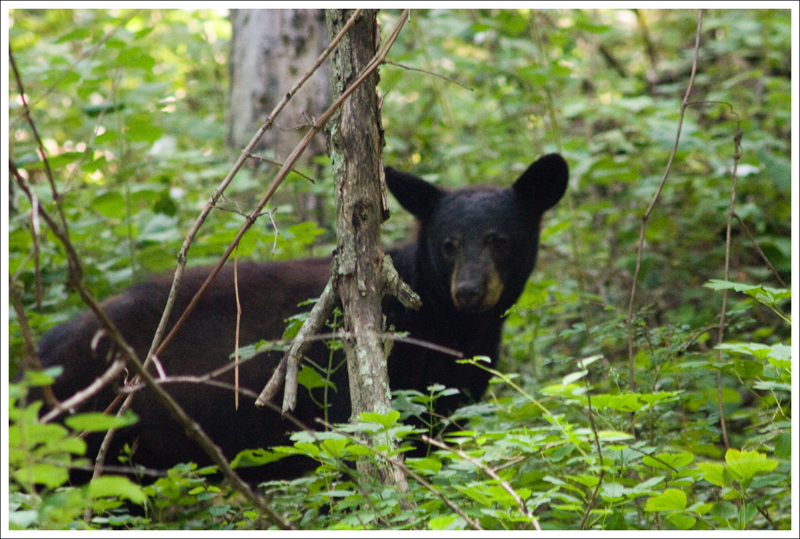
I’ve never seen so many different kinds of mushrooms/fungus along a trail in Shenandoah.  Below: When we hiked Buck Hollow in August of 2008, we saw two yearling bear cubs; the stream running through Buck Hollow is rather small and overgrown.

Bear

Adam Says…

I have to be honest – we have been putting off doing this trail for a while.  We first did this hike a few years ago and the memories of how tough a hike it was kept us from wanting to do it again.  Christine and I both weren’t feeling well the day we attempted it last time, but we were more pleased doing this hike this time.

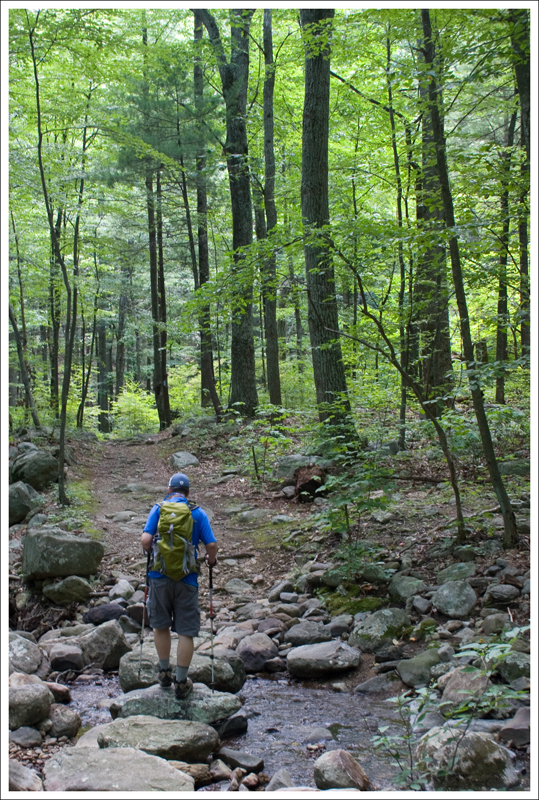
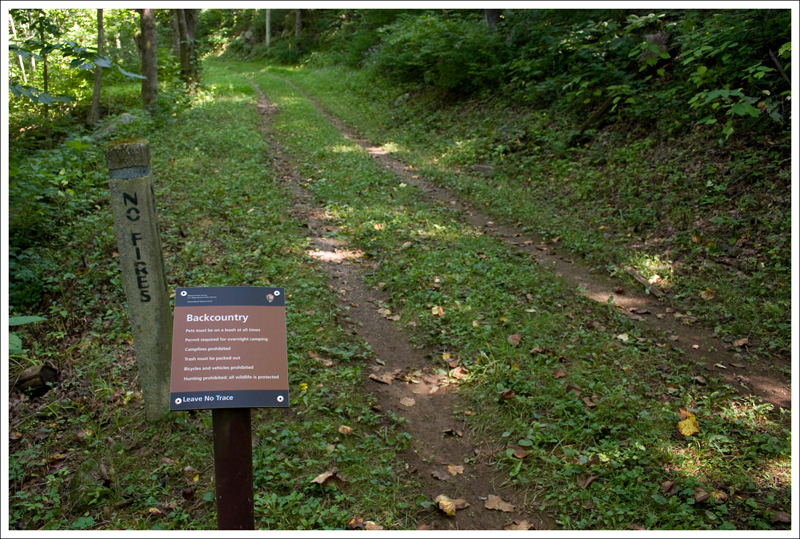
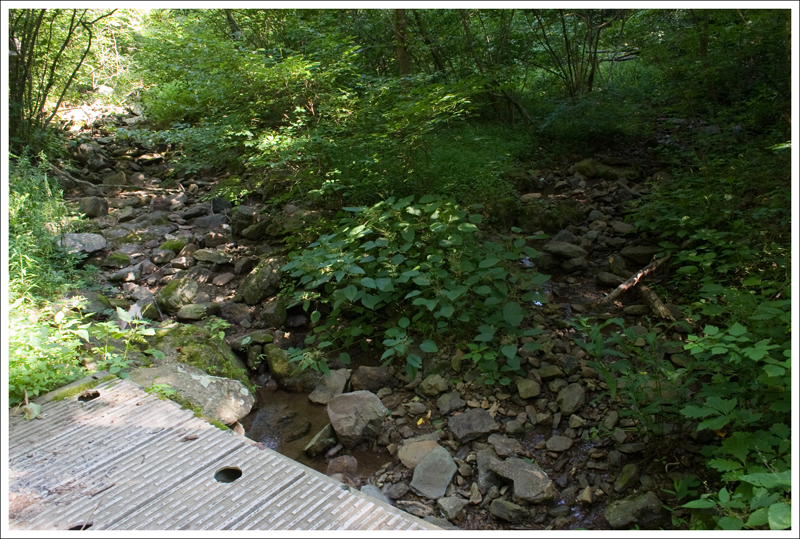
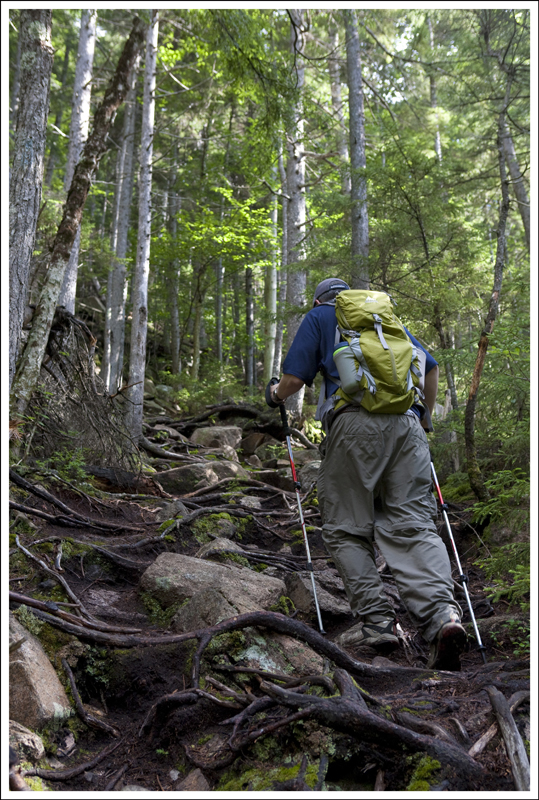
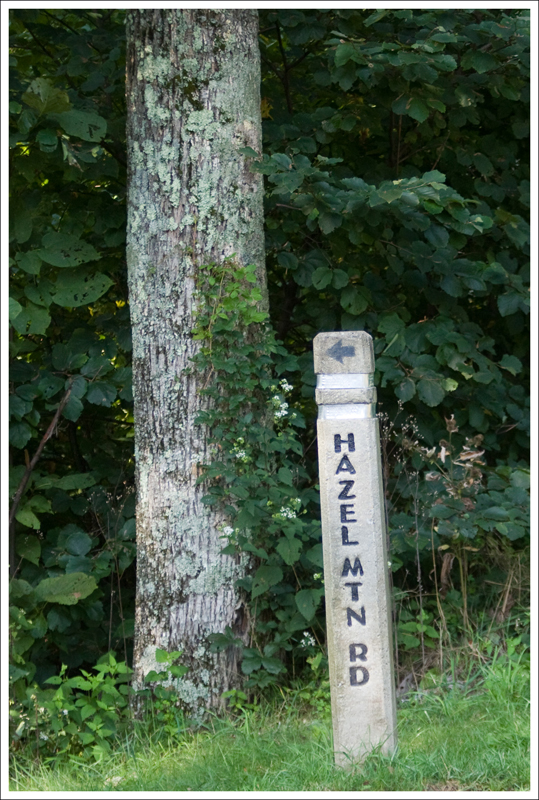
The trail starts off from the Meadow Springs parking area.  After about 20 feet down the trail, you see a post marking the Buck Hollow trail.  Take a left to go down this trail.  The trail seems to constantly descend and is rather steep in many portions.  There are loose rocks and if you attempt this after a heavy rain, you should expect some mud and slick soil on the trail.  Along the side for much of the trail, you will see the Buck Hollow stream.  Around mile 1.75, you will make a few rock-hops across the stream.  The trail continues to descend and then finally seems to just parallel the stream.  At mile 2.8, you will reach a cement post, pointing you to take a right on to the Buck Ridge Trail.  You cross the stream again and then you will quickly come up to the dreaded stairs.

For any Lord of the Rings fans, these stairs remind me of the stairs of Cirith Ungol.  “Up, up, up, up the stairs we go.”  They are unrelenting and seem to last forever, but they last less than .3 miles.  Of course, you do gain over 400 feet of elevation in this short distance.  These stairs didn’t exist the last time we did the hike; the last time, we just had a steep section of loose soil to traverse.  The stairs help make this hike more manageable, so I do thank the workers that accomplished this laborious task!

Nice Camping Spot
At the bottom of Buck Hollow, there is a beautiful camping spot with flat, open forest and easy access to water. Below: The trail starts out at the Meadow Springs Parking Area; A trail through a small slot in the rocks leads hikers to the only open view on the trail.

Trail Marker Side Trail to Viewpoing

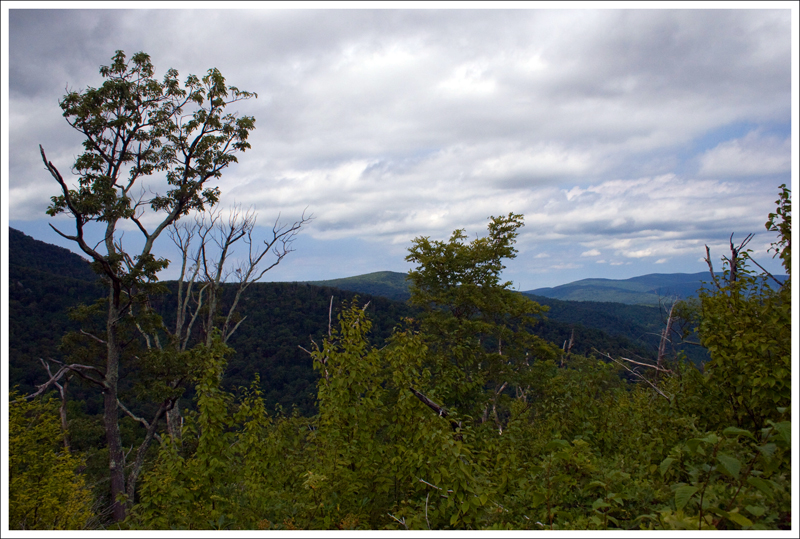
After the stairs, the trail continues to go uphill, but it is at a much more manageable grade.  Once you are high enough on the ridge, you are treated with views of Skyline Drive and mountain views around you (including Mary’s Rock).  We found a small crevasse bisecting a large rock formation that we were able to easily climb up to get some unobstructed views.  After mile 5.2, you do come up to another concrete post.  Take a right and you will reach the parking lot in a little over .3 miles.

One interesting note that I remember from our first hike of this loop trail was near the bottom of Buck Hollow.  We were hiking along and all of a sudden we startled two yearling bears.  One of them quickly climbed a tree and the other took off up the mountain.  We kept our distance, and the one that climbed the tree climbed back down and took off in the opposite direction.  As I looked to see where the bear went, I spotted a buck and a pileated woodpecker in the same direction.  I felt that I could have taken a picture that would have looked like a wildlife mural that you often see on brochures or placemats.

We were tired after we finished the hike, but this trip we definitely felt that it was more enjoyable than the first time we attempted it.

Christine Says…

When we woke up to cool, pretty weather on Saturday morning, we decided to end our hiking hiatus a week earlier than initially planned.  I had to be at an art show by 1:00, so we needed to find a hike that was relatively short and sort of close to home.  We’ve pretty much hiked and blogged about everything in the central district of Shenandoah National Park already… with the exception of the dreaded Buck Hollow-Buck Ridge hike.

Why dreaded?  As Adam mentioned, last time we did this hike we were both fighting colds and had zero energy.  And while Buck Hollow is not the longest or hardest hike we’ve done, it certainly felt like it the last time we were there.  We ran out of water, we were fatigued, the trail felt endless and daunting as soon as we started the uphill climb.  Other than seeing the two yearling bears, the Buck Hollow hike didn’t carry a single pleasant memory.  It just made me think of exhaustion, suffering and thirst.  🙂

When I mentioned to Adam that we should probably hike it again for the blog, he looked at me with incredulity and told me that he didn’t ever want to hike there again.  Somehow he was convinced to relent, and off we went!

This time, the hike was a lot more fun!  It was still a long, steep downhill –  but I really enjoyed marveling at the huge variety of mushrooms and fungi growing along the trail.  I don’t know if there is a name for people who collect/catalog fungus, but if such people exist – this is the trail for them.  We also happened to notice a beautiful backcountry campsite at the bottom of the hollow, where the trail leveled out.  Along with easy access to water, there was a wide, flat expanse under the shade of the trees.  The forest floor in this area was open with very little undergrowth.  There were also several huge piles of rocks – maybe from old stone walls or foundations in the area.  It was a great place to take a break and have a snack.

Stairs
Although the stairs don’t look steep in this photo, they ascend nearly 400 feet in just over two-tenths of a mile.  Below: The Buck Ridge trail is lined with dense mountain laurel; The only (mostly) open view comes from atop a rock along Buck Ridge.

Dense Mountain Laurel View from the Rock

The flat terrain at the bottom of the hollow doesn’t last long.  Shortly after passing the cement post marking the Buck Hollow – Buck Ridge junction, you’ll encounter what I think is the toughest, steepest section of climbing in all of Shenandoah National Park.  Indeed, it’s a short climb – but wow… it’s STEEP.  The terrain along this little section is the equivalent of gaining 2000 feet in elevation over a mile.  I think most hikers will agree — that’s TOUGH climbing.

The Potomac Appalachian Trail Club published a review of this hike in their October 2010 newsletter.  In it they say “Steep, does not begin to describe the trail ahead.”  They also call it scary and compare it to a descent into hell.  🙂 We concur!

I was quite glad when the terrain moderated, because the steep stair climb really exhausted my legs!

Butterflies
Butterflies were everywhere along the trail. Below: The PATC trail overseer clearly loves this area.

Plate

We also noticed the nice view from atop the rock that we had missed last time we hiked.  It’s funny how being fatigued and thirsty makes you miss the best things along a trail sometimes.  The last section of the trail along Buck Ridge passes through dense mountain laurel and through patches of blueberry and raspberry bushes.  I really thought we’d see more signs of bears (and maybe some actual bears!), but we really only saw one old pile of scat this time.

The Buck Ridge trail eventually meets up with Hazel Mountain Road for the last third of a mile.  This section of trail was quite familiar, since we hiked it just a couple months ago on our backpacking trip to Catlett Mountain.  When we arrived back at the parking lot, we noticed the PATC overseer’s car was in the lot – complete with a “BCKHLW” license plate.  Clearly, the overseer loves this section of the park and does a great job maintaining the trail.

It was a fun hike – one I enjoyed far more than I expected to!

Trail Notes

  • Distance – 5.6 miles loop hike
  • Elevation Change – 1750 feet
  • Difficulty – 4. The trail is steep at the start going down and once you reach the halfway point includes a steep uphill.  Not recommended for those with knee or ankle issues.
  • Trail Conditions –3. The Buck Hollow Trail is rocky and steep, so you have to watch your footing.  The Buck Ridge Trail had better trail conditions.
  • Views – 2. The views you get are from the Buck Ridge Trail portion.  While most of these are through the obstruction of trees, there is a nice place to climb on top of a rock for a view.
  • Waterfalls/streams 1.5. You do walk along the Buck Hollow stream, but there aren’t a lot of nice views of falling water.
  • Wildlife –3.5. There are signs of bear scat around.  The first time we went on this trail, we saw two yearling bears and a buck.  Both times we have spotted pileated woodpeckers and many typical woodland birds.
  • Ease to Navigate –4. Not too many turns, just read the concrete posts.
  • Solitude –3.5. We did see a number of people on the trail that seemed to be in a group, but this isn’t overly popular.  Some people will hike up from Rte 211 to Mary’s Rock, so you’re likely to only find people on the Buck Hollow portion of the trail.

Directions to trailhead:
At mile 33.5 on Skyline Drive.  Park at the parking lot on the eastern side of the road and the trail starts from the southern end of the parking lot.

Powell Gap

Powell Gap is a fantastic short hike to a beautiful view of the eastern valley.  Even if you’re not a regular hiker, this walk can be done by nearly anyone. The rock ledge on the ridge provides better views than many of the scenic pull-outs along Skyline Drive.

Adam Enjoys the View of Powell Gap
Adam Enjoys the View of Powell Gap.  Below: Parking for this hike is right along the road.  There is not a lot or pull-off.

Parking

Christine Says…

For the final leg in our mini-hike trio, we chose the short walk up to a rocky ledge overlooking Powell Gap.  The hike follows the Appalachian Trail the entire way – which is only a brief half mile.  The trail goes rather steeply uphill the entire way.  And although it’s short, our Falcon Guide still rates this trail as “moderately strenuous”.  I would agree with that assessment if this hike was longer, but due to the shortness, I think this trail would be quite easy for anyone to do.

The overlook along the ridge-line comes atop a beautiful, little rocky ledge.  Views face eastward, and include a wonderful look at the rolling mountains and the valley below.  If you look to the north, you can even see a little snip of Skyline Drive winding its way through the forest below.

Appalachian Trail to Powell Gap
The viewpoint is accessed via the Appalachian Trail.

We spent a good twenty minutes on the rock ledge.  Adam covered his face with his cap and took a brief nap.  He exclaimed “That was the most comfortable rock I’ve ever laid on!” when he woke up.  Apparently, it was smooth and the shape cradled his back perfectly.  While he dozed, I enjoyed the nice summer breeze and watched butterflies fluttering about in the trees right below the overlook.

I could have happily stayed longer, but we were both hungry and wanted to squeeze in a picnic lunch on the beautiful summer day.  We ended up having our picnic back in Harrisonburg – at Lake Shenandoah.  Even at high noon, it never got hotter than 81.  It was such a perfect day!

Trail Notes

  • Distance – 1 mile out and back
  • Elevation Change – 300 feet
  • Difficulty – 2. Although the trail is a bit steep, the route is so short that the hike qualifies as easy.
  • Trail Conditions – 3. The trail is typical of this section of the AT – well graded, but some rocks and uneven footing.
  • Views – 3.5. A very nice view of the mountains and the eastern valley.
  • Waterfalls/streams 0. None.
  • Wildlife – 2. We didn’t see anything, but in the park it is always possible to see deer, bears and other wildlife.
  • Ease to Navigate – 5. There is only one trail in the area, so it’s nearly impossible to get lost as long as you head south on the Appalachian Trail
  • Solitude – 4. This section of the AT is not heavily traveled.  We did come across two section hikers.

Directions to trailhead:
At Mile 69.9 on Skyline Drive.  Park on the eastern side of the road along the meadow.  The trail begins just near the Powell Gap sign on the eastern side of Skyline Drive.

Simmons Gap

Simmons Gap is a very easy walk from the ranger station down to the park’s eastern border.  It follows an old route used by the mountain people that inhabited the area.

Simmons Gap Fire Road
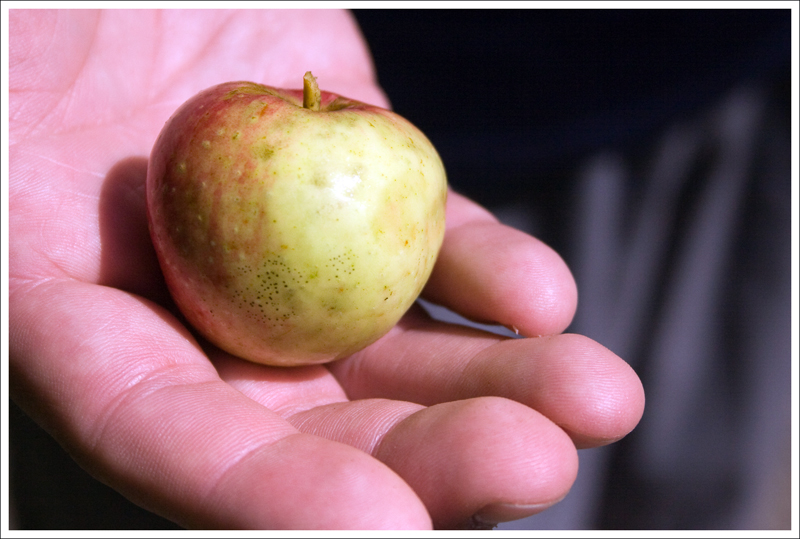
The Simmons Gap fire road extends to the park boundary. Below: We saw a bear less than a tenth of a mile from the Simmons Gap parking area; Apple trees probably attract lots of wildlife; Bear scat was everywhere along the Simmons Gap trail.

Bear Near the Trail Apples Trees Along the Way Scat

Christine Says…

Truthfully, we probably wouldn’t have bothered with this hike if it weren’t so close in proximity to the other two we selected for the day.  Our Falcon Guide said it was nothing special, but it was one of the few hikes left in the park that we haven’t done at least once.  (There are a few long 10-16 miles hikes still on the to-do list, but we’ll likely do those as backpacking trips)

The walk down Simmons Gap was about what I expected – a quiet walk down a shady path through the woods.  There wasn’t much scenery – no views and no waterfalls.  The stream running along the trail was nearly dry despite the decent rain we’ve had lately.

As we walked, we kept our eyes peeled for bears.  We had seen a bear less than a tenth of a mile from where we parked our car.  Also, the fire road was practically paved with bear scat.  Besides the ridge of Knob Mountain, I don’t think I’ve ever seen so much bear poop in one place. Unfortunately, all we saw was the poop… no bears!

Wildflowers in Simmons Gap
Wildflowers along the Simmons Gap fire road. Below: The trail follows along, and eventually crosses a small stream.

Small Stream Along Simmons Gap

There are many hints of a bygone era along the trail – old stone walls, crumbling foundations and the odd apple tree tucked into the forest.  The spot where the fire road meets the park boundary is obviously used as a dump by people who are too rude and lazy to take their garbage to a proper facility.  The streambed at the end of the trail was littered with everything from a broken baby stroller, to a beaten plastic Shrek suitcase to a box full of empty 2-liter bottles of Dr. Pepper.  It was disgusting.  I wish I knew what people were thinking when they did stuff like this. How could anyone back their car up to a beautiful mountain stream, and just empty their trunk-load of discarded property?

Despite the disappointment of seeing the litter, we still had a nice walk down the path.  Although, I don’t think I’d recommend this hike to anyone.

Trail Notes

  • Distance – 1.6 miles out and back
  • Elevation Change – About 200 feet
  • Difficulty –1. Easy walking with very little elevation change.
  • Trail Conditions – 4.5. This fire road is smooth and easy to walk on.
  • Views –0. You’ll be in the woods the whole time.
  • Waterfalls/streams 1. The small stream is pretty and is often lined by stone walls, but it may be dry most of the summer.
  • Wildlife – 3. There’s a good likelihood of seeing bears in this area.
  • Ease to Navigate – 5. There is no place to go wrong.  Follow the fire road straight out and back.
  • Solitude – 4.5. Because there isn’t much to see in this area, not many people come this way.

Directions to trailhead:
At mile 73.2 on Skyline Drive you will see a small parking lot on the western side of the road (directly opposite of the sign for the Simmons Gap Ranger Station).  Cross Skyline Drive, walking on the paved road to the ranger station.  You will see a chain guarding a fire road.  Cross the chain and start the trail down the fire road.

Pocosin Mission Trail

The Pocosin Mission Trail is a fairly short walk along a fire road that leads to the ruins of an abandoned Episcopal mission.

Pocosin Mission Ruins
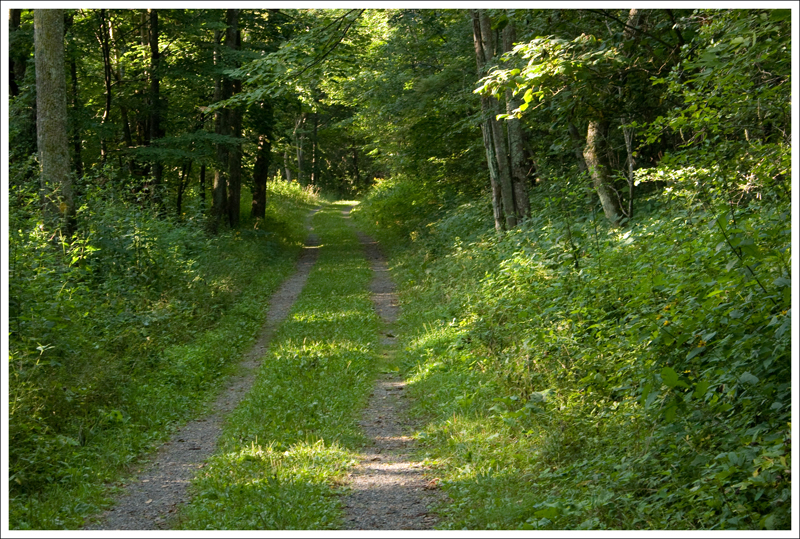
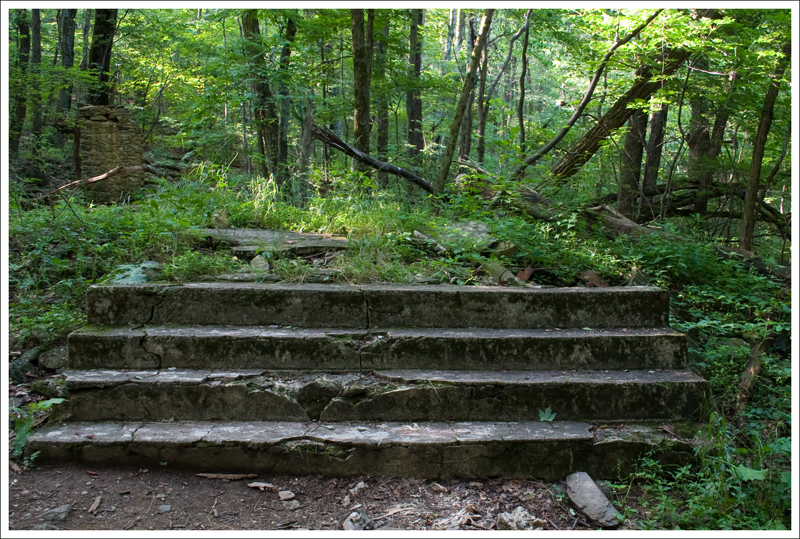
The Pocosin Mission ruins are slowly sinking back into the forest. Below: The fire road makes this trail pleasant and easy to walk along; The old church steps still stand at the site; Adam explores the ruins.

Pocosin Church Steps Adam Explores the Mission Ruins

Adam Says…

We’re back to Virginia hikes!  This week, we’ll be sharing a trio of short hikes.  In fact, the hikes are so short that we’re going to skip doing our typical dual write-ups.  I’ll cover this one, and Christine will cover the next two.

Since we had surprisingly nice temperatures on an August day (it didn’t get above 68 on our hike), we decided to go for three short hikes off Skyline Drive. The last time we did the Pocosin Mission Trail we were with a couple of friends.  Shortly after we got to the mission site, we were pounded with a fierce thunderstorm.  We were all so soaked to the bone, that we ended up buying clothes at the Big Meadows wayside, looking like complete tourists with all of our Shenandoah National Park gear.

PATC Cabin

The PATC maintain a cabin, available for rent, along the Pocosin Mission Fire Road. Below: Wildflowers (and bees) were abundant along the trail; We saw many varieties of berries; There were also butterflies everywhere.

Bees and Flowers Along the Pocosin Trail Berries Along the Trail Butterfly along the Pocosin Trail

On this trip, we had a nice easy stroll down the fire road.  After about .2 miles, the road crosses over the Appalachian Trail, but you just want to stay on the fire road for this trail.  We took a few minutes on our way down to stop by the PATC Pocosin Cabin, which can be rented by the PATC.  The cabin was locked, but we could tell that people renting this cabin would wake to a nice sunrise view.  Continue down the trail for another .8 miles until you reach another cement post, marking the junction with the South River Falls fire road.  You will see the remains of a cabin nearby and stone steps with a foundation.  After exploring, just go back to your car up the fire road.

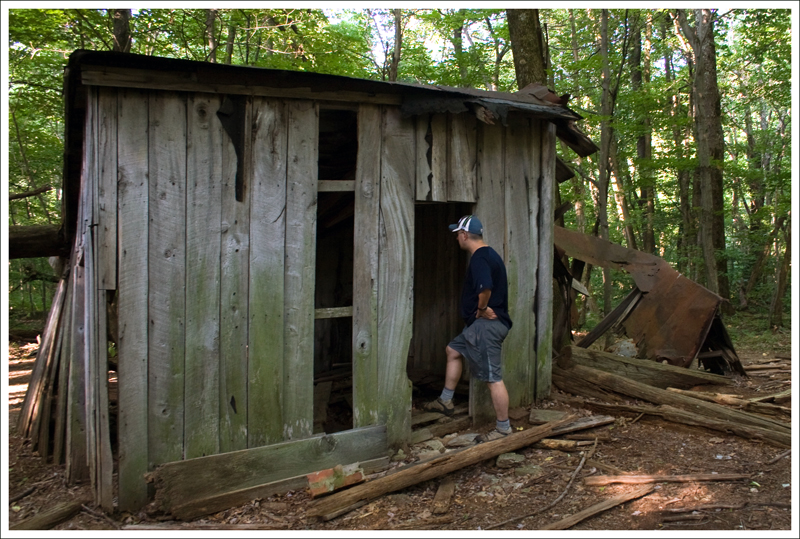
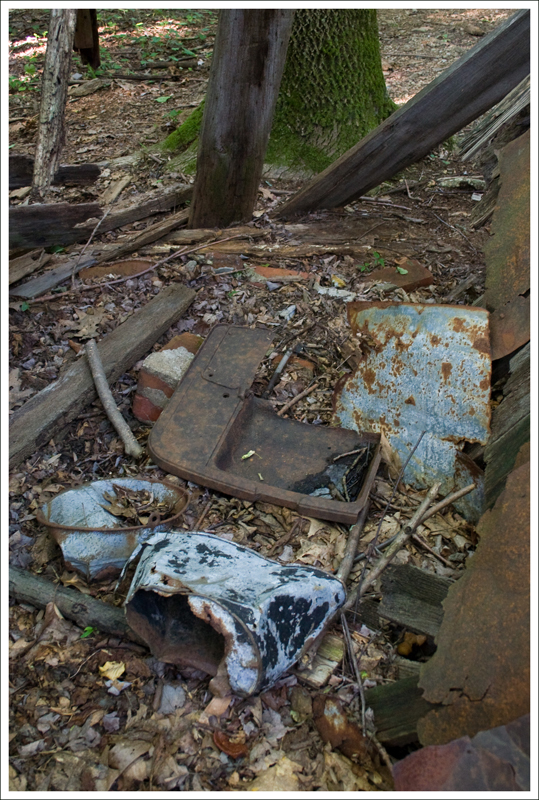
The Pocosin Mission was an Episcopal mission established in 1904 for the mountain community living in the area.  “Pocosin” is a Native American word meaning “swamp”.  The mission building is actually where you see the stone steps, a small foundation, and a fallen-down chimney.  Be careful as you explore the area – there is a lot of broken glass and twisted metal.  The cabin has a rusted metal roof and there are plenty of rusted materials on the ground, so watch your kids carefully in this area.  In addition to these sites, there is also an overgrown cemetery that is across the trail from the mission, marked by old nameless headstones.

Old Church Walls and Fallen Chimney
The old church walls and a fallen chimney are still visible. Below: Buckets and an old sink can still be found inside the mission ruins.

Inside the Ruins

For those interested in the history of the people that lived on this mountain will enjoy visiting this site.  While there aren’t any views to speak of, the hike does cause you to speculate on how life was back in the early 1900s being a part of a community that lived and worshiped together.

Trail Notes

  • Distance – 2.2 miles out and back
  • Elevation Change – 450 feet
  • Difficulty 1.5.  Most people should be able to handle this.
  • Trail Conditions 4. It’s just a fire road, so not much difficulty for trail conditions.
  • Views –0. No views.
  • Waterfalls/streams 0. No streams/waterfalls.
  • Wildlife 2.  There should be a variety of wildlife in the vicinity.
  • Ease to Navigate 5.  Just straight down a road and back.
  • Solitude 4.  This isn’t a very popular spot, so you should have your peace.

Directions to trailhead:
Around mile 59.5 on Skyline Drive, you will see a small gravel road leading to a parking lot on the eastern side of the trail.  Park here, cross the chain, and walk down the fire road to start the trail.

West and East Rattlesnake (NH)

Special: New Hampshire Edition

Introductory Guide to Visiting the White Mountains

This fun, four-mile loop hike offers gorgeous scenery and amazing views with not much work.  The trail takes you across the summits of two small mountains – known as East and West Rattlesnake – overlooking the Squam Lakes.

Adam and the Rain Storm
Adam watches a rain storm pass over the Squam Lakes.  Below: The trail has many steps built into it.

Old Bridle Path

Adam Says…

Since we had already done a bunch of hikes to waterfalls over the last few days, we decided it was time to do a hike with some views.  We waited around in the morning due to rain and an overcast sky, but we caught a break shortly after lunch and decided to head out to the Rattlesnakes.  As Mark Twain said, “If you don’t like the weather in New England, wait a minute.”

We started the trail up the Old Bridle Path, which takes off from the marked parking lot for West Rattlesnake Mountain.  This area includes a lot of crossing trails that are all yellow-blazed, so you will need to pay attention to signs to be sure you are going the way you want.  The hike was a continual uphill with lots of steps built into the trail.  We found this part of the trail to be very well maintained and you will see lots of people on this section of your trip.  At .75 miles, you will come to a fork.  The right goes out to a nice overlook, but the left is where you will continue the trail.  At .9 miles, you will reach the summit of West Rattlesnake Mountain.  Look on the ground to find  a USGS marker to mark the elevation.

From the summit, we then took the Ridge Trail which leads to East Rattlesnake Mountain (one option is to take the Pasture Trail to the East Rattlesnake Trail, but that has a lot of elevation loss and gain.)  The Ridge Trail descends about 300 feet of elevation into a thick quiet wood.  Here is where the mosquitoes were unleashed on us since the breeze was non-existent to blow them away.  At 1.3 miles, you will reach a junction with the Col Trail, but continue on the Ridge Trail until 1.7 miles when you reach the East Rattlesnake Mountain summit.

First Viewpoint
The first viewpoint from high up comes along a small spur trail. Below: The Armstrong Natural Area sign provides some historical information about the area; Several trails intersect in this area; Watching the rain storm pass over the Squam Lakes.

Armstrong Natural Area SLA Sign West Rattlesnake

We headed back from the summit and at 2.1 miles, we took a right on the Col Trail.  The Col Trail descends a few hundred feet and was very overgrown and poorly maintained in several areas.  At 2.8 miles, it leads to a fire road.  Take a right on the fire road.  At 3.0 miles, you will reach Route 113.  Taking a left on the road, you will head back to your car to make this a four-mile loop.

Looking back, we might have decided to do this as an out-and-back hike and not ventured onto the Col Trail.  Walking on roads is never as fun as trails and it seems that the road goes on forever.

Both summits give you expansive views of the Squam Lakes and you can likely see several mountains surrounding you.  I was amazed at how many people were on West Rattlesnake Mountain and we only saw one other person at East Rattlesnake Mountain.  So, you can easily escape the crowds if you want with just a little longer hike.

There are a number of geocaches in the area for anyone interested:

Christine Says…

On this trip to New Hampshire, we spent far more time hiking to waterfalls and ponds than we did hiking to mountaintops.  We decided to save our summit hikes for days that offered clear views of the valleys below.  Unfortunately, we had a lot of hot, humid days that put the high peaks of the White Mountains into the clouds.  I know some people just like the workout and the act of hiking, regardless of whether or not there is a view.  I do too, but only to an extent. I can’t help but feel a little let down when a great view is covered in clouds and fog.

The morning we planned to hike the Rattlesnakes had been forecast to be sunny and pleasant.  However, in keeping with the theme for New Hampshire’s changeable weather, we woke to soggy clouds and pop-up showers.  The radar map indicated clearing as the day went on, so we sat and waited at the house.  When the sun finally broke through the clouds, we hopped in the car and raced off the trailhead.

The hike was easy and pleasant to the top of West Rattlesnake, and the views couldn’t have been nicer.  They reminded me a lot of the views we had from the Mt. Morgan – Mt. Percival hike.  (You can actually see the Rattlesnakes from above on that hike.) Both hikes overlook the Squam Lakes, but Mt. Morgan – Mt. Percival goes to higher mountains and offers a loftier view. If I were pressed to choose, I would say the Rattlesnakes view is nicer, but only because it’s a little closer to the lake.  The Squam Lakes Association does a fantastic job managing and maintaining the trails in this area.

East Rattlesnake
The view from East Rattlesnake is pretty and offers quite a bit more solitude. Below: The trails are nicely marked and expertly maintained by the Squam Lakes Association; Adam walks along the fireroad that joins the Col Trail to Route 113.

Col Trail Fire Road

Atop West Rattlesnake, we were able to sit on a sunny rock ledge and watch a leftover rain squall pass at a distance across Squam Lake.  The clouds were so dramatic and it was interesting to see the gray sheet of rain pass over the water.

We decided to continue along the trail and visit East Rattlesnake as well.  Although it’s less popular and has a smaller rock ledge, the other Rattlesnake offers views just as nice as its “sister”.  We had a couple options for hiking over to East Rattlesnake.  At first, we considered hiking the Pasture Trail so we could check out Five Finger Point.  A friend of mine from Flickr mentioned one of his favorite swimming spots was on the point, so I thought it might be fun to go check out the spot.  But, in the end, we decided to take the shorter route across the Ridge Trail.  The bugs ate me alive!  This trail was the one place in New Hampshire that my liberal application of DEET didn’t seem to deter the mosquitoes.  Two weeks after the hike, I still have a few marks leftover from bites I got on that hike.

On the return from East Rattlesnake, we wanted to get out of the woods and away from the bugs as quickly as possible.  Instead of doing the hike as an out-and-back, we followed the Col Trail back to the road and finished a loop with a mile of walking along Route 113.  The road walking wasn’t particularly fun or scenic, but at least I was away from most of the bugs.

Trail Notes

  • Distance – 4 mile, loop
  • Elevation Change – About 800 ft.
  • Difficulty –2.5. The walk up to West Rattlesnake is very easy.  The hike up East Rattlesnake is a little tougher.
  • Trail Conditions –3.5. The trail is very nicely maintained.
  • Views – 5. Stunning views of the Squam Lakes.
  • Waterfalls/streams 0. None to mention.
  • Wildlife –0. Unless you count mosquitoes and biting flies.
  • Ease to Navigate – 4. Although several trails cross in the area, everything is clearly marked.
  • Solitude – 1. On West Rattlesnake, you won’t get any solitude.  East Rattlesnake is quieter.  We saw only one other person there, while we saw close to 20 people atop West Rattlesnake.

Directions to trailhead:

From I-93, take Rt. 3 east to Holderness. From Holderness, follow Rt. 113 (a slow, curvy road) northeast for about 5.5 miles. Just past Pinehurst Road, park in the small lot on the right side of the road. The Old Bridle Path starts at the far end of the parking lot.

Arethusa Falls and Bemis Brook (NH)

Special: New Hampshire Edition

Introductory Guide to Visiting the White Mountains

Note – 10/11/10: In their October issue, Backpacker Magazine inaccurately listed Arethusa Falls as a Virginia destination. The falls are in New Hampshire.

This three mile hike leads to Arethusa Falls, which is (arguably) New Hampshire’s tallest single waterfall. The optional arm along Bemis Brook is challenging in spots, but offers more lovely stream scenery.

Arethusa Falls
Arethusa Falls might not be the most photogenic of New Hampshire’s many waterfalls, but it is likely the  tallest. Below: The optional side-loop trail along Bemis Brook takes you past Coliseum Falls.

Coliseum Falls

Christine Says…

We originally planned on combining these two trails with Frankenstein Cliffs to make a loop, but unfortunately we ran short on time and just did the three mile out-and-back.

The trail along Bemis Brook was extremely tough walking!  In addition to the roots, rocks and mud, we suffered a full-on mosquito assault.  I spent a lot of the walk along the trail cursing and flailing my arms wildly.  Even with DEET, the little buggers hovered right around my eyes, ears and nostrils, constantly buzzing in too close and getting caught in my eyelashes.

There were several very pretty small waterfalls along the Bemis trail.  Coliseum Falls were especially picturesque.  Since it was such a sunny day, I didn’t bother with a tripod.  Long exposures weren’t a possibility in the harsh sun, so I just took snapshots along the way.  The climb from Bemis Brook back up to the Arethusa Trail was practically vertical.  We had to climb, hand-over-hand, grabbing roots and rocks to drag our way up the mountainside.  There was one blown down tree that was particularly difficult to negotiate.  It was one of those fallen trees that was a little too high to climb over, but a little too low to scramble under.  I decided to clamber over it, and ended up getting my boot toe caught on the tree trunk.  I took a spectacular fall down onto the roots and rocks.  It absolutely left a big black and blue mark!  I was really glad when we finally saw the junction with the Arethusa Trail!

Frankenstein Cliffs
This trailhead for this hike offers beautiful views of Frankenstein Cliffs looming overhead. The trail has an option to lengthen the hike by a few miles to gain access to the top of the cliffs. We ran out of time and had to pass on that option. Below: Trails in the area are clear and well-marked.

Trail Sign

The rest of the way to the falls was much easier.  It was uphill and muddy in spots, but the trail was well-graded and nice to walk along.  The last stretch to Arethusa Falls led downhill into a chasm that opened to an amphitheater like setting.  The falls were very impressive!  The water falls like lace over the sheer rock face.

On the hike back, Adam and I waffled about whether or not to continue our hike up to Frankenstein Cliffs.  We even started down the Cliffs Trail, before turning back in less than a tenth of a mile.  We had plans to meet my parents in North Conway, and we just didn’t have time to finish the loop.

Instead, we visited the Appalachian Mountain Club’s Highland Center and got a few Cokes and relaxed in their lobby.  After we met up with my parents, we had an amazing lunch at Moat Mountain Brewery & Smokehouse.  If you’re ever in the area, don’t miss their barbecue and microbrews!

Adam Says…

Arethusa Falls is a gorgeous 160 foot waterfall that is very popular with families.  We started on the blue-blazed trail near the railroad tracks at the parking lot.  After about .1 miles, you come to a junction with the yellow-blazed Bemis Brook Trail.  We decided to do this side trail, since it goes partially along the water, guiding you to a few pools and smaller falls areas.  Once you come up to the Coliseum Falls area, you will need to climb up almost vertically up the trail to join back with the Arethusa Falls trail.  If you do want to do the Bemis Brook trail you should do this at the start of your trip rather than trying to descend it at the end.  This part of the trip was tough and takes a lot of strength out of you in a short distance, so plan appropriately.  Once we reached the junction at the top, we took a left to return to the Arethusa Falls trail.  The trail continues to go uphill until you reach a junction with the Cliffs Trail.  From this point, you continue downhill until you reach the falls in .2 miles.  You return the way you came, but you will avoid the Bemis Brook Trail on the way back and just stay on the Arethusa Falls trail to reach your vehicle.

Arethusa Falls was named after the poem, “Arethusa” by Percy Bysshe Shelley.  The falls were discovered by Edward Tuckerman, but named by Moses Sweetser and Professor Huntington in 1875.

Bemis Trail
The Bemis Brook Trail follows a beautiful stream for most of the way, until you get to the portion where it climbs, nearly vertically, back up to meet the Arethusa Trail. Below: The Arethusa Trail is much easier to walk – smooth and well-graded, compared to the Bemis Trail.

Arethusa Trail

While I was off hunting for a geocache and Christine was taking some photos, she struck up a conversation with a man hiking solo on the trail.  When I got back to them (after sliding down the hillside 20 feet on my butt), he wanted to take a look at my map.  He was thinking about doing the Frankenstein Cliffs trail and then looping back to make it to his car.  He was to meet up with his wife in less than two hours to take a ride up Mount Washington on the cog railroad.  We told him that it might be hard to make it in time.  He decided to go for it, but I don’t think there was any way he could have made it back in time for his trip up.  We both pictured his wife riding solo up the railroad, muttering to herself, and awaiting the moment she could give her husband a piece of her mind.

There are two geocaches you can get on the trail:

We wish we had more time to do the Frankenstein Cliffs trail (these are named after an artist, not the doctor who created a monster), because we have heard that it does give you some nice views from the top.  The trail is allegedly muddy and not as well maintained as the Arethusa Falls trail.

Trail Notes

  • Distance – 3 miles, out-and-back (2.8 if you leave the Bemis Brook Trail off and just stay on the Arethusa Trail the entire way)
  • Elevation Change – 650 ft to the falls.  There might be a bit more climbing if you do Bemis Brook.
  • Difficulty – 3. The Arethusa Trail is squarely moderate.  The Bemis Brook trail is more difficult with one killer climb uphill at the end.
  • Trail Conditions – 2.5 The Arethusa Trail is in nice condition most of the way.  There are some muddy spots and we encountered a flew blow downs.  The Bemis Trail is not easy walking.  There are numerous fallen trees, tricky footing and if it’s the slightest bit damp, the trail is very slippery.
  • Views –0. You’ll be in the woods the entire time.
  • Waterfalls/streams 4. The falls are large and impressive, but not terribly photogenic.
  • Wildlife – 0. The heavy human traffic probably scares any wildlife away.
  • Ease to Navigate – 5. Trails are marked and easy to follow.
  • Solitude – 2. Because the hiking is a little more challenging, you won’t see the same crowds as you do at Flume Gorge or Sabbaday Falls.

Directions to trailhead:
From I-93, follow New Hampshire Route 302 west through Crawford Notch State Park.  A few miles past Sawyer Rock Picnic area you will see the Arethusa Falls parking area on the right.