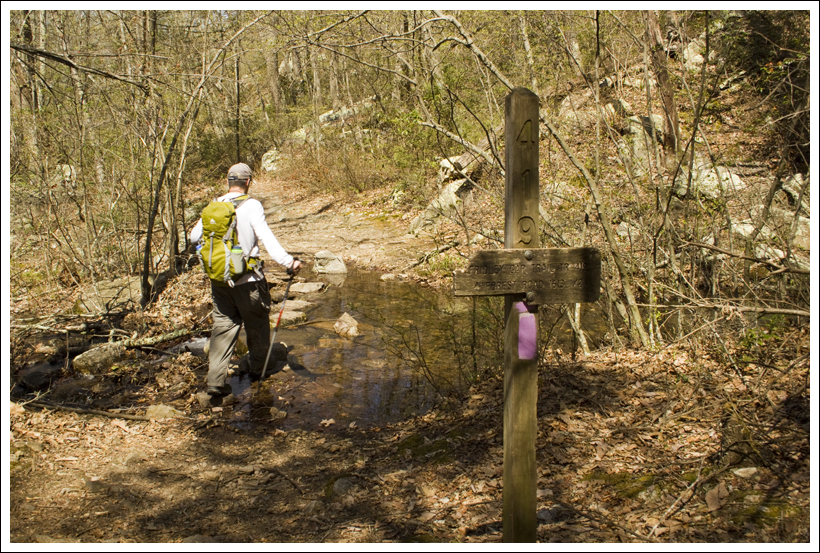
Appalachian Trail – Dripping Rock to Rockfish Gap

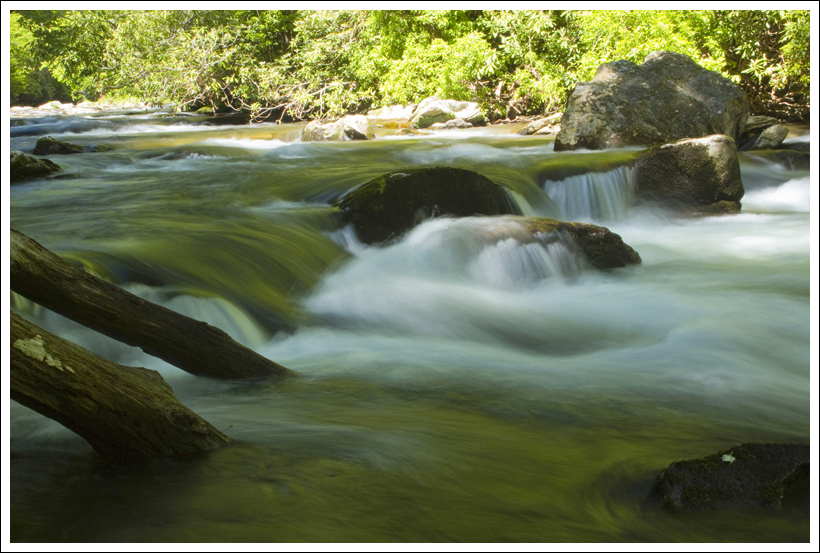
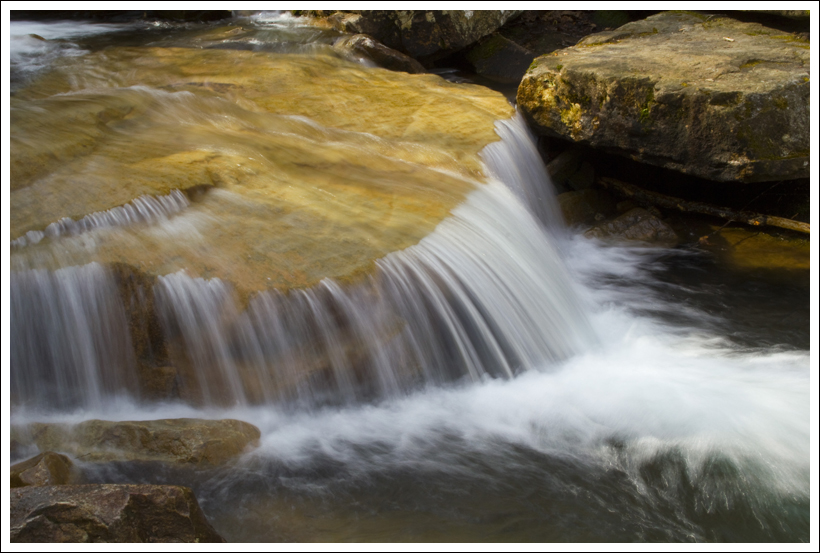
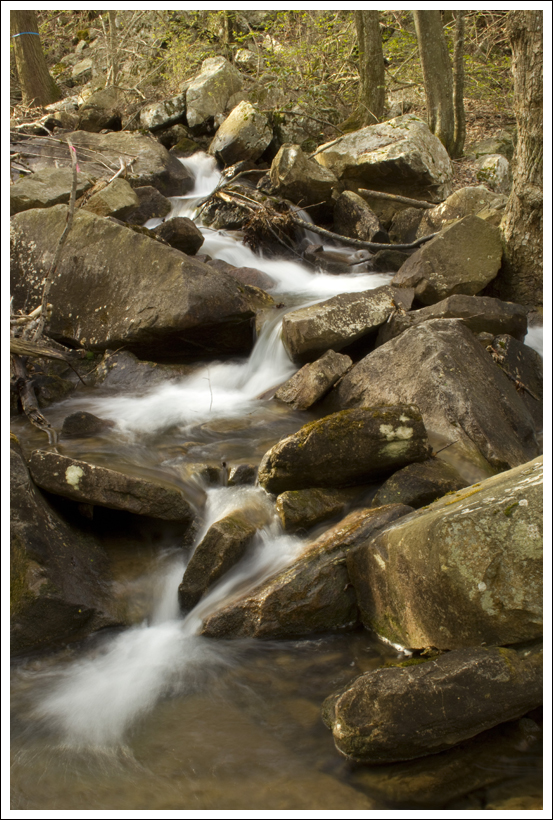
This 14.5 mile section of the Appalachian Trail includes great views of Wintergreen Resort from Humpback Mountain.  The campsite for the evening is the Paul C. Wolfe Memorial Shelter, which is located on the bank of lovely, rushing Mill Creek.

View the Full Album of Photos From This Hike

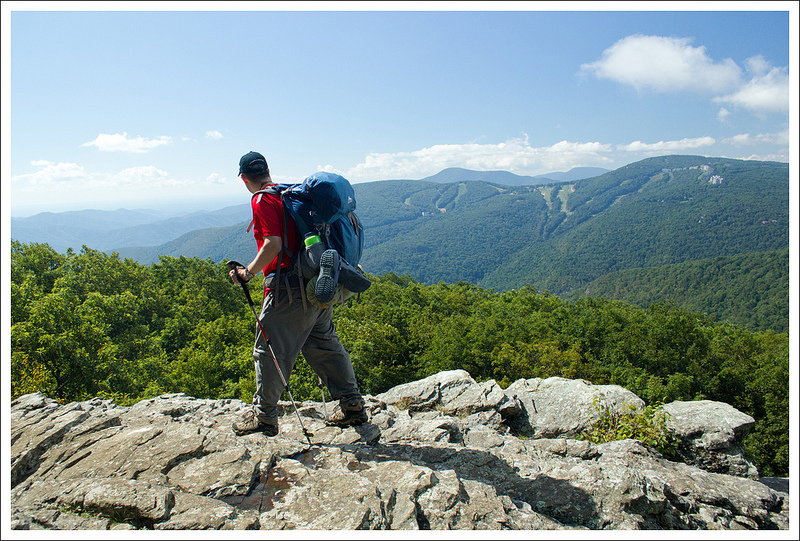
Hiking Over Humpback Mountain
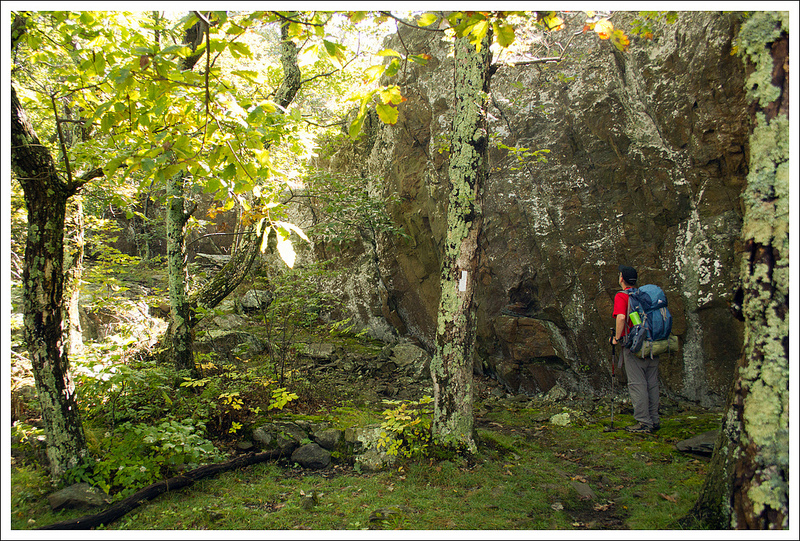
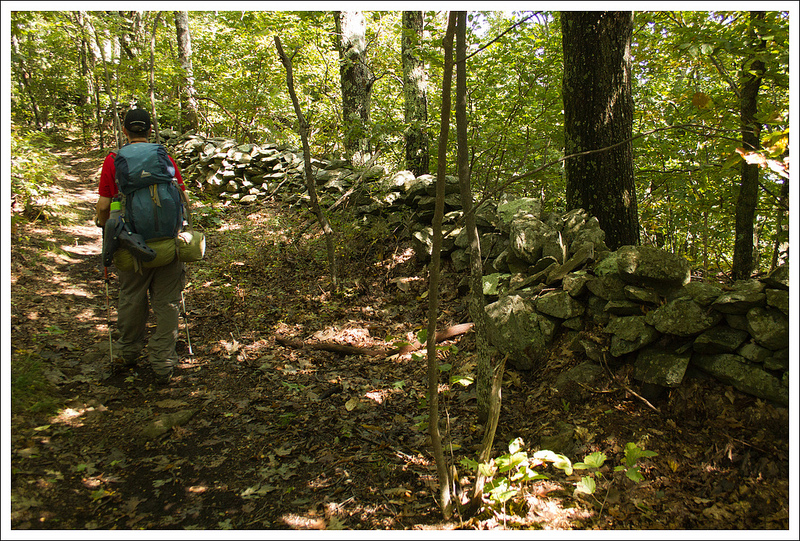
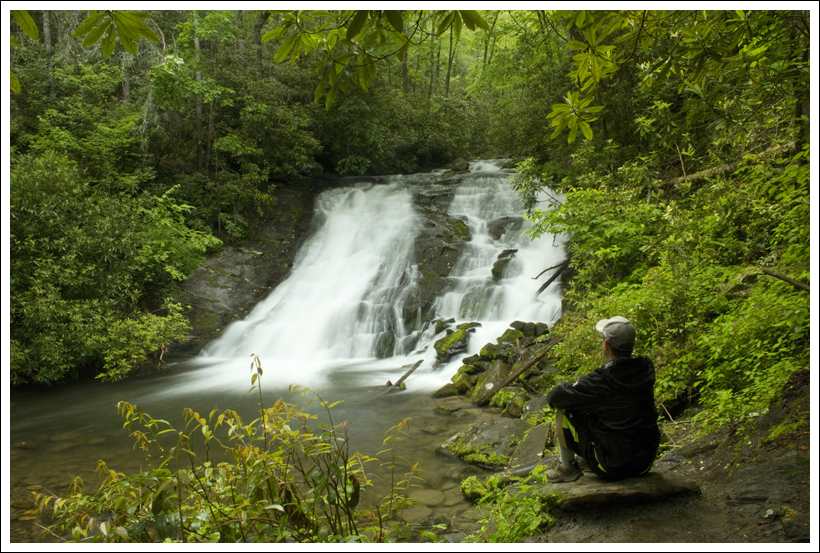
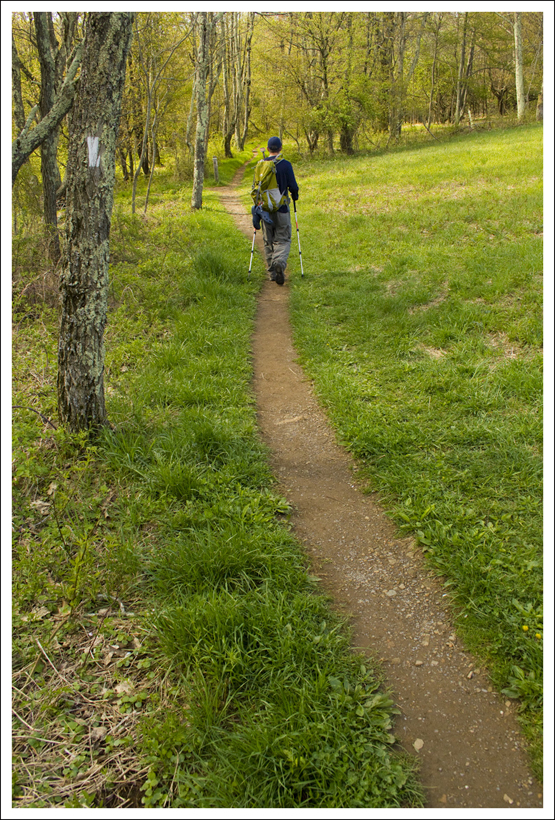
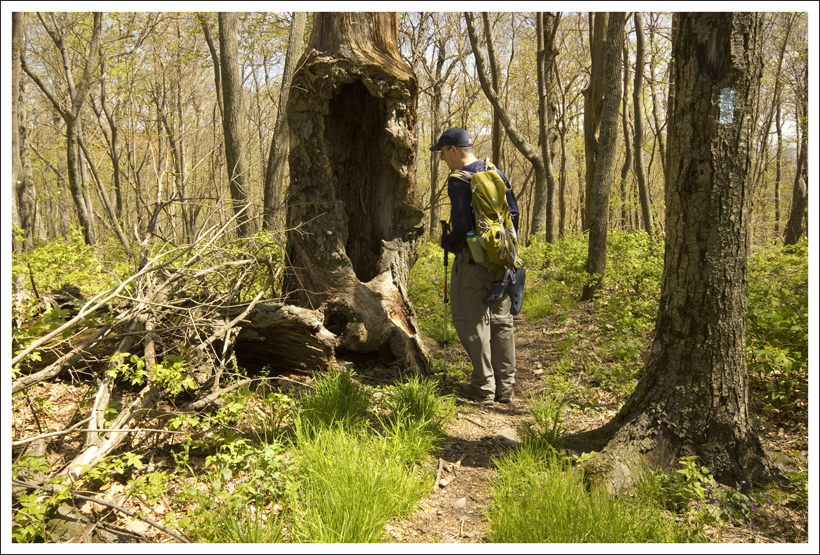
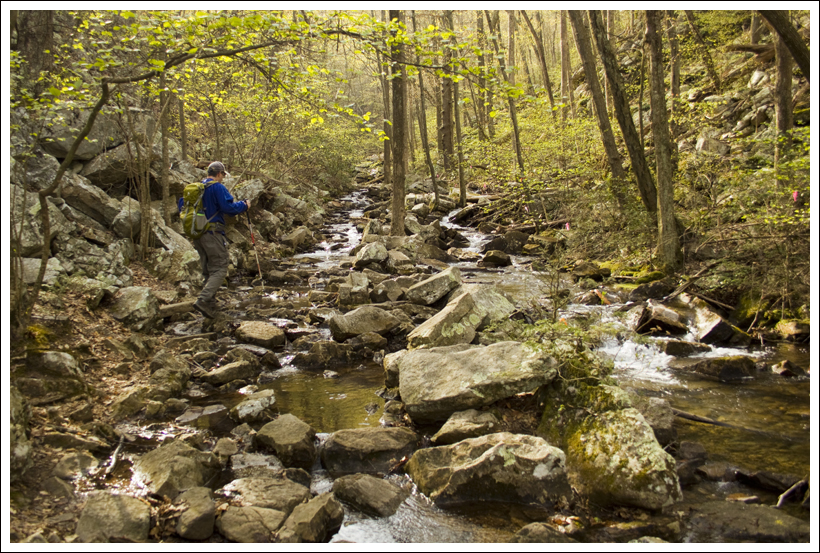
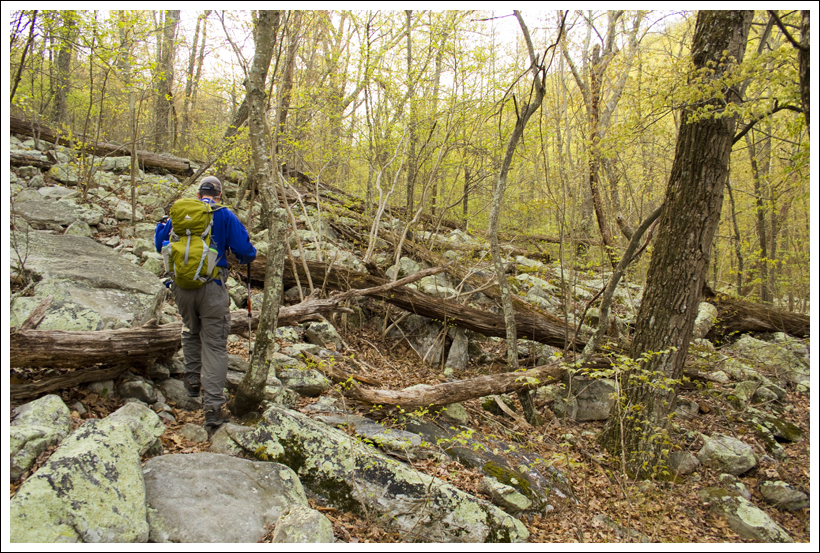
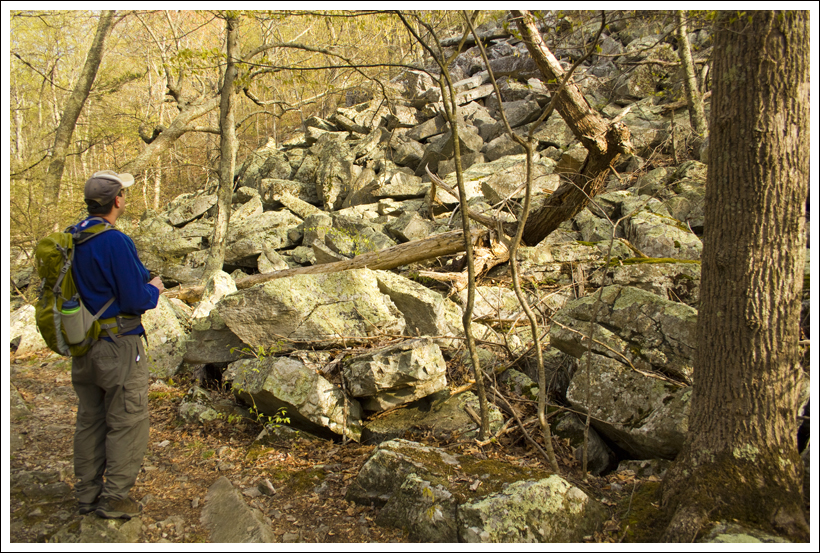
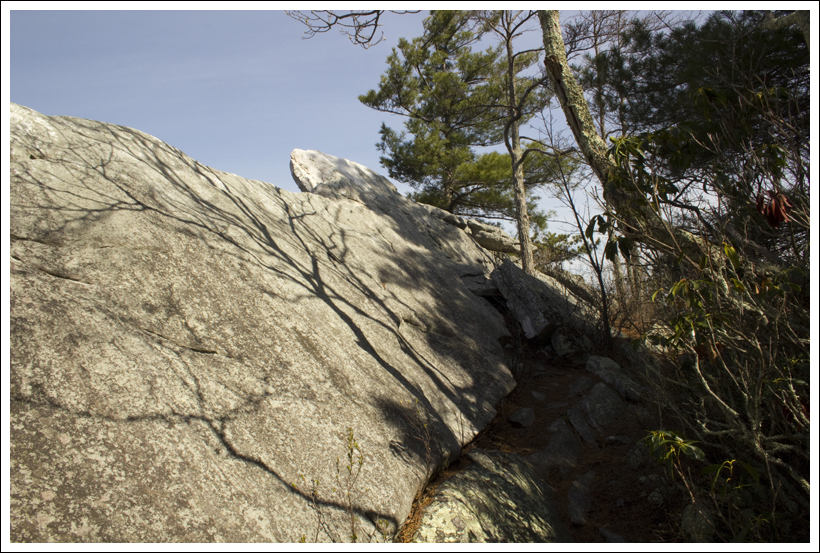
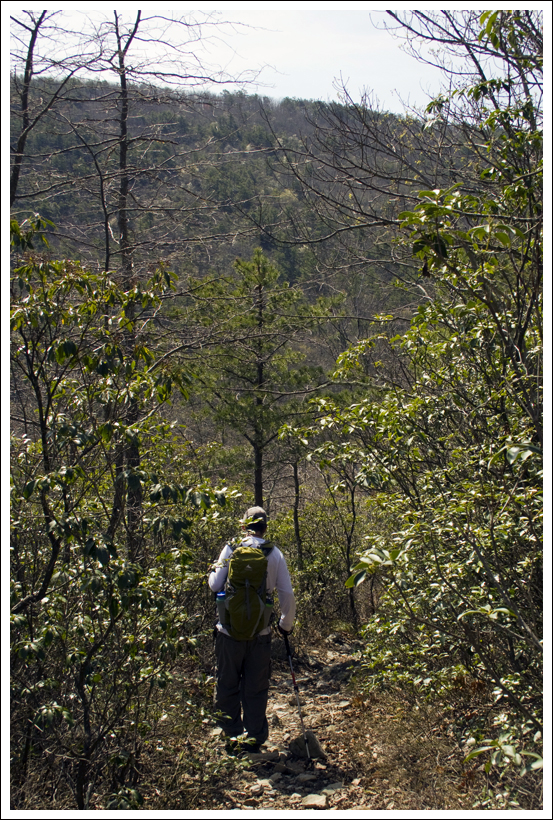
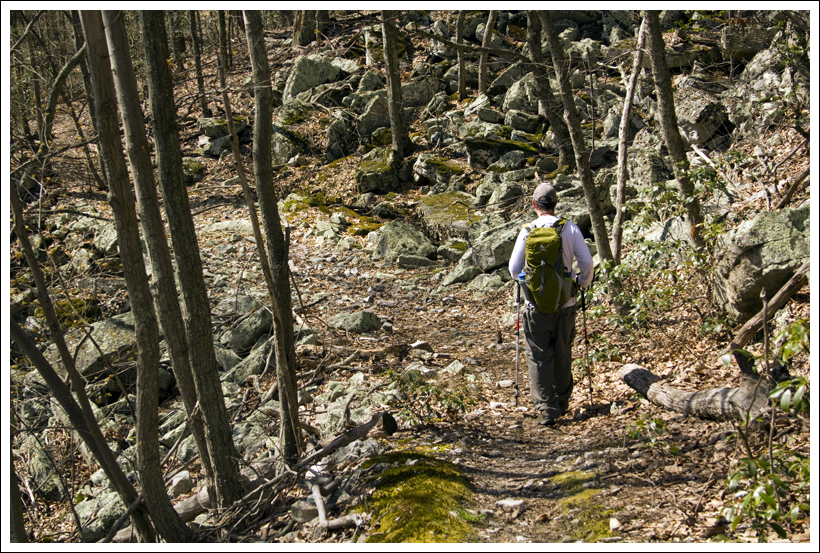
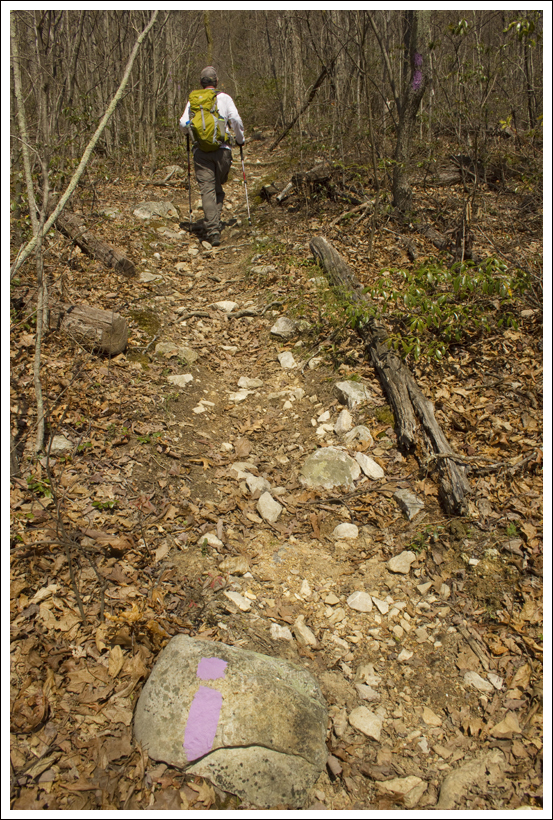
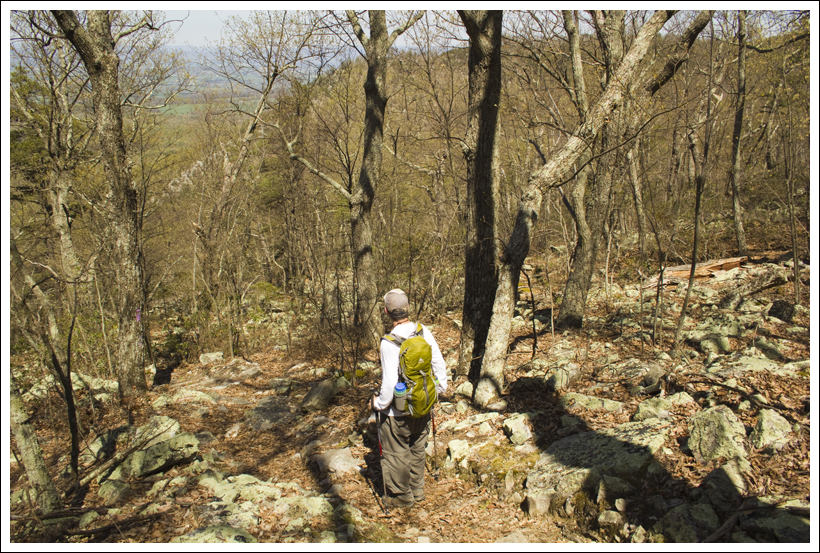
Adam traverses Humpback Mountain.  Below: We found trail magic right away on our hike; Adam climbing the southern side of Humpback Mountain; Rock walls along the trail.

Trail Magic Adam Hiking Rock Wall

Day One

For Christine’s birthday this year, we decided to do a quick overnight backpacking trip along the Appalachian Trail.  Following an all-day soaking rain and a cold front on Saturday, we had ideal weather for hiking and camping on Sunday into Monday – low humidity, clear skies, daytime highs in the 70s and a nighttime low near 45. It was perfect!

We started our morning with a big breakfast at Thunderbird Café and then made the 40 minute drive to the trailhead.  For this hike, we left one car parked in the small lot near where the Blue Ridge Parkway (BRP) crosses I-64 and Rt250.  From there, we drove our second vehicle to the Dripping Rock parking area at mile 9.6 on the BRP.  The name Dripping Rock refers to the small spring adjacent to the parking area.  Supposedly, it was a water source well-used by Monocan Indians en route to summer hunting grounds.

The AT crosses the parkway at this point, so it’s an easy place to hop on without using any access trails or spurs.  The hike starts out climbing gently uphill through the woods.  Almost immediately, we spotted a small cooler alongside the trail – trail magic!  We didn’t need (or take) any trail magic on our hike, but we were curious so we opened the cooler to see what was inside.  We found a log book, a camera, a small whiteboard, a bottle of ibuprofen and a nice supply of granola bars.  The camera and whiteboard were provided so that hikers could take photos with their trail names.

A couple tenths of a mile down the trail, we passed even more trail magic in the form of 2 liter-sized bottles of tap water from Wintergreen Resort.  Typically by September, streams and springs in the Shenandoah Valley are dry or running very low, so the free, clean water would be quite welcome.  The bottles were situated next to one of the trail’s spring-fed water sources.  We noticed the sign marking the spring indicated that water might be contaminated and should be filtered or boiled.  The sign included an outline drawing of a moose, and we both found it comical to think about the implausibility of Virginia water being contaminated by a moose.

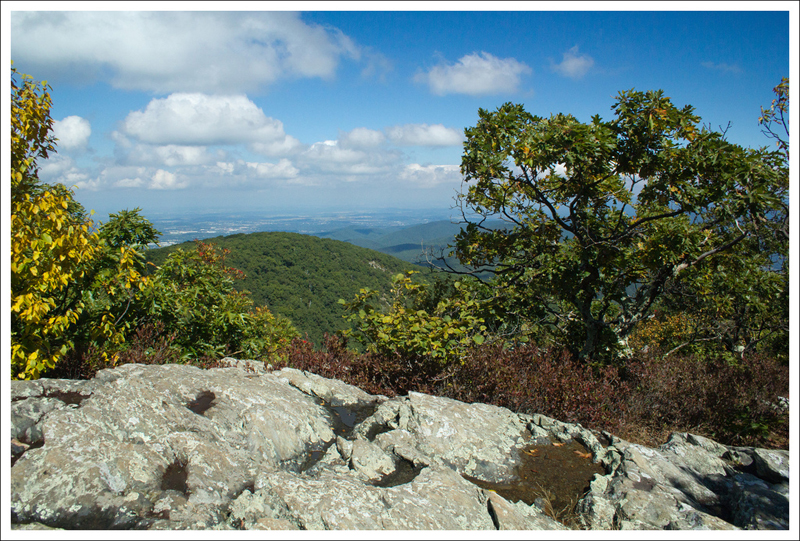
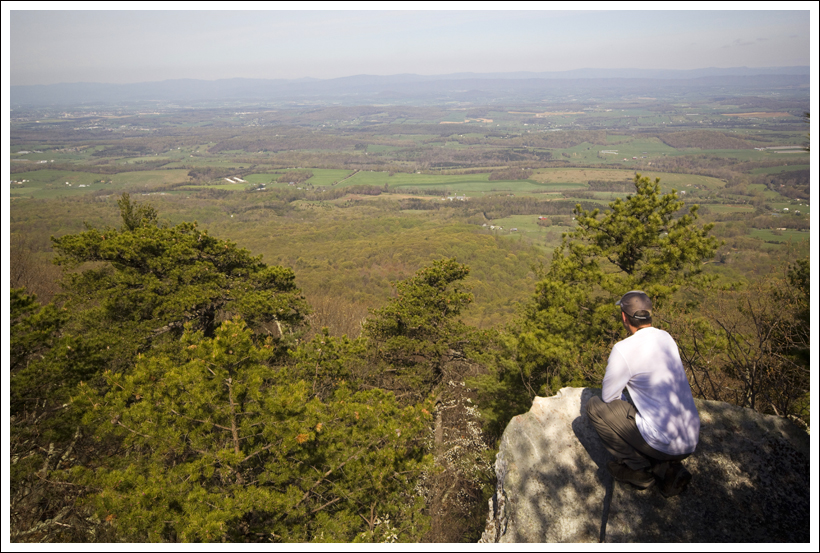
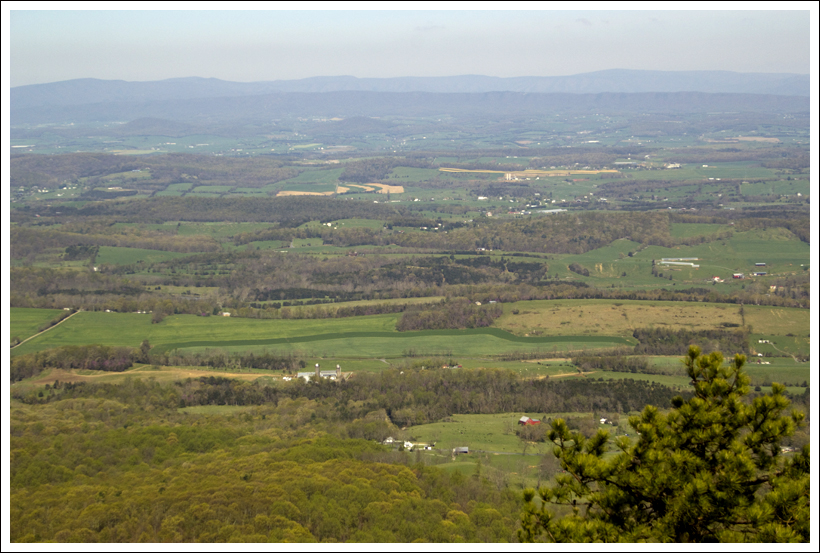
Wintergreen View
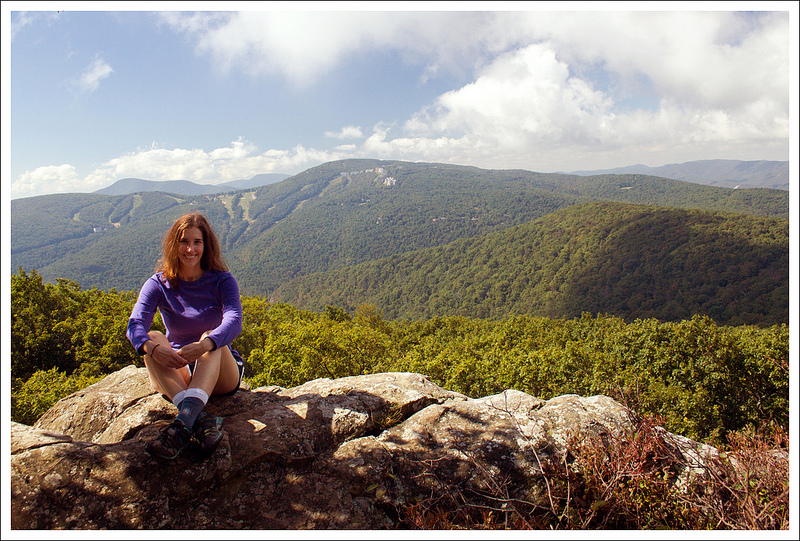
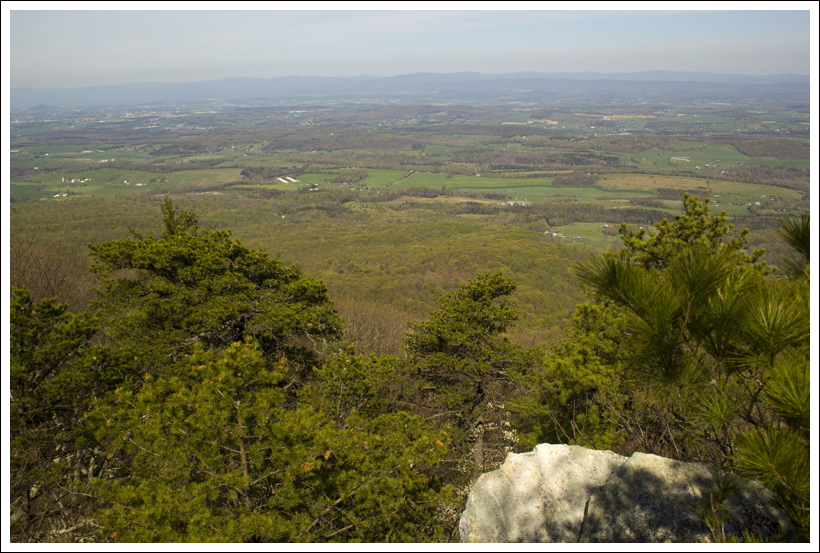
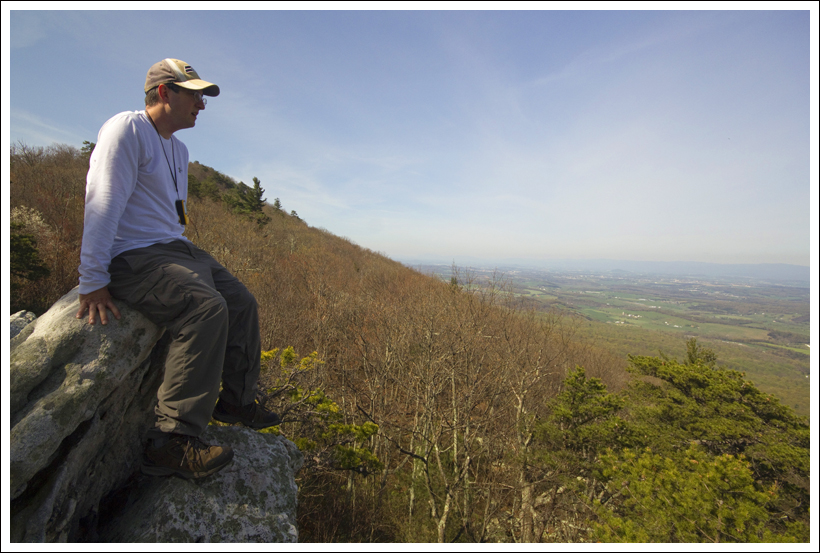
Christine enjoys the outcropping overlooking Wintergreen.  Below: Hiking up Humpback Mountain; Adam checks out the view of Wintergreen; Pretty views.

Christine Hiking Wintergreen Views

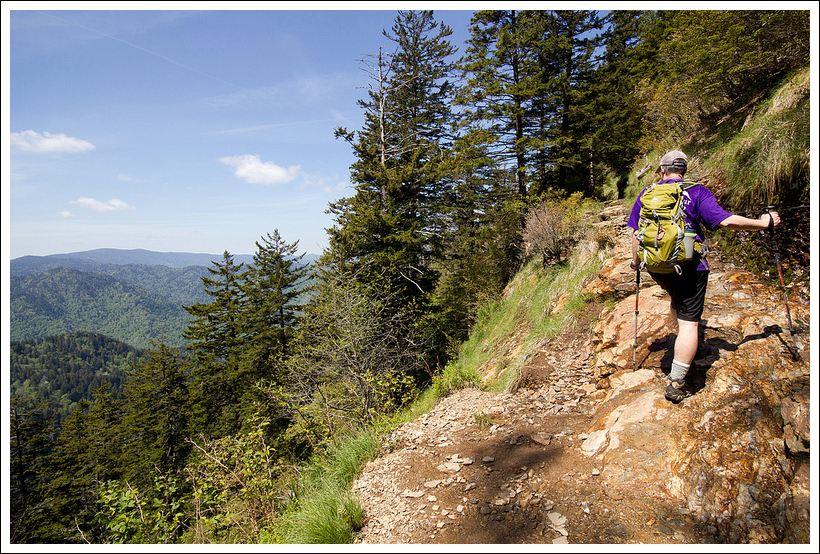
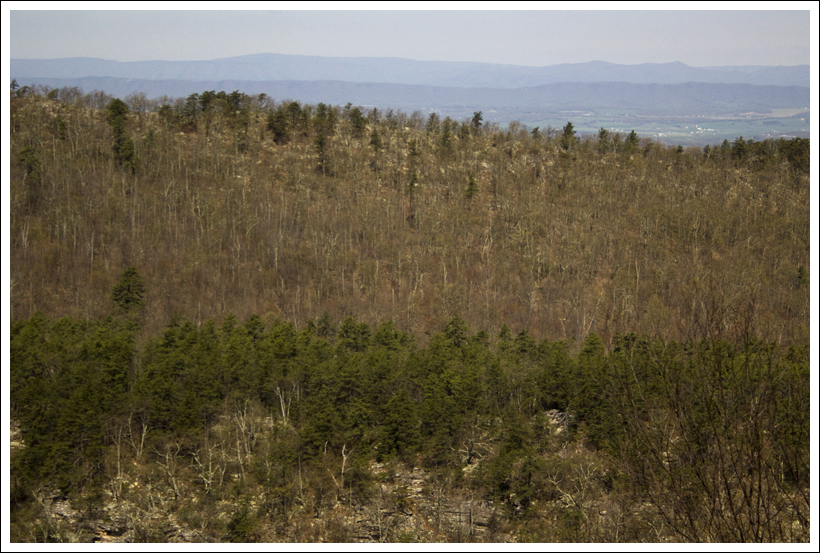
The hike continued gradually uphill along the side of Humpback Mountain.  We saw several nice campsites along the trail.  Soon after that, the views started to open up.  We didn’t really have any expectations for great views on this hike.  We figured we might take the side trail to Humpback Rocks and eat lunch there.  We also knew from past hikes on Dobie Mountain that we’d be passing one decent overlook at Glass Hollow.  However, we were pleasantly surprised to find spectacular views along the rocky, spiny ridge of Humpback Mountain. These views are about 2.5 miles from the better known outcropping of Humpback Rocks, and we thought they were even nicer!  The crowds, graffiti and car noise always take away from the experience at Humpback Rocks. We had this lofty ridge all to ourselves.

We took some time to take off our heavy packs and enjoy the view.  We could see the Priest, Three Ridges and the slopes of Wintergreen Resort.  When we got home, we read more about this section of the trail and learned that the view is named Battery Cliff, because the condos on the slopes of Wintergreen look like fortifications from a distance.  The rocks on the cliffs are Catoctin greenstone formed in an ancient volcanic eruption.  When you sit on these rocks and look across to Wintergreen, you’re looking over to where the Appalachian Trail used to traverse the mountains.  Five miles of the trail used to cross the resort.  But in 1983, the resort sold the land to private developers – basically pulling the rug out from under the Appalachian Trail Conservancy.  Luckily, the organization was able to quickly pull funds together and preserve the land across Humpback Mountain – where the trail currently sits.

Leaving the open ridge, we dipped back into the woods and continued walking along a long, impressive stretch of stone ‘hog wall’.  People living in the area before the establishment of the parkway built these long walls to roughly mark property and attempt to contain livestock.  Eventually we arrived at a junction, one direction headed toward Humpback Rock and the other continued downhill along the Appalachian Trail.  We decided to skip the extra mileage it would take to visit the Rock and continue toward our destination.  We’ve seen the Rocks many times and didn’t really want to face the crowds that arrive with beautiful-weather Sundays.

Hog Wall
Adam walks along one of the many hog walls.

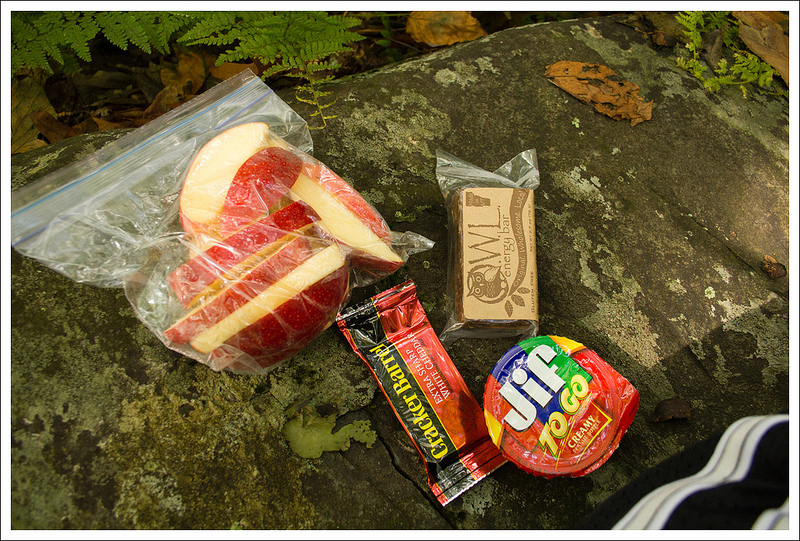
As we walked downhill, we started contemplating our lunch break.  We decided that the next spot with good ‘sitting rocks’ we’d stop for lunch.  As it turned out, the next rocks we found were just a few, big random flat boulders right alongside the trail. We had lunch of apples, peanut butter, cheese, and energy bars.  As we ate lunch, two groups of people passed us – a couple with their dog and a man who had just visited his daughter at JMU’s family weekend.  All in all, we only saw a total of eight people over the entire ten miles of hiking that day.  The solitude was nice!

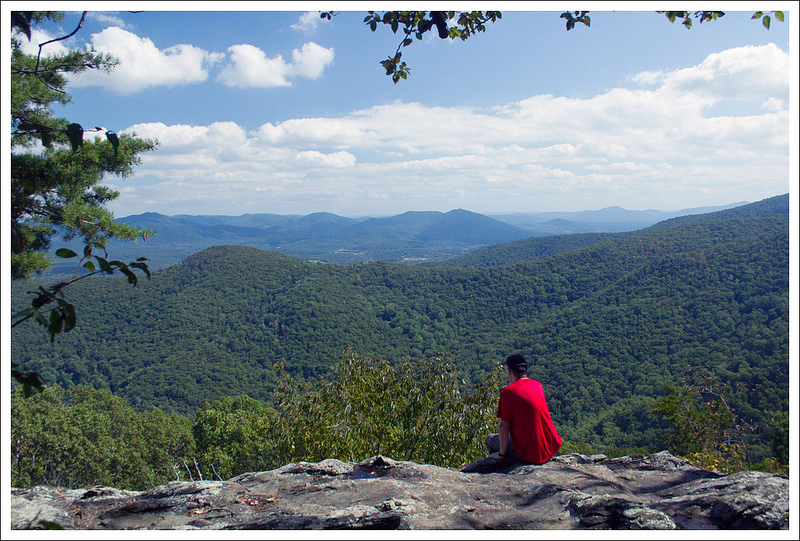
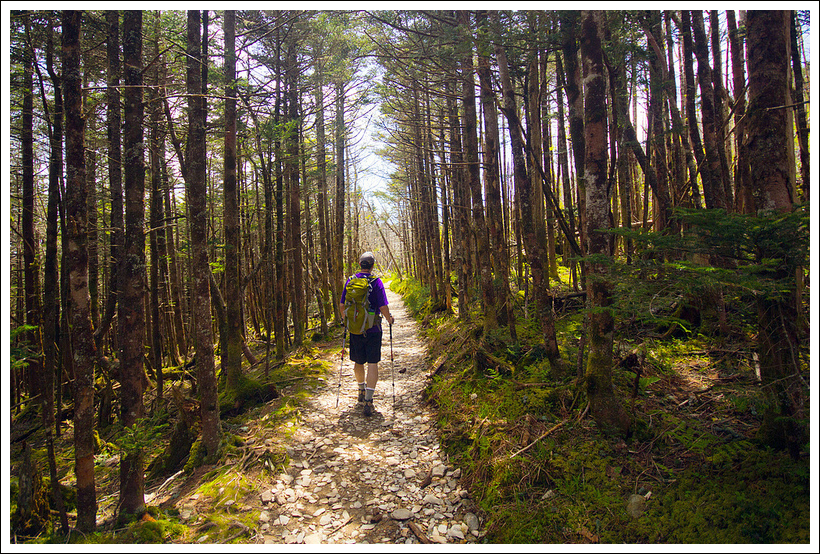
After lunch, we continued the 5.5 mile descent toward our evening stop point.   The trail was in great shape and the downhill was easy going.  At the bottom of Humpback Mountain, the Appalachian Trail intersects with the Howardsville Turnpike – an old toll road that was heavily used to transport goods before the Civil War.  It’s long been reclaimed by the forest, but the wide, flatness of the trail still has the definite feel of a well-traveled road.  We continued along the Appalachian Trail until we spotted a small sign marking the Glass Hollow overlook. We followed the short access trail and spent a good twenty minutes relaxing on the beautiful rocky viewpoint.  The views this time were much clearer than they had been two years ago when we visited.

Glass Hollow
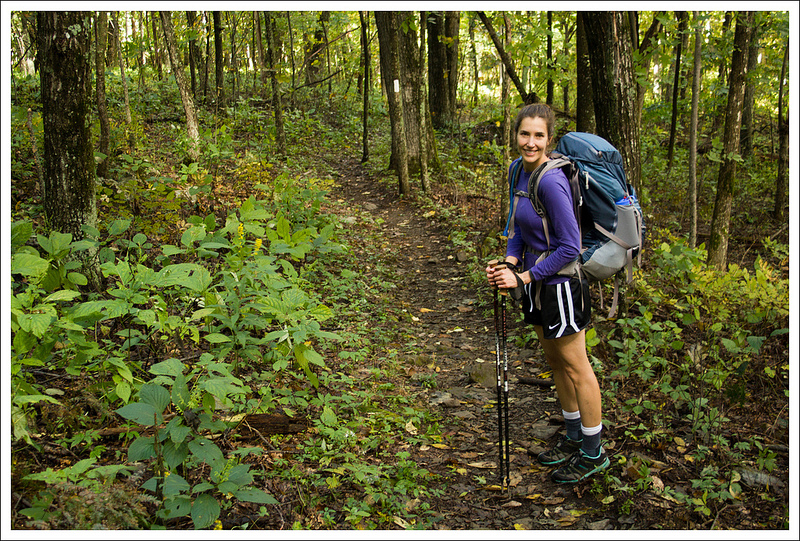
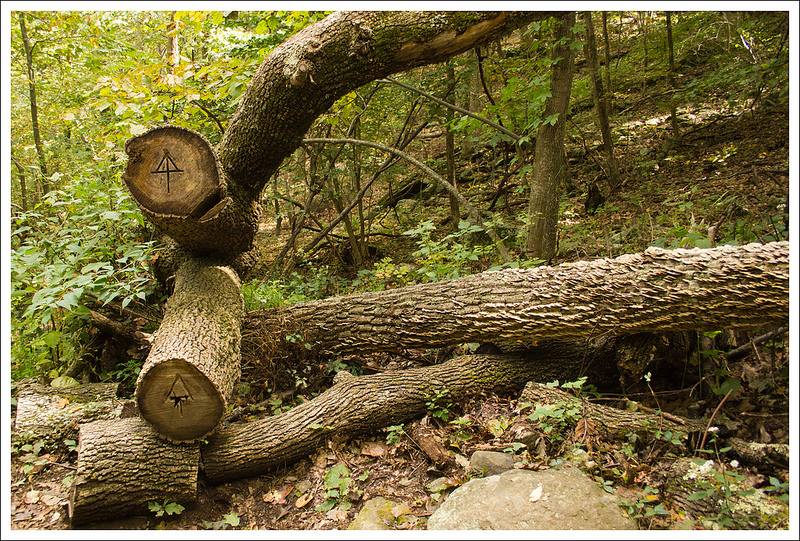
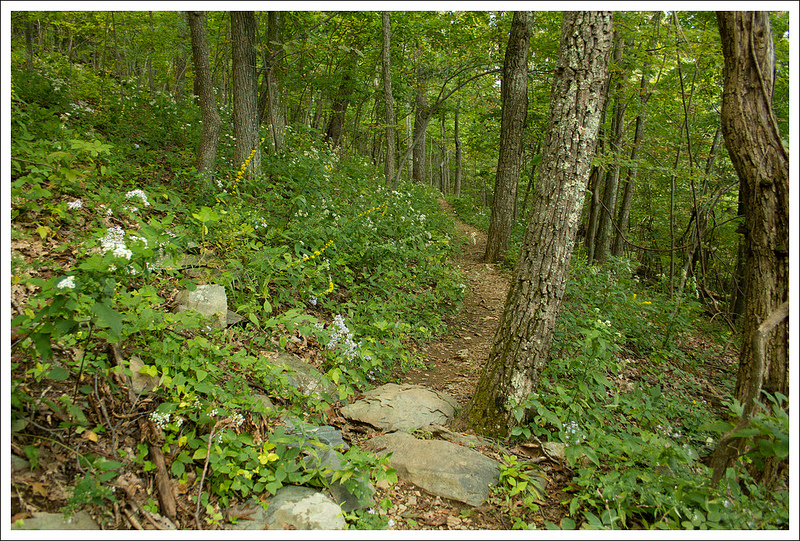
Taking in the view at Glass Hollow. Below: Trail lunch, AT logos carved on deadfall; Pretty trail with late season wildflowers.

Lunch AT Logo Pretty trail

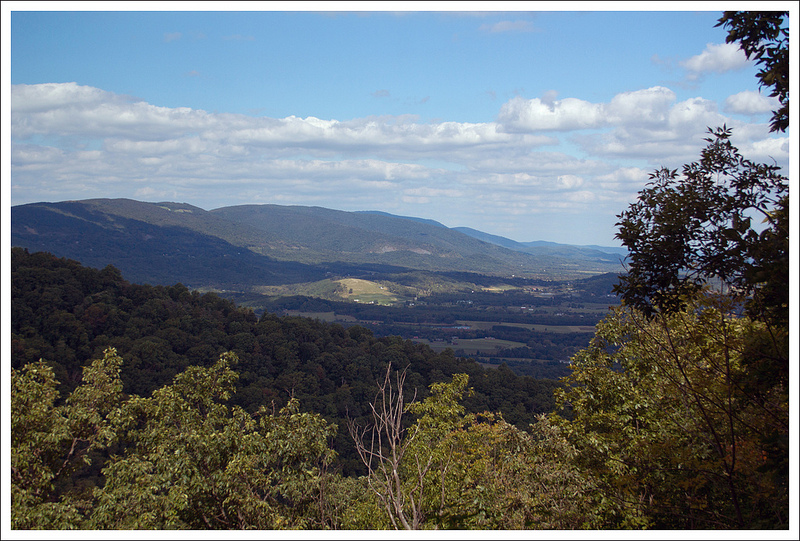
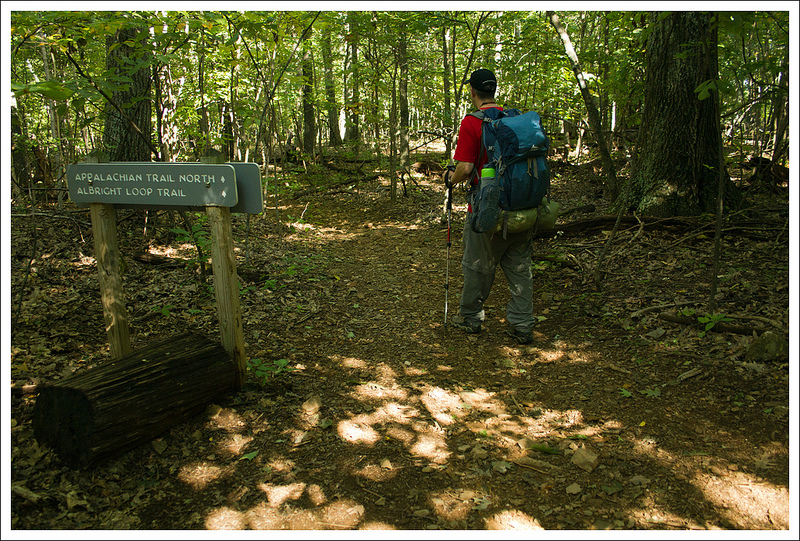
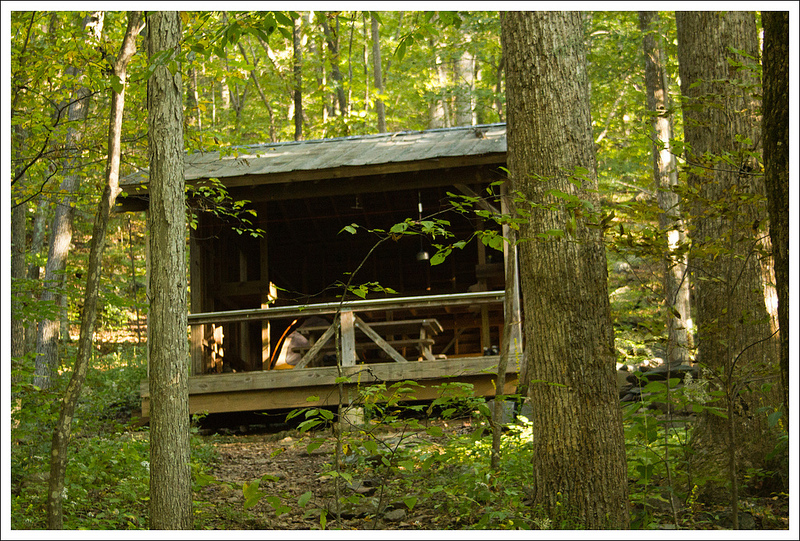
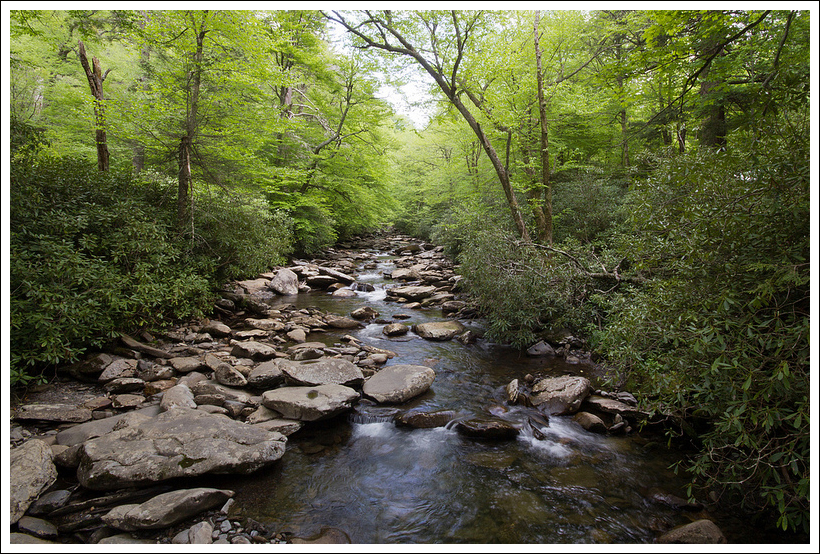
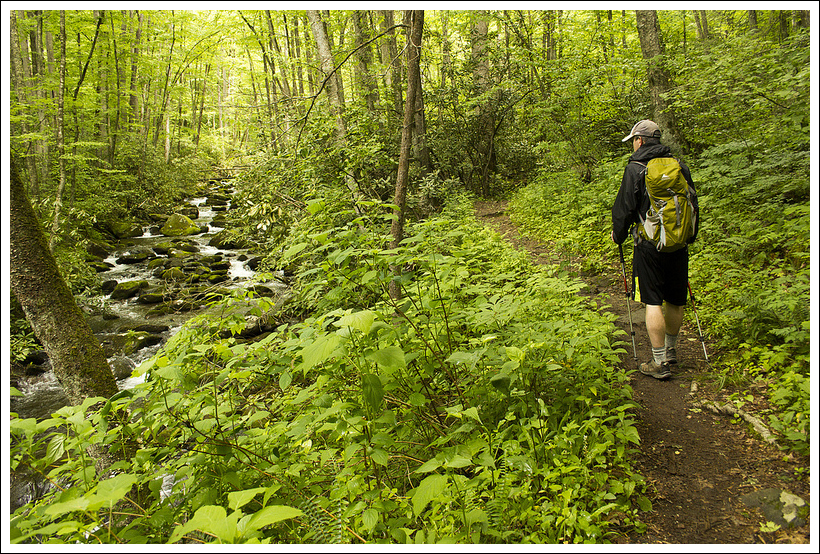
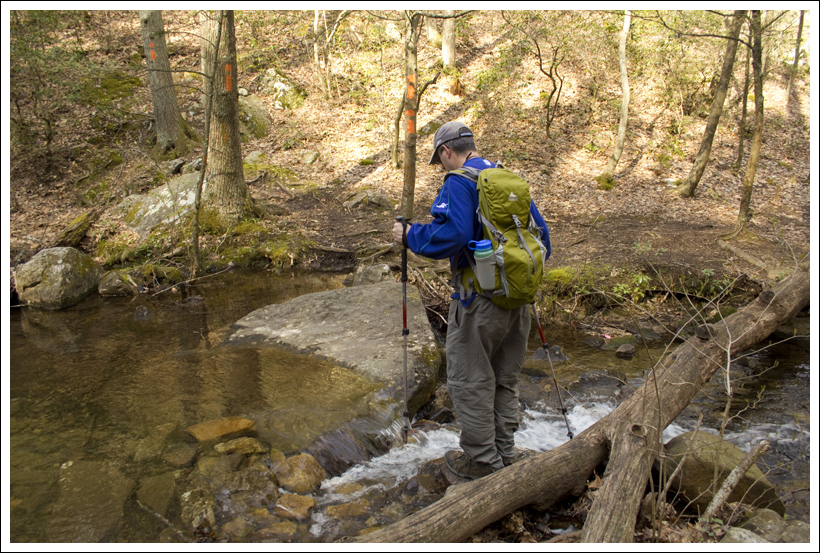
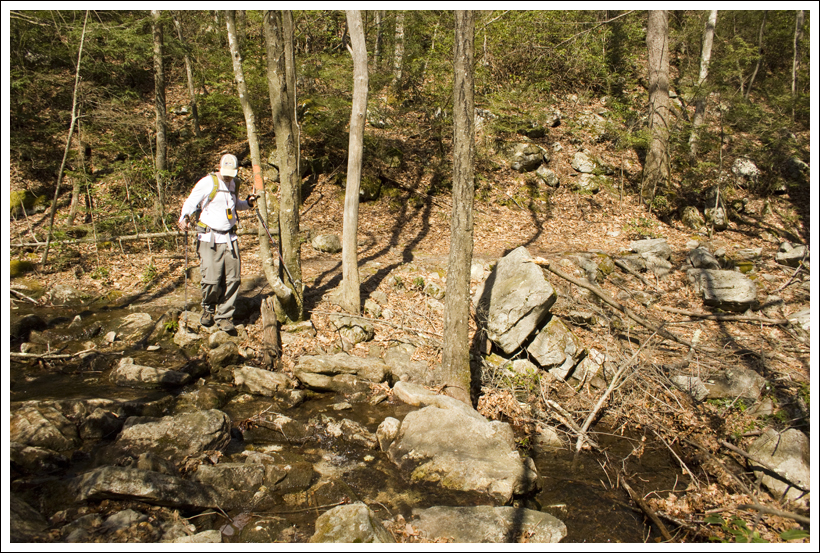
After leaving the overlook, we continued along the Appalachian Trail, passing the junction with the Albright Loop Trail – a popular day hike in this area.  From this junction, you can follow the Albright Trail for two miles back to Humpback Rocks parking.  We continued northbound on the Appalachian Trail, descending Dobie Mountain.  The trail follows a series of gradual, well-graded switchbacks.  There is one nice view of the valley about halfway down the mountain.  Eventually, we started hearing the sounds of running water through the trees. After crossing Mill Creek, we arrived at our stop point for the evening – the Paul C. Wolfe shelter.  This shelter is one of the nicest we’ve seen. The location is beautiful, the picnic table is on the porch and the shelter has sidelights, so it’s bright and cheerful inside.  So many shelters are gloomy and dark.  We will caution you – the privy at Paul C. Wolfe shelter is kind of weird – the door is only a half-door.  When you sit on the toilet, you have a nice view – but people can also see you sitting there.

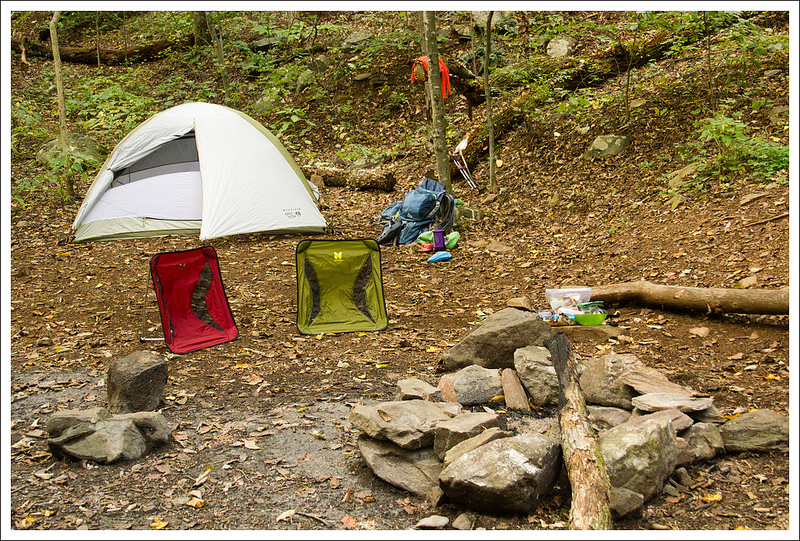
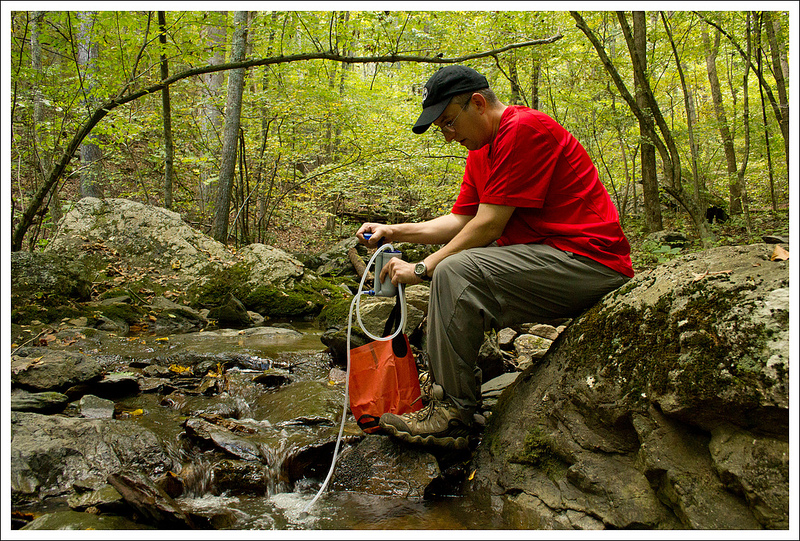
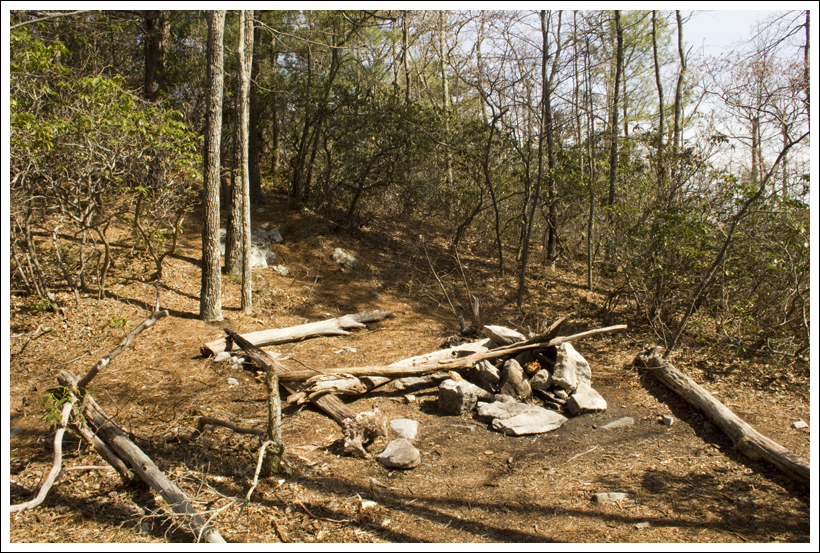
We were the first campers to arrive for the night, so we got a prime campsite near the banks of Mill Creek.  We had our own established fire pit and our own bear pole – fancy!  We immediately got started setting up camp and taking care of necessary chores.  Mill Creek was running beautifully, so we had a clear, cool water source to filter from.

Camp
Our nice campsite along Mill Creek. Below: Overlook on the descent of Dobie Mountain; Junction with the Albright Trail; Crossing Mill Creek

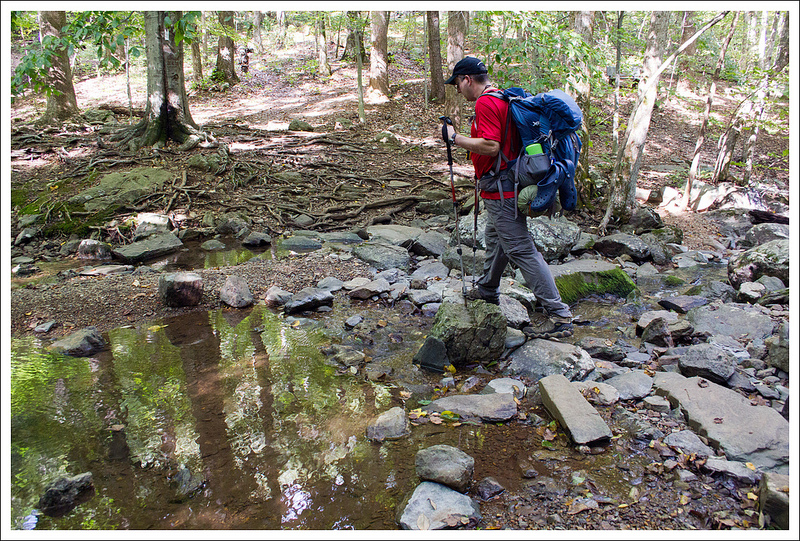
View from Dobie Albright Intersection Crossing Mill Creek

We decided to take our dinner up to the shelter so we could use the picnic table for meal prep.  Dinner consisted of pepper steak, wine and dark chocolate cheesecake.  As we were finishing up dinner, a southbound thru-hiker named Nightwalker arrived at camp.  He told us he had hiked almost 30 miles that day. He was from the Boston area and freshly out of high school.  We chatted with him a bit and marveled at him eating huge handfuls of candy corn mixed with Skittles.  He had the look of a true trail-weathered hiker – beard, tattered long-johns and feet held together by duct tape.

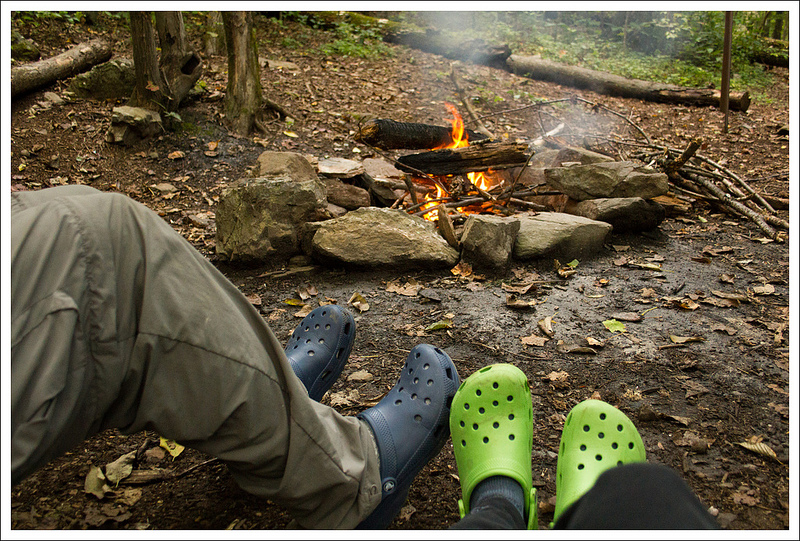
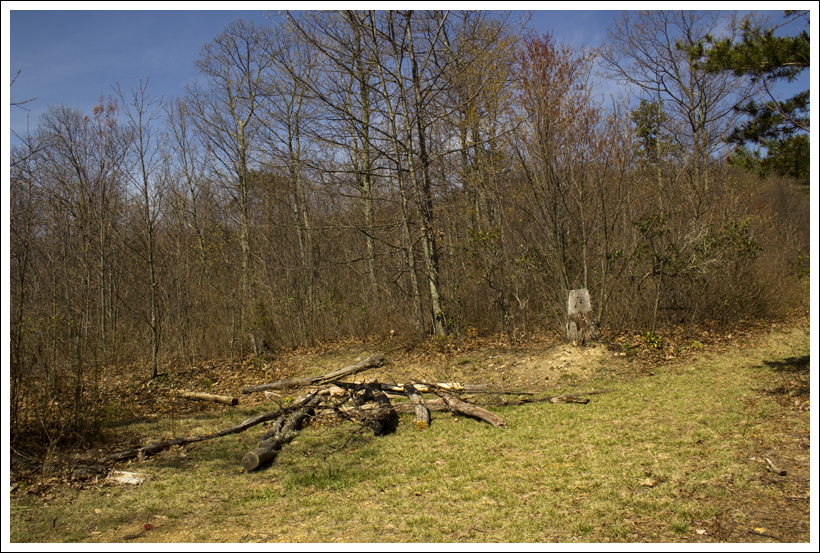
When the sun was going down, we headed back to our own camp.  Despite the heavy rains the night before, we were able to find enough old wood to have a small campfire for a while.  We heard another southbound hiker arrive sometime after sunset, but we never met him.  With the temperatures dropping with the darkness, we headed to bed around 9:00.  Both of us slept pretty well, but Christine woke up around 3:00 a.m., struggling to close both of the doors in the tent fly.  It was in the upper 30’s and she’s a cold sleeper.

Campfire
Our nice little campfire. Below: Adam filtering water; The Paul C. Wolfe Shelter; The steep climb that starts Day 2.

Filtering Water Shelter Climb Behind the Shelte

Day Two

We were up at first light, but noticed both the thru-hikers were still sleeping.  We didn’t want to disturb them, so we cooked our breakfast of oatmeal, cheese, coffee and hot chocolate near the fire pit at our campsite.  We were packed up and back on the trail within 45 minutes of waking up.

The morning’s hike consisted of a rather steep climb up Elk Mountain.  From the back of the shelter, the trail climbed almost straight up via a series of switchbacks.  We had about 1000 feet of climbing in just about a mile.  A8fter that, the remainder of the hike was more moderate or even gently downhill.

Mayo Cabin
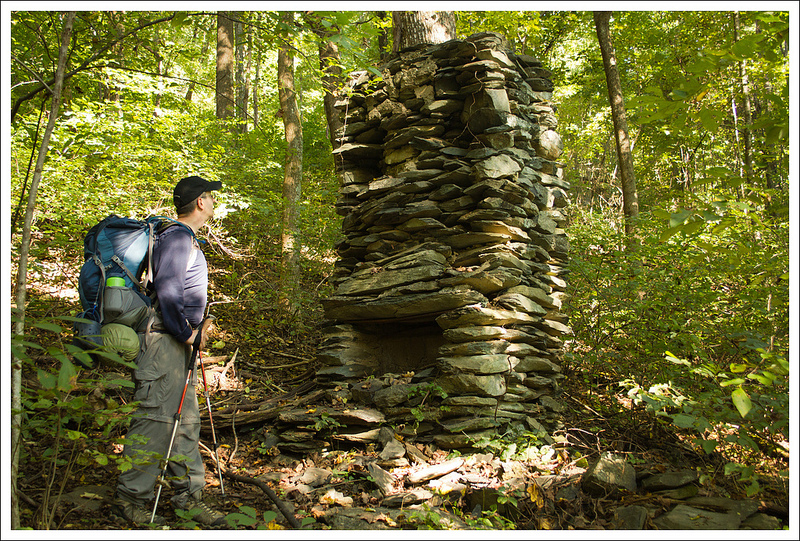
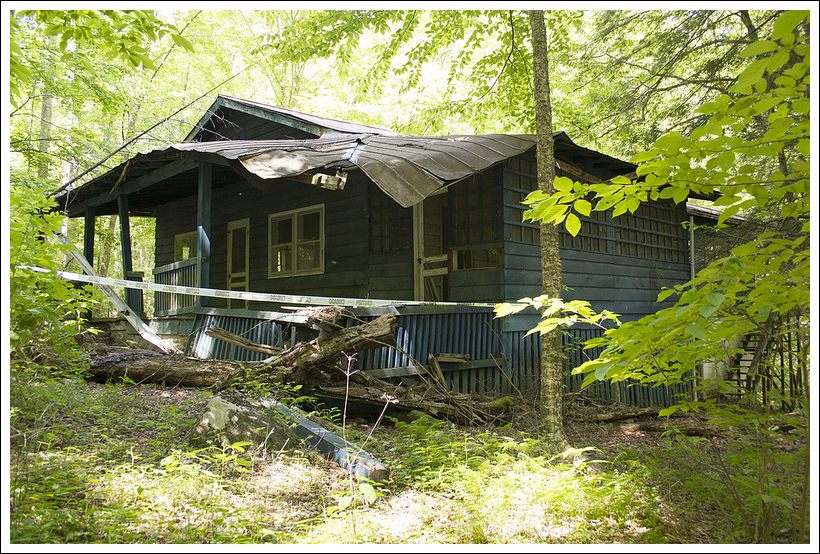
The remnants of an old cabin sit right along the trail. Below: Approaching Rockfish Gap; We can see Rt. 250; Waynesboro’s great network of trail angels.

Done The Gap Trail Angels

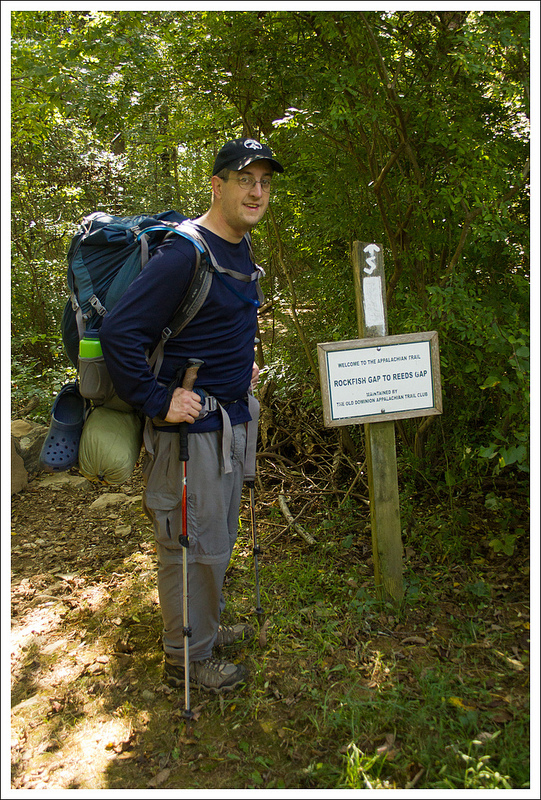
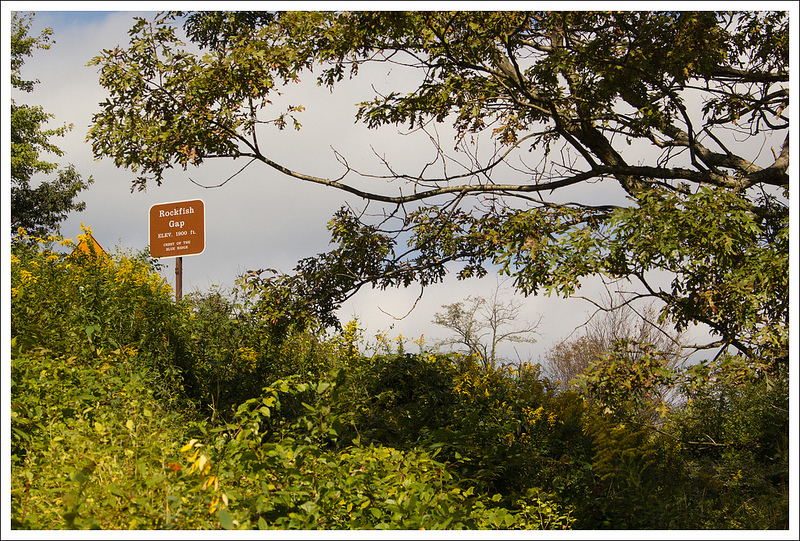
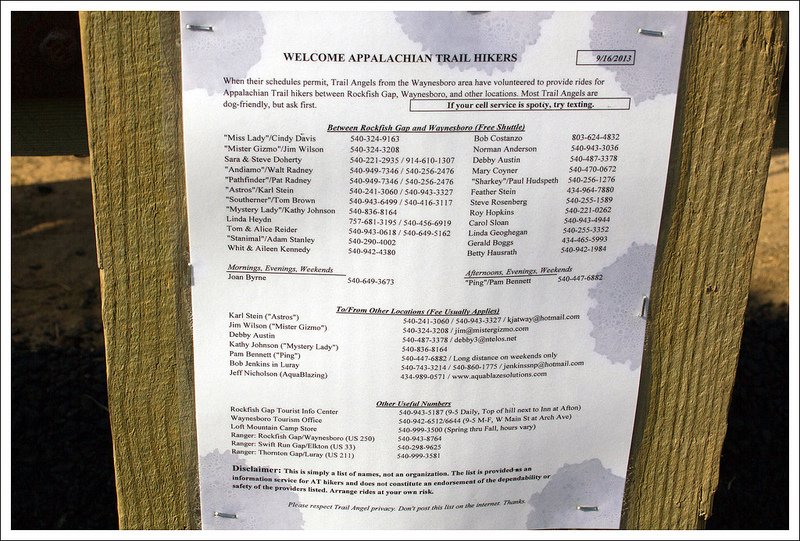
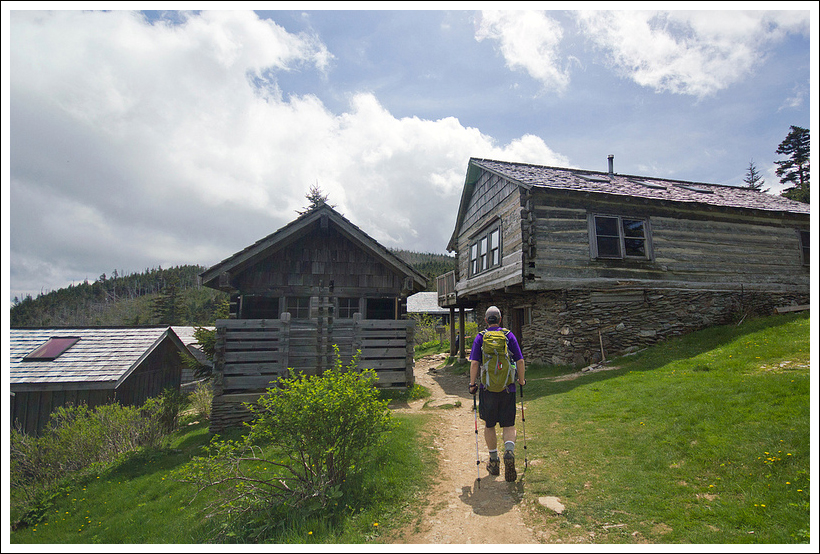
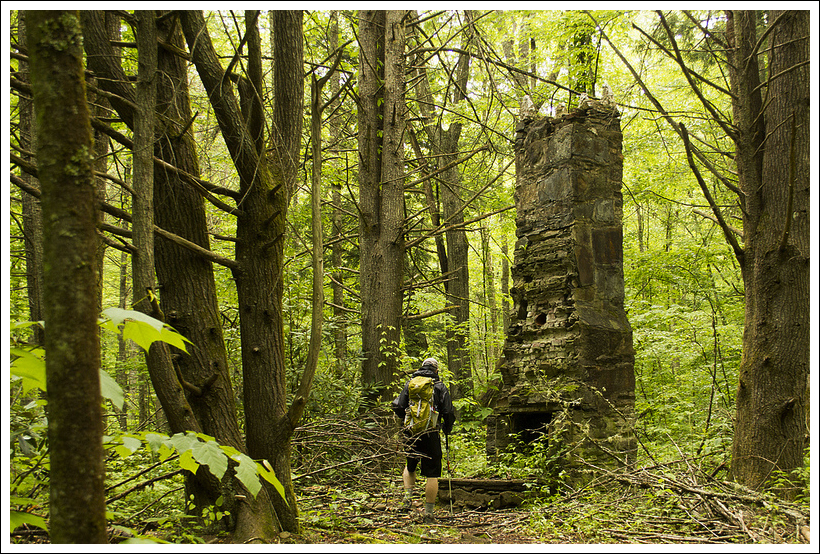
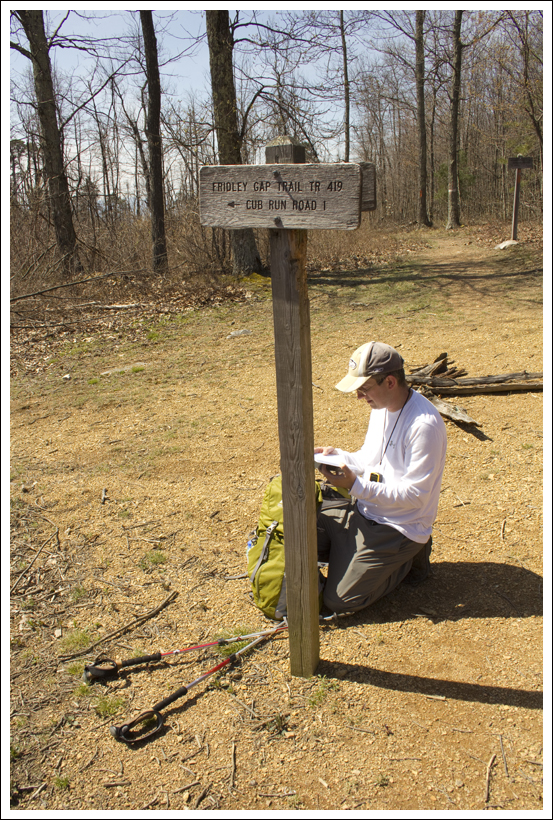
The five miles of trail back to Rockfish Gap are largely unremarkable; just a nice walk through the woods.  There are a few small stream crossings, but no views along the way.  The one noteworthy feature would probably be the ruins of an old cabin, about 1.7 miles north of Paul C. Wolfe.  The chimney and hearth are still standing right alongside the trail.  Evidently, there is also a cemetery for the Lowe family and additional cabin ruins somewhere east of the trail, but we didn’t see it.  The trail exits onto Route 250 at Rockfish Gap through an opening in the guardrail.  Thru-hikers can find lists of trail angels at the guardrail opening.  Waynesboro has one of the best organized trail angel networks along the AT.  It’s easy to find a ride or shelter at this point on the trail.

We arrived back to our car around 10:30 in the morning.  By the time we shuttled back to our car parked at Dripping Rock, we were already thinking about lunch.  We realized how close we were to Devil’s Backbone Brewery and decided it was a perfect place to wrap up our backpacking weekend.  We had a huge lunch – beers, a big soft pretzel to share, and sandwiches (French Dip for Christine, BBQ for Adam). After lunch, we decided to take Rt. 151 back to Waynesboro.  This allowed us to also pass Bold Rock Cidery.  It’s definitely worth a stop if you enjoy hard cider.  Since it was a Monday, we were the only people there.  We got to go behind the scenes into the cider pressing room and the fermentation/bottling facility.  That was really neat!

Bold Rock
The tasting room at Bold Rock. Below: Enjoying a post-hike beer at Devil’s Backbone.

Devils Backbone

Trail Notes

  • Distance – 14.5 miles (9.5 miles on Day One, 5 miles on Day Two)
    (Check out the stats from Map My Hike – [Day One] [Day Two])*
  • Elevation Change – 1800 ft. on Day One, 1100 ft. on Day Two
  • Difficulty –  2.  This is an easy backpacking trip with moderate, well-graded climbing.
  • Trail Conditions – 4.5.  Trails are in excellent shape.
  • Views – 4.  Views from Humpback Mountain and Glass Hollow are beautiful!
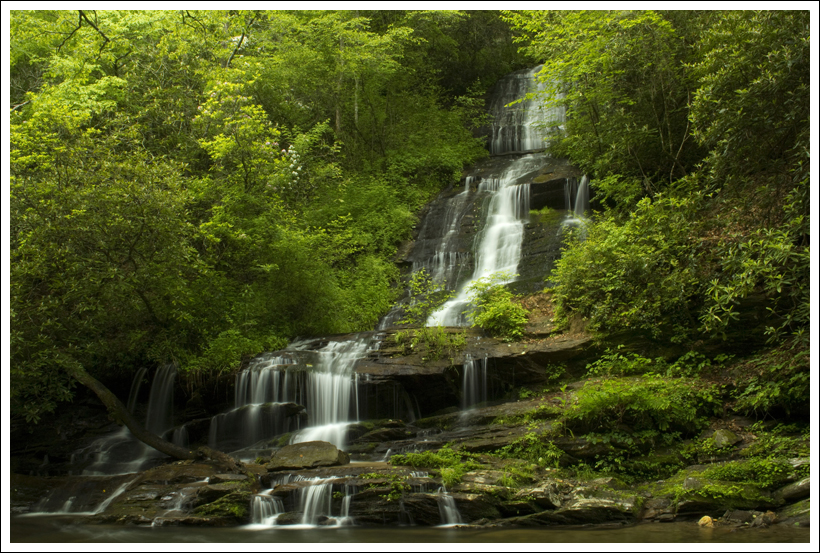
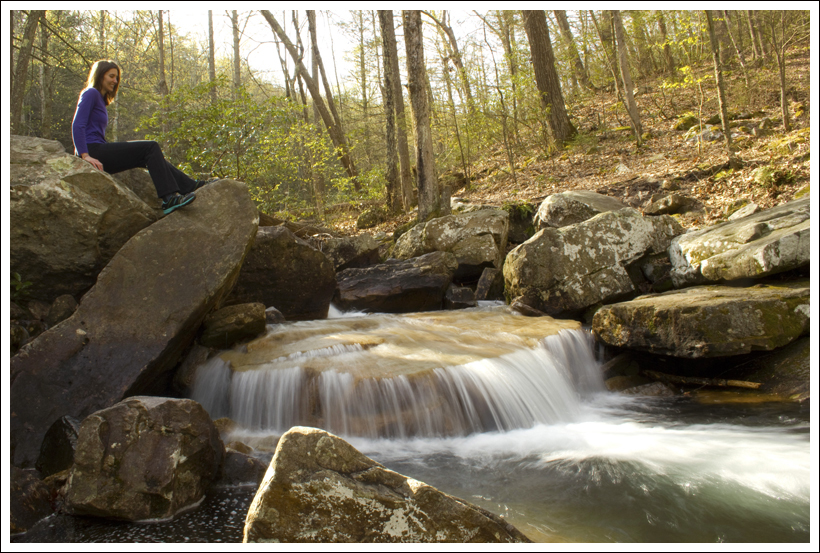
  • Streams/Waterfalls – 3.  Mill Creek is pretty and a great water source.  There is a small waterfall and swimming hole downstream from the shelter.
  • Wildlife – 2.  We saw a few deer and heard owls at night.
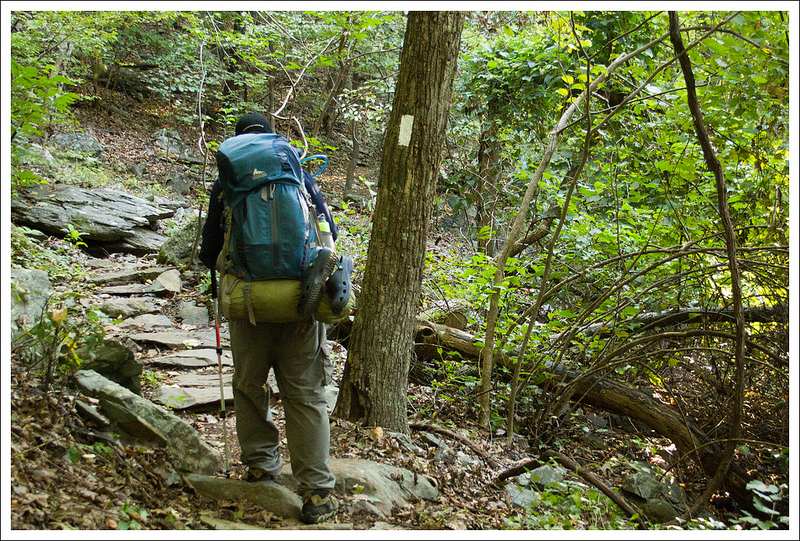
  • Ease to Navigate – 4.   There are several intersections/junctions to pay attention to, but following the white blazes is pretty easy.
  • Solitude – 4.  Because we avoided Humpback Rock, we only saw a small handful of people on a beautiful Sunday.  

Download a Trail Map (PDF)

Directions to trailhead:  Follow the Blue Ridge Parkway to mile 9.6.  Park in the small Dripping Rock parking area.

MapMyHike is not necessarily accurate, as the GPS signal fades in and out – but it still provides some fun and interesting information.

Mount Moosilauke (NH)

Special: New Hampshire Edition

Introductory Guide to Visiting the White Mountains

This 7.2 mile hike takes you to the summit of Mt. Moosilauke – Dartmouth College’s ‘home mountain’.  It’s also the first place in New Hampshire where Appalachian Trail hikers walk above treeline in the alpine zone.

View the Full Album of Photos From This Hike
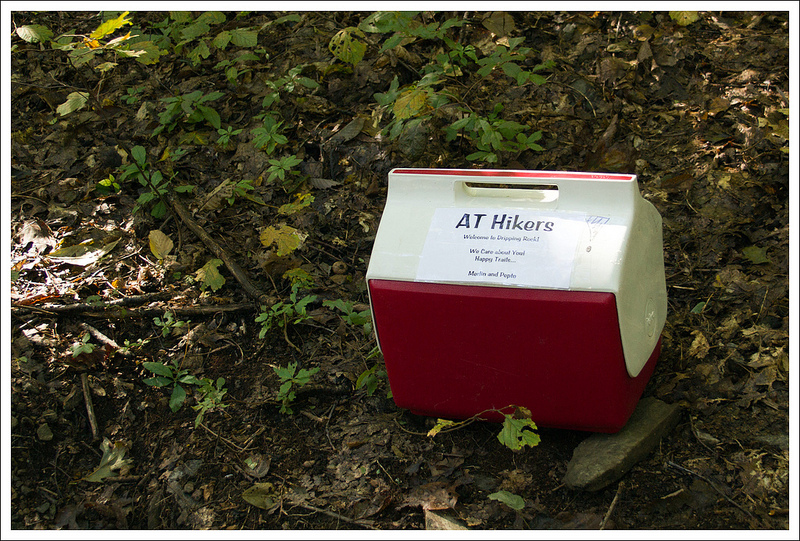
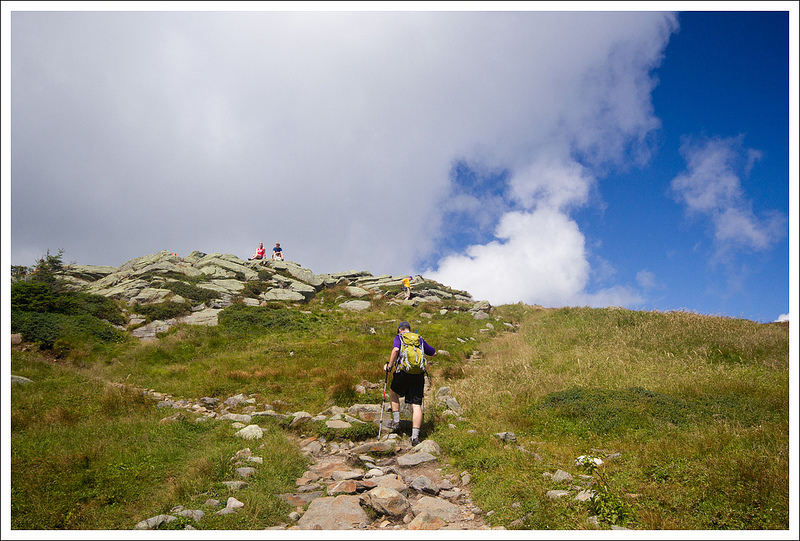
Mt. Moosilauke Summit Views
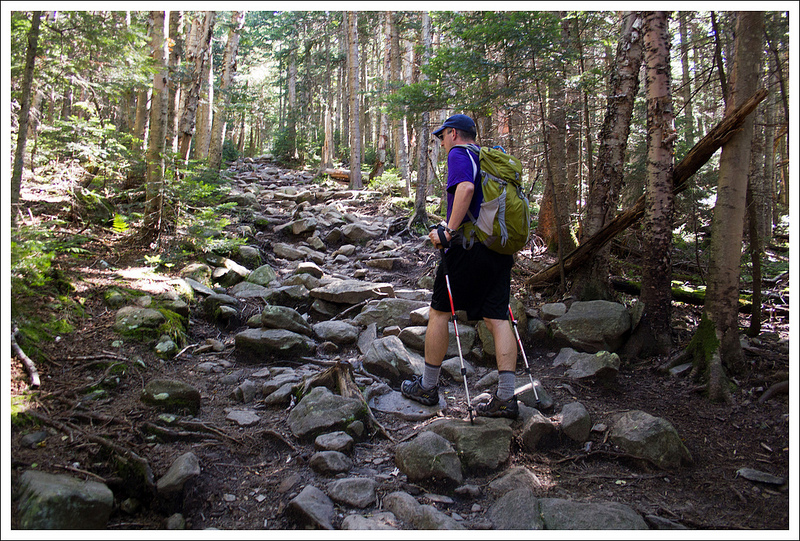
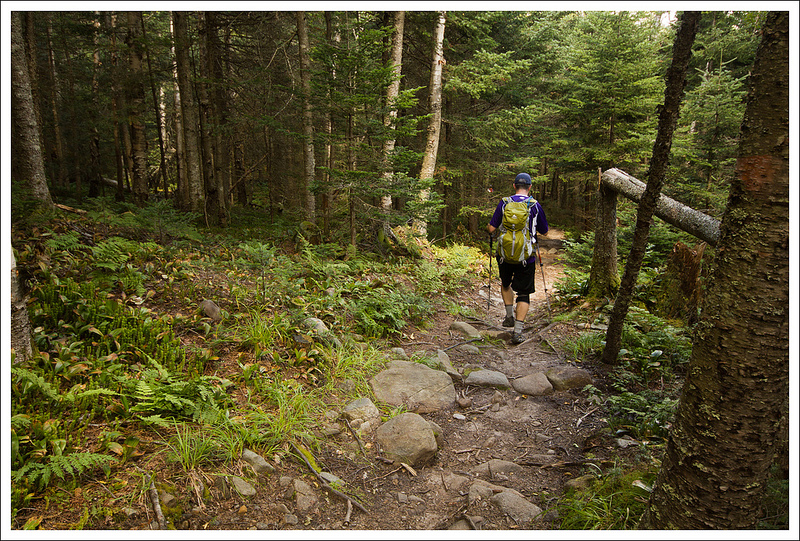
Adam enjoys the summit of Mt. Moosilauke. Below: Damage from Hurricane Irene forced the rerouting of trails; Adam climbs the Gorge Brook Trail; Open views along the ‘balcony’ section of the hike; The area right below treeline was thickly forested with evergreens.

Irene Damage Climbing Gorge Brook Balcony Dense Pines

Christine Says…

For the final hike of our granite-state adventure, Adam and I chose to hike the western-most of  New Hampshire’s 4,000-footers – Mount Moosilauke.  At 4,802 feet, Moosilauke is the first spot northbound Appalachian Trail thru-hikers truly walk above the treeline.  Yes… there are balds and high grassy meadows in the south, but those are not created by the unforgiving alpine climate it takes to truly create areas above the treeline.

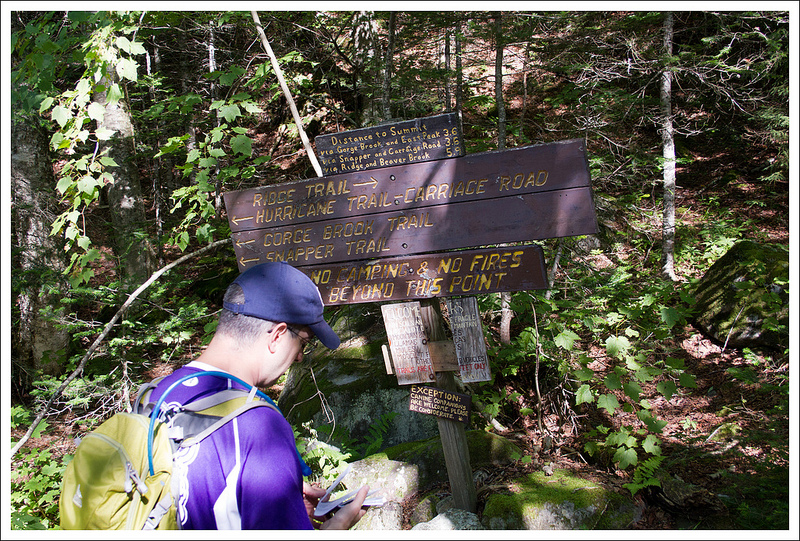
There are several different routes up Moosilauke.  We chose a 7.2 mile loop following the Gorge Book Trail, the old Carriage Road and the Snapper trail. It’s probably the most popular route for dayhikers.

We started off from the Moosilauke Ravine Lodge.  Before I get started talking about the actual hike, I wanted to take a moment to talk about how much I enjoyed visiting the Ravine Lodge.  The lodge and several surrounding bunkhouses were built in the late 1930’s and were originally used as a hub for competitive skiers.  Nowadays, the lodge is owned by Dartmouth College and run by students. You can stay the night or just come in to enjoy a hearty home-style dinner.  The lodge is everything you would imagine a rustic mountain cabin to be – antique skis, old trail signs and mooseheads adorn the walls. There’s a big stone fireplace (yes… a fire was necessary and burning cheerfully on this chilly August morning) and an old piano along one wall of the dining room.  There’s even a cozy library on the lower level!   The lodge windows and back porches also offer stunning views of its namesake mountain.

Moosilauke Ravine Lodge
Dartmouth College owns and runs the Moosilauke Ravine Lodge.  Below: The lodge is very rustic and comfortable.  It was even cool enough in August to have a fire in the fireplace; The food at the Ravine Lodge is supposed to be pretty good!; Adam checks out out route.

Inside the Lodge Ravine Lodge Trail Marker

Now back to the hike… our route started off behind the lodge.  We almost immediately crossed the Baker River on a nice, sturdy bridge.  The Gorge Brook trail climbs uphill gradually over rocky terrain.  We soon came to a sign announcing a reroute of the Gorge Brook Trail.  Evidently, the heavy rains from Tropical Storm Irene caused rock slides and irreparable damage to part of the original route.  A group of Dartmouth students built the Wales Carter Connection, a short section of trail that bypasses the damage.  The connection eventually came back out on the Gorge Brook trail near it’s junction with the Snapper Trail.  We continued gradually uphill on Gorge Brook.  Much of this section of trail followed a pretty stream.  After passing a memorial plaque and a sign for ‘last sure water’ we moved away from the stream and into forest increasingly made up of evergreens.

At 2.3 miles, we got our first open views of the hike.  Through a wide opening in the trees, we could look across the valley in the direction of Mount Cardigan – our first hike of the trip!  Around this part of the hike, we came across our first human company!  One group of three was carrying on a loud and detailed conversation about the best spots to get clear 3G service in the wilderness.  Another group, maybe a father/daughter, was arguing about the nature of God – whether he’s benign and quietly observes suffering or if he’s like a menacing boy who enjoys pulling the legs off of bugs to watch them struggle.  I think we overheard them talking about Shakespeare, too, but I can’t be certain. Usually when Adam and I talk on the trail, we talk about the scenery/wildlife or we just walk in companionable silence.  It made me curious… are you a chatty hiker?  What are your typical trail topics?

Gorge Brook Trail
Adam climbs the rocky Gorge Brook Trail.  Below:  Beautiful stream scenery; The  Gorge Brook trail was very rocky; Our first views along the way.

Brook More Rocky Climbing First Views

After the first view, the trail got a bit steeper and the trees a bit sparser.  We enjoyed several nice views from a section of the trail called ‘The Balcony’. After climbing the massive stone steps along the Balcony, we dipped in and out of thick stands of evergreens.  It was almost like walking through an overcrowded Christmas tree farm.

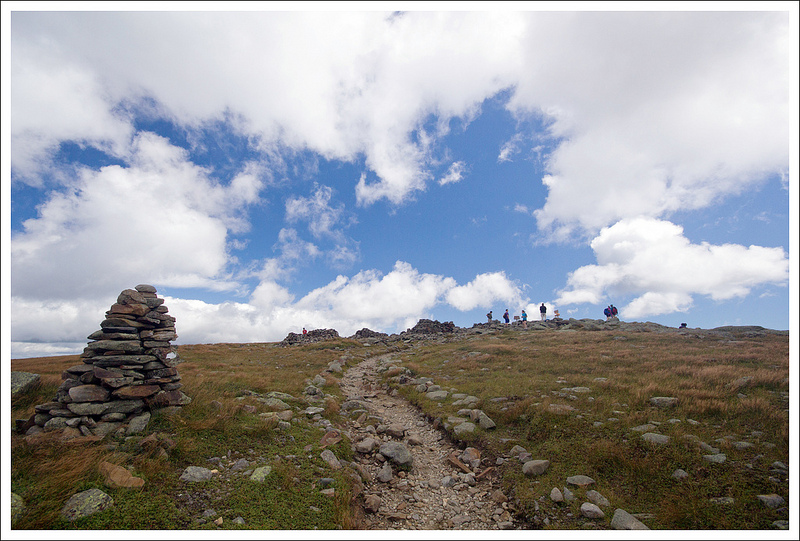
We soon stepped out into the alpine zone – the barren rocky expanse that exists above the treeline.  We could see the rocky path winding across the bare terrain toward a copse of rocks a top the summit of Moosilauke.

As soon as we were in the open, I had to dig my fleece out of my backpack.  It was a good 15-20 degrees colder (and much windier) on the summit.  We enjoyed a snack, took our photos at the summit sign and marveled at the views.  I especially liked looking across and seeing the Kinsmans, Franconia Ridge and the distant Presidentials.

Above Treeline
Mt. Moosilauke is the first New Hampshire peak on the Appalachian Trail that includes an alpine zone.  Below:  Coming out of the trees; The final push to the summit; At the summit marker.

Approaching the Treeline Nearing the Summit Summit Marker

Leaving the summit, we briefly followed the white-blazed Glencliff trail (which is also the Appalachian Trail across this mountain) to its junction with the Carriage Road.  This section of trail was almost perfectly flat and went through more areas that resembled large groupings of Christmas trees.  We could have taken a detour to visit the South Peak of Moosilauke, but we decided to skip it.

The Carriage Road was wide and graveled, but a little steep.  I can’t imagine people coming up this route in horse-drawn carriages!  This part of the hike was pretty uneventful, and we were glad to finally reach the Snapper Trail.

The Snapper Trail descended gradually through stunningly beautiful New England woods.  There were thick beds of moss, peeling white birches and several small bubbling streams.  It was a lovely way to bid farewell to New Hampshire trails.  Before we knew it, we were back at the Ravine Lodge and finished with a productive week of hiking!

Adam Says…

Mt. Moosilauke was one of the three hikes we most wanted to do in New Hampshire.  Having hiked Mt. Washington and Franconia Ridge earlier that week, we were feeling a little tired and sore but we decided to press on to cover Mt. Moosilauke.   We try to get a lot accomplished on our vacations, so we didn’t want to have any regrets of not doing a certain hike.  We always say that we can be tired when we go back to work, so we run ourselves ragged on our vacations.

Parking at Mt. Moosilauke can at times be a challenge.  There is one long gravel road and during the summer, you will likely see cars lining one side of the road, parallel parked.  We had to drive to the end of the road and then turn around and backtrack, but we were able to find a decent spot since we left so early in the morning.

We first visited the lodge and you can just imagine the history here.  The lodge is rustic but has that snuggle-by-the-fire cozy feel to it.  Since this is maintained by an Ivy League school, my mind began to wonder if there were academic secret society meetings held here or if famous alumnus, Robert Frost penned any of his poetry here.  All I witnessed were a few students playing Magic: The Gathering in the basement.

Leaving the Summit
The first trail we used for our descent was the Appalachian Trail, also called the Glencliff trail in this area.  Below: Christine makes the descent; Looking back through the pines toward the summit; Alpine zone marker.

Views on Hike Down More Pines Alpine Warning

The trail had us a little confused to start off on the right path.  My recommendation would be to go to the back of the lodge and as you are looking into the backyard, head down the lawn towards the right.  You will soon come to a path that will lead you to the Baker River.  In a short distance, you will cross the bridge over the river.  The Gorge Brook Trail starts off to the left.  The trail takes a right turn in a short distance and you begin a moderate ascent through a very rocky trail.  You’ll hear the sounds of the Gorge Brook to the left of the trail at times as it carries water to the Baker River.  As you keep climbing, at .6 miles you will reach the junction with the Snapper Trail, your return route.  The trail has been rerouted at this point with the Wales Carter Connection.  Follow the signs through this .5 mile connection to continue along the Gorge River Trail.  The trail continues to ascend through a steeper section of trail through the woods.

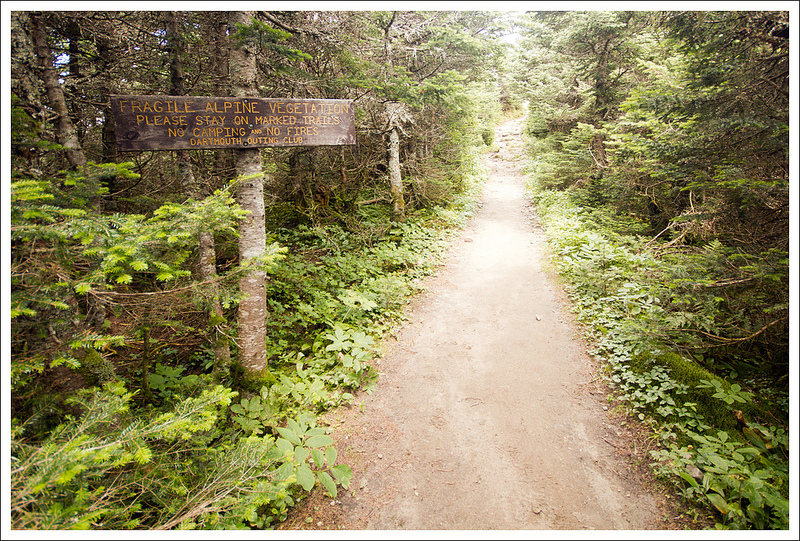
At 2.3 miles you reach a break in the trees and can see your first views of Mount Carr, Mount Cardigan, and Mount Kearsarge.  The trail continues to ascend and then loops back around to the northwest as you gain some more views from the area known as The Balcony at 3.0 miles.  The views were quite delightful and gave us something else to focus on as we labored up more rocky steps.  The trail then ducks away from the views and you find yourself soon immersed into a dense forest of spruce and fir as the trail snakes through.  You will see signs reminding you to stay on the trail to protect the fragile vegetation.   At about 3.25 miles, you will come out of the trees and into the open alpine area.  Large cairns are placed on the side of the trail.  The summit looks misleadingly close, but due to the open nature it still takes about 10 minutes to reach the summit at 3.5 miles.

At the summit, the wind had picked up quite a bit across this vast, open area.  We found lots of people huddled up against rocks, trying to protect themselves from the wind.  We ate some lunch on the trail, snapped a few photos from the summit, and made our way back on a different set of trails.

Snapper Trail
The Snapper Trail was delightfully green and shady.  Below: Adam descends the Old Carriage Road; The Snapper trail was mossy; Water crossing on the Snapper Trail.

Old Carriage Road Mossy Water Crossing

From the summit marker, we followed the signs for the Glencliff Trail (also known as the Appalachian Trail) southwest of the summit.  This trail started off as a ridgeline hike which gave us even more views along the way to start our hike.  At 4.4 miles, the Appalachian Trail ducks off to the right to take you to the South Peak summit.  We stayed on the main trail which is the Moosilauke Carriage Trail, which drops steeply down the rocky “road”.  The trail was fairly uneventful, but the downward climb can be hard on the knees.  At 5.7 miles, we reached a junction and took the Snapper Trail.  This trail was thickly wooded and had lots of beautiful fern along the trail.  At 6.4 miles, we rejoined the Gorge Brook Trail and made our way back to the lodge, which we reached at 7.2 miles.

Back at the Ravine Lodge
The trail returns to the Ravine Lodge. Below: Looking back toward Mt. Moosilauke; A pleasant patio spot to take in views of the summit; Lodge decor

Looking Back to Moosilauke Patio Moosehead

One thing that amazed me about this hike is how Dartmouth College has integrated with and adopted this mountain.  They maintain and run the lodge and the network of trails is maintained by students in the Dartmouth Outing Club.  We had the opportunity on our visit to New Hampshire to step on the campus and actually walked into the Dartmouth Outing Club building.  Yes, this college has a building designated for this club and they even post information for Appalachian Trail thru-hikers to get them connected to where they could stay for the night.  I was amazed at how the students have made this a strong tradition of caring for the mountain and environment.  They even hold freshman pre-orientation trips where they all meet up at the Ravine Lodge.  I wish more colleges and universities had more intentional connectivity with the outdoors.

What a great last hike for our trip to New Hampshire!  We felt so blessed to have great weather for the entire week and our hiking adventures whetted our appetites for more trips in the future.

Trail Notes

  • Distance – 7.2 miles
    (Check out the stats from MapMyHike)*
  • Elevation Change – About 2500 ft.
  • Difficulty – 3.  There may be over 2,000 feet of climbing, but it’s gradual and never feels that difficult.
  • Trail Conditions –  4.  The Dartmouth Outing Club does a great job on these trails!
  • Views –  5.  Spectacular – especially at the summit where you can see all across the White Mountains.
  • Waterfalls/streams  3.  The Baker River and streams in the area are lovely.
  • Wildlife – 2.  We didn’t see anything, but rumor has it that there are occasional moose sightings in the area.
  • Ease to Navigate – 3.  The reroute was a little confusing at first because it varied from our map.
  • Solitude – 1.  This is an extremely popular dayhike.  Expect to see many other hikers.

Download a trail map (PDF)

Directions to trailhead: From Interstate 93, take exit 32 for NH-112 toward North Woodstock/Lincoln.  Follow NH-112 West for 3.2 miles.  Take a slight left onto NH-118 S/Sawyer Highway.  Follow this for 7.1 miles.  Take a right on to Ravine Road.  Follow this gravel road for 1.5 miles.  The entrance to the lodge is on the left.  Go behind the lodge across the lawn to the right to start the hike.

MapMyHike is not necessarily accurate, as the GPS signal fades in and out – but it still provides some fun and interesting information.

Mt. Washington via Ammonoosuc Ravine (NH)

Special: New Hampshire Edition

Introductory Guide to Visiting the White Mountains

This 4.5 mile ascent of Mt. Washington follows challenging, steep, slick terrain along a ravine that showcases waterfall after waterfall.  Once you clear the treeline, you are treated to a hut visit and some of the most dramatic alpine walking in the east.

View the Full Album of Photos From This Hike
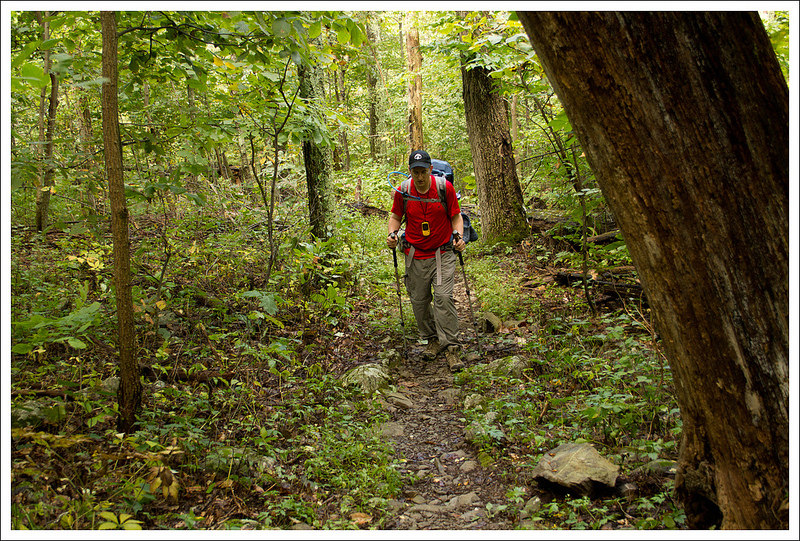
Adam On Crawford Path
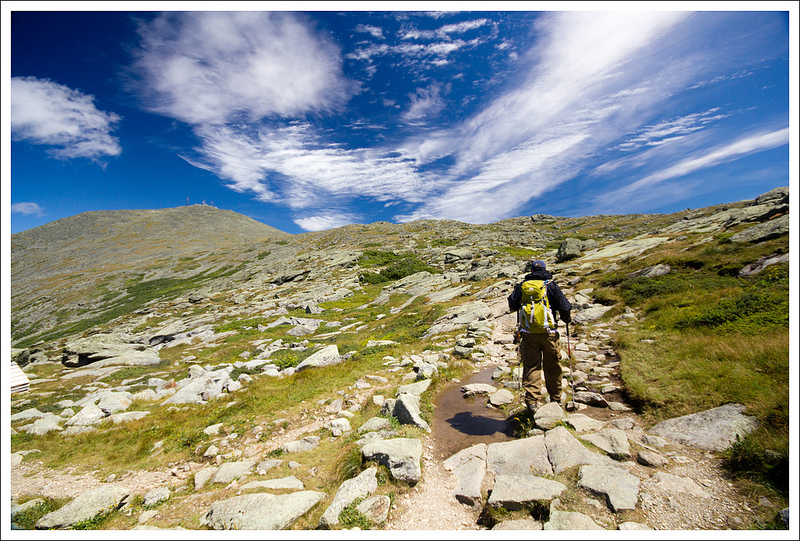
From Lakes of the Clouds Hut, you follow the Crawford Path (America’s oldest continually used hiking trail) to the summit of Mt. Washington. In this photo, you can see the summit and its weather towers looming in the distance.  Below: The trailhead begins near the cog railway on Basecamp Rd; The beginning of the trail is deceptively easy; There are many water crossings en route to the top – some easy, some not so easy.

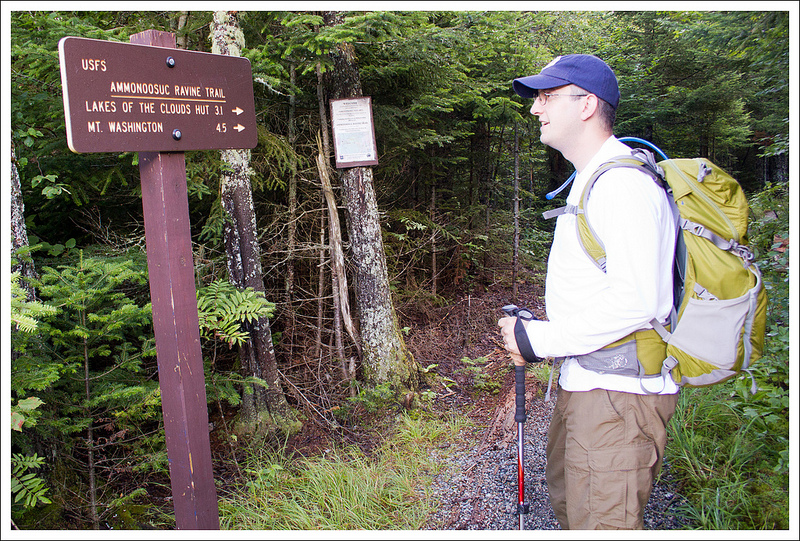
Ammonoosuc Ravine Trailhead Deceptively Easy Water Crossing

Adam Says…

Hiking to the summit of Mount Washington (also known as ‘the most dangerous small mountain in the world‘) was definitely a bucket-list item for me.  Making it to the top of the highest peak in New England feels like an accomplishment and we definitely have memories from the hike that we will never forget.

Before you attempt to hike up Mount Washington, some planning needs to take place.  Mount Washington has been called the Home of the World’s Worst Weather due to the high winds, ice, and low visibility that can rear quickly.  In fact, in 1934, they recorded a wind gust of 231 mph.  Check out the funny video of someone trying to eat breakfast from the summit area during one of these high wind days.  Needless to say, I would strongly recommend checking out the weather from the Mount Washington Observatory to determine if a summit is possible and how different the weather and temperature will be at the top.

We  arranged for Christine’s parents to meet us at the top and shuttle us back to our car.  Many people descend by trail, but there is a hiker shuttle and a limited number of seats available on the Cog.  It’s important to note that you should always be prepared and have a plan for walking off the mountain.  Trains and shuttles book up quickly and the auto road closes from time to time.  Ultimately, you are responsible for your safety and the manner of your descent.  Visit New Hampshire’s Hike Safe site so you can learn more about mountain safety and the state’s expectation that every hiker be prepared.

Stream
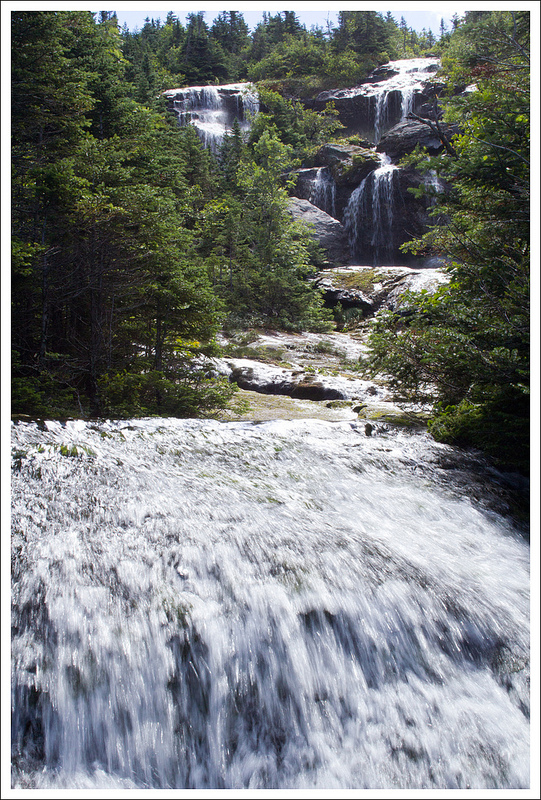
The entire Ammonoosuc Ravine trail followed a stream which tumbled down the mountainside in waterfall after waterfall. Below: Lakes of the Clouds advertisement; The early parts of the trail are rocky, but only slightly uphill.

First Lake of Clouds Sign  Early on the Ammonoosuc Ravine

As we were driving along the road to the parking lot, the sky was completely cloudy.  The online forecast said it was going to be a perfect day, but the clouds were saying something different.  We hoped that the weather would push off and made it to the parking lot.  We packed some extra gear knowing that the temperature was going to be much cooler at the top.  We started off from the parking lot and filled out our parking permit, enclosing $3 in an envelope to allow us to park in the lot.  The parking lot was already getting full and we could tell that all the people getting ready to hike were in great shape.  We hoped we were ready for the challenge and started on the Ammonoosuc Ravine Trail from the end of the parking lot.  The trail started off relatively flat through a thickly forested area.  At .25 miles, we reached a stream crossing.  Because a heavy rain fell just the day before, the crossing, which is normally easy, presented a real challenge.  We saw a few others cross in different areas, but ultimately decided the best route was tightrope-walk across a thin log that spanned the creek.  This is always more unnerving when you are carrying expensive camera gear, but we made it across without a hitch.  We were worried how many other crossings we would have to make seeing the Ammonoosuc River on our trail map coming ahead.

At 1.0 miles, the trail reached the Ammonoosuc River, but the trail turned quickly to the right.  We saw the rushing water of the river and glimpsed up at the sky, which looked less foreboding than earlier.  The trail hugs the riverside and begins a steep ascent up a rocky slope.  At 2.1 miles, we reached the Gem Pool, a serene swimming hole created by a small waterfall.  We rock-hopped across to continue the path from the pool and stopped for a short rest in this peaceful area.   After leaving the Gem Pool, the trail becomes very steep as you climb up the rocky slope.  At 2.35 miles, a small trail to the right leads about .1 miles to The Gorge waterfall.  I highly recommend checking out this waterfall, which you can see plunging over 100 feet.   We returned from The Gorge and rejoined the trail.  The trail continues its steep ascent and you can only imagine that you are climbing up a slope that seems to be as steep as the slope of the waterfall you just saw.

Christine at Gem Poo
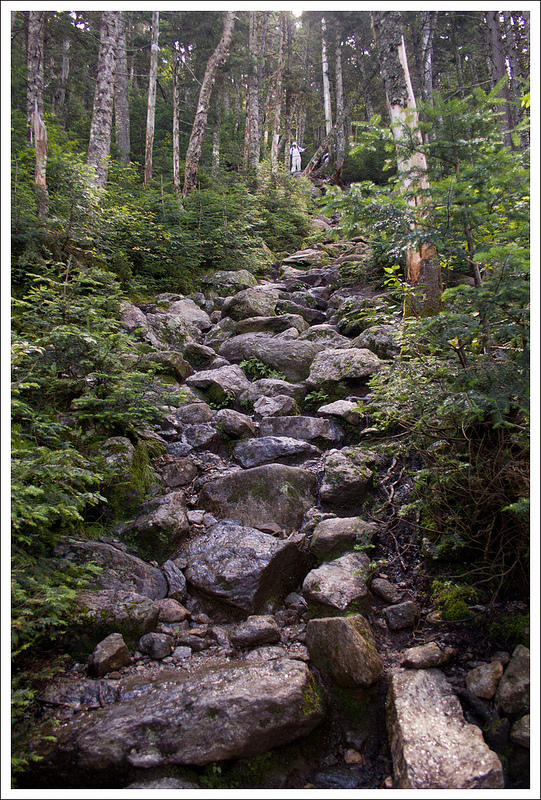
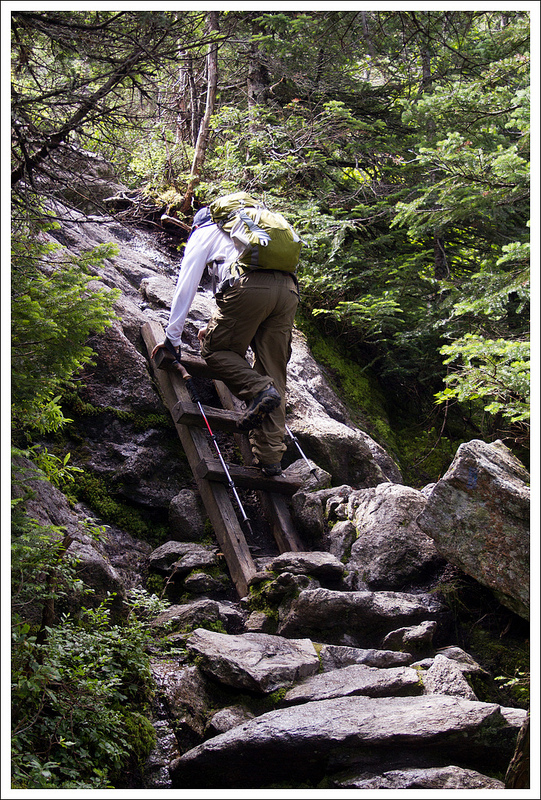
Christine crossing the water at Gem Pool. This is the point of the hike where the climbing starts getting serious. Below: Adam works his way uphill on the steepest part of the hike; It was seriously steep; One section had a little ladder to help you over the boulder.

Adam Climbing Seriously Steep Ladder

We continued to climb up the very steep slope until we reached a great viewpoint at 2.7 miles. Along with the view, there were also multiple waterfalls falling in dramatic cascades.  It was here that we were finally able to see that the clouds had moved off and we should have a gorgeous hike to the summit.  The unnerving thing was that in order to continue the trail we had to walk across the top of a waterfall with a very precipitous drop to one side  Due to the rain, there was no way to rock-hop across.  We knew we had to put our feet in the water to make it across, but we couldn’t tell how deep the water was or how fast it moved.  As we realized that a false step could have meant a long plummet down, it definitely gave us a gut-check to see if we could make it.  We tried to look around for the best way to cross and decided to wait and let a few other hikers attempt it first.  After learning what others had done, we followed suit and crossed without any difficulty.

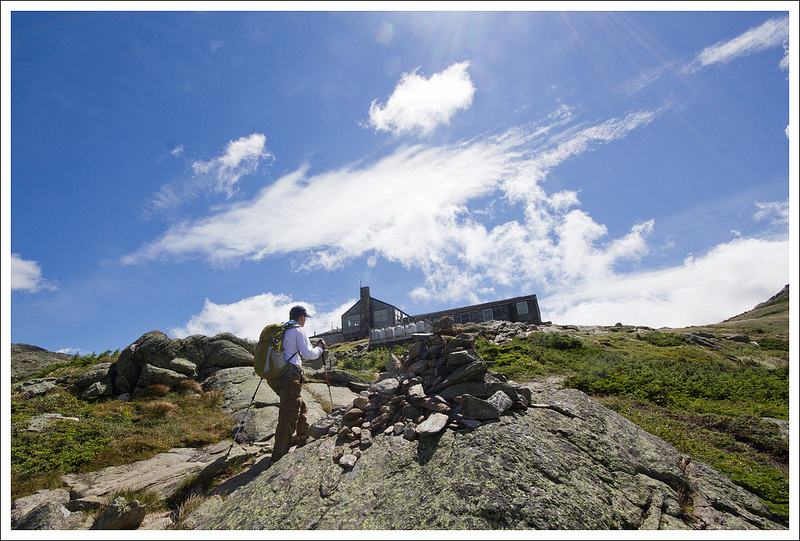
The hike from this point continued to be steep as you climb along some areas of bare, slick rock.   Eventually, we began to rise above treeline and were able to see Lakes of the Clouds hut seated on the edge of the ravine.  The wind was already picking up and the cold wind had us switching into cold-weather clothes.  To the left of the hut was the summit hike to Mount Washington and we could clearly see the Observatory Tower in the distance.  We reached Lakes of the Clouds hut at 3.2 miles and decided to go inside to eat a snack.

Big Waterfall

One little spur trail on the steepest section of climbing led to this large and impressive waterfall called Gorge Falls. Below: Christine picks her way through boulders and across the water; Our first views into the Washington Valley; At the halfway point

Bouldering First Views Halfway There

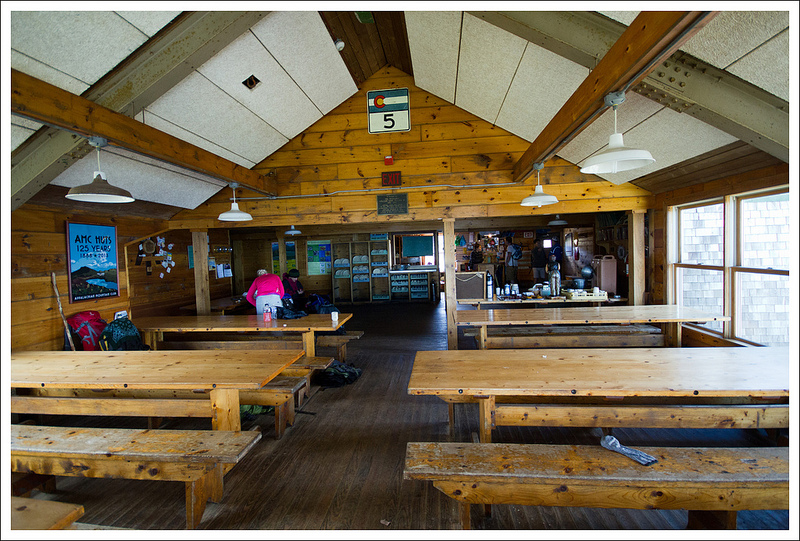
Lakes of the Clouds Hut was built here over 100 years ago and has some interesting history.  Two AMC members, William Curtis and Allen Ormsbee, were hiking up the Crawford Path to go to an annual AMC meeting at the Summit House on the top of Mount Washington in 1900.   They reached what is now Mount Eisenhower and met 60 mph winds and cold temperatures.  By the time they reach Mount Monroe, the temperature had plummeted to freezing and the rain became ice.  Curtis died at Lakes of the Clouds and Ormsbee pushed on for help before perishing himself only a few hundred yards from the summit station.  The storm lasted for 60 hours and their bodies were discovered.  The AMC created a wooden shelter first near where Curtis had died.  In 1915, the wooden shelter was replaced with a stone shelter and it has since had several additions and improvements made.  It can accommodate up to 90 guests per night.

From the shelter, you can see a trail that leads up to Mount Monroe.  If you are interested in peak-bagging a few of “the Presidentials”, it is a short but steep hike.  We decided to save our energy and just tackle Mount Washington.  We continued along the trail and soon reached views of the Lakes of the Clouds, which are actually more like mountaintop ponds than full lakes.

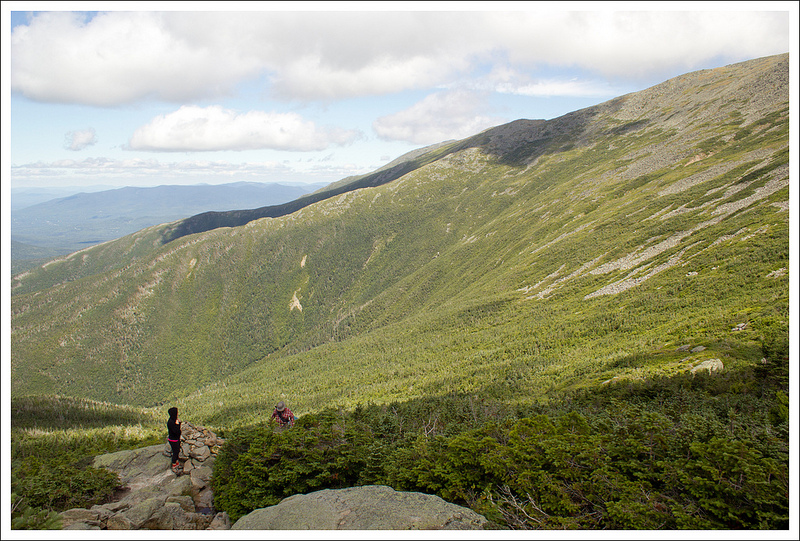
Since we were now above treeline, the hike to the summit of Mount Washington was now just a series of steps across boulders for the remaining 1.3 miles.  The wind was incredibly strong and I believe gusts were at least 50 mph, which is considered more of a calm day on the mountain.  The wind was blowing up the ravine to the left of our bodies, so there were times that we had to angle ourselves to fight the winds as we pushed onward.  The views of the ravine and behind us were more breathtaking with each step.  Whenever we stopped to turn around, the wind had our noses running from the cold and it was hard to even talk to each other through the force of the gusts.

Waterfalls Near the Headwall
Near the top of the headwall, there is a series of several impressive waterfalls and the scariest water crossing we’ve ever done. Below: This trail had so many waterfalls; Our first view of the Mt. Washington summit; Hikers coming out of the ravine.

More Waterfalls First View of Summit Climbing Out of the Ravine

At 4.5 miles, we reached the summit area.  We followed the signs to the summit marker, that was crawling with people.  Most people reach Mount Washington by car or by the cog railroad.  When you pay to take the Mount Washington auto road, you receive a sticker that states “This Car Climbed Mt. Washington”.   We waited our turn to get a picture with the summit sign.  Some people were amazed that we had hiked up.  We made our way over to the visitor center and snack bar.  We had agreed to jokingly meet her parents by the “death plaque”, a plaque that shows a list of the names of  people who have died on the mountain.  When we arrived at the snack bar area, a group of hikers we had seen earlier on the trail whispered to us “there’s a hiker’s lounge downstairs”.  While the upstairs area was crawling with people, the hiker’s lounge was quiet and nearly empty.  We had a peaceful time to eat our lunch and then were able to meet her parents in about 30 minutes.  From here, we jumped in their vehicle and enjoyed the car ride down the narrow road that snakes down the mountain.  We stopped a few times along the way to catch some last views of the Presidential Range before we were back on the road.

The hike up Mount Washington was definitely something that Christine and I felt that we wouldn’t have been able to accomplish several years ago.  I can’t think of any other time that I have felt such a sense of accomplishment after reaching this summit.  We were so blessed with the great weather and we have already begun talking about how we could do an entire hut-to-hut Presidential traverse.

Christine Says…

With our days in New Hampshire running out and great weather in the forecast, we decided we had to tackle Mt. Washington.  With a reputation for fickle weather, ice storms that happen at the height of summer, and gusts of wind that can blow a grown-man sideways, I wasn’t quite sure what to expect.  The night before our hike, we were looking at maps and guidebooks and discussing our different route options.  Across the living room, my mother was Googling ‘deaths on Mt. Washington‘, ‘failed hikes of Mt. Washington‘ and ‘accidents on Mt. Washington’. Comforting, right?  She also told me to make sure I had the phone number for New Hampshire’s Fish and Game department on hand – they do most of the mountain rescues in the state.  Her worries and cautiousness got into my head, and I went to bed feeling really nervous about my ability to make it to the top.

Adam Approaches Lakes of the Clouds
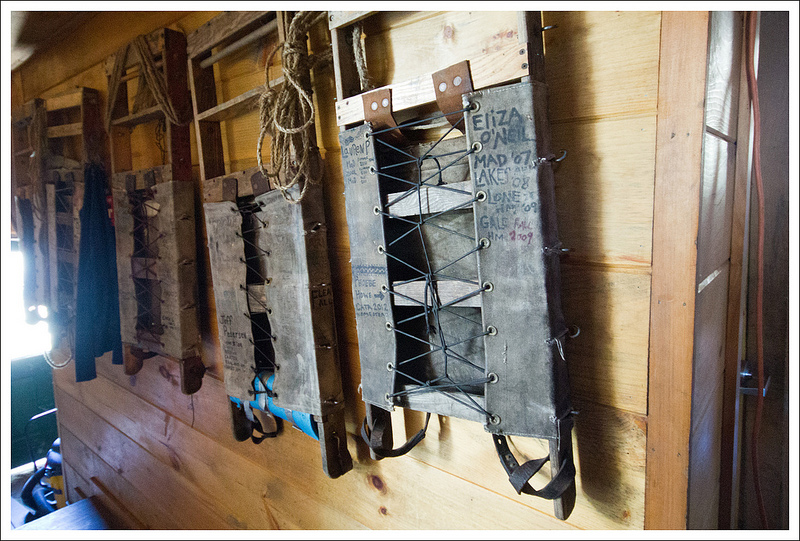
Adam approaches Lakes of the Clouds Hut. Below: Inside Lakes of the Clouds; We ate cake!; Wooden racks for carrying supplies.

Inside Lakes Cake! Racks

On the drive to the trailhead, dark blackish clouds completely obscured the mountain.  I said to Adam, ‘This is probably a bad idea.’  He reassured me, telling me he was certain the clouds would blow off, the day would be beautiful, and that we would have a great time.  I let my worries non-verbally stew in the back of my mind.  We parked, geared up and made our way down the trail with several other groups of people.

Within the first mile, we came to a rain-swollen stream with no clear way to cross. The rocks normally used to rock hop were all under rushing water.  I tested a few spots, and ended up falling shin deep into water and wrenching my knee. I was feeling discouraged, because the only other potential crossing left was a thin, bouncy, moss-covered log that had fallen across the stream.  I have problems with vertigo and balance, so situations like this really push me outside my comfort zone.  Adam carried all the expensive camera gear, and I slowly and carefully stepped across that log.  Phew!  I told Adam if there were lots of crossings like this one, I didn’t think I could do the hike.  He offered to turn back, but I told him that I wanted to challenge myself and keep going.

Fortunately, most of the hike followed alongside the stream with only a few much easier crossings along the way.  Eventually we reached the Gem Pool. What a gorgeous spot!  It’s a crystal clear, green, pool; fed by a cascading waterfall.  It would be a great place to take a picnic and go for a swim. We did one more rock hop at the end of the pool and prepared ourselves to do some serious climbing!

Mount Monroe & Hut
Mt. Monroe looks like a small hill above the hut. Below: Mt. Monroe; The Lakes of the Clouds’ namesakes.

Mt Monroe Lakes Lakes of the Clouds

About 1600 feet of elevation gain comes in just about a mile of hiking after you pass the Gem Pool.  It’s grueling and steep, but both Adam and I were well-prepared with all the hiking and other cardio we’d done to prepare for this trip.  We were able to make the ascent without having to take a breather!  The only stop we made along the way was the side trail to check out the Gorge Waterfall.

On the climb up, we started seeing glimpses of the valley through the trees.  The majestic Mount Washington Hotel looked like a tiny red speck below.  We’d come a long way up already!  The remainder of the steep climb followed the Ammonoosuc River through the plunging ravine.  Even when we couldn’t see the water, we could hear it.

Eventually, the trail exited from the woods onto a wide rock plateau.  Above, we could see a waterfall falling in several distinct drops and below, we could see the water crashing over a steep, long drop.  We decided to take a break and enjoy the view from the rocks.  We sat for a minute taking it all in.  At that point, I noticed I didn’t see the trail continuing anywhere.  Horror dawned on me when I realized that the trail continued on the other side of the river. We saw two people cross it successfully, but I still wasn’t so sure.  The water was fast and a little deep from the rainfall the day before.  I had no idea how slick the rock under the water would be.   The crossing had just a couple feet of flat width on the downhill side before the water dropped over a 100 feet down into the ravine.  A slip at this crossing would almost surely be fatal.  I took a moment to hyperventilate and freak out, and then I plunged across.  This was followed by another ‘Phew – I’m still ALIVE’ moment.

Fighting the Wind
Adam fights the 50-60 mph winds.  Below: The hut grows increasingly tiny; Christine hikes along; There were several rock fields to cross.

Tiny Hut Christine Climbing Boulder Field

After that crossing, the hike was less steep but a lot rockier.  The trees were getting smaller and more stunted as we approached the treeline.  We could see the summits of both Mt. Washington and Mt. Monroe looming above. Lakes of the Clouds Hut was in view, but distances are so deceptive above treeline.  Everything looks so close, but it’s always further than you expect. I guess it’s a bit of an optical illusion when you don’t have trees to compare for scale.

As soon as we broke the treeline, just slightly below the hut, the wind was shockingly strong.  I was hiking in long pants and long sleeves, but I had to add my hooded jacket right away.  Even so, my face and hands were freezing!  I was sure I had packed gloves.  I usually keep a spare pair in all my backpacks, but I couldn’t find them anywhere.  I ended up paying the premium price to buy a cheap pair of gloves at the hut (only to find the spare pair of gloves in a side pocket that night when we got home).

We took a twenty minute break at the hut and enjoyed some of the baked goods made by the Croo.  Adam had pumpkin cake and I had chocolate cake.  I had my phone with me, so I decided to take a look at MapMyHike to see how we were progressing.  I found that Lakes of the Clouds actually has 3G service, so I posted an Instagram and a Facebook status from the hut.  Ah… technology! 🙂

Tough Climbing
Adam pushes uphill against wind, over rocky terrain. Below: Spectacular Presidential Views; Christine has made a lot of uphill progress;  Many cairns mark the way above treeline.

Beautiful Views Progress So Many Cairns

After our snack and rest, we were ready to tackle the last mile and a half of trail to reach the Mt. Washington summit.  I can’t even describe how much I enjoyed this portion of the hike!  The climb up the Ammonoosuc ravine had been moderately scary, physically challenging and really slippery, but the hike along the Crawford Path was pure, unadulterated hiking joy!

The Crawford Path was built in the 1800’s and originally used as a horse trail to the summit of Mt. Washington. The trail celebrated its 175th anniversary in 1994 and is the oldest, continuously maintained, hiking path in America.  I felt so privileged to be walking someplace so beautiful and historic.

We spent some time exploring and photographing the glacial ponds that give Lakes of the Clouds its name.  On this particular day, the pools were sapphire blue and covered with scalloped ripples from the brisk wind.  It was spectacular and gorgeous.

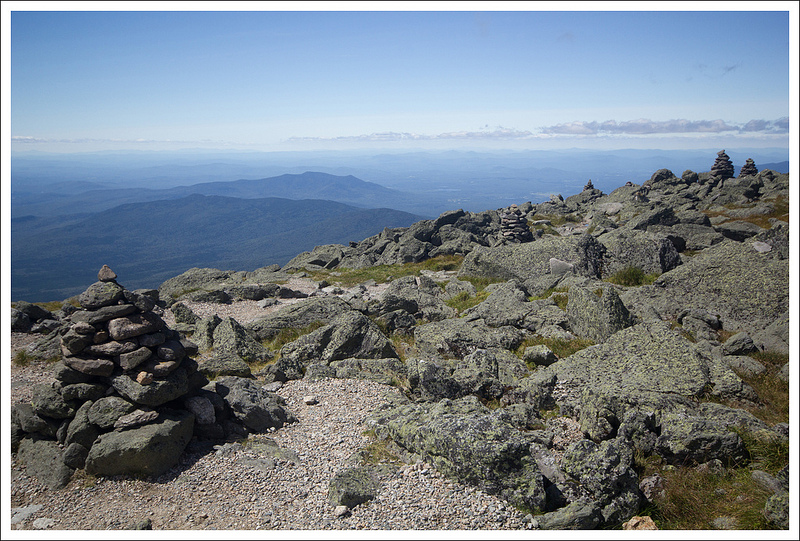
We toiled along, pushing our bodies against the 50 mph winds.  The alpine terrain was breathtaking and otherworldly.  I’ve never seen mountain views like the ones I saw in New Hampshire on this trip.  Between the walk along Franconia Ridge, and then the hike along the Crawford Path, I had my mind blown twice in one week. These places should be on every American hiker’s bucket list!

Summit
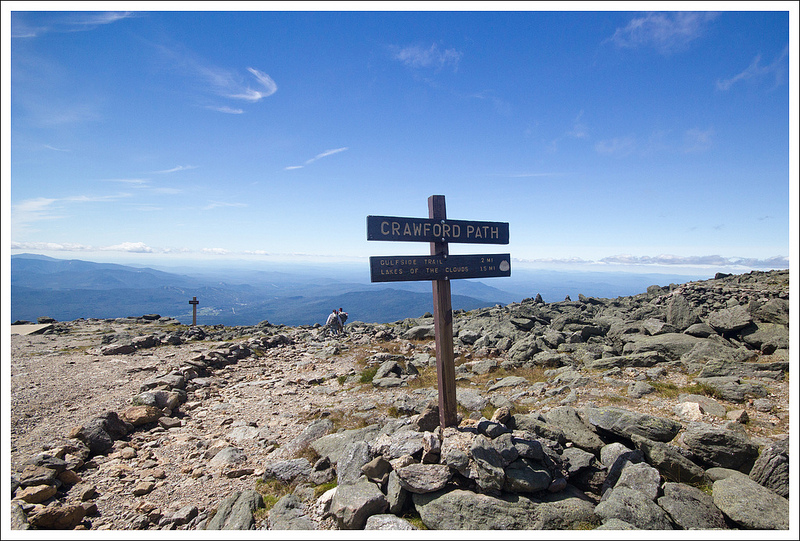
We made it to the top! Below: Adam makes the last push to the summit, The Crawford Path is also the Appalachian Trail; The summit was crawling with people who had driven or taken the cog to the summit.

Nearing the Summit crawford path Crawling with People

The stretch of trail between the hut and the summit is a rock field.  Sometimes the rocks are wide and flat, sometimes they are uneven, loose and pumpkin-sized.  The trail isn’t so much a path as it is a series of cairns that keep hikers on course.

At first, the trail between the hut and Mt. Washington was pretty flat, but the final push to the summit required a little more steep climbing.  The weather station towers looked so close you could almost touch them, but it turned out they were still about a half mile away.

We could tell we were getting really close when we started seeing more and more people in jeans, sneakers and sweatshirts milling about the trail.  These were the car and train people!  Eventually the trail emptied us out onto the summit.  We passed the historic hotel-turned-museum – Tip Top House – and made our way over to the summit marker.  We actually had to wait in line with all the car and train people to have our picture taken at the summit sign.  It’s always funny to finish a hike that has a summit that can also be reached by car – Clingmans Dome comes to mind (the high point on the Appalachian Trail).

Cog Railway
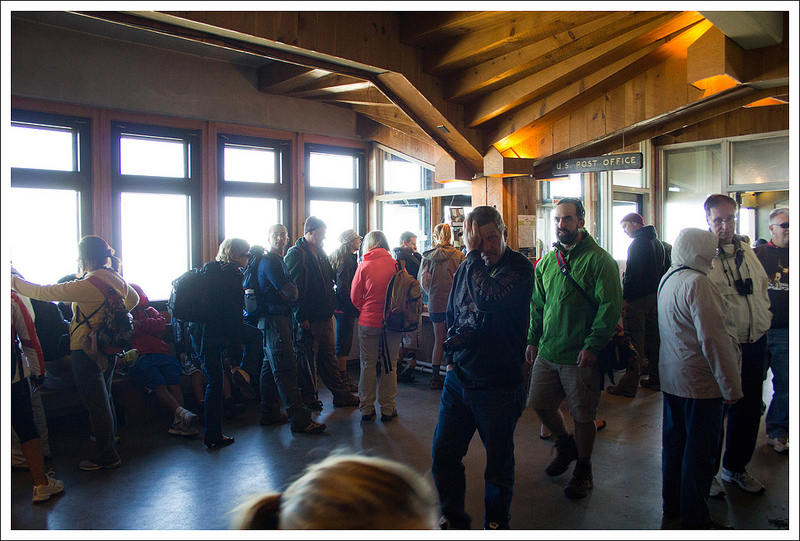
The cog makes a few daily ascents/descents of Mt. Washington. Below: The crowded summit building; The Mt. Washington Hotel sits below the mountain – what a beautiful day!

Summit Building Hotel

After taking our obligatory summit photo, we grabbed some drinks and hot dogs from the summit building’s snack bar and waited in the hiker’s lounge.  My parents still hadn’t arrived, so we had about a half hour to kill.  It made me wish we actually had taken the time to do the short side-trip climb to the summit of Mt. Monroe when we had been at Lakes of the Clouds.  I just didn’t want to leave my parents waiting in case we took longer than expected.  I didn’t want them to worry more than they had to.

Every 10 minutes or so, I ran up the stairs to look for my parents.  On the third trip up, I spotted my father and my (nervous-looking) mother waiting by the death sign.  I know it sounds kind of mean to have them meet us there, but honestly, it’s the easiest ‘landmark’ to find in the summit building.  The place is so crowded that you can’t really say ‘meet me by the snack bar, museum or gift shop’.  My parents were both relieved and impressed by how quickly we’d made it to the top.

Honestly, other than the two nerve-wracking water crossings, the hike up Mt. Washington was not nearly as difficult as I expected.  The elevation gain was challenging, but I think it would be doable for most reasonably fit people.  And the walk from Lakes of the Clouds to the summit was a pure pleasure, and definitely one of my most memorable hikes ever!

Trail Notes

  • Distance – 4.5 miles
    (Check out the stats from MapMyHike)*
  • Elevation Change – About 3800 ft.
  • Difficulty – 5.  The steepness of the hike is no joke.  The winds and weather possibilities just add to the difficulty.
  • Trail Conditions – 3.5.  The trail is well-maintained, but there were some stream crossings, loose and wet rock that made this tough in some parts.
  • Views – 5.  Once you rise above treeline you have great views of the ravine.  The view from the top of The Gorge is also nice.
  • Waterfalls/streams 5.  You get the rushing waters of the Ammonoosuc River, the Gem Pool, The Gorge waterfall, and Lakes of the Clouds.
  • Wildlife – 1. We didn’t see much other than squirrels.  Some moose have been spotted near the lower parts of the trail. 
  • Ease to Navigate – 4.  Junctions were clearly marked.  The hike from Lakes of the Clouds to the summit could be difficult on foggy/rainy days, but follow the cairns. 
  • Solitude – 2.  On a gorgeous day, there were lots of people.  But, due to the danger of hiking this trail, that is probably a good thing to have others nearby.  We were always able though to find our own space to enjoy views.

Download a trail map (PDF)

Directions to trailhead: From Interstate 93, take exit 35 to merge on to US-3.  Take US-3 for 10.4 miles and then take a right onto US-302 East.  In 4.4 miles, take a left on to Base Station Road.  Follow this about 5.7 miles until you reach a large gravel parking lot on the right.  The trailhead can be found as you entered on the lefthand side of the lot.

* MapMyHike is not necessarily accurate, as the GPS signal fades in and out – but it still provides some fun and interesting information.

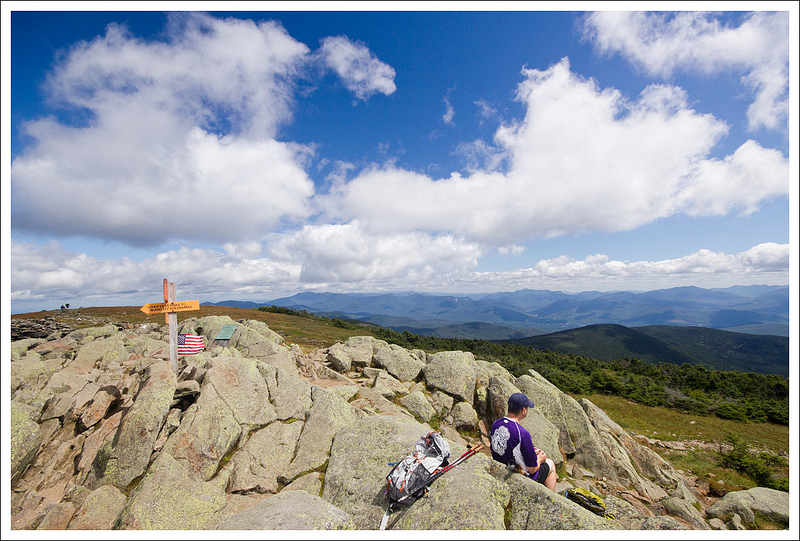
Cucumber Gap Loop (TN)

Special: Smokies Edition

Introductory Guide to Visiting Great Smoky Mountains National Park

Cucumber Gap is a lovely 5.6 mile loop known for wildflowers, stream scenery and the historic Elkmont cabins.

View the full album of photos from this hike

A Peek Into Elkmont
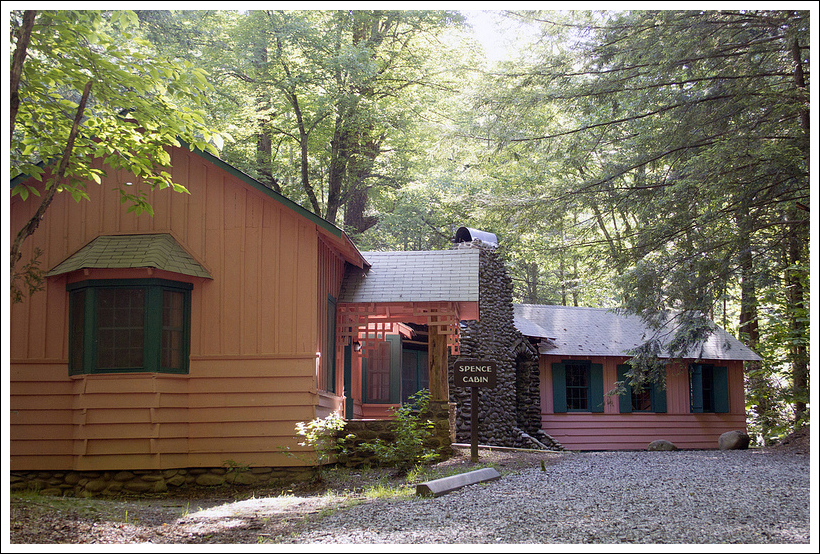
A peek inside one of the dilapidated Elkmont cabins.  Below: Adam walks the Little River Trail; the Spence Cabin; We saw lots of big snails on the trail.

Walking the Little River Trail Spence Cabin Snail

Adam Says…

For our last day of hiking in the Smokies, we opted for something easy compared to our previous two days, which had us hiking over difficult terrain for 10+ miles each day.   We decided a hike along a pretty stream with a taste of history would be a nice choice.

The hike started on the Little River Trail. We crossed the gate that led to the gravel road.  Almost immediately to the left, you come across some of the Elkmont cabins.  There are signs posted asking that you not enter the houses.  These do look dangerous, with caved-in roofs and rotting wood, so don’t risk it.  The Little River Logging Company established this small town in 1908 to serve as a central location for its logging efforts.  In 1910, they started selling parcels of land to interested outdoorsmen, who established the Appalachian Club.  In 1912, the Wonderland Park Hotel was built and in 1919 a group of businessmen bought the hotel and established the Wonderland Club.  As the wealthy began traveling to this area, the Appalachian Club and Wonderland Club served as social outlets for the elite.  Most of these houses are in complete ruin, as the park has taken over the property after not renewing the leases of those previous owners.  There is a plan to maintain and renovate 19 of these houses (mostly in the “Daisy Town” area).

We continued along the trail that is flanked by the Little River to the left.  There are many places that you can duck off the main trail and enjoy watching the flowing river.   At 2.4 miles, you reach the junction with the Cucumber Gap Trail right after passing a bench.  Take a right and head on the Cucumber Gap Trail, which begins an ascent.  We came across a woman, who was glad to see us since she said we could “scare the bear away”.  She had been walking on this trail many times and has seen bears frequently here.  We were excited to possibly see a bear on the trail, but we weren’t lucky enough this time.

Adam Enjoys the Little River
Adam takes in the lovely Little River. Below: Huskey Branch Falls; Tall, lush trees on the hike.

Huskey Branch Falls Tall Trees

At 2.7 miles, you will rock-hop across Huskey Branch.  The trail continues to ascend, but slightly more steeply until you reach the top of Cucumber Gap at mile 3.8.  Off to the right, you may have an obstructed view of Burnt Mountain and the Bear Wallow Creek valley below.  Near the top of the gap, you may see Fraser magnolias, often referred as “cucumber trees”, giving this trail its name.  The trail descends at this point and crosses Tulip Branch at 4.4 miles.  At 4.8 miles, the Cucumber Gap Trail ends and you willl take a right when you reach this junction with the Jakes Creek Trail.   At 5.1 miles, the trail reaches another junction.  Head right again at this fork.  Soon, you will pass by more abandoned Elkmont houses until the trail opens up into the larger area of homes known as “Daisy Town”.  Walking down the main street, you will reach the Appalachian Club, which has a large wooden porch and some historical signs that you can read to learn more about this area.  From the club, make your way to the right and you should shortly reach your car again.

This was a nice leg-stretcher of a hike, and one that you’ll likely want to take slowly to enjoy the scenery along the way.  The houses are interesting to check out and you may want to take a few minutes to enjoy the heavy-flowing Little River.  If you are someone that is interested in the history of this area right before the park was established, this is a great hike to check out.

Christine Says…

After two days of long, tough hikes, we began our final day in the Smokies looking for something a little more relaxing and low-key.  While enjoying amazing (honestly… this is not an overstatement) donuts from The Donut Friar, we skimmed our guidebook.  In the end, we settled on the Cucumber Gap Loop.  It’s known as one of the Smokies’ nicest, more moderate hikes.  It boasts abundant wildflowers, beautiful river scenery and a chance to visit the historic Elkmont cottages.

The trailhead is just a short drive from Gatlinburg, near the Elkmont campground.  We set off on the Little River Trail, which is really more of a wide, gravel road than a trail.  Almost immediately, the Spence Cabin came into view.  This historic cabin has been restored by the park service, and is available for day-use special event rental.  The other cabins dotting the river alongside the Spence Cabin haven’t been so lucky.  Most of them are dilapidated, sagging and fading back into the forest.  ‘Keep Out’ signs are posted along the trail.  Although you cannot enter (or even touch) the buildings, you can still peek through the windows and imagine what life may have been like in the area’s heyday.

Rock Hopping
Christine does some rock hopping. Below: Violets were abundant on the hike; Adam crosses Huskey Branch; Heading into ‘Daisy Town’.

Violet Stream Crossing Heading Into Daisy Town

After spending a little time peering into the cottages, we continued along the path. I looked for wildflowers, but we really didn’t spot much beyond bluets, wild violets, sporadic mountain laurel and a few fading trilliums. It was several weeks past peak bloom in the park’s lower elevations.

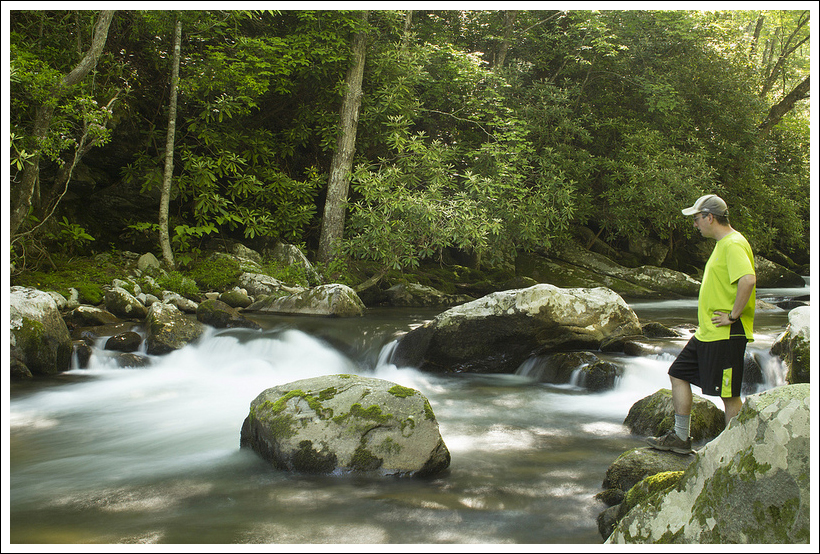
We stopped several times to enjoy and photograph the beautiful Little River.  The water here tumbles over boulders and rock shelves, making many small cascades and rapids.  The day was sunny and cloudless, so it was hard to take decent pictures. I did manage to find a few shady spots that were nice for photos.  At one particular spot, I set up my tripod and sent Adam out to sit on a rock.  He noticed a brown snake, sitting half in and half out of the water.  I tried to get a photo, but as soon as I pointed my lens in his direction, the snake ducked into the water.  It popped its head up one last time before diving deeper and disappearing for good.  I did a little research on what kind of snake he might have been and came up with a common brown water snake.

We tried not to stop or stand still for too long, because the mosquitoes on this hike were outrageous. Even when we were moving, we were swatting. Standing still was almost unbearable. It was definitely the warmest, stillest, most humid day of our trip, so I suppose we shouldn’t have been surprised to find a riverside hike so buggy! I ended up putting a little DEET on my face. I’ve had a few mosquito bites on my eyelids that have swollen to softball size and stayed that puffy for days. It’s a very bad look for me. 🙂

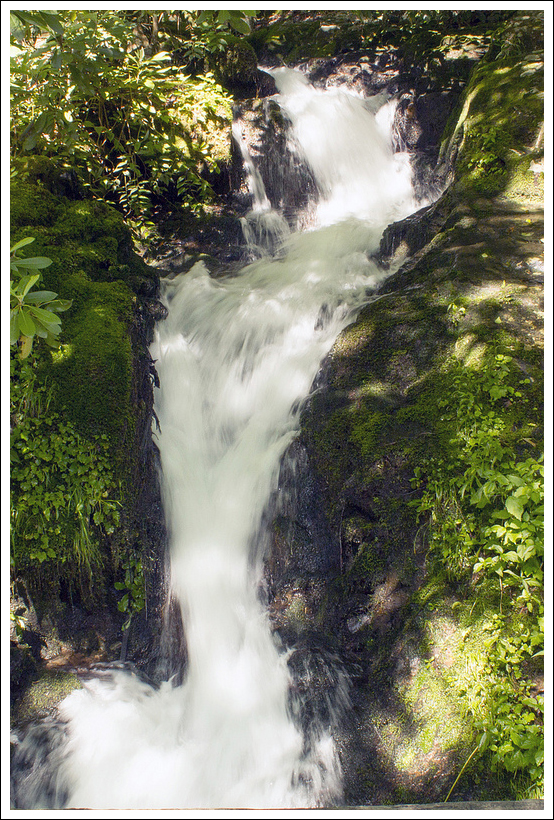
We soon passed a small waterfall entering from the right side of the trail. I didn’t see it mentioned in our guidebook, but apparently it’s called Huskey Branch Falls. It’s a pretty spot!

Shortly after the waterfall, we came to the junction with the Cucumber Gap Trail.  Adam mentioned meeting the woman who passed along the bear warning.  What I didn’t know at the time was that the only fatal bear attack in the Smokies happened close to this spot.  I have a healthy respect for bears, but I’m not frightened of encountering them on the trail.  Fatal encounters are rare and tragic.  In the end, all we saw were lots of big snails, squirrels, and a couple pileated woodpeckers.

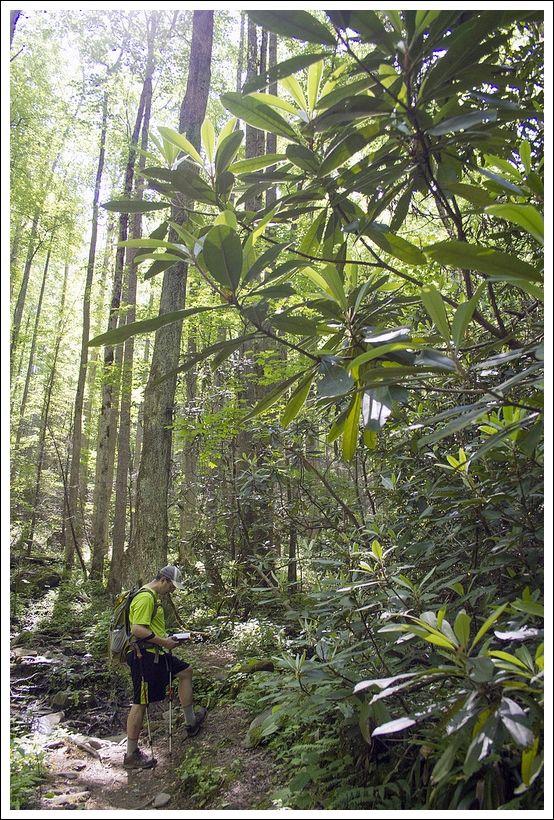
The Cucumber Gap trail contains the steepest climbing of the hike. About half the elevation gain on this hike takes place over a single mile on this section of trail. There wasn’t anything remarkable or unique about this part of the hike – pretty violets, tall trees, and a couple shallow stream crossings. We also managed to pick up a bit of a breeze, which helped keep the bugs away.

We soon found ourselves at a junction with a wide gravel road, we turned right and made our way to another junction with the Jakes Creek Trail. The remainder of the Elkmont cottages sit along this section of the hike. There are cabins in just about every rustic style imaginable. Apparently, Elkmont has been a controversial issue in the Smokies for years. Some people would like to see all of the buildings torn down, so that nature can take over. Others would like to see the homes restored so that the park’s origins and history can be visited and remembered. Currently, the plan lets each side of the argument win in a way.

Appalachian Club Porch
The Appalachian Club Porch has several nice rocking chairs.  Below: Another Elkmont cottage; Historical information at the site; A bear on the drive back into town!

Another Elkmont Cottage Appalachian Club History Bear!

Many of the cottages will be demolished and removed, but those that are in better condition or are historically significant will be repaired and eventually opened to the public.  The area has already been added to the National Register of Historic Places.

Near the end of the hike, we reached a paved road that passes through the densest section of Elkmont cottages.  This area is definitely worth a little exploration!  We enjoyed sitting on the chairs on the porch of the Appalachian Clubhouse.  This building, like Spence Cabin, has already been restored and is available for event rental.  The front of the building has a few signs with historical information and old photos.  It sounds like it was quite the place to be back in the day!

From the clubhouse, the return to our car was just a short walk along the road. While the Cucumber Gap Loop wasn’t the most thrilling hike of our trip, it was still fun and interesting.

On our way back into Gatlinburg, Adam spotted a mother bear and two tiny cubs along the road. So, even though we didn’t see bears on the hike, we didn’t leave the Smokies without a great look at wildlife. It was a fitting final experience!

Trail Notes

  • Distance5.6 miles
    (Check out the stats from MapMyHike)*
  • Elevation Change – About 900 ft.
  • Difficulty –  1.5.  The trail along Little River is fairly flat.  There is a little elevation on the Cucumber Gap trail, but it wasn’t too tough.
  • Trail Conditions – 4.  The Little River Trail and Jakes Creek Trail are both gravel fire roads that are very easy to walk on.  The Cucumber Gap trail was well-maintained, but somewhat overgrown in some areas.
  • Views – 1.  You may get an obstructed view of Burnt Mountain from the top of Cucumber Gap, but not much else.
  • Streams/Waterfalls – 4.  The Little River Trail has some of the best stream viewing you can see.  There were some rapids, but no significant waterfalls.
  • Wildlife – 3.  A great spot for birding.  Deer and bear have been spotted here often.
  • Ease to Navigate – 3.5.  There aren’t great signs around so that you know exactly how to get back to your car, but we were able to find it fairly easily (and now you should be able to as well).
  • Solitude – 3.  We saw a few people along the trail, but this is a little quieter than a lot of the popular trails in the park.  Many people on the trail may be camping nearby.

Directions to trailhead:  From the edge of Gatlinburg, enter Great Smoky Mountains National Park and head south on US-441 South for 1.7 miles.  Turn right on to Little River Road and go 4.9 miles.  Take a left onto Elkmont Road and continue on it past the campground for a total of 2.0 miles.  Park in the small parking lot and the Little River Trail is past the locked gate.

* MapMyHike is not necessarily accurate, as the GPS signal fades in and out – but it still provides some fun and interesting information.

Alum Cave to Mount LeConte (TN)

Special: Smokies Edition

Introductory Guide to Visiting Great Smoky Mountains National Park

This eleven mile hike of Mount LeConte is beautiful and lots of fun!  The scenery is diverse – streams, views, towering bluffs, an arched rock that you get to climb through, and a visit to the famous LeConte Lodge.

View the full album of photos from this hike

View from LeConte Summit
LeConte provides great vistas from the Cliff Tops viewpoint, located about .2 miles above the lodge. Below: The Walker Camp Prong at the very beginning of the hike; A lot of the hike had views; The famous LeConte llamas.

Pretty Stream Open Views LeConte Llamas

Adam Says…

When we were planning our trip to Great Smoky Mountains National Park, the hike that we were most excited to do was the hike up Mount LeConte.  We hiked this trail last year by taking the Trillium Gap Trail, so it was time to try an alternate route.  Last time we had talked to several people that had taken the Alum Cave trail, so we thought it may be a good option.

The weather was gorgeous this day, but we knew we had a chance for thunderstorms in the afternoon, so we decided to get as early of a start as we could.  When we had hiked up via the Trillium Gap Trail, we didn’t run into a lot of hikers; however, it was evident early on this route was going to be a different story.  While Christine was taking advantage of the facilities near the trailhead, I was getting nervous as I saw large groups of people starting the trail.  We’re fairly fast hikers and I was worried we were going to get stuck in a jam behind families with small kids that would slow us down.  Christine arrived and we got on our way.

We both jumped into the hiking and started hiking at a frenetic pace.  We wanted to get in a spot that was far enough ahead of others where we could stop periodically and snap some photos.  It took us a while to get separated from the larger groups, so we didn’t take as much time to enjoy the scenery in the first mile.  We convinced ourselves that we could have more time to amble along on the return trip.

Waiting to Pass Through Arch Rock
Adam waits his turn to pass through Arch Rock.  Below: Early parts of the hike have gentle elevation gain and lots of roots; Christine crosses a foot bridge; The trail was extremely crowded.

Rooty Trail Christine Crossing Hiking with Crowds

The trailhead starts from the Alum Cave Bluff parking lot on US-441.  At the trailhead, there is a larger map and some trail information guides you can purchase for $ .50.  You will immediately cross a bridge over the Walker Camp Prong stream.  The trail starts off very flat, but you know you’ll have lots of climbing to do later on in the hike.  The first mile of the hike goes along the Alum Cave Creek.  There are several options to jump slightly off the main trail to take in the scenes of the cascading creek.  At 1.4 miles, you will reach a footbridge to cross Styx Branch before you reach the interesting geological feature known as Arch Rock.  Arch Rock is basically a hollowed-out rock tunnel.  You will climb up some steep stairs with a guideline as you go through to the top.  Once you emerge out of the top, you go a little further and then reach another footbridge to cross Styx Branch one more time.

The trail begins to climb more steeply at this point as you make your way to Alum Cave Bluffs.  At 2.4 miles, you start to come across a larger rock outcropping.  As the trail starts to climb around this, you behold the enormous Alum Cave Bluffs.  With the word “cave” being in the title, your initial expectations would be a large cave would be here.  However, the cave bluffs are basically a humongous rock overhang.  It is still jaw-dropping impressive and unlike anything I’ve seen.  The ground underneath is dry and dusty.  We saw a few drops of moisture come over the edge, but the overhang reaches out about 60 feet.  Standing at one end of the outcrop looking at people at the other end, gives you a perspective of how large of an area this is.

Alum Cave Bluffs
The Bluffs are impressive! Below: The beautiful, rugged terrain of the Smokies.

Beautiful, rugged Smokies

From the Alum Cave Bluffs, you will see a sign that shows the direction to continue up Mount LeConte.   The trail climbs steeply for the next .4 miles, passing some views of Little Duck Hawk Ridge.  The trail reaches a peak and then descends into a saddle for another .4 miles.  The trail begins to climb again rather steeply for a good portion of the remainder of the hike as you make your way up the mountain.  Along the way, you will pass by a rock slide, which opens up to some gorgeous views with nothing but layers of mountain ridges to see.  At 3.8 miles, you reach a set of stairs on a switchback to continue your climb.  The trail eventually comes into a steep, rocky climb with cables put in to use as handrails (since this trail gets very icy with little sun in the winter).

The trail finally starts to level off at mile 4.75 as you enter into a tunnel of fraser fir trees.  Continue on a short distance and then you’ll reach a junction with the Rainbow Falls Trail.  Continue a few hundred feet and you’ll reach the LeConte lodge.

Getting a spot at the LeConte Lodge is competitive and highly coveted by Smokies visitors.  Reservations are made by lottery and typically start booking in early October for the following year, so it takes some planning and a little luck to be able to stay in one of these spots on top of the mountain.  We were lucky enough to get a spot here last year and we hope that we’ll do it again in the future.

Great Views
The Alum Cave Bluffs trail had lots of nice views along the way. Below: Some slick, rocky areas along the trail had cables to provide assistance with staying upright; Parts of the trail were quite narrow; The last stretch toward the lodge is flat and passes through evergreens.

Cable Assist Narrow Trail Nearing the Summit

From the cabin area, we wanted to get some nice views and headed up the main path until we reached a junction.  Hang to the right to go to the Cliff Top trail. This trail is rocky and quite steep.  The sign says that it is .2 miles to the top, but it feels longer than that.  However, when you get to the Cliff Top area, you will have great views for miles on a clear day.  After taking in the views, we grabbed a sack lunch from the dining room to refuel for our trip back down.  We talked with some fellow hikers at the top and relaxed for a while.  After staying up there a previous year, it was hard to motivate ourselves to head back down.

On our way back down, the trip went by fairly quickly since everything was downhill.  It’s always interesting when you see people hiking uphill that look like they are in complete misery.  We spotted one woman, who was staring daggers at her husband (who I’m guessing convinced her to go hiking).  Her daughter was hanging back with her and said, “I love you, mom”.  The mother’s response was, “That’s nice”.  She was definitely not having a good time hiking.  We imagined how the father was going to get an earful for the rest of day.

If you are interested in geocaching, there are not a lot that are available in Great Smoky Mountains National Park since the national park prevents physical caches from being placed.  However, there is a virtual cache on the trail to find – Alum Cave Bluff.

Christine Says…

Monday morning dawned in spectacular fashion. It was cool, sunny and crystal clear. Even the typical haze that makes the Smokies seem smoky was absent. That was such a treat, because clear air really lets you appreciate the magnificent, green, lushness of the mountains in this area.

We kicked off our morning with breakfast at Mountain Perks – a little café and espresso bar across from the train depot in Bryson City. The owners, Jeff and Pam Pulley are so friendly and are ready to serve local tips alongside their tasty breakfast and even better coffee. I left there with a pound of their ‘Black Widow’ roast coffee to enjoy at home after the trip.

Fully fed and caffeinated, we made our way into the park. On the way to the Alum Cave Bluff trailhead, we spotted a couple elk grazing in a pasture just north of the Occonaluftee visitor center. What a treat!

Llama
We were happily surprised to find the llamas still at camp! Below: Adam arrives at LeConte lodge; The obligatory pose with the elevation sign; We purchased bag lunches from the lodge for $10.00. Lunch came with bottomless lemonade -of which we took full advantage.

Arriving Obligatory Pose Bag Lunch

We got to the Alum Cave Bluff parking area around 9:30, and found that it was already 100% full. We had to park a ways up the road on a pullout. We geared up, and hit the trail – along with dozens and dozens and dozens of other people. I’ve rarely hiked with so many people on the trail at the same time – even on Old Rag. I’ll admit, it made me a little stressed. As you might have guessed, I stop frequently to take photos along the way. Also, Adam and I are relatively fast hikers. So, when I stop to take photos, we end up leap-frogging the same people over and over again. That’s not a problem when there are only a few groups on a trail, but coming up on the heels of large multi-generational families time after time makes me feel bad. It’s easy to pass a couple, it’s more disruptive to squeeze past ten people, six of them kids under the age of ten. I probably didn’t take as many photos early in the hike as usual so that I could avoid being disruptive.

The first couple miles of the hike were relatively easy, following a stream and climbing very gently through the moss covered forest. The terrain changed when we reached Arch Rock. After crossing a log footbridge, stone steps led uphill steeply through an arch of stone. Very cool!

After the arch, the trail began to climb more steeply. In several places, wire was affixed to the rocky side of the trail to help you keep your footing over narrow, slick areas. We climbed uphill for about .7 of a mile before reaching the famous Alum Cave Bluff. Along the way, the trail alternated between rocky and forested. There was even one nice view on a rocky, sand myrtle-covered turn in the trail.

WOW! I had seen photos of the Bluffs, but they were even more impressive in person. The rock wall soared and arched overhead, forming an immense overhang. The terrain beneath the arch was dry and silty. It was tough to walk on and I imagine this area is tough to traverse when it’s wet and rainy.

Cliff Tops View
The nice view from Cliff Tops.  Below:  Time to leave the lodge; Adam walks along the trunk of a fallen giant; The steep and rocky descent.

Leaving the Lodge Huge Fallen Tree  Steep Going Down

I think a good number of people stop at the Bluff and then return to the parking area, so the trail traffic was much lighter after passing that area. We pressed on toward the summit of LeConte.

After the Bluff, the climbing is serious and steady. There are also a number of great views along the way. The Smokies really take my breath away. I kept thinking about how lucky and blessed I am to visit such places and have the physical capability to enjoy the tough climbs.

Eventually the trail turned a corner and leveled out and passed arrow-straight through an evergreen forest. The trail bed looked almost like cobblestones – white, round, smooth rocks. From that point, we had an easy .75 mile walk until we arrived at LeConte lodge.

At LeConte, we did all the obligatory things – took our photo in front of the dining hall with the elevation marker/date, said hello to the llamas, visited the office to get our exclusive summit-shop-only 2013 shirts, sat on rocking chairs, drank copious amounts of LeConte lemonade with our bagged lunches and made the .2 mile climb to enjoy the view from Cliff Tops.

Being at the top on a nice day was such a different experience than our 2012 visit in the rain! However, as the afternoon wore on, we noticed that some darker clouds were starting to build in the sky. We headed back down after about an hour at the summit.

The hike down went very quickly – all downhill! It’s amazing how much faster you can descend 2700 feet than you can climb it! We saw several cute red squirrels that took the time to chatter loudly at us. We scared a grouse from it’s resting spot – and the grouse scared us equally back! They really explode out of the brush when they startle!

Adam at the Bluffs
Adam rests at Alum Cave Bluffs. Below: Climbing back down through Arch Rock. Notice the tiny people waiting at the bottom; Painted trillium; This pretty stream follows the beginning and end of the hike.

Climbing Down Through the Arch Painted Trillium Pretty Stream

We enjoyed passing back under Arch Rock and taking some time to enjoy the beautiful stream beside the trail. We were back at the car before 3:00, tired but really happy with our day.

That evening for dinner, we rewarded ourselves with a feast at the Smoky Mountain Brewery. I got the Brewery Ale Steak, which might be one of the tastiest steaks I’ve ever eaten. I also really liked their Tuckaleechee Porter.

Trail Notes

  • Distance11 miles + a little extra for walking around the lodge grounds and up to the Cliff Tops Viewpoint
    (Check out the stats from MapMyHike)*
  • Elevation Change – About 2650 ft.
  • Difficulty –  4.  The hike up Mount LeConte is a steady uphill.
  • Trail Conditions – 4.  The trail is well-used and maintained, so we didn’t find much difficulty.  During heavy times of rain or ice, parts of the rocky areas could be incredibly slick.
  • Views – 4. The best views are along the hike up to Mount LeConte and at the Cliff Top overlook.
  • Streams/Waterfalls – 3.  Early in the hike, you do get some nice views of Alum Cave Creek and Styx Branch.
  • Wildlife – 2.  We did see some cute red squirrels, but last year people had seen a bear.  There were some nice spots for birdwatching though.
  • Ease to Navigate – 4.  There are not many places to get steered wrong based on signage and the trail was always clear.
  • Solitude – 0.  On a nice day, expect heavy crowds on the way up to Alum Cave Bluffs.  After that point, there should be fewer people on the way up Mount LeConte; however, this is definitely the most popular way up Mount LeConte.

Directions to trailhead:  From Gatlinburg, TN take US 441-S into Great Smoky Mountains National Park.  Go 11 miles.  Parking is available in a large lot on the left or alongside the road.  The trailhead starts near an opening on the southern side of the parking lot.

* MapMyHike is not necessarily accurate, as the GPS signal fades in and out – but it still provides some fun and interesting information.
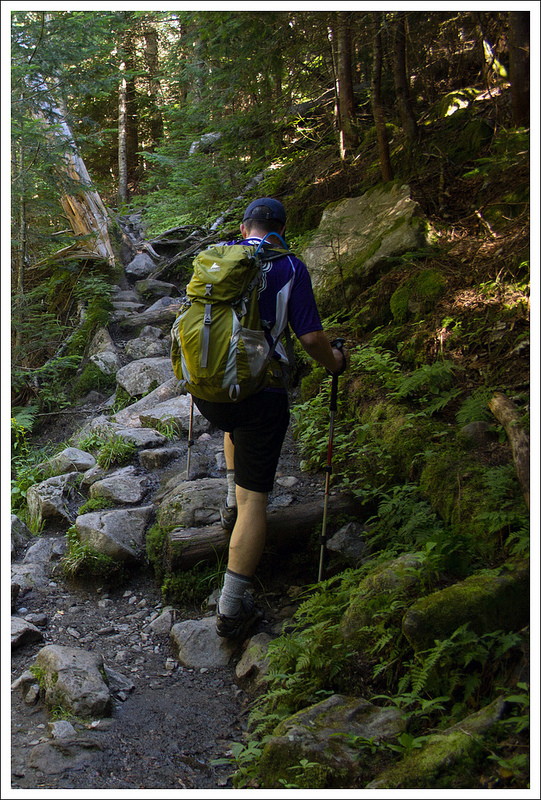
Kephart Prong (NC)

Special: Smokies Edition

Introductory Guide to Visiting Great Smoky Mountains National Park

The 4-mile Kephart Prong hike ascends gently along a beautiful stream and end at the backcountry campsite – Kephart Shelter. This hike offers lovely cascades, wildflowers and history.

View the full album of photos from this hike

Adam Crossing Foot Log
Adam crosses one of several log bridges over Kephart Prong. Below: The trailhead is located on the side of Rt.441.  The first bridge takes you across the Oconaluftee River; The Oconaluftee is beautiful and cascading; So much of the Smokies seems to be wet, green and covered with moss.

Trailhead Oconaluftee River Mushrooms and Mosses

Christine Says…

Our second day in the Smokies was earmarked for a hike to the summit of Mount LeConte, but we woke to gloomy weather. We decided that we didn’t want to hike ten tough miles and not even get payoffs in terms of views, so we devised a new plan!  After redoing our Deep Creek Waterfall Loop Hike to get better photos, we were still ready for more hiking.

I perused our hiking guide and found a trail called Kephart Prong. It sounded interesting – remnants of an old railroad and a CCC camp, a backcountry camping shelter and the trail followed a (possibly pretty) stream. After redoing the earlier hike, the 4-mile length of the Kephart Prong was appealing, too – short and sweet! Also, it had the benefit of being closer to the Bryson City side of the park where we were staying for the early part of our trip.

It was still morning, so we grabbed a snack and made our way to the trail. What we found exceeded my expectations. The stream was incredibly beautiful – rapids and small waterfalls tumbling over mossy rocks and fallen hemlocks. In at least four places, rough, hewn log bridges traversed the stream. The sounds of running water carried through the entire hike. We saw lots of wildflowers – pink lady slippers, wild geranium, ragwort and many others I couldn’t name.

Wildflower
There were many kinds of wildflowers along the trail.  This might be a wild geranium?  Below: Adam explores the ruins of the old CCC camp in the area. This chimney was supposedly located in the barracks; There was once a railroad and a trout hatchery in this part of the Smokies, so look for abandoned rails, train parts and pipes from the hatchery. The item below appears to be an old pipe joint possibly; Another beautiful, mossy, log bridge over the stream.

CCC Camp Ruins Railroad Parts Mossy Bridge

The hike climbed gently the entire two miles until eventually arriving at the Kephart shelter – a sturdy stone and timber hut intended for backcountry camping. We chatted with other dayhikers using the hut for a lunch stop and one man who was there for an overnight stay.

Signs near the shelter showed that the Kephart Trail connects to the Sweat Heifer and Appalachian Trails. If we had continued to climb past the shelter, we would have arrived at Charlie’s Bunion in several miles.

Despite the draw of the Bunion, lunch was a higher calling, so we made our way back down the trail. It’s amazing how much faster the climb down always goes! We got back to the car around 1:00 and were back in Cherokee by 1:30. We couldn’t find anything that sounded good and was actually open on Sunday, so we pressed on back to Bryson City and ended up at a place we found on Yelp – The Bar-B-Que Wagon. They served great, traditional Carolina style pit barbecue with all the expected sides. We sat at a picnic table by the river and enjoyed an enormous, late lunch.

After lunch, we thought about going back to the hotel to shower, but instead we pushed on to visit the NOC (Nantahala Outdoor Center). The complex has a fantastic outdoor outfitter and a super cool riverside patio bar (Big Wesser BBQ + Brew). We got a few drinks and watched rafters and kayakers working the rapids. So relaxing! What a great day!

Adam Says…

The Kephart Prong Trail is one of the most definitive picturesque, riverside trails you’ll find.  The lush forests surround you in a sea of green in every direction you turn.

The trail starts off by crossing a large bridge, giving you great views of the Oconaluftee River. Once you cross the bridge, the trail starts off as wide and gravel-covered. At .2 miles, you will come across the remnants of the Civilian Conservation Corps camp that was here from 1933-1942.  You’ll see signs of a stone plaque and a tall chimney, among other partial walls.

At the .5 mile mark, you’ll reach your first footbridge over the stream.  As you continue further, the trail continues a slow, gradual ascent to the end. You’ll cross three other footbridges, but these consist of narrow, split logs with wood handrails. The last of these was the only one I was a little concerned with crossing, since the handrail required you to stoop to be able to touch it and the log bounced some in the middle.  The trail leads to the Kephart shelter, which was well-constructed.  From the shelter, you can proceed on the Sweet Heifer Creek Trail which joins the Appalachian Trail in 3.7 miles or take the Grassy Branch Trail to the Sluice Gap Trail for a total of 3.8 miles to reach Charlies Bunion.  Since this is a nice junction for an overnight trip, expect other people staying at the shelter in the nice summer-fall weekends.  Backcountry reservations for overnight campers is $4/night and is required to be made in advance.  See here for further regulations regarding backpacking permits.

Kephart Shelter
Kephart Shelter sits under the shady evergreens. You must have a permit to stay the night in this shelter.  The stream runs behind/left of the shelter.  There used to be a logging camp where the shelter now stands.  Below: Most of the trail follows the stream closely; Adam makes his way across the bridge; A trail sign near the shelter shows the directions to other trails higher up the mountain.

Walking Along the Stream Another Crossing of Kephart Prong Kephart Prong Trail Sign

The Kephart Prong is named after Horace Kephart, who was instrumental in the establishment of the Great Smoky Mountains National Park.  He was an extremely intelligent man, enrolling in graduate school at Cornell University at the age of 17.  He became the head of the St. Louis Mercantile Libray, but he lost his job.   He had turned to drinking and his wife and family left him for New York.  He decided he wanted to  re-establish himself in the wilderness of western North Carolina and Tennessee.  There he wrote the book Camping and Wildlife, which was considered the “bible” of camping.  When he became concerned that the Smoky Mountains were going to be heavily logged, he started writing letters to advocate for the establishment of this area as a national park.  He soon became friends with a photographer, George Masa and together they started photographing and mapping this area.  It was the partnering of Kephart’s words with Masa’s pictures that caught John D. Rockefeller Jr.’s attention, who donated $5 million to help purchase the lands to help secure the area to become a park.  Kephart died in a car crash before the park was to be established, but Mount Collins was renamed Mount Kephart in his honor.

The Nantahala Outdoor Center
Big Wesser BBQ + Brew at the Nantahala Outdoor Center is a great place to enjoy drinks after a day on the trails.  You can see the canoe/kayak course gates in the river.  It’s fun to watch people coming down the rapids.  Below: Carolina-style BBQ in Bryson City.

Carolina 'Cue

Another interesting spot almost immediately on the trail are the remnants of the site of the Civilian Conservation Corps (CCC) camp 411 here.  You can see the large chimney and camp signboard on the side of the trail.  This group of nearly 200 built rock walls, roads, trails, and footbridges that are still in use today.  There is an interesting history of this from one of the leaders, James William Biggs.

We enjoyed this beautiful trail and I can see incorporating this trail as part of a backpacking trip in the future.

Trail Notes

  • Distance4 miles
    (Check out the stats from MapMyHike)*
  • Elevation Change – About 770 ft.
  • Difficulty –  1.5. The ascent on this hike is very gradual and easy.
  • Trail Conditions – 4.  The trail is well-graded and in great condition.
  • Views – 0.  No scenic views.
  • Streams/Waterfalls – 5.  Very beautiful!
  • Wildlife – 2.  We didn’t see anything other than chipmunks and squirrels.
  • Ease to Navigate – 4.  The trail is very easy to follow to the shelter.  Once you reach the Kephart Shelter, you may decide to continue on.
  • Solitude – 2.  Because of the relatively short length and easiness of this hike, you will probably see a fair number of people.

Directions to trailhead:  Head north on US-441 N from Cherokee, NC.  Head 4 miles north of the Smokemont Campground.  Parking is available on the shoulder of the road and the trail starts after crossing the bridge over the Oconaluftee River.

* MapMyHike is not necessarily accurate, as the GPS signal fades in and out – but it still provides some fun and interesting information.

Deep Creek Area Waterfall Loop (NC)

Special: Smokies Edition

Introductory Guide to Visiting Great Smoky Mountains National Park

Deep Creek is an area of the Smokies popular with tubers, bikers, horseback riders and hikers. This (roughly) 5.4 mile hiking route provides spectacular views of three waterfalls and the beautiful streams that feed them. We ended up hiking this trail twice on our trip – the second time was mostly to get better photos. 🙂

View the full album of photos from this hike

Toms Branch Falls
Toms Branch Falls is the first waterfall you’ll come to on the loop. It’s only about a quarter mile from the parking area. Below: Another angle of Toms Branch Falls; Horseback riders love the Deep Creek area; Tubers on Deep Creek; Christine enjoys stream scenery.

Toms Branch Falls Horseback Riders
Tubers Christine on Deep Creek

Adam Says…

We rolled into Bryson City, NC around 2:15 and almost immediately headed out for a hike.  We were tired but our hotel wouldn’t let us check in even 45 minutes early. Evidently, the Microtel in Bryson City is very strict with their policies! We decided to do something close by, so we headed to Deep Creek campground for this hike with three waterfalls.

We knew we were getting close to the campground when we saw tons of “TUBES” signs. People were waving as we drove by, hoping that we would stop and rent tubes from them for floating down the river.

We arrived and got changed in the parking lot and made our way to the trailhead.  The parking lot was crowded, mainly for tubing people.  We followed the masses heading out carrying their inner tubes to their drop-in spots.

We started on the Deep Creek trail and soon passed the junction with the Juney Whank trail on the left. In just about .25 miles, we came across the first waterfall on the right, Toms Branch falls.  This is a gorgeous waterfall that drops about 60 feet over several different rock shelves before plummeting into Deep Creek.  We saw several people floating down the creek as we stopped for some photographs.

Indian Creek Falls
Adam enjoys beautiful Indian Creek Falls. Below: We spotted pink lady’s slippers along the trail. They were a little tattered at the end of their blooming season; Adam climbs the trail.

Pink Lady Slipper Climbing the Trail

At .75 miles, we reached the junction with the Indian Creek Trail. This is actually the last spot where people can drop their tubes into the creek, but we continued on the Deep Creek trail.  At 1.75 miles, this trail intersects with the Loop Trail.  We took a right on to the Loop Trail which starts a steep ascent.  At 2.4 miles, the trail reaches its peak and intersects with the Sunkota Ridge Trail. Continue on the Loop Trail which now descends at about the same rate as it ascended.  At 3.0 miles, you reach the junction with the Indian Creek Trail.  Take a right here.

At 3.8 miles, you’ll see a side trail that descends to  Indian Creek Falls.  Indian Creek Falls is a wide waterfall that has a gradual, sliding cascade into the water.  After taking in the sight, head back to the trail and continue to the right.  Shortly after passing the waterfall, you will reach the junction again with the Deep Creek Trail.  Take a left here to retrace your steps.  You could make this a shorter trip by initially taking a right at the junction, but we enjoyed putting a little extra effort to earn all three waterfalls.

Right before you reach the parking lot, you’ll see the junction trail again with the Juney Whank trail at 4.5 miles. Take the steep trail to the right up for .3 miles. Once you reach the top, you’ll see Asian which points you to the next waterfall. Descend down a short path and you’ll reach a footbridge and the waterfall.  Juney Whank Falls is another great waterfall that plunges down after about a 80 foot cascade.

Continue to the other side of the footbridge and continue on the trail, heading left at the first junction.  The trail descends rather steeply.  You’ll see signs that lead you to the parking lot and back to your car.

Deep Creek
The streams in the Smokies are so beautiful! Below: Since the trail is popular with horseback riders, there is a lot of manure along the way.  Butterflies apparently love manure!; Beautiful Deep Creek; Adam on the loop portion of the trail.

Butterflies on Manure Deep Creek Loop Trail

We had a great time on this trail that maximizes your waterfall experience.  The Deep Creek Trail and Indian Creek Trail both gave you great creek views almost the entire walk and it was fun to watch everyone float by us.  I can see why this is such a popular place to hike and tube for families.  We saw one person with a foot cast and met one woman with a pacemaker along the way, so most people should be able to handle this.  If you want to see some great Smokies waterfalls, this is a hike for you!

Christine Says…

We wanted to do this hike last year when we visited Bryson City, but with so much to do in the Smokies, we just ran out of time. This year, we knew the lay of the land a bit better, and we ready to hit the ground running (or hiking, so to speak!)

We arrived to the area mid-afternoon on the Saturday of Memorial Day weekend. We tried to get into our hotel one before official check-in, but the desk clerk turned us away. We decided to drive over to the Deep Creek Campground, and check out an easy loop hike that took us by a couple waterfalls – Toms Branch Falls and Indian Creek Falls.

I changed clothes in the crowded parking lot. Let me tell you… switching from jeans and a shirt into shorts, wicking shirt and sports bra without flashing anyone is quite a feat!

We started off along a wide, road-like trail that followed parallel to Indian Creek. It was packed with people out enjoying the warm, sunny weather. Apparently, the Smokies have had an exceedingly cold and wet spring, so the bright, 80-degree Memorial Day weekend was a great chance for everyone in eastern Tennessee to go outside. Deep Creek is very popular with tubers. All up and down the road leading to the campground, various vendors have set up shop renting tubes for roughly $5 a day. Once you have a tube, you walk about a mile up the trail, and then bob and bump along the shallow, but rapid-y river. It looks like a lot of fun! As hikers, we were in the definite minority.

Juney Whank Falls
Juney Whank may be the prettiest waterfall on the loop. Below: Adam enjoys the falls from the bridge; Juney Whank is beautiful from every angle; Below the falls.

Adam at Juney Whank Juney Whank Juney Whank

Walking along the Deep Creek Trail for about .25 miles, we came to the lovely Toms Branch Falls. It’s a tall waterfall that enters Deep Creek from the bank opposite the trail. Very impressive!

We walked along the creek until reaching a junction that makes a lollipop loop on the route. We decided to follow the longer arm of the loop so that we could visit Indian Creek Falls closer to the end of our hike. The trail mostly followed the stream before turning and climbing steadily uphill for about half a mile. At the highest point, the trail met the Sunkota Ridge Trail, which leads to higher elevations and a larger trail system. We remained on the loop and descended another half mile to meet another trail junction.

At this junction, we met a group of horseback riders. One rider was really struggling with her mule. She had dismounted because he had become so skittish. When we passed, he was bellowing and dancing around. She eventually got him under control and was able to ride on. He looked like quite a handful though!

In a few more tenths of a mile, we came upon Indian Creek Falls. These falls are not as steep, and are made up of a couple of small ‘shelf-drops’ before falling into one larger fall. Very beautiful!

About a tenth of a mile past the falls, you join back up with the beginning of the lollipop loop. From there, just follow the trail and the tubers back to the parking area.

Nantahala Brewing Company
The Nantahala Brewing Company – a good post-hike stop in Bryson City.

To be honest, I was really unhappy with my photos from this hike. Waterfalls, sunny conditions and photography simply don’t go together. So, I left this hike feeling a little disappointed with the photos I had to share. That regret quickly faded after a few beers at the Nantahala Brewing Company. What an awesome place! If you like craft beer, don’t miss a visit. After beers, we went for pizza at Anthony’s. It hit the spot and we loved our outdoor table facing the train depot.

I thought our experience with the waterfall hike was over, but the next morning we woke to gloomy, drizzly weather. Since it was such an easy hike, we went back and did it again so I could get better photos. And the second time, we added the .6 mile loop to visit Juney Whank Falls to the trip. These falls required a short, but steep climb, but may have been the prettiest of the three! And the better photos gained from a second trip around made this hike twice as nice!

Trail Notes

  • Distance5.4 miles
    (Check out the stats from MapMyHike)*
    These stats are from the first time we hiked the loop, so Juney Whank Falls are not included in the MapMyHike mileage or elevation.
  • Elevation Change – About 630 ft.
  • Difficulty –  2.  The only tough parts of this hike are the steep trail on the Loop Trail and the side trail to the Juney Whank falls
  • Trail Conditions – 4.  Most of the trail is gravel except for the Loop Trail.  This is a multi-use trail and you will see hikers, bikers, and horses on this trail.  The trails were in great shape with no blowdowns or rough footing.
  • Views – 0.  No scenic views from the trail, but this is more for the waterfalls.
  • Streams/Waterfalls – 5.  You’ll have the best stream views along Deep Creek and three gorgeous waterfalls.
  • Wildlife – 2.  Don’t expect larger wildlife due to the crowds of people on this trail.  We did hear lots of pretty warblers in the tree.
  • Ease to Navigate – 4.  Good signage at the trail junctions for the most part except for coming off the Juney Whank falls trail.
  • Solitude – 1.  Expect to see lots of people for most of the trail.  A lot of people choose not to do the Loop Trail.  

Directions to trailhead:  Take exit 67 off of NC-74 towards Veterans Blvd.  Go .6 miles and take a right on Main Street/NC-19.  Take the second left on to Everett Street.  You’ll see signs directing you to Deep Creek Campground.   Go .3 miles and take a right on Depot Street.  This road makes a quick left on Collins Street and then a quick right to continue on to Depot Street.   This becomes Deep Creek Road.  Go .3 miles and take a left on to West Deep Creek Road.   Continue 2.4 miles until you enter the Great Smoky Mountains National Park – Deep Creek campground.  A parking lot is on the left.  The trailhead starts near the drop-off roundabout next to this parking lot.

* MapMyHike is not necessarily accurate, as the GPS signal fades in and out – but it still provides some fun and interesting information.

Laurel Prong – Mill Prong Loop

This 7.3 mile loop has a bit of everything – views, waterfalls, history!  The route takes you over Hazeltop Mountain, along several streams and past President Hoover’s Rapidan Camp.

View the full album of photos from this hike
View a short video clip of Adam crossing the stream below Big Rock Falls

The Rapidan River
Camp Hoover sits where the Laurel Prong and Mill Prong spill together, forming the Rapidan River. Below:  Trillium was blooming everywhere when we hiked; The route had many stream crossings; Adam enjoys the view from Hazeltop.

Trillium Everywhere One of Many Stream Crossings Adam on Hazeltop

Christine Says…

We love hiking in this part of Shenandoah!  It’s the area we typically choose when we have out-of-town friends who want to visit Shenandoah National Park.  It’s also a likely choice when we’re hitting the trail with hiking newbies.  Why?  Well… we think it’s pretty much perfect.  The climbing isn’t difficult, so it helps convince non-hikers that hiking isn’t just torturous uphill climbing.  This area is great for spotting wildlife. (In his portion of the post, Adam will tell you more about the exciting wildlife experience he shared with his office.)  It’s also scenic, with lovely streams and a waterfall along the route.  There is even a significant piece of American history sitting in the middle of the forest – the Rapidan Camp, which served as Herbert Hoover’s presidential retreat.

Our normal route in the area is a relatively easy 4 mile out-and-back to ‘Camp Hoover’.  For this post, we decided to go the long way and make a 7.3 mile loop incorporating the Appalachian Trail, the Laurel Prong Trail and the Mill Prong Trail.   This longer route added a nice view, many stream crossings and a bit more elevation gain.

Apple Blossoms
Lots of trees were blooming in the park! Below: Adam walks along the Appalachian Trail.  Adam was like a wind sock on Hazeltop.

Adam on the AT Windy on Hazeltop

We parked at Milam Gap.  The hike started across Skyline Drive on the AT, headed southbound.  Almost immediately, the trail began a long, gentle ascent to the summit of Hazeltop Mountain.  The AT is so well-worn into the mountain that the path looked like a ribbon of dirt through the bright green of spring grass.  On this particular May morning, the trail was abundantly lined with my favorite wildflower – Trillium.  They were everywhere with big showy flowers in pink and white.  We also saw (and heard) many birds.  The prettiest songs came from the eastern towhees.  This type of towhee has striking orange, white and black markings, which makes them easy to spot.

After almost two miles of climbing, we reached the high point of the hike on Hazeltop Mountain.  There was one nice place to take in the view.  It was really windy on the rocky outcropping, but I enjoyed looking out over the spring-green valley. From the viewpoint, we hiked downhill for almost half a mile to reach the junction of the AT and the Laurel Prong Trail.

Views from the Laurel Prong
There are obstructed views from the Laurel Prong Trail. Below: Eastern Towhee; Huge boulders and rocks along the Laurel Prong Trail; A neat tree near the junction of the Cat Knob trail.

Eastern Towhee Rocks on Laurel Prong Neat Tree Near Cat Knob Junction

The Laurel Prong trail descends all the way to Camp Hoover.  Along the way, you’ll get some obstructed views from the trail, especially when trees are without their leaves.  There are lots of rocks and boulders lining the path, especially right at the beginning.  The lower parts of the Laurel Prong trail pass through a mix of open forest and mountain laurel thickets.  As you approach the low point of the hike, you should begin to hear the sounds of water.  Most of the time, streams along this trail will be shallow to non-existent.  When we hiked, it was after several days of heavy rain.   Single-step crossings became multi-rock hops and in many places the trail was under several inches of rain.  It was fun to cross so much water!

At around the 5.25 mile mark, we reached Camp Hoover.  It was a great spot to eat lunch, soak in the sunshine and enjoy the sound of rushing water.  The camp is built at the headwaters of the Rapidan River, making it an ideal fishing spot.  Most of the buildings that made up the camp have been lost to the ravages of time, but several cabins, including the president’s personal residence, have been renovated and preserved and are now open to the public (check park schedules for tour opportunities!).

While Adam napped in the sun, I went and did battle with my new carbon fiber tripod.  It’s really light and stable, but it’s like an engineering puzzle to get it initially set up!  I may have threatened to throw the tripod into the river.  I guess I should look at this hike as the tripod’s dress rehearsal. It can prove its true worth on another hike.  Besides, it really wasn’t a good day for taking photos of moving water (too sunny), but I think I was able to capture the impressive flow we witnessed on this day.  I’ve never seen the streams around Camp Hoover flowing so powerfully!  There were rapids and small waterfalls in places I’ve never seen them before.  It was beautiful!

Laurel Prong
The Laurel Prong joins with the Mill Prong to form the Rapidan River just a few hundred feet from this spot. Below: Adam cross the stream again; The Brown House has a great back porch; Another streamside view of the Brown House.

One of Many Stream Crossings The Brown House Streamside

After leaving Camp Hoover, we walked the trail along the Mill Prong.  There is one spot where the trail crosses the stream (right below Big Rock Falls).  We probably could have rock-hopped if we were careful, but both Adam and I decided to take off our boots and put on our Crocs to wade across the stream.  The water came over my knees, which is really high for this spot.

After crossing, we took a few minutes to enjoy Big Rock Falls and then made our way back toward Milam Gap.  For much of the way, the trail stayed close to the stream.  We had several more stream crossings to complete, but none that required a shoe swap.  The last couple miles of the hike went quickly, and we were back at the car by early afternoon.

We were surprised by how few people we ran into on the hike.  I would have expected big crowds on a perfect, sunny Mother’s Day, but we really only saw a handful of people – a few backpackers making a short overnight of the loop and a pair of birders at the camp.  I suppose we saw a few more people as we hiked back up the Mill Prong trail, but overall the crowds were light.

If I were to recommend a version of this hike – the 4 mile out and back or the 7.3 mile loop, I think I’d probably stick with the shorter version.  The longer version is nice, and great if you’re looking to pick up some mileage, but there’s really not a lot to see on the Laurel Prong and it can sometimes be really muddy.  The main reasons to hike in this area are Camp Hoover and beautiful stream scenery; and you get both of those on the shorter out-and-back.

Adam Says…

The hike down to the Rapidan Camp is always one of our favorites in Shenandoah National Park.  We have taken several groups of people down to this area.  When I talk to people about Shenandoah National Park, they have no idea that a Presidential retreat was once here and how this helped to establish a national park in Virginia.  This route adds a view to the hike for an extra bonus.

Big Rock Falls
Big Rock Falls was as big as we’ve ever seen it! Below: Adam crosses the stream right below Big Rock Falls; Lots of water in these little streams.

Crossing Mill Prong High Stream Flow

We’ve seen that on Hiking Upward and in our Hiking Shenandoah National Park Falcon Guide the hike was done in the reverse direction that we did the hike.  But, our way has less of a continuous elevation climb and it puts Camp Hoover in the last third of the route (save the best for last!).  We started off from the Milam Gap parking area and crossed Skyline Drive near the southern entrance to the lot to start on the Appalachian Trail.  Heading southbound on the white-blazed AT, we quickly came across the junction with the Mill Prong Trail.  This is your return route, so continue to go straight.  The trail gradually climbs up a total of 450 feet.  You reach a nice viewpoint to the right of the trail around 1.8 miles before you reach the Hazeltop summit in 1.9 miles.

The trail then begins to descend and at 2.6 miles, you reach the junction with the Laurel Prong Trail on the left.  Take this blue-blazed trail which continues to descend.  At the 3.6 mile, you will pass a junction with the Cat Knob Trail but stay on the Laurel Prong Trail.  At 4.9 miles, you reach another junction with the Fork Mountain Trail, but again stay on the Laurel Prong Trail.  The trail changes to yellow-blazed at this point, since it is now accessible to horses.  At 5.3 miles, you will pass by a fire road on the left and then come up to a side trail for Five Tents.  The Five Tents location was where some of the staff would stay at the Rapidan Camp, but there is no longer a building there.  Christine took this route, but I stayed straight and we met up shortly at the Rapidan Camp, entering near the Prime Minister’s Cabin.

Upon leaving the Brown House at Rapidan Camp, we caught the trail heading past the Creel Cabin.  Crossing the fire road, we picked up the yellow-blazed Mill Prong Trail which gradually ascends most of the way.  At 5.5 miles, you will cross Mill Prong (which may require you to wade across the water after heavy rainfall) and reach Big Rock Falls on the other side.   At 5.9 miles, you reach a junction with the Mill Prong Horse Trail.  Continue straight instead of taking this trail, but the blazes change to blue as it is no longer a horse trail.  The trail crosses Mill Prong again and then you will have a gradual climb back up.  At 7.3 miles, you reach the Appalachian Trail junction again.  Take a right and in a short distance you’ll reach the parking lot.

Abundant Trillium
Pretty pink trillium Below: Wild geranium (I think?); Ragwort; Adam finishes out the loop.

Wildflowers Ragwort End of the Loop

Last year, I brought a few of my co-workers down to the Rapidan camp for a team-building retreat.  I felt that if it was good enough for the President, it should be good enough for us.  When we arrived, a volunteer who stayed at the Creel Cabin, gave us a tour of the Brown House, where President Hoover stayed.  We learned a lot about Hoover, the problems he faced during his presidency, and his relationship to Franklin D. Roosevelt.  After the tour, we did some team-building and communication exercises to learn more about how to work best with each other.  While we were in the middle of making some breakthroughs, a small snake fell down off the roof just a few feet from where we were working.  One of my co-workers, who is not a hiker by any definition, jumped out of her seat and was constantly looking around for other animals.  After we made our way back up, we were talking along the way.  I heard some people say, “Adam, look out”.  I nearly walked right into a mama bear with three cubs.  The family of bears quickly took off up the hill.  I had told my co-workers that I’m usually pretty good at finding bears and we may see some.  They were thrilled to see the cubs, as a few of them had never seen a bear cub before.

Along with the possibilities of seeing bears, you can usually find this trail to be an excellent trail for birding.  The Laurel Prong and Mill Prong trails were filled with beautiful songs as we hiked along.  A couple that was hiking near us also recognized the song of a blackburnian warbler.

If you’re up for a longer hike to the Rapidan Camp, I would suggest this route.  The views from near Hazeltop summit were expansive, you get to see a nice waterfall, hear the songs of birds, and learn about the history of one of our Presidents and how it helped create a national park in Virginia.  This hike does have it all!

Trail Notes

  • Distance – 7.5 miles
    (Check out the stats from MapMyHike)*
  • Elevation Change –  1330 ft
  • Difficulty – 3.  This hike is not steep or difficult, but some hiking novices might find the 7+ mile distance a little challenging.
  • Trail Conditions – 4.  The trails were in great shape, despite being underwater in several place.  We didn’t see any blowdowns or sloppy areas.
  • Waterfalls/streams – 4.  Big Rock Falls, the Rapidan River, Mill Prong and Laurel Prong are all lovely and offer lots of water scenery along this hike!
  • Wildlife – 4. We didn’t see much on this particular day beyond birds, but we’ve seen lots of deer and bears on past trips.
  • Ease to Navigate – 4.  Trail directions are clearly marked at junctions with cement markers.
  • Solitude – 2. This is a popular hike, both as a day trip and a short overnight loop.

Directions to trailhead:

The hike starts at mile marker 53 on Skyline Drive.  Park in the Milam Gap lot, then cross the drive.  The trail picks up on the other side of the crosswalk.

* MapMyHike is not necessarily accurate, as the GPS signal fades in and out – but it still provides some fun and interesting information.

Hazel Falls

This easy 5.2-mile hike leads to a beautiful waterfall on the Hazel River.  The falls are surrounded by towering rock walls and a couple small caves.

View the full album of photos from this hike
View a short video clip of Hazel Falls

Wide View of Falls
Hazel Falls are not terribly high, but they sit in a beautiful gorge. Below: Adam at the Meadow Spring trailhead; Little wildflowers grew abundantly along the trail; A great place to enjoy the sun.

Trailhead at Meadow Springs Wildflowers Nice Place to Rest

Christine Says…

Every time I think we’re running out of nearby hikes to complete, we seem to stumble across something that has escaped our notice for one reason or another.  That was just the case with this beautiful, easy walk to Hazel Falls!  Typically, when you think of Shenandoah’s waterfalls, you think of Dark Hollow, White Oak Canyon or Doyles River-Jones Run.  It’s not very common to see photos or hear people talking about Hazel Falls.  After being there in person, I’m not really sure why.  It was a great hike!  Although the falls are not high, I found them to be nicer than some of the park’s more popular falls – I’m looking at you Lewis Springs Falls!  It’s probably spring’s higher water flow,  but this small waterfall was much more impressive than some of the park’s larger falls.

Christine Hiking
The trail was mostly wide and gentle. Below: Adam negotiates the largest blow down on the hike; The junction of the steep rock trail that leads down to the falls/caves; Rock walls tower above the falls.

Navigating Blowdowns Junction to Falls Trail Rock Walls

The hike mostly consisted of pleasant, gentle walking through pretty forest. The last time we hiked in this area was a few years ago when we went on our very first overnight backpacking trip with PATC.  That trip made a loop of Hazel Mountain and Catlett Mountain.  It’s funny – I remembered the trail being a lot steeper than it seemed this time.  I guess I had a heavier pack and wasn’t in very good condition on that trip.

On this particular spring day, I enjoyed seeing all the early season wildflowers blooming along the side of the trail. We had perfect weather – sunny, crisp blue skies and a nice breeze.  It was ideal for hiking, but not so ideal for waterfall photography.  When we finally got down to the falls, I did the best I could to capture a few decent shots under the bright mid-day sun.  It didn’t go that well.

I also really enjoyed the little caves adjacent to the falls and sunning on the big flat rock next to the smaller falls.  It was a gorgeous spot and I’ll look forward to visiting again.

After our hike, we decided to stop by Big Meadows for Shenandoah’s famous blackberry ice cream.  Even though the park has a new concessionaire for food/gift shops, the ice cream was just as good as it’s always been!

Adam Says…

The hike to Hazel Falls was a pleasant surprise.  When looking for hiking suggestions, we typically peruse our hiking guides, study maps, and explore the internet for ideas.  The 2000 edition of the Falcon Guide for Hiking Shenandoah National Park didn’t include Hazel Falls in the book, but the updated 2012 edition does cover it.  So, we have to give thanks to Bert & Jane Gildert, the authors, for including this one for us to explore.  As Christine said, I feel that this is a great waterfall that really allows you to sit down and take in the beauty of the setting around you.

Hazel Falls with Adam
Adam enjoys the falls. Below: Adam makes his way down the steepest part of the trail; Pretty cascades leading away from the falls; Christine at the lower falls, Another view of Hazel Falls.

Climb Down to Falls Smaller Hazel Falls Christine at the Small Lower Hazel Falls Another View of the Falls

The trail starts off from the Meadow Spring Trail parking lot.  This is a popular parking spot for many hikes and overnight backpackers; we have rarely seen this lot not packed with vehicles.  If you are going with a larger group, try to carpool to minimize the number of parking spots you may need.  The good news is that most of the cars will likely be heading down to Buck Hollow or doing larger loops around Hazel and Catlett Mountains.  The trail goes just a few feet before you reach a junction with the Buck Hollow Trail.  Instead of branching off, just stay straight on the trail and walk down the wide path.  The trail is mostly a slight downhill grade with some flatter sections.  At 1.5 miles, you will reach a junction with the White Rocks Trail on the left.  Take the White Rocks Trail.  At 2.4 miles, you will reach a junction post that will direct you to take the trail to the right for the falls.  Climb down the steep trail and you should reach the first, small waterfall at the bottom.  Continue along the path over the rocks and you will reach the larger Hazel Falls and see the cave to the right.  Make your way back the way you came to get back to your vehicle.

Cave Near Hazel Falls
Adam checks out the cave near Hazel Falls. Below: Making the steep climb back up; Blackberry ice cream at Big Meadows wayside

Steep Climb Uphill Shenandoah Blackberry Ice Cream

Because of the uncomplicated, mostly gentle terrain, this might be a great hike to do with older children.  The only strenuous part of the hike was hiking the last .2 miles (the climb down will challenge your knees and the climb back up will get the blood pumping).   You can tell a lot of great trail work has been done to create the stone steps that allow you to climb down without it being too slippery.  The picturesque setting of the falls will encourage you to take some time to relax, eat a snack, and enjoy the sound of rushing water.  The pool at the larger falls could also be one to wade into fairly easily if you like getting your feet wet.

While Christine was busy taking a lot of photos, I enjoyed peeking inside the larger cave near the falls.  Christine took some coaxing to go in, since she was worried that bats would fly out.  I didn’t see any bats inside or guano on the ground, but I wouldn’t be surprised if a couple of them took refuge in the top of the cave on occasion.  At the falls there is also a path that leads to a small rock opening that you can climb around to get closer to the falls.  As I was climbing around there, I saw a bird’s nest tucked in the top of the rocks.  Sure enough, within a few minutes, I saw a bird (I believe a sparrow of some sort) fly into the nest.  I hope too many people don’t disturb the nest and it is able to raise some cute chicks.

I imagine we will go back to Hazel Falls many times in the future.  If you haven’t been here before, this is a waterfall that is worth checking out.

Trail Notes

  • Distance – 5.2 miles
    (Check out the stats from MapMyHike)*
  • Elevation Change –  800 ft
  • Difficulty – 2.  The final .2 mile descent (and climb back out) into the stream gorge is very steep, but the rest of the hike is flat or very gently graded.
  • Trail Conditions – 3.5.  There were a few blow downs that required navigation, but most of the trail is smooth, easy footing.  The descent to the waterfall showcases the great work trail maintainers do in the park.  They turned a extremely steep piece of terrain into a giant staircase with a series of well-placed rocks.
  • Views0.  In the winter and early spring, you may catch some glimpses of mountainsides through the trees.  Otherwise, this walk takes place exclusively in the woods.
  • Waterfalls/streams – 4.  Though the waterfall is not tall, it’s it a lovely setting surrounded by towering rock walls and small caves.
  • Wildlife – 2. We didn’t see anything on this trip, but we have spotted bears and deer in the vicinity on past trips.
  • Ease to Navigate – 4.  Trail directions are clearly marked at junctions with cement markers.
  • Solitude – 2.5. The parking lot was jam-packed on a pretty, sunny Saturday afternoon, but there are lots of trail options in this area.  We saw about 15 people over the course of the hike.

Directions to trailhead:

From Skyline Drive proceed to mile 33.5.  Parking is on the east side of the drive at the Meadow Spring parking area.  The trail descends from the south end of the parking lot.

* MapMyHike is not necessarily accurate, as the GPS signal fades in and out – but it still provides some fun and interesting information.

Fridley Gap Loop

This six-mile loop hike in the Fridley Gap area of George Washington National Forest has everything – views, waterfalls, beautiful stream scenery, rugged climbing and great backcountry camping.  It’s a perfect hike to get away from the crowds in Shenandoah National Park.

View the full album of photos from this hike

Adam at the Overlook
If you miss spotting the faint side trail behind one of the many backcountry campsites along this loop, you’ll miss the best view of the hike! Below: Adam crosses the stream; A small waterfall on the stream; This loop has many choices for backcountry camp sites.

Adam Crossing Fridley Run Smal Waterfall Backcountry Site

Adam Says…

Last year, we made an attempt to do this Fridley Gap loop hike, but we had trouble finding one of the trails.  We bushwhacked for a while, but finally gave up.  This time when we returned, we had better directions and the blazes had recently been repainted on much of the loop.

From the top end of the parking lot, we started on the trail.  We saw both purple and blue blazes early on, and started to worry.  (Fortunately, it turned out that this was the only section of the trail that hadn’t been recently re-blazed.)  Early parts of the trail traverse large rocks, and it’s sometimes tough to see exactly which way the trail goes. We saw faded red Xs painted on the surface of some of the rocks which let us know that we were going the right way.  The trail is uphill but not too steep.  In .2 miles, you come to a fire road.  Take a right here and continue on the fire road.  You will pass by some small falls and Mountain Run to the right and a large boulder slide to the left.  The trail actually follows the streambed, and you will need to rock-hop to continue on.  At .45 miles, you will reach another falls area and you will cross over Mountain Run until you see the trail junction cement post.  This is also the point that Mountain Run and Fridley Run join.  It was at this point that we failed last time trying to find the orange-blazed Massanutten South trail.  Looking at the cement post as you approached it, look back around 4:00.  You will see the orange blazes on the Massanutten South trail as you will cross the water again (this time it is Fridley Run) and climb up the hillside.  These weren’t painted on the trees before (they look fresh now), so you should be able to find your way more easily.

Walking in the Streambed
Early in the hike, the trail traverses the streambed. There are plenty of rocks, so it’s fairly easy to hop from spot to spot and avoid getting your feet wet. Below: Adam climbs up the trail shortly after the parking lot; A rockslide early on the hike; Blooming redbuds.

Adam Hiking Fridley Gap Trail Rock Slide Redbuds Blooming

The climb up the Massanutten South trail is quite steep and you may need to stop a few times along the way to catch your breath.  This trail is also narrow and you may have to cross over a few blown-down trees, but the trail wasn’t too hard to navigate with the recent re-blazing.  At 1.85 miles, you will reach a campsite area.  Look closely and you will see a path that leads to a rock outcropping called Grubbs Knob Overlook.  Take this path up to the overlook to get the best views along the hike.   You will see the top of Grubbs Knob to the left from the overlook and views to the west.  After taking in the view, go back to the campsite and continue along the Massanutten South trail.  At 2.05 miles, the trail reaches its peak and then you will start to descend, as the trail takes a steep turn to the left.  You will make your way back down this very narrow path and cross Fridley Run at 2.70 miles.

After crossing Fridley Run, you will begin to ascend on the trail again (turning again into a wider fire road) until you reach a rocky slide that gives you views of Fridley Gap and North Mountain at 3.25 miles.  Continue to ascend as you walk around part of Third Mountain. The fire road stops ascending at 3.5 miles.  The trail then descends and you reach another cement junction post at 3.84 miles.  Take a left on the purple-blazed Fridley Gap trail, which follow another wide fire road.  You will likely see lots of burned trees from a fire in 2010 that covered a big portion of this area.  At 4.5 miles, you will reach another junction. The purple-blazed Fridley Gap trail ascends to the left and continues through the woods.  Take this trail and begin a steep ascent across some switchbacks.  At 4.85 miles, you will reach the top of your climb and there are a few stones that you can rest on for a few minutes if you need to catch your breath.

Christine at the Small Waterfall
This small waterfall feeds one of the most popular swimming holes in the area. Below: More pretty cascades.

Mountain Run

The trail now begins to descend very steeply.  We were so glad we had our trekking poles since the rocks under the leaves were often loose and it helped to lower ourselves down the steep steps.  We were also glad we did this hike this direction rather than the clockwise version of the loop.  At 5.5 miles, we reached another junction with the Massanutten South trail.  Take a left on the orange and purple-blazed fire road (don’t go the way that crosses the bridge) and you will reach the junction that closes the loop at 5.65 miles.  Take a right here, crossing Mountain Run again and make your way back down the fire road.  Be sure to catch the rocky path at 5.8 miles that leads back to the parking lot at 6 miles.

A funny moment happened along the hike.  Christine had programmed her phone to use the MapMyHike app.  In a recent upgrade, it now includes some vocal updates along the way, usually at the mile increments.  One time, we heard the voice say “Don’t stop now.  Walgreen’s is behind you.”  (Walgreen’s is now advertising on MapMyHike.)  While this is meant to be a word of encouragement to keep hiking strong, I was thinking of it as “Walgreen’s is chasing us.”  As I sometimes do, I started thinking of a parody song to the tune of the Road Runner Show TV theme song.  So for your enjoyment, here are my lyrics: “Fridley hiker, Walgreen’s is after you. Fridley hiker, if he catches you, you’re through.  That Walgreen’s is really a crazy store.  They have pharmaceuticals, toiletries, and so much more.  Fridley hiker, never, never, never slow down.  Fridley hiker. Walgreen’s is after you.  Fridley hiker.  If he catches you, you’re through.

There is one geocache along the trail, Fridley’s Cache, a normal-sized cache near the swimming hole.

It is always a good feeling to know that we redeemed ourselves by covering a hike that we had previously failed to navigate.  If you are looking for good views of streams or a swimming hole, along with a challenging hike to get some views, this may be a great hike to try out some time.

Rocks at Grubbs Overlook
The rocks at Grubbs Overlook might trick people into thinking there isn’t an open view. Below: Views from Grubbs Overlook and the campsite that sits adjacent to the overlook.

View from Grubbs Adam at Grubbs
A View Into the Valley
Campsite at the Grubbs Overlook

Christine Says…

Hallelujah for freshly painted blazes!  I was so frustrated last year when our attempt to hike the Fridley Gap Loop ended in failure.  The failure was mostly my fault.  I tried to map out the hike based on a course I saw on someone’s Runkeeper page.  There were no directions, just the route overlaid on a rudimentary map of the area.  I thought we’d be able to figure things out on our own with a NatGeo map of the area.  It turns out that faded blazes and a large group of people camping in the middle of the trail are insurmountable challenges to my ability to navigate.  We’ll let bygones be bygones and get on to the successful version of our Fridley Gap hike.

Let me start by saying, I loved this hike!  It was even better than I expected.  The stream was running beautifully, the views of the valley ‘greening up’ below were lovely and the weather was perfect (sunny, cool and breezy enough to keep the bugs away).  I really enjoyed the little rock-hop as the trail followed the stream bed.  The small waterfall and swimming hole were so pretty.

The climb up the Massanutten South trail to Grubbs Knob was steep enough to be challenging, but not so steep that we had to stop for a breather.  On the way up, we could see all the little signs of spring creeping back into the forest – tiny buds on trees, tightly curled ferns and the occasional early season wildflower poking up through the leaves.  The overlook at Grubbs Knob is rather easy to miss.  It lies at the top of a faint footpath above a campsite.  When you first climb to the top of the footpath, vertical, spine-like plates of rock obstruct any possibility for a view.  But if you climb along the rocks, eventually you come to a few footholds that allow you to scramble to the top of the rocks.  Once you’re there, the valley below spreads out as far as the eye can see – farms dotted with red barns; small country towns; and wide, green fields make up most of the vista.

Downhill Through Dense Laurel
The climb downhill after Grubbs Knob takes you through dense mountain laurel. The harsh light makes for an ugly photo… but you get the idea.  Below: Adam approaches the stream; Crossing Fridley Run.

Approaching Fridley Run Crossing the Stream Again

After leaving the Grubbs Overlook, we ascended a few more moments before taking a sharp downhill turn.  The trail passed through dense mountain laurel, with occasional peeks toward the next ridgeline.  Eventually, we heard the sound of water again.  For a short way, the trail followed Fridley Run.  But soon, we had to cross the stream and head back uphill along a wide fire road.  From the fire road, we caught our second open viewpoint of the hike.  It was a nice view, but nowhere nearly as lovely as the one from Grubbs Overlook.  It’s one thing to slog uphill and come to a magnificent rocky outcropping with a sweeping vista to appreciate.  It’s a little less stirring to stop along a roadside and take in a view of a couple mountain ridges.

Eventually, the fire road met up at a four-way trail junction.  One direction headed toward the Boones Run shelter, another toward Cub Run Road, another continued along the Fridley Gap trail in the direction of Martins Bottom, and of course the fourth headed back in the direction from which we arrived.  Seeing this junction made me think of all the different ways these trails cross and connect.  There are definitely multiple possibilities for overnight backpacking loops in this area.

Second Overlook
The second overlooks comes at a spot along the fire road. Below: Adam checks out the map at this four-way trail junction; Continuing along the fire road before our climb up Third Mountain; Charred trees from the 2010 fire.

Four-way Junction Hiking Along the Fire Road Charred Trees

We followed the fire road to another junction.  Heading straight would have taken us toward Martins Bottom, but to stay on course we turned left and started very steeply uphill along the purple-blazed Fridley Gap trail.   By this point of the hike, I was pretty hungry and my energy was starting to flag.  If I were smarter, I would have eaten a snack before tackling the climb.  But I’m not smart, so I spent most of the climb complaining that I was hungry!

After a short break (and snack) atop the tree-covered peak of Third Mountain, we began a crazy-steep descent.  For three-quarters of a mile, we carefully picked our way down the craggy, leaf covered mountainside.  Through the trees, we could see some really fascinating rock formations on the shoulder of the next mountain over.  I kept trying to appreciate the view, but every time I did, I lost my footing a bit.  This climb down definitely makes the case for paying attention and using your trekking poles.

Steep Uphill Over Third Mountain
The ascent of Third Mountain may not look steep in this photo, but it is!  Below: Descending Third Mountain – you can see rock formations through the trees; A bridge not taken on the Massanutten trail; Adam once again crosses the stream we crossed early in our hike.

Steep Descent of Third Mountain Bridge on Massanutten Trail Final Stream Crossing

At the bottom of Third Mountain, we had just a short walk back to our original junction – the one where everything went wrong when we tried to hike Fridley Gap last year!  I was quite pleased to see that marker again and be 100% certain that we had actually found our way successfully this time around.  From the last junction, we retraced our steps through the streambed, past the rockslide and back to our car.

Trail Notes

  • Distance – 6 miles
    (Check out the stats from MapMyHike)*
  • Elevation Change –  1850 ft
  • Difficulty – 3.5.  The trail goes up and down several times. 
  • Trail Conditions – 3.  The trail had blowdowns, loose conditions, and narrowness, but there were also sections that followed a fireroad.  It gets an overall average rating. 
  • Views3.  The views from the Grubbs Knob overlook are the best on the trail, but if you miss the path from the campsite you’ll miss the best view on the loop.  The views along the path at 3.25 miles are nice, but not remarkable.
  • Waterfalls/streams – 4. The trail goes along (and through) Mountain Run and Fridley Run on several occasions.  The small falls and swimming hole gives it a bonus. 
  • Wildlife – 2. This may be a good hike for bird watching.  We saw a peregrine falcon soaring above at the Grubbs Knob overlook and enjoyed hearing the song of the eastern towhee along the way.
  • Ease to Navigate2.  If we got lost before, we have to give this a low rating.  The path to start the trail from the parking lot could be better blazed and there are several turns to make.
  • Solitude – 4.  You may see some people at the swimming hole or camping alongside the junction with Mountain Run and Fridley Run.  However, we only saw one other group after this point on a nice spring weekend day. 

Directions to trailhead:

From Harrisonburg, VA, head east on 33.  Take a left onto VA-620 North/Indian trail Road and continue for 1.7 miles.  The road will turn into Rt. 717.  Go 3.4 miles and take a right on Minie Ball Ln.  Go 1.1 miles.  At this point, the road will turn back into Rt. 620.  Go 2.7 miles and take a right, continuing on 620 for about half a mile.  Take a right onto Armentrout Path.  Take the first left onto Airey Ln.  Parking is a lot at the end of this gravel lane.  If you pass the lot, you are on private property. The directions to this trailhead are a little confusing, and we recommend putting the coordinates on the map below into your phone/GPS.
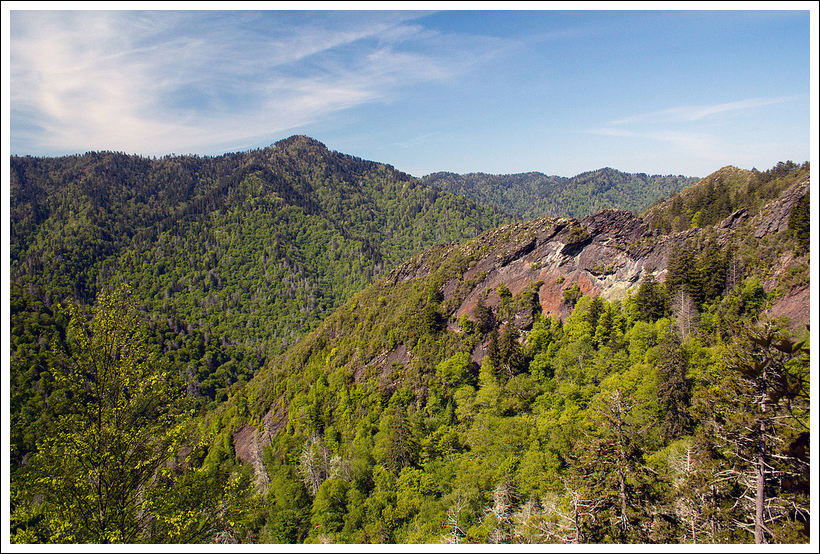
* MapMyHike is not necessarily accurate, as the GPS signal fades in and out – but it still provides some fun and interesting information.