Not to be confused with Silers Bald in the Great Smoky Mountains National Park, this 8.8 mile hike in Nantahala National Forest has some of the best views in the southern Appalachians – mountains roll out in every direction from the summit. The hike is moderate and doesn’t require any tough climbing or tricky terrain.
We thought this video really showcased how amazing the view is from Siler Bald! Sorry it’s so shaky!
Adam Says…
One thing we hoped to do on our trip was to hike some new piece of the Appalachian Trail. While it would have been nice to complete a larger section of the trail, when you only have one car you are stuck with doing some out-and-backs. When we were researching some different options we came upon Siler Bald. My first thought was “Didn’t we already hike this another time?” Oh, that was SilerS Bald, not Siler Bald. I always get a kick out of how many mountains and hikes have similar names. We have come across several Chimney Rocks in our travels. It reminds me of the unoriginal naming of cities in New England. You can find multiple Manchesters, Andovers, Portsmouths, Dovers, and Salems in the New England states, as if their goal is to get you lost when you try to navigate with your GPS. The nice thing about both of these similarly-named balds is they have great views so you can’t go wrong.
There wasn’t a GPS signal when we started this hike, so it was a little difficult to find the starting point. I had a map of the area and we were able to find the parking lot easily enough. The Appalachian Trail crosses over Hwy-64 near the parking lot. The southbound path is easy to find, it takes off from the parking lot. However, the northbound path was harder to find. I crossed the road and walked down the road heading east for about a hundred feet. Then, I saw the AT cut through on a small, overgrown path. I signaled back up to Christine that I found it and we began our hike.
There was a pretty small waterfall near the beginning of the hike. Below: Winding Stair Gap; National Forest Information, Stream crossing and nice campsite.
Heading into the woods, the white-blazed trail starts on a very gradual uphill slope. Like many parts of the AT, this hike can be called a green tunnel – one path cutting through lush, green forest. We reached a waterfall and forest service road in .2 miles, followed shortly by a stream crossing and a nice campsite area. The trail then continues uphill as you pass by Swinging Lick Gap at 1.1 miles and Panther Gap at 2 miles. Right before the sign of Panther Gap, we were startled as 5 grouse took off across the trail just ahead of us. When you are walking along the trail with nothing but the sounds of the woods around you, a big move from the brush can you make you almost leap out of your hiking boots. From Panther Gap, the trail then goes slightly downhill for about a quarter of a mile before going gradually uphill. We eventually reached a junction trail at 4.2 miles. The trail branches off to the Siler Bald Shelter, which is about .5 mile from this junction (this trail eventually loops around to the other side if you see it out after the summit). We didn’t take the trip to the shelter since we were getting hungry and wanted to make our way to the views.
There were still some colorful things growing and blooming along the trail.
Continuing on the AT, we met another junction with the Siler Bald summit trail. From here, we took the path up the hillside, requiring us to almost bushwhack through this thick, tall grass and brush for a short distance before we came out of it. We climbed a very steep .2 miles to reach the summit of Siler Bald at 4.4 miles. As you are climbing up, if you look behind you the views start opening up of the mountains around you, but when you reach the summit the views are spectacular. Having hiked without seeing anyone the entire day, we were surprised to see a thru-hiker at the top. He was hoping to get a ride into town, having a craving for a pizza. We talked with him for a while and were pleased to find out he was from Virginia as well. He made a call to have someone meet him at the trailhead and he was off in a flash. We ate our lunch and enjoyed the views all to ourselves. On our way back down, we did come across a few other people that were out for a backpacking trip. This hike is one that has outstanding views for a minimal effort and is not as well-traveled.
The trail was green and lush. Below: Tunnels of mountain laurel; There was a shelter on a side trail – we skipped visiting; Making our way up to the top of the bald.
Christine Says…
Three and a half days in the Smokies just aren’t enough! On our 2015 stay, we tried two new hikes in the park (Ramsey Cascades and Gregory Bald), revisited an old favorite (Charlies Bunion), and then picked something new! For our final hike of the trip, we chose a hike outside the park borders – Siler Bald. This hike is located just south of the park in Nantahala National Forest. It offers a spectacular, panoramic vista from a spur just off the Appalachian Trail.
We parked our car at Winding Stair Gap. There is a good-sized lot along Hwy-64. From the parking area, we crossed the highway and picked up the Appalachian Trail heading north. In the first couple tenths of a mile, we crossed a footbridge over a pretty small waterfall. On the other side of the bridge, there was a kiosk with information about the forest. Shortly after the sign, we crossed a wider stream with a lovely backcounty campsite next to it.
This was about the moment we realized ‘Wow… mountains everywhere!’ Below: Siler Bald scenery.
We hiked along, enjoying the abundance of interesting wildflowers and fungi. The climb was steady and slow. It was by far the easiest hike of our trip. We chuckled at the random sign posts in the woods declaring that a particular spot was a ‘gap’. None of the gaps really seemed to be low points between mountains, nevertheless their were signs indicating that we had passed through Swinging Lick Gap, Panther Gap, and Snowbird Gap. Other than enjoying the pleasant weather and small things along the trail, there’s nothing grand along the way to Siler Bald. The grandeur all comes shortly after you reach a grassy clearing about 4 miles into the hike.
From the grassy clearing, climb the spur trail steeply up through the meadow for .2 miles. When we visited, the meadow was full of tall grasses and daisies. At the very top, we reached a flat opening that looked out across what seemed like all of the southern Appalachians. We had great views of Standing Indian mountain, Wayah Bald, Lake Nantahala, and even into Georgia.
Storm clouds started to roll in. Below: Mountain views on the descent; Small waterfall
There’s a marker at the top of the bald declaring the mountain’s name and elevation (5,216 feet). There’s also an established fire pit and plenty of room for several tents. What a place to watch both sunrise and sunset!
Adam and I ate our lunch (so many peanut butter and jelly sandwiches on this trip), took lots photos, and spent some time chatting with a fellow Virginian we met atop the summit. Rambling Wreck was his name, and he was doing a flip-flop thru-hike of the Appalachian Trail. He was really the only person we saw all day until we were almost done with our hike.
Nachos and Beers at the NOC.
As we enjoyed the bald, darker clouds started to roll in. We knew thunderstorms were forecast for later in the day, so we decided to make our way down. The descent from the bald is nearly as magnificent as being on top – walking downhill with all the mountains laid out before me was breathtaking! I was probably paying too much attention to the view, because the toe of my shoe got hooked on a root hidden by deep grass. I took one of those epic falls that happen so fast you can do nothing to stop and catch yourself. I faceplanted and ended up with several deep, painful bruises, but nothing that stopped me from hiking on. When you’re a regular hiker, these things are bound to happen sooner or later!
The hike down went quickly and soon we arrived back at our car. We decided to make the drive out to the Nantahala Outdoor Center (NOC) for our next stop. On the way, we were pounded by thunderstorms. I’m glad we missed them on the trail! At the NOC we grabbed an outdoor riverside table at Big Wesser Brew and BBQ (one of our favorite spots) and shared nachos and a couple beers. Super day!
Directions to trailhead: GPS coordinates for this trailhead are 35.12175, -83.54435. It is located on US 64, 11 miles west of Franklin, NC. There is a spacious parking lot at Winding Stair Gap. From the parking lot, cross the road, head east about 100 feet, and begin hiking north along the Appalachian Trail.
Gregory Bald is famous for its brilliant display of flame azaleas each June. On prior trips to the Smokies, we were in the area too early to catch the bloom. This time, we hit it just right, and enjoyed this wonderful, challenging 9.5 mile hike (includes .5 mile of walking the trails around the bald). The views and blooms did not disappoint!
Update Spring 2016: Parsons Branch Road (the route to this trailhead) is indefinitely closed to vehicular traffic. It’s been determined by the National Park Service that towering dead hemlocks pose too great of a falling risk. You may still walk up Parsons Branch Road or take the longer hiking route outlined here: http://www.hikinginthesmokys.com/gregory.htm
In June, the summit of Gregory Bald explodes with the color of blooming azaleas.
Christine Says…
Goodness… we’re doing a lot of hiking and not much writing! Here we are in mid-August, still playing catch-up on hikes from June. We have a backlog of twelve (yikes!) hikes to write about.
The first is this wonderful climb to Gregory Bald that we did on our Smokies a couple months ago. Typically, we visit the Smokies in late May. Mid-spring is a gorgeous time of year for cool temperatures, wildflowers, and smaller crowds. This year, we had to put our trip off until mid-June. It was much hotter and the park was more crowded, but the timing gave us the opportunity to finally climb Gregory Bald when the flame azalea was at peak.
There are a couple routes up to the bald. The most common route is probably the ascent along the Gregory Ridge trail. It’s an 11.3 mile hike with just over 3,000 feet of climbing. It’s more popular because it’s easier to access by car and is supposedly a little more scenic along the way. We chose to climb via the Gregory Bald trail from Parson Branch Rd. It’s a shorter hike with less elevation gain. It’s also much harder to get to! Parson Branch Rd. is a one-way, seasonal road (closed in the winter) that requires 4WD/AWD. We had four 8-9 mile hikes planned in 3.5 days, so the shorter/easy route appealed to us. Thankfully, our little Subaru proved up to the challenge and we successfully jolted and bumped along the rugged road until eventually reaching the trailhead.
Rhodendron blooming along the lower trail. Below: Trailhead sign, Crowded parking along Parson Branch Road; Adam starts off down the trail.
We got there pretty early, but there were already tons of other cars filling the small lot and lining the dirt road. We geared up and hit the trail. Honestly, there isn’t much to see along the 4.5 mile walk to the bald. It’s a lovely wooded trail, but there aren’t any noteworthy features until you reach the bald.
Adam and I walked along, chatting and talking about past hikes. Suddenly, Adam froze in his tracks and said ‘SNAKE!’. It was a beautiful, dark-colored timber rattler sunning itself across the trail. Adam hates snakes, but I find them beautiful and fascinating. He stepped back while I tried to get a few photos – which proved difficult with my wide angle lens. I tossed some small pebbles near the snake to encourage him off the trail. He obliged and we were on our way!
Near the ridge, we passed Sheep Pen Gap campsite. It was occupied by a group of extremely well-equipped horse campers. They had a full camp kitchen, coolers, and canvas tents big enough to stand in – definitely the opposite of our ultralight gear! There was a piped water source near the campsite. It was flowing nicely, but it was definitely water you’d want to boil or filter due to the large amount of horse manure in the area.
There was nothing remarkable about the trail to the top. Below: We did see lots of snails; And a timber rattler; We crossed one shallow stream.
About a half mile past the campsite, we emerged onto the bald. It was absolutely exploding with color – azaleas in red, salmon, pink, orange, gold, and white! I can understand why people come from all over to witness this display first-hand. On top of the amazing floral display, the summit also offered panoramic views. We ate our lunch overlooking Cades Cove and then spent some time walking around and admiring all the different colored azaleas. We even met a fellow JMU grad on the summit.
The longer we stayed atop the bald, the more people arrived, and we decided it was time to make our way down. The descent went very quickly, as the trail had easy, uncomplicated footing. About a mile from the parking lot, we ran up on the JMU alumni we had met earlier. He and his girlfriend were stopped in the middle of the trail. A bear had just crossed in front of them and they were waiting and making sure it was safe to proceed. Adam and I were disappointed that we had missed seeing the bear.
We ended up walking the last mile with them, chatting about hiking and the Bonnaroo festival they had just attended. Before we knew it, we were back at the car! The remaining stretch of one-way Parsons Branch Rd. was an adventure, too. I think we must have driven our car through at least a dozen streams before eventually coming out on the famous Tail of the Dragon road. I’ll let Adam talk more about that! It was a fun day, and I’m so glad I finally got to see the famous Gregory Bald azalea bloom!
Adam Says…
The hike to Gregory Bald has been one we have been considering for years. Some of the balds in the Smoky Mountains have been quite overgrown, since the park service has wanted to return them to their natural state over time. I was preparing myself to be disappointed, but luckily that was not the case. The day we visited was the peak of the blooming azaleas and the skies were so dramatic that it was a photographer’s paradise.
Gregory Bald is named after Russell Gregory, a resident of Cades Cove who died in 1864. Russell lived in a stone house near the summit during the spring and summer, while his cattle grazed on the summit. A Union support, Gregory was killed by a Confederate soldier while protecting his land and cattle. The Cherokee had named this mountain “Tsitsu’yi”, meaning “Rabbit Place” and it was believed that the chief of all rabbits lived on the summit.
The azaleas bloom in many colors, but mostly oranges and reds. Below: Campsite at Sheep Pen Gap; Arriving at the bald; Beautiful azaleas.
As Christine mentioned, the drive was a chore. To access Parson Branch road, we had to go through Cades Cove most of the way. Drives to me to Cades Cove are always frustrating to me. Before you even get to the Cades Cove area, people were driving 12mph in an area where you can go much faster. When we arrived in Cades Cove finally, we had more of the same. Nobody would pull over to let us pass on the one-way road. Instead, we had people in front creeping a long at 5mph with doors opened on both sides of their mini-vans to enhance their wildlife/scenery viewing. What felt like 500 hours later, we finally were able to turn off the Cades Cove loop onto Forge Creek Road. Once we turned on to Parson Branch road, the gravel road became extremely steep and filled with potholes and uneven road. While we don’t do a lot of “offroad” driving for hiking, this was one of the roughest stretches of roads I’ve driven. We made it to the top of the hill eventually and found the full lot and line of cars on the side of the road. We parked along the side of the road as best we could, I crawled to the passenger’s side to escape the vehicle, and we made our way to the trailhead.
The hike up to Gregory Bald was a steady uphill, but the trail was in decent shape and not rocky, to allow for easy footing. The trail was mostly shaded by trees all around, so it kept the sun and heat off of us for most of the day. Other than seeing the rattlesnake, it was mostly uneventful – a nice walk through the woods without a lot to see.
Close-Up Gregory Bald Azaleas Below: Orange azaleas; More views of the bald and the mountains beyond.
Around the four-mile mark, we reached the Sheep Pen Gap campsite area on the right. Shortly after the campsite, there is a junction with the Wolf Ridge Trail. Take a left here to stay on the Gregory Bald Trail to reach the summit. This short section of trail was much steeper, but the terrain was still comfortable. After a couple of tenths of a mile, a side trail shot to the right leading to a small clearing with the first of the azalea blooms. We decided to press on to the summit which was just ahead. When we stepped into the scene from the summit, it was breathtaking. The shape of the ridge doesn’t always give you the best views of mountains all around you, but the colors were all around. There was lush green in the grass, reds and oranges around us in every direction from the azaleas, blue skies with large, puffy white clouds in the sky. It reminded me of one of those beautiful yet sadistic jigsaw puzzles you get where you could only group things by a few colors, taking forever to solve. We ate our lunches under this gorgeous spectacle and then spent a long time exploring the summit on all of the interweaving foot trails, searching for all of the different color variations of azaleas.
We made our way back down the way we came. When we got back to the car, we proceeded down the mountain on the one-way road. The road was in a little better shape on this side of the mountain. There were several stream crossings we had to make with our car; we weren’t scared to cross through the shallow water, but it reminded me of what you may see occasionally on SUV commercials. When we got on to the main road, we took a right and found ourselves on the Tail of the Dragon on US-129. This dangerous section of windy roads includes 318 curves over 11 miles. Since it is a popular destination for motorcycles that like to live dangerously, we passed several photographers stationed on the side of the road that take pictures all day of all the cars and motorcycles that pass. They sell the photos online for people to buy. The first couple of ones I thought were ridiculous, but then I put up my “heavy metal” hand gesture and rock-out face to the last photographer. When I got back to the hotel, I looked it up online and laughed -the Subaru Outback is not the epitome of a vehicle living on the wild side.
This neat tree provides shade atop the bald. Below: Horse campers at Sheep Pen Gap; The descent; We saw another group of horse campers hiking up.
Trail Notes
Distance – 9.5 miles (includes distance to the bald, and a half mile of walking the network of trails on the bald) (Check out the stats from Map My Hike)*
Elevation Change – 2290 ft.
Difficulty – 4. The climbing on this trail is relentless and moderate to strenuous.
Trail Conditions – 4. The trail was smooth, uncomplicated dirt.
Views – 5. Gorgeous and made even moreso by the blooming azaleas.
Streams/Waterfalls – 1. There were a couple very low streams that were usable as water sources, but not scenic.
Wildlife – 4.5. We saw a timber rattlesnake and the couple right ahead of us crossed paths with a black bear!
Ease to Navigate – 4. The trail is easy to follow and the one junction is well-marked
Solitude – 2. The trail is one of the park’s most popular.
Directions to trailhead: Do not attempt to access this trailhead without an AWD vehicle. Parson Branch road is one-way, gravel, and very rough. You will traverse steep inclines, deep potholes, and many small streams in your vehicle. Our Subaru Outback did fine, but I wouldn’t have wanted to attempt the drive with less.
From Gatlinburg, TN, take US-441S into Great Smoky Mountains National Park. In 1.6 miles, take a right on to Fighting Creek Gap Road. Stay straight until you reach Cades Cove as Fighting Creek Gap Road becomes Little River Gorge Road, Laurel Creek Road, and Cades Cove Loop Road over the next 30 miles. Once you enter Cades Cove and pass the visiting station, stay on the loop road for 5.6 miles. Then turn right on to Forge Creek Road. In 2.1 miles, turn right on to Parson Branch Road (this road is closed November-March). Continue up the one-way Parson Branch road for about 3.5 miles until you reach the small parking lot on the right. The trailhead is across the road. The parking lot only has room for a couple of cars, so you may need to park on the side of the road during weekends or the summer.
Christine takes in the view on Signal Knob. Below: Adam checks out the GWNF information board; The stone cottage; Wild rose.
Christine Says…
Picking day hikes is getting challenging for us – we’ve done most of the popular ones in the area. Yet, somehow, Signal Knob had repeatedly escaped our notice. We figured a pleasant Sunday in early June was a perfect day to tackle something new!
We started our day early with a big breakfast in Harrisonburg. Then we stopped for donuts at Holy Moly in Strasburg. We decided to save the donuts for post-hike, but Holy Moly is so popular (especially on the weekend) that we didn’t want to take the risk of them selling out.
Parking at the Signal Knob trailhead is abundant and completely off-road. When we arrived there was a small handful of other cars there. We started out from the trail on the north side of the parking area – look for orange blazes (Massanutten Trail) and a GWNF information board. The trail climbed steadily right away. We passed a really neat stone cottage right along the trail very early in our hike. It was in great condition and still looked in-use. Right after the cottage, we stepped over a small stream and continued uphill. The lower parts of the trail were lined with wild roses and sweetpeas. As we climbed higher, mountain laurel became abundant. The trail was openly exposed to the sun and offered some nice views along the way.
There were some pretty views through the trees on the climb to Signal Knob. The higher we climbed, the prettier the mountain laurel became. Low elevation laurel had already gone to seed. Below: A neat tree before the Buzzard Rock Overlook; Buzzard Rock Overlook; Fort Valley Overlook.
At 1.5 miles, we reached an opening in the trees which gave a backlit view of Buzzard Rocks on the other side of the valley. I can’t look at Buzzard Rocks without recalling the horrible ankle sprain I suffered there several years ago! We chatted with an older gentleman at the overlook – he warned us that the trail was about to get rocky! He wasn’t kidding! For the next 1.25 miles, the trail was a loose jumble of pointy, shifting rock.
At about 2.5 miles, we passed the marked Fort Valley Overlook. The view was mostly overgrown, but I can imagine it lovely when the trees were smaller! Gradually the rockiness tapered off; and so did the climbing. The trail became a pleasant stroll through the woods. We passed several nice campsites and passed the junction of the Meneka Peak trail at about 3.5 miles. The last .8 of a mile to Signal Knob was ever-so-slightly downhill.
When we reached the WVPT building, we thought the open vista behind the building might be the view. We chatted with a pair of hikers there and asked ‘Is this the only view up here?’ Both of them said ‘Yes… it’s the only view we’ve ever seen and we’ve hiked here lots of times.’ We took them at their word and felt a little underwhelmed by the view – it was obstructed by powerlines and disrupted by a steady buzz from the broadcast tower. Not wanting to doubt them directly, I whispered to Adam ‘This can’t be it… there’s no view of Strasburg and there’s supposed to be one!’ We decided to explore further before hiking down the fireroad. I’m glad we did!
Leaving the WVPT tower, do not follow the fire road downhill. Go past the tower and look for a trail than runs parallel to the ridge. If you follow it a short distance, you’ll come to a marked overlook – Signal Knob. We spent some time at the knob relaxing and enjoying a bit of breeze. Signal Knob is a nice overlook, but not a spectacular one. It’s a bit closed in and overgrown. And, if I’m being 100% honest, looking down into Strasburg with its housing developments, water towers, and roads just isn’t as breathtaking as looking out into raw wilderness. I did also enjoy our ‘company’ at the summit – for whatever reason, Signal Knob was hopping with toads. We saw dozens of them! I’ve never seen so many together!
The trail up Signal Knob is extremely rocky. Below: Once you reach the ridge it’s a bit less rocky; WVPT broadcast; A view behind the tower.
After enjoying the view, we followed the trail slightly downhill past the overlook. A trail marker directed us toward the Tuscarora Trail. We soon merged onto the fire road we had seen near the broadcast tower. We followed it downhill for almost a mile before reaching another trail junction.
The turn onto the Tuscarora trail is marked with another national forest information board. There is also a nice bench at the junction – probably an Eagle Scout project! Turning onto the Tuscarora Trail, you’ll immediately cross Little Passage Creek. It was a very easy rock hop. From there the trail climbs uphill for a little less than a mile. This section was a bit steeper than what was required to reach Signal Knob, but still squarely moderate.
Along the ridge, we passed the other side of the Meneka Peak trail. Looking at how these trails interconnect is interesting and definitely opens up some longer loop options. At about 6.4 miles, the trail passed through a small grassy area and began to descend steadily. There really wasn’t anything remarkable about the rest of the hike. It was just a walk through the woods. We saw a big bird’s nest of some sort. We saw tons of ripening blueberries. We passed some boy scouts on a weekend backpacking trip. We passed the pink blazed Sidewinder trail at 8.1 miles. We crossed a stream. At around 9.5 miles we passed a spur trail to Elizabeth Furnace. At this point the blazes went back to orange.
We found this part of the hike a bit confusing. Our maps and GPS disagreed on distances for waypoints late in the hike. There was also a lot of trail construction and rerouting going on. New paths were cut into the woods all over the place. Fortunately they all went in the same general direction. We tried to follow the most established paths. A little over a half mile past our last trail marker, we spotted a parking lot through the trees. Adam thought it was a different one from where we started, but our MapMyHike app indicated we made a full loop and we popped out on the south side of the lot where we had started our hike several hours earlier.
The day had become hot, humid, and overcast, so we were glad to be back at the car! We shared just one of the donuts (Peach Bellini!) so we could save room for a big lunch at Spelunker’s in Front Royal. On the way to lunch, we talked about the hike a bit. We both agreed that it wasn’t one of our favorites. I think it’s popular because of its vicinity to northern Virginia, but of the knobs in the Massanutten/Fort Valley area – I like Strickler and Duncan quite a bit more!
Adam Says…
We have had many people recommend Strickler Knob to us over the years. Knowing of its popularity, we thought it would be a good idea to get an early start. When we arrived, there were not many cars there, but from the size of the parking lot we knew it was a matter of time.
We started out on the north (right) side of the parking lot. The orange-blazed Massanutten trail started off our loop hike. The trail starts uphill and soon passes a large stone cabin on the left, while you can see a stream below to the right. You cross over the stream and then loop back in a northerly direction. At 1.5 miles, we reached Buzzard Rocks overlook. We talked there to an older man who was out for some morning exercise. He warned us of about a mile of pointy rocks ahead. Since he was hiking solo, he told us he doesn’t want to risk hurting himself and just goes to this overlook and back.
The trail takes a sharp left turn and then within a few minutes, we found the rocky area we had been warned about. Wear comfortable shoes, as the rocks were pointy and you always had to look at your feet to navigate through safe footing.
You can see the town of Strasburg from Signal Knob. We weren’t terribly impressed with the view. Below: Toads everywhere; The fire road; The information board at the junction with the Tuscarora Trail; A glimpse of a view.
At 2.4 miles, we arrived at the sign for the Fort Valley overlook. The trees and leaves have this very obstructed now, but you can get a glimpse of the valley below. At 3.4 miles, we arrived at the junction with the white-blazed Maneka Peak trail, but continue on the orange-blazed Massanutten Trail. The trail leveled out at this point, giving us a nice forest walk until we reached the broadcast tower at 4.3 miles. We walked behind the building on a small path and saw nice views on the backside of the tower. We were feeling disappointed when the two girls had said this was the view. My idea of views doesn’t include power lines cutting through the landscape. There were lots of bugs flying around us, so we didn’t stay here long.
We pushed on from the tower and saw that there was a huge fire road leading down, but the trail blazes seemed to continue forward back into the woods. We decided to take this route and then within a short distance came to the real view. We both felt bad that these girls, who had been up here several times, had always missed the real view up here. The view here did give us nice views of Strasburg below. I noticed that one of the rocks had a plaque below it that was put in here for a couple that loved coming up here.
Adam walks along the Tuscarora Trail. Below: Stream crossing near the end of the hike; Pretty butterfly; Holy Moly!
The trail then loops back and does join the fire road very shortly. We walked down the steep fire road and came upon another hiker who had just hiked up the fire road to the summit. The fire road was a fairly steep descent and had nice wildflowers along both sides. At 5.5 miles, we came across a bench and a junction with the blue-blazed Tuscarora trail. We took this trail to start our return trip. The Tuscarora Trail was more overgrown and the climb up Meneka Peak was the steepest climb on this hike. We were finally finished with the uphill at 6.4 miles and then the trail descends on the other side of the ridgeline just as steeply.
The trail descends for a good distance. At 8.1 miles, we passed by the pink-blazed Sidewinder trail and the trail leveled out a little more. We continued on and the trail became orange-blazed again at 9.5 miles. We followed the orange-blazed trail through the tricky section mentioned above and then arrived back at a lower section of the parking lot at 10.2 miles.
Overall, I was underwhelmed on this hike. The views were nice, but I have seen a lot better view hikes. I can imagine that in a few years, the trees and bushes may obstruct the main view even further.
Because of the inner-connectivity of all the trails in this area, there are many options for backpacking loops through this trail system. The loop that we chose didn’t have a lot to offer after the summit. If I was doing this again, I would likely do just an out-and-back hike to the summit, making this an 8.6 hike.
Difficulty – 3. The climbing on this trail is all easy to moderate, but the distance and loose/rocky footing increase the difficulty rating.
Trail Conditions – 2.5. The trail is rocky and shifty – especially the middle part.
Views – 3. There are descent views from Signal Knob and the WVPT broadcast facility. While other reviews give the vistas on this hike top marks, we thought they were just OK. The WVPT view had powerlines and the Signal Knob view is starting to get a bit overgrown and looks out toward an suburban area.
Streams/Waterfalls – 2. There were a couple small streams that could be used as water sources. We believe they dry out pretty quickly based on the fact that they were already on the low side after a week of rainy days.
Wildlife – 3. We saw lots of cute toads hopping around, and supposedly this is a good place for a potential bear sighting.
Ease to Navigate – 2.5. The blazing in this area is very thorough, but trail junctions are inconsistently marked. As of June 2015, it appears the forest service is working on a reroute of the last .5-.75 miles of the hike. There are lots of unmarked trails that criss-cross the established, blazed trail.
Solitude – 3. We saw a good number of couples and solo hikers out for a day hike. We also saw a group of college students and a boy scout troop out backpacking.
Directions to trailhead: From I-66, take exit 6 for US-340/US-522 for Front Royal/Winchester. Turn on to US-340S/US-522S/Winchester Road. Go 1.2 miles and take a right on to VA-55W/W Strasburg Road. Go 5.1 miles and take a left on to State Route 678/Fort Valley Road. Go 3.4 miles until you reach the large parking lot on the right. Park here. The trail starts on the right side of the lot. You will see the wooden information board that will mark the beginning of your hike. Parking coordinates: 38.93503, -78.31956
This 28.6 mile Appalachian Trail section is one of the toughest northbound sections in Virginia – you climb, and then you climb some more. The first nine miles are essentially ‘green tunnel’. The middle section has several great views. And, the last part is an easy downhill coast to the James River. We did this section over two nights – Adam will cover days one and three, and Christine will do day two.
The Appalachian Trail is sometimes called ‘The Green Tunnel’. Our first day of hiking was a good example of that nickname. Below: Bryant Ridge Shelter is one of the nicest along the AT in Virginia; Adam reads the shelter log; The closest we came to a view on day one.
Day One (8.7 miles)…
We started off our day by driving to the James River footbridge parking lot. I had arranged a shuttle to pick us up at 10 a.m. and then drop us off at our starting point at Jennings Creek. We enjoyed some breakfast at Cracker Barrel, but still arrived at the parking lot around 9:30 that morning. There were a few people in the parking lot that were getting ready to start hikes or taking breaks. One guy was hiking southbound to Roanoke and said he was looking for a ride to Glasgow so he could buy batteries to charge his phone. I found some extra batteries for my GPS, so I handed them over to him and told him I hoped it got him a little closer to Roanoke.
As 10 a.m. came and went, I got a little nervous that our ride might not show. I had some hope when a car pulled in to let off some thru-hikers, but it turned out not to be our ride. by 10:20 a.m., I thought we needed to see if we could figure out what was going on. There is absolutely no phone signal at the footbridge, so Christine waited in the lot while I drove until I could get a signal to make the call for the shuttle driver. I ended up having to drive for several miles before I got one bar and ended up having to leave a message. I turned around to get back to the parking lot and when I arrived, there was the shuttle driver with Christine. Whew! We loaded up our stuff and got on the road. Turns out, he had written down 10:30 for the trip. We were just glad we didn’t have to hitchhike or beg someone else to take us.
Our shuttle driver, Ken, was retired and spends most of his time during the spring, summer, and early fall taking care of AT hikers. He helps shuttle people where they need to go and picks up packages for AT thru-hikers to deliver to them. After talking with on the ride to our start point, we could tell that he is one of those true Trail Angels that just makes hiking the AT a bit easier for everyone.
We arrived to Cornelius Creek Shelter around 4:00 p.m. — before the crowds started rolling in. We got a very nice site behind the shelter. Below: Adam collected water from Cornelius Creek; Little Debbie Peanut Butter Creme Pies are a great dessert. They don’t get crushed. They’re soft and chewy. And they pack in 410 calories; Enjoying downtime at camp.
It was probably about 11:15 when we finally started our hike. The Jennings Creek area had lots of parking and it was a nice place to pick up the trail. We headed northbound on the white-blazed AT, which started with a steep climb from the road. After 1.6 miles, we had climbed 1000 feet and reached the top of Fork Mountain. The trail then descends about 800 feet and we reached another stream past a powerline at 2.8 miles. The trail continues along the stream for a while, giving you a great water source if you need it. At 3.8 miles, we reached the Bryant Ridge shelter, which was a great spot to eat lunch. We joined a couple of thru-hikers (one from Germany) at the shelter, who were eating a quick snack and filling up water from the stream. The Bryant Ridge shelter was one of the nicer shelters and even had a high loft and a window that let in some nice sunlight.
After fueling up here, we had a big climb ahead of us. From the shelter, the trail climbs up and up. At 6.9 miles, we had climbed about 2000 feet from the shelter and reached a sign noting a small sidetrail on the left to a campsite. We continued our climb and at 8.1 miles, reached the top of Floyd Mountain. The trail from here began to descend and we reached the sign that pointed to Cornelius Creek Shelter at 8.7 miles. This day there was nothing exceptional to see on the trail, but we were at least glad to be settling in at camp.
When we arrived at the shelter, we noticed the thru-hikers we had seen at the Bryant Ridge shelter were setting up in the shelter. The trail behind the shelter that led to the privy had lots of campsites, but some of those were already taken. It was only 4 p.m., but we felt we needed to stake our claim quickly so we set up camp in one of the remaining spots behind the shelter. Within minutes, we already had others setting up other tents nearby. We knew this was going to be a crowded night. After we set up our tents, I went to go get water by the stream near the shelter. There was a pileated woodpecker climbing up a tree just a few feet away from me. I enjoyed having this moment with this often-skittish bird. The woodpecker eventually flew off and I was joined by someone also filling water. It turned out he was a JMU student who worked at our rec center and we had some mutual acquaintances.
When we got back to our campsite, we began to make dinner, read books, and started a small campfire. Right around dusk, a large group of boy scouts arrived and there wasn’t much room. The only place left around was right near us; we were worried how they would keep us up but they were very respectful and kept it relatively quiet. As we overheard them talk, we heard they had a rough day. They had driven up and got lost somewhere on the trail and while they had parked just half a mile away from the road, they had walked for miles trying to find this shelter. They had rushed to set up camp and start to cook their dinner in the dark. One scout named Max was hungry when they arrived and asked what they had for appetizers. We got a laugh when we heard the scout leader tell him he could have a handful of unsalted nuts. I guess Max learned that the backcountry isn’t Applebee’s. After the fire faded, we crawled into our tent and drifted off to sleep.
Day Two (12.2 miles)…
Sunlight started filtering into our tent a little before 6:00 a.m. I unzipped my sleeping bag, stretched my legs, and changed from my camp clothes back into my hiking clothes. While Adam worked on packing up the tent and our sleeping gear, I made breakfast. Typically, we eat oatmeal, a honeybun, and some cheese. The goal for breakfast is always to eat lots of calories so we can hike for a while before needing a snack. On this trip, we swapped out the oatmeal for granola with Nido. Nido is a full-fat, enriched powdered milk found in most grocery stores’ Latino section. The Nido was fantastic – creamy, rich, and delicious with our maple-pecan granola.
After breakfast we were all geared up – backpacks on and ready to hike out – when suddenly I felt water running down the backs of my legs. Crap! At first I thought I had squished my Camelbak hose open, but it turned out to be a bit more serious. Even though the ‘locked’ arrows on my Camelbak lid were properly aligned, I guess the threads were still uneven. As soon as the gear inside my pack pressed against the reservoir, water started leaking out. All in all, a little over a liter of water gushed out into the bottom of my pack.
Adam took my Camelbak and the filter back down to the spring and refilled it while I worked on drying the spilled water. My pillow, sleeping pad, and sheet were all pretty wet, but I was most concerned about my sleeping bag. It was in a water-resistant compression sack. It felt wet on the outside, but I didn’t want to take the time to unpack it to check the inside. I guess my fate would be determined at camp that night! Within 10 minutes of the spill we were back on the trail.
Our first view came relatively early on Day 2. Black Rock Overlook was very nice. Below: Walking through tunnels of flowering rhododendron was very pleasant; Spiderwort along the trail; Adam approaches the summit of Apple Orchard Mountain.
I was pretty grouchy about all the wet gear, so I walked quietly behind Adam ruminating on the impending case of hypothermia I would probably get from sleeping in wet down. After a mile, we reached our first view of the day – a gorgeous vista from Black Rock Overlook. The view is located on a spur trail a couple hundred feet off the AT. After enjoying the mountainous view and taking a few photos, we headed down the trail. The going was pretty gentle for a while. We passed junctions with the Cornelius Creek and Apple Orchard Falls trails. We hiked to the falls and along Cornelius Creek earlier in the spring. It’s a great dayhike in this area.
After passing the junction with the Apple Orchard Fall Trail, we soon reached a gravel road at Parkers Gap. A flight of wooden stairs led uphill from the road. At the top of the stairs, we found two coolers of ‘trail magic’ for thru-hikers. One cooler had ice and bottled water and the other had a variety of snacks – fruit, cookies, and candy. We left the treats behind and began the tough 1.5 mile climb to the summit of Apple Orchard Mountain. On the open, grassy summit of Apple Orchard, we enjoyed more excellent views and a snack. We were even joined by a small garter snake trying to warm in the sun. The FAA radar dome sitting atop the summit is huge and plastered with NO TRESPASSING signs.
It felt good to take our packs off and enjoy the summit of Apple Orchard Mountain. Below: There are views from both sides of Apple Orchard; A snake in the grass; The FAA Radome atop Apple Orchard.
About a third of a mile north of Apple Orchard, we passed under The Guillotine – a round boulder perfectly balanced and wedged between two rock faces. Pretty neat! The trail went through a short and steep rocky section before reaching a pretty, sunny meadow. About a mile after the meadow, we popped out on the Blue Ridge Parkway.
We crossed the road and picked up white blazes again. We enjoyed pleasant, easy trail for another third of a mile to the Thunder Hill Shelter. We stopped in to rest and check out the shelter log. After leaving the shelter, the trail continued gently along. It was one of the prettiest parts of our hike – so many wildflowers! My favorite bloom to spot was a large patch of yellow lady’s slippers covering a hillside. They’re not as common as the pink ones, so it was a real treat to see so many at once. About 1.5 miles past the shelter, we reached the Thunder Ridge Overlook and decided it was a great spot to stop for lunch. Nearly 7 miles of hiking had burned off my breakfast and I was ravenous.
Shortly after descending Apple Orchard Mountain, Adam passed under the Guillotine – an interesting rock formation along the trail. Below: The descent from Apple Orchard was a bit rocky; A pretty meadow after the Guillotine; Thunder Hill shelter.
The viewpoint had a constructed stone platform and a superb view! Across the valley, we could even see the huge talus slope of the Devils Marbleyard – another popular dayhike in the area. We got out our Alite chairs and food bags and settled in for a nice long break. I had cashews, dried pineapple, a big handful of Sour Patch kids, and an asiago cheese bagel filled with cheddar cheese slices. I felt so re-energized after I ate! By this time, I had ceased thinking about wet gear and hypothermia and was just really enjoying my day. While we were eating lunch, clouds moved in and a breeze picked up. We ended up moving on sooner than planned because I actually got sort of chilled. Before we hiked on, we made a quick detour up to the parkway so we could throw all our garbage away in a real trashcan instead of continuing to carry it with us. When you’re backpacking, always take advantage of trash cans!
You can see Devils Marbleyard from the Thunder Ridge viewing platform. Below: The trail had a large patch of yellow lady’s slippers; The platform at Thunder Ridge gave us a nice place to eat lunch and take in the view; After Thunder Ridge, we had a long descent through green woods into Pettites Gap.
The next 3.3 miles covered a huge descent with only a few tiny bumps of climbing. It was fast going and we reached Pettites Gap around 2:00 p.m. We knew we had one short but difficult climb ahead of us before reaching camp, so we took our packs off, leaned back against a huge old tree, and ate another snack. We knew the last climb would feel pretty brutal – and it did not fall short of that expectation!
High Cock Knob was beautiful – covered with blooming rhododendron and mountain laurel. But it was extremely steep and rocky. It also had a false summit! We got to the top of a tough climb and started descending and thought ‘Yay… we’re done!!!’, only to have an even steeper ascent staring us in the face a few hundred yards later.
The climb down High Cock was equally steep – covered with loose, treacherous rocks. Several southbound hikers passed us coming the opposite direction. All of them asked ‘How much more climbing!?’ On the way down, Adam had an awful allergy attack. His throat almost closed and he had a difficult time catching his breath. It was pretty scary and he says he really doesn’t remember the last half mile of hiking. Fortunately, it mostly passed and his breathing eased.
There was one obstructed view from High Cock Knob — our toughest climb of the day. Below: Entering the James River Face Wilderness; The Appalachian Trail leaving north from Pettites Gap; The trail over High Cock passed through dense rhododendron and mountain laurel.
Arriving at Marble Spring was like reaching an oasis in a desert! The large grassy campsite had a huge fire pit with log seats, a spring-fed water source, and plenty of room for multiple tents. We chose a secluded tent site uphill from the fire pit. I hung my sleeping bag on a branch to dry – it was a bit damp around the feet. Everything else dried out over the course of the day in my pack. Hooray – hypothermia was no longer an issue. We collected water. I napped in the tent while Adam read a book outside. Being at camp is the best! Around 6:00, I came out of the tent, ready to eat – again! Dinner was lasagna with extra cheese and mocha pudding for dessert.
When we first got to camp, we were alone. But, over the course of the afternoon, a group of four West Point grads out for the weekend and two thru-hikers arrived. Compared to the dozens of people camped the night before at Cornelius Creek, sharing a large campsite with six people felt really quiet and solitary. One of thru-hikers climbed into his tent long before sundown and never came back out. Everyone else (us, a thru-hiker named ‘Captain K’, and the four West Pointers) shared a campfire and conversation. It was interesting to hear everyone’s assessment of the trail that day. It was universally agreed that High Cock Knob was a tough way to end the day! While we sat around the fire, a whitetail deer circled us like a vulture for over an hour. Weird – maybe she wanted to the grassy area to graze? Eventually, the sun slipped behind the mountains, we ran out of firewood, and everyone headed off to their tents for the night. It was a long, hard day of hiking, but it had been full of beautiful views, colorful wildflowers, and blooming trees. One more day to go!
Marble Spring Campsite was spacious and grassy with a nicely flowing spring. Below: Our comfortable campsite; A peek into our backcountry kitchen.
Day Three (7.7 miles)…
We were woken up a little earlier than normal by the sound of a fox screaming and then an incessant whippoorwill that sang for about an hour straight at the first glimpse of sunlight. We started off our third day with an earlier start than the previous day (also thanks to no leaking water bladders) and made our way from the Marble Spring campsite heading north again on the Appalachian Trail. Captain K also was getting ready for his day of hiking and was hoping to get to town to get his resupply package. We told him we would give him a ride to town if he was still at the parking lot.
On our third day, we enjoyed abundant blooming mountain laurel along the trail. Below: Mountain laurel; Catawba rhododendron; You can see the radome atop Apple Orchard mountain in the distance.
Day two had been a tough, long day on the trail, so I was wondering if I had enough energy for the third day. I was surprised to find that Day three was much easier. A lot of that was because it was mostly downhill, but my muscles felt surprisingly ready to tackle the day. Our moods were also boosted by how pretty the trail was. While yesterday was a day filled with tons of rhododendron, today seemed to want to match it equally with mountain laurel along the trail.
The trail started off with a flat section. At .5 miles, we reached a junction with the south side of the Sulphur Spring Trail. At 2.3 miles, we reached the junction with the Gunter Ridge Trail and at 2.8 miles, we reached the junction with the north side of the Sulphur Spring Trail (the Gunter Ridge trail is part of the Devils Marbleyard loop). The trail begins to descend more steeply at this point and we reached Big Cove Branch at 3.6 miles. The trail continues to descend until you reach Matts Creek Shelter at 5.5 miles.
We started to see views of the James River through the trees. Below: Stream crossing; Nice views from the trail on day 3; Adam arriving at Matts Creek Shelter; Walking along Matts Creek; Cliffsides along the river; View of the footbridge from a distance.
The Matts Creek Shelter was fairly run down and from reading the entries in the trail log, the privy was scary as well. We ate a quick snack here, but quickly moved on. At 6.3 miles, the trail ran parallel to the James River, at time providing glimpses of this impressive river. We started to see people kayaking in the river, people going out for a quick stroll on the AT, and a couple of trail runners. We knew we were getting close to the end of our trip. At 7.5 miles, we reached the James River footbridge. At the footbridge was a family that had backpacked with a couple of kids. One of the kids (about 11 in my approximation) had asked us how far we went and we told him. He was impressed, since he had backpacked from Petites Gap (about a 10 mile trip). I told him that I thought he could do it one day, since he still had a smile on his face after backpacking 10 miles. I told Christine I think we just witnessed a kid that just found his love for backpacking. We crossed the James River footbridge and made our way back to the car.
We crossed the Foot Footbridge at the end of our hike. Below: Scarlet Flycatch wildflowers; Footbridge from different angles.
When we got to the parking lot, Captain K was there. He said he had arranged someone to pick him up, so he was going to wait there for his ride. Before we had left, we had filled up a cooler with ice, put in a few drinks, and hoped they would be a cool reward for when we were done. I offered him a cold soda, which he gladly took. The day was already getting quite warm, but we were able to escape into our air-conditioned car. We drove to Lexington to eat lunch at Macado’s and then had a few beer samples at Devil’s Backbone to celebrate.
I’m so proud of how far we have come since Backpacking 101. We feel like we now have the confidence and ability to do multi-day trips with heavy packs. Every backpacking trip we go on, there are new challenges, new things to learn, and adventure just around the corner.
Trail Notes
Distance – 28.6 miles (Check out the stats from Map My Hike* [Day One] [Day Two][Day Three])
Elevation Change – 8100 ft. (Several official sources calculated this elevation total, my less reliable hiking phone app put it closer to 6,000.)
Difficulty – 5. We are not going to sugar coat it – this was a very tough section with lots of climbing.
Trail Conditions – 4. The trail was dry and not too rocky. Stream crossings were small, shallow, and easy.
Views – 4. Views from Black Rock Overlook, Apple Orchard Mountain, and Thunder Ridge were all excellent but none were true 360 degree views. We also enjoyed some nice views through the trees on the descent to the James River.
Streams/Waterfalls – 3. Matts Creek was lovely. And, of course you have to say something about the James River!
Wildlife – 4. We saw deer, snakes, and had a whippoorwill and a screaming fox at night two’s camp.
Ease to Navigate – 4. Follow the white blazes and you practically can’t get lost. The only thing slightly tricky was the big hairpin turn at Marble Spring.
Solitude – 2. We chose to hike this section on Memorial Day weekend… with perfect weather… during the thru-hiker bubble. While we didn’t see crowds on the trail, camping spots were very crowded.
* MapMyHike is not necessarily accurate, as the GPS signal fades in and out – but it still provides some fun and interesting information.
Directions to trailhead: To drop off first car: From I-81, take exit 188A to merge on to US-60E towards Buena Vista. Go 3.9 miles and then take a right on to US-501S at the Hardee’s. Follow 501S for 14.9 miles until you reach the parking lot on the right for the Appalachian Trial crossing. To get to starting point for this section: Take a left out of the parking lot and go 5.6 miles on US-501N. Take a left on to VA-130W and go 6.2 miles. VA-130 ends here. Take a left to go on to US-11/Lee Highway heading south and then take the exit for I-81S. Go 1.7 miles and take a right across from the Exxon to stay on US-11S. Go .4 miles and then merge on to I-81S. Go 7 miles and take exit 168 to merge on to VA-614 toward Arcadia. Turn left on to VA-614/Arcadia Rd. Follow this as it becomes Jennings Creek Road. At 4.7 miles, you will reach the parking area and where the Appalachian Trail crosses the road. Head north to start your hike.
Adam takes in the view from Bluff Mountain. Below: The pond at Punchbowl Mountain Shelter; The shelter itself has seen better days; The Ottie Cline Memorial – put it place for a child lost in the mountains in the late 1800s.
Christine Says…
When Adam and I first started hiking sections of the Appalachian Trail, we focused on the trail through Shenandoah National Park. The park is close to our home, making it easy for us to bring two cars for a shuttle. We did short sections – most of our day hikes ranged from 6 to 8 miles. We did a couple sections as overnights, covering 10-12 miles total over two days. When we first started, those hikes really challenged me – but they also made me want more!
We’re now traveling further from home to complete sections, so we push to complete bigger miles to make the travel time more worthwhile. We’ve also found friends and businesses to help us shuttle along the way.
We met Lynchburg friends, Dennis and Tina to do this AT section from Punchbowl Mountain down to the James River. We’d never met them in person, but we’d chatted online about hiking and the Appalachian Trail for almost a year. We were really thankful for their good company on this hike!
We met early Saturday morning at the Foot Footbridge across the James River. ‘Foot Footbridge’ isn’t a typo. The bridge is named after hiking enthusiast, Bill Foot, who worked tirelessly (while also fighting cancer) to see that the bridge was built. It’s a beautiful and impressive bridge across the James River, and there is nothing else like it along the Appalachian Trail.
After Adam and I got acquainted with Dennis and Tina in the parking lot, we hopped in our car and made our way along the Blue Ridge Parkway to our start point – the Punchbowl Mountain Overlook. We left off here last fall after completing a 17 mile section from Hog Camp Gap.
The morning began with our only significant climb of the day- about 1400 feet over two miles to the summit of Bluff Mountain. About half a mile into our ascent, we detoured to visit the Punch Bowl Shelter. The shelter is a little bit run down and sits next to a murky, muddy, mosquito-haven of a pond. The shelters to the north and south of Punch Bowl (Brown Mountain Creek and Johns Hollow) are both much nicer places to stay the night.
The wildflower display was in full force when we hiked this section of trail. We saw dwarf irises, pink lady’s slippers; native pinxter azaleas, wild geraniums, rhododendron, mountain laurel; wild bleeding hearts; scarlet flycatch (in the full album), and spiderwort (in the full album). It was gorgeous!
After our short stop, we continued our climb to the spectacular open top of Bluff Mountain. We were swarmed by no-see-ums and gnats, but we still enjoyed the (almost) 360 views and watching the morning fog burn off the valley. The remains of a fire tower foundation still sit on the summit. Immediately upon leaving the summit, we stopped at the Ottie Cline Powell memorial. The marker tells the sad tale of a little 4-year old boy lost in the mountains in 1891.
From there, we had four miles of gentle downhill or practically flat ridge walking. It was delightful! Wildflowers were blooming like crazy! The woods smelled fresh, green, and earthy. Even though it was a warm, humid day, the cool mountain breezes made for perfect hiking weather. Along the ridge, we passed junctions with a couple trails – Saltlog Gap and Saddle Gap. I’ve heard these trails are pretty overgrown and don’t know much about them. From there, we enjoyed several great views along the ridge. The views far exceeded my expectations for hike, and I really enjoyed the bird’s eye view of the James River. About 7 miles into the hike, we passed the junction with the Little Rocky Row trail, and reached Fuller Rocks – another lovely view point.
After that view, we descended the mountain along 21 switchbacks. At first the descent was pretty steep, but eventually it moderated and entered a stand of enormous old trees. Dennis even took the time to hug a couple of them.
At 9.2 miles, we took the short side trail to visit Johns Hollow Shelter. The camp is located in a peaceful, open spot in the woods. The shelter is typical, but the tent area behind the shelter is especially nice. There was lots of flat, grassy space to pitch
Walking along the trail lined with yellow flowers. Below: Everything was turning brilliant spring green, Views from the ridge; Descending toward the James River.
After leaving Johns Hollow, we hiked about another half mile in the woods before crossing a gravel forest road. After the road, we quickly reached Rocky Row Run – a beautiful mountain stream that eventually feeds into the James.
The stream was very scenic and we all enjoyed the sound of the flowing water. There were lots of blooming wildflowers and rhododendron along the creek. We crossed a couple small wooden bridges along the way, before popping out on the side of Route 501. From there, we crossed the highway and returned back to the Foot Bridge and parking area at 10.6 miles (11 if you include mileage from shelter visits).
We all decided to walk across the bridge to check out views of the James! It was a beautiful view – especially looking back to all the distant rocky outcroppings we had stood upon earlier in the day. Standing on the bridge, my mind drifted to the next section south – wondering what it would be like and what challenges and gifts would lie ahead on the trail.
Dennis and Tina – thanks for hiking with us! Can’t wait to meet up again.
Adam Says…
This section of the Appalachian Trail was one we had contemplated doing for a while. We have covered now a section of contiguous miles that includes from this point up to Front Royal. It is easier to say, “We have walked from Front Royal to the James River” than to say “We have walked from Front Royal to a place off the Blue Ridge Parkway north of the James River”.
As Christine mentioned, when traveling further away from home the next concern is wondering if we need to bring two cars or figuring out if we can get someone to help us shuttle. It can be hard to find some friends that want to go trekking in the woods for over 10 miles. So, we were very glad to meet Dennis and Tina. They have done this section a number of times before but were willing to do it again with us.
This section was a surprise to us. We hadn’t seen enough nice pictures from these overlooks to know if it would be worthwhile to check. But, we hiked on a very clear day that made the scenery gorgeous.
A nice view of the James River looking in the direction of Apple Orchard Mountain. Below: Dennis points out landmarks from above; This fallen was perfectly balanced across several other standing trees. It looked like the mast of a ship; Tree hugger!
After meeting up, we drove to our starting point on the Blue Ridge Parkway. We met a few guys in the parking lot that were doing a multi-day backpack as well. We crossed the parkway and headed up the white-blazed Appalachian Trail, heading southbound. The beginning of the trail started a steep ascent. It was already a warm, muggy day, so with the extra work of going uphill I got sweaty very early in the hike. In .4 miles, we reached the side trail to the Punchbowl Shelter. The side trail was mostly downhill to the shelter. When we arrived, there was nobody staying there. The shelter is in a nice shady spot, but we could tell the insects were swarming near the pond. We checked out the trail log in the shelter and then made our way back up to the Appalachian Trail.
The trail continues to be mostly a steep climb until you reach the top of Bluff Mountain at 2.0 miles. There were great views to the west from the trail. The bugs were relentless (at least to me) from this open area, so while I would have liked to stay up there longer, I wanted to quickly get back into the woods and away from the bugs. We saw a brilliant indigo bunting flying around the treetops from the overlook. As soon as you get out of the clearing and back into the woods, you see the memorial for Ottie Cline Powell on the ground to the left.
Lovely Rocky Row Run ran along the last mile of the trail. Below: Johns Hollow shelter has a large, grassy field suitable for pitching multiple tents; An interesting cliff face along the trail.
The trail then begins a steep, downward descent. At 3.5 miles, you reach a junction with the Saltlog Gap Trail, but stay on the AT. The trail mostly levels out as you walk along a ridge for a while. At 4.6 miles, you reach a junction with the Saddle Gap Trail. Staying on the AT, the trail begins to climb a more gradual ascent until you reach Big Rocky Row at 6.1 miles. The views from this area were my favorite, as you got to see the James River below snaking through the landscape of mountains.
From here, the trail descends and you reach Little Rocky Row at 7.3 miles, also giving you nice views along the way as you walk down the ridge line. The rest of the hike is basically all downhill from this point until you reach the James River. At 9.2 miles, we reached the a short side trail that took a very sharp turn to Johns Hollow Shelter. We checked out this shelter and came across another two section hikers that were enjoying a week along the AT. There was a nearby stream for replenishing water and a privy. After eating a quick snack, we returned to join the AT again.
The trail again was mostly flat or downhill. We crossed the stream at 9.4 miles and then crossed the gravel VA 812 road to continue on the AT. As we were walking along, Dennis started talking about black snakes and within minutes we saw one directly on the trail as if he had summoned it. The forest through this section had many larger trees along the way and then opened up to beautiful rhododendron plants that were aligning the stream on both sides. It was such a serene setting. At 10.3 miles, we reached the Lower Rocky Row Run bridge. We crossed the run and then at 10.6 miles we were back at US 501. We crossed the road which had the trail lead us right to the parking lot where we started.
We already plan to get back together sometime with Dennis and Tina for a backpack trip sometime in the near future. It is always great to find like-minded people to experience the outdoors together!
Our hike concluded on the northern side of the James River. Below: Kayakers on the river; The Appalachian Trail crosses the James on a long footbridge.
Difficulty – 3.5. 11 miles is a little on the long side, but after climbing to the summit of Bluff Mountain early in the hike, the rest of the terrain is easy to moderate.
Trail Conditions – 4. Consistently well-maintained trail. Some parts of the trail are narrow along a steep hillside, but still easily passable.
Views – 5. Super views from Bluff Mountain, nice views along the ridge, and then amazing views of the James River.
Streams/Waterfalls – 3.5. The final stretch of this hike follows pretty Rocky Row Run, and of course – you end at the James!
Wildlife – 1. We saw a black snake.
Ease to Navigate – 4.5. Just keep following those white blazes south. The trail is easy to follow and well-marked.
Solitude – 3. We saw a fair number of hikers along the way, including quite a few northbound thru-hikers, but you never feel like the trail is crowded.
Directions to trailhead: To drop off first car: From I-81, take exit 188A to merge on to US-60E towards Buena Vista. Go 3.9 miles and then take a right on to US-501S at the Hardee’s. Follow 501S for 14.9 miles until you reach the parking lot on the right for the Appalachian Trial crossing. To get to your start point: Leaving the parking lot, turn right on to US-501S. Go .8 miles and continue straight to take VA-130 E. Go 2.8 miles and then turn left on to the Blue Ridge Parkway. Turn right on to the Blue Ridge Parkway and go 9.8 miles until you reach the small parking lot for Punchbowl Mountain where the Appalachian Trail crosses the parkway. Cross the road and you will see the Appalachian Trail marker which has the trail leading uphill.
This 20.5 mile Appalachian Trail section had some views and a ton of pleasant ridge walking! We joined up with our friend, Kris, and tackled it on an unseasonably hot spring weekend. Adam will cover day one and Christine will take over with day two!
We crossed the Potomac River at the beginning of our hike out of Harpers Ferry. Below: When we parked at Bears Den, we got to play with this adorable puppy while waiting for our shuttle driver; We had our official ATC section hiker photo made; It was Flip-Flop Kick Off when we visited; The ATC had vendors and information tents set up; Someone brought a hawk; Finally getting our hike underway!
Day One (12.3 miles)…
This section of the Appalachian Trail had us doing something we had not done before – arranging a shuttle. We have covered most of the AT within an hour or two of where we live using our own two cars to shuttle. But as we hike further from home, self-shuttling has become inconvenient and costly. If you are thinking of covering any sections of the AT, I would strongly recommend picking up the latest version of The A.T. Guide by David “AWOL” Miller (often referred as the AWOL Guide). It’s a must-have for planning purposes. Included in the book are elevation profiles, things to see along the trail, road junctions, as well as information on nearby towns, where to find the post office, grocery stores for resupplies, laundromats, hostels, and shuttle providers. This book is updated yearly, so the information provided is very current and helpful. Many thru-hikers carry these books along and they will often rip out pages of the AT once they have covered them, hopefully finishing the trek with nothing more than the binding. I will admit that it felt a little odd to call a number of an individual that I found in a book to find a ride, but these shuttle providers are some of the unsung heroes of the trail, helping to make the logistics of the trip much easier along the way. We worked out a pick up time and agreed on a price.
I arranged for our shuttle driver to meet us at Bears Den. We got there early, so we were able to explore a bit before our shuttle arrived. Bears Den is a hiker hostel, providing showers, lodging, and mail drops for long-distance AT hikers. Day-use hikers pay $3 to park in the lot. Bears Den looked like a stone cottage you would find in Europe. The grounds were kept up nicely and we were excited that this would be the endpoint on the trip. We met up with our shuttle driver, who took us on a scenic, horse-country drive to Harpers Ferry. The shuttle driver used to be the manager of Bears Den, but now just lives nearby. In addition to being a shuttle driver, he’s also a former thru-hiker (as many of these shuttle drivers are – after hiking, shuttling is one way they give back and keep in touch with the AT community.) On the ride, he told us about his favorite parts of the trail, what we would see, and even some tales about other shuttles he had provided. He explained that he had gotten one call in the wee hours of the morning recently to pick up a hiker that had been bitten and sprayed by a rabid skunk. Too say the least, these trail angels really go the extra mile for the hiking community.
Leaving Harpers Ferry on a tree-lined path. Below: Red columbine – a favorite wildflower; The climb out of Harpers Ferry is steep and has very few switchbacks; Leaving the National Park area.
We asked to be dropped off at the Appalachian Trail Conservancy & Visitor Center in Harpers Ferry, WV. Thru-hikers and section hikers typically stop by the ATC Visitor Center and have a photo taken in front of the building. ATC staffers take a photo, assign you a hiker number, and have you write information about yourself on the border before adding it to a photo album. You can go back years later and check out all the people that have made it this far along the trail. Since this was the section that brought us through Harpers Ferry, it was time for us to have our photo done. Our trail names are “12th Man” (for my love of the Seattle Seahawks) and “Sugar Rush” (for Christine’s love of candy before tackling a big climb). It was fun to finally be officially added to the hiker album.
We had looked in advance and had seen the ATC was having the Flip Flop Kick Off weekend event. The hope was to have the hikers split their trip at this halfway point in WV to keep hikers from clustering together too much. One example would be north-bounders going from Georgia to Maine to stop here at this midway point and then go up to Maine and hike back down to WV. They had a cookout, vendors, games, and wildlife exhibits along the back lawn (throughout the weekend they were hosting pack shakedowns, talks, and bands). When we walked through with our backpacks, we heard a few people getting excited that ‘hikers were coming’. I didn’t have the heart to tell them we were just out for the weekend, but based on how clean and fresh-smelling we were, I’m sure most of them could have guessed we weren’t out for the long haul. We didn’t stay long at the event, since it was getting close to 11AM and we hadn’t even started our hike yet.
One of the volunteers pointed us to a blue-blazed trail that led to the Appalachian Trail. On our way to meet the AT, we walked across the grounds of former Storer College, a historically black college that opened its doors as a school to educate freed slaves. Open for 88 years, Storer’s funding was cut in 1955 after the Brown v. Board of Education ruling came in to desegregate public schools. The school was forced to close. The blue blazes continued down a series of steps and before we knew it we were on the Appalachian Trail. We turned right to head south along the trail, heading downhill. The trail came to a quick road crossing and then headed up to the large bridge along US-340 that crosses the Shenandoah River. We walked along the roadside on the bridge with cars whizzing by, but the view off the side of the bridge was breathtaking. This river is dotted with large and small boulders in the rapid-infused river, causing this to be a hotspot for kayakers.
The woods were brilliantly colored with blooming redbuds. Below: Crossing powerlines gave us an open view; Taking a rest at Keys Gap on the VA/WV border; Christine does blister first-aid for Kris.
At the end of the bridge, the trail leads down stairs and goes under US-340 to the other side. The trail then begins its steepest climb in this section as you ascend towards Loudoun Heights. At 1.4 miles, you cross over WV 32 and at 2.0 miles, we reached the top of Loudoun Heights and a sign for the VA-WV border. Take a right to stay on the Appalachian Trail. The trail goes downhill and levels out for an easy walk and we had our lunch along the side of the trail. At 4.4 miles, we came to some power lines, which created some open views to the side. The trail begins to climb slowly. At 5.9 miles, we arrived at Keys Gap parking lot and took a short break to fix a blister forming on Kris’ foot. We crossed over WV 9 and continued our slow ascent. At 8.9 miles, we reached the side trail that led to the David Lesser Memorial Shelter. This shelter was a nice stop and there was even a swing to kick our feet up and enjoy a snack. We were tempted to stay here for the evening, but decided to push onward. At 9.4 miles, we reached a small side trail that led uphill a short distance to a view at Buzzard Rocks.
Christine signs the shelter log at David Lesser. Below: David Lesser is a fantastic shelter with a covered dining area, sleeping shelter and porch swing; Buzzards Rock is about a half mile south of the shelter; Laurel Springs boardwalk.
Getting back to the trail and pushing on, we came to the Laurel Springs boardwalk at 10.4 miles. This was a long stretch of planks to walk on, which protects the trail from getting too harmed during wetter times. After the boardwalk, the trail continues to climb. Around 12 miles, there is a small trail to the right which gives you the best views of the day. At 12.1 miles, we reached the junction sign that pointed us to the Blackburn AT Center. As we descended the steep trail, we became worried as we saw lots of tents along the hillside (most belonging to a large group of Boy Scouts), wondering if we would have a place to camp. We found the last open site and set up our camp.
We had a prime campsite on the ridge above the Blackburn Trail Center. Below: There was one nice view from the AT on the ridge just before the spur trail to the Blackburn Trail Center; Our little campsite; The Blackburn Trail Center was a welcome respite – cold sodas, clean well water, comfy chairs, and friendly people.
I struggled a lot this day. About four weeks earlier, I had pulled a muscle in my back. My doctor said it could take a few months to heal. I had been taking muscle relaxers and alternating ice and heat on my back for weeks. While I felt I could do this trip, I was dealing with a pinching pain with every step and it hurt even worse whenever I was going uphill. This challenge took a lot out of me and by the end, I had enough and wasn’t enjoying myself. Sometimes you just hit rock bottom.
Kris had told us a story about five miles into the trip about how after an extremely long bike ride how she had gone into a store and drank a soda and how great it tasted. Well, that thought of a refreshing, cold soda lasted with me for the rest of the day. After we set up camp, we walked steeply down to the Blackburn AT Center to get water. We talked to the caretakers, Chris and Sandra, for a while and they pointed out where we could fill up our water from their well. Sandra then went into her kitchen and said, “Can I get you a cold soda?” I can only imagine what my face would have looked like at that moment, but I felt such euphoria. The soda tasted like sweet ambrosia to me and their kindness had fully restored my faith in humanity. The caretakers were so nice to us and great conversationalists. They maintain a lot of the trails throughout this area also. The Blackburn AT Center is definitely a place I would like to visit and possibly stay again.
We made our way back up to our campsite for the evening and cooked our meals. We set up a small fire and talked until it got dark. We retreated to our tents, sleeping under a full moon. It was a tough day, but we made it.
Day Two (8.4 miles)…
I love the feeling of being naturally awoken by the rising sun and sound of singing birds. When morning came on this trip, I peeked out the mesh of our tent door and saw the pinks, purples, and golds of dawn spreading across the valley below our campsite. It was gorgeous! The Boy Scouts camped nearby were starting to stir – lots of muffled voices and tent zippers unzipping.
Sunrise over the Blackburn Trail Center. Below: We decided to cook breakfast at the Trail Center instead of at our campsite; Oatmeal, coffee, cheese, honeybuns; Trillium on our way out of the Trail Center.
Adam, Kris, and I were all awake and out of our tents a little before 7:00. I went and got our bear hang down and started deflating my sleeping pad and pillow. We collectively decided to pack everything up and take our stove and food bags down to the Blackburn Trail Center for a civilized breakfast. The picnic table and comfortable seating were more inviting than sitting in the dirt near our fire pit.
Adam had oatmeal and a jumbo honeybun. I had oatmeal, coffee, and cheese sticks. Kris tried a Mountain House egg dish and declared it ‘odd and spongey’ – most of it ended up in the compost pile. After finishing our meal, we said a regretful goodbye to Blackburn. What a great place to camp for a night!
The first few miles of our morning were easy and pleasant ridge walking. Below: Negotiating a big blowdown; Now entering the roller coaster; Native azalea in bloom.
After the short, steep climb from the trail center back to the Appalachian Trail, the first few miles of hiking for the day were pleasant and fairly flat. We made quick progress – enjoying abundant wildflowers and blooming trees. We passed through Wilson Gap before reaching the northern end of the ‘Roller Coaster’ four miles into our hike for the day. The Roller Coaster is 13.5 miles of steep, closely-spaced, rocky ups and downs. (we just did the northern portion of the roller coaster on this section… more to come on our next section south.)
A little over a half mile into the Roller Coaster we reached the spectacular viewpoint of Raven Rocks. There were already plenty of dayhikers enjoying the view, but we found our own little spot to rest. We all took our packs off and reclined on the rocks. It was a beautiful spot with panoramic views. We were lucky enough to visit when the native Pinxter azaleas were in bloom.
Adam takes in the spectacular view from Raven Rocks. Below: Kris rests in the shade; We saw a big black snake; The roller coaster is very rocky set of steep, closely spaced ups and downs.
After leaving Raven Rocks, we had a steep rocky descent that led to a shallow stream crossing. After the stream, there was another steep climb and another steep descent to another shallow stream. I guess it’s called a roller coaster for good reason! Ups and downs, followed by mores ups and downs. By the time we got to this part of the trail, the day had already become fairly hot and humid, and we all felt pretty tired on the climbs. It’s always a little surprising how much tougher climbing can be in the direct sun and heat with a large pack. The oddest part of this section was all the blood we saw on the trail. For about 2-3 miles there were fresh droplets of blood on the ground every 5-6 feet. I guess someone really had a bad day on the roller coaster!
At about 7.5 miles into our hike we descended to Snickers Gap. We stepped out of the woods onto busy Route 7. Cars were flying by at 55-65 mph. We had to cross the road and then walk up the shoulder of the road until reaching the trail again. When your legs are fatigued, it’s hard to run fast across a four lane highway. It was like Frogger with backpacks!
One last view at the end of our hike. Below: The crossing of Rt. 7 at Snickers Gap is sketchy with lots of fast cars flying by; Smiles for our final big uphill; The end of the line at Bears Den Hostel!
On the other side of Route 7 was our last climb of the day! We walked uphill for another .6 miles to the rocky outcropping of Bears Den Rocks. We spent some time relaxing and enjoying the view before walking a few more tenths of a mile to the Bears Den hostel where we had left our car parked. We posed for a group victory photo in front of the hostel, took off our boots and packs, and sunk into the wonderful air-conditioning of the vehicle.
We were all starving, so we stopped for a quick lunch at the Horseshoe Curve Restaurant right out on Route 7. The restaurant had been advertised in our AWOL Guide and on the back of the trail information kiosk at the road crossing, so we decided to give it a go. Sandwiches, french fries, and cold drinks definitely hit the spot! Even though we were all filthy and tired, we also decided to make a stop at Veramar Vineyard to share some wine and toast our hike. We got a bottle of their Seyval Blanc and found a few Adirondack chairs with a view of the ridge we had just traversed.
It was a great weekend for our first backpacking trip of the season. Honestly, the more I backpack, the more I WANT to backpack! I love being out on the trail!
Trail Notes
Distance – 20.5 miles (Check out the stats from Map My Hike [Day One] [Day Two])*
Elevation Change – 3882 ft.
Difficulty – 3.5. The distance makes this tough, but overall is manageable.
Trail Conditions – 4. The trail was in great shape. We only came across one tree blowdown the entire trip.
Views – 3. The best views of the trip were from Bears Den rocks at the end of the trip.
Streams/Waterfalls – 2. There weren’t any streams and only one reliable water source on the first day (at the Blackburn AT Center). The second day, there were several streams through the area of the Roller Coaster.
Wildlife – 2. We didn’t see much wildlife on this section. There were lots of pretty songbirds at the Blackburn AT Center.
Ease to Navigate – 3.5. Pay attention to signs for the AT. It should be fairly easy to follow.
Solitude – 2. We saw a good number of people throughout the trail, but most were where you would have expected them – the shelters, hiking a short distance from Harpers Ferry, and at Bears Den Rocks. We also saw several trail runners on the Roller Coaster.
* MapMyHike is not necessarily accurate, as the GPS signal fades in and out – but it still provides some fun and interesting information.
Directions to trailhead: To get to Bears Den to leave one car, from I-81, take exit 315 for VA-7 E toward Berryville. Turn left on VA-7 E and go 17 miles. Turn right on State Route 601 and go .4 miles. A sign shows you are entering Bears Den. Go to the second parking lot and leave a car there. Be sure to pay for your day-use fee.
For the second vehicle: Head out of Bears Den and turn left on State Route 601. In .4 miles, take a left on VA-7 W. In about 4 miles, take a right on to State Route 612/Shepherds Mill Road. Follow this for 4.3 miles until it ends at US 340. Take a right here and continue to follow US 340 N for 14.6 miles through Charles Town and approaching Harpers Ferry. At the Econo Lodge, take a left on to Union Street. Follow that .4 miles and take a right on to Washington Street. Follow that .2 miles to reach the ATC Center. If someone is not dropping you off, you should ask inside where you could leave a car overnight, since there are parking restrictions near the center.
This 12-mile loop combines numerous park trails into one great route! You’ll pass by several gorgeous viewpoints, walk along pretty Madison Run, and cross massive talus slopes. It’s a challenging hike with about 3,000 feet of climbing.
Adam crosses one of the large talus slopes on the side of Austin Mountain.
Christine Says…
The Austin Mountain – Furnace Mountain Loop has the reputation of being one of the park’s toughest and longest day hikes. Not only is the terrain rocky and rugged, there is also a serious amount of climbing involved. Essentially, you climb up from the valley floor, traversing several mountains along the way – Furnace, Trayfoot, Blackrock, and Austin. While you don’t technically reach the summits of Austin or Trayfoot, you come within a couple hundred feet of these viewless/inaccessible summits.
Most sources begin this hike from the Browns Gap parking area on Skyline Drive. For us, it’s a much shorter drive to start down in the valley, at the park perimeter near Grottoes. We parked along the roadside where Browns Gap Rd meets the Madison Run fire road. This is a popular park entry point for hikers and equestrians alike. It can get crowded if you don’t get an early start on the day.
Adam crosses Madison Run. Below: Pretty sun rays on the fire road; Walking up Furnace Mountain; Small talus slopes and views on the Furnace Mountain trail.
After walking up the Madison Run fire road for a short distance, the Furnace Mountain trail begins on the right with a rock-hop crossing of Madison Run. For a little over a mile, you’ll ascend Furnace Mountain before coming to a cement post that marks the spur trail to the summit of Furnace Mountain. The spur trail is about half a mile and leads to a fantastic viewpoint. You can see Skyline Drive if you look carefully. If you look across the gorge, you’ll see the huge talus slopes of Austin Mountain that you’ll cross later in the hike. On this particular day, we skipped the side trail to the summit of Furnace. We had hiked Furnace Mountain just a few weeks earlier and knew we had many miles to go and other views to enjoy along the way.
The ascent continues in earnest along the Furnace Mountain Trail. Eventually, you’ll come to a junction with the Trayfoot Mountain trail. Take a left and descend. This trail is an old road bed, so it’s wide and nicely graded. After a few tenths of a mile, you’ll come to another cement marker post. Follow the trail to the right in the direction of Blackrock Summit. This rocky jumble will be your best view on the hike! We chose to eat lunch at this spot. That probably wasn’t the best of ideas, because the strong wind made the summit bitterly cold. It’s no fun to eat PB&J with your teeth chattering and while you’re wearing gloves. Needless to say, we ate quickly!
The view from Furnace Mountain. Below: From Furnace Mountain you can see the massive talus slopes on Austin Mountain; Looking back at Furnace Mountain; Junction of Furnace Mountain and Trayfoot Mountain trails.
Rounding Blackrock Summit leads you to the Appalachian Trail. To continue this route, head north on the AT for a couple miles until you reach the Browns Gap parking area on Skyline Drive. This section of AT is fast going – it’s practically flat and uncomplicated. You’ll pass the Dundo picnic area along the way. If you run out of water, there is a clean tap at the picnic area.
From the Browns Gap parking area, follow the fire road downhill for .8 of a mile. A cement post on the right marks the Madison Run Spur Trail. This trail will go steeply uphill to a junction with the Rockytop and Big Run trails. Bear to the left on the Rockytop trail. Follow the Rockytop trail for several tenths of a mile until you reach another cement marker for the Austin Mountain trail. If you hike when leaves are off the trees, you’ll get some great ridge views in this area.
Once you turn left onto the Austin Mountain trail, you’ll have a little over 3 miles to go before you hit fire road again. The terrain starts off easily enough, following a lovely ridge overlooking Dundo Hollow and Furnace Mountain (from earlier in your hike). The views are really nice, and it’s impressive to look back on all the distance you’ve traversed!
Adam takes in the view from Blackrock Summit. Below: View from the Trayfoot Mountain trail; Arriving at Blackrock summit; Playing on the rocks.
But a little over a mile along the Austin Mountain trail, the talus slopes begin. From there, it’s an endless field of loose rocks for nearly a mile. When you think you’re done with rocks, surprise… there are more rocks! Don’t miss looking up and behind you – the cliff-like wall of Austin Mountain looks like a crenulated castle wall. After you cross the last talus slope, you have a steep, knee-grinding descent back to the Madison Run fire road.
Once you reach the fire road, you just have a easy .6 mile road-walk back to your start point. The stream is especially scenic along this stretch. After getting back to the car, we decided we had earned milkshakes! It was a fun day and a great challenge!
Adam Says…
We decided to try and tackle this loop since we wanted to get some good training for some longer hikes. While we were able to get out and do a few good hikes over the winter months, this was definitely a challenging hike to do before we (or at least I) had gotten my “summer trail legs”. This particular hike did a toll on me, especially the last couple of miles.
The junction of the Trayfoot Mountain Trail and the Appalachian Trail. Below: Hiking the AT; Arriving at Browns Gap and the fire road; The junction with the Austin Mountain Trail.
The water across Madison Run was running a little higher and faster than normal, but we were able to rockhop across and begin our hike. The hike up Furnace Mountain is a steady uphill, but does lead to some nice views along the way. There is one section that has a small talus slope that we thought was impressive, but little did we know what Austin Mountain would bring later in the day. At the junction of the spur trail, we met a couple that was doing the same loop but camped along Madison Run that morning. They had started from the Browns Gap parking area in Shenandoah National Park, but had a day of mostly uphill climbing this day. As Christine mentioned, we decided to skip the overlook and made our way to Blackrock Summit.
Huge talus slopes on Austin Mountain. Below: Views from the Austin Mountain Trail; Talus slopes and a view of Furnace Mountain; Descending Austin Mountain.
At Blackrock, the wind was incredibly strong and cold. There was still ice in the crevices between the rocks in most places. We sat out to eat some lunch, but our hands were trembling in the cold, which made for challenging and rushed eating. We quickly got out of there and joined the Appalachian Trail, heading north. We made quick time on this flatter section of trail and crossed Skyline Drive. The trail stays close to Skyline Drive until you reach the Dundo picnic area (which does have bathrooms if you need it).
Passing the picnic area, we crossed Skyline Drive again after 6.5 miles. After crossing the road, we made our way through the parking lot and crossed the gate blocking the fire road. Heading down the fire road was easy walking. At mile 7.3, we spotted the cement post on the side of the road, leading up the Madison Run Spur Trail. This section was steep but short as we reached the crest and junction with the Rockytop Trail. We took a left here which continues uphill and reaches the junction with the Austin Mountain Trail around 8.2 miles. Bear to the left and the trail begins to go downhill finally.
Pretty Madison Run. Below: Crenulations on Austin Mountain; Adam coming down to the fire road; Walking the fire road back to the car.
Right before this junction, my IT bands near my right knee began to hurt. Sometimes when one knee begins to hurt, you tend to overcompensate with the other. We came across a hiker that was hiking up and he warned us there was a mile of loose rock to walk on. We soon reached the huge talus slopes. When you have one leg giving you pain, the last thing you want to see is loose rock footing for as long as you can see. The views of the slope were impressive, as well as looking across the mountainous valley to see Furnace Mountain, but the pain was keeping me from having the best of times. With vultures ominously circling above my head, I felt they didn’t have much faith I would make it. Just when we thought we had reached across the slopes, the trail turns back and works it way down the mountain, giving us lower parts of the slopes and more rocks. We finally reached the bottom of the trail and joined the Madison Run Road at 11.2 miles. It was a flat walk along the side of a picturesque creek until we made our way back to the car in .8 miles.
While this was a tough hike, it was rewarding. This hike has great views, unique geology, and a picturesque creek. If you don’t want to tackle it in one day, it would make a nice backpacking loop, but I would recommend starting at Brown’s Gap to split the hike and leave you camping by the water source of Madison Run.
Trail Notes
Distance – 12 miles Add .5 mile, each way, if you take the spur trail out to the overlook atop Furnace Mountain. You can make a shorter, easier loop if you descend via the fire road and skip Austin Mountain) (Check out the stats from Map My Hike)*
Elevation Change – 2900 ft.
Difficulty – 4.5. The length and amount of climbing make this tough.
Trail Conditions – 2. While the trail was well-maintained, the footing on the talus slopes brings this score down due to the challenge of walking on loose rock for over a mile of the trail.
Views – 4. You have nice views from Furnace Mountain if you add that spur, but Blackrock Summit and views along the Austin Mountain Trail make it worthwhile.
Streams/Waterfalls – 3. Madison Run is a nice wide stream and reliable water source year-round.
Wildlife –2. We didn’t see much, but there have been bear sightings along the Austin Mountain portion of the trail.
Ease to Navigate – 2.5. There are lots of trails that cross, so pay attention to the signs. The trickiest is around the Blackrock Summit area.
Solitude – 3. You will likely see people at Blackrock summit, but not a lot of activity elsewhere.
Directions to trailhead: From I-81, take exit 256 heading east towards Weyers Cave. Go 6.6 miles and take a left on US-340/Augusta Avenue. Go .1 miles and take a right on Cary Street. In .2 miles, continue on to VA-663/Brown’s Gap Road. In 1.9 miles, turn right on to the dirt fire road. Follow this 1.1 miles and you will reach the parking area. Look for the concrete post for Furnace Mountain which will have you instantly rock-hopping across Madison Run to start your hike.
* MapMyHike is not necessarily accurate, as the GPS signal fades in and out – but it still provides some fun and interesting information.
This 9 mile hike’s distance could be cut in half if you have a car shuttle. When we hiked it, the Blue Ridge Parkway was closed for ice/snow, so we ended up parking at Reeds Gap, walking 4.8 miles on the Appalachian Trail and then walking 4.2 miles back along the closed parkway. Typically, this would be an easy hike with a couple nice views. In our case, it was a challenging icy hike in (occasional) white out conditions!
It’s a real treat to walk the Blue Ridge Parkway when it’s closed to vehicular traffic. Fresh snow made the view spectacular. Below: The parking area at Reeds Gap was icy when we arrived; Adam walked along the iced Appalachian Trail; Everything was fully coated with a glaze of ice.
Adam Says…
As we slowly work on completing the entire Appalachian Trail through Virginia, we sometimes end up with small gaps in our contiguous miles. This 4.8 mile section was one of those and it was proving to be our nemesis. We had tried to share a shuttle with friends and park at both ends, but a closure of the parkway made those plans fall through.
Over our Christmas break from work, we tried to hike it by dropping Christine at one end and I would park at the other, passing in the middle, and then Christine hiking to the car and driving back to pick me up. It wasn’t preferable to do it this way because we like hiking together, but we really wanted to cover these miles. But on our way to the drop point, we saw several cars slide off the road (not far from a precipitous, cliff-side drop). Rain from the day before had left a thin sheen of ice on all the shady, curvy spots in the road.
One of the couples in a car that slid off the road was having a heated argument – he wanted to press on through the icy danger, but she wanted to call AAA and have the car towed off the mountain. We decided to backtrack and not risk it (especially not knowing the road conditions ahead), choosing to hike near Humpback Rocks instead. On our way to Humpback Rocks, we saw a park ranger making his way to the slippery road patch. They ended up closing the parkway just south of Humpback Rocks that day. The parkway closes quite often in the winter. Rangers would rather close the roads than risk having to come up and save people on the trails/roads when weather conditions could make it difficult.
There were several rock face covered with snow melt and re-frozen run-off. They made pretty ice formations. Below: Christine cross the Blue Ridge Parkway at the Three Ridges Overlook. The pavement was like a skating rink; Adam makes his way downhill; In many places branches were bowed across the trail.
After those failed attempts, we decided to try this section again. The weather forecast suggested a warming, clearing day, no snow in the near future. There had been a short bout of freezing rain the night before, so we were a little concerned about roads, but we knew we could at least make it to Reeds Gap and hike from there. When we arrived at Reeds Gap, we found a few other cars there, but it looked like they were attempting to hike Three Ridges. We found the sign for the Appalachian Trail and crossed SR 664 to head north on the white-blazed Appalachian Trail. I was amazed at how icy the ground still was. It was manageable in normal hiking shoes, but still slippery in parts. Every step that I took left an icy footprint behind me, which made the trail look like an old Family Circus comic strip. At the least, they were good breadcrumbs left in case we needed to backtrack on the trail. Some of the branches from nearby trees were iced over and bowed over the trail, causing us to have to lift them over the trail. Some broken off pieces looked like broken antlers littering the ground.
After going about .5 miles, the Appalachian Trail crosses the Blue Ridge Parkway. At this point, the trail descended through some slippery areas, so we decided to put on our Yaktrax to provide some traction. I don’t know how we would have made progress without them. After going just another mile or so, it started to snow. At first, it was just a few flurries, but it was picking up. At 3.5 miles, we came to a sign pointing out a short trail to the Rock Point Overlook. The snow was coming down so fast at this point, visibility was at a minimum. We ate a quick snack and then proceeded. At 4.35 miles, we arrived at the Cedar Cliffs overlook. The snow had been falling so hard, it was hard to find the trail. It was at this point, I realized that hiking along the AT in the snow wasn’t the best idea – all the trees were covered with snow, covering up any white blazes that would have been on the trees. We were so close to finishing this section and didn’t want to turn back at this point. I had Christine stand in one area that we knew was close to the trail and within eyesight while I scouted ahead to try and find a semblance of trail under our feet. Eventually, I found the trail again and we proceeded.
Views from the first overlook were practically lost to the swirling snow. Below: Sign pointing the way to the overlook; Snow started coming down harder while we were stopped at the overlook; Within 15 minutes, the icy ground was covered with a generous dusting of snow.
I started to worry at this point about being able to drive back down from the mountain if the roads were going to be bad. We made a decision that when we reached the road, we would hike back along the Blue Ridge Parkway to hopefully save time and get us back to our car more quickly. At 4.85 miles, we arrived back at the Blue Ridge Parkway. We took a right and headed south along the parkway and we were soon very glad we had made this decision. We came across some great views at overlooks along the road that we didn’t have along the trail. And then the snow stopped and the sun came out to start melting the snow, which eased my nerves. The views were outstanding on the way back as we could see a defining line of snow that had hit the mountains and clear fields at the lower elevations.
While this hike had a little bit of danger due to the weather, it was a visual winter wonderland. This is the definition of winter hiking. We arrived back at the gate that was blocking the parkway at 9.0 miles and got back in our car. We decided to hit Devil’s Backbone on our return trip home and then also stopped at some other Nelson County 151 highlights – Bold Rock Cider’s new tasting room and Silverback Distillery. It really was a great adventure and it made me feel very lucky to have a wife that will go on such crazy undertakings with me.
NOTE: From research we have done, the starting point is called “Reeds Gap” in some sources and “Reids Gap” in others. We went with the first spelling since that was how it was listed on PATC and NatGeo maps.
Christine Says…
Finishing this little 4.9 section of AT turned out to be more elusive than I ever would have believed possible. After a few attempts failed due to snow/ice, closed roads, and transportation problems, we finally successfully hiked from Reeds Gap to Dripping Rock!
On the day we accomplished this minor feat, conditions weren’t quite ideal. There had been a bit of freezing rain the night before, but the weather was forecast to warm and clear over the course of the morning. The Blue Ridge Parkway was still closed, so we couldn’t leave a shuttle-back car at Dripping Rock. This wasn’t a big deal – instead of hiking 4.9 miles once, we’d have to hike those same miles twice, making a total hike of almost ten miles. We left our car in the roadside parking on Route 664, next to the Appalachian Trail crossing. Route 664 (Reed’s Gap Rd.) crosses the Blue Ridge Parkway and is kept open year-round.
At Reeds Gap, everything upright was coated with a thick glaze of ice. It was foggy and gray and raw. We headed north on the AT, our feet crunching though the crust of ice. It was so peaceful and beautiful.
Adam questioned how wise it was for us to hike on a day with such rapidly changing weather. Below: There were some broken trees along the parkway; Adam takes in Ravens Roost; A little ‘Christmas Story’ reenactment.
The Appalachian Trail soon crossed the Blue Ridge Parkway at the Three Ridges Overlook. The asphalt was like a skating rink! It looked like regular pavement, but it was as slick as a slip-and-slide. I could totally understand why the park service closed the road!
After crossing, there was a slight descent and the terrain became a little rockier. I started to lose my footing, so Adam helped me into my traction. The ice wasn’t thick enough or hard enough for Microspikes, so we went with Yaktrax. Mine are a touch too small for my boots, so getting them on is a two person effort. I brace on a rock and Adam yanks the Yaktrax with all his might until they snap into place! One day, I’ll buy some bigger ones. 🙂 Fitted with traction, we moved swiftly along with sure, confident footing. Snow started falling – flurries at first, then in earnest. It wasn’t supposed to snow, so we trekked on hoping the skies would soon clear up (like they were supposed to!) Ah… mountain weather at its unpredictable best!
We reached a small sign pointing us to the Rock Point Overlook. As we looked off the rocky outcropping, all we could see was clouds and swirling snow. Every now and then the clouds moved enough that we could see mountains on the other side of the gap. We ate a quick snack and moved on. The snow just kept coming down faster and faster. We started feeling a little worried about getting back to our car and finding Route 664 impassable.
There were many beautiful views along the parkway. Below: It was neat to see the snowless valley below; During the last few miles of walking, the sun came out and melted the snow off the road; Another pretty valley view.
In fair weather, there are more nice views along this stretch of the Appalachian Trail, but by the time we reached the vistas at Cedar Cliffs, we were practically in whiteout conditions. The white snow even camouflaged the white blazes on the trees. It was too bad, Cedar Cliffs had large rock ledges and would have been beautiful in clear conditions. About a half mile past the cliffs, we reached the Blue Ridge Parkway and the pullout for Dripping Rock Spring. We made it – we finished our section! At that point, the snow was still coming down hard and fast. To save time, we had decided to hike the parkway back to our car. It’s easy to move at speed when the terrain is uncomplicated. We still needed traction because the road was extremely slippery and treacherous.
It turned out that the road was the better choice for scenery, too! We saw some of the most spectacular winter vistas from Rock Point, Ravens Roost, and other openings along the way. I felt really privileged to see this scenery that most people don’t get to see when the road is closed to vehicles. As we hiked along, the promised clearing conditions finally happened. The ice on the road melted quickly and we were treated to a stunning display of sunshine and ice – it was like walking through a shimmering crystal forest.
Sunshine and snow make for a beautiful combination! Below: Once the sun came out the snow melted really quickly.
We got back to our car pretty quickly and found the car and the road both free of ice! We headed down the other side of Route 664 (past Wintergreen Resort) to go to Devil’s Backbone for lunch. The brewery was packed! All the other women there were wearing makeup, skinny jeans, and tall boots. I was sweaty, disheveled, and dressed sort of like Rainbow Brite. But whatever… they had (after an hour’s wait) beer and good food.
We decided to take the 151 route home so we could pass Bold Rock and Silverback. Bold Rock recently finished their new tasting room. It’s rustic and elegant – with fireplaces and wonderful farmland views. After beers at Devils Backbone, we skipped drinking cider, but I’m glad we took the time to check out their new facilities.
Silverback is the area’s new distillery. They’ll eventually have whiskey made using local grains. But for now, they have moonshine, gin, and vodka. You can do a flight of tastings of their three spirits – a half ounce of each, either straight or mixed into signature cocktails. We ended up sharing a flight of three mini cocktails – a Moscow Mule, a Gin and Ginger, and Monkey Tea. I’m not much of a liquor/cocktail fan, but the drinks were fun and tasty. I definitely recommend checking these two spots out if you happen to be in the area!
We stopped for lunch at Devil’s Backbone. Below: We checked out the new taproom for Bold Rock. It’s very cozy and elegant. We didn’t stay for cider on this trip; We also stopped by Silverback distillery and shared a flight of miniature cocktails.
Trail Notes
Distance – 9 miles (Check out the stats from Map My Hike)*
Elevation Change – 1050 ft.
Difficulty – 2. The icy conditions made it more of a challenge, but overall this would be a fairly easy hike with not as much elevation gain. The distance may make it a little more difficult for those that are not used to going this far.
Trail Conditions – 3.5. Again, the ice made this a bit more challenging, but this section of the AT was very well-maintained. There were a few loose, rocky sections.
Views – 4.5. Most of what we were able to see was from the parkway, but I know the other overlooks would lead to panoramic views.
Streams/Waterfalls – 1. There was one small, frozen over stream that might work as a water source.
Wildlife – 1. We saw lots of deer leaping into the woods, but I wouldn’t expect a lot of other wildlife, especially since this is a well-traveled section.
Ease to Navigate – 4. Just follow signs at the posts for the Appalachian Trail. Of course, since we lost the trail at one of the overlooks, we couldn’t give this a perfect score.
Solitude – 3. Due to the nearby parking lot, I would expect this would be a place where people would explore the trail. Of course, most of the cars in the nearby parking lot are likely heading up Three Ridges from Reeds Gap instead.
Directions to trailhead: From I-64, take exit 96 for SR 624 toward Waynesboro/Lyndhurst. Turn on to S. Delphine Avenue and go 1.2 miles. The road becomes Mt. Torrey Road/SR 664. In 9.3 miles, turn left to stay on SR 664. Once you reach the top of the road in .8 miles, you will cross the Blue Ridge Parkway. Park at the large parking lot on the other side of the road. Across from the parking lot (and across SR 664), you will see the post and sign for the Appalachian Trail. Head north on the white-blazed trail.
* MapMyHike is not necessarily accurate, as the GPS signal fades in and out – but it still provides some fun and interesting information.
This easygoing 6-mile hike offered solitude, great backcountry campsites, and nice views at the top! It was a perfect hike to tackle with a group of friends and dogs.
Adam takes in the beautiful, but hazy, view from the top. Below: Walking to the trail from the parking area. This was really the only confusing part of the hike; Crossing Cedar Creek; Right after crossing the creek there is a superb campsite with hewn benches and a high hewn counter-top for cooking.
Christine Says…
Back in January, we planned a little section hike along the Appalachian Trail with a group of friends. However, icy conditions closed the Blue Ridge Parkway, leaving us scrambling for an alternate plan. We stumbled across the Kepler Overlook on Hiking Upward and decided it would be a good ‘plan B’. Our group met for breakfast at Mr’ J’s Bagels (yay carbs!) in Harrisonburg before heading up to the trailhead.
We expected to have to park about a third of a mile from the official trailhead, but we found the forest service gate open and were able to leave our cars right at the hike’s start point. From the parking area, there are trails and forest service roads leading in several directions. This was probably the most confusing part of the hike. You want to go straight up the forest road with the permanently closed gate. If you don’t reach the blue-blazed Tuscarora trail within the first .3 mile of your hike up the road, you’ll know you’ve gone the wrong way!
The group hikes along the trail. Below: Crossing a small footbridge: Clark and Maia on the trail; Adam makes his way uphill.
At the junction with the Tuscarora trail, go left. You’ll pass another closed gate before coming to Cedar Creek. The crossing of Cedar Creek is fairly wide and might be tricky in wet conditions. We were able to negotiate the crossing with some careful rock hopping. Shortly after the crossing, you’ll come to one of the nicest backcountry campsites I’ve seen. Someone has taken the time to build wide benches, a large fire pit, and even a high counter-top for cooking. It would be a great group campsite with easy access to water.
From the campsite, continue to follow the blue-blazed trail. There was one place that the trail appeared to go straight, but actually turned. We all missed the turn and had to backtrack a few hundred feet where the trail crosses the stream again using a footbridge made of branches.
After crossing the stream, the trail climbs Tea Mountain. It’s never a tough climb, but it’s a steady uphill. The trail alternates between narrow footpath and wider road-like conditions. The trail follows along several switchbacks. At about 1.9 miles into the hike, you should see an unmarked side trail on the left. If you follow this side trail for a few hundred feet, you’ll reach a large rock jumble. From the top of the rock jumble you get a great view of the mountains beyond.
Adam enjoys the first view of the hike. Below: A light dusting of snow on the shady side of the mountain; There were plenty of nice campsites along the ridge; The view was pretty but very hazy.
After taking in the view, return to the Tuscarora trail and continue uphill for about another mile or so until you reach the saddle between Tea and Little North Mountains. Along this ridge, there are several nice viewpoints and lots of open, flat space for camping. We took some time to explore a couple different vistas. The views were nice, but the sky conditions were really hazy.
After enjoying the mountaintop, we descended the way we came up. On our way home, we decided to check out a new farm brewery near Edinburg. Swover Creek is a working farm – they grow fruit and hops, raise chickens, and make sausage from locally produced meat. They’ve recently started a brewery and are working on building a tasting room in their old barn. We all tried a flight of their four beers (the persimmon ale was my favorite). We also had their house-made soft pretzels and mustard and enjoyed a sampling of their different sausages. It was a fun stop and I definitely recommend checking them out if you’re in the area!
Adam Says…
The Kepler Overlook hike was one that we had been wanting to do since we heard about it from our friends at Hiking Upward. This hike leads to nice views as you climb up to Little North Mountain.
The trail started off as we went past the closed gate up the fire road. There is a sign just past the gate showing the inter-connected trail system. Continue up the fire road for about .3 miles and then take a right on the blue-blazed Tuscarora Trail. The Tuscarora Trail leads down to Cedar Creek. Cross a small stream at .5 miles and you will reach a nice campsite. Continue along the trail and the trail takes another stream crossing (this time over a small log bridge with a branch handrail). The trail turns quickly to the left as you begin your climb up Tea Mountain. At 1.9 miles on a switchback, you reach an unmarked side trail. Following this for about .1 miles will take you to a rock outcropping with some views to the west. Backtrack to rejoin the Tuscarora Trail.
One of the rocky outcroppings along the ridge. Below: Time for a group selfie; Kris takes in the view; Descent.
At 2.5 miles, the trail reaches a Saddle between Tea Mountain and North Mountain. From here, climb up North Mountain. The trail levels out at 3.0 miles at a large area for backcountry camping. From here, you have two options for views. Cut through the campsite to the right along the ridge for a nice view. You can also go to the left and make your way again towards the ridge to get more views to the east.
We enjoyed our hike with friends and dogs. You can check out Clark’s YouTube video below. We were amazed at how much he was enjoying the hike and even took some time to enjoy the view himself.
Van Buren Furnace sits near the trailhead. Below: Post-hike beers at Swover Creek; Pretty farm chicken!
After the hike we hit Swover Creek Farm to try out their brewery. Since the tasting room is not yet built, we enjoyed our beer in the farmhouse. I have described this when talking to friends as if you were to go over to your grandmother’s house and drink beer. We got our flight of beers from the small room downstairs and then took them upstairs to the larger “living room”. There were some large tables and older furniture, so it really felt like a visit to your grandmother’s. All of the people that were there were local people and one man brought a thermos to fill with beer instead of a growler. They brought out samples of their sausage they made on the farm and we ended up buying some to take home. It was such a warm, home environment and we thought they did a great job with the small-batch beers they had made. This was a perfect post-hike stop.
Clark and Maia Say…
Our friends brought their lab (Clark) and shepherd (Maia) along on the hike! They were great trail dogs to have along for the day!
Clark was fitted with a GoPro — so don’t miss seeing the hike from his point of view! 🙂
Trail Notes
Distance – 6 miles (Check out the stats from Map My Hike)*
Elevation Change – 1120 ft.
Difficulty – 3. A pretty easy hike with a bit of steady, moderate climbing.
Trail Conditions – 4. Trail was in great shape.
Views – 3.5. Nice, but slightly obstructed by trees.
Streams/Waterfalls – 3. Cedar Creek is pretty and a solid water source.
Wildlife – 2. We didn’t see anything, but there are plenty of deer and bear in the area.
Ease to Navigate – 2. There are a couple places where it’s easy to lose the trail. Also, there are several trails and fire roads from the parking area that can easily be confused.
Solitude –4. We saw only a small handful of people on a nice, sunny, winter weekend day.
Directions to trailhead: Take exit 291 on I-81 heading west on SR 651. Go 1.5 miles and take a left on SR 623. Go 4 miles and take a right on to SR 600. Go 4.4 miles and take a left on SR 603/Van Buren Road. Continue on Van Buren Road for 2.7 miles and you will see parking on the left. There are two parking areas here, but pass the first parking area to get to the second parking area which is on the lefthand side. Park here and retrace your path a short distance to see the closed gate and the fire road where your hike will start.
* MapMyHike is not necessarily accurate, as the GPS signal fades in and out – but it still provides some fun and interesting information.
This 14.7 mile route offers wilderness, beautiful views, and stunning stream scenery (even a small waterfall!) It’s a wonderful, moderate overnight backpacking loop; or a really challenging day hike. We set out intending to camp along Jeremy’s Run, but it didn’t quite go as planned!
The views on this loop hike come along the descent of Neighbor Mountain. Below: The trailhead at Elkwallow Picnic Area; Hiking along in golden woods; Adam and Kris at the junction of the Appalachian Trail and Neighbor Mountain Trail.
Christine Says…
The final weekend of October 2014 was so beautiful – perfect, made-to-order backpacking weather. We decided to head out on one more overnighter before the weather turned cold. We invited our friend, Kris, to come along. She loves the outdoors as much as we do, and I was sure she’d enjoy this loop. Don’t miss her guest blogger entry later in this post! It had been several years since we last hiked in the vicinity of Jeremy’s Run, and I was really looking forward to camping along the beautiful stream.
After stocking up on some lunch provisions at Elkwallow Wayside, we finally hit the trail around 11:00. We figured we had a little over eight miles of hiking on our first day, so starting late morning would get us to camp before 3:00, with plenty of daylight left to pitch tents, cook dinner, and relax.
Hiking along the Neighbor Mountain Trail. Below: The fall color was still close to peak; Adam checks out a rock formation; At the summit of Neighbor Mountain.
We started out at the Elkwallow Picnic Area. A short spur trail leads downhill to the junction with the white-blazed Appalachian Trail. The AT descends for about .3 of a mile before coming to a junction with the blue-blazed Jeremy’s Run Trail. Follow the Appalachian Trail, veering to the left. The trail ascends for a little over a mile before coming to a more level ridge. You’ll pass the junction with the Thorton River trail, continuing south on the AT. At just over four miles into the hike, you’ll reach the junction with the yellow-blazed Neighbor Mountain trail.
We decided this junction would be a nice place to stop for lunch (hummus – my favorite trail lunch of late – easy to eat and lots of quality calories!). After a relaxing, thirty-minute break, we took the turn onto the Neighbor Mountain trail. The path meandered across the ridge. For the first couple miles, it was mostly walking in the woods. There was a nice breeze and gorgeous sparkling sunshine was filtering through golden leaves. It was everything you want fall to be!
Even though there is no view, the summit of Neighbor Mountain is marked with a cement post. At the summit, I noticed I had picked up a ‘hitchhiker’ along the way – a walking stick bug was clinging to my pants. I wonder how far he had come with me. I picked him off, and set him on a fallen log off the trail.
Between six and seven miles into the hike, there are a few excellent views of the Massanutten ridge and Three Sisters. There was a forest fire in this area several years ago, so the view was pretty open and expansive. We all paused a while to enjoy the fall foliage. It was so wonderful to see colorful mountains rolling our before us. We talked about how privileged and blessed we all felt to be out on such an amazing day!
Adam enjoys a view of the valley and mountains to the west. Below: This part of Neighbor Mountain burned in 2012. Alot of damage is still evident; Fall color; Adam descends Neighbor Mountain toward Jeremys Run.
The last mile and a half of the day was steady downhill, meandering across switchbacks until the Neighbor Mountain trail reached the bottom of the valley and Jeremy’s Run. As soon as you reach the stream, campsites are everywhere. The first few we passed were already taken, so we ended up returning to the hidden campsite we used several years earlier. It’s a flat spot under the trees shortly before the first water crossing.
And here’s where the story takes an unexpected turn…
Adam Says…
We all worked on pitching our tents and setting up camp. I set up our tent while Christine worked on inflating our sleeping pads. Kris was on the other side of the clearing working on setting up the one-person tent she had borrowed, when she suddenly she groaned, “Uh… guys – I think we might have a little problem.”
As it turned out, the tent bag only held the rain fly and the poles. The ground cloth and the actual tent were missing in action. She hadn’t checked the bag before hitting the trail. We spent the next 45 minutes trying to improvise a shelter with everything and anything we had. We tried piling three people in our Big Agnes Copper Spur UL2 (bad idea). We discussed whether or not the evening would be suitable for cowboy camping under the stars. We talked through a few different scenarios: 1) we all hike back immediately, 2) I sleep under the tarp while Kris and Christine sleep in the tent, or 3) I hike back to the car tonight and pick them up in the morning. I was least excited about the second option because the area felt tick-infested with the wet leaves. We debated the options for a few minutes, but ultimately, we decided the best choice was to keep the group together and make our backpacking trip into a very long day hike.
We tried to find a way to rig up shelter, but in the end we decided it was better to hike out. Below: Crossing the first stream and trying to eat something with enough calories to hike out happily; Adam doing one of many stream crossings; The best campsite along Jeremys Run sits above a waterfall.
We knew we only had a little over an hour of daylight left – the sun sets early behind the mountains surrounding Jeremy’s Run. We rushed to pack everything up as quickly as we could. Cooking a hot dinner would have required getting more water, so we opted to just eat a few snacks from our bags. We started off at a quick pace. I twisted my knee at the first major water crossing we had to make, which made the rest of the trip pretty painful. But sometimes, you just have to suck it up and hike.
We soon passed another great campsite next to a small waterfall. The trail meanders along and across Jeremy’s Run, requiring lots of rock-hopping across the stream. The sun was dipping down quickly and we soon found that we needed to put on our headlamps. Christine and Kris had legit headlamps, but I was using a small clip-on headlight that didn’t have the lumen output needed for a night hike. When it reached dusk a few miles from our campsite, we came across a couple with a dog. They asked us how far it was to the campsites and if they were all taken. The guy was carrying an outrageous amount of gear and the girl looked completely miserable. We knew they were going to be hiking to the campsites by nightfall and setting up camp in the dark. I’m not sure if this was her first venture into overnight camping, but based on the daggers she was shooting him with her eyes, it may be their last. They warned us they had seen a couple of bears just ahead of us, so we were on full alert.
We hiked by headlamp the last hour. Below: Jeremys Run in twilight; A large pool along the run; One of the last few stream crossings before it became too dark to take photos.
As it became fully dark, we still had a few stream crossings to make, which made it quite hazardous. I reminded myself that the water wasn’t that deep so if we stepped in the water, we would probably be OK. Another danger of night-hiking is the ability to lose the trail. We really had to pay attention to the ground and try to keep an eye out for occasional blazes to make sure we would stay on the trail. Hiking in the fall after most of the leaves have covered the trail provides an extra challenge. Because I had a weaker headlamp, it was hard for me to lead along the trail since the lights from Christine and Kris were blasting my shadow ahead of me on the ground. And then, I heard large noises in the woods, which I’m guessing was the bears that we had been warned about. We kept talking loudly and playing some games to keep our minds sharp (animals/foods/colors that start with each letter of the alphabet) as we hiked along.
At 4.25 miles from our intended campsite, we finally came across a concrete marker post. This post marked the junction with the Knob Mountain cutoff trail, so we knew were getting closer. We kept straight on the Jeremy’s Run Trail and at 5.15 miles, we reached our first junction with the Neighbor Mountain Trail. It was now just .3 miles straight ahead until we reached the parking lot where we started. We made the last climb with renewed energy and celebrated that we made it through this adventure.
It was definitely one of the longest hikes we have done in a day and with the extra weight on our back, was one of the toughest. We got back in the car and decided to go out to dinner to celebrate with drinks and food at Ciro’s in Elkton, VA. We were physically exhausted and hungry, but it was quite an adventure we will never forget.
One takeaway I had from this trip was that we were all great at hiking together. When we faced the challenge of not having two functional tents, we kept our wits about us, made a quick decision and went with it. There was no complaining and we just relied on each other to get through. If we had panicked or become overly upset, it could have led to a dangerous situation. It is through this challenge, that we learned that having good hiking partners that work well together is a great trait to have for survival. We all vowed to come back to this spot to camp together sometime in the spring to get the full experience through camping on Jeremy’s Run. After the hike, Kris bought her own tent and I bought a better headlamp.
Kris Says…
Backpacking 101- It doesn’t matter if you were up late celebrating your birthday and borrowing some equipment…ALWAYS double check your equipment or your trip will not be so fly!
I was excited to be hiking with friends on a beautiful fall day. We have always shared an appreciation of nature, lots of conversations and tons of laughter. I guess that is why we handled our little upset so calmly and reasonably. Although, I’m pretty sure I said “Adam, just because I am a girl doesn’t mean you have to give up your tent. I will cowboy up. Now, everyone hand over any booze or sleep aides you may have!” Of course that didn’t fly.
Ultimately we laughed at the situation, even as we crossed that creek 14 or so times and in the dark. And I learned a few things on this trip: I am capable of hiking 15 miles with a 25 lbs pack in a day, Little Debbie Peanut Butter pies are so tasty and 400 calories, it was time to purchase my own backpacking tent, a packing checklist is important and a good attitude goes a long way.
I vowed to return to Jeremy’s Run and hike early enough to snag the sweet waterfall camp spot, I also plan to cowboy camp sometime just to prove I can (my dog will protect me).
Christine and Adam- you two are SuperFly!
Trail Notes
Distance – 14.7 miles (We had issues with MapMyHike on this trip, so we have partial stats. We have the Neighbor Mountain segment and most of the Jeremys Run to Elkwallow segment. We’re missing the portion along the Appalachian Trail and a few early tenths of a mile along Jeremy’s Run. Technical issues!)*
Elevation Change – 2610 ft.
Difficulty – 4. The terrain is fairly moderate throughout the hike, but the length ups the difficulty rating.
Trail Conditions – 3. Sections along the Appalachian Trail and Neighbor Mountain are in great shape. The Jeremy’s Run trail is rocky and has at least 14 water crossings – some of them can be challenging!
Views – 3.5. The views descending Neighbor Mountain are beautiful, but never fully open/panoramic.
Streams/Waterfalls – 3.5. The stream is beautiful and scenic.
Wildlife – 5. We saw a bobcat! Hikers we passed at sunset told us there was a bear ahead, but we couldn’t see anything in the dark. But, the last time we hiked in this area, we saw three bears. We have also seen/heard owls, pileated woodpeckers, and whippoorwills.
Ease to Navigate – 4. The junctions are clearly marked and easy to follow — unless you’re hiking in the dark! 🙂
Solitude –1. It’s the most popular backpacking loop in the park’s northern district.
Directions to trailhead: From the US-211 entrance of Shenandoah National Park, head north for 9 miles on Skyline Drive. Take a left towards the Mathews Arm Campground. In .7 miles, you will reach a parking lot. The trail takes off next to the outdoor bathroom.
* MapMyHike is not necessarily accurate, as the GPS signal fades in and out – but it still provides some fun and interesting information.



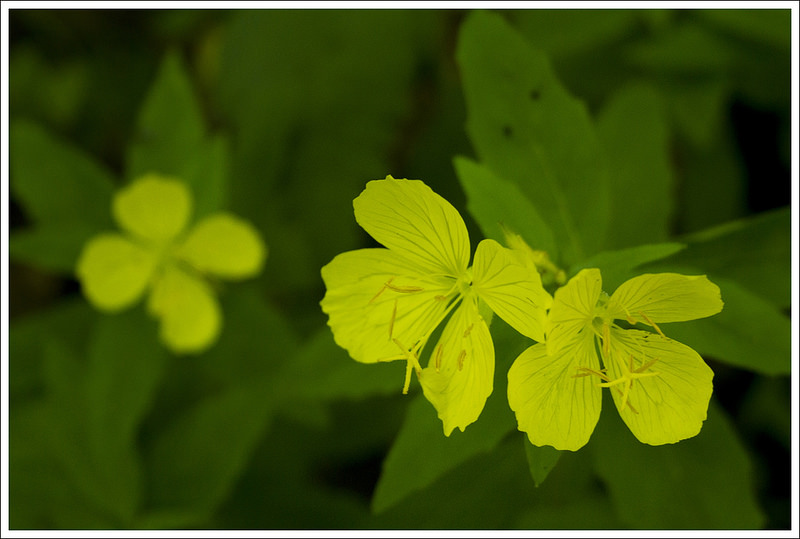


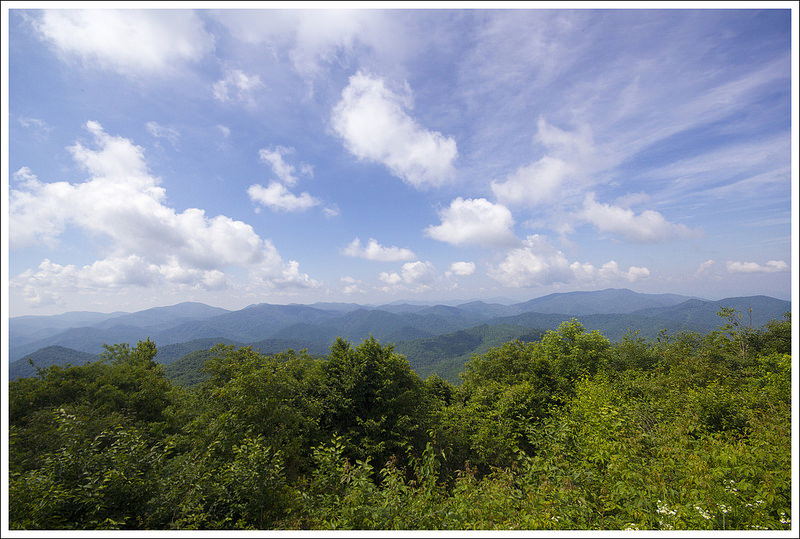
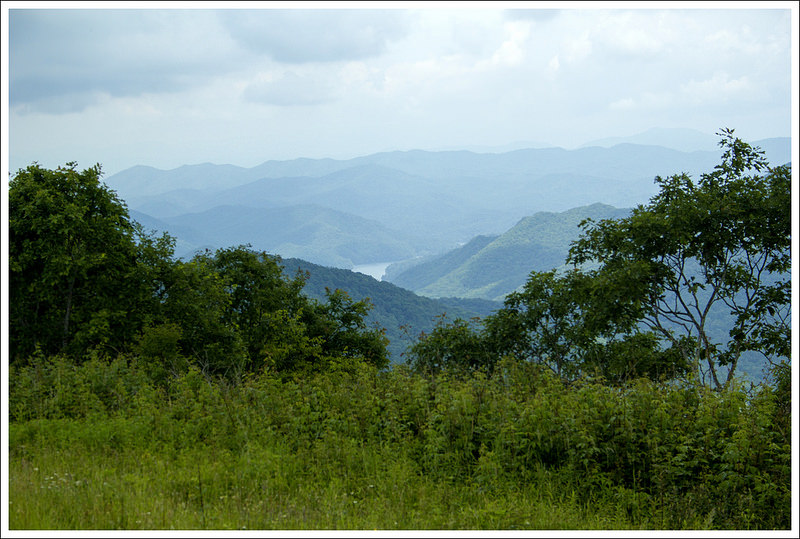


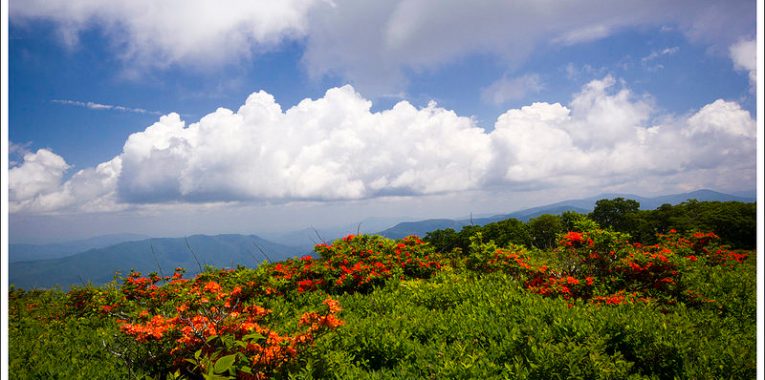
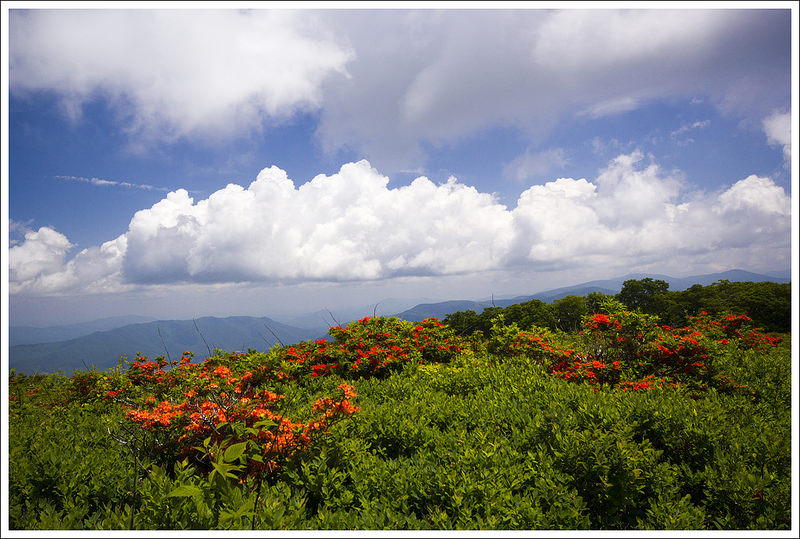


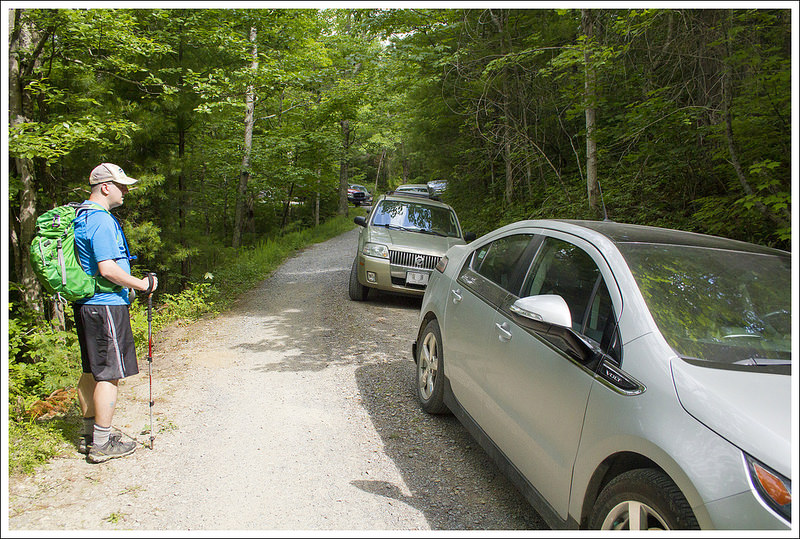
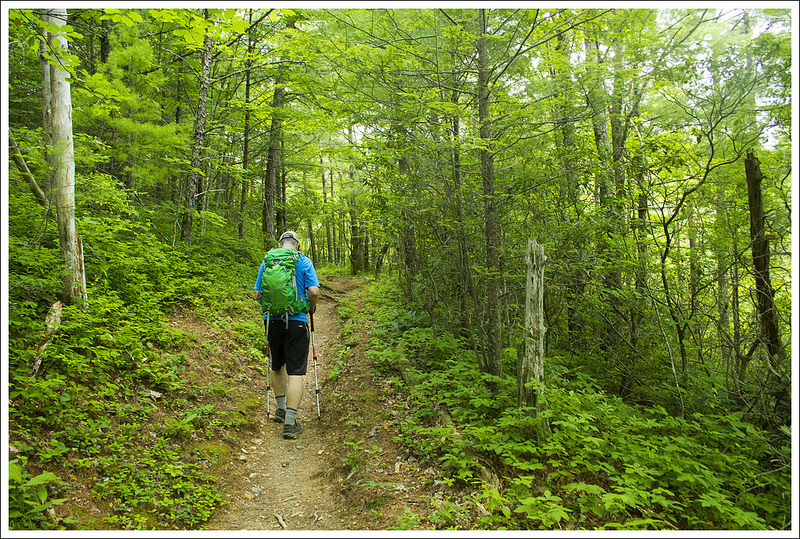


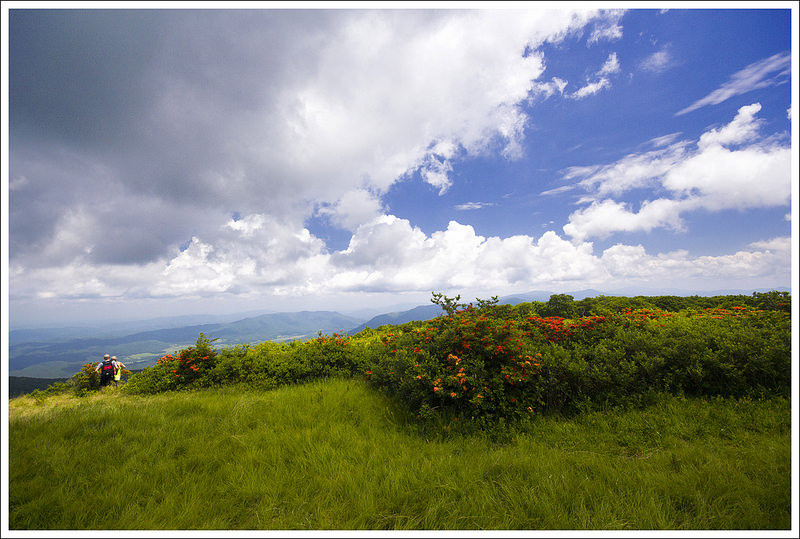


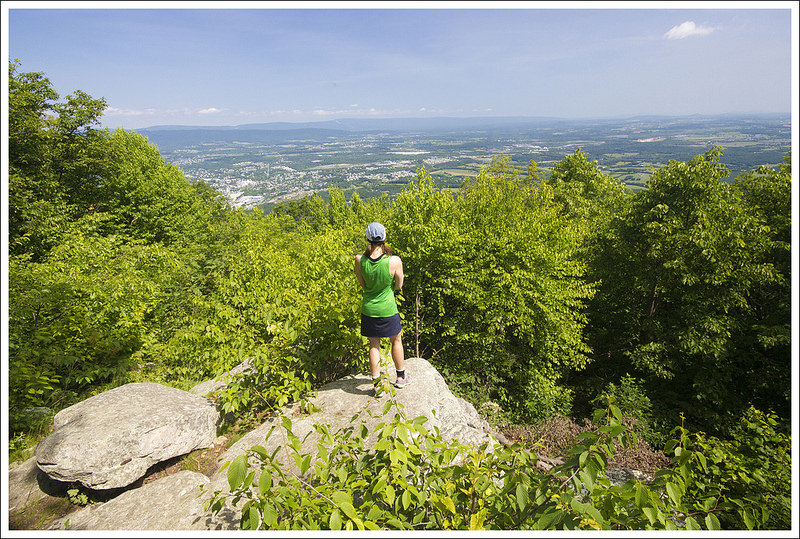


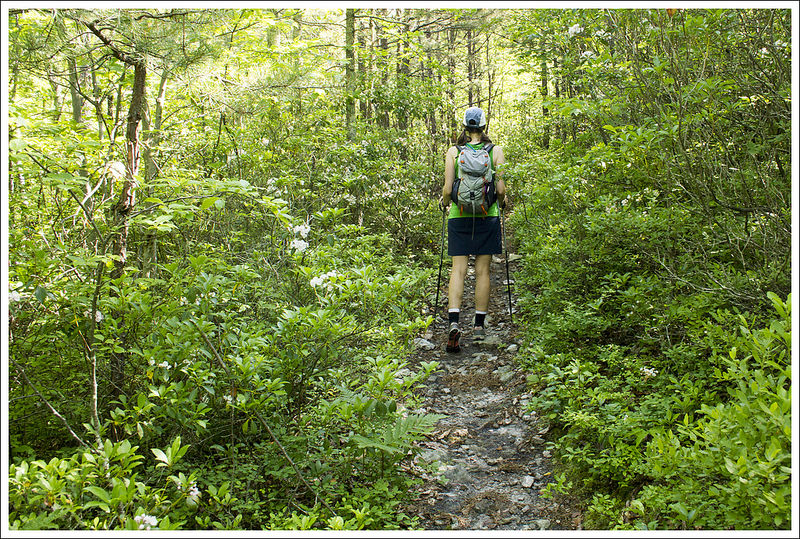


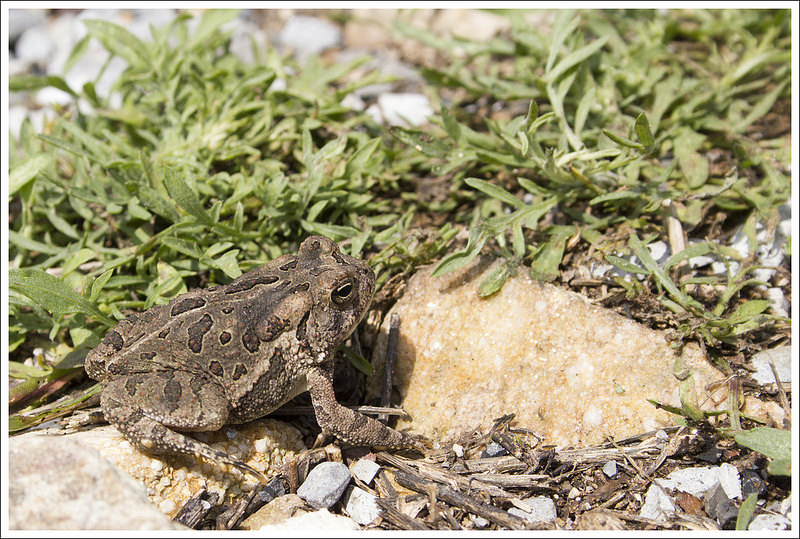


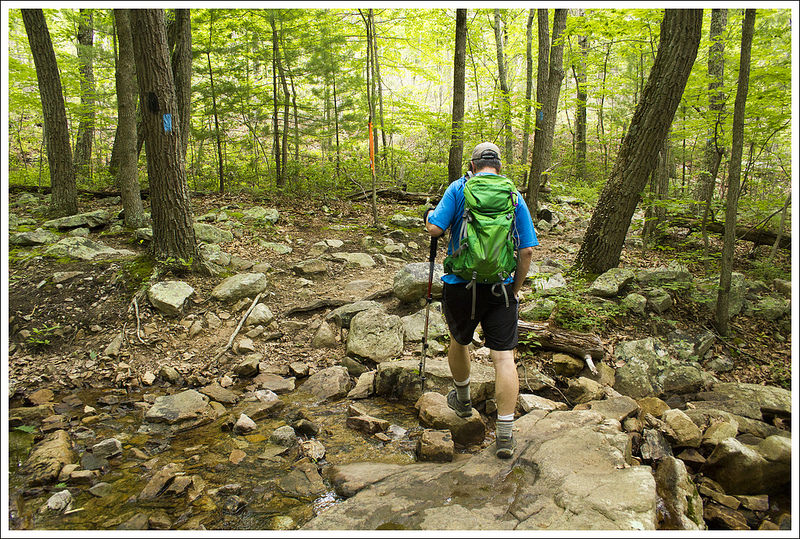


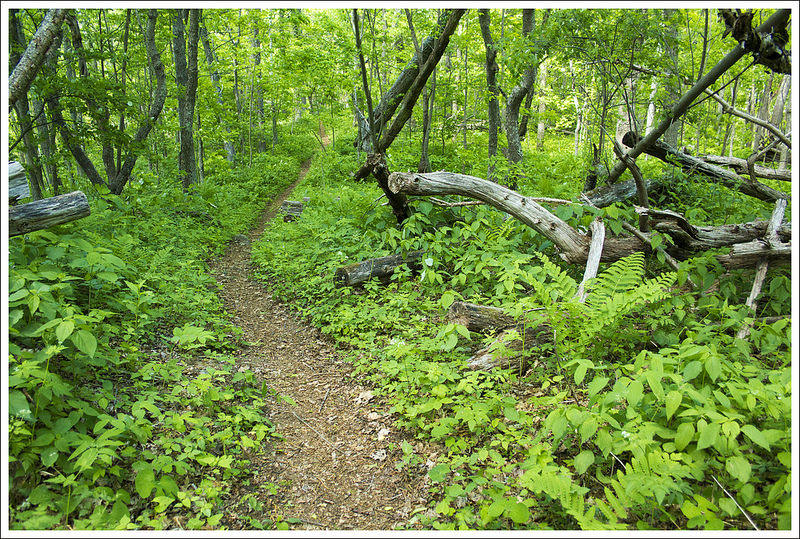
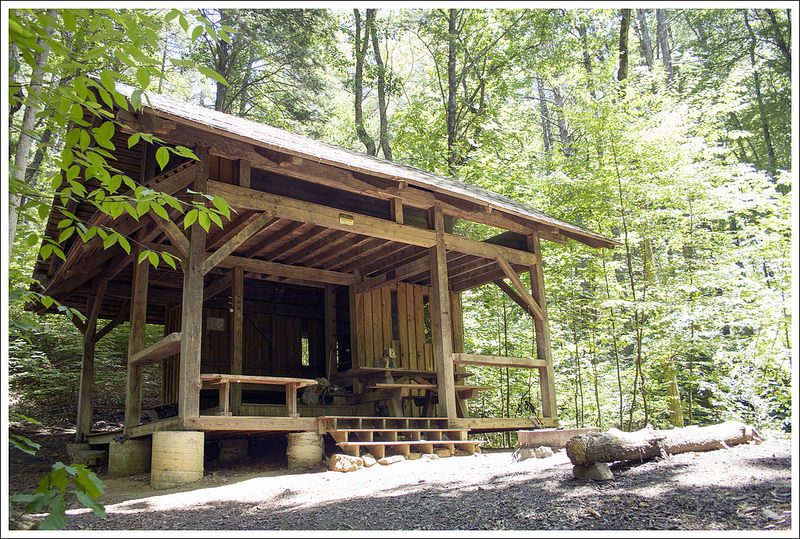


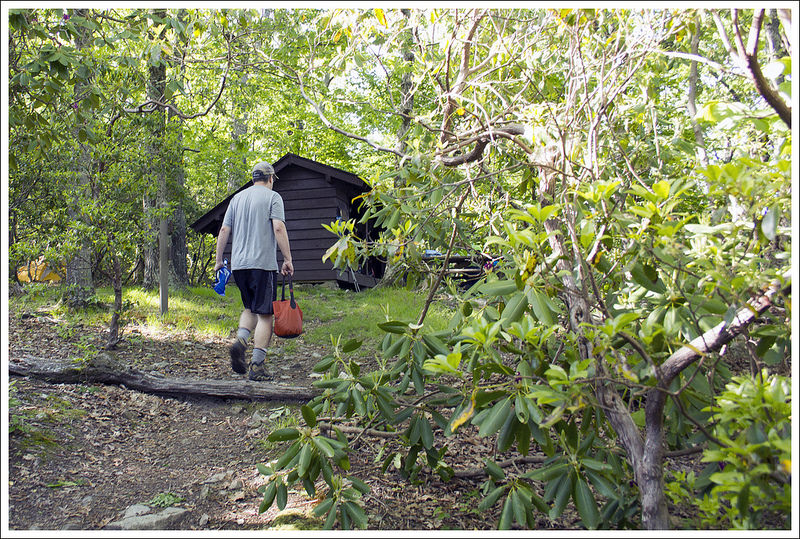


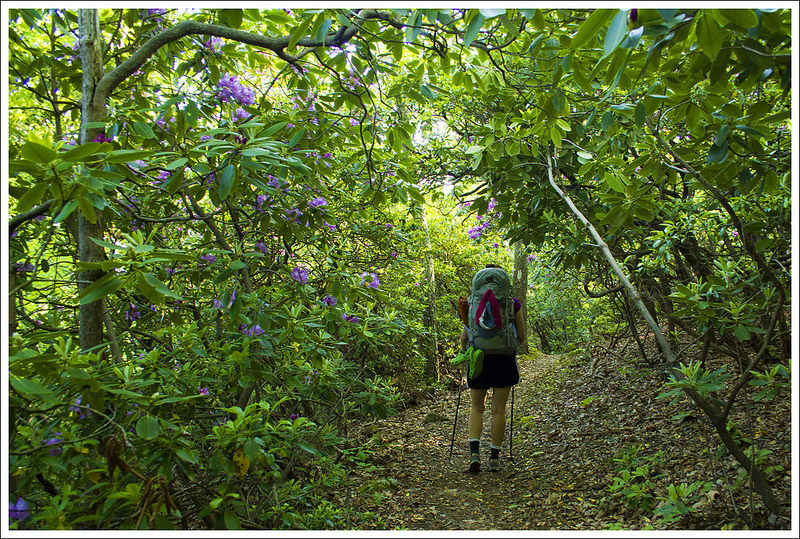
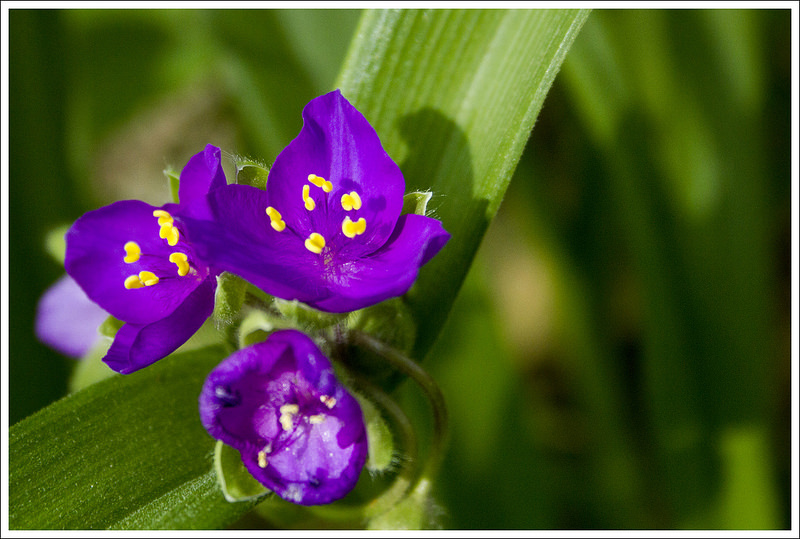
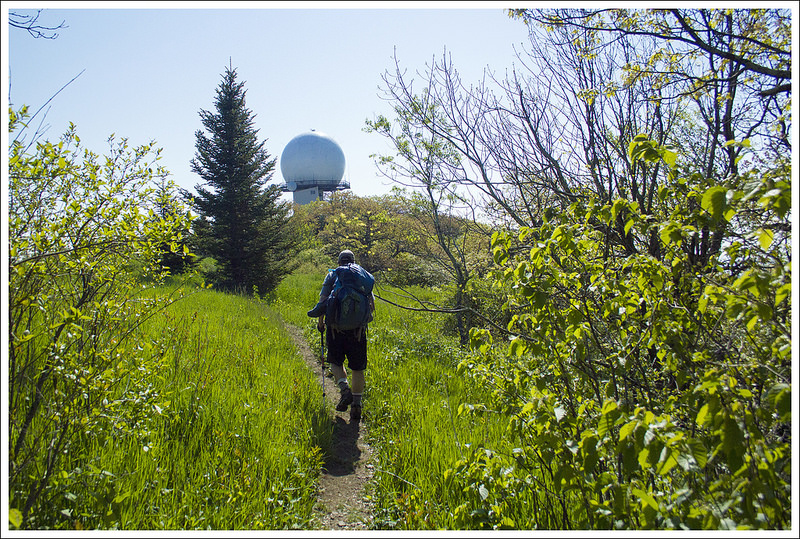

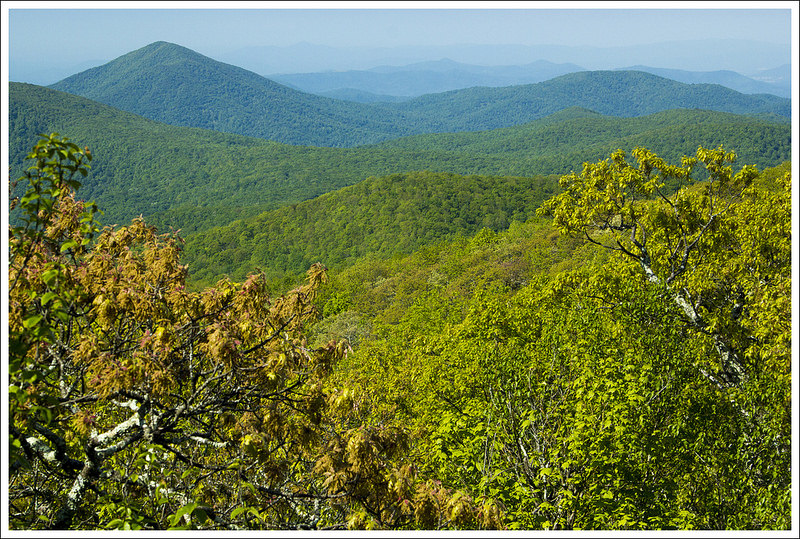


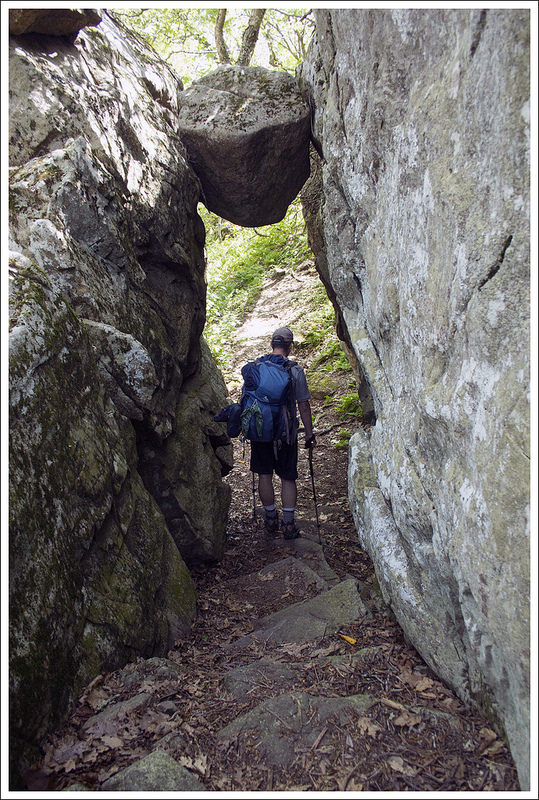

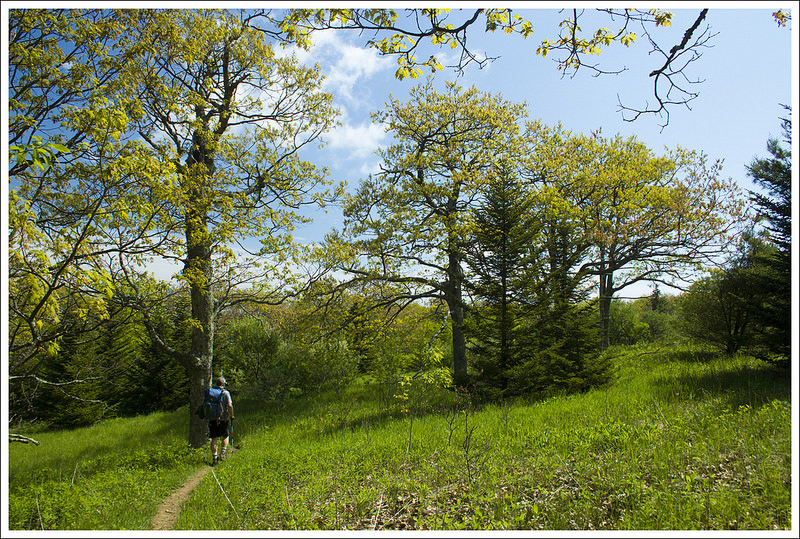

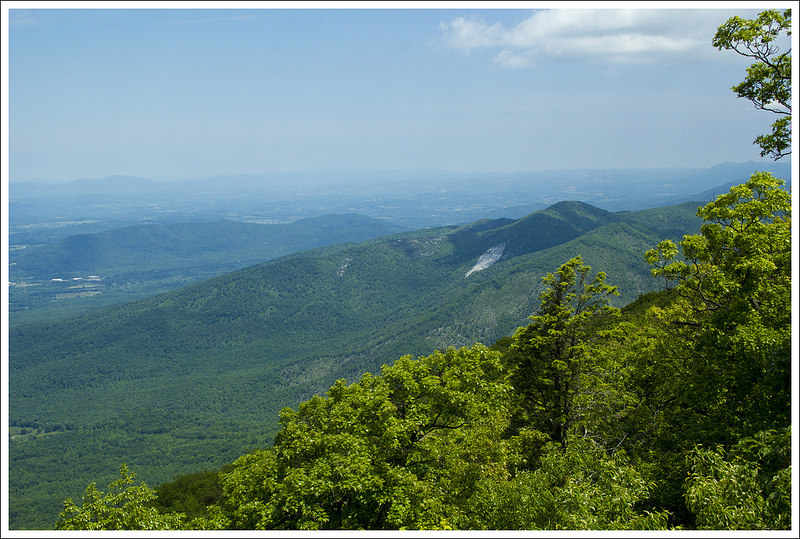
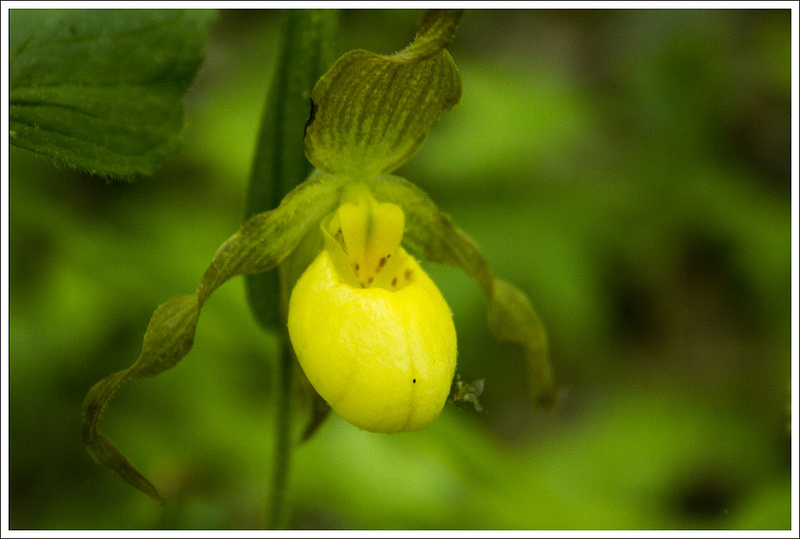

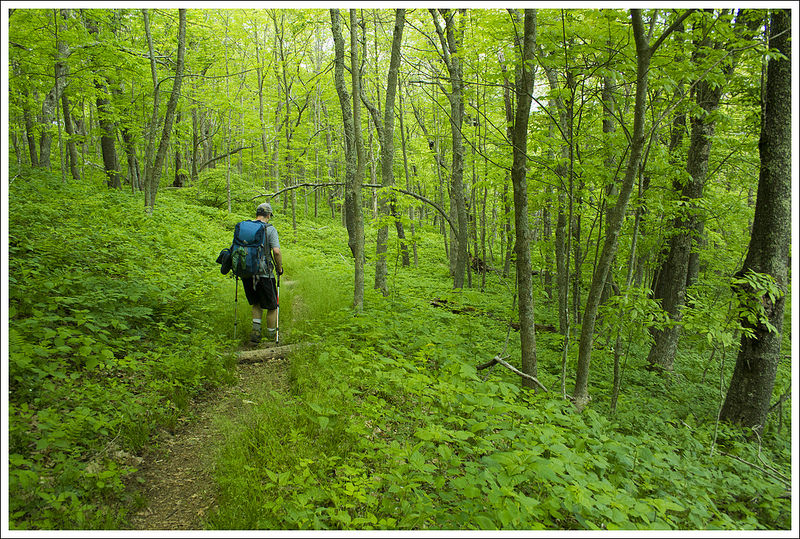
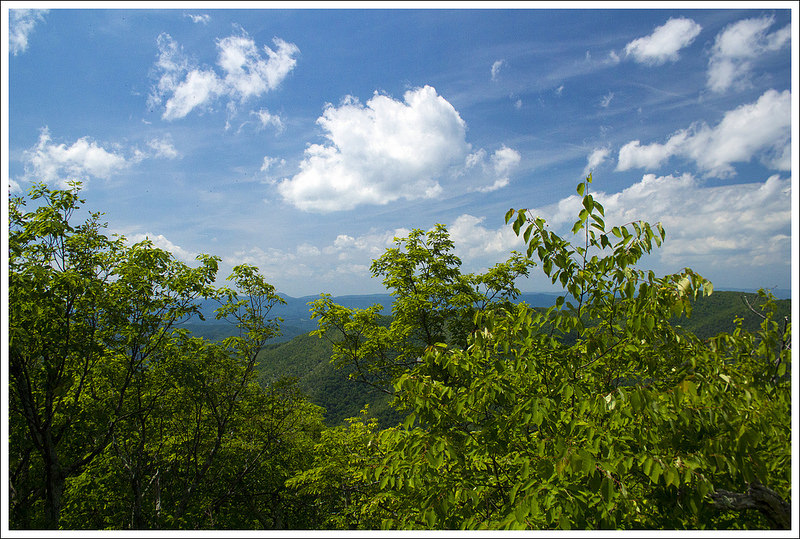


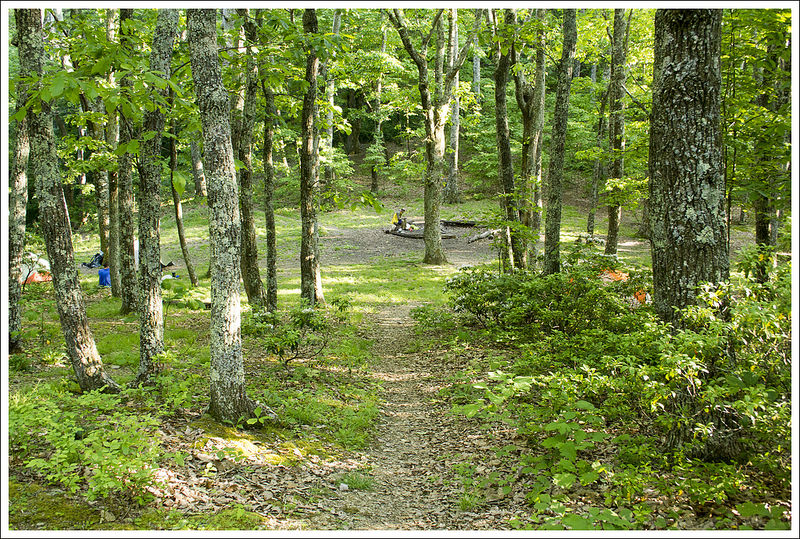
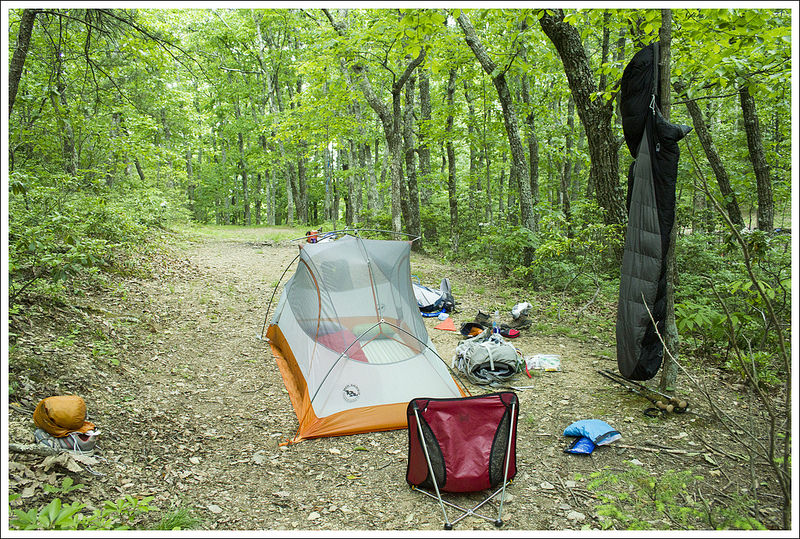


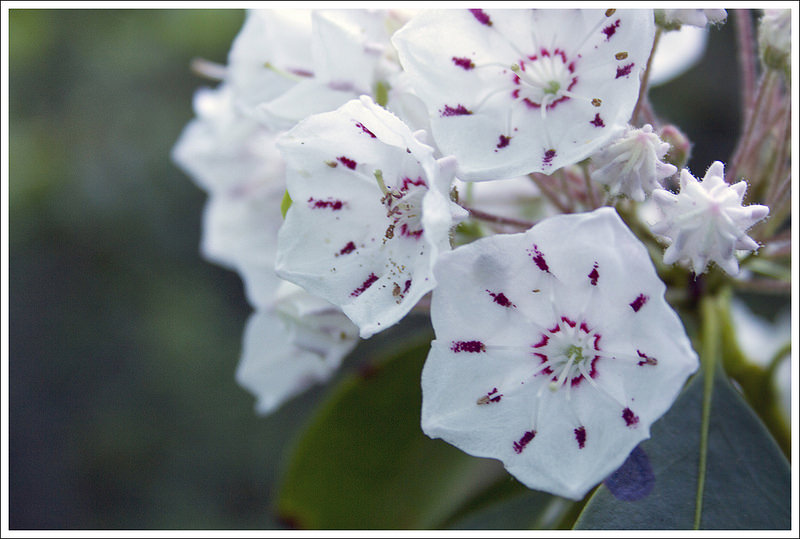

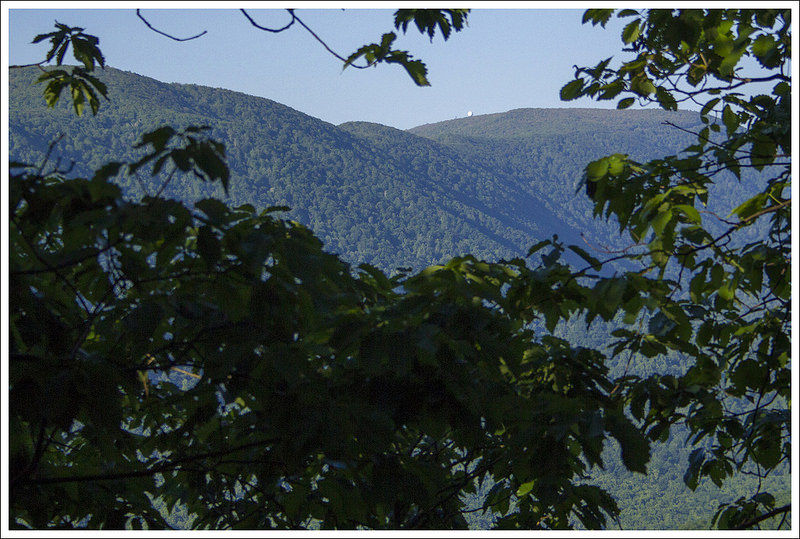


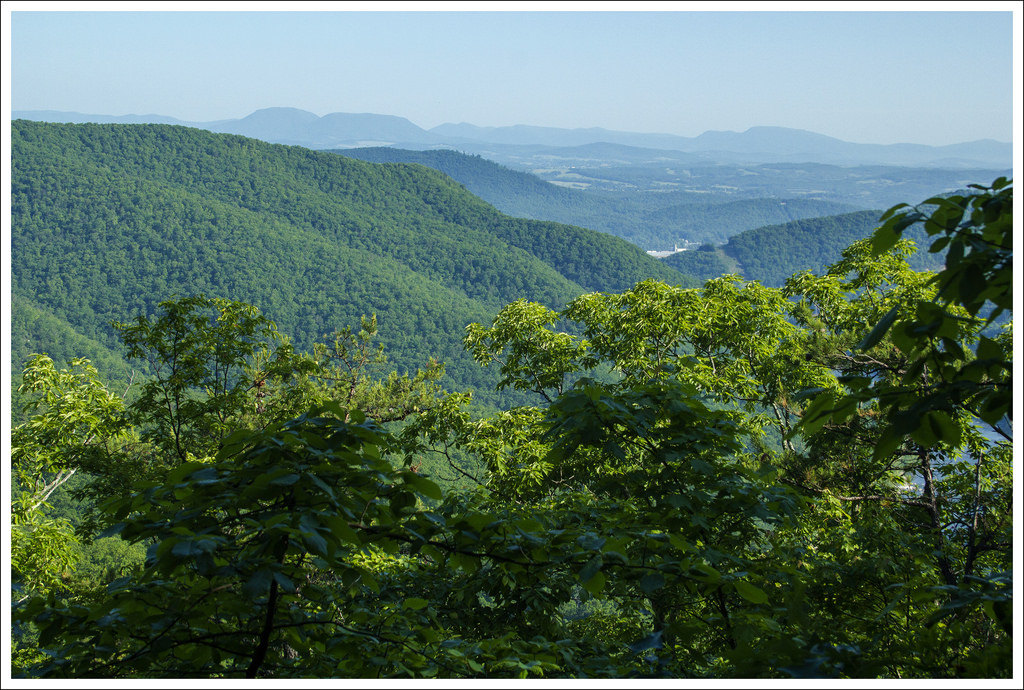


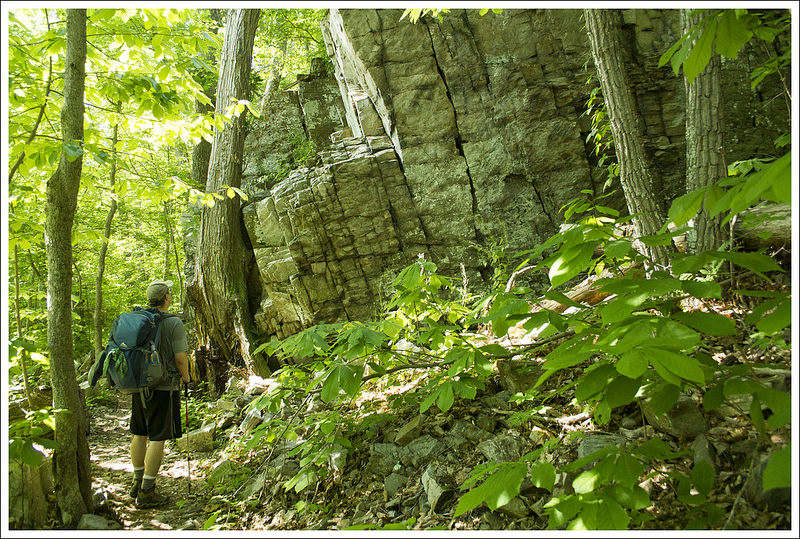


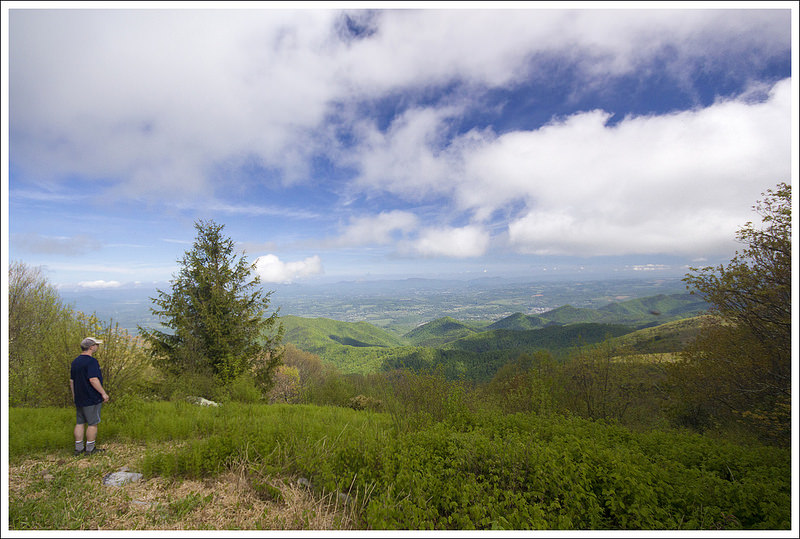
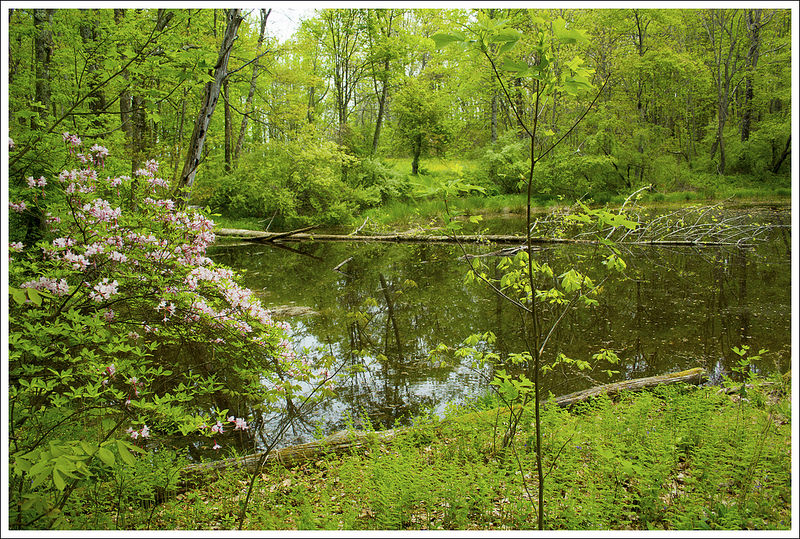

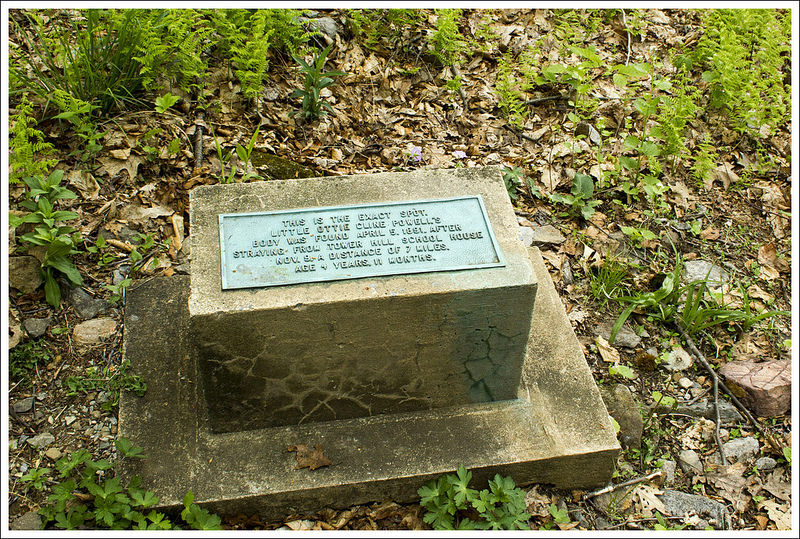
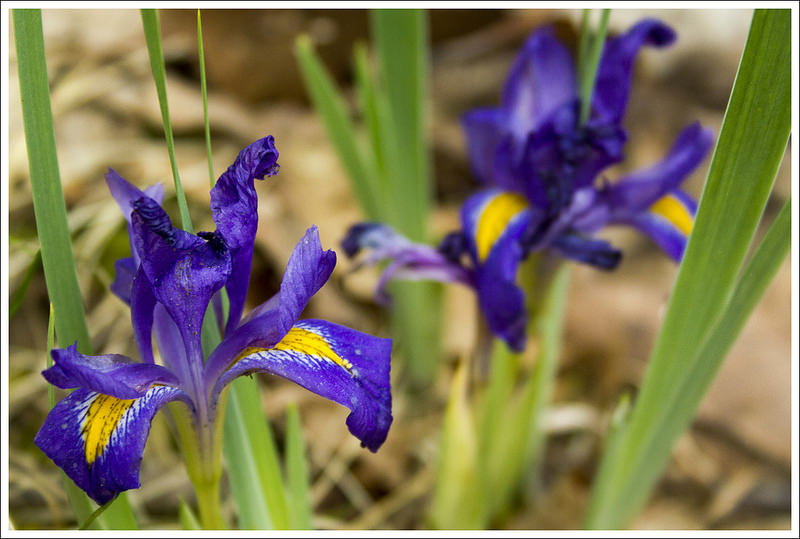
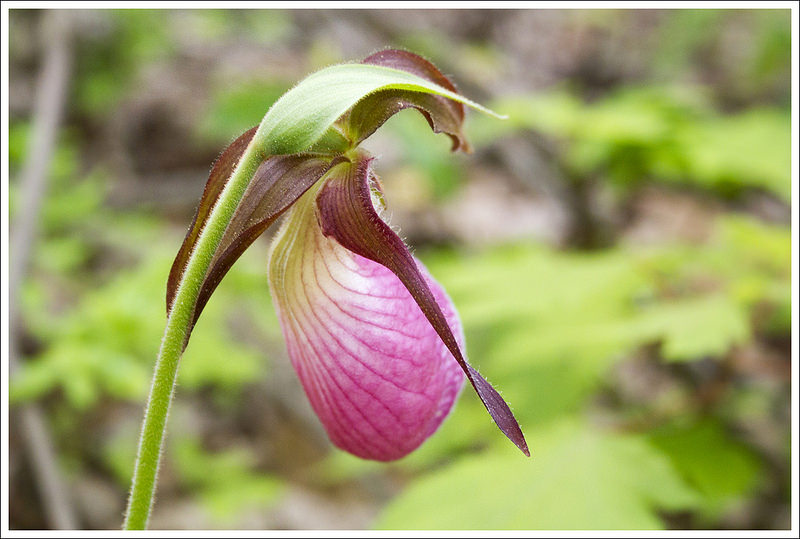
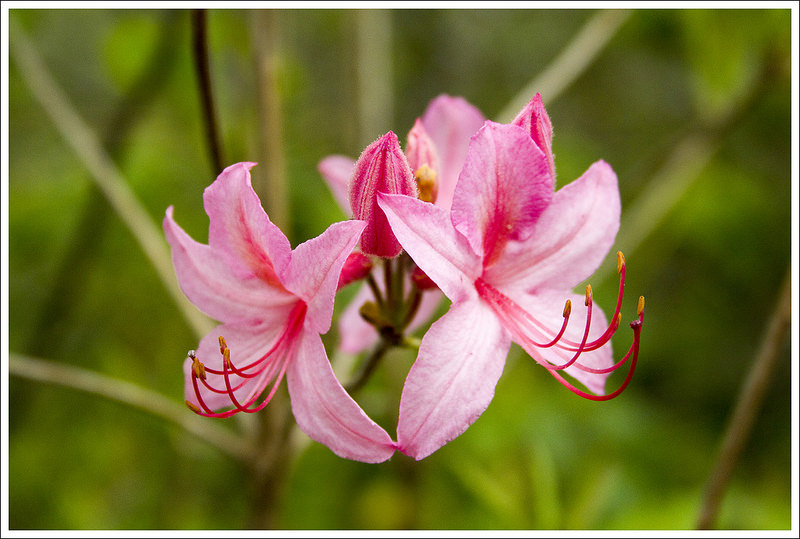
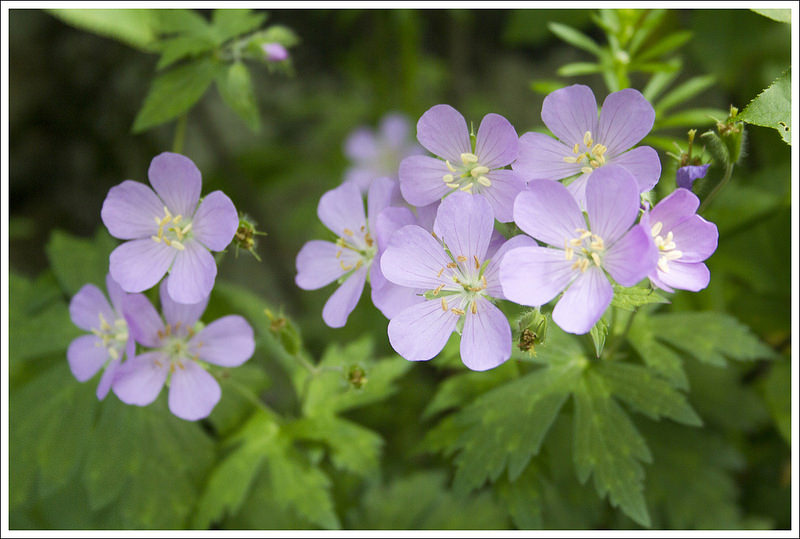
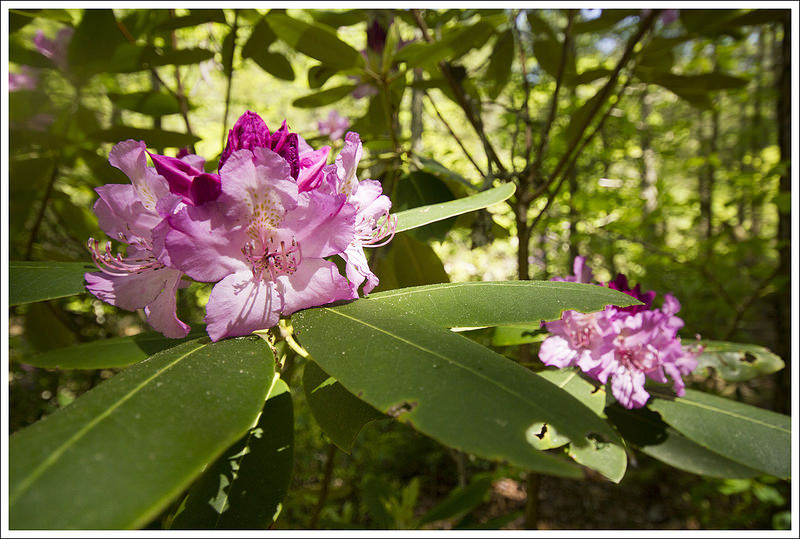
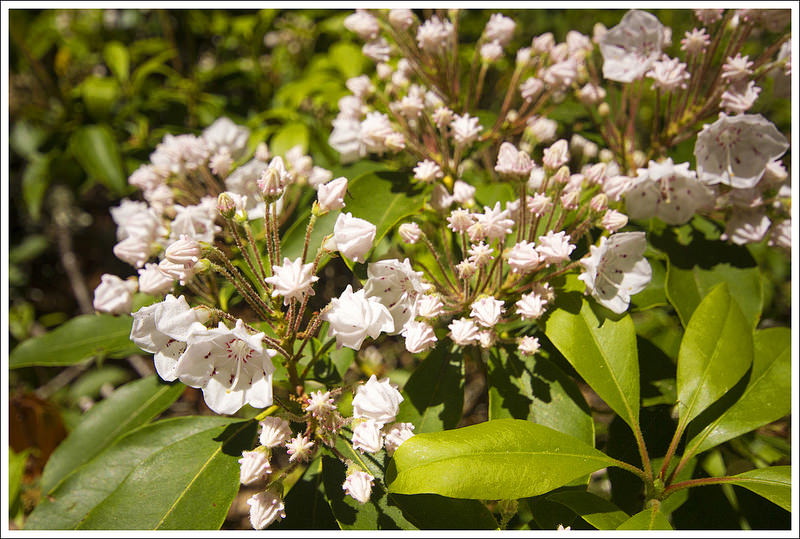
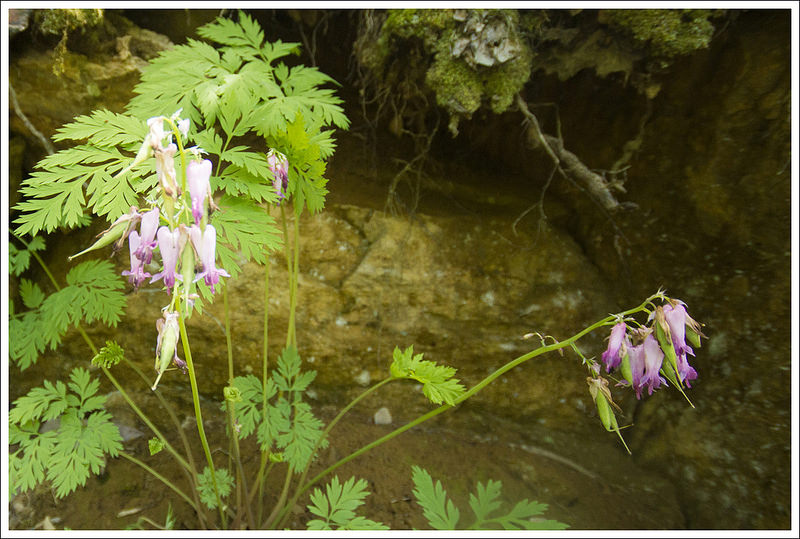
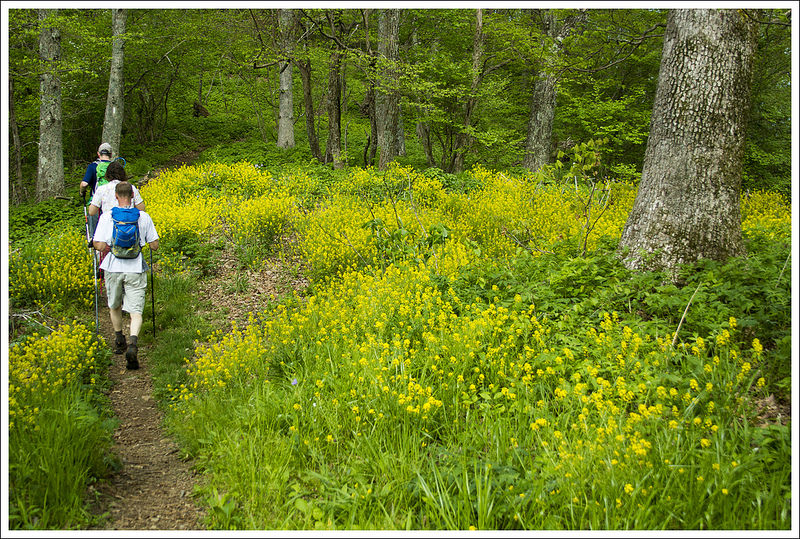
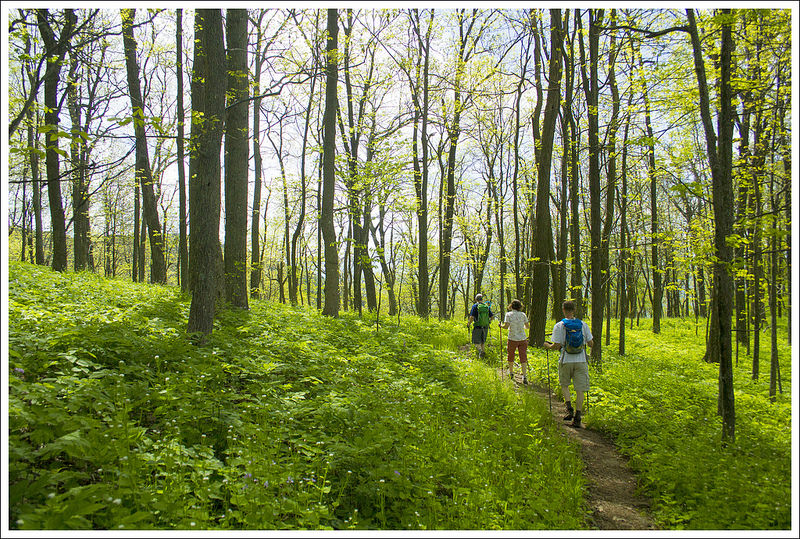
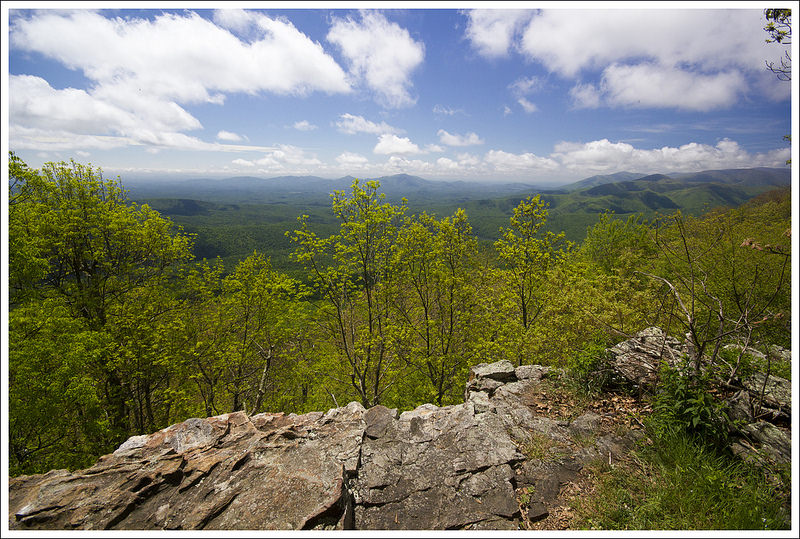
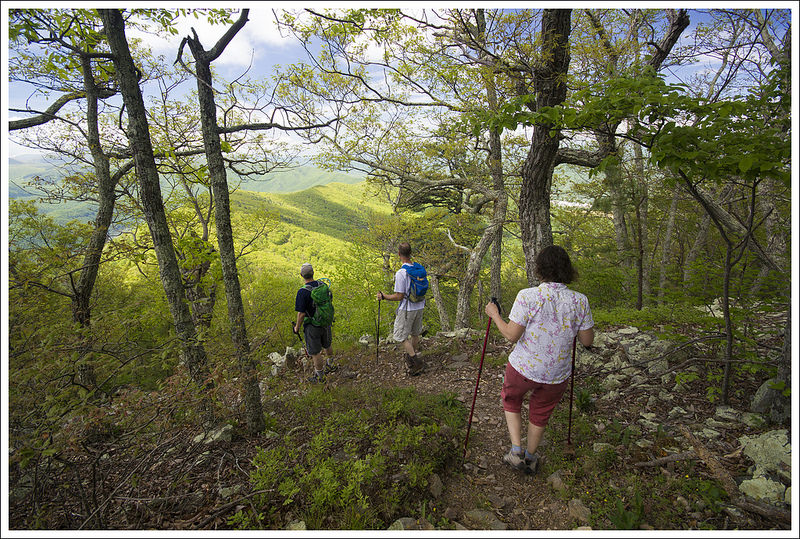
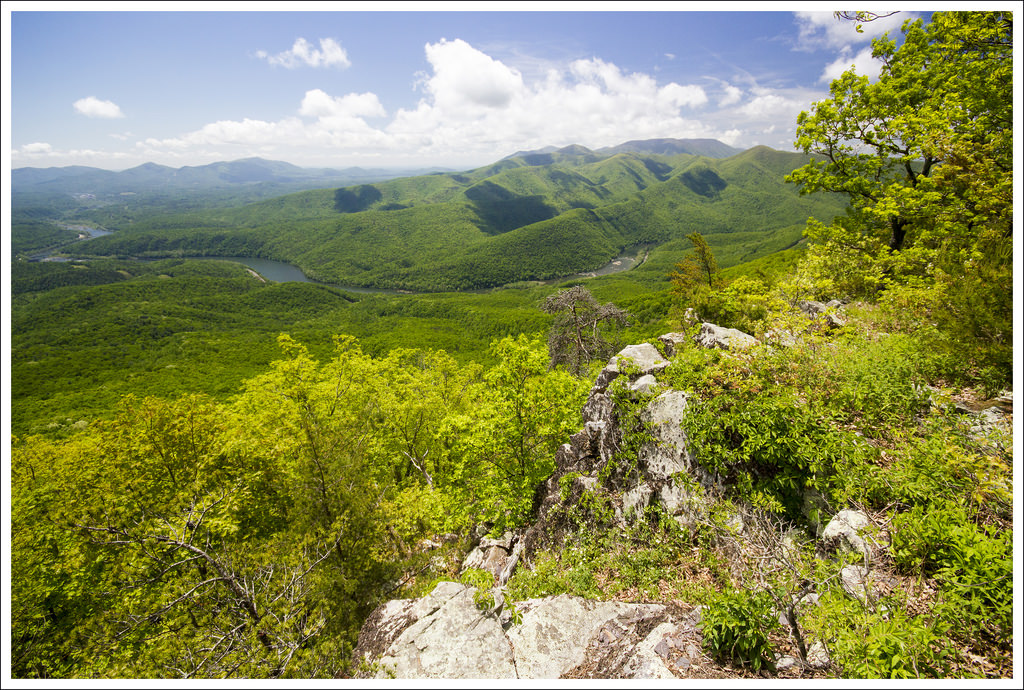
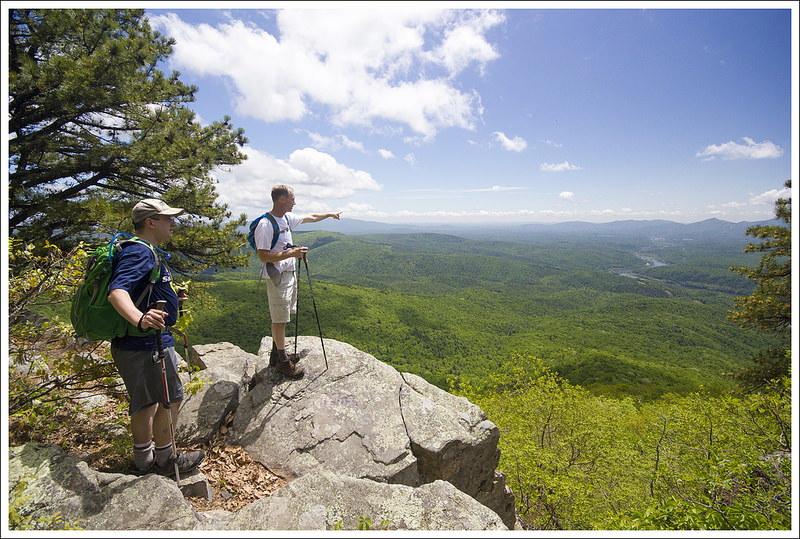
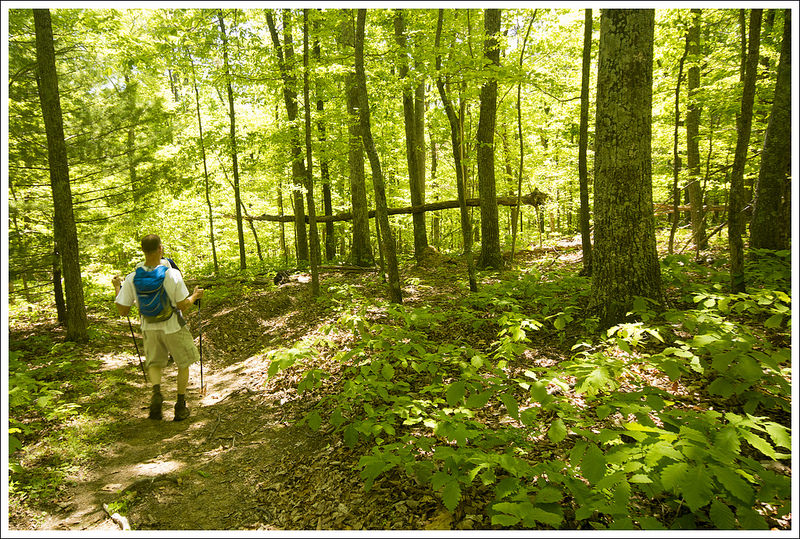
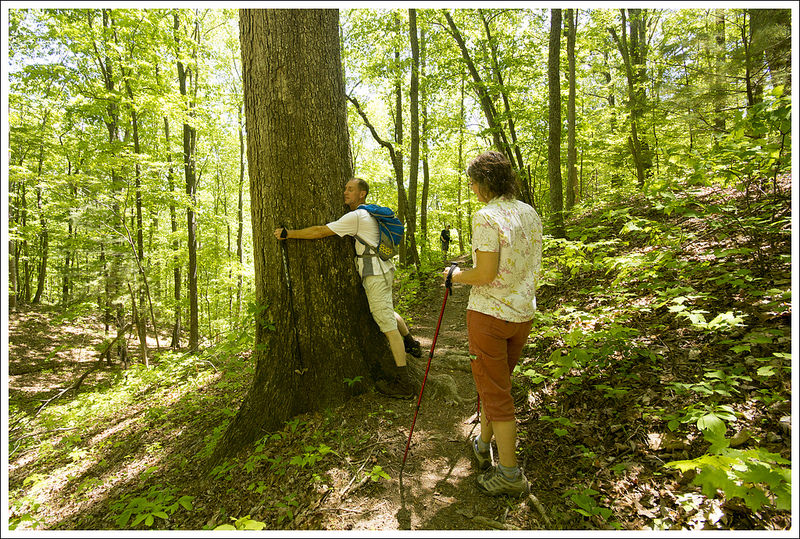
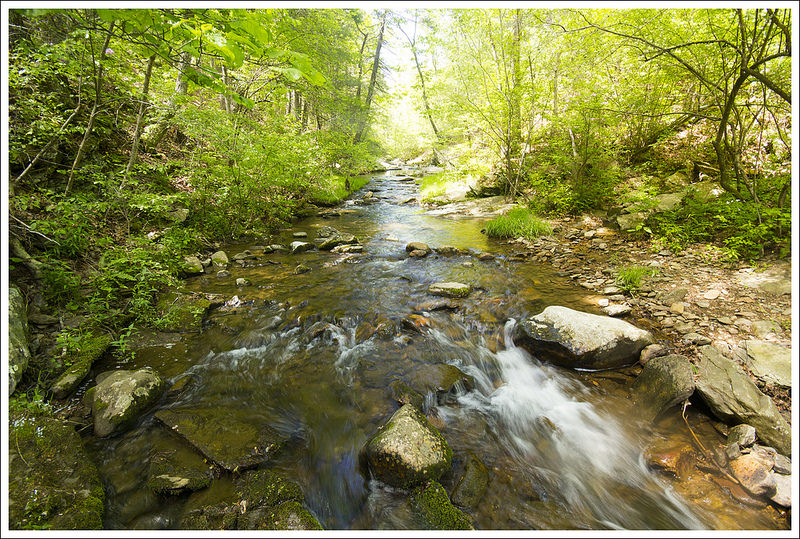
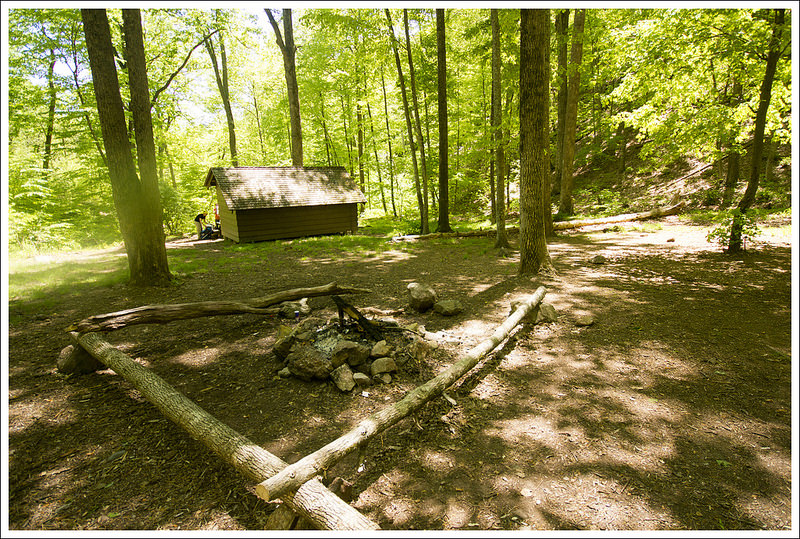
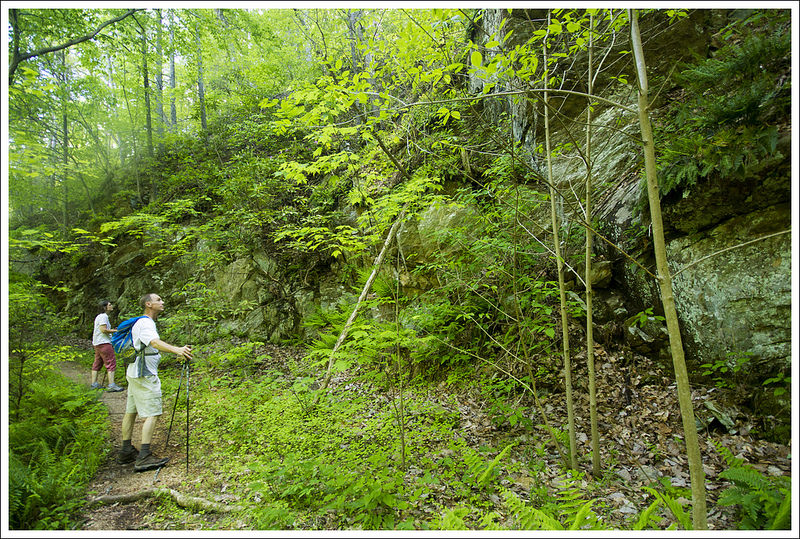
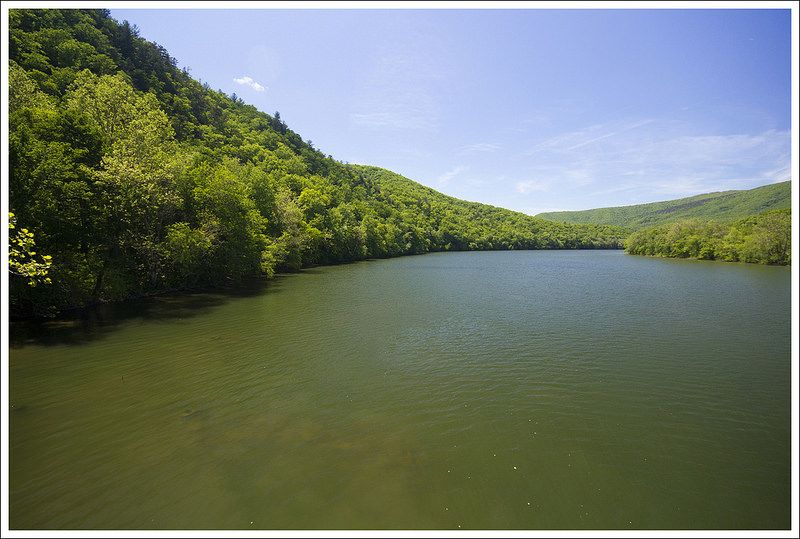
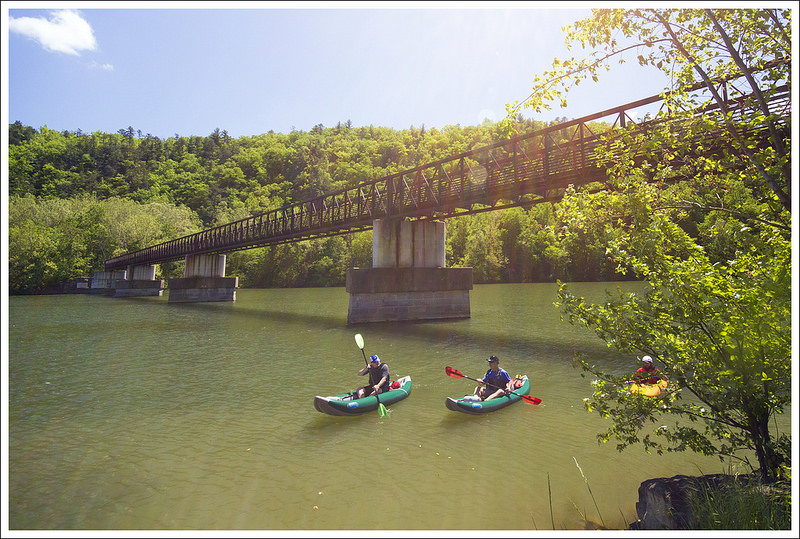
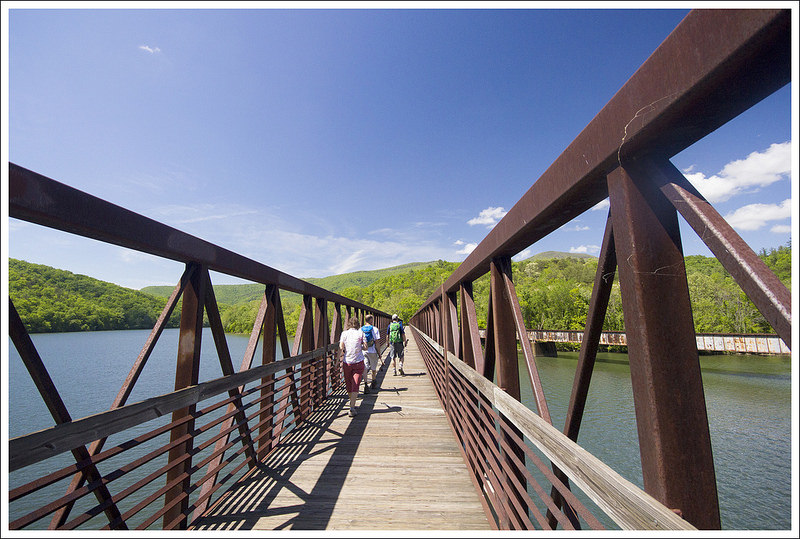
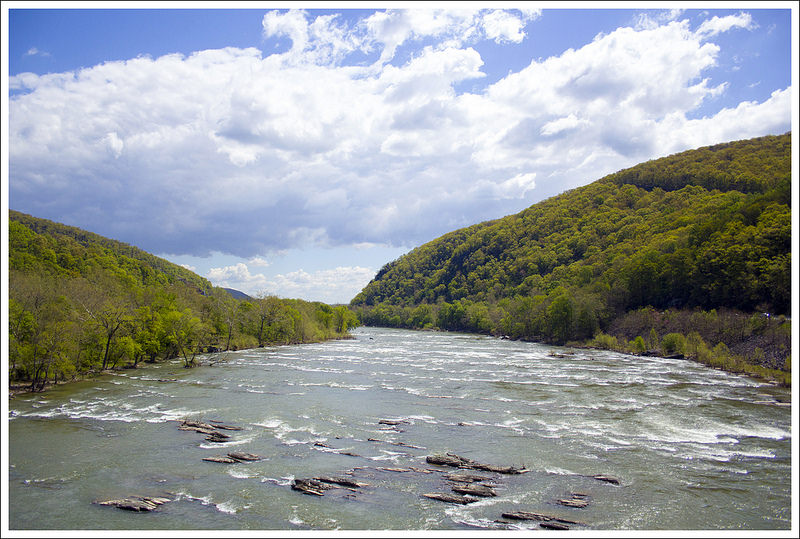
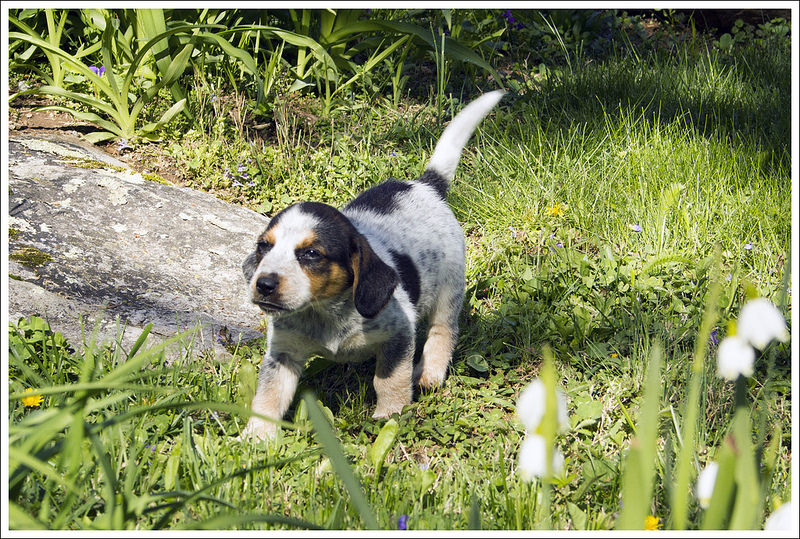


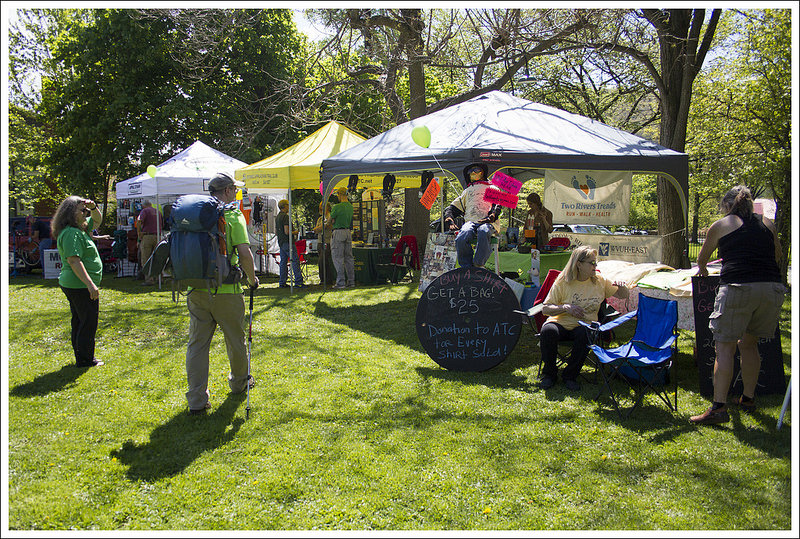


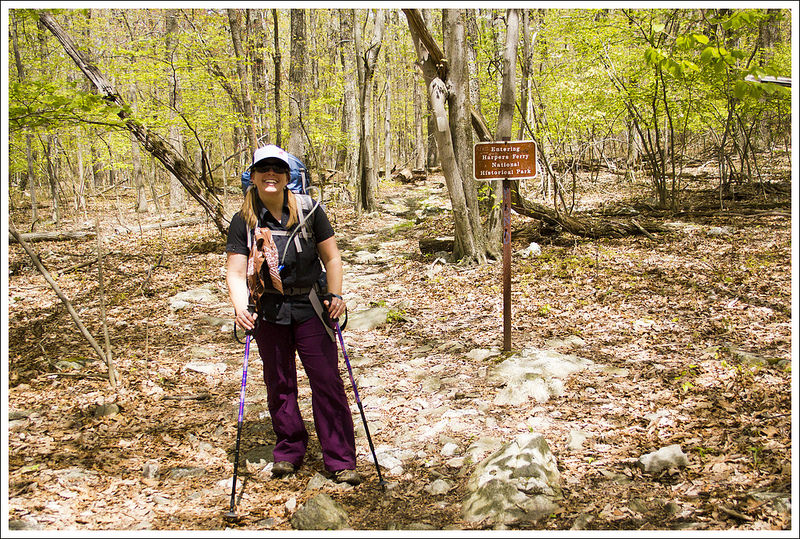


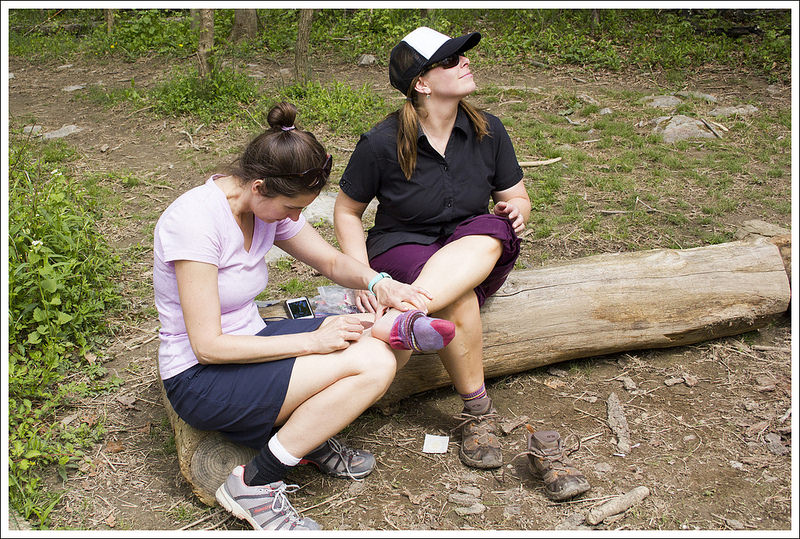


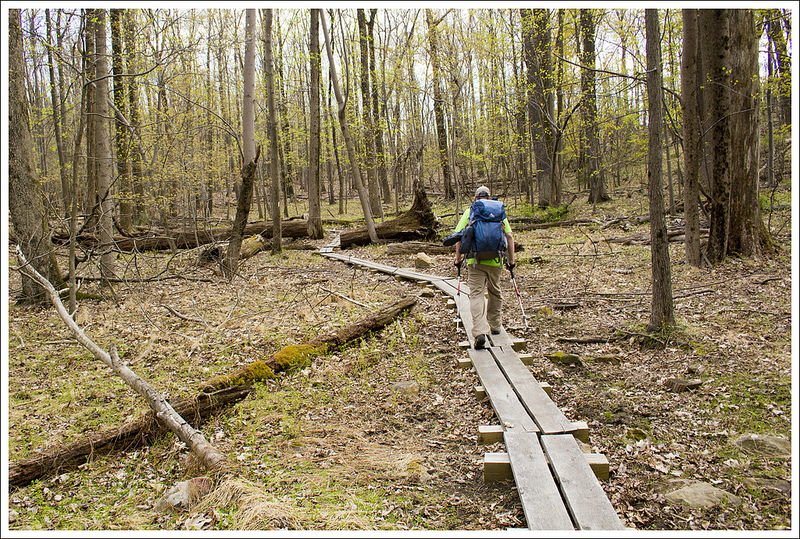


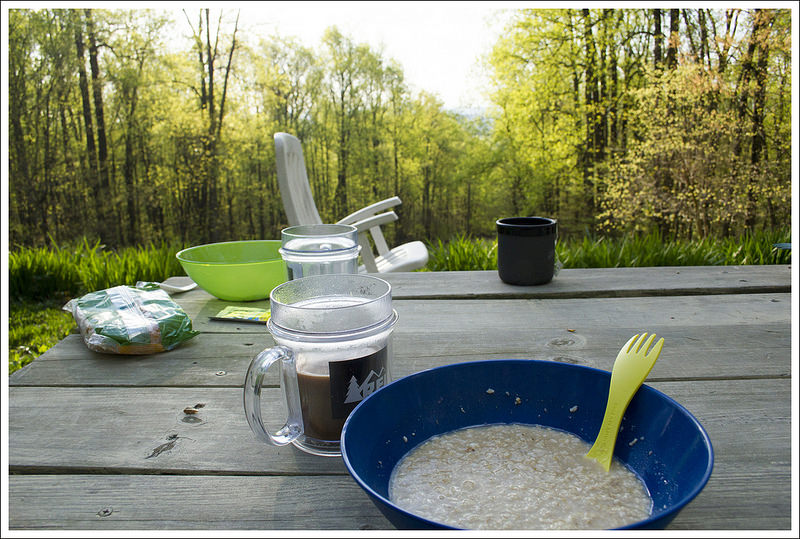

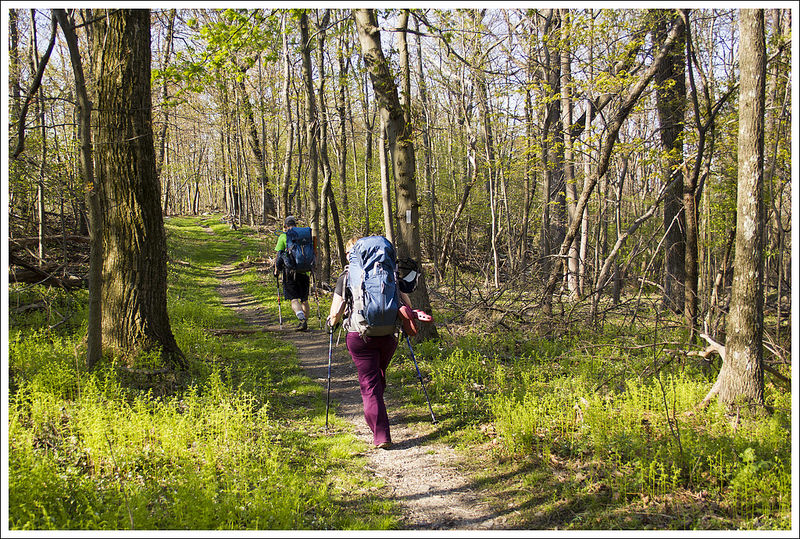
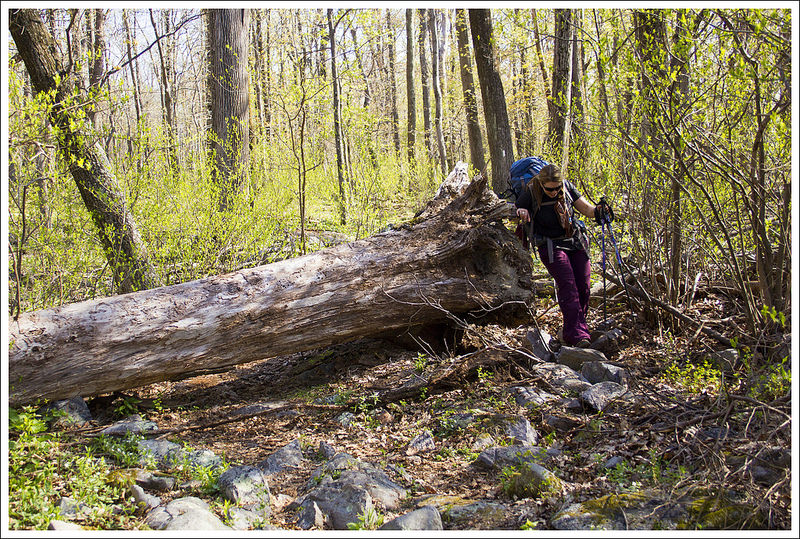


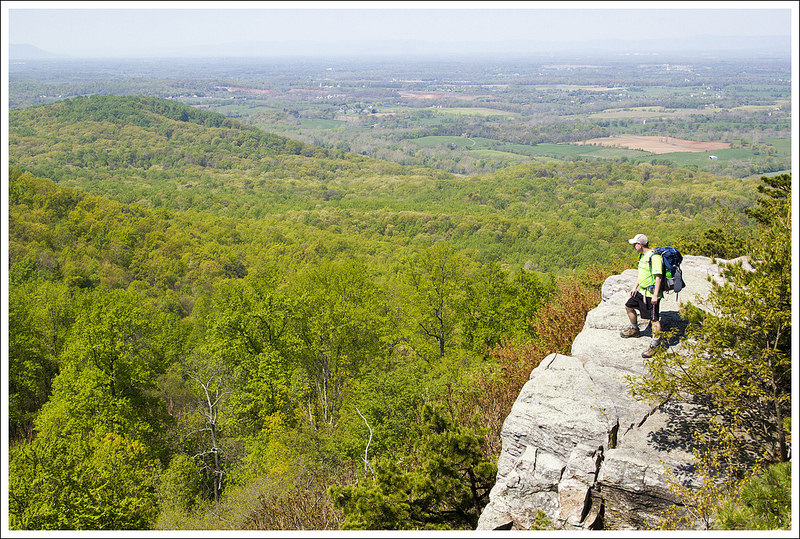


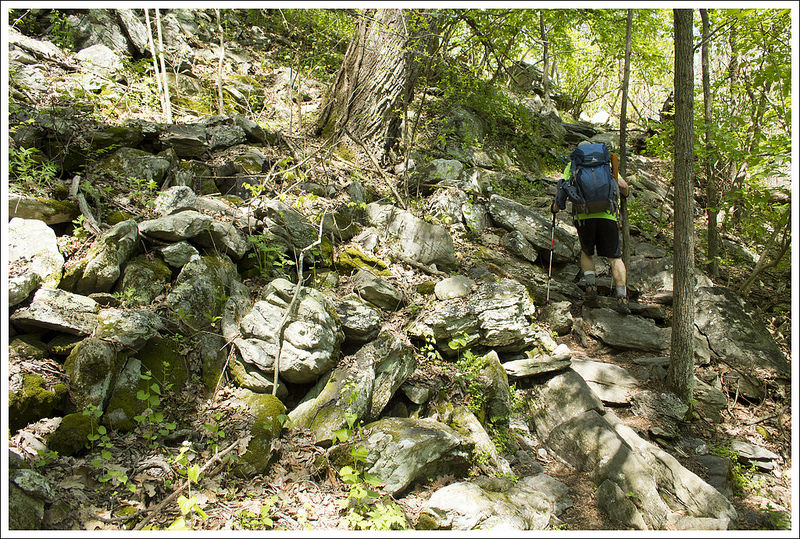

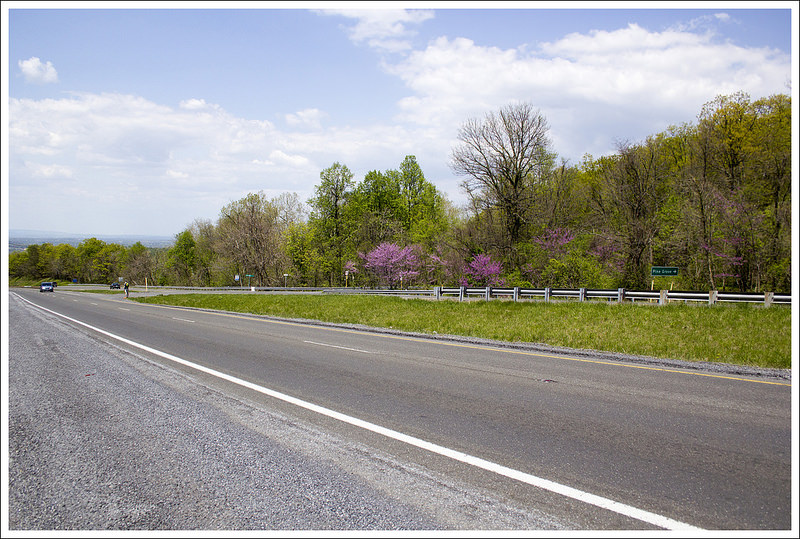
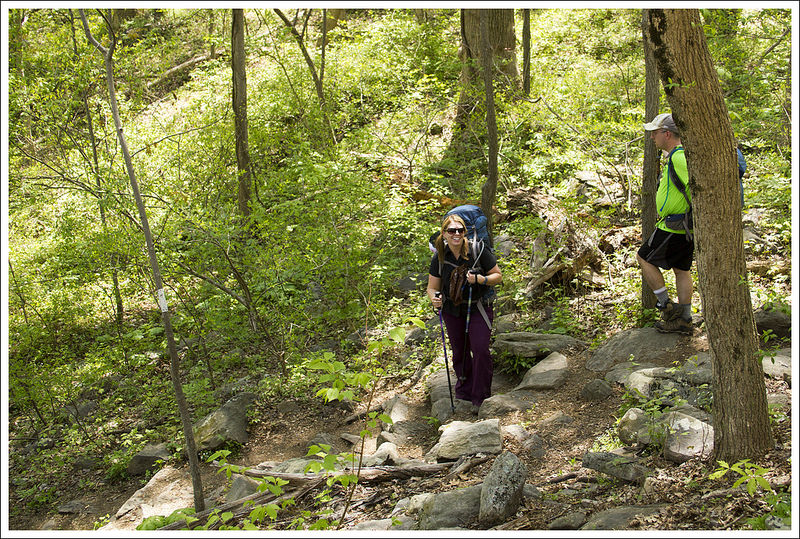


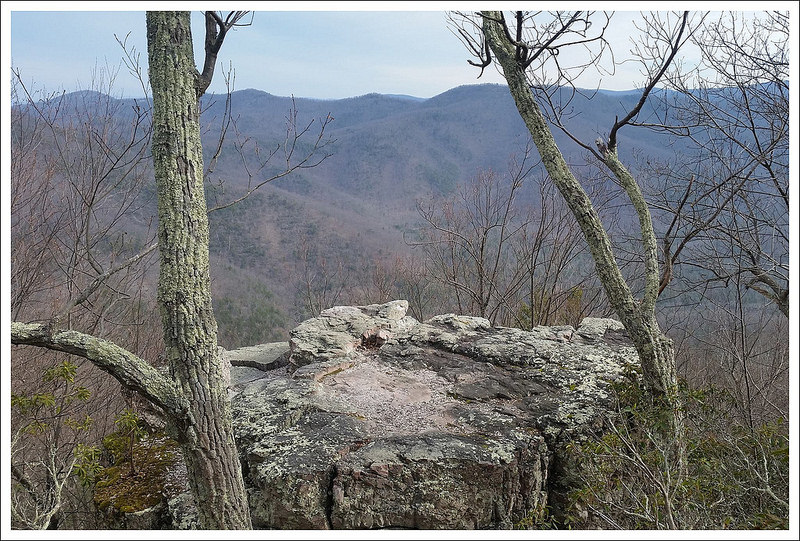


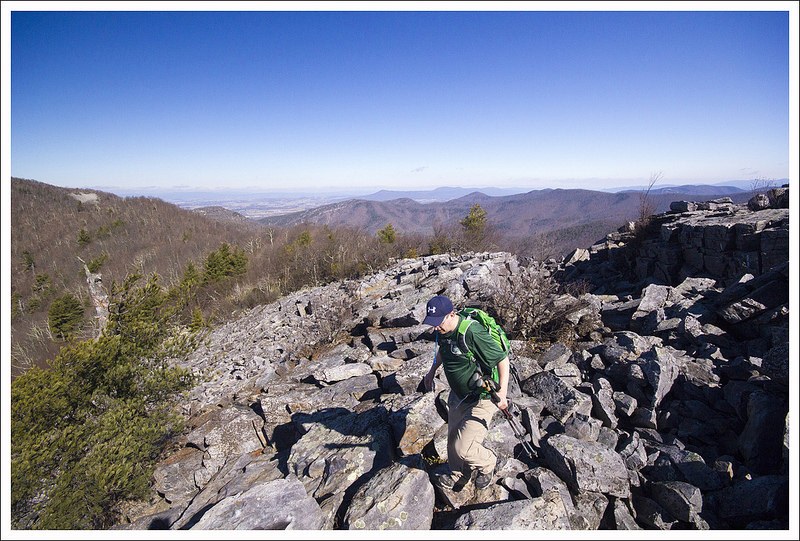


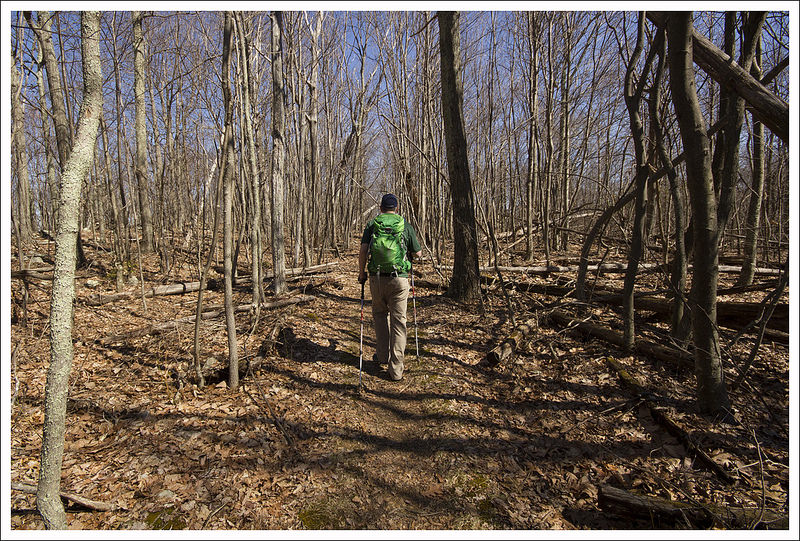


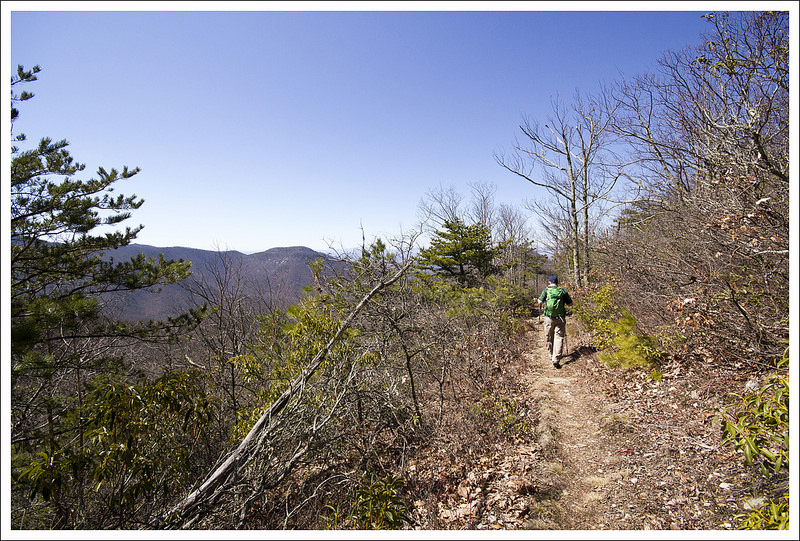
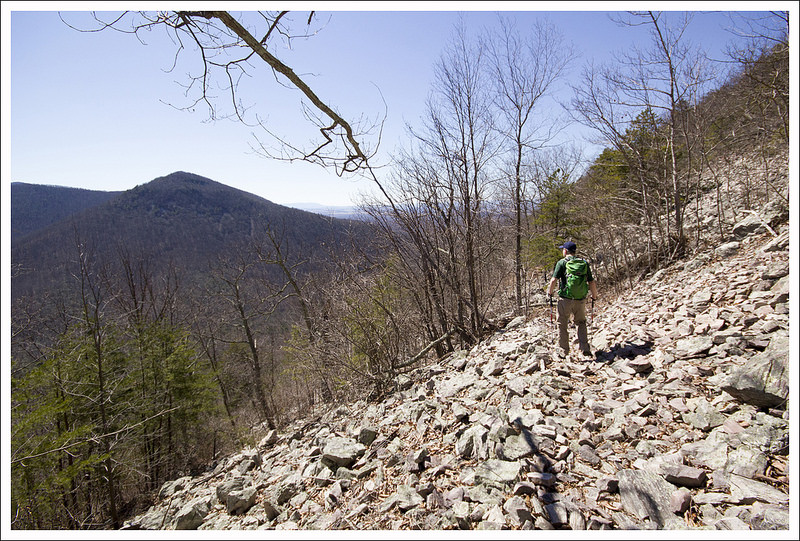

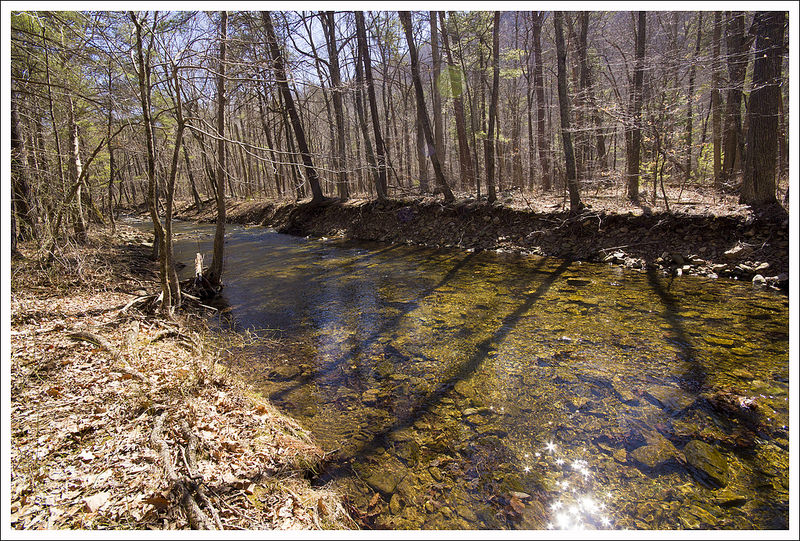
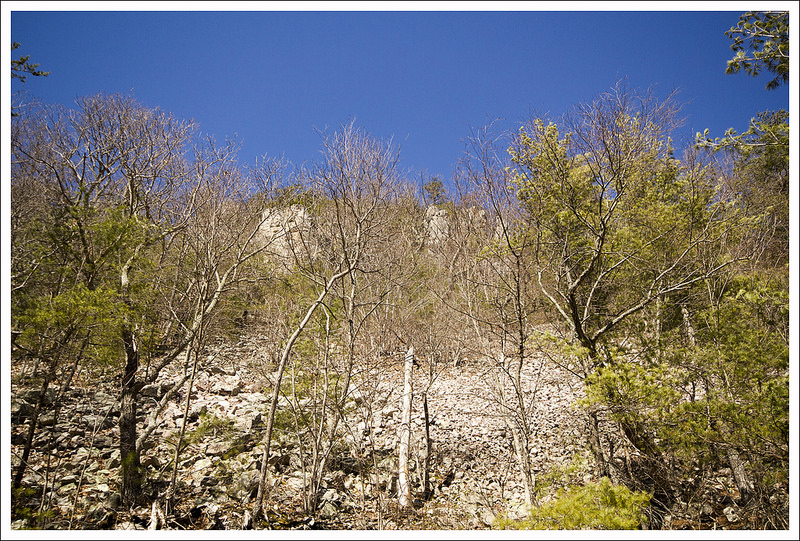
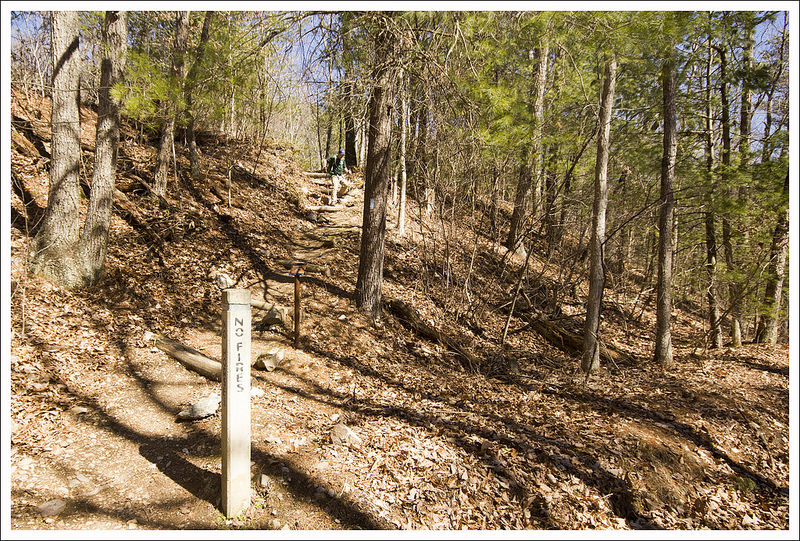


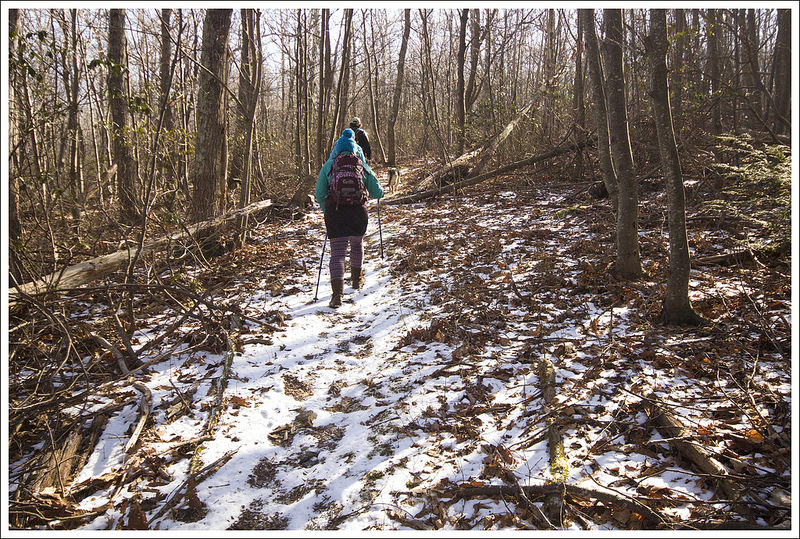
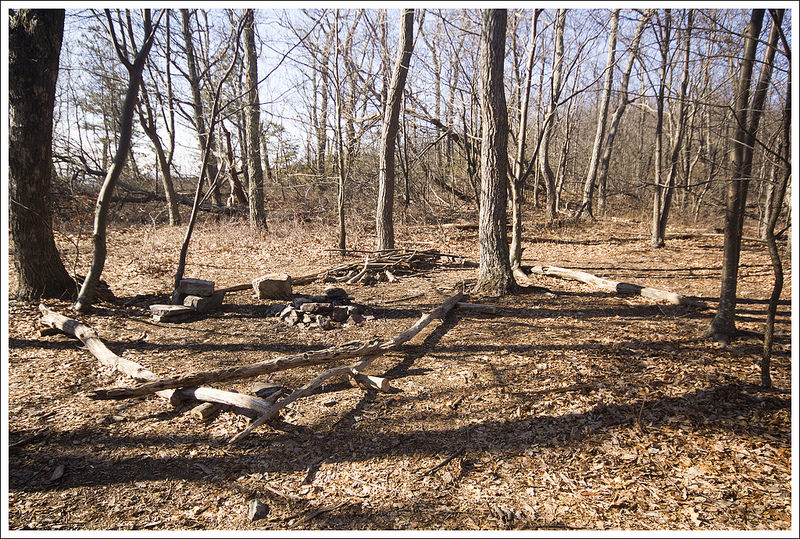
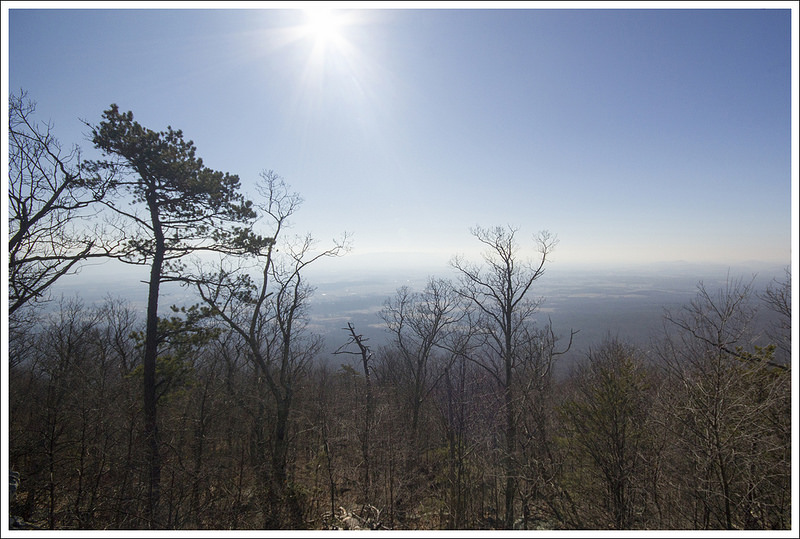
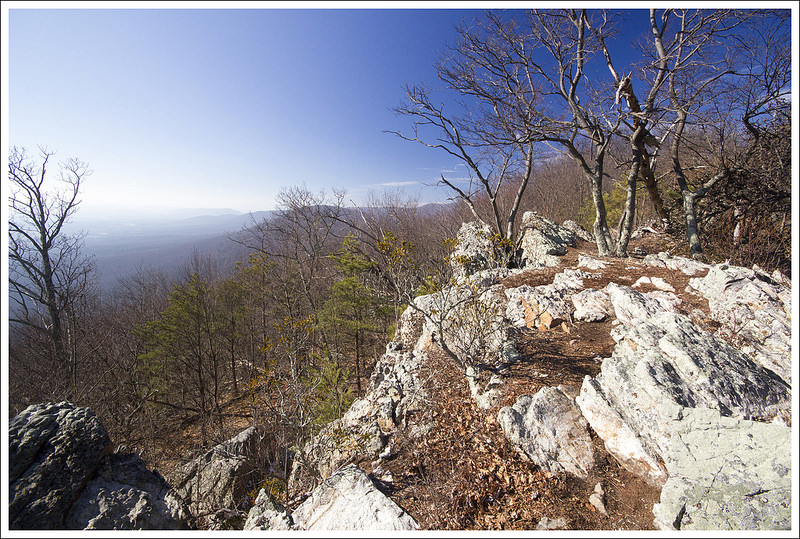




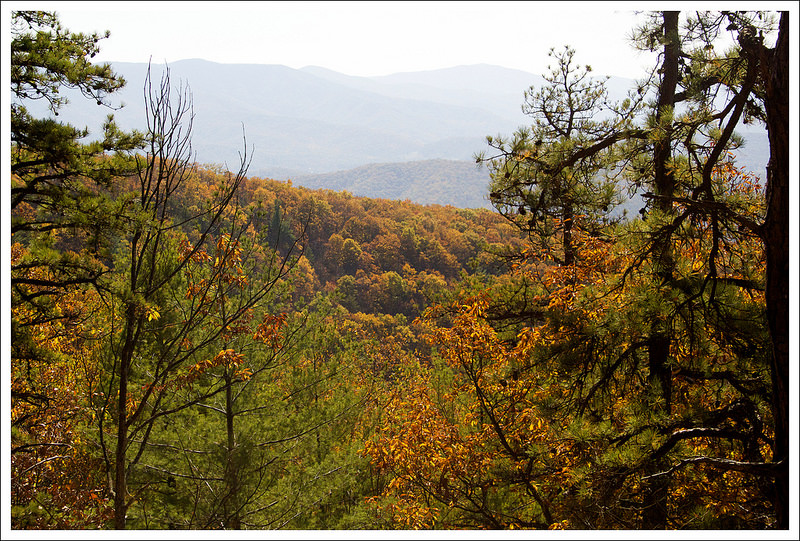

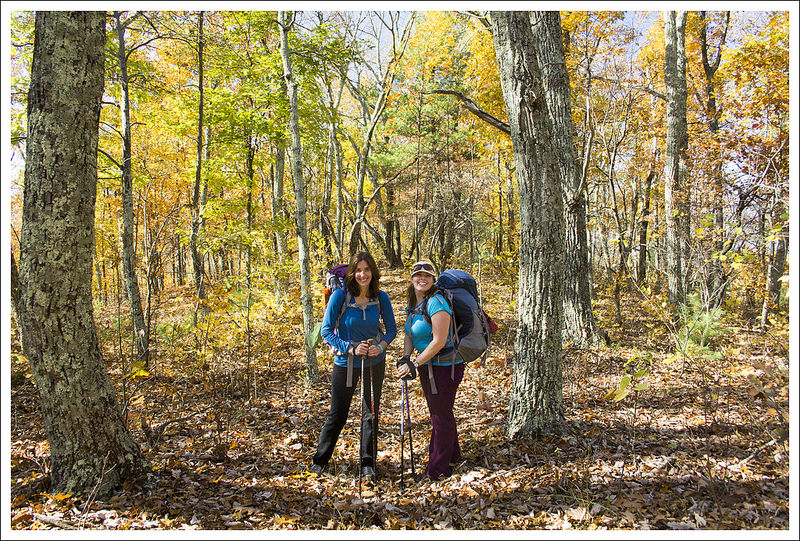
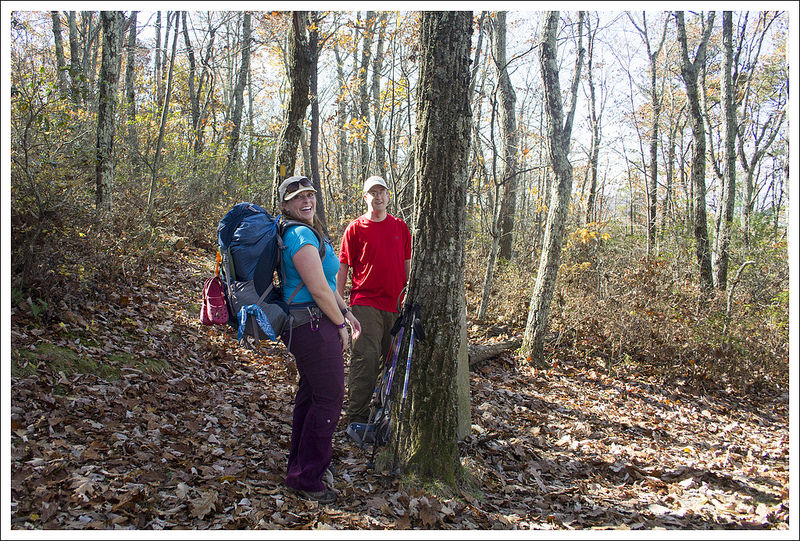
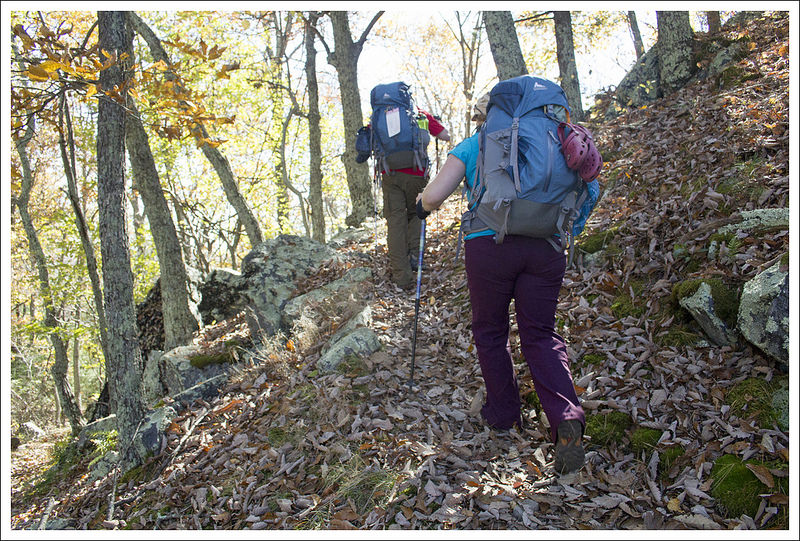
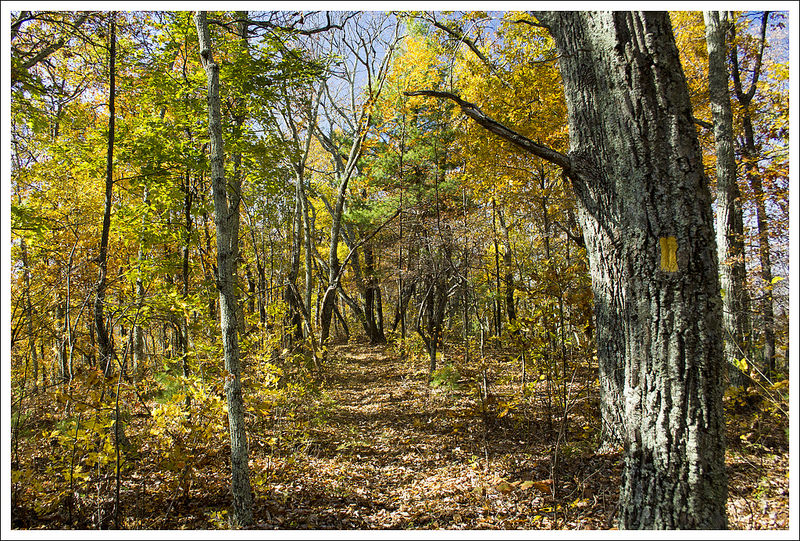
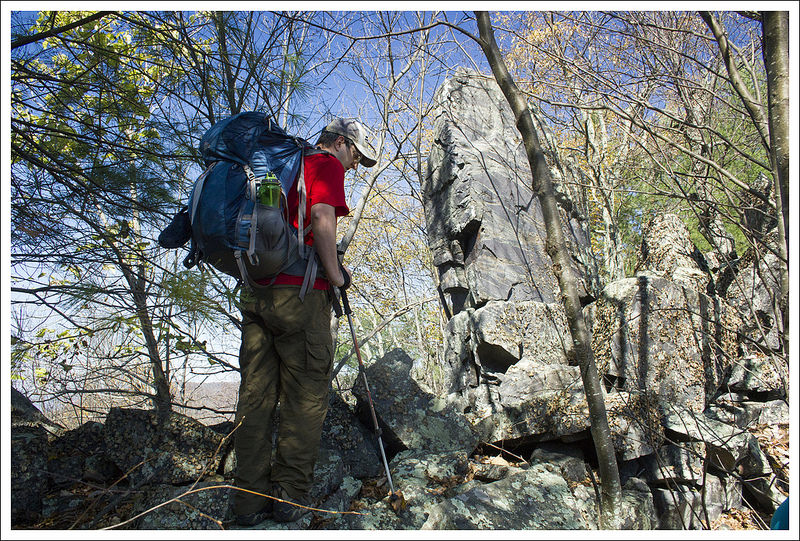
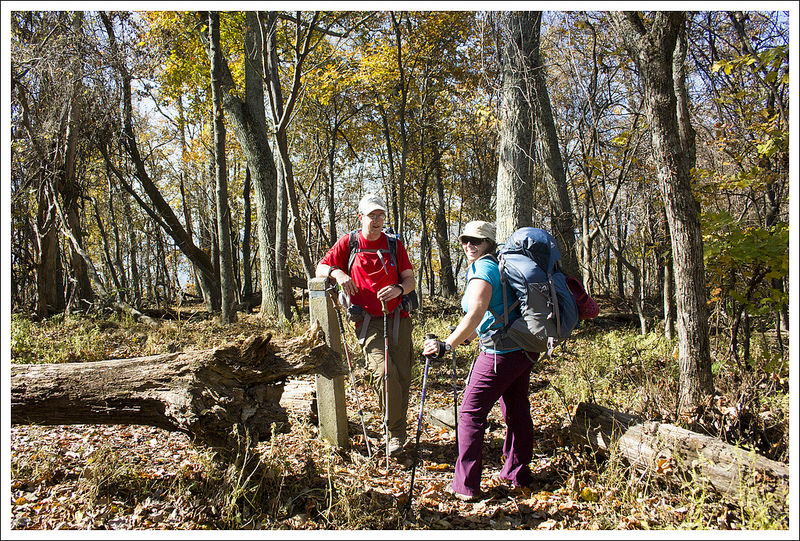
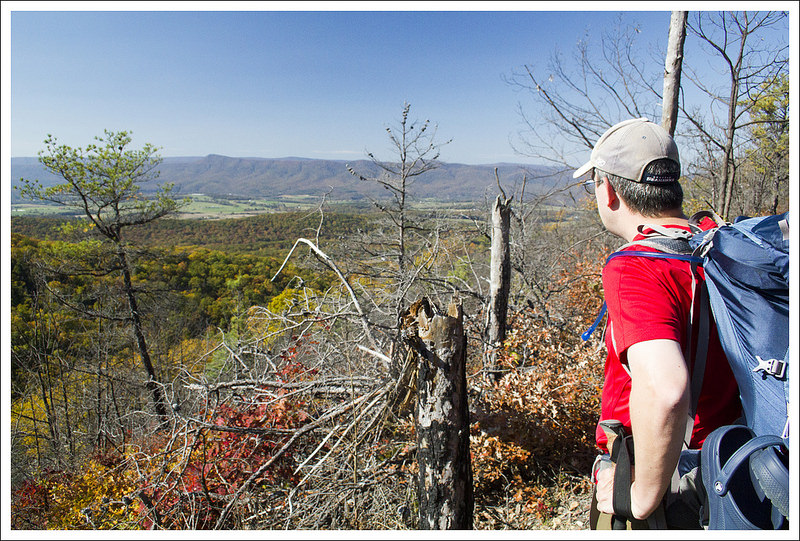

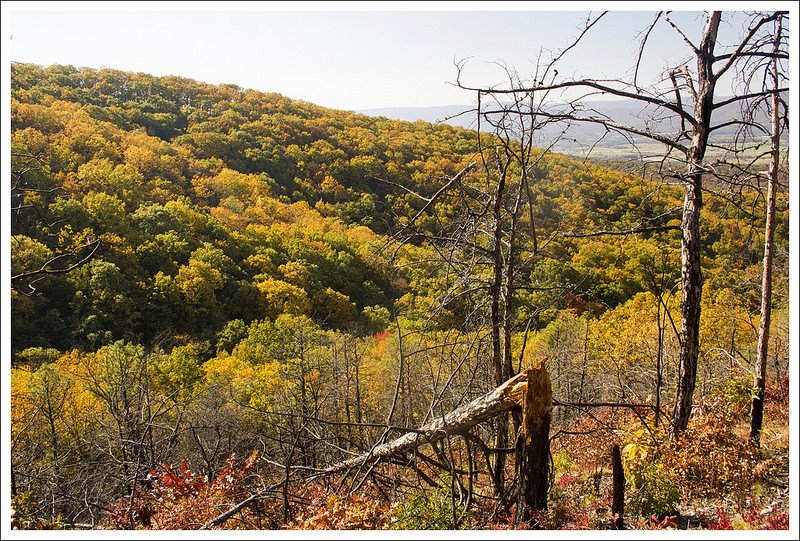

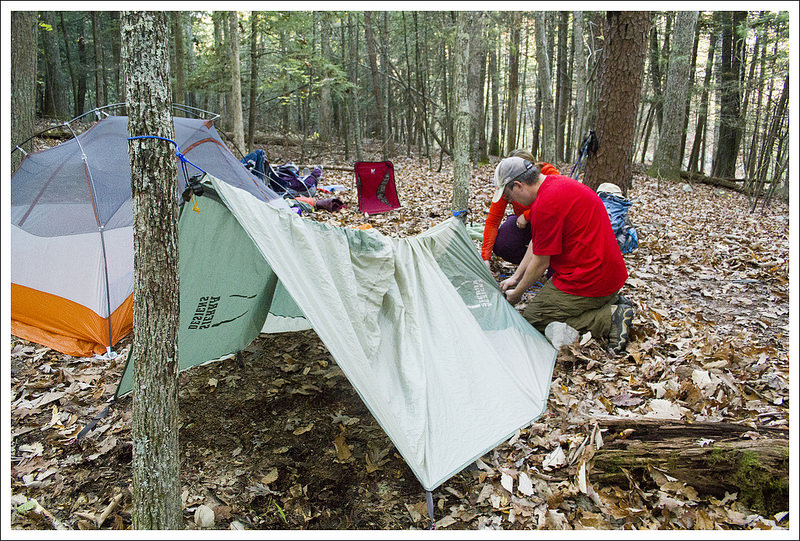
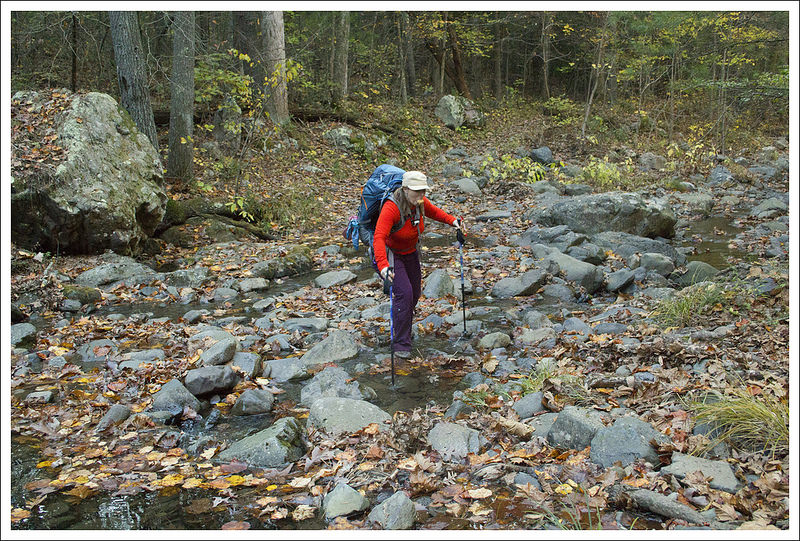
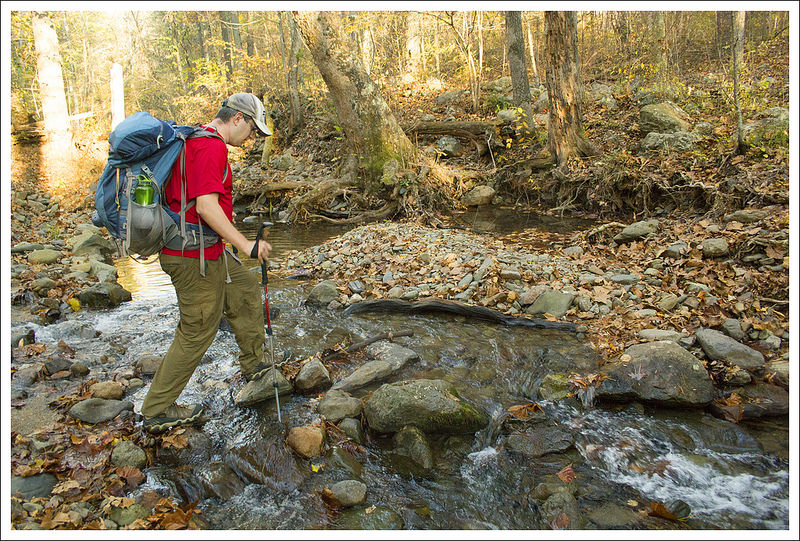
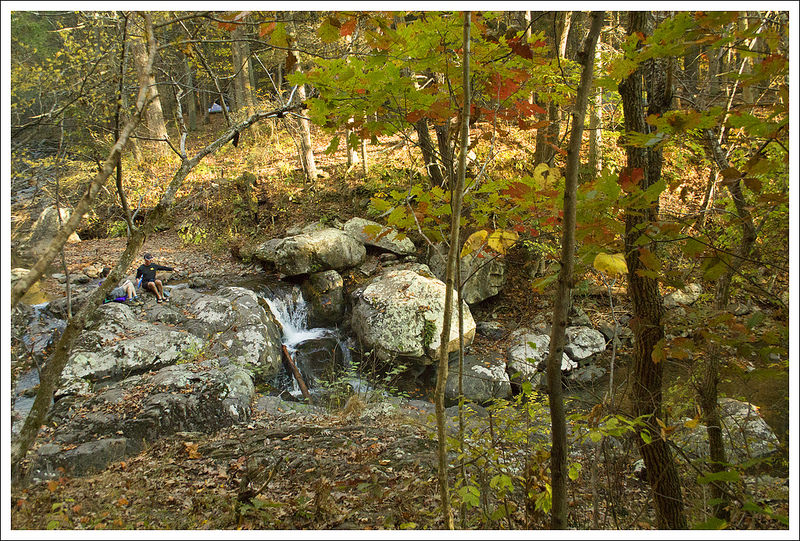
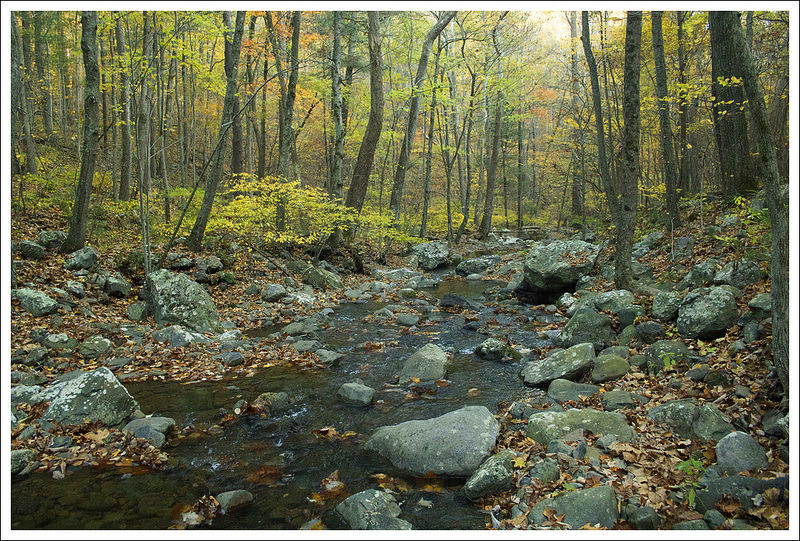


 Virginia Trail Guide