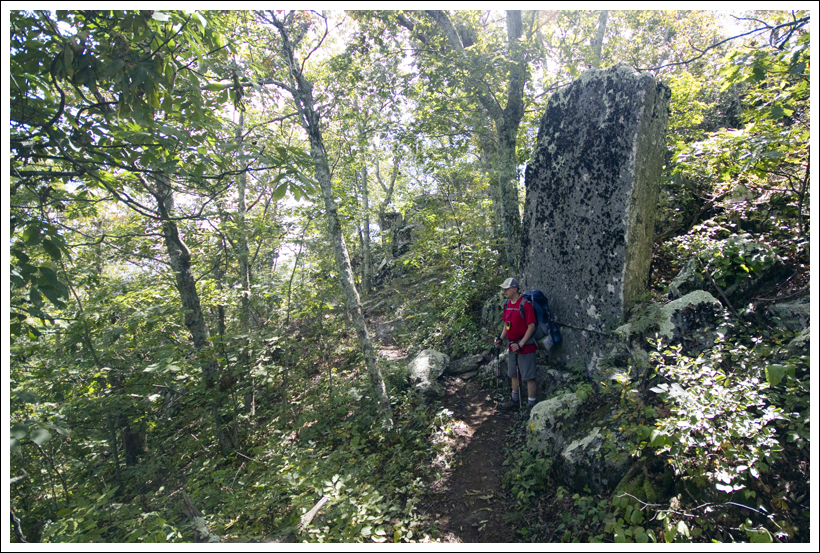
This ten-mile hike follows the Appalachian Trail along the Tennessee-North Carolina border. Most of the hike is above a mile high, so in open spots you get some very impressive views of the Smokies. The bald itself is rather disappointing, as it’s been mostly reclaimed by the forest, but we did enjoy the vistas and visiting two Appalachian Trail shelters.
Since much of the hike is along a mile-high ridge, views can be spectacular (when you’re not in the clouds). Below: Adam climbs the foggy path to the Clingmans Dome Observation Tower, The tower looks kind of like a space ship; The Appalachian Trail in the fog.
Christine Says…
This is a hike we planned on doing on our Spring 2012 Smokies trip, but we had so much stormy weather that we didn’t want to risk a long, mostly unprotected hike along mile-high ridgeline. So, we settled for the shorter trip to Andrews Bald. In the end, it actually turned out that Andrews Bald was a larger, more scenic bald than Silers. But, we still found many reasons beyond the slightly disappointing bald to enjoy this hike.
We started pretty early on Tuesday morning, after a lavish breakfast at The Pancake Pantry (Swedish Crepes with lingonberries!!). It was sunny in Gatlinburg, but as we made the drive toward the summit of Clingmans Dome, clouds began to envelop the mountain. At the very top, we were completely socked in. We knew it would burn off over the course of the morning, so we started the climb up the paved road to the observation tower.
From there, we picked up the Appalachian Trail. We followed it, descending downhill, sometimes steeply and sometimes gently. There were some sections of descent that caused Adam and I to look at each other and say ‘This is not going to be a fun climb back up!’
Since we were completely in the fog, we had no idea what views or scenery the trail would have to offer on the return hike. It was almost like doing one hike in the morning, and a completely different hike in the afternoon. I kind of like that! Also, the fog made the woods extremely beautiful and mysterious. There’s just something about mist and evergreens!
Because of the high elevation, a lot of earlier season wildflowers were still blooming. This red trillium was especially pretty! Below: Many different kinds of moss grow abundantly in the high country here; Flowering tree; Wildflowers along the trail.
We saw lots of wildflowers, including some spectacular red trillium that Adam spotted. We listened to birds singing in the fog and watched the sky become increasingly brighter.
When we came to the first vista that wasn’t covered by fog, I got out my wide angle lens. Unfortunately, it had been sitting too close to my icy cold CamelBak water bag, so as soon as I got it out, it fogged up so badly I couldn’t take a single photo until it acclimated and dried out.
By the time we got to Double Springs Shelter, larger patches of blue were already opening in the sky. We took some time to read the shelter journal – lots of fun entries.
From Double Springs, the trail seemed to ascend and descend repeatedly. We watched the mileage on our GPS and thought that it was about time that we should be approaching the bald. Honestly, we could have passed it without notice. It wasn’t really much of a bald. It had been described in our guide as ‘a large, mostly grassy bald with a few heathers and berry bushes’. What we found was a small clearing with no grass, covered completely by tall bushes.
The forest is so beautiful, dense and ethereal.
We thought ‘This can’t possibly be it!?’ But, it was – as confirmed by GPS data and our imminent arrival at the second shelter – Silers Bald Shelter. We ate lunch at the shelter – Subway and these awesome locally-made trail bars by Granola Naturals (Toffee and Chocolate Granola Crunch Bar – YUM!) that we picked up at the NOC.
Right after lunch, we headed back the way we came. The hike back was tough, hiking ten miles after climbing LeConte the day before was probably not the best plan. But when we’re in the Smokies – we hike ‘til we drop.
Most of the way was hard, but not unbearably tough. However, the last push to Clingmans Dome was about a mile of very steep climbing. My legs were screaming and all I could think was ‘put one foot in front of the other, repeat, repeat, repeat’. The only thing that softened the pain of the climb were the spectacular views! These views made me oooh and ahhh repeatedly. Despite my exhaustion, I kept thinking ‘This is so darn gorgeous – worth every sore muscle and drop of sweat!’
There is nothing like hiking a mile-high ridge that offers views of the Smokies rolling out beneath you.
Adam checks out the shelter log at the Double Springs shelter. Below: Arriving at the shelter; It was interesting to read entries. Many thru-hikers struggled through deep snow in the Smokies.
Back at the Clingmans Dome observation tower, we were met by massive crowds. Lots of people had questions and made comments about our trekking poles. An older guy called us ‘show-offs’ – not really sure why, but it was done jokingly. Adam and I really enjoyed seeing our first clear view from the tower. The two previous visits had both been low visibility/cloudy, so this visit was a real treat!
After the hike, we headed back into town for a massive feast on Mellow Mushroom pizza followed by Kilwins Ice Cream and free samples of just about every wine, whiskey and moonshine offered in Gatlinburg. I think the town offers so many free alcohol samples to loosen tourists’ purse-strings. After 14 moonshine samples, who knows – you may just wake up owning a new airbrushed t-shirt that says ‘Sexy and I Know It’ (not that I did that).
Adam Says…
Christine and I had tried to get into good hiking shape for our trip to the Smokies. We had grand ideas of all we wanted to accomplish – Christine had picked about 120 miles of hiking trails she wanted to do. Christine did a much better job than I of getting in to shape. Accomplishing this 10 mile hike after finishing about 11.5 miles of hiking through steep terrain up Mount LeConte the previous day, took a toll on me. Since this hike is almost all downhill until you reach the bald and the shelter, I was dreading the return trip.
We enjoyed our trip last year to Andrews Bald where we were able to relax at a scenic spot from the bald area. Silers Bald is not very “bald” at all. In fact, I would say it doesn’t even show much of a receding hairline. But, there were some nice views along the trail elsewhere.
Silers Bald was less impressive than we expected. Evidently, 100 years ago, balds stretched from Clingman’s Dome all the way over to Gregory Bald (which is hiked from Cades Cove). The land was used for grazing. Since becoming a park, nature had filled most of the bald terrain back in. Below: One of our first views of the day not covered by clouds; As we approached Silers Bald, the forest changed from pines to grass and deciduous trees; Another view of Silers Bald.
As Christine mentioned, we started off the hike in the thick fog. Visibility was minimal. We were hoping that the hike would be similar to our first hike up Mount Rogers, where it felt like a different hike on the return trip. Luckily, the fog lifted to give us this same experience. It also made us feel that we were continuing to hike to get the best views; otherwise, this hike would have been more of a disappointment if we had the best views early.
We started off by hiking from the Clingman’s Dome parking lot up the steep hill for .5 miles. The walk on the paved road is short, but very steep. There is a reason there are benches on the side of the paved trail. – it can be a challenge for those out of shape. Most of the people that are visiting Clingman’s Dome will just walk up the paved trail and return without venturing further. Expect to see a ton of people on this part of the trail, but you’ll have a lot of seclusion for the rest of the trail. After you near the winding tower of Clingman’s Dome, take the trail to the left that begins your hike on the Appalachian Trail. You’ll stay on the Appalachian Trail throughout your hike. At .75 miles, the trail opens up into an area filled with views along the trail. Continue to go downhill (you’ll descend about 1100 feet over a little over the next two miles). At 2.75 miles, you’ll reach a junction with the Goshen Prong Trail. Continue to go downhill and at 3.25 miles, you’ll reach the Double Spring Gap Shelter. The trail goes up and down slightly over this next section and at 3.75 miles, you’ll reach a smaller bald area known as Jenkins Knob.
By the time we hiked back, skies had cleared and we had better views. Below: Silers Shelter – our lunch stop; The return hike had some tough climbing.
We found Jenkins Knob to be a little more impressive than Silers Bald in terms of views and openness. The trail continues to mostly go downhill until it finally bottoms out around 4.5 miles. At this point, the trail begins an uphill climb to Silers Bald. At 4.7 miles, you pass the junction with the Welch Ridge Trail. The trail becomes quite steep at this point until you reach the top of Silers Bald. We found a USGS benchmark on the ground to signify the top of Silers Bald. The trail begins to descend from the benchmark and opens up to the area that is Silers Bald. The trail goes through the small bald area and reaches the Silers Bald overnight shelter at 5.1 miles. Retrace your steps, largely uphill, to make your way back.
The views were much better from the tower on the return leg of our hike. Below: Adam at the end of the hike; Views from the observation tower.
We were dreading the climb back up, especially after hiking up Mount LeConte the day before, but we were rewarded with great views as the fog and clouds lifted. As we reached the paved trail to Clingman’s Dome, we climbed up to the top of the tower and we really felt like we earned the 360-degree views. The elevation is 6643 feet (the tower adds another 45 feet) and you can stand at the top of the tower knowing you are at the highest part of the Great Smoky Mountains. This spot is actually the third highest peak east of the Mississippi, to only be beaten by Mount Mitchell and Mount Craig. We enjoyed spotting Mount LeConte from the tower, since it is the sixth highest peak east of the Mississippi. We were ecstatic to see views from Clingman’s Dome, since the last two times we had visited we had clouds hanging on the mountain. The clouds were still taking up a lot of the skies, but it didn’t prevent us from seeing miles of mountain ranges around us.
Christine mentioned that we enjoyed going back to Gatlinburg, TN and eating some pizza and drinking some free moonshine and whiskey samples. While we didn’t feel the need to buy cheesy T-shirts, I definitely felt the need to visit the Hollywood Star Cars Museum. While Christine waited for me, I toured around quickly but the highlight for me was to sit in the Batmobile from the 1966 TV show with Adam West. I grew up watching re-runs of that show and it was my older brother’s favorite show as a child, so it was great to have something to make him jealous. You can pay a little extra on the tour to have your photo taken within some of the cars. I also got to see Ecto-1 from Ghostbusters, a DeLorean from Back to the Future, KITT from Knight Rider, and the General Lee from the Dukes of Hazzard. It’s a neat place to check out if you’re into Hollywood cars.
Elevation Change – About 2200 ft. – it looks like closer to 1500 ft on GPS, but with all the rolling climbs it adds up to quite a bit more!
Difficulty – 4. The climbing and descending never seem to end on this hike.
Trail Conditions – 4. This was mostly nice, well-worn Appalachian Trail walking. The climb to the observation tower in paved.
Views – 3.5. Very nice, but not quite panoramic.
Streams/Waterfalls – 0. None on the hike.
Wildlife – 2. We saw a lot of fresh bear scat on the hike, but no bears. Clearly, they frequent the area.
Ease to Navigate – 4. The trail is well-marked with white blazes and signed at each junction.
Solitude – 3. Expect thick crowds at the observation tower, thinning toward Double Spring Shelter. After Double Spring, we only saw a couple people.
Directions to trailhead: From US-441, head south a short distance from Newfound Gap. Take a right on to Clingmans Dome Road. Go 6.4 miles until you reach the large parking lot area. The paved trail up to Clingmans Dome starts at the end of the parking lot, passing a visitors center/gift shop.
* MapMyHike is not necessarily accurate, as the GPS signal fades in and out – but it still provides some fun and interesting information.
This 7.3 mile loop has a bit of everything – views, waterfalls, history! The route takes you over Hazeltop Mountain, along several streams and past President Hoover’s Rapidan Camp.
Camp Hoover sits where the Laurel Prong and Mill Prong spill together, forming the Rapidan River. Below: Trillium was blooming everywhere when we hiked; The route had many stream crossings; Adam enjoys the view from Hazeltop.
Christine Says…
We love hiking in this part of Shenandoah! It’s the area we typically choose when we have out-of-town friends who want to visit Shenandoah National Park. It’s also a likely choice when we’re hitting the trail with hiking newbies. Why? Well… we think it’s pretty much perfect. The climbing isn’t difficult, so it helps convince non-hikers that hiking isn’t just torturous uphill climbing. This area is great for spotting wildlife. (In his portion of the post, Adam will tell you more about the exciting wildlife experience he shared with his office.) It’s also scenic, with lovely streams and a waterfall along the route. There is even a significant piece of American history sitting in the middle of the forest – the Rapidan Camp, which served as Herbert Hoover’s presidential retreat.
Our normal route in the area is a relatively easy 4 mile out-and-back to ‘Camp Hoover’. For this post, we decided to go the long way and make a 7.3 mile loop incorporating the Appalachian Trail, the Laurel Prong Trail and the Mill Prong Trail. This longer route added a nice view, many stream crossings and a bit more elevation gain.
Lots of trees were blooming in the park! Below: Adam walks along the Appalachian Trail. Adam was like a wind sock on Hazeltop.
We parked at Milam Gap. The hike started across Skyline Drive on the AT, headed southbound. Almost immediately, the trail began a long, gentle ascent to the summit of Hazeltop Mountain. The AT is so well-worn into the mountain that the path looked like a ribbon of dirt through the bright green of spring grass. On this particular May morning, the trail was abundantly lined with my favorite wildflower – Trillium. They were everywhere with big showy flowers in pink and white. We also saw (and heard) many birds. The prettiest songs came from the eastern towhees. This type of towhee has striking orange, white and black markings, which makes them easy to spot.
After almost two miles of climbing, we reached the high point of the hike on Hazeltop Mountain. There was one nice place to take in the view. It was really windy on the rocky outcropping, but I enjoyed looking out over the spring-green valley. From the viewpoint, we hiked downhill for almost half a mile to reach the junction of the AT and the Laurel Prong Trail.
There are obstructed views from the Laurel Prong Trail. Below: Eastern Towhee; Huge boulders and rocks along the Laurel Prong Trail; A neat tree near the junction of the Cat Knob trail.
The Laurel Prong trail descends all the way to Camp Hoover. Along the way, you’ll get some obstructed views from the trail, especially when trees are without their leaves. There are lots of rocks and boulders lining the path, especially right at the beginning. The lower parts of the Laurel Prong trail pass through a mix of open forest and mountain laurel thickets. As you approach the low point of the hike, you should begin to hear the sounds of water. Most of the time, streams along this trail will be shallow to non-existent. When we hiked, it was after several days of heavy rain. Single-step crossings became multi-rock hops and in many places the trail was under several inches of rain. It was fun to cross so much water!
At around the 5.25 mile mark, we reached Camp Hoover. It was a great spot to eat lunch, soak in the sunshine and enjoy the sound of rushing water. The camp is built at the headwaters of the Rapidan River, making it an ideal fishing spot. Most of the buildings that made up the camp have been lost to the ravages of time, but several cabins, including the president’s personal residence, have been renovated and preserved and are now open to the public (check park schedules for tour opportunities!).
While Adam napped in the sun, I went and did battle with my new carbon fiber tripod. It’s really light and stable, but it’s like an engineering puzzle to get it initially set up! I may have threatened to throw the tripod into the river. I guess I should look at this hike as the tripod’s dress rehearsal. It can prove its true worth on another hike. Besides, it really wasn’t a good day for taking photos of moving water (too sunny), but I think I was able to capture the impressive flow we witnessed on this day. I’ve never seen the streams around Camp Hoover flowing so powerfully! There were rapids and small waterfalls in places I’ve never seen them before. It was beautiful!
The Laurel Prong joins with the Mill Prong to form the Rapidan River just a few hundred feet from this spot. Below: Adam cross the stream again; The Brown House has a great back porch; Another streamside view of the Brown House.
After leaving Camp Hoover, we walked the trail along the Mill Prong. There is one spot where the trail crosses the stream (right below Big Rock Falls). We probably could have rock-hopped if we were careful, but both Adam and I decided to take off our boots and put on our Crocs to wade across the stream. The water came over my knees, which is really high for this spot.
After crossing, we took a few minutes to enjoy Big Rock Falls and then made our way back toward Milam Gap. For much of the way, the trail stayed close to the stream. We had several more stream crossings to complete, but none that required a shoe swap. The last couple miles of the hike went quickly, and we were back at the car by early afternoon.
We were surprised by how few people we ran into on the hike. I would have expected big crowds on a perfect, sunny Mother’s Day, but we really only saw a handful of people – a few backpackers making a short overnight of the loop and a pair of birders at the camp. I suppose we saw a few more people as we hiked back up the Mill Prong trail, but overall the crowds were light.
If I were to recommend a version of this hike – the 4 mile out and back or the 7.3 mile loop, I think I’d probably stick with the shorter version. The longer version is nice, and great if you’re looking to pick up some mileage, but there’s really not a lot to see on the Laurel Prong and it can sometimes be really muddy. The main reasons to hike in this area are Camp Hoover and beautiful stream scenery; and you get both of those on the shorter out-and-back.
Adam Says…
The hike down to the Rapidan Camp is always one of our favorites in Shenandoah National Park. We have taken several groups of people down to this area. When I talk to people about Shenandoah National Park, they have no idea that a Presidential retreat was once here and how this helped to establish a national park in Virginia. This route adds a view to the hike for an extra bonus.
Big Rock Falls was as big as we’ve ever seen it! Below: Adam crosses the stream right below Big Rock Falls; Lots of water in these little streams.
We’ve seen that on Hiking Upward and in our Hiking Shenandoah National Park Falcon Guide the hike was done in the reverse direction that we did the hike. But, our way has less of a continuous elevation climb and it puts Camp Hoover in the last third of the route (save the best for last!). We started off from the Milam Gap parking area and crossed Skyline Drive near the southern entrance to the lot to start on the Appalachian Trail. Heading southbound on the white-blazed AT, we quickly came across the junction with the Mill Prong Trail. This is your return route, so continue to go straight. The trail gradually climbs up a total of 450 feet. You reach a nice viewpoint to the right of the trail around 1.8 miles before you reach the Hazeltop summit in 1.9 miles.
The trail then begins to descend and at 2.6 miles, you reach the junction with the Laurel Prong Trail on the left. Take this blue-blazed trail which continues to descend. At the 3.6 mile, you will pass a junction with the Cat Knob Trail but stay on the Laurel Prong Trail. At 4.9 miles, you reach another junction with the Fork Mountain Trail, but again stay on the Laurel Prong Trail. The trail changes to yellow-blazed at this point, since it is now accessible to horses. At 5.3 miles, you will pass by a fire road on the left and then come up to a side trail for Five Tents. The Five Tents location was where some of the staff would stay at the Rapidan Camp, but there is no longer a building there. Christine took this route, but I stayed straight and we met up shortly at the Rapidan Camp, entering near the Prime Minister’s Cabin.
Upon leaving the Brown House at Rapidan Camp, we caught the trail heading past the Creel Cabin. Crossing the fire road, we picked up the yellow-blazed Mill Prong Trail which gradually ascends most of the way. At 5.5 miles, you will cross Mill Prong (which may require you to wade across the water after heavy rainfall) and reach Big Rock Falls on the other side. At 5.9 miles, you reach a junction with the Mill Prong Horse Trail. Continue straight instead of taking this trail, but the blazes change to blue as it is no longer a horse trail. The trail crosses Mill Prong again and then you will have a gradual climb back up. At 7.3 miles, you reach the Appalachian Trail junction again. Take a right and in a short distance you’ll reach the parking lot.
Pretty pink trillium Below: Wild geranium (I think?); Ragwort; Adam finishes out the loop.
Last year, I brought a few of my co-workers down to the Rapidan camp for a team-building retreat. I felt that if it was good enough for the President, it should be good enough for us. When we arrived, a volunteer who stayed at the Creel Cabin, gave us a tour of the Brown House, where President Hoover stayed. We learned a lot about Hoover, the problems he faced during his presidency, and his relationship to Franklin D. Roosevelt. After the tour, we did some team-building and communication exercises to learn more about how to work best with each other. While we were in the middle of making some breakthroughs, a small snake fell down off the roof just a few feet from where we were working. One of my co-workers, who is not a hiker by any definition, jumped out of her seat and was constantly looking around for other animals. After we made our way back up, we were talking along the way. I heard some people say, “Adam, look out”. I nearly walked right into a mama bear with three cubs. The family of bears quickly took off up the hill. I had told my co-workers that I’m usually pretty good at finding bears and we may see some. They were thrilled to see the cubs, as a few of them had never seen a bear cub before.
Along with the possibilities of seeing bears, you can usually find this trail to be an excellent trail for birding. The Laurel Prong and Mill Prong trails were filled with beautiful songs as we hiked along. A couple that was hiking near us also recognized the song of a blackburnian warbler.
If you’re up for a longer hike to the Rapidan Camp, I would suggest this route. The views from near Hazeltop summit were expansive, you get to see a nice waterfall, hear the songs of birds, and learn about the history of one of our Presidents and how it helped create a national park in Virginia. This hike does have it all!
Difficulty – 3. This hike is not steep or difficult, but some hiking novices might find the 7+ mile distance a little challenging.
Trail Conditions – 4. The trails were in great shape, despite being underwater in several place. We didn’t see any blowdowns or sloppy areas.
Waterfalls/streams – 4. Big Rock Falls, the Rapidan River, Mill Prong and Laurel Prong are all lovely and offer lots of water scenery along this hike!
Wildlife – 4. We didn’t see much on this particular day beyond birds, but we’ve seen lots of deer and bears on past trips.
Ease to Navigate – 4. Trail directions are clearly marked at junctions with cement markers.
Solitude – 2. This is a popular hike, both as a day trip and a short overnight loop.
Directions to trailhead:
The hike starts at mile marker 53 on Skyline Drive. Park in the Milam Gap lot, then cross the drive. The trail picks up on the other side of the crosswalk.
* MapMyHike is not necessarily accurate, as the GPS signal fades in and out – but it still provides some fun and interesting information.
This 4.7 mile hike makes a wide circle around the entire Loft Mountain complex. It starts at the wayside and makes use of three different trails in the area – the campground path, the Appalachian Trail and the Frazier Discovery Trail.
Christine and Wookie enjoy a view along the AT. Below: Wookie enjoyed his outing.
Christine Says…
So… it’s been a while since our last post. We’ve been sitting on photos and information about our Thanksgiving hike for over two months now. Things got a bit chaotic with the holidays (travel/family obligations), I was sick for a full six weeks, and worst of all we lost one of our pugs (13-year old Mojo) after a short, tough, twelve-week battle with cancer. Things finally feel like they’re getting back to normal again, and we’re hoping to spend some more time on the trail this winter. Maybe even a snowshoeing trip?
Thanksgiving this year was a warm, delightful, sunny day. I was at the tail end of being sick , so I waffled back and forth – relax on the couch watching the parade and dog show; or get up, get dressed and go for a hike. In the end, the beauty of the day pushed me in the direction of Shenandoah National Park. I wanted a shorter/easier hike without much climbing, so we settled on the Big Flat Mountain Loop. This loop encircles the Loft Mountain complex. Here’s a bit of trivia – the campground complex is not actually on Loft Mountain – it’s on Big Flat Mountain – hence the name we’ve given this hike. It’s also the same hike I chose for my annual Father’s Day hike last June.
We started off at the wayside and made our way up the crumbling, but still (technically) paved, campground path. The path parallels the road, about 10-15 feet into the woods. There were lots of downed trees and branches across the path that had fallen recently. Wookie enjoyed getting his leash tangled in just about every obstacle.
The camp store stands quiet during the off season. Below: The view from behind the amphitheater; The Loft Mountain Campground Amphitheater.
We eventually came up to the camp store/laundry, which was closed for the season. We let Wookie eat some snow and took a few minutes to consult our map to make a few more route decisions. From there, we crossed the road and made our way toward the amphitheater. The amphitheater has a fabulous view of the valley below. It’s definitely worth a short stop along the way.
Near the amphitheater, we picked up the access trail for the AT. After a short walk, we turned onto the Appalachian Trail, heading north. The trail makes its way behind the Loft Mountain campground. There are wonderful cliff-side views to the east and several spur trails lead to campsites and the camp store. After passing the campground, there is a short downhill followed by the one semi-steep climb of the loop. This climb, which normally would have been quite easy, almost killed me with my diminished aerobic capacity It always amazes me how quickly one can get out of shape!
At the top of the climb, you’ll pass the first junction of the Frazier Discovery Trail. If you take this junction, you miss two of the nicest views on the hike. Continue a short way north, passing two spectacular views to the west. The prominent sloping peak in the distance is Massanutten. At the last view, you’ll see the other arm of the Frazier Discovery Trail. Follow this trail (unless you have a dog with you!) back to the bottom of the mountain and the wayside. If you do have a dog with you, you should continue north on the Appalachian Trail for almost another mile until you reach the spur trail to the Ivy Creek maintenance hut. Follow that trail back down to the road/wayside.
I bring the issue of dogs up primarily because we got in trouble for using a short section of the Frazier Discovery Trail on the return arm of the loop. The trail was marked ‘no pets’ – but only at the bottom of the mountain. The spot we entered, at the top of the mountain – along the ridge, was not marked. A ranger stopped us in the wayside parking lot and gave us a warning.
It was a nice way to spend the holiday!
Adam Says…
Christine and I both handle our festivities for Thanksgiving differently than most people. We don’t do a large Thanksgiving dinner with the huge bird, cranberry sauce, stuffing, and all the other side dishes. There is no pumpkin pie or a pulling of a ceremonial wishbone. Instead, we have homemade pizza. Christine isn’t a huge fan of turkey, so we have decided to have something that we both enjoy. We also have started the tradition the last few years of starting the day off with a hike. I definitely feel the touch of a higher presence when I’m communing with nature and there is no better setting to reflect on what I am thankful for in my life.
There were quite a few trees fallen across the trail. Below: Adam walks along the Appalachian Trail; Views along the hike.
With pug in tow, we parked at the Lost Mountain wayside and restaurant. There were only a few cars up here, which is typical of Thanksgiving and some of the colder months, so we knew we were in for a quiet hike. We crossed the road and on the northern end of the parking lot and made our way on the paved walk . After .1 mile, you reach a junction with the Frazier Discovery Trail, but stay on the paved walk. The path is mostly paved or gravel. We did have to hurdle or duck under a few blown trees across the path. Around 1.6 miles, you reach the Loft Mountain Camp Store. From here, we crossed the road and continued on the walkway for .1 mile to reach the Amphitheater. They really picked a gorgeous spot for this structure, since you’ll have marvelous views. I can only imagine watching the sunset during a ranger program for all the people camping overnight.
From the Amphitheater, the path begins to go downhill. At 2.1 miles, you’ll reach a junction with the white-blazed Appalachian Trail. Head left (going north) from this junction, going uphill along the AT. At 2.4 miles, the AT begins to level out somewhat as you will navigate around the Loft Mountain campground. You may smell hotdogs cooking and see glimpses of people and tents through the trees. You will pass a few spur trails that serve as access for campers to the AT, but stay on the trail. The trail stays fairly level for a while. At 3.6 miles, you will reach the first junction with the Frazier Discovery Trail. Stay straight on the AT and you will come to your first great view past the junction. Continue on the AT and at 3.8 miles, you will reach the second junction with the Frazier Discovery Trail. Take a left on this trail and you will immediately come up to another view. Follow this steep downhill path and at 4.6 miles, you will reach the junction again with the paved walk. Take a right and you will return to your vehicle at 4.7 miles.
Thanksgiving day view in Shenandoah National Park. Below: Cliffside on the Frazier Discovery Trail.
So, as we were hiking along, we typically like to reflect with one another for what we are thankful for. We both were reflecting how thankful we were for each other, our family, our dogs, our jobs, our health, and our ability to share our love for the outdoors together. Our hearts were a little more somber this day, since we had just recently received the bad prognosis for Mojo. We’ve had him for most of the time we’ve been married and we give so much love to our pets, that are key members of our family. We have lost Mojo since then, but he is forever in our hearts and we know he is in a more pleasant place now. Hiking is a large metaphor for life, as you have some steps that are harder than others and stumbles along the way. We have our love in our hearts to serve as our trekking poles to keep us balanced and help us reach the vistas along the way.
Wookie Says…
I have to say… this was not one of my better hikes. I accidentally broke SNP’s rules, and I feel really bad about it. But, in my defense, if the park doesn’t want dogs on a certain trail, they really should mark it ‘No Pets’ at both the start and the end of the trail. Because I entered the Frazier Discovery from the AT, I had no idea I wasn’t allowed to be there. The only sign indicating the rules was posted at the bottom of the mountain – way at the other end of the trail. Thankfully, the park ranger at the Loft Mountain wayside let me go with a warning. I also came home with THIRTEEN ticks, even though I use a preventative. Hopefully, I won’t get Lyme disease again. Despite the challenges and pitfalls, I still enjoyed being out on the trail.
Trail Notes
Distance – 4.7 miles.
Elevation Change – 675 feet
Difficulty – 1.5. The trail is gentle and rolling with only a couple very moderate climbs and descents.
Trail Conditions – 4. The trail was in excellent shape. There was a little snow still on the ground in a few spots, but nothing that caused us trouble.
Views – 4. There are many excellent views to both the east and west along this hike.
Waterfalls/streams – 0. None
Wildlife – 3. We didn’t see anything on this hike, but there are bears, deer, birds and other small creatures in the vicinity.
Ease to Navigate –3. You’ll have several different options for turns on this loop, but as long as you don’t go south instead of north on the Appalachian Trail, you shouldn’t get lost.
Solitude –2. The trails in this area are heavily trafficked, so expect to see other hikers.
Directions to trailhead:
Park at the Loft Mountain Wayside at Skyline Drive mile marker 79.5. Walk north along the drive for a 150 yard and then cross the drive to pick up the fire road. The trailhead is almost directly across the drive from the Patterson Ridge trail.
* MapMyHike is not necessarily accurate, as the GPS signal fades in and out – but it still provides some fun and interesting information.
This 13.2 mile circuit can be done as a day-hike, but we recommend extending the beauty and wildness into an overnight backpacking loop. Take your time, and you’ll be treated to panoramic views, lovely mountain streams, demanding climbs and peaceful campsites.
Christine takes in a a view of The Priest from Three Ridges mountain. Below: Welcome to the Three Ridges Wilderness; Over half of the circuit follows the Appalachian Trail; Nothing beats a campfire in the evening.
We had long been planning a three-day backpacking trip across Mt. Rogers, but as the day of the trip drew closer, we started seeing the term ‘Appalachian soaker’ thrown around in weather forecasts. We’re fine with passing showers and fleeting thunderstorms, but we didn’t want to get pinned down on Mt. Rogers on a wet and stormy night.
Fortunately, the weather in central Virginia was far more favorable, so we ditched our Mt. Rogers plan, and decided to hit another backpacking circuit on our list – Three Ridges. This route, which makes use of the Appalachian Trail and the Mau-Har Trail, is known as one of Virginia’s most rugged hikes. Everything we read about the circuit in advance of our trip emphasized the hike’s strenuous nature. With roughly 6,800 feet of elevation change, you’re almost never walking on flat trail. It’s a constant onslaught of heart-pounding climbs and knee-grinding descents. But along with the challenging terrain, you get spectacular views, beautiful streams and lovely campsites.
We started out early Saturday morning. The first stop was fuel… for ourselves. We had a huge breakfast at The Chuckwagon in Harrisonburg. If you have a chance, stop by and indulge in one of their homemade 4-inch biscuits (Adam’s favorite is ‘The Round-Up’) or a stack of their amazingly fluffy pancakes. (Sadly… Chuckwagon closed in January 2013) With full stomachs, we made our way to Reed’s Gap at mile marker 13.7 on the Blue Ridge Parkway.
When we got to the parking area, the lot was already jam-packed, mostly with heavy-duty construction vehicles left idle for the weekend. Just as we were about to give up and find a parking spot further down the parkway, one car pulled out and left an opening for us!
Adam makes the initial climb up Meadow Mountain. The climbing was occasionally rocky, but never terribly steep.
We started the Map My Hike app on Christine’s phone, hoisted our packs, and headed south along the Appalachian Trail. From the parking area, the trail hugs the edge of a meadow, which was full of blooming yellow ragweed and purple thistle. It was such perfect weather for backpacking – sunny skies, low humidity and a crisp breeze. The trail almost immediately began to climb uphill over Meadow Mountain. The climbing was steady, but never difficult, for about .8 of a mile.
At the top of the ridge, there was a small dry campsite with obstructed views. Department of the Interior boundary markers were all along the ridge. We spotted at least three or four right next to the trail. After walking briefly along level ridge, the trail descended to Maupin Field Shelter. The shelter site had tons of space for tents (many of the tent sites were flat, soft and grassy), a typical AT three-sided hut, a metal bear-hang post and a picnic table. The area also had an informational kiosk with trail notes and wilderness-usage policies. There was also a child’s orthodontic retainer tucked into a Ziploc and pinned to the board. We’re guessing there is now one retainer-less Boy Scout and a less than happy mother!
Christine climbs the stone steps up Bee Mountain.
After Maupin Field Shelter we began climbing again, over Bee Mountain. The climbing was slightly more strenuous, but definitely manageable. In several places, rock steps were set into the trail to make the climbing easier. Along the way, we started playing ‘Categories’. It’s pretty basic – each player designates a category, then players take turns naming items that fit within that category. For example, categories might include Movies Based on Comic Books or Items You Need on a Backpacking Trip. It’s pretty mindless, but it kills time. Whoever successfully names the last item for the given category wins the round. The best category of the day was Complaints Uttered When Hills Are Steep. We won’t share the specifics of our trail talk here, but it was pretty funny to reflect on this topic! Bee Mountain didn’t offer any views and was followed by a short descent before tackling the more serious climb up Three Ridges Mountain.
The climb up Three Ridges consisted of several steep pushes, with nice stops for views all along the way. The first view, Hanging Rock, was very impressive, so we decided to break for lunch and enjoy the amazing vista. As we ate our Panera bagels (Cherry-Vanilla with Justin’s Chocolate Hazelnut Butter for Christine and French Toast with Peanut Butter for Adam), we noticed two dogs fitted with radio collars – doubtlessly bear hunting dogs set loose in the woods for pre-season practice. Both dogs were female; both were emaciated and showed signs of over-breeding. We hate to cast aspersions or generalizations on any group of people, but we are not fans of hunters that use this type of technology to hunt bears. Both of the dogs were pretty persistent about trying to steal our food. The bolder dog, who was heavily perfumed by a skunk encounter, came within inches of snatching Christine’s bagel right out of her hand.
One of the bear hunting dogs we encountered seemed to be enjoying a view of the Priest from the Hanging Rock Overlook. Below: Adam climbing the first uphill section of Three Ridges Mountain; Southbounders (BeeSting, Fats and Happy) contemplate the Priest and their upcoming climb; The view from Hanging Rock.
While we sat at the overlook, we had a chance to chat with three Southbound AT hikers – Happy, Fats and BeeSting. All three had started in Pennsylvania in August and were making their way toward Georgia. Happy was already there when we arrived, so we got to talk with him for a good bit while he waited for his companions to show up. He was from Las Vegas and on his first long-distance hike. He told tales of his shoes breaking down on the Pennsylvania rocks, getting caught in a vicious cold-front driven storm on Bearfence Mountain, and his epic weight loss (40 pounds in less than a month!). He was a nice kid and we enjoyed talking to him and telling him about some of the things he has to look forward along the trail in Virginia – The Priest, Spy Rock, Cove Mountain, McAfee Knob the Grayson Highlands. He told us the friendliest place he’d stopped on the trail was the town of Waynesboro.
After a while, Fats and BeeSting came along. They were a young couple from Montgomery County, Pennsylvania. We didn’t talk to them as much, because we wanted to press on and make our way to camp by mid-afternoon. Happy left a few minutes ahead of us, and we were sure we wouldn’t see him again. Thru-hikers are known for keeping a blistering pace!
Upon leaving the vista, there was quite a bit more uphill climbing before we finally reached the true summit/highpoint of Three Ridges Mountain. At the highpoint, we ran into a group of three women out on the same circuit we were hiking. We chatted briefly about the great weather before leaving them to enjoy their lunch.
Christine enjoys the view on a perfect late-summer day. Below: The actual high point of Three Ridges is in the trees; Adam walking through ferns along the trail.
After the high point, the long, seemingly endless descent to Harper’s Creek began. It wasn’t always super-steep. Sometimes it almost leveled off. As we were walking along, we saw a bear dash off through the brush. We were both glad that the bear hunting dogs hadn’t pestered the bear into a tree. A few steps later, we heard an exuberant voice shouting into the wind – ‘Woooooo!’ ‘Yeaaaaaah’! ‘Echo Echo Echo’ and ‘I’m on TOP of the WORLD’. As the voice drew nearer, we guessed it was Happy having a ‘mountain moment’. Sure enough, he called to us through the trees so we could share the nice view spot he had found a little ways off the trail.
We left the spot before he did, knowing that there would be more views along the way. One unnamed view on the left side of the trail was especially beautiful. We stopped for photos and a pack-less rest. A bit further along, we saw a huge flat, upright rock that looked just like a tombstone. Immediately past that, we noticed a faint trail that climbed up steeply through the woods to a jumble of rock. We guessed correctly that we had found Chimney Rock. It was a great place to sit, and every bit as scenic as the very first overlook on Three Ridges. We enjoyed looking down into the valley, dotted with homes, streams and a large Christmas tree farm. The Priest, one of Virginia’s most beautiful and distinct mountains, loomed impressively across the way.
Adam enjoys one of the many spectacular views from Three Ridges Mountain. This particular stop came at a rocky outcropping known as Chimney Rock. Below: Views, views and more views!
After Chimney Rock, the last real vista was a wide flat shelf of rock overlooking the scene below. After that, the downhill got pretty bad. It was the bone-jarring, steep, type of downhill that makes your knees beg for mercy! We both slipped a couple times on the descent. It was probably all the fallen acorns – if your boot hits them just right, they sort of function like tiny roller-skate wheels. Adam managed to hyperextend his knee on one slip, and hiked in a significant amount of pain the rest of the day. Christine hit a loose flat rock and rode it like a surfboard until she finally landed hard, but unharmed, on her rear end.
Honestly, the uphill on this hike is moderately hard, but the downhill is brutal. Anyone in reasonable condition should be able to handle the physical demands of the ascents along the trail, but if you have bad knees, the descents are nothing short of punishing. We both tried to keep our packs on the light side for this trip. Christine’s pack was 22 pounds and Adam’s was 29… but that was before water. After a dry week, we weren’t sure if Harpers Creek would be flowing, so we both carried quite a bit of extra water – 3.5 liters for Christine and 4 for Adam. We knew there was a chance we wouldn’t need it, but when it comes to water it’s always better to be safe than sorry.
The climb down from the summit of Three Ridges was grueling and rocky! Below: The trail went over many large boulders; It passed thick stands of rhododendron and mountain laurel; We were thrilled when the Harpers Creek shelter site came into view.
After over two miles of switchbacks, dangerous acorns and tricky rocks, the colorful domes of tents came into sight. We had reached Harpers Creek Shelter – our stop for the evening. We found the shelter itself empty, but most of the tent sites adjacent to the shelter had already been claimed by a large group of Boy Scouts from Fluvanna County.
We found a mostly flat and smooth tent site across the creek, about 50 yards south of the shelter. We figured it was a perfect spot – we were close to the shelter and could use it for a ‘kitchen’. Also, the privy was on our side of the stream, but far enough from the tent that it wouldn’t be annoying when people went to use it.
For the most part, Harpers Creek wasn’t flowing. There were several shallow pools in the streambed, which gave us plenty of access to water, but also provided a perfect breeding ground for mosquitoes. Christine immediately noticed bites forming welts on her legs, so she quickly changed out of her shorts and into long pants. She tried to change behind a large boulder, but she’s pretty sure the Boy Scouts saw her in her underpants, but hey… modesty sort of goes out the window in the backcountry.
Within twenty minutes, the tent was up, the sleeping pads were inflated, and sleeping bags were in place. We set aside all the food, cooking implements, water filter and bear bags to take over to the picnic table at the shelter. The Harpers Creek shelter was small and kind of dingy. There was no shelter log. Actually, the only thing in the shelter was a sodden pair of ‘tighty-whiteys’.
Adam set about collecting water. We recently picked up a very handy collapsible bucket made by Sea to Summit. It folds down to about the size of a deck of cards and weighs just a few ounces. But, it allows us to collect up to nine liters of water at once. Typically, we pump water through our Katadyn straight into the bucket. Then we cover the bucket with a bandanna and usually have plenty for dinner, breakfast and bottle refills.
While Adam filtered water, Christine worked on collecting wood for a campfire. It was already starting to get chilly, so it was a perfect night for a fire. As is the case at most shelters, good firewood is hard to find. There is always plenty of tinder/kindling, but the larger, long-burning pieces of wood are at a premium. In the backcountry, we only use downed wood that we can break by hand.
Our camp on Harpers Creek. Below: Setting up our ‘kitchen’ at the Harpers Creek shelter; On the menu for dinner; Adam feeds the fire.
Christine made a teepee-style campfire with larger pieces of wood on the outside, and a tinder-packed center. All of the wood collected from the forest floor was cold and damp, so the fire had a hard time catching at first. A little squirt of alcohol-based hand sanitizer took care of that problem, and within a few minutes a small fire had sprung to life.
With the campfire going, water collected and the campsite set, it was time for dinner! We keep saying we’re going to prepare our own fancy homemade backpacking meals, but when the time comes we always seem to find ourselves reaching for Mountain House or Backpacker’s Pantry. It’s just easier, and for the most part, the packaged food is really tasty (notable exception – Natural High’s Banana Cream Pie – worst dessert EVER.) Our menu for the evening included Chili Mac with Beef as the entrée and Cheesecake for dessert. Christine brought several sticks of cheddar cheese to mix into the chili and single-serving plastic bottles of Merlot. It was quite the feast!
After dinner, we put up our bear hang. Oddly, this shelter did not have a metal post like most AT shelters in this part of Virginia. We had to find a tree with a free branch. After the food was secured, we settled into our camp chairs and enjoyed the fire. Some people we’ve met along the trail think the camp chairs are a waste of pack space, but they fold down to about the size of a water bottle and weigh just about a pound. We find them well worth the extra weight for the back-resting comfort they provide. We might not carry them on a long multi-day trip when every bit of pack space counts, but for a weekend trip, we like having creature comforts.
Entertainment unfolds by the campfire. Below: Our tent at night.
As we sat by the fire, we watched a little piece of comedy unfold on the other side of the stream. A couple of the older Scouts had been assigned the task of hanging the group’s food. We watched as they missed getting the rock and rope over the tree branch, dozens and dozens of times. The boys took turns making fun of one another for their off aim. Eventually, they got the rope over a branch. They celebrated with a high-five and a ‘Woot!’. But, the branch snapped off the tree as soon as they tried to hoist the weight of many food bags. Eventually they went for help and settled on a less-than-perfect, but still functional tree. All in all, it took them over an hour to get their food hung.
Our campfire died around 9:00, so we headed back to the tent. Adam read by headlamp and Christine listened to a book on her iPod. For one of the first times ever, we both fell asleep quickly and slept soundly through the night. We were actually awoken by voices and headlamps at what seemed like the middle of the night. Christine rolled over and asked Adam ‘Is it around midnight and these kids are up late or is it morning already?’ It turned out that the Scouts were awake and cooking/packing up at 5:30 a.m. We lazed around in the tent for another hour until the sun came up.
The Scouts actually hiked out around 7:00, just as we were getting breakfast together. Usually, we’re the early risers and the first out of camp! We made maple-brown sugar oatmeal with freeze-dried bananas and coffee and hot chocolate for breakfast. We both ate two packs, knowing that we had a tough day of hiking on the Mau-Har Trail.
After a good night of sleep, Christine is ready to tackle day two! Below: Adam changes out of his Crocs and back into boots; The Appalachian Trail departing Harpers Creek.
After breakfast, we broke down camp. Adam’s hyperextended knee was still pretty sore, so Christine stowed some of his gear in her pack to make his load a little lighter. While she was transferring gear, she noticed that a mouse had chewed through the little mesh compartment on the hipbelt of Adam’s pack! The only thing in the compartment was a set of car keys, so we’re really not sure why it was appealing to a mouse. It reminded Adam of one of his favorite books as a kid – The Mouse and the Motorcycle. He thought this mouse was trying to make a sequel with their car.
We left Harpers Creek around 8:00. On our way out, we passed four or five other groups that had been tenting near the shelter. All told, there were probably somewhere between 25 and 30 people camped along the creek that night. Quite a tent city!
After leaving the shelter site, we followed the Appalachian Trail for almost a mile, largely uphill, to its junction with the Mau-Har Trail. The odd trail name is a combination of Maupin and Harpers – the names of the two shelters the trail runs between. The Mau-Har was designed by a man named Angelo Filippi. One funny review we read of the hike evidently thinks ‘designed’ is too kind a word for the trail. The review states:
“We started from Reeds Gap and heading down the Mau-Har, cussing Angelo Philippe [sic] the whole dang way. I swear he unfolded a map, put it on the ground, pulled out a piece of string, dropped the string onto the map and said “There! That is where the trail should go!” What a jerk!”
The start of the Mau-Har Trail. Below: The Mau-Har trail starts innocently enough; Then it starts to climb more steeply downhill; And then it gets even steeper than it already was!
To be fair, the trail was clearly designed to follow scenic Campbell Creek as closely as possible and following a creek that goes tumbling through a deep gorge is going to require some rugged climbing. The Mau-Har trail descended very steeply to the creek. Adam grimaced in pain from his knee injury on every downhill step. The weight of his pack, combined with the steep trail was almost more than he could bear. This was some of the gnarliest downhill we’ve ever done.
Eventually, we got to the spur trail that leads to a series of small waterfalls. Adam decided to stay put and rest his knee while Christine explored the falls. She took off with the camera, hoping to get a few documentary shots for the blog. A few minutes later, Adam decided to follow. He had heard there was a geocache hidden by the falls (known as “firedogs fishbowl”), but he had forgotten to input coordinates into his GPS. He looked for it, but without coordinates it was pretty close to impossible to find. The waterfalls were all very small due to low water flow. In spring, with snowmelt and heavier rain, the creek is probably spectacular!
Water volume in Campbell Creek was fairly low. Below: The section of the Mau-Har that follows Campbell Creek is very steep; Some sections require you to pull yourself over the rocks; Christine is happy for a more moderate grade.
From the waterfall spur trail to the Maupin Field shelter, the Mau-Har climbs very steeply uphill. At first, the trail is very rocky as it passes through the canyon. You wind your way between and over boulders. Sometimes you have to stow your trekking poles in one hand to pull yourself up over a big step. It reminded us very much of hiking the gorge at Little Devils Stairs. The terrain was very similar. After leaving the canyon, the trail becomes less rocky, but no less steep. A series of sweeping switchbacks carry you relentlessly uphill. Eventually the grade becomes more moderate in the last half mile before you arrive at the Maupin Field shelter.
Near the end of the climb, Adam announced that he was going to stop at the shelter and ‘eat every single bit of anything edible left in his snack bag’. Two packs of oatmeal, bananas and hot chocolate burn off pretty fast when the climbing is tough! He proceeded to eat a Luna Bar, ShotBlox, a bag of cashews and a bunch of mini candy bars. He reined himself in and skipped eating a dry packet of cocoa mix.
At Maupin Field, we read the shelter log. Entries talked about the skunky, food-nabbing bear dogs (someone had named them Bagels and Muffins). A southbounder left a warning to northbounders about 20-30 miles of dry hiking. Someone even left a really nice pair of ladies LaSportiva for someone to claim.
Adam relaxes at the Maupin Field Shelter. Below: One of the stream crossings near Maupin Field Shelter; Adam checks out the shelter log; The Mau-Har’s end point at the shelter.
The last 1.6 miles retraced our route from the morning before. We had a gradual climb up and over Meadow Mountain and then back to our car at Reeds Gap. We drove back toward home along the Blue Ridge Parkway, stopping at Humpback Rocks to wash our hands with soap and running water. Our last stop was the Sonic in Waynesboro for more ‘refueling’. We definitely earned some tater tots and CreamSlushes!
Three Ridges turned out to be a great alternative to our planned Mt. Rogers trip! While the terrain was challenging, we think most people accustomed to backpacking/hiking would be up for the challenge and would enjoy the beautiful and wild scenery offered by this loop.
The one issue we would like to bring up is a discrepancy about the length of this hike. Most sources list the loop at 14.4 miles. Based on our information (maps, GPS, trailer marker posts), here is how we would break down the segment distances on the trail.
0.0 miles – Start from parking lot on Reeds Gap, heading south on the Appalachian Trail and begin your ascent. .8 miles – The trail reaches the first ridge and shortly begins to descend through some switchbacks 1.6 miles – Reach the junction with the Fire Road (which heads to Love Gap). Take a left to stay on the Appalachian Trail and pass a few side trails that lead to campsites at the Maupin Field Shelter. The trail begins to climb again. 2.0 miles – Reach the summit of Bee Mountain 3.7 miles – Reach some great views from Hanging Rock. Continue to climb further up through the woods. 4.2 miles – Reach the summit of Three Ridges 5.8 miles – Great viewpoint of the eastern ridge 5.9 miles – Reach the tombstone and take an immediate right up the path to reach Chimney Rock and the best views on the trail. Rejoin the trail and descend steeply. 7.5 miles – Arrive at Harpers Creek Shelter across the creek and your stay for the night. The next morning, cross back over the creek and continue on the Appalachian Trail. 7.6 miles – Cross Harpers Creek and the trail begins to ascend very steeply. 8.5 miles – Reach the junction with the blue-blazed Mau-Har trail. Turn right and follow the trail that parallels Campbell Creek. 10.0 miles – Reach a sign designating a short yellow-blazed trail to a few waterfalls. The waterfalls are only a few hundred feet off the Mau-Har trail. Retrace your steps and continue on the Mau-Har trail. 11.5 miles – Reach the Maupin Field Shelter. Continue straight past the shelter to rejoin the Appalachian Trail. 11.6 miles – Take a left on the Appalachian Trail to retrace your steps back to your vehicle. 13.2 miles – Return to the Reeds Gap parking lot.
Returning to Reeds Gap. At this point, Adam said he was 90% sure he was going to survive the trip. Below: Christine had a great time!
Trail Notes
Distance – 13.2 miles (Check out the stats from MapMyHike [Day One] [Day Two])*
Elevation Change – About 3900 feet
Difficulty – 5. This hike is no joke. The downhill areas are steepest on the Appalachian Trail coming down from Chimney Rock and the uphill on the Mau-Har trail is equally brutal.
Trail Conditions – 2.5. The trail starts off quite nicely, but once you reach Three Ridges, expect a rocky slide downhill and loose footing uphill for much of the hike. The Mau-Har Trail was pretty overgrown in places.
Views– 5. Absolutely amazing. Chimney Rock and Hanging Rock provide some of the nicest views.
Streams/Waterfalls – 3. You’ll be near a stream most of the second day and there are a few small waterfalls. The water wasn’t flowing too strongly though.
Wildlife –3. We did see a bear. Oh yeah, and the mouse ate through part of Adam’s backpack, so there is some wildlife out there.
Ease to Navigate – 4. The trails were fairly well marked and signs were at the junctions.
Solitude – 2. This is a tough hike, but it is popular for backpackers, trail runners, and day visitors to the shelters.
Directions to trailhead: On Blue Ridge Parkway, south of Humpback Rocks. Park at mile marker 13.7 at Reeds Gap in the large lot. Head south on the Appalachian Trail, marked with white blazes on a tree near the left of the open field.
The 4.8 mile Andrews Bald and Clingmans Dome hike leads to a grassy bald and offers 360-degree views from an observation tower on the tallest mountain in the Great Smoky Mountains National Park.
The view was nice from Andrew’s Bald, but the weather changed fast. Below: Adam checks out the trail marker at the beginning of the hike; Rhododendron were not yet blooming, but the buds were evident; The view from the Clingman’s Dome Observatory before the hike.
Adam Says…
One of the things that we wanted to accomplish on our trip to the Smokies was a hike to one of the many balds in the park. After a long day of hiking the day before to Charlies Bunion and The Jumpoff, we decided on a shorter hike to a bald, but we also wanted to include a visit to the famous viewpoint, Clingmans Dome.
We started off early in the morning and it looked like decent weather. On our way down Clingmans Dome Road, we saw that clouds were beginning to roll in. When we arrived in the parking lot, there wasn’t a lot of nearby views as clouds were beginning to roll in. During the early part of this week, I kept thinking of the Mark Twain quote about New England – “If you don’t like the weather in New England, wait a minute.” I felt the same about the Smoky Mountains. The clouds rolled away during our trip to Charlies Bunion, so I was hoping the same would hold true at Clingmans Dome.
We made a quick trip to the top of Clingmans Dome first and the views were completely covered in clouds. There were a couple of Appalachian Trail thru-hikers that were actually camped overnight at the top of the dome. We were surprised to see hikers that had just started a few weeks ago, compared to March or April when most will get started. I wondered if they would make it to the northern terminus of Mount Katahdin in Maine before it closed off due to winter snow. The weather looked like it may change, so we headed down to decide if we should attempt the hike to Andrews Bald.
We talked to a few park rangers about what they thought the weather would do based on their experience up here and if we should expect rain. They said that it was expected to clear up later in the morning, but we would probably have some storms in the afternoon. We gathered our gear and decided to hit the trails.
Potentially muddy areas on the Forney Ridge trail were traversed by boardwalks. Below: Adam hikes down the Forney Ridge Trail. Extensive work has been done on this trail in recent years; Trail marker on Andrews Bald; Another view of the mountains from the bald.
The trail to Andrews Bald starts from the large Clingmans Dome parking lot. As you’re walking past the bathrooms and towards the paved trail to Clingmans Dome, you will see a sign to the left marking a few trails. You head down a few stairs and start the hike to Andrews Bald. The trail starts off as a steep downhill. At .2 miles, you reach the junction with the Forney Ridge Trail. Bear left continue your descent on the Forney Ridge Trail. The trail is quite rocky in the beginning and can be slick if there has been recent rain, but the trail is well-constructed through this area. At 1.1 miles, the trail reaches another junction with the Forney Creek Trail, branching off to the right. Just stay on the Forney Ridge Trail and follow the sign towards Andrews Bald. The trail begins to be through dense forest and there are a series of strategically-placed, wooden planks that help provide footing on a sometimes-muddy trail. At 1.8 miles, the forest opens up and you reach the Andrews Bald area. Enjoy the views and then head back the way you came.
When you reach the first junction at 3.4 miles with the trail back to the parking lot, just stay straight on the Forney Ridge Trail. You will immediately begin to see the difference in how the trail is maintained as this is a steady uphill through some loose rocky areas. The trail continues to climb for another half mile; at 3.9 miles, you reach the junction with the Appalachian Trail. Take a right on the white-blazed AT heading North. You will be walking along the ridge which will open up views on both sides almost instantly. At 4.2 miles, you will come out to the paved trail for Clingmans Dome. Head to the left and climb up the winding path of the observation tower at Clingmans Dome. Once reaching the top, wind back down but take the paved path down which leads past a gift shop and then to the parking lot which should bring your trip total to 4.8 miles.
When we reached the top of the tower the second time, the clouds were covering most of the area again. We were able to get a few views, but I can only imagine how beautiful this could be on a clear day. This is the highest point in the Smokies (and also the entire state of Tennessee), reaching 6643 feet. Since this area is home to the Cherokee, this mountain is known to this Native American tribe as Kuwahii, meaning “Mulberry Place” and is considered sacred. Cherokee legend believes this mountaintop to be a place where the bears danced before hibernation. The clouds that often lie in the valleys between the mountains were seen as lakes where sick bears would go to heal themselves.
The trip to Clingmans Dome is a must when you visit the park. You can do this as a short but steep .5 mile walk up the paved path to Clingmans Dome, but I’m glad we did a hike that made you feel like you earned the views. While this hike did meet our goal to visit one of the balds, I’ve heard that Andrews Bald pales in comparison to Gregory Bald or Silers Bald. On our next trip, we definitely plan to visit one of those.
Christine watches storm clouds roll in. Below: After leaving the bald, the trail goes back into the forest; This area branches off into many other trails.
Christine Says…
We got up on Monday morning, still undecided about what hike we wanted to do that day. We knew we wanted to see one of the Smokies’ famous balds, we just weren’t sure which one would fit best into our plans for the week. We also knew we wanted to visit the observatory atop Clingmans Dome, so we narrowed it down to two balds – Silers or Andrews.
Andrews was a significantly shorter hike – 3.6 miles (4.8 with the Clingmans Dome add-on) compared to 10. But, Silers was larger and had a more interesting ridge hike with most of the hike staying about 6,000 ft. In the end, the weather made the decision for us. When we arrived at Clingmans Dome – the starting point for both hikes – the clouds were thick and dark. In the end, we decided to go for the shorter hike to Andrews Bald. Balds and high ridges are not where you want to be stuck when a thunderstorm rolls through!
A nice view from the Appalachian Trail near Clingmans Dome. Below: Adam makes his way up to meet the AT; The ridge leading to Clingmans Dome is very rocky.
The hike to the bald was mostly downhill. It followed an elaborately constructed trail of stone slabs, timber-blocked steps, water bars, and plank board walks. It passed through dense, mossy forests – thick with rhododendrons, ferns and fir trees. Again, it was so breathtakingly beautiful and different from hiking in Virginia. As we walked, the sun made an effort to burn through the clouds and fog.
The trail passed a couple junctions to other trails, but to reach Andrews Bald, we just stayed on the Forney Ridge trail. Eventually, the trail passed through a thick tunnel of rhododendron and opened out onto the bald.
Andrews Bald is not very large. It consists of a small grassy/shrubby field, peppered with rhododendron, azalea and other low-lying plants. When we visited, the rhododendrons were just about to open. There were lots of bright pink buds on the branches, but no open flowers. I bet the scene will be even prettier in early to mid June when everything is flowering.
The view from the bald was lovely and expansive – though the sky was quite hazy. We sat for a few minutes and had a quick snack. While we relaxed, we noticed darker clouds were rolling in again, so we decided to make our way back.
The return trip retraced our steps most of the way. However, about .1 miles from the Clingman’s Dome parking area, we decided to skip the spur trail to the car and continue uphill along Forney Ridge to its junction with the Appalachian Trail. This half mile segment was steep and rocky and passed through a stand of huge dead fir trees.
The walkway to the Clingmans Dome Observatory. Below: Another view from the observatory; The tower looks like a spaceship; The summit is covered with many dead fir trees destroyed by an insect called the wooly adelgid; The walkway down to the parking area was covered with fog; A view opened up from the parking lot.
Once we gained the ridge, we took a right and headed north for .3 miles along the Appalachian Trail. There were a couple nice views along the way and even a glimpse of the parking area through the trees.
The trail came out close to the base of the observatory. We made a second climb up the tower to see if the view was any clearer. It wasn’t – in fact; within a few moments a giant bank of fog rolled in and covered the view completely. We ate some lunch on the bench in the tower and did a little people watching. Eavesdropping on conversation, I was amazed to hear so many people had never heard of the Appalachian Trail. They were stunned, upon reading the plaque at the summit, that there was an actual walking trail from Georgia to Maine.
After we finished eating, we walked the half-mile paved trail back down to the parking area. Several people stopped us to ask if we were thru-hikers or if we were ‘headed to Maine.’ I guess trekking poles and wicking shirts make us look very serious about the outdoors. We politely replied that we were mere dayhikers, but it would have been funny to tell people that we expect to be in Maine by mid-August. Technically… that is true – only we’ll be arriving by car for a week-long vacation in Acadia. 🙂
After wrapping up our hike, we drove into Cherokee and visited the Museum of the Cherokee Indian and the Qualla Arts & Crafts Mutual. Both places were beautiful, fascinating and informative. And, by the time we came out of the museum, it was thundering, lightning and pouring down rain. We definitely made the right choice, but next time we’ll visit Silers Bald!
Trail Notes
Distance – 4.8 miles
Elevation Change – about 1200 feet
Difficulty – 3. The trail from Andrews Bald to the AT is mostly uphill with a few steep sections.
Trail Conditions –3.5. The upper part of the Forney Ridge Trail has loose rock, but the trail is generally well-maintained. The hike down from Clingmans Dome is paved, but steep.
Views– 5. Expansive views from Andrews Bald and 360-degree views from Clingmans Dome. On a very clear day, you could see for 100 miles in all directions.
Streams/Waterfalls – 0. Non-existent.
Wildlife – 1.5 Other than birds and maybe an occasional squirrel, I wouldn’t expect a lot of wildlife here due to the popularity of the trail.
Ease to Navigate – 4. Signs at junctions are well-labeled and stand out, but make sure you stay on the correct trail.
Solitude –1. The hike to Andrews Bald is one of the most-traveled trails in the park, and expect crowds at Clingmans Dome most days.
Directions to trailhead: From December 1st through March 31st (and some other days based on weather), the road to Clingmans Dome is closed. From Newfound Gap Road/441 take the Clingmans Dome road (south of the Newfound Gap parking area). The road continues for seven miles until it reaches the large parking area. Past the bathrooms and to the left of the paved path up to the gift shop and Clingmans Dome, take the marked trail down the steps that leads to Andrews Bald.
This 9.5 mile hike, mostly along the Appalachian Trail, starts out from Newfound Gap. The route offers several places to take in magnificent vistas of the Smoky Mountains.
Adam enjoys the view from Charlies Bunion. Below: The trail starts out from Newfound Gap. The area has the Rockefeller Memorial (pictured), plenty of parking and restrooms; Christine at the start of the hike; The forests in the Smokies are so dense and green.
Christine Says…
We knew this hike was one of the most popular in the Smokies, so we got off to an early start – breakfast at the hotel, in the car by 7:15 and on the trail around 8:00. We were one of the first cars in the Newfound Gap parking lot, which is always very busy.
We headed north along the Appalachian Trail. Immediately, we began to marvel at how different the Smokies are from Shenandoah. I’ll admit, I sort of expected this park to be similar to Shenandoah – kind of like an older sister – bigger and taller, but still similar in looks and personality. But, the trail was strikingly different – more evergreens, wetter, mossier, greener, more rugged – I might even say ‘more alive’.
I’d heard and read plenty about the extensive biodiversity of the Smokies before, but wasn’t really prepared by how awestruck the park would make me feel. This park has dramatically more plant and animal species than almost any other place on earth. During the last ice age, plants and animals were pushed into the Southern Appalachians as glaciers advanced. When the glaciers retreated, species were left behind – almost stranded in the Smokies.
The trail climbed gradually uphill over the first couple miles, climbing over rocks and roots and mud. Little rivulets of water were running down the mountainside all over the place and filling the woods with the sound of dripping and trickling. Every now and then, we got a view of mountains in the distance. Everything was still partly cloaked with fog and clouds, but it was evident that the sun was making a full effort to burn through.
Christine makes her way up the trail. Below: One of the first nice views came at the junction of the AT and the Sweat Heifer Creek trail; Trail junctions were well-marked; There were plenty of wildflowers along the trail. We even spotted a few fading trillium, but they were all pretty tattered and not photo-worthy.
At the junction of the AT and the Sweat Heifer Creek Trail (isn’t that a funny name?), we diverted a short distance off the AT to take in the view. Almost immediately after turning onto Sweat Heifer, there is a bench and a marvelous open view of the mountains. After a few minutes, we proceeded along the trail which had become more level as it followed a ridgeline. We saw a couple trillium still in bloom – one bright purple and one white, but most were far past their peak.
Eventually we reached the junction with the Boulevard trail. This is the spot where you can take a detour to another viewpoint – the Jumpoff. We decided to press on toward Charlies Bunion, in hopes of having the spot to ourselves a while before the crowds materialized. About .3 of a mile past the junction, we reached the Icewater Shelter. It was still full of weekend backpackers, some making breakfast and some still in their sleeping bags. We didn’t want to disturb them, so after a brief hello, we moved on. Shortly after leaving the shelter, we stepped over Icewater Spring, which is the water source for this area. The piped spring seemed to be running nicely.
The trail climbed steeply downward over slick, wet trail. The forest around us was extremely dense evergreen. It was quite beautiful and different! As we made our way along, thick, cottony fog started to roll in. We passed one hiker marching south – tripod in hand and a disgusted look on his face. I can only gather that he went to Charlies Bunion for the view and saw nothing. The next hiker we encountered pretty much confirmed the sky conditions. We asked how the view looked and he said ‘No view – unless you like fog, but it looks pretty cool blowing up the sides of the mountains.’
I felt a little disappointed about the prospect of missing out on the view, but we stayed optimistic and hoped that the fog would burn off within the next fifteen minutes. When we first spotted Charlies Bunion from a distance, the fog was swirling around and covering the rocky outcropping almost completely. But, by the time we reached the bunion, conditions were clearly improving.
What a spectacular place! The mountains are so craggy and ragged and sharp around the bunion. The rocks were covered with sand myrtle and a few rhododendron were about to bloom. The fog was whipping by, rolling up the sides of the mountains in giant waves. Every now and then, a thin spot would give us a glimpse of distant mountains and not even a hint of civilization. We sat on the rocks, enjoying the solitude. We were absolutely thrilled to enjoy this special place without the company of other park visitors. As the minutes passed, the view became more and more clear. It was everything I imagined the Smokies would be!
Christine checks out the view from the Bunion. Below: Adam walks through the cool, dense evergreen forest as we cover the last mile toward Charlies Bunion; Some sections of trail were covered with this smooth, slate-like rock; Many high, rocky places in the Smokies (including Charlies Bunion) are covered with sand myrtle.
Shortly before we were ready to head back, another couple from Michigan joined us at the rock. We chatted a while and took photos for one another. We decided to head on out and let them enjoy a bit of solitude, too.
On the hike back, we planned on eating lunch at the Icewater Shelter, but found it still loaded with people – and not very friendly ones at that. So we pressed on, with plans to eat lunch at our next stop – a viewpoint called ‘The Jumpoff.’
The side trip to the Jumpoff required about an extra ¾ mile of hiking along the Boulevard Trail and a small side spur trail. The climb up to this view was our toughest climbing of the day. It was steep and very slippery and root-covered. Once we got to the view, it was quite evident why the spot garnered the name ‘jump off’. It has an extremely precipitous drop from the edge! We ate lunch on the rocks and enjoyed the view.
On the hike back down to the junction, we passed a huge hiking party and were thankful that we had once again dodged sharing a nice viewpoint with crowds.
The rest of the hike back down went quickly and was mostly downhill. We saw dozens and dozens of backpackers and dayhikers making their way up the trail. When we got back to the parking lot, it was full of people taking in the view from Newfound Gap. Most of them will probably never set foot on the trail, and maybe with so many people already out there… that’s just fine!
Adam Says…
This was a great first hike in the Smokies for us. We had driven up to Newfound Gap the previous day and saw a ton of cars. We knew it would be a great idea to start off on this trail as early as possible. The view from Newfound Gap is absolutely gorgeous, but you’re in for a treat if you continue on to Charlies Bunion and The Jumpoff.
When you park in the large lot, you will see a terraced memorial for Laura Spelman Rockefeller, the wife of John D. Rockefeller. It is amazing the impact that Rockefeller family’s philanthropy has had on our national parks. In addition to the Great Smoky Mountain National Park, the Rockefeller family’s donations have given land and money to help establish Acadia, Grand Teton, Yosemite, and Shenandoah national parks.
The origin of the rock outcropping being called Charlies Bunion is amusing. A mountain guide named Charlie Conner had a large bunion on his foot and Horace Kephart named it in honor of him and his foot affliction stating “That sticks out like Charlie’s bunion”. Horace Kephart was one of the people that helped get the Great Smoky National Park established and plotted the Appalachian Trail path through the Smokies.
This rock outcropping was created through a combination of logging, fire, and flooding. This area was heavily logged in the early 20th century, leaving behind lots of dried debris. A large forest fire came through this area known as The Sawteeth in 1925, destroying much of the vegetation and sterilizing the soil. A torrential cloudburst in 1929 washed away the soil and left this as a rocky outcropping.
A view through the ‘smoke’ at Charlies Bunion. Below: The quickly changing clouds and fog opened up new views depending on how the wind blew; The Icewater Shelter.
For trail directions, the hike started with an uphill climb just right of the memorial (there is also a small bathroom to the right of the trail) on the white-blazed Appalachian Trail. At 1.7 miles, you will reach the junction with the Sweat Heifer Creek Trail. Continue straight on the AT. At 2.7 miles, you will reach another junction with the Boulevard Trail to the left. You will use this trail to get to The Jumpoff, but we continued straight on the AT. At mile 3.0, we reached the Icewater Spring cabin, which serves as an overnight cabin for any backpackers. On the trail shortly after the shelter, you will see a pipe that serves as a water source if you need water, but you should treat any water before drinking. The trail then begins to go downhill steeply at this point as you make your way to Charlies Bunion. You will reach Charlies Bunion at mile 4.4. After visiting the Bunion, go back the way that you came. At mile 6.1, you will reach the junction with the Boulevard Trail again. Take a right on this trail and after a very short distance, you will see a wooden sign that points up to The Jumpoff. This trail was definitely the most strenuous of the entire hike. The trail is about .4 miles to reach the end at 6.5 miles. Take a minute to enjoy the view and then head back down the way you came to rejoin the Boulevard Trail and take a right at the junction to rejoin the Appalachian Trail. You should reach the parking lot at 9.5 miles.
The Appalachian Trail is relatively smooth up to the junction with the Boulevard Trail, but gets rougher, rockier and more slippery as you descend down to Charlies Bunion. The trail up The Jumpoff is the toughest climbing of the day – quite steep and treacherous, so it will take a while to reach the viewpoint.
The view from the Jumpoff was pretty impressive! Below: To reach the Jumpoff, follow a short spur from the Boulevard Trail; Adam gets ready to eat lunch with a view; By the time we passed back by early spots on the trail, the view had cleared up significantly.
When Christine and I were hiking up past the junction with the Sweat Heifer Creek Trail, the strangest thing happened. We both felt that we had a drumming noise inside our heads that was beating rapidly for a few seconds. I said to Christine, “That was weird” and she asked what I felt. It turns out that she had the same sensation happen at the exact same spot. I’m not sure if it was an adjustment to the altitude, a pulse increase, or an alien scanning us, but it was quite odd.
The highlight of this hike is definitely the views. From the Bunion, you can see steep, mountain peaks all around. We were so glad that we stayed around a while to be able to watch the “smoke” rise up and blow over the Smokies. We really felt like we were up in the clouds as the wind blew the fog around quickly. We stayed around at this viewpoint for longer than we normally stay because it was so entertaining to get different glimpses of the mountains. The Jumpoff trail gives you similar views, but you can also see Charlies Bunyon from afar. The Jumpoff did seem a lot more treacherous. The soil is eroding off this viewpoint and you just think if you take a wrong step you could plummet. When we were leaving the area, a large group of older adults were on their way to The Jumpoff. There is not a lot of room at the viewpoint, which made us both wonder how they were going to be able to take the views in. We found someone’s driver’s license at the top of this point and we were just hoping that he has survived. We took it to mail it off to him, but we did check the news to see if anyone was missing.
Trail Notes
Distance – 9.5 miles if you go to The Jumpoff, 8.2 miles if you just do Charlies Bunion
Elevation Change – about 1600 feet for the complete hike
Difficulty – 3. There are several moderate climbs on this hike. The only truly steep climbing is the short spur trail to The Jumpoff
Trail Conditions – 3. The trail is in good condition, but you can expect to hike over lots of mud, loose rocks and roots. It’s just the way the Smokies are made.
Views– 5. Spectacular!
Streams/Waterfalls – 0. There are no streams or waterfalls along this trail, as it follows mostly ridgeline.
Wildlife – 1. Lots of juncos darting underfoot from low-lying plants. We didn’t see anything else, but the Icewater Shelter was closed during fall 2011 for an aggressive bear, so there is undoubtedly other wildlife in the area.
Ease to Navigate – 4. Trails are well-marked and blazed. There are several turns, but it would be tough to get lost on this trail.
Solitude – 2. This trail is one of the top five most popular hikes in the Smokies. Hike early if you want to avoid crowds.
Directions to trailhead: Take 441 through Great Smoky National Park to reach the large Newfound Gap parking lot. Park in the lot and head towards the memorial. The trail starts off just to the right of the memorial.
This 12.6 mile hike gives you several breathtaking views to the west and a visit to an AT overnight shelter. Instead of doing our normal ‘Adam Says‘ and ‘Christine Says‘ segments, Adam is going to cover the first day and Christine will cover the second.
Christine enjoys the view from one of the Marshalls on the second day of the trip. Below: The Gravel Springs Hut; Views on the first day; Adam relaxes by the campfire.
From the Elkwallow Wayside, follow the short spur trail at the northern parking lot for .1 miles until it reaches the junction with the white-blazed Appalachian Trail. Turn right, heading north and you will almost immediately cross Skyline Drive. The trail begins to climb. At 1.4 miles, the trail crosses Skyline Drive again and continues to climb. At 2.5 miles, the climbing reaches an end as you reach the junction with the Tuscarora Trail. At mile 2.9 and mile 3.2 you will cross Skyline Drive a few more points crossing over Hogback Mountain. At the cross at mile 3.2, you are on a fire road for a very short while (that is used for people bringing in hang gliders) and the AT goes into the woods. At mile 3.4 you reach some nice views and where the hang gliders take off for a descent over the mountains. At mile 3.6, you will reach a junction with a side trail that leads to a spring. The trail begins to descend at this point. At mile 4.3, the trail begins to slightly ascend until you reach a nice viewpoint at mile 4.4. The trail descends again and crosses Skyline Drive again at mile 5.0. At mile 6.0, you reach the side trail which leads .2 miles to the Gravel Springs Hut. For the start of our second day, from the Gravel Springs Hut, rejoin the AT at 6.4 miles. At mile 6.6, the trail crosses Skyline Drive again and continues to ascend. At mile 7.4, you reach a great viewpoint on South Marshall Mountain. The trail continues to climb up and crosses Skyline Drive at mile 8.2. The trail then ascends steeply up North Marshall Mountain and leads to another nice view at 9.4. The trail ascends for another quarter of a mile and then descends steeply down the trail. The trail crosses Skyline Drive again at mile 11.0. The trail ascends over a short bubble of a hill and then reaches the Jenkins Gap Trail junction at mile 12.5. Take a right at this junction and reach the Jenkins Gap Trail parking lot at mile 12.6.
Day One – Adam Says…
I noticed the weather forecast was saying that we had a 0% chance of rain on Friday and only a 10% chance of rain on Saturday. Since we have opted to cancel a few backpacking trips recently due to rain, we felt we couldn’t resist these odds and decided to take the day off work to work on this section of the Appalachian Trail. We had bought two annual park passes last year, with one expiring at the end of May. We felt the pressure of getting this hike in since it required two vehicles for the shuttle.
Adam climbs uphill from the Elkwallow Wayside. Below: A nice view of the valley below. For some reason, Christine likes to wear backpacking clothes that don’t match; The Appalachian Trail in Shenandoah often runs within sight (or earshot) of Skyline Drive; The trail crosses and briefly follows fire roads in several spots.
It took us a while to get our act together to make sure we were ready for the trip. We started loading our packs, made sure we had instructions for our dog sitter, and picked up some lunch along the way from Subway. We drove up to drop a car off at the Jenkins Gap parking lot and then made our way back down to the Elkwallow Wayside. We ate our lunch outside and saw a few thru-hikers that we wondered if we would see later that evening. Christine was really cold sitting in the wind outside the wayside. Her legs were covered with goosebumps and she kept pulling her jacket tighter and tighter around her ribs. She told me that she was really worried about the cooler temperatures, and hoped she would warm up once we started hiking.
We finally started off on our hike around 1:30PM. We strapped on our 30 lb. packs on to our backs and started climbing up the hill. While we had been hearing the loud screams of the seventeen-year cicadas near our house, we were pleasantly surprised to hear they were not out in Shenandoah National Park. We stopped at a few points on the uphill climb to take in the views from Hogback Mountain. One nice thing about this hike is that the views were mostly on the uphill climbs, so it gives you a reason to take off your heavy pack and enjoy the scenery. A couple of thru-hikers we had seen at Elkwallow passed us near the hang glider launch. We’re always amazed at how fast they hike. I guess hiking every day has its pay-offs!
The hang-glider launch site offers a beautiful view! Below: Adam hikes uphill again near Hogback Mountain; Wildflowers blooming along the trail; Our tent site at the hut.
We made our way down the mountain at this point. Backpacking uphill seems to be where you feel the weight the most, but going downhill has its own challenges – you feel the weight differently in your legs and have to be extra careful of your footing. We made it to the Gravel Springs Hut around 4:30PM and checked out the nearby area. There weren’t any other hikers there yet, so we were wondering if we were going to have this all to ourselves that night. We scouted out some of the campsites near the shelter. There were five campsites. We started to pitch our tent at the first campsite, but we realized we wouldn’t have enough of room to put up the fly. And with the night forecast to go into the upper 30’s, we definitely wanted the extra layer of insulation on our tent. We ending up moving to the largest of the sites, but this site was more sloped. We pitched our tent so that our feet were on the lowest, downhill part of the slope. We filtered some water and I began to work on cooking dinner while Christine gathered some kindling for a campfire. In most places in Shenandoah National Park, you can’t set fires in the backcountry, but this shelter had a large stone fireplace. We ate a dinner of Backpacker’s Pantry Sweet and Sour Chicken (which was delicious and definitely something we would have again) and Natural High’s Banana Cream Pie (which we didn’t like the taste or consistency).
One of the highlights of staying at an AT shelter, is the people that you get to meet. Around 5:30, we met our first group of hikers that were planning on staying at the shelter. There was a gentleman named Don from Indiana, who had suffered a knee injury from hiking the AT previously, but was returning for a hike through Shenandoah to Harper’s Ferry to test his knee on an extended trip. He was accompanied by two brothers from Florida. The older brother, Adam had decided to introduce backpacking to his younger brother (who wasn’t enjoying it as much). The original plan was to hike the AT through SNP and return back. However, they had recently decided they would stop at Front Royal and then find a way back to Waynesboro that didn’t involve hiking. Next, two women came along and set up tents at two more of the campsites. They were out on a two night trip and had parked a car nearby so they could slackpack most of the trail. Shortly afterwards, Standing Bear arrived. Standing Bear was a thru-hiker that had started his trip from Georgia around the end of February. He told us a lot that night about how he has been attracting a lot of recent trail magic, from margaritas at a campsite to meals and lodging along the way. He told everyone that he was very good at ‘Yogi-ing‘. We then had another thru-hiker join us named Mountain Goat. When you looked at Mountain Goat’s legs, he just looked like a tough beast and he was working on trying to do over 25 miles a day to finish the trail quickly. As dusk approached, the last group of thru-hikers joined us – Rat Bucket and Sketch. They had purchased a couple of bottles of wine and were making their 6-mile trip from Elkwallow to the hut drinking wine instead of water. They were of course a little happier than most of the hikers when they arrived at the cabin. We hung out for a while, sitting around the campfire and talking about what areas the hikers had enjoyed the most (Grayson Highlands was the unanimous vote) along the way and food (which seems to be a constant discussion with thru-hikers).
Christine works on getting a fire going. She still hates her lime green Crocs. Below: Adam filters water from the spring at the shelter; Everyone congregates and cooks dinner at the picnic table in front of the shelter; Relaxing by the campfire after dinner. Everyone is usually in bed by 9:00 or so.
Around 9:00, we headed back to our tent. I continued to read my book that I have been only reading while backpacking – a book of John Muir’s writings and Christine listened to her iPod. We fell asleep to the sound of nearby owls. The slope really affected my sleeping as my fitted sheet for my air mattress kept coming off and I would wake up in fetal position at the bottom of the tent and would have to fight back up to the top.
Day Two – Christine Says…
I woke up as soon as the birds started chirping and the first hints of light filtered through the trees. It was cold, so I pulled my sleeping bag tighter around me and cinched its hood around my head. I had slept really well despite the fact I had repeatedly slid downhill to the bottom of the tent. I heard others nearby starting to stir as well – tent zippers sliding, the privy door slamming and the whoosh of camp stoves firing up. I didn’t want to leave the warmth of the tent, but I did. There’s always so much that needs done to break down camp before eating breakfast.
The table got really crowded at breakfast time, so we cooked on the little stone bench on the side of the shelter. Below: Adam checks out the trail sign showing hike options in the vicinity of Gravel Springs; Adam tucks his pants into his socks to avoid ticks; Christine and Adam on South Marshall Mountain.
Adam and I are usually pretty efficient and can have our whole campsite broken down and backpacks repacked within about half an hour. The first step is always to shove our sleeping bags back into their stuff sacks. Then we repack our sheets, crunch down our pillows and let the air out of the sleeping pads. Once the bedding is stowed away, we pack up the tent and any clothing that was left strewn about the site. Yes… we really carry all this stuff! As you might have guess, we are not lightweight backpackers. We carry a lot of creature comforts and luxury items (pillows, sheets, chairs, books, card games, etc). When we go on longer trips, we’re really going to have to reevaluate our gear and make some sacrifices. 🙂
When we walked down to breakfast, our backpacks were pretty much fully loaded and ready to go for the day. The only things left to pack were our food, dishes, stove and water filter – and we always keep those items near the top of our packs. When we got down to the hut, almost everyone was already up and working on breakfast. We got our two bags (trash and food/other stuff that has a scent) down from the bear hang and joined the rest of the group at the picnic table. Breakfast was coffee and instant apple cinnamon oatmeal. You see a lot of oatmeal and granola at backpacker breakfasts. Clif bars and bagels are pretty popular too. Although, this particular morning, one pair of hikers even had a container of fresh berries!
Adam and I were the first to leave the hut. We climbed up the short, but steep, access trail back to the AT and headed north. The early part of the morning’s hike took us past several gorgeous views from the Marshalls. We spent time at each of them, taking photos and enjoying the cool, crystal-clear morning. While we were at the first view, Rat Bucket caught up with us. We took a photo of him and he returned the favor for us before heading quickly down the trail. Once again, I marveled at the speed and distance covered by thru-hikers. Most of these folks are covering 20-28 miles a day through Shenandoah National Park.
Christine on North Marshall Mountain. Below: Views from both Marshalls were excellent; You can see Skyline Drive off in the distance; Christine scrambling around on the cliffside; Another excellent view; Adam takes in the scenery from a high perch; Checking out mileage on the trail marker.
At the next view, Mountain Goat caught up and passed us. He only briefly stopped to check out the vista. I guess when you hike big miles, you don’t have time to meander and pause at every pretty spot along the trail. While we were stopped at this spot, we had a quick snack of PowerBar Energy Blasts. They’re basically caffeinated gummy candy, but the website makes them sound like they magically give you Lance Armstrong-like endurance and help your muscles recover. Maybe they don’t do all that, but they sure do taste good! And they have sugar and caffeine – both of which seem to help me hike stronger.
At the third viewpoint, Standing Bear passed us, but we ended up leapfrogging him a little further down the trail and didn’t see him again. Nor did we see any of the other folks from the hut. All but two people staying at Gravel Springs had been northbound, so I suppose they just stayed at camp a bit later.
The trail was so beautiful and lush and green! Even when there wasn’t a view to enjoy, the hike itself was so lovely. The climbs were never too hard and the descents were never too steep. We crossed Skyline Drive several times. We saw lots of dayhikers… two of them were even dressed in their ‘Sunday Best’ clothing. They were walking south along the trail, not in the vicinity of any views or special attractions. Neither of them looked in the least bit happy and both of them looked hot and uncomfortable. I see people like that and wonder if this hike was a spontaneous decision. I wonder if they know where they’re going, or if they just set out on a trail thinking ‘Hmmm… if I walk on a trail, eventually I’ll see something!’
We saw a lot of dayhikers as we approached Jenkins Gap. Below: An old foundation along the trail; The only bear we saw on this trip came in the form of Adam in a mask at the Skyland gift shop.
We made it back to our car at Jenkins Gap around 10:30 or so. We had plans to meet my parents at Skyland for a Mother’s Day lunch at noon, so I brushed my hair and changed into my less-dirty clothes. We had plenty of time to kill, so we stopped by the Elkwallow wayside for more snacks and drinks. When we got to Skyland, it wasn’t even 11:30, so we relaxed in the lobby until they arrived. We had a nice lunch together and then headed home. It was a fun trip, and I can’t believe we only have several more miles of Appalachian Trail to hike in Shenandoah!
Trail Notes
Distance – 12.6 miles
Elevation Change – 1900 feet.
Difficulty – 3. Despite the two big climbs of elevation, we didn’t feel that it was overly difficult.
Trail Conditions – 4. The trail was in great condition and was well-maintained. There were only a few rocky areas that you had to worry about footing.
Views– 4.5. We were impressed with the views along this section. The best views were from South Marshall Mountain, but there were probably 4-5 areas to take in the expansive views.
Streams/Waterfalls – 0. There were no streams or rivers nearby, but there was a reliable water source at Gravel Springs Hut.
Wildlife – 3. Someone had written in the hut trail journal they had seen a few bears on the way down to the hut that day. We did see a deer and the woods were filled with pileated woodpeckers, owls, and other birds.
Ease to Navigate – 4. There are some side trails, but just consult the cement posts to keep following the Appalachian Trail.
Solitude – 3. We ran into most of the people around the Jenkins Gap to North Marshall mountain. I would imagine this would be fairly popular since it is closer to the northern end of Shenandoah National Park.
Directions to trailhead: Park one vehicle at the Jenkins Gap lot at mile 12 on Skyline Drive. Then travel down south to mile 24 at Elkwallow Gap Wayside. The spur trail to the Appalachian Trail starts from the northern parking lot.
This short 2.4 mile loop takes you along the Appalachian Trail, the Neighbor Mountain Trail and the Hull School fire road. The highlight of the loop is a visit to the Byrd’s Nest Day Shelter.
Byrd’s Nest #4 sits in a lovely opening off the Neighbor Mountain trail. Below: Parking is available at the Beahm’s Gap Overlook; the trail begins after crossing the railing; Blooming azaleas along the trail.
Christine Says…
We were supposed to go backpacking, but when we heard terms like ‘flooding rains’, Nor’easter and ‘wash out’, we decided to delay the trip. When Saturday morning dawned, it was sunny and warm and beautiful! I made a trip into town, worked on a photography project in the arboretum, bought a bunch of veggies and strawberries (yay!) at the farmers’ market and got a haircut, figuring that the rain had to be on its way. When I got home, it was still sunny and gorgeous with no sign of the coming deluge. Adam suggested we hop in the car, go for a short hike and then have lunch in the park. It sounded like a great idea to me, so off we went.
We decided on the short Byrd’s Nest #4 loop, starting from the Beahms Gap Overlook. The trail started with a hop over the retaining rail at the overlook – a cement trail marker post will show the spot to cross the rail. The trail goes slightly downhill along a short spur to the Appalachian Trail. Follow the AT north until the junction with the Neighbor Mountain trail. Take a right onto the Neighbor Mountain trail and follow it uphill until you reach a clearing and the Byrd’s Nest shelter. For the return trip, follow the grassy path in front of the shelter downhill. The path quickly widens to the Hull School fire road. After a few tenths of a mile, you’ll come back out on Skyline Drive. Follow the drive south for about a tenth of a mile back to your car.
Adam hikes along a rocky section of the Appalachian Trail.
Although there are no sweeping views or rocky outcroppings, this hike is a lovely leg-stretcher. The Byrd’s Nest shelter is a perfect place to enjoy a picnic lunch. We had planned to relax at the shelter for a while, but when we arrived we found it already occupied by a picnicking couple. Not wanting to infringe on their space, we took a few photos and headed back on the return arm of the hike pretty quickly.
We decided to have lunch at the Big Meadows Wayside. It was packed – more crowded than we’ve ever seen it! They had some new selections on the menu, which was a pleasant surprise. The menu has been pretty much the same for years! I got a grilled chicken sandwich with roasted red peppers, provolone cheese and aioli. It was surprisingly juicy and delicious. You don’t expect amazing food from park concessionaires – but this was actually one of the best grilled chicken sandwiches I’ve ever eaten. Go figure!
It was still beautiful and sunny when we left the park around 2:00 p.m. – but by 4:00 heavy thunderstorms had moved in and it rained pretty much non-stop the next 48 hours. I was glad that we had decided to postpone our backpacking trip.
Adam Says…
I was originally thinking that we would just take a drive on Skyline Drive when I whisked Christine away. But, I decided to bring our Shenandoah National Park Falcon Guide hiking book and had Christine thumb through to find this hike we hadn’t completed yet. We had done the majority of this trail before on our Appalachian Trail hike from Elkwallow to Thornton Gap. The last time we had been on this trail, we saw the post that showed this side trail, but we decided to avoid more hiking. The Falcon Guide book actually mentioned another trail that should have looped back to the AT, but that trail no longer exists (at least the posts have been removed).
A front view of Byrd’s Nest. Below: Adam walking along the Neighbor Mountain trail; A few dark clouds rolled over on the short section of road walking at the end of the hike. They quickly passed and blue skies returned.
The cabin is named for Senator Harry Byrd Sr., who donated four of these shelters for the national park (the other three are at Old Rag, between the Pinnacle and Meadow Spring Trail, and Hawksbill mountains). His name also graces the Visitor’s Center near Big Meadows and he hiked Old Rag annually into his 70s. It appears that the cabin up here must have had a few other buildings or other things nearby since you can see some nearby foundations. I’m not sure if this area once served as someone’s home or if it was an overnight shelter with a spring and a privy. It is listed as a day-use shelter only.
Once we descended from the shelter down the fire road, we both thought we saw a bear dash off into the woods. We saw a black shape and a big crashing through the brush, so we are convinced it was a bear.
The cabin is definitely the highlight of the trail, but we were disappointed that others had taken it completely over to eat lunch. So, we quickly got on our way to not interrupt them. Overall, there are definitely more interesting trails in Shenandoah National Park. But if you want a quick hike with a possible place to eat a packed lunch, this could be one for you.
Trail Notes
Distance – 2.4 miles
Elevation Change –850 feet
Difficulty – 2. There is a substantial amount of uphill climbing, but the overall distance is short.
Trail Conditions – 5. The trail is in excellent shape, like most of the AT through Shenandoah.
Views– 1.5. There is a partially obscured view at the Byrd’s Nest Shelter. It was probably much more panoramic and open when the shelter was originally built.
Streams/Waterfalls –0. There are no streams or waterfalls, but you will pass a spring-fed water source.
Wildlife –3. We heard lots of birds, and *think* we saw a bear.
Ease to Navigate – 2. After leaving the AT and Neighbor Mountain trails, it was all guesswork. Nothing was marked and the description of the trail in our Falcon Guide was inaccurate.
Solitude – 3. This is a fairly popular family hike.
Directions to trailhead: Park at the Beahms Gap Overlook parking lot around mile 28.5 on Skyline Drive. From the lot, you should see a cement post marking the start of the trail on the other side of the log barrier.
The Appalachian Trail – Beagle Gap to Turk Gap is a nice 6.4 mile section that includes a short summit hike and a visit to a AT shelter in the southern district of Shenandoah National Park.
A nice view along the ridge line. You can see the spring green creeping up the mountainsides. Below: Flowering trees near the beginning of the hike at Beagle Gap; the Calf Mountain Shelter; Dogwood in bloom.
Adam Says…
With this section of the Appalachian Trail, we finished section-hiking the southern district of Shenandoah National Park. Now that we are finished with both the central and southern districts, we will next start working on completing the northern district so that we can ultimately cover all 105 miles of the AT through SNP. The southern district accounts for 45 miles of that total, so we are glad to have the longest section completed. I think hiking all of those miles was best realized by me when we are driving back home. It feels like it took forever to drive the distance (due to the 35 mph speed limit through the park), so knowing we walked the distance gives me a little pride. Of course, it still amazes me that some AT thru-hikers will accomplish the entire AT through SNP in about 4 days where it has taken us 5-8 days of hiking just to cover one section.
Adam hikes up Calf Mountain. Below: The Charlottesville chapter of Potomac Appalachian Trail Club (PATC) is working on a less steep re-route of the Appalachian Trail near Calf Mountain; The USGS marker on Calf Mountain’s summit; After descending Calf Mountain you will cross under powerlines. They’re very loud and buzzy!
We did bring two cars to cover more ground. We parked one car at Turk Gap at mile 94.2 on Skyline Drive. We took the other car to Beagle Gap and began our hike northward from there. From the parking lot, we went through the gap of the fence on the same side of the parking lot. We started walking across the open field and up into the woods. Once we got into the woods, the trail becomes quite steep as you make your way up Calf Mountain, where you gain about 500 feet of elevation in the first mile. The woods are more open through this section, so you can take in a lot of the beauty around you if you need an excuse for a break. The AT is being re-routed through this part, so you will see some posted signs, but stay on the white-blazed AT. At mile 1.0, you will see a large cairn on the trail. If you look nearby on the ground, you will see a USGS marker that marks the summit of Calf Mountain at 2974 feet. The trail then begins to descend past this point. At mile 1.6, you will see a blue-blazed side trail that leads to the Calf Mountain Shelter. The sign says that the shelter is .3 miles away, but it is really just slightly over .2 mile away and the trail is relatively flat. We always enjoy visiting the shelters along the way and reading the entries in the shelter log books to see who has been through recently. Once you return back to the AT, continue northward. At mile 2.5, we started to hear some buzzing in the air. Within a few short steps, we came across some power lines that are cut through the mountains that were producing the unsettling sound. At mile 2.7, you will come across the South Fork Moormans River Fire Road. Cross the road and continue on the AT. The trail descends to bring you down to Moormans River, which is more like a trickling stream than a river at this point. Once you reach the stream, the trail then begins the uphill climb for most of the remainder of the trail. At mile 4.8, you will reach Skyline Drive and the Sawmill Run Overlook. Cross Skyline Drive, continue to climb, and at mile 6.4 you will reach the Turk Gap parking lot.
When reading the log book at the Calf Mountain shelter, it appears there were a few writings about a zombie apocalypse happening on the trail and some people were getting eaten and others were trying to stay ahead of it. The only mention of this I could find online was through Tarzan’s AT journal. I just picture a group of thru-hikers with zombie makeup shuffling through the forest and tagging others to spread the zombie disease. But from watching The Walking Dead, I don’t picture anyone trying to set any speed records as a zombie. Christine and I have toyed with doing a haunted hike on Halloween before, so this gives us some ideas.
The journal at Calf Mountain shelter was full of fascinating and entertaining entries. Below: Adam reading at the shelter; Zombies on the Appalachian Trail; Climbing uphill
I did struggle a bit with this hike. The last two weeks I had a very severe sinus infection. Topping that off with a high-pollen allergy season just made this tough for me. My lungs haven’t fully healed from all the coughing that I was doing, so walking uphill for most of this hike was taxing. By the last mile of this hike, I was just ready to be done.
Christine Says…
This section of trail was quite a bit nicer than I expected. On the map, it basically looked like a series of rolling hills on a trail through the woods – no panoramic views or remarkable features. But once we got out there, we did find a couple nice views after all. The shelter visit was fun, mostly because the journal entries were more entertaining than usual. Trees and wildflowers were blooming abundantly, so there was plenty of color along the way. I also enjoyed the bluebird skies and the pleasant breeze.
The trail began with the climb up to the summit of Calf Mountain. It’s a summit without a view. It’s marked by a USGS marker and a conical pile of rocks. The pile reminded me a little of the giant cairns that mark the summits in Acadia National Park. Adam always poses on those Maine summits, so I asked him to do the same on Calf Mountain. Unfortunately, he made a really goofy face in the photo, so I won’t be sharing it on the blog.
The understory turned green early in the spring of 2012. Below: Ferns uncurling; Budding azaleas; Wildflowers
Hiking down from the Calf Mountain summit, I really noticed how GREEN everything is becoming. Spring hit early and fast this year. Even though the mature hardwoods had not leafed out when we did this hike, much of the understory was already green – ferns were uncurling, dogwoods and redbuds were in full bloom and we saw wild geraniums and dwarf irises. On this section of trail, we passed several enormous trees with lots of large, low-hanging branches. They were just the kind of tree I would have climbed as a kid. I wish I knew what kind they were, but they didn’t have leaves yet and I’m not good at tree identification without leaves.
Our next stop was the Calf Mountain shelter. I ate candy and cheese. Adam almost broke my camera by getting his foot caught in the neck strap as it was sitting on the picnic table. (Aaaaaah!) I read the journal. Apparently, there are zombies afoot on the Appalachian Trail this spring – many hikers are now undead, and it sounds wise to stay on the move. (kidding, kidding) There was also a fascinating entry from a man who has completed many thru-hikes (and not just the Appalachian Trail). His entry was really uplifting and motivating. I can’t believe one of his thru-hike attempts ended after getting thrown off the AT by a tornado in Maine — yes, A TORNADO in MAINE. That doesn’t happen very often!
There were plenty of flowering trees along the hike. I think we saw dogwoods, redbuds, cherry and apple. Below: Dwarf iris.
The second half of the hike was mostly uphill. It was never steep uphill, but we still gained several hundred feet in a pretty short distance. I felt really bad for Adam. He was struggling with the uphill after recovering from a chest/head cold. At one point, I heard him cursing and muttering behind me that he was ‘*%$# tired of *%$# uphill.’ I always feel a strange sense of guilt when people I’m hiking with are having a hard time. I almost feel like the hills are my fault. LOL I want to carry more, encourage them to take more breaks, or offer to make a run for the car and come back to get them at an earlier stop point. But Adam was tough, and pushed through the pain.
The nicest views of the hike came on the section of trail between Jarman Gap and Turk Gap. There were several open views along the ridge. It was beautiful to see the spring green creeping up the mountainside!
It feels good to be done with two sections of the AT through Shenandoah. Now we have less than twenty miles to go. Hopefully we’ll be able to knock those miles out in the next few weeks.
Trail Notes
Distance – 6.4 miles, including .4 miles to visit the Calf Mountain Shelter
Elevation Change – 1300 feet
Difficulty – 2.5. While most of the trail is uphill, the grade is typically not very steep except for the section up Calf Mountain.
Trail Conditions – 4. The trail was in great shape and well-traveled. There were not many rocky sections along this trail.
Views– 2. There were a few views near the power lines, but most of the views along this section are obstructed.
Streams/Waterfalls – 2. You do go along the south fork of Moormans River at one point, but it is largely a trickle at this point. There are a few springs along the way, but the most reliable source is probably near Calf Mountain Shelter.
Wildlife – 3. We did see several deer along the trails and we could hear lots of woodpeckers through the trees.
Ease to Navigate –4. Stay on the white-blazed AT and you should be fine.
Solitude – 3. You will find more people on the way to Calf Mountain, but not many people after that.
Directions to trailhead: At mile 99.5, you will come to a large parking area. Look for the gap in the fence on the same side of the road and head up the Appalachian Trail.
This 6.1 mile segment along the Appalachian Trail was relatively short and easy – a perfect first hike after a long break from the woods. Although there aren’t any views or noteworthy stops along this section of trail, it’s a nice walk.
Wookie and Adam make their way along the trail. We saw quite a few people along the segment of AT that makes up the Rip Rap circuit.
Christine Says…
Hooray – our first ‘real’ hike since Thanksgiving Day. We decided to knock off another little section of the Appalachian Trail in Shenandoah National Park. It was a fun hike, but an uneventful one.
For some reason, Adam wanted to hike southbound even though I pointed out that it was a lot more uphill. He didn’t think the elevation profile looked substantially different in either direction, but he was wrong (as he’ll admit in his write-up). He told me I can choose the direction on our next hike. 🙂
Honestly, it really didn’t matter one way or another to me. The hiking wasn’t steep or challenging by any stretch of the imagination. Even though the hike was mostly uphill, it was gentle uphill.
Wookie and Adam climb uphill. Below: Wookie is always very eager to get started; Adam checks out trail mileage at the junction of the AT and the Riprap trail.
There really weren’t any views or distinct stops along this section of trail, but it was still good to be out and about. I will say, this section of trail is GORGEOUS in late spring when mountain laurel is in bloom. When we hiked Riprap a couple years ago, the section of AT joining the Rip Rap trail and Wildcat Ridge trail was abundantly in bloom. It was like a tunnel of flowers. So, if you want something to see – hike this trail section in May/June!
Oddly, we didn’t see (or even hear) any wildlife the entire hike. Usually we see a deer or two, or at least hear a few birds singing in the trees. This hike was practically silent. The closest we came to wildlife was a ‘problem bear’ sign near the Wildcat Ridge trail junction.
All in all, this was a pleasant outing with nothing special to report. Hopefully, we’ll be hitting the trails a bit more frequently as spring approaches.
Adam Says…
Well, it has been a while since we’ve been out on the trail. Actually, this has been the longest gap since we started this blog. It was great to get back on the trails again. We decided to continue working on covering the Appalachian Trail through Shenandoah National Park. We bought a second park pass last year, so we could be able to cover this with some shuttles.
Christine and I had talked about how we were going to cover the trail. We had some differing opinions on whether to do this northbound or southbound. I wanted to do the southbound way because I would prefer to not have an uphill climb at the end of the trail. However, going southbound ended up being uphill most of the way until the very end.
There was one road crossing on this section of trail. Below: Problem bears!
The white-blazed Appalachian Trail starts off uphill going about .7 miles and covering 300 feet of elevation until you reach the junction with the Riprap Trail. Stay on the AT and the trail does go back downhill for the next .5 mile until you reach the nearby Riprap parking lot. The trail continues a steady incline over the next few miles. If you hike during the winter you will have some obstructed views of the rocky ledge of Calvary Rocks to the east, but there aren’t any good overlooks on the trail. The trail then meets up with the Wildcat Ridge Trail at mile 4.2. Continue on the AT for a short incline. You will cross Skyline Drive around mile 4.4. The trail finally levels off and eventually leads downhill until you reach your second car at mile 6.1.
Despite it being a little break since we had been hiking, we still felt like we were in decent enough shape to handle the hiking without much problem. We were surprised to run into several groups of people along this trail, but I think it is largely due to the access to the nearby Riprap and Wildcat Ridge Trails we have covered in the past. That set of trails are some of the best hiking in the southern section of Shenandoah National Park.
Wookie Says…
It’s been a while since I’ve been hiking, too! What you might not know is that I had surgery shortly after my last hike. While I’m fit and trim for a pug, my soft palette had become thicker and longer in my middle years. Any time I became excited or exerted myself, I would faint. I don’t remember much – I would be happy and spinning around, then I would see stars and find myself lying on the ground wondering what the heck happened. My masters were very frightened for me and took me right into the vet. After a simple surgery and a month of recovery, I’m as good as new!
This was a fun hike for me! I kept up pretty easily and even met several intimidating dogs along the way. I think they were friendly, but you can’t be too safe around strangers, so I mostly hid behind Christine. As a treat for doing so well on the hike, I got to eat two chicken nuggets when I got home!
Trail Notes
Distance – 6.1 miles
Elevation Change –about 850 feet
Difficulty – 2.5. The hike was fairly easy. If you would like less uphill walking, follow the trail northbound instead.
Trail Conditions – 4. The trail was in great shape after our mild winter.
Views– 0. Nothing to see here.
Streams/Waterfalls – 0. None
Wildlife – 0. We barely even heard the chirp of a bird along this hike. We did see a ‘problem bears’ sign near Rip Rap, but no sign of them.
Ease to Navigate – 4.5. Just follow the white blazes and sign posts. The trail is very direct. When crossing parking lots and the Skyline Drive, keep your eyes peeled for cement trail markers to continue your hike.
Solitude – 2. This hike passes along a substantial section of trail used as part of the Rip Rap circuit, so expect to see plenty of people.
Directions to trailhead: Park one vehicle along the side of the road at MM89 on Skyline Drive. You will see the AT crossing. Park a second car at the Turk Gap parking area (This is where the Turk Mountain hike begins)



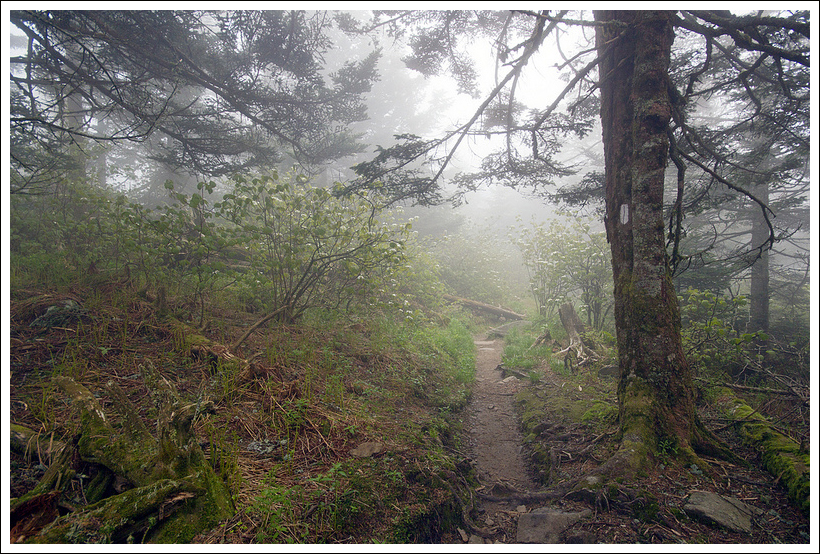

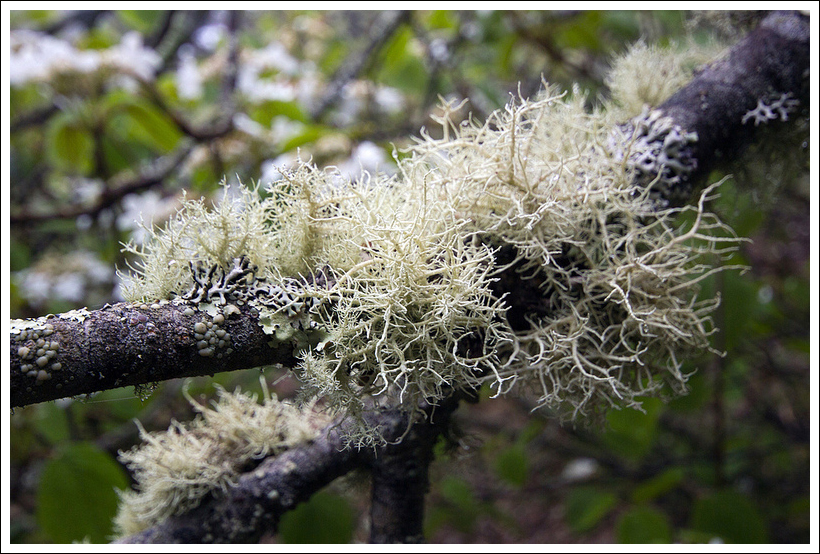

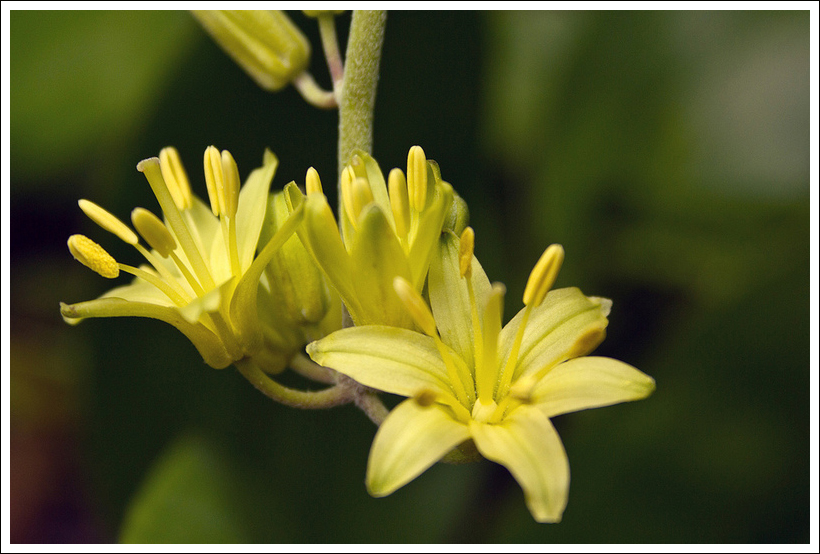


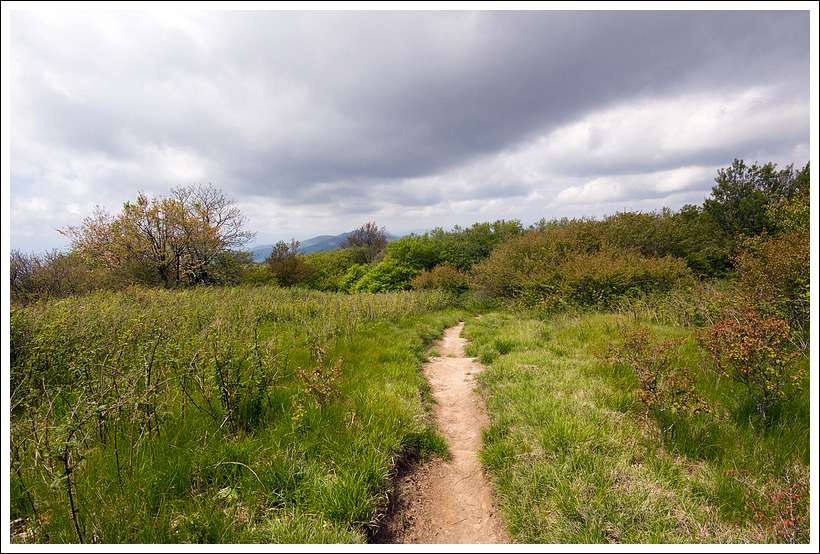


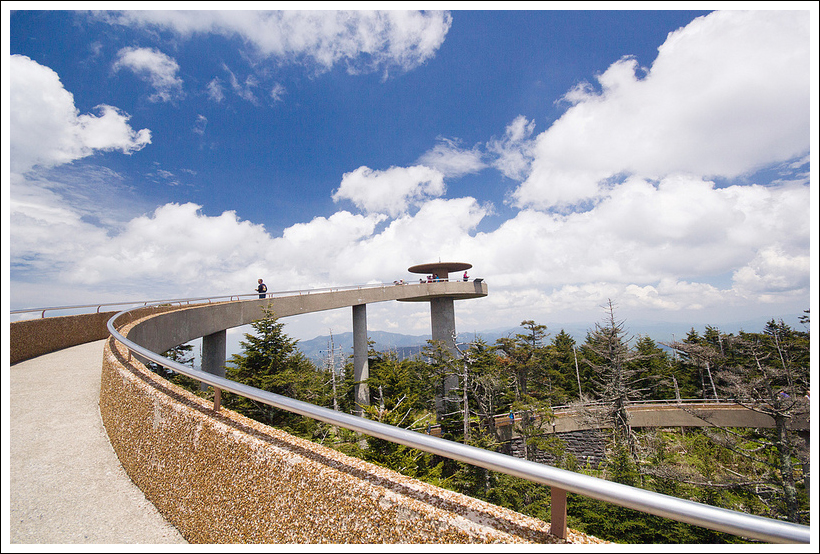

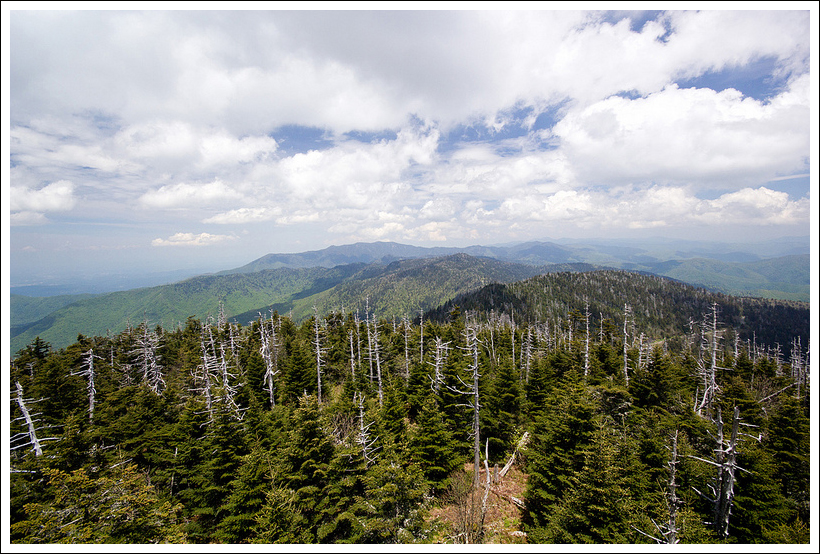



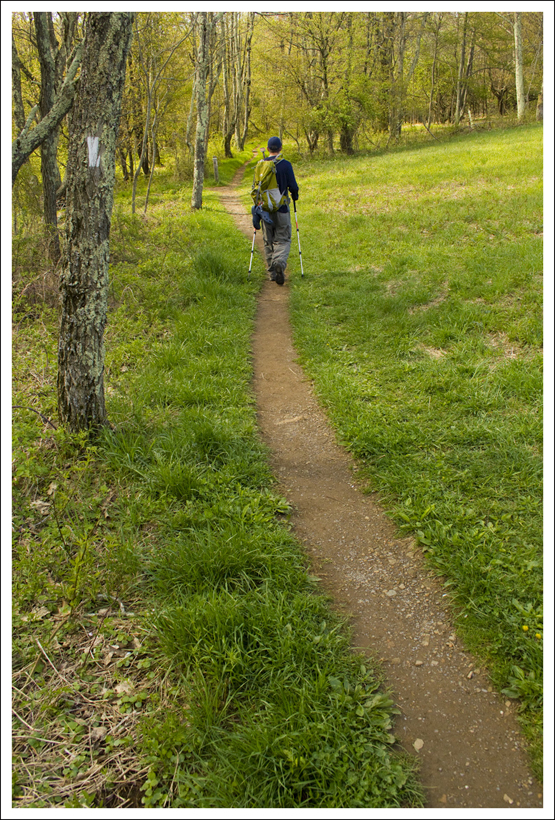


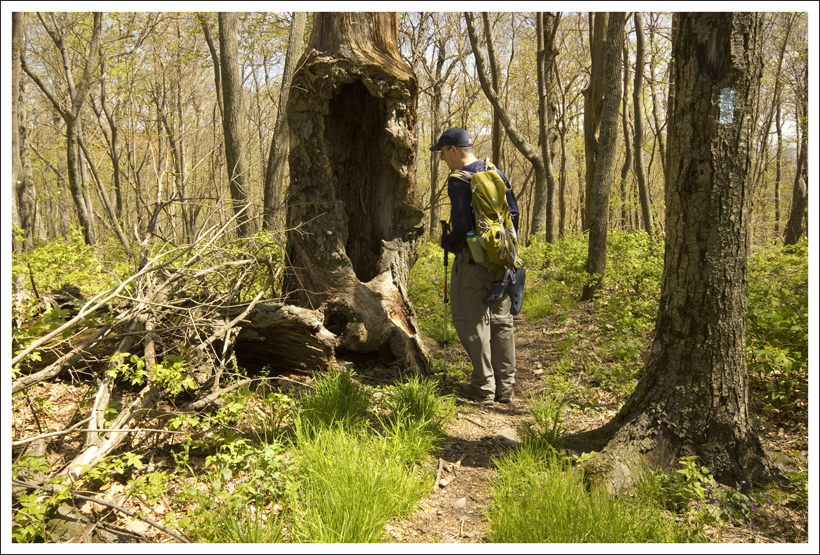


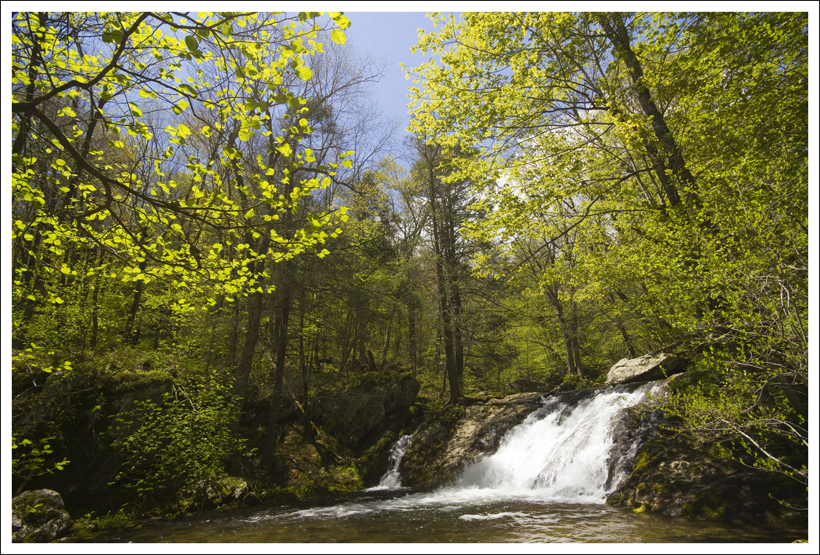
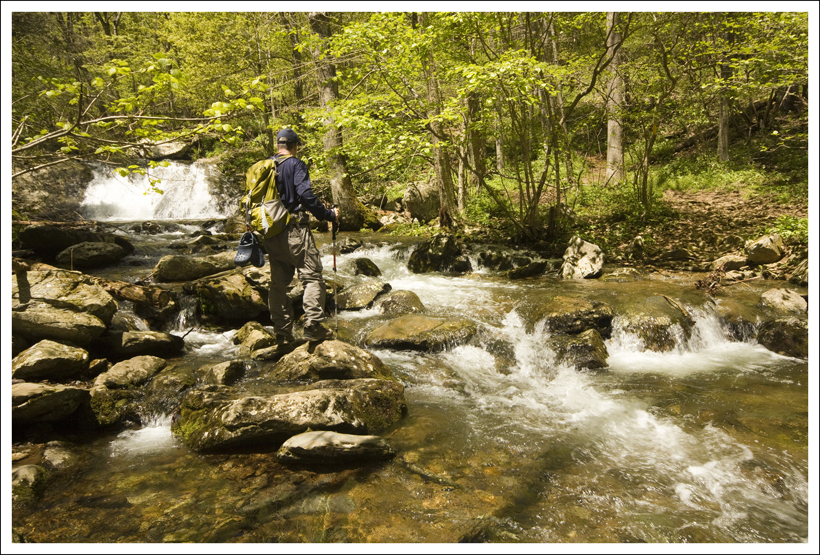
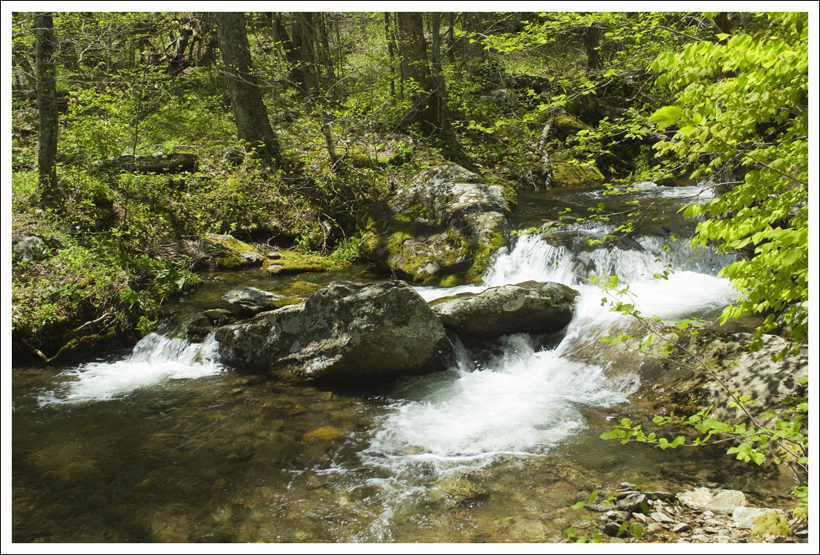
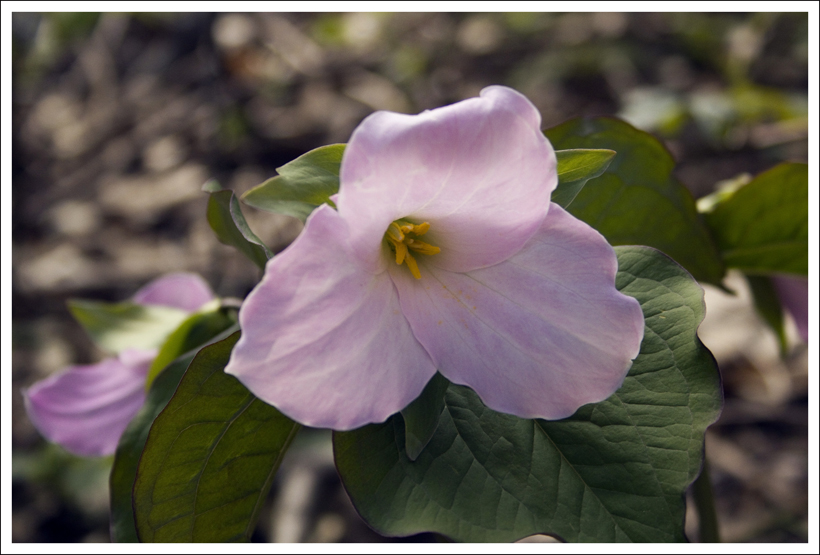
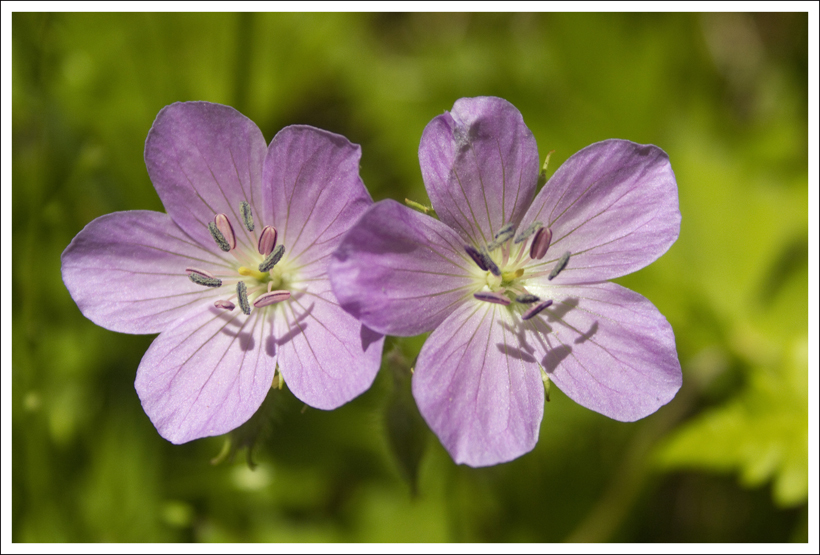



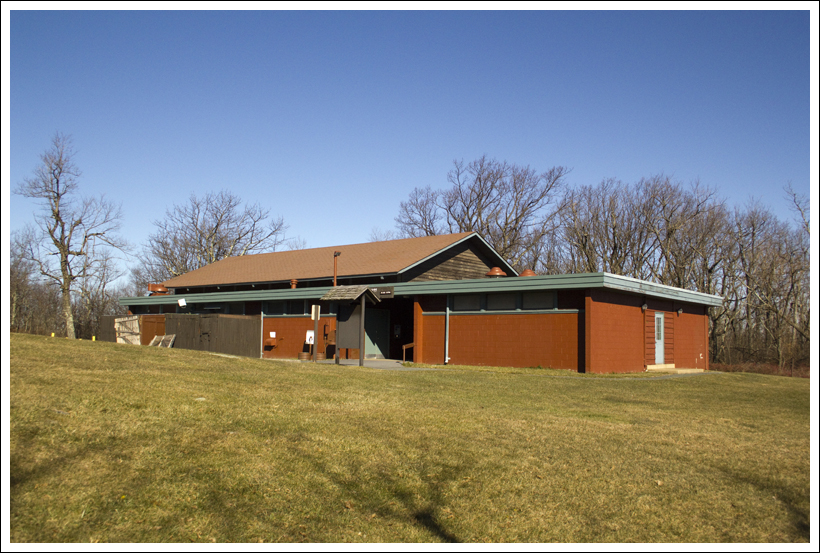
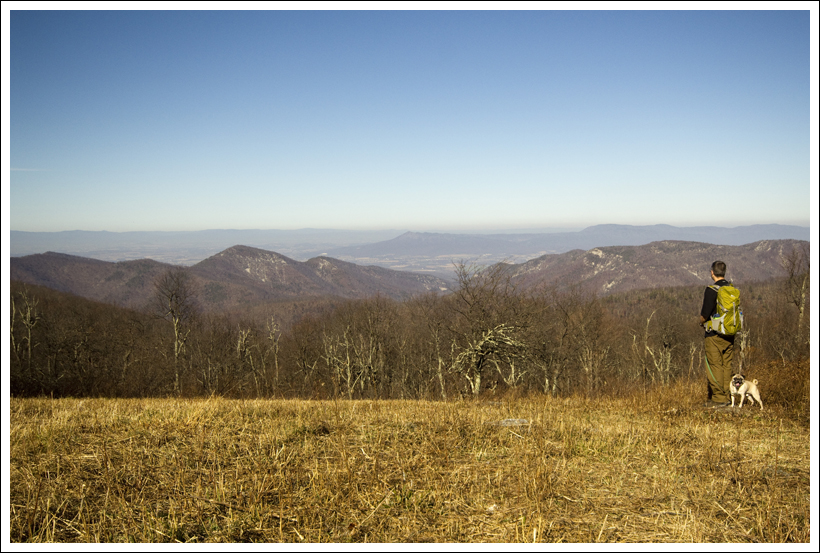

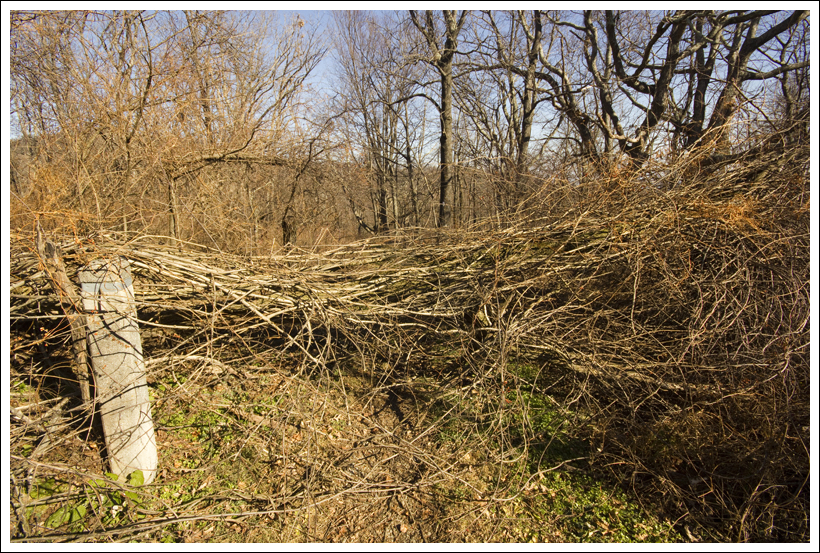


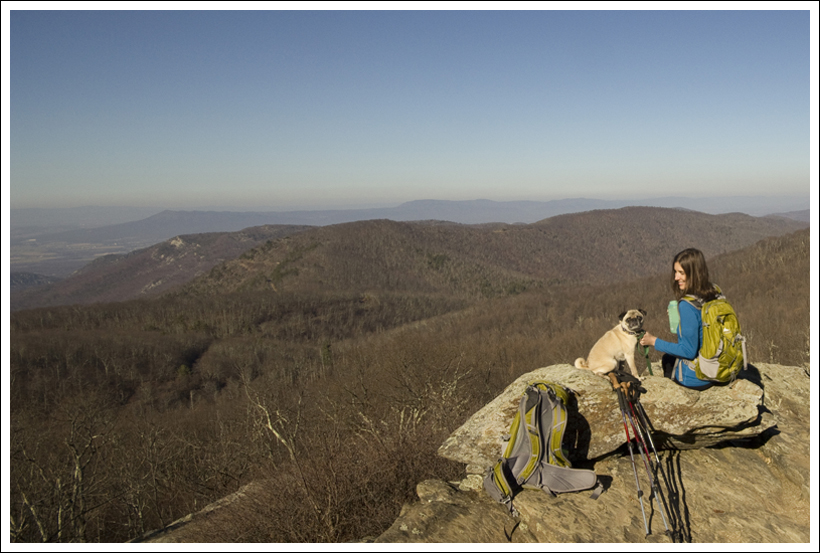

 Wookie Says…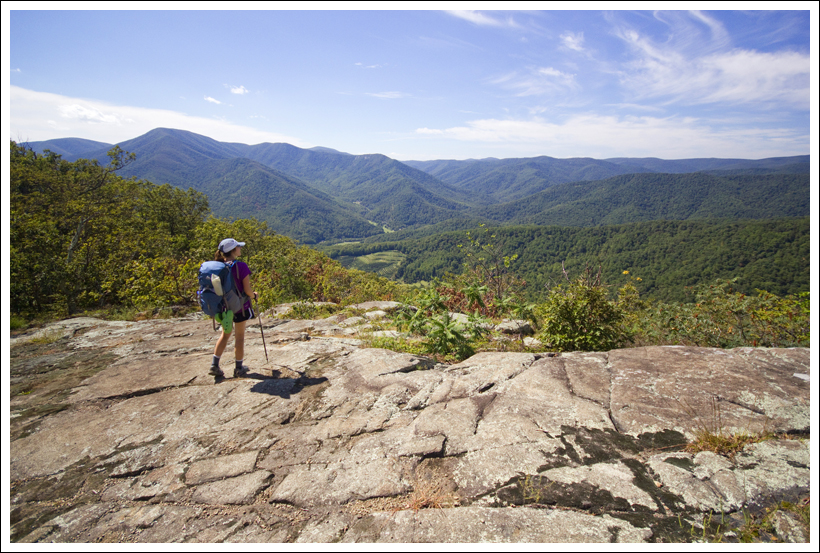


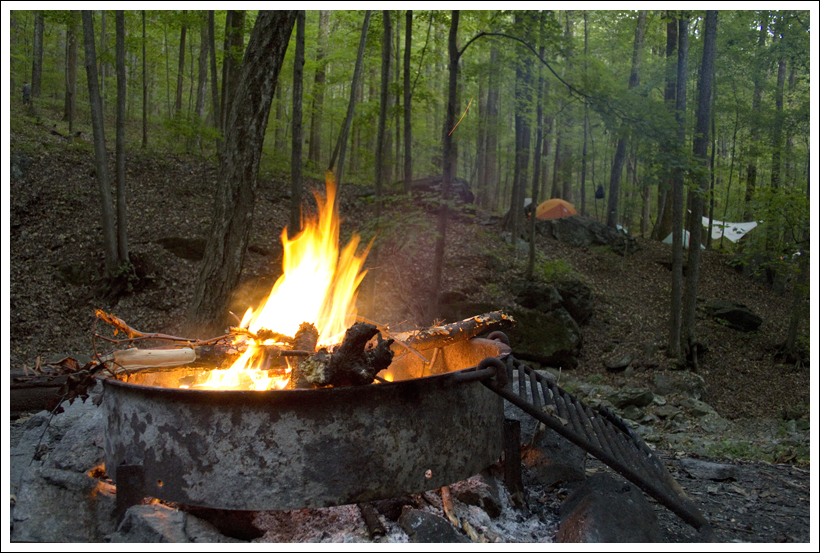
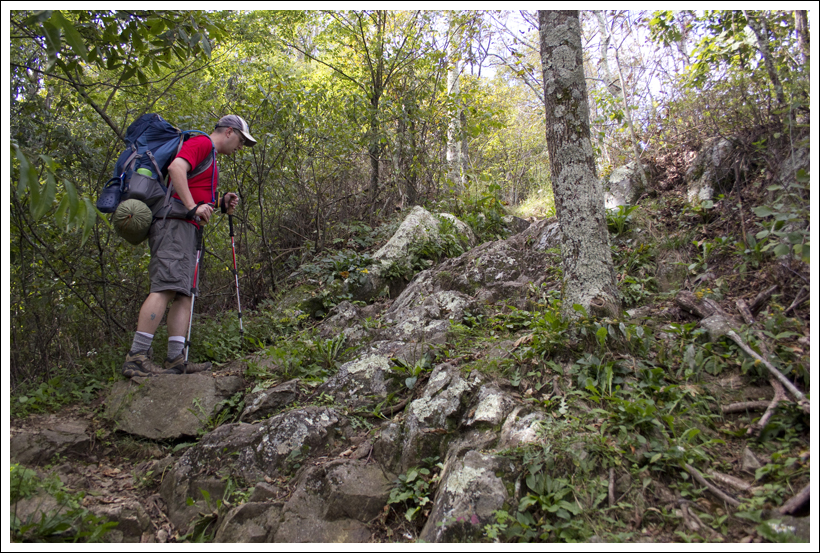


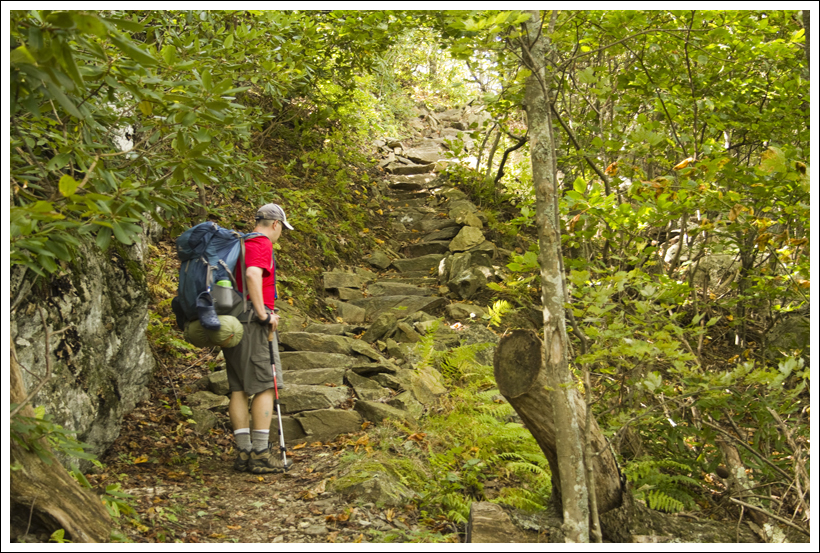


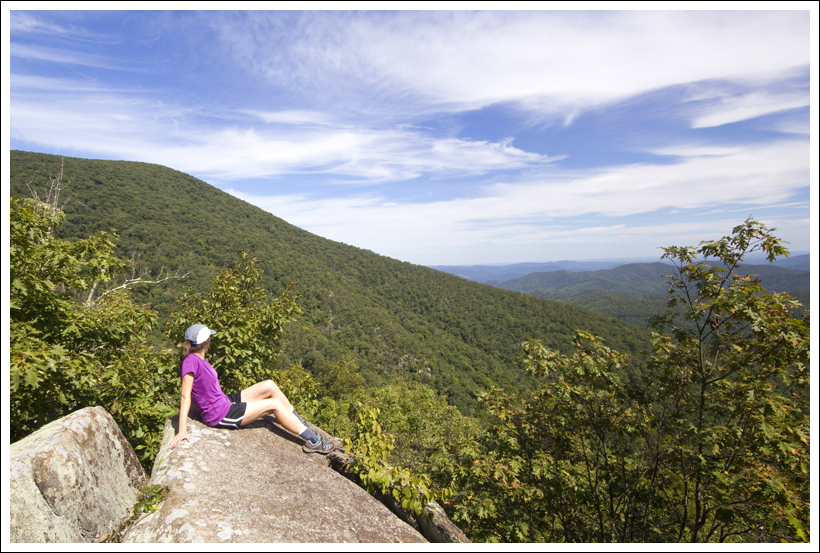


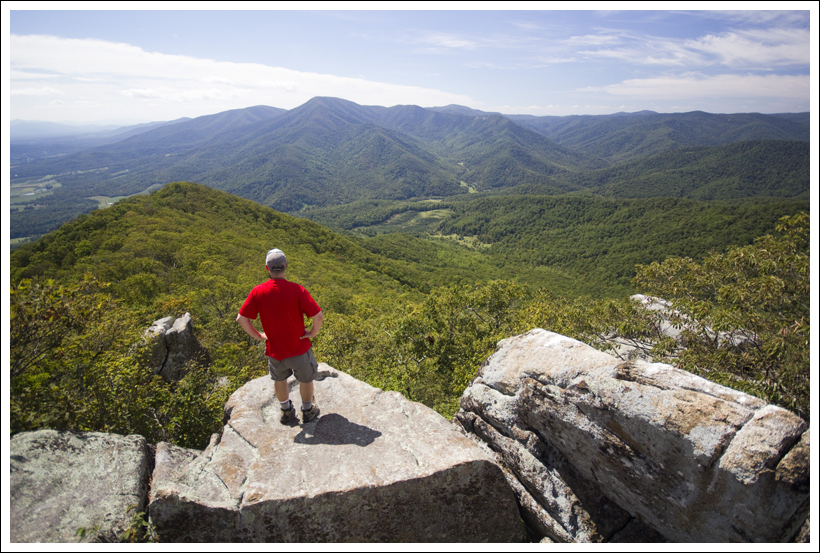
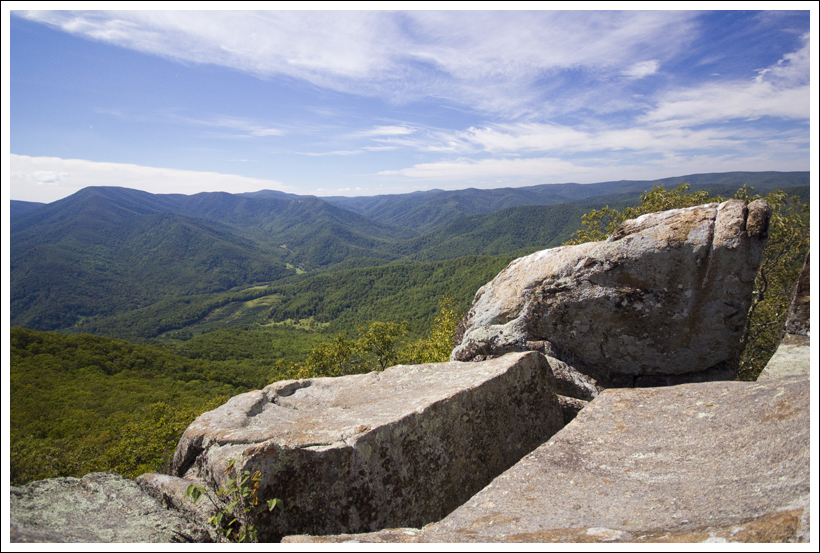

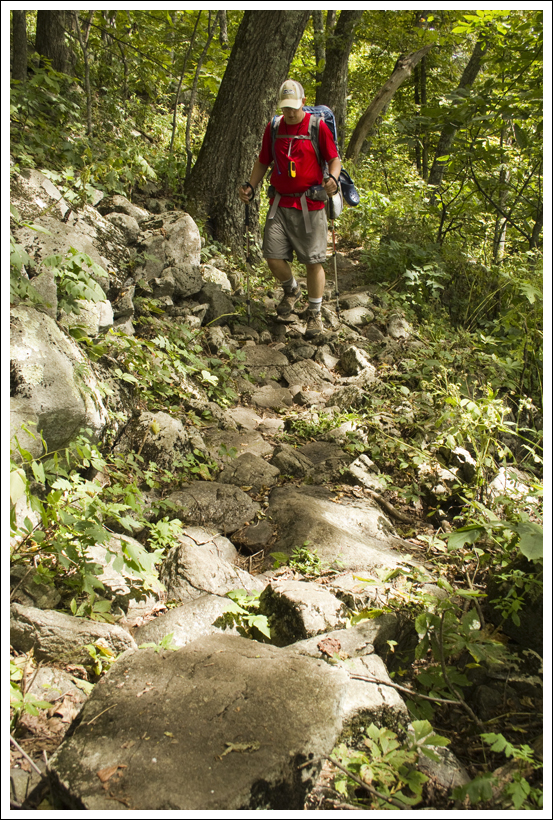
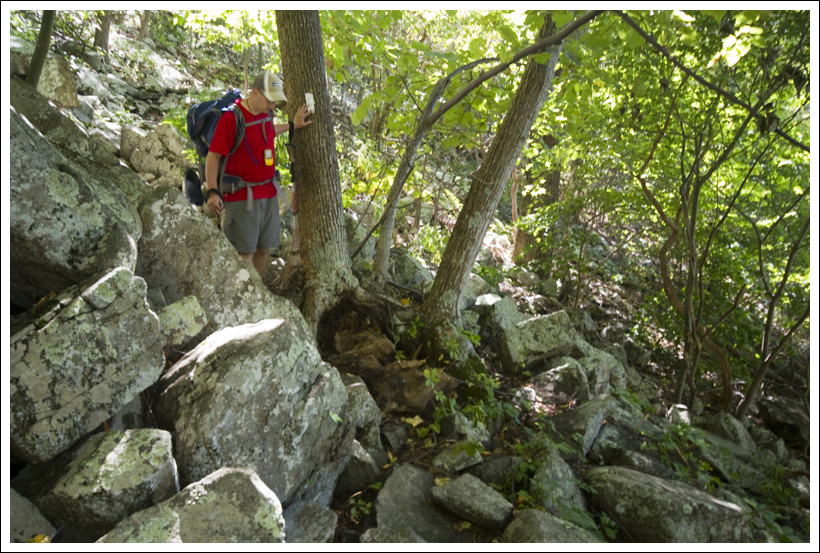


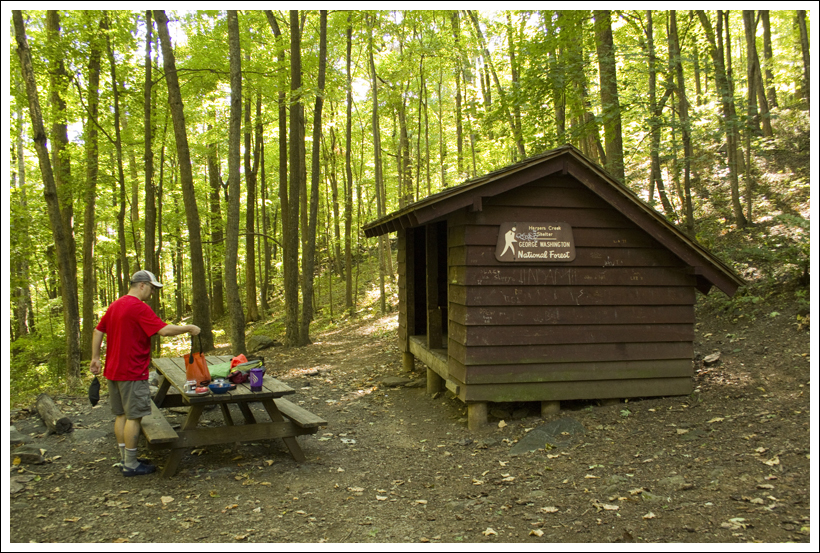


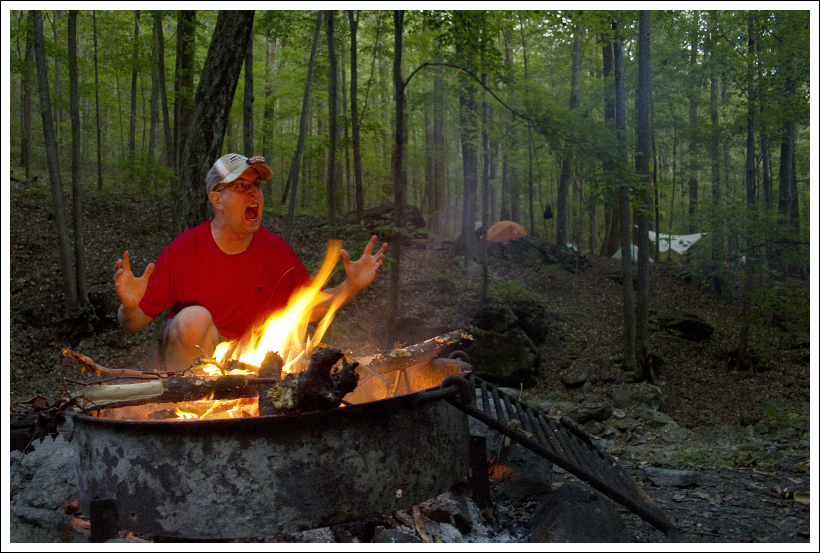

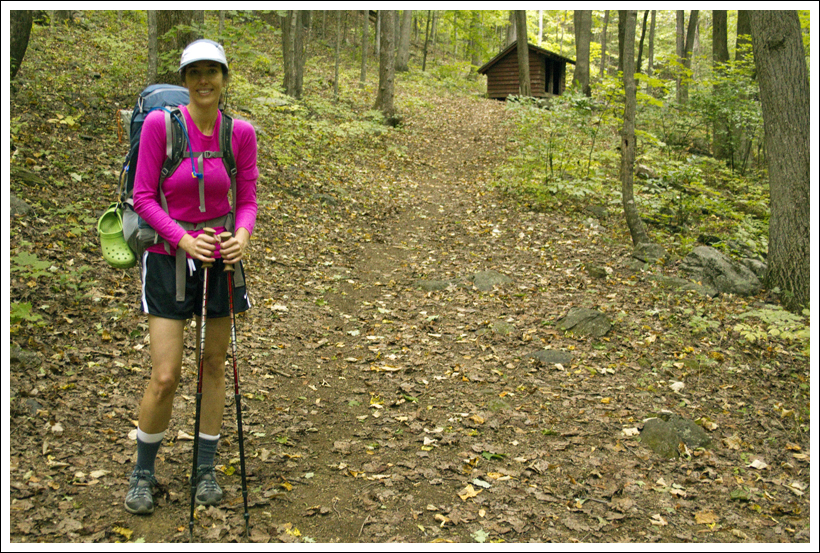


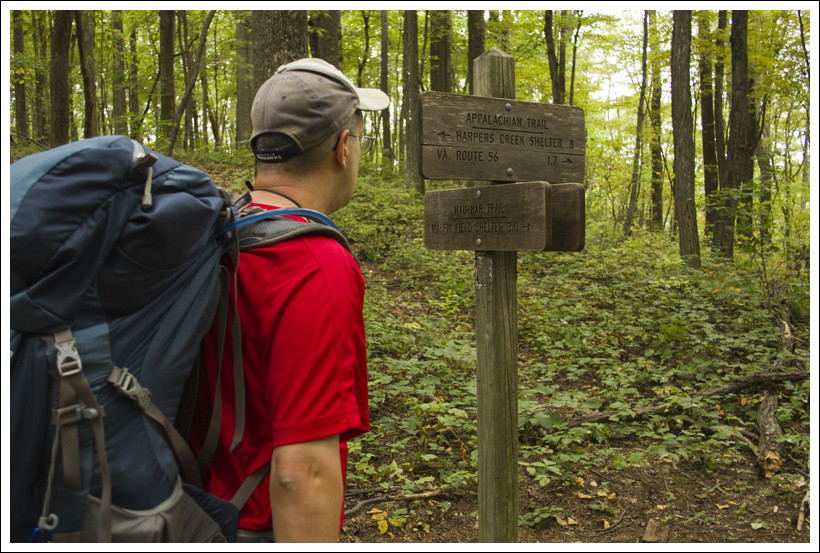


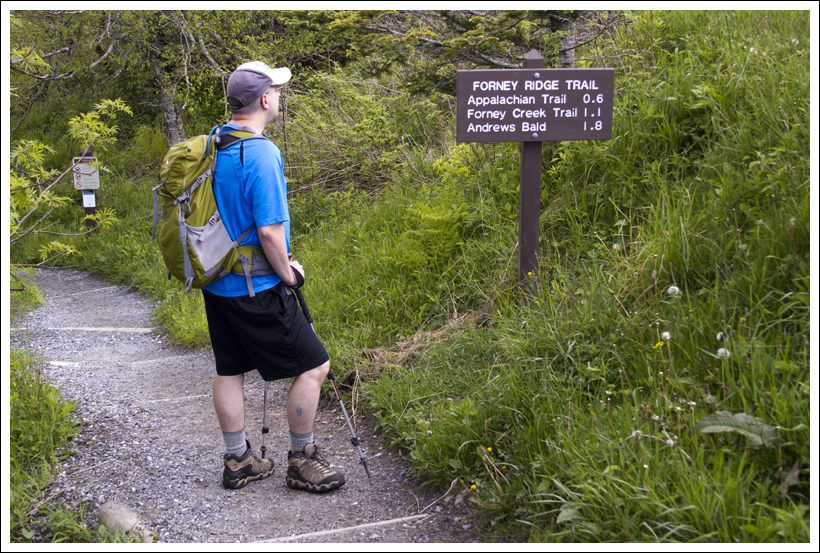

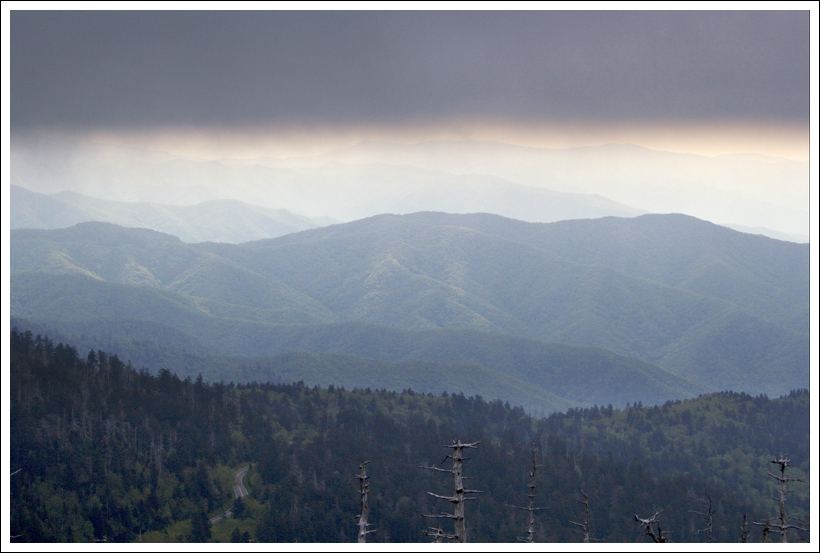
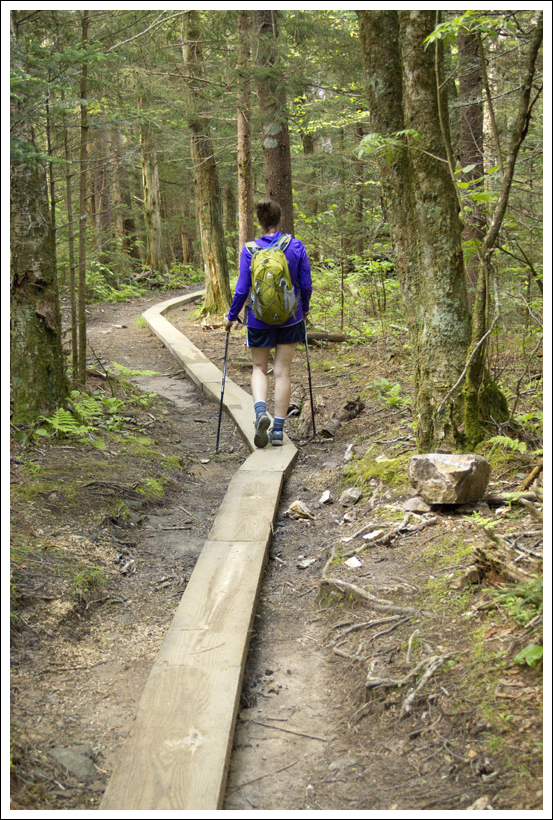

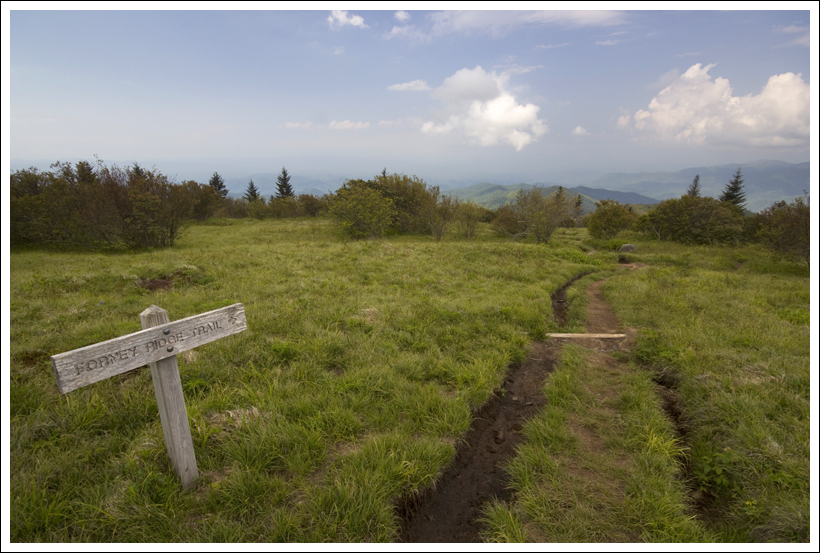

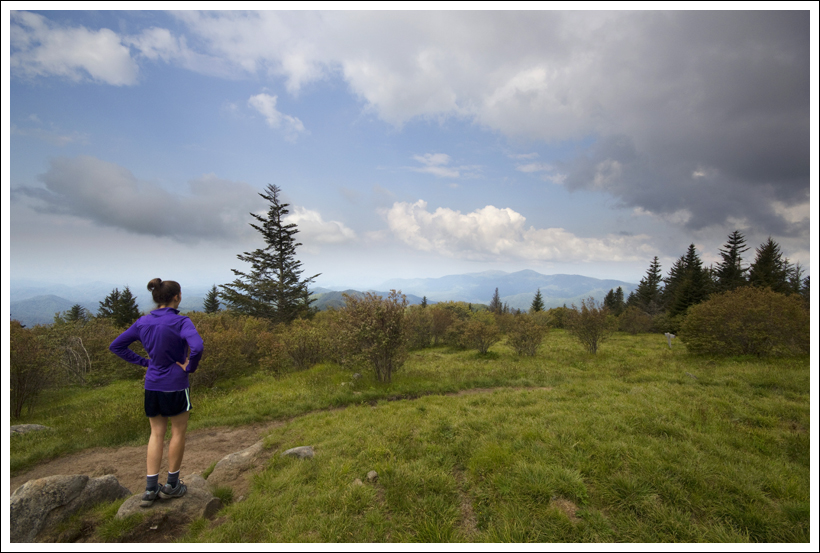
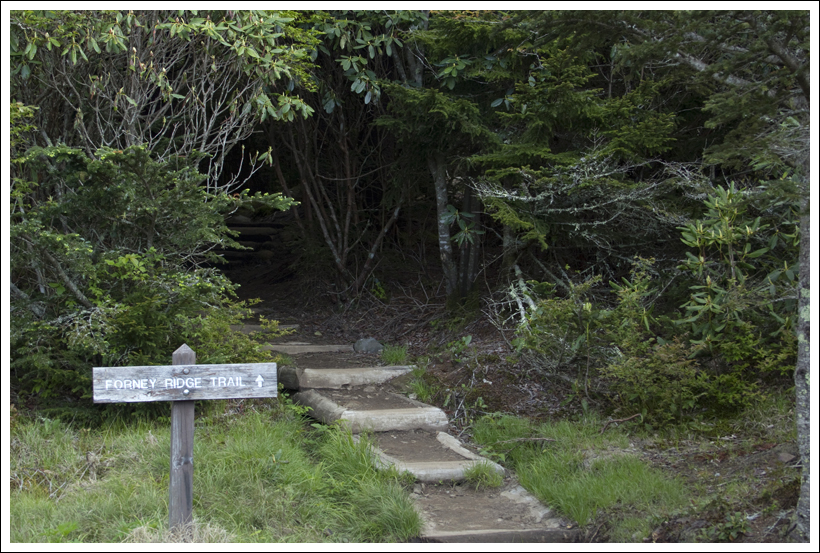


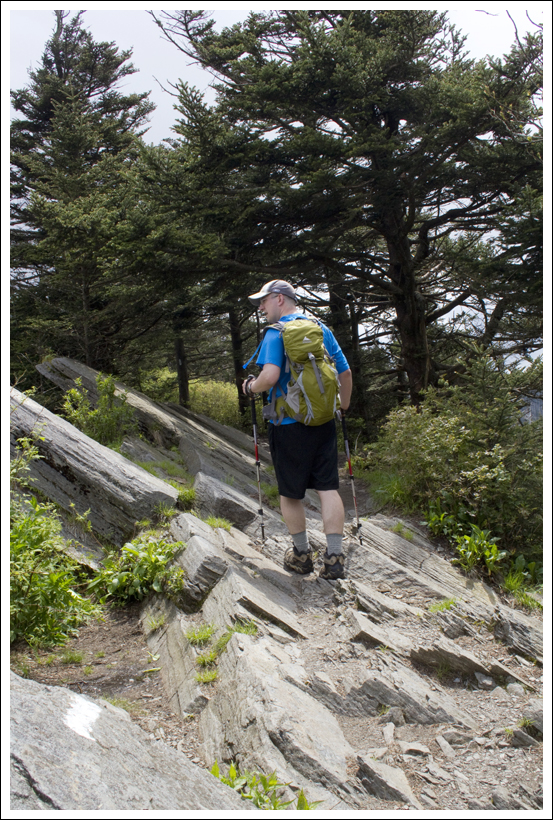

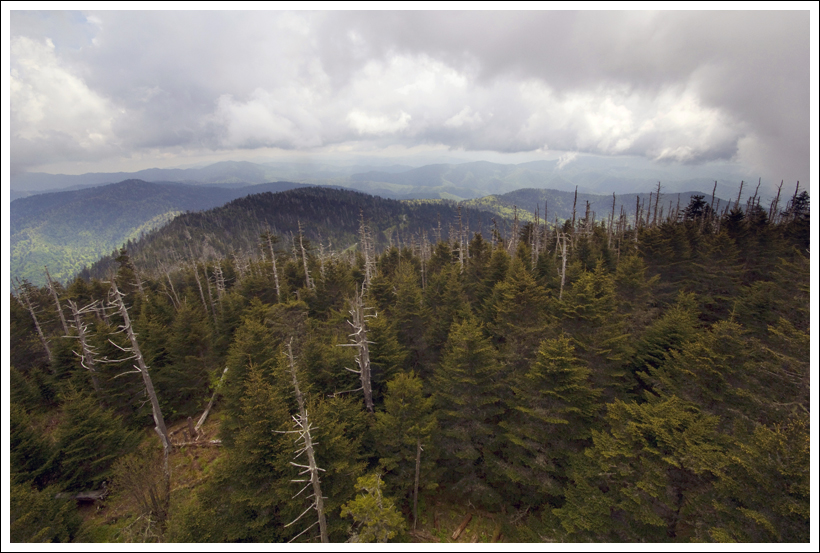
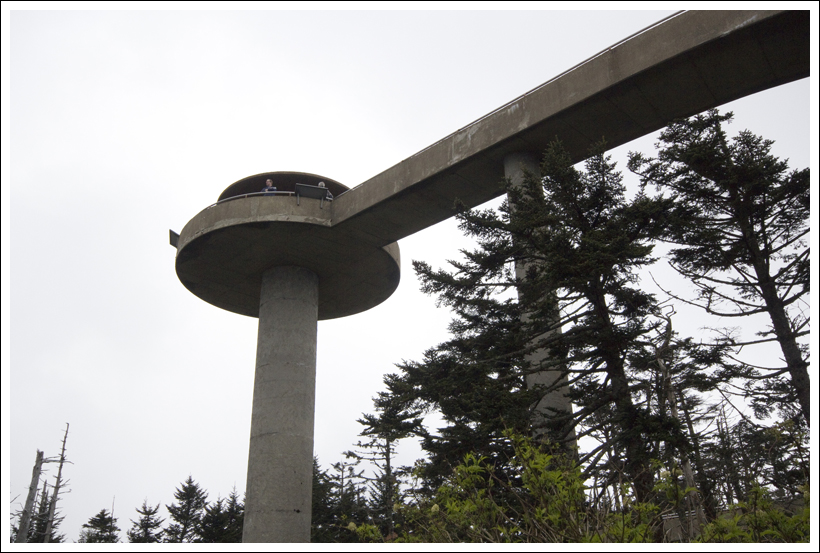
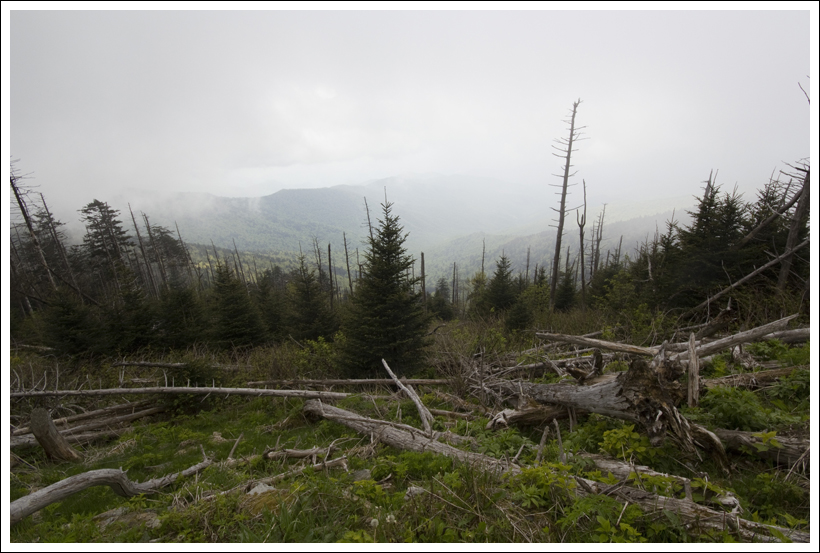
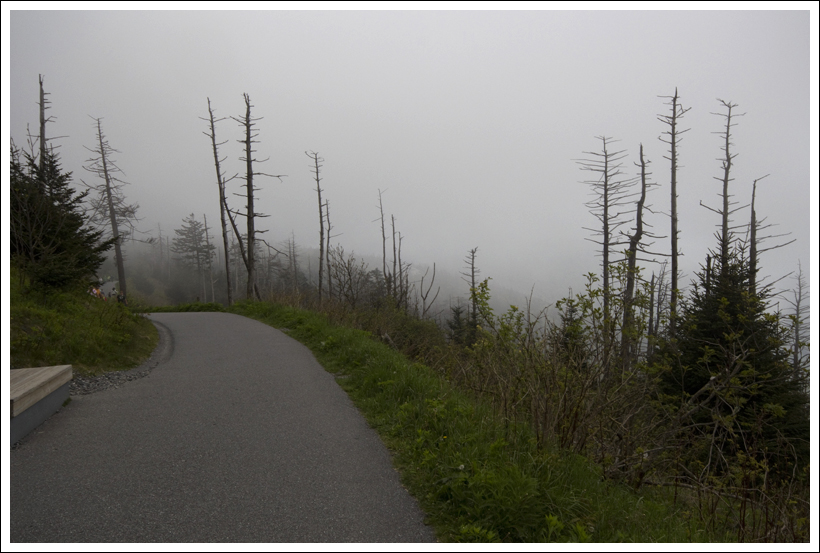


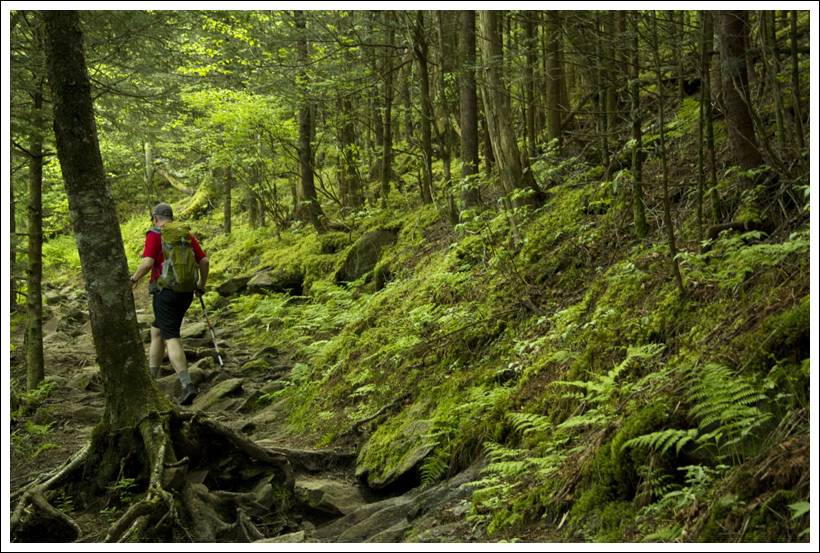


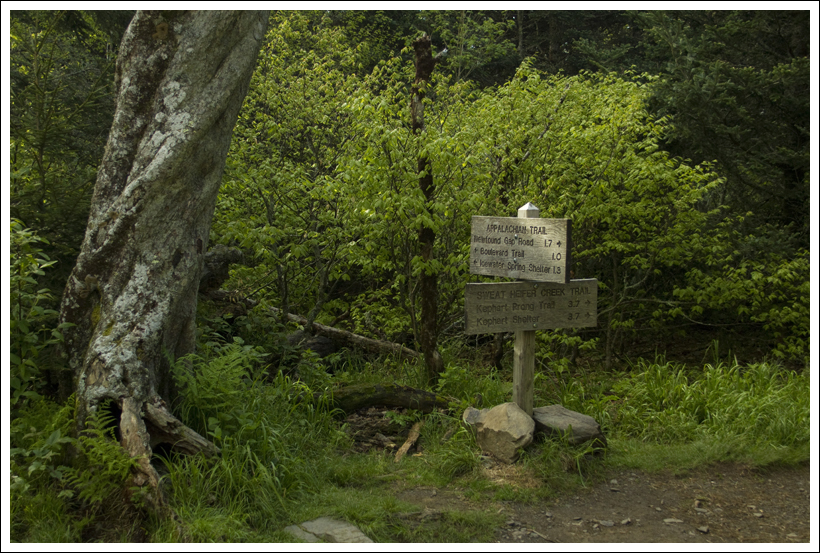

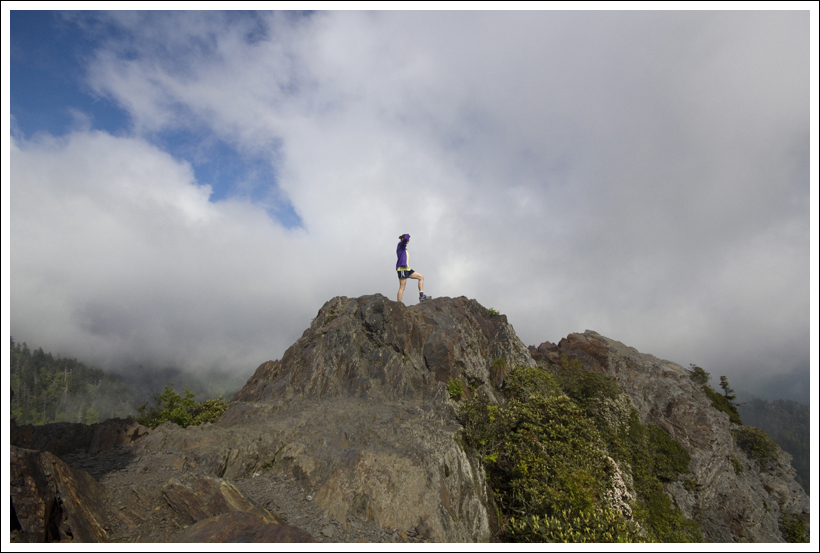


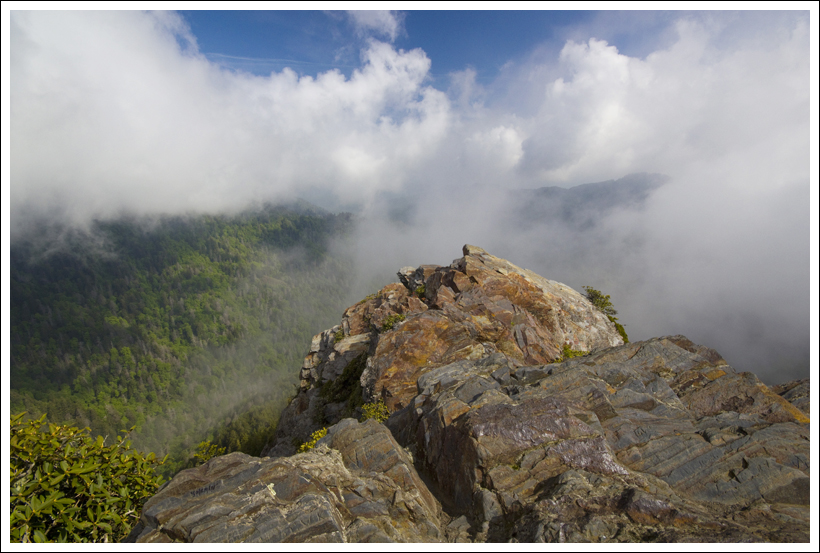
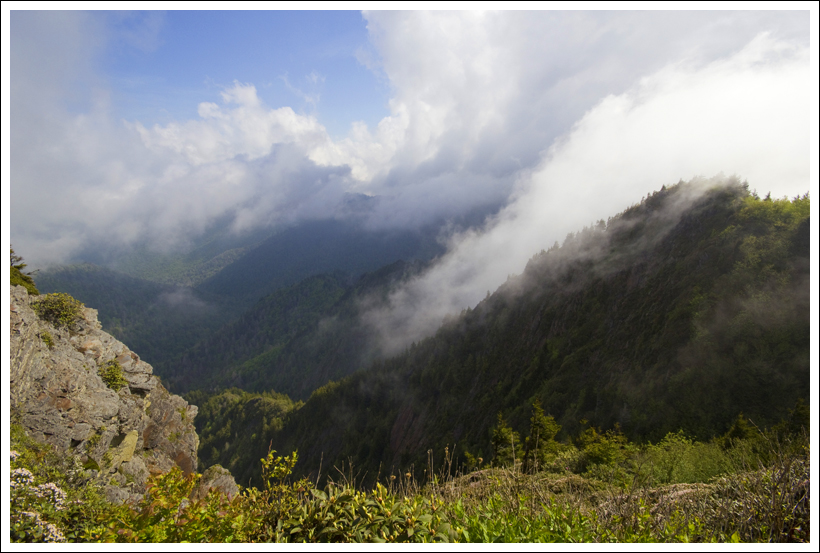
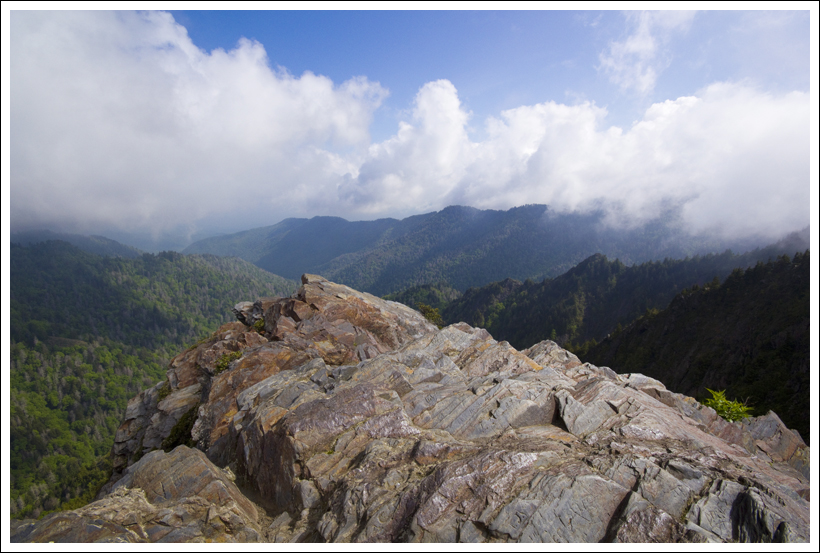

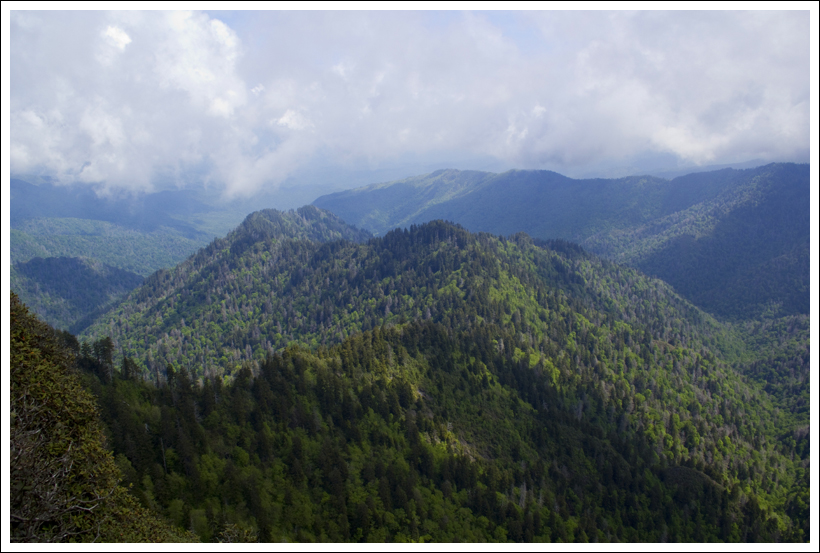

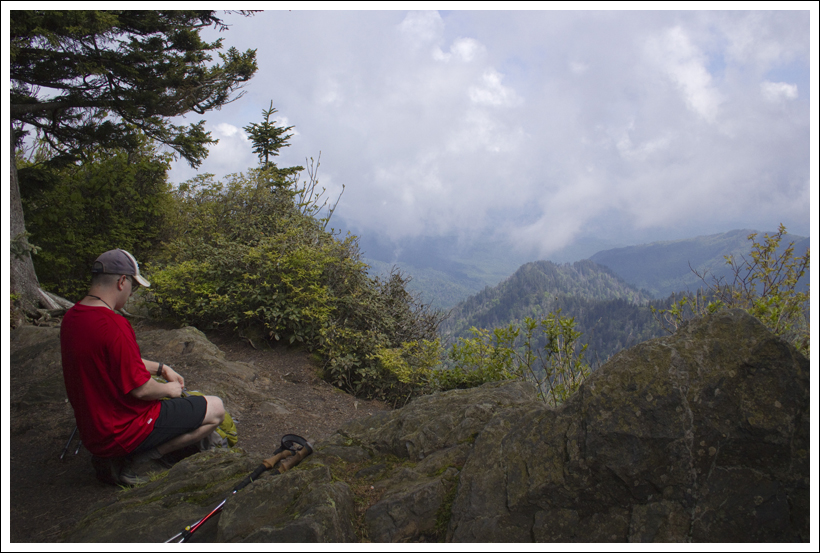
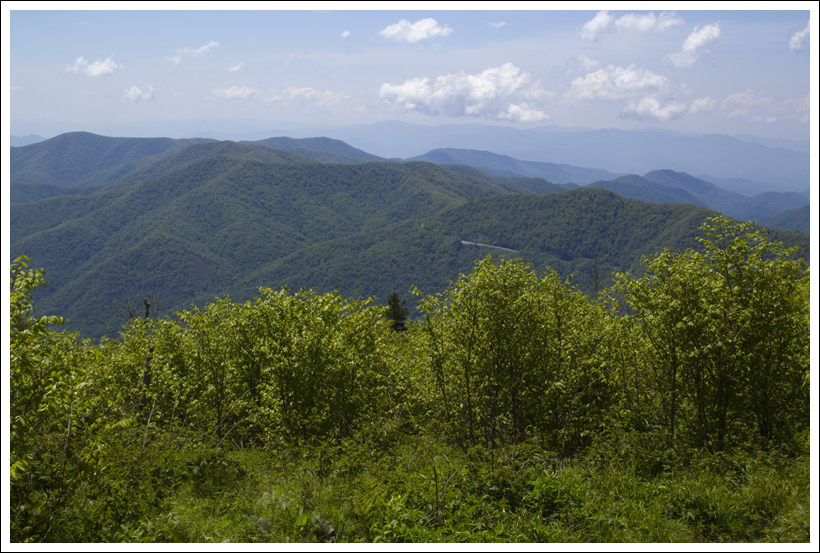
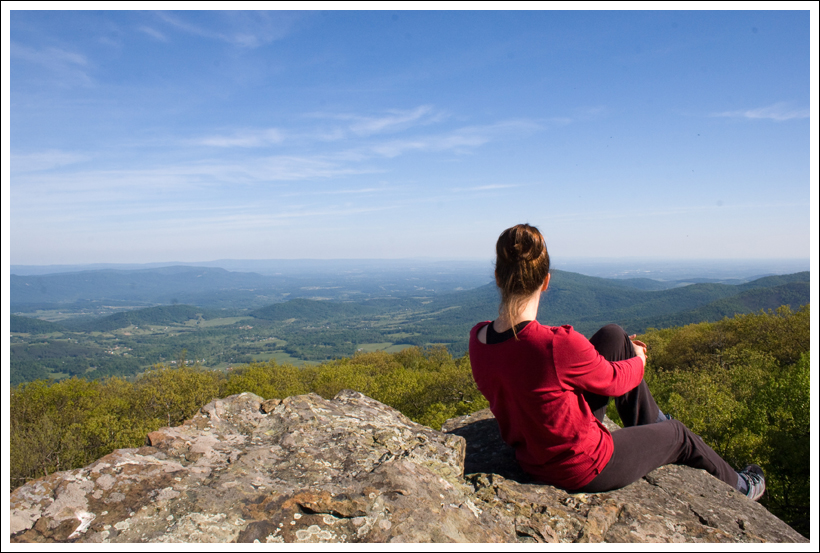
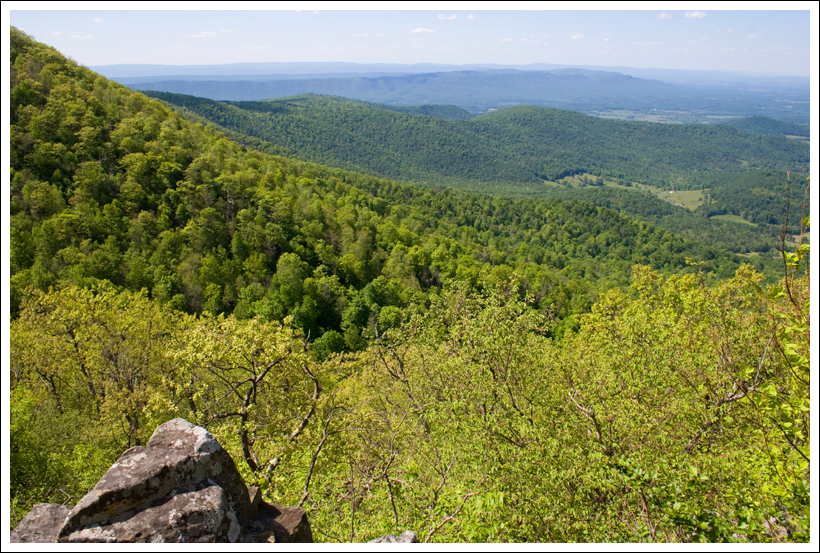
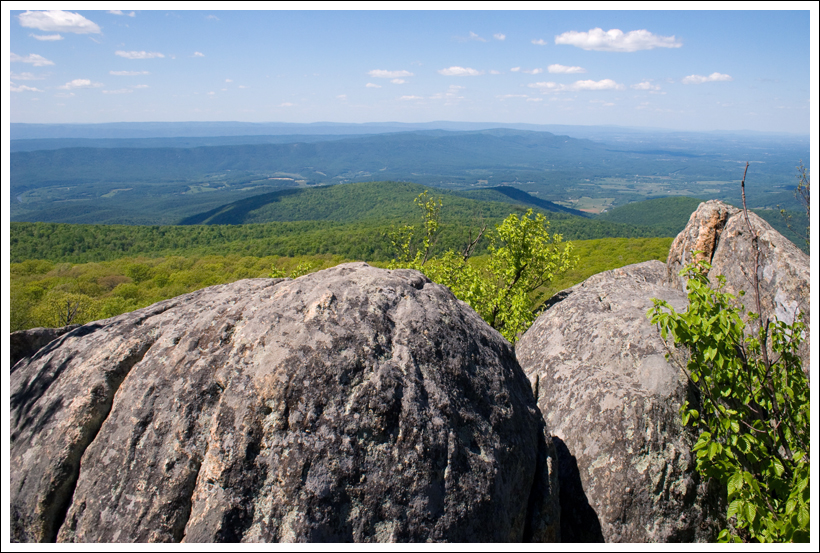
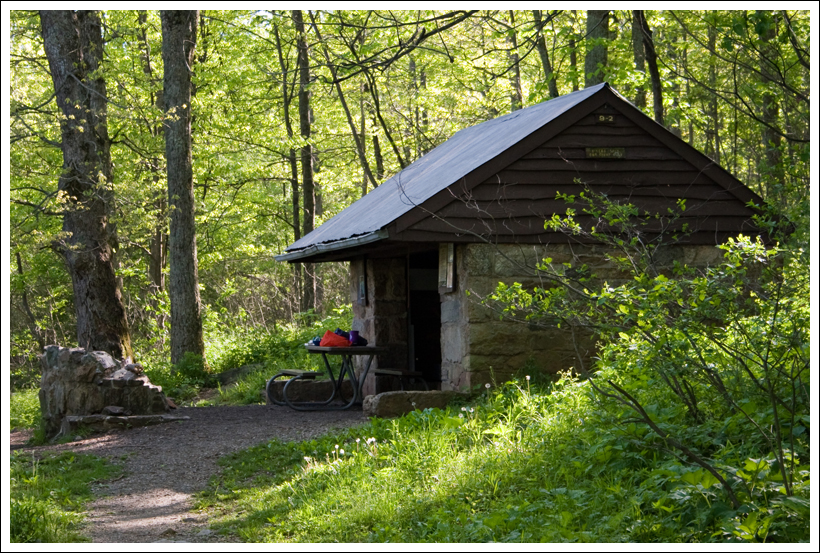
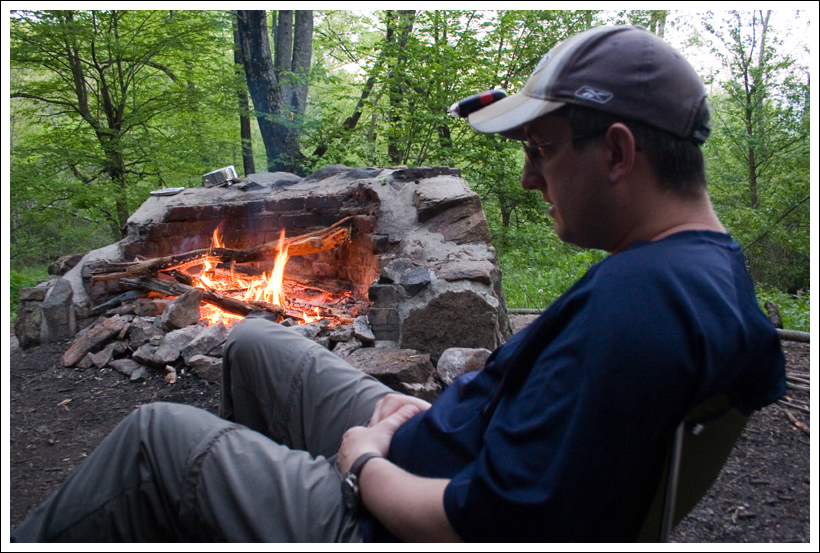
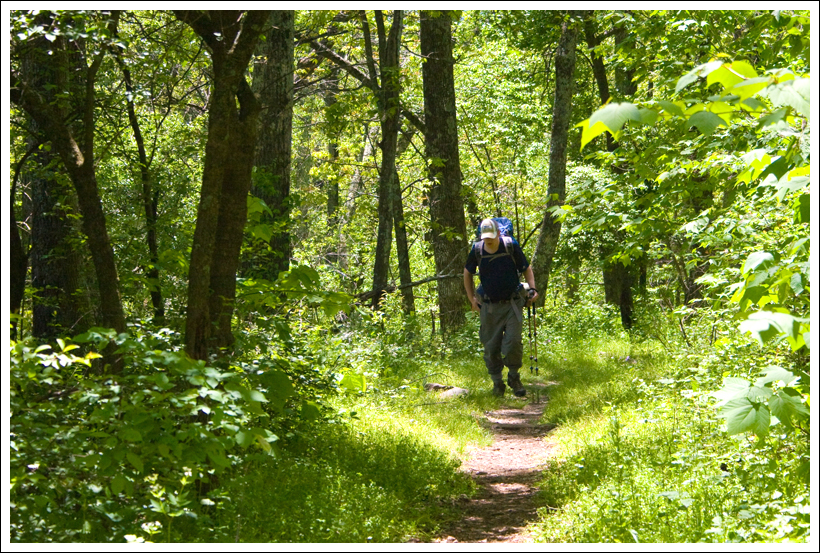
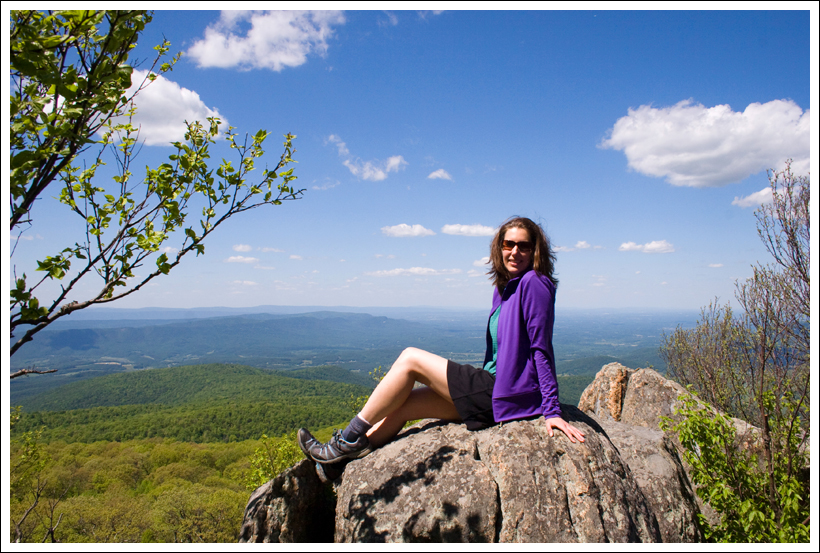
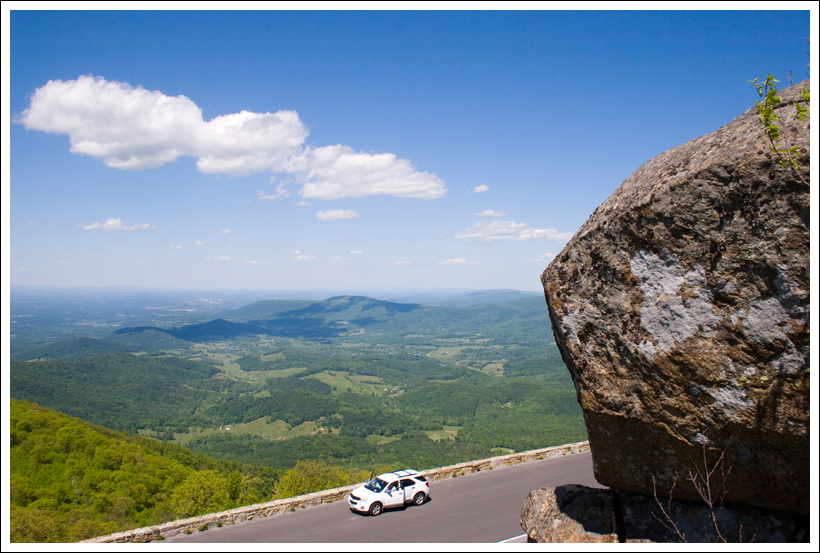
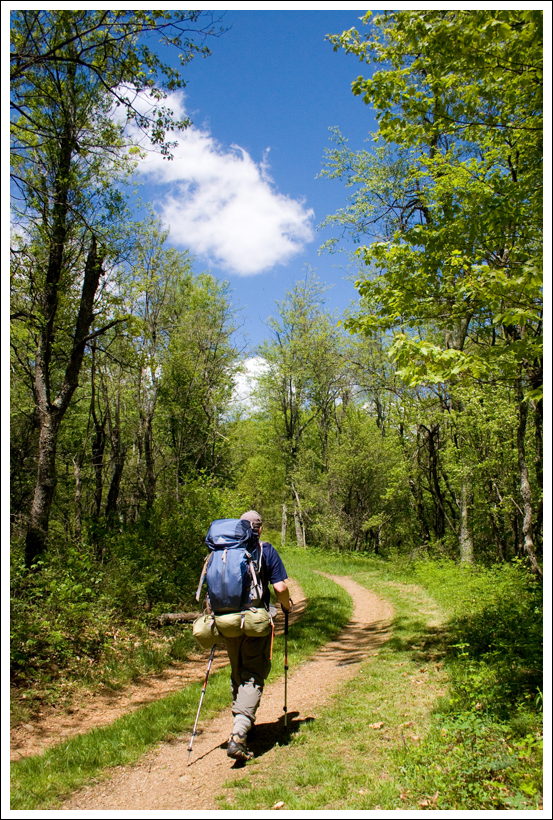
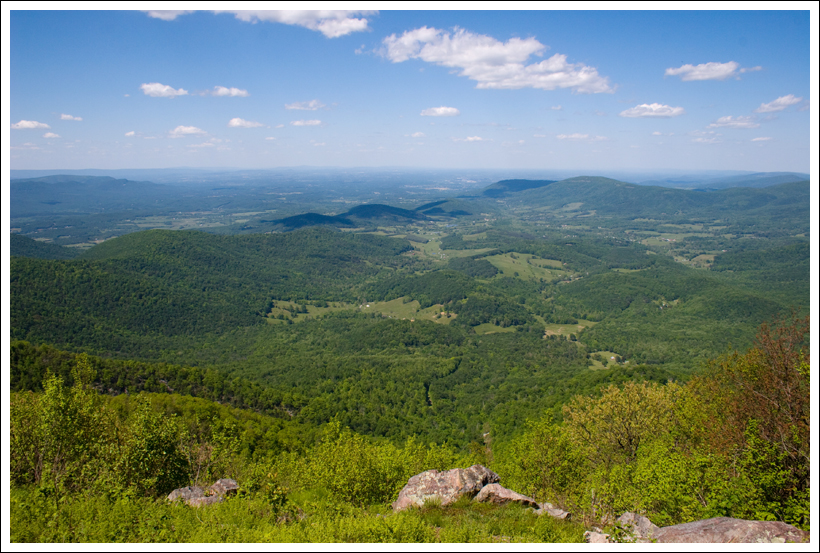
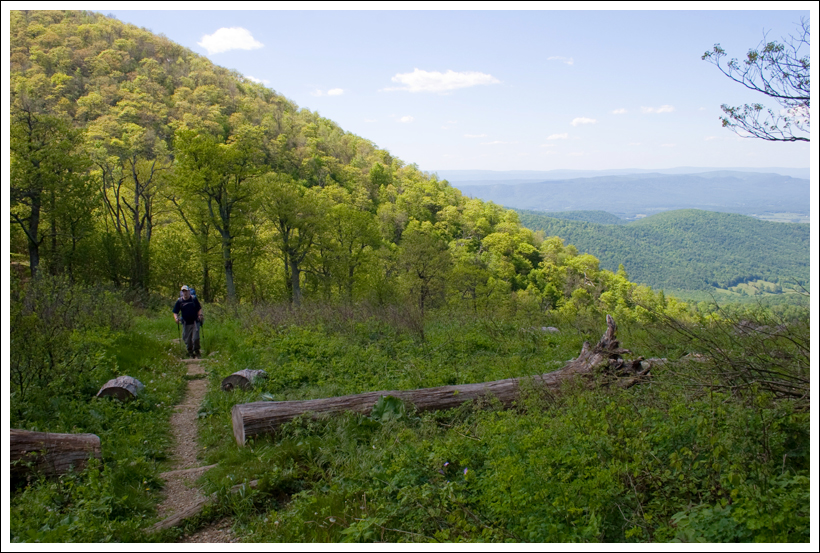
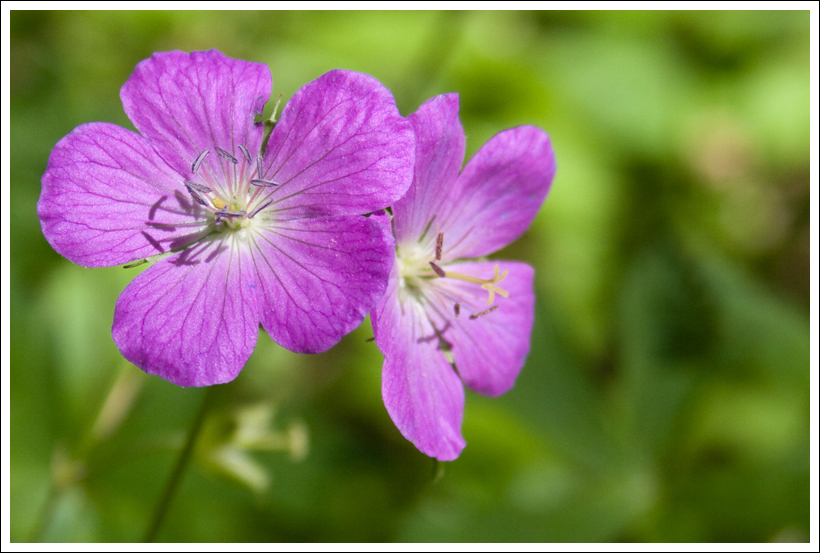
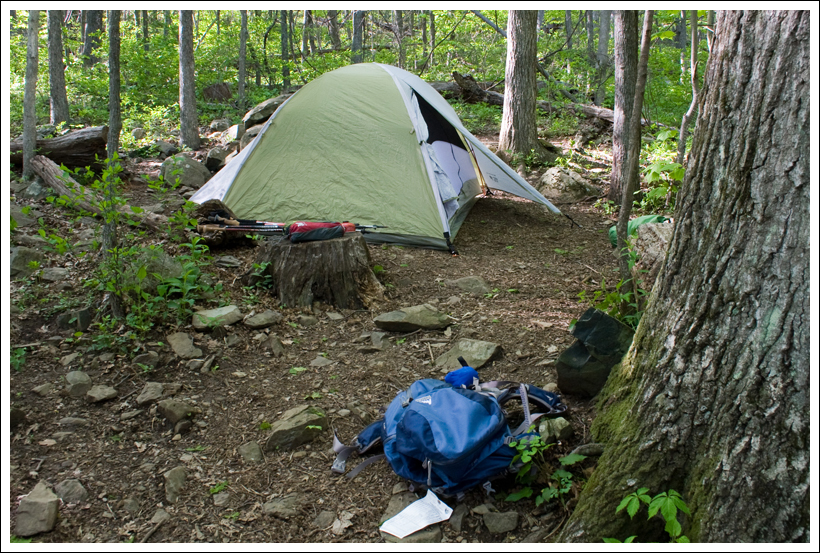
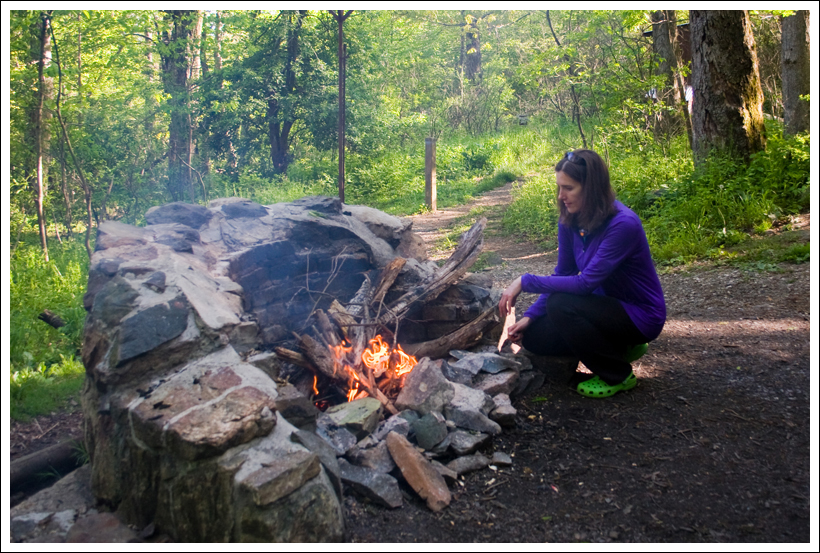
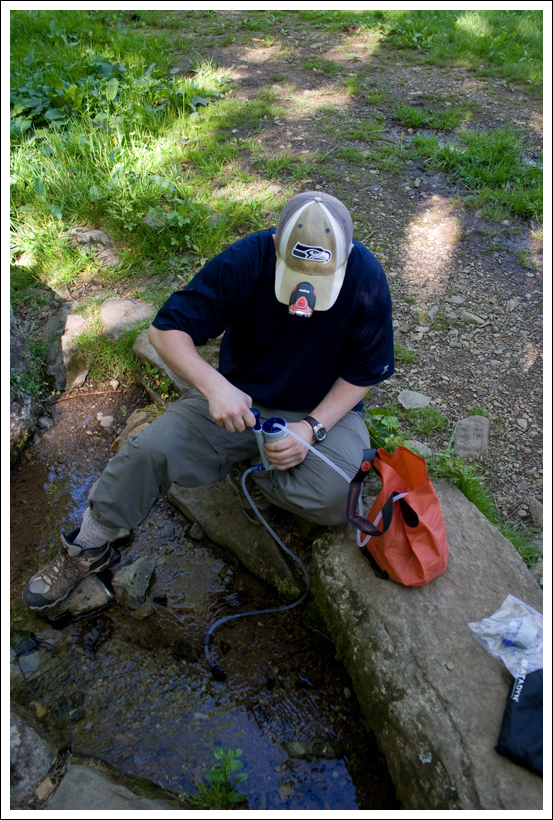
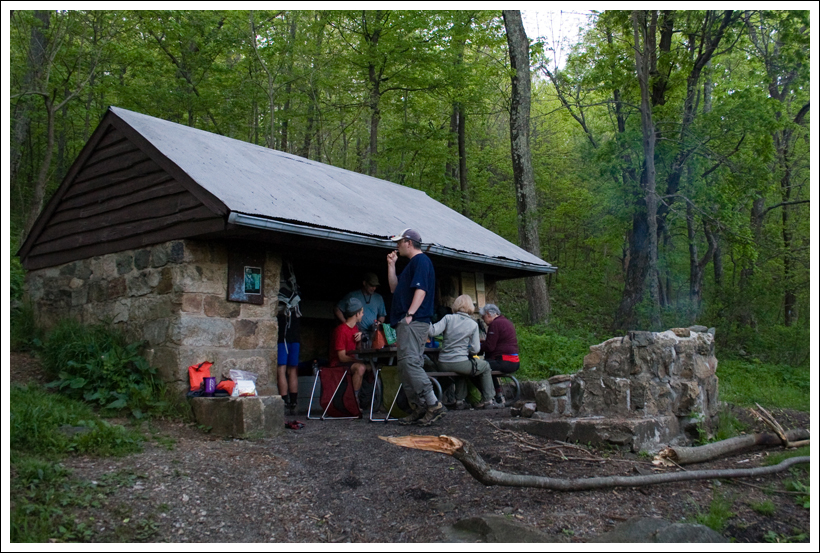
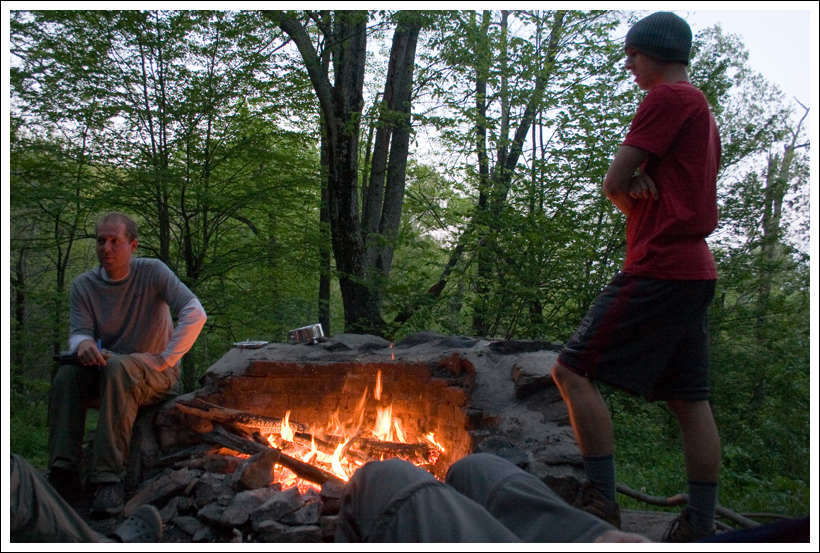
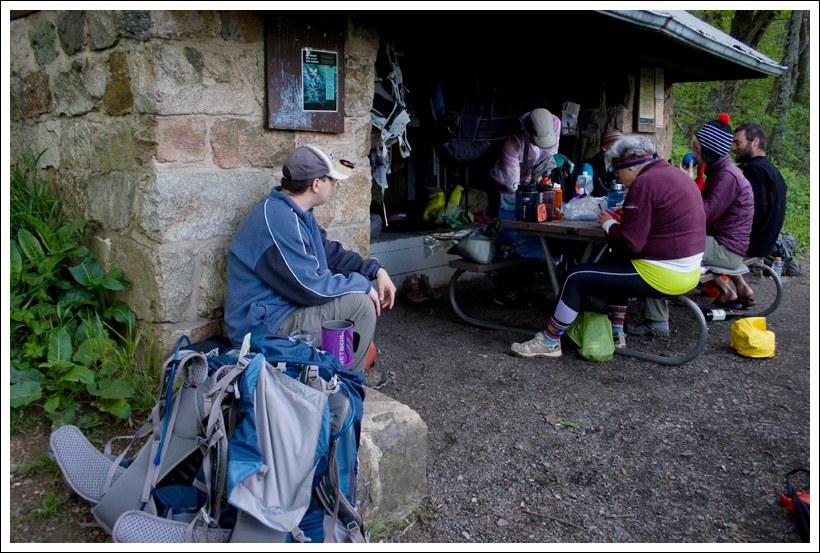
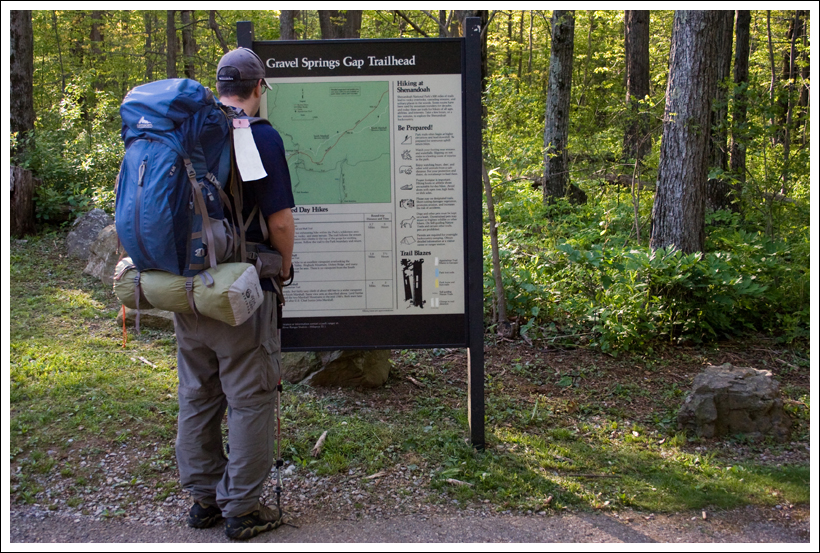
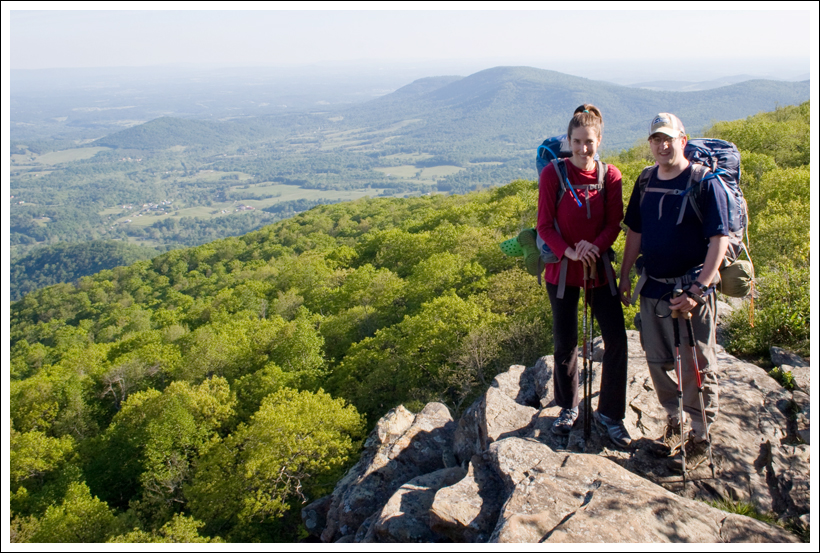
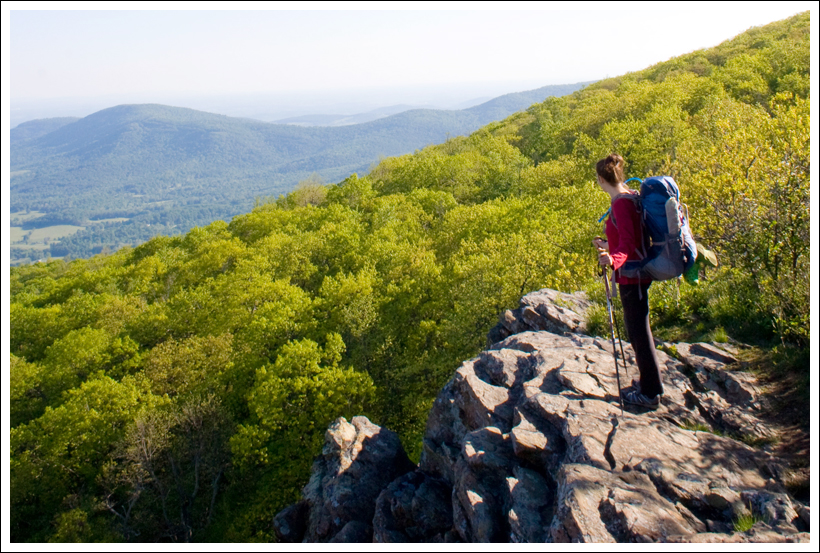
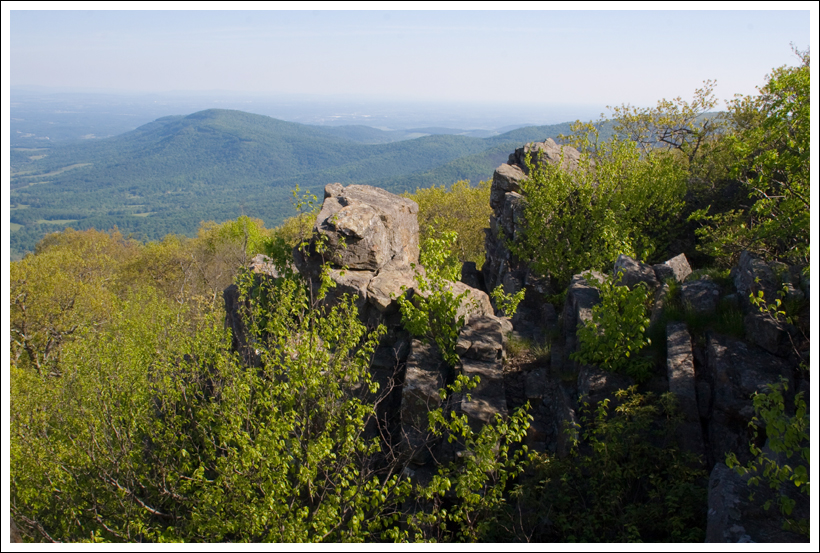
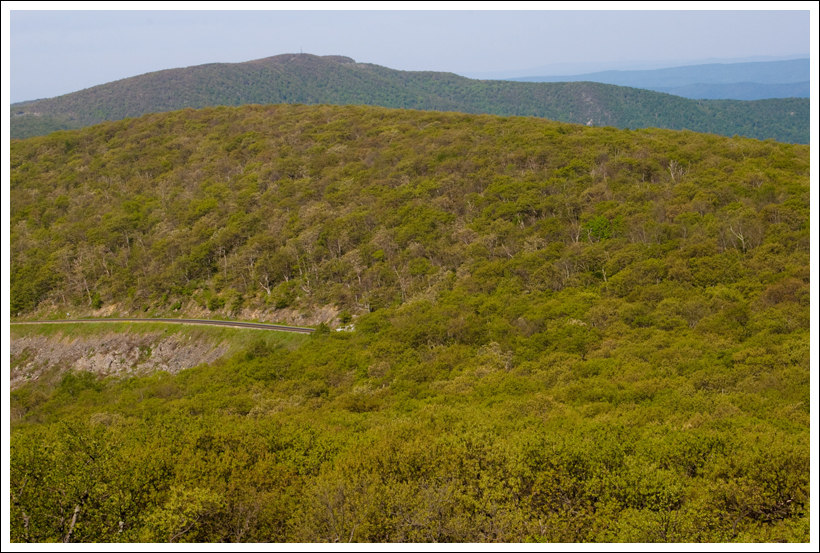
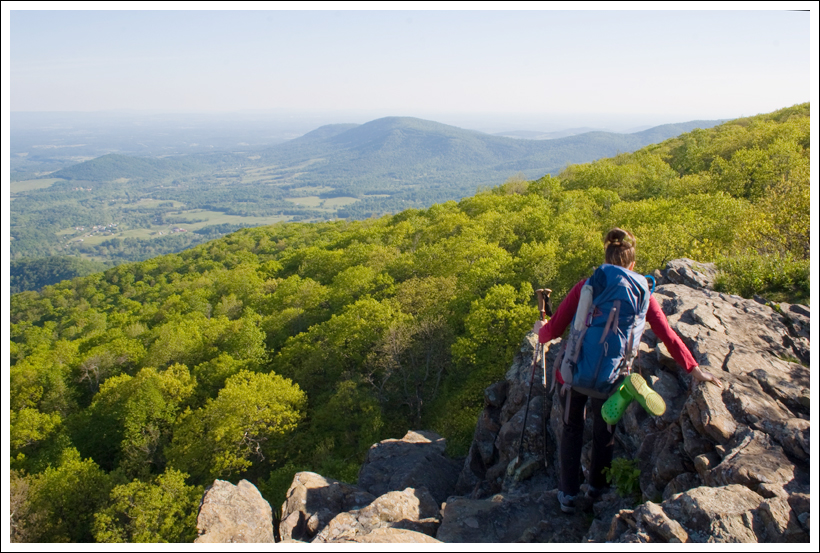
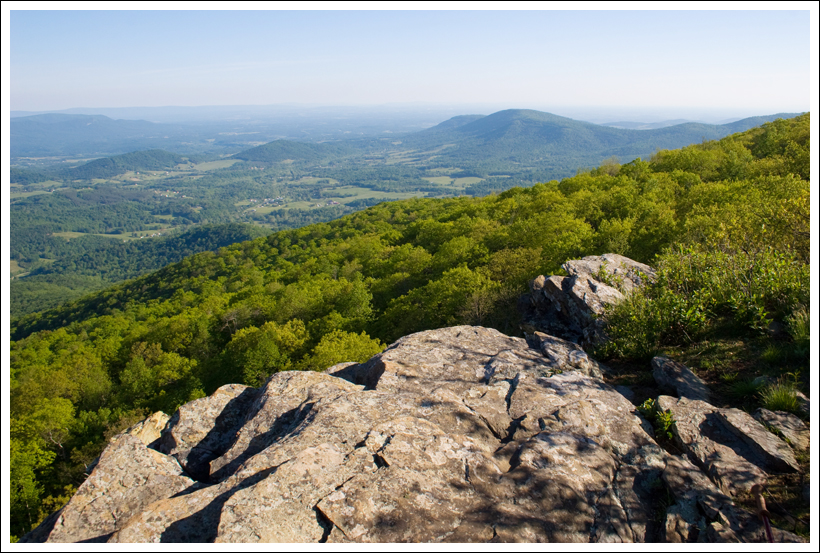
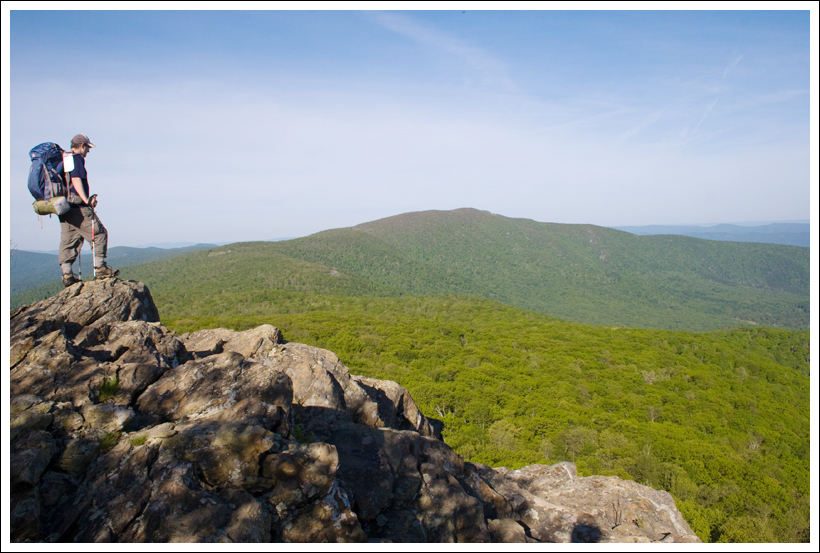
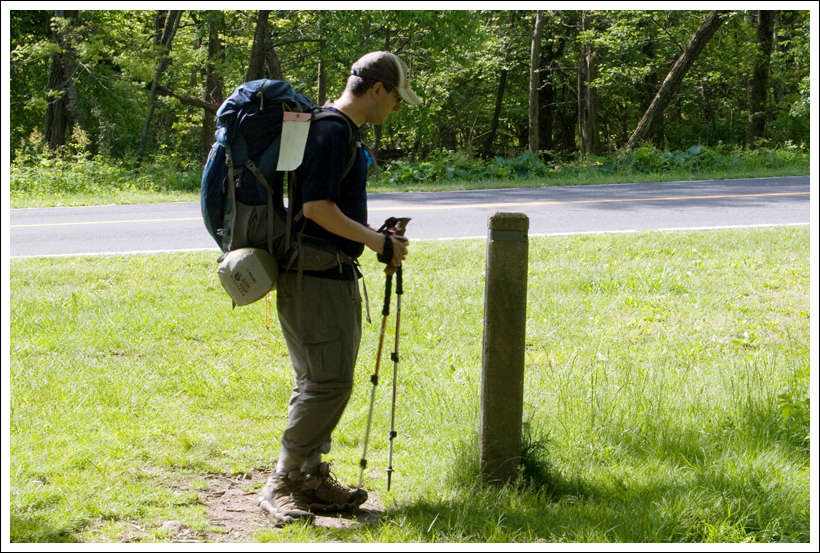
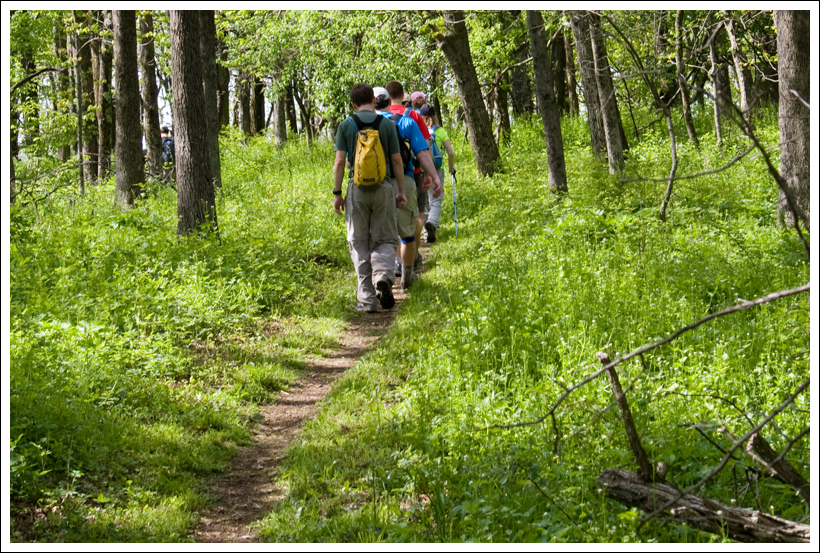
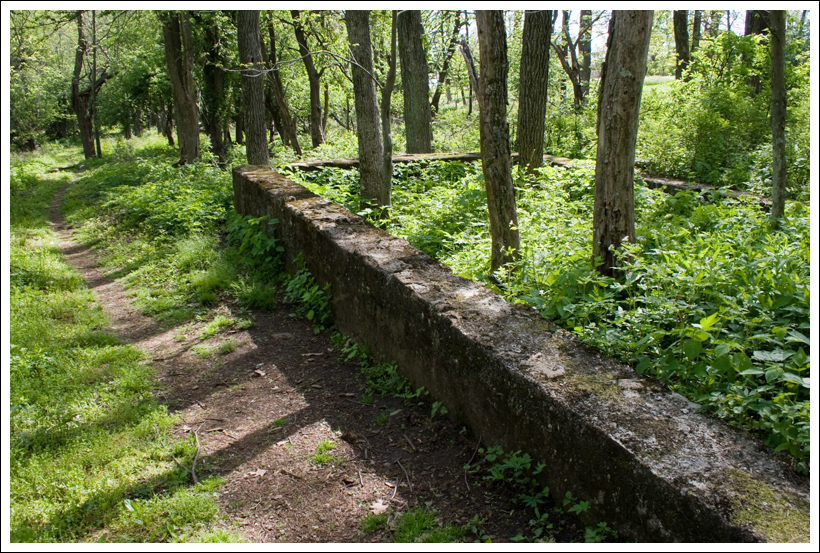





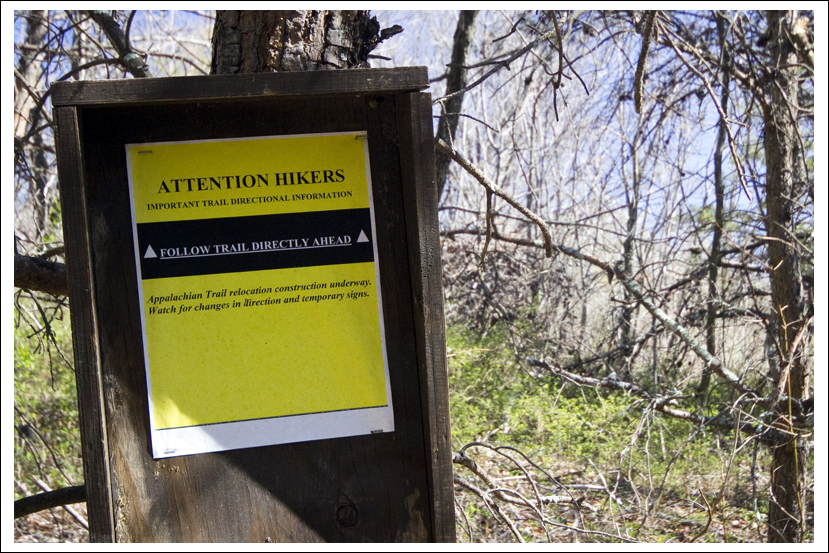


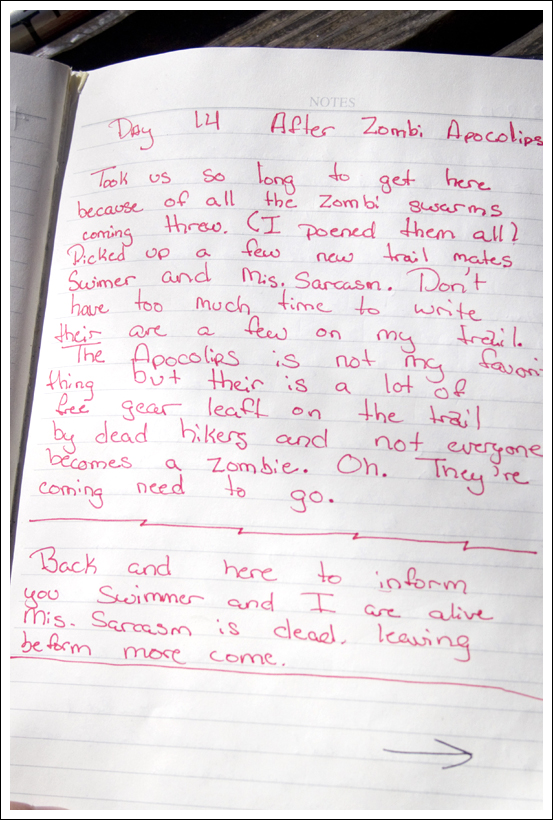


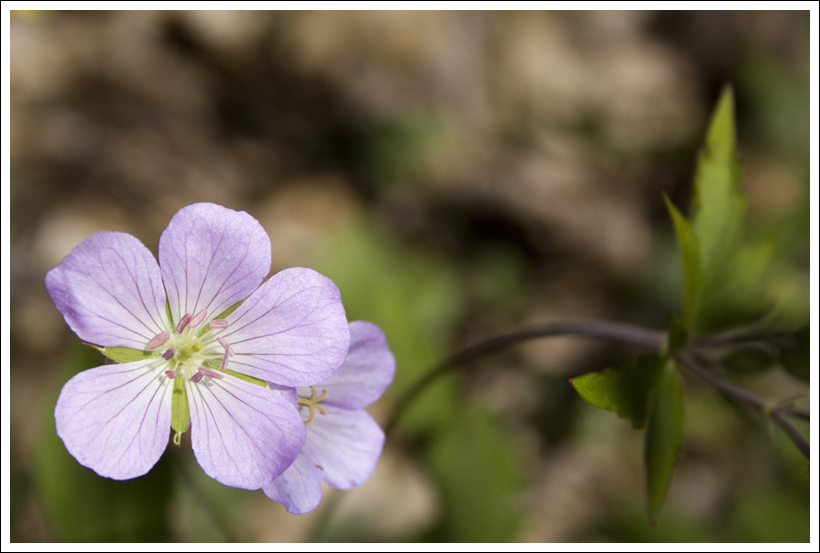




 Virginia Trail Guide