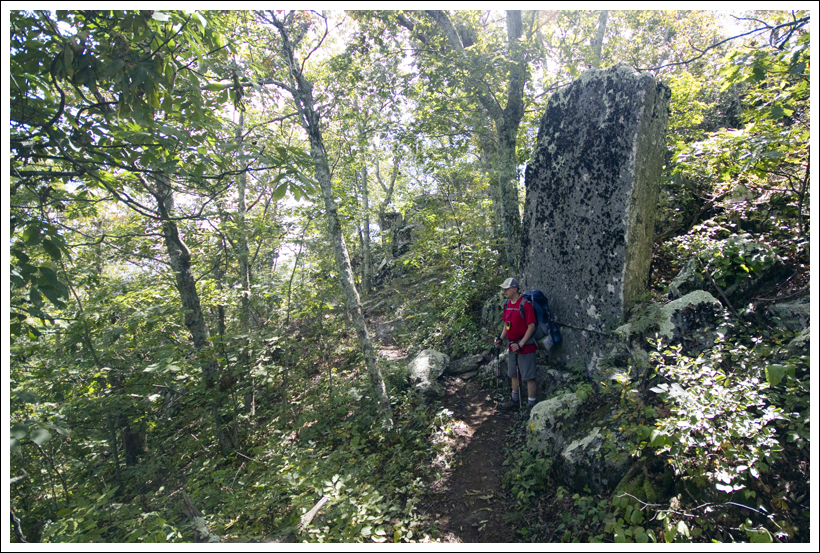
This hike is one of the shorter, more moderate approaches into the Presidential range of New Hampshire. While the hike is only about 6.5 miles, we hiked an extra 2.4 miles for the chance to enjoy some views!
On our second pass-by, we were lucky to hit the summit with mostly clear views! Below: Adam makes his way up the Crawford Connector – a short spur trail from the parking lot to the Crawford Path; Trail signs and a sign for Mizpah Spring Hut; Gibbs Falls.
Adam Says…
Charles Dickens started off A Tale of Two Cities with the line, “It was the worst of times, it was the best of times.” When I was thinking about starting to write about Mt. Pierce, I was thinking, it was A Tale of Two Hikes with the worst and best of times. All of us have good days and bad days on the trail and this was a bad one for me. I wasn’t really feeling the hike deep down and I felt like I was just going through the motions rather than taking a moment to enjoy what I was able to do. The morning started off with a lot of fog around, which didn’t really help my mood. I was thinking it may burn off by the time we got to the top, but we weren’t so lucky.
The first .4 miles along the trail were relatively flat as it meandered through a wooded area. We crossed a footbridge at the base of a small waterfall and at .4 miles, we reached a junction with the Crawford Path. Taking a left at the junction, we began our ascent. The ascent begins while paralleling the Gibbs Brook on the left of the trail. The trail was extremely rocky which was making each step a challenge, as I felt like I was doing a demented, granite-laden version of a StairMaster. Most of the trail to the summit consists of having to step on rocks, so there is little evidence of soft ground to place your feet. I would recommend shoes with good padding, thick comfortable socks, ankle support, and trekking poles to help yourself along.
Even though the Crawford Path to the summit of Pierce is one of the least steep trails in the Whites, it is still very rocky and slick. Below: As we climbed, the woods got foggier and foggier; By the time we made it to the junction with the Mizpah Cutoff Trail we started to worry that we wouldn’t have a view at all; The Mizpah Cut-Off Trail departs the Crawford Path a little over a mile from the summit of Mt. Pierce.
At 1.9 miles, we reached a junction that led to the Mizpah Spring Hut, which is the return trip for this lollipop loop. Stay left and continue to climb up to the summit. The trail continued to be rocky and the fog was just sticking to the mountaintop as we progressed. I was feeling hopeless about being able to spot any views. As we got higher, we could tell the views would have opened up to the left of the trail but all we could see was a sea of gray. At 3.1 miles, we reached a large rocky, outcropping and waited a while for the views to open up. While the wind was picking up, we felt there was no end to the fog. At the outcropping, another sign for a junction pointed us to the summit and the Webster Cliff trail to the Mizpah Spring Hut (continuing on the Crawford Path would lead to the summit of Mt. Eisenhower in 1.6 miles). We took that sharp right and headed up to the top, where we reached the summit of Mt. Pierce in a short distance.
At this point the trail began to descend. The first part of the trail was a gradual descent, but eventually the trail was some of the steepest, rockiest downhill my feet and knees have witnessed. At 4.0 miles, we reached the Mizpah Spring Hut, maintained by the AMC and beds can be reserved in advance. We stopped for a while here and ate lunch. The croo (yes, that is how they spell it) that maintains the hut and cooks dinner and breakfast for overnight guests, had baked some cookies which we purchased and supplemented our lunch. As we were enjoying our lunch, we could see that the fog was finally lifting.
From the hut, we explored the nearby Nauman tent area (also able to be reserved for outside camping) and then proceeded on to the Mizpah Cutoff Trail to complete the lollipop section of the hike. The Cutoff Trail starts off flat, but is a relatively easier descent. We reached the junction with the Crawford Path at 4.7 miles. A return trip to your car by taking a left would make this a 6.6 mile hike. However, we had a debate about what to do. Going back up to the summit would be adding another grueling, rocky 2.4 miles, but the views could finally be opening up. What we had researched before told us how great the views were, so the temptation was hard to resist. I felt like I owed it to myself (and our readers) to change my attitude and fight through to see these views. I could tell Christine wanted to see the views as well, so we decided to hike up to the summit again.
As we climbed, we saw people descending that we had seen earlier on our hikes. I stopped to ask everyone if they had seen views, thinking if there was still little hope we could turn back around. Early on, some were saying that we may get lucky to see things, but as we got closer, we were told the views had opened up. As people were descending, we ran into several people that we had seen before near the summit and they had wondered if we were hiking the summit again. We got looks of admiration, which made us feel like we fit in with New Hampshire hikers – we weren’t just some normal, Virginia couple that isn’t used to hiking the tough, challenging White Mountains. When we reached the rocky outcropping near the summit, the views were spectacular. There were still clouds in the distance that was stuck to Mt. Washington and some of the other high peaks, but we could still see miles of beautiful mountain ranges around us.
We hiked again up to the summit and the views got more amazing as we looked behind us each step. We stayed up here a little longer to take in the views. After getting our fill, we went back down the Crawford Path and made our way back to the car. When we reached the end, we were a little more tired and had covered more miles than we had planned, but it was a rewarding day. At the parking lot, we saw a fox standing next to our car, but it quickly darted off into the woods.
One thing to note about Mt. Pierce is that it was once named Mt. Clinton. When hearing some people refer to it as Mt. Clinton, my initial thought was that Mt. Pierce had been renamed for President Clinton. I thought that would be odd, since Franklin Pierce was the only President born in New Hampshire and I couldn’t see them changing the name for a President from Arkansas. But the original name was from DeWitt Clinton, a governor of New York and U.S. Senator, also known for being largely responsible for the construction of the Erie Canal. Even though the name was changed in 1913, some people have still held onto the original name of Mt. Clinton.
Christine Says…
Summiting Mt. Pierce has been on our New Hampshire ‘To Do’ list for several years now. I’m sad Adam didn’t have a better day on the trail, because I really enjoyed myself and had a strong hiking day. It’s always tough when your hiking partner is in pain or having a hard time with terrain, because there’s really nothing you can do beyond cheer them on (which is sometimes annoying) or stay quiet and let them work through the challenge.
We chose to hike Pierce on a day forecast to be clear and beautiful. As typical in the Whites, the clouds and drizzle stuck to the mountains far longer than the valley. It was sunny and pleasant at the AMC Highlands Center, but the peaks loomed in the clouds. We decided to start our hike on good faith that the clouds would blow off before we reached the summit.
By the time we arrived at Mizpah Spring Hut, the sun was fully out. Below: The Webster Cliffs trail is steep in places and is traversed by ladders and wooden stairs; Inside Mizpah Spring Hut; Cookies!
Hiking along the stream early in the hike was pretty and pleasant. Gibbs falls were lovely and I always enjoy the sound of water running through the woods! As we continued to climb uphill, the fog did the opposite of what we hoped/expected – it just got thicker! In fact, every time I paused to take a photo I had to wipe the lens with my shirt to get the droplets and mist off the glass.
Between the Mizpah Cut-Off trail and the summit, we were passed by a pair of trail runners. Running on mid-Atlantic mountain trails is challenging enough. I can’t even imagine keeping that pace over the rocks and roots of New Hampshire!
As we ascended, the fog enveloped the mountain even more. We debated taking the Mizpah Cut-Off trail, and visiting the hut first, but decided to chance the summit so that we’d hit the hut closer to lunchtime. That turned out to be the wrong call. At the summit of Pierce, we sat on the rocky outcropping looking into a sea of clouds. We couldn’t even tell which direction held the spectacular view we’d heard described in our hiking guide.
We hiked back up to the summit of Pierce to enjoy clear views. Below: The Nauman Tentsite is a short distance from the hut; A typical tent platform in the Whites; More views from the summit.
We sat in the clouds for a few minutes before deciding to push on to the hut. The Webster Cliff trail crossed a ridge for a while, using boardwalks and traditional trail. We stopped at one last high point and checked out the movement of the clouds. Every now and then, the clouds would blow off enough that we could see the shoulder of a mountain or the faint shape of a peak through the mist. We again discussed waiting/going back to the summit versus heading down to the hut. We agreed that it would still be a while before the view would clear, and proceeded to Mizpah Spring.
The Webster Cliff trail got steeper and slippery, using wooden stairs and ladders in a couple places. We eventually reached the hut. While we ate our lunch, the last of the clouds blew off, leaving bright bluebird skies above the White Mountains. We discussed climbing back up to the summit. Neither of us wanted to ascend via Webster Cliff, so we decided to delay our summit decision until after we walked the Mizpah Cut-Off back to its junction with the Crawford Path.
At the junction, we agreed that you don’t climb a presidential peak and pass on the opportunity to take in a spectacular view. We hiked the extra 1.2 miles (2.4 miles round trip) with 1,000 feet of elevation gain a second time. And you know what… it was SO WORTH IT. The views were spectacular, expansive, breathtaking. Even with Mt. Washington still in the clouds, it was a stunning view.
The hike down was long and slippery. We were passed again by the trail runners we had seen earlier. They had been all the way to the summit of Mt. Washington and back. Wow! We didn’t go that far, but we still felt our hike was worthy of celebration with a huge meal at The Italian Farmhouse in Plymouth. It’s always such a gift to have a great view day in the White Mountains!
Difficulty – 4. While there are steeper, more challenging trails in the White Mountains, this one is still challenging.
Trail Conditions – 2. The trail is mostly rock, requiring big steps and unsteady footing.
Views – 4.5. From the summit of Mt. Pierce on a clear day, you can see miles of the Presidential range.
Waterfalls/streams – 3.5. Early in the hike, you can see Gibbs Falls and the start of the Crawford Path part of the hike goes along the scenic Gibbs Brook.
Wildlife – 2. We weren’t expecting to see much, but we were lucky enough to see the fox at the end of our hike. Keep a lookout for the rare Bicknell’s Thrush.
Ease to Navigate – 3.5. Signage was fairly good at the junctions, but we were a little confused on how to get to the Mizpah Cutoff Trail from the hut.
Solitude– 2. This is a popular trail since the Mizpah Spring Hut is one of the easiest of the AMC huts to access. Expect to see people at the summit of Mt. Pierce and the hut mostly. Clear days in the summer could make this quite popular.
Directions to trailhead: From I-93: Take Exit 35 for Twin Mountain. Follow 3N for 10.4 miles. Turn right onto 302E and proceed for 8.2 miles. Turn left onto Mt. Clinton Road. There will be a large gravel parking lot at the trailhead ($3 fee applies).
* MapMyHike is not necessarily accurate, as the GPS signal fades in and out – but it still provides some fun and interesting information.
Mt. Willard is one of the most popular easy day hikes in the White Mountains region. Its highpoint of 2,800 feet is dwarfed by most every other mountain around, but it still offers a dramatic vista looking through Crawford Notch.
Looking through Crawford Notch from the summit of little Mt. Willard. You can see the road and the train tracks. Below: The trail starts across the train tracks at Crawford Notch Depot; Christine’s dad looks down at the Centennial Pool – one of the attractions on this hike; Enjoying the summit with family.
Adam Says…
Mount Willard is an extremely popular family hike in the White Mountains of New Hampshire. It’s quite accessible since the trail takes off from the train depot at Crawford Notch. Many hikes in the Presidential range can be intimidating, but this hike of only 3.2 miles is more manageable. The hike has some rocky, steep sections, but if you take your time most people with a little hiking experience can reach the peak.
We started off the hike by crossing the railroad tracks near the train depot station where the AMC Highland Center is located. The trail quickly leads into the woods and in .1 mile, you reach a junction. Take a left to climb the Mt. Willard Trail (the other trail at the junction is the Avalon Trail, leading to Mount Avalon and Mount Field). The trail has a small stream crossing and then begins the climb. The trail is rocky and somewhat steep, like most of the area in the White Mountains of New Hampshire.
The Centennial Pool has a small waterfall that cascades into a pretty plunge pool. Below: Adam crosses a stream early in the hike; Everyone makes their way uphill; The trail was mildly rocky.
Along the hike up, there is a small waterfall called the Centennial Pool on the right. There are a few steps down to reach the base of the falls, which is a nice cascade to give yourself an excuse to take a break on the way up. Continuing up the trail, eventually the path of the trail consists of smaller, but more abundant rocks. A short distance of climbing through this and then the trail begins to level off around 1.4 miles. It is a short distance at this point to reach the summit at 1.6 miles.
The summit gives you great views down into Crawford Notch as you can see down Rte. 302 and the train tracks that would leave from the depot. You can see the path of the glacier that carved out this area. There are some precipitous drops from the top, so keep a close eye on any children. We stayed at the top for a while until it started to become overcrowded with larger groups, so we made our way back down the way we came.
After the hike, we went into the train depot where they have a small gift shop to purchase shirts or hiking guides. After we left the area, we headed down to one of our favorite lunch spots, Moat Mountain in North Conway, NH. Their nachos are amazing and we’ve always been impressed with the beer they brew there.
Christine Says…
When I say that Mt. Willard is a favorite family day hike, I mean that literally! My parents walk to the summit of Willard several times a year. It’s probably one of my dad’s very favorite hikes in the region. It’s the right distance and right amount of climbing for them, plus they really enjoy the view from the top. They prefer to leave the high peaks and steep climbs for us to do on our own, but we always like to try and find a hike we can all do together. On this visit, Willard fit the bill perfectly.
Before setting out for our hike, we stopped in Sugar Hill for a big pancake breakfast at Polly’s Pancake Parlor. It’s a standing tradition to eat there at least once on every visit. I love all the different batters and pancake fillings. They also have delicious chicken-apple sausage.
Adam checks out the Mt. Willard Summit. Below: Summit scenes.
We got an early enough start that we were able to begin our hike by mid-morning. We set out across the train tracks and headed up the Mt. Willard trail. The climbing on Mt. Willard is steady, but never terribly steep. The trail is rocky, but nowhere nearly as rocky as what you see above treeline. It was a humid day, so everyone was sweating like crazy. Thankfully, the bugs weren’t too bad and we were able to hike without bug spray or constant swatting.
At half a mile, we passed the Centennial Pool. I scrambled down to the base of the falls and snapped a few photos before a large family group caught up to us. The group of twelve included many young children who wanted to scramble on the rocks around the pool. We left the spot to them and continued our uphill climb.
As we continued upward, the trail became rockier and wetter. Thunderstorms the day before left plenty of water still draining off the mountain. There were a couple places that the trail was more like a shallow stream. When we reached the summit, there were only a couple people there. We claimed a nice spot overlooking the notch below. We took photos and enjoyed the view together for a few quiet moments. Soon enough, lots of other hikers began to reach the summit. Children were running pellmell all over the summit. Fortunately, it’s a safe and wide summit. There are steep drop-offs, but the ledge is spacious enough that there is plenty of room to enjoy the view without ever getting close to the edge.
The trail is rocky and cobbled. Below: Some parts of the trail were wet from thunderstorms the night before; The trail is pretty, piney and shady: Returning to the depot.
After exploring the summits different views and angles, we decided it was getting a little too crowded at the top. We gathered our gear and started the descent. The hike down went pretty quickly. We passed many people climbing up as we descended. It’s definitely a popular and well-traveled trail. We soon arrived back at the train depot. After the hike, we headed into North Conway for lunch. It was a great day and I loved spending some time on the trail with my parents.
Directions to trailhead: From I-93, take exit 35 to merge onto US-3 N toward Twin Mountain/Lancaster. Stay on that for 10.4 miles and then take a right on US-302 E. Go 8.3 miles and the AMC Highland Center will be on the right. Park in the parking lot and make your way towards the train depot station. Cross the train tracks and you should see the trailhead leading into the woods.
This 16.5 mile overnight backpacking trip has cooler temperatures in the summer, beautiful streams and waterfalls, high mountain meadows, abundant berry bushes, and even an old plane wreck to explore. It’s a great change of pace from hiking the Appalachian Trail.
The high meadows along this hike were beautiful! Below: Backpacks in the car; Everyone checks out the information at the trailhead; Suzanne picks ripe blueberries along the Huckleberry Trail; The Huckleberry Trail passes through several small meadows; Spruce-shaded areas on the Huckleberry Trail; Signage along the way.
Day One…
Initially, we planned on doing very little hiking in July this year. Our goal was to stay out of the heat and to rest up a bit so we wouldn’t overdo things before we tackle our trip to New Hampshire later this summer. But the weather was too nice and we had lots of invitations to go hiking. Over the 4th of July weekend, our friends Anthony and Suzanne suggested we go on a backpacking trip together. We always enjoy hiking with them, so plans were made to hike in the Spruce Knob area. This was actually the second 4th of July weekend we’ve spent on the trail with Anthony and Suzanne. A couple years ago, we did a trip to Dolly Sods.
Our friends came down and spent the night before the trip at our house. We divided up some group gear and then packed the car and headed out fairly early to start our trip. We arrived at the trailhead mid-morning. We saw the short trail to the Spruce Knob summit fire tower, but we decided to visit that at the end of the loop the next day to feel like we had truly earned it. Spruce Knob is the highest peak in West Virginia.
Adam descends to our junction with the Lumberjack Trail. Below: Anthony makes his way along the Lumberjack Trail. The trail has a reputation of being sloppy/muddy, but it wasn’t too bad when we visited; Someone moved a piece of the plane from the wreck site up to the trail – probably to mark the spot; Even after 4+ decades on the mountainside, the plane wreck is still mostly intact.
We started off our first day of the hike on the Huckleberry Trail (TR533). The trail starts off with a little bit of crushed gravel on the trail, but that goes away in a short distance. This first section of the trail was fairly flat or downhill and alternates from going from dense Spruce forests to more open fields. There are numerous dry campsites along the trail. In the fields, we found tons of blueberries that were just starting to ripen. We stopped along the way for a few handfuls before pressing on. At 3.4 miles, you will reach a campsite and a sign that points to the trail going right. Follow this trail and in another short distance, you’ll come to another sign pointing you to go left as the trail winds around a dense forest area. You’ll soon reach another sign that shows that the Lumberjack Trail is .4 miles away. The last .4 miles of the Huckleberry trail drops rather steeply to the large trail junction at 4.7 miles. Take a right at this junction to join the Lumberjack Trail (TR534).
The Lumberjack Trail is a relatively flat trail. We were warned that it can be very muddy and wet, but we found that even after some recent heavy rains there were only a few 20-foot sections that had mud to slog through. Most of the trail had rocks or logs placed that saved us from having to get our shoes wet or muddy. Around mile 5.8, we saw a plane door hung on a tree and a short, yet steep trail that led down to plane wreckage (a Piper PA-23 that crashed here in 1973 with two casualties). Be respectful if you decide to visit this site. We stayed on the Lumberjack Trail until it came to a junction with the High Meadows Trail at mile 6.7. Take a left to join the High Meadows Trail (TR564).
The High Meadows Trail was the most overgrown trail we came across. There were times that it felt like we were bushwhacking. There are stinging nettles everywhere along the trail and grass was up to our knees in some portions. The High Meadows Trail also has alternating landscapes; you will go from dense forests to large open meadows several times. Keep an eye out for blue blazes on posts or trees as you navigate through these high grass areas. The trail descended through these gorgeous meadows and it is not surprising that we were thinking of the Sound of Music when we were walking through these fields surrounded by mountains.
The high meadows on this hike were so beautiful! Below: Adam admires the high meadows; Grass in the meadows was tall; There were several meadows separated by short sections of shade; Most of the shady spots were densely overgrown with berry brambles; Black-eyed susans; Adam crosses out of the final meadow.
Eventually, you will enter into the woods again and cross a small creek. At 8.6 miles, you will reach another trail junction. Take a right here and you will descend even more as you make your way through a scenic forest landscape. You will soon hear water flowing from Seneca Creek below you. The trail crosses the creek and comes to a junction with the Seneca Creek Trail at 9.1 miles. At this point, you will cross Seneca Creek to reach the trail on the other side. The water was flowing to make a nice small waterfall. Before we crossed, we ventured just a short distance (about 75 yards) to the right down the Seneca Creek Trail and came across one of the most beautiful waterfalls/swimming holes I’ve seen – Seneca Falls. We dropped our bags on the trail and scrambled down to reach the base of the falls. There was a large cavernous rock overhang to the right of the falls. In the water, we could see brook trout swimming around, occasionally breaching the water to catch flies that were dancing along the water surface. Once we climbed back up from the basin, another group came down to the falls jumped into the swimming hole at the base of the falls. From the screams when they jumped in, we could tell the water was extremely cold. We made our way back to our original junction and then determined the best place to cross the creek was at the very top of the small waterfall. We all made it across safely.
Christine hit a wall with her energy level, so we stopped a few minutes to eat a snack on the opposite side of the creek at a nice campsite. Knowing we still had a distance to go, we pressed on further. The Seneca Creek Trail went to the side of Seneca Creek for the entire way. We crossed the creek in a couple of places. Around mile 10.4, we began to see a ton of campsites. We were surprised to see that there were so many people that were camped here overnight. When we kept passing people on the trail, we felt that we would have our picks of campsites, but we didn’t realize how many people come here a different way (mostly from the lower Spruce Knob parking lot and taking the Seneca Creek Trail to these campsites). Anthony and Suzanne hurried ahead, while I waited a while for Christine to try and regain her strength.
Seneca Falls is an impressive waterfall with an emerald green plunge pool. Below: Leaving the high meadows for Seneca Creek; A small waterfall above Seneca Falls; A side view of the falls; The trickiest of the stream crossings; Pretty wildflower; Lovely Seneca Creek.
We caught back up with our friends soon and they had claimed a gorgeous campsite (even though it was hard to imagine a bad one here) at 10.6 miles that was near a waterfall that plunged into the creek. While there were lots of larger groups out here, we found a nice, secluded campsite that had a nice waterslide that created a babbling brook sound throughout the night. We set up camp and started to make some dinner. I always enjoy bringing a card game with us when we do an overnight backpack and this time I brought the game Hike. It was pretty brainless fun and plays similar to Uno with specialty cards that create twists in the game. It was starting to get dark, so we created a small, but nice fire in the pit. Once the sun set and the fire died out, we retired to our tents. It may have been the sound of the brook, but I probably slept the best I have ever slept backpacking that night. What a great first day!
The evening concluded with dinner, card games and a great campfire. Below: There were abundant rosebay rhododendron all along the stream; Our campsite had nice, flat space enough for 2-3 tents; We also had a pretty waterfall and pool for our water source.
Day Two…
As usual on backpacking trips, we both woke up right around first light. We spent a little while longer in our sleeping bags, chatting and stretching. It was a chilly morning, so we weren’t quite ready to climb out into the cold.
Eventually we emerged from our tent to start the day. I put on gloves and a light jacket and headed downstream to take a few photos of the big waterfall at the next campsite over. The folks camping there had packed up and departed very early. Adam went to get the bear bags down while I took photos.
One lucky group gets to camp on a site right across from this pretty waterfall. Below: Our campsite in the morning; You can see smoke from other campsites downriver; Crossing the footbridge across Seneca Creek before our big uphill climb.
We got everything out for breakfast and started taking down our tent, rolling up sleeping pads and stuffing our sleeping bags back into compression sacks. I decided that I was going to eat a huge breakfast, so I wouldn’t bonk again on our second day of hiking. Adam didn’t go into much detail in his day one post, but right around mile ten of our hike the day before, I hit a wall – HARD! It was right after we visited Seneca Falls and crossed the stream. I sat on the ground and told everyone that I was feeling really lightheaded and sick. I didn’t feel hungry. I had been drinking water all day. Regardless, my legs just felt like jelly and I just didn’t want to walk another single step. Adam, Suzanne and Anthony all told me that they thought I needed to eat. Turns out they were right – I had been hiking for ten miles with a 25 lb. pack on under 700 calories. I guess I just didn’t realize how little I had eaten until I did the calorie math. My appetite always goes away when I’m doing strenuous activities. Usually, it doesn’t cause problems and I just eat when I get to camp. I guess this time I just expended all my short term energy before we finished for the day. I need to do a better job forcing myself to eat enough.
Alright… off that tangent and back to breakfast! As promised, I ate a large breakfast – oatmeal, cheese, a honeybun and coffee. It was about 600 calories of food and much more in line with my energy needs for a tough uphill and 6 miles of hiking. Everyone had eaten and packed up camp by around 9:45 and we were on our way again.
Adam climbs steeply uphill across our final large meadow of the hike. Below: Anthony and Suzanne take a look back toward Seneca Creek; We had spectacular skies; Making progress back to our start point.
We had a short distance left to walk along Seneca Creek. Within about a quarter mile, we reached a small wooden footbridge across the stream. We crossed and continued uphill on the Seneca Creek Trail. The steepest climbing was across a beautiful, expansive meadow. We got great views of the valley and our last glimpse into the Seneca Creek watershed. The high meadows on this hike are truly majestic and are definitely one of the trip’s highlights.
After crossing out of the meadow, we continued uphill through the woods back to the four-way junction of Seneca Creek/Lumberjack/Huckleberry. Staying straight took us back onto the Huckleberry Trail. From there, we retraced our steps from the day before. It was a little slower going and felt longer on the second pass. It was all uphill and everyone was a little tired. It’s always funny how different the same four miles can feel under different circumstances.
Hiking the Huckleberry Trail reminded us of hiking in New England. Below: More lovely views from the Huckleberry Trail; The trail was often paved with rock; A well-appointed campsite on the Huckleberry Trail; Ripe berries; A view from the talus slope.
We enjoyed the sunny, unseasonably cool July weather. We stopped and picked many blueberries along the walk back. I also took a little side trail from one of the meadows and found a talus slope with nice views across the mountains.
We got back to the car around noon. We threw our packs into the back of the car and took the short, flat walk to check out views from the observation tower atop Spruce Knob. It’s just a short quarter mile walk and well-worth the extra time and steps. We spent some time enjoying the lofty views and cool breezes. Anthony, Adam and Suzanne decided to walk to one more nearby viewpoint on the Whispering Spruce Trail. It was just a tenth of a mile down the trail and provided even more spectacular views. I headed back to the car to eat some more candy and switch my trail shoes for flip flops.
Anthony and Adam take in views from the observation tower on Spruce Knob. Below: Views from the tower; The hiking crew; Views from the Whispering Spruce Trail; The tower.
After a few minutes, everyone was back at the car and we were on our way back to Harrisonburg for a celebratory meal and beer. We all decided that Jack Brown’s was the best spot for lunch. They have fantastic gourmet burgers and a great beer list. It’s a perfect post-hike indulgence.
We couldn’t have asked for better weather, scenery, or company for this 4th of July weekend backpacking trip. After lunch, we bid farewell to Anthony and Suzanne. They’re such great hiking buddies and we always feel lucky when we get to hit the trail together.
Difficulty – 4. The distance makes it fairly tough and the second day has a lot of uphill on the trail.
Trail Conditions – 3. Most of the trail was well-maintained. The High Meadows Trail was quite overgrown. There are some rocky, loose sections on this trail too, which can be a little rough on the feet.
Views – 5. The best views are from the Spruce Knob trail near the fire tower. The fire tower has wonderful views, but once you take the .5 mile trail around the fire tower, you will have gorgeous, breathtaking views from the highest point in West Virginia. The views along the main backpacking trip were mostly during the High Meadows Trail. There are gorgeous mountain views and no sign of civilization.
Wildlife – 3. There were lots of birds to be found on the High Meadows Trail. We did have a deer visit us several times at camp.
Ease to Navigate – 2. The Huckleberry Trail and High Meadows Trail could use more signage. I would suggest printing out our step-by-step desciption and bringing the midatlantichikes map to help guide your way.
Solitude – 2. This is a popular spot for people to do overnight camping. Expect to see lots at the campsites, but you will have more solitude until you get to Seneca Creek.
Directions to trailhead: Directions vary so greatly depending on the direction you’re coming from. Please refer to the trailhead marked on the map below to determine your best route.
This 4 mile out-and-back follows beautiful Porter Creek to a small waterfall at Fern Branch. The waterfall itself was barely a trickle when we visited, but the lush Smoky Mountain forest was especially beautiful here. This hike also takes you by a historic barn and an old hiking club cabin.
Fern Branch Falls was running low, but it was still beautiful! Below: Pretty rapids on Porters Creek; Tall trees provided a wonderful canopy of shade; The Messer Barn.
Christine Says…
With our week in the Smokies winding down, we wanted to hike something special and something we had never hiked before. I found myself referring to the ‘Hiking In the Smokys‘ website again. They have a list of their personal top 10 favorite hikes. We didn’t want anything over 10 miles, so that ruled out Gregory Bald, Rocky Top and Mt. Cammerer. We had already hiked six of the others (LeConte, Charlies Bunion, Andrews Bald, Chimney Tops, The Jump Off, and Alum Cave). So that left just one from the favorites list – Porters Creek. It sounded like a lovely trail – old growth forest, streams, a waterfall and lots of history.
Before setting out on our hike, we got donuts from The Donut Friar. This made me exceedingly happy and was the perfect start to the day. There is something magical about their chocolate crullers. After donuts, we were on our way to the Greenbrier section of the Smokies. We’d never hiked anything in that area before, so we were excited to try someplace new.
The road into Greenbrier is mostly gravel, but is well-maintained and easy to drive. It’s also very scenic and follows the Little Pigeon River. The trailhead is about 4 miles down the road. It’s clearly marked and there is plenty of parking.
Adam hikes along the early parts of the Porters Creek Trail. Below: Porters Creek Trailhead – it ties into the larger trail system in the park; Overhead view of Porters Creek; Old stone walls.
The trail starts off as a wide, gravel road through the woods. Porters Creek runs along the trail, offering plenty of scenic water views. About .6 of a mile along the way, you’ll see signs of old stone walls and stairs on the right side of the trail. The remnants date back to the early 1900’s when Elbert Cantrell built a farm in this area. Immediately past the farm, you’ll pass the Ownby cemetery. Adam and I walked around the cemetery and noticed that most of the graves belonged to very young children. Sad – it really makes one appreciate modern medicine and vaccinations.
About a mile into the hike, you’ll cross a log footbridge over the creek and come to a Y-junction in the gravel road. The trail to the right goes to more historical structures, but we’ll cover those on the way back. We took the trail to the left and arrived almost immediately to another trail junction – continue bearing left on the Porters Creek Trail. At this point, the gravel road ends and becomes a ‘real’ trail.
This section of the hike is beautiful – lots of big old, trees. It’s so green, shady and peaceful. At 1.6 miles we crossed another log footbridge. This one was much longer and crossed the stream crookedly. From there, the trail ascended gently until we reached Fern Branch falls at 2 miles. The falls are on the left side of the trail and set back a bit in the woods.
The first log foot bridge you come to is short and easy to cross. Below: The Ownby Cemetery; Adam at the trail junction before the path goes from old road to real trail; Little cascades on the creek.
When we visited the falls were not flowing very heavily. It was still a beautiful spot – especially with the sunlight filtering into the woods at the crest of the falls. We took some photos and then headed back the way we came.
On the return arm of the trip, we stopped at the Y-junction and visited the John Messer farm site. The cantilevered barn is in excellent condition. Just past the barn, you can visit a springhouse and an old cabin built by the Smoky Mountain Hiking club. Overnight stays at the cabin are no longer permitted.
After visiting the barn and cabin, we made our way back to the car and headed back into town for lunch. We ended up at Hungry Bear Barbecue. It was great and definitely deserves the top ratings it has online.
Porters Creek was definitely beautiful and we would recommend the hike for a low-key, easy day. It would also be our last new hike of our 2014 spring trip. The next day, we chose to re-hike an old favorite – Charlies Bunion.
Adam Says…
Staying in Gatlinburg, TN for a few days, we wanted to explore some different sections of the Great Smoky Mountains National Park. We decided to check out the Porters Creek after reading about Fern Branch Falls and the wildflowers on the trail. When we got out of our car, we could tell from the wetness of the area and the humidity that it would be a good idea to douse ourselves in bug spray.
We crossed the gate and started along the wide fire road. As Christine mentioned, during the first mile you do get some stream views, ruins of an old farm, and a family cemetery. The trail does ascend, but very slowly, so it is not very challenging.
After the trail junction, the path became narrower and steeper. Everything was so green! Below: The second log foot bridge was segmented and much longer; wildflowers; Adam at the base of Fern Branch Falls.
At the .9 mile mark, there is a small footbridge you can use to cross a small stream (or you can rockhop across). At the 1.0 mile marker, you reach a large junction. There is a side trail to the Messer Barn and hiking club cabin and also a junction with the Brushy Mountain Trail. Take the left Porters Creek Trail. At 1.5 miles, you come to a large footbridge that crosses Porters Creek. This footbridge was much longer and can be a little unsettling since it is fairly high above the creek in some points. The railing for me was also below my hip in some spots, which didn’t give me the feeling that it would protect me if I did slip. After you cross the footbridge, the trail seems to change environments as you walk through a large area of wildflowers and fern. The forest floor was exploding in green! The trail then becomes steeper, narrower, and rocky through this portion until you reach the falls.
As we were walking along, we could hear a waterfall off to our right and got a faint glimpse from a distance, but this was not Fern Branch Falls. Instead, at 1.8 miles, we reached the large waterfall on our left. The trickle from the waterfall wasn’t overly impressive, but it was a nice scenic spot. We made our way back the way we came.
The Smoky Mountain Hiking Club used this cabin as an overnight camp until 1981. Below: Crossing the bridge on the return trip; The Messer barn is well-preserved example of a cantilevered barn; Adam checks out the interior of the hiking club cabin.
When we returned to the junction with the Brushy Mountain Trail, we took the short side trail that led to the barn. Behind the barn, you cross a small stream and then can find the hiking cabin and springhouse. Both the cabin and barn are open, so we enjoyed exploring the abandoned buildings.
We made our way back to our car and found several cars that were arriving to hike this trail. With the cabin, farm, ruins, and graveyard, this hike really does give you a glimpse into the life and environment of families that lived in this area and used these facilities in the late 1800s through the early 1900s. The hiking cabin actually permitted members to stay here until 1981.
Difficulty – 2. The climbing is gradual and gentle.
Trail Conditions – 3.5. The section from the trailhead to the Messer farm is essentially a road. The section from the farm to the falls is trail, but it’s in good shape. The only part that may challenge some hikers are the two log footbridges.
Views – 0. None
Streams/Waterfalls – 3.5. Porters Creek is lovely. Fern Branch falls would probably be more impressive in wetter weather. It was fairly small when we visited.
Wildlife – 3. We saw a couple salamanders and a big black snake. There are bear sightings in all parts of the Smokies.
Ease to Navigate – 4. Trails are well-marked and easy to follow. You may miss some of the historical remnants if you’re not paying attention.
Solitude – 3. We hiked on a pretty Thursday in late May and only saw a few other people.
Directions to trailhead: From Gatlinburg, go east on 321 for 6 miles. Take a right at the Greenbrier entrance to GSMNP. The road will turn to gravel. The road will fork at 3.1 miles, but continue straight at the fork to reach the Porters Creek parking area at about 4 miles.
This 4 mile out-and-back is an easy hike to one of the Smokies’ lesser visited and under-appreciated waterfalls. The walk begins from the Smokemont Campground and follows a lovely stream and eventually reaches a pretty 25′ waterfall.
Pretty Chasteen Creek Cascade spills from the forest into a small pool below. Below: The trailhead at the end of Smokemont Campground. Adam tucked his pant legs in to avoid ticks; Mountain laurel along Bradley Fork; The trail is an old logging road.
Christine Says…
For the first few days of our trip, I wasn’t feeling great. Even after easy hiking days on Mt. Pisgah and Wesser Bald, I still wasn’t myself. Mentally, I had big hiking plans for every day of our trip, but in the end, my body dictated that we hike shorter, less strenuous trails.
On our second day in Bryson City, we woke up to lightning, rumbling thunder and torrential downpours. The local weather said that the heavy rain would clear out and leave us with a hazy, mostly cloudy, unsettled day. We decided that an easy waterfall hike would be perfect for those conditions. After breakfast at Mountain Perks (probably my favorite breakfast spot in Bryson City), we drove into the park.
Our hike started at the far end (section D) of the Smokemont Campground. For the first 1.2 miles, we followed the Bradley Fork Trail. It went gently uphill along the stream. The morning rain paired with the emerging sun made for a hot, muggy and buggy hike! Whenever we stopped for photos or to take in the scenery, we were swarmed by gnats and mosquitoes. Nonetheless, the trail was beautiful – so lush and green.
Adam Enjoys the Bradley Fork. Below: A marker for the Benton MacKaye trail along the shared portion of the hike; Someone built a ‘fairy house’ along the Bradley Fork; Trail junction with Chasteen Creek Trail; Campsite 50.
The trail along Bradley Creek is popular with horseback riders. In fact, the National Park Service concessionaire offers a trail ride from Smokemont Stables to the waterfall. I bet it’s a wonderful, scenic ride! The trail is also shared with the Benton MacKaye Trail – a 300 mile trail across the southern Appalachians. Almost 100 miles of the Benton MacKaye Trail passes through the Smokies. MacKaye, a forester from Massachusetts, is noteworthy because he came up with the idea for the Appalachian Trail… what a legacy to leave behind!
At 1.2 miles, the Bradley Fork Trail intersects with the Chasteen Creek Trail. At this junction, take a right and follow the trail toward Chasteen Creek. Almost immediately, on the right, you’ll pass Backcountry Campsite 50. It’s a pretty streamside spot with a fire ring and bear cables. The campsite can only be used if you have secured a paid permit. Evidently, permits in the Smokies can be hard to come by, so plan early!
After the campsite, walk another half mile along the Chasteen Creek Trail. Shortly after crossing a footbridge, you’ll come to a split in the trail. On the left side of the split, you should be able to see a hitching rail and mounting step for horseback riders – go in this direction.
From the clearing for horses, you’ll see a narrow footpath following the creek. In just about a tenth of a mile, you’ll come out at Chasteen Creek Cascade. It’s about a 25 foot waterfall. It’s not the kind of waterfall that plunges dramatically; rather it slides over the rocks into a pretty pool below. We had the waterfall all to ourselves and enjoyed the spot for about twenty minutes. Afterwards, we headed back the way we came and back into Bryson City for lunch at the Bar-B-Que Wagon. They have great Carolina-style barbecue with all the expected sides.
Christine walks along the Chasteen Creek Trail. Below: The split in the trail that leads to the falls; Hitching post and mounting block; Adam at the falls.
Adam Says…
When we talk to people about the Smokies, they seem to be surprised that some of the best highlights of the park are the waterfalls. In talking with the locals of the area, April and May tend to be very rainy seasons for the area. Storms move in and out quickly through the park, but they typically expect a little rain most days during this season. Rainy days are prime days for waterfall viewing and photography.
We started off our hike from the Smokemont Campground in the D section of the campground. In the winter, this may be blocked off and you may have to park and leave from the C section. The trailhead starts from a large gate near the designated parking area at the end of the campground. We doused ourselves with bug spray and moved on.
We saw a swarm of butterflies on the trail. Below: After lunch, we visited impressive Mingo Falls. It’s probably the tallest waterfall in the area; Nantahala Brewing Company and Anthony’s Pizza were the perfect way to end our time in Bryson City.
The trail was gradually uphill, but it mostly felt flat. In fact, we were surprised to see the elevation gain on the hike afterwards. The trail started off on a gravel road alongside Bradley Fork. The forest was lush with green from all of the rain, so it was a pleasant stroll through the woods. Because of the width of the trail, Christine and I could also walk side-by-side along the trail. At 1.1 miles, we crossed a large footbridge and at 1.2 miles we came to the intersection with the Chasteen Creek Trail. We took a right there and continued to walk on a wider trail, passing Campsite 50 at 1.3 miles. At 1.9 miles, we reached the side trail to the left with the horse hitching area. It was a short walk to get to the waterfall from there. We headed back the way we came for an easy, scenic hike.
If you wanted to make this a longer hike, after you visit the waterfall, return back the way you came. You could take a right at the junction with the Bradley Fork trail and connect to the Smokemont Loop Trail. This would make the grand total of distance about 8 miles, but would loop back to a different section of the campground.
You may see people fishing for rainbow trout along the Bradley Fork or Chasteen Creek. I can imagine many campers at the Smokemont Campground spend some time fishing in hopes of cooking some fish from the water.
After the hike, we had lunch then headed into Cherokee to check out the Qualla Arts & Crafts Mutual. Their traditional work is fascinating and beautiful. We always enjoy visiting. After that, we stayed on the reservation and visited Mingo Falls, one of the tallest and most impressive waterfalls in the Appalachians. It was a short walk, but there were many stairs!
Our wrap up for the day was a visit to Nantahala Brewery followed by pizza from Anthony’s. We consider those two stops to be ‘must-do’ in Bryson City! On to Gatlinburg tomorrow!
Difficulty – 1.5. This is an easy walk along a very gently graded trail.
Trail Conditions – 4.5. The trail is mostly wide and road-like. It’s only narrow and muddy at the base of the falls.
Views – 0. None.
Streams/Waterfalls – 4.5. Bradley Fork, Chasteen Creek and the falls are all beautiful!
Wildlife – 3. We didn’t see anything, but the Smokies have wildlife everywhere!
Ease to Navigate – 3.5. The trail is easy to follow if you read the junction markers. The shared/intersecting trails might be confusing if you’re not paying attention.
Solitude – 3. Chasteen Creek Falls is not one of the park’s more popular trails. You may see horses and occasional hikers from the campground, but generally this trail has less foot traffic than many others.
Directions to trailhead: From Newfound Gap Road (Route 441), follow signs to Smokemont Campground. The campground is located 3.5 miles north of the Oconaluftee Visitor Center and 26 miles south of the Sugarlands Visitor Center. Park in the hiker parking area at the end of section D of the campground.
This 4.5 mile ascent of Mt. Washington follows challenging, steep, slick terrain along a ravine that showcases waterfall after waterfall. Once you clear the treeline, you are treated to a hut visit and some of the most dramatic alpine walking in the east.
From Lakes of the Clouds Hut, you follow the Crawford Path (America’s oldest continually used hiking trail) to the summit of Mt. Washington. In this photo, you can see the summit and its weather towers looming in the distance. Below: The trailhead begins near the cog railway on Basecamp Rd; The beginning of the trail is deceptively easy; There are many water crossings en route to the top – some easy, some not so easy.
Adam Says…
Hiking to the summit of Mount Washington (also known as ‘the most dangerous small mountain in the world‘) was definitely a bucket-list item for me. Making it to the top of the highest peak in New England feels like an accomplishment and we definitely have memories from the hike that we will never forget.
We arranged for Christine’s parents to meet us at the top and shuttle us back to our car. Many people descend by trail, but there is a hiker shuttle and a limited number of seats available on the Cog. It’s important to note that you should always be prepared and have a plan for walking off the mountain. Trains and shuttles book up quickly and the auto road closes from time to time. Ultimately, you are responsible for your safety and the manner of your descent. Visit New Hampshire’s Hike Safe site so you can learn more about mountain safety and the state’s expectation that every hiker be prepared.
The entire Ammonoosuc Ravine trail followed a stream which tumbled down the mountainside in waterfall after waterfall. Below: Lakes of the Clouds advertisement; The early parts of the trail are rocky, but only slightly uphill.
As we were driving along the road to the parking lot, the sky was completely cloudy. The online forecast said it was going to be a perfect day, but the clouds were saying something different. We hoped that the weather would push off and made it to the parking lot. We packed some extra gear knowing that the temperature was going to be much cooler at the top. We started off from the parking lot and filled out our parking permit, enclosing $3 in an envelope to allow us to park in the lot. The parking lot was already getting full and we could tell that all the people getting ready to hike were in great shape. We hoped we were ready for the challenge and started on the Ammonoosuc Ravine Trail from the end of the parking lot. The trail started off relatively flat through a thickly forested area. At .25 miles, we reached a stream crossing. Because a heavy rain fell just the day before, the crossing, which is normally easy, presented a real challenge. We saw a few others cross in different areas, but ultimately decided the best route was tightrope-walk across a thin log that spanned the creek. This is always more unnerving when you are carrying expensive camera gear, but we made it across without a hitch. We were worried how many other crossings we would have to make seeing the Ammonoosuc River on our trail map coming ahead.
At 1.0 miles, the trail reached the Ammonoosuc River, but the trail turned quickly to the right. We saw the rushing water of the river and glimpsed up at the sky, which looked less foreboding than earlier. The trail hugs the riverside and begins a steep ascent up a rocky slope. At 2.1 miles, we reached the Gem Pool, a serene swimming hole created by a small waterfall. We rock-hopped across to continue the path from the pool and stopped for a short rest in this peaceful area. After leaving the Gem Pool, the trail becomes very steep as you climb up the rocky slope. At 2.35 miles, a small trail to the right leads about .1 miles to The Gorge waterfall. I highly recommend checking out this waterfall, which you can see plunging over 100 feet. We returned from The Gorge and rejoined the trail. The trail continues its steep ascent and you can only imagine that you are climbing up a slope that seems to be as steep as the slope of the waterfall you just saw.
Christine crossing the water at Gem Pool. This is the point of the hike where the climbing starts getting serious. Below: Adam works his way uphill on the steepest part of the hike; It was seriously steep; One section had a little ladder to help you over the boulder.
We continued to climb up the very steep slope until we reached a great viewpoint at 2.7 miles. Along with the view, there were also multiple waterfalls falling in dramatic cascades. It was here that we were finally able to see that the clouds had moved off and we should have a gorgeous hike to the summit. The unnerving thing was that in order to continue the trail we had to walk across the top of a waterfall with a very precipitous drop to one side Due to the rain, there was no way to rock-hop across. We knew we had to put our feet in the water to make it across, but we couldn’t tell how deep the water was or how fast it moved. As we realized that a false step could have meant a long plummet down, it definitely gave us a gut-check to see if we could make it. We tried to look around for the best way to cross and decided to wait and let a few other hikers attempt it first. After learning what others had done, we followed suit and crossed without any difficulty.
The hike from this point continued to be steep as you climb along some areas of bare, slick rock. Eventually, we began to rise above treeline and were able to see Lakes of the Clouds hut seated on the edge of the ravine. The wind was already picking up and the cold wind had us switching into cold-weather clothes. To the left of the hut was the summit hike to Mount Washington and we could clearly see the Observatory Tower in the distance. We reached Lakes of the Clouds hut at 3.2 miles and decided to go inside to eat a snack.
One little spur trail on the steepest section of climbing led to this large and impressive waterfall called Gorge Falls. Below: Christine picks her way through boulders and across the water; Our first views into the Washington Valley; At the halfway point
Lakes of the Clouds Hut was built here over 100 years ago and has some interesting history. Two AMC members, William Curtis and Allen Ormsbee, were hiking up the Crawford Path to go to an annual AMC meeting at the Summit House on the top of Mount Washington in 1900. They reached what is now Mount Eisenhower and met 60 mph winds and cold temperatures. By the time they reach Mount Monroe, the temperature had plummeted to freezing and the rain became ice. Curtis died at Lakes of the Clouds and Ormsbee pushed on for help before perishing himself only a few hundred yards from the summit station. The storm lasted for 60 hours and their bodies were discovered. The AMC created a wooden shelter first near where Curtis had died. In 1915, the wooden shelter was replaced with a stone shelter and it has since had several additions and improvements made. It can accommodate up to 90 guests per night.
From the shelter, you can see a trail that leads up to Mount Monroe. If you are interested in peak-bagging a few of “the Presidentials”, it is a short but steep hike. We decided to save our energy and just tackle Mount Washington. We continued along the trail and soon reached views of the Lakes of the Clouds, which are actually more like mountaintop ponds than full lakes.
Since we were now above treeline, the hike to the summit of Mount Washington was now just a series of steps across boulders for the remaining 1.3 miles. The wind was incredibly strong and I believe gusts were at least 50 mph, which is considered more of a calm day on the mountain. The wind was blowing up the ravine to the left of our bodies, so there were times that we had to angle ourselves to fight the winds as we pushed onward. The views of the ravine and behind us were more breathtaking with each step. Whenever we stopped to turn around, the wind had our noses running from the cold and it was hard to even talk to each other through the force of the gusts.
Near the top of the headwall, there is a series of several impressive waterfalls and the scariest water crossing we’ve ever done. Below: This trail had so many waterfalls; Our first view of the Mt. Washington summit; Hikers coming out of the ravine.
At 4.5 miles, we reached the summit area. We followed the signs to the summit marker, that was crawling with people. Most people reach Mount Washington by car or by the cog railroad. When you pay to take the Mount Washington auto road, you receive a sticker that states “This Car Climbed Mt. Washington”. We waited our turn to get a picture with the summit sign. Some people were amazed that we had hiked up. We made our way over to the visitor center and snack bar. We had agreed to jokingly meet her parents by the “death plaque”, a plaque that shows a list of the names of people who have died on the mountain. When we arrived at the snack bar area, a group of hikers we had seen earlier on the trail whispered to us “there’s a hiker’s lounge downstairs”. While the upstairs area was crawling with people, the hiker’s lounge was quiet and nearly empty. We had a peaceful time to eat our lunch and then were able to meet her parents in about 30 minutes. From here, we jumped in their vehicle and enjoyed the car ride down the narrow road that snakes down the mountain. We stopped a few times along the way to catch some last views of the Presidential Range before we were back on the road.
The hike up Mount Washington was definitely something that Christine and I felt that we wouldn’t have been able to accomplish several years ago. I can’t think of any other time that I have felt such a sense of accomplishment after reaching this summit. We were so blessed with the great weather and we have already begun talking about how we could do an entire hut-to-hut Presidential traverse.
Christine Says…
With our days in New Hampshire running out and great weather in the forecast, we decided we had to tackle Mt. Washington. With a reputation for fickle weather, ice storms that happen at the height of summer, and gusts of wind that can blow a grown-man sideways, I wasn’t quite sure what to expect. The night before our hike, we were looking at maps and guidebooks and discussing our different route options. Across the living room, my mother was Googling ‘deaths on Mt. Washington‘, ‘failed hikes of Mt. Washington‘ and ‘accidents on Mt. Washington’. Comforting, right? She also told me to make sure I had the phone number for New Hampshire’s Fish and Game department on hand – they do most of the mountain rescues in the state. Her worries and cautiousness got into my head, and I went to bed feeling really nervous about my ability to make it to the top.
Adam approaches Lakes of the Clouds Hut. Below: Inside Lakes of the Clouds; We ate cake!; Wooden racks for carrying supplies.
On the drive to the trailhead, dark blackish clouds completely obscured the mountain. I said to Adam, ‘This is probably a bad idea.’ He reassured me, telling me he was certain the clouds would blow off, the day would be beautiful, and that we would have a great time. I let my worries non-verbally stew in the back of my mind. We parked, geared up and made our way down the trail with several other groups of people.
Within the first mile, we came to a rain-swollen stream with no clear way to cross. The rocks normally used to rock hop were all under rushing water. I tested a few spots, and ended up falling shin deep into water and wrenching my knee. I was feeling discouraged, because the only other potential crossing left was a thin, bouncy, moss-covered log that had fallen across the stream. I have problems with vertigo and balance, so situations like this really push me outside my comfort zone. Adam carried all the expensive camera gear, and I slowly and carefully stepped across that log. Phew! I told Adam if there were lots of crossings like this one, I didn’t think I could do the hike. He offered to turn back, but I told him that I wanted to challenge myself and keep going.
Fortunately, most of the hike followed alongside the stream with only a few much easier crossings along the way. Eventually we reached the Gem Pool. What a gorgeous spot! It’s a crystal clear, green, pool; fed by a cascading waterfall. It would be a great place to take a picnic and go for a swim. We did one more rock hop at the end of the pool and prepared ourselves to do some serious climbing!
Mt. Monroe looks like a small hill above the hut. Below: Mt. Monroe; The Lakes of the Clouds’ namesakes.
About 1600 feet of elevation gain comes in just about a mile of hiking after you pass the Gem Pool. It’s grueling and steep, but both Adam and I were well-prepared with all the hiking and other cardio we’d done to prepare for this trip. We were able to make the ascent without having to take a breather! The only stop we made along the way was the side trail to check out the Gorge Waterfall.
On the climb up, we started seeing glimpses of the valley through the trees. The majestic Mount Washington Hotel looked like a tiny red speck below. We’d come a long way up already! The remainder of the steep climb followed the Ammonoosuc River through the plunging ravine. Even when we couldn’t see the water, we could hear it.
Eventually, the trail exited from the woods onto a wide rock plateau. Above, we could see a waterfall falling in several distinct drops and below, we could see the water crashing over a steep, long drop. We decided to take a break and enjoy the view from the rocks. We sat for a minute taking it all in. At that point, I noticed I didn’t see the trail continuing anywhere. Horror dawned on me when I realized that the trail continued on the other side of the river. We saw two people cross it successfully, but I still wasn’t so sure. The water was fast and a little deep from the rainfall the day before. I had no idea how slick the rock under the water would be. The crossing had just a couple feet of flat width on the downhill side before the water dropped over a 100 feet down into the ravine. A slip at this crossing would almost surely be fatal. I took a moment to hyperventilate and freak out, and then I plunged across. This was followed by another ‘Phew – I’m still ALIVE’ moment.
Adam fights the 50-60 mph winds. Below: The hut grows increasingly tiny; Christine hikes along; There were several rock fields to cross.
After that crossing, the hike was less steep but a lot rockier. The trees were getting smaller and more stunted as we approached the treeline. We could see the summits of both Mt. Washington and Mt. Monroe looming above. Lakes of the Clouds Hut was in view, but distances are so deceptive above treeline. Everything looks so close, but it’s always further than you expect. I guess it’s a bit of an optical illusion when you don’t have trees to compare for scale.
As soon as we broke the treeline, just slightly below the hut, the wind was shockingly strong. I was hiking in long pants and long sleeves, but I had to add my hooded jacket right away. Even so, my face and hands were freezing! I was sure I had packed gloves. I usually keep a spare pair in all my backpacks, but I couldn’t find them anywhere. I ended up paying the premium price to buy a cheap pair of gloves at the hut (only to find the spare pair of gloves in a side pocket that night when we got home).
We took a twenty minute break at the hut and enjoyed some of the baked goods made by the Croo. Adam had pumpkin cake and I had chocolate cake. I had my phone with me, so I decided to take a look at MapMyHike to see how we were progressing. I found that Lakes of the Clouds actually has 3G service, so I posted an Instagram and a Facebook status from the hut. Ah… technology! 🙂
Adam pushes uphill against wind, over rocky terrain. Below: Spectacular Presidential Views; Christine has made a lot of uphill progress; Many cairns mark the way above treeline.
After our snack and rest, we were ready to tackle the last mile and a half of trail to reach the Mt. Washington summit. I can’t even describe how much I enjoyed this portion of the hike! The climb up the Ammonoosuc ravine had been moderately scary, physically challenging and really slippery, but the hike along the Crawford Path was pure, unadulterated hiking joy!
The Crawford Path was built in the 1800’s and originally used as a horse trail to the summit of Mt. Washington. The trail celebrated its 175th anniversary in 1994 and is the oldest, continuously maintained, hiking path in America. I felt so privileged to be walking someplace so beautiful and historic.
We spent some time exploring and photographing the glacial ponds that give Lakes of the Clouds its name. On this particular day, the pools were sapphire blue and covered with scalloped ripples from the brisk wind. It was spectacular and gorgeous.
We toiled along, pushing our bodies against the 50 mph winds. The alpine terrain was breathtaking and otherworldly. I’ve never seen mountain views like the ones I saw in New Hampshire on this trip. Between the walk along Franconia Ridge, and then the hike along the Crawford Path, I had my mind blown twice in one week. These places should be on every American hiker’s bucket list!
We made it to the top! Below: Adam makes the last push to the summit, The Crawford Path is also the Appalachian Trail; The summit was crawling with people who had driven or taken the cog to the summit.
The stretch of trail between the hut and the summit is a rock field. Sometimes the rocks are wide and flat, sometimes they are uneven, loose and pumpkin-sized. The trail isn’t so much a path as it is a series of cairns that keep hikers on course.
At first, the trail between the hut and Mt. Washington was pretty flat, but the final push to the summit required a little more steep climbing. The weather station towers looked so close you could almost touch them, but it turned out they were still about a half mile away.
We could tell we were getting really close when we started seeing more and more people in jeans, sneakers and sweatshirts milling about the trail. These were the car and train people! Eventually the trail emptied us out onto the summit. We passed the historic hotel-turned-museum – Tip Top House – and made our way over to the summit marker. We actually had to wait in line with all the car and train people to have our picture taken at the summit sign. It’s always funny to finish a hike that has a summit that can also be reached by car – Clingmans Dome comes to mind (the high point on the Appalachian Trail).
The cog makes a few daily ascents/descents of Mt. Washington. Below: The crowded summit building; The Mt. Washington Hotel sits below the mountain – what a beautiful day!
After taking our obligatory summit photo, we grabbed some drinks and hot dogs from the summit building’s snack bar and waited in the hiker’s lounge. My parents still hadn’t arrived, so we had about a half hour to kill. It made me wish we actually had taken the time to do the short side-trip climb to the summit of Mt. Monroe when we had been at Lakes of the Clouds. I just didn’t want to leave my parents waiting in case we took longer than expected. I didn’t want them to worry more than they had to.
Every 10 minutes or so, I ran up the stairs to look for my parents. On the third trip up, I spotted my father and my (nervous-looking) mother waiting by the death sign. I know it sounds kind of mean to have them meet us there, but honestly, it’s the easiest ‘landmark’ to find in the summit building. The place is so crowded that you can’t really say ‘meet me by the snack bar, museum or gift shop’. My parents were both relieved and impressed by how quickly we’d made it to the top.
Honestly, other than the two nerve-wracking water crossings, the hike up Mt. Washington was not nearly as difficult as I expected. The elevation gain was challenging, but I think it would be doable for most reasonably fit people. And the walk from Lakes of the Clouds to the summit was a pure pleasure, and definitely one of my most memorable hikes ever!
Difficulty – 5. The steepness of the hike is no joke. The winds and weather possibilities just add to the difficulty.
Trail Conditions – 3.5. The trail is well-maintained, but there were some stream crossings, loose and wet rock that made this tough in some parts.
Views – 5. Once you rise above treeline you have great views of the ravine. The view from the top of The Gorge is also nice.
Waterfalls/streams – 5. You get the rushing waters of the Ammonoosuc River, the Gem Pool, The Gorge waterfall, and Lakes of the Clouds.
Wildlife – 1. We didn’t see much other than squirrels. Some moose have been spotted near the lower parts of the trail.
Ease to Navigate – 4. Junctions were clearly marked. The hike from Lakes of the Clouds to the summit could be difficult on foggy/rainy days, but follow the cairns.
Solitude– 2. On a gorgeous day, there were lots of people. But, due to the danger of hiking this trail, that is probably a good thing to have others nearby. We were always able though to find our own space to enjoy views.
Download a trail map (PDF)
Directions to trailhead: From Interstate 93, take exit 35 to merge on to US-3. Take US-3 for 10.4 miles and then take a right onto US-302 East. In 4.4 miles, take a left on to Base Station Road. Follow this about 5.7 miles until you reach a large gravel parking lot on the right. The trailhead can be found as you entered on the lefthand side of the lot.
* MapMyHike is not necessarily accurate, as the GPS signal fades in and out – but it still provides some fun and interesting information.
This 7.3 mile loop has a bit of everything – views, waterfalls, history! The route takes you over Hazeltop Mountain, along several streams and past President Hoover’s Rapidan Camp.
Camp Hoover sits where the Laurel Prong and Mill Prong spill together, forming the Rapidan River. Below: Trillium was blooming everywhere when we hiked; The route had many stream crossings; Adam enjoys the view from Hazeltop.
Christine Says…
We love hiking in this part of Shenandoah! It’s the area we typically choose when we have out-of-town friends who want to visit Shenandoah National Park. It’s also a likely choice when we’re hitting the trail with hiking newbies. Why? Well… we think it’s pretty much perfect. The climbing isn’t difficult, so it helps convince non-hikers that hiking isn’t just torturous uphill climbing. This area is great for spotting wildlife. (In his portion of the post, Adam will tell you more about the exciting wildlife experience he shared with his office.) It’s also scenic, with lovely streams and a waterfall along the route. There is even a significant piece of American history sitting in the middle of the forest – the Rapidan Camp, which served as Herbert Hoover’s presidential retreat.
Our normal route in the area is a relatively easy 4 mile out-and-back to ‘Camp Hoover’. For this post, we decided to go the long way and make a 7.3 mile loop incorporating the Appalachian Trail, the Laurel Prong Trail and the Mill Prong Trail. This longer route added a nice view, many stream crossings and a bit more elevation gain.
Lots of trees were blooming in the park! Below: Adam walks along the Appalachian Trail. Adam was like a wind sock on Hazeltop.
We parked at Milam Gap. The hike started across Skyline Drive on the AT, headed southbound. Almost immediately, the trail began a long, gentle ascent to the summit of Hazeltop Mountain. The AT is so well-worn into the mountain that the path looked like a ribbon of dirt through the bright green of spring grass. On this particular May morning, the trail was abundantly lined with my favorite wildflower – Trillium. They were everywhere with big showy flowers in pink and white. We also saw (and heard) many birds. The prettiest songs came from the eastern towhees. This type of towhee has striking orange, white and black markings, which makes them easy to spot.
After almost two miles of climbing, we reached the high point of the hike on Hazeltop Mountain. There was one nice place to take in the view. It was really windy on the rocky outcropping, but I enjoyed looking out over the spring-green valley. From the viewpoint, we hiked downhill for almost half a mile to reach the junction of the AT and the Laurel Prong Trail.
There are obstructed views from the Laurel Prong Trail. Below: Eastern Towhee; Huge boulders and rocks along the Laurel Prong Trail; A neat tree near the junction of the Cat Knob trail.
The Laurel Prong trail descends all the way to Camp Hoover. Along the way, you’ll get some obstructed views from the trail, especially when trees are without their leaves. There are lots of rocks and boulders lining the path, especially right at the beginning. The lower parts of the Laurel Prong trail pass through a mix of open forest and mountain laurel thickets. As you approach the low point of the hike, you should begin to hear the sounds of water. Most of the time, streams along this trail will be shallow to non-existent. When we hiked, it was after several days of heavy rain. Single-step crossings became multi-rock hops and in many places the trail was under several inches of rain. It was fun to cross so much water!
At around the 5.25 mile mark, we reached Camp Hoover. It was a great spot to eat lunch, soak in the sunshine and enjoy the sound of rushing water. The camp is built at the headwaters of the Rapidan River, making it an ideal fishing spot. Most of the buildings that made up the camp have been lost to the ravages of time, but several cabins, including the president’s personal residence, have been renovated and preserved and are now open to the public (check park schedules for tour opportunities!).
While Adam napped in the sun, I went and did battle with my new carbon fiber tripod. It’s really light and stable, but it’s like an engineering puzzle to get it initially set up! I may have threatened to throw the tripod into the river. I guess I should look at this hike as the tripod’s dress rehearsal. It can prove its true worth on another hike. Besides, it really wasn’t a good day for taking photos of moving water (too sunny), but I think I was able to capture the impressive flow we witnessed on this day. I’ve never seen the streams around Camp Hoover flowing so powerfully! There were rapids and small waterfalls in places I’ve never seen them before. It was beautiful!
The Laurel Prong joins with the Mill Prong to form the Rapidan River just a few hundred feet from this spot. Below: Adam cross the stream again; The Brown House has a great back porch; Another streamside view of the Brown House.
After leaving Camp Hoover, we walked the trail along the Mill Prong. There is one spot where the trail crosses the stream (right below Big Rock Falls). We probably could have rock-hopped if we were careful, but both Adam and I decided to take off our boots and put on our Crocs to wade across the stream. The water came over my knees, which is really high for this spot.
After crossing, we took a few minutes to enjoy Big Rock Falls and then made our way back toward Milam Gap. For much of the way, the trail stayed close to the stream. We had several more stream crossings to complete, but none that required a shoe swap. The last couple miles of the hike went quickly, and we were back at the car by early afternoon.
We were surprised by how few people we ran into on the hike. I would have expected big crowds on a perfect, sunny Mother’s Day, but we really only saw a handful of people – a few backpackers making a short overnight of the loop and a pair of birders at the camp. I suppose we saw a few more people as we hiked back up the Mill Prong trail, but overall the crowds were light.
If I were to recommend a version of this hike – the 4 mile out and back or the 7.3 mile loop, I think I’d probably stick with the shorter version. The longer version is nice, and great if you’re looking to pick up some mileage, but there’s really not a lot to see on the Laurel Prong and it can sometimes be really muddy. The main reasons to hike in this area are Camp Hoover and beautiful stream scenery; and you get both of those on the shorter out-and-back.
Adam Says…
The hike down to the Rapidan Camp is always one of our favorites in Shenandoah National Park. We have taken several groups of people down to this area. When I talk to people about Shenandoah National Park, they have no idea that a Presidential retreat was once here and how this helped to establish a national park in Virginia. This route adds a view to the hike for an extra bonus.
Big Rock Falls was as big as we’ve ever seen it! Below: Adam crosses the stream right below Big Rock Falls; Lots of water in these little streams.
We’ve seen that on Hiking Upward and in our Hiking Shenandoah National Park Falcon Guide the hike was done in the reverse direction that we did the hike. But, our way has less of a continuous elevation climb and it puts Camp Hoover in the last third of the route (save the best for last!). We started off from the Milam Gap parking area and crossed Skyline Drive near the southern entrance to the lot to start on the Appalachian Trail. Heading southbound on the white-blazed AT, we quickly came across the junction with the Mill Prong Trail. This is your return route, so continue to go straight. The trail gradually climbs up a total of 450 feet. You reach a nice viewpoint to the right of the trail around 1.8 miles before you reach the Hazeltop summit in 1.9 miles.
The trail then begins to descend and at 2.6 miles, you reach the junction with the Laurel Prong Trail on the left. Take this blue-blazed trail which continues to descend. At the 3.6 mile, you will pass a junction with the Cat Knob Trail but stay on the Laurel Prong Trail. At 4.9 miles, you reach another junction with the Fork Mountain Trail, but again stay on the Laurel Prong Trail. The trail changes to yellow-blazed at this point, since it is now accessible to horses. At 5.3 miles, you will pass by a fire road on the left and then come up to a side trail for Five Tents. The Five Tents location was where some of the staff would stay at the Rapidan Camp, but there is no longer a building there. Christine took this route, but I stayed straight and we met up shortly at the Rapidan Camp, entering near the Prime Minister’s Cabin.
Upon leaving the Brown House at Rapidan Camp, we caught the trail heading past the Creel Cabin. Crossing the fire road, we picked up the yellow-blazed Mill Prong Trail which gradually ascends most of the way. At 5.5 miles, you will cross Mill Prong (which may require you to wade across the water after heavy rainfall) and reach Big Rock Falls on the other side. At 5.9 miles, you reach a junction with the Mill Prong Horse Trail. Continue straight instead of taking this trail, but the blazes change to blue as it is no longer a horse trail. The trail crosses Mill Prong again and then you will have a gradual climb back up. At 7.3 miles, you reach the Appalachian Trail junction again. Take a right and in a short distance you’ll reach the parking lot.
Pretty pink trillium Below: Wild geranium (I think?); Ragwort; Adam finishes out the loop.
Last year, I brought a few of my co-workers down to the Rapidan camp for a team-building retreat. I felt that if it was good enough for the President, it should be good enough for us. When we arrived, a volunteer who stayed at the Creel Cabin, gave us a tour of the Brown House, where President Hoover stayed. We learned a lot about Hoover, the problems he faced during his presidency, and his relationship to Franklin D. Roosevelt. After the tour, we did some team-building and communication exercises to learn more about how to work best with each other. While we were in the middle of making some breakthroughs, a small snake fell down off the roof just a few feet from where we were working. One of my co-workers, who is not a hiker by any definition, jumped out of her seat and was constantly looking around for other animals. After we made our way back up, we were talking along the way. I heard some people say, “Adam, look out”. I nearly walked right into a mama bear with three cubs. The family of bears quickly took off up the hill. I had told my co-workers that I’m usually pretty good at finding bears and we may see some. They were thrilled to see the cubs, as a few of them had never seen a bear cub before.
Along with the possibilities of seeing bears, you can usually find this trail to be an excellent trail for birding. The Laurel Prong and Mill Prong trails were filled with beautiful songs as we hiked along. A couple that was hiking near us also recognized the song of a blackburnian warbler.
If you’re up for a longer hike to the Rapidan Camp, I would suggest this route. The views from near Hazeltop summit were expansive, you get to see a nice waterfall, hear the songs of birds, and learn about the history of one of our Presidents and how it helped create a national park in Virginia. This hike does have it all!
Difficulty – 3. This hike is not steep or difficult, but some hiking novices might find the 7+ mile distance a little challenging.
Trail Conditions – 4. The trails were in great shape, despite being underwater in several place. We didn’t see any blowdowns or sloppy areas.
Waterfalls/streams – 4. Big Rock Falls, the Rapidan River, Mill Prong and Laurel Prong are all lovely and offer lots of water scenery along this hike!
Wildlife – 4. We didn’t see much on this particular day beyond birds, but we’ve seen lots of deer and bears on past trips.
Ease to Navigate – 4. Trail directions are clearly marked at junctions with cement markers.
Solitude – 2. This is a popular hike, both as a day trip and a short overnight loop.
Directions to trailhead:
The hike starts at mile marker 53 on Skyline Drive. Park in the Milam Gap lot, then cross the drive. The trail picks up on the other side of the crosswalk.
* MapMyHike is not necessarily accurate, as the GPS signal fades in and out – but it still provides some fun and interesting information.
Hazel Falls are not terribly high, but they sit in a beautiful gorge. Below: Adam at the Meadow Spring trailhead; Little wildflowers grew abundantly along the trail; A great place to enjoy the sun.
Christine Says…
Every time I think we’re running out of nearby hikes to complete, we seem to stumble across something that has escaped our notice for one reason or another. That was just the case with this beautiful, easy walk to Hazel Falls! Typically, when you think of Shenandoah’s waterfalls, you think of Dark Hollow, White Oak Canyon or Doyles River-Jones Run. It’s not very common to see photos or hear people talking about Hazel Falls. After being there in person, I’m not really sure why. It was a great hike! Although the falls are not high, I found them to be nicer than some of the park’s more popular falls – I’m looking at you Lewis Springs Falls! It’s probably spring’s higher water flow, but this small waterfall was much more impressive than some of the park’s larger falls.
The trail was mostly wide and gentle. Below: Adam negotiates the largest blow down on the hike; The junction of the steep rock trail that leads down to the falls/caves; Rock walls tower above the falls.
The hike mostly consisted of pleasant, gentle walking through pretty forest. The last time we hiked in this area was a few years ago when we went on our very first overnight backpacking trip with PATC. That trip made a loop of Hazel Mountain and Catlett Mountain. It’s funny – I remembered the trail being a lot steeper than it seemed this time. I guess I had a heavier pack and wasn’t in very good condition on that trip.
On this particular spring day, I enjoyed seeing all the early season wildflowers blooming along the side of the trail. We had perfect weather – sunny, crisp blue skies and a nice breeze. It was ideal for hiking, but not so ideal for waterfall photography. When we finally got down to the falls, I did the best I could to capture a few decent shots under the bright mid-day sun. It didn’t go that well.
I also really enjoyed the little caves adjacent to the falls and sunning on the big flat rock next to the smaller falls. It was a gorgeous spot and I’ll look forward to visiting again.
After our hike, we decided to stop by Big Meadows for Shenandoah’s famous blackberry ice cream. Even though the park has a new concessionaire for food/gift shops, the ice cream was just as good as it’s always been!
Adam Says…
The hike to Hazel Falls was a pleasant surprise. When looking for hiking suggestions, we typically peruse our hiking guides, study maps, and explore the internet for ideas. The 2000 edition of the Falcon Guide for Hiking Shenandoah National Park didn’t include Hazel Falls in the book, but the updated 2012 edition does cover it. So, we have to give thanks to Bert & Jane Gildert, the authors, for including this one for us to explore. As Christine said, I feel that this is a great waterfall that really allows you to sit down and take in the beauty of the setting around you.
Adam enjoys the falls. Below: Adam makes his way down the steepest part of the trail; Pretty cascades leading away from the falls; Christine at the lower falls, Another view of Hazel Falls.
The trail starts off from the Meadow Spring Trail parking lot. This is a popular parking spot for many hikes and overnight backpackers; we have rarely seen this lot not packed with vehicles. If you are going with a larger group, try to carpool to minimize the number of parking spots you may need. The good news is that most of the cars will likely be heading down to Buck Hollow or doing larger loops around Hazel and Catlett Mountains. The trail goes just a few feet before you reach a junction with the Buck Hollow Trail. Instead of branching off, just stay straight on the trail and walk down the wide path. The trail is mostly a slight downhill grade with some flatter sections. At 1.5 miles, you will reach a junction with the White Rocks Trail on the left. Take the White Rocks Trail. At 2.4 miles, you will reach a junction post that will direct you to take the trail to the right for the falls. Climb down the steep trail and you should reach the first, small waterfall at the bottom. Continue along the path over the rocks and you will reach the larger Hazel Falls and see the cave to the right. Make your way back the way you came to get back to your vehicle.
Adam checks out the cave near Hazel Falls. Below: Making the steep climb back up; Blackberry ice cream at Big Meadows wayside
Because of the uncomplicated, mostly gentle terrain, this might be a great hike to do with older children. The only strenuous part of the hike was hiking the last .2 miles (the climb down will challenge your knees and the climb back up will get the blood pumping). You can tell a lot of great trail work has been done to create the stone steps that allow you to climb down without it being too slippery. The picturesque setting of the falls will encourage you to take some time to relax, eat a snack, and enjoy the sound of rushing water. The pool at the larger falls could also be one to wade into fairly easily if you like getting your feet wet.
While Christine was busy taking a lot of photos, I enjoyed peeking inside the larger cave near the falls. Christine took some coaxing to go in, since she was worried that bats would fly out. I didn’t see any bats inside or guano on the ground, but I wouldn’t be surprised if a couple of them took refuge in the top of the cave on occasion. At the falls there is also a path that leads to a small rock opening that you can climb around to get closer to the falls. As I was climbing around there, I saw a bird’s nest tucked in the top of the rocks. Sure enough, within a few minutes, I saw a bird (I believe a sparrow of some sort) fly into the nest. I hope too many people don’t disturb the nest and it is able to raise some cute chicks.
I imagine we will go back to Hazel Falls many times in the future. If you haven’t been here before, this is a waterfall that is worth checking out.
Difficulty – 2. The final .2 mile descent (and climb back out) into the stream gorge is very steep, but the rest of the hike is flat or very gently graded.
Trail Conditions – 3.5. There were a few blow downs that required navigation, but most of the trail is smooth, easy footing. The descent to the waterfall showcases the great work trail maintainers do in the park. They turned a extremely steep piece of terrain into a giant staircase with a series of well-placed rocks.
Views – 0. In the winter and early spring, you may catch some glimpses of mountainsides through the trees. Otherwise, this walk takes place exclusively in the woods.
Waterfalls/streams – 4. Though the waterfall is not tall, it’s it a lovely setting surrounded by towering rock walls and small caves.
Wildlife – 2. We didn’t see anything on this trip, but we have spotted bears and deer in the vicinity on past trips.
Ease to Navigate – 4. Trail directions are clearly marked at junctions with cement markers.
Solitude – 2.5. The parking lot was jam-packed on a pretty, sunny Saturday afternoon, but there are lots of trail options in this area. We saw about 15 people over the course of the hike.
Directions to trailhead:
From Skyline Drive proceed to mile 33.5. Parking is on the east side of the drive at the Meadow Spring parking area. The trail descends from the south end of the parking lot.
* MapMyHike is not necessarily accurate, as the GPS signal fades in and out – but it still provides some fun and interesting information.
This 13.2 mile circuit can be done as a day-hike, but we recommend extending the beauty and wildness into an overnight backpacking loop. Take your time, and you’ll be treated to panoramic views, lovely mountain streams, demanding climbs and peaceful campsites.
Christine takes in a a view of The Priest from Three Ridges mountain. Below: Welcome to the Three Ridges Wilderness; Over half of the circuit follows the Appalachian Trail; Nothing beats a campfire in the evening.
We had long been planning a three-day backpacking trip across Mt. Rogers, but as the day of the trip drew closer, we started seeing the term ‘Appalachian soaker’ thrown around in weather forecasts. We’re fine with passing showers and fleeting thunderstorms, but we didn’t want to get pinned down on Mt. Rogers on a wet and stormy night.
Fortunately, the weather in central Virginia was far more favorable, so we ditched our Mt. Rogers plan, and decided to hit another backpacking circuit on our list – Three Ridges. This route, which makes use of the Appalachian Trail and the Mau-Har Trail, is known as one of Virginia’s most rugged hikes. Everything we read about the circuit in advance of our trip emphasized the hike’s strenuous nature. With roughly 6,800 feet of elevation change, you’re almost never walking on flat trail. It’s a constant onslaught of heart-pounding climbs and knee-grinding descents. But along with the challenging terrain, you get spectacular views, beautiful streams and lovely campsites.
We started out early Saturday morning. The first stop was fuel… for ourselves. We had a huge breakfast at The Chuckwagon in Harrisonburg. If you have a chance, stop by and indulge in one of their homemade 4-inch biscuits (Adam’s favorite is ‘The Round-Up’) or a stack of their amazingly fluffy pancakes. (Sadly… Chuckwagon closed in January 2013) With full stomachs, we made our way to Reed’s Gap at mile marker 13.7 on the Blue Ridge Parkway.
When we got to the parking area, the lot was already jam-packed, mostly with heavy-duty construction vehicles left idle for the weekend. Just as we were about to give up and find a parking spot further down the parkway, one car pulled out and left an opening for us!
Adam makes the initial climb up Meadow Mountain. The climbing was occasionally rocky, but never terribly steep.
We started the Map My Hike app on Christine’s phone, hoisted our packs, and headed south along the Appalachian Trail. From the parking area, the trail hugs the edge of a meadow, which was full of blooming yellow ragweed and purple thistle. It was such perfect weather for backpacking – sunny skies, low humidity and a crisp breeze. The trail almost immediately began to climb uphill over Meadow Mountain. The climbing was steady, but never difficult, for about .8 of a mile.
At the top of the ridge, there was a small dry campsite with obstructed views. Department of the Interior boundary markers were all along the ridge. We spotted at least three or four right next to the trail. After walking briefly along level ridge, the trail descended to Maupin Field Shelter. The shelter site had tons of space for tents (many of the tent sites were flat, soft and grassy), a typical AT three-sided hut, a metal bear-hang post and a picnic table. The area also had an informational kiosk with trail notes and wilderness-usage policies. There was also a child’s orthodontic retainer tucked into a Ziploc and pinned to the board. We’re guessing there is now one retainer-less Boy Scout and a less than happy mother!
Christine climbs the stone steps up Bee Mountain.
After Maupin Field Shelter we began climbing again, over Bee Mountain. The climbing was slightly more strenuous, but definitely manageable. In several places, rock steps were set into the trail to make the climbing easier. Along the way, we started playing ‘Categories’. It’s pretty basic – each player designates a category, then players take turns naming items that fit within that category. For example, categories might include Movies Based on Comic Books or Items You Need on a Backpacking Trip. It’s pretty mindless, but it kills time. Whoever successfully names the last item for the given category wins the round. The best category of the day was Complaints Uttered When Hills Are Steep. We won’t share the specifics of our trail talk here, but it was pretty funny to reflect on this topic! Bee Mountain didn’t offer any views and was followed by a short descent before tackling the more serious climb up Three Ridges Mountain.
The climb up Three Ridges consisted of several steep pushes, with nice stops for views all along the way. The first view, Hanging Rock, was very impressive, so we decided to break for lunch and enjoy the amazing vista. As we ate our Panera bagels (Cherry-Vanilla with Justin’s Chocolate Hazelnut Butter for Christine and French Toast with Peanut Butter for Adam), we noticed two dogs fitted with radio collars – doubtlessly bear hunting dogs set loose in the woods for pre-season practice. Both dogs were female; both were emaciated and showed signs of over-breeding. We hate to cast aspersions or generalizations on any group of people, but we are not fans of hunters that use this type of technology to hunt bears. Both of the dogs were pretty persistent about trying to steal our food. The bolder dog, who was heavily perfumed by a skunk encounter, came within inches of snatching Christine’s bagel right out of her hand.
One of the bear hunting dogs we encountered seemed to be enjoying a view of the Priest from the Hanging Rock Overlook. Below: Adam climbing the first uphill section of Three Ridges Mountain; Southbounders (BeeSting, Fats and Happy) contemplate the Priest and their upcoming climb; The view from Hanging Rock.
While we sat at the overlook, we had a chance to chat with three Southbound AT hikers – Happy, Fats and BeeSting. All three had started in Pennsylvania in August and were making their way toward Georgia. Happy was already there when we arrived, so we got to talk with him for a good bit while he waited for his companions to show up. He was from Las Vegas and on his first long-distance hike. He told tales of his shoes breaking down on the Pennsylvania rocks, getting caught in a vicious cold-front driven storm on Bearfence Mountain, and his epic weight loss (40 pounds in less than a month!). He was a nice kid and we enjoyed talking to him and telling him about some of the things he has to look forward along the trail in Virginia – The Priest, Spy Rock, Cove Mountain, McAfee Knob the Grayson Highlands. He told us the friendliest place he’d stopped on the trail was the town of Waynesboro.
After a while, Fats and BeeSting came along. They were a young couple from Montgomery County, Pennsylvania. We didn’t talk to them as much, because we wanted to press on and make our way to camp by mid-afternoon. Happy left a few minutes ahead of us, and we were sure we wouldn’t see him again. Thru-hikers are known for keeping a blistering pace!
Upon leaving the vista, there was quite a bit more uphill climbing before we finally reached the true summit/highpoint of Three Ridges Mountain. At the highpoint, we ran into a group of three women out on the same circuit we were hiking. We chatted briefly about the great weather before leaving them to enjoy their lunch.
Christine enjoys the view on a perfect late-summer day. Below: The actual high point of Three Ridges is in the trees; Adam walking through ferns along the trail.
After the high point, the long, seemingly endless descent to Harper’s Creek began. It wasn’t always super-steep. Sometimes it almost leveled off. As we were walking along, we saw a bear dash off through the brush. We were both glad that the bear hunting dogs hadn’t pestered the bear into a tree. A few steps later, we heard an exuberant voice shouting into the wind – ‘Woooooo!’ ‘Yeaaaaaah’! ‘Echo Echo Echo’ and ‘I’m on TOP of the WORLD’. As the voice drew nearer, we guessed it was Happy having a ‘mountain moment’. Sure enough, he called to us through the trees so we could share the nice view spot he had found a little ways off the trail.
We left the spot before he did, knowing that there would be more views along the way. One unnamed view on the left side of the trail was especially beautiful. We stopped for photos and a pack-less rest. A bit further along, we saw a huge flat, upright rock that looked just like a tombstone. Immediately past that, we noticed a faint trail that climbed up steeply through the woods to a jumble of rock. We guessed correctly that we had found Chimney Rock. It was a great place to sit, and every bit as scenic as the very first overlook on Three Ridges. We enjoyed looking down into the valley, dotted with homes, streams and a large Christmas tree farm. The Priest, one of Virginia’s most beautiful and distinct mountains, loomed impressively across the way.
Adam enjoys one of the many spectacular views from Three Ridges Mountain. This particular stop came at a rocky outcropping known as Chimney Rock. Below: Views, views and more views!
After Chimney Rock, the last real vista was a wide flat shelf of rock overlooking the scene below. After that, the downhill got pretty bad. It was the bone-jarring, steep, type of downhill that makes your knees beg for mercy! We both slipped a couple times on the descent. It was probably all the fallen acorns – if your boot hits them just right, they sort of function like tiny roller-skate wheels. Adam managed to hyperextend his knee on one slip, and hiked in a significant amount of pain the rest of the day. Christine hit a loose flat rock and rode it like a surfboard until she finally landed hard, but unharmed, on her rear end.
Honestly, the uphill on this hike is moderately hard, but the downhill is brutal. Anyone in reasonable condition should be able to handle the physical demands of the ascents along the trail, but if you have bad knees, the descents are nothing short of punishing. We both tried to keep our packs on the light side for this trip. Christine’s pack was 22 pounds and Adam’s was 29… but that was before water. After a dry week, we weren’t sure if Harpers Creek would be flowing, so we both carried quite a bit of extra water – 3.5 liters for Christine and 4 for Adam. We knew there was a chance we wouldn’t need it, but when it comes to water it’s always better to be safe than sorry.
The climb down from the summit of Three Ridges was grueling and rocky! Below: The trail went over many large boulders; It passed thick stands of rhododendron and mountain laurel; We were thrilled when the Harpers Creek shelter site came into view.
After over two miles of switchbacks, dangerous acorns and tricky rocks, the colorful domes of tents came into sight. We had reached Harpers Creek Shelter – our stop for the evening. We found the shelter itself empty, but most of the tent sites adjacent to the shelter had already been claimed by a large group of Boy Scouts from Fluvanna County.
We found a mostly flat and smooth tent site across the creek, about 50 yards south of the shelter. We figured it was a perfect spot – we were close to the shelter and could use it for a ‘kitchen’. Also, the privy was on our side of the stream, but far enough from the tent that it wouldn’t be annoying when people went to use it.
For the most part, Harpers Creek wasn’t flowing. There were several shallow pools in the streambed, which gave us plenty of access to water, but also provided a perfect breeding ground for mosquitoes. Christine immediately noticed bites forming welts on her legs, so she quickly changed out of her shorts and into long pants. She tried to change behind a large boulder, but she’s pretty sure the Boy Scouts saw her in her underpants, but hey… modesty sort of goes out the window in the backcountry.
Within twenty minutes, the tent was up, the sleeping pads were inflated, and sleeping bags were in place. We set aside all the food, cooking implements, water filter and bear bags to take over to the picnic table at the shelter. The Harpers Creek shelter was small and kind of dingy. There was no shelter log. Actually, the only thing in the shelter was a sodden pair of ‘tighty-whiteys’.
Adam set about collecting water. We recently picked up a very handy collapsible bucket made by Sea to Summit. It folds down to about the size of a deck of cards and weighs just a few ounces. But, it allows us to collect up to nine liters of water at once. Typically, we pump water through our Katadyn straight into the bucket. Then we cover the bucket with a bandanna and usually have plenty for dinner, breakfast and bottle refills.
While Adam filtered water, Christine worked on collecting wood for a campfire. It was already starting to get chilly, so it was a perfect night for a fire. As is the case at most shelters, good firewood is hard to find. There is always plenty of tinder/kindling, but the larger, long-burning pieces of wood are at a premium. In the backcountry, we only use downed wood that we can break by hand.
Our camp on Harpers Creek. Below: Setting up our ‘kitchen’ at the Harpers Creek shelter; On the menu for dinner; Adam feeds the fire.
Christine made a teepee-style campfire with larger pieces of wood on the outside, and a tinder-packed center. All of the wood collected from the forest floor was cold and damp, so the fire had a hard time catching at first. A little squirt of alcohol-based hand sanitizer took care of that problem, and within a few minutes a small fire had sprung to life.
With the campfire going, water collected and the campsite set, it was time for dinner! We keep saying we’re going to prepare our own fancy homemade backpacking meals, but when the time comes we always seem to find ourselves reaching for Mountain House or Backpacker’s Pantry. It’s just easier, and for the most part, the packaged food is really tasty (notable exception – Natural High’s Banana Cream Pie – worst dessert EVER.) Our menu for the evening included Chili Mac with Beef as the entrée and Cheesecake for dessert. Christine brought several sticks of cheddar cheese to mix into the chili and single-serving plastic bottles of Merlot. It was quite the feast!
After dinner, we put up our bear hang. Oddly, this shelter did not have a metal post like most AT shelters in this part of Virginia. We had to find a tree with a free branch. After the food was secured, we settled into our camp chairs and enjoyed the fire. Some people we’ve met along the trail think the camp chairs are a waste of pack space, but they fold down to about the size of a water bottle and weigh just about a pound. We find them well worth the extra weight for the back-resting comfort they provide. We might not carry them on a long multi-day trip when every bit of pack space counts, but for a weekend trip, we like having creature comforts.
Entertainment unfolds by the campfire. Below: Our tent at night.
As we sat by the fire, we watched a little piece of comedy unfold on the other side of the stream. A couple of the older Scouts had been assigned the task of hanging the group’s food. We watched as they missed getting the rock and rope over the tree branch, dozens and dozens of times. The boys took turns making fun of one another for their off aim. Eventually, they got the rope over a branch. They celebrated with a high-five and a ‘Woot!’. But, the branch snapped off the tree as soon as they tried to hoist the weight of many food bags. Eventually they went for help and settled on a less-than-perfect, but still functional tree. All in all, it took them over an hour to get their food hung.
Our campfire died around 9:00, so we headed back to the tent. Adam read by headlamp and Christine listened to a book on her iPod. For one of the first times ever, we both fell asleep quickly and slept soundly through the night. We were actually awoken by voices and headlamps at what seemed like the middle of the night. Christine rolled over and asked Adam ‘Is it around midnight and these kids are up late or is it morning already?’ It turned out that the Scouts were awake and cooking/packing up at 5:30 a.m. We lazed around in the tent for another hour until the sun came up.
The Scouts actually hiked out around 7:00, just as we were getting breakfast together. Usually, we’re the early risers and the first out of camp! We made maple-brown sugar oatmeal with freeze-dried bananas and coffee and hot chocolate for breakfast. We both ate two packs, knowing that we had a tough day of hiking on the Mau-Har Trail.
After a good night of sleep, Christine is ready to tackle day two! Below: Adam changes out of his Crocs and back into boots; The Appalachian Trail departing Harpers Creek.
After breakfast, we broke down camp. Adam’s hyperextended knee was still pretty sore, so Christine stowed some of his gear in her pack to make his load a little lighter. While she was transferring gear, she noticed that a mouse had chewed through the little mesh compartment on the hipbelt of Adam’s pack! The only thing in the compartment was a set of car keys, so we’re really not sure why it was appealing to a mouse. It reminded Adam of one of his favorite books as a kid – The Mouse and the Motorcycle. He thought this mouse was trying to make a sequel with their car.
We left Harpers Creek around 8:00. On our way out, we passed four or five other groups that had been tenting near the shelter. All told, there were probably somewhere between 25 and 30 people camped along the creek that night. Quite a tent city!
After leaving the shelter site, we followed the Appalachian Trail for almost a mile, largely uphill, to its junction with the Mau-Har Trail. The odd trail name is a combination of Maupin and Harpers – the names of the two shelters the trail runs between. The Mau-Har was designed by a man named Angelo Filippi. One funny review we read of the hike evidently thinks ‘designed’ is too kind a word for the trail. The review states:
“We started from Reeds Gap and heading down the Mau-Har, cussing Angelo Philippe [sic] the whole dang way. I swear he unfolded a map, put it on the ground, pulled out a piece of string, dropped the string onto the map and said “There! That is where the trail should go!” What a jerk!”
The start of the Mau-Har Trail. Below: The Mau-Har trail starts innocently enough; Then it starts to climb more steeply downhill; And then it gets even steeper than it already was!
To be fair, the trail was clearly designed to follow scenic Campbell Creek as closely as possible and following a creek that goes tumbling through a deep gorge is going to require some rugged climbing. The Mau-Har trail descended very steeply to the creek. Adam grimaced in pain from his knee injury on every downhill step. The weight of his pack, combined with the steep trail was almost more than he could bear. This was some of the gnarliest downhill we’ve ever done.
Eventually, we got to the spur trail that leads to a series of small waterfalls. Adam decided to stay put and rest his knee while Christine explored the falls. She took off with the camera, hoping to get a few documentary shots for the blog. A few minutes later, Adam decided to follow. He had heard there was a geocache hidden by the falls (known as “firedogs fishbowl”), but he had forgotten to input coordinates into his GPS. He looked for it, but without coordinates it was pretty close to impossible to find. The waterfalls were all very small due to low water flow. In spring, with snowmelt and heavier rain, the creek is probably spectacular!
Water volume in Campbell Creek was fairly low. Below: The section of the Mau-Har that follows Campbell Creek is very steep; Some sections require you to pull yourself over the rocks; Christine is happy for a more moderate grade.
From the waterfall spur trail to the Maupin Field shelter, the Mau-Har climbs very steeply uphill. At first, the trail is very rocky as it passes through the canyon. You wind your way between and over boulders. Sometimes you have to stow your trekking poles in one hand to pull yourself up over a big step. It reminded us very much of hiking the gorge at Little Devils Stairs. The terrain was very similar. After leaving the canyon, the trail becomes less rocky, but no less steep. A series of sweeping switchbacks carry you relentlessly uphill. Eventually the grade becomes more moderate in the last half mile before you arrive at the Maupin Field shelter.
Near the end of the climb, Adam announced that he was going to stop at the shelter and ‘eat every single bit of anything edible left in his snack bag’. Two packs of oatmeal, bananas and hot chocolate burn off pretty fast when the climbing is tough! He proceeded to eat a Luna Bar, ShotBlox, a bag of cashews and a bunch of mini candy bars. He reined himself in and skipped eating a dry packet of cocoa mix.
At Maupin Field, we read the shelter log. Entries talked about the skunky, food-nabbing bear dogs (someone had named them Bagels and Muffins). A southbounder left a warning to northbounders about 20-30 miles of dry hiking. Someone even left a really nice pair of ladies LaSportiva for someone to claim.
Adam relaxes at the Maupin Field Shelter. Below: One of the stream crossings near Maupin Field Shelter; Adam checks out the shelter log; The Mau-Har’s end point at the shelter.
The last 1.6 miles retraced our route from the morning before. We had a gradual climb up and over Meadow Mountain and then back to our car at Reeds Gap. We drove back toward home along the Blue Ridge Parkway, stopping at Humpback Rocks to wash our hands with soap and running water. Our last stop was the Sonic in Waynesboro for more ‘refueling’. We definitely earned some tater tots and CreamSlushes!
Three Ridges turned out to be a great alternative to our planned Mt. Rogers trip! While the terrain was challenging, we think most people accustomed to backpacking/hiking would be up for the challenge and would enjoy the beautiful and wild scenery offered by this loop.
The one issue we would like to bring up is a discrepancy about the length of this hike. Most sources list the loop at 14.4 miles. Based on our information (maps, GPS, trailer marker posts), here is how we would break down the segment distances on the trail.
0.0 miles – Start from parking lot on Reeds Gap, heading south on the Appalachian Trail and begin your ascent. .8 miles – The trail reaches the first ridge and shortly begins to descend through some switchbacks 1.6 miles – Reach the junction with the Fire Road (which heads to Love Gap). Take a left to stay on the Appalachian Trail and pass a few side trails that lead to campsites at the Maupin Field Shelter. The trail begins to climb again. 2.0 miles – Reach the summit of Bee Mountain 3.7 miles – Reach some great views from Hanging Rock. Continue to climb further up through the woods. 4.2 miles – Reach the summit of Three Ridges 5.8 miles – Great viewpoint of the eastern ridge 5.9 miles – Reach the tombstone and take an immediate right up the path to reach Chimney Rock and the best views on the trail. Rejoin the trail and descend steeply. 7.5 miles – Arrive at Harpers Creek Shelter across the creek and your stay for the night. The next morning, cross back over the creek and continue on the Appalachian Trail. 7.6 miles – Cross Harpers Creek and the trail begins to ascend very steeply. 8.5 miles – Reach the junction with the blue-blazed Mau-Har trail. Turn right and follow the trail that parallels Campbell Creek. 10.0 miles – Reach a sign designating a short yellow-blazed trail to a few waterfalls. The waterfalls are only a few hundred feet off the Mau-Har trail. Retrace your steps and continue on the Mau-Har trail. 11.5 miles – Reach the Maupin Field Shelter. Continue straight past the shelter to rejoin the Appalachian Trail. 11.6 miles – Take a left on the Appalachian Trail to retrace your steps back to your vehicle. 13.2 miles – Return to the Reeds Gap parking lot.
Returning to Reeds Gap. At this point, Adam said he was 90% sure he was going to survive the trip. Below: Christine had a great time!
Trail Notes
Distance – 13.2 miles (Check out the stats from MapMyHike [Day One] [Day Two])*
Elevation Change – About 3900 feet
Difficulty – 5. This hike is no joke. The downhill areas are steepest on the Appalachian Trail coming down from Chimney Rock and the uphill on the Mau-Har trail is equally brutal.
Trail Conditions – 2.5. The trail starts off quite nicely, but once you reach Three Ridges, expect a rocky slide downhill and loose footing uphill for much of the hike. The Mau-Har Trail was pretty overgrown in places.
Views– 5. Absolutely amazing. Chimney Rock and Hanging Rock provide some of the nicest views.
Streams/Waterfalls – 3. You’ll be near a stream most of the second day and there are a few small waterfalls. The water wasn’t flowing too strongly though.
Wildlife –3. We did see a bear. Oh yeah, and the mouse ate through part of Adam’s backpack, so there is some wildlife out there.
Ease to Navigate – 4. The trails were fairly well marked and signs were at the junctions.
Solitude – 2. This is a tough hike, but it is popular for backpackers, trail runners, and day visitors to the shelters.
Directions to trailhead: On Blue Ridge Parkway, south of Humpback Rocks. Park at mile marker 13.7 at Reeds Gap in the large lot. Head south on the Appalachian Trail, marked with white blazes on a tree near the left of the open field.
There are longer loops that include Overall Run, but this 4.8 mile route hits the key notes with fairly minimal effort. Overall Run Falls is the tallest waterfall in Shenandoah National Park (93 feet), but the best part of this hike is actually the spectacular view overlooking a gorge with open vistas facing west.
Adam enjoys the western view from Overall Run. Below: Adam walks along the Tuscarora Trail; The first waterfall on Overall Run was pretty much non-existent; The return route on the hike took us through Mathews Arm Campground.
Christine Says…
Well… here we are – finally back to Virginia hiking! For a website that focuses on Virginia hikes, we really haven’t done many ‘home-state’ hikes lately. Part of it was finding time to hike with a busy schedule, but even more at fault was the dreadfully hot and stormy summer. I’ll admit, I’m not a summer person. I wither in the heat and humidity. I loathe bugs, especially mosquitoes and ticks. There were so many days that we passed on hiking just because we didn’t want to endure the heat.
Fortunately, over the last few weeks, summer seems to be fading away. There’s been a snap of fall in the air. Summer haze is evaporating, leaving skies crisper and clearer. Nights are dipping down into the fifties (we hit the forties a couple times last week). Even the ridgelines atop the taller peaks are started to fade to a rusty green. Autumn is just around the corner, and I couldn’t be happier!
On one of the first ‘fall-ish’ days in September, we decided to hike down to see the tallest waterfall in Shenandoah National Park. I’ve hiked just about every trail in the park, but somehow I’ve never gotten around to hiking Overall Run. It’s one of those hikes that’s been on our to-do list forever, but keeps getting bumped for other hikes. Overall Run is notorious for slowing to a trickle during dry periods, but we were coming off a very rainy/stormy week, so we figured it was a good time to see the falls with a decent volume of water.
Adam climbs down the one steep section of the hike. Below: This gorge is home to Shenandoah’s tallest waterfall – Overall Run. When we visited, there was almost no water running; Christine enjoys the view; We enjoyed the view with LOTS of other people.
We started out at Mathews Arm, in the parking lot adjacent to the campsite check-in station. We followed the Traces Trail for a short distance until it met the Tuscarora/Overall Run trail. The trail descended gently through the woods. There was nothing exceptional along the way – just pretty, quiet forest scenery.
Eventually, the trail dropped steeply down a set of log steps set into the trail. Right before the descent, we saw a shirtless guy sitting in a tent, about ten feet off the trail. Seriously… if you camp in the park, shouldn’t you be far enough off the trail that everyone passing by can’t see you? At the bottom of the initial descent, we came to the first (and smaller) of the falls. It was just a thin ribbon of water through the canyon, so we quickly moved along. After one more short descent, we reached the large falls on Overall Run. It was barely a trickle, just a sheer film of water running down the canyon wall. While the waterfalls were seriously disappointing, the view was not! It was spectacular and expansive, offering gorgeous views to the west.
We shared the view with lots of other people. Besides Dark Hollow Falls, I’ve never seen so many people at a Shenandoah waterfall at once. It was a little surprising. I had no idea Overall Run was so popular! We stayed for a while, enjoying the beautiful day and the wonderful view.
On the way back, we intended to return the same way we arrived, but at the top of the climb after the falls, we saw a trail junction that pointed 1.5 miles to Mathews Arm Campground, so we decided to go that way. The trail took us over to Beecher Ridge, which turned into a fire road, then back into a trail, which eventually led to the back side of Mathews Arm campground. We walked through the campground and back to our car.
All in all, it was a pretty hike made worthwhile by the awesome view! I’d like to see Overall Run falls running generously someday, but after doing a little digging on a couple photo sites, it seems to take seriously heavy rain or snowmelt to make the falls truly impressive. If we do this hike again, we’ll do it in the spring after there has been lots of rain!
Adam Says…
Overall Run was definitely a pleasant surprise to me. I knew about the large waterfall here, but I had no idea that the views would be so impressive.
We started off our day with a big breakfast at Skyland Resort. I hit the breakfast buffet, which had eggs, bacon, sausage, french toast, fresh fruit, oatmeal, and biscuits. It was a good way to get some energy in my system for a hike, but I did feel the need to do some exercise to “earn my bacon”. After leaving breakfast, we made our way to the trailhead at the Mathews Arm campground, seeing a coyote and bobcat on the way there. We didn’t get any pictures, since both of these animals are typically very skittish and darted off Skyline Drive as soon as we spotted them.
We pulled into the Mathews Arms campground, passing the fee station for overnight camping and taking a right to the large parking lot. From the parking lot, we began our hike on the Traces Trail, which led into the woods. We stayed on the Traces Trail until we reached the junction with the Tuscarora/Overall Run trail at .6 miles. Take a left on this trail. At 2.0 miles, you reach a junction with the Mathews Arm trail, which will be your return route for the loop. We continued on the Tuscarora Trail until we reached the overlook area at 2.5 miles. For the return, we went back the way we came. At 3.0 miles, we took a right on the Mathews Arm trail towards the campground. At 3.5 miles, we reached a junction with the yellow-blazed Beecher Ridge trail (more like a fire road) and took a left towards the campground. At 3.9 miles, you will reach a junction with the Weddlewood Trail, but stay straight. You will reach the campground around 4.5 miles near a restroom. Follow the road to the right making your way back to the amphitheater and parking area for your vehicle at 4.8 miles.
Adam walks the trail toward Mathews Arm. Below: We came to a trail junction that pointed us back toward Mathews Arm – we decided to take it; Adam crosses a rocky section of trail near the start of the stream that feeds Overall Run; A pretty clearing along the Beecher Ridge trail.
The definite highlight of the hike was the views from the overlook and I wasn’t the only one to think so. We would see people that would say, “Oh, that’s the waterfall?”, but then camp themselves on the rocks to soak in the views. There are a few different spots to enjoy the views from the overlook, but not a ton of room. The northern district in the park tends to get a lot of visitors from the northern Virginia area and since this trail is accessible from the northern most campground, you will likely see lots of people on your hike. I climbed up some precipitous rocks and sat looking out into the canyon with views of mountain ridges for miles.
Of interesting note about this hike is when you start your hike from the Traces Trail and reach the intersection with the Tuscarora Trail, the trail splits into two. If you head to the right, you will reach the eastern terminus of the Tuscarora Trail in just a few tenths of a mile. The other terminus of the trail is 252 miles away. The area in Virginia and West Virginia was once known as the Big Blue trail. Originally designed as an alternative to the Appalachian Trail (since it connects to the Appalachian Trail at both ends), it will one day become a part of the Great Eastern Trail, connecting Alabama to New York.
Difficulty – 2 This hike has only one steep section leading down to the waterfalls, the rest of the trail is flat or requires only moderate climbing/descending.
Trail Conditions – 4. The trail is well-maintained and relatively easy to walk.
Views– 4. The view at the gorge next to the waterfall is spectacular!
Streams/Waterfalls – 2. There are two primary falls on Overall Run. The second waterfall is the largest in the park, measuring 93′, however, it’s not terribly impressive in volume. We started this hike to see the waterfalls, but found the view far more rewarding.
Wildlife –2. We didn’t see anything on the hike, probably because the heavy hiker volume, but we did see a coyote and a bobcat on the drive to the trailhead.
Ease to Navigate – 4. There are few trail options to take, but most of them lead back to the start point. As long as you pay attention, you shouldn’t get lost.
Solitude – 1. We were on the trail before 9:00 a.m., but still found the trail exceedingly crowded. The overlook at the point of the largest falls had about a dozen people when we arrived. We saw many more people on the way back. We even saw one group camped less than ten feet off the trail.
Directions to trailhead: Follow Skyline Drive to the Mathews Arm Campground at mile marker 22. Park at the amphitheater and follow the blue-blazed Traces Trail that departs from the east end of the parking lot.
* MapMyHike is not necessarily accurate, as the GPS signal fades in and out – but it still provides some fun and interesting information.


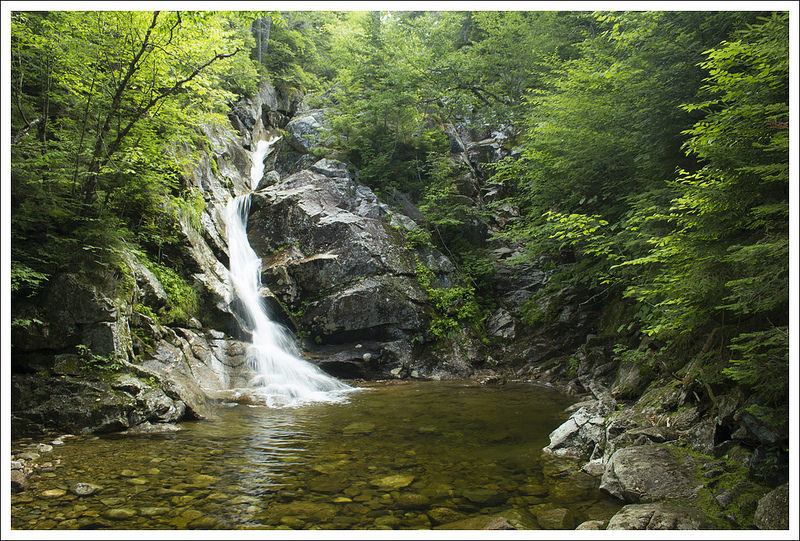


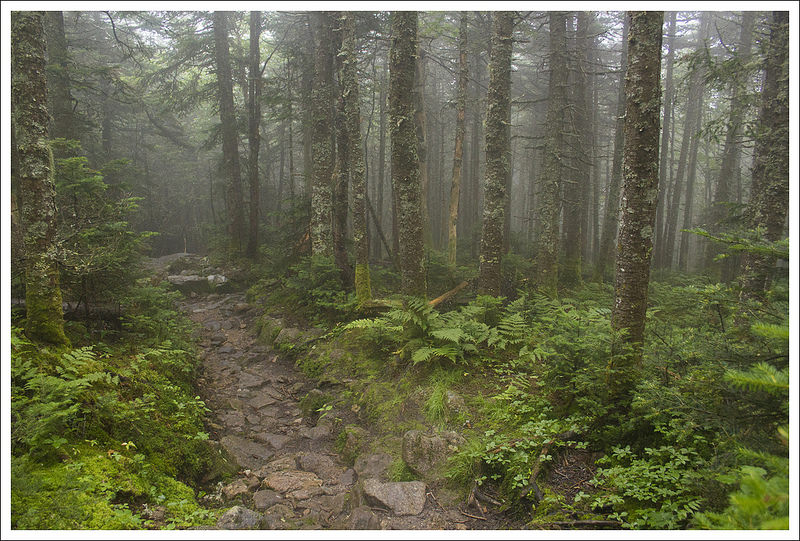


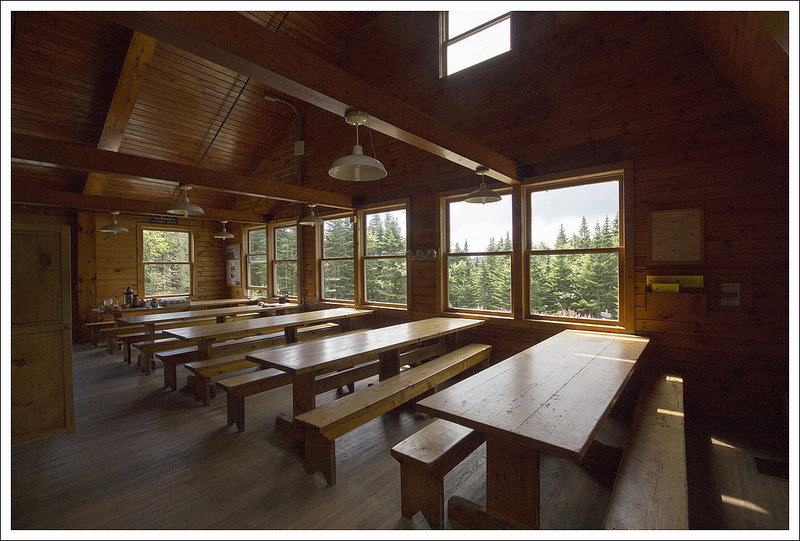


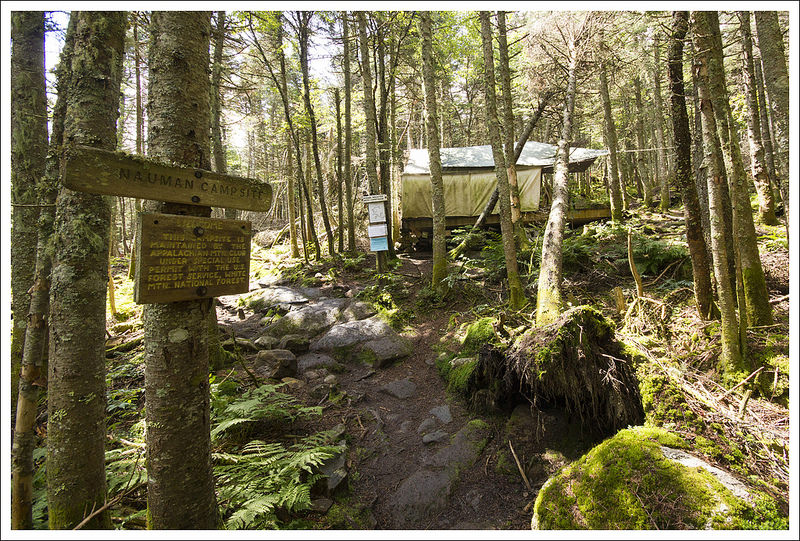


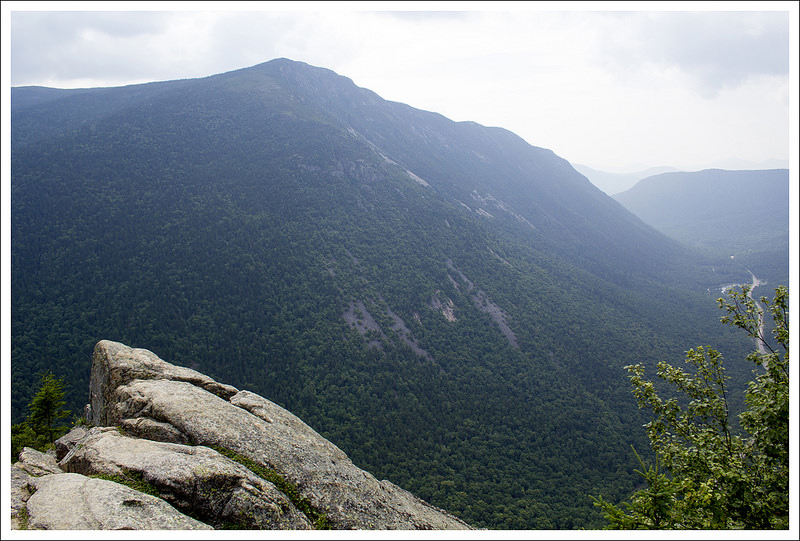
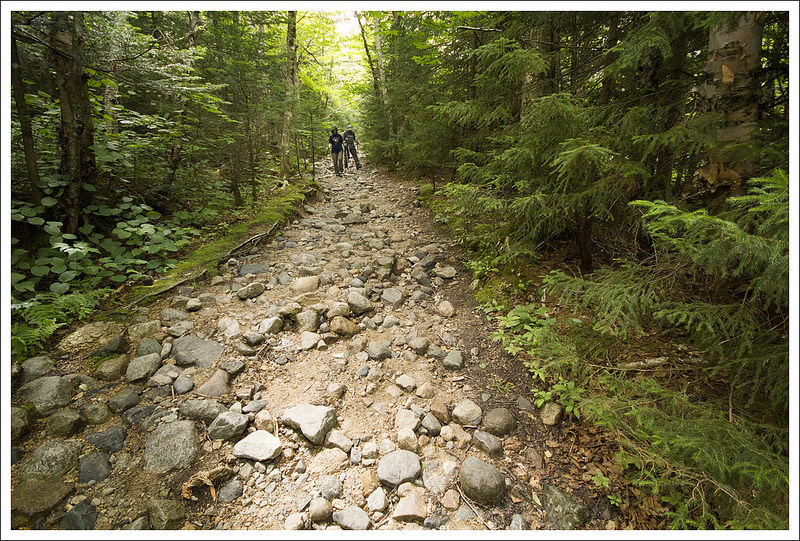

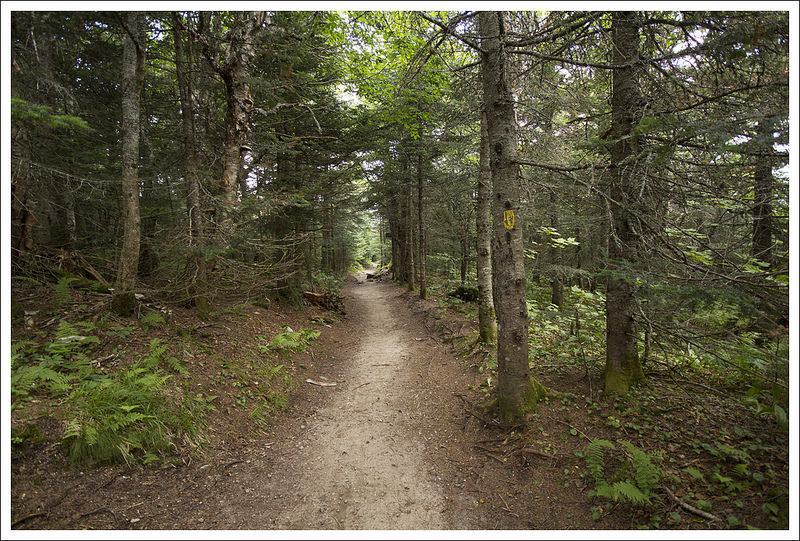

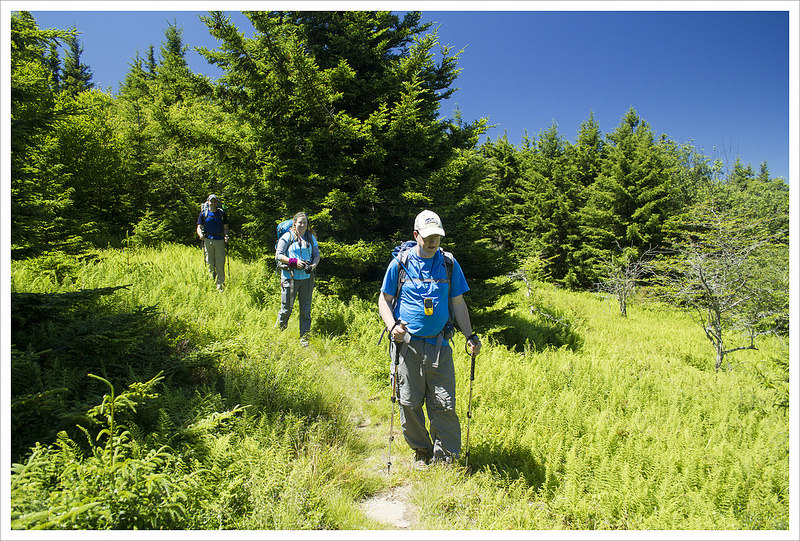


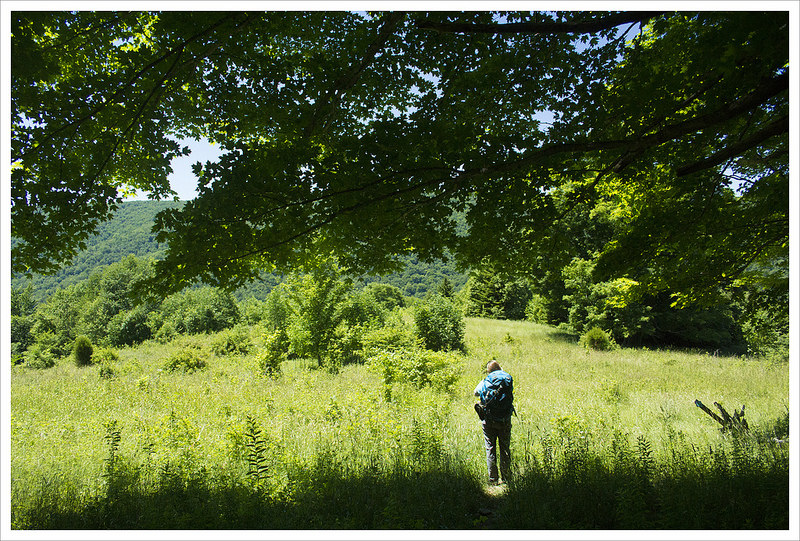


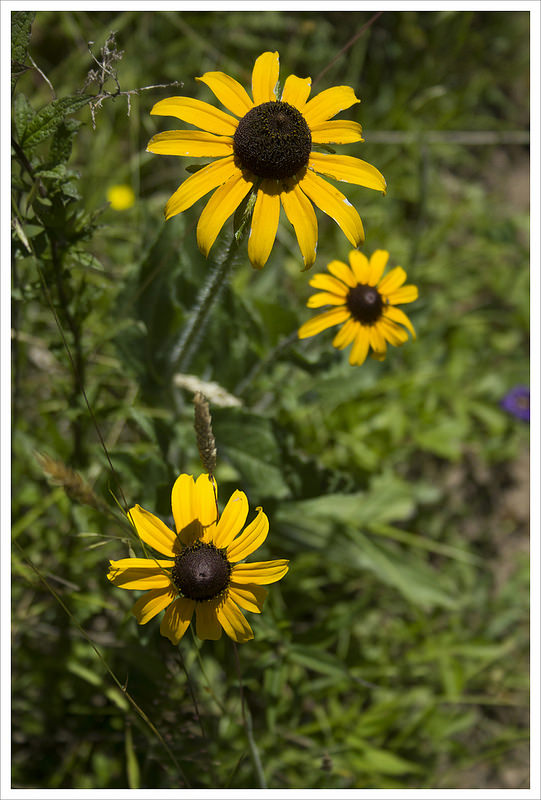


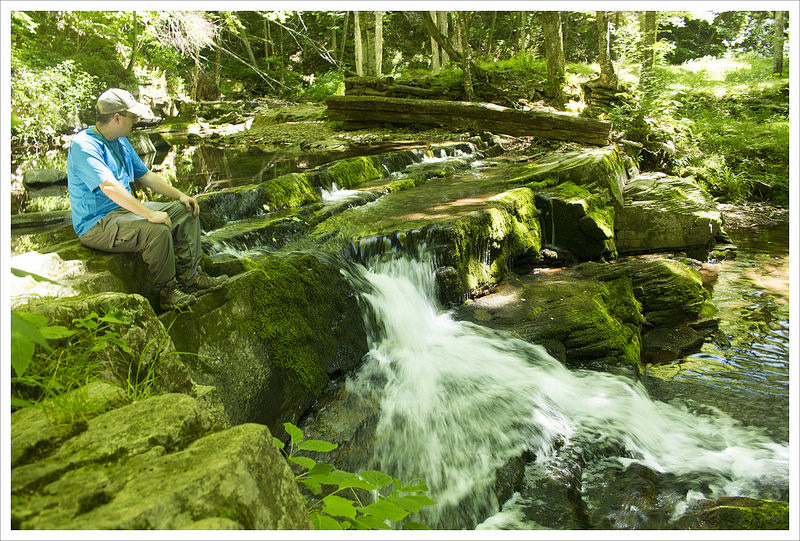


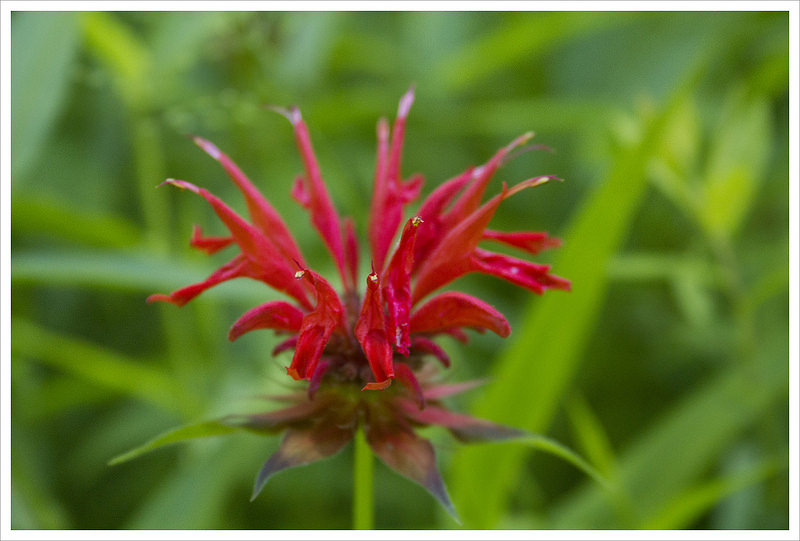


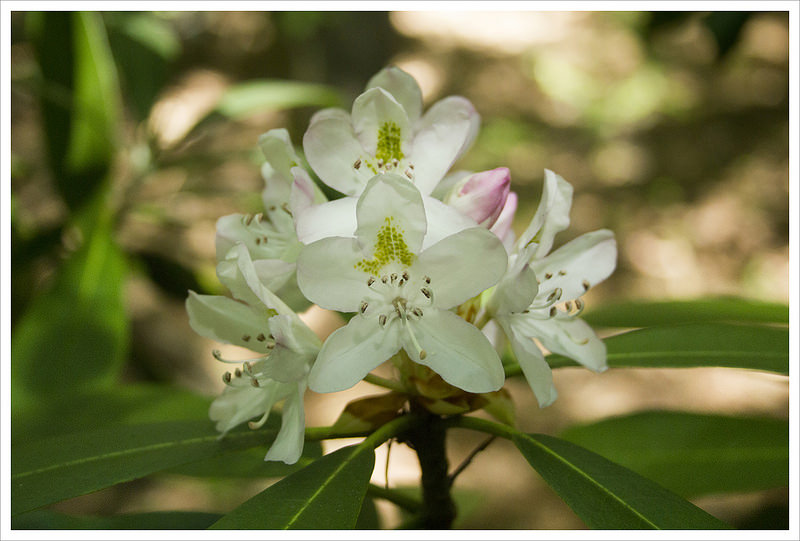

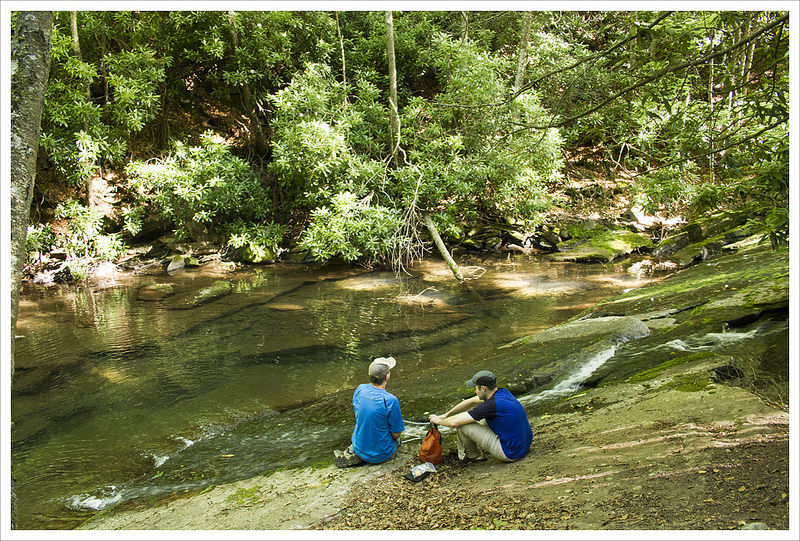
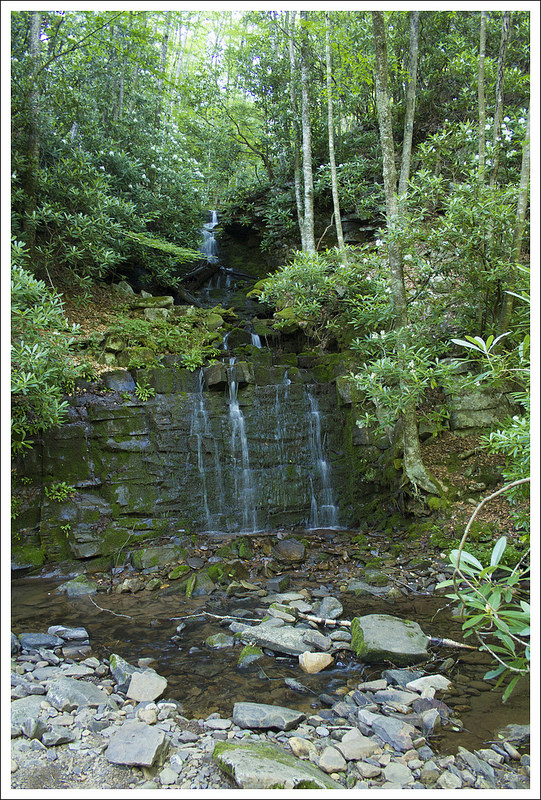
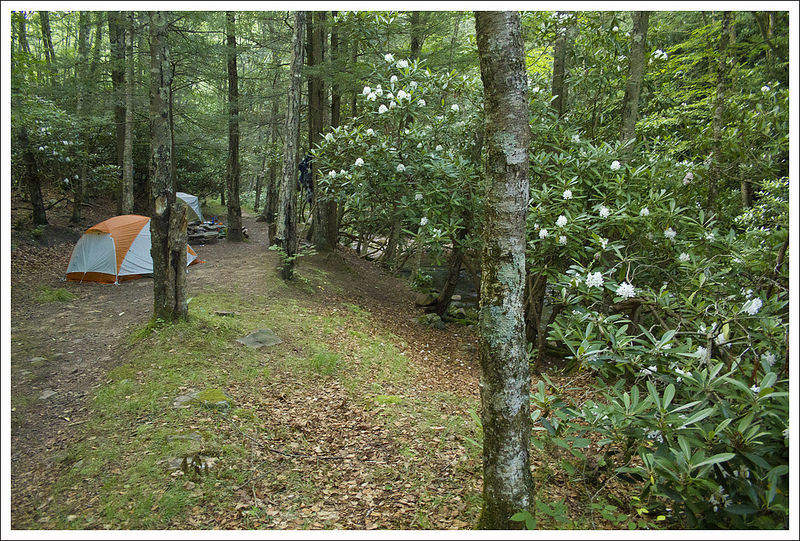

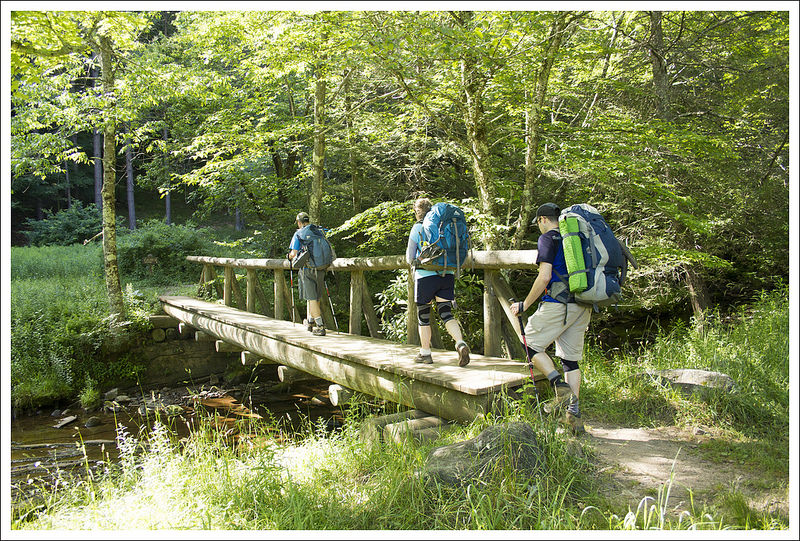

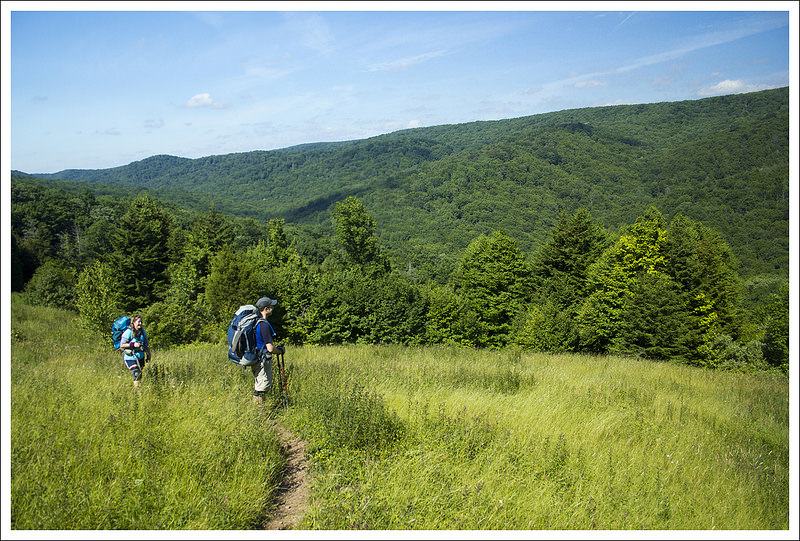


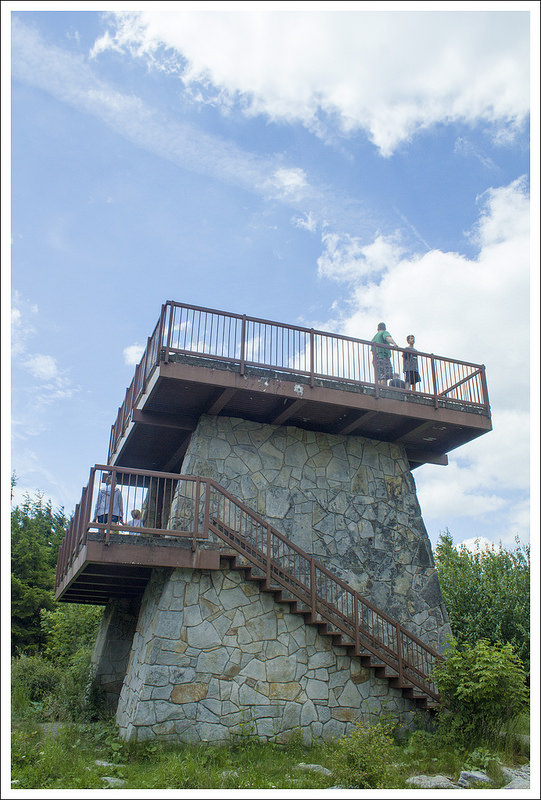

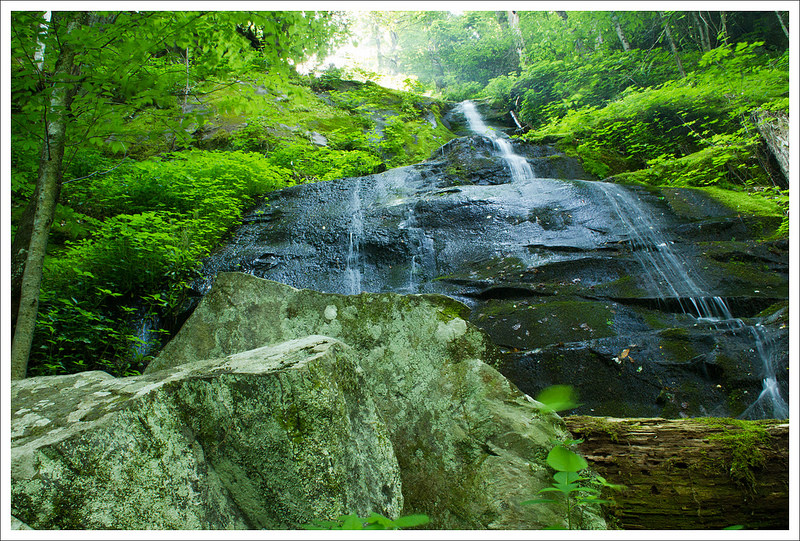
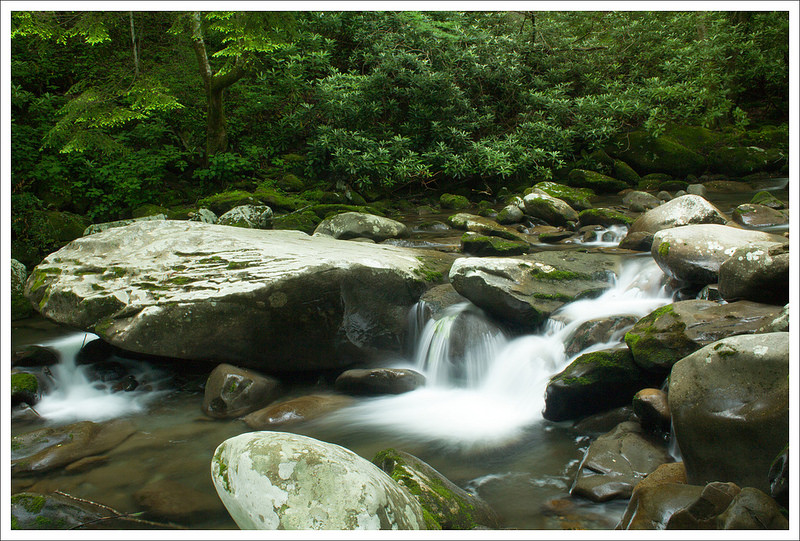
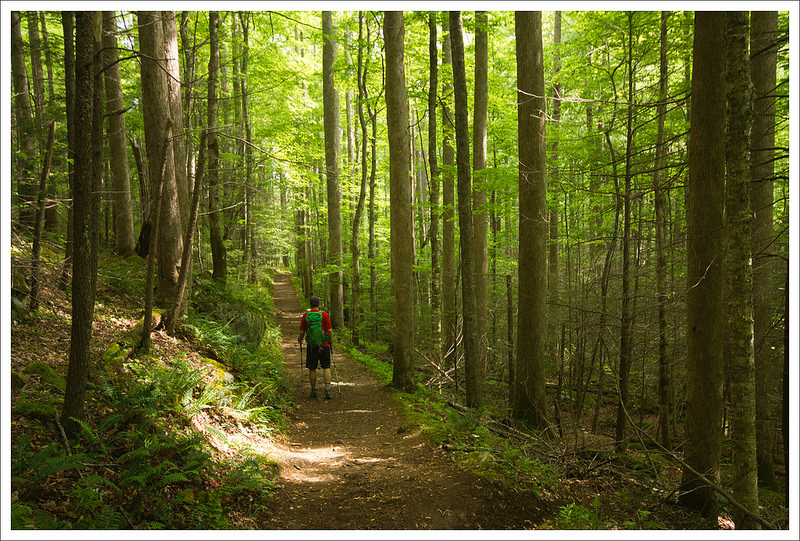
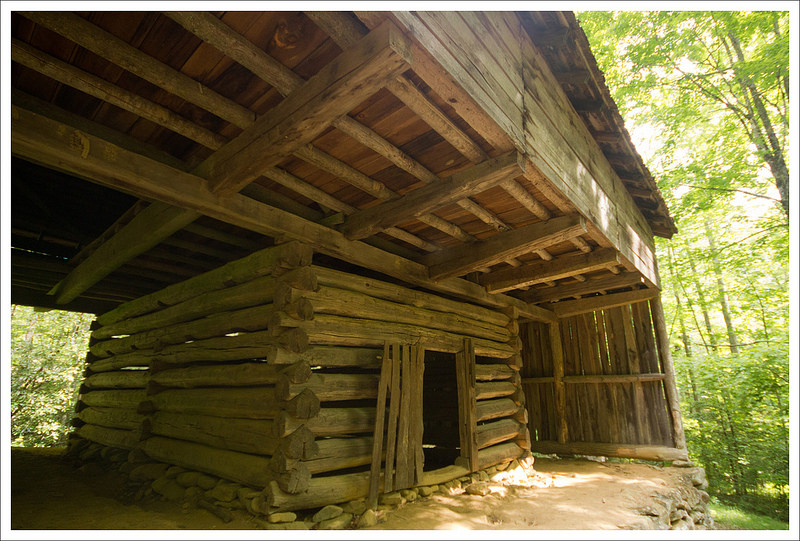
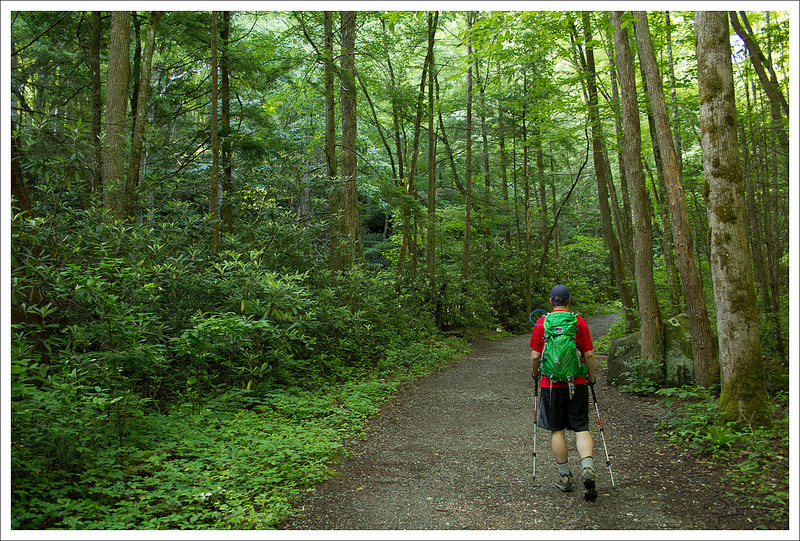
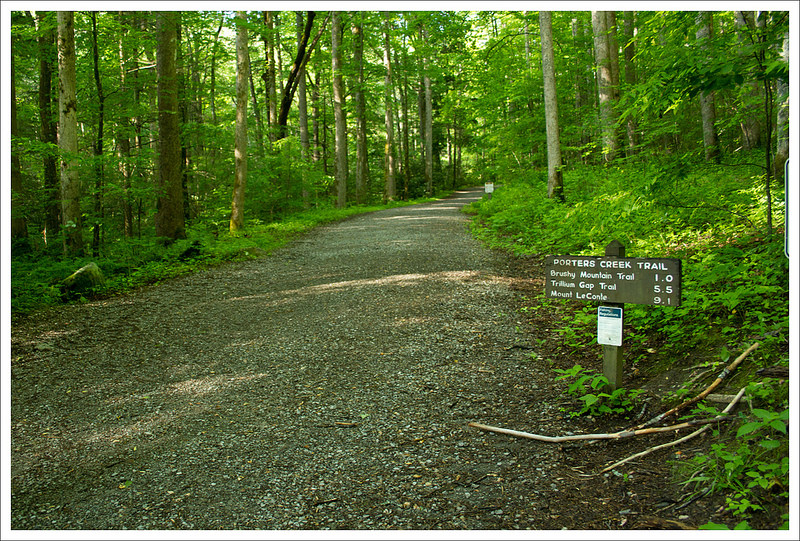
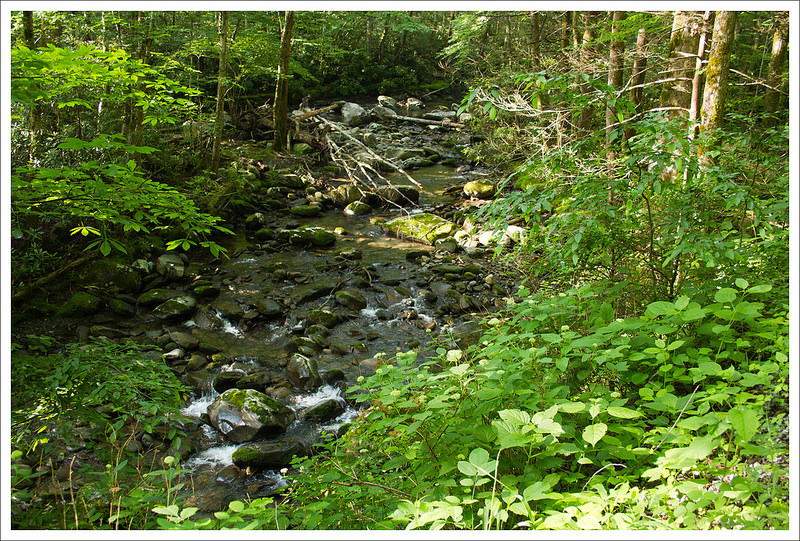
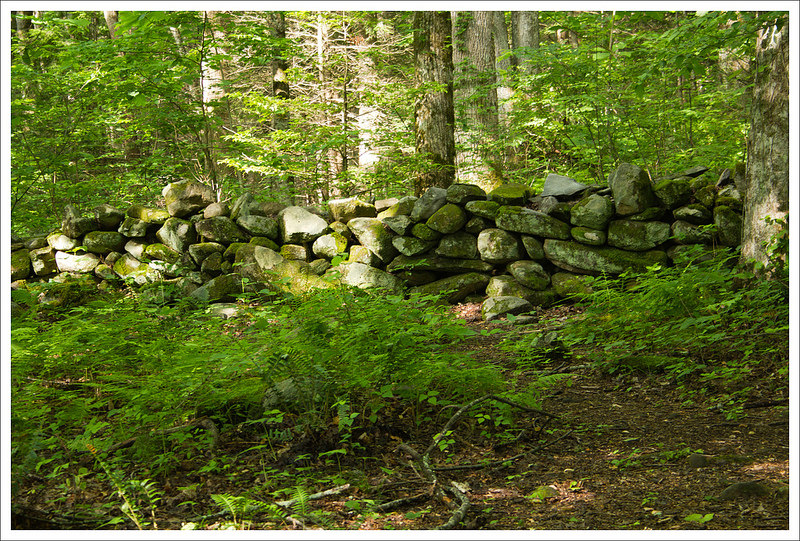

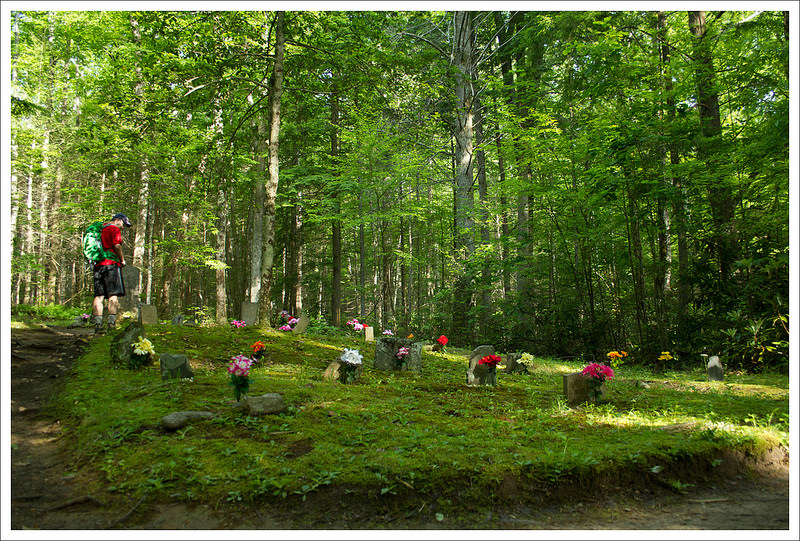

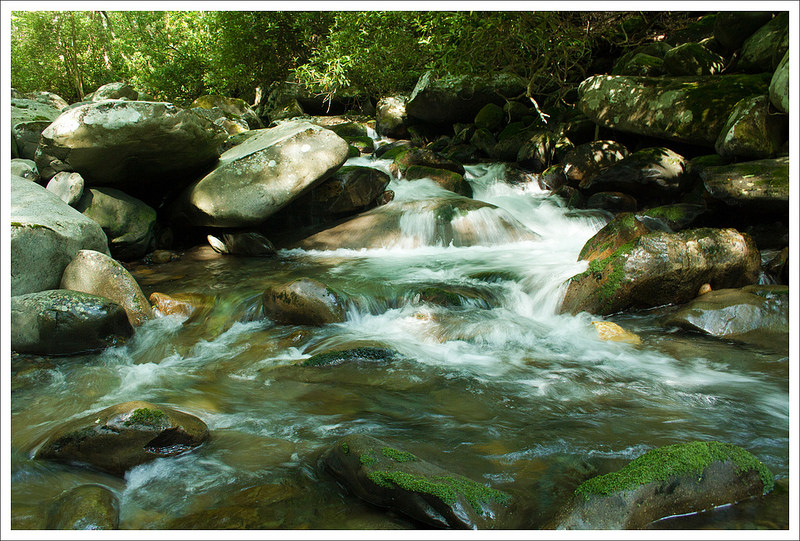



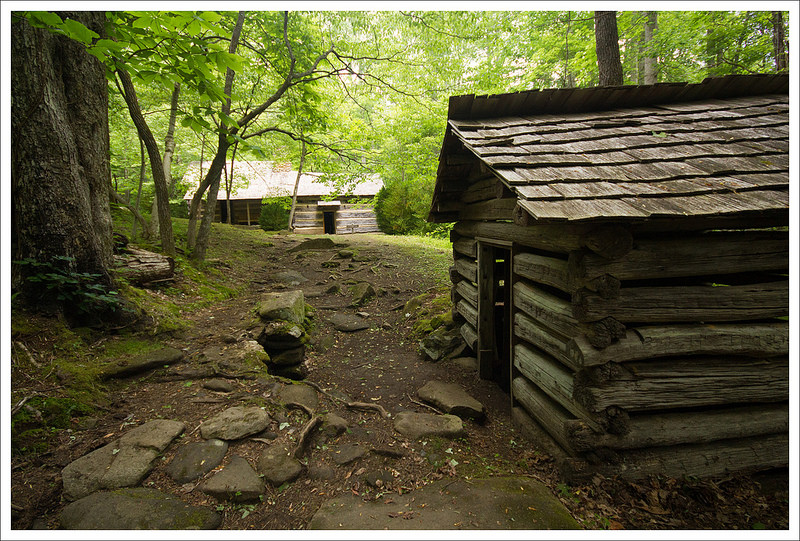

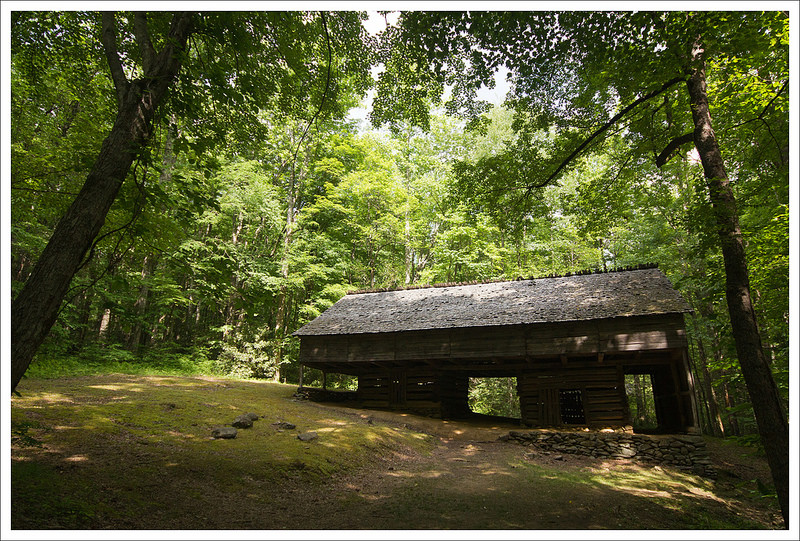

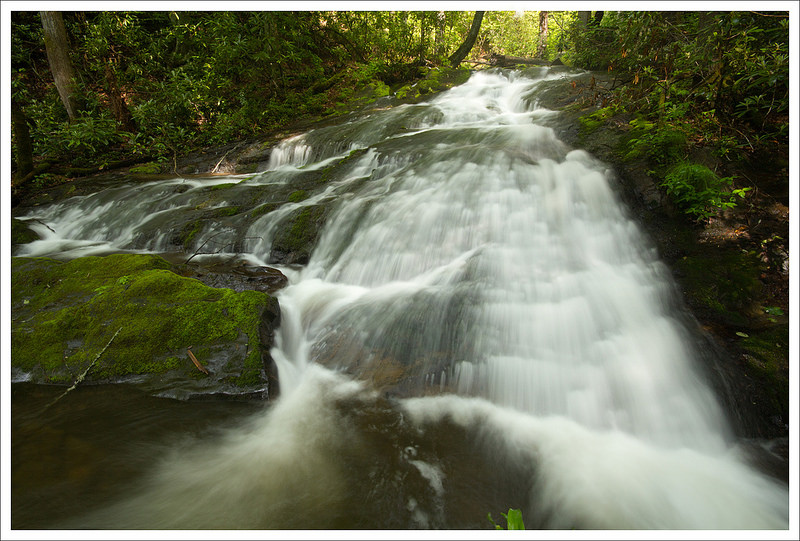


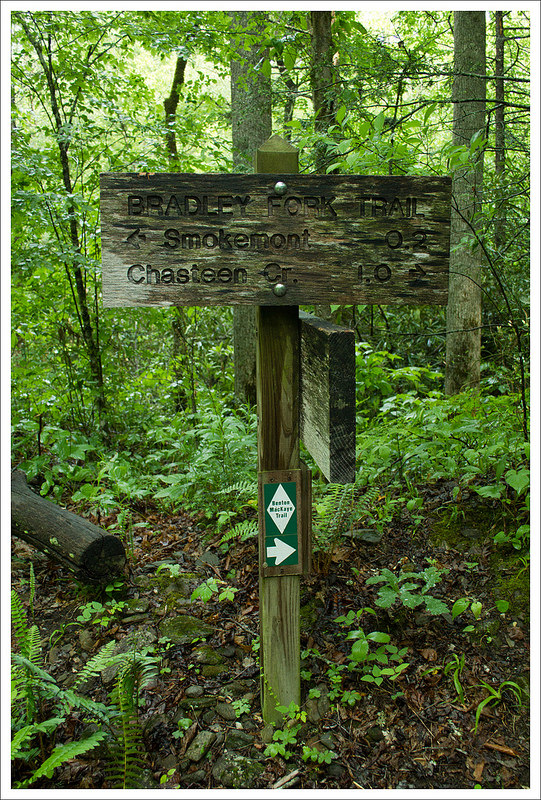

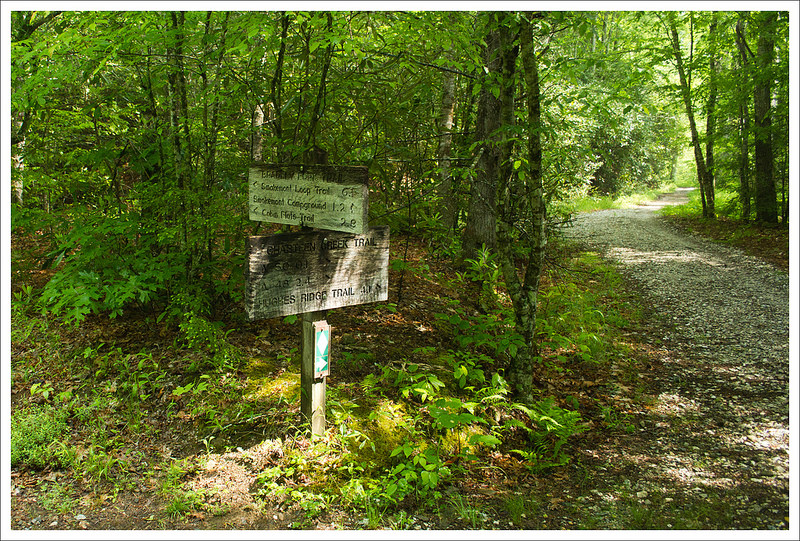

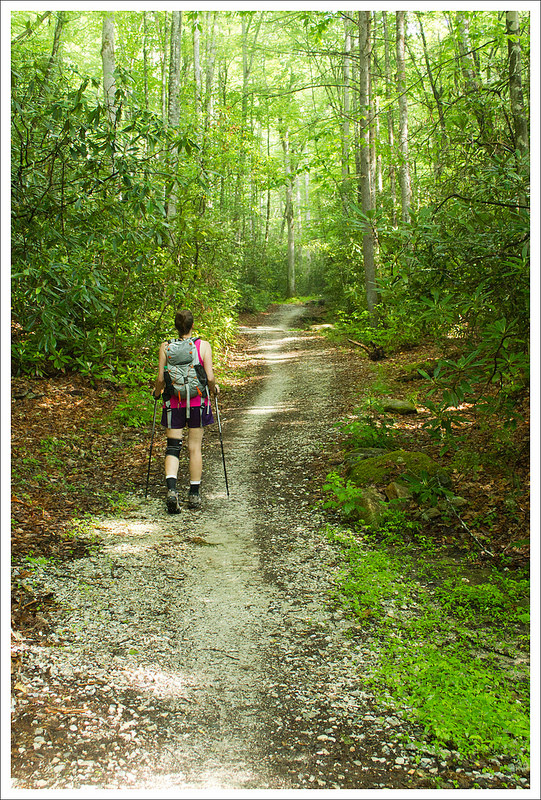


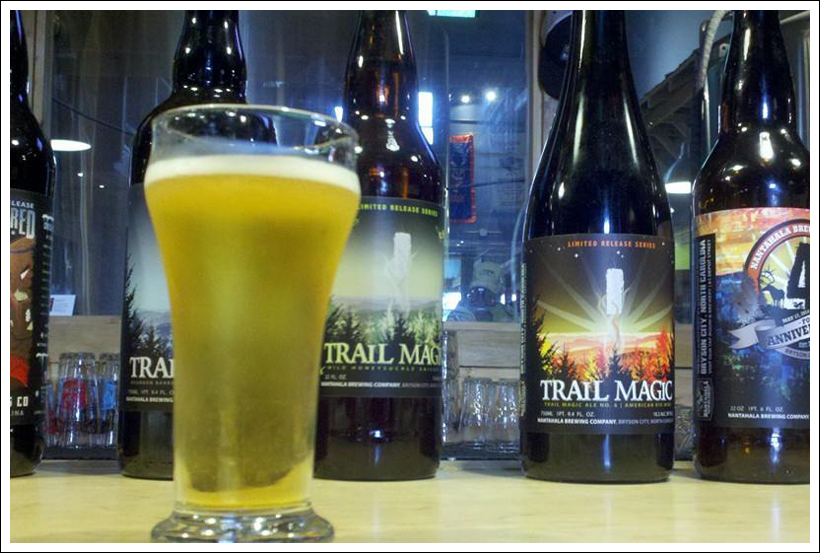


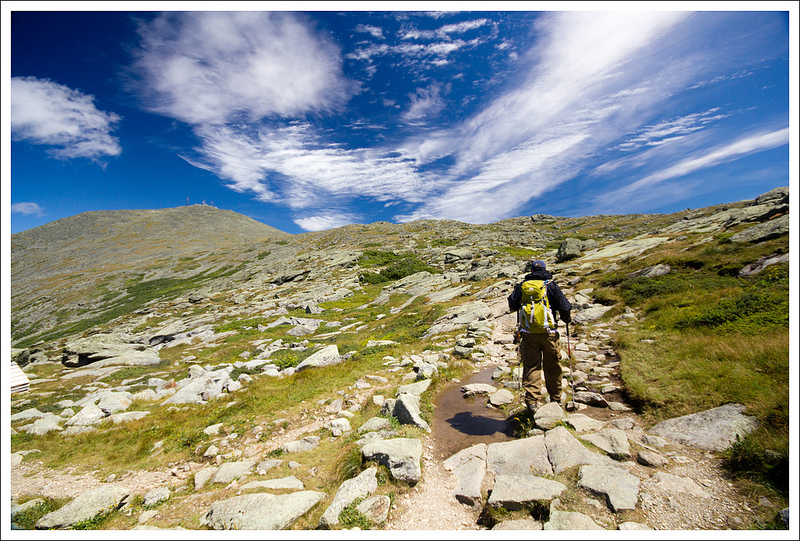
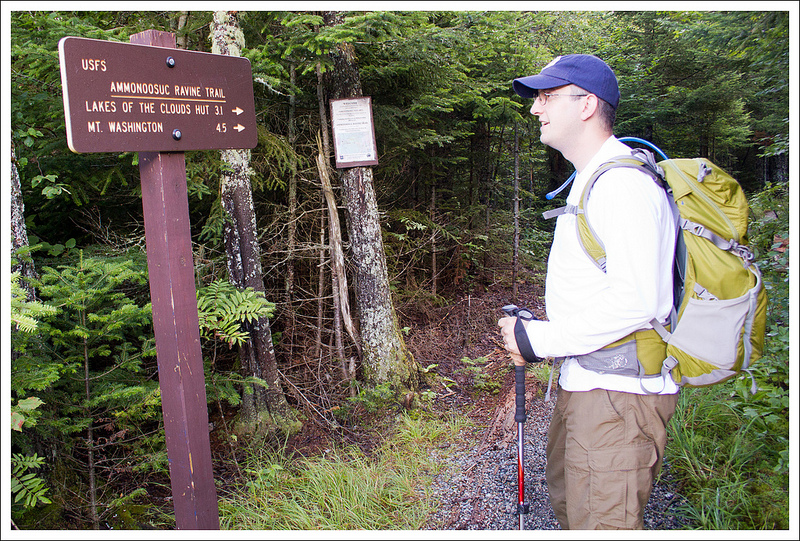


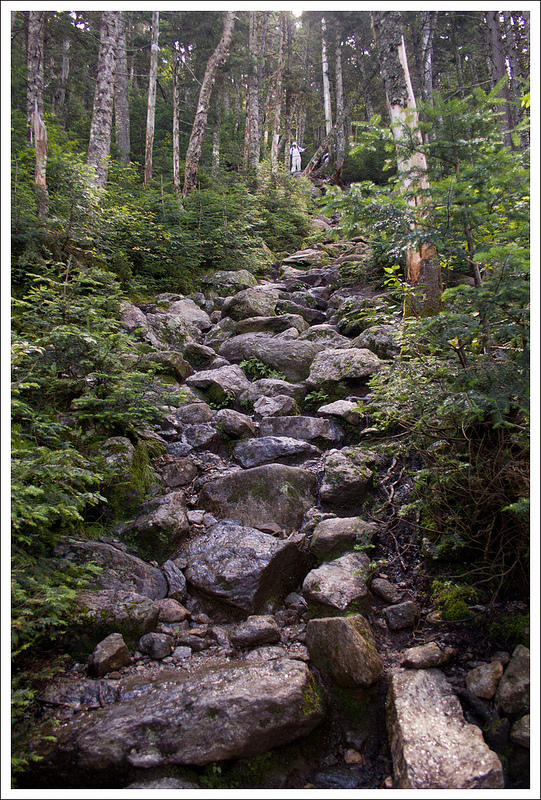
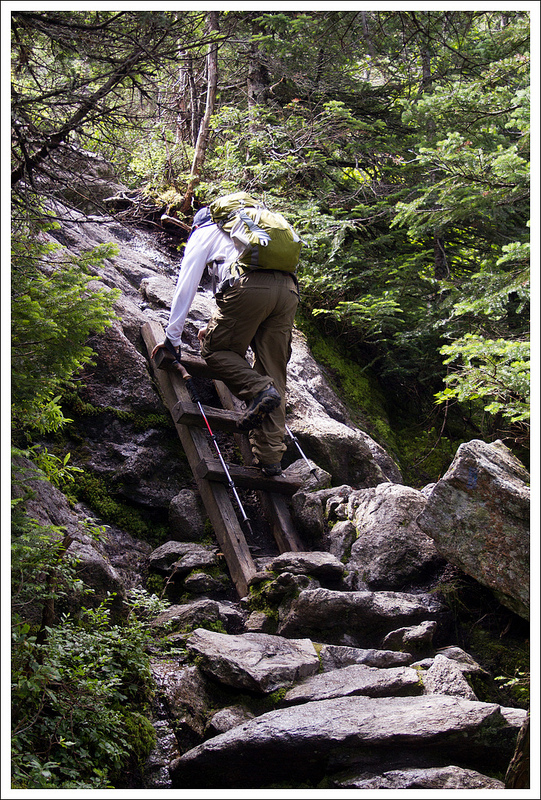


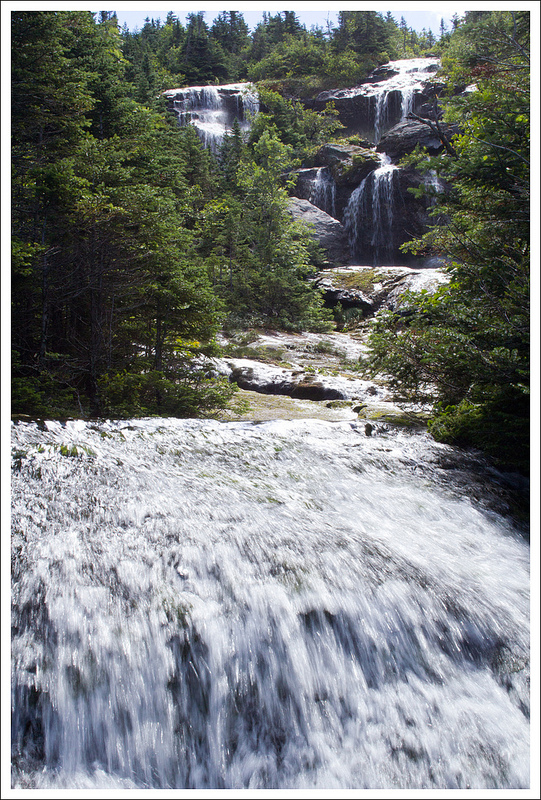


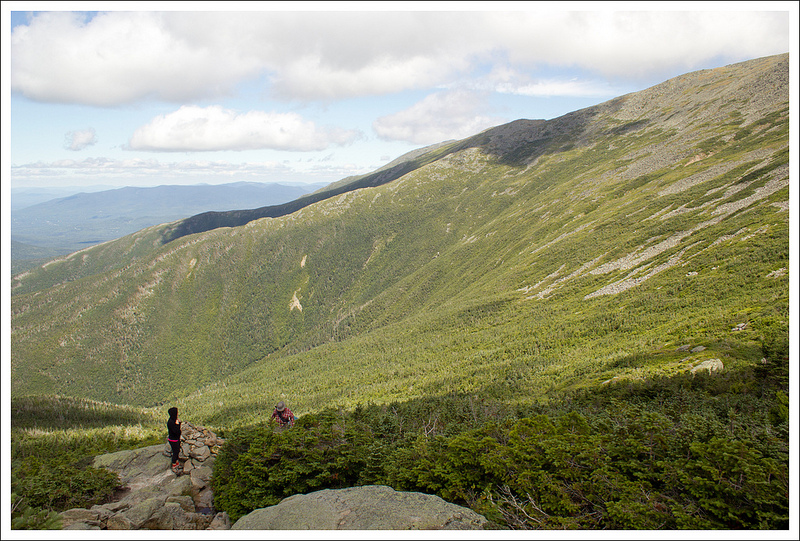
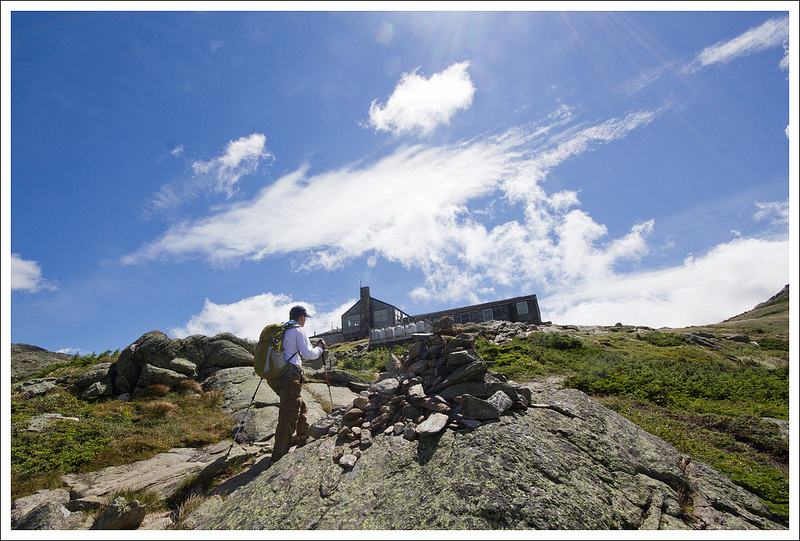
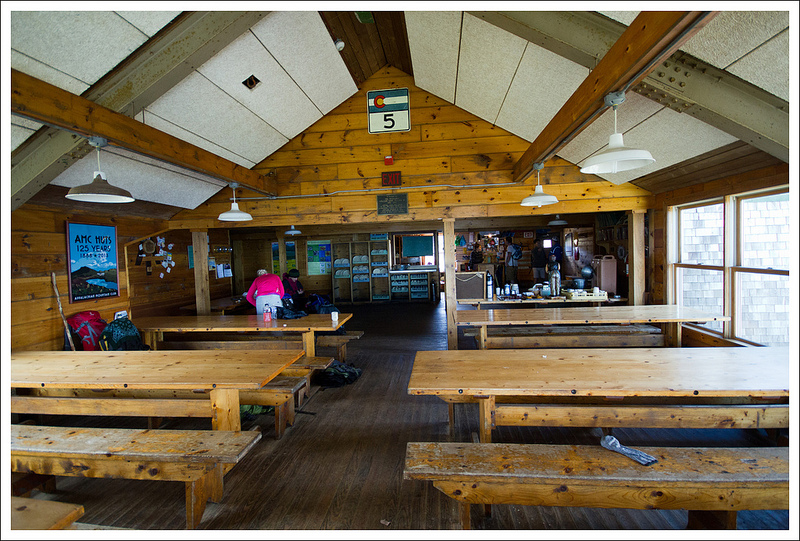

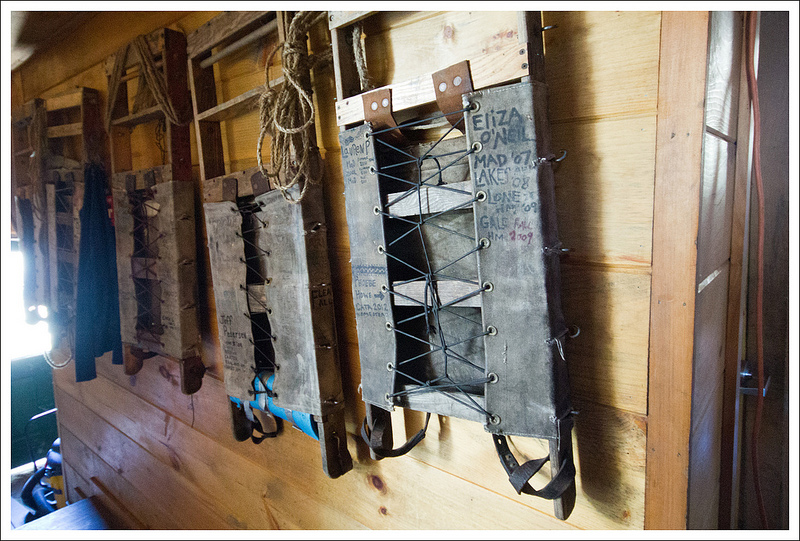


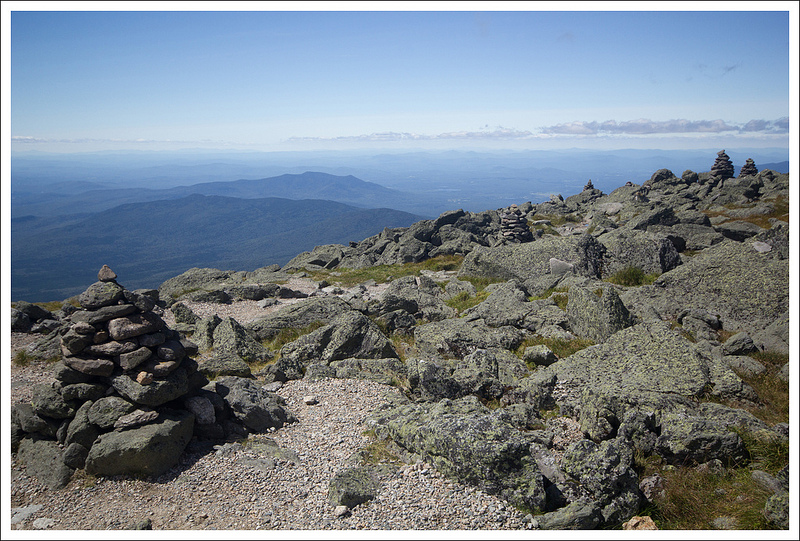


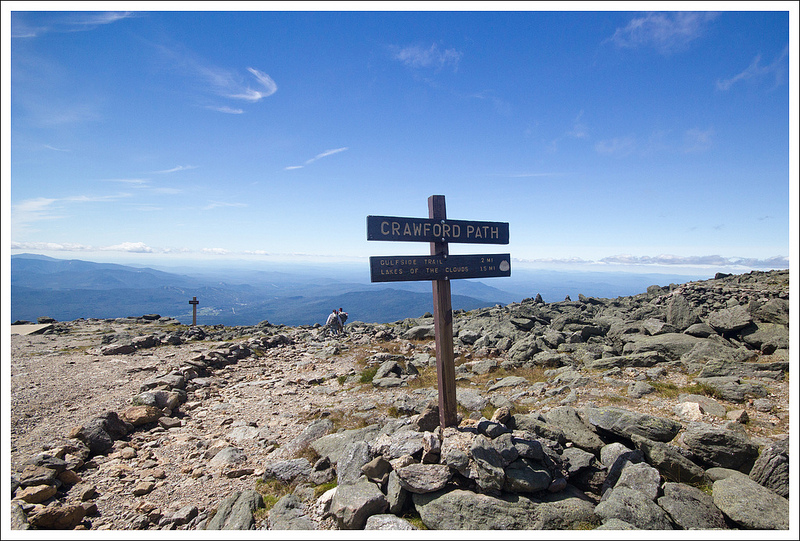


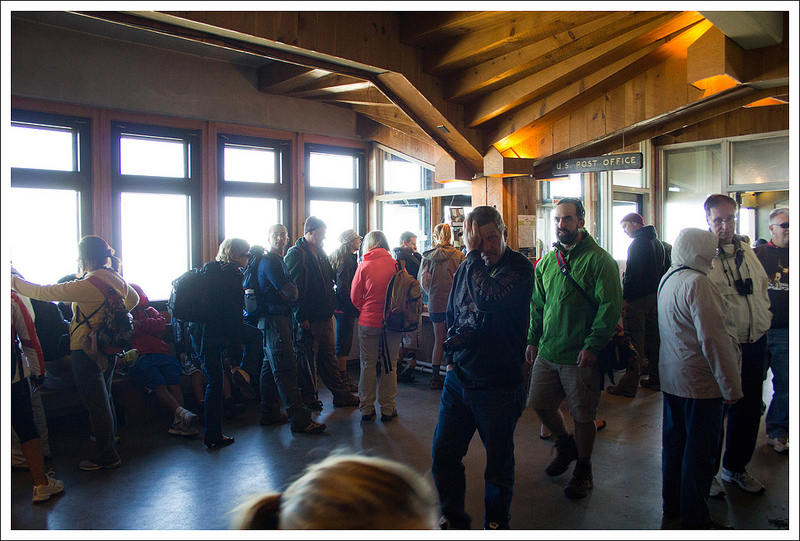


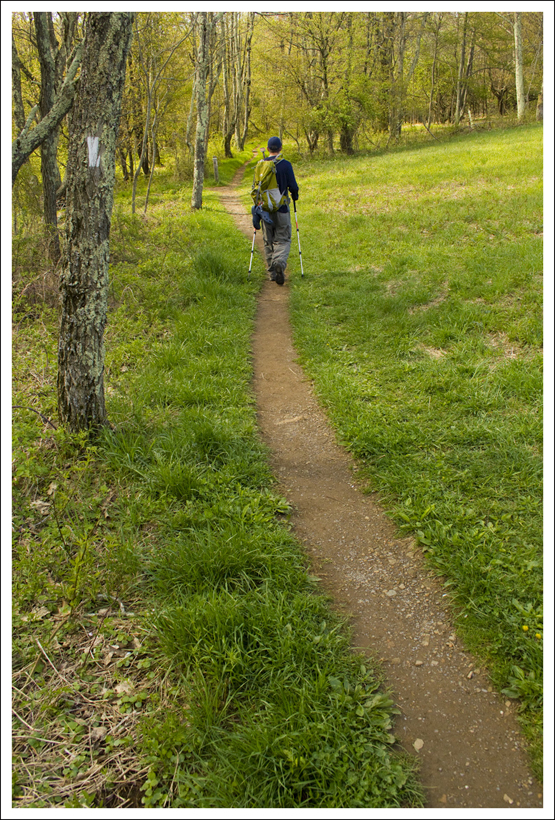


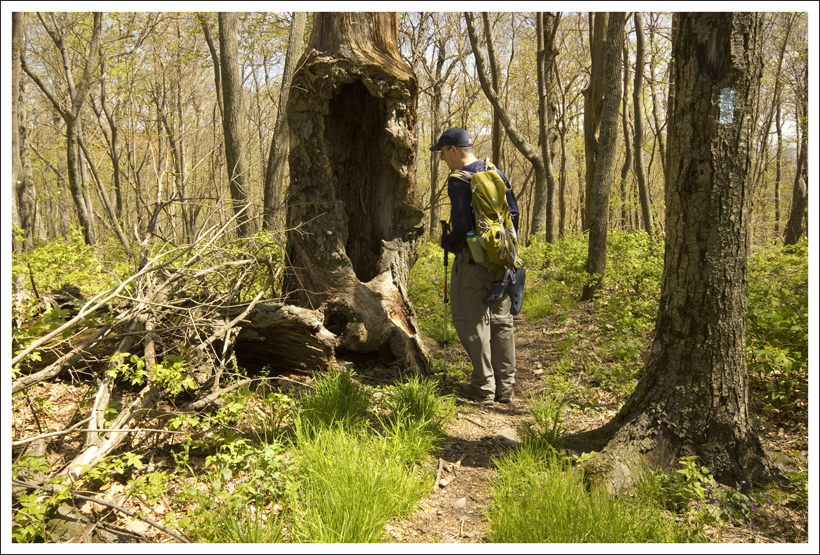


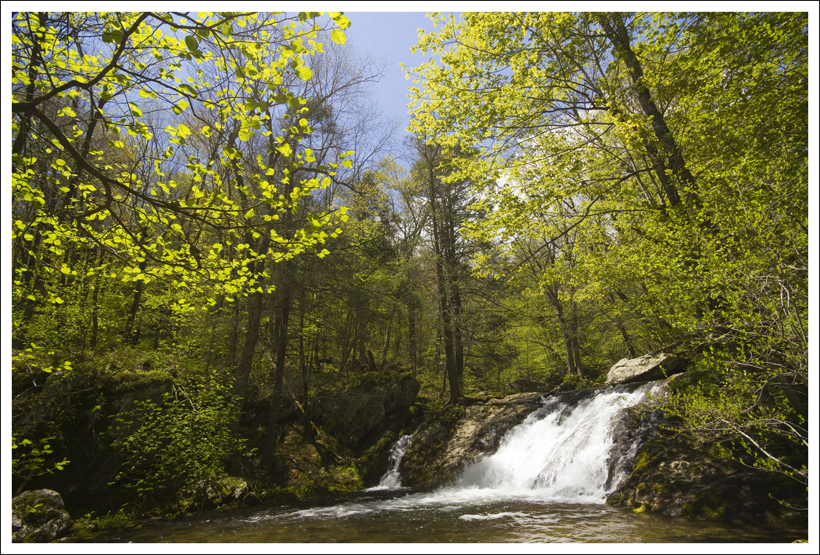
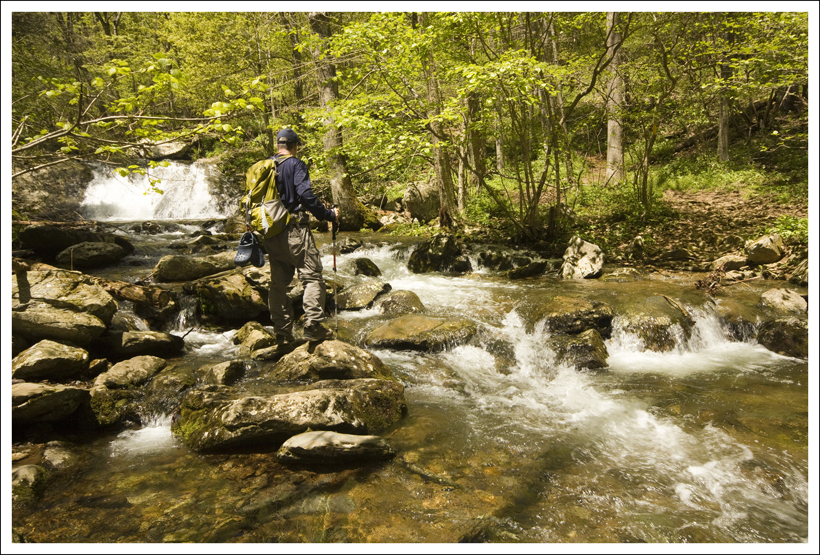
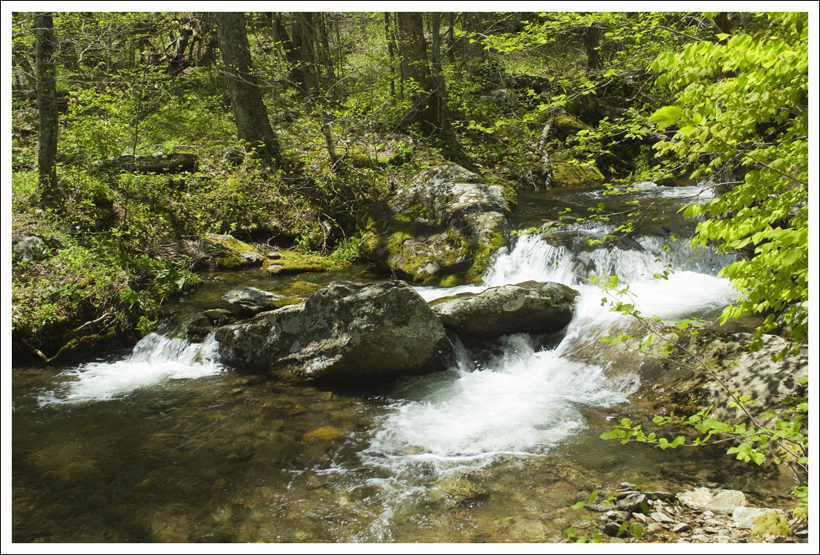
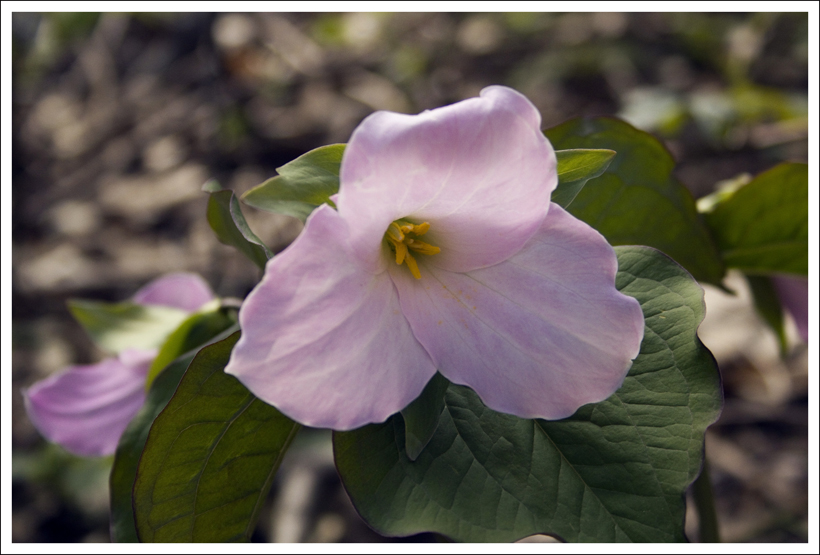
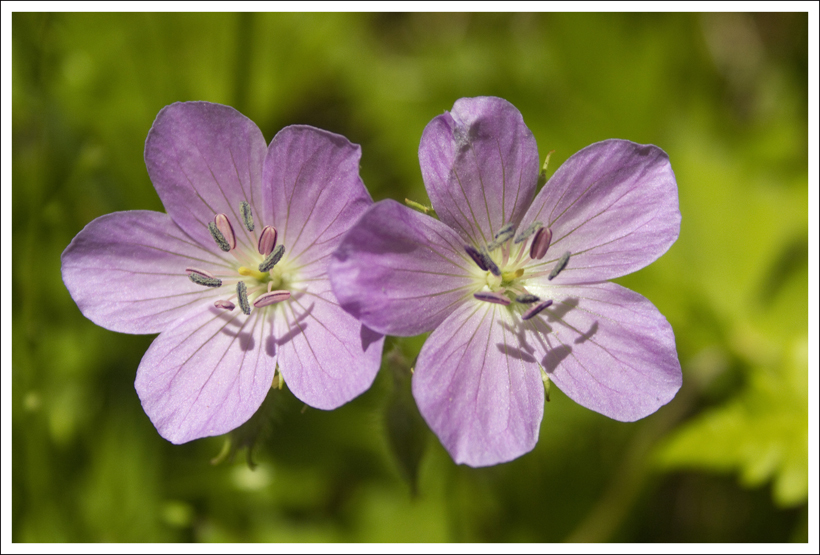



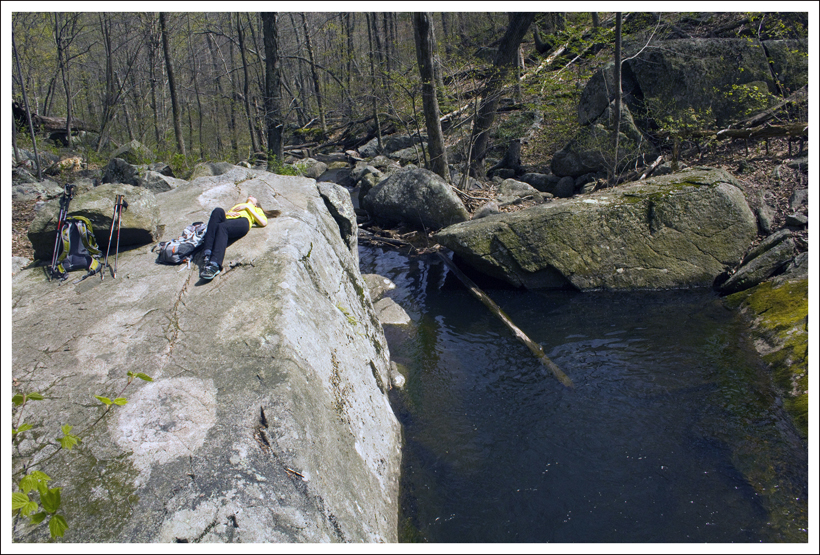

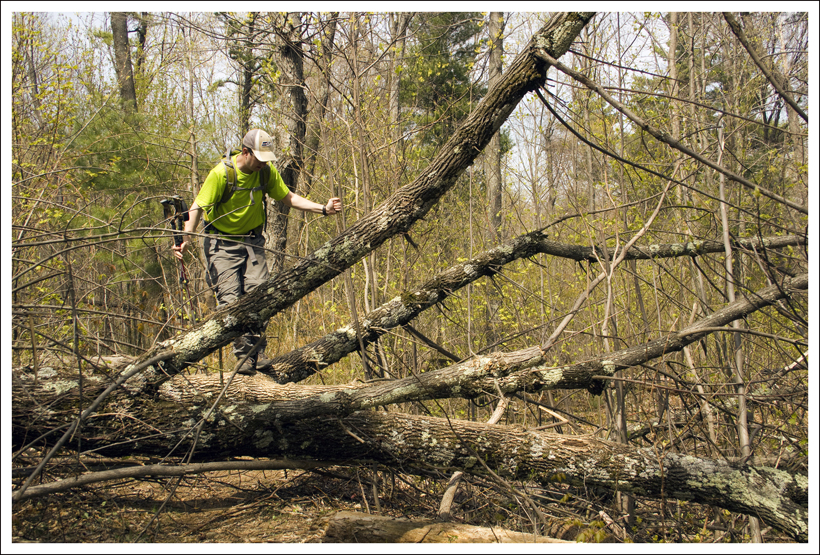
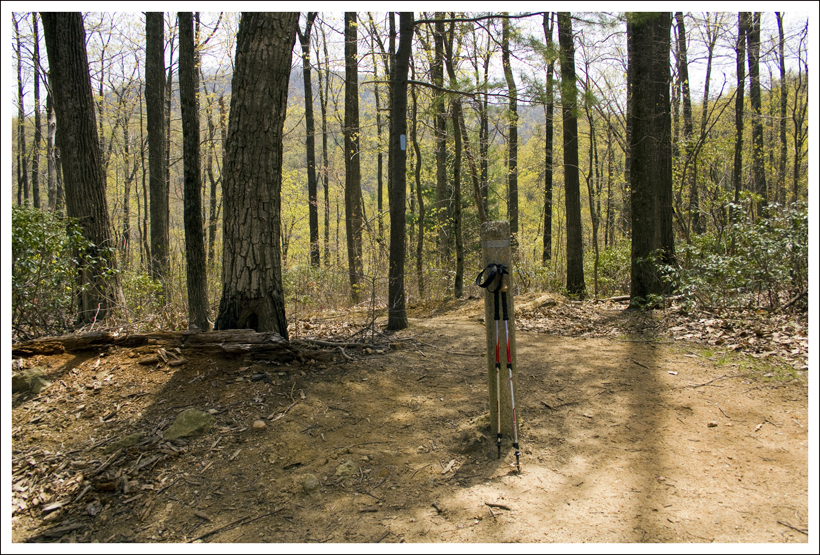


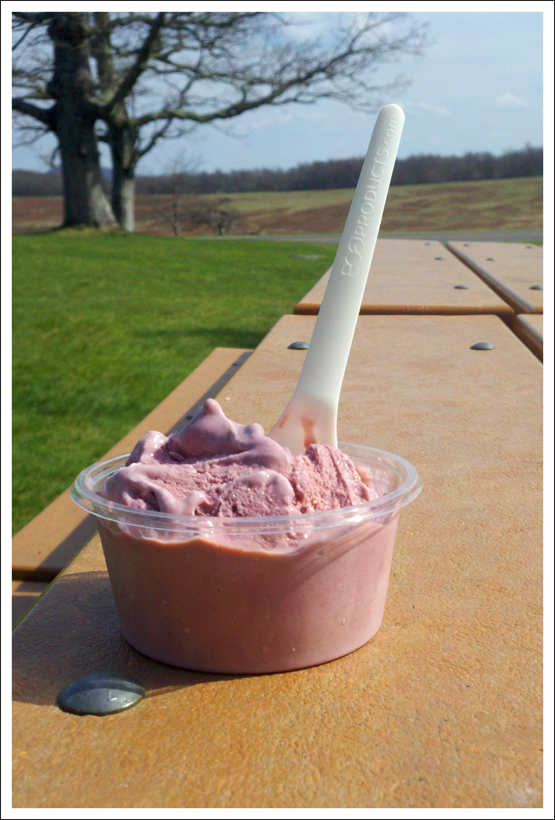
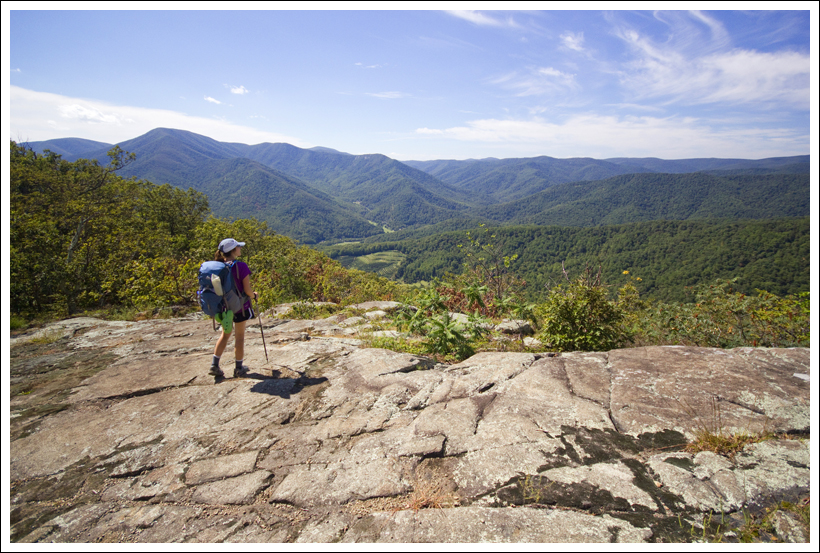


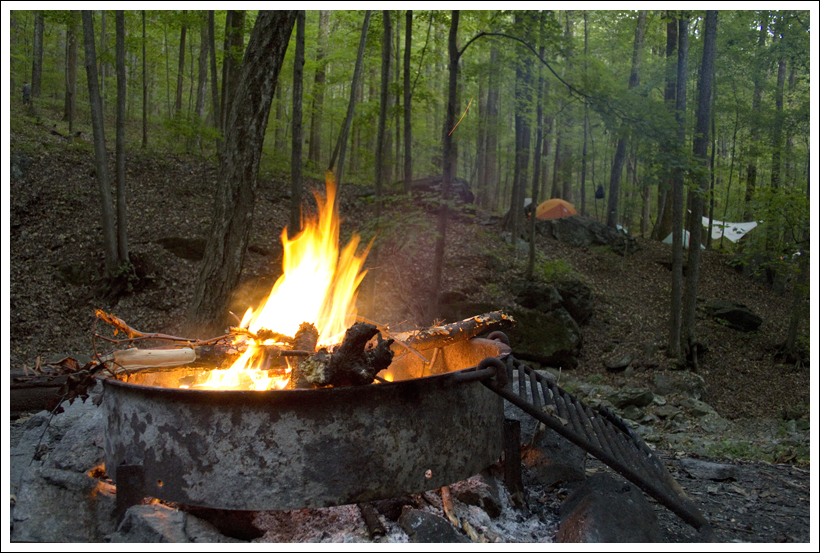
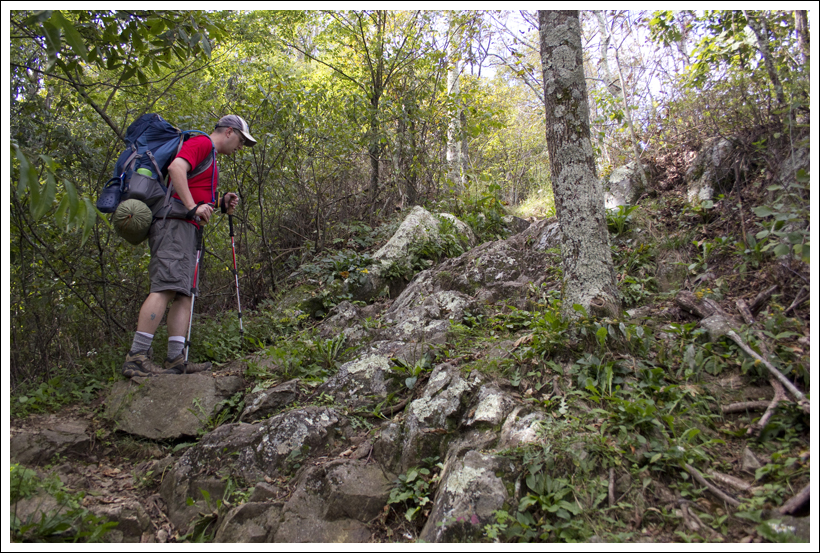


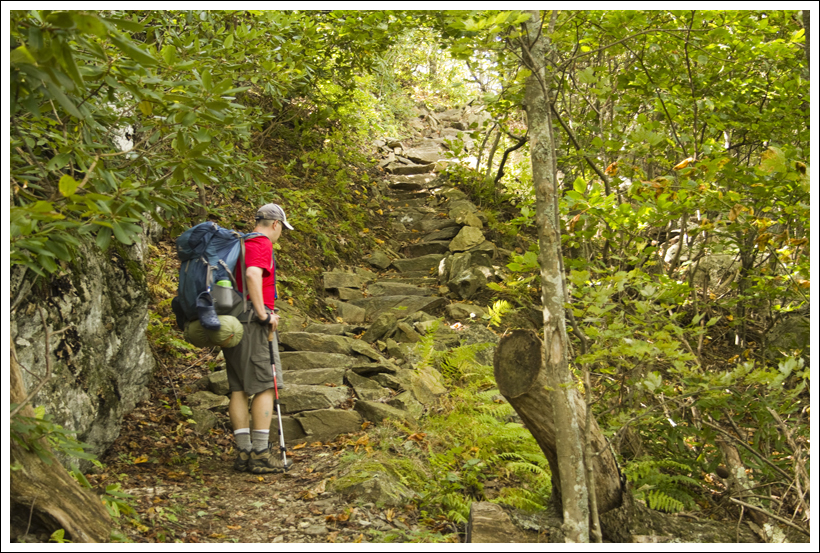


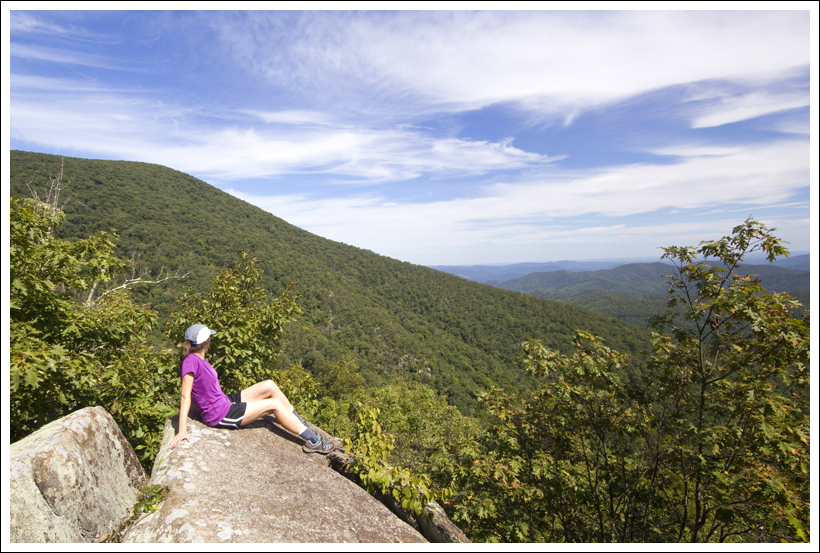


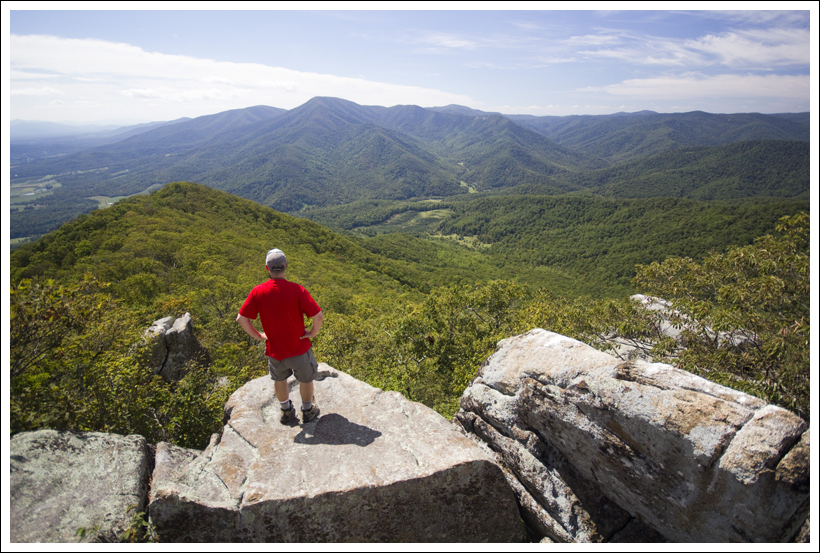
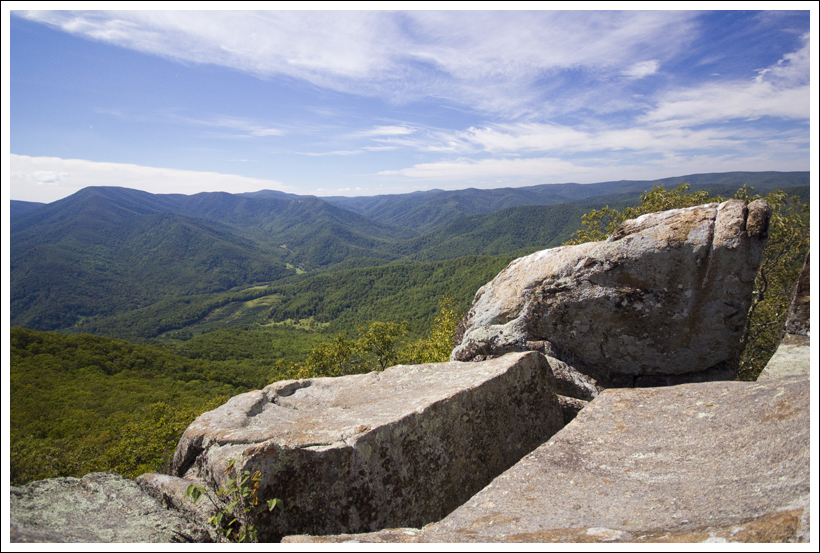

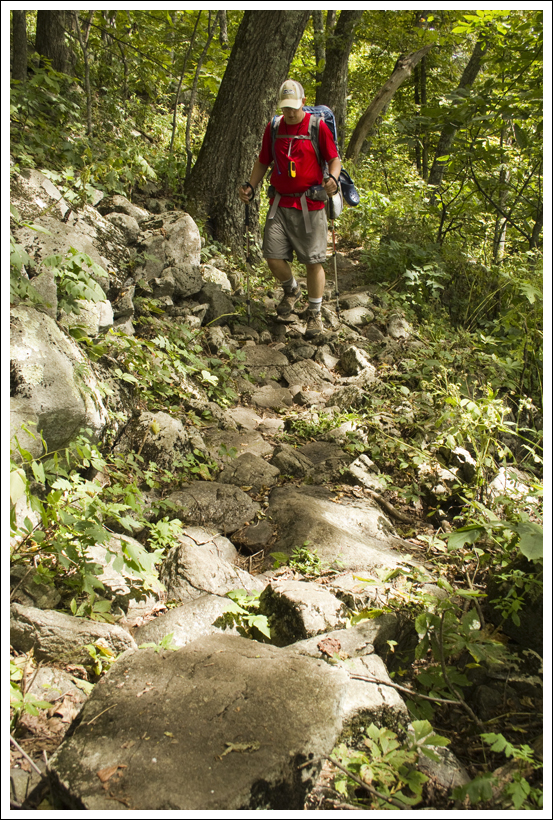
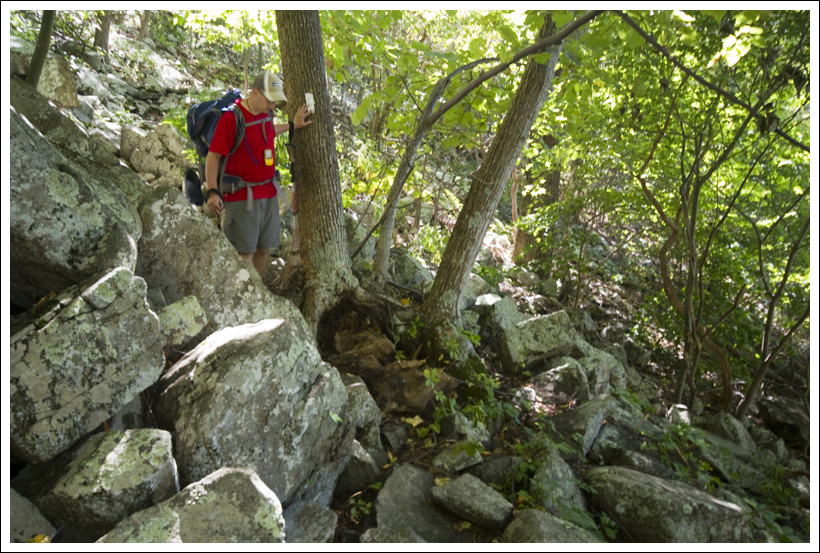


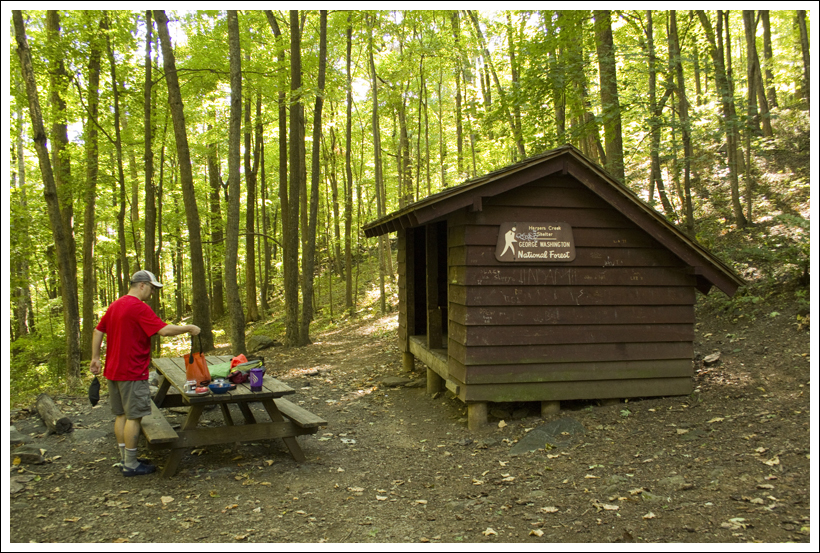


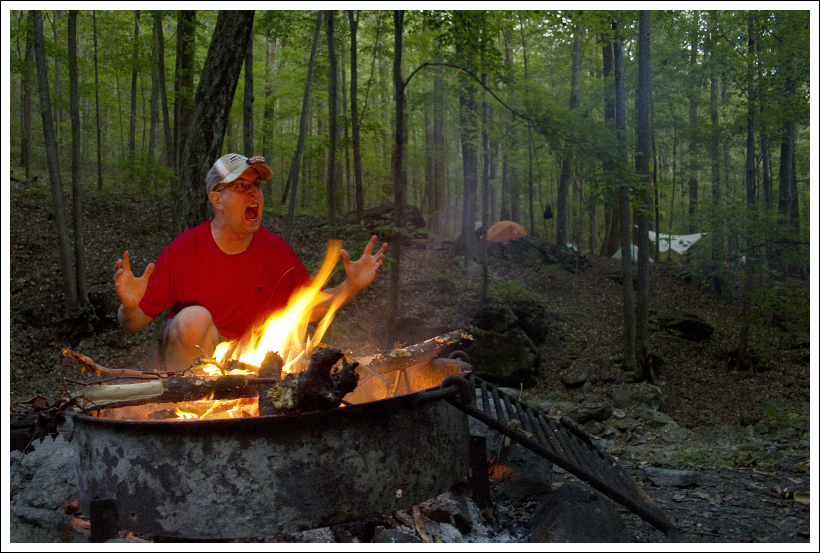

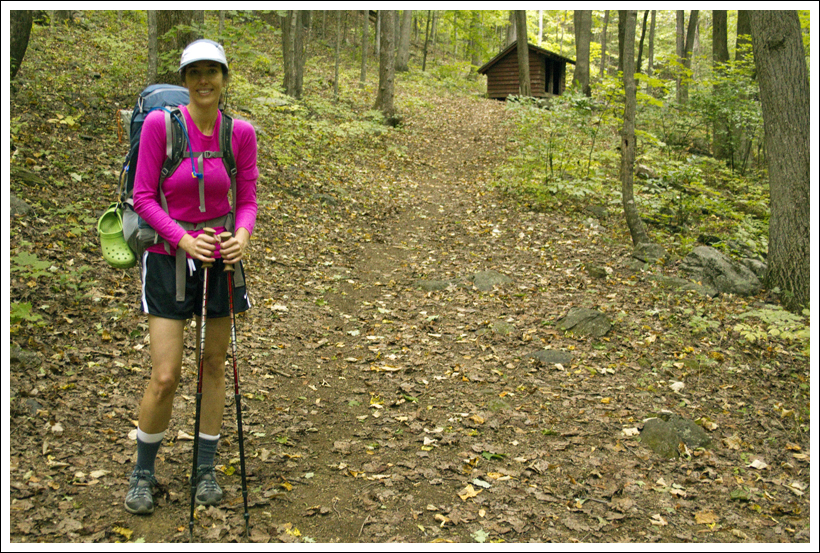


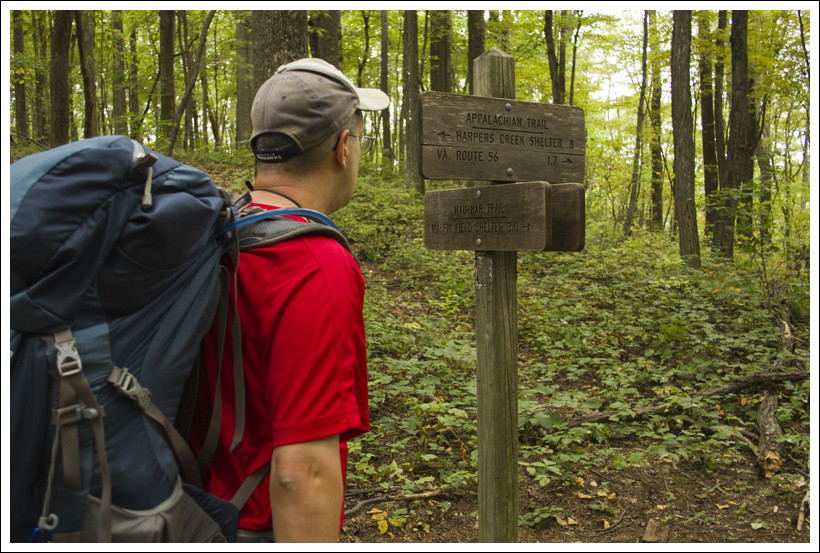


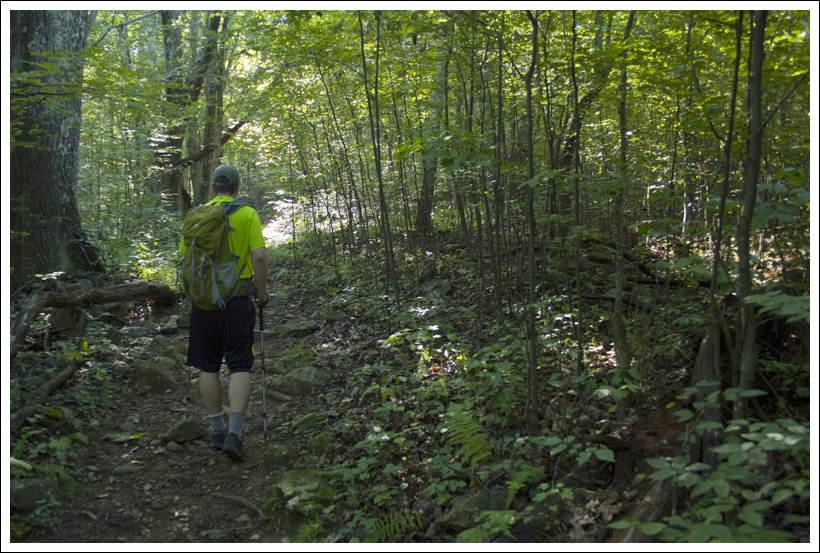


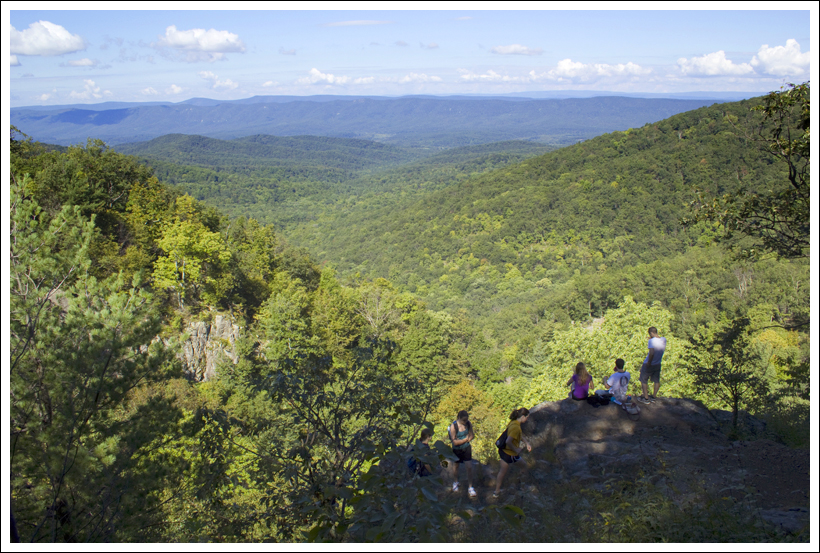


 Virginia Trail Guide