We hope you enjoyed our special Great Smoky Mountains Edition! Now we’re back to Virginia! Although… honestly, the heat has kept us mostly off the trail lately.
The 5.5 mile Little Devils Stairs hike climbs through an impressive gorge along Keyser Run and loops back past a family cemetery that pre-dates the park.
it is Adam makes his way past rugged canyon walls on the Little Devils Stairs hike. Below: The parking lot at the end of Keyser Run Rd. provides access to the fire road and the Little Devils Stairs trail; When we hiked in early June, water was still flowing in the stream (but not much); Red columbine bloomed abundantly.
Adam Says…
To try and beat afternoon rain in the forecast, we decided to hike Little Devils Stairs early in the morning. To cut back a little on the distance along fire roads, we decided to start the hike from the perimeter of the park (near Sperryville) rather than from Skyline drive.
The trail begins immediately going into the forest from the parking lot and is a very gradual ascent along Keyser Run. After about .9 miles, the trail then begins to climb more steeply as you are climbing up the “stairs” along the gorge. The climbing can be quite steep, at times requiring you to use your hands to also help balance or pull yourself up. Over the next mile, you gain 1000 feet of elevation on your climb. Along the way up the climb, you will come across several smaller waterfalls and will have to cross over the stream in a few places. At 1.75 miles, the climb tapers off and the trail moves away from the gorge. At 2.1 miles, you reach the junction with the Keyser Run Fire Road. Take a left on this fire road and begin your descent. The road was fairly uneventful, but it is a good place to spot butterflies and you may see a snake sunning itself on a part of the road. At 3.9 miles, the road begins to enter the forest again and you will see some more old-growth hemlocks along the road that create a canopy over the road. At 4.2 miles, you will reach the Bolen family cemetery. Just ahead is the junction with the Hull School Trail, but stay on the fire road veering to the left. At 5.4 miles, you will reach the park boundary and at 5.5 miles, you will return back to your vehicle in the small parking lot.
Adam climbs up the steepest part of the Little Devils Stairs hike. Below: There are many tiny waterfalls along the Little Devils Stairs hike; Christine contemplates the rocky climb through the gorge; Adam makes one of the many stream crossings.
The highlight of this hike is definitely the gorge that was created along this geological fault line that eroded quickly. At one point along the trail, you can see a sheer cliff face of rock. I can easily imagine people rock climbing up this gorge wall with the proper technical gear. I have seen Little Devils Stairs and Big Devils Stairs listed in a book about rock climbing in Virginia, so you may luck out and see some people navigating up to the top.
A sadder note along the trail is the Bolen family cemetery. While we may enjoy the national park that is here, there were many families that were forced to uproot their lives and move out of the area as the government took over the land. The cemetery of the family still stands and was rededicated in 2002.
The largest of the falls was at the very top of the gorge. Below: There are many fallen trees, especially hemlocks in the gorge; We saw a lot of these flowers along the trail; After exiting the gorge, most of the remainder of the trail is along the Keyser Run Fire Road.
Christine Says…
Little Devil Stairs is another hike we’ve had on our list of trails we wanted to add to the website for quite a while. We’ve hiked it before – the last time was probably about a year before we started this website. It’s a decent hike, but I’ll admit it’s not one of my favorites in the park. The section of the hike that passes through the gorge is fun, tough and interesting – but that’s only a little over one mile of the entire five and a half miles. Way more than half of the hike is along a fire road. And if you’ve read our site with any regularity, you know how I feel about fire roads (they’re boring!)
The drive to the trailhead was really pretty. We passed by Luray, over Thornton Gap and down past Sperryville. There were lots of winding country roads, meadow views and meandering stone walls on the way to the parking area. When we got there, we were the only car. I absolutely LOVE having a trail all to myself!
We started off climbing gently uphill through the woods, crossing several spots of dry streambed. The insect activity on this particular day was insane. I alternated walking like a normal person with walking like a crazy person, arms flailing all around my face, trying to bat away the clouds of gnats and midges. Between the bugs, the humidity and the heat – summer hiking can be really tough.
Adam reads headstones in the Bolen Cemetery. Below: The gate leading to the cemetery; A memorial poem from the cemetery’s re-dedication; We saw lots of indian pipes along the hike.
I had been pretty concerned about the dry streambed crossings, but once we reached the gorge, the water flow picked up a bit. Little Devil Stairs is definitely a hike you want to do when there has been a significant amount of recent rain. The primary appeal of the gorge is the constant string of small waterfalls and rapids that pours down the ‘stairs’. When the weather has been wet, Little Devils Stairs is lovely and wild. The sound of running water hemmed in by stone walls constantly surrounds you. However, when the weather has been dry, the hike is nothing but steep uphill through a rugged, overgrown and brushy gorge. The towering rock walls are still impressive, but without running water, something is missing from this hike.
With a thousand feet of elevation gain in just under a mile, the path up can be a real quad-burner if you’re not in decent shape. It’s mostly walking along trail, but there are several sections where you must scramble up over giant stair-like rocks. The top of the gorge is marked by the largest of all the waterfalls along Keyser Run. After you pass the final fall, the trail grade becomes more gentle and passes through pretty, quiet forest. In a short time, you’ll reach the Fourway Junction. People hiking Little Devil Stairs from Skyline Drive will come down the trail at this junction. For us, it was the point where the ‘hike’ ended and the fire road walking began.
We saw lots of butterflies on this hike! Below: I’ve never seen a yellow moth like this one before. I think it’s an Io moth because it had the ‘eye’ marking on it’s wings, though you can’t see them in the photograph; On the drive back through the park we spotted a pair of black bears mid-courtship (this is the male);While eating lunch at Big Meadows we met this cute biker dog.
We considered jogging down the trail to make the distance pass more quickly, but I wanted to keep my camera and telephoto out in case we saw wild flowers, butterflies or bears! The heavy camera kept bouncing on my hipbone, so I had to slow to a walk (I got a huge bruise anyhow). And indeed – there were plenty of butterflies and wildflowers to photograph along the way. We didn’t see a bear on the trail, but we did see one later as we drove back through the park.
The last point of interest along the fire road was the stop at the Bolen Cemetary. It’s a beautiful spot for a final resting place – surrounded by a stone wall and shaded by elegant maple trees planted by the original property owner. It’s one of the more meticulously maintained cemeteries in the park. If you walk amongst the headstones, you can’t help but notice how young most people died. So many babies, children and young adults rest under these markers. When I was researching information about this trail, I came across a wonderful feature article from Blue Ridge Country magazine about the family reunions that still take place at the cemetery. I enjoyed reading all the recollections of Beulah and Mary Bolen about their life in the area before the park existed.
After leaving the cemetery, the remaining distance along the fire road went steeply downhill. We arrived back at our car fairly quickly and headed to Big Meadows to have some lunch in the park. After lunch, the skies opened up and it poured down rain the rest of the day. I’m glad we got a chance to get out before the weather changed!
Trail Notes
Distance – 5.5 miles
Elevation Change – About 1650 feet
Difficulty – 3. The climb up Little Devils Stairs can be strenuous in parts, but the fire road is easy walking.
Trail Conditions – 3. The climb up the stairs is rocky and you do have to cross Keyser Run as the trail criss-crosses over in several places.
Views– 1. From near the top of the gorge, you may get an obstructed view, but nothing spectacular.
Streams/Waterfalls – 3.5. You are walking along Keyser Run through the first couple of miles of the hike. The waterfalls are mostly small, but still nice to see.
Wildlife – 2. There are signs of bear scat in the area, but we didn’t see much wildlife other than a snake along the fire road. You will hear lots of warblers and other birds as you enter the hemlock forest near the end of the hike.
Ease to Navigate – 3.5. The blue blazes for the Little Devils Stairs hike are not as prevalent in some places and may require you to look around for the next one, especially in the fall when leaves cover the trail. Posts at the trail junctions provide some great direction.
Solitude – 3. Except on weekends, I wouldn’t expect to see a lot of people on this trail.
Directions to trailhead: Off of 211 north of Sperryville, take a left on County Road 622/Gidbrown Hollow Road. Follow this road for a few miles and then take a left on County Road 614/Keyser Run Road. At the end of this road, you will reach a small parking lot. The trailhead starts to the right of the parking lot, marked by a concrete post.
On Wednesday and Saturday mornings from May through late September, the eleven-mile Cades Cove Loop Road is closed to vehicles until 10:00 a.m. Don’t miss the opportunity to rent a bike and tour this scenic area without the nuisance of heavy car traffic!
Biking the Cades Cove Loop is a popular activity on Wednesday and Saturday morning when the road is closed to vehicle traffic. Below: The Cades Cove visitor center; Horses heading from the paddocks back to the barn; A distant view of a homestead.
Christine Says…
On the Saturday we were due to drive home from vacation, we woke up a few minutes before 5:00 a.m. I was comfortable – the room was pleasantly cool, the bed was soft and I felt relaxed and still pretty sleepy. Adam rolled over and asked me ‘So… are we going or not?’ The issue at hand was whether we should sleep in, have a leisurely breakfast and then drive home or if we should get up, grab something quick to eat and make the hour long drive into Cades Cove to rent bikes and ride the eleven-mile scenic loop on one of the mornings it’s closed to vehicle traffic. My inner dialogue went something like this…
‘Stay in bed, Christine! You can go to Pancake Pantry again! You love crepes!’
‘Nooo… this is your last day in the Smokies – you must pack in more fun activities.’
‘If you go biking, you’ll have to ride in the car for almost seven hours all sweaty and dirty. You can come back to the Smokies another year and ride the loop then.’
‘But Adam already bought a collectible patch that says we biked the Cades Cove Loop. You can’t have a patch for something you didn’t do. That would make you a liar!’
‘But I’m tired. We’ve already been on six hikes! I just want to take a shower and eat breakfast’
‘Get your butt out of bed and onto that bike! It will be fun and I bet you’ll see cool stuff. Eleven miles of biking is nothing!’
‘Alright… let’s go do this thing!’
With that discussion done, we got up, packed the rest of the stuff in our room, checked out and headed toward Cades Cove. As I mentioned before, Gatlinburg starts breakfast late – even our hotel didn’t put the complimentary breakfast out until 7:00 a.m. The only choice we found for breakfast (other than gas station food) was ‘The Donut Friar.’ That turned out to be quite fortuitous! I’ve never eaten such delicious donuts. Even now… the thought of those donuts makes me feel a wistful sense of longing. I could write an entire post about those donuts, but I’ll move on to the biking.
Cades Cove offers beautiful mountain and meadow views. Below: One horse (Ted) got loose and walked outside the fenceline; Christine coasting along; Three does make a run for it!
When we had initially inquired about bike rentals, the attendant told us that the rental shop opened at 7:00, but that we should plan on getting there about 15 minutes early. Since it was Memorial Day weekend and the campground was full, they expected rentals to sell out quickly. For almost three quarters of the drive into Cades Cove, we didn’t see a single car. But at the junction with incoming cars from Townsend, we started seeing many. It was a line of moderate traffic rolling toward the cove. We were anxious enough that we didn’t even stop when we spotted a bear climbing a tree alongside the road. No way was I going to miss the chance to rent a bike after giving up my leisurely morning!
Ironically, we ended up first in line at the bike rental shop. They opened promptly at 7:00 and we were on our way with bikes and helmets by 7:15.
The one-way road through Cades Cove is normally a real log jam of cars. It can be maddening to go so slowly. So, breezing along on a bike was a true treat. While there aren’t bike jams, do be prepared to share the road with lots of other bikes. Biking the loop is very popular!
When we first entered the Cove, it was a beautiful misty morning. A thin veil of low fog was floating across the open meadow. The rising sun made everything look golden and shimmery. One of the first stops we made was to watch all the horses being herded from the field up to the barn for the day. One horse, a big draft-cross named Ted, decided to take an alternate route. Instead of following his buddies through the field, he walked right out the gate and headed up the road. One of the volunteers who help keep the road safe radioed back to let others know a horse was on the loose. Ted didn’t look like much trouble though. I’m sure someone caught him and ushered him back to where he belonged. I sort of gathered from the conversation that this was not Ted’s first foray out onto the road.
Along the way, we passed old churches, old homesteads, and old barns. Normally, I’m pretty interested in history and park-lore, but on this particular morning I was in the mood to keep biking. I was having fun coasting down the steeper hills. It felt great to pick up some speed and feel the wind against my face.
There are lots of old homesteads in the Cove. Below: There are also lots of churches; And evidently, lots of invasive wild hogs!
We also saw lots of turkeys and deer. The turkeys were especially impressive putting on their mating displays. Most of the time, turkeys aren’t what you would call ‘beautiful’, but a Tom turkey all puffed up and putting on a show is truly something to behold. You can almost understand why Benjamin Franklin put the turkey forth as a candidate for our national bird. (Though, I think the bald eagle was still probably the better choice.)
We had hoped to see more bears on this ride around Cades Cove, but we struck out. Thankfully, we had already seen seven bears during our week, so we didn’t feel too disappointed.
The one thing that surprised me about biking through Cades Cove was that some of the hills were actually pretty challenging. When you drive around the cove, it seems mostly flat or perhaps ‘rolling’. While none of the hills are long, there are a number that are quite steep and require some power-pedaling. The rental bike I used didn’t have quite as many gears as my normal bike, so that made things a bit tougher. We biked most of the hills without stopping or getting off, but there were two hills near the end where it just seemed more efficient to dismount and walk our bikes up the hill. When you can’t shift your gears anymore, and people are walking by while you valiantly pedal, it’s time to revisit your pride! Besides, it seems that the majority of people walk their bikes a little bit in Cades Cove, so I didn’t feel too bad.
The whole loop took us less than two hours to bike – even with plentiful stops for scenery and wildlife. It was really a nice way to spend our final morning in the park, and I’m glad we made time to do it! Although, I was too exhausted to help with the drive home. I ended up sleeping in the car about half the way home – which is very unusual for me!
Adam Says…
Some of you may have thought we were done with our Smokies Edition posts and based on Christine’s inner-dialogue you can see that was almost true. But, we thought this opportunity was too good to pass up. We have always treated our vacations as days that we should run ourselves ragged. You can always be exhausted when you’re sitting behind your desk at work.
At 7:15 when we started off, there were already plenty of bikes on the road. Since we didn’t have the foresight to bring our own bikes along, we had to rent them. The bike shop opened promptly and was very well-organized. The shop requires you to either put down a $50 cash deposit or leave your car keys. You pay for the first hour in advance and then pay the rest when you check back in. We ended up paying less than $30 for less than two hours, so it is quite affordable.
We left the campstore and biked up to the Orientation shelter to start our loop ride. The road starts off fairly flat with large views of open farms. At 1.1 miles shortly after passing the intersection with Sparks Lane , you come across the John Oliver cabin on the right. Built in the early 1820s, this is the oldest building along the loop. The road becomes more like rolling hills at this point and some of the hills can be steep going up or down. Around the 2 mile marker, you come to the Primitive Baptist Church on your left, shortly followed by the Methodist Church on your right. The Primitive Baptist Church was first established in 1827 as a log building, but the building that is there now replaced it in 1887. During the Civil War, this church closed since the church officials were Union supporters amidst a land filled with Confederate supporters. The Methodist Church was established in the 1820s as log building but was replaced by this building in 1902. Baptists outnumbered the Methodists in this area, but the populations were enough to keep many churches around. At 2.75 miles, you reach an intersection with Hyatt Lane, which does allow you to shorten the loop. A short distance later, you come to the Missionary Baptist Church on the left. Continuing on, the road begins to lead out of the woods again into more open areas. At 4.25 miles, you do reach a trailhead on the right of the road that leads to the Elijah Oliver Place. Elijah Oliver was the son of John Oliver, whose cabin you saw first. At 5.0 miles, you reach a junction with a road that leads down to the parking lot for the Abrams Falls trail.
This solo buck enjoyed grazing in a misty meadow. Below: Some of the downhills are steep and curvy, so warnings are posted; Old cabins are abundant in the cove.
Within another half mile, you reach the large Cable Mill Historic Area and Visitor Center. You can take a while to walk around the many buildings that are here including the Visitor Center, Gregg Cable House, grist mill, and LeQuire Cantilever Barn. Leaving the Visitor Center and rejoining the road, the trail becomes much steeper for a good portion of the remaining ride. At 7.0 miles, you will pass the Dan Lawson Place. At 7.5 miles, you reach the Tipton Place, a home built by a colonel in the Mexican War that housed his two daughters and was later rented out to others. At 8.25 miles, you will see the Carter Shield cabin on your right, one of my favorite buildings to see on the ride. This cabin was built by George Washington Shields, who was wounded at the Battle of Shiloh. Continue your ride which re-enters the forest for the remaining trip until you reach the junction that leads back to the campstore at 11.0 miles.
The male turkeys were putting on quite a show! Below: Bikers are treated to many open views – perfect for wildlife watching; Christine and her rented bike after the ride.
One thing that makes this part of Great Smoky Mountain National Park so popular is the ability to see wildlife. Due to the large open areas here, wildlife viewing is prime. We had driven through the area an earlier day and we did see lots of deer, a few bears, and wild turkeys. When the road is open to cars, you should expect a slow drive around the loop. We even had people in a truck in front of us sitting in lawn chairs in the back creeping along to try and spot wildlife.
I would strongly recommend if you want to avoid some crowds on the road normally, get up early and get here to bike the loop. You’ll be able to take in all the beauty and hopefully see some wildlife along the way before the crowds descend. When we were leaving, we were already seeing cars lining up to get ready to drive the loop.
After we left the loop, we headed back to Virginia passing through Townsend and Pigeon Forge, TN. It is amazing that such a commercialized area is so close to such a gorgeous national park. I’m just glad that the National Park Service protected this land before it became overrun with visitors. Like Shenandoah National Park, some of the people in Cades Cove were displaced by the national park service as they bought their land. Some were given the option to stay in their houses until they died, but their offspring were not allowed to live there.
Trail Notes
Distance – 11 miles
Elevation Change – lots of rolling terrain
Difficulty – 3.5. There are many flat sections and downhills. The uphill sections are short, but quite steep.
Trail Conditions – 5. The road is paved and in great condition.
Views– 4. Lot of open meadows and views looking up to the mountains.
Streams/Waterfalls – 1. There are a few small streams along the route. Nothing amazing or photo-worthy, though.
Wildlife – 5. This is a great place to see all kinds of Smokies wildlife.
Ease to Navigate – 5. Very simple – just follow the road and all the other bikers!
Solitude – 0. Expect to see lots of other folks.
Directions to trailhead: The Cades Cove loop is located on Laurel Creek road, 7.5 miles west of the junction of Little River Road and Tennessee Route 73 (leading to Townsend). Once you approach the main entrance, you will see a road leading to the campstore if you are renting bikes. Start the loop at the main entrance, near the Orientation shelter.
Chimney Tops is a steep four-mile hike that leads to great views from a pinnacle. Rock scrambling and climbing are required to reach the view.
Photos don’t do the steepness of Chimney Tops justice. If you look closely, you’ll see tiny people about two-thirds of the way up. Below: The parking lots was overflowing. We had to park at an overlook further up Newfound Gap Road and walk back to the trail; When we visited, the trail up Chimney Tops was undergoing rehabilitation; A bridge over the river -much of this hike followed flowing water.
Adam Says…
After we made our hike to Laurel Falls, we decided to add another hike to Chimney Tops. There were signs up on both sides of the park stating that the Chimney Tops trail was closed on Monday-Thursday for trail maintenance from late April through Mid October. The Trails Forever crew (which is a partnership of the park and Friends of the Smokies) is working on improving the trail conditions. Since it was a Friday and the first day that week the trail was open, we expected a lot of people on this trail.
The parking lot for the trail was full, so we had to drive further up the road until we reached an overlook that provided space to park. We made it back down to the trailhead and began our hike. At the entrance, there is a large sign that shows a description of the trail and also demonstrates the steepness of the climb at the top and that it will require rock scrambling. The sign is not a joke at all and should deter people that aren’t able to handle the steep incline of the trail.
The hike starts off going downhill and quickly comes to a wooden bridge over the West Prong of the Little Pigeon River. The first half mile of the trail gives you many spots to view the rapidly flowing waters of the Road Prong of the Little Pigeon River. The trail continues to ascend steadily and leads away from the Road Prong. At .9 miles, the trail intersects with the Road Prong trail. Take a right and head up the Chimney Tops trail. The trail will become very steep at this point and not stop until you are near the top. You will witness some very tough climbing for the next 1.1 miles that will have you taking regular breaks to keep your heart from pounding out of your chest as you navigate up a rocky slope up the mountain. You gain about 1000 feet of elevation in this distance. Eventually, the trail flattens at 1.8 miles and even goes slightly downhill before rising again to reach the slate pinnacles of Chimney Tops in 2.0 miles.
There were lots of pretty cascades to view along the hike. Below: Another pretty, tiny waterfall; Adam spotted this newt/salamander on the bridge. We nudged him to safety so he wouldn’t get stepped on; The trail was very rocky and steep (although this photo doesn’t look it)
Signs warn visitors again to be cautious and not venture past the first pinnacle. You can only imagine how hazardous this rock scramble is, since it is a sheer drop if you make a mistake. The slate had a lot of handholds and footholds to grab onto and help propel yourself up the rock face. In the mid-day sun, the black surface was quite hot and I didn’t want to keep my hands in one place too long. We made our way up about 75% of the way and then felt that we didn’t want to risk things any further. The views were simply astounding though. We scooted back down on our butts very carefully. Most people decided on not going all the way to the top but there were a few brave souls that pushed themselves up to the peak.
I will say that this hike did have wonderful views and a fun rock scramble at the end. However, the Chimney Tops trail climb was quite brutal. I’m sure a lot of people are not able to make it all the way up due to the steep incline.
Christine Says…
Chimney Tops is another trail that seemingly everyone visiting the Smokies wants to hike. Although it’s only four miles, the route to the top is deceptively steep and challenging.
The four-days-a-week closure of the trail definitely causes more people to queue up for the hike on Friday through Sunday. The parking lot was completely full when we arrived around 10:15. But it was well worth the wait and facing the crowds. The trail rehabilitation being done in the Smokies is amazing! We had seen the work done recently on Forney Ridge, and are sure Chimney Tops will be just as nice when it’s completed. Friends of the Smokies is a large part of the effort to maintain and rebuild trails. They are a non-profit organization to help protect and maintain the Great Smoky Mountains National Park.
The trail starts off crossing a number of small bridges over rushing streams. The water in the Smokies is truly spectacular! I’ve never seen a place with so many cascades, rapids and waterfalls. I enjoyed stopping and photographing a few spots along the water. Whenever I found a spot in the shade, I got out my mini-tripod and played around with long exposures. We even spotted a newt/salamander on one of the footbridges. That was neat to see!
The view from the pinnacle on Chimney Tops. Below: We saw a few red squirrels in the Smokies. They are way cuter than our grey squirrels; Adam carefully climbs the pinnacle; People scoot back down on their rear ends. Falling here could possibly be fatal.
After a short descent from the parking lot, the first bit of the trail is uphill, but for the large part is gradual with decent trail conditions. The middle mile of the hike is pretty tough! Although this was one of the shortest hikes we did during our week in the Smokies, this section of climbing was doubtlessly the steepest. Much of it traversed wet, slick, muddy, rocky, rooty terrain and it was relentlessly uphill. Terrain like this is the reason I became a dedicated trekking pole user. Poles take so much strain off your knees and make traversing trail like this much safer and easier.
After a short section of tough climbing, the trail became more moderate and continued to climb uphill via a series of switchbacks. At the top of the ridge, the trail became nearly level and passed through gorgeous stands of blooming Catawba rhododendron. A warning sign threatening injury and/or death let us know that we had arrived at the pinnacles on Chimney Tops. This sign is 100% serious. The pinnacle of Chimney Tops is steep, slick and long enough for a fall to result in death.
We stashed our trekking poles behind a tree because we knew we’d need all four limbs free and available to climb the rock face. I looked at the pinnacle for a while, debating on whether or not I was going to climb up to the top. I knew if I didn’t climb up, I would miss the views and would have done all that uphill hiking for nothing. But, a view isn’t worth getting hurt (or worse). Some long-time readers of this blog might remember that I have vertigo and really struggle with maintaining my sense of balance and equilibrium on terrain like this.
In the end, I decided I was feeling pretty secure. The rock face, while steep and precipitous, had plenty of solid toe and hand holds. I climbed up the rocks, sticking close to the ground and testing every single toe and handhold before committing to my next move. Eventually, I reached a perch that offered a beautiful view of distant mountains and decided that I had climbed high enough. I probably stopped about three quarters of the way up.
I snapped a few photos and told Adam it was time for me to climb down. I was starting to feel dizzy and a little uneasy. I had been sitting facing downwards on the rock, and I think looking at the sheerness of the descent made my head spin a bit.
A view of Chimney Tops from the road.
I sort of crab-crawled and slid down the pinnacle on my rear end, carefully placing my toes and hands into sturdy grips. After a minute, I realized that the downward going was actually pretty easy and secure. That allowed me to pick up my pace a bit.
At the bottom, we saw quite a few people who hiked up and then decided not to tackle the pinnacle. While they missed a spectacular view, it’s definitely smart to not push beyond what you feel is safe.
The hike downhill went pretty quickly – again, thanks to the trekking poles’ added support and balance. We saw so many people hiking up that were clearly not regular hikers – skinny jeans, sandals, no water, etc. A lot of people stopped us to ask ‘How much farther?’ I salute all of the hiking newbies who make it to the summit of Chimney Tops. While the hike is on the shorter side, it definitely provides some more technical terrain and some serious elevation gain over a short distance. If I were to recommend hikes for beginners, Chimney Tops would probably not be one of them.
Don’t get me wrong, it was a fun, rewarding hike with excellent views and beautiful streams and cascades, but I think there are probably better hikes for people just starting out. I think that newcomers often look at total distance and think ‘Oh… I can walk four miles’, when in reality an eight mile hike with easier terrain and less climbing would probably be more suitable and enjoyable.
Trail Notes
Distance – 4.0 miles
Elevation Change – 1300 feet
Difficulty – 4. The second mile of the hike is very steep.
Trail Conditions – 3. There is some loose rock on the steep climb. Use caution on how secure your footing is going up and down. The trail is very worn due to its popularity.
Views– 4. From the peak of Chimney Tops, you will get great views of mountains for miles.
Streams/Waterfalls – 3.5. The prongs of the Little Pigeon River give you lots of opportunities to watch the water flow rapidly.
Wildlife – 2.5. You will not see larger fauna up here normally due to the popularity of the trail, but we did see a cute red squirrel, heard the cackling of a pileated woodpecker, and many other birds.
Ease to Navigate – 4. There is only one trail junction to turn, so this should be very easy to follow.
Solitude – 0. One of the most popular trails in the Smokies. In 2012, with a limitation on the days it is open, it will likely be even more crowded.
Directions to trailhead: The parking lot is 6.7 miles south of the Sugarlands Visitor Center on Newfound Gap Road. Park in the large parking lot and you should see the opening to start the hike.
This paved, easy 2.6 mile (round-trip) walk leads to Laurel Falls. The 80-foot tall cascade is one of the Smokies most popular waterfalls.
Laurel Falls is easily accessed and one of the park’s prettiest waterfalls.
Christine Says…
If there is a trail most everyone does when visiting the Smokies, it’s Laurel Falls. This hike is popular for a number of reasons: 1) the falls are gorgeous 2) the trail is short, paved and not very steep and 3) the trailhead is close and easily accessed from Gatlinburg.
Adam and I always enjoy solitude when we hike, so we cooked up a plan to eat breakfast early and get to the falls before the crowds. However, it turns out it’s very hard to find breakfast in Gatlinburg that starts serving before 7:00 a.m. Even the free breakfast at our hotel wasn’t put out until 7:00.
We decided we would have to go with the flow and hope that most people would have a 9:00 a.m. breakfast and take their time starting their activities for the day. It turned out to be a great decision because we had an amazing breakfast at the Pancake Pantry. Let’s just say, I was still very full on strawberry crepes and bacon when we got to the Laurel Falls trailhead.
I guess most people do prefer a more leisurely start to their day, because there were only a few cars in the lot when we arrived. The trail climbs several hundred feet over the course of 1.3 miles. The entire path is paved, making this trail ideal for families with children in strollers. A person might be able to get a wheelchair up the trail, but the paving is not smooth and while the grade is gentle, it’s still all uphill until the very end.
The hike begins with distance markers, interpretive brochures and bear warnings. Below: These Pancake Pantry pancakes are too yummy not to share, and they made a perfect pre-hike breakfast!
There really isn’t much to say about the actual hike to the falls. It was typical Smoky Mountain forest with a few glimpses of bigger mountains through the trees. I imagine most people would be able to cover the distance in about 30 minutes.
The falls are spectacular and tumble down over several rocky tiers. The upper falls are accessed directly by the trail. Viewing the lower half of the falls requires a short boulder hop downhill off the trail. Both parts of the falls are well worth visiting up close, so if you feel confident doing a little rock scrambling, do take the time to climb down.
We were lucky enough to have the falls mostly to ourselves. A few people came by while we were there, but no one stayed long. The heavier traffic started rolling in on our walk back down. We passed so many people – dozens and dozens – making their way up the trail by 9:00 a.m.
In short, Laurel Falls is definitely worth a visit, but I recommend arriving early. If you’re a photographer and want to take long exposures on the waterfall, the area is completely in the shade in the early morning, but I’m pretty sure sun would hit the falls by mid-day.
Adam Says…
We have just started to purchase art prints from all of the national parks we have visited. The ones we have been buying are produced by Lantern Press and are for sale in the national park visitors centers. We are hoping to one day frame and hang them in an area of our house. When we were deciding which one we would get to represent the Smokies, we decided on the Laurel Falls print. So, we definitely had to hike this one since we had the iconic image.
Christine hikes along the paved path to Laurel Falls. She carried her big, heavy-duty tripod on this outing. Below: Christine jumped in the photo to add a sense of scale to Laurel Falls.
As Christine said, the hike just to the waterfall stays on the concrete path and it is uphill almost all of the way. We saw several families on the way back that were not in the best of shape that were huffing and puffing their way to the falls and asking how much further. However, I do think that most people should be able to make the hike.
If you are interested in making this a longer hike, you can continue past the falls to the top of Cove Mountain, making it a 8.0 mile out-and-back hike. The trail after the falls isn’t paved and you would be looking at 2300 feet of elevation gain in the remaining 2.7 miles. At the top of the mountain is a tower, but from what I have read part of the tower has been blocked off for a weather station and the views are not that remarkable.
Accessing the lower falls requires a short, simple scramble from the trail.
There is a reason that this waterfall is so popular – it is one of the prettiest you will see. The upper falls drop down 75 feet over three tiers. The water running down is the Laurel Branch that is coming down from Cove Mountain and it will eventually feed into Little River. I would encourage you to go after some rain has hit the Smokies to get the most water flowing through. The lower part of the falls does take careful navigation to get down to the bottom, but if you want to venture down below, backtrack about 50 feet and you will see a common path to reach the bottom. We witnessed a couple that tried to hike down to the bottom another way and the man fell hard on his way back up.
We had the falls for a few minutes by ourselves (it does pay to start early), but we soon met a newlywed couple. Christine showed the wife how to do some long exposure pictures and then we went on our way. We saw the hoards of visitors coming up the path and I could tell it was going to be a busy day at this popular spot.
Trail Notes
Distance – 2.6 miles
Elevation Change – about 300 feet
Difficulty – 1. This is a short, easy hike with not much elevation change.
Trail Conditions – 5. The trail is paved and is suitable for strollers.
Views– 1. A couple peeks through the trees.
Streams/Waterfalls – 5. The falls are gorgeous!
Wildlife – 2. Because of the popularity of this hike, I would guess a lot of animals are scared away. Although… bear warnings are posted in the area.
Ease to Navigate – 5. Very simple – just follow the path and you can’t get lost. The trail continues past the falls, but we didn’t go that far.
Solitude – 0. Expect to see masses of people!
Directions to trailhead: Past the Sugarlands Visitor Center, take the Little River Road for 3.5 miles until you see signs for the falls. Parking was available on both sides of the road.
Mount LeConte is the third highest peak in the Great Smoky Mountains National Park. This 13.4 mile hike takes you past Grotto Falls and up to LeConte Lodge.
One of the early highlights from the hike up was a walk behind Grotto Falls. Below: Christine at the trailhead; Adam starts the hike up the Trillium Gap Trail; The higher we got on the mountain, the thicker the fog became; LeConte was enshrouded in fog and rain when we arrived; We had queen-sized bunk beds in our room; Near sunset, sky conditions began to clear up.
Adam Says…
When we were first thinking about going to the Smokies, we learned that the only lodging in the park was a rustic place atop Mount LeConte. After doing some research, I found out it was very difficult to get a reservation. LeConte Lodge does reservations by a lottery system. Rooms are typically available March-November, but weather occasionally dictates a shorter season. When entering the lottery, you can submit three dates you would like to stay. Then they do a drawing to determine if you have spot. The lottery drawing happened in October (the year before our proposed stay). We were really disappointed when we didn’t get a spot for any of the three dates we requested. I kept calling daily to see if a spot had opened up. I finally asked when the deposits to hold the reservation were due. Once I got that information, I called the very next day and a spot had luckily opened up on one of the original dates we had selected. We were thrilled and got started planning the rest of our Smokies trip around our stay at LeConte.
We chose to the hike up the Trillium Gap Trail for a couple of reasons. First, it’s path that the llamas use to bring up supplies and food to LeConte Lodge. Due to the remoteness of the lodge, a team of eight pack llamas is led up the mountain three times a week (Monday, Wednesday, and Friday). They bring up supplies and clean linens and carry out used linens and other refuse. The second reason we chose Trillium Gap was the more gradual elevation gain. Mount LeConte has several different routes to hike up with the others being the Bull Head Trail, Rainbow Falls Trail, Alum Cave Trail, and The Boulevard Trail. Most people seem to choose Alum Cave – it’s the shortest route (5.5 miles) and has a bit less elevation gain (2700 ft).
We started on the trail around 8:00 a.m. We noticed the llama trailer was sitting empty in the parking lot, so we didn’t get to see them packed for the hike up. Later, when we talked with the handler, he told us he normally starts around 6:00 a.m. or sunrise – whichever comes first. We headed up the trail to try and make the lodge by lunchtime. The trail begins through thick hemlock forest. The hike continues up (and is uphill just about the entire way to the top) and at 1.3 miles, you will reach Grotto Falls. Grotto Falls is a gorgeous waterfall and the interesting thing is that you get to walk behind it as you continue along the trail. We stopped for some photos of the waterfall, but due to the early start we had it completely to ourselves. We continued past the waterfall and continued the climb. The trail becomes rockier and more narrow at this point on. The trail continues to round the mountainside. At 3.1 miles, you reach the junction with the Brushy Mountain Trail. Hang a right to stay on the Trillium Gap Trail. The trail seems to be relatively level for about .25 miles, but then begins some switchbacks that lead you up the mountain. The trail continues to climb for the rest of the hike. You will eventually come to some areas with steps through a tunnel of fir trees. At this point, you are nearing the end of your journey and will pass a horse hitch. You will finally reach the lodge at 6.7 miles.
Adam approaches Grotto Falls. Below: We saw lots of llama prints and boot prints on the trail; The damp conditions were perfect for snails – we saw so many along the hike; Adam checks out the other side of Grotto Falls; Christine passes beneath the falls, All the vegetation along the trail was so lush and green; Catawba rhododendrons were in full bloom; Our legs and boots got really muddy on the hike up.
We came up behind the dining room and saw the llamas getting a few last minutes of relaxation before their hike back down. We talked to the handler and watched as they loaded up the llamas, who didn’t seem happy to be standing in the drizzling rain. We went into the dining room and sat down for lunch. Lunch is served at the lodge from 12-2 and needs to be reserved two days in advance. We then made our way to the lodge office/gift shop to get checked in.
The rest of the afternoon, we hung out in the lodge office and played cards and watched as other guests arrived. I picked up a guitar and played a bit while Christine went to get some more photos of the lodge. We took a short nap, tired from our uphill climb, and met some of the people that would share our cabin with us for the evening. The dinner bell rang at 6:00 p.m. Dinner is served family style and there was plenty of food to go around. Christine had opted for the bottomless wine glass to accompany dinner and we stuffed ourselves on delicious food. After a few hours, the rain was stopping and the clouds were breaking enough to give us a little sunshine. We decided to hike up .25 miles to Cliff Tops to try and catch a view of sunset. The view was still completely in fog. We headed back to the lodge for a while and continued to play cards before we made our way back to the cabin to read by and headlamp. After a little while, we snuffed the lamp and went to sleep in the highest elevation cabin east of the Mississippi River.
Adam hikes up log stairs along one of the steeper sections of trail. If you look closely, you can see another hiker a little bit ahead of Adam. Upon chatting with him we learned that he’s hiked all but 30 miles of trail in the Smokies. Impressive! Below: Trail junction; Another waterfall hidden in the woods. We could hear larger falls somewhere in the gorge below; Places that should have offered views were nothing but fog; Everything was moss-covered; Some interesting cliffsides on the hike up.
The next morning, we noticed that the clouds had moved out, so we made our way back up to Cliff Tops to finally get some great views from the top of the mountain. We were very impressed by the scenery around us. We made our way back down the mountain after quickly packing up. When we reached Grotto Falls, there were lots of families there. We made our way back to the car and then headed off to Gatlinburg, TN for the remainder of our stay.
While visiting, you can learn a lot about the history of the lodge. It started off as a large tent camp in 1925. Jack Huff started building the cabins in 1926. There are some amusing pictures in the lodge office of some of those early days of building, including a picture of Jack Huff carrying his mother on his back up the mountain with a chair strapped onto his back. Jack Huff was married up there in 1934. It is said the wedding party started their hike up the mountain at 10:00 the previous night. There are also several records that are kept of hiking up the mountain.
Most round-trip hikes in one day: 4 by Bill Sharp
Hiked up each trail in one day – Lee Lewis and Mike Povia
MT. LeConte – clever cache to gather information from the lodge office
Our hike up to Mt. LeConte is one that we will remember for the rest of our lives. We definitely plan to make the trip up again in the future, but we’ll probably try a different route to be able to have a different experience. Try to book a room at the lodge and you won’t regret it.
Christine Says…
The hike up LeConte is something we started planning last October. With some good luck, our date with the mountain was set – Wednesday, May 23, 2012.
As the day approached, we anxiously watched the weather. What had started out as a forecast for pleasant sunny weather slowly changed to a 30% chance of afternoon thunderstorms; then a 50/50 chance of morning rain showers. The morning of the hike dawned with nearly 100% chance of rain and storms. I checked the High on LeConte blog to see if there were any differing reports from the mountain-top (there weren’t). We were none too pleased, but when you have a special date with LeConte – you hike regardless of the weather – rain, wind or snow! The only thing that would have kept us off the mountain would have been dangerous weather like tornadoes or flooding rain.
We decided our best bet to beat the weather was to start off early. We got up at 5:15 a.m. to make the hour-long drive from Bryson City over to Gatlinburg and the Roaring Forks Nature Loop area. The drive took about a half hour longer due to road construction near Newfound Gap.
The LeConte llamas were just as adorable as we expected. Below: The llamas are tied behind the dining room. They get rest and snacks while the outgoing trash and linens are packed; The handler leads the llamas down the mountain; One last look at the llamas – so cute!; The classic LeConte arrival shot (although our trail actually arrived on the other side of camp); The common room of our bunkhouse; As people arrived the common room was used to hang sodden clothes to dry.
We finally got to the trailhead around 8:00 a.m. We had several trails to choose from when selecting a route up LeConte. In the end, we decided on the Trillium Gap Trail. Adam had initially suggested Boulevard (less drive-time from Bryson City), but I really wanted to see the llamas. Additionally, the Trillium Trail includes lovely Grotto Falls – a waterfall that you get to walk behind! It didn’t hurt that the trail also had a more gradual elevation change than other routes up to the summit. Personally, I’d rather hike a longer distance with a more gradual climb than steeper over a shorter path.
We started hiking around 8:15 and quickly covered the short distance to Grotto Falls. We had the falls all to ourselves, so we enjoyed taking a few photos and climbing around on the rocks around the falls. For this Smokies trip, I invested in a Joby Gorillapod. I’ve been super-impressed with its stability and weightlessness. It’s great to have a functional tripod that doesn’t even weigh a pound!
After the falls, the climbing becomes a bit steeper, but the trail is still relatively smooth and well graded. On the climb up, we saw tons of llama footprints (and llama droppings… which look strikingly like Raisinettes or Goobers.) So far, we’d been relatively lucky with weather. It was thin overcast and looked like the sun might actually burn through. But within the next mile, we stepped into the clouds. The way up wouldn’t be clear for the remainder of the hike. Nevertheless, the forest looked beautiful in the mist. Everything looks greener and more lush under cloudy skies. We crossed a number of small streams and waterfalls by traversing rock hops. We saw tons of blooming Catawba rhododendron. There were snails everywhere along the way. The damp, mossy environment must be perfect for them.
Lunch was a hot bowl of soup, a huge (and delicious) chicken salad sandwich and a no-bake chocolate oatmeal cookie.
After almost three miles of climbing, we reached the junction with the Brushy Mountain trail. To reach LeConte, we stayed on Trillium Gap. At the junction, a sign indicated that we had 3.6 miles to reach the summit.
The trail became trickier and steeper for the rest of the hike around this point. There was poison ivy to dodge. There were thick swamps of mud to traverse. There were slick rocks and roots to negotiate. With every step, I could feel mud splashing up the backs of my legs, making me wish I’d remembered to pack my gaiters. Even though the trail was slippery and sloppy, I was still having the time of my life. It was such a gorgeous trail. And honestly, the fog and mist made it even more lovely. The green, mysterious forest around us made up for what we lost in missing the views from the trail.
Around 5,500 feet, we caught up with a hiker that had left the parking lot just about 10-15 minutes ahead of us. I had noticed him when we were packing up our bags. We stopped to chat with him. It turned out that he has hiked almost every single mile of trail in the Smokies. Of the nearly 900 trail miles, he only has about 35 miles to go. He had been up LeConte numerous times and we really enjoyed chatting with him about the different routes and about hiking GSMNP in general.
We hiked close to one another the rest of the way up the mountain. Occasionally he would give us altitude updates. At around 5,900 feet, the rain finally started in earnest. After fog and occasional light drizzle, this was the first real rain of the hike. We only had about half a mile left to go, so we were pretty pleased with how well the weather held up. Hiking a half mile in rain is nothing.
The rooftops of LeConte lodge soon came into view. The Trillium Gap Trail comes up right behind the dining room. We were met by the eight llamas, who were all tied up to a hitching line right outside the lodge. They were adorable and I’m so glad we got to see them! They had just finished a snack of leftover pancakes and were resting up for the hike back down the mountain.
It turned out that we were the first of the overnight guests to arrive for the night. A couple folks who had come up for a two-night stay were already there, too. It took us about 3.5 hours to hike up, including generous stops for photography, water and snacks. It’s amazing how fast you can hike when you know bad weather is right on your heels!
We were the first guests to arrive for the day, so we had some quiet time in the main lodge/office. Adam enjoyed playing one of the guitars provided for guests. Below: One corner was filled with memorabilia and information; Christine and Adam enjoy rocking chairs on their porch; Christine on the porch swing; It was a very rainy afternoon/evening; Dinner was served at 6:00; After dinner card game.
After spending a bit more time with the llamas, we said hello to the cook, Chrissy. We had made reservations for lunch at the lodge because we knew we’d probably be arriving sometime between 11:30 and 2:00 and would want something hearty to eat. Lunch was a steaming bowl of vegetable-noodle soup, a huge chicken-salad sandwich on the sweetest, softest wheat bread I’ve ever eaten, and an enormous no-bake chocolate-oatmeal cookie. The dining room also provides unlimited hot tea, coffee, cocoa and lemonade. Since I was cold and wet, I drank two mugs of cocoa with lunch. The literature about hiking LeConte tells you to wear wool layers, gloves and a hat – even in the summer. I was comfortable hiking up in shorts, a wicking tank top and a light jacket. I brought rain gear, but never used it. And honestly, I was not the least bit cold until I stopped hiking after arriving at the lodge.
After lunch, we headed up to the office/main lodge to check in. Staff member Bonnie led us to our room in the bunkhouse right next to the main lodge. We scored a prime location – right in the middle of a triangle of buildings made up of the bathrooms, the dining room and the main lodge. She went over how the heaters and kerosene lanterns worked, provided a pail to use for sponge baths and gave us some general need-to-know information. For example, when visiting LeConte, you have to store all of your personal food items/snacks in a metal can in the main lodge. This keeps mice (and bears!) away from the bunks.
Adam decided to go back over to the main lodge to poke around and I decided to change into dry clothes and take a nap. I was really glad I had packed long pants and a fleece to wear at night. Top of the mountain temperatures at night ranged around 45-50 degrees, so it was nice to be cozy and dry. Our room had a set of queen-sized bunk beds, a chair and a small table. A kerosene lamp was provided for light, but even when it was lit, we still needed headlamps to see well. Our bunkhouse was made up of three private rooms surround a common area. LeConte has a couple bunkhouses like this in addition to the smaller cabins that house just a single party of hikers.
Adam eventually came back and we napped on the bottom bunk in our room, with me splayed across the bed sideways so my feet could be close to the heater. I listened to rain hitting the roof of the bunkhouse – quite a serious downpour! As the afternoon progressed, other hikers began arriving at the lodge. A group of four women from Wisconsin were assigned to one of the other rooms in our bunkhouse. The third group in our bunkhouse didn’t arrive until much later – one of them, a woman who had suffered a 35’ fall on the trail earlier that day. She was scraped up and dirty, but unhurt. She was lucky to escape serious injury. Everyone who came in later was soaking wet!
After resting a while, Adam and I headed back over to the main lodge. We bought LeConte souvenirs, which you can’t buy anywhere else in the park. I also wrote a postcard to my parents, which was stamped ‘lugged by llamas’ and will be sent by post from LeConte. The main lodge is comfortable and rustic – with a stove, a worn leather couch, tons of rocking chairs, historic memorabilia on the walls, a couple guitars and a generous collection of games and books. Adam and I settled into a game of gin rummy followed by a (new to us) game called ‘Clever Endeavor’. It was fun! We read through several books about the Smokies and learned more about George Huff who originally built the lodge.
The clouds cleared off enough for us to enjoy a sunset! Below: Sunrise was pretty, too; Our little cabin on a sunny morning; We pose on our front porch; Adam takes in the view from Clifftops; Pancake breakfast; The main lodge under nicer weather.
At 6:00, the dinner bell rang. We were ushered into the dining room and seated at assigned tables. Our tablemates were lovely people and we spent most of the evening chatting with a mother and her two adult daughters who had hiked up the Alum Cave trail. Dinner was fantastic – hot soup, pot roast with gravy, mashed potatoes, green beans, spiced apples, cornbread and chocolate chip cookie bars for dessert. I opted to take advantage of the ‘bottomless wine glass’, too! They weren’t kidding about the bottomless part. As soon as my glass was half empty, one of the crew members would sweep by with a refill. I forced myself to stop at two glasses because I wanted to make sure I didn’t feel the least bit hung-over for the hike down.
At dinner, staff member Nathan made announcements about where we could see sunset and sunrise and thanked everyone for hiking up. After dinner, Adam and I walked the .25 miles up to Cliff Tops to see if there was any chance of clearing below for sunset. The view was nothing but a wall of fog, so we hiked back down again and headed back to the main lodge to play more games – Phase 10 and another round of rummy. As soon as we got settled in, it started to rain again. Fortunately, after this band of showers, the sky started clearing up. We could see the faint outlines of mountains through the mist.
As sunset approached, we put the games away and found a place on the back porch of the dining area to see if a colorful sunset would turn up after all. We were treated to shades of red, purple and blue across the sky. The fir trees looked especially pretty as silhouettes.
When dark fell, Adam and I went back to our room and settled in for the evening. Hikers seem to prefer going to bed early! I think a lot of people jokingly call 9 o’clock ‘hiker midnight’.
I woke up to make a bathroom run around 2:00 a.m. I put on my headlamp and horrid green Crocs and made my way over to the restrooms. As I walked, I noticed the sky was clear as a bell and I could see all the city lights of Gatlinburg or Pigeon Forge (not sure which) twinkling below in the valley. I was so distracted by the nice view, that I stepped in a deep puddle and soaked my socks. Oops!
The next time I woke up was around 5:30 when I heard voices outside the bunkhouse. One group of people decided to hike the .75 miles up to Myrtle Point to watch for sunrise. I decided to stay in my cozy bunk and wait for breakfast.
We enjoyed a clear view from Clifftops in the morning. This is the spot people normally watch sunset, but it had been covered with fog the evening before. Below: A parting look at LeConte Lodge; Deer peek at us from the woods.
Around 6:30, I got up for good and enjoyed sunrise right from the lodge. I may not have seen the actual sun peek over the horizon, but I enjoyed the soft, pastel-colored sky and the cloak of low fog in the valley below. At 7:00, I walked back over to the main lodge and had a couple cups of coffee. Before the breakfast bell rang, we decided to make a quick hike back up to Cliff Tops to see if there was a view. And boy, was there! The air was clear and crisp, and we enjoyed seeing majestic mountains rolled our before us. Cliff Tops was such a different place under sunshine than it had been in fog the evening before. I’m so glad we took the time to walk back up!
Breakfast was served right at 8:00 – pancakes, Canadian bacon, biscuits, eggs, apple butter, grits and Tang. I had some more coffee; figuring four cups would give me lots of energy for the hike back down.
With full stomachs, we bid farewell to our tablemates, and headed back to our bunkhouse to pack for our hike down. We were back on the trail by 8:40. We made great time back down the mountain, not surprising since it was all downhill this time!
By the time we passed Grotto Falls, it was crawling with people who had made the brief 1.2 mile walk up to see the waterfall. Places like that always seem strikingly different when they’re busy with tourists.
We were back at the car shortly after 11:00 and eating lunch in Gatlinburg a half hour later. Gatlinburg felt so busy and overwhelming after experiencing the peacefulness of LeConte. If you ever have the opportunity to stay at the lodge, I can’t recommend it enough! It was such a memorable part of our first visit to the Smokies.
Trail Notes
Distance – 13.4 miles to hike up to LeConte Lodge and back.
Elevation Change – about 3400 feet
Difficulty – 4. Due to the elevation gain and the constant ascent, this is tough and you will need to take your time.
Trail Conditions – 3. The trail becomes rockier past Grotto Falls. With recent rain, rocks can be slippery.
Views– 4. Even though we didn’t see a lot the first day, we can tell there are great views.
Streams/Waterfalls – 4. Grotto Falls on the hike is the highlight in this area. It isn’t often that you get to hike behind a waterfall.
Wildlife – 3. Someone who hiked up after us said they spotted a bear on the trail just ahead of them. We also saw deer near the junction with Brushy Mountain. There were plenty of juncos nesting near the trail.
Ease to Navigate – 4.5. There is really only one turn at the junction with the Brushy Mountain Trail. The trail is well-defined.
Solitude – 2.5. Expect to see lots of people at Grotto Falls and close to 50 on most days at the top of the lodge.
Directions to trailhead: From Gatlinburg, TN turn at traffic light #8 and stay straight on Historic Nature Trail-Airport Road to head into the National Park. Continue on Cherokee Orchard Road and turn onto the one-way Roaring Fork Motor Nature Trail. Follow this for 1.7 miles, until you reach the large parking area for Grotto Falls. The trailhead is at the far end of the parking lot.
This popular five mile hike follows a beautiful stream for most of the route and ends with a visit to lovely Abrams Falls.
Abrams Falls pours out into a large, rock-surrounded pool. Below: Beautiful stream scenery was abundant on this hike.
Christine Says…
Tuesday morning dawned thick with clouds and fog… a perfect day for a waterfall hike. Although there were plenty of waterfalls near the Cherokee side of the Smokies, we decided to take a ride over to Cades Cove to hike the exceedingly popular Abrams Falls trail.
The easy five-mile hike is one of the top five trafficked trails in the park. Since we had an early start on the day, we decided we could probably beat the worst of the crowds and enjoy seeing the falls with some semblance of solitude.
Getting to the trailhead took longer than we expected. The drive along the Little River into Cades Cove was so pretty, I had to stop and take lots of photos. Once we got into the cove, grazing horses, wild turkeys showing off their plumage, and abundant whitetail deer distracted us. I wanted to stop at a few of the old cabins, churches and farms, but we decided that would have to wait for another day.
Adam enjoys the green vista along the Abrams Falls Trail. Below: Trail marker at the start; Bridges cross the stream multiple times along the trail. This was the only full bridge. The rest were hewn logs with rails on one side; Trail conditions were mostly smooth and gentle.
The Abrams Falls trailhead was at the end of an unpaved, muddy road. (restroom facilities were available) The trail marker at the beginning indicated that the trail was moderately strenuous and would take 4-5 hours. The sign also warned that no water or restrooms would be found at the falls. I suppose this is a clear indicator that hikers of all experience levels and abilities use the trail. And indeed this turned out to be true – I even saw a hiker wearing black pantyhose under a pair of denim shorts. That was a first for me!
The hike began by crossing a bridge over Abrams Creek. All along the river, we saw fly fishermen. The stream looked ideal for brook trout. The trail runs parallel to the creek for much of the hike – sometimes at stream level, sometimes high above.
The trail is mostly flat with several short, but steep, climbs. It mostly passes through thick green forest, with one exception. Near the top of the steepest climb, the trail becomes rocky and almost barren, with many dead and toppled trees. Maybe a fire or storm damaged the trail in this area, because it was nothing else like the rest of the hike.
A steep downhill climb and a walk across two log bridges empties you out into a grotto with Abrams Falls at the end. When we visited, the falls were gushing! The water was so powerful; I couldn’t take a long exposure of the waterfall without the water turning into a solid wave of white.
As expected, many people were enjoying the falls. Families picnicked, couples posed for photos and kids caught tadpoles in the pools of water between the rocks. One of the notable features near the waterfall was a large glacial pothole. It looked really similar to features I’ve seen in New Hampshire.
Christine crosses a log bridge. Below: A perfect round ‘pothole’ formed by the forces of nature; Blooming rhododendron.
We didn’t spend long at the falls because we wanted to get back before it started raining. The return leg of the hike just retraced our steps. On the way back, we passed even more people on their way to the falls. This is definitely one of the Smokies most popular spots. Understandably – such beautiful falls, and so easily reached (by most)!
Adam Says…
When we were thinking of some hikes we wanted to accomplish in the Smokies, we wanted to hike to a bald, a nice hike with views, and some waterfalls. After accomplishing the first two items the first two days, it was time to do a waterfall. We started fairly early in the morning knowing that we would have a longer drive to get to Cades Cove from our takeoff point of Bryson City. When we had been driving on 441 to Newfound Gap, we had heard about construction but had never quite reached it. When we crossed over Newfound Gap, we quickly ran into some construction as they were working on repaving the road. Bringing the two-way road to a one-way road required us to wait about 20 minutes before the lead car allowed us to go further. We finally got through the construction and made our way towards Cades Cove. When driving on the one-way Cades Cove road, you should also expect to go very slow on this 11 mile road. Cars creep along, hoping to see wildlife. We were shocked to see so many cars stopped to a halt to take a picture of a deer. I guess we feel a little spoiled in Virginia with all the deer we see regularly. We typically have a yard full of deer every morning.
The hike to Abrams Falls starts off with an informational sign. Soon you will cross a bridge and begin to see fly fisherman in Abrams Creek. Abrams Creek is a great spot for fishing brook trout. Rainbow trout tend to be found in higher elevations in the Smokies. The trail has a slight incline with a few areas of steep climbs. At .8 miles, you cross over the Arbutus Ridge, which changes the hike from being largely uphill to being more downhill. At 2.25 miles, the trail then begins to take a steeper descent until you reach Abrams Falls at 2.5 miles.
Adam enjoys Abrams Falls. Below: More lovely views of the stream along the trail; Adam crosses another log bridge. There were probably four or five like this on the trail.
Abrams Creek and Abrams Falls were named after Chief Abram (previously known as Chief Oskuah and also known as Old Abraham), the Cherokee Chief of Chilhowie nearby. Chief Abram and a war chief known as Dragging Canoe were aligned with the British during the outbreak of the Revolutionary War and led an attack on Fort Watauga. In 1788, Chief Abram was killed by tomahawks by the son of John Kirk, seeking vengeance for his family that had been massacred by Cherokees on Nine Mile Creek.
This hike was a little humbling to me. As I was hiking early on uphill, I started feeling very weak and hot. I was carrying Christine’s heavy tripod for a while, but I was surprised if this was the reason I was feeling so fatigued. I had to stop for about 15 minutes and ate several hand-fulls of trail mix. My blood sugar was quite low from not eating a huge breakfast before hiking. As we rested, I felt lame for having to take a break and let other people pass us, but I know we made the right decision. Within about 25 minutes, I felt more like myself as we continued hiking.
There are a number of log bridges on the trail, which have handrails around thigh or waist level on one side. I’m not a big fan of heights or water (since I can’t swim), so these log bridges can feel a little unnerving for people like me.
As soon as we reached the falls, we set up the tripod and took some nice photos of the falls. You should expect to see a lot of people at the falls and you will likely have to wait to get pictures of the falls that don’t have strangers in them. The water does come out in a powerful force as it plunges about 20 feet into the pool below. We spotted some crayfish moving from rock to rock near the shoreline. We refueled with some very disappointing Kashi granola bars to make our hike up the steep section and returned to our car.
Trail Notes
Distance – 5.0 miles
Elevation Change – about 600 feet
Difficulty – 2. There is a little bit of climbing on this hike, but most people will find the terrain fairly easy.
Trail Conditions – 4. The trail is well maintained and easy to walk. It’s much less rocky and rooty than other trails in the Smokies.
Views– 0. None on this hike.
Streams/Waterfalls – 5. The stream and the falls are both spectacularly pretty!
Wildlife – 2. Because of the popularity of this hike, don’t expect to see too many animals hanging out. Although… we did see a turkey and a deer. Otters have been spotted in Abrams Creek.
Ease to Navigate – 5. Very simple – just follow the path and you can’t get lost. There is one trail junction near the falls, but if you read the trail marker, you’ll stay the course.
Solitude – 0. Lots of hikers, lots of fly fishermen.
Directions to trailhead: Past the Sugarlands Visitor Center, take the Little River Road until you reach the Cades Cove Loop Road. The Cades Cove Loop Road is closed until 10AM on Wednesdays and Saturdays to car traffic. Follow the Cades Cove Loop Road 4.9 miles. Take a right on the gravel road that leads to the Abrams Falls parking lot. The trail starts at the end of the lot.
The 4.8 mile Andrews Bald and Clingmans Dome hike leads to a grassy bald and offers 360-degree views from an observation tower on the tallest mountain in the Great Smoky Mountains National Park.
The view was nice from Andrew’s Bald, but the weather changed fast. Below: Adam checks out the trail marker at the beginning of the hike; Rhododendron were not yet blooming, but the buds were evident; The view from the Clingman’s Dome Observatory before the hike.
Adam Says…
One of the things that we wanted to accomplish on our trip to the Smokies was a hike to one of the many balds in the park. After a long day of hiking the day before to Charlies Bunion and The Jumpoff, we decided on a shorter hike to a bald, but we also wanted to include a visit to the famous viewpoint, Clingmans Dome.
We started off early in the morning and it looked like decent weather. On our way down Clingmans Dome Road, we saw that clouds were beginning to roll in. When we arrived in the parking lot, there wasn’t a lot of nearby views as clouds were beginning to roll in. During the early part of this week, I kept thinking of the Mark Twain quote about New England – “If you don’t like the weather in New England, wait a minute.” I felt the same about the Smoky Mountains. The clouds rolled away during our trip to Charlies Bunion, so I was hoping the same would hold true at Clingmans Dome.
We made a quick trip to the top of Clingmans Dome first and the views were completely covered in clouds. There were a couple of Appalachian Trail thru-hikers that were actually camped overnight at the top of the dome. We were surprised to see hikers that had just started a few weeks ago, compared to March or April when most will get started. I wondered if they would make it to the northern terminus of Mount Katahdin in Maine before it closed off due to winter snow. The weather looked like it may change, so we headed down to decide if we should attempt the hike to Andrews Bald.
We talked to a few park rangers about what they thought the weather would do based on their experience up here and if we should expect rain. They said that it was expected to clear up later in the morning, but we would probably have some storms in the afternoon. We gathered our gear and decided to hit the trails.
Potentially muddy areas on the Forney Ridge trail were traversed by boardwalks. Below: Adam hikes down the Forney Ridge Trail. Extensive work has been done on this trail in recent years; Trail marker on Andrews Bald; Another view of the mountains from the bald.
The trail to Andrews Bald starts from the large Clingmans Dome parking lot. As you’re walking past the bathrooms and towards the paved trail to Clingmans Dome, you will see a sign to the left marking a few trails. You head down a few stairs and start the hike to Andrews Bald. The trail starts off as a steep downhill. At .2 miles, you reach the junction with the Forney Ridge Trail. Bear left continue your descent on the Forney Ridge Trail. The trail is quite rocky in the beginning and can be slick if there has been recent rain, but the trail is well-constructed through this area. At 1.1 miles, the trail reaches another junction with the Forney Creek Trail, branching off to the right. Just stay on the Forney Ridge Trail and follow the sign towards Andrews Bald. The trail begins to be through dense forest and there are a series of strategically-placed, wooden planks that help provide footing on a sometimes-muddy trail. At 1.8 miles, the forest opens up and you reach the Andrews Bald area. Enjoy the views and then head back the way you came.
When you reach the first junction at 3.4 miles with the trail back to the parking lot, just stay straight on the Forney Ridge Trail. You will immediately begin to see the difference in how the trail is maintained as this is a steady uphill through some loose rocky areas. The trail continues to climb for another half mile; at 3.9 miles, you reach the junction with the Appalachian Trail. Take a right on the white-blazed AT heading North. You will be walking along the ridge which will open up views on both sides almost instantly. At 4.2 miles, you will come out to the paved trail for Clingmans Dome. Head to the left and climb up the winding path of the observation tower at Clingmans Dome. Once reaching the top, wind back down but take the paved path down which leads past a gift shop and then to the parking lot which should bring your trip total to 4.8 miles.
When we reached the top of the tower the second time, the clouds were covering most of the area again. We were able to get a few views, but I can only imagine how beautiful this could be on a clear day. This is the highest point in the Smokies (and also the entire state of Tennessee), reaching 6643 feet. Since this area is home to the Cherokee, this mountain is known to this Native American tribe as Kuwahii, meaning “Mulberry Place” and is considered sacred. Cherokee legend believes this mountaintop to be a place where the bears danced before hibernation. The clouds that often lie in the valleys between the mountains were seen as lakes where sick bears would go to heal themselves.
The trip to Clingmans Dome is a must when you visit the park. You can do this as a short but steep .5 mile walk up the paved path to Clingmans Dome, but I’m glad we did a hike that made you feel like you earned the views. While this hike did meet our goal to visit one of the balds, I’ve heard that Andrews Bald pales in comparison to Gregory Bald or Silers Bald. On our next trip, we definitely plan to visit one of those.
Christine watches storm clouds roll in. Below: After leaving the bald, the trail goes back into the forest; This area branches off into many other trails.
Christine Says…
We got up on Monday morning, still undecided about what hike we wanted to do that day. We knew we wanted to see one of the Smokies’ famous balds, we just weren’t sure which one would fit best into our plans for the week. We also knew we wanted to visit the observatory atop Clingmans Dome, so we narrowed it down to two balds – Silers or Andrews.
Andrews was a significantly shorter hike – 3.6 miles (4.8 with the Clingmans Dome add-on) compared to 10. But, Silers was larger and had a more interesting ridge hike with most of the hike staying about 6,000 ft. In the end, the weather made the decision for us. When we arrived at Clingmans Dome – the starting point for both hikes – the clouds were thick and dark. In the end, we decided to go for the shorter hike to Andrews Bald. Balds and high ridges are not where you want to be stuck when a thunderstorm rolls through!
A nice view from the Appalachian Trail near Clingmans Dome. Below: Adam makes his way up to meet the AT; The ridge leading to Clingmans Dome is very rocky.
The hike to the bald was mostly downhill. It followed an elaborately constructed trail of stone slabs, timber-blocked steps, water bars, and plank board walks. It passed through dense, mossy forests – thick with rhododendrons, ferns and fir trees. Again, it was so breathtakingly beautiful and different from hiking in Virginia. As we walked, the sun made an effort to burn through the clouds and fog.
The trail passed a couple junctions to other trails, but to reach Andrews Bald, we just stayed on the Forney Ridge trail. Eventually, the trail passed through a thick tunnel of rhododendron and opened out onto the bald.
Andrews Bald is not very large. It consists of a small grassy/shrubby field, peppered with rhododendron, azalea and other low-lying plants. When we visited, the rhododendrons were just about to open. There were lots of bright pink buds on the branches, but no open flowers. I bet the scene will be even prettier in early to mid June when everything is flowering.
The view from the bald was lovely and expansive – though the sky was quite hazy. We sat for a few minutes and had a quick snack. While we relaxed, we noticed darker clouds were rolling in again, so we decided to make our way back.
The return trip retraced our steps most of the way. However, about .1 miles from the Clingman’s Dome parking area, we decided to skip the spur trail to the car and continue uphill along Forney Ridge to its junction with the Appalachian Trail. This half mile segment was steep and rocky and passed through a stand of huge dead fir trees.
The walkway to the Clingmans Dome Observatory. Below: Another view from the observatory; The tower looks like a spaceship; The summit is covered with many dead fir trees destroyed by an insect called the wooly adelgid; The walkway down to the parking area was covered with fog; A view opened up from the parking lot.
Once we gained the ridge, we took a right and headed north for .3 miles along the Appalachian Trail. There were a couple nice views along the way and even a glimpse of the parking area through the trees.
The trail came out close to the base of the observatory. We made a second climb up the tower to see if the view was any clearer. It wasn’t – in fact; within a few moments a giant bank of fog rolled in and covered the view completely. We ate some lunch on the bench in the tower and did a little people watching. Eavesdropping on conversation, I was amazed to hear so many people had never heard of the Appalachian Trail. They were stunned, upon reading the plaque at the summit, that there was an actual walking trail from Georgia to Maine.
After we finished eating, we walked the half-mile paved trail back down to the parking area. Several people stopped us to ask if we were thru-hikers or if we were ‘headed to Maine.’ I guess trekking poles and wicking shirts make us look very serious about the outdoors. We politely replied that we were mere dayhikers, but it would have been funny to tell people that we expect to be in Maine by mid-August. Technically… that is true – only we’ll be arriving by car for a week-long vacation in Acadia. 🙂
After wrapping up our hike, we drove into Cherokee and visited the Museum of the Cherokee Indian and the Qualla Arts & Crafts Mutual. Both places were beautiful, fascinating and informative. And, by the time we came out of the museum, it was thundering, lightning and pouring down rain. We definitely made the right choice, but next time we’ll visit Silers Bald!
Trail Notes
Distance – 4.8 miles
Elevation Change – about 1200 feet
Difficulty – 3. The trail from Andrews Bald to the AT is mostly uphill with a few steep sections.
Trail Conditions –3.5. The upper part of the Forney Ridge Trail has loose rock, but the trail is generally well-maintained. The hike down from Clingmans Dome is paved, but steep.
Views– 5. Expansive views from Andrews Bald and 360-degree views from Clingmans Dome. On a very clear day, you could see for 100 miles in all directions.
Streams/Waterfalls – 0. Non-existent.
Wildlife – 1.5 Other than birds and maybe an occasional squirrel, I wouldn’t expect a lot of wildlife here due to the popularity of the trail.
Ease to Navigate – 4. Signs at junctions are well-labeled and stand out, but make sure you stay on the correct trail.
Solitude –1. The hike to Andrews Bald is one of the most-traveled trails in the park, and expect crowds at Clingmans Dome most days.
Directions to trailhead: From December 1st through March 31st (and some other days based on weather), the road to Clingmans Dome is closed. From Newfound Gap Road/441 take the Clingmans Dome road (south of the Newfound Gap parking area). The road continues for seven miles until it reaches the large parking area. Past the bathrooms and to the left of the paved path up to the gift shop and Clingmans Dome, take the marked trail down the steps that leads to Andrews Bald.
This 9.5 mile hike, mostly along the Appalachian Trail, starts out from Newfound Gap. The route offers several places to take in magnificent vistas of the Smoky Mountains.
Adam enjoys the view from Charlies Bunion. Below: The trail starts out from Newfound Gap. The area has the Rockefeller Memorial (pictured), plenty of parking and restrooms; Christine at the start of the hike; The forests in the Smokies are so dense and green.
Christine Says…
We knew this hike was one of the most popular in the Smokies, so we got off to an early start – breakfast at the hotel, in the car by 7:15 and on the trail around 8:00. We were one of the first cars in the Newfound Gap parking lot, which is always very busy.
We headed north along the Appalachian Trail. Immediately, we began to marvel at how different the Smokies are from Shenandoah. I’ll admit, I sort of expected this park to be similar to Shenandoah – kind of like an older sister – bigger and taller, but still similar in looks and personality. But, the trail was strikingly different – more evergreens, wetter, mossier, greener, more rugged – I might even say ‘more alive’.
I’d heard and read plenty about the extensive biodiversity of the Smokies before, but wasn’t really prepared by how awestruck the park would make me feel. This park has dramatically more plant and animal species than almost any other place on earth. During the last ice age, plants and animals were pushed into the Southern Appalachians as glaciers advanced. When the glaciers retreated, species were left behind – almost stranded in the Smokies.
The trail climbed gradually uphill over the first couple miles, climbing over rocks and roots and mud. Little rivulets of water were running down the mountainside all over the place and filling the woods with the sound of dripping and trickling. Every now and then, we got a view of mountains in the distance. Everything was still partly cloaked with fog and clouds, but it was evident that the sun was making a full effort to burn through.
Christine makes her way up the trail. Below: One of the first nice views came at the junction of the AT and the Sweat Heifer Creek trail; Trail junctions were well-marked; There were plenty of wildflowers along the trail. We even spotted a few fading trillium, but they were all pretty tattered and not photo-worthy.
At the junction of the AT and the Sweat Heifer Creek Trail (isn’t that a funny name?), we diverted a short distance off the AT to take in the view. Almost immediately after turning onto Sweat Heifer, there is a bench and a marvelous open view of the mountains. After a few minutes, we proceeded along the trail which had become more level as it followed a ridgeline. We saw a couple trillium still in bloom – one bright purple and one white, but most were far past their peak.
Eventually we reached the junction with the Boulevard trail. This is the spot where you can take a detour to another viewpoint – the Jumpoff. We decided to press on toward Charlies Bunion, in hopes of having the spot to ourselves a while before the crowds materialized. About .3 of a mile past the junction, we reached the Icewater Shelter. It was still full of weekend backpackers, some making breakfast and some still in their sleeping bags. We didn’t want to disturb them, so after a brief hello, we moved on. Shortly after leaving the shelter, we stepped over Icewater Spring, which is the water source for this area. The piped spring seemed to be running nicely.
The trail climbed steeply downward over slick, wet trail. The forest around us was extremely dense evergreen. It was quite beautiful and different! As we made our way along, thick, cottony fog started to roll in. We passed one hiker marching south – tripod in hand and a disgusted look on his face. I can only gather that he went to Charlies Bunion for the view and saw nothing. The next hiker we encountered pretty much confirmed the sky conditions. We asked how the view looked and he said ‘No view – unless you like fog, but it looks pretty cool blowing up the sides of the mountains.’
I felt a little disappointed about the prospect of missing out on the view, but we stayed optimistic and hoped that the fog would burn off within the next fifteen minutes. When we first spotted Charlies Bunion from a distance, the fog was swirling around and covering the rocky outcropping almost completely. But, by the time we reached the bunion, conditions were clearly improving.
What a spectacular place! The mountains are so craggy and ragged and sharp around the bunion. The rocks were covered with sand myrtle and a few rhododendron were about to bloom. The fog was whipping by, rolling up the sides of the mountains in giant waves. Every now and then, a thin spot would give us a glimpse of distant mountains and not even a hint of civilization. We sat on the rocks, enjoying the solitude. We were absolutely thrilled to enjoy this special place without the company of other park visitors. As the minutes passed, the view became more and more clear. It was everything I imagined the Smokies would be!
Christine checks out the view from the Bunion. Below: Adam walks through the cool, dense evergreen forest as we cover the last mile toward Charlies Bunion; Some sections of trail were covered with this smooth, slate-like rock; Many high, rocky places in the Smokies (including Charlies Bunion) are covered with sand myrtle.
Shortly before we were ready to head back, another couple from Michigan joined us at the rock. We chatted a while and took photos for one another. We decided to head on out and let them enjoy a bit of solitude, too.
On the hike back, we planned on eating lunch at the Icewater Shelter, but found it still loaded with people – and not very friendly ones at that. So we pressed on, with plans to eat lunch at our next stop – a viewpoint called ‘The Jumpoff.’
The side trip to the Jumpoff required about an extra ¾ mile of hiking along the Boulevard Trail and a small side spur trail. The climb up to this view was our toughest climbing of the day. It was steep and very slippery and root-covered. Once we got to the view, it was quite evident why the spot garnered the name ‘jump off’. It has an extremely precipitous drop from the edge! We ate lunch on the rocks and enjoyed the view.
On the hike back down to the junction, we passed a huge hiking party and were thankful that we had once again dodged sharing a nice viewpoint with crowds.
The rest of the hike back down went quickly and was mostly downhill. We saw dozens and dozens of backpackers and dayhikers making their way up the trail. When we got back to the parking lot, it was full of people taking in the view from Newfound Gap. Most of them will probably never set foot on the trail, and maybe with so many people already out there… that’s just fine!
Adam Says…
This was a great first hike in the Smokies for us. We had driven up to Newfound Gap the previous day and saw a ton of cars. We knew it would be a great idea to start off on this trail as early as possible. The view from Newfound Gap is absolutely gorgeous, but you’re in for a treat if you continue on to Charlies Bunion and The Jumpoff.
When you park in the large lot, you will see a terraced memorial for Laura Spelman Rockefeller, the wife of John D. Rockefeller. It is amazing the impact that Rockefeller family’s philanthropy has had on our national parks. In addition to the Great Smoky Mountain National Park, the Rockefeller family’s donations have given land and money to help establish Acadia, Grand Teton, Yosemite, and Shenandoah national parks.
The origin of the rock outcropping being called Charlies Bunion is amusing. A mountain guide named Charlie Conner had a large bunion on his foot and Horace Kephart named it in honor of him and his foot affliction stating “That sticks out like Charlie’s bunion”. Horace Kephart was one of the people that helped get the Great Smoky National Park established and plotted the Appalachian Trail path through the Smokies.
This rock outcropping was created through a combination of logging, fire, and flooding. This area was heavily logged in the early 20th century, leaving behind lots of dried debris. A large forest fire came through this area known as The Sawteeth in 1925, destroying much of the vegetation and sterilizing the soil. A torrential cloudburst in 1929 washed away the soil and left this as a rocky outcropping.
A view through the ‘smoke’ at Charlies Bunion. Below: The quickly changing clouds and fog opened up new views depending on how the wind blew; The Icewater Shelter.
For trail directions, the hike started with an uphill climb just right of the memorial (there is also a small bathroom to the right of the trail) on the white-blazed Appalachian Trail. At 1.7 miles, you will reach the junction with the Sweat Heifer Creek Trail. Continue straight on the AT. At 2.7 miles, you will reach another junction with the Boulevard Trail to the left. You will use this trail to get to The Jumpoff, but we continued straight on the AT. At mile 3.0, we reached the Icewater Spring cabin, which serves as an overnight cabin for any backpackers. On the trail shortly after the shelter, you will see a pipe that serves as a water source if you need water, but you should treat any water before drinking. The trail then begins to go downhill steeply at this point as you make your way to Charlies Bunion. You will reach Charlies Bunion at mile 4.4. After visiting the Bunion, go back the way that you came. At mile 6.1, you will reach the junction with the Boulevard Trail again. Take a right on this trail and after a very short distance, you will see a wooden sign that points up to The Jumpoff. This trail was definitely the most strenuous of the entire hike. The trail is about .4 miles to reach the end at 6.5 miles. Take a minute to enjoy the view and then head back down the way you came to rejoin the Boulevard Trail and take a right at the junction to rejoin the Appalachian Trail. You should reach the parking lot at 9.5 miles.
The Appalachian Trail is relatively smooth up to the junction with the Boulevard Trail, but gets rougher, rockier and more slippery as you descend down to Charlies Bunion. The trail up The Jumpoff is the toughest climbing of the day – quite steep and treacherous, so it will take a while to reach the viewpoint.
The view from the Jumpoff was pretty impressive! Below: To reach the Jumpoff, follow a short spur from the Boulevard Trail; Adam gets ready to eat lunch with a view; By the time we passed back by early spots on the trail, the view had cleared up significantly.
When Christine and I were hiking up past the junction with the Sweat Heifer Creek Trail, the strangest thing happened. We both felt that we had a drumming noise inside our heads that was beating rapidly for a few seconds. I said to Christine, “That was weird” and she asked what I felt. It turns out that she had the same sensation happen at the exact same spot. I’m not sure if it was an adjustment to the altitude, a pulse increase, or an alien scanning us, but it was quite odd.
The highlight of this hike is definitely the views. From the Bunion, you can see steep, mountain peaks all around. We were so glad that we stayed around a while to be able to watch the “smoke” rise up and blow over the Smokies. We really felt like we were up in the clouds as the wind blew the fog around quickly. We stayed around at this viewpoint for longer than we normally stay because it was so entertaining to get different glimpses of the mountains. The Jumpoff trail gives you similar views, but you can also see Charlies Bunyon from afar. The Jumpoff did seem a lot more treacherous. The soil is eroding off this viewpoint and you just think if you take a wrong step you could plummet. When we were leaving the area, a large group of older adults were on their way to The Jumpoff. There is not a lot of room at the viewpoint, which made us both wonder how they were going to be able to take the views in. We found someone’s driver’s license at the top of this point and we were just hoping that he has survived. We took it to mail it off to him, but we did check the news to see if anyone was missing.
Trail Notes
Distance – 9.5 miles if you go to The Jumpoff, 8.2 miles if you just do Charlies Bunion
Elevation Change – about 1600 feet for the complete hike
Difficulty – 3. There are several moderate climbs on this hike. The only truly steep climbing is the short spur trail to The Jumpoff
Trail Conditions – 3. The trail is in good condition, but you can expect to hike over lots of mud, loose rocks and roots. It’s just the way the Smokies are made.
Views– 5. Spectacular!
Streams/Waterfalls – 0. There are no streams or waterfalls along this trail, as it follows mostly ridgeline.
Wildlife – 1. Lots of juncos darting underfoot from low-lying plants. We didn’t see anything else, but the Icewater Shelter was closed during fall 2011 for an aggressive bear, so there is undoubtedly other wildlife in the area.
Ease to Navigate – 4. Trails are well-marked and blazed. There are several turns, but it would be tough to get lost on this trail.
Solitude – 2. This trail is one of the top five most popular hikes in the Smokies. Hike early if you want to avoid crowds.
Directions to trailhead: Take 441 through Great Smoky National Park to reach the large Newfound Gap parking lot. Park in the lot and head towards the memorial. The trail starts off just to the right of the memorial.
Our original introduction to the Smokies was written in 2012! We’ve visited the park twice since then, so it was time to update our list of tips and recommendations. Enjoy!
We loved seeing ‘smoke’ in the Smokies. When we visited, the rhododendron were just starting to bloom. Below: Adam sitting alongside the Oconaluftee River; A Smoky Mountains view; The obligatory pose at the park entrance.
The Smokies Are Big and Rugged – We were surprised how different the Smoky Mountains are from the Blue Ridge in Virginia. The mountains are so much taller and steeper. Mountaintops soar to over 6,000 ft. instead of the 3,000-4,000 we’re more used to in the Shenandoahs. The trees are bigger, there are more firs and pines, and everything is greener, mossier, and wetter. Water flows freely and abundantly throughout the park. The waterfalls and rapids are very impressive.
Entering The Smokies Is Free – Most of the national parks we’ve been to make visitors enter through a fee station and charge $10-$20 for a week’s visit. The Smokies have no fee stations, but there are plenty of donation boxes throughout the park. We always put $20 in one of the boxes each week we visit. National Parks are something we both treasure and twenty dollars is a small gift to help support a resource we love.
Best Hiking Book – We had purchased Falcon Guide Hiking Great Smoky National Park by Kevin Adams. While the descriptions of the trails were decent, the author seemed a little bit negative about the park. His descriptions made us feel that we were going to be constantly overwhelmed by crowds and never have a moment of solitude. While we were there, we picked up two books that we recommend over the Falcon Guide. Day Hikes of the Smokies by Carson Brewer and Friends gave us some great ideas and was broken down by easy, moderate, and strenuous hikes. Also available is Hiking Trails of the Smokies. This book was recommended to us by a park ranger as ‘their Bible’ for the trails in the Smokies. Both can be purchased online through the Great Smoky Mountains Association. The one drawback of the books is that they embellish the features of hikes. Sometimes we found ourselves disappointed when features didn’t live up to the rhapsodizing descriptions in the guide. We also love the website Hiking in the Smokys. Their descriptions of hikes are very accurate and their indexing system for locations and hike difficulty makes it really easy to find the right hike for you.
Food Is Scarce In The Park – Besides a few vending machines at visitors centers, food is nowhere to be found in the park. The park does not have restaurants or gas stations. You should definitely plan on packing snacks or a lunch if you plan on spending the day in the park. The only exceptions we found were the Cades Cove campground and the LeConte Lodge. The snack bar at Cades Cove had burgers, hotdogs, BBQ sandwiches, ice cream, chips and sodas. LeConte offers drinks, baked goods and bag lunches, but you have to hike anywhere from 5-12 miles to get to the lodge. Sit down dining is only available for reserved overnight guests.
The Smokies Are Crowded – Millions of people visit GSMNP each year – it’s the most-visited national park in the country. The busiest times are June 15-August 15 and October (especially weekends). While we did see lots of people in late May, I think a good rule of thumb is to get an early start. We typically woke up before 7:00 most mornings, grabbed some breakfast, and headed to the park. We were able to hit most trails before 8:30 a.m. and typically had the views or waterfalls all to ourselves for at least a few minutes before anyone else came along. When we were done with our hikes, the parking lots were always more crowded. If you arrive 10:00 a.m. or later, expect to share vistas and waterfalls with lots of other people. Cades Cove is by far the most crowded place in the park. If you want to drive the loop, plan at least half a day, maybe all day. Here is a great online guide to driving the loop. Traffic is very heavy and slow moving. If you’re trying to get to a trailhead on the loop, bring your patience with you and enjoy the scenery along the way!
The Smokies Are Hazy – The views are amazing, but there was usually a thick haze over everything. Due to research the NPS has done, the haze is a result of air pollution and acid rain. Occasionally you get a day that is strikingly clear, but fog, mist and haze are the norm.
We spotted this adorable bear cub in a tree along Little River Road, leading into Cades Cove. Shortly after spotting the cub, we noticed momma bear watching us from the hillside above the road. Below: One of the many small, roadside waterfalls we spotted.
Best Place To See Wildlife – Cades Cove had the best wildlife viewing. The first year, we saw seven bears on our way into or around the Cades Cove loop. In 2014, we saw a bear within 15-20 feet while hiking the Rich Mountain Loop (trailhead in Cades Cove). While black bears can be seen throughout the park, the heaviest concentration and the better likelihood of spotting them is in this area. You will also see tons of deer and wild turkeys in the fields. If you want to see elk, the largest population is in the Cataloochee Valley area. But there is also a small herd near the Oconaluftee Visitor Center. We were lucky enough to get a private ranger-led walk out to spot the Oconaluftee elk in 2012.
Don’t Just Stay In One Place – We stayed in Bryson City, NC for the first half of the week and ended our trip with a couple of days in Gatlinburg, TN. In 2012, we spent one night in the middle of the week at the LeConte Lodge that sits atop the Smokies’ third tallest peak. Bryson City is a quaint, peaceful town with a Mayberry-esque feel. The people were friendly and there were some good restaurants in town. On the southern end of the park, more people probably stay in Cherokee, NC, which is about ten miles from Bryson City. It’s located in the middle of the Qualla Cherokee Indian Reservation for the Eastern band of Cherokee Native Americans. The town of Cherokee is definitely more commercial. There is a large Harrah’s casino and lots of souvenir shops. Without a doubt, Gatlinburg, TN is the most popular park town. It reminded us of a town you would find at a touristy beach. The downtown area had tons of shops selling kitsch (airbrush shirts, old-time photos, plastic trinkets and T-shirts emblazed with neon letters proclaiming ‘I’m Sexy and I Know It’ and ‘YOLO’). There are also tons of mini golf courses, Ripley’s Believe It or Not attractions, and four moonshine distilleries. The food in Gatlinburg was great and I’m sure we’ll mention some of our meals in our upcoming posts. We prefer the quiet areas, so we were glad to spend the bulk of our time in Bryson City. The largest benefit we experienced was by staying in different spots, we were able to get to different areas of the park quicker.
Must-See Things That Don’t Involve Hiking
Visit the Museum of the Cherokee Indian in Cherokee, NC. The exhibits were interesting and give you a good overview of Cherokee history and culture.
Across the street is the Qualla Arts and Crafts Mutual, which serves as a co-op and gallery showcasing the traditional work of over 250 Cherokee artists. The items you’ll find here are quality, hand-made arts and crafts, so expect to pay a higher price than you would for the replicas and knock-offs seen in other shops. The baskets, carvings, pottery and jewelery are all very beautiful.
Visit the Nantahala Outdoor Center located southwest of Bryson City. There are several places to eat, an amazing/knowledgeable outdoor outfitter, and a bridge that carries the Appalachian Trail over the river. They have an even larger outdoor outfitter shop in Gatlinburg. It was nicer than any REI we’ve been to, so if you like hiking, camping, kayaking or backpacking – don’t miss the NOC! One of our favorite things to do at the NOC, is to get a beer at Big Wesser Brew & BBQ, sit at a riverside umbrella table and watch kayakers run the river.
Drive through Cades Cove. As mentioned above, it is a great place to see wildlife, but there are some interesting homesteads, churches and farms from a bygone era. Traffic is very slow, so if you’re not the ambling, sightseer type – you’ll need a lot of patience to visit this part of the park. If you want a more laid-back experience in Cades Cove, try biking it on one of the mornings it’s closed to car traffic. It’s still crowded, but you can go at your own pace without getting stuck in traffic jams.
Drive to Newfound Gap and Clingmans Dome. There are gorgeous views from some of the highest areas of the park here!
Visit the park’s many spectacular waterfalls and streams. The Smokies are a rainforest fed by numerous streams and rivers. They’re so beautiful!
A Restaurant Recap – We had lots of good food on our visit!
Pancake Pantry breakfast! Below: Barbecue at the Bar-B-Que Wagon in Bryson City; Sugarlands Moonshine; Nantahala Brewery in Bryson City; Lunch at the River’s End Cafe; Pizza at Anthony’s, Enjoying a beer at Big Wesser at the NOC.
In Bryson City, we ate at Pasqualino’s (huge portions, cute atmosphere, the best calzone Adam has ever had), River’s End Restaurant at the NOC (good chili, salads, yummy onion rings with a tasty dipping sauce, pizza, burgers), Soda Pop’s for ice cream, Bar-B-Que Wagon had delicious, classic Carolina-style barbecue, for pizza – Anthony’s (located right next to Nantahala Brewing) has really good food, and for a quick breakfast and great coffee, Mountain Perks! In 2015, we finally got to try The Bistro at Everett Hotel. It was worth the hype and the crepes were amazing.
In Gatlinburg, we ate at the Smoky Mountain Brewery (house-brewed beer, amazing burgers – Christine thought the Brewery ‘Ale’ Steak was the best steak she had ever eaten). We also ate at Mellow Mushroom which is a chain, but definitely a good one! They had delicious pizza, good beer selection, and a fun environment. Hungry Bear had excellent barbecue with all the trimmings. For a quick on-the-go breakfast, you must go to the Donut Friar. They have the best donuts we’ve ever eaten – lightly crisp exterior with a soft, airy interior. If you have time for a more leisurely breakfast, don’t miss the Pancake Pantry. They have Gatlinburg’s best pancakes and they make them a million different ways. We both got crepes and they were phenomenal! And lastly, for ice cream and candy – Kilwin’s. They had lots of creative flavors of ice cream and the candy selection was out of this world.
We recommend packing lunches for your day in the park. The Smokies are big and it’s time-consuming to drive to one of the gateway towns for lunch. We packed a lot of energy bars, candy, trail mix and Lunchables so we wouldn’t have to drive out of the park to get something to eat mid-day.
This 12.6 mile hike gives you several breathtaking views to the west and a visit to an AT overnight shelter. Instead of doing our normal ‘Adam Says‘ and ‘Christine Says‘ segments, Adam is going to cover the first day and Christine will cover the second.
Christine enjoys the view from one of the Marshalls on the second day of the trip. Below: The Gravel Springs Hut; Views on the first day; Adam relaxes by the campfire.
From the Elkwallow Wayside, follow the short spur trail at the northern parking lot for .1 miles until it reaches the junction with the white-blazed Appalachian Trail. Turn right, heading north and you will almost immediately cross Skyline Drive. The trail begins to climb. At 1.4 miles, the trail crosses Skyline Drive again and continues to climb. At 2.5 miles, the climbing reaches an end as you reach the junction with the Tuscarora Trail. At mile 2.9 and mile 3.2 you will cross Skyline Drive a few more points crossing over Hogback Mountain. At the cross at mile 3.2, you are on a fire road for a very short while (that is used for people bringing in hang gliders) and the AT goes into the woods. At mile 3.4 you reach some nice views and where the hang gliders take off for a descent over the mountains. At mile 3.6, you will reach a junction with a side trail that leads to a spring. The trail begins to descend at this point. At mile 4.3, the trail begins to slightly ascend until you reach a nice viewpoint at mile 4.4. The trail descends again and crosses Skyline Drive again at mile 5.0. At mile 6.0, you reach the side trail which leads .2 miles to the Gravel Springs Hut. For the start of our second day, from the Gravel Springs Hut, rejoin the AT at 6.4 miles. At mile 6.6, the trail crosses Skyline Drive again and continues to ascend. At mile 7.4, you reach a great viewpoint on South Marshall Mountain. The trail continues to climb up and crosses Skyline Drive at mile 8.2. The trail then ascends steeply up North Marshall Mountain and leads to another nice view at 9.4. The trail ascends for another quarter of a mile and then descends steeply down the trail. The trail crosses Skyline Drive again at mile 11.0. The trail ascends over a short bubble of a hill and then reaches the Jenkins Gap Trail junction at mile 12.5. Take a right at this junction and reach the Jenkins Gap Trail parking lot at mile 12.6.
Day One – Adam Says…
I noticed the weather forecast was saying that we had a 0% chance of rain on Friday and only a 10% chance of rain on Saturday. Since we have opted to cancel a few backpacking trips recently due to rain, we felt we couldn’t resist these odds and decided to take the day off work to work on this section of the Appalachian Trail. We had bought two annual park passes last year, with one expiring at the end of May. We felt the pressure of getting this hike in since it required two vehicles for the shuttle.
Adam climbs uphill from the Elkwallow Wayside. Below: A nice view of the valley below. For some reason, Christine likes to wear backpacking clothes that don’t match; The Appalachian Trail in Shenandoah often runs within sight (or earshot) of Skyline Drive; The trail crosses and briefly follows fire roads in several spots.
It took us a while to get our act together to make sure we were ready for the trip. We started loading our packs, made sure we had instructions for our dog sitter, and picked up some lunch along the way from Subway. We drove up to drop a car off at the Jenkins Gap parking lot and then made our way back down to the Elkwallow Wayside. We ate our lunch outside and saw a few thru-hikers that we wondered if we would see later that evening. Christine was really cold sitting in the wind outside the wayside. Her legs were covered with goosebumps and she kept pulling her jacket tighter and tighter around her ribs. She told me that she was really worried about the cooler temperatures, and hoped she would warm up once we started hiking.
We finally started off on our hike around 1:30PM. We strapped on our 30 lb. packs on to our backs and started climbing up the hill. While we had been hearing the loud screams of the seventeen-year cicadas near our house, we were pleasantly surprised to hear they were not out in Shenandoah National Park. We stopped at a few points on the uphill climb to take in the views from Hogback Mountain. One nice thing about this hike is that the views were mostly on the uphill climbs, so it gives you a reason to take off your heavy pack and enjoy the scenery. A couple of thru-hikers we had seen at Elkwallow passed us near the hang glider launch. We’re always amazed at how fast they hike. I guess hiking every day has its pay-offs!
The hang-glider launch site offers a beautiful view! Below: Adam hikes uphill again near Hogback Mountain; Wildflowers blooming along the trail; Our tent site at the hut.
We made our way down the mountain at this point. Backpacking uphill seems to be where you feel the weight the most, but going downhill has its own challenges – you feel the weight differently in your legs and have to be extra careful of your footing. We made it to the Gravel Springs Hut around 4:30PM and checked out the nearby area. There weren’t any other hikers there yet, so we were wondering if we were going to have this all to ourselves that night. We scouted out some of the campsites near the shelter. There were five campsites. We started to pitch our tent at the first campsite, but we realized we wouldn’t have enough of room to put up the fly. And with the night forecast to go into the upper 30’s, we definitely wanted the extra layer of insulation on our tent. We ending up moving to the largest of the sites, but this site was more sloped. We pitched our tent so that our feet were on the lowest, downhill part of the slope. We filtered some water and I began to work on cooking dinner while Christine gathered some kindling for a campfire. In most places in Shenandoah National Park, you can’t set fires in the backcountry, but this shelter had a large stone fireplace. We ate a dinner of Backpacker’s Pantry Sweet and Sour Chicken (which was delicious and definitely something we would have again) and Natural High’s Banana Cream Pie (which we didn’t like the taste or consistency).
One of the highlights of staying at an AT shelter, is the people that you get to meet. Around 5:30, we met our first group of hikers that were planning on staying at the shelter. There was a gentleman named Don from Indiana, who had suffered a knee injury from hiking the AT previously, but was returning for a hike through Shenandoah to Harper’s Ferry to test his knee on an extended trip. He was accompanied by two brothers from Florida. The older brother, Adam had decided to introduce backpacking to his younger brother (who wasn’t enjoying it as much). The original plan was to hike the AT through SNP and return back. However, they had recently decided they would stop at Front Royal and then find a way back to Waynesboro that didn’t involve hiking. Next, two women came along and set up tents at two more of the campsites. They were out on a two night trip and had parked a car nearby so they could slackpack most of the trail. Shortly afterwards, Standing Bear arrived. Standing Bear was a thru-hiker that had started his trip from Georgia around the end of February. He told us a lot that night about how he has been attracting a lot of recent trail magic, from margaritas at a campsite to meals and lodging along the way. He told everyone that he was very good at ‘Yogi-ing‘. We then had another thru-hiker join us named Mountain Goat. When you looked at Mountain Goat’s legs, he just looked like a tough beast and he was working on trying to do over 25 miles a day to finish the trail quickly. As dusk approached, the last group of thru-hikers joined us – Rat Bucket and Sketch. They had purchased a couple of bottles of wine and were making their 6-mile trip from Elkwallow to the hut drinking wine instead of water. They were of course a little happier than most of the hikers when they arrived at the cabin. We hung out for a while, sitting around the campfire and talking about what areas the hikers had enjoyed the most (Grayson Highlands was the unanimous vote) along the way and food (which seems to be a constant discussion with thru-hikers).
Christine works on getting a fire going. She still hates her lime green Crocs. Below: Adam filters water from the spring at the shelter; Everyone congregates and cooks dinner at the picnic table in front of the shelter; Relaxing by the campfire after dinner. Everyone is usually in bed by 9:00 or so.
Around 9:00, we headed back to our tent. I continued to read my book that I have been only reading while backpacking – a book of John Muir’s writings and Christine listened to her iPod. We fell asleep to the sound of nearby owls. The slope really affected my sleeping as my fitted sheet for my air mattress kept coming off and I would wake up in fetal position at the bottom of the tent and would have to fight back up to the top.
Day Two – Christine Says…
I woke up as soon as the birds started chirping and the first hints of light filtered through the trees. It was cold, so I pulled my sleeping bag tighter around me and cinched its hood around my head. I had slept really well despite the fact I had repeatedly slid downhill to the bottom of the tent. I heard others nearby starting to stir as well – tent zippers sliding, the privy door slamming and the whoosh of camp stoves firing up. I didn’t want to leave the warmth of the tent, but I did. There’s always so much that needs done to break down camp before eating breakfast.
The table got really crowded at breakfast time, so we cooked on the little stone bench on the side of the shelter. Below: Adam checks out the trail sign showing hike options in the vicinity of Gravel Springs; Adam tucks his pants into his socks to avoid ticks; Christine and Adam on South Marshall Mountain.
Adam and I are usually pretty efficient and can have our whole campsite broken down and backpacks repacked within about half an hour. The first step is always to shove our sleeping bags back into their stuff sacks. Then we repack our sheets, crunch down our pillows and let the air out of the sleeping pads. Once the bedding is stowed away, we pack up the tent and any clothing that was left strewn about the site. Yes… we really carry all this stuff! As you might have guess, we are not lightweight backpackers. We carry a lot of creature comforts and luxury items (pillows, sheets, chairs, books, card games, etc). When we go on longer trips, we’re really going to have to reevaluate our gear and make some sacrifices. 🙂
When we walked down to breakfast, our backpacks were pretty much fully loaded and ready to go for the day. The only things left to pack were our food, dishes, stove and water filter – and we always keep those items near the top of our packs. When we got down to the hut, almost everyone was already up and working on breakfast. We got our two bags (trash and food/other stuff that has a scent) down from the bear hang and joined the rest of the group at the picnic table. Breakfast was coffee and instant apple cinnamon oatmeal. You see a lot of oatmeal and granola at backpacker breakfasts. Clif bars and bagels are pretty popular too. Although, this particular morning, one pair of hikers even had a container of fresh berries!
Adam and I were the first to leave the hut. We climbed up the short, but steep, access trail back to the AT and headed north. The early part of the morning’s hike took us past several gorgeous views from the Marshalls. We spent time at each of them, taking photos and enjoying the cool, crystal-clear morning. While we were at the first view, Rat Bucket caught up with us. We took a photo of him and he returned the favor for us before heading quickly down the trail. Once again, I marveled at the speed and distance covered by thru-hikers. Most of these folks are covering 20-28 miles a day through Shenandoah National Park.
Christine on North Marshall Mountain. Below: Views from both Marshalls were excellent; You can see Skyline Drive off in the distance; Christine scrambling around on the cliffside; Another excellent view; Adam takes in the scenery from a high perch; Checking out mileage on the trail marker.
At the next view, Mountain Goat caught up and passed us. He only briefly stopped to check out the vista. I guess when you hike big miles, you don’t have time to meander and pause at every pretty spot along the trail. While we were stopped at this spot, we had a quick snack of PowerBar Energy Blasts. They’re basically caffeinated gummy candy, but the website makes them sound like they magically give you Lance Armstrong-like endurance and help your muscles recover. Maybe they don’t do all that, but they sure do taste good! And they have sugar and caffeine – both of which seem to help me hike stronger.
At the third viewpoint, Standing Bear passed us, but we ended up leapfrogging him a little further down the trail and didn’t see him again. Nor did we see any of the other folks from the hut. All but two people staying at Gravel Springs had been northbound, so I suppose they just stayed at camp a bit later.
The trail was so beautiful and lush and green! Even when there wasn’t a view to enjoy, the hike itself was so lovely. The climbs were never too hard and the descents were never too steep. We crossed Skyline Drive several times. We saw lots of dayhikers… two of them were even dressed in their ‘Sunday Best’ clothing. They were walking south along the trail, not in the vicinity of any views or special attractions. Neither of them looked in the least bit happy and both of them looked hot and uncomfortable. I see people like that and wonder if this hike was a spontaneous decision. I wonder if they know where they’re going, or if they just set out on a trail thinking ‘Hmmm… if I walk on a trail, eventually I’ll see something!’
We saw a lot of dayhikers as we approached Jenkins Gap. Below: An old foundation along the trail; The only bear we saw on this trip came in the form of Adam in a mask at the Skyland gift shop.
We made it back to our car at Jenkins Gap around 10:30 or so. We had plans to meet my parents at Skyland for a Mother’s Day lunch at noon, so I brushed my hair and changed into my less-dirty clothes. We had plenty of time to kill, so we stopped by the Elkwallow wayside for more snacks and drinks. When we got to Skyland, it wasn’t even 11:30, so we relaxed in the lobby until they arrived. We had a nice lunch together and then headed home. It was a fun trip, and I can’t believe we only have several more miles of Appalachian Trail to hike in Shenandoah!
Trail Notes
Distance – 12.6 miles
Elevation Change – 1900 feet.
Difficulty – 3. Despite the two big climbs of elevation, we didn’t feel that it was overly difficult.
Trail Conditions – 4. The trail was in great condition and was well-maintained. There were only a few rocky areas that you had to worry about footing.
Views– 4.5. We were impressed with the views along this section. The best views were from South Marshall Mountain, but there were probably 4-5 areas to take in the expansive views.
Streams/Waterfalls – 0. There were no streams or rivers nearby, but there was a reliable water source at Gravel Springs Hut.
Wildlife – 3. Someone had written in the hut trail journal they had seen a few bears on the way down to the hut that day. We did see a deer and the woods were filled with pileated woodpeckers, owls, and other birds.
Ease to Navigate – 4. There are some side trails, but just consult the cement posts to keep following the Appalachian Trail.
Solitude – 3. We ran into most of the people around the Jenkins Gap to North Marshall mountain. I would imagine this would be fairly popular since it is closer to the northern end of Shenandoah National Park.
Directions to trailhead: Park one vehicle at the Jenkins Gap lot at mile 12 on Skyline Drive. Then travel down south to mile 24 at Elkwallow Gap Wayside. The spur trail to the Appalachian Trail starts from the northern parking lot.




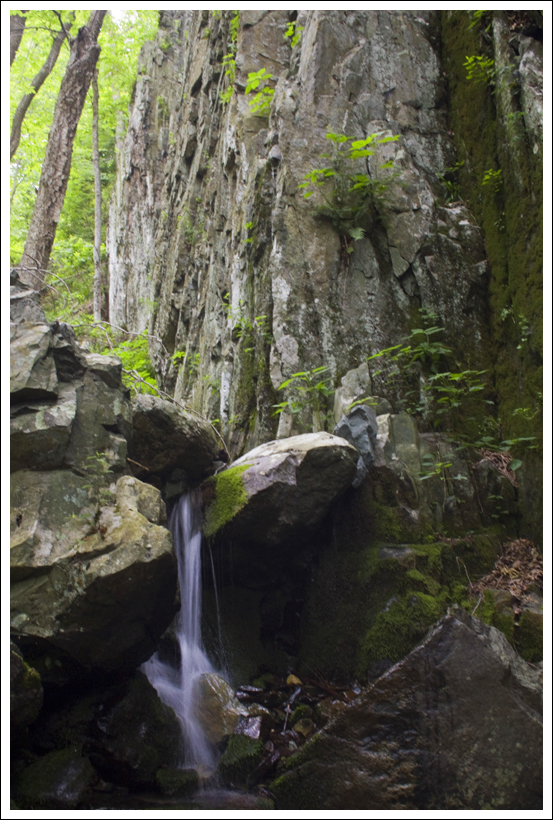


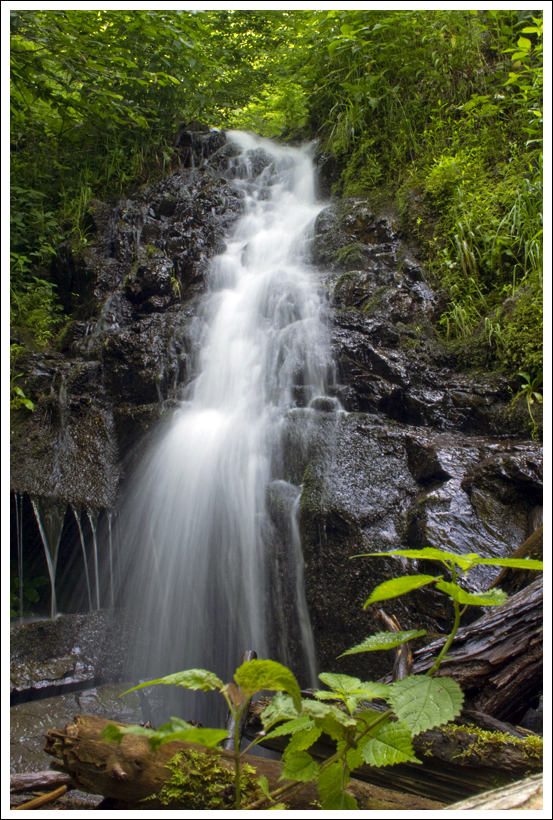


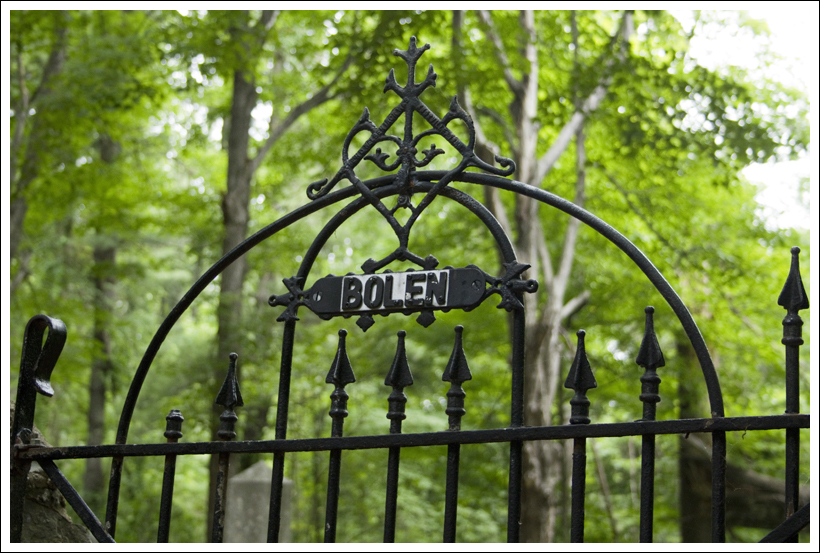
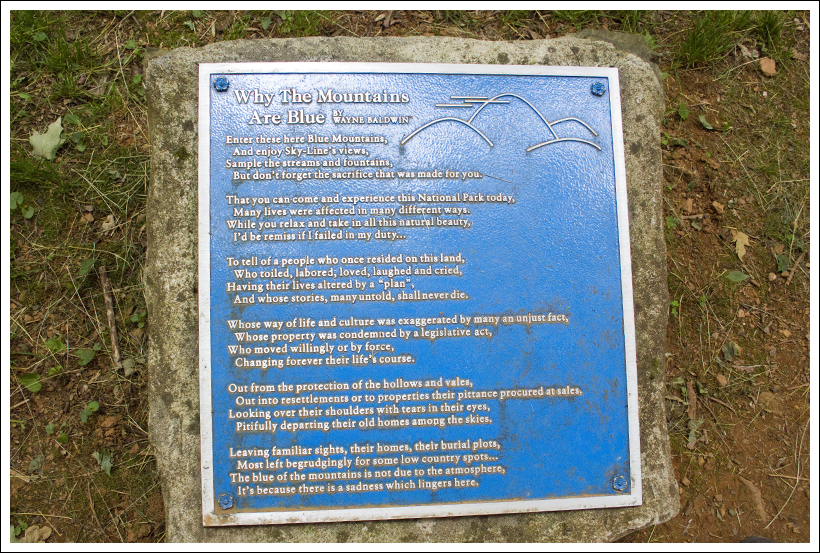






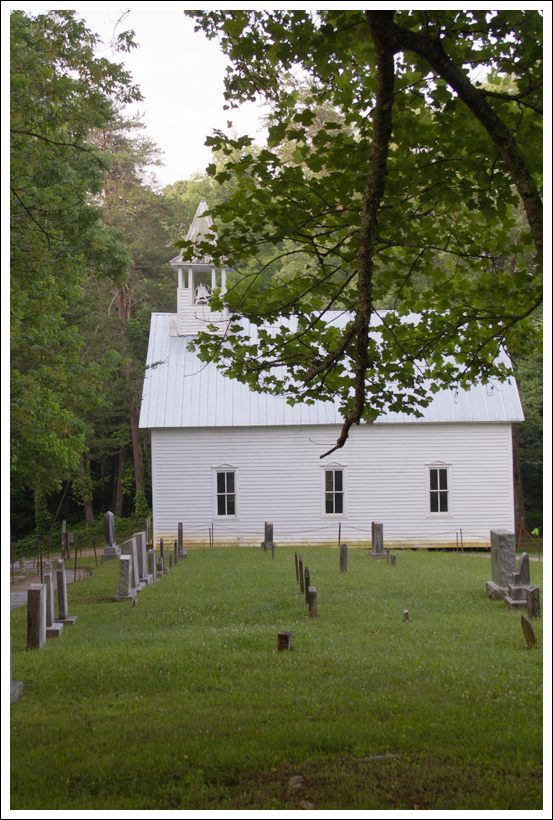
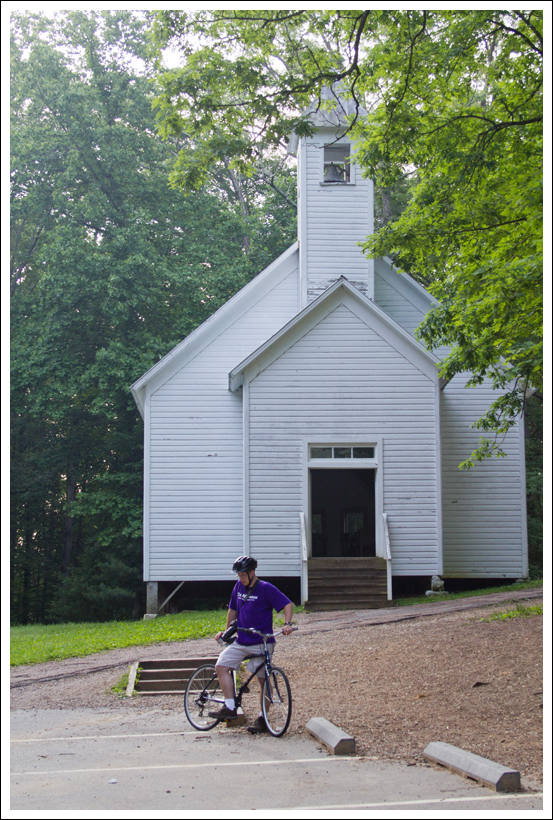

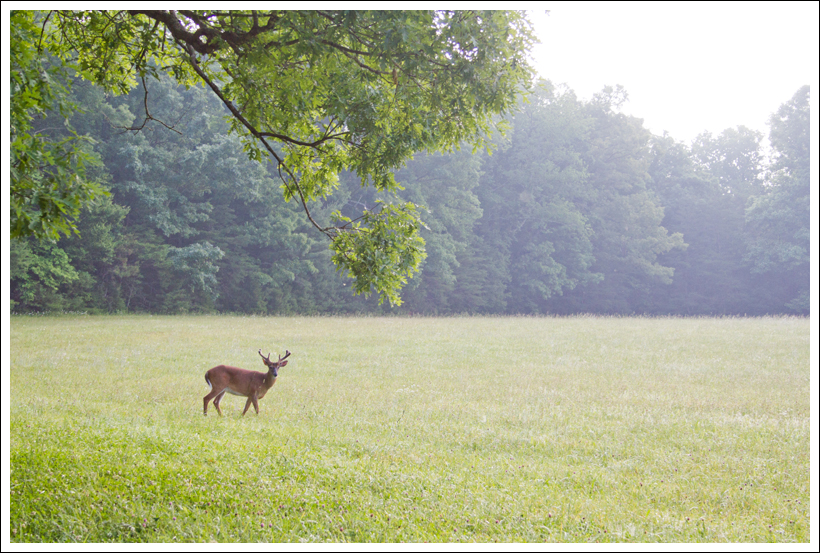
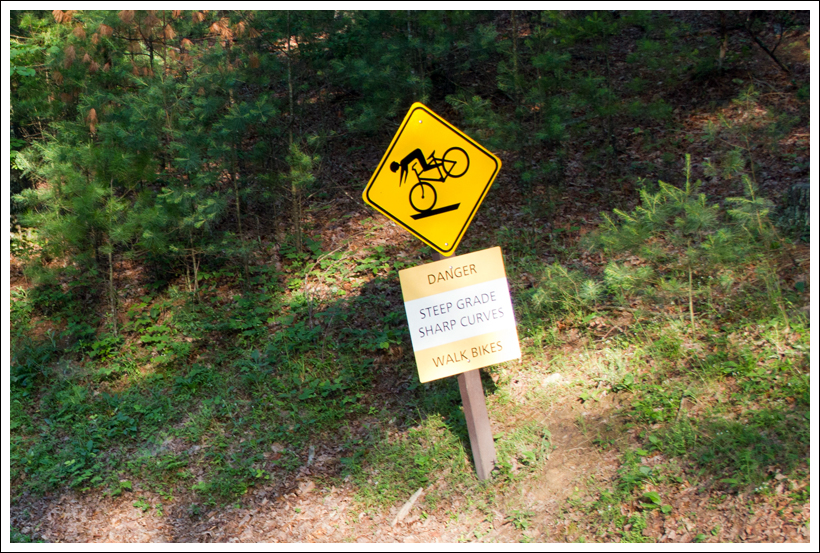


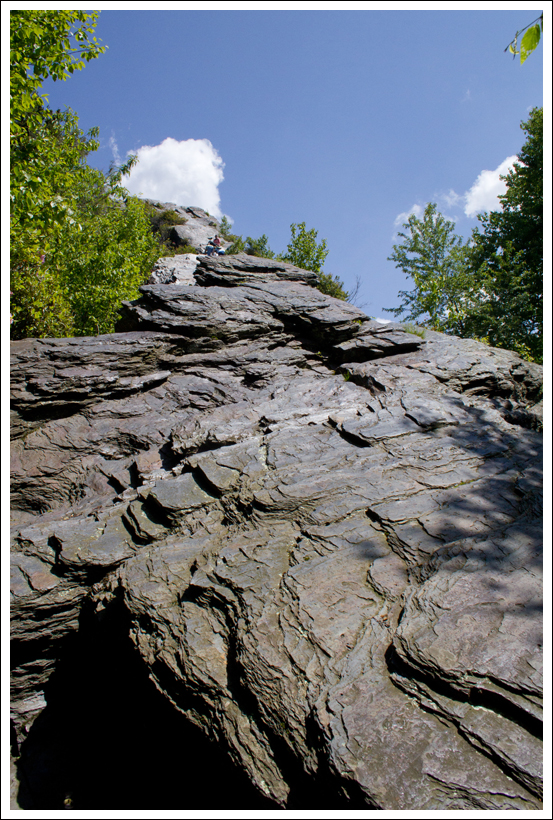


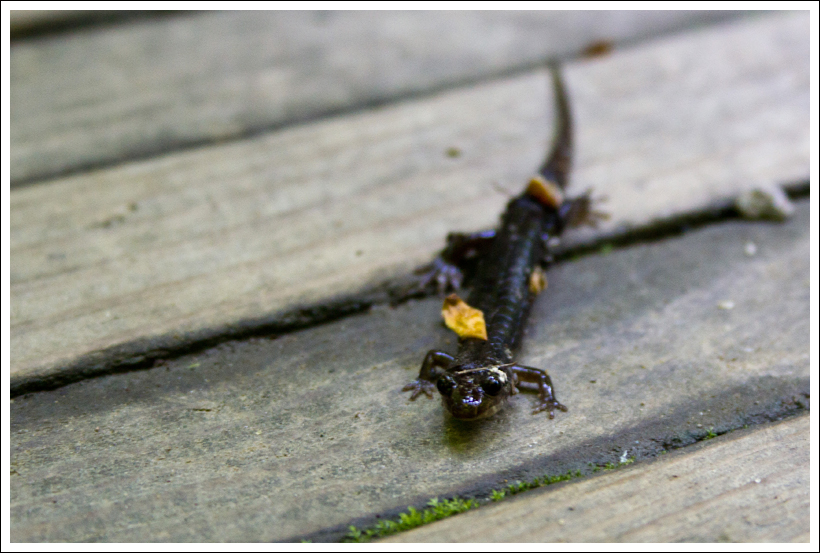


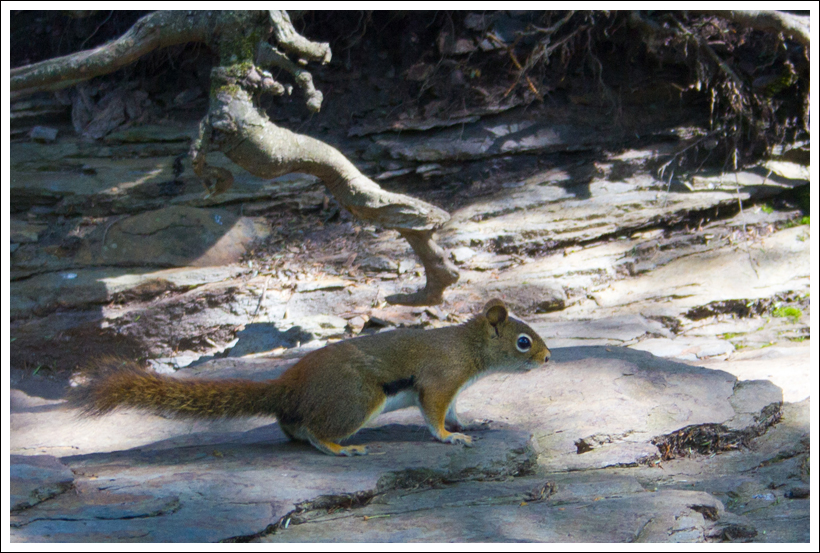


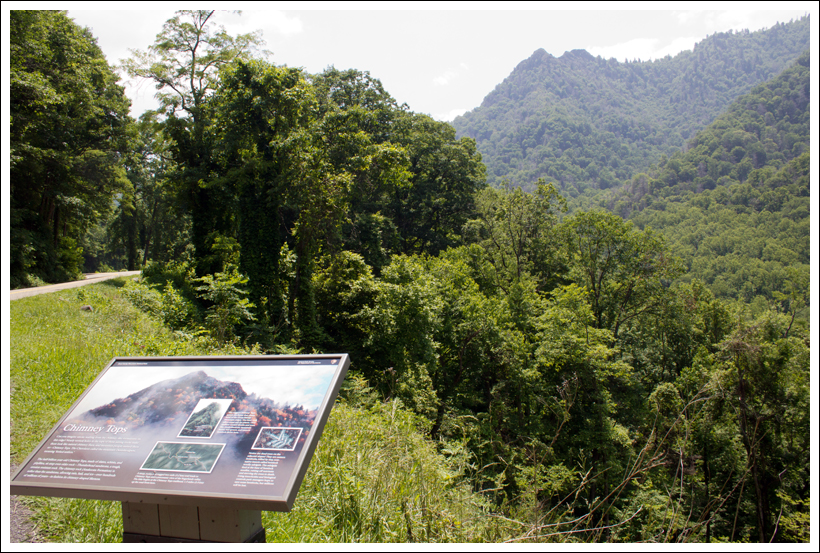
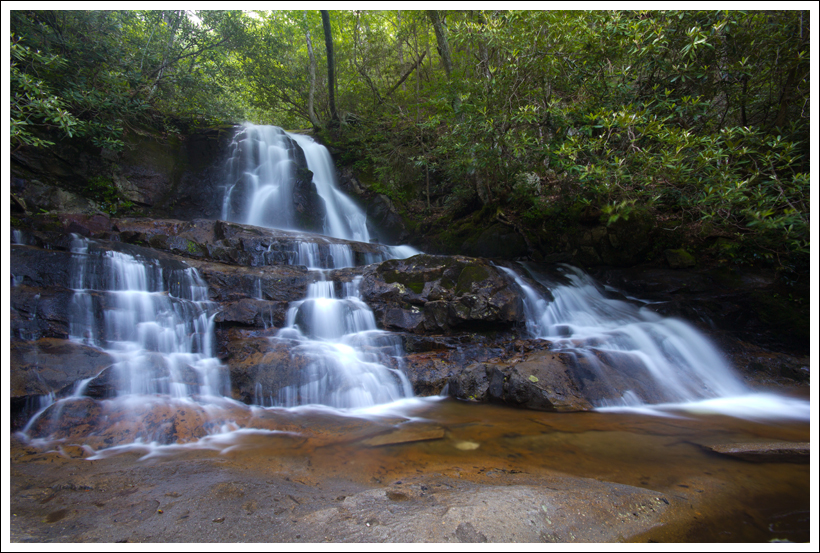
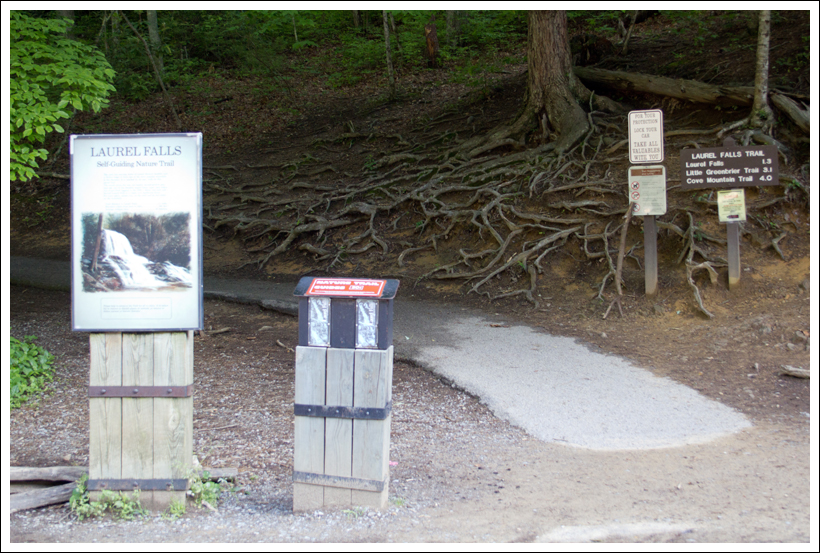

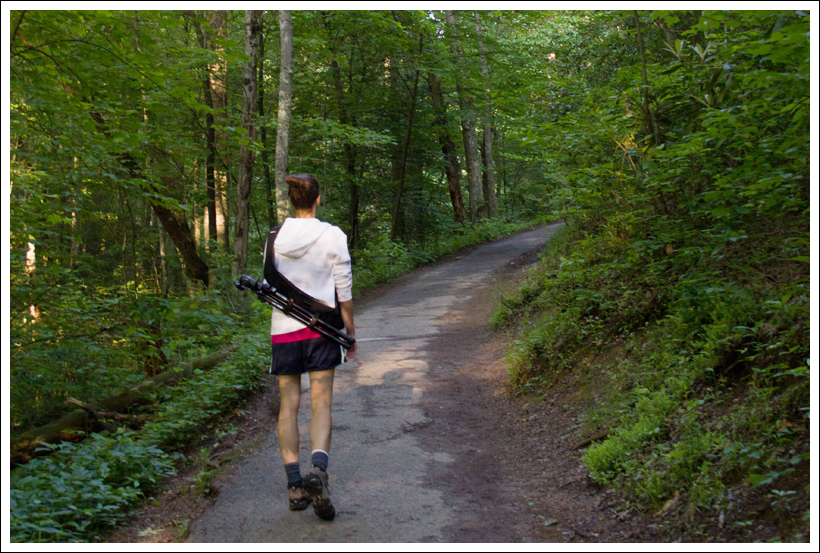


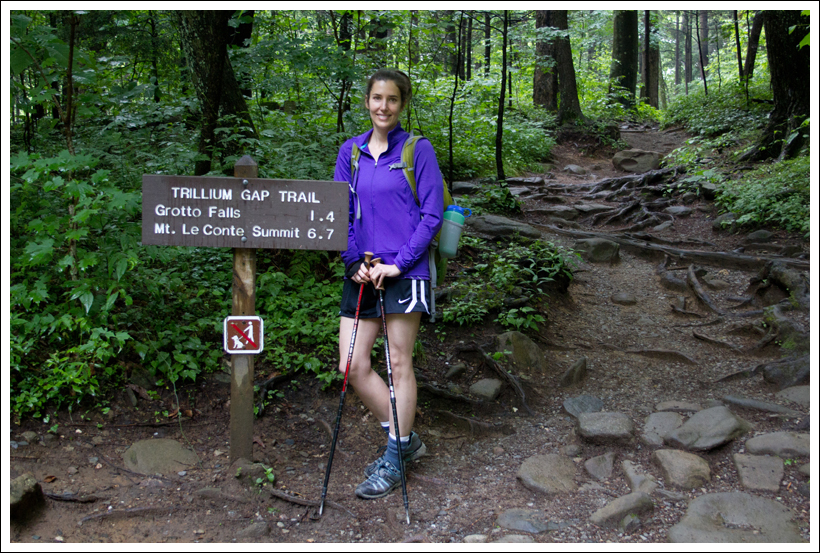


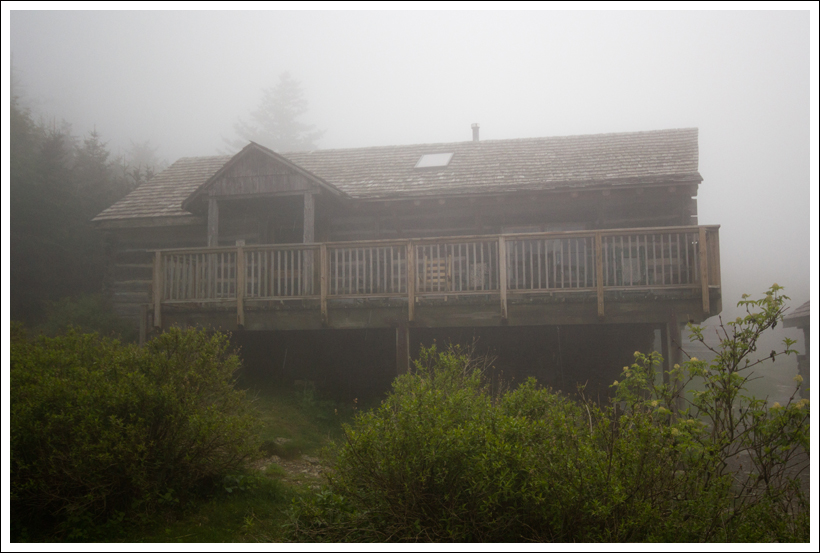
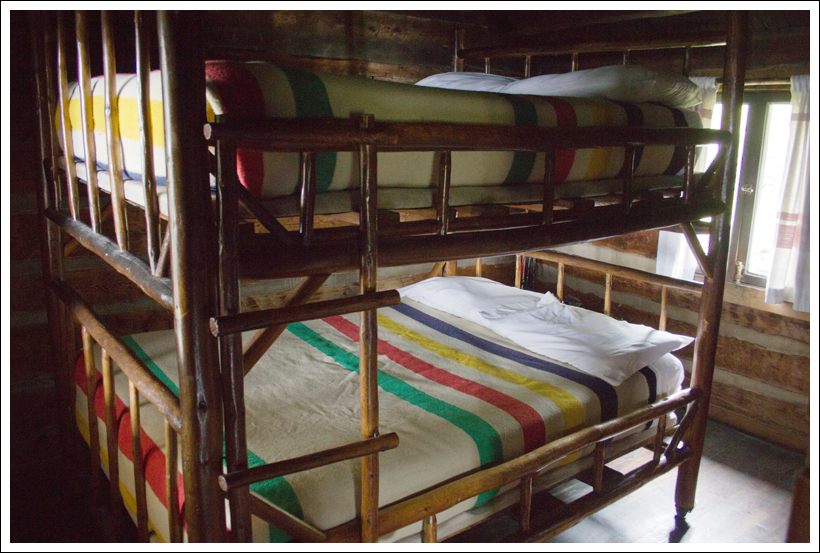
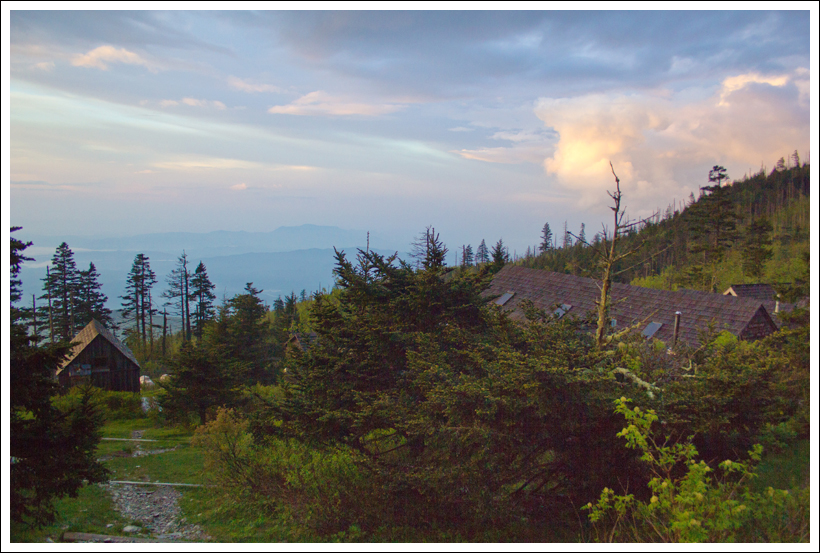



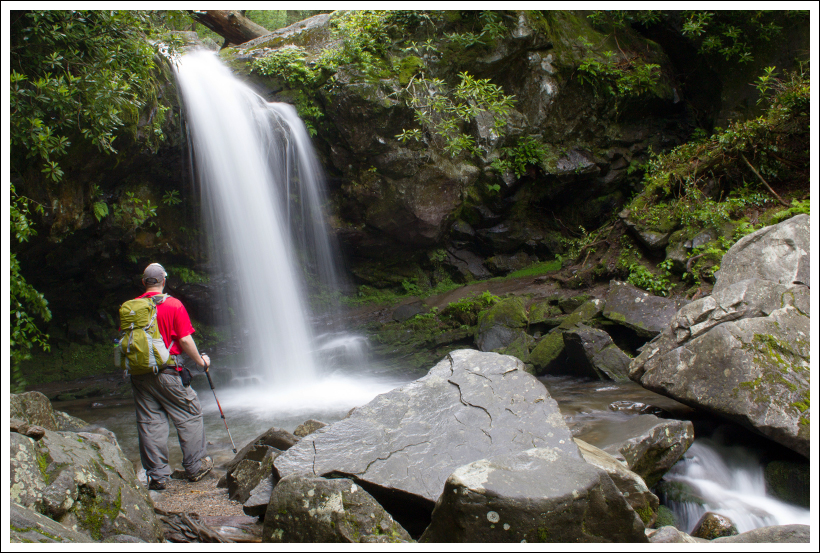


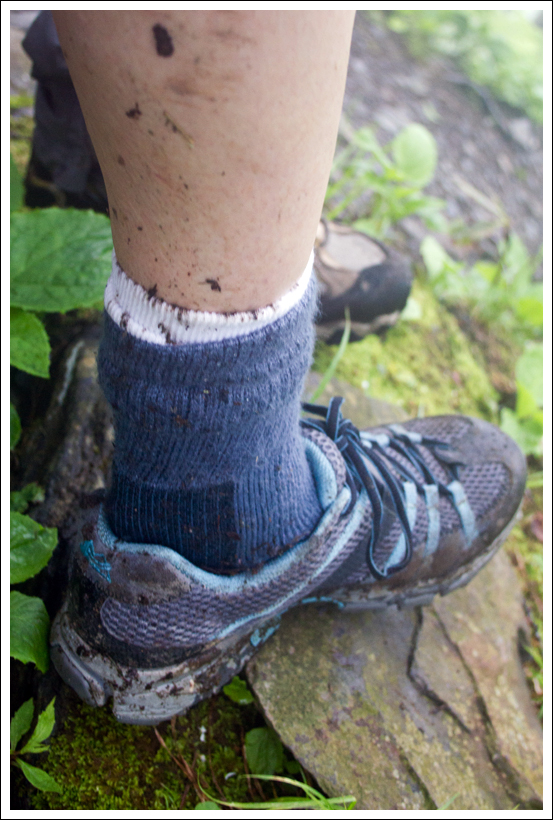


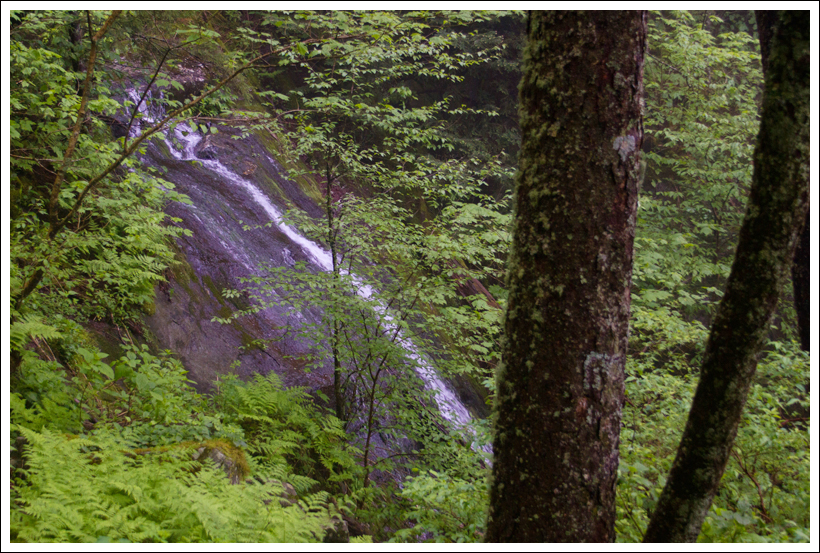

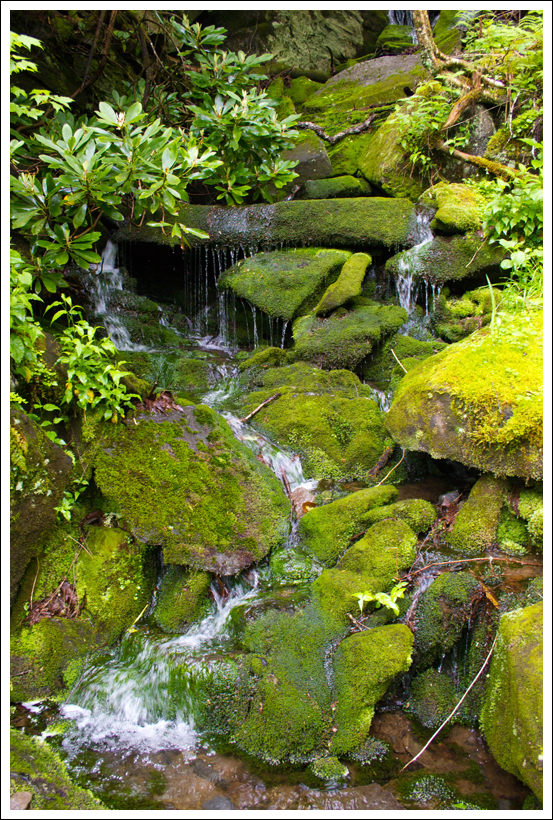


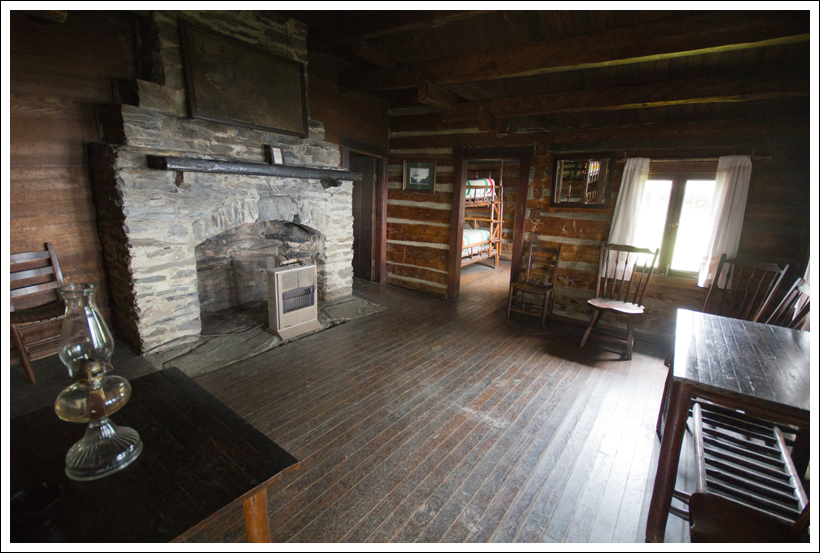
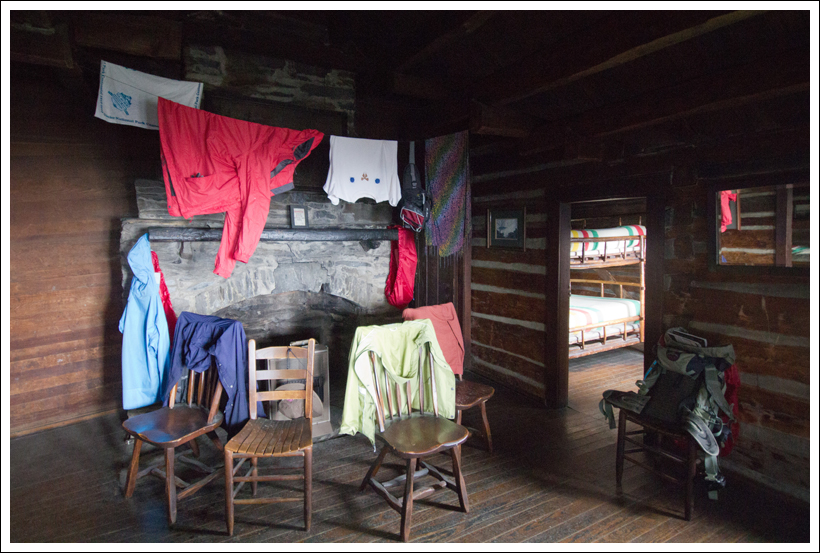


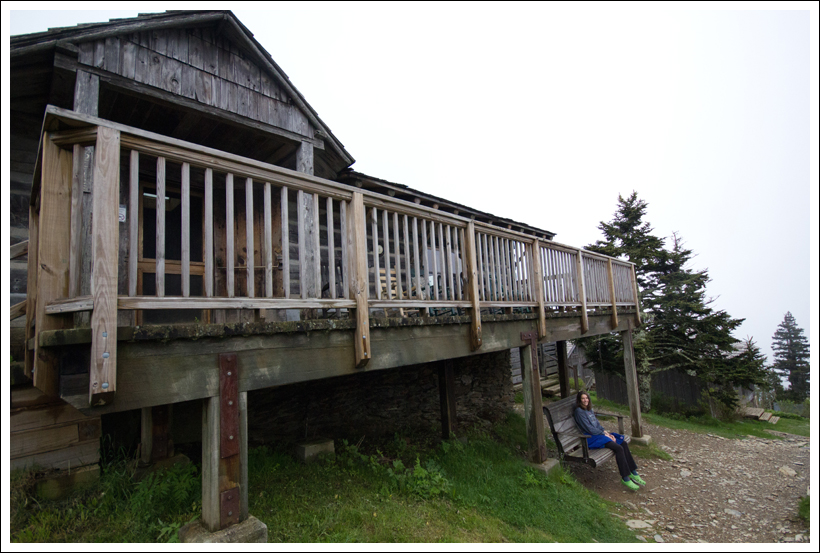
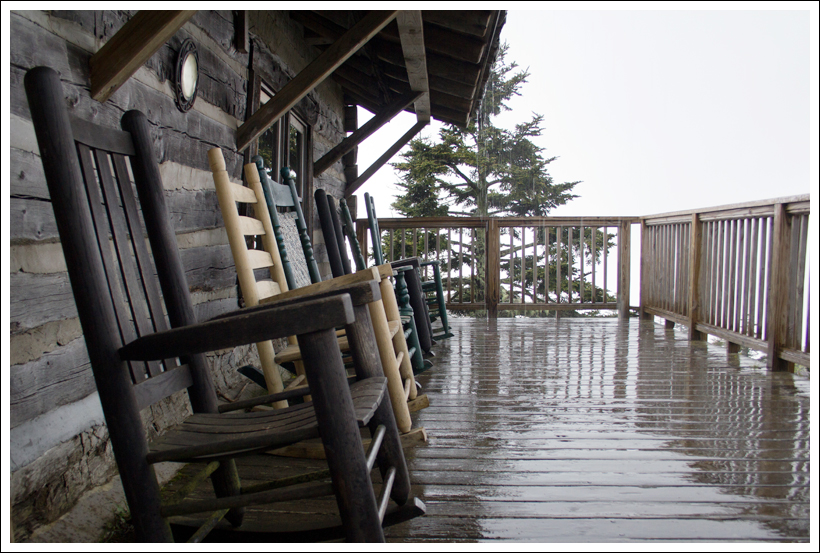


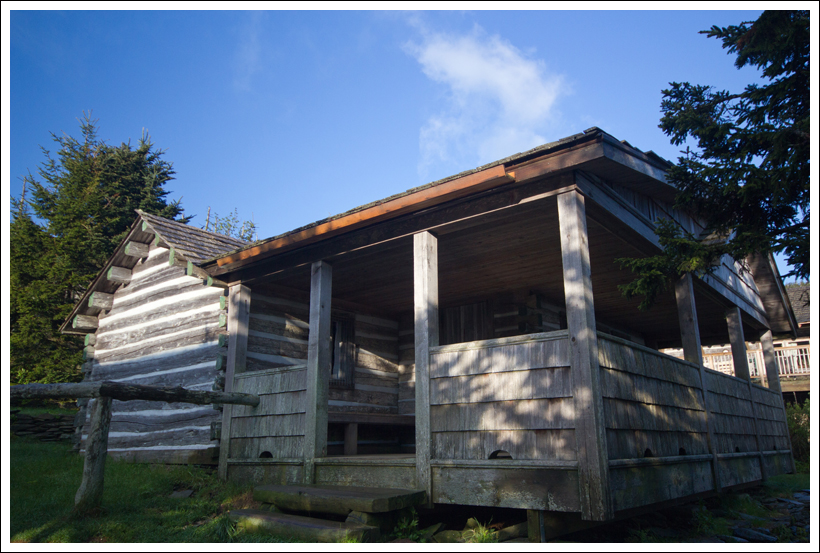


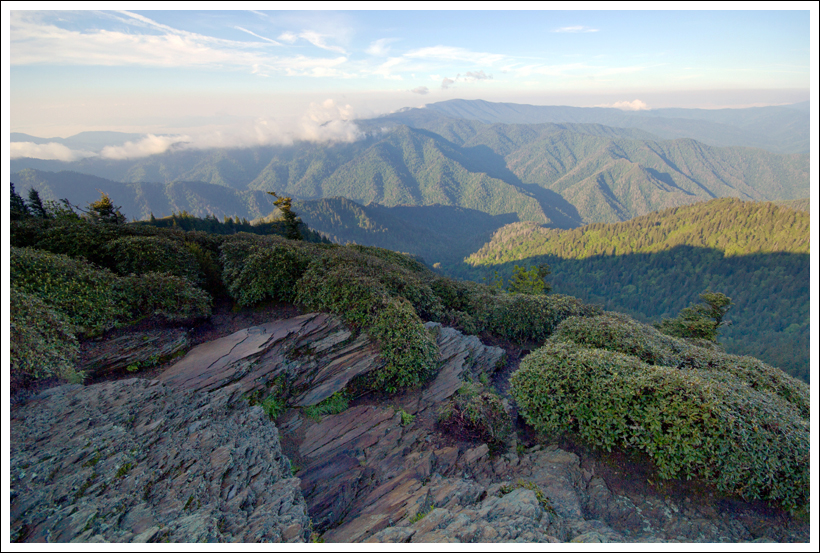


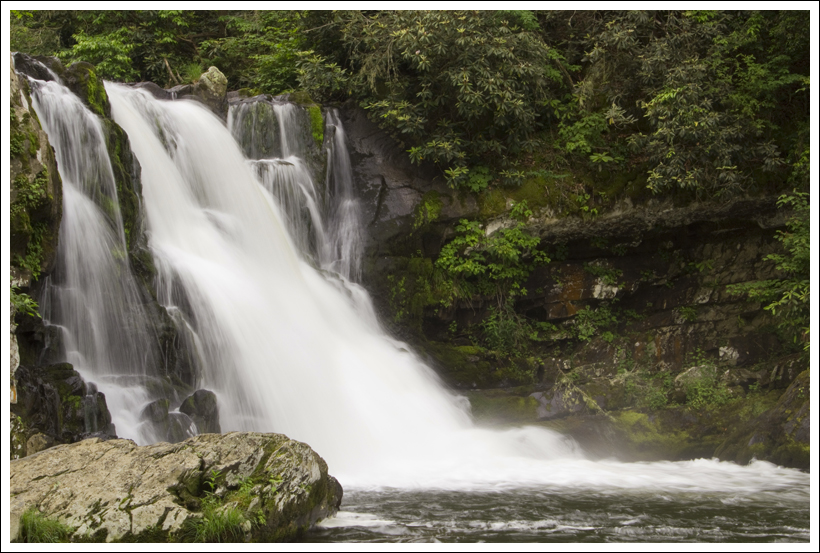
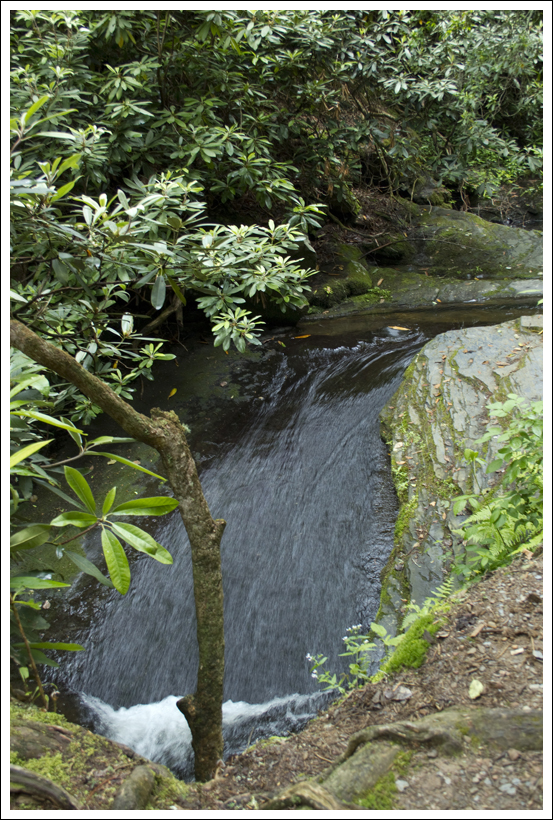

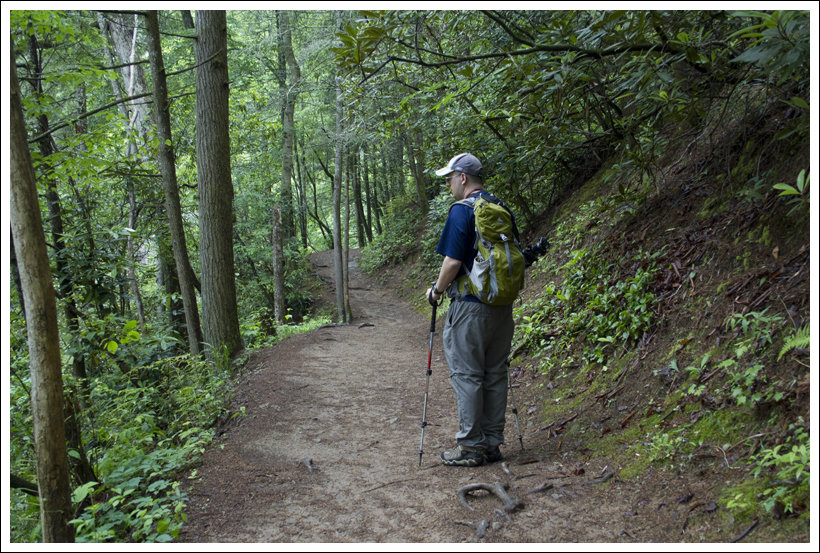
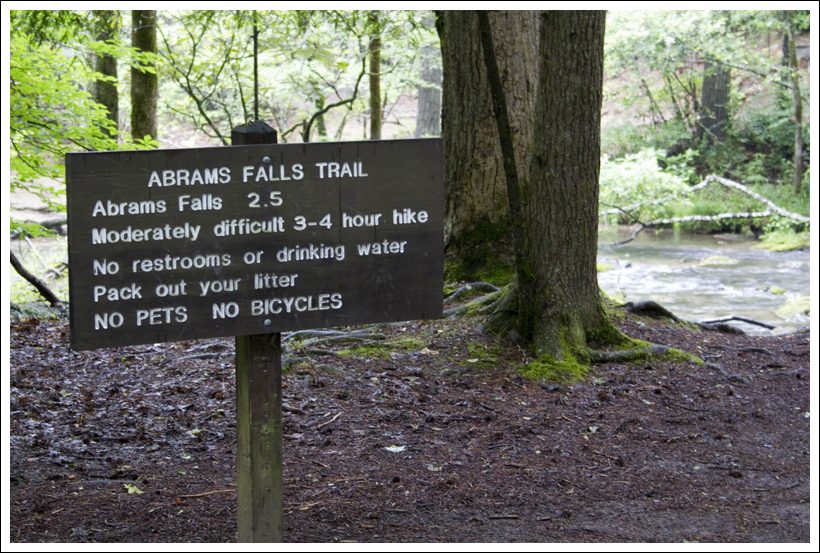
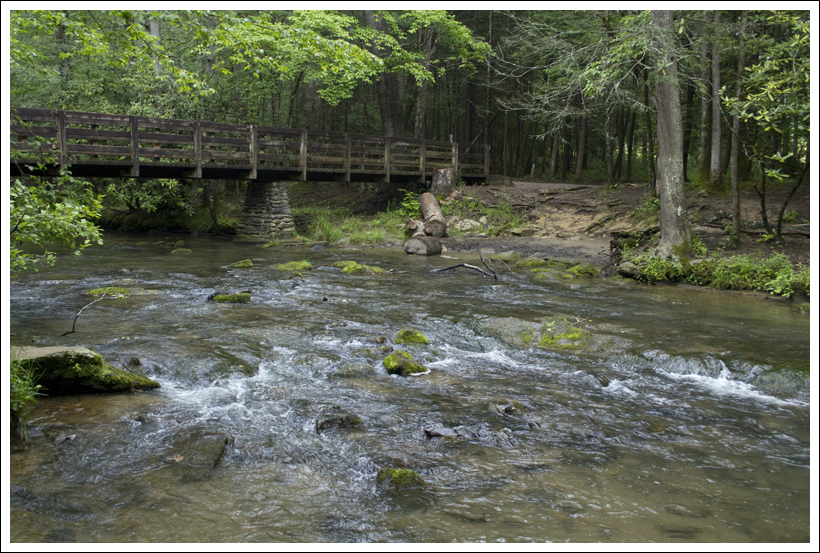
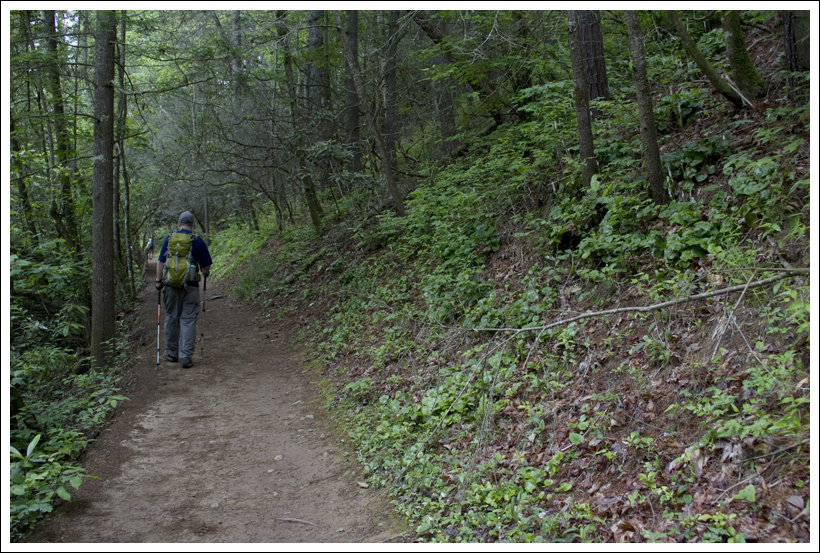
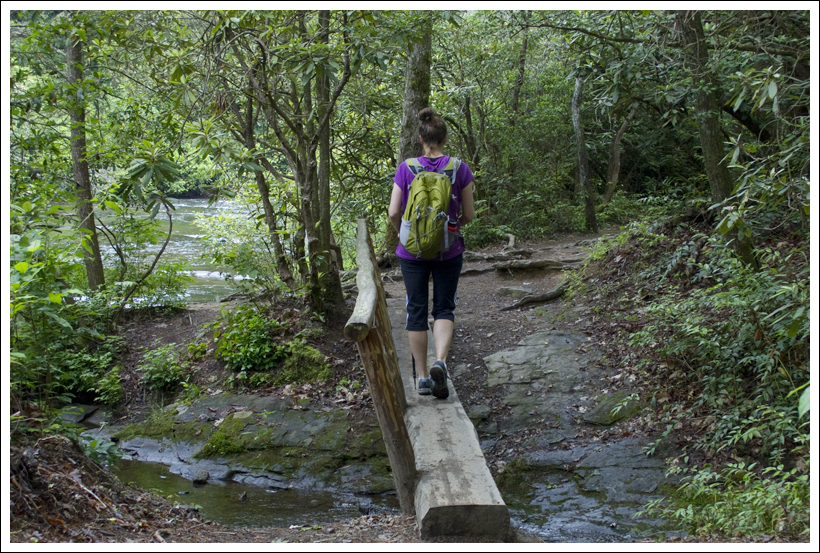
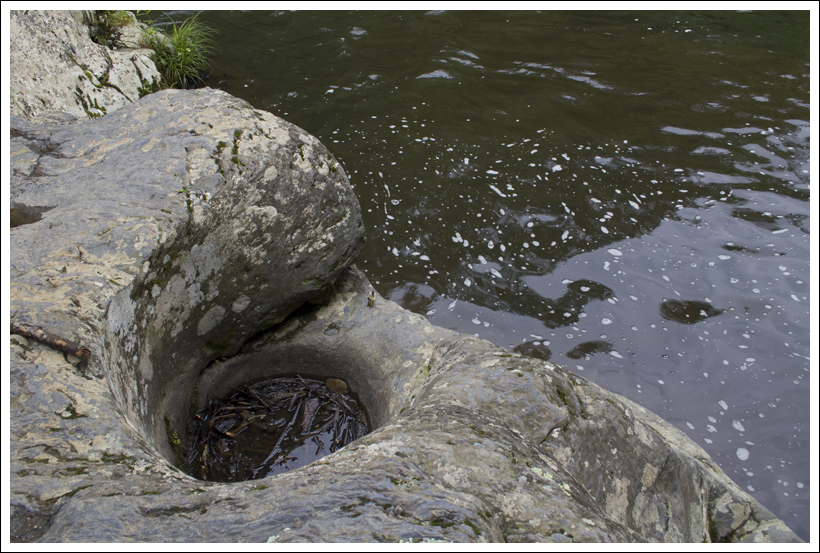
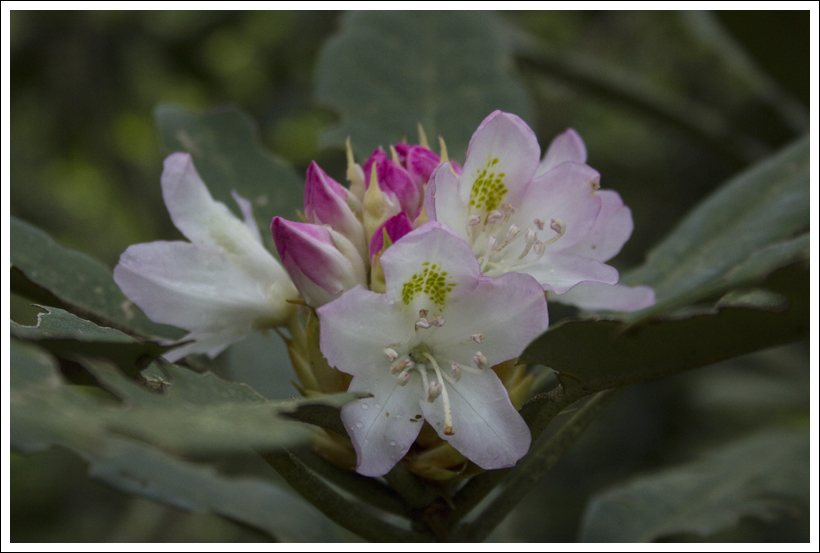
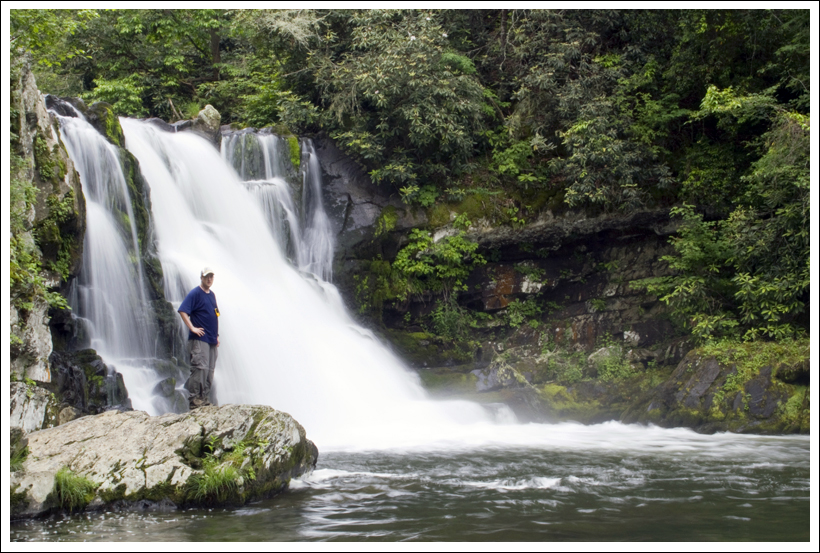

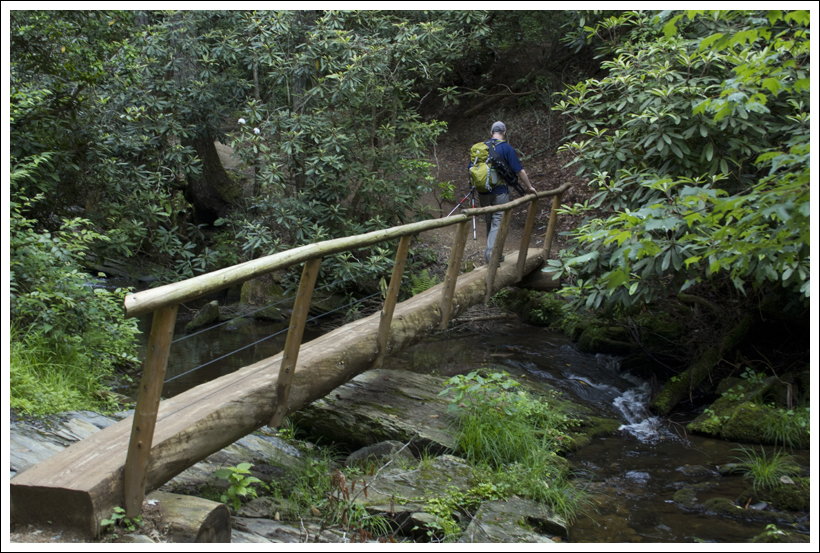

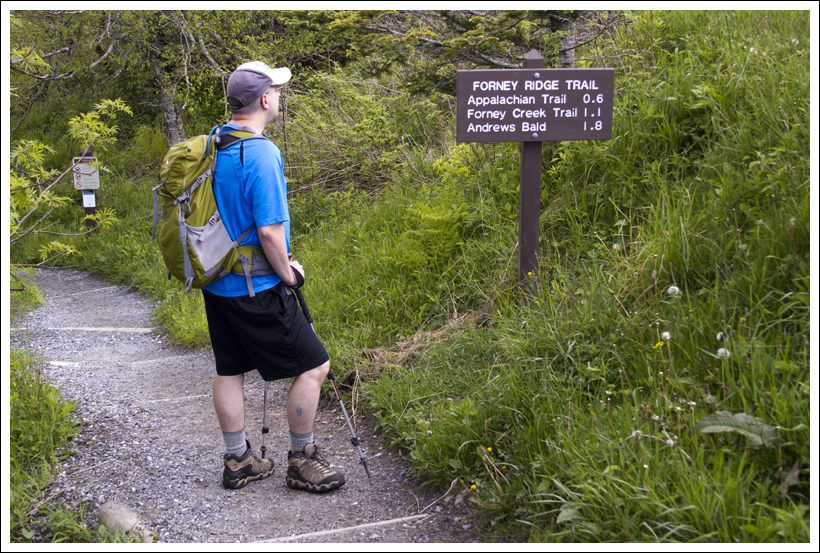

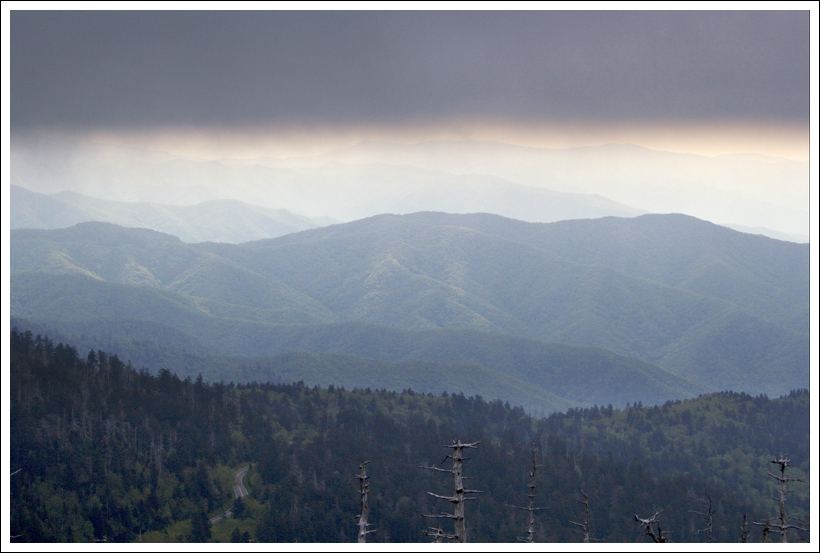
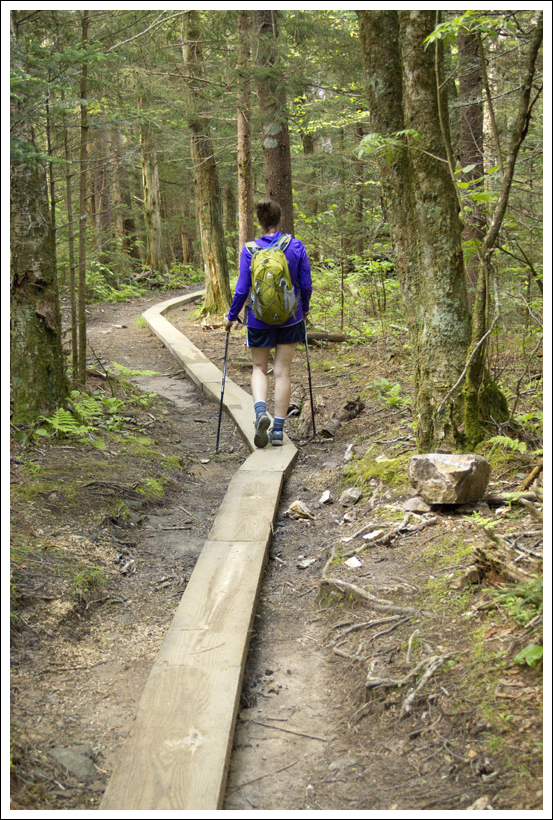

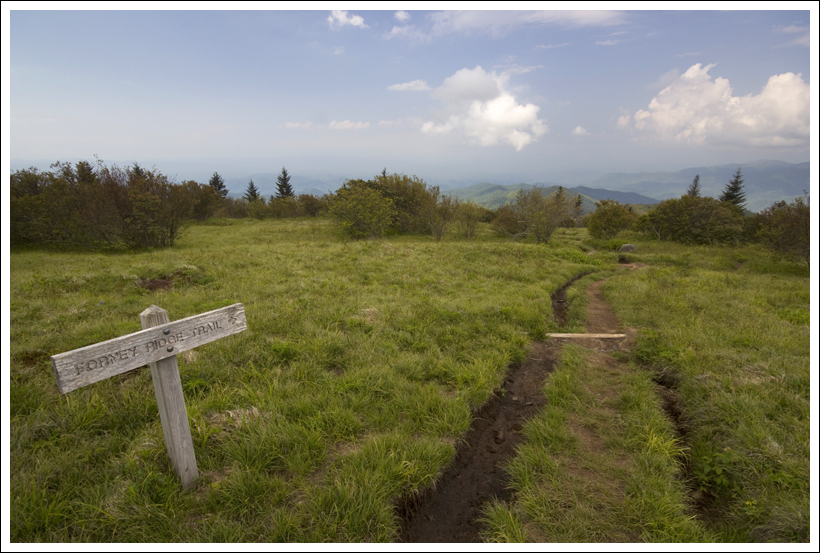

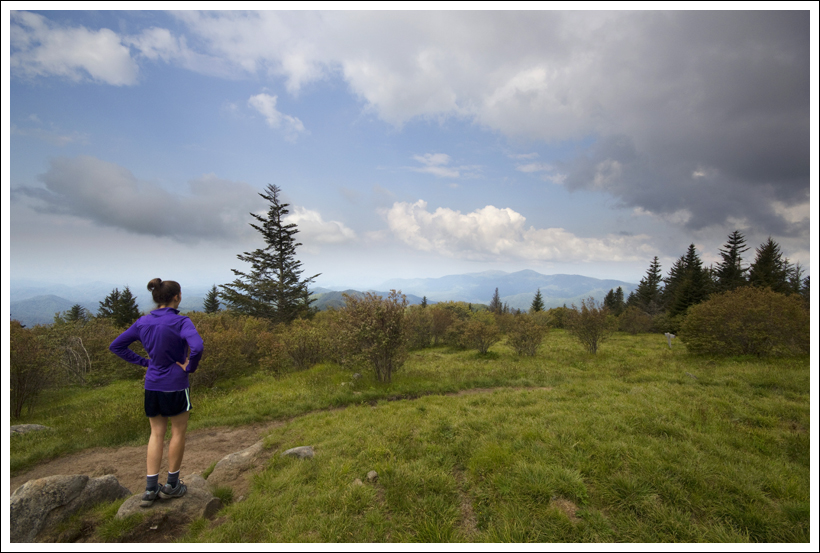
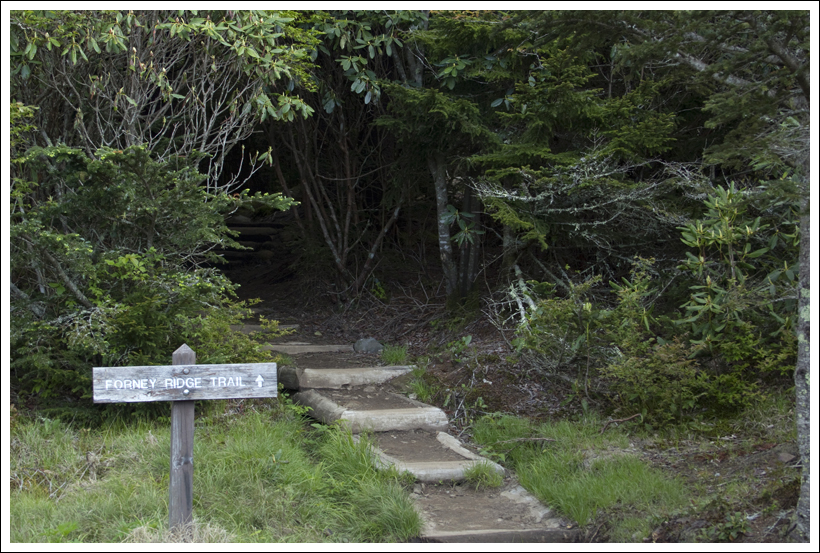


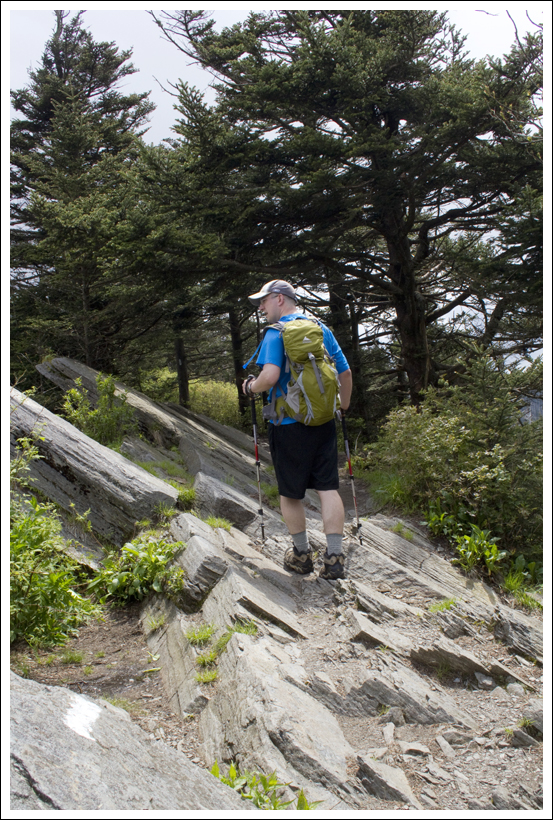

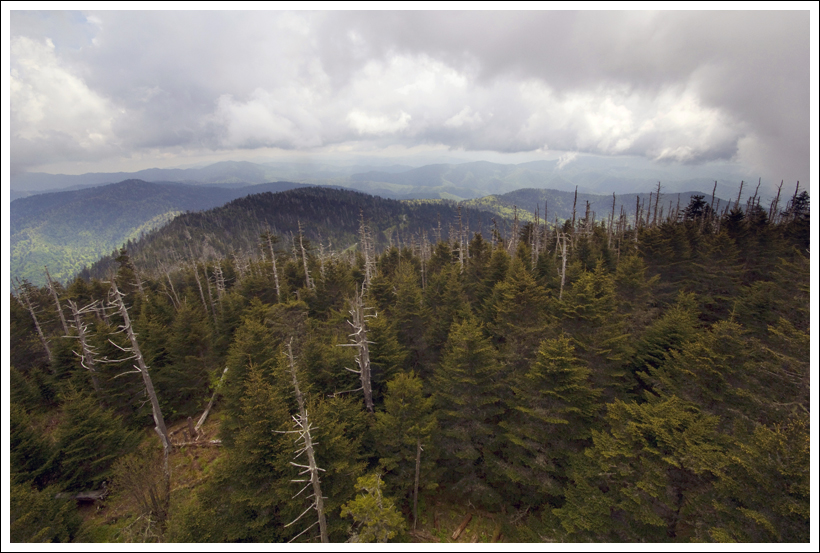
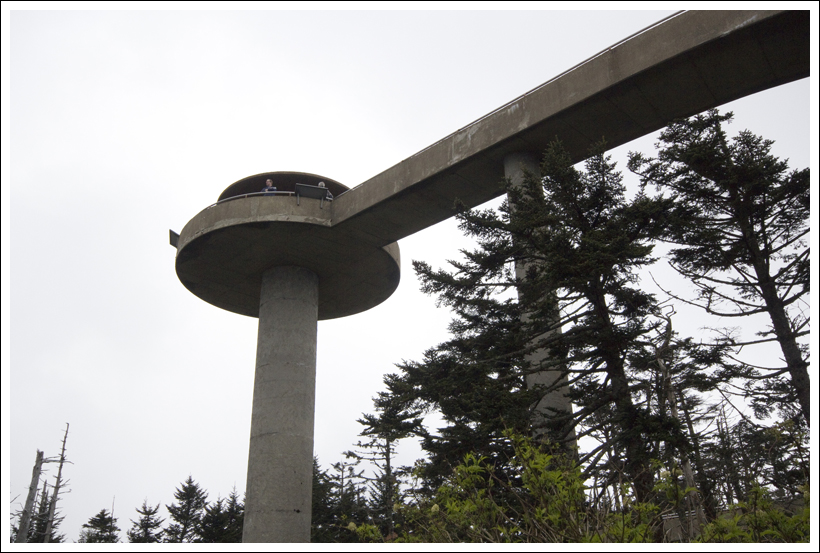
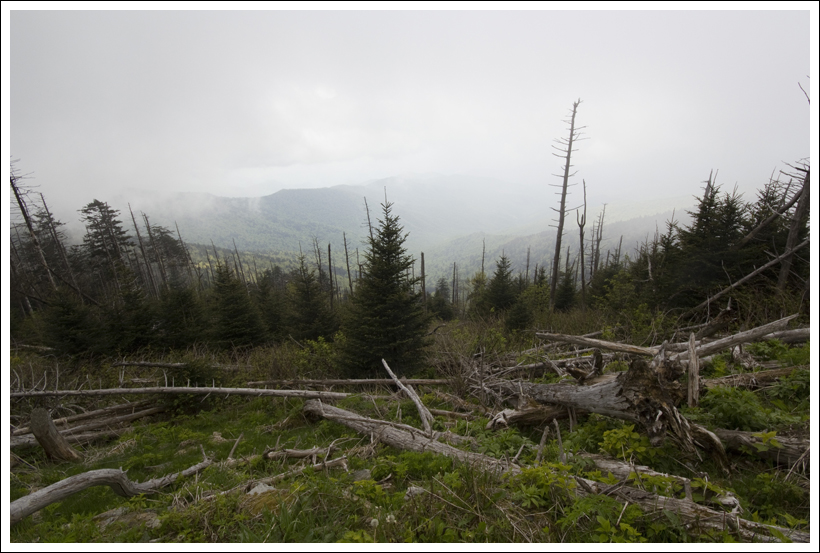
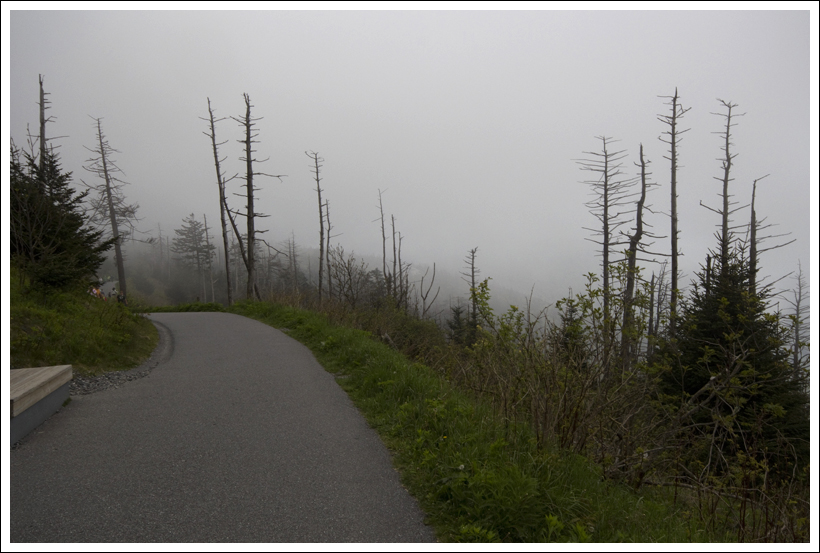


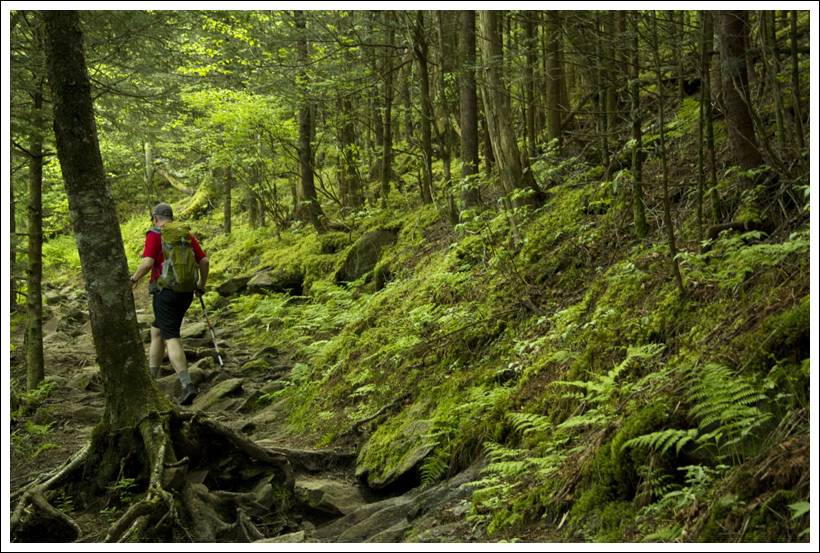


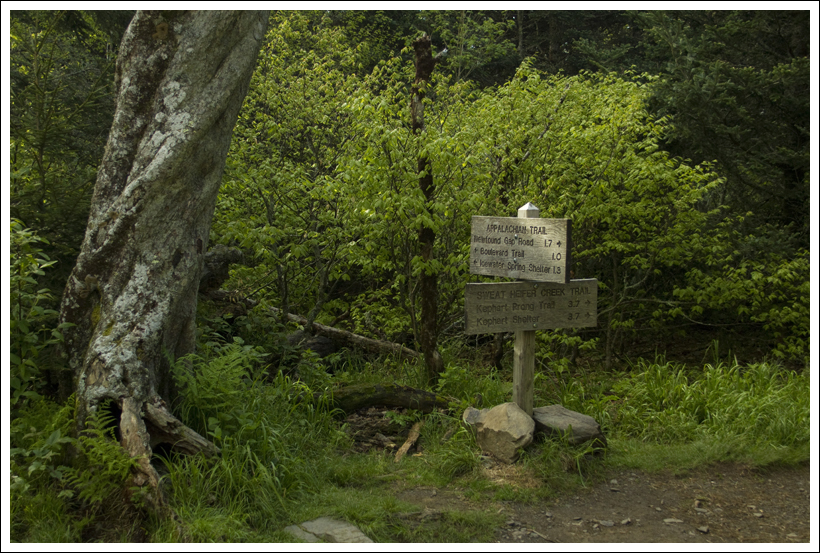

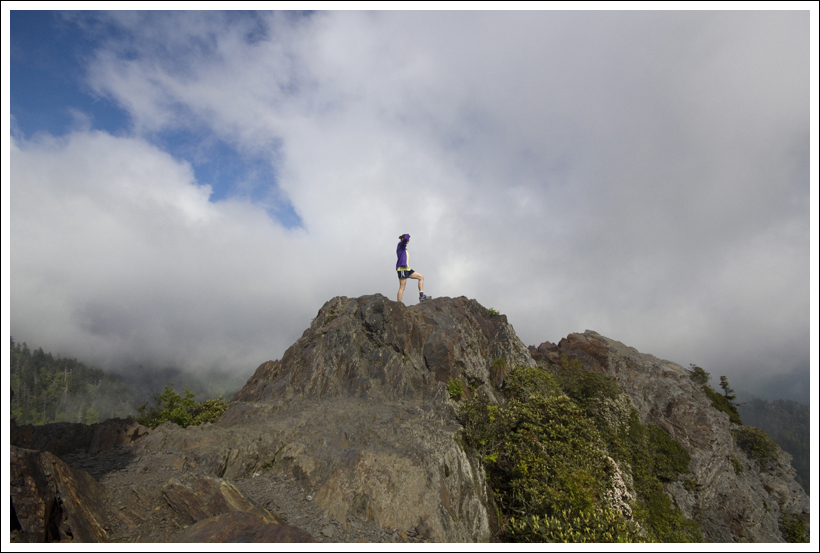


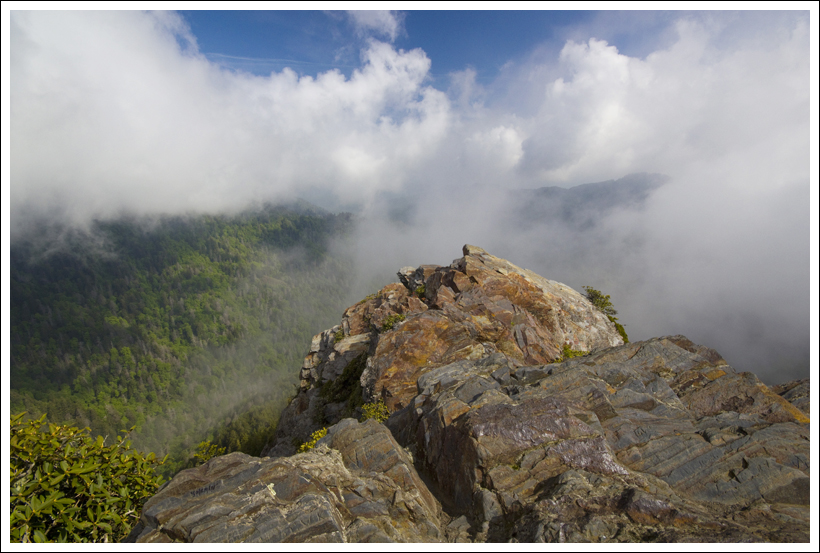
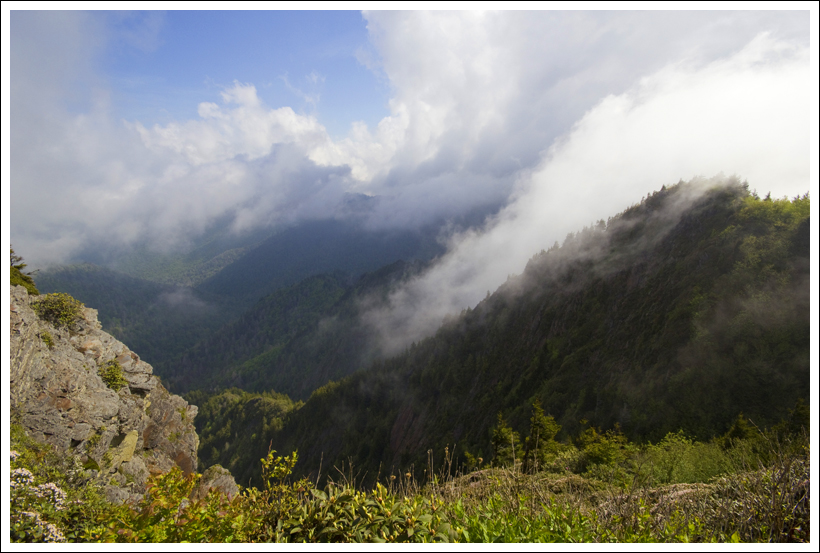
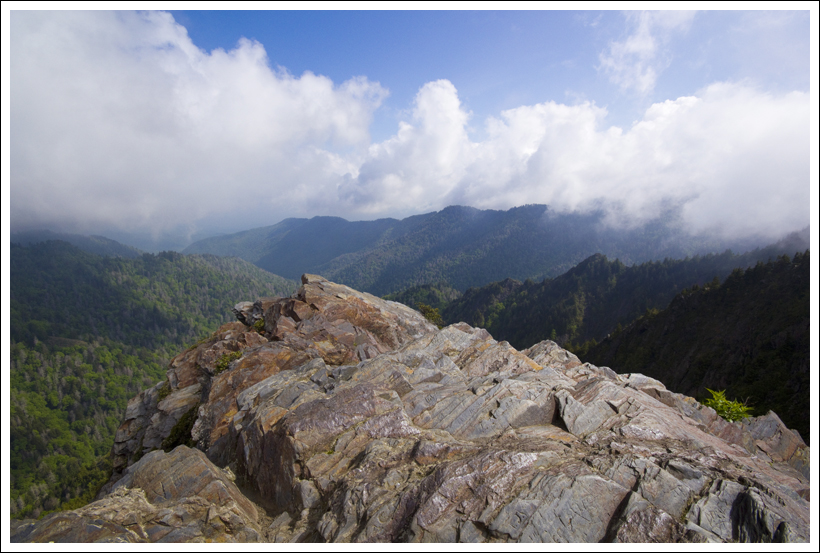

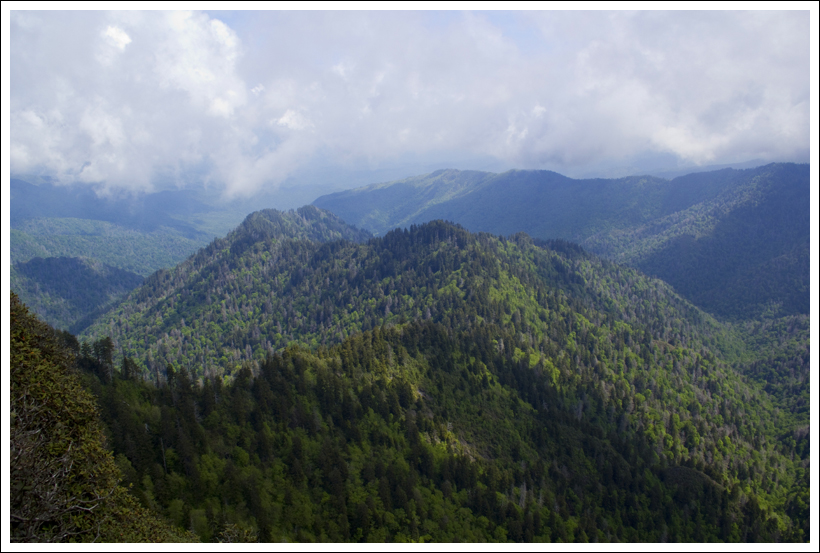

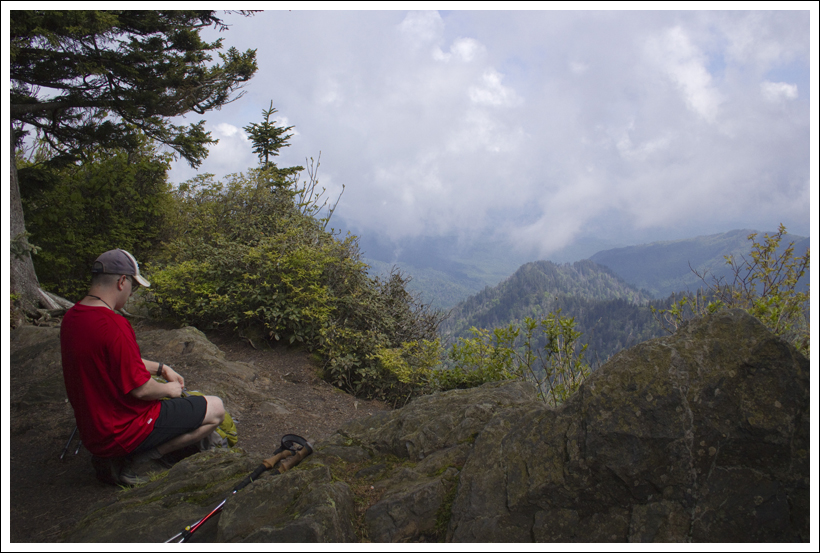
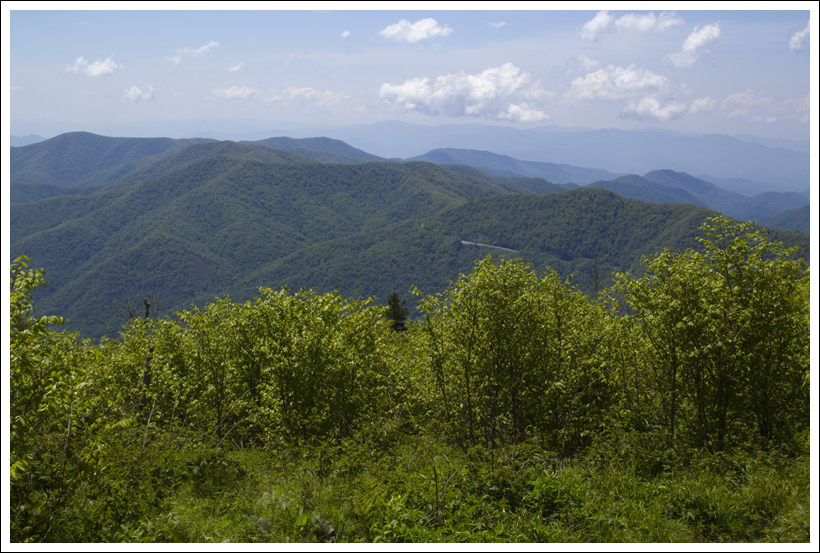


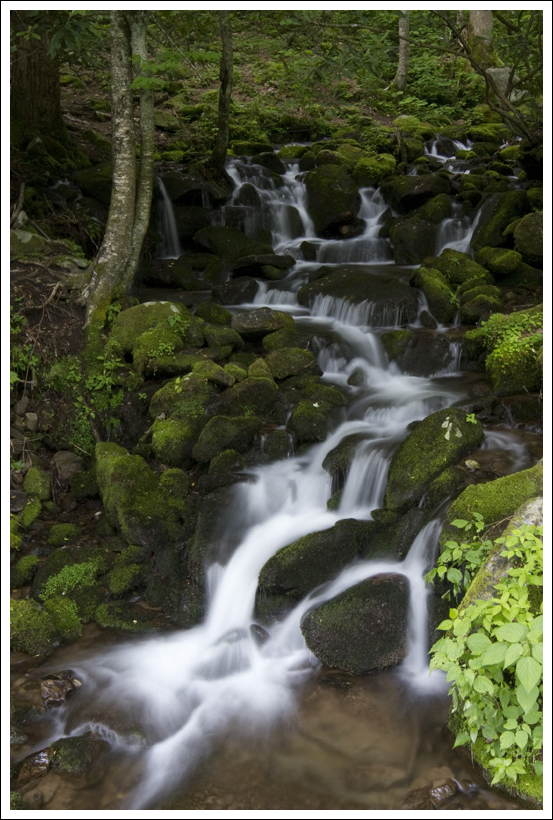


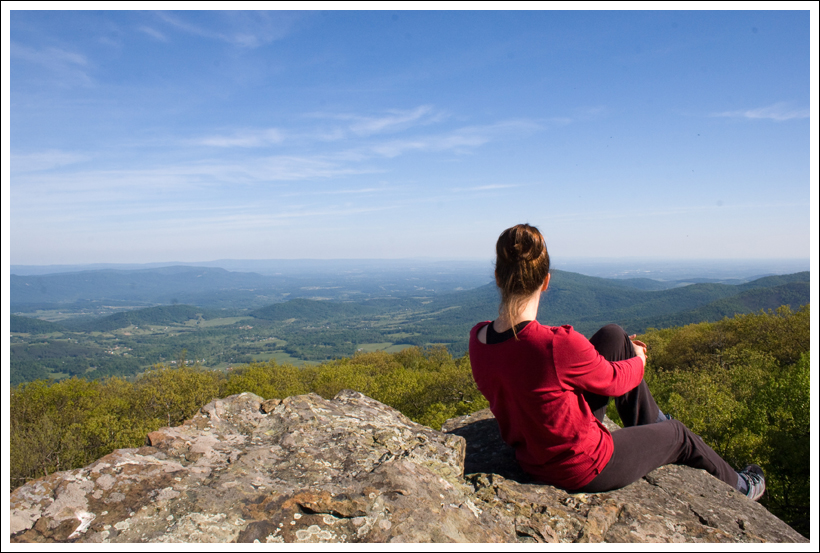
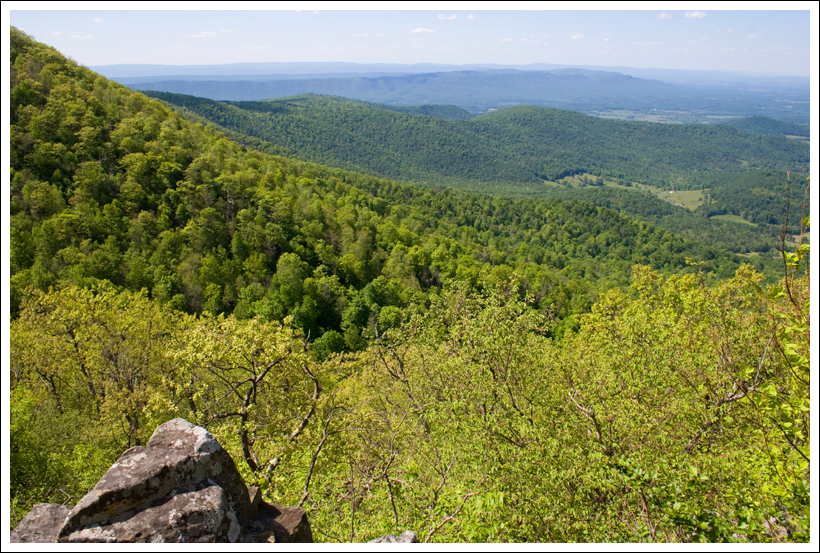
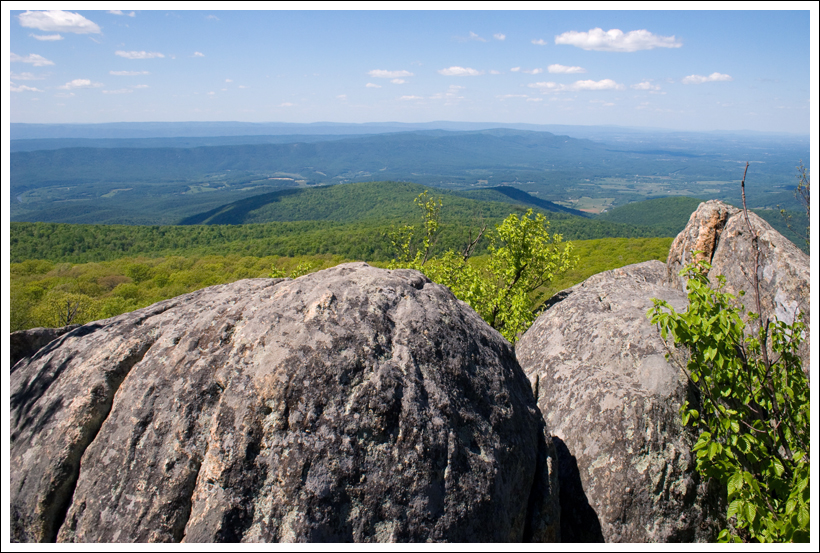
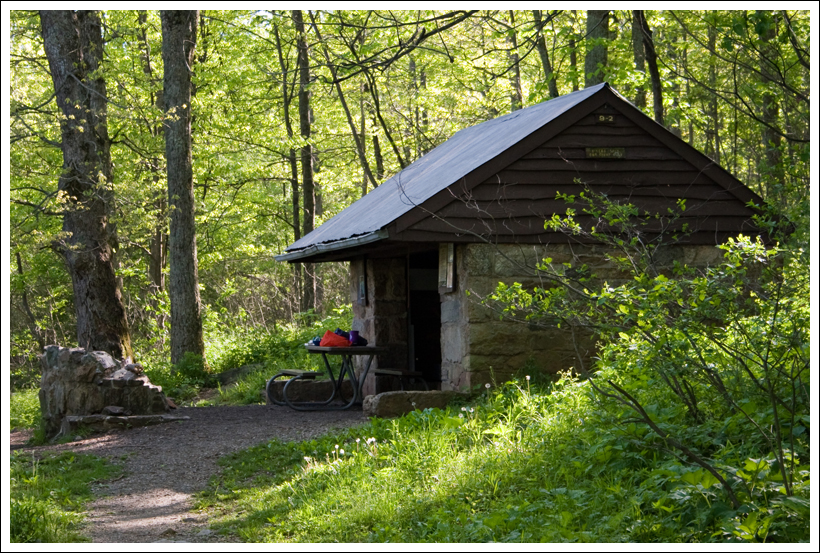
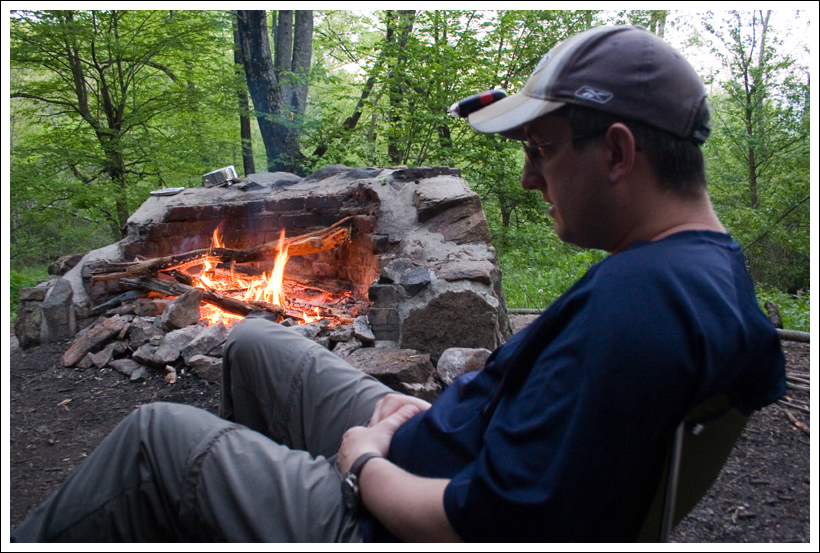
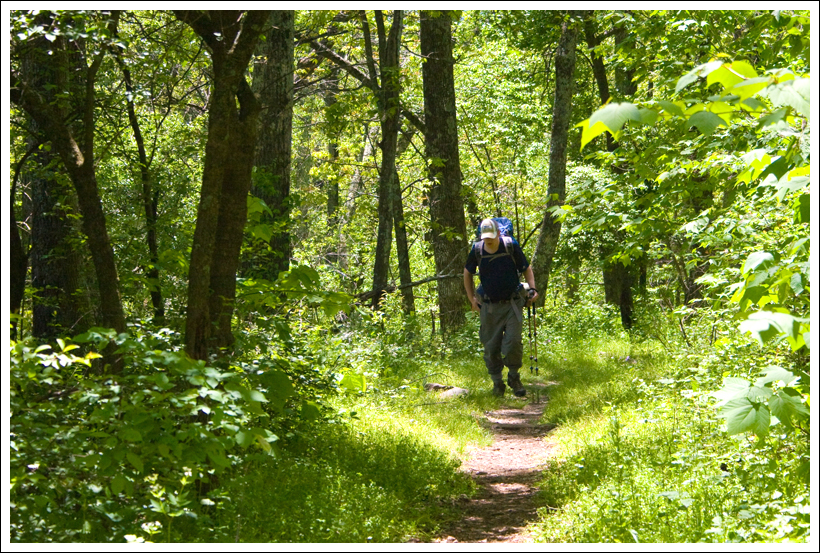
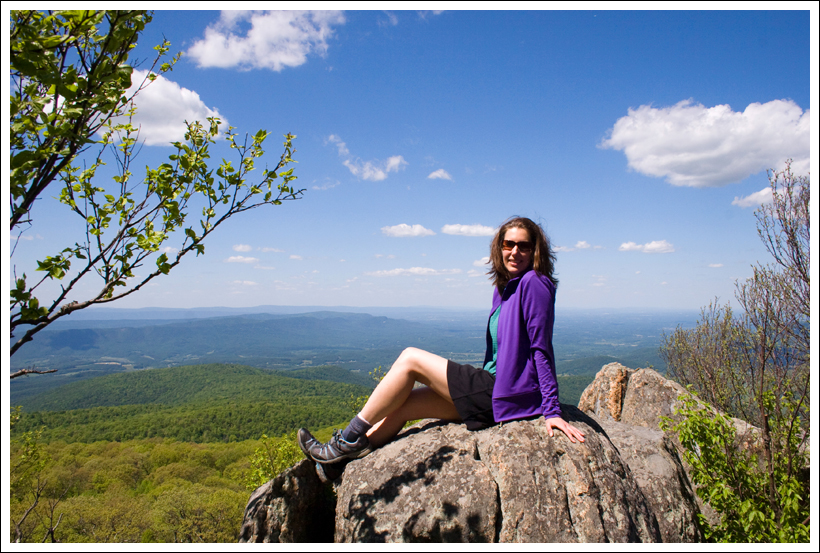
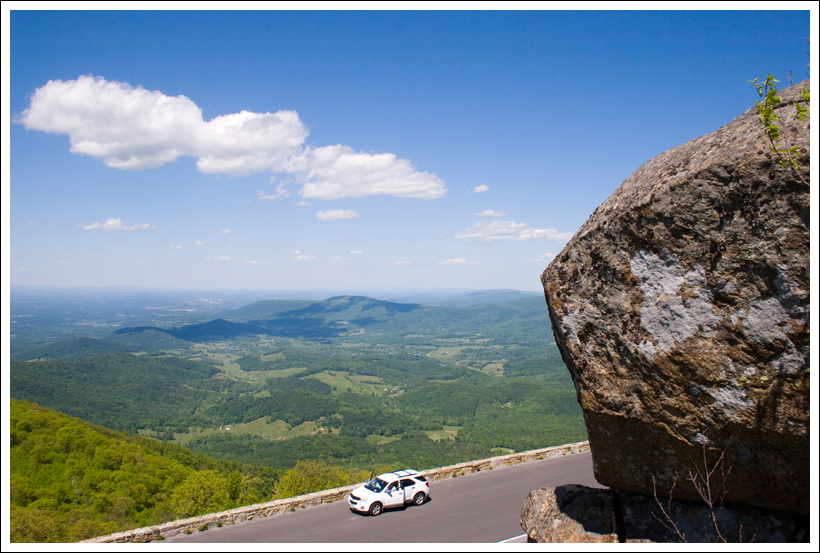
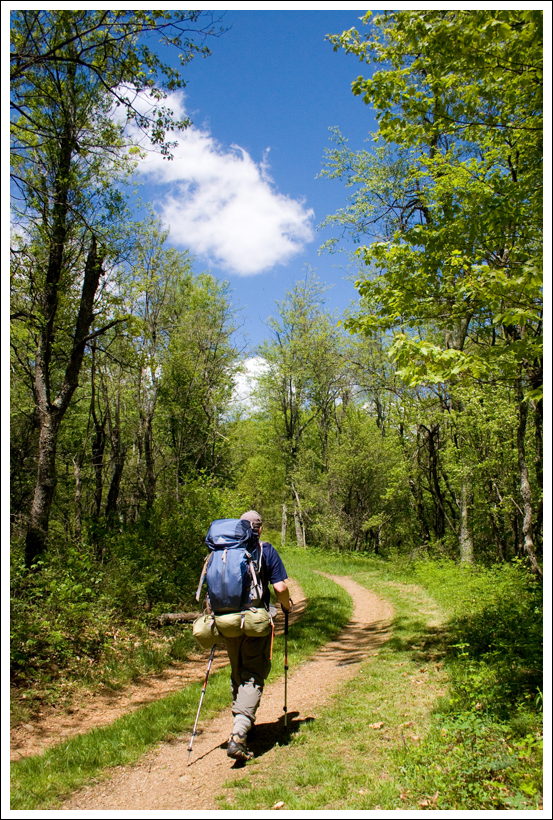
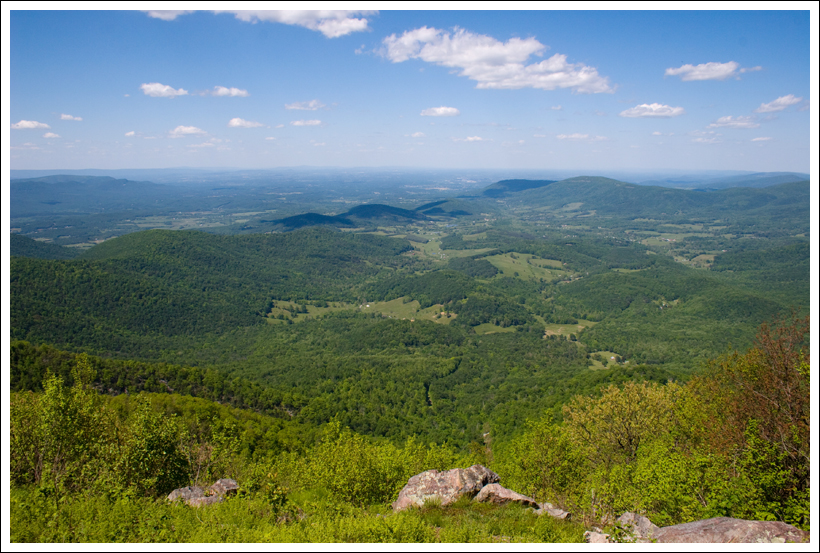
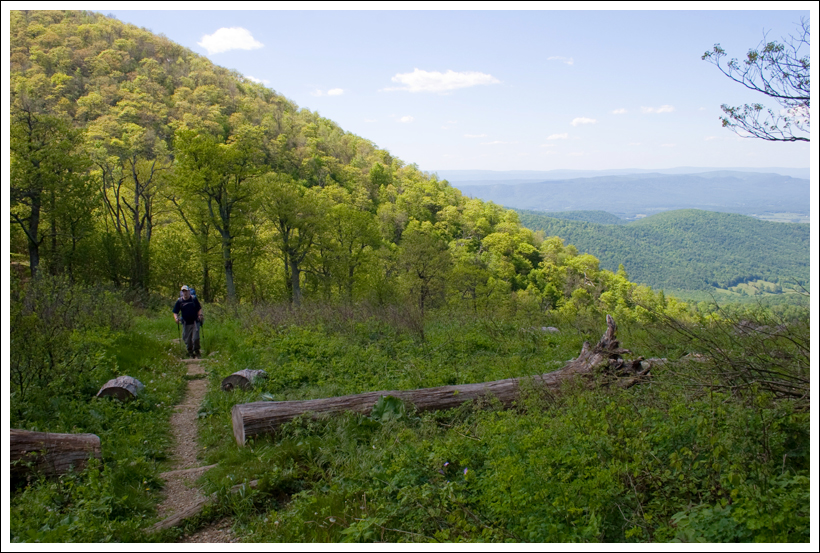
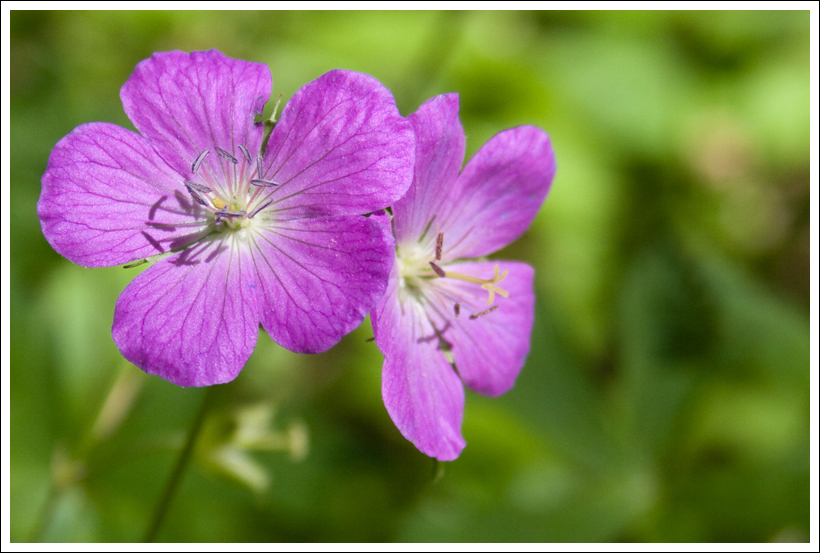
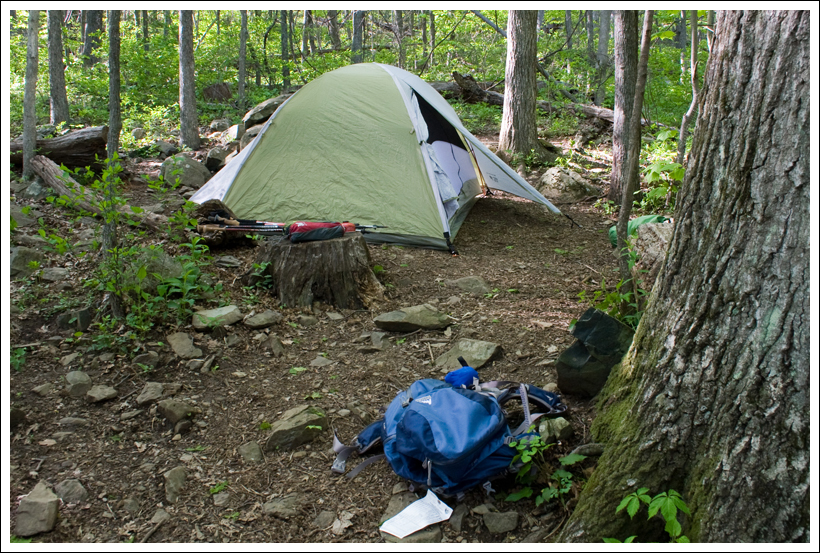
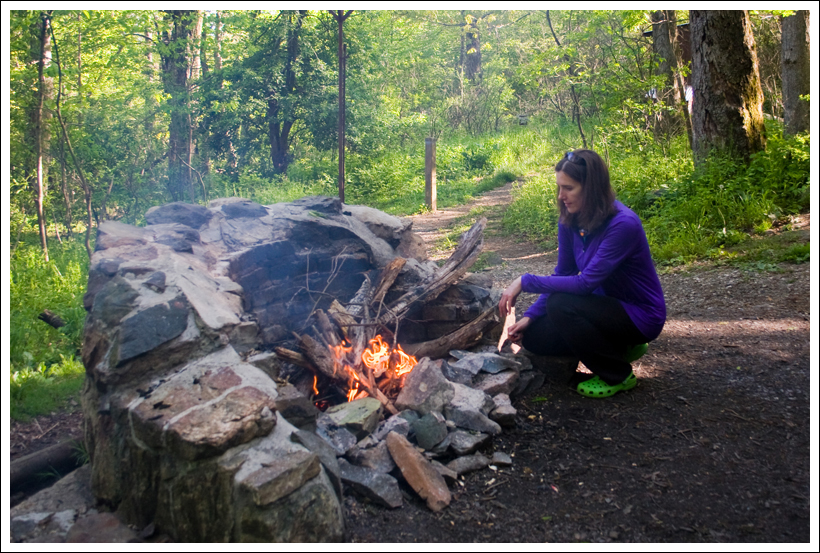
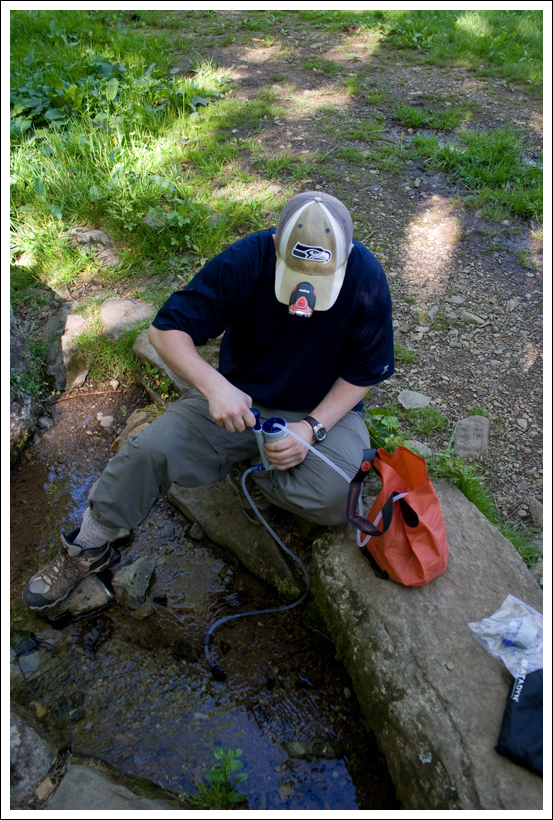
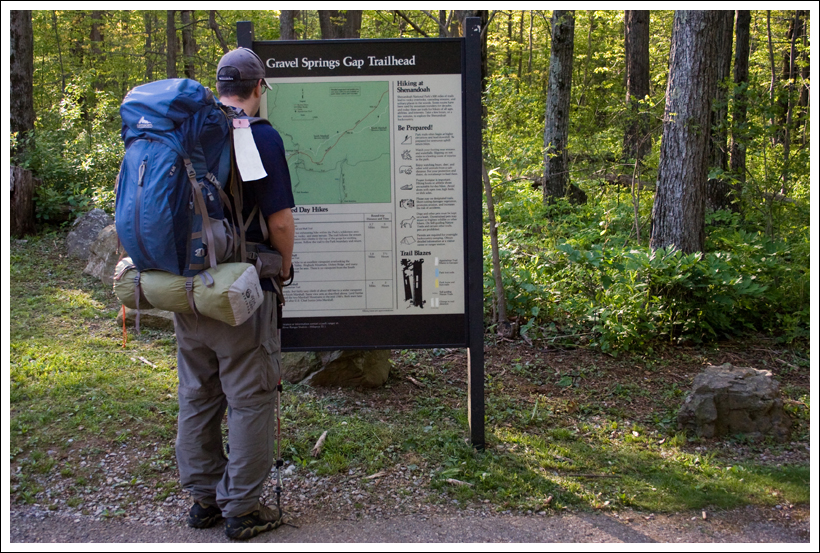
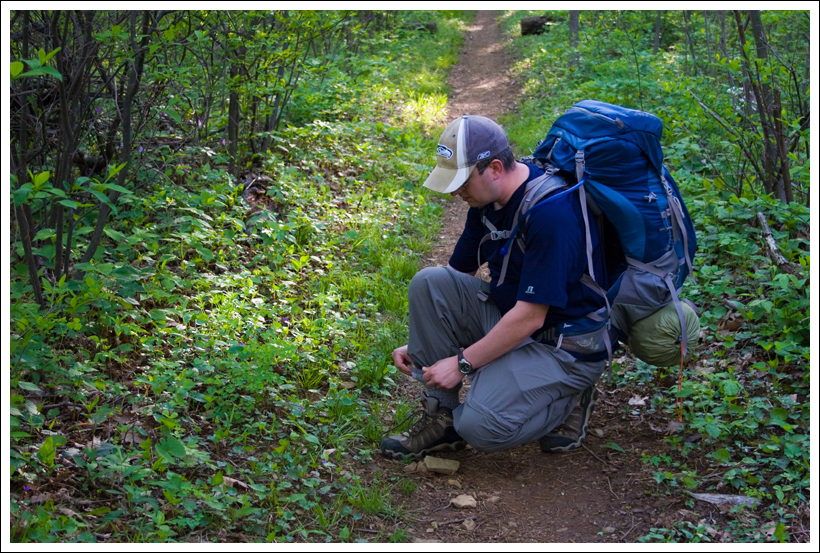
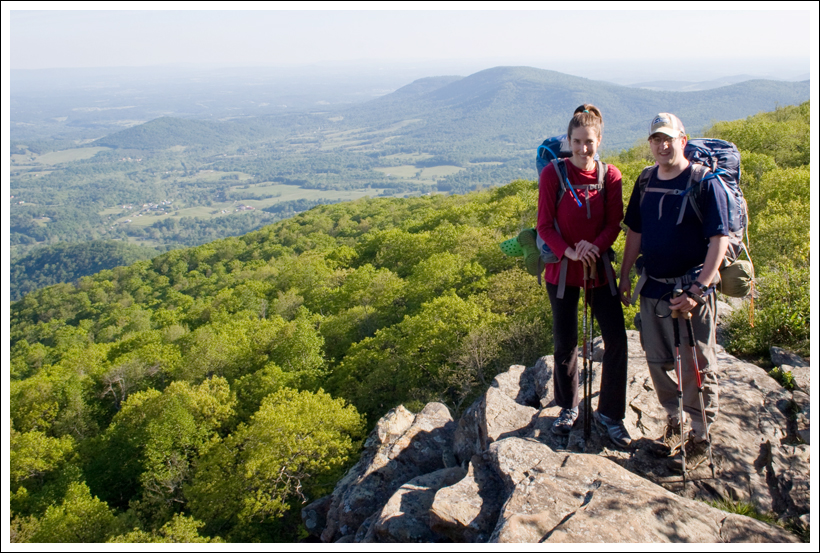
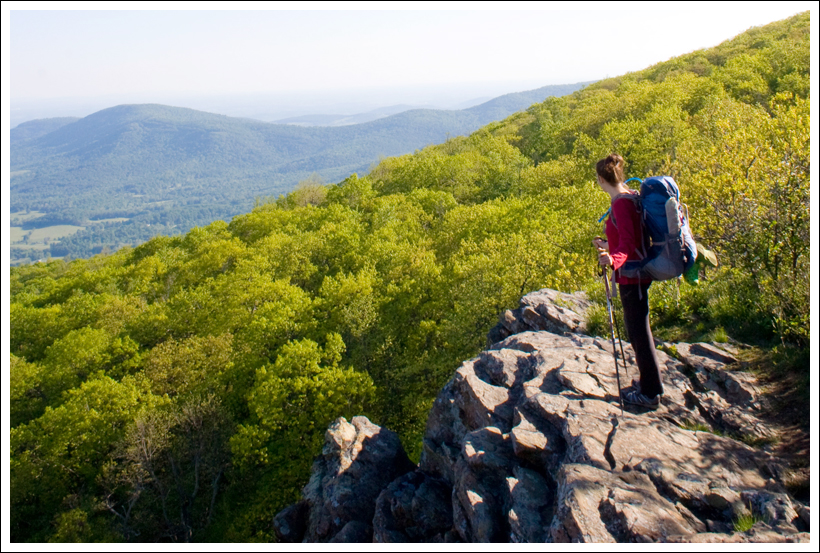
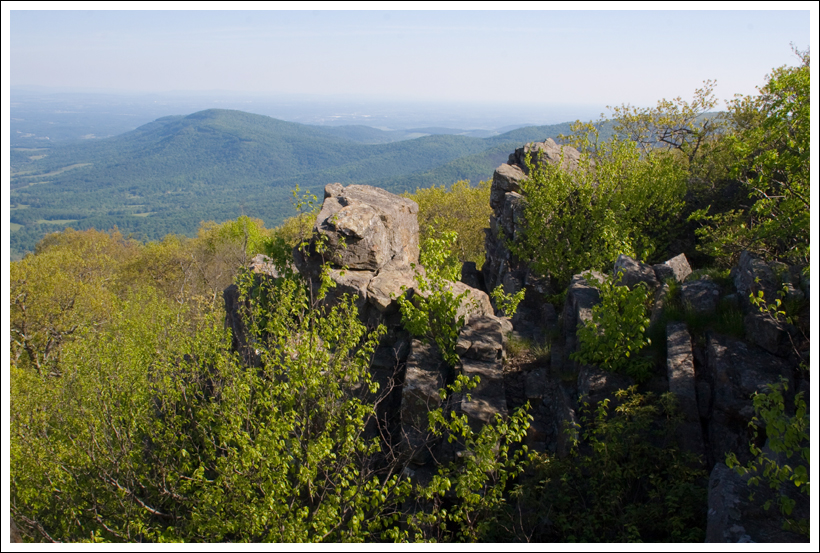
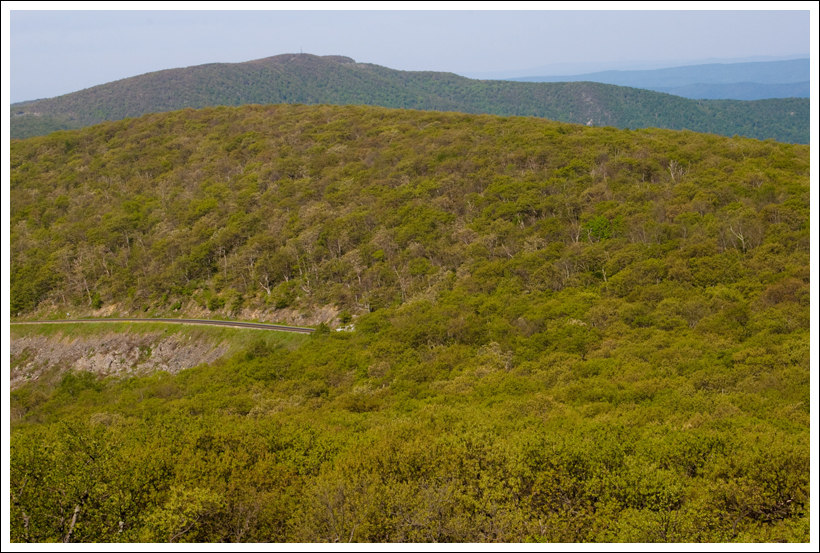
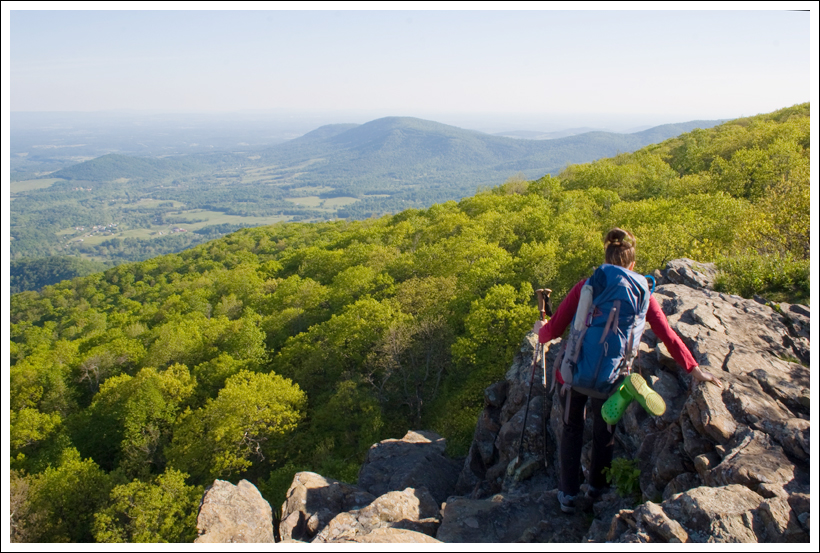
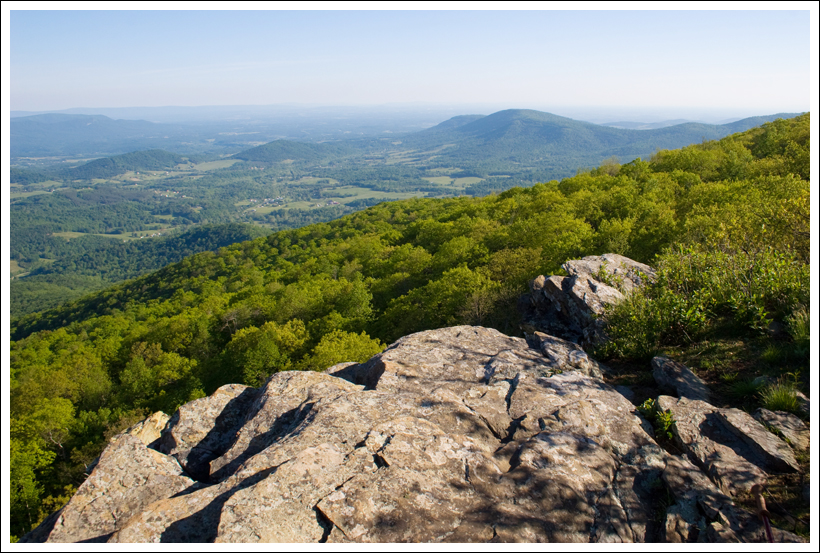
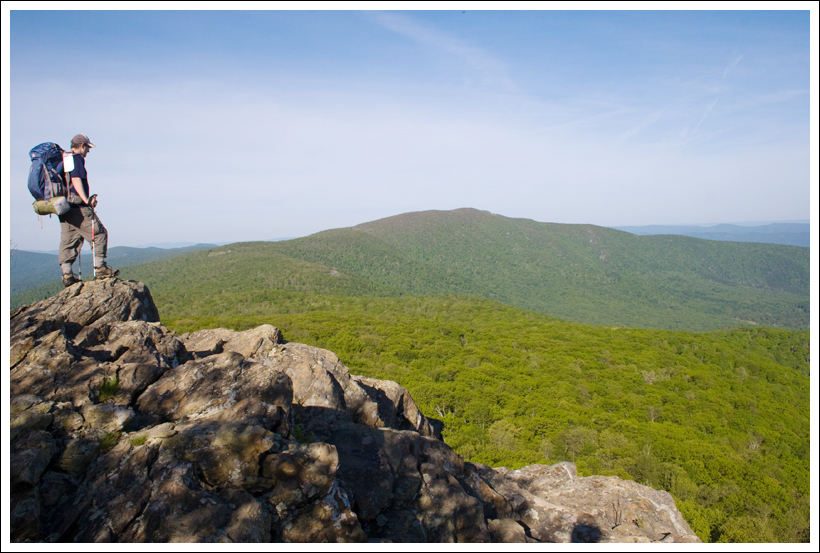
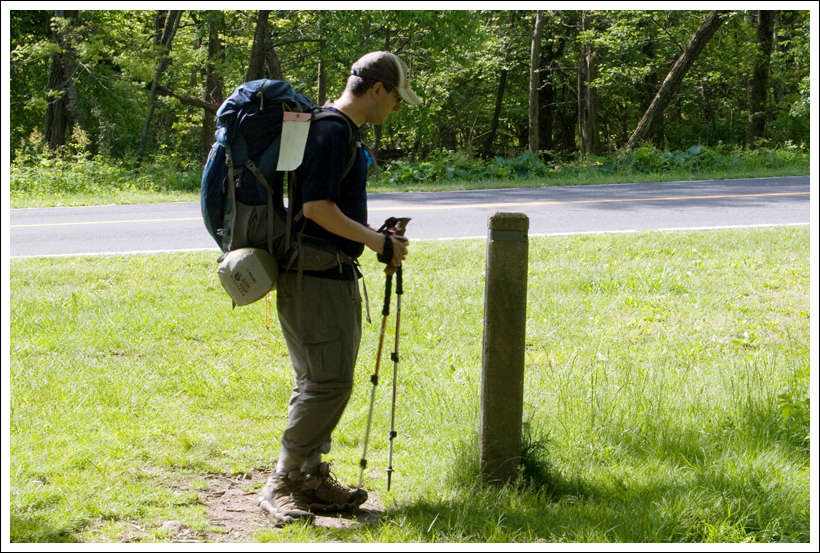
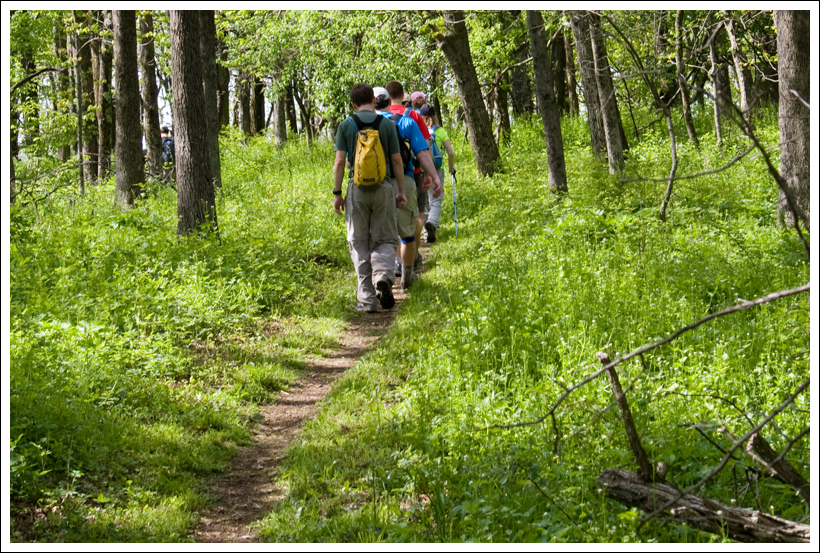
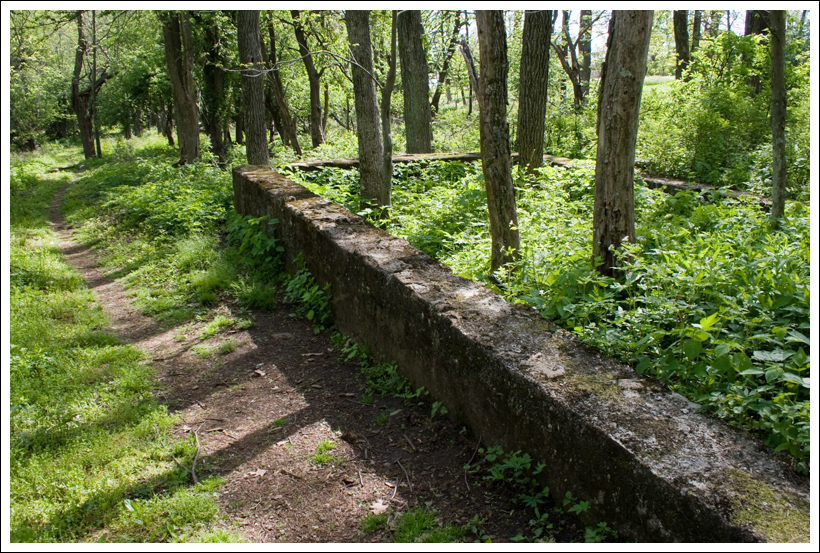
 Virginia Trail Guide