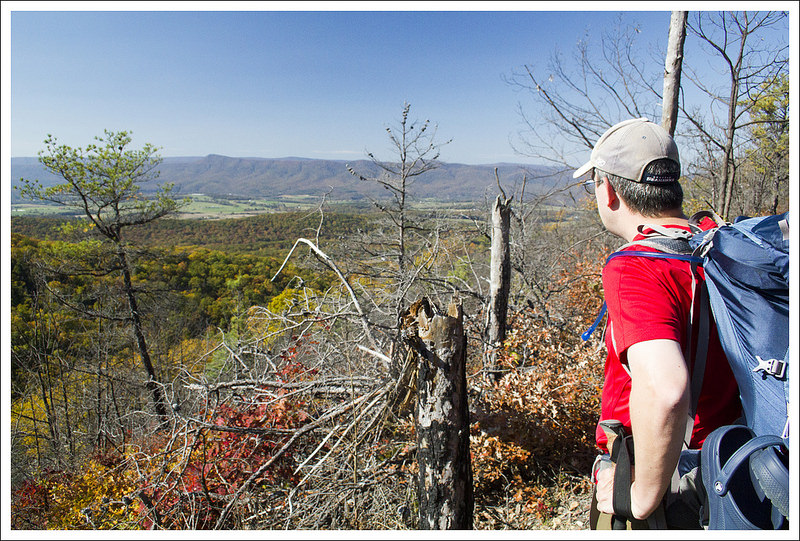
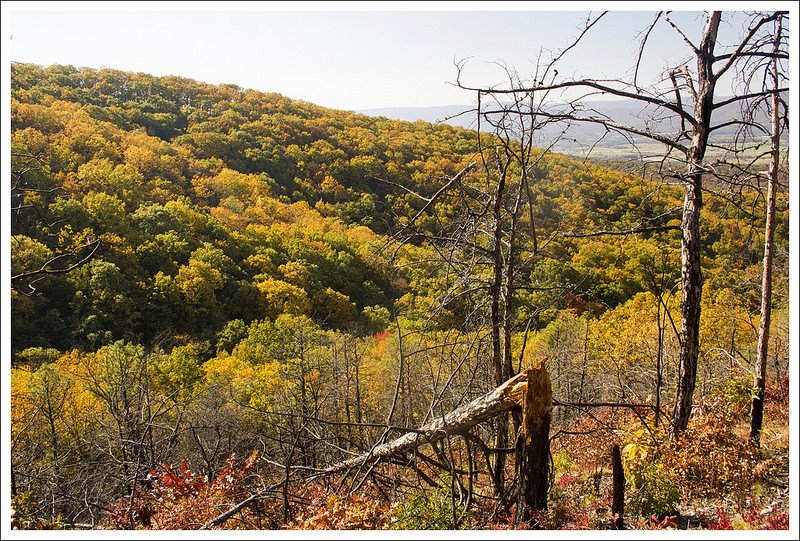
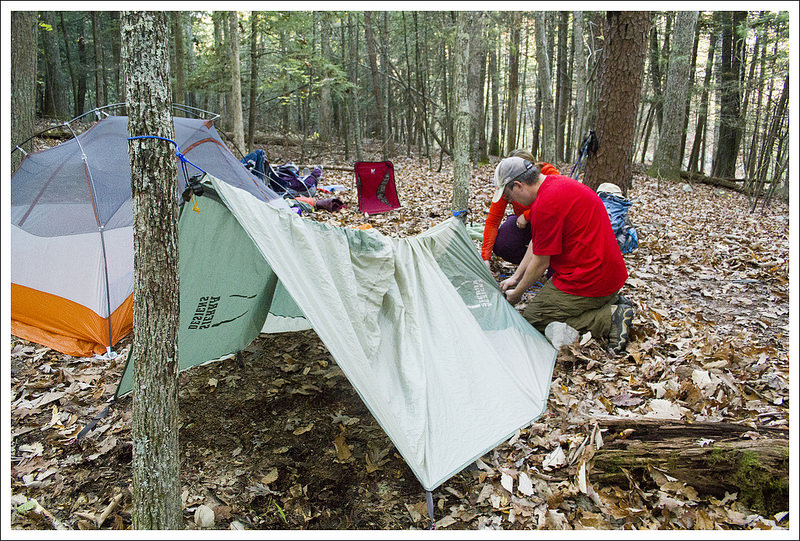
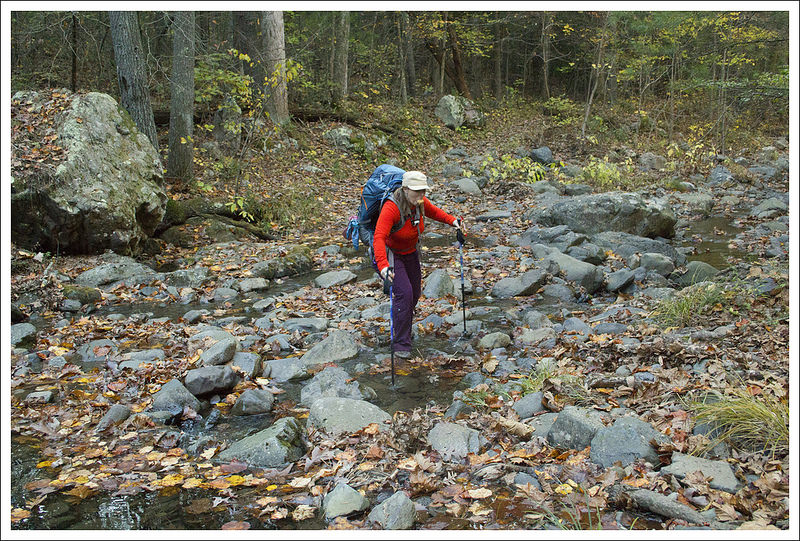
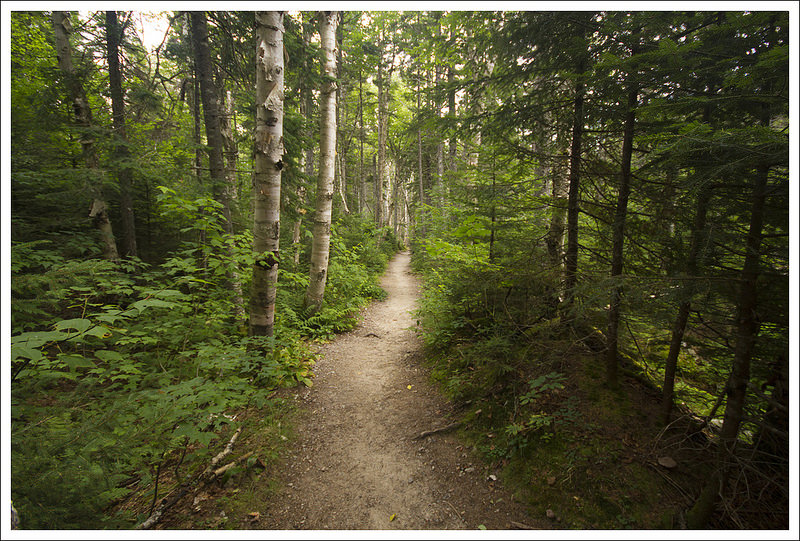
Moormans River & Big Branch Falls

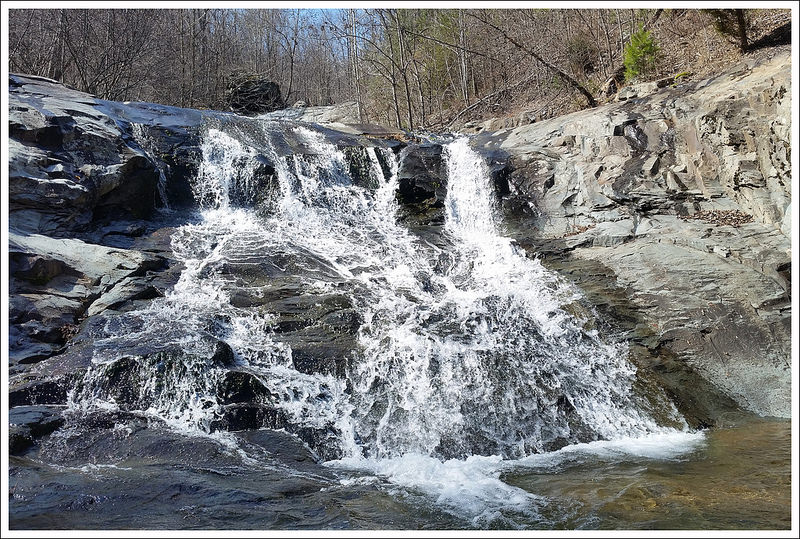
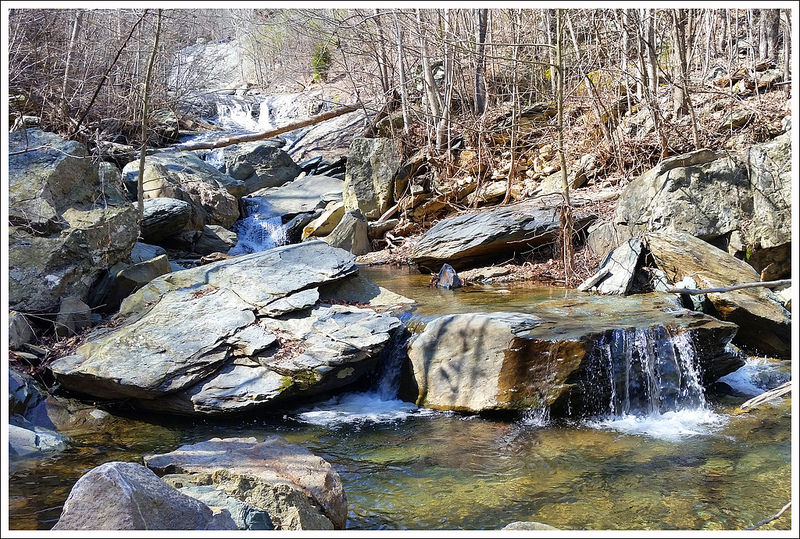
This 4.5-mile hike is close to Charlottesville and is extremely popular for its beautiful river scenery, swimming holes, and waterfalls.

View the Full Album of Photos From This Hike
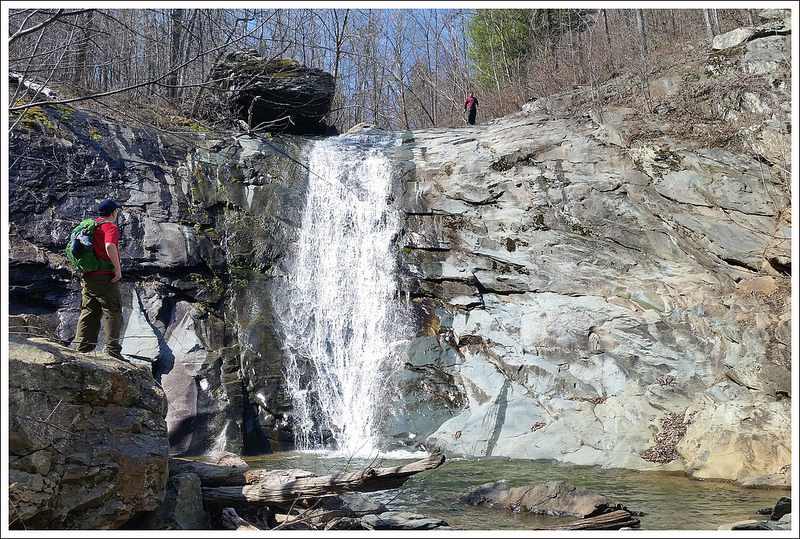
Adam at the Falls
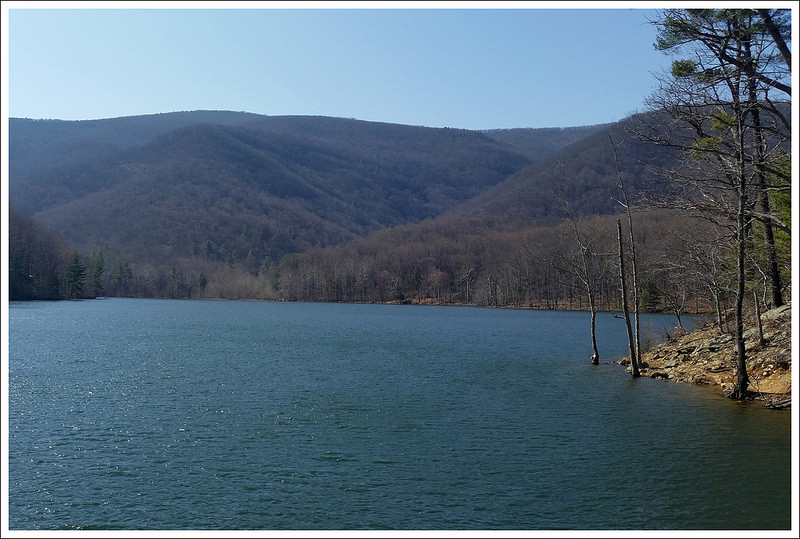
Adam at the Falls. Below: The beautiful Moormans River; Sugar Hollow Reservoir; Lunch stop after the hike.

Moorman's River Reservoir Crozet Pizza

Adam Says…

For people that are looking for a nice family-friendly waterfall near Charlottesville, look no further than this hike.  In fact, it was rare to not see groups of people that weren’t hiking as a family.  Most of the families with smaller children tended to stop along the river at some of the crossings to eat a snack or try and skip stones.  And I can’t think of any hike that I’ve been on where I have as many dogs on a trail.  So, if you want to take Fido for a walk (and a possible dip in the river) near Charlottesville, this would be a great spot as long as your dog is friendly with other dogs.  We saw a couple of dogs that were running full speed chasing each other and crashing into the water.  The park requires all dogs to be leashed, but we saw many (most!) people breaking this rule.

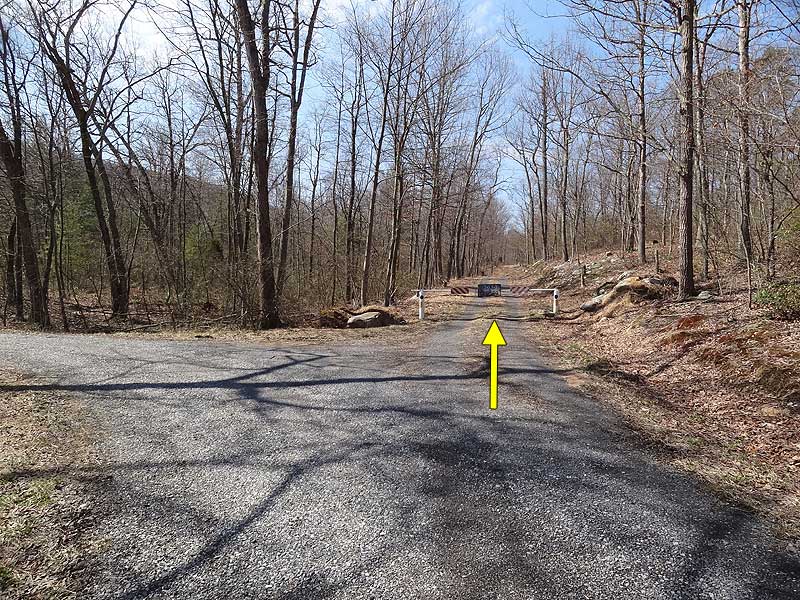
When we arrived at the trailhead, there were a ton of other cars here.  There are two parking lots on this hike – the first being the larger lot and the second being a half-mile further up a rough road, but I would recommend having a four-wheel drive due to the uneven ground (even though we did see a convertible BMW driving on here with reckless abandon).   The first, main parking lot was full, so we ended up parking along the roadside just a short distance prior to the first large parking lot.  From the parking lot, there are two trails.  You want to take the one that continues up the gravel road heading north (North Fork Trail).  Walking up the gravel road, we came to the second parking area at .5 miles.  There is a large closed gate directly behind the lot where the trail continues.

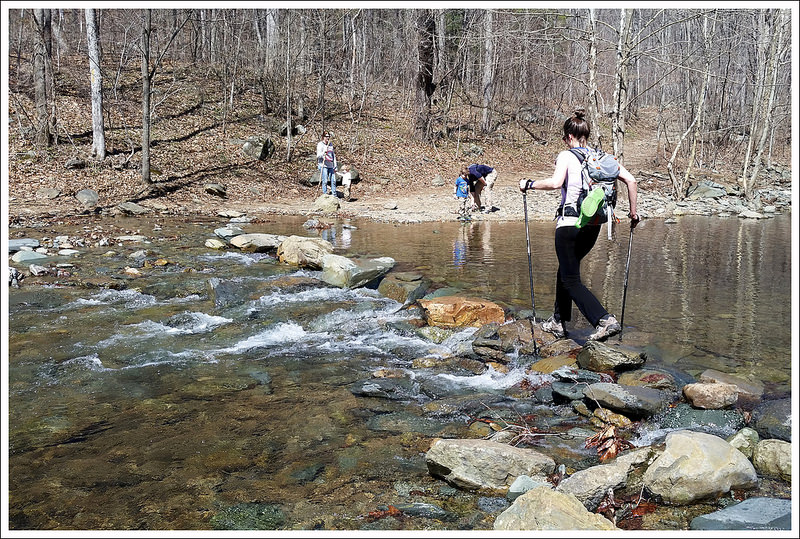
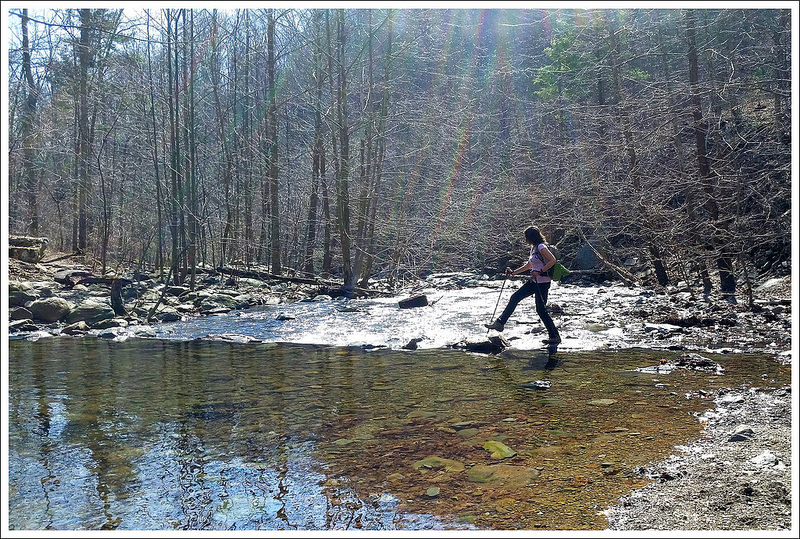
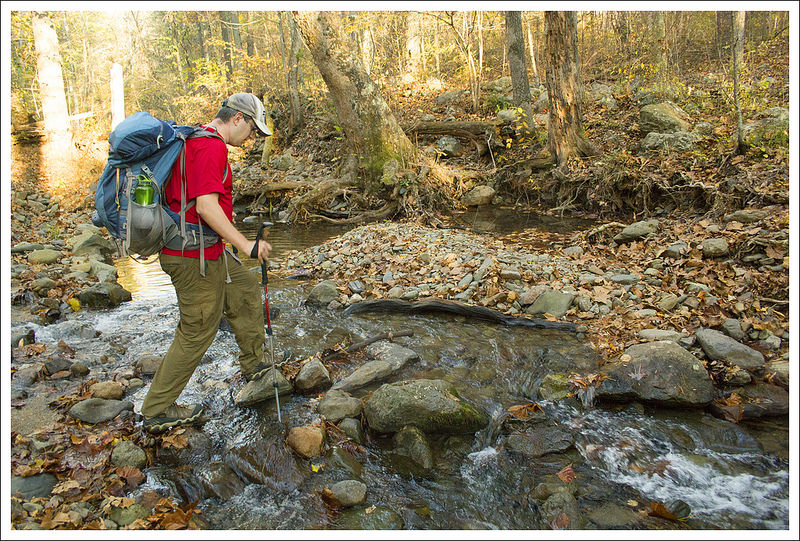
Stream Crossing
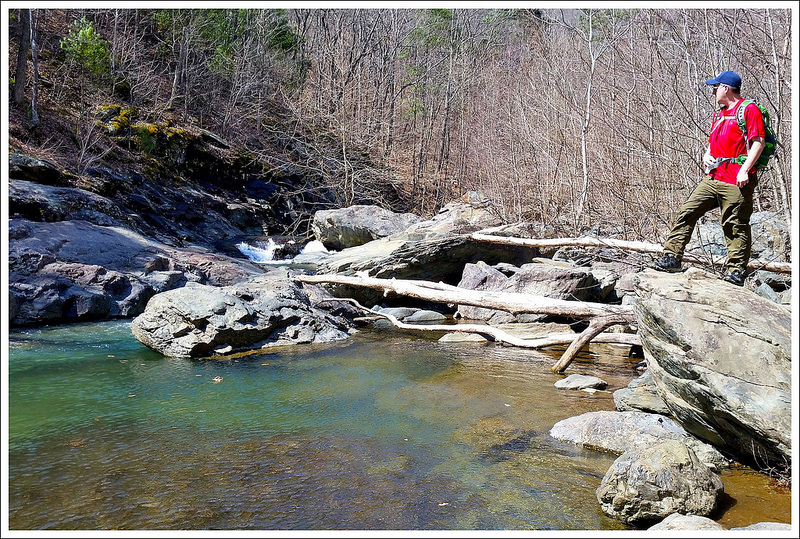
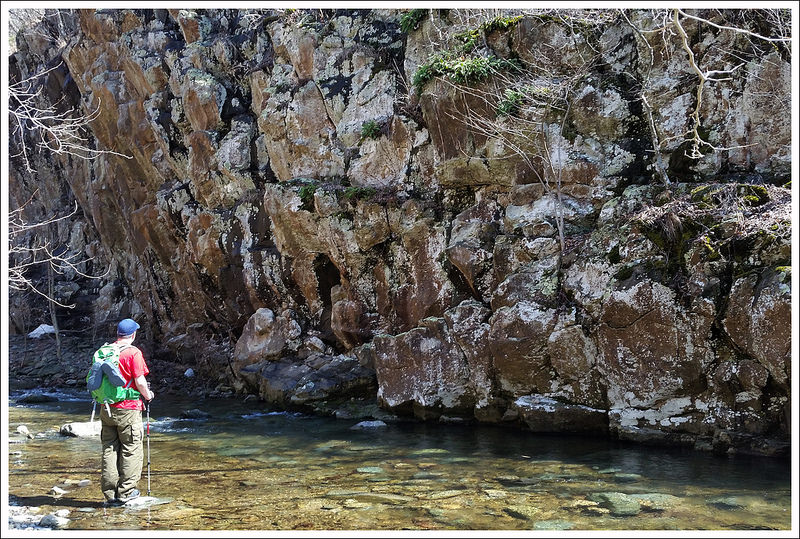
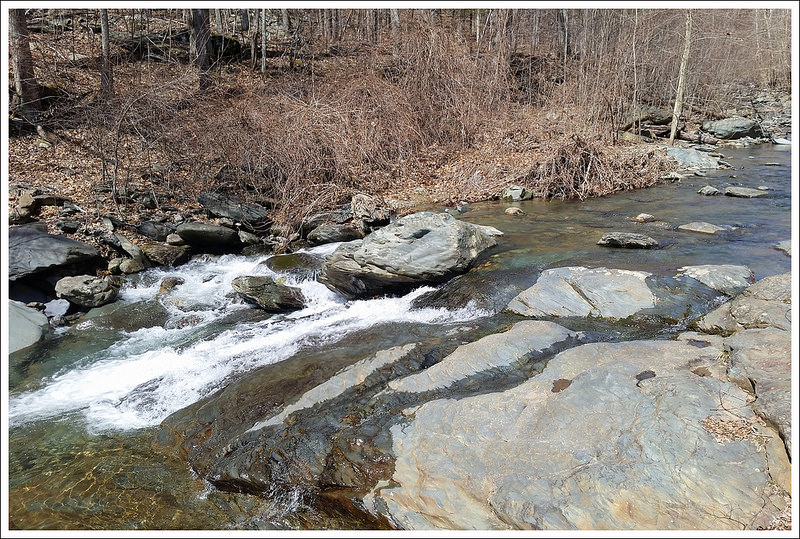
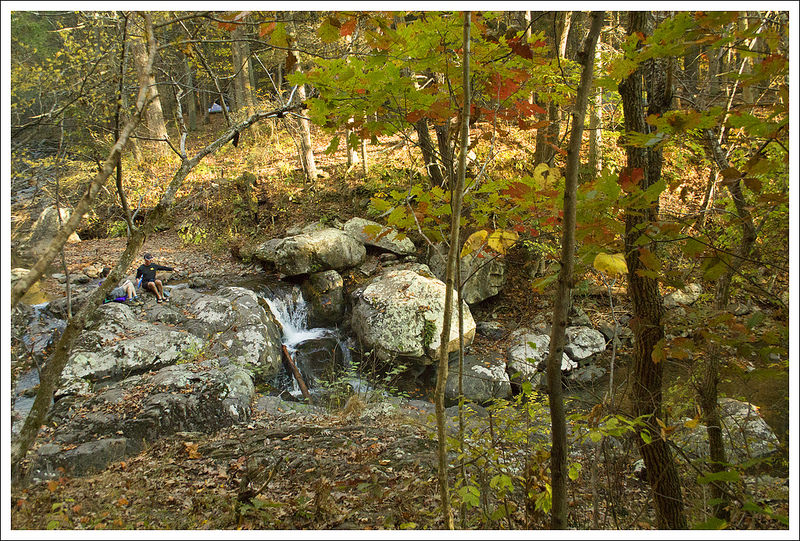
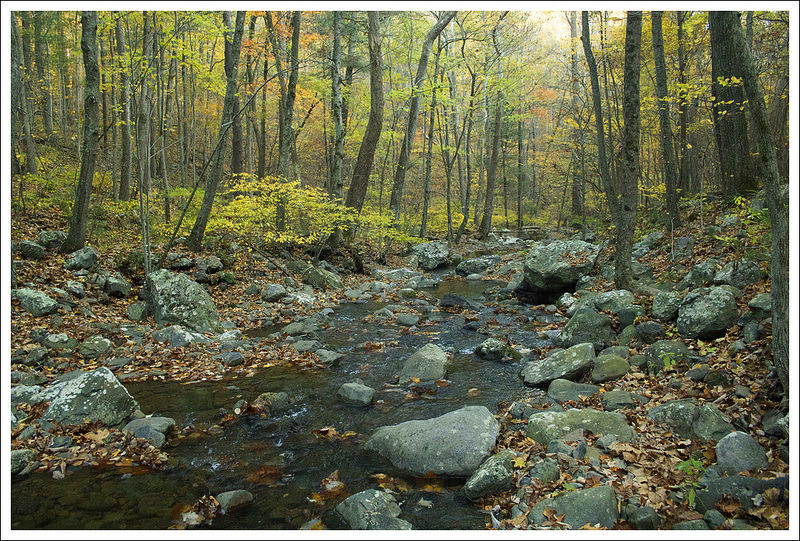
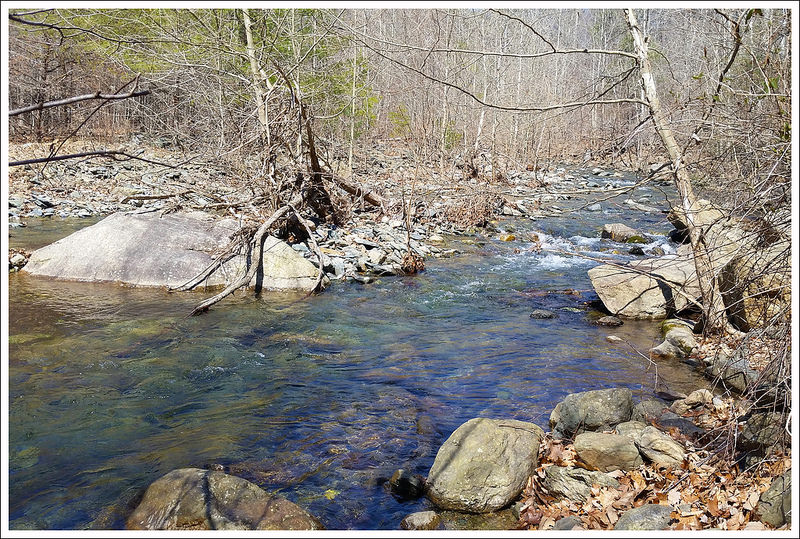
Christine rock hops across the stream. Below: The river was beautiful and clear; Adam checks out the rock wall at one of the crossings; Rapids from above.

Pretty River Rock Wall Scenic River

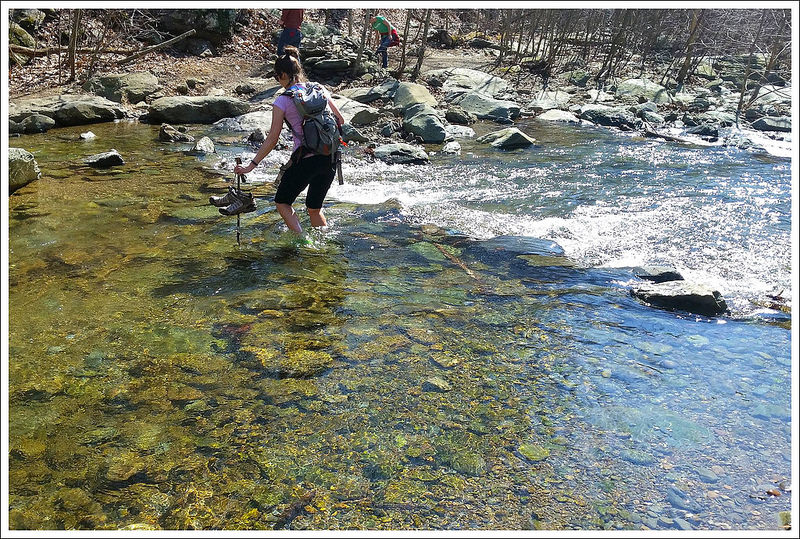
Most of the trail gives you nice views of the Moormans River as you are walking by.  In .75 miles, you reach your first of four river crossings.  There had been a recent, heavy rain so we were expecting these to be a little challenging.  The first three of the rock crossings were fairly easy to rockhop across.  The fourth crossing however required us to get our feet wet in the fast-flowing current.  We brought our crocs to change into for just this occasion and the cold water was refreshing.  It always makes us a little nervous carrying camera equipment though when the water is moving fast and you are not 100% sure of how deep the water is or if the rock you are putting your foot on is stable.  The water ended up halfway up my calf at one point, so if there has been a lot of rain, be careful.

At the 2.0 mile marker, the trail starts to gain some elevation.  At 2.15 miles, we took the side trail to Big Branch Falls.  You arrive at the lower falls fairly quickly, but continue further and you will see the larger Big Branch Falls at 2.25 miles.  Because of the recent rains, the water was flowing nicely over the top, but probably during the dry summer months, this would be less impressive.  After we took some time to enjoy the falls, we headed back the way we came to get back to our car at 4.5 miles.

After our trip, we headed to nearby Crozet, VA to try Crozet Pizza.  We had heard about how wonderful their pizza was for about 25 years now and I’m glad to say that we finally got to try it.  Then, we stopped right down the road at Starr Hill brewery to sample a few post-hike beers.

Christine Says…

What a beautiful March day we had to hike Moormans River!  It was the first day in a long time that actually felt warm.  Early wildflowers were starting to bloom and the sunshine felt great.  We started out pretty early, but found the parking lot already completely full at the trailhead.  We had to find a place alongside the gravel road with enough room to park our car.  After we were situated, I started MapMyHike, grabbed my camera, and started hiking.

I pointed my camera up to take a shot of the first trail marker, and the camera wouldn’t even turn on! Hmm… I had recently charged the battery, so it didn’t really make sense.  I pulled out the battery and memory card to reset everything, and still no power.  I figured that I had finally killed my Canon Rebel T2i.  That camera has accompanied me on countless hikes.  It’s been rained on, bumped against rocks, left sitting out overnight in the damp.  I’m not careful with it at all, because I find I just don’t take photos when my camera is safely packed away in its padded, waterproof bag.  I knew it would eventually meet this end.  So… today, you get photography from my cell phone!  Honestly, my phone takes decent photos – just not quite as nice as my dSLR. (Fortunately, when I got home, I found that the battery was drained after all.  I guess I stored it accidentally with the power button depressed.  The Rebel lives to fight another day!)

Lower Falls
The lower falls are really pretty. Below: A view of the upper and lower falls; Rock hopping; One crossing was too deep to rock hop – so we waded.

Looking up the Falls First Attempt  Better Wading

The water was flowing beautifully and we really enjoyed the sights and sounds of running water all through our hike.  The trail was one of the easiest we’ve hiked in a long time. It’s relatively level and not too rocky.  The stream crossings were all moderate to easy, with the exception of the final one. The last crossing required us to put on water shoes and wade across.  We saw several people attempt to rock hop, but they all ended up with wet boots.

When we reached the spur trail to the falls, there were several groups of people at each viewing point.  We waited our turn and spent a few minutes enjoying and taking photos of the upper falls. One group had climbed up to the top of the falls and was picnicking on the rocks alongside the cascade.  A man with the group walked out to the precipitous, domed edge of the falls several times. We were worried he might slip and have a nasty fall to the rocks below. Thankfully that didn’t happen!

On our way back down, we scrambled off the trail to a rock shelf beneath the lower falls. On the climb back up, I stuck my trekking pole in a hidden hole.  When the pole suddenly dropped and vanished under the weight of me climbing up, I slipped and smashed the bridge of my nose into the trekking pole handle.  Wow – did that hurt!  I thought I hit hard enough to break the skin open, but thankfully it was just swollen and lightly bruised.  Between that and the broken camera, it was not one of my luckier days on the trail!

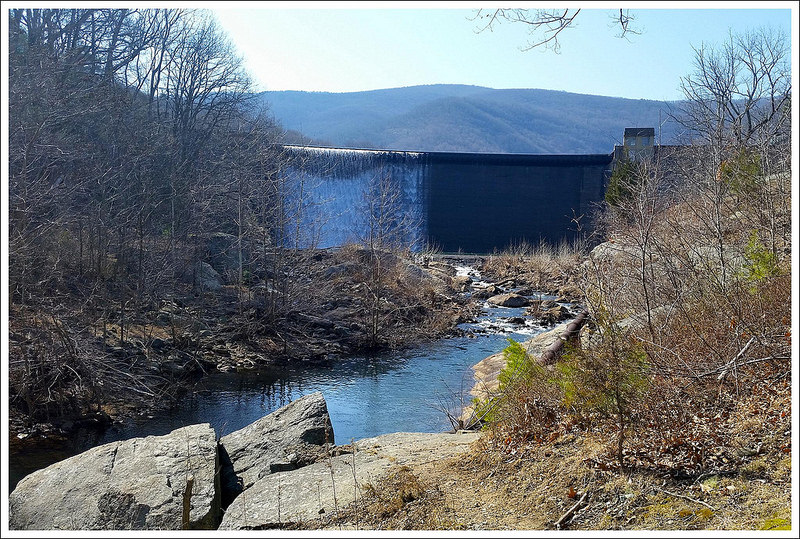
Dam and Reservoir
The dam and reservoir. Below: Yum – Crozet Pizza; Flight at Starr Hill.

Crozet Pizza Starr Hill Beer

The hike back went very quickly.  After we got back to the car, we made our way to a great lunch at Crozet Pizza and a flight of beers at Starr Hill.  It was a fun day!  I would definitely recommend this hike when there has been significant, recent rain.  The falls dry up pretty quickly.

Trail Notes

  • Distance – 4.5 miles
    (Check out the stats from Map My Hike)*
  • Elevation Change – 625 ft.
  • Difficulty –  2.  The hike is not difficult with the distance and elevation, but the stream crossings could be a challenge.
  • Trail Conditions – 4.  The trail is heavily-used and well-maintained. 
  • Views  1.5.  You do get some elevated views of the river.  Views from the top of the dam (after the hike) are really nice too, but don’t count in the score because they’re not technically part of the hike!
  • Streams/Waterfalls – 4.  The waterfalls are nice to see (but could be disappointing in dryer months), but the highlight is probably walking along Moormans River. 
  • Wildlife – 0.  Due to the location and popularity, I wouldn’t expect to see much. 
  • Ease to Navigate – 4.  Once we knew where to go from the parking lot, it was easy to navigate. 
  • Solitude – 1.5.  I would expect on a nice day, you should see lots of people.  Go early to beat the crowds and to get parking. But, there weren’t as many people going all the way to Big Branch Falls.

Download a Trail Map (PDF)

Directions to trailhead:  From I-64 near Charlottesville, take exit 124 for US-250W.  Turn right on 250-W and go 5 miles.  Take the Country Road 654/Barracks Road exit.  Turn right on Barracks Road and go 2 miles.  Continue on SR 601/Garth Road for 9 miles.  Continue straight on to Sugar Hollow Road for 5.5 miles.  When you pass the Sugar Hollow Reservoir on the left, you are getting close.  The road turns into gravel and you will eventually arrive at the first large parking area.   Park here and walk further up the road for .5 miles until you reach the second parking area and closed gate.

Furnace Mountain – Austin Mountain Loop

This 12-mile loop combines numerous park trails into one great route!  You’ll pass by several gorgeous viewpoints, walk along pretty Madison Run, and cross massive talus slopes.  It’s a challenging hike with about 3,000 feet of climbing.

View the Full Album of Photos From This Hike
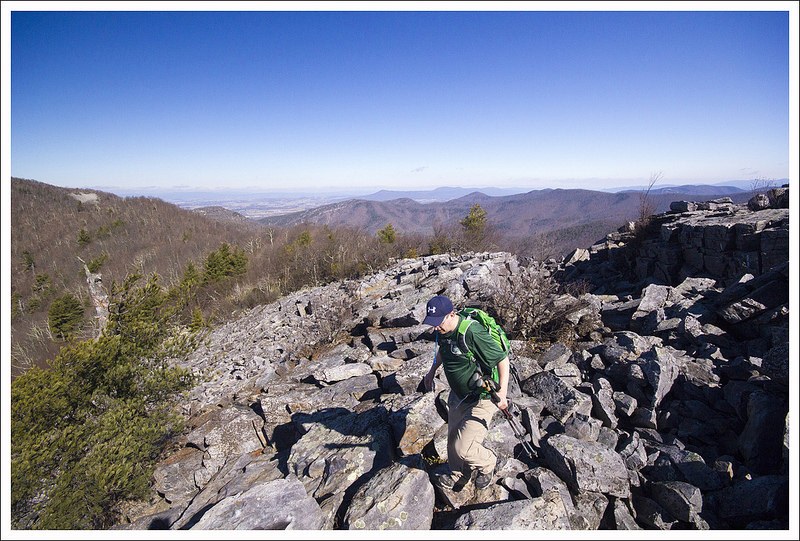
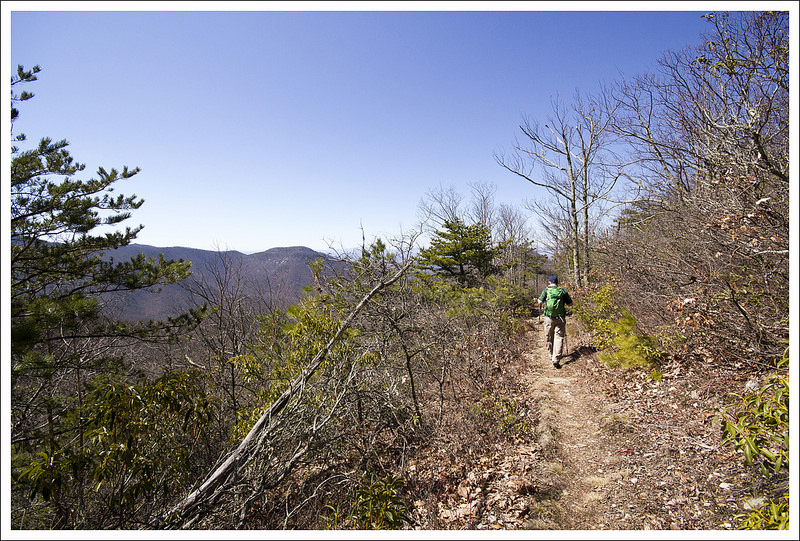
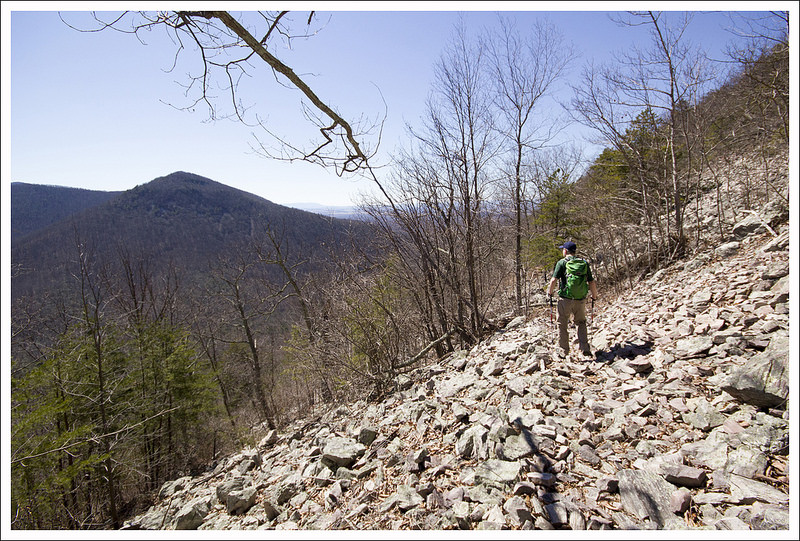
On the Shoulder of Austin Mountain
Adam crosses one of the large talus slopes on the side of Austin Mountain.

Christine Says…

The Austin Mountain – Furnace Mountain Loop has the reputation of being one of the park’s toughest and longest day hikes.  Not only is the terrain rocky and rugged, there is also a serious amount of climbing involved.  Essentially, you climb up from the valley floor, traversing several mountains along the way – Furnace, Trayfoot, Blackrock, and Austin. While you don’t technically reach the summits of Austin or Trayfoot, you come within a couple hundred feet of these viewless/inaccessible summits.

Most sources begin this hike from the Browns Gap parking area on Skyline Drive.  For us, it’s a much shorter drive to start down in the valley, at the park perimeter near Grottoes.  We parked along the roadside where Browns Gap Rd meets the Madison Run fire road.  This is a popular park entry point for hikers and equestrians alike.  It can get crowded if you don’t get an early start on the day.

Crossing Madison Run
Adam crosses Madison Run. Below: Pretty sun rays on the fire road; Walking up Furnace Mountain; Small talus slopes and views on the Furnace Mountain trail.

Browns Gap Fireroad Climbing Furnace View from the Furnace Mountain Trail

After walking up the Madison Run fire road for a short distance, the Furnace Mountain trail begins on the right with a rock-hop crossing of Madison Run.  For a little over a mile, you’ll ascend Furnace Mountain before coming to a cement post that marks the spur trail to the summit of Furnace Mountain.  The spur trail is about half a mile and leads to a fantastic viewpoint.  You can see Skyline Drive if you look carefully.  If you look across the gorge, you’ll see the huge talus slopes of Austin Mountain that you’ll cross later in the hike.  On this particular day, we skipped the side trail to the summit of Furnace.  We had hiked Furnace Mountain just a few weeks earlier and knew we had many miles to go and other views to enjoy along the way.

The ascent continues in earnest along the Furnace Mountain Trail.  Eventually, you’ll come to a junction with the Trayfoot Mountain trail.  Take a left and descend.  This trail is an old road bed, so it’s wide and nicely graded.  After a few tenths of a mile, you’ll come to another cement marker post.  Follow the trail to the right in the direction of Blackrock Summit.  This rocky jumble will be your best view on the hike!  We chose to eat lunch at this spot.  That probably wasn’t the best of ideas, because the strong wind made the summit bitterly cold.  It’s no fun to eat PB&J with your teeth chattering and while you’re wearing gloves.  Needless to say, we ate quickly!

Overlook on Furnace Mountain
The view from Furnace Mountain. Below:  From Furnace Mountain you can see the massive talus slopes on Austin Mountain; Looking back at Furnace Mountain; Junction of Furnace Mountain and Trayfoot Mountain trails.

View of Austin Mountain from Furnace Mountain Looking Back at Furnace Mountain Furnace-Trayfoot Junction

Rounding Blackrock Summit leads you to the Appalachian Trail.  To continue this route, head north on the AT for a couple miles until you reach the Browns Gap parking area on Skyline Drive.  This section of AT is fast going – it’s practically flat and uncomplicated.  You’ll pass the Dundo picnic area along the way.  If you run out of water, there is a clean tap at the picnic area.

From the Browns Gap parking area, follow the fire road downhill for .8 of a mile.  A cement post on the right marks the Madison Run Spur Trail.  This trail will go steeply uphill to a junction with the Rockytop and Big Run trails.  Bear to the left on the Rockytop trail.  Follow the Rockytop trail for several tenths of a mile until you reach another cement marker for the Austin Mountain trail. If you hike when leaves are off the trees, you’ll get some great ridge views in this area.

Once you turn left onto the Austin Mountain trail, you’ll have a little over 3 miles to go before you hit fire road again.  The terrain starts off easily enough, following a lovely ridge overlooking Dundo Hollow and Furnace Mountain (from earlier in your hike).   The views are really nice, and it’s impressive to look back on all the distance you’ve traversed!

Adam on Blackrock Summit
Adam takes in the view from Blackrock Summit.  Below: View from the Trayfoot Mountain trail; Arriving at Blackrock summit; Playing on the rocks.

View from Trayfoot Trail Blackrock Summit Blackrock Summit

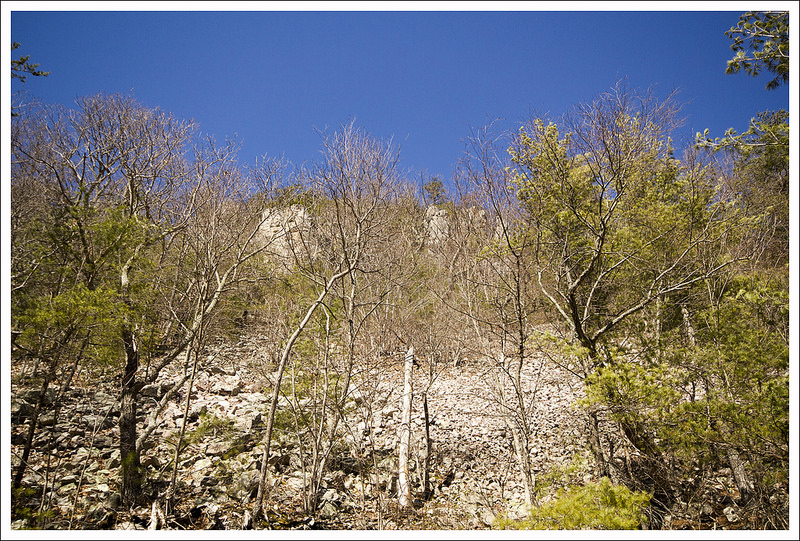
But a little over a mile along the Austin Mountain trail, the talus slopes begin.  From there, it’s an endless field of loose rocks for nearly a mile.  When you think you’re done with rocks, surprise… there are more rocks!  Don’t miss looking up and behind you – the cliff-like wall of Austin Mountain looks like a crenulated castle wall. After you cross the last talus slope, you have a steep, knee-grinding descent back to the Madison Run fire road.

Once you reach the fire road, you just have a easy .6 mile road-walk back to your start point.  The stream is especially scenic along this stretch.  After getting back to the car, we decided we had earned milkshakes!  It was a fun day and a great challenge!

Adam Says…

We decided to try and tackle this loop since we wanted to get some good training for some longer hikes.  While we were able to get out and do a few good hikes over the winter months, this was definitely a challenging hike to do before we (or at least I) had gotten my “summer trail legs”.  This particular hike did a toll on me, especially the last couple of miles.

Junction of Trayfoot with the Appalachian Trail
The junction of the Trayfoot Mountain Trail and the Appalachian Trail. Below: Hiking the AT; Arriving at Browns Gap and the fire road; The junction with the Austin Mountain Trail.

Appalachian Trail Spur Trail Junction of Big Run & Austin Mountain Trails

The water across Madison Run was running a little higher and faster than normal, but we were able to rockhop across and begin our hike.  The hike up Furnace Mountain is a steady uphill, but does lead to some nice views along the way.  There is one section that has a small talus slope that we thought was impressive, but little did we know what Austin Mountain would bring later in the day.  At the junction of the spur trail, we met a couple that was doing the same loop but camped along Madison Run that morning.  They had started from the Browns Gap parking area in Shenandoah National Park, but had a day of mostly uphill climbing this day.  As Christine mentioned, we decided to skip the overlook and made our way to Blackrock Summit.

Talus Slopes
Huge talus slopes on Austin Mountain.  Below: Views from the Austin Mountain Trail; Talus slopes and a view of Furnace Mountain; Descending Austin Mountain.

Walking the Austin Mountain Trail Looking at Furnace Mountain from Austin Mountain Steep Descent of Austin Mountain

At Blackrock, the wind was incredibly strong and cold.  There was still ice in the crevices between the rocks in most places.  We sat out to eat some lunch, but our hands were trembling in the cold, which made for challenging and rushed eating.  We quickly got out of there and joined the Appalachian Trail, heading north.  We made quick time on this flatter section of trail and crossed Skyline Drive.  The trail stays close to Skyline Drive until you reach the Dundo picnic area (which does have bathrooms if you need it).

Passing the picnic area, we crossed Skyline Drive again after 6.5 miles.  After crossing the road, we made our way through the parking lot and crossed the gate blocking the fire road.  Heading down the fire road was easy walking.  At mile 7.3, we spotted the cement post on the side of the road, leading up the Madison Run Spur Trail.  This section was steep but short as we reached the crest and junction with the Rockytop Trail.  We took a left here which continues uphill and reaches the junction with the Austin Mountain Trail around 8.2 miles.  Bear to the left and the trail begins to go downhill finally.

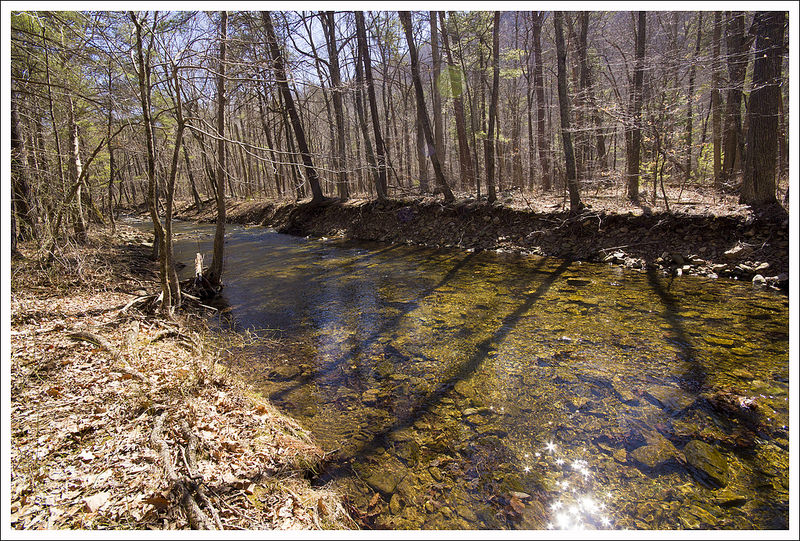
Madison Run
Pretty Madison Run.  Below: Crenulations on Austin Mountain; Adam coming down to the fire road; Walking the fire road back to the car.

Spires on Austin Mountain Return to Fire Road Walking the Fire Road

Right before this junction, my IT bands near my right knee began to hurt.  Sometimes when one knee begins to hurt, you tend to overcompensate with the other.  We came across a hiker that was hiking up and he warned us there was a mile of loose rock to walk on.  We soon reached the huge talus slopes.  When you have one leg giving you pain, the last thing you want to see is loose rock footing for as long as you can see.  The views of the slope were impressive, as well as looking across the mountainous valley to see Furnace Mountain, but the pain was keeping me from having the best of times.  With vultures ominously circling above my head, I felt they didn’t have much faith I would make it.  Just when we thought we had reached across the slopes, the trail turns back and works it way down the mountain, giving us lower parts of the slopes and more rocks.  We finally reached the bottom of the trail and joined the Madison Run Road at 11.2 miles.  It was a flat walk along the side of a picturesque creek until we made our way back to the car in .8 miles.

While this was a tough hike, it was rewarding.  This hike has great views, unique geology, and a picturesque creek.  If you don’t want to tackle it in one day, it would make a nice backpacking loop, but I would recommend starting at Brown’s Gap to split the hike and leave you camping by the water source of Madison Run.

Trail Notes

  • Distance – 12 miles  Add .5 mile, each way, if you take the spur trail out to the overlook atop Furnace Mountain.  You can make a shorter, easier loop if you descend via the fire road and skip Austin Mountain)
    (Check out the stats from Map My Hike)*
  • Elevation Change – 2900 ft.
  • Difficulty –  4.5.  The length and amount of climbing make this tough.
  • Trail Conditions – 2.  While the trail was well-maintained, the footing on the talus slopes brings this score down due to the challenge of walking on loose rock for over a mile of the trail.   
  • Views  4.  You have nice views from Furnace Mountain if you add that spur, but Blackrock Summit and views along the Austin Mountain Trail make it worthwhile.
  • Streams/Waterfalls – 3.  Madison Run is a nice wide stream and reliable water source year-round.
  • Wildlife –2.  We didn’t see much, but there have been bear sightings along the Austin Mountain portion of the trail.
  • Ease to Navigate – 2.5.  There are lots of trails that cross, so pay attention to the signs.  The trickiest is around the Blackrock Summit area.
  • Solitude – 3.  You will likely see people at Blackrock summit, but not a lot of activity elsewhere. 

Download a Trail Map (PDF)

Directions to trailhead:  From I-81, take exit 256 heading east towards Weyers Cave.  Go 6.6 miles and take a left on US-340/Augusta Avenue.  Go .1 miles and take a right on Cary Street.  In .2 miles, continue on to VA-663/Brown’s Gap Road.  In 1.9 miles, turn right on to the dirt fire road.  Follow this 1.1 miles and you will reach the parking area.  Look for the concrete post for Furnace Mountain which will have you instantly rock-hopping across Madison Run to start your hike.

MapMyHike is not necessarily accurate, as the GPS signal fades in and out – but it still provides some fun and interesting information.

Appalachian Trail – Reeds Gap to Dripping Rock

This 9 mile hike’s distance could be cut in half if you have a car shuttle.  When we hiked it, the Blue Ridge Parkway was closed for ice/snow, so we ended up parking at Reeds Gap, walking 4.8 miles on the Appalachian Trail and then walking 4.2 miles back along the closed parkway. Typically, this would be an easy hike with a couple nice views.  In our case, it was a challenging icy hike in (occasional) white out conditions!

View the Full Album of Photos From This Hike
Snow Along the Blue Ridge Parkway
It’s a real treat to walk the Blue Ridge Parkway when it’s closed to vehicular traffic. Fresh snow made the view spectacular. Below: The parking area at Reeds Gap was icy when we arrived; Adam walked along the iced Appalachian Trail; Everything was fully coated with a glaze of ice.

Reids Gap Parking Icy Appalachian Trail Coating of Ice

Adam Says…

As we slowly work on completing the entire Appalachian Trail through Virginia, we sometimes end up with small gaps in our contiguous miles.  This 4.8 mile section was one of those and it was proving to be our nemesis.  We had tried to share a shuttle with friends and park at both ends, but a closure of the parkway made those plans fall through.

Over our Christmas break from work, we tried to hike it by dropping Christine at one end and I would park at the other, passing in the middle, and then Christine hiking to the car and driving back to pick me up.  It wasn’t preferable to do it this way because we like hiking together, but we really wanted to cover these miles.  But on our way to the drop point, we saw several cars slide off the road (not far from a precipitous, cliff-side drop).  Rain from the day before had left a thin sheen of ice on all the shady, curvy spots in the road.

One of the couples in a car that slid off the road was having a heated argument – he wanted to press on through the icy danger, but she wanted to call AAA and have the car towed off the mountain.  We decided to backtrack and not risk it (especially not knowing the road conditions ahead), choosing to hike near Humpback Rocks instead.   On our way to Humpback Rocks, we saw a park ranger making his way to the slippery road patch. They ended up closing the parkway just south of Humpback Rocks that day.  The parkway closes quite often in the winter. Rangers would rather close the roads than risk having to come up and save people on the trails/roads when weather conditions could make it difficult.

Ice Falls
There were several rock face covered with snow melt and re-frozen run-off. They made pretty ice formations. Below: Christine cross the Blue Ridge Parkway at the Three Ridges Overlook.  The pavement was like a skating rink; Adam makes his way downhill; In many places branches were bowed across the trail.

Christine Crosses the BRP Walking the AT in Ice Through the Branches

After those failed attempts, we decided to try this section again.  The weather forecast suggested a warming, clearing day, no snow in the near future. There had been a short bout of freezing rain the night before, so we were a little concerned about roads, but we knew we could at least make it to Reeds Gap and hike from there. When we arrived at Reeds Gap, we found a few other cars there, but it looked like they were attempting to hike Three Ridges.  We found the sign for the Appalachian Trail and crossed SR 664 to head north on the white-blazed Appalachian Trail.  I was amazed at how icy the ground still was.  It was manageable in normal hiking shoes, but still slippery in parts.  Every step that I took left an icy footprint behind me, which made the trail look like an old Family Circus comic strip.  At the least, they were good breadcrumbs left in case we needed to backtrack on the trail.  Some of the branches from nearby trees were iced over and bowed over the trail, causing us to have to lift them over the trail.   Some broken off pieces looked like broken antlers littering the ground.

After going about .5 miles, the Appalachian Trail crosses the Blue Ridge Parkway.  At this point, the trail descended through some slippery areas, so we decided to put on our Yaktrax to provide some traction.  I don’t know how we would have made progress without them.  After going just another mile or so, it started to snow. At first, it was just a few flurries, but it was picking up.  At 3.5 miles, we came to a sign pointing out a short trail to the Rock Point Overlook.  The snow was coming down so fast at this point, visibility was at a minimum.  We ate a quick snack and then proceeded.  At 4.35 miles, we arrived at the Cedar Cliffs overlook.  The snow had been falling so hard, it was hard to find the trail.  It was at this point, I realized that hiking along the AT in the snow wasn’t the best idea – all the trees were covered with snow, covering up any white blazes that would have been on the trees.  We were so close to finishing this section and didn’t want to turn back at this point.  I had Christine stand in one area that we knew was close to the trail and within eyesight while I scouted ahead to try and find a semblance of trail under our feet.  Eventually, I found the trail again and we proceeded.

Overlook
Views from the first overlook were practically lost to the swirling snow. Below: Sign pointing the way to the overlook;  Snow started coming down harder while we were stopped at the overlook; Within 15 minutes, the icy ground was covered with a generous dusting of snow.

Sign to Overlook Snow Getting Snowier

I started to worry at this point about being able to drive back down from the mountain if the roads were going to be bad.  We made a decision that when we reached the road, we would hike back along the Blue Ridge Parkway to hopefully save time and get us back to our car more quickly.  At 4.85 miles, we arrived back at the Blue Ridge Parkway.  We took a right and headed south along the parkway and we were soon very glad we had made this decision.  We came across some great views at overlooks along the road that we didn’t have along the trail.  And then the snow stopped and the sun came out to start melting the snow, which eased my nerves.  The views were outstanding on the way back as we could see a defining line of snow that had hit the mountains and clear fields at the lower elevations.

While this hike had a little bit of danger due to the weather, it was a visual winter wonderland.  This is the definition of winter hiking.  We arrived back at the gate that was blocking the parkway at 9.0 miles and got back in our car.  We decided to hit Devil’s Backbone on our return trip home and then also stopped at some other Nelson County 151 highlights – Bold Rock Cider’s new tasting room and Silverback Distillery.  It really was a great adventure and it made me feel very lucky to have a wife that will go on such crazy undertakings with me.

NOTE: From research we have done, the starting point is called “Reeds Gap” in some sources and “Reids Gap” in others.  We went with the first spelling since that was how it was listed on PATC and NatGeo maps.

Christine Says…

Finishing this little 4.9 section of AT turned out to be more elusive than I ever would have believed possible. After a few attempts failed due to snow/ice, closed roads, and transportation problems, we finally successfully hiked from Reeds Gap to Dripping Rock!

On the day we accomplished this minor feat, conditions weren’t quite ideal.  There had been a bit of freezing rain the night before, but the weather was forecast to warm and clear over the course of the morning. The Blue Ridge Parkway was still closed, so we couldn’t leave a shuttle-back car at Dripping Rock.  This wasn’t a big deal – instead of hiking 4.9 miles once, we’d have to hike those same miles twice, making a total hike of almost ten miles.  We left our car in the roadside parking on Route 664,  next to the Appalachian Trail crossing. Route 664 (Reed’s Gap Rd.) crosses the Blue Ridge Parkway and is kept open year-round.

At Reeds Gap, everything upright was coated with a thick glaze of ice.  It was foggy and gray and raw.  We headed north on the AT, our feet crunching though the crust of ice.  It was so peaceful and beautiful.

We're nuts
Adam questioned how wise it was for us to hike on a day with such rapidly changing weather. Below: There were some broken trees along the parkway; Adam takes in Ravens Roost;  A little ‘Christmas Story’ reenactment.

Back on the BRP First Views from the BRP Stuck

The Appalachian Trail soon crossed the Blue Ridge Parkway at the Three Ridges Overlook.  The asphalt was like a skating rink!  It looked like regular pavement, but it was as slick as a slip-and-slide.  I could totally understand why the park service closed the road!

After crossing, there was a slight descent and the terrain became a little rockier.  I started to lose my footing, so Adam helped me into my traction.  The ice wasn’t thick enough or hard enough for Microspikes, so we went with Yaktrax.  Mine are a touch too small for my boots, so getting them on is a two person effort.  I brace on a rock and Adam yanks the Yaktrax with all his might until they snap into place!  One day, I’ll buy some bigger ones.  🙂  Fitted with traction, we moved swiftly along with sure, confident footing.  Snow started falling – flurries at first, then in earnest.  It wasn’t supposed to snow, so we trekked on hoping the skies would soon clear up (like they were supposed to!) Ah… mountain weather at its unpredictable best!

We reached a small sign pointing us to the Rock Point Overlook.  As we looked off the rocky outcropping, all we could see was clouds and swirling snow.  Every now and then the clouds moved enough that we could see mountains on the other side of the gap.  We ate a quick snack and moved on.  The snow just kept coming down faster and faster.  We started feeling a little worried about getting back to our car and finding Route 664 impassable.

Blue Ridge Parkway
There were many beautiful views along the parkway. Below:  It was neat to see the snowless valley below; During the last few miles of walking, the sun came out and melted the snow off the road; Another pretty valley view.

Views along the BRP Almost Melted Starting to Clear

In fair weather, there are more nice views along this stretch of the Appalachian Trail, but by the time we reached the vistas at Cedar Cliffs, we were practically in whiteout conditions.  The white snow even camouflaged the white blazes on the trees. It was too bad, Cedar Cliffs had large rock ledges and would have been beautiful in clear conditions.  About a half mile past the cliffs, we reached the Blue Ridge Parkway and the pullout for Dripping Rock Spring.  We made it – we finished our section!  At that point, the snow was still coming down hard and fast.  To save time, we had decided to hike the parkway back to our car.  It’s easy to move at speed when the terrain is uncomplicated.  We still needed traction because the road was extremely slippery and treacherous.

It turned out that the road was the better choice for scenery, too!  We saw some of the most spectacular winter vistas from Rock Point, Ravens Roost, and other openings along the way.  I felt really privileged to see this scenery that most people don’t get to see when the road is closed to vehicles.  As we hiked along, the promised clearing conditions finally happened.  The ice on the road melted quickly and we were treated to a stunning display of sunshine and ice – it was like walking through a shimmering crystal forest.

Sunny Skies and Snow
Sunshine and snow make for a beautiful combination!  Below: Once the sun came out the snow melted really quickly.

Almost Melted

We got back to our car pretty quickly and found the car and the road both free of ice!  We headed down the other side of Route 664 (past Wintergreen Resort) to go to Devil’s Backbone for lunch.  The brewery was packed!  All the other women there were wearing makeup, skinny jeans, and tall boots.  I was sweaty, disheveled, and dressed sort of like Rainbow Brite.  But whatever… they had (after an hour’s wait) beer and good food.

We decided to take the 151 route home so we could pass Bold Rock and Silverback.  Bold Rock recently finished their new tasting room.  It’s rustic and elegant – with fireplaces and wonderful farmland views.  After beers at Devils Backbone, we skipped drinking cider, but I’m glad we took the time to check out their new facilities.

Silverback is the area’s new distillery.  They’ll eventually have whiskey made using local grains.  But for now, they have moonshine, gin, and vodka.  You can  do a flight of tastings of their three spirits – a half ounce of each, either straight or mixed into signature cocktails.  We ended up sharing a flight of three mini cocktails – a Moscow Mule, a Gin and Ginger, and Monkey Tea.  I’m not much of a liquor/cocktail fan, but the drinks were fun and tasty.  I definitely recommend checking these two spots out if you happen to be in the area!

Devil's Backbone
We stopped for lunch at Devil’s Backbone. Below: We checked out the new taproom for Bold Rock.  It’s very cozy and elegant.  We didn’t stay for cider on this trip; We also stopped by Silverback distillery and shared a flight of miniature cocktails.

Bold Rock Silverback

Trail Notes

  • Distance – 9 miles
    (Check out the stats from Map My Hike)*
  • Elevation Change – 1050 ft.
  • Difficulty –  2.  The icy conditions made it more of a challenge, but overall this would be a fairly easy hike with not as much elevation gain.  The distance may make it a little more difficult for those that are not used to going this far.
  • Trail Conditions – 3.5.  Again, the ice made this a bit more challenging, but this section of the AT was very well-maintained. There were a few loose, rocky sections.
  • Views  4.5.  Most of what we were able to see was from the parkway, but I know the other overlooks would lead to panoramic views.
  • Streams/Waterfalls – 1.  There was one small, frozen over stream that might work as a water source. 
  • Wildlife – 1.  We saw lots of deer leaping into the woods, but I wouldn’t expect a lot of other wildlife, especially since this is a well-traveled section.
  • Ease to Navigate – 4.  Just follow signs at the posts for the Appalachian Trail.  Of course, since we lost the trail at one of the overlooks, we couldn’t give this a perfect score. 
  • Solitude – 3.  Due to the nearby parking lot, I would expect this would be a place where people would explore the trail.  Of course, most of the cars in the nearby parking lot are likely heading up Three Ridges from Reeds Gap instead.

Download a Trail Map (PDF)

Directions to trailhead:  From I-64, take exit 96 for SR 624 toward Waynesboro/Lyndhurst.  Turn on to S. Delphine Avenue and go 1.2 miles.  The road becomes Mt. Torrey Road/SR 664.  In 9.3 miles, turn left to stay on SR 664.  Once you reach the top of the road in .8 miles, you will cross the Blue Ridge Parkway.  Park at the large parking lot on the other side of the road.  Across from the parking lot (and across SR 664), you will see the post and sign for the Appalachian Trail.  Head north on the white-blazed trail.

MapMyHike is not necessarily accurate, as the GPS signal fades in and out – but it still provides some fun and interesting information.

Kepler Overlook

This easygoing 6-mile hike offered solitude, great backcountry campsites, and nice views at the top! It was a perfect hike to tackle with a group of friends and dogs.

View the Full Album of Photos From This Hike
Adam takes in the beautiful ,but hazy, view from the top.
Adam takes in the beautiful, but hazy, view from the top. Below: Walking to the trail from the parking area.  This was really the only confusing part of the hike; Crossing Cedar Creek; Right after crossing the creek there is a superb campsite with hewn benches and a high hewn counter-top for cooking.

Start of Hike Crossing Cedar Creek Nice Campsite

Christine Says…

Back in January, we planned a little section hike along the Appalachian Trail with a group of friends. However, icy conditions closed the Blue Ridge Parkway, leaving us scrambling for an alternate plan. We stumbled across the Kepler Overlook on Hiking Upward and decided it would be a good ‘plan B’. Our group met for breakfast at Mr’ J’s Bagels (yay carbs!) in Harrisonburg before heading up to the trailhead.

We expected to have to park about a third of a mile from the official trailhead, but we found the forest service gate open and were able to leave our cars right at the hike’s start point.   From the parking area, there are trails and forest service roads leading in several directions.  This was probably the most confusing part of the hike.  You want to go straight up the forest road with the permanently closed gate.  If you don’t reach the blue-blazed Tuscarora trail within the first .3 mile of your hike up the road, you’ll know you’ve gone the wrong way!

Hiking Along
The group hikes along the trail. Below: Crossing a small footbridge: Clark and Maia on the trail; Adam makes his way uphill.

Stream Crossing Clark & Maia Adam Climbs Uphill

At the junction with the Tuscarora trail, go left.  You’ll pass another closed gate before coming to Cedar Creek.  The crossing of Cedar Creek is fairly wide and might be tricky in wet conditions.  We were able to negotiate the crossing with some careful rock hopping.  Shortly after the crossing, you’ll come to one of the nicest backcountry campsites I’ve seen.  Someone has taken the time to build wide benches, a large fire pit, and even a high counter-top for cooking.  It would be a great group campsite with easy access to water.

From the campsite, continue to follow the blue-blazed trail.  There was one place that the trail appeared to go straight, but actually turned.  We all missed the turn and had to backtrack a few hundred feet where the trail crosses the stream again using a footbridge made of branches.

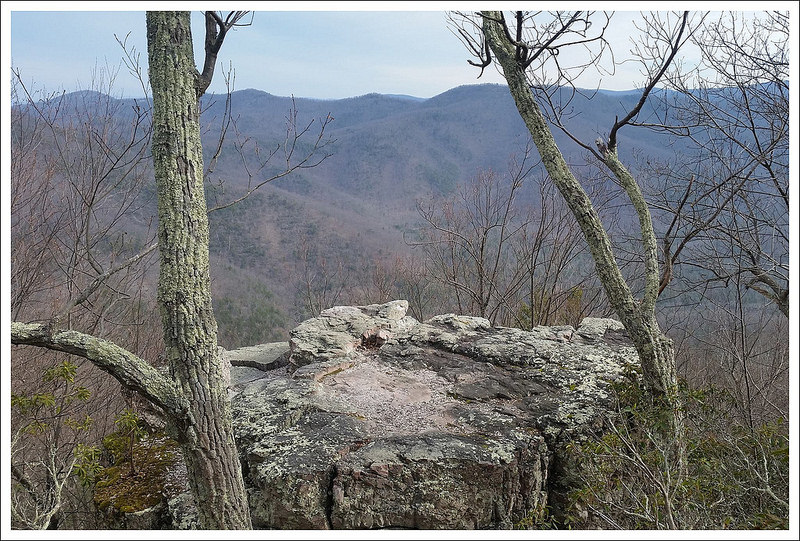
After crossing the stream, the trail climbs Tea Mountain.  It’s never a tough climb, but it’s a steady uphill.  The trail alternates between narrow footpath and wider road-like conditions.  The trail follows along several switchbacks.  At about 1.9 miles into the hike, you should see an unmarked side trail on the left.  If you follow this side trail for a few hundred feet, you’ll reach a large rock jumble.  From the top of the rock jumble you get a great view of the mountains beyond.

Spur Trail
Adam enjoys the first view of the hike. Below: A light dusting of snow on the shady side of the mountain; There were plenty of nice campsites along the ridge; The view was pretty but very hazy.

Dusting of Snow Campsite on the Ridge Hazy View

After taking in the view, return to the Tuscarora trail and continue uphill for about another mile or so until you reach the saddle between Tea and Little North Mountains.  Along this ridge, there are several nice viewpoints and lots of open, flat space for camping.  We took some time to explore a couple different vistas.  The views were nice, but the sky conditions were really hazy.

After enjoying the mountaintop, we descended the way we came up.  On our way home, we decided to check out a new farm brewery near Edinburg.  Swover Creek is a working farm – they grow fruit and hops, raise chickens, and make sausage from locally produced meat.  They’ve recently started a brewery and are working on building a tasting room in their old barn.  We all tried a flight of their four beers (the persimmon ale was my favorite).  We also had their house-made soft pretzels and mustard and enjoyed a sampling of their different sausages.  It was a fun stop and I definitely recommend checking them out if you’re in the area!

Adam Says…

The Kepler Overlook hike was one that we had been wanting to do since we heard about it from our friends at Hiking Upward.  This hike leads to nice views as you climb up to Little North Mountain.

The trail started off as we went past the closed gate up the fire road.  There is a sign just past the gate showing the inter-connected trail system.  Continue up the fire road for about .3 miles and then take a right on the blue-blazed Tuscarora Trail.  The Tuscarora Trail leads down to Cedar Creek.  Cross a small stream at .5 miles and you will reach a nice campsite.  Continue along the trail and the trail takes another stream crossing (this time over a small log bridge with a branch handrail).  The trail turns quickly to the left as you begin your climb up Tea Mountain.  At 1.9 miles on a switchback, you reach an unmarked  side trail.  Following this for about .1 miles will take you to a rock outcropping with some views to the west.  Backtrack to rejoin the Tuscarora Trail.

Nice View - Kepler Overlook
One of the rocky outcroppings along the ridge. Below: Time for a group selfie; Kris takes in the view; Descent.

Selfie More Views Descending

At 2.5 miles, the trail reaches a Saddle between Tea Mountain and North Mountain.  From here, climb up North Mountain.  The trail levels out at 3.0 miles at a large area for backcountry camping.  From here, you have two options for views.  Cut through the campsite to the right along the ridge for a nice view.  You can also go to the left and make your way again towards the ridge to get more views to the east.

We enjoyed our hike with friends and dogs.  You can check out Clark’s YouTube video below.  We were amazed at how much he was enjoying the hike and even took some time to enjoy the view himself.

Van Buren Furnace
Van Buren Furnace sits near the trailhead. Below: Post-hike beers at Swover Creek;  Pretty farm chicken!

Beers at Swover Creek Swover Creek Chicken

After the hike we hit Swover Creek Farm to try out their brewery.  Since the tasting room is not yet built, we enjoyed our beer in the farmhouse.  I have described this when talking to friends as if you were to go over to your grandmother’s house and drink beer.  We got our flight of beers from the small room downstairs and then took them upstairs to the larger “living room”.  There were some large tables and older furniture, so it really felt like a visit to your grandmother’s.  All of the people that were there were local people and one man brought a thermos to fill with beer instead of a growler.  They brought out samples of their sausage they made on the farm and we ended up buying some to take home.  It was such a warm, home environment and we thought they did a great job with the small-batch beers they had made.  This was a perfect post-hike stop.

guestdogsClark and Maia Say…

Our friends brought their lab (Clark) and shepherd (Maia) along on the hike!  They were great trail dogs to have along for the day!

Clark was fitted with a GoPro — so don’t miss seeing the hike from his point of view!  🙂

Trail Notes

  • Distance – 6 miles
    (Check out the stats from Map My Hike)*
  • Elevation Change – 1120 ft.
  • Difficulty –  3.  A pretty easy hike with a bit of steady, moderate climbing.
  • Trail Conditions – 4.  Trail was in great shape.
  • Views  3.5.  Nice, but slightly obstructed by trees.  
  • Streams/Waterfalls – 3.  Cedar Creek is pretty and a solid water source.
  • Wildlife – 2.  We didn’t see anything, but there are plenty of deer and bear in the area.
  • Ease to Navigate – 2.  There are a couple places where it’s easy to lose the trail.  Also, there are several trails and fire roads from the parking area that can easily be confused.
  • Solitude –4.  We saw only a small handful of people on a nice, sunny, winter weekend day.

Download a Trail Map (PDF)

Directions to trailhead:  Take exit 291 on I-81 heading west on SR 651.  Go 1.5 miles and take a left on SR 623.  Go 4 miles and take a right on to SR 600.  Go 4.4 miles and take a left on SR 603/Van Buren Road.  Continue on Van Buren Road for 2.7 miles and you will see parking on the left.  There are two parking areas here, but pass the first parking area to get to the second parking area which is on the lefthand side.  Park here and retrace your path a short distance to see the closed gate and the fire road where your hike will start.

MapMyHike is not necessarily accurate, as the GPS signal fades in and out – but it still provides some fun and interesting information.

Neighbor Mountain – Jeremy’s Run Loop

This 14.7 mile route offers wilderness, beautiful views, and stunning stream scenery (even a small waterfall!)  It’s a wonderful, moderate overnight backpacking loop; or a really challenging day hike.  We set out intending to camp along Jeremy’s Run, but it didn’t quite go as planned!

View the Full Album of Photos From This Hike

Views from the Neighbor Mountain Trail
The views on this loop hike come along the descent of Neighbor Mountain. Below: The trailhead at Elkwallow Picnic Area;  Hiking along in golden woods; Adam and Kris at the junction of the Appalachian Trail and Neighbor Mountain Trail.

Neighbor Mountain - Jeremys Run Start Hiking Along Junction of AT and Neighbor Mountain Trail

Christine Says…

The final weekend of October 2014 was so beautiful – perfect, made-to-order backpacking weather. We decided to head out on one more overnighter before the weather turned cold. We invited our friend, Kris, to come along. She loves the outdoors as much as we do, and I was sure she’d enjoy this loop. Don’t miss her guest blogger entry later in this post! It had been several years since we last hiked in the vicinity of Jeremy’s Run, and I was really looking forward to camping along the beautiful stream.

After stocking up on some lunch provisions at Elkwallow Wayside, we finally hit the trail around 11:00. We figured we had a little over eight miles of hiking on our first day, so starting late morning would get us to camp before 3:00, with plenty of daylight left to pitch tents, cook dinner, and relax.

Neighbor Mountain Trail
Hiking along the Neighbor Mountain Trail. Below: The fall color was still close to peak; Adam checks out a rock formation; At the summit of Neighbor Mountain.

Golden Woods Rock Formation Summit of Neighbor Mountain

We started out at the Elkwallow Picnic Area. A short spur trail leads downhill to the junction with the white-blazed Appalachian Trail. The AT descends for about .3 of a mile before coming to a junction with the blue-blazed Jeremy’s Run Trail. Follow the Appalachian Trail, veering to the left. The trail ascends for a little over a mile before coming to a more level ridge. You’ll pass the junction with the Thorton River trail, continuing south on the AT. At just over four miles into the hike, you’ll reach the junction with the yellow-blazed Neighbor Mountain trail.

We decided this junction would be a nice place to stop for lunch (hummus – my favorite trail lunch of late – easy to eat and lots of quality calories!). After a relaxing, thirty-minute break, we took the turn onto the Neighbor Mountain trail. The path meandered across the ridge. For the first couple miles, it was mostly walking in the woods. There was a nice breeze and gorgeous sparkling sunshine was filtering through golden leaves. It was everything you want fall to be!

Even though there is no view, the summit of Neighbor Mountain is marked with a cement post. At the summit, I noticed I had picked up a ‘hitchhiker’ along the way – a walking stick bug was clinging to my pants. I wonder how far he had come with me. I picked him off, and set him on a fallen log off the trail.

Between six and seven miles into the hike, there are a few excellent views of the Massanutten ridge and Three Sisters. There was a forest fire in this area several years ago, so the view was pretty open and expansive. We all paused a while to enjoy the fall foliage.  It was so wonderful to see colorful mountains rolling our before us. We talked about how privileged and blessed we all felt to be out on such an amazing day!

View of Valley
Adam enjoys a view of the valley and mountains to the west. Below: This part of Neighbor Mountain burned in 2012.  Alot of damage is still evident; Fall color; Adam descends Neighbor Mountain toward Jeremys Run.

Neighbor Mountain Descent Neighbor Mountain Descent Neighbor Mountain Descent

The last mile and a half of the day was steady downhill, meandering across switchbacks until the Neighbor Mountain trail reached the bottom of the valley and Jeremy’s Run. As soon as you reach the stream, campsites are everywhere. The first few we passed were already taken, so we ended up returning to the hidden campsite we used several years earlier. It’s a flat spot under the trees shortly before the first water crossing.

And here’s where the story takes an unexpected turn…

Adam Says…

We all worked on pitching our tents and setting up camp. I set up our tent while Christine worked on inflating our sleeping pads. Kris was on the other side of the clearing working on setting up the one-person tent she had borrowed, when she suddenly she groaned, “Uh… guys – I think we might have a little problem.”

As it turned out, the tent bag only held the rain fly and the poles. The ground cloth and the actual tent were missing in action. She hadn’t checked the bag before hitting the trail.  We spent the next 45 minutes trying to improvise a shelter with everything and anything we had. We tried piling three people in our Big Agnes Copper Spur UL2 (bad idea). We discussed whether or not the evening would be suitable for cowboy camping under the stars. We talked through a few different scenarios: 1) we all hike back immediately, 2) I sleep under the tarp while Kris and Christine sleep in the tent, or 3) I hike back to the car tonight and pick them up in the morning.  I was least excited about the second option because the area felt tick-infested with the wet leaves.  We debated the options for a few minutes, but ultimately, we decided the best choice was to keep the group together and make our backpacking trip into a very long day hike.

Failed Camp
We tried to find a way to rig up shelter, but in the end we decided it was better to hike out. Below: Crossing the first stream and trying to eat something with enough calories to hike out happily; Adam doing one of many stream crossings; The best campsite along Jeremys Run sits above a waterfall.

Crossing Jeremys Run Crossing Jeremys Run Waterfall Campsite on Jeremy Run

We knew we only had a little over an hour of daylight left – the sun sets early behind the mountains surrounding Jeremy’s Run.  We rushed to pack everything up as quickly as we could. Cooking a hot dinner would have required getting more water, so we opted to just eat a few snacks from our bags.   We started off at a quick pace.  I twisted my knee at the first major water crossing we had to make, which made the rest of the trip pretty painful. But sometimes, you just have to suck it up and hike.

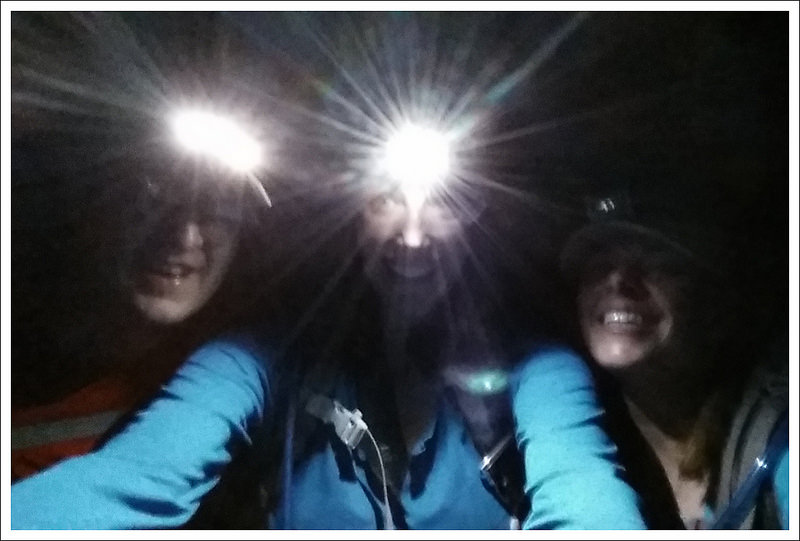
We soon passed another great campsite next to a small waterfall.  The trail meanders along and across Jeremy’s Run, requiring lots of rock-hopping across the stream.  The sun was dipping down quickly and we soon found that we needed to put on our headlamps.  Christine and Kris had legit headlamps, but I was using a small clip-on headlight that didn’t have the lumen output needed for a night hike.  When it reached dusk a few miles from our campsite, we came across a couple with a dog.  They asked us how far it was to the campsites and if they were all taken.  The guy was carrying an outrageous amount of gear and the girl looked completely miserable.  We knew they were going to be hiking to the campsites by nightfall and setting up camp in the dark.  I’m not sure if this was her first venture into overnight camping, but based on the daggers she was shooting him with her eyes, it may be their last.  They warned us they had seen a couple of bears just ahead of us, so we were on full alert.

Headlamps
We hiked by headlamp the last hour. Below: Jeremys Run in twilight; A large pool along the run; One of the last few stream crossings before it became too dark to take photos.

Jeremys Run Jeremys Run Jeremys Run

As it became fully dark, we still had a few stream crossings to make, which made it quite hazardous.  I reminded myself that the water wasn’t that deep so if we stepped in the water, we would probably be OK.  Another danger of night-hiking is the ability to lose the trail.  We really had to pay attention to the ground and try to keep an eye out for occasional blazes to make sure we would stay on the trail.  Hiking in the fall after most of the leaves have covered the trail provides an extra challenge.  Because I had a weaker headlamp, it was hard for me to lead along the trail since the lights from Christine and Kris were blasting my shadow ahead of me on the ground.  And then, I heard large noises in the woods, which I’m guessing was the bears that we had been warned about.  We kept talking loudly and playing some games to keep our minds sharp (animals/foods/colors that start with each letter of the alphabet) as we hiked along.

At 4.25 miles from our intended campsite, we finally came across a concrete marker post.  This post marked the junction with the Knob Mountain cutoff trail, so we knew were getting closer.  We kept straight on the Jeremy’s Run Trail and at 5.15 miles, we reached our first junction with the Neighbor Mountain Trail.  It was now just .3 miles straight ahead until we reached the parking lot where we started.  We made the last climb with renewed energy and celebrated that we made it through this adventure.

It was definitely one of the longest hikes we have done in a day and with the extra weight on our back, was one of the toughest.  We got back in the car and decided to go out to dinner to celebrate with drinks and food at Ciro’s in Elkton, VA.  We were physically exhausted and hungry, but it was quite an adventure we will never forget.

One takeaway I had from this trip was that we were all great at hiking together.  When we faced the challenge of not having two functional tents, we kept our wits about us, made a quick decision and went with it.  There was no complaining and we just relied on each other to get through.  If we had panicked or become overly upset, it could have led to a dangerous situation.  It is through this challenge, that we learned that having good hiking partners that work well together is a great trait to have for survival.  We all vowed to come back to this spot to camp together sometime in the spring to get the full experience through camping on Jeremy’s Run.  After the hike, Kris bought her own tent and I bought a better headlamp.

kris Kris Says…

Backpacking 101- It doesn’t matter if you were up late celebrating your birthday and borrowing some equipment…ALWAYS double check your equipment or your trip will not be so fly!

I was excited to be hiking with friends on a beautiful fall day.  We have always shared an appreciation of nature, lots of conversations and tons of laughter. I guess that is why we handled our little upset so calmly and reasonably. Although, I’m pretty sure I said  “Adam, just because I am a girl doesn’t mean you have to give up your tent.  I will cowboy up. Now, everyone hand over any booze or sleep aides you may have!” Of course that didn’t fly.

Ultimately we laughed at the situation, even as we crossed that creek 14 or so times and in the dark.  And I learned a few things on this trip: I am capable of hiking 15 miles with a 25 lbs pack in a day, Little Debbie Peanut Butter pies are so tasty and 400 calories, it was time to purchase my own backpacking tent, a packing checklist is important and a good attitude goes a long way.

I vowed to return to Jeremy’s Run and hike early enough to snag the sweet waterfall camp spot, I also plan to cowboy camp sometime just to prove I can (my dog will protect me).

Christine and Adam- you two are SuperFly!

Trail Notes

  • Distance – 14.7 miles
    (We had issues with MapMyHike on this trip, so we have partial stats. We have the Neighbor Mountain segment and most of the Jeremys Run to Elkwallow segment. We’re missing the portion along the Appalachian Trail and a few early tenths of a mile along Jeremy’s Run.  Technical issues!)*
  • Elevation Change – 2610 ft.
  • Difficulty –  4.  The terrain is fairly moderate throughout the hike, but the length ups the difficulty rating.
  • Trail Conditions – 3.  Sections along the Appalachian Trail and Neighbor Mountain are in great shape.  The Jeremy’s Run trail is rocky and has at least 14 water crossings – some of them can be challenging!
  • Views  3.5.  The views descending Neighbor Mountain are beautiful, but never fully open/panoramic.
  • Streams/Waterfalls – 3.5.  The stream is beautiful and scenic.
  • Wildlife – 5.  We saw a bobcat!  Hikers we passed at sunset told us there was a bear ahead, but we couldn’t see anything in the dark.  But, the last time we hiked in this area, we saw three bears.  We have also seen/heard owls, pileated woodpeckers, and whippoorwills.
  • Ease to Navigate – 4.  The junctions are clearly marked and easy to follow — unless you’re hiking in the dark!  🙂
  • Solitude –1.  It’s the most popular backpacking loop in the park’s northern district.

Download a Trail Map (PDF)

Directions to trailhead:  From the US-211 entrance of Shenandoah National Park, head north for 9 miles on Skyline Drive.  Take a left towards the Mathews Arm Campground.  In .7 miles, you will reach a parking lot.  The trail takes off next to the outdoor bathroom.

MapMyHike is not necessarily accurate, as the GPS signal fades in and out – but it still provides some fun and interesting information.

Old Rag – via Berry Hollow

This is a great alternative to the ‘classic’ ascent of Old Rag.  You still get the same stunning summit, but this 5.4 mile route lets you bypass all the road walking, lessens your vertical gain, and skips the famous rock scramble (which can be a good or bad thing depending on how you feel about rock scrambles!)

View the Full Album of Photos From This Hike

Old Rag Summit
Adam takes in the view from the Old Rag Summit.  Below: Berry Hollow Parking; A golden forest: You reach the Old Rag Day Use Shelter shortly after the fire road junction.

Berry Hollow Parking Golden Trees Old Rag Day-Use Shelter

Adam Says…

Old Rag is one of those classic Virginia hikes that most avid hikers in the state want to do at some point.  The views are truly spectacular, but the most popular route up Old Rag includes a technical rock scramble with exposed ledges and big drops.  Some people might have a fear of heights or not be fit enough to tackle the scramble.  The route via Berry Hollow is perfect for people wanting a ‘low key’ route to the peak.

We were on our way to hike White Oak Canyon, but the parking lot was completely full.  Not wanting to give up for the day, we consulted our maps and noticed we were right next to Berry Hollow and the alternate route up Old Rag.

We arrived at the small parking lot at Berry Hollow and also found a very full lot.  However, after waiting just a few minutes, some hikers came down the trail and said about 3-4 cars would be leaving in the next ten minutes as they were returning from an overnight/sunrise hike.  So, we waited and sure enough, several spaces cleared up.  I would recommend arriving at the lot early in the morning, because there is only space available for about 12 vehicles.

You begin the hike by making your way past a closed gate. You can see the path marked on the kiosk to the right of the trail.  This route starts on the wide Berry Hollow fire road, which goes along the Berry Hollow stream for a while.  Hiking the trail during a peak fall day, we were surrounded by brilliant yellows from fallen leaves on the trail and up above.  At .8 miles, you reach a junction with the Saddle Trail.  Take a right on to the Saddle Trail, which you will take all the way to the summit.

Berry Hollow Fire Road
Adam walks the fire road on a perfect fall day.  Below: Ascending the Saddle Trail; Large boulders as we climbed; The first viewpoint along the Saddle Trail.

Ascending the Saddle Trail Ascending the Saddle Trail First Views from Old Rag

The Saddle Trail is more narrow and rocky, but is mostly a moderate climb.  The steepest part of this trail comes between 1.2 and 1.5 miles as you gain about 300 feet of elevation in .3 miles.  At 1.4 miles, you will pass by the Old Rag shelter which is only available for day use.  At 2.15 miles, the trail gets another steep push to the summit.  Continuing up the trail, you will also pass the Byrds Nest Shelter at 2.25 miles, another day use shelter.  The trail does start to open up to some views along the way as you’ll pass a couple of rock outcroppings that give you nice views or a good excuse to stop if you need a breather.

You arrive at the base of the summit which is marked by a sign.  A short path leads up to the rocky summit.  At this point, you can decide how adventurous you want to be at the summit.  There are lots of nice ledges to enjoy the views, but some will want to scramble up the boulders to try to get even higher vantage points.  Be very careful at this summit, especially if you have kids.  People get injured often on this trail, most often at the rock scramble or at the summit.

The wind was incredibly strong on this day at the summit.  It is usually quite windy at the summit, but with the colder temperatures, it was freezing at the top.  We ate some snacks at the top, trying to shelter us from the wind, but decided quickly to get away from the exposed ledges to try and stay a little warmer.

We headed back the way we came.  When we arrived back at our car, the lot was still at capacity, so we did luck out with a spot.  After our hike, we went to one of our favorite places to eat, The Barbeque Exchange, in Gordonsville, VA and then hit Horton Vineyard for wine sampling on our way back home.

We were so pleased with this alternate route up Old Rag. I think we will probably use this as our go-to route for future hikes up the mountain.

Christine Says…

I make no secret of the fact that I am not a huge fan of the Old Rag Ridge Trail.  Scrambling is not my favorite, but my primary issue is simple trail overuse.  I think the park lets too many people hike the trail each day and that the mountain is becoming damaged beyond repair. We’ve hiked Old Rag on days that people are queued up all across the ridge, waiting in line for the people ahead of them to tackle obstacles.  I wait in line in daily life enough that I’m simply not willing to wait in line on a mountain trail. It feels wrong! I also don’t prefer the significant amount of road walking necessary to complete the route via Weakley Hollow. In the end, more than half the trail is road walking.  That said, I did really enjoy this ascent via Berry Hollow.

It was our anniversary weekend, peak fall color, and a perfect bluebird day to boot.  We were sort of nuts to try hiking any of the park’s most popular trails, but somehow we were lucky enough to score a parking spot.

Old Rag Summit
The summit of Old Rag offers spectacular views. Below: Views and crowds!

Old Rag Views Old Rag Views Old Rag Views

The walk up Berry Hollow fire road was gorgeous.  The sun filtering through the fall leaves made a canopy of warm golden light.  The road was carpeted with leaves of every color.  We really didn’t see many people at all until we reached the junction of the fire road and the Saddle Trail.

The Saddle Trail is a moderate ascent.  There are rock steps and interesting boulder jumbles to admire along the way.  Through the trees we could see the rocky summit looming ahead. As we climbed the views became more impressive.  After passing the second shelter (Byrds Nest), the trail passes out of tall hardwood forest into stand of stunted, windblown trees and tangled rhododendron.

Golden Trees
All we had to do was look up to see all the fall glory!  Below: One last view before descending; Trees near the top were already bare from the brisk wind; The shelter closest to the top – Byrds Nest – is also day-use only.

Old Rag Views Descent Byrds Nest Day Use Shelter

There are a couple nice views from the trail before you reach the actual summit.  We took time to enjoy each of them.  At the summit, there was a large crowd already congregating.  Most people posed for photos and then found places behind the boulders to shelter from the wind.  We stayed and enjoyed the summit until it became too crowded.

The way down was quick and easy!  We even did our traditional ‘Old Rag Jog’ – it’s basically a slow run to make the fire road terrain pass quicker.  On our way out, we stopped by Graves Mountain to get apples, pumpkin, and cider.  Then we headed for a big barbecue feast and a wine tasting.  It was a perfect fall day and a great way to celebrate our anniversary.

Trail Notes

  • Distance – 5.4 miles
    (Check out the stats from Map My Hike)*
  • Elevation Change – 1725 ft.
  • Difficulty –  3.  This is a solid, moderate hike.
  • Trail Conditions – 4.  The trail was in great shape in most places.  There were a few muddy, mucky places between Byrds Nest and the Old Rag Shelter.
  • Views  5.  Gorgeous views at the top and several nice views along the way.
  • Streams/Waterfalls – 1.  There is one small stream along the fire road.
  • Wildlife – 2.  We didn’t see anything but squirrels, but there is apparently a nuisance bear near the Old Rag shelter.
  • Ease to Navigate – 4.  There is just one well-marked junction.
  • Solitude –0.  It’s Old Rag… expect to see many, many people.

Download a Trail Map (PDF)

Directions to trailhead:  From Madison, VA on Route 29, take US-29 Business Route into Madison, VA.  Turn on to VA-231 north. In 5.4 miles, take a slight left on VA-670.  Follow this for 3.6 miles and take a slight right on to state route 643/Weakley Hollow Road.  Follow this road for about 5 miles, which becomes a gravel, fire road and ends at the parking lot for the trailhead.

MapMyHike is not necessarily accurate, as the GPS signal fades in and out – but it still provides some fun and interesting information.

Veach Gap – Morgan’s Road

This hike is easy for a 7-miler!  Gentle grades along an old roadbed take you to a lovely view of the Shenandoah River and mountains beyond!

View the Full Album of Photos From This Hike

Veach Gap Hike
The Point overlook on the Veach Gap hike offers nice views of the bends of the Shenandoah River and the mountains of the national park beyond. Below: Adam crosses the closed gate at the beginning of the trail;  Christine hikes the Veach Gap trail; The main trail junction on this hike.

Start of Hike Veach Gap Hike Signs

Christine Says…

Throughout fall 2014, our employer (and alma mater), James Madison University, participated in the Outdoor Nation Campus Challenge.  Basically, students and employees accrued points for outdoor activities. The school that compiled the most points in the end won a prize of cash and outdoor gear. One component of the competition was completing a collection of eight local hikes.  The list included many hikes we had already done (Old Rag, Humpback Rock, Fridley Gap, High Knob Fire Tower).  Veach Gap was one of the only hikes on the list we hadn’t done, so we decided to check it out.

From the end of Veach Gap Rd. in Fort Valley, the hike begins along the Veach Gap Trail (blazed in gold), which is an old road bed.  Supposedly, this trail is what remains of the historical Morgan’s Road.  General George Washington requisitioned the road during the Revolutionary War.  It was built to be used as a path of retreat from Yorktown.  As we all know from history, the war went America’s way, and the retreat route was never needed. The road was still used locally for many years before falling into disuse and transitioning into a trail.

At one mile in, the Veach Gap trail crosses Mill Run.  This is really the only potentially confusing spot to navigate on the hike.  The trail crosses at a diagonal, so look carefully for the gold blazes on a tree slightly upstream.  Shortly after crossing the stream, you may notice a rock formation in the shape of an upside down ‘U’.  This is called an anticline, and it’s a very unusual geological feature in our area. I’m kind of ashamed to admit this, but we didn’t even stop to look at the anticline.  I forgot it was there, and my mind was more focused on fall colors, lofty views, and potential wildlife sightings.  But, if you’re a geology buff – don’t miss this feature!

Crossing Mill Run
Crossing Mill Run. You can see the blaze on the tree on the opposite bank. Below: Pretty fall leaves on the water; Blazes for Veach Gap, Tuscarora, and the Massanutten Trails; After the main trail junction, the Massanutten Trail became a little steeper and rockier.

Fall Leaves on Water Blazes Rockier Massanutten Trail

A short distance after crossing the stream, the Veach Gap trail merges and becomes jointly blazed with the orange-blazed Massanutten Trail and the blue-blazed Tuscarora Trail. The three trails share the route for (at most) a couple tenths of a mile. AT 1.2 miles,  you’ll come to another trail sign.  To the right, the trail heads in the direction of the Little Crease Shelter.  Stay to the left (blazed orange and blue), headed up Little Crease Mountain and toward Sherman Gap.  About a half mile after this intersection, you’ll pass a marked group campsite on the right.

Continue meandering uphill along a gentle grade.  At three miles, the trail becomes a bit steeper with switchbacks.  There was a significant forest fire here in 2012, so the canopy is thin and allows nice views along the climb.  We saw lots of charred stumps and blueberry bushes along the increasingly rocky trail.  Eventually, the trail leveled out along the ridge.  We soon reached The Point Overlook – a small outcropping of rocks overlooking a sweeping bend on the Shenandoah River.

We had a snack, took a few photos, and spent some time chatting with a fellow hiker (Hi, DJ!) before heading back down the way we came. Veach Gap was really a lovely hike to enjoy at the peak of fall foliage season.  After getting back to our car, we made the short drive into Front Royal so we could enjoy burgers and shakes at Spelunkers.  Great day!

Adam Says…

When we were reviewing the peakbagging hikes that were listed for JMU students/faculty to try for the Outdoor Nation competition, we were surprised to see this one on there.  My guess is the coordinators looked up hikes that were close to Harrisonburg without thinking of what would be seen on the hike.  We initially thought this wouldn’t be that nice of a hike, since we hadn’t heard anyone mention it before to us, but the views made this a pleasant surprise.

When we pulled up to the parking lot, we saw a few cars already in the parking lot and a group getting ready to hit the trail when we did.  Of course, we saw vehicles for hunters, so we were a little worried about how this trail was being used overall.  We were glad that we had brighter clothes on, which is always a precaution to consider during hunting season.  We started off on the gold-blazed Veach Gap trail by crossing through the gate and walking on the fire road.  The trail was very flat and passed through some younger forest.  We were greeted with sights and sounds of Mill Run to the left of the trail.

Opening Views
The higher we hiked, the more views we got through the trees. Below: Adam takes in the view; The ridge was burned by a forest fire in 2012.  The damage is still fresh and evident; Adam descends.

Another Take on the View Rocky Ridge Descending

We soon came across two bow hunters, that seemed to be milling around, more about enjoying the outdoors than they were about hunting.  At .35 miles, the fire road turns into trail.  At 1.2 miles, take a left at the junction and join the blue and orange-blazed Massanutten Trail.  The trail continued a slow, gradual climb heading northeast.  At 3.0 miles, the trail takes a sharp, southern route and at 3.2 miles, it switches back to the normal northeastern direction.  On our climb up, we passed by a large group of boy scouts that were covering some miles over the weekend, but were looking to camp near the crossing at Mill Run.  The slightly-obstructed views of the mountains beside us were so colorful in this peak fall setting.

As you climb up to the ridge, you start seeing a lot of the forest fire damage.  Since this happened in 2012, you start seeing some of the plants starting to grow in place of those that burned.  We reached the ridge and followed it for about .15 miles.  At 3.5 miles, we found a pile of rocks marking a short climb to the overlook where we stopped.  The true highlight of the view is seeing the bends of the Shenandoah River from this rocky perch.  There wasn’t a ton of room at the top that was unobstructed, but it was enough for a few people to take in the view.

If you feel like you would like a view hike with a good amount of solitude, this may be a great selection.

Trail Notes

  • Distance – 7 miles
    (Check out the stats from Map My Hike)*
  • Elevation Change – 1100 ft.
  • Difficulty –  2.  This is an easy hike to a nice viewpoint.
  • Trail Conditions – 4.  The trail was in great shape in most places.  Dry, fallen leaves made some of the descents slippery.
  • Views  3.5.  The view of the bends of the Shenandoah River is nice, but slightly obstructed.
  • Streams/Waterfalls – 2.  The stream along the early part of the trail is really pretty.
  • Wildlife – 2.  We didn’t see anything but a few birds and squirrels.
  • Ease to Navigate – 3.  There are a few junctions and a few unmarked trails that cross the route, but you should be fine if you follow the blazes.
  • Solitude –4.  We did see a troop of Boy Scouts and a handful of others hiking in this area on a perfect fall weekend near peak foliage color, but generally this area is very quiet.

Download a Trail Map (PDF)

Directions to trailhead:  From Luray, VA, take SR 675/Camp Roosevelt Road.  Go .8 miles and take a left to stay on SR 675.  In 2.2 miles, take a right to stay on SR 675.  In 7.8 miles, take a right on to SR 678/Fort Valley Road.  Follow this for 9.7 miles and then take a right onto SR 774/Veach Gap Road.  Follow this about .75 miles to the end of the road, where you arrive at a parking area.  The trail starts after you walk around the gate.

MapMyHike is not necessarily accurate, as the GPS signal fades in and out – but it still provides some fun and interesting information.

Appalachian Trail – Hog Camp Gap to Punchbowl Mountain

This 17 mile overnight backpacking trip had beautiful views from Cole Mountain within the first two miles of the hike.  The rest of the hike was less scenic – mostly walking through quiet woods and along seasonally low streams.  The Lynchburg Reservoir and the swinging bridge over the Pedlar River were noteworthy features on the second day.  Adam will cover day one and Christine will take over with day two!

View the Full Album of Photos From This Hike

Adam Takes in the View from the Summit of Cole Mountain
Adam takes in the view from the summit of Cole Mountain.  Below: Coming out of the woods onto the grassy meadow is always breathtaking;  Great views from the top of Cole Mountain; Hints of fall color near the summit.

Breaking Out of the Trees Cole Mountain Summit Coming Fall Color on Cole Mountain

Day One (8.1 miles)…

We started off our trip by leaving one car where the AT crossed the Blue Ridge Parkway at the Punchbowl Mountain overlook.  From the lot, we could see the AT  southbound, but we didn’t see where we would return to our car from the north. It turns out it was just below us on the other side of the parking lot, but the morning fog made it a little hard to spot.  We dropped our car off and then headed to Hog Camp Rd, to start our journey.

From Hog Camp Gap, we headed south on the Appalachian Trail.  The trail started off through a wooded section uphill, fairly steeply in some parts.  Around 1.1 miles, the trail opened up to the beautiful, wide-open bald clearing that is Cole Mountain.  We have hiked Cole Mountain before as a loop and I do think it is one of the more under-appreciated hikes in Virginia.   The panoramic vistas make this look like something you would picture in an outdoors magazine.  You can’t help but want to stop and take a look at the scenery around you.  The way we split this section might not have been the best plan for enjoying vistas.  We knew we had the best views of the trip done in the first 1.5 miles of the hike.  But that is one of the biggest lessons I learned from hiking this section – you have to hold on to what you may have just seen, because there is no certainty about what is to come ahead.

Climbing Bald Mountain
The climb of Bald Mountain wasn’t terribly long or difficult. Bald Mountain also is not Bald!  Below: Adam checks out the map at our lunch stop – a clearing near the top of Bald Mountain; A little snip of a view through the trees along the top of Bald Mountain; Huge tree!

Lunch Stop Snip of a View Huge Tree

After reaching the summit of Cole Mountain, the trail descends and again enters the forest.  Around 2.5 miles, we reached a junction with a spur trail that led to the Cow Camp Gap overnight shelter and a water source.  We continued on the trail which starts an ascent up Bald Mountain.  We reached the summit at 3.5 miles and were hoping for some nice views at the top, but found that Bald Mountain wasn’t very bald (there were a few obstructed views through the trees).  We found a clearing and camp spot and had our lunch there before continuing on.  The rest of the day, the trail was a descent so our climbing was done (at least until tomorrow).

We crossed over USFS 507 at 5.5 miles and eventually came to US 60 and the Long Mountain wayside at mile 6.3.  We stopped at one of the picnic tables and took a break to eat a snack and give our backs a relief from the weight.  Local people just park on the roadside here and have a picnic at this spot.  It is also a way to do a longer out-and-back to Cole Mountain without parking or driving on a rough, gravel road.  After resting, we crossed US 60, spotting a sign for the continuation of the Appalachian trail to the right.  We continued our descent and at 7.1 miles, we reached Browns Creek, a reliable water source for a good stretch of trail.  At 8.2 miles, we reached the Brown Mountain Creek Shelter, our stop for the night.

The Brown Mountain Creek area is interesting from a historical/archaeological standpoint.  Much of the land along the creek was part of a large plantation predating the Civil War.  After the war, the land was primarily a settlement for freed African-Americans.  Houses, farms, orchards and even a gristmill could be found along the creek.  You can still see stone walls/stairs, pieces of metal, and other artifacts along the creek.

Long Mountain Wayside
The trail crosses US 60 at the Long Mountain Wayside.  Below: Information at the wayside: Descending to Brown Mountain Creek; Arriving at Brown Mountain Creek Shelter.

Wayside on Rt. 60 Descending to Brown Mountain Creek Arriving at Brown Mountain Creek Shelter

When we first got to the shelter, there was still a smoldering fire in the fire pit, so we realized someone had been there recently.  We also noticed a large pile of fresh bear scat next to the shelter.  While we didn’t think a bear had been roasting marshmallows by the fire, we felt it may be wise to not set up camp directly at the shelter.  We found a nice campsite right by the creek and decided that would be a better spot.  There was a boy scout troop that was camping on the other side of the creek.  We worried about them being too loud over the course of the night, but they were fairly well-behaved (except for trashing the privy – but that’s another story).  We set up our tent, filtered water for tonight and tomorrow, and began to unwind.

We cooked dinner up at the shelter (Good To-Go Herbed Mushroom Risotto)* and played Zombie Fluxx, a card game where the rules and objectives for winning constantly changed.  I always enjoy bringing a card game along the trail – the weight isn’t too bad for the entertainment it can provide.  We played a few hands (I recall Christine being better at killing zombies than I was) and then went back to our campsite after I hung our bear bag.  We started off reading books by headlamp outside our tent (continuing with the zombie trend I was reading Night of the Living Trekkies), but the bugs were awful.  We retired to our tent probably around 7:30, read for a little while longer, and went to bed very early.  We always typically go to bed around nightfall when backpacking, but hiking with the extra weight always makes you feel a little more physically exhausted.

* Good to Go is a new backpacking food manufacturer.  They use healthy ingredients and much less sodium.  We thought it was one of the best dehydrated meals we’ve had on the trail!  We added a foil packet of chicken breast to our dinner.

Games
We arrived at camp fairly early, so after the tent was pitched and water collected, we spent some time playing Zombie Fluxx. Below: A group of 14 Boy Scouts camped along the opposite bank; Collecting water for cooking and drinking; We tried a new brand of dehydrated meal – Good to Go (tasty!)

Scouts Water Source Good to Go Risotto

Day Two (9.1 miles)…

Day two started earlier than expected (and with the added bonus of a huge, swollen mosquito bite on my eyelid – I looked like I’d been punched!) Like most Boy Scout troops we’ve met along the trail, the one camping near us on this trip was awake, packed up, and on their way before sun-up. This had pros and cons.  One con was all the crunching boots and headlamps moving around our tent in the dark.  A pro was the opportunity we had to enjoy the creekside in peace and solitude before starting our hike for the day. The solitude also meant I could find a place to dig a cat hole in complete privacy without having to worry about Boy Scouts spotting me!  I would have used the privy near the shelter, but let’s just say the privy turned out to be another con of camping near a big scout group. One of them had completely defiled the privy and there was no way I was going in there!

Breakfast was instant oatmeal, honey buns and coffee.  I’ve learned the hard way after running out of gas on past backpacking trips that one packet of instant oatmeal (140 calories) is not enough to fuel me across nine miles.  The Little Debbie Honey Bun has been a revelation for me.  I think it has the magical balance of fat and sugar I need to power through my morning miles.  They also hold up great in my pack – no smushing and no crumbling.  Some people like a healthier, protein-packed breakfast, but give me a honey bun!

Morning on Brown Mountain Creek
The morning was beautiful and quiet (after the Scouts left). Below: When water is running higher, this is probably a pretty little waterfall; Adam hikes along the Appalachian Trail: One of several small stream crossings.

Plunge Pool Walking Along the AT Stream Crossing

The first five miles of our second day were easy. The terrain was a very gradual overall descent with a couple brief uphill climbs.  The first mile or so followed Brown Mountain Creek.  The trail followed roughly parallel to the stream for much of the way.  I kept thinking how beautiful this area would be when water levels were higher.  We eventually crossed the creek via a wooden footbridge.  At this spot there was a small, but pretty, waterfall cascading into a plunge pool.  The flow was down to a trickle, but it was still a lovely spot.

Departing Brown Mountain Creek, we walked through serene, quiet forest for a couple more miles.  There were two small stream crossings along the way.  The first didn’t seem to have a name, but the second was Swapping Camp Creek.  Both of these creeks end up flowing into the Lynchburg Reservoir.  At around 3 miles into our hike, we started seeing glimpses of the reservoir through the trees.  We followed an off-trail footpath steeply down to the shores of the water for a couple photos.  We saw several herons hunting in the mud.  There were ‘no camping’ signs posted everywhere, but there were also several well-used fire rings.  I’m guessing there are quite a few people that ignore the regulations and attempt to stealth camp in this area.

Lynchburg Reservoir
The trail skirts around the Lynchburg Reservoir. Below: The dam at the south end of the reservoir; The Pedlar River; The Pedlar River footbridge.

Dam Pedlar River Pedlar River Bridge

We climbed back up to the Appalachian Trail and continued south, skirting the eastern side of the reservoir.  At around 4.8 miles we came to the lowest elevation point of our hike – the Pedlar River crossing.  The trail crosses the river on a picturesque, bouncy suspension bridge.  From the middle of the bridge, we could see early fall colors reflecting from the trees onto the water’s surface.  After crossing the bridge, we came out on gravel-surfaced Reservoir Road.  We followed that briefly until we spotted another white blaze for the Appalachian Trail.

At this point, we began our toughest climb of the whole 17 miles.  The 2-mile ascent of Rice Mountain begins pleasantly enough.  The trail follows parallel to Little Irish Creek (which was running low and barely noticeable) and passes through a small plot of old growth forest.  There is an extremely weather-beaten sign explaining tree sizes in the area and how the area is used to study the local watershed.  Early parts of the climb are well-graded and moderate, but about .75 mile in, the trail pretty much goes straight up the mountain without the moderating benefit of switchbacks.  I wanted to push through the climbing and put it behind me, but Adam was ready for a snack.  We found some big rocks about 1.5 miles up the mountain and took a candy break.  After a half mile more climbing, we reached the ridge of Rice Mountain.  The forest was especially pretty along the top of the mountain – very open with lots of nice shade trees.

Climbing Rice Mountain
Climbing Rice Mountain was tougher than it looked on the topo map. Below: Another little peek at a view through the trees; A curly laurel thicket; The finish line!

Peek of a View Laurel Thicket The End

On the descent of Rice, we had one nice view through the trees.  We also saw more brilliant red fall colors and a lot more thickets of rhododendron and mountain laurel.  There really wasn’t anything remarkable to see or say about our last couple miles of hiking.  The terrain was rolling – there was a general uphill trend, but with small downhills as well.  There were no views or streams to speak off.  The lack of scenery gave me lots of time to fret over my feet. Two toes on my right foot had dislocated earlier in the day and were becoming increasingly painful.  With each step, it got a little harder to bear my weight plus the weight of my pack. I think if there had been waterfalls or great views, I would have been more easily able to distract myself.  But on this particular day, all I could think was ‘Ouch – when will this hike be over?’

At almost the end, we had one final road crossing at the junction of Robinson Gap Rd. and Panther Falls Rd.  After just another third of mile, we came up a small hill and found ourselves back at the parking area for Punchbowl Mountain on the Blue Ridge Parkway.  I don’t think I’d ever been so happy to end a hike. It felt great to take my boots off and change into a pair of Oofos.  While I enjoyed the great weather, the opportunity to be out, and the nice views from Cole Mountain, this wasn’t one of my favorite backpacking trips.

Trail Notes

  • Distance – 17.2 miles [Day One] [Day Two]
  • Elevation Change – About 2900 ft.
  • Difficulty – 4.  Mostly for distance, but the descent of Bald Mountain is a real knee-grinder and  the climb up Rice Mountain  (Day 2) is surprisingly challenging.  
  • Trail Conditions –  4.  The trail is in nice condition all across this stretch of AT.
  • Views – 5 (for Day 1) The views from Cole Mountain are indisputably spectacular.  Enjoy them early in your hike… they’ll be the last real views of the trip.
  • Streams/Waterfalls – 3.  This was hard to judge because of the unusually dry late summer/early fall.  I think under normal circumstances, Brown Mountain Creek would be beautiful with lots of small cascades and rapids.
  • Wildlife – 2.  We didn’t see any wildlife beyond a cute bullfrog in the creek.  But, there was LOTS of bear scat around Brown Mountain Creek Shelter.
  • Ease to Navigate – 4.  Just keep following the white-blazes and pay attention at road crossings/trail junctions to stay on the Appalachian Trail. 
  • Solitude – 3.  We saw quite a few people around Cole Mountain and spent the night at Brown Mountain Creek with a Boy Scout Troop.  We saw only one person along the trail on the second day.

Directions to trailhead:  Requires a shuttle.  We parked one car where the AT crosses the Blue Ridge Parkway near Punchbowl Mountain.  This is mile 51.7 on the Blue Ridge Parkway, about 6 miles south of where the Blue Ridge Parkway meets with US 60.  From this point, we drove our other car back north on the Blue Ridge Parkway for 6.0 miles and took the exit leading us to US-60 East.  We headed 4.3 miles on US 60 E before taking a left on SR 634/Coffeytown Road.  Follow this for 1.6 miles before taking a right on SR 755/Wiggins Spring Road.  Follow this gravel, bumpy road for 2.7 miles until you reach the parking area where the AT crosses the road.  Follow the white-blazed Appalachian trail heading south.

Red Hill (NH)

Special: New Hampshire Edition

Introductory Guide to Visiting the White Mountains

This short, moderately challenging 3.5 mile hike has stunning views of both lakes and mountains from a summit fire tower!

View the Full Album of Photos From This Hike

Adam Takes in the View from Red Hill
Adam Takes in the View from Red Hill.  Below: Trail conservancy sign;  Adam makes his way up the trail; The foundation of an old farm house along the trail.

Trailhead signs Red Hill Trail Old Building Foundation

Christine Says…

We considered not hiking at all on our final day in New Hampshire – we needed time to pack and we still wanted to hang out a bit more with my parents.  But, it was too gorgeous to stay off the trail – crisp, cool, vivid blue skies punctuated by cottony white clouds. So, for our last hike, we chose something short, relatively easy, and close to my parents’ home in Plymouth.

I remembered a conversation we had earlier in the week with a docent from Castle in the Clouds. We had been asking her about the trails on the property.  After talking about options on the Lucknow estate, she asked if we’d ever hiked to the top of Red Hill.  She told us the hike was very popular with locals and that we should do it if we had time. We looked at maps, and decided Red Hill was the perfect distance and length.

When we got to the trailhead, we found the parking area blocked by a construction crew repairing a failed drain pipe under the road.  There had been heavy rains the day before, and it looked like the road had buckled and crushed the drain.  Luckily, we were able to find a small pullout for parking and walk up to the trailhead.

The Red Hill trail is maintained by the Lakes Region Conservation Trust.  You’ll see one of their informational panels at the beginning of the trail.  Early on, the hiking trail is crossed by snowmobile trails.  At about three tenths of a mile in, you’ll find remnants of the old Horne farm and another informational board.  Essentially, all that’s left is the foundation, but if you look closely you might see other hints of the farm.  Follow signs for the tower, passing a gate indicating an area closed to snowmobiles.

From there, the summit is a steady 1.4 mile climb.  The trail is not rocky or rooted, and we found it dry and easily passable – even after heavy rain one day before our hike.   The summit has a tall firetower and a couple associated buildings.  I read online that this is the only firetower in New Hampshire not run by the state.  Instead, this one is tended by the Moultonborough Fire Department.

From the summit we enjoyed a superb look at  Lake Winnipesaukee from above.  From the tower, we had great views of Squam Lake, the Sandwich Range and the Ossipee Range.  It was really windy on the observation platform of the tower, so we didn’t stay on top for long.  We shared some snacks and then headed down the way we came.

We were lucky to have the summit all to ourselves!  On our way down, we passed dozens of people – not surprising! It’s a very nice hike!  After getting back to the car, we called my parents and arranged to meet at the Town Docks in Meredith.  It was a beautiful day to enjoy one last lakeside lunch!

Fire Tower on Red Hill
The fire tower atop Red Hill. Below: Buildings at the top of Red Hill; Views in both directions from the fire tower.

Forest Service Building View from Red hill View from Red hill

Adam Says…

With our trip to New Hampshire coming to an end, we couldn’t resist hitting the trail one last time.  The previous day we had a lot of rain, so we had spent the day shopping around the area to get some souvenirs.  There was some flooding from the previous day in some areas.  Since we were facing a 12 hour drive the next day back home, we wanted to get a hike that was fairly close and not too long.  We remembered our talk with one of the volunteers at Castle in the Clouds and decided to see what this one was like.

This hike combines two things I always like to think about when visiting New Hampshire – the many lakes and the mountains.  From this viewpoint, you get a picturesque view of both.  This definitely is a hike for the locals.  We couldn’t find any great information in guide books, but we found a few write-ups online, including a winter trek up from Hike New England.

We started on the trail at the kiosk.  In .1 mile, the trail splits in half.  We opted for the trail to the right, which starts off on a fire road.  At .4 miles, the trail comes to the signage for the old farmstead here.  The trail takes a sharp left at the sign and continues uphill.  The trail was a continuous uphill climb, but the terrain was fairly nice, making for better footing considering the rain from the day before.  At 1.5 miles, the trail reaches a junction again with the Red Hill Loop Trail (we did not do the loop option).  Continuing to the right for another .2 miles, you’ll reach the summit and fire tower at 1.7 miles.

The summit had a nice picnic table at the top near one of the buildings giving you nice views of the lake below.  As I’ve mentioned before, I have a bit of a fear over man-made structures, so I felt uneasy about climbing up to the top of the tower.  The tower was a little rickety and the wind was blowing strongly, but I felt I couldn’t end the trip without taking in the view.  At the top of the tower, you do get some nice views, but we found it was hard to get clear, unobstructed photos due to all the wires and screen around the top.  I made my way back to the bottom to get the views that nature had intended from the safer ground.

When we arrived at the summit, there was one other person there, who quickly handed over the solitude of the views to us.  We stayed for a while to eat a snack and reflect on all of the great hiking we accomplished during this trip.  It is always a bitter feeling knowing that you have to return home and back to the doldrums of work and everyday living, but we will have the memories of these mountains, lakes, and beautiful skies to lift our hearts until the next adventure.

Trail Notes

  • Distance – 3.5 miles
    MapMyHike Stats *
  • Elevation Change –  1350 feet
  • Difficulty –  2.5.  The climbing is moderate, but steady.
  • Trail Conditions – 3.5.  This trail is in great shape.  The footing is nice and we didn’t have any trouble with mud, even after heavy rains.
  • Views – 4.5.  Beautiful – a small markdown because the cables and side panels of the tower block a little bit of the view.  You must climb the tower if you want the full view, too.  The picnic table at the base has a nice, but not panoramic, view.
  • Waterfalls/streams 0. None
  • Wildlife – 0. None
  • Ease to Navigate – 3.5 – There are a few crossing snowmobile trails, and there is a trail on the other side of the hill, but generally the route is easy to follow.
  • Solitude – 2.  While we enjoyed quite a bit of solitude on our early morning hike, we saw many people hiking up on our hike down.

Download a trail map (PDF)

Directions to trailhead: From I-93:  Take exit 24 on I-93 for US-3/NH-25 toward Ashland/Holderness.  Turn right on US-3 S/NH-25 E and go 9.2 miles.  Turn left on NH-25B E and go 2.9 miles.  Turn left on Kelsea Avenue and go .2 miles.  Turn left onto Bean Rd and go 1.3 miles.  Turn right on to Sibley Road and go 1.1 miles.  Take a left on to Red Hill Road and go about .2 miles until you reach the parking area to the right.  The trail starts off from the kiosk.

Zealand Falls (NH)

Special: New Hampshire Edition

Introductory Guide to Visiting the White Mountains

This 5.6 mile route to Zealand Falls is one of the easiest hikes we’ve done in New Hampshire.  Most of the footing is smooth, soft, and flat!  It was a real treat after climbing Pierce and Madison.

View the Full Album of Photos From This Hike

Adam on Zealand Falls
Adam sits at the top of Zealand Falls and takes in the view of mountains beyond and wetlands below.  Below:  Zealand Falls Hut is a popular hut for people who want to stay at an AMC Hut, but don’t want a tough hike;  Christine hikes along; While the trail was generally flat and smooth, there were occasional roots and rocks to negotiate.

Zealand Trail Boardwalk Roots

Christine Says…

The hike to Zealand Falls is doubtlessly the easiest ‘hut hike’ in the White Mountains.  The elevation gain is barely discernible until the last couple tenths of a mile.  The route offers mountain views, waterfalls, stream scenery, and lovely ponds.  Guidebooks say it’s a great place to bird-watch and spot a moose (though I have my doubts about the actual likelihood of seeing a moose!)

The hike starts out at a parking area at the end of Zealand Road.   It’s a fee area, so make sure you bring cash to pay at the self-service parking station.

We made our way along the trail, marveling at how smooth and soft the footing felt.  There were certainly some spots with roots and rocks, but generally the trail was level and covered with a bed of pine needles.  We could hear the Zealand River, but didn’t reach a close view of the water until .8 miles into the hike.  When we hiked (early August), the water was low, clear and running quietly along. Almost all of the water crossings we encountered on this trail were assisted by wooden footbridges – no wading and very little rock hopping necessary!

Christine Checks out the Wetlands
The Zealand Falls trail passes many ponds and marshes.  Below: Several views of the ponds and marshes along the Zealand trail.

Wetlands Wetlands Wetlands

As we walked along, the terrain became marshier.  At about 1.8 miles in we passed a lovely beaver pond.  We could see the dam from the trail, but didn’t see any beavers.  The reflections of trees and mountains in the water were especially beautiful!  With all the wetlands, I expected biting flies, mosquitoes and gnats to be a major issue, but we didn’t have any trouble at all. Maybe there was just enough of a breeze to keep the bugs at bay.

At 2.3 miles we passed the junction with the A-Z trail, where we continued on the Zealand Trail.  A couple tenths of a mile later, we passed Zealand Pond and reached the junction with the Twinway (which is also the Appalachian Trail in this area) and Etlan Pond Trails. The last couple tenths of a mile to the hut follow the Twinway Trail.

Almost immediately after the junction, we reached the bottom of Zealand Falls.  The water was running low, but it was still beautiful.  There are two places to stop and admire the falls on the way up.  The first stop is a view of the gradual, slide-like lower falls.  The view of the upper falls is a bit more dramatic. The rocks around the falls are blocky and reddish-orange in color. The water comes plunging steeply over a cliff-side. The last tenth of a mile up to the hut is steep and rocky – honestly, it’s the only challenging part of the hike.

Zealand Falls
Zealand Falls make a couple distinct drops.  Below: New signs were recently posted to mark trails in the area; Adam checks out the falls; The final ascent to the hut was the only steep part of the hike.

New Signs Zealand Falls Final Climb to Hut

Zealand Falls Hut enjoys a lofty perch looking out across two notches.  You can see the Bonds and Mt. Carrigain. There’s even a bench available for anyone who wants a nice seat to enjoy the view.  We spent some time poking around the hut.  The Croo had just made cinnamon rolls and purple frosted blueberry cake, but we weren’t quite ready for a snack.  Instead, we decided to take the little side trail to the ledges of Whitewall Brook.  It’s just a 25-30 foot walk through the trees.  The brook passes over immense slabs of rock.  It’s a nice place to sit, soak in the sun, and enjoy the view of the pond below and distant mountains beyond.

After spending some time enjoying the hut, we returned the way we came.  The walk back was all downhill, so we made quick work of it.  I would highly recommend Zealand Falls to anyone looking for a low-key hike without much climbing.  In fact, we gave it such glowing reviews that my parents tried the hike a few weeks later.  They enjoyed it and felt it was very approachable for hikers of any level.

Adam Says…

When we go about trying to cover a lot of hiking mileage on our vacation trips, we like to alternate some easier hikes with the tougher ones.  Since we had just climbed Mt. Madison, our feet and joints were happy that we chose this easier leg-stretcher.

Christine and I do like to hike with goals in mind.  Since we have climbed a few of the 4000-footers in New Hampshire (there are 48), we have thought about possibly trying to bag all of those peaks.  Last year on our visit, I picked up AMC’s Passport to AMC’s High Huts in the White Mountains.   That book describes each of AMC’s huts through the White Mountains and details the history, features, and interesting stories about each of the huts.  It also serves as a passport that you can have stamped at each location to mark that you have been there (you can even earn a patch when you’ve visited them all).  This was definitely enough of an incentive to try and reach all the huts.

Zealand Hut
Zealand Falls Hut sits at the top of a waterfall.  A short trail from the side of the hut leads to the streambed; Inside the hut; View from the hut; Christine at the top of the falls.

Inside Zealand Hut View from Hut Christine at the Top of Falls

As Christine mentioned, this trail had nice footing compared to what we were used to in the White Mountains.  The trail was fairly smooth as it started through the woods mixed with pine and birch.  The trail eventually opened up into some great views over marshy ponds.  There was a large boardwalk to walk across that I thought would be a perfect vantage point for spotting a moose.  There were such nice views over the dammed-up ponds and it reminded me that we were in a state filled with lots of lakes, ponds, and streams.  We took a while to enjoy the scenery around us.  The trail continued to give us lots of similar views and short step-offs to pond views.  The trail eventually goes back into the woods as you get closer to Zealand Falls Hut.

At 2.3 miles, we reached the junction with the A-Z trail, which I came to realize after looking at our map that it connects the Avalon and Zealand trail, hence the A-Z name.  At 2.5 miles, we reached a short side trail to check out Zealand Falls.  The falls here were a nice place to get sidetracked.  We crossed a few rocks and enjoyed climbing around the rocks at the base of the falls.  Looking up towards the top of the fall is where this hike ends, but you should stick to the trail rather than trying to climb up the falls.

We continued our last piece of the hike, which was a steep and rocky .2 miles until we reached the Zealand Falls Hut at 2.8 miles.  There were a few day-hikers at the hut, recounting tales of all the places they had visited around the world.  We decided to take the short trail from the hut to the streambed of Whitewall Brook, which is the top of the falls we had seen below.  Christine got a lot of pictures while I walked around climbing on some of the rocks and collecting a few blueberries from the nearby bushes.  We then found a picturesque spot on the large rocks to take in the view of mountains ahead and the waterways below.

Beautiful Forest
The woods along the trail were so beautiful! Below: Adam rock hops; Beautiful, tall, straight trees; A beaver dam.

Adam Rock Hops Beautiful Trees Beaver Dam

We stopped back in to the hut to talk to the Croo members who were cleaning up breakfast and starting to prepare some food for lunch.  I know they have some busy days, preparing meals, cleaning the hut, and transporting supplies on their backs to and from the hut.  I talked to one of the members about how this hut was so much easier to reach than most of the others we had seen.  I wondered if there was a selection process that was made to match up Croo members to the huts or if they even had a choice.  It seems like maintaining this hut and transporting supplies would be made for those that wanted or needed an easier experience.  We made our way back to our car the same way we came up.

I would recommend this hike to anyone that would like to see what one of the AMC huts looks like.  It is the easiest one to reach, so people of most abilities should be able to attain the top.  This is one I could see us doing many times in the future due to the ease and the serenity that the scenery of the marshes and waterfall evokes.

Trail Notes

  • Distance – 5.6 miles
    MapMyHike Stats *
  • Elevation Change –  650 feet
  • Difficulty –  2.  This is a pleasant, easy walk until the last couple tenths of a mile.  The last push to hut is short but steep.
  • Trail Conditions – 4.  The trail is so nicely built and easy to walk.  Most of the water crossings and marshy areas are traversed by sturdy bridges and boardwalks.
  • Views –3.5.  Views from the hut and Whitewall Brook are nice, as are several views across the wetlands, but generally the views here are less dramatic than other spots in the White Mountains.
  • Waterfalls/streams 4.5.  The river, pond, wetlands, brook and waterfalls are all lovely!
  • Wildlife – 3.  It’s supposed to be a nice area to spot wildlife, but we just saw birds and squirrels.
  • Ease to Navigate – 4.  Trail junctions are clearly marked and easy to follow.
  • Solitude – 3. We saw relatively few people, but we hiked on a weekday in August. I think this is generally a popular trail.

Download a trail map (PDF)

Directions to trailhead: From I-93: Take Exit 35 for Twin Mountain. Follow 3N for 10.4 miles. Turn right onto 302E for 2.2 miles.  Turn right onto Zealand Rd. and drive about four miles.  The road will turn to gravel.  The parking area is at the dead end of the road.  There is a $3/day fee to park at the trailhead.

* MapMyHike is not necessarily accurate, as the GPS signal fades in and out – but it still provides some fun and interesting information.