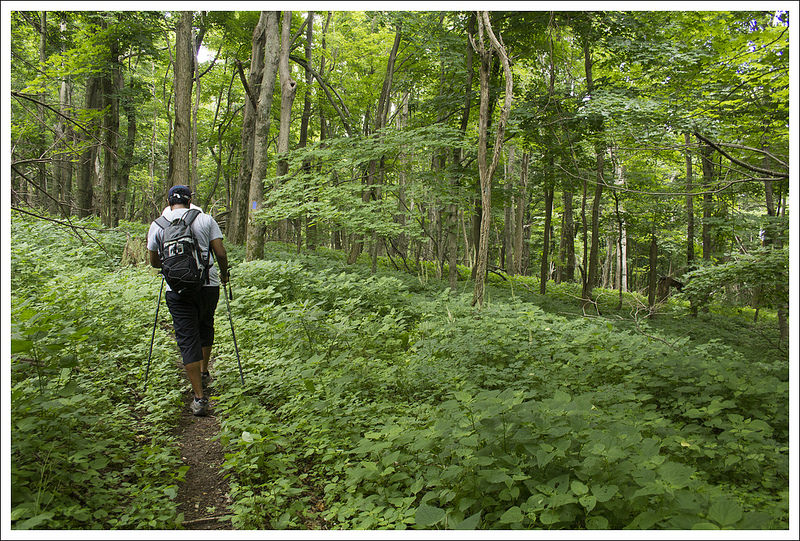
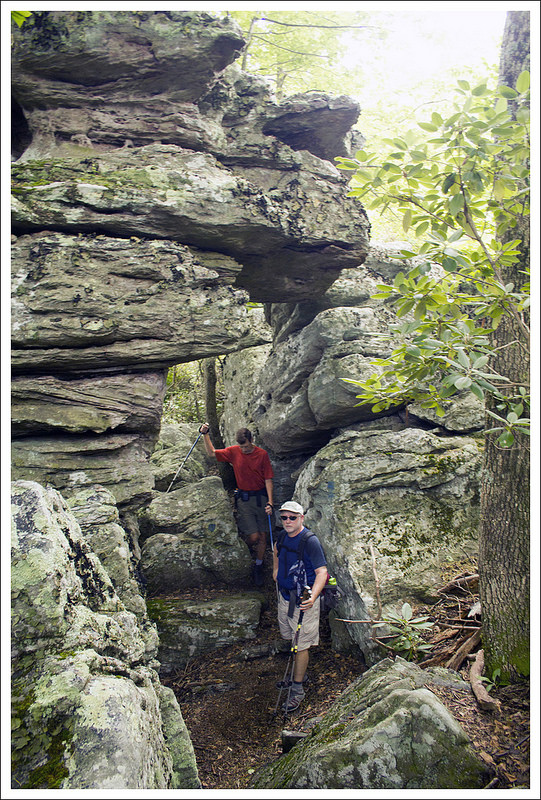
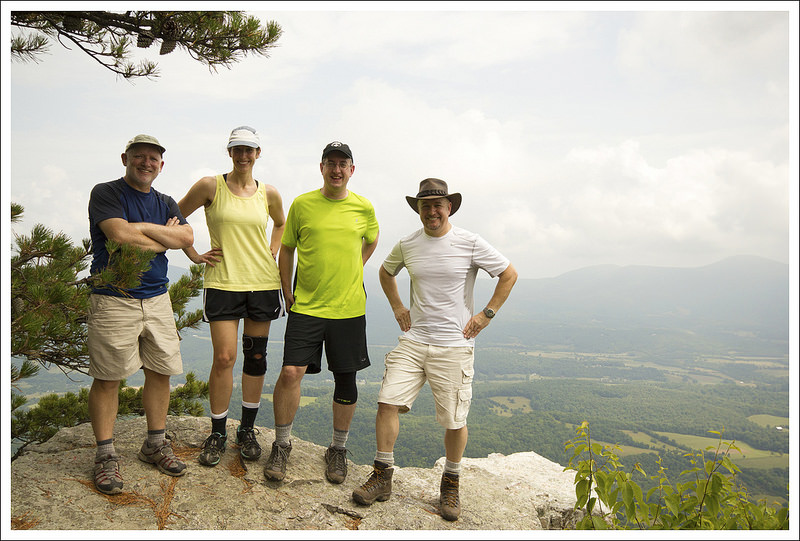
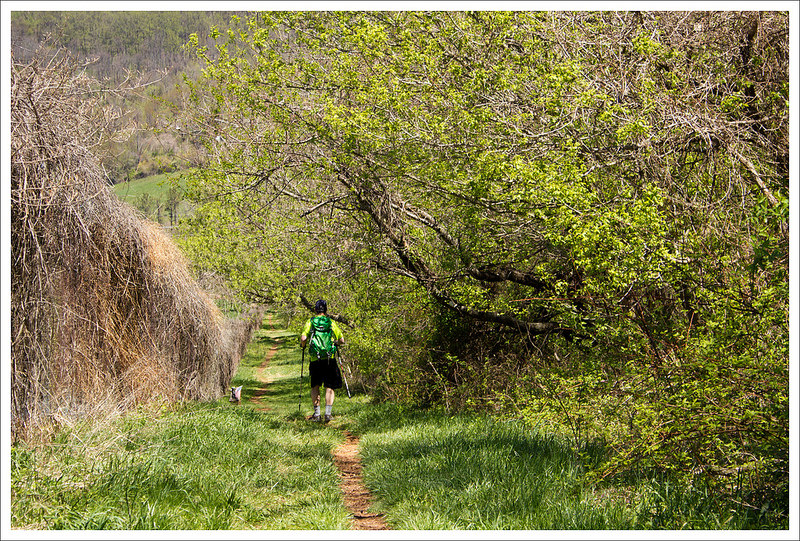
Spruce Knob – Seneca Creek (WV)

This 16.5 mile overnight backpacking trip has cooler temperatures in the summer, beautiful streams and waterfalls, high mountain meadows, abundant berry bushes, and even an old plane wreck to explore. It’s a great change of pace from hiking the Appalachian Trail.

View the Full Album of Photos From This Hike
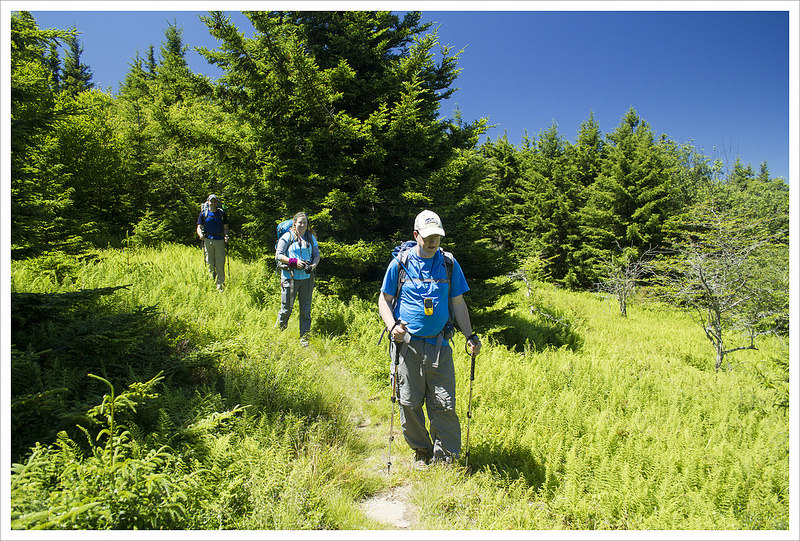
Hiking Along the Huckleberry Trail
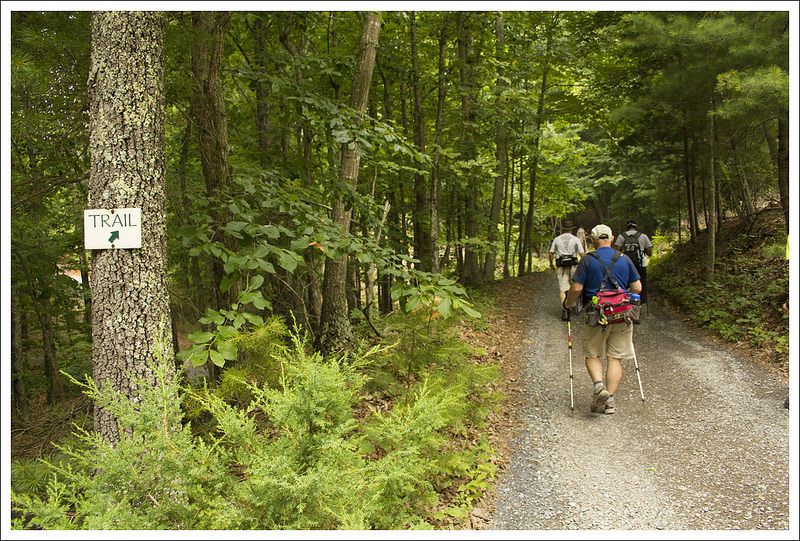
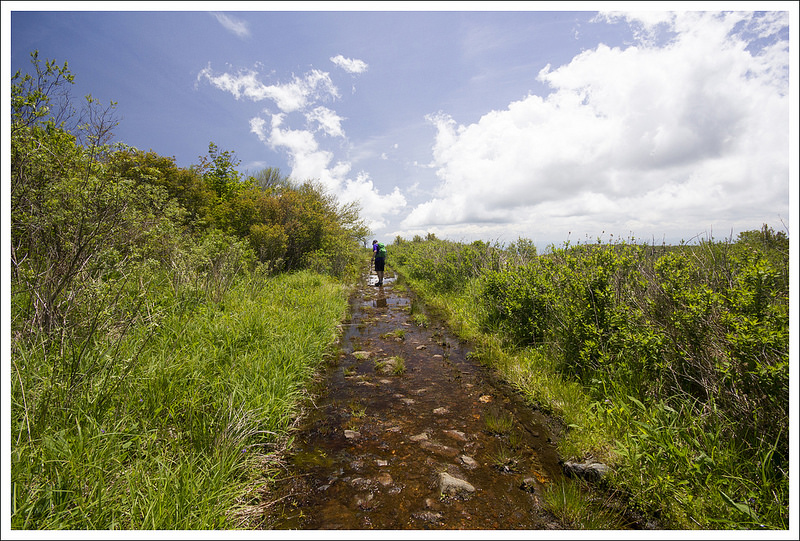
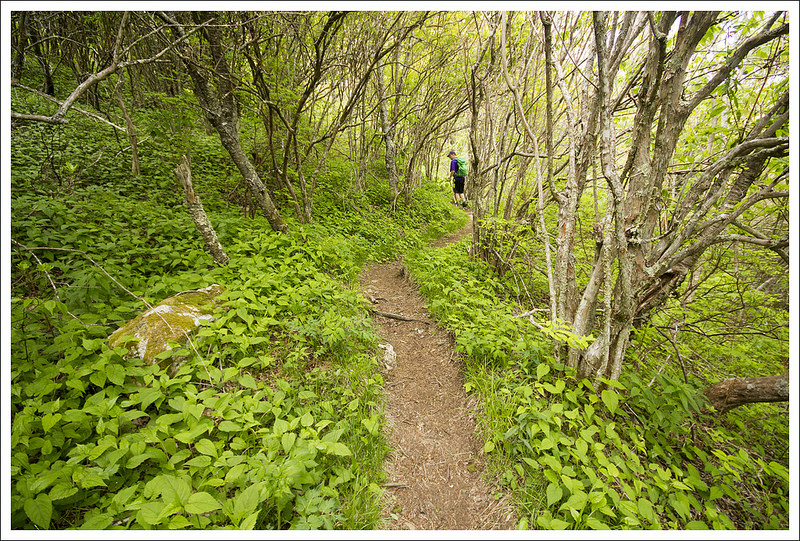
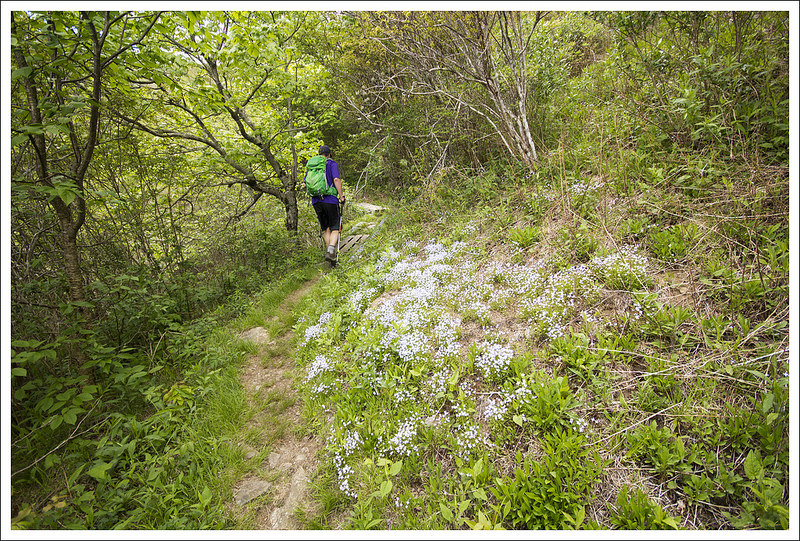
The high meadows along this hike were beautiful! Below: Backpacks in the car; Everyone checks out the information at the trailhead; Suzanne picks ripe blueberries along the Huckleberry Trail; The Huckleberry Trail passes through several small meadows; Spruce-shaded areas on the Huckleberry Trail; Signage along the way.

Backpacks in the Car Getting Started Blueberry Picking
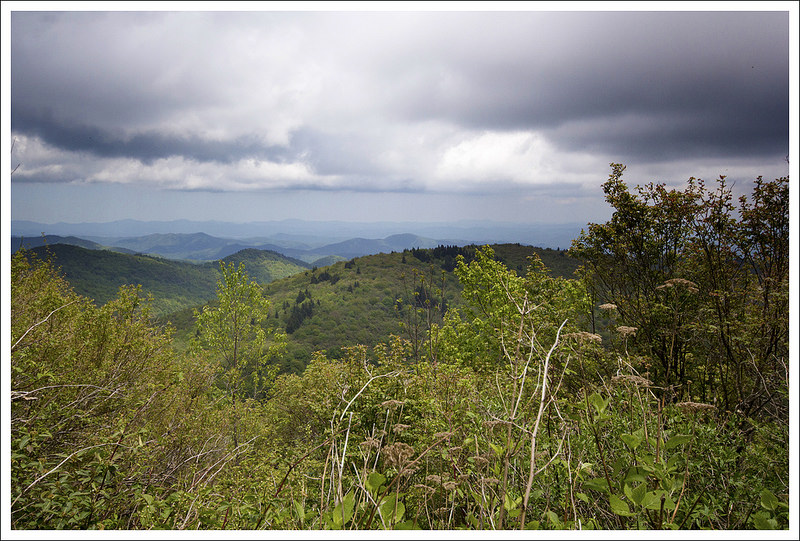
Views from the Huckleberry Trail Spruce Trees in the Sun Trail Sign

Day One…

Initially, we  planned on doing very little hiking in July this year.  Our goal was to stay out of the heat and to rest up a bit so we wouldn’t overdo things before we tackle our trip to New Hampshire later this summer.  But the weather was too nice and we had lots of invitations to go hiking.  Over the 4th of July weekend, our friends Anthony and Suzanne suggested we go on a backpacking trip together.  We always enjoy hiking with them, so plans were made to hike in the Spruce Knob area.  This was actually the second 4th of July weekend we’ve spent on the trail with Anthony and Suzanne.  A couple years ago, we did a trip to Dolly Sods.

Our friends came down and spent the night before the trip at our house. We divided up some group gear and then packed the car and headed out fairly early to start our trip.  We arrived at the trailhead mid-morning.  We saw the short trail to the Spruce Knob summit fire tower, but we decided to visit that at the end of the loop the next day to feel like we had truly earned it.  Spruce Knob is the highest peak in West Virginia.

The printed maps we have found of this area are fairly outdated and online maps also don’t have the trails completely accurate.  The best map I have found of the entire area has been from Mid-Atlantic Hikes and it may be helpful to bring that along since there are lots of trail options here.

Descending to Junction
Adam descends to our junction with the Lumberjack Trail. Below:  Anthony makes his way along the Lumberjack Trail.  The trail has a reputation of being sloppy/muddy, but it wasn’t too bad when we visited; Someone moved a piece of the plane from the wreck site up to the trail – probably to mark the spot; Even after 4+ decades on the mountainside, the plane wreck is still mostly intact.

Walking the Lumberjack Trail Plane Window Fuselage
Mud Nettles First Large Meadow

We started off our first day of the hike on the Huckleberry Trail (TR533).  The trail starts off with a little bit of crushed gravel on the trail, but that goes away in a short distance.  This first section of the trail was fairly flat or downhill and alternates from going from dense Spruce forests to more open fields. There are numerous dry campsites along the trail. In the fields, we found tons of blueberries that were just starting to ripen.  We stopped along the way for a few handfuls before pressing on.  At 3.4 miles, you will reach a campsite and a sign that points to the trail going right.  Follow this trail and in another short distance, you’ll come to another sign pointing you to go left as the trail winds around a dense forest area.  You’ll soon reach another sign that shows that the Lumberjack Trail is .4 miles away.  The last .4 miles of the Huckleberry trail drops rather steeply to the large trail junction at 4.7 miles.  Take a right at this junction to join the Lumberjack Trail (TR534).

The Lumberjack Trail is a relatively flat trail.  We were warned that it can be very muddy and wet, but we found that even after some recent heavy rains there were only a few 20-foot sections that had mud to slog through.  Most of the trail had rocks or logs placed that saved us from having to get our shoes wet or muddy.  Around mile 5.8, we saw a plane door hung on a tree and a short, yet steep trail that led down to plane wreckage (a Piper PA-23 that crashed here in 1973 with two casualties).  Be respectful if you decide to visit this site.  We stayed on the Lumberjack Trail until it came to a junction with the High Meadows Trail at mile 6.7.  Take a left to join the High Meadows Trail (TR564).

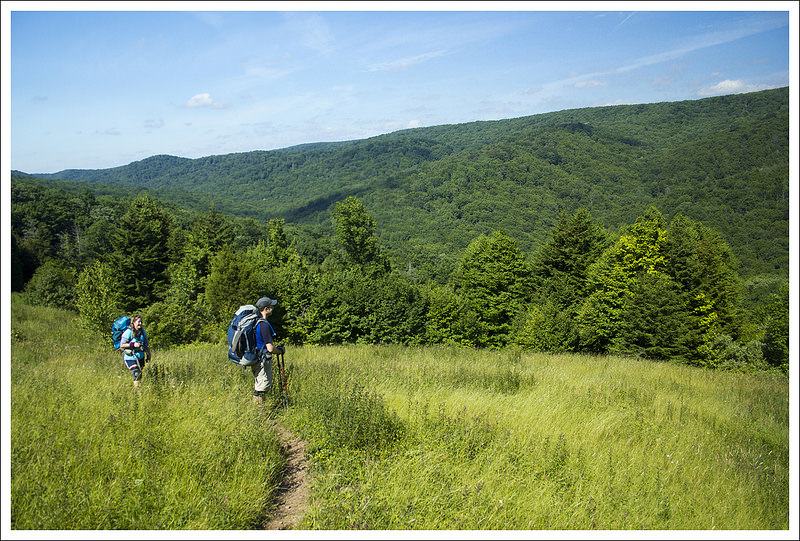
The High Meadows Trail was the most overgrown trail we came across.  There were times that it felt like we were bushwhacking.  There are stinging nettles everywhere along the trail and grass was up to our knees in some portions.  The High Meadows Trail also has alternating landscapes; you will go from dense forests to large open meadows several times.  Keep an eye out for blue blazes on posts or trees as you navigate through these high grass areas.  The trail descended through these gorgeous meadows and it is not surprising that we were thinking of the Sound of Music when we were walking through these fields surrounded by mountains.

High Meadows
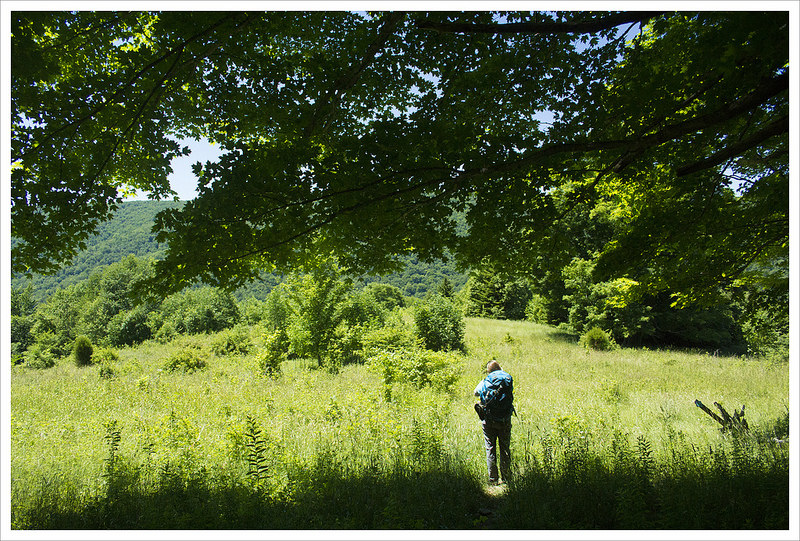
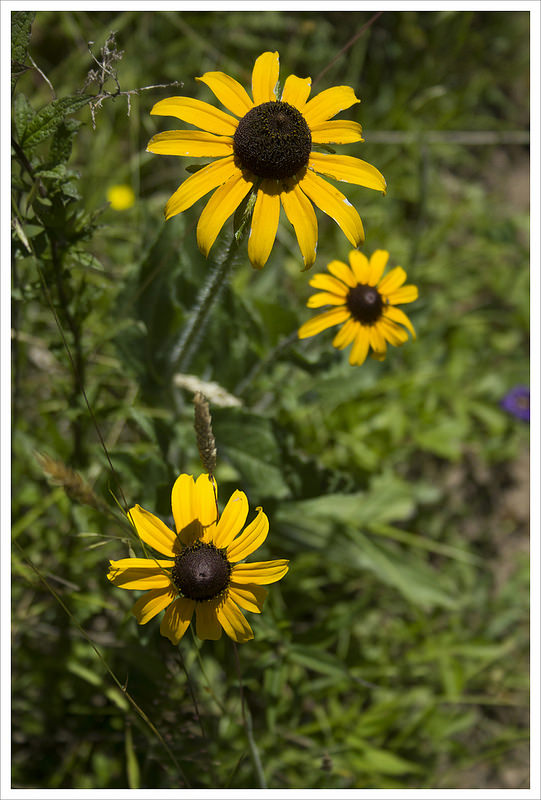
The high meadows on this hike were so beautiful!  Below: Adam admires the high meadows; Grass in the meadows was tall;  There were several meadows separated by short sections of shade;  Most of the shady spots were densely overgrown with berry brambles; Black-eyed susans; Adam crosses out of the final meadow.

Adam in Meadow Meadow Walking Shade Between Meadows
Overgrown Susans Leaving the Meadows

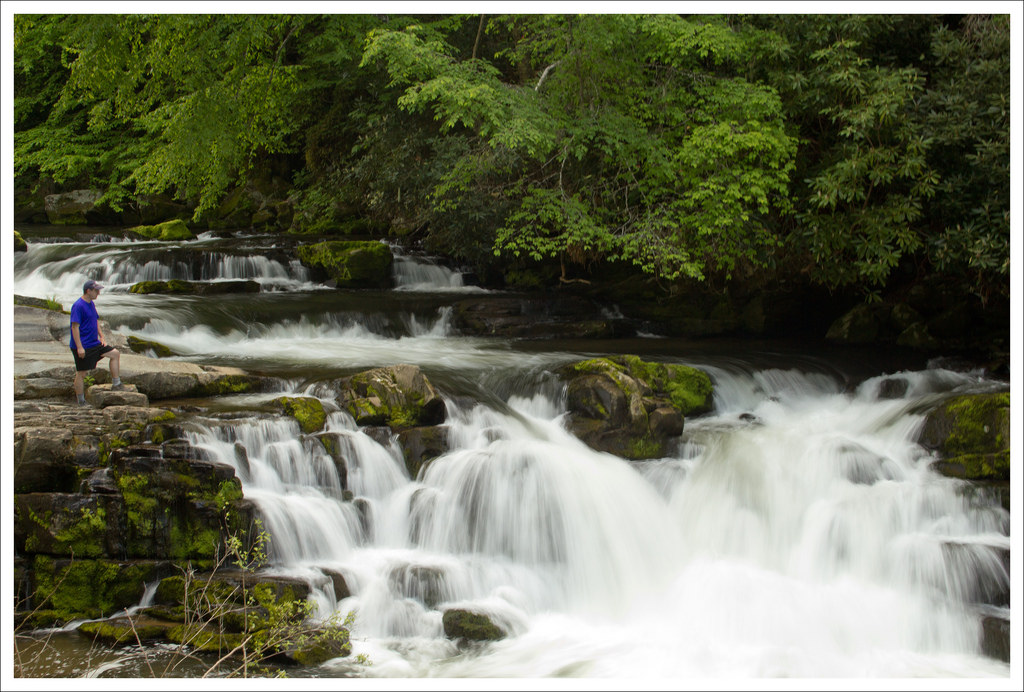
Eventually, you will enter into the woods again and cross a small creek.  At 8.6 miles, you will reach another trail junction. Take a right here and you will descend even more as you make your way through a scenic forest landscape.  You will soon hear water flowing from Seneca Creek below you.  The trail crosses the creek and comes to a junction with the Seneca Creek Trail at 9.1 miles.   At this point, you will cross Seneca Creek to reach the trail on the other side.  The water was flowing to make a nice small waterfall.  Before we crossed, we ventured just a short distance (about 75 yards) to the right down the Seneca Creek Trail and came across one of the most beautiful waterfalls/swimming holes I’ve seen – Seneca Falls.  We dropped our bags on the trail and scrambled down to reach the base of the falls.  There was a large cavernous rock overhang to the right of the falls.  In the water, we could see brook trout swimming around, occasionally breaching the water to catch flies that were dancing along the water surface.  Once we climbed back up from the basin, another group came down to the falls jumped into the swimming hole at the base of the falls.  From the screams when they jumped in, we could tell the water was extremely cold.  We made our way back to our original junction and then determined the best place to cross the creek was at the very top of the small waterfall.  We all made it across safely.

Christine hit a wall with her energy level, so we stopped a few minutes to eat a snack on the opposite side of the creek at a nice campsite.  Knowing we still had a distance to go, we pressed on further.  The Seneca Creek Trail went to the side of Seneca Creek for the entire way.  We crossed the creek in a couple of places.  Around mile 10.4, we began to see a ton of campsites.  We were surprised to see that there were so many people that were camped here overnight.  When we kept passing people on the trail, we felt that we would have our picks of campsites, but we didn’t realize how many people come here a different way (mostly from the lower Spruce Knob parking lot and taking the Seneca Creek Trail to these campsites).  Anthony and Suzanne hurried ahead, while I waited a while for Christine to try and regain her strength.

Seneca Falls
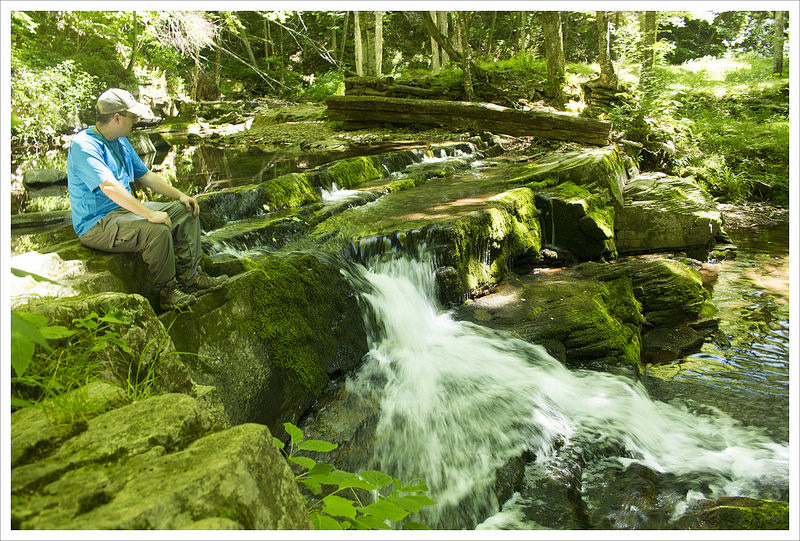
Seneca Falls is an impressive waterfall with an emerald green plunge pool. Below: Leaving the high meadows for Seneca Creek; A small waterfall above Seneca Falls; A side view of the falls; The trickiest of the stream crossings; Pretty wildflower; Lovely Seneca Creek.

Start of the Seneca Creek Trail Small Waterfall Seneca Falls
Crossing Wildflower Seneca Creek

We caught back up with our friends soon and they had claimed a gorgeous campsite (even though it was hard to imagine a bad one here) at 10.6 miles that was near a waterfall that plunged into the creek.  While there were lots of larger groups out here, we found a nice, secluded campsite that had a nice waterslide that created a babbling brook sound throughout the night.  We set up camp and started to make some dinner.  I always enjoy bringing a card game with us when we do an overnight backpack and this time I brought the game Hike.  It was pretty brainless fun and plays similar to Uno with specialty cards that create twists in the game.  It was starting to get dark, so we created a small, but nice fire in the pit.  Once the sun set and the fire died out, we retired to our tents.  It may have been the sound of the brook, but I probably slept the best I have ever slept backpacking that night.  What a great first day!

Campfire
The evening concluded with dinner, card games and a great campfire. Below: There were abundant rosebay rhododendron all along the stream; Our campsite had nice, flat space enough for 2-3 tents; We also had a pretty waterfall and pool for our water source.

Rosebay Camp Filtering

Day Two…

As usual on backpacking trips, we both woke up right around first light. We spent a little while longer in our sleeping bags, chatting and stretching.  It was a chilly morning, so we weren’t quite ready to climb out into the cold.

Eventually we emerged from our tent to start the day.  I put on gloves and a light jacket and  headed downstream to take a few photos of the big waterfall at the next campsite over.  The folks camping there had packed up and departed very early.  Adam went to get the bear bags down while I took photos.

Campsite Falls
One lucky group gets to camp on a site right across from this pretty waterfall.  Below: Our campsite in the morning; You can see smoke from other campsites downriver; Crossing the footbridge across Seneca Creek before our big uphill climb.

Campsite in the Morning Downriver Footbridge

We got everything out for breakfast and started taking down our tent, rolling up sleeping pads and stuffing our sleeping bags back into compression sacks.  I decided that I was going to eat a huge breakfast, so I wouldn’t bonk again on our second day of hiking.  Adam didn’t go into much detail in his day one post, but right around mile ten of our hike the day before, I hit a wall – HARD! It was right after we visited Seneca Falls and crossed the stream.  I sat on the ground and told everyone that I was feeling really lightheaded and sick.  I didn’t feel hungry.  I had been drinking water all day.  Regardless, my legs just felt like jelly and I just didn’t want to walk another single step.  Adam, Suzanne and Anthony all told me that they thought I needed to eat.  Turns out they were right – I had been hiking for ten miles with a 25 lb. pack on under 700 calories.  I guess I just didn’t realize how little I had eaten until I did the calorie math.  My appetite always goes away when I’m doing strenuous activities.  Usually, it doesn’t cause problems and I just eat when I get to camp.  I guess this time I just expended all my short term energy before we finished for the day.  I need to do a better job forcing myself to eat enough.

Alright… off that tangent and back to breakfast!  As promised, I ate a large breakfast – oatmeal, cheese, a honeybun and coffee.   It was about 600 calories of food and much more in line with my energy needs for a tough uphill and 6 miles of hiking.  Everyone had eaten and packed up camp by around 9:45 and we were on our way again.

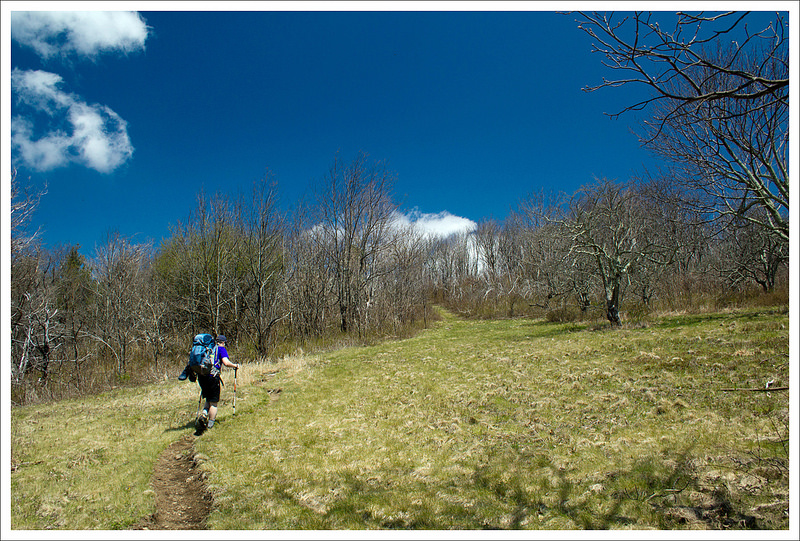
Final Meadow
Adam climbs steeply uphill across our final large meadow of the hike.  Below: Anthony and Suzanne take a look back toward Seneca Creek;  We had spectacular skies; Making progress back to our start point.

One Last Look Toward the Creek Beautiful Skies Trail Sign

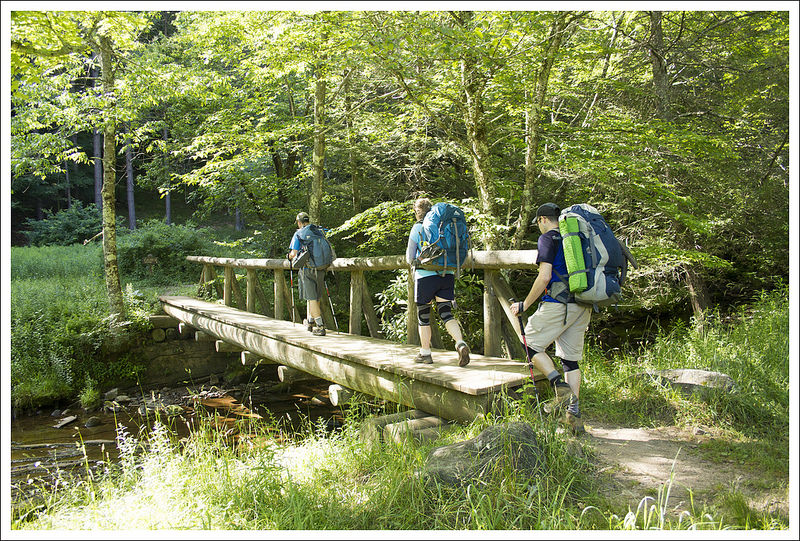
We had a short distance left to walk along Seneca Creek.  Within about a quarter mile, we reached a small wooden footbridge across the stream.  We crossed and continued uphill on the Seneca Creek Trail.  The steepest climbing was across a beautiful, expansive meadow.  We got great views of the valley and our last glimpse into the Seneca Creek watershed.  The high meadows on this hike are truly majestic and are definitely one of the trip’s highlights.

After crossing out of the meadow, we continued uphill through the woods back to the four-way junction of Seneca Creek/Lumberjack/Huckleberry.  Staying straight took us back onto the Huckleberry Trail.  From there, we retraced our steps from the day before.  It was a little slower going and felt longer on the second pass.  It was all uphill and everyone was a little tired.  It’s always funny how different the same four miles can feel under different circumstances.

Adam on the Huckleberry Trail
Hiking the Huckleberry Trail reminded us of hiking in New England.  Below: More lovely views from the Huckleberry Trail;  The trail was often paved with rock; A well-appointed campsite on the Huckleberry Trail; Ripe berries; A view from the talus slope.

Huckleberry Views Laurels Campsite
Ripe Berries Talus

We enjoyed the sunny, unseasonably cool July weather.  We stopped and picked many blueberries along the walk back.  I also took a little side trail from one of the meadows and found a talus slope with nice views across the mountains.

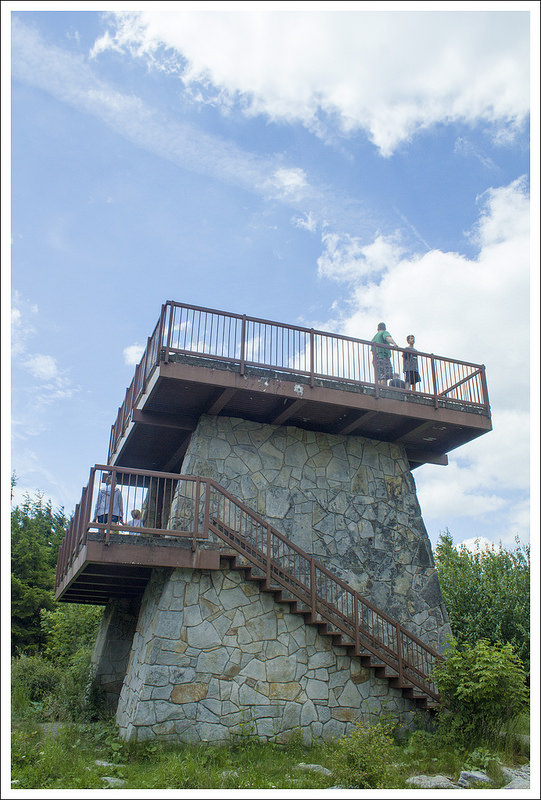
We got back to the car around noon.  We threw our packs into the back of the car and took the short, flat walk to check out views from the observation tower atop Spruce Knob.  It’s just a short quarter mile walk and well-worth the extra time and steps.  We spent some time enjoying the lofty views and cool breezes.  Anthony, Adam and Suzanne decided to walk to one more nearby viewpoint on the Whispering Spruce Trail.  It was just a tenth of a mile down the trail and provided even more spectacular views.  I headed back to the car to eat some more candy and switch my trail shoes for flip flops.

Tower Views
Anthony and Adam take in views from the observation tower on Spruce Knob.  Below: Views from the tower; The hiking crew; Views from the Whispering Spruce Trail; The tower.

Views Hikers Whispering Spruce
Observation Tower

After a few minutes, everyone was back at the car and we were on our way back to Harrisonburg for a celebratory meal and beer.  We all decided that Jack Brown’s was the best spot for lunch.  They have fantastic gourmet burgers and a great beer list.  It’s a perfect post-hike indulgence.

We couldn’t have asked for better weather, scenery, or company for this 4th of July weekend backpacking trip.  After lunch, we bid farewell to Anthony and Suzanne.  They’re such great hiking buddies and we always feel lucky when we get to hit the trail together.

Trail Notes

  • Distance – 16.5 miles [Day One] [Day Two]
  • Elevation Change – About 2300 ft.
  • Difficulty –  4.  The distance makes it fairly tough and the second day has a lot of uphill on the trail. 
  • Trail Conditions – 3.  Most of the trail was well-maintained.  The High Meadows Trail was quite overgrown.  There are some rocky, loose sections on this trail too, which can be a little rough on the feet.
  • Views – 5.  The best views are from the Spruce Knob trail near the fire tower.  The fire tower has wonderful views, but once you take the .5 mile trail around the fire tower, you will have gorgeous, breathtaking views from the highest point in West Virginia.  The views along the main backpacking trip were mostly during the High Meadows Trail.  There are gorgeous mountain views and no sign of civilization. 
  • Wildlife – 3.  There were lots of birds to be found on the High Meadows Trail.  We did have a deer visit us several times at camp. 
  • Ease to Navigate – 2.  The Huckleberry Trail and High Meadows Trail could use more signage.  I would suggest printing out our step-by-step desciption and bringing the midatlantichikes map to help guide your way. 
  • Solitude – 2.  This is a popular spot for people to do overnight camping.   Expect to see lots at the campsites, but you will have more solitude until you get to Seneca Creek. 

Download a Trail Map (PDF)

Directions to trailhead:  Directions vary so greatly depending on the direction you’re coming from.  Please refer to the trailhead marked on the map below to determine your best route.

House Mountain

This tough 8.75 mile hike follows a vaguely Y-shaped route to two outstanding viewpoints.  There are ample opportunities for backcountry camping on this route.  If you’re lucky, you may be joined on part of your hike by the famous House Mountain hiking goat!

View the Full Album of Photos From This Hike

The view from Goat Point on Big House Mountain
The view from Goat Point on Big House Mountain.  Below: Parking on this hike is limited and clearly marked; Early portions of the hike take place along a fire road through private property; Some nice views from the fire road.

Parking Fire Road View from Fire Road

Christine Says…

Like most hikers in Virginia, Adam and I are fans of Hiking Upward.  It’s one of our primary resources for route information.  We’ve been in touch with Bryce and Tony (the creators of HU) off and on the past few years.  We had casually tossed around the idea of meeting up for a hike or backpacking trip, but our schedules never seemed to work out.  Finally, in June, we found a date that suited everyone and made plans to meet up for a hike of House Mountain.  The HU guys were working on updating information for the re-routed trail up Little House Mountain and we were hiking the area for the first time.

The morning started off gloomy and gray.  I was a bit worried about missing out on views, but we got in the car and hoped for clearing skies.  Everyone got to the trailhead around 8:30 a.m.  We made our formal introductions and started the hike right away.  Our hiking party was made up of Adam and me, Tony and Bryce (HU team), and two of Bryce’s friends from work – Wayne and Bharath.  It was a great group to hike with and we all fell into easy conversation on the hike up.

The first couple miles of this route follow the Saddle Ridge Trail.  This portion of the hike starts off as a gravel road and passes a number of private residences.  After the first half mile, the route becomes more trail-ish and passes through shady woods.  There is one decent view of rolling hills and field on the right side of the trail.

At about two miles in, you reach the saddle between the Big House and Little House summits.  The saddle was historically a homestead and a fruit orchard before being turned over to public use.  There is still plenty of open pasture space for tent camping in the saddle.  Take a few minutes to read the informational signs about the area while you’re at the saddle. They provide information about the area’s history and the conservation efforts that made these trails possible.

Little House Trail
The Little House trail was recently re-routed to make the climb more gradual.  Below: Christine and Adam at the trail board for the new route up Little House; Adam checks out the other informational board in the saddle between Big & Little House. You can see Big House in the background; The ascent of Little House is still pretty steep.

Start of the Little House Trail View of Big House Climbing Little House Mountain

When we visited, we decided to hike Little House first.  The trail to the summit is a recent re-route.  The old trail was extremely steep, climbing straight up the mountainside without the amelioration of switchbacks.  The new trail is still quite steep, but the switchbacks definitely ease the climbing.  The trail was just blazed in spring of 2014, so if you hike anytime soon you’ll see plenty of fresh blue blazes marking the way.

We caught some nice views through the trees on the way up before finally gaining the ridge.  The ridge made for more moderate walking and included lots of interesting rock formations.  There were several small campsites along the ridge walk, too.

Eventually, we reached the end of the trail and a beautiful viewpoint.  It was still pretty overcast, but the low clouds had lifted enough to give us a view of the valley below and surrounding mountains.  We took time for a snack and a few photos before making our way back down to the saddle.  On the return trip, Tony and Bharath decided to take the old trail back down.  They beat us back to the saddle by a few minutes.

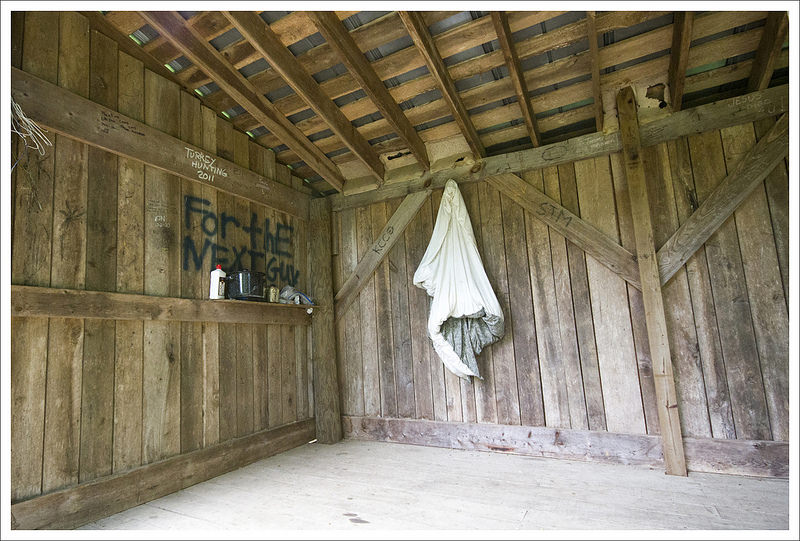
With everyone regrouped, we headed up the trail to the Big House summit.  Within the first couple tenths of a mile, we passed the House Mountain backcountry shelter.  It was a nice spot with a new privy and a side trail leading to a spring.  We found the shelter stocked with lighter fluid, plastic silverware and other often-forgotten necessities.  This hike would make a great beginner backpacking trip!  You’d have a couple miles of hiking with a pack.  But then you could set up camp and visit the two summits pack-free.

Most of the climb to Big House is along a rugged ATV trail.  It’s straight up the mountainside until you reach one large switchback.  At the switchback, look carefully for a very rocky, less-worn footpath departing the trail.  Depending on the vegetation, this might be an easy spot to miss.  If you take the switchback and continue the trail in that direction, you’ll just have a longer walk in the woods and no views.

View from Little House Mountain
Nice views from the summit of Little House Mountain.  Below: Walking along the ridge was rocky; There were some interesting rock formations; We saw a small eastern box turtle.

Rocky Little House Trail Rock Formations Box Turtle

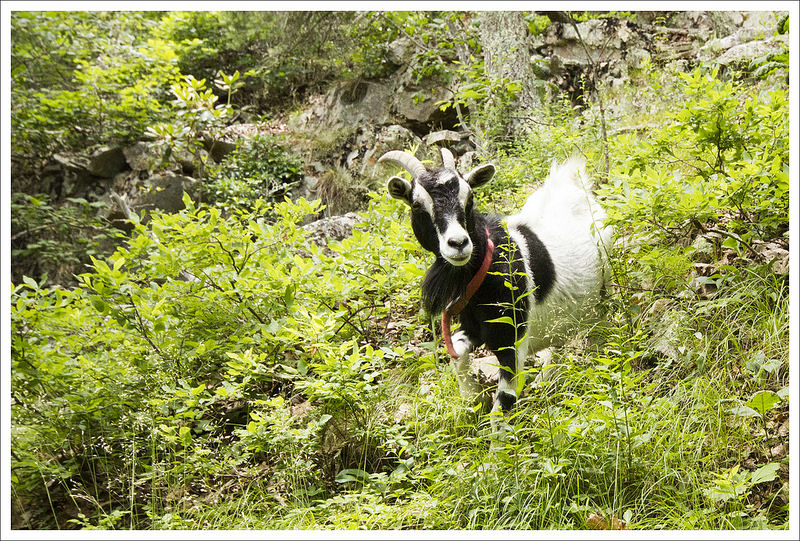
We started scrambling up the rocks when all of a sudden a black and white animal wearing a red collar bounded out of the woods.  At first,  I thought it was another random hunting hound that was lost in the mountains.  But no… it was a GOAT!  She hiked with us the rest of the way to the viewpoint.

At the summit, she followed us around – begging for food and vigorously licking the salty sweat off our arms and legs.  It was a hoot and we really enjoyed such a friendly and novel companion on the trail.  We ate more snacks, took more photos and spent time hanging out with our new goat buddy.

On the hike down, the goat left us shortly after the switchback.  She gave us several loud farewell bleats before she bounded back into the woods.   The return hike to our car was all downhill, passing the saddle one last time before retracing our steps on the Saddle Ridge Trail.  Near the end of the hike, we had the privilege of meeting Brian.  He lives in one of the houses along the trail and is one of the primary people who works on building/maintaining the trails on these mountains.  If you see him, be sure to say thanks!

At our cars, we decided to head into downtown Lexington for some post-hike food and beers!  As Bryce put it ‘Every good hike should end in a pub!’  We had a good meal and more fun conversation at ‘The Palms’.  It was mid-afternoon and not very crowded when we visited – probably a good thing to not subject too many fellow diners to the smell of dirty hikers.  🙂  After lunch, we made our farewells and parted ways.  We had a great day and can’t wait to hit the trail with these guys again.

Adam Says…

It was great to finally meet up with Hiking Upward.  We do most of our hiking with just the two of us, so there is always a little anxiety about hiking with new people.  Because of all the miles they have covered, I wondered if we would be able to keep up or were going to get left in the dust of their hiking boots.  Along with our pace, I also wondered what we’d talk about.  However, within a few minutes, I knew we were quite the kindred spirits.  We talked about many things from hiking experiences to favorite microbrews.  As we were sharing some of our favorite trails, we were bringing up names of trails as if we were consulting maps.  I guess when we all write these hiking entries, that knowledge sticks with us.  I know this was the first of many adventures we will share together.

We started off from the parking lot (pay attention to the sign to know where to park and respect the boundaries).  We made our way up the road and at .3 miles, you reach a gate that begins the official trailhead.  Past the gate, you start a gradual ascent up a fire road, passing by a residence to the left.  At 2.25 miles, you reach the saddle between Big and Little House Mountain and the junction between the two trails.

The Group on the Summit of Little House Mountain
It was great to meet the guys from Hiking Upward. Below: Another nice view from a different rocky outcropping on Little House; The old route up Little House was blocked by a bramble of sticks; Making the steep descent; A view through the trees along the trail.

Another Little House View Old Route
Steep Descent View on Descent of Little House

We started off by hitting Little House Mountain first, taking a right at the information signs and following the blue-blazed trail.  The trail starts off relatively flat, but as you round the mountain the trail is very narrow and requires you to be mindful of where you step.  At 2.5 miles, the trail then begins to climb up the ridge very steeply and you begin a series of switchbacks until you gain the ridge at 3.1 miles.  The trail at this point goes through a thick area of rhododendron and remains slightly flat or downhill until you reach the viewpoint.  Along the way, you pass through some areas of larger rocks.  At 3.6 miles, the trail opened up to breathtaking views.  We paused here for a while to eat a snack and take some photos.  There are a few different places to get views from the rocks nearby.

We made our way back to the junction and saddle area, which we reached at 5.0 miles.  Now, it was time to take on Big House Mountain.  We took the opposite trail at the junction (as you were originally climbing up the trail, it is the trail to the left), making our way through some grassy areas before the trail opened up.  Within a short distance, we passed a nice overnight shelter to the right.  This shelter had it all – there was a sleeping bag someone left behind and even some cans of Yuengling for someone else to enjoy (if warm beer is your thing).  There was a privy building a short distance away.  We noticed another blue-blazed trail, which we were told later (by Brian, the trail maintainer) leads to a water source.

Shelter
There is a backcountry shelter a short distance up the Big House Mountain Trail. Below: The saddle is open and grassy – perfect for camping; The shelter was well-stocked with lighter fluid and various other items; Most of the climb up Big House was along an ATV trail.

Saddle Meadow Inside Shelter Ascending Big House

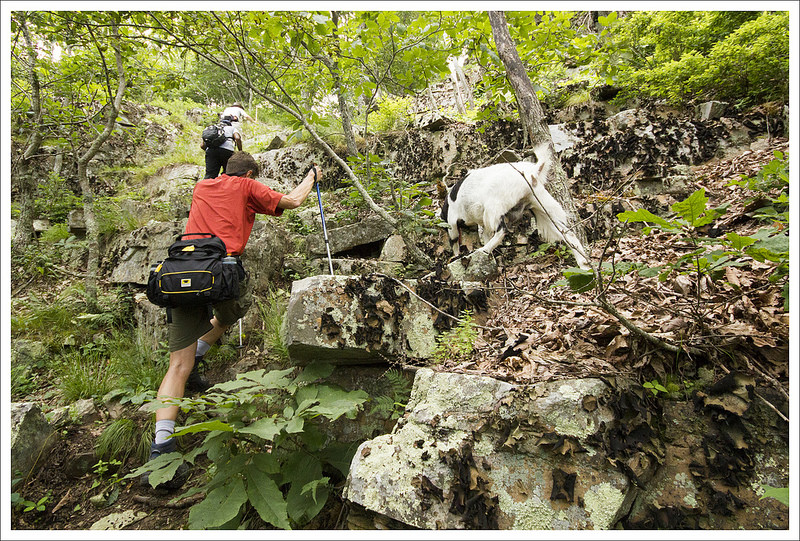
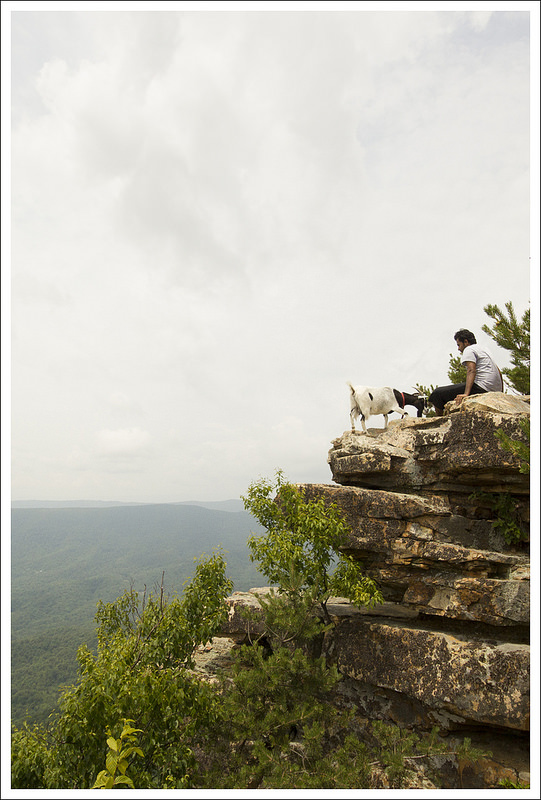
After we passed the shelter, the trail opened up to a larger fire road again which kept up a steady, tough climb gaining 400 feet in .4 miles.  The trail came to a junction with a switchback trail to the right that leads to the true summit of Big House Mountain, but the views are gained by staying straight on the trail.  The trail becomes very rocky at this point and we were soon joined by our goat friend.  Her nimbleness on the rocks amazed us and she led us to the rocky Goat Point viewpoint at 5.9 miles.  There was an upper perch and a lower perch for taking in some of the gorgeous views.  As I was heading to the lower outcropping, I spotted a geocache behind one of the rocks.  As I was signing the log, the goat jumped down from the high perch, scaring me and almost making me fall down the mountainside.  Be careful out there, especially when there are salt-craving goats waiting to pounce.

We Met a Goat
This cute goat joined us on the final climb to the summit of Big House Mountain. Below: The goat was a strong and agile climber; In the end, she mostly wanted food.

Strong Climber Begging

We headed back after taking in the views for a while (and being thoroughly licked by the goat).  I will say that I think I was the favorite of the goat.  This wasn’t the first time I had been amply licked by a goat while hiking – the other time was when we hiked the Massanutten Ridge trail.  Maybe the salt from my sweat tasted the best or I was the most agreeable to being licked – I’m not sure.  But, as we headed back down the goat followed us until we reached the rocky junction with the switchback to the summit.  She stared at us from the top as if to beg us to come back to his place for more licking.  We said our goodbyes to the goat and then made our way back.  We reached the saddle junction again at 6.6 miles and made it back to our car at 8.75 miles.

Friendly Goat
She was a friendly goat!  Below: More nice views from Big House summit;  It was a hazy, mostly cloudy day; The goat liked the salt in Adam’s sweat.

Nice Views from Big House Vertical View Goat Lick

If you are interested in geocaching, there are 17 different geocaches to find on the Little House Mountain and Big House Mountain trails.  I won’t list them all here, but here are the two at the summits:

After we arrived back at our vehicles, we decided to hit The Palms in Lexington for some great food and a few beers.  We had such a great day with our new friends!  I can’t believe that we had not heard much about this hike before.  This is a true gem of a hike with so many panoramic views!

Trail Notes

  • Distance – 8.75 miles
    MapMyHike Stats*
  • Elevation Change – 2850 ft.
  • Difficulty –  4.5.  There is some pretty serious climbing on this hike.  Not many hikes of this length in Virginia have quite so much elevation gain.
  • Trail Conditions – 4.  The trail was in great shape and the hard work put into maintaining this trail is evident.  The newer trail to the summit of Little House Mountain is narrow and steep with some loose sections.  We recommend a hiking stick or trekking poles to help keep yourself upright!
  • Views  4.5.  Gorgeous!  I’d love to visit on a crystal clear fall day sometime!
  • Streams/Waterfalls – 0.  None – but there is a small piped spring near the camping shelter.
  • Wildlife – 3.  Any trail that has a wild(ish) goat gets a few wildlife bonus points!
  • Ease to Navigate – 4.  The trails in this area are very well-marked.  The one tricky spot might be finding the viewpoint on Big House Mountain.  If you miss the rocky path departing the trail at the hairpin turn, you might miss the views altogether.
  • Solitude –3.  We saw a fair number of hiking groups along the trail, but had both overlooks to ourselves.

Download a Trail Map (PDF)

Directions to trailhead:  From I-81, take the I-64 exit 191 toward Lexington/Charleston.  Follow I-64 for six miles to exit 50 (US 60 East).  Follow US 60 East for 2.2 miles, turn right on Route 639.  Go .8 miles and bear left onto Route 638.  Follow 638 for 1.1 miles.  Turn right on Route 641, go 1.1 miles.  Turn right onto Route 643.  Parking is on the left side of the road in .3 miles.  Make sure you follow the parking signs on private property.

MapMyHike is not necessarily accurate, as the GPS signal fades in and out – but it still provides some fun and interesting information.

Bear Church Rock – via Bootens Gap

This 10.2 mile hike to Bear Church Rock from Bootens Gap (on Skyline Drive) is a great alternative to the route that begins down in the valley at Graves Mill.  While this route doesn’t include the scenic Staunton River or the Jones Mountain Cabin, it crosses some of the deepest, least traveled parts of Shenandoah National Park.  And in the end, you reach the same great viewpoint.  While this route is a little longer than the alternative, it has less climbing and feels a little more moderate.

View the Full Album of Photos From This Hike

View from Bear Church Rock
The view from Bear Church Rock reveals nothing but wilderness. The Staunton River flows through the valley below.  Below:  The hike begins on the AT northbound at Bootens Gap;  Christine passing large boulders on the Laurel Prong trail; Mountain laurel starting to bloom.

The AT at Bootens Gap Boulders on Laurel Prong TrailBoulders on Laurel Prong Trail Mountain Laurel Starting to Bloom

Adam Says…

Bear Church Rock really impressed us when we hiked it a few years ago, approaching it from Graves Mill.  However, we were thinking it would be nice to take a different route that would be more accessible from Skyline Drive.  This approach is a bit longer, but it has 400 fewer feet of elevation gain, making this an overall easier climb.

We started off from the Bootens Gap parking lot at Mile Marker 55 on Skyline Drive in the Central District of Shenandoah National Park.  We took the Appalachian Trail from the parking lot, heading north.  In .5 miles, we reached the junction with the Laurel Prong Trail.  We took a right to join this trail.  The Laurel Prong Trail ends up going through a relatively steep decline through a loose, rocky section.  The trail eventually bottoms out and you reach a junction with the Cat Knob Trail at 1.5 miles.  We took the Cat Knob Trail and began a steep incline.  The trail hits another junction with the Jones Mountain Trail at 2.2 miles.  Take a right on the Jones Mountain Trail.  At this point, the trail is relatively flat or downhill for most of the way to Bear Church Rock.  As you near your goal, you’ll see some pretty amazing standalone boulders along the trail. You will know you’re getting close to the viewpoint when the trail takes a sudden, precipitous downhill drop.  At 5.1 miles, you will reached an unmarked side trail that takes you up a about ten feet through the laurels onto a large rock outcrop with majestic, wilderness views.  Return the way you came to make this a 10.2 mile out-and-back.

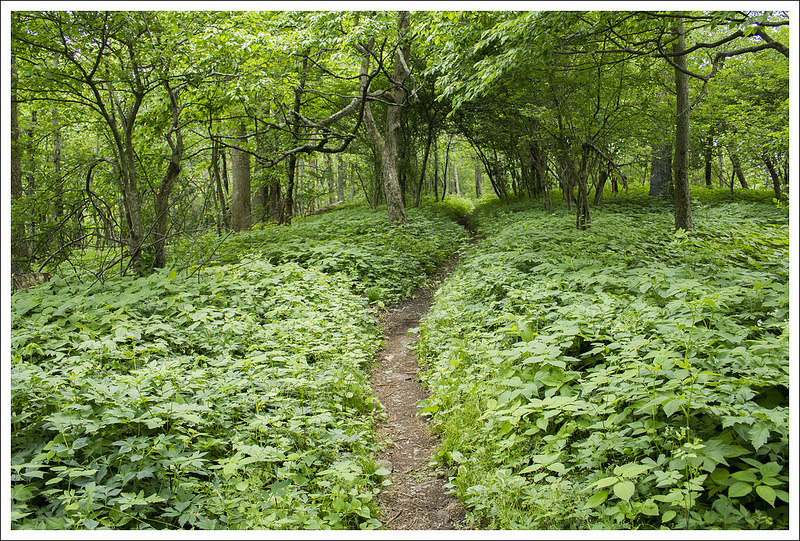
Adam Hiking the Jones Mountain Trail
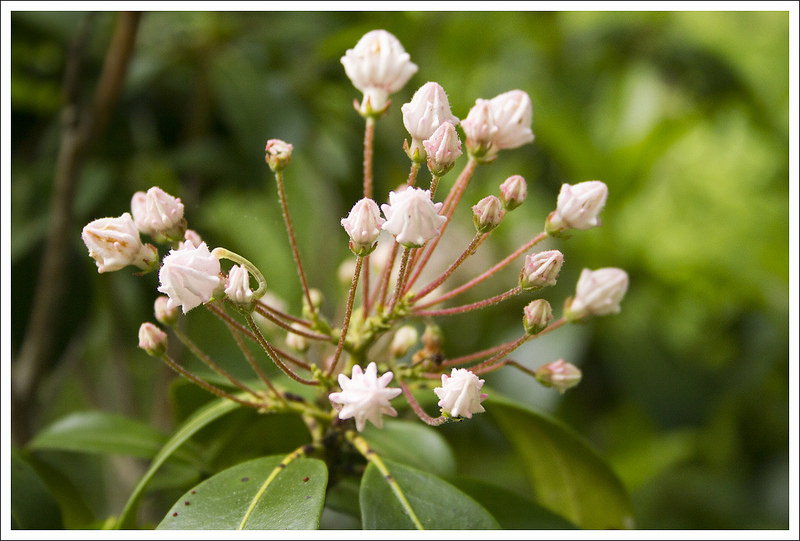
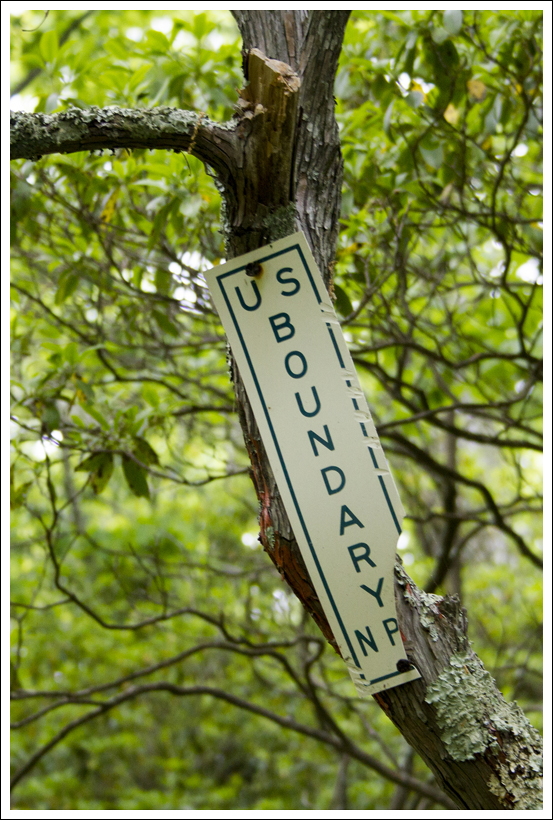
The Jones Mountain Trail traversed an expansive bed of lush, green ferns.  Below: Adam climbs Cat Knob – one of the few steep portions of the trail;  Park boundaries were well marked; One of many pink ladys slippers along the trail.

Climbing Cat Knob NPS Boundary Marking Pink Lady's Slipper

One thing to note on the trail is you do come across several times where the National Park crosses back and forth across boundary lines with the Rapidan Wildlife Management Area.  You may see some US Boundary markers in several places that marks the portion that is under National Park control versus Virginia control.

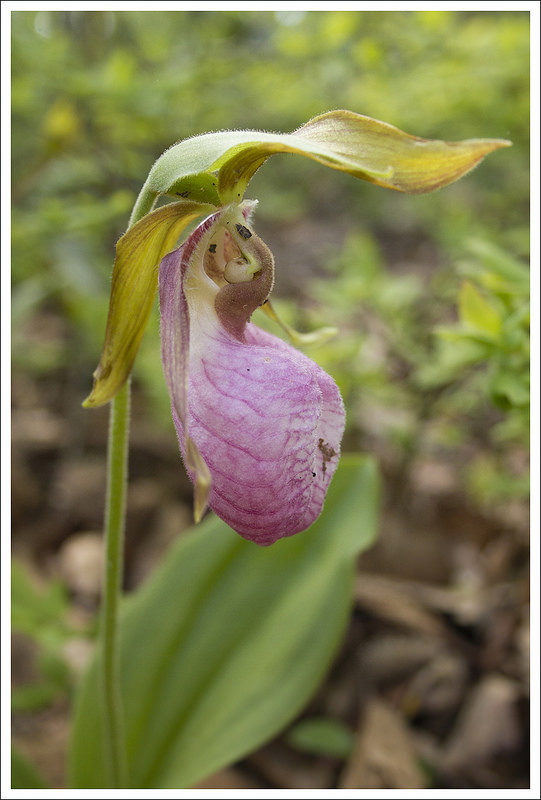
When we reached the highest point of the Cat Knob Trail, we found the largest concentration of pink lady slippers I have ever seen.  Everywhere we turned, we kept seeing more and more and they were at the peak of their bloom.  That was such a nice reward by coming this route.

Many Lady's Slippers
Usually photos of lady’s slippers are close-ups. This wider shot gives a better idea how these wildflowers are situated in the forest.  Below:  The portion of the trail outside the park is blazed differently;  The Rapidan Wildlife Management area; Adam makes the last final, steep descent to Bear Church Rock.

Blazes Wildlife Management Descent to Rock

Somewhere along the Jones Mountain Trail as we were making our approach to Bear Church Rock, my knee buckled and gave me a lot of pain for the rest of the day.  One hard part about hiking is if you get injured, you don’t have a lot of choice but to keep going.  I stopped about .25 mile before we reached the summit and rested.  I wasn’t sure if I would be able to make it all the way.  Christine went ahead to scout the way and see how much further.  Not wanting to be separated too long, I pushed myself onward and found her at the rock overlook.  We stayed there to rest for a while and we had the rock all to ourselves.  We were joined in about 20 minutes from a man from China who had come up the route from Graves Mill.  He didn’t speak English and we heard him on his walkie-talkie talking to someone that we presumed to be his wife.  We were guessing she was farther behind and he was assuring her he made it.  The climb the other way is quite steep, so I wouldn’t be surprised if she had either turned around or was just taking longer to get to the rock.

The views were spectacular.  While we had a bit of a cloudy day, it was nice to see the shadows from the clouds creeping along the mountain ridges in the distance.

We decided to make our way back.  I felt like the time at the viewpoint allowed me to rest my knee enough to make the return trip. I was hobbling slowly, but I had to keep pushing forward.  We got back to the car and I was glad to not have to take any more steps.

Christine Says…

It was National Trails Day, the weather was great – and even though neither of us was in the mood to go on a long car ride to a distant trailhead, we had to get out and hike! We settled on the hike from Skyline Drive to Bear Church Rock – mostly because it was close to home, but also because we’d never hiked it before. A few years ago, we hiked from the valley bottom in Graves Mill up to Bear Church Rock. That was a challenging and beautiful hike, so we thought it would be fun to visit the rock from the other approach.

From the parking lot at Bootens Gap, we headed north on the Appalachian Trail, gradually ascending Hazeltop Mountain. I was amazed by how lush and green everything in the park looked. It almost looked as green as the Smokies! Our last hike in the park had been in late April, before the leaves fully emerged. Spring always take a long time to fully arrive in the mountains.

After a short, easy stretch on the AT, we reached the junction with the Laurel Prong Trail. We turned right onto the trail and followed it downhill, over many rock jumbles along the shoulder of the mountain. In a saddle between two mountains, we reached the junction with the Cat Knob Trail.

Taking in the View at Bear Church
Adam takes in the view at Bear Church Rock.  Below: You’ll pass these rock formations on the final descent to Bear Church;  The rocks were covered with blooming mountain laurel;  There were also lots of ripening blueberries.

Rock Formations Mountain Laurels Blueberries

That trail climbed steeply over Cat Knob before reaching the junction with the Jones Mountain Trail. The Jones Mountain trail bears to the right. This section of trail actually departs Shenandoah National Park and enters the Rapidan Wildlife Management Area. You’ll notice park boundary signs and different orange/red blazes (as opposed to Shenandoah’s blue blazes) when you’re on this part of the hike.

This section of trail is incredibly beautiful! We enjoyed the expansive understory of ferns and countless pink lady’s slippers. The mountain laurel was just starting to bloom. The terrain along the Jones Mountain trail was rolling – lots of ups and downs, none of them too steep.   This route to Bear Church is probably less popular than the route from Graves Mill, so the trail was narrow and overgrown. Tall grasses brushed our legs all along the way. Adam said, “All I can think of is ticks. I feel like I’m crawling with them!’ Luckily, the permethrin we’ve been using on our clothes and gear really seems to be working. Neither of us found any ticks during a thorough post-hike check.

Around 4.9 miles into the hike, the trail took an incredibly steep downward turn. We lost about 200 feet of elevation in just over a couple tenths of a mile. We passed a few rocky outcroppings that looked like they might potentially have views, but they all turned out to be obscured by trees. Watch carefully for the spur trail to Bear Church Rock. It’s not a marked spur, so one could easily miss it.

On the hike, Adam had begun to wonder if we passed the view or if maybe it had been closed in by trees. I told him that it was a really open, spectacular view and that it had to be nearby. I told him I’d scout ahead and shout back if I found it. I ended up walking almost another half mile before I reached the spur trail! The distances in our guidebook were way off on describing the last mile of the hike to the viewpoint. Other sources I checked afterwards all put the distance anywhere between 9.5 and 11 (rather than the 8.5 miles indicated by our book).

Lush Green
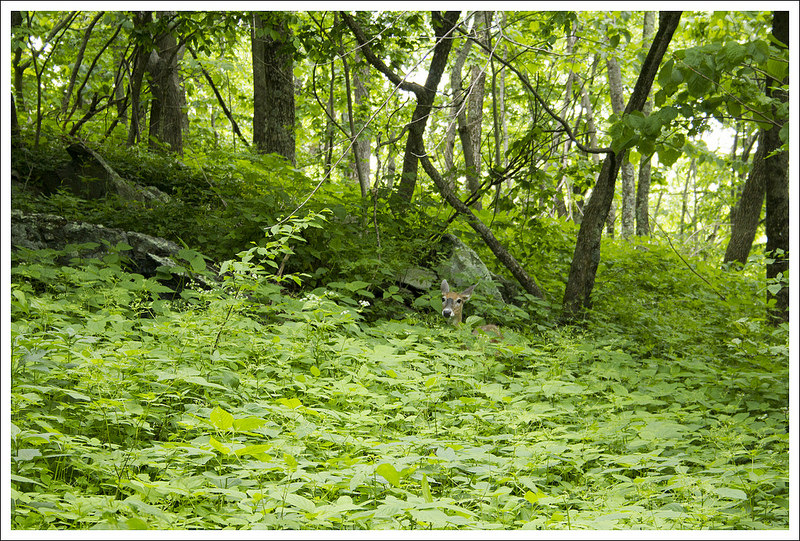
Everything was so abundant and green on this pretty June day.  Below: Adam makes the steep ascent on the return from Bear Church Rock.  Fortunately it is only this steep for a short time; Coming off Cat Knob; We spotted a doe and fawn in the understory.  The fawn was pretty well hidden.

Steep Climb Coming Off Cat Knob Doe

There was a large hiking group on the rock, so I felt weird about shouting for Adam. They told me they were headed out the way we came and would send Adam down when they passed him. But, just as the final hiker departed, Adam arrived.

We had lunch on the rock and enjoyed the unspoiled, pristine views of the park. One of the nice things about Bear Church is that you really don’t see civilization from the viewpoint. You get great views of Fork Mountain, Cat Knob and the Staunton River Valley – but no roads or houses or farms. It’s beautiful! The mountain laurel around the rocky viewpoint were in full bloom and quite spectacular!

After a nice rest, we hiked back the way we came. Most of the return trip was uphill, but other than a short section of climbing right after leaving Bear Church it was very moderate, gradual climbing. The last little bit along the AT was smooth downhill. We saw a doe and fawn hiding in the ferns right before we got back to the car. Once we were back in the car, we decided to head up to Big Meadows for blackberry milkshakes (yay!) and to say hello to our PATC friends. We were glad to catch up with the pair of PATC volunteers who led our Backpacking 101 course several years ago. Good day!

Trail Notes

  • Distance10.2 miles
  • Elevation Change – About 1800 feet
  • Difficulty – 4.  The climb down and back up are not overly tough, but the distance gives it an above average difficulty. 
  • Trail Conditions – 2.5.  The rocky slope climbing down the Laurel Prong trail did have some loose rock.  The Jones Mountain Trail was quite overgrown along the way and we were walking through a lot of knee-high grassy areas.  Wear bug spray and check for ticks afterwards.
  • Views– 5.  Great mountain views from Bear Church Rock. 
  • Streams/Waterfalls – 0.  Non-existent. 
  • Wildlife – 2.  We didn’t really see much wildlife on this trail.  We thought much of it would be a great place to spot a bear since it is in a very wide part of Shenandoah National Park and not as well-traveled. 
  • Ease to Navigate – 3.  You do take four different trails to get to Bear Church Rock, so pay attention at the junction markers.
  • Solitude – 3.  Most of the people we saw on the trail were on the Laurel Prong portion (typically making their way to the Rapidan Camp).  I would expect that you would see someone at Bear Church Rock.

Download a Trail Map (PDF)

Directions to trailhead:  Follow Skyline Drive to mile marker 55.  Park at the Bootens Gap parking area on the east side of the drive.  The AT departs from the end of the parking lot.

Rich Mountain Loop (TN)

Special: Smokies Edition

Introductory Guide to Visiting Great Smoky Mountains National Park

This 8.7 mile loop didn’t offer much in the way of natural scenery – no great views, no plunging waterfalls, but we did see a bear!  Apparently, this is a great trail to spot bears, as all ten hikers we spoke to on the loop saw at least one bear over the course of their hike.  This trail also passes the historic John Oliver cabin.

View the Full Album of Photos From This Hike

View Into Cades Cove
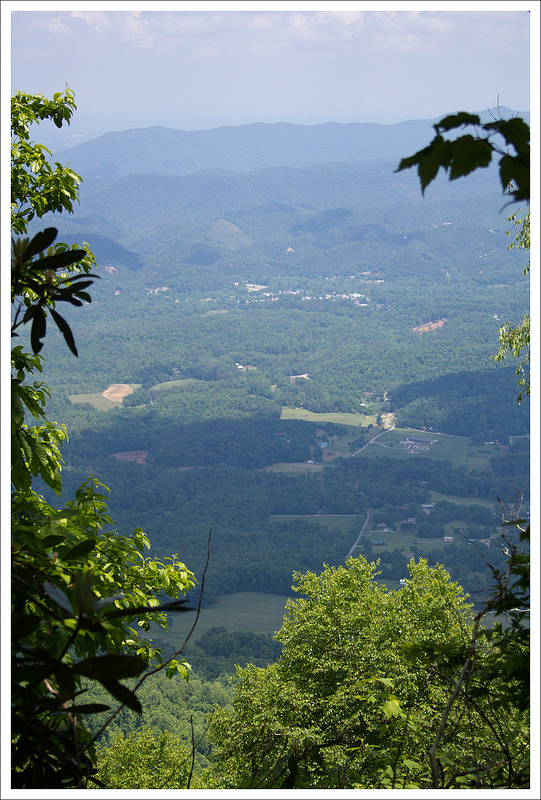
There was one decent view into Cades Cove on the Rich Mountain Loop. Most views were obscured by trees.

Adam Says…

The Cades Cove section of Great Smoky Mountains National Park has a lot to offer – camping, drives around the loop to view wildlife, biking (covered in a previous post), and a historic view into the way people lived and farmed in this area.  Honestly, I have a little love/hate relationship with this section.  The biking and wildlife viewing can’t be beat around this area.  However, the traffic is so incredibly slow through this area.  Expect people to go WAY below the posted speed limit, so getting to Cades Cove can take a lot longer than expected.  I think most of the way traveling from the Sugarlands Visitors Center, multiple people were driving about 10-15 mph for the entire 17 miles, so it was a drag getting there.  Christine and I typically like to get out early in the morning to beat traffic and heat through the day, so I would recommend the same if visiting Cades Cove.

Since we had biked the loop and hiked Abrams Falls (also on the Cades Cove loop) before, we looked for some other options for hikes.  Our book Day Hikes in the Smokies (by Carson Brewer) had this listed as a nice option for a hike.  According to the description, there was a waterfall, some views, and a historic homestead so we felt this would be a nice option to take.

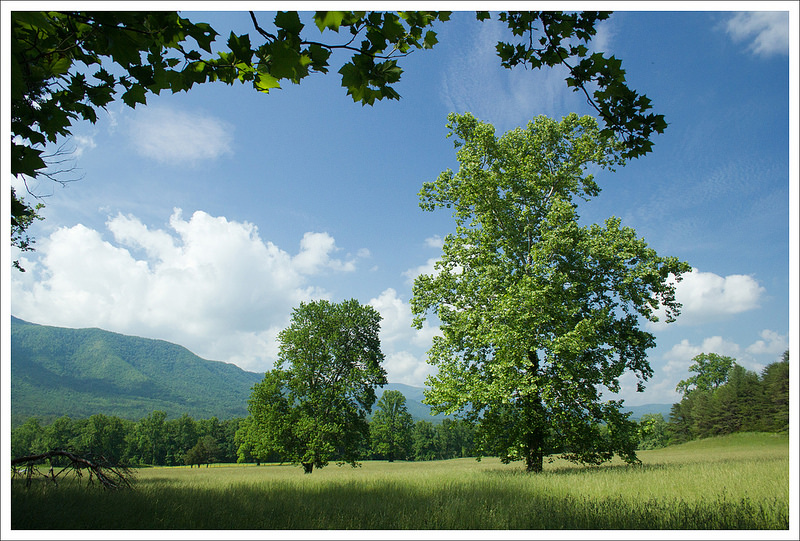
The open meadows and mountain backdrops define Cades Cove.
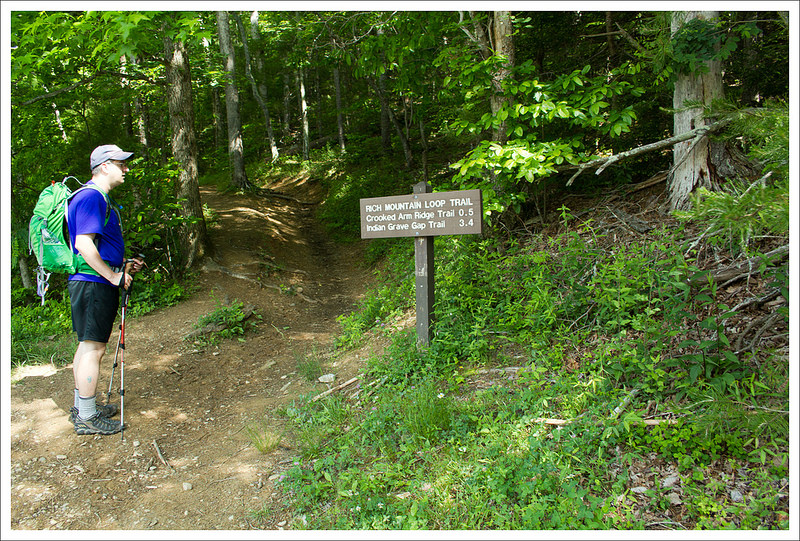
The open meadows and mountain backdrops define Cades Cove.  Below: Adam at the trailhead; A meadow view early in the hike; Stream crossings were shallow and easy when we hiked.

Trailhead Meadow View Stream Crossing

We parked in the lot past the information kiosk as you enter the Cades Cove loop.  There was plenty of parking in the lot, as most people either park their car to bike the loop or just ask the rangers at the kiosk some questions about the area.  We parked at one of the furthest parking spots and then crossed the road.  In a short distance, the trailhead appeared and we started off on the Rich Mountain Loop trail.  This trail was relatively flat.  It was mostly wooded, but there were a few spots where it opened up to views of meadows.  In .5 miles, the trail reached a junction with the Crooked Arm Ridge trail.  We took a right here to start the Crooked Arm Ridge trail.  At .8 miles, you reach the Crooked Arm Cascade, which was no more than a small trickle when we viewed it.  This trail is the steepest section of the hike, as you are climbing up the entire trail gaining close to 1800 feet by the time you reach the end of the trail at mile 2.7.  The humidity this day was very high and there was no breeze, so we felt like we were pouring buckets of sweat on our relentless climb through many switchbacks along the trail.

At 2.7 miles, we passed the junction with the Scott Mountain Trail, but the junction wasn’t clearly marked to let you know it was the Scott Mountain Trail (Note: This might be because the Scott Mountain Trail is closed from campsite #6 to Schoolhouse Gap.  However, Campsite #6 is still open.  Check park information for the latest updates on trail closures.)  Staying straight, the trail turns into the Indian Grave Gap Trail.  It continues to climb gradually, and there are some occasional obstructed views from the ridge.  You finally reach the peak of climbing around mile four,  near Cerulean Knob (3686 ft. – no views).  We continued walking the ridge for a while, then the trail then starts its descent.   At 5.3 miles, the Indian Grave Gap Trail reaches a junction.  Continue on the Rich Mountain Loop trail.

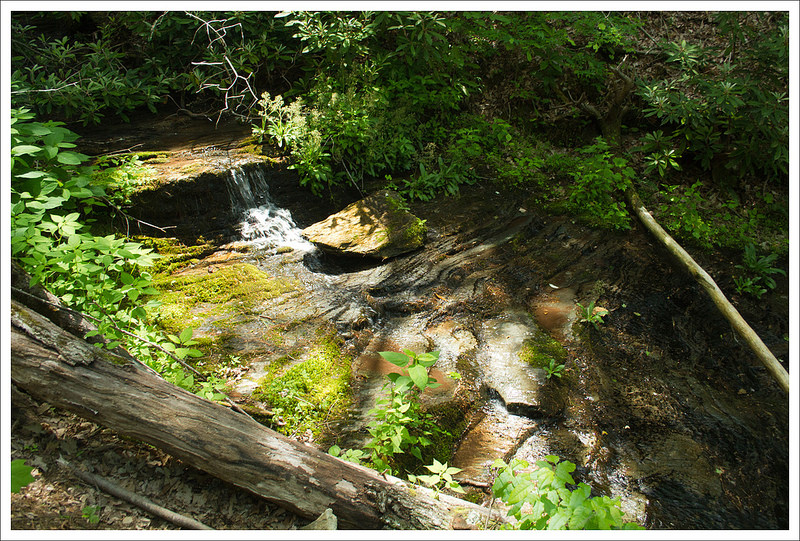
Crooked Arm Falls
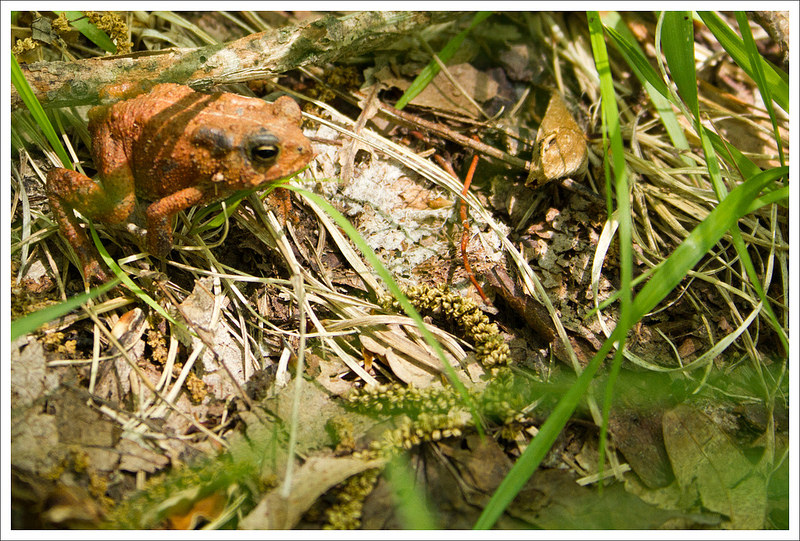
Our hiking guide said that Crooked Arm Falls ‘was no Niagara’. They really weren’t kidding!  Below: The trail was eroded and had a deep chute in the middle; The ridge walking was pleasant and breezy; We saw several of these cute toads.

Eroded Trail Ridgewalking Cute Toad

The trail continues to descend and you do get some nice views along the way of a branch that leads to Abrams Creek.  Around 7.2 miles, the trail leads to the John Oliver Place, a historic cabin.  If you are interested in learning more about the Oliver family and life in the 1800’s in Cades Cove, I would recommend checking out the history of the Olivers and the cabin and what pioneer life was like in Cades Cove.  We paused to check out the cabin and as you face the house, take the rightmost trail behind the house (there are several small paths here) to continue on to the Rich Mountain Loop.  You will have a few stream crossings (minor rock hopping is required) until you reach the first junction you met at mile 8.2.  Continue straight to take the Rich Mountain Loop trail to arrive back at your car at mile 8.7.

As mentioned in the short description at the top, we kept coming across people that had seen bears along the trail.  Until we started the descent from Cerulean Knob, everyone we crossed told us they had seen various bears across the trail.   Of course everyone also said they watched the bears and then they ran off.  Always excited to see bears, we felt like everyone else had chased them away.  As we were descending we were convinced that we probably wouldn’t see anything, but as soon as we voiced this doubt, Christine spotted a bear right off the side of the trail.  The bear just watched us indifferently while it ate some leaves.  Then it took a slow walk and then squatted to do what bears do in the woods.  As soon as it was done, it shot through the woods at a breakneck pace like its poop had scared him.  I guess that is why they call it “bear scat”, because he really did scat after doing his business.

One lesson that I quickly learned on this trail was that humidity is relative.  While we were doing the tough climb up to the ridgeline, we came across another couple (who of course were telling us about a bear they saw).   Feeling that I was quite the sight from all the sweat coming off my body, I commented on how hot and humid it was.  They said, “Wow.  We haven’t been sweating at all today.”  They then explained they were from Mississippi so they were more accustomed to the heat and humidity and thought it was quite comfortable.  Of course this reminded me on some of our trips to Maine and talking to people that couldn’t handle the heat of 85 degrees without humidity and we thought it was quite pleasant.

While we felt the hike wasn’t overly impressive based on the description we originally read, we felt grateful that we saw a bear in the Smokies.  If you’re looking for a bit of a challenge and some variety of terrain in this area of the Smokies, this is a hike to consider.

Christine Says…

After a third day of shorter, easier hikes, I was finally feeling better and we were on the move from Bryson City to Gatlinburg for the remainder of our week in the Smokies. We decided it was time to hike something a little longer/tougher. We considered a few trails on the northern side of the park, including Gregory Bald, Ramsey Cascades, and Rich Mountain. In the end, we settled on Rich Mountain because our guidebook said it had views, a waterfall and a historic cabin. I like trails with a variety of attractions, so it seemed like the perfect choice for the day.

Another perk of the Rich Mountain loop is that the trailhead can be accessed at the head of Cades Cove, before the start of one-way traffic.   The Cades Cove loop is something every GSMNP visitor should drive (or bike) at least once. It’s a great place to spot wildlife and it showcases the park’s fascinating human history. But, if I’m being fully honest, the traffic in Cades Cove can be insufferable when you just want to get to a trailhead and start your hike. On this particular day, I was very happy to be avoiding the gridlock!

We followed the Rich Mountain Loop trail for about half a mile to our first junction. At the marker, we took a right onto the Crooked Arm Ridge Trail. Most people seem to hike the trail clockwise, but we decided to go the other way for to get the climbing done a little earlier and a little faster in the loop.

One of the first landmarks we passed was Crooked Arm Falls, which our hiking guidebook described as ‘not Niagara, but still very nice’. That turned out to be quite the understatement! The ‘waterfall’ was barely a trickle of water over a short rock shelf. Maybe it’s more impressive when there has been a ton of rain!

Bear
We spotted an adolescent bear along the trail!  Below: Adam checking out trail distances at one of the junctions; Flame azalea; Mountain laurel.

Trail Junction Flame Azalea Mountain Laurel

After passing the waterfall, our climb began in earnest. Neither of us was used to hiking in the heat and humidity. Virginia had been having lots of cool, pleasant days that spring, so it was very tough going. When we got back to the car and had smartphone access again, I checked the temperatures and real feel estimates – it had been about 88 degrees with a real feel of 95. Honestly, that’s kind of the outer limit of heat in which I’m willing to hike.

We slogged along uphill for a couple miles. The air was really still and steamy, with any chance of a breeze blocked by the shoulder of the mountain. The trail was deeply eroded in several sections, with the middle of the footpath looking like a chute in the ground. The views promised by our guidebook were mostly closed in by the leaves on the trees and we started to think we may have picked a dud of a hike. I was feeling really overheated and crabby.

Eventually we reached the junction with the Indian Grave Gap Trail. At this point, the climbing became easier and we felt a breeze across the ridge. We started to see more wildflowers – mountain laurel and flame azalea. We spotted several cute toads hopping across the trail. We stopped for a snack near an opening in the trees. We had a decent view into Cades Cove. Along this section of trail, we passed two other hiking parties – both mentioned that they’d had bear sightings before the junction with the Rich Mountain Loop. One group had spotted an adolescent bear and the other a mother bear with two cubs.   Between the breeze, the wildflowers, and the likelihood of a bear spotting; my attitude turned a little more positive. Adam was more skeptical than I was, saying ‘If all these people already saw bears, we’ll probably be the only ones who don’t!’

We walked along, trying to stay quiet for the wildlife. We reached the junction of the Indian Grave Gap Trail and the Rich Mountain Loop Trail without spotting a bear. I figured that we were out of luck, and started chatting with Adam again. As we were descending toward a stream bed, I caught a shuffle of movement through the trees. I stopped abruptly, waved my hand up to stop Adam behind me and whispered ‘BEAR!’ Ten feet from the edge of the trail, we spotted a handsome yearling bear foraging for food. He knew we were there, but continued to move along at a normal pace. Other than once upward glance, he completely ignored us. Suddenly, he broke into a full gallop and went crashing deeper into the woods and out of view. It was a GREAT sighting and made the hike totally worthwhile.

John Oliver Cabin
The John Oliver Place is the oldest cabin in Cades Cove. Below: A friendly yellow warbler we spotted along the trail; Adam descends the Rich Mountain Loop Trail; The woods shortly before reaching the Oliver cabin were very pretty.

Warbler Descent Woods

The rest of the hike between the bear and the John Oliver cabin was downhill, steeply at times. For a couple hundred yards, we were followed by a cute yellow warbler. The bird hopped from tree to tree right alongside us before finally flying off. We had a couple easy, shallow stream crossings on the section of trail.

We reached the Oliver cabin and were met with crowds of Cades Cove tourists. Most people visiting the cabin park along the loop road and then walk a short distance up to the house. I think this cabin is the oldest structure in the Cove.   After spending a little time exploring the cabin, we headed back onto the Rich Mountain Loop trail.

After the cabin there wasn’t anything remarkable left on the trail to see. I don’t think I took a single photo! It was just an easy walk for about a mile back to our first junction of the day, followed by a half mile stretch back to the parking area on the loop road. It felt great to be back in the air-conditioned car!

On our way out of Cades Cove, we stopped by the snack bar at the campground. I got a gigantic Gatorade and a bag of generic Cheetos. The Gatorade tasted miraculous after miles of drinking lukewarm Camelbak water! About an hour later, we were checking into our hotel in Gatlinburg. After showering, we headed out to the Smoky Mountain Brewery. On the way, we got caught in one of the biggest downpours I’ve ever experienced. We ate dinner soaked, but the beer and steak were so good I didn’t care.

So, I guess in closing… would I recommend the Rich Mountain Loop? Probably – it seems like a great place to hike if you want good odds of seeing a bear in the wild, but don’t go expecting great views and waterfalls.

Trail Notes

  • Distance – 8.7 miles
  • Elevation Change – 1800 ft.
  • Difficulty – 3.5  The hike up the Crooked Arm Ridge trail was tough.
  • Trail Conditions –  3.  The trail was clear, but there were some eroded parts on the climb up the Crooked Arm Ridge Trail.  On the hike down, there was some loose rock also.
  • Views – 2.  There were some obstructed views from the ridgeline.
  • Streams/Waterfalls – 2.  The Crooked Arm Cascade was a disappointment with little water, but the streams on the back end of the loop were nice. 
  • Wildlife – 4.5.  We did see a bear and it looked and sounded like a lot of bear activity here.  We also saw some deer along the way.
  • Ease to Navigate –  1.5.  Trails were not marked very clearly, especially at junctions.  Also, there is confusion around the John Oliver place on which way to go to complete the loop back.
  • Solitude – 2.5.  Cades Cove is a very popular area.  I would expect to see some people on the trail most days, but less in the upper elevations.  There will also be lots of people that will park on the main road to check out the John Oliver Place. 

Download a Trail Map (PDF)

Directions to trailhead:   From the Sugarlands Visitor Center in GSMNP, follow signs towards Cades Cove. Follow Little River Road for about 17 miles.  At the intersection near Townsend, the road will become Laurel Creek Road.  Follow Laurel Creek road for 7.4 miles to the parking area at the head of Cades Cove.  Park in the lot on the left hand side of the road right before the traffic becomes one way.  The trail starts about 25 yards ahead on the opposite side of the road from parking.

Wesser Bald (NC)

Special: Smokies Edition

Introductory Guide to Visiting Great Smoky Mountains National Park
(while Wesser Bald is technically outside GSMNP, it’s still part of the greater Smokies region)

This 2.8 mile out-and-back is an easy hike to one of the area’s best viewpoints.  The platform atop the defunct firetower on Wesser Bald offers panoramic views of the spectacular Smokies (and all the other mountains in the area).

View the Full Album of Photos From This Hike

Smokies View from Wesser View
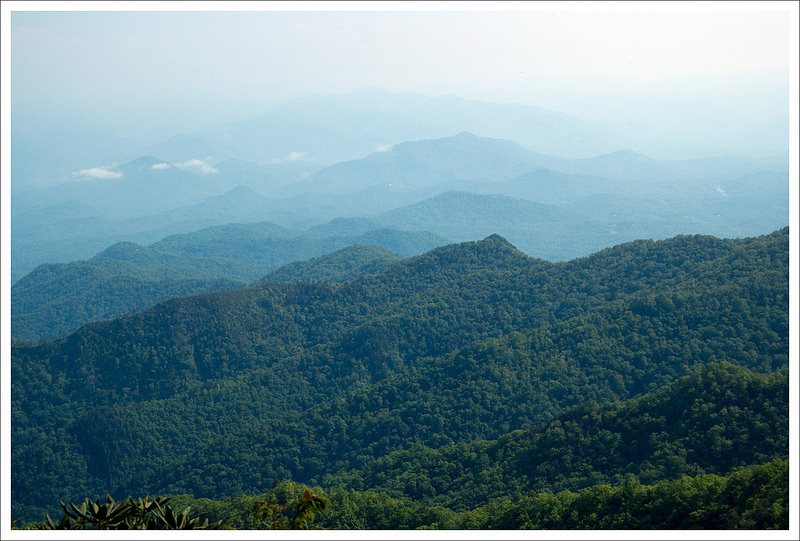
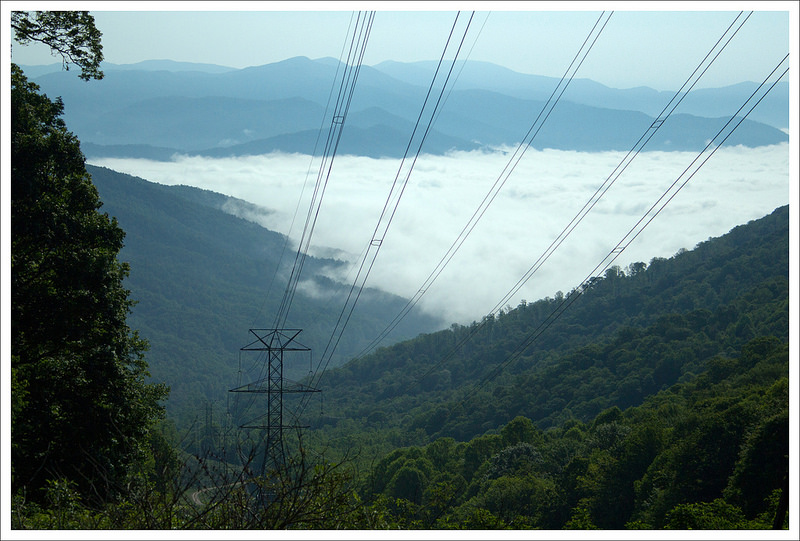
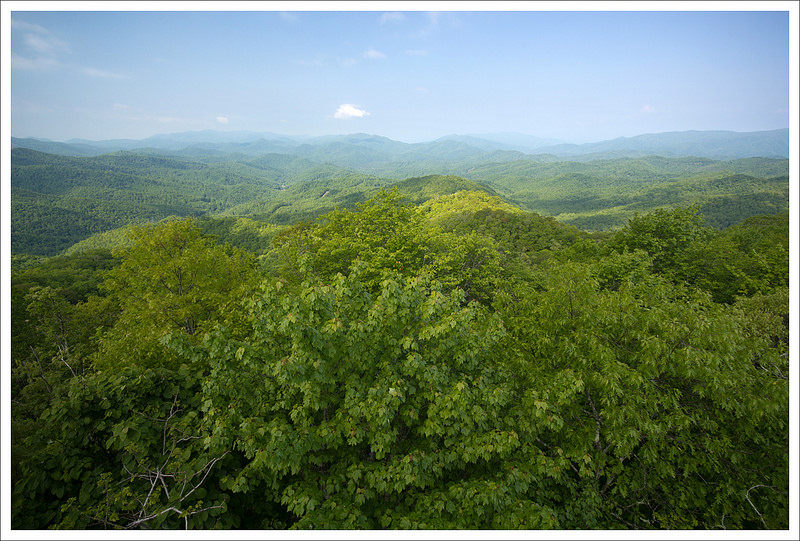
You get classic Smoky Mountain views from the tower atop Wesser Bald.  Below: A sign points the way to Wesser Bald:  The parking area at Tellico Gap provided a view of powerlines and a ‘cloud sea’; The drive into Tellico Gap follows the extremely scenic Otter Creek.  It’s worth stopping to enjoy the rapids and small waterfalls.

Wesser Sign Tellico Gap Stream

Adam Says…

It is nice when you find a hike that the locals rave about.  During our trip to North Carolina, I heard three different people mentioning that we needed to hike Wesser Bald.  After getting to the top, I can see why this is so revered.

When we started off in the morning, it had been storming the night before.  A fog had settled on the lower elevations.  While we were driving, we were curious if we were going to get any views at all.  On our drive there, the cloudy conditions gave us great views along the Nantahala River as we passed several scenic spots and chances to catch some roadside waterfalls and rapids.  We made our way up Otter Creek Road and parked at Tellico Gap, where the Appalachian Trail crossed the road.

When we first parked, we noticed the sign that designated the start of the trail, but we noticed there was a white-blazed trail and a fire road to the left.  We knew our hike was on the white-blazed Appalachian Trail, so we took the trail to the left.   The fire road trail to the right also leads to the tower.  I’m not sure how the conditions are on it, but it did seem to be shorter, since we found a family with kids that left after us beat us back to the parking lot (and they didn’t seem like fast hikers).  The trail passed through a thick brushy area fairly quickly, but most of the trail was in a more opened-up wooded area.  The hike was fairly uphill as it skirted the mountainside, but I didn’t find any of the trail to be incredibly steep.  Instead, it winds There were a few switchbacks towards the end of the hike where it was a little steeper, but the switchbacks save you from going straight up the mountain.

Wesser Bald Trail
Adam walks along the Appalachian Trail en route to Wesser Bald.  Below: A cool, bent tree along the trail; Mountain laurel were just starting to bloom; In fact, there were many wildflowers blooming.

Bent Tree Mountain Laurels Wildflowers

When we reached the top of the spur trail at 1.3 miles, there was a great viewpoint that gives you a small sample.  If you are not willing to climb the fire tower, this would be the best views you would get on this hike.  As you reach the top, take a right and you’ll reach the fire tower in a short distance.  Make your way back to complete the out-and-back or you could press pass the fire tower to take the fire road back to make it a loop.

When we reached the fire tower, we could hear a couple people at the top of the tower.  Christine quickly made her way up.  I, on the other hand, needed to psych myself up.  As you’ve probably seen in many pictures, I don’t mind getting out on rocks that are on the edge of a huge precipice; however, I don’t trust man-made structures when it comes to heights.  I trust nature over man.  I went up halfway and then I could start to see the sky through the gaps in the stairs and I just turned back around.  But from the bottom, I could hear Christine and the others at the top of how beautiful everything was and I knew I needed to force myself to get up there.  So, I took a second attempt and made it up.  Christine and the others at the top applauded my efforts for overcoming my fear.  I’m so glad I made it to the top, because the scenery was breathtaking and some of the best mountain views I’ve ever seen.   We stayed up there a while and talked to a few different groups of people that made it up after we did.

After we made it back, we decided to head to the Nantahala Outdoor Center.  We had a nice lunch at the River’s End and then we enjoyed a beer at Big Wesser BBQ & Brew, while watching kayakers and whitewater rafts go down the river.  This is always one of our favorite spots while visiting near the Smokies and it is definitely a place you can spend hours during the afternoon.   You can also hike from Tellico Gap to the Nantahala Outdoor Center on the Appalachian Trail for a one-way total of 7.5 miles if you want to do a shuttle option.

If you are interested in geocaching, there are three you can find on the trail:

Christine Says…

The forecast for our week in the Smokies didn’t look good – stormy, rainy and unsettled every single day from Sunday to the next Saturday. So, when we woke up to dense fog on Monday morning, we weren’t completely surprised. However, the hourly forecast on weather.com made it look like the fog might burn off. We hoped that the odds would be in our favor, and headed off to hike a trail we’d been eying for a while. Wesser Bald is a short, moderate 1.4 mile hike along the AT to an old fire tower overlooking the southern Appalachians. It’s a spectacular view if you’re lucky enough to hit the spot on a clear day.

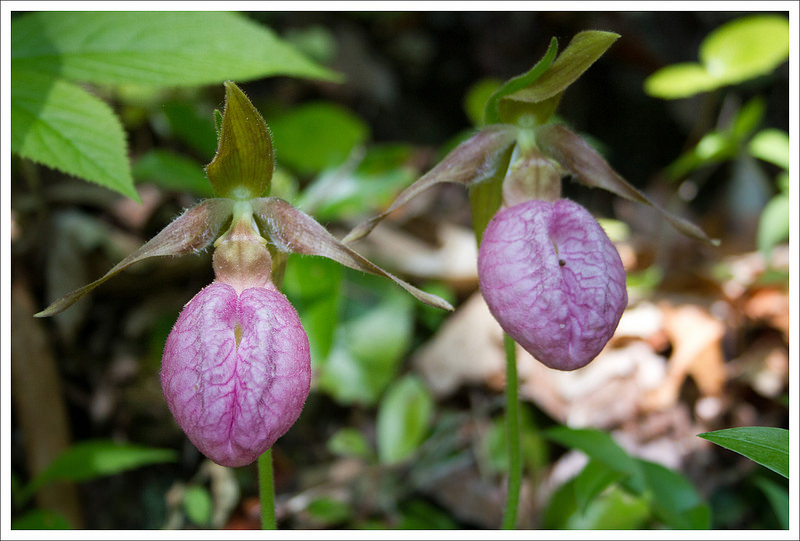
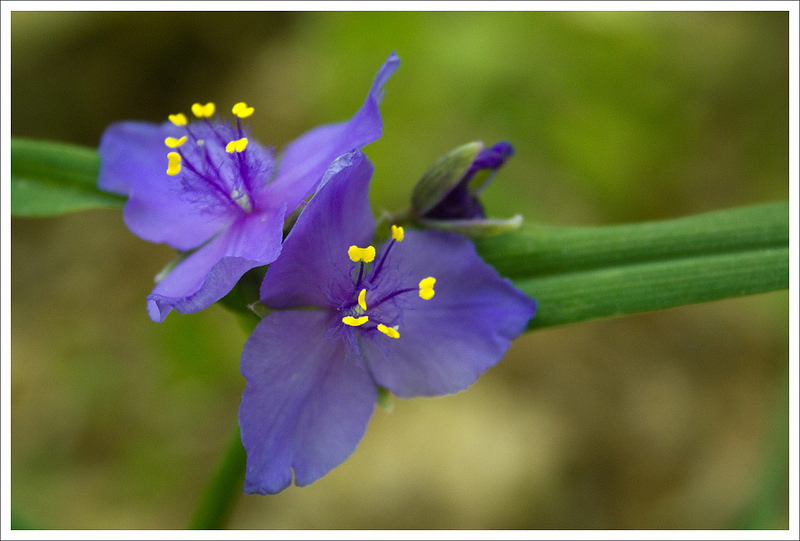
From Tellico Gap, we followed the AT as it made gradual, sweeping switchbacks through beautiful, lush forest. The trail was lined with wildflowers and blooming azaleas/rhododendron. I think I saw more pink lady slippers on this hike than I’ve ever seen anywhere else. It was gorgeous. The azaleas came in white, pink and orange and the rhododendron bloomed in their classic bright pinkish-purple color. I also spotted wild strawberries and some gorgeous purple spiderwort.

First View
Christine enjoys the first view along the trail. This spot is at the head of the spur trail to the tower.  Below: The fire tower is two stories high;  The stairs are open and a little rickety; Christine atop the fire tower.

Fire Tower Climbing On Top the Tower

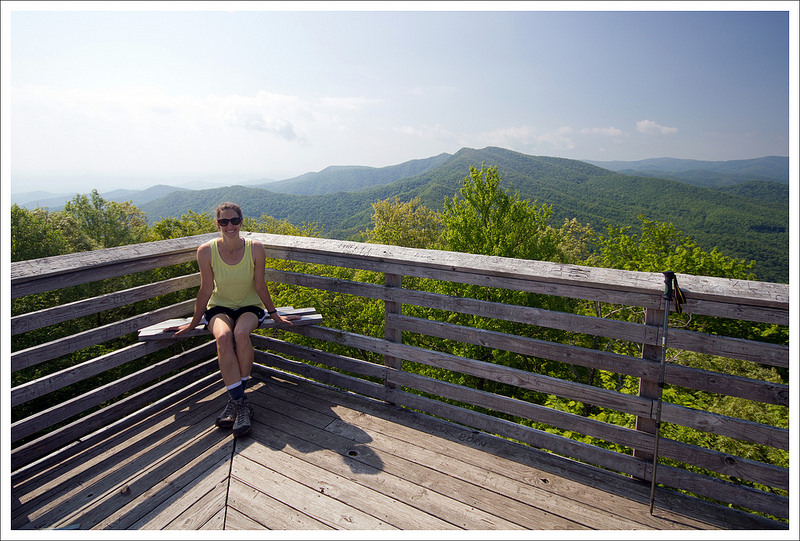
The humidity took some getting used to! Even though it wasn’t particularly hot, the day was windless and the air was completely saturated. By the time we got to the top, I looked like I’d been dunked in a pool! Just before reaching the tower, we passed a nice view looking toward the Smokies and Fontana Dam. Near the overlook, a short spur trail took us to the top of Wesser Bald. This bald is no longer actually a bald – it’s been let go and returned to the natural forest environment. So while the view has closed in from the base of the tower, the view from the two-story viewing platform is superb!

I climbed up to the top and said WOW! Adam didn’t feel comfortable with the open, rattling stairs, so he hung out at the bottom while I chatted with a couple at the top. They had hiked up earlier from the NOC and were waiting to meet up with their son, who was on a solo backpacking trip. They were really fun to talk to – both were veteran AT thru-hikers and REI employees. We talked about favorite spots on the AT and chatted a bit about gear. I always love meeting people like them on the trail!

View from the Tower
Views from the Wesser Bald fire tower are majestic. Below: There were many pink lady’s slippers along the trail; Spiderwort: Christine enjoys a post-hike shandy at the Big Wesser Brew & BBQ at the Nantahala Outdoor Center.

Lady's Slippers Spiderwort Nantahala Outdoor Center

While we were chatting, Adam mustered the courage to climb to the top of the tower. He was so glad he did, too! The views really blew both of us away! Even though it was hazy, we could still see for miles in every direction. We spent a long while atop the tower, enjoying the views and the fresh mountain air.

After a while, we decided it was time to make our way down and seek out some lunch. One of our repeat stops ever time we visit the Smokies is the Nantahala Outdoor Center. We enjoy lunch at the Riverside Cafe, browsing the nice outdoor gear store, and (of course) drinking a few beers by the river at Big Wesser. It’s so fun to sit at an umbrella table, drink a nice craft beer and watch kayakers shooting through the rapids. It’s also a great place to people-watch in general. While we were sitting and enjoying our drinks, the skies opened up and dumped a huge amount of rain in just a few minutes. I’m sure glad we had the rain at the NOC instead of on top Wesser Bald!

Trail Notes

  • Distance – 2.8 miles out-and-back
  • Elevation Change – 777 feet.
  • Difficulty – 2.  The trail is mostly uphill, but not too steep.
  • Trail Conditions –  4.  The trail was in great shape and the footing was fairly solid.
  • Views – 5.  Absolutely spectacular views from the fire tower and another nice view right before the tower.
  • Streams/Waterfalls – 0.  Non-existent. 
  • Wildlife – 1.  We only saw some birds along the way. 
  • Ease to Navigate –  3.  The confusion of the fire road at the beginning gives it a lower score, but other than that you should be fine.  Follow the white-blazed AT. 
  • Solitude – 2.5.  Popular with locals, but this wouldn’t get the traffic that a hike in the nearby Smokies would. 

Download a Trail Map (PDF)

Directions to trailhead:   From Bryson City, follow US 19/74 for 20 miles.  Turn left on Wayah Road and follow it for five miles. Turn left on Otter Creek Road and drive 4.1 miles to Tellico Gap. The road is paved for the first 2.8 miles. At the crest of the hill, you will see the AT crossing and several parking spots.  Follow the signs to Wesser Bald.

Mt. Pisgah (NC)

North Carolina Hikes

This 3 mile out-and-back leads to the towering (literally) summit of 5,721 ft Mt. Pisgah.  Due to the short length and proximity to lodging, a camp store, and a picnic area, this trail is exceedingly popular with families.  The summit offers some nice views, but the presence of a huge television tower detracts from the natural beauty of the area.

View the Full Album of Photos From This Hike

Mt. Pisgah Summit
The TV tower definitely detracts from the scenic beauty of Mt. Pisgah.  Below: The trail to the top is short, but it gets steep and rocky in places;  Not the prettiest of summits.

Pisgah Trail At the Top of Mt. Pisgah

Christine Says…

Our second day in Asheville was just a half day, but we wanted to get a little more hiking in along the Blue Ridge Parkway before making our way down to Bryson City and the Smokies. Breakfast was at the popular Sunny Point Cafe. We got there just a couple minutes before they opened and were able to snag the last open table for two! It’s a very popular spot, so be prepared to get there early or have a long wait.

After breakfast, we headed up to the parkway to climb Mount Pisgah. Our book talked about great views, but described the hike as ‘strenuous’. In fact, there was a warning sign at the trailhead indicating that the hike was tough and steep. It actually only climbs about 700 feet, but it does so in a short distance. I suppose the warning is necessary for novice hikers or people who think they’re just out for a casual stroll.

The hike started out from a parking lot atop the Buck Springs Tunnel. There are actually a couple trailheads in that area – Mt. Pisgah, Shut-In Trail and the Buck Springs Trail. To get to the Pisgah Trail, drive to the far end of the parking lot.

Blooming Rhododendron
The rhododendrons and azaleas were blooming when we visited. Below: The Mt. Pisgah trailhead;  Hiking along the flatter, easier part of the trail; Spring blooms!

Trailhead Hiking Along the Pisgah Trail Blooming

The hike started off gentle and flat – just a pleasant walk through the woods. We could see the conical summit of Pisgah, replete with its television tower, looming through the trees. The trail made a sweeping turn at around .4 miles and began a steady uphill climb. It was rocky and rough at times, but overall a moderate ascent. A couple tenths of a mile before the summit, we came across one nice view across the mountains.

After the nice view, we made the final push to the top. The summit has a wooden viewing platform and a serious eyesore of a television tower. I know they’re necessary, but I wish they could have put it on a less scenic, more remote peak! All that metal really ruins the scenic beauty of such an impressive summit.

We sat on the summit for a while. The views would have been pretty nice, but the day was overcast and hazy, so that took away some of the majesty from the experience. I think we were also the only people on the summit without kids! Mt. Pisgah is clearly a very popular family hike! There were more three-year-olds on that mountain top than any other demographic. I guess it makes sense – the hike is short, moderate and doesn’t have any steep drop-offs — perfect for a family with small children.

We hiked down the way we came, making speedy work of the descent.  Now… on to the Smokies!

First View
There was one nice view from the trail before we reached the summit of Pisgah.

Adam Says…

When we’re on vacation, we  like to alternate  longer hikes with shorter hikes to make sure we still have energy at the end of our trip.  When we were researching  different hikes to do near Asheville, NC, we came across Mt. Pisgah.  With it being such a short hike and the trailhead being sort of en route to our next town stop, we thought this was a winner.  We also read about wonderful views from the top so we figured it would be a high payoff for minimal effort.

The trail started off following a slight incline for the first few tenths of a mile.  Then the trail went up more steeply in elevation and can be challenging at times.  But, since the hike is pretty short, it is attainable by most people.  We saw more families hiking on this trail with little children than anywhere else.  While many of the kids were walking the trail in the beginning, we found most of them were being carried by the time they reached the summit.

Summit of Mt. Pisgah
Yes… the summit is a little disappointing. Below: A steeper, rockier section of the trail; The viewing platform atop Mt. Pisgah; Hazy views from the summit.

Rocky Climb Mt. Pisgah Viewing Platform View from Mt. Pisgah

We arrived at the top in well under an hour.  The tower was such an eyesore and we both were thinking this would be so much nicer of a hike without the 339-foot tower there.  The wooden platform allowed for about 270-degree views (90 degrees taken up by the tower).  While it was hazy, I could tell that on a clear day you would be able to see for quite a distance.

The origin of the name of the mountain comes from the Bible.  The Reverend James Hall is attributed to being the first to call this area as “Pisgah”, taken from the biblical reference to the peak where Moses viewed the promised land.  The Pisgah National Forest was historically owned by the Vanderbilts (who built the nearby Biltmore House in Asheville).  500,000 acres were sold to the government by the Vanderbilts as an effort to help preserve this land.

If you are interested in geocaching, there are several to find on this trail:

Parkway View
You can see the parking area and the Blue Ridge Parkway from the summit of Mt. Pisgah.

While this hike does have some nice views from the top, we were a little disappointed by the size of the tower and the popularity of the trail.  As Christine mentioned, it would have been nice to have this on a more remote mountain (and also not the namesake for the entire National Forest).

Trail Notes

  • Distance – 3 miles
  • Elevation Change – 700 ft
  • Difficulty – 1.5.  This trail is short with a moderate ascent.
  • Trail Conditions –  4.  The trail was generally in good condition.
  • Views –  3.5 – Typically views from a peak like this would get higher marks, but the tower is such a distraction.
  • Streams/Waterfalls –  0.  None
  • Wildlife – 1.  Maybe some birds and squirrels.
  • Ease to Navigate –  5.  There is only one trail to the top, and it’s very easy to follow.
  • Solitude – 1.  This trail is popular and heavily traveled.

Download a Trail Map (PDF)

Directions to trailhead:   From Asheville, take the Blue Ridge Parkway south to the Mount Pisgah Parking Area, on the left, at milepost 407.6. Park at the second parking area.

Black Balsam & Tennent Mountain (NC)

North Carolina Hikes

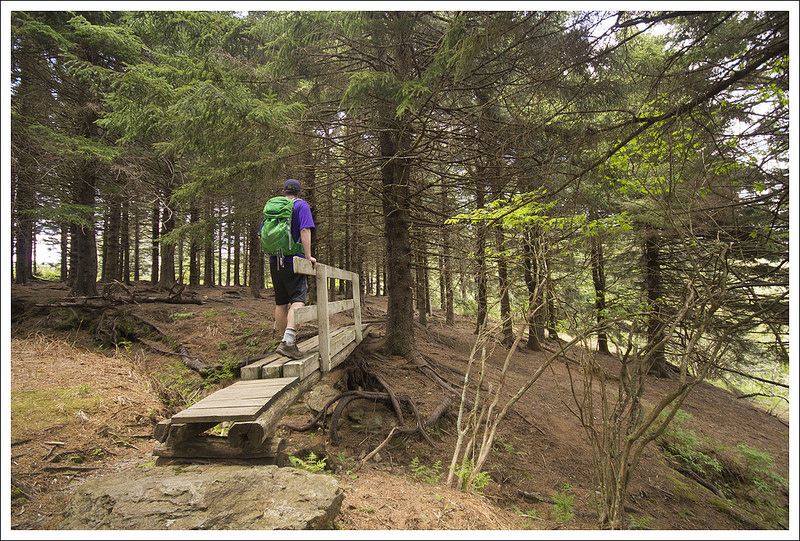
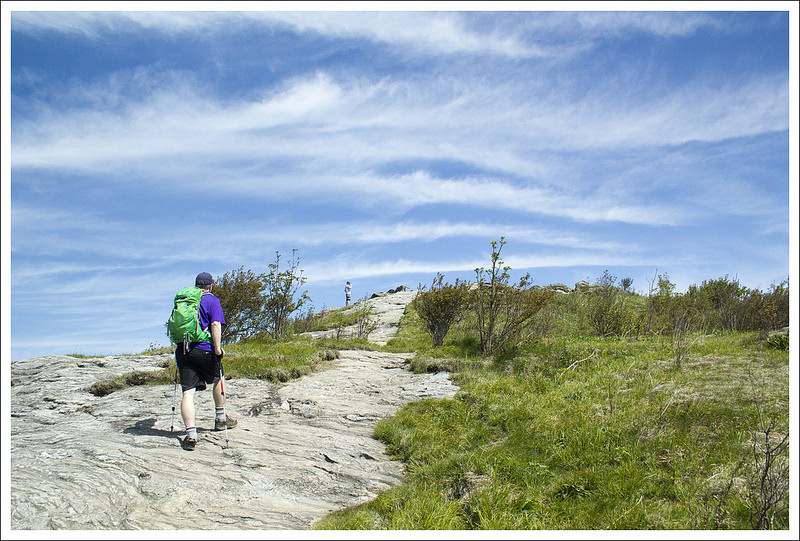
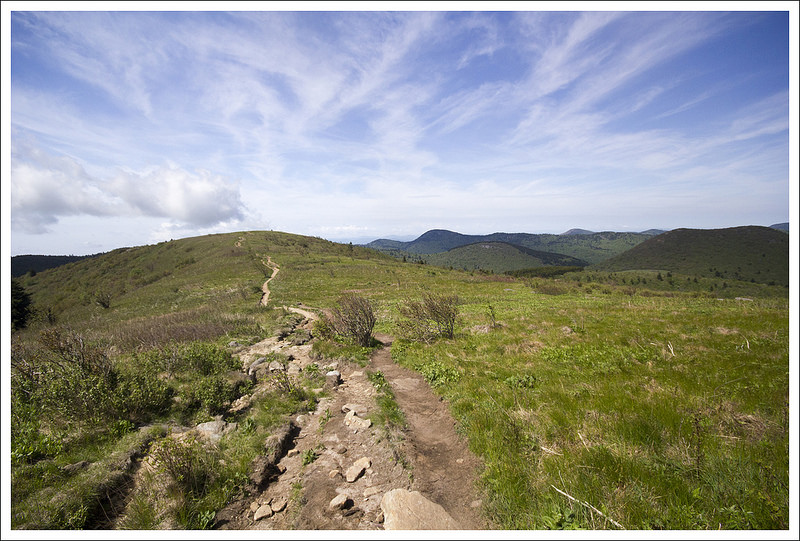
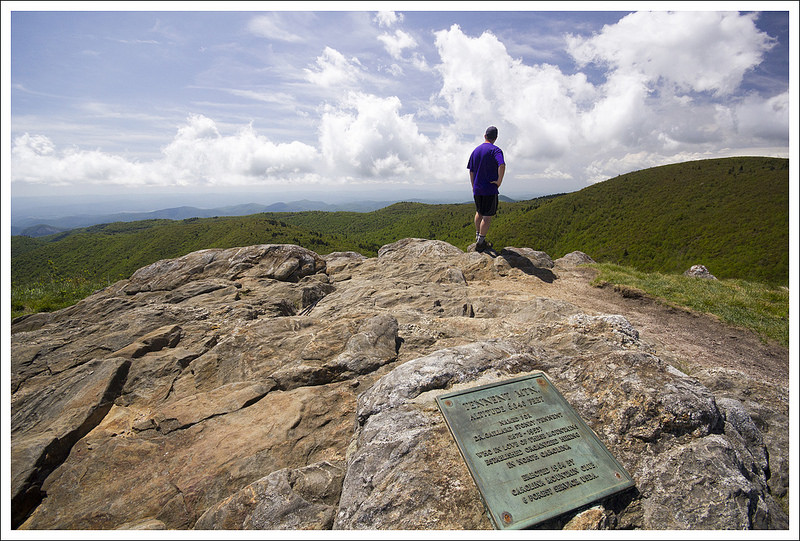
This 6.6 mile loop offers some of the area’s most amazing high-elevation, Appalachian bald scenery!  It was right up there with Roan Mountain. The views are 360 degrees and showcase mountains in every direction.  If we were to hike it again, we’d do it as an out-and-back and skip the return arm of the loop along Graveyard Ridge and Mountains to the Sea.

View the Full Album of Photos From This Hike

Black Balsam Knob
Hiking Black Balsam and Tennent reminded us of both the Whites (in New Hampshire) and Roan Mountain (in Tennessee). Such spectacular, wide-open views! Below: The most scenic parts of the hike followed the Art Loeb Trail; The Graveyard Ridge section was wet and had a stream crossing; The end of the hike took us across numerous boardwalks/bridges.

Art Loeb Stream Boardwalk

Adam Says…

When we were planning our trip to the Smokies, we decided we wanted to spend the first few days near the Asheville, NC area and check out a few hikes along the Blue Ridge Parkway.  We had set out in the morning to check out the Graveyard Fields waterfalls.  On a trip here many years ago, we remembered how beautiful the series of waterfalls were.  We brought a book with a description of the hike that would include a visit to Black Balsam and Tennent Knob on the loop.  However, we didn’t have a map of the area other than what our book had provided.  After driving along the parkway for some time, we pulled up to where the parking lot would be (mile marker 418.8) and it was all blocked off by fencing.  It appears they are doing some major renovations of the parking area and stairs down to the Second Falls.  They had blocked off any access to the trail and instead had signs saying that you could access the trail from many miles away.  We were very disappointed, but decided to drive up further along the Parkway.  We took a right on the gravel road 816 (mile marker 420.2) and followed that until we saw a trail marker to the right that led up to Black Balsam Knob.  We were relieved we were going to be able to see the balds and I realized we were picking up our loop trail but just a little differently than we had originally intended.

From the road, you start on the Art Loeb trail.  In a few hundred feet, you will see a side trail to the right.  This is the Mountains to Sea Trail that will be your return from the loop.  Stay straight to continue on the Art Loeb Trail as it ascends past amazing vistas.  You will reach the summit of the Black Balsam Knob at .9 miles and will see many campsites at the top.  On a clear day from here you will have 360-degree views all around with the Smokies to the west and Mt. Mitchell to the north.  The trail took a sharp left at this point as you continue on the Art Loeb trail.  On Black Balsam Knob, there are many other trails cut-in over the years along the balds which makes it tricky to know if you are on the right trail.  As we left the summit area, we came to a junction between two trails that both looked legitimate.  One seemed to go over a hillside and the other went to the left and around.  We took the one to the left and saw a very worn sign that read “Art Loeb” so we knew we made the correct choice.  The trail wrapped around the hillside and went through a narrow path with waist-high shrubbery growing along the trail.  Our legs got a little scratched along the way, but we pressed on.  After a while the trail went through a few switchbacks while descending and then flattened out.  At this point, we could see Tennent Mountain ahead of us, so we felt comfortable that we were going the right way.  Soon, the shrubbery opened up into a clearing and we climbed up the rocky path and reached the summit of Tennent Mountain at 2.5 miles.

Approaching Black Balsam
Hiking across open, grassy balds at 6,000 ft. is such a treat!  Below:  The trail looks like a ribbon across the mountain tops; Lots of colorful tents on Black Balsam Knob; You can see a glimpse of the parking lot at the trailhead.

Trail Across the Summits Tents Parking Area

The summit of Tennent Mountain was just as scenic with more views in every direction.  From here we could also see Looking Glass Rock, one of the most iconic images along the Blue Ridge Parkway, in the distance.  We had our lunch on the top of this spot and then made the decision to do the full loop instead of just the out-and-back to the summits.  We continued forward on the Art Loeb Trail.  From here, there were a few more nice views but then the trail descended into a more wooded trail.  The trail passed a few more campsite options before we reached the area known as Ivestor Gap at 3.1 miles.  Ivestor Gap is a large open junction point where many trails converge.  There was a map that showed where we were, but none of the trails were marked to let us know which was the right one to take.  When you reach Ivestor Gap, take the larger trail to the right that looks like an old road.  This was the Graveyard Ridge Trail.   We were on this for only .3 miles, before passing a small spring in the rocks on the lefthand side of the trail, and took a sharp right to stay on to the Graveyard Ridge Trail, another unmarked junction [staying straight on the trail would begin the Greasy Cove Trail].   The Graveyard Ridge Trail was very rocky and had a lot of water on the trail, so there was some times of rock-hopping and getting your shoes wet.  While on this trail, you may have a few glimpses at Tennent Mountain above to see where you came from and there are a couple of spots for viewpoints.

At 5.1 miles, we reached another junction.  Deciding to forego the trip to see the waterfalls to Graveyard Fields (which would have probably added another 4.5 miles roundtrip to our hike), we took a sharp right up the Mountains to Sea Trail.  This trail was extremely steep and at times felt like a bushwhack as the trail was very overgrown.   In about .5 miles, you’ll gain over 500 feet of elevation, so it is a slow effort.  Eventually at 5.75 miles, the trail reached the top of the bubble and you got a few more views from a rocky outcropping.  Blazes were painted on the rock that led the way as the trail descends below.  The trail moves away from the ridgeline before switching back – it feels like the wrong direction, but it’s not.  The trail descends for a few hundred feet before climbing up again.  You’ll pass over several wooden footbridges along this section of the trail.  At about the 6.5 mile mark, the trail goes into a deep wooded area again and you reach the junction again with the Art Loeb Trail.  Turn left and you head back to 816 in a short distance.

Open Hiking
Spectacular views with every step!  Below: In the saddles between the high points, the trail was narrow and lined by dense shrubs;  Adam stands atop Tennent Mountain; Summit of Tennent Mountain.

Narrow Tennent Summit Tennent Mountain

At the top of Tennent Mountain, there is a plaque on the rocks dedicated to Gaillard Stoney Tennent (1872-1953) who “established organized hiking in North Carolina.”  I couldn’t find any more connections or information about Tennent online, but this sounds quite impressive.

If you are interested in Geocaching, there are several you could find along the trail (and it wouldn’t hurt to have a GPS handy):

While we tried to cover some extra ground on this trail by making it a loop (and leaving the option to inspect the waterfalls), I would recommend doing this trip as an out-and-back to Tennent Mountain.  The trail system is very confusing here since trails are rarely marked and junctions are not labeled (we’re a little spoiled here in Virginia).  We had to ask several people along the way if we were going in the right direction, so I can imagine a lot of people will feel lost at some point along this trail.   All that being said, the views from Black Balsam Knob and Tennent Mountain are breathtaking.  On a clear day, you can see for hundreds of miles and can see ridgeline after ridgeline of mountains around you with few glimpses of anything resembling civilization.  Don’t miss this one if you are looking for a hike along the Blue Ridge Parkway!

Christine Says…

Our first full day in Asheville, we got up early and had an amazing breakfast at Biscuit Head.  Seriously – if you’re in Asheville, go eat those biscuits! We had planned a 5.2 mile hike starting near Graveyard Fields on the Blue Ridge Parkway.  We drove the hour from Asheville to the trailhead to find the area completely closed off with an 8-foot tall chain link fence and orange plastic mesh.  Even the wooden stairs leading to the entire larger trail system were blocked off.  So, we grabbed our Falcon Guide for Hiking the Blue Ridge Parkway and started scrambling for alternatives.  We settled on a different hike that would still let us see Black Balsam Knob, and give us the option to visit the waterfalls (if we had energy to spare).

Christine Enjoys the View
Who wouldn’t want to spend all day enjoying views like these! Below: Views from the ridge after crossing the summit of Tennent Mountain; Adam approaching Ivestor Gap;  Shining Rock Wilderness sign at Ivestor Gap.

Looking Glass Approaching Ivestor Gap Ivestor Gap

The Falcon Guide offered vague (at best) descriptions of the hikes along the parkway, so we weren’t really sure how long the hike would be, what kind of elevation change we’d experience, what the terrain would be like or even the names of all the trails we would traverse.  We had a rough map of the area in the book, so we could make some educated guesses, but we definitely went into this hike with a lot less information than we normally do.

We found the trailhead parking area packed – the lot was full and cars lined both sides of the rough, potholed road.  We started off on a white blazed trail that climbed gently to sweeping views from bald Black Balsam Knob.  The first great views are less than a mile of relatively easy hiking from the trailhead, so we saw tons of people.    There were at least 3-4 tents sent up atop the bald.  It was gorgeous – but it was a zoo!

From there, the trail got a little confusing.  There are so many social paths to campsites worn into the mountain.  We had a hard time knowing for sure that we were still on the white-blazed Art Loeb trail.  There weren’t any blazes to be seen, and the only sign was so weathered that it looked like a blank piece of wood on a post.  We stood pondering our book/map for a few minutes, when a foursome passed and confirmed that they had hiked this area many times and we were indeed on the correct trail. A little later, we passed an actual Art Loeb trail sign.

Graveyard Ridge
Adam hikes in the stream that was the footbed on the Graveyard Ridge Trail. Below: Adam at the junction of the Graveyard Ridge and Mountains to Sea trails; Painted trillium; The early part of the Mountains to Sea trail was essentially a bushwhack.

Mountains to Sea Painted Trillium Bushwhack

The trail descended through thick, dense scrub – lots of berry bushes and rhododendron.   Eventually the trail opened back up and we began another ascent to the summit of 6,000 ft.+ Tennent Knob.  This outlook was even more spectacular than Black Balsam.  We could see for miles in every direction.  We stopped at this point and had lunch on the trail.  I had packed an apple, a Kind bar and some cookies from a bakery in the top of my pack. The strong sunshine had warmed the cookies to the point that they tasted like they had just come out of the oven.  So good!

After the summit of Tennent Knob, we descended again before reaching Ivestor Gap.  At the Gap, there was a troop of Boy Scouts at the information station.  We consulted our map again before heading down another unmarked trail that we believed to be correct.

The trail at this point became wet and streamlike.  We came across another hiker and his backpacking beagle!  The beagle was really sweet and apparently a good hiker – able to do 12 mile days!  The man was filling up his water bottles at a spring along the trail.  Right after the spring, the there was a trail junction. We took the sharp hairpin turn onto the unmarked Graveyard Ridge Trail.  It was a mostly flat, but very sloppy trail.  It was wet and muddy for most of the way.

Green
The Mountains to Sea trail eventually became less of a bushwhack, but it was still tricky to follow in places.  Below: Near the end of our hike, storm clouds filled the sky over the high peaks;  One of the trickier spots along the Mountains to Sea trail – the blazes were not readily visible and the trail went the opposite way it seemed it should; Pretty wildflowers along the trail.

Stormy Trail Descends Flowers

We eventually reached one of the only marked junctions on the hike, with a sign pointing toward the waterfalls and parkway one way and the Black Balsam Parking area the other way.  This is where we picked up the Mountains to the Sea trail.  This trail was also white blazed.  The trail was more of a bushwack than anything for a while.  It was very narrow and overgrown and headed steeply uphill.  We soon came to a rocky ledge with more nice views… and no sign of the trail continuing.  Again… we got the book out and were getting ready to make another guess.  The trail we needed to follow seemed to go in completely the wrong direction.  Adam looked at me and said ‘I’m just not confident this is the right trail!’  Fortunately, a couple hikers came up behind us.  They told us they were following the same loop we were, had done it before and had gotten lost before!  However, this time they were confident and able to point us in the right direction.  The trail that looked totally wrong turned out to be exactly correct!

From the ledge, we descended into dark woods, traversed numerous wooden footbridges across swampy areas and made one final ascent back to the parking area along the road.  All in all, we hiked 6.6 miles.  It was a great hike with spectacular scenery from Black Balsam and Tennent.  If I were to recommend the hike to others, I’d also suggest doing it as an out-and-back to see just the two bald summits.  The loop option was poorly marked and didn’t offer much in way of scenery.

Boardwalks
The last section of the hike had lots of planks, bridges and boardwalks that crossed swampy areas. Below: After the hike, we drove back to Asheville via Waynesville and stopped at Frog Level Brewery – nice stream-side setting and good beer!

Frog Level

After our hike, we decided to drive back to Asheville through Waynesville.  We heard it was a cute town and that Frog Level Brewing was worth a visit.  We were able to easily find the Brewery, and ended up enjoying samples at a nice picnic table by the river.  Nice finish to the day!

Trail Notes

  • Distance – 6.6 miles
    MapMyHike Stats
  • Elevation Change – about 1300 feet
  • Difficulty – 3.  The real difficulty is the Mountains-to-Sea Trail as it goes brutally up the mountain in some points. 
  • Trail Conditions –  2.  The trail up to Black Balsam was the best maintained.  The Art Loeb Trail around Black Balsam to Tennent Mountain was very brushy and overgrown.  The Graveyard Ridge Trail had a ton of water on the trail and The Mountains-to-Sea Trail was also very overgrown. 
  • Views – 5.  Amazing views from Black Balsam and Tennent Knob. 
  • Streams/Waterfalls – 1.  Just a couple of small crossings through some water on the trail, but nothing scenic. 
  • Wildlife – 1. We didn’t see anything other than a few birds on this trail. 
  • Ease to Navigate –  1.  You may often feel unsure if you are going the right way.  Trails are not blazed well and junctions are not marked.  The connection to the Graveyard Ridge trail is not marked.  There are also lots of other trails that have been cut through by hikers, but they aren’t labeled, especially near the top of Black Balsam Knob on the Art Loeb trail.
  • Solitude – 2.  On a nice day like we had, there were lots of others on the trail. 

Download a Trail Map (PDF)

Directions to trailhead:   At Mile Marker 420.3 on the Blue Ridge Parkway, turn onto 816.  Stay on that road for about 1 mile.  Park on the side of the road and you’ll see the trailhead on the right side of the road.

Strickler Knob – via Massanutten Trailhead

This 9.1 mile hike is challenging, but offers wonderful view payoffs and a fun rock scramble.  There is a shorter option for this hike for people wanting to skip the toughest part of the climb.

View the Full Album of Photos From This Hike

Crowds on Strickler Knob
Crowds gather on one of Strickler Knob’s perches. One person we met at the summit had a Cavalier King Charles spaniel in her backpack.  If you look closely at the photo, you can see the dog’s head sticking out of the pack.  Cute! Below: The Massanutten Trailhead on Crisman Hollow Rd.; Adam, Suzanne and Anthony begin the hike; Native pink azaleas.

Massanutten Trail Happy Hikers Pinkster

Christine Says…

Strickler Knob was the second hike we posted on Virginia Trail Guide… way back in May of 2009. In the years since we first did this hike, there was a bad forest fire in the vicinity, the Forest Service painted over the purple/pink blazes to the knob (and then someone put them back), and the trail became vastly more popular.

On this particularly beautiful morning, we were planning a hike in Shenandoah National Park, but at 7:45 a.m. a text popped up on my phone. It was from our friends, Suzanne and Anthony (we met them at PATC’s Backpacking 101 workshop several years ago). They had made a spur of the moment decision to drive down from Maryland to hike Strickler Knob and wondered if we might want to join them. We don’t see them often enough, so the answer was clearly YES!

However, I had a few concerns going into the hike. The first was the possibility of swift/deep streams and run off from the deluge of rain we had received a day earlier. Roads and bridges were washed out all over the area. The second was the fact that the MMT 100 was being run that weekend. I wasn’t sure if the trail would be crowded or have limited access due to the race. We decided to put those concerns aside and go for it.

We met our friends at the defunct Massanutten Visitor’s Center on Rt. 211 near Luray. From there, we proceeded in one car to the Massanutten Trailhead on Crisman Hollow Rd. Right as we arrived, a carload of six was also unloading at the trailhead. We ended up playing leap frog with them along the trail all day long.

Lady's Slipper
We spotted this beautiful pink lady’s slipper orchid along the trail. Below: Anthony and Suzanne make the steep descent of Waterfall Mountain; Mountain laurel is starting to bloom; Streams were running high.

Waterfall Mountain Descent Mountain Laurel Stream

The trail initially crossed a flat, open area and a view into the valley. But soon, the trail dropped very steeply downhill on Waterfall Mountain. I’m not really sure why it’s called Waterfall Mountain. We didn’t see any waterfalls along the way – maybe they’re someplace else, or maybe ‘waterfall’ just refers to the extremely quick drop in elevation. Along this section of trail, we all joked about what a tough climb uphill this would be at the end of the day. I enjoyed the flowers blooming along the trail. We spotted mountain laurel starting to bud and even a pink lady’s slipper!

Eventually the trail leveled out near a stream. We passed a large campsite near the water just before coming to our first stream crossing. The water was pretty high and fast, but some well-placed logs made the crossing doable. From there, the trail followed a series of ascents and descents with lots of little stream crossings along the way. Most of the small stream crossings are probably dry under normal circumstances. We soon came to a second large stream crossing. After that crossing, the trail followed the stream – literally. Due to the 4-5 inches of rain the area experienced, the trail was completely underwater. It didn’t even look like a trail, and the only way we were sure it was the trail was the presence of a blaze on a tree about 50 yards ahead. We walked for more than a mile in ankle deep water. It was fun, but it was also wet, sloppy and muddy!

We reached trail junction 408. This is where the folks coming up from Scothorn Gap join the trail. At this point, we turned right and followed the orange-blazed Massanutten Trail uphill in the direction of the Gap Creek Trail. This part of the trail is really easy – wide and very gently graded.  There were lots of pink native azaleas on one side of the trail. On the other side, the area burned out by a forest fire stood, charred – but slowly growing back.

Stream Crossing
Anthony makes his way across the logs traversing the stream. Below: Adam walks along one of the only flat sections of the trail.  It was a really short section; Suzanne walks along the under-water trail; This is the trail junction that trips a lot of people up.  Make sure you go uphill, remaining on the Massanutten trail, in the direction of Gap Creek.

Flat Stream Walking Tricky

When we reached the ridge, there was an obstructed view where the trail continues over the crest and then downhill. If you find yourself going downhill on the orange-blazed trail, you’ve passed the turn to Strickler Knob! At the top of the ridge, look carefully for purple/pink blazes on rocks and a reddish disk stapled to a tree. This is the way to Strickler Knob.

The walk to the knob starts off as a rocky but easily passable trail. But gradually the rocks become bigger, more jagged and trickier to traverse. It’s easy to lose the blazes as you pick your way along the rocks. You’ll come to one stunning viewpoint and think you’ve reached the end, but you still have the most intense part of the scramble to go! There are several steep, tall rock faces to negotiate before you finally come to a collection of towering rock stacks overlooking the Page Valley, Fort Valley and the Shenandoah River. The view from the knob is majestic!

On this particular day, Strickler Knob was packed. There were so many people at the overlook, it was hard to find a spot to sit. I think part of it was because the presence of two hiking clubs. But in addition to the clubs, there were also a number of couples and foursomes. Honestly, I’m shocked that this trail has become so popular! The crowds rivaled what I expect to see on a nice day on trails like Dark Hollow Falls or Hawksbill Mountain (in SNP).

We spent some time at the overlook eating lunch and taking photos. The hike back went really quickly. We walked in the water, we crossed the streams, we did all the little ascents and descents… and then we came to the base of Waterfall Mountain.

That climb was every bit as brutal as we all expected – gaining over 800 feet in about half a mile. The section isn’t climbed with mediating steps or switchbacks – it’s pretty much straight up the mountainside. We were all pretty glad when we got back to the flat, grassy section again!

When we got back to the car, the parking lot was much more crowded than when we had left it. We made the short drive back to the Massanutten Visitor’s Center and bid farewell to Anthony and Suzanne. It was a great hike and great to see them!

Burned Area
This area was burned by a forest fire several years ago. There is still a lot of black char, but new growth is starting to emerge. Below: The beginning of the Strickler Knob trail; Adam enjoys the first nice view; The scramble begins!

Strickler Trail First View Scrambling

Between the two routes to Strickler Knob, I would probably recommend the shorter route from Scothorn Gap to most hikers. You get all of the excellent scenery, and only miss the extremely challenging descent/ascent of Waterfall Mountain. The section on Waterfall Mountain doesn’t really offer any remarkable scenery, but it’s a great training hike if you’re looking for a cardio challenge or practice on elevation change. We probably benefited from the longer, tougher ascent to prepare for our upcoming Smokies Trip.

Adam Says…

Normally, when I describe the hike to Strickler Knob, I tell people that it’s an introductory rock-scrambling hike to see if you are ready for Old Rag.  While there is not as much rock-scrambling and navigating as Old Rag, there are a few spots towards the summit that will test you enough to see if you can pull yourself up some of the rocks and let you gauge your comfort-level with scrambling over some drops.  If you’ve already done Old Rag, this should be easy, but if you are intimidated by Old Rag from stories you’ve heard, try Strickler Knob first.  I would agree with Christine that this hike has become more popular over recent years.  When we had done the hike five years ago on a beautiful day, we only ran into one other couple on the entire trail; this time, it was crawling with people.

This is also a hike where people often get lost.  You won’t find the purple-blazed summit trail on any maps currently, so I would suggest bringing a copy of the map I’ve provided below.  I had a co-worker that tried to find the trail a few years ago (possibly when the blazes were still removed) to no luck.  We also came across a larger hiking group from Northern Virginia that had missed the trail completely.  When we gave them better directions, they turned around to attempt it again.  Part of this also has to do with what few blazes are actually on the trail.  You’ll know you are on a trail, you may just not be entirely sure which trail.

Scrambling
The group negotiates the rock scramble. Below: Adam makes his way through the rocks; Lots of rocks to climb; A nice perch on Strickler Knob.

Scrambling Rocks to Climb Adam on the Scramble

We started off the hike from the small parking area on Crisman Hollow Road.  The orange-blazed Massanutten trail starts off on nice, level terrain through a wooded area.  The trail soon opens up to more of a brushy, open field.  As the trail winds around through this area, there is even one spot that has a view into the valley below at .2 miles.  Shortly after this point as the trail winds around, the trail begins its very steep descent down Waterfall Mountain at .5 miles.  The entire time that we were hiking down, I was thinking this was going to be a pain to hike back up at the end of the hike.  The trail does have a few switchbacks, but the overall descent is tough on the knees as you descend about 800 feet in that half mile.  At the 1.0 mile marker, we finally reached the bottom of the descent and a junction with the Massanutten Connector Trail.  Take a left at this junction to stay on the main, orange-blazed Massanutten trail.  The trail begins to climb slightly at this point and at 1.2 miles, you will reach a nice back-country campsite along the side of the Big Run stream.  You’ll soon cross the stream (usually by balancing yourself along logs that have been laid across) and continue your climb.  After the second stream crossing, the trail begins a steeper climb with a large switchback to help ease the elevation gain.

Summit Crowd
The summit was very crowded, but the views were still fantastic!

Eventually the trail met the stream again and due to the heavy rains, the trail was completely submerged.  We ended up hiking what felt like almost a mile through a submerged trail by rock-hopping or just getting our feet wet and muddy.   The trail finally separated from the water and leveled out and we reached the junction with the yellow-blazed Scothorn Gap trail at 3.0 miles.  Take a right at this junction to stay on the orange-blazed Massanutten trail.  The trail feels more like a fire road at this point, as you’ll climb up slightly.  We were able to see a lot of the fire damage to the trees around, so there is little more than some lower brushy, understory on the trail at this point.  At 3.6 miles, you reach the crest of the trail and can see some obstructed views straight ahead.  At this point, look around to your right.  We found a small cairn on the ground and were able to see some red and purple blazes higher than eye-level on a few trees to mark the beginning of the purple-blazed trail to the summit of Strickler Knob.  The purple blazes at this point are typically marked on the rocks where you step.  The trail is very rocky at this point and you will be walking the ridgeline until you reach the summit.  The trail can also be a little hard to follow, but if you keep looking for the blazes and just remember you are walking the crest of the ridge, you should be fine.

At 4.2 miles, you reach a very nice viewpoint where you can get great views to the west.   Keep pressing forward and you’ll soon need to climb up a larger rock wall and then pass by a primitive campsite.  Just a few 100 feet away, you will reach the larger boulders of Strickler Knob at 4.5 miles.   You’ll see a large rock overhang that you’ll climb under.  There is a small area to take in a few views to the right.  For those that are most adventurous, the best views are to the left where the overhang is.  If you feel comfortable, you will need to navigate a crack between the two larger rock formations and hoist yourself up to the top of the rocks.  The views from both rock formations are absolutely breathtaking as you have 360-degree views from all around the valley.

Climbing Down
The climb down is as challenging as the climb up!  Below: More views from the top; The hike down; One final stream crossing.

View of the Valley Descent Stream Crossing

After eating a packed lunch, we made our way back the way we came.  We did have to face the waterlogged trail again.  We came across several groups on our way back that were also looking for directions.  One girl asked me if there was any other way back to the car other than going back up Waterfall Mountain.  I suggested that they make their way back through Scothorn Gap and then walk Crisman Hollow Road back.   We all definitely wished we didn’t have that steep trek back up Waterfall Mountain to do.  It is a very steep trail almost straight up the mountain and it takes quite an athlete to do this without taking a breather at some point on the return.  When we finally reached the top, we congratulated our success and then made the last .5 miles back to our car.

When we were hiking the trail, I kept thinking about the MMT 100 racers that were running this trail.  We had come across one of the race-workers and he told us that most of the fast runners were coming through this area near Waterfall Mountain around 8 p.m.  So, if you were a little slower than that you would be running this trail in the dark with a headlamp.  I can’t even imagine how tough this would be and how any of them would escape injury from running into a tree, twisting an ankle, or falling down the trail.

Brutal
The brutal ascent back up Waterfall Mountain at the end of the hike.

I would also recommend for most people to do the hike from Scothorn Gap instead of the route we took.  It is a lot of extra effort with nothing overly impressive to see along the way.

It was great to see our friends again.  We were all getting ready to head to the Great Smoky Mountains soon, so this was great training before we had to handle some of the tougher terrain that the park had to offer.

Trail Notes

  • Distance – 9.1 miles
  • Elevation Change – About 2250 ft.
  • Difficulty – 5. This rating is earned by both the hike length, the scramble to the knob, and the ascent of Waterfall Mountain that comes right at the end of the hike.  For an easier version of this hike, start at Scothorn Gap.
  • Trail Conditions –  2. No switchbacks, soggy streambeds, a couple crossings that can be challenging in wet weather, and a tough scramble.  This is not a beginner’s hike.
  • Views –  5.  Views from the knob are spectacular.
  • Streams/Waterfalls – 2.5.  The usually low streams were beautiful and running high when we visited, but they’re probably usually less impressive.
  • Wildlife – 0.  This trail is popular enough to scare away most wildlife.
  • Ease to Navigate –  2. Trails are sporadically blazed and can be hard to follow.  The junctions for trails leading to to the knob do not mention Strickler Knob.  We suggest bringing a map on this hike.
  • Solitude – 2.  This trail has become extremely popular!

Download a Trail Map (PDF)

Directions to trailhead:  From I-81, take exit 264 heading east through New Market.  Head east on West Old Cross Road for .2 miles.  Turn left on to US-11/N. Congress Street.  In .3 miles, turn right on to US-211/Lee Highway.  Go 3.6 miles and turn left on to Crisman Hollow Road (it is right before the green building on your right that is the Massanutten Visitors Center).  Follow Crisman Hollow Road for 2.2 miles (passing by the parking lot for the Massanutten Storybook Trail) until you reach where the orange-blazed Massanutten Mountain Trail crosses the road and the small parking area.  Park here, cross the road and start the trail.

Appalachian Trail – Hog Camp Gap to the Tye River

This 19.1 mile overnight backpacking trip has amazing views and pretty stream scenery.  The terrain is relatively easy, so it’s a great stretch if you’re looking to cover higher miles without a ton of uphill climbing. Since this is a longer post, Adam is going to cover day one, and Christine will cover day two.

View the Full Album of Photos From This Hike

First Views
The first views on our hike came within about a mile! Notice Christine’s new purple backpack! She upgraded from her Gregory Z55 to an Osprey Viva 65. It has a lot of useful features – her favorite: the hydration sleeve is on the outside of the pack, which is very convenient!  Below: Parking at Hog Camp Gap; Adam climbs out of the gap; Old stone walls.

Parking at Hog Camp Gap Climbing Out of the Gap Old Farm Wall

Day One (10.4 miles)…

This hike had a very rough start and almost became the hike that never happened.  The morning of our trip, we loaded up our cars and headed out.  We needed to take two cars since we were doing a shuttle.  About ten minutes into the drive, I looked in the rearview mirror and saw Christine turning back around and heading home.  She had forgotten her hiking shoes and was only wearing flip-flops in the car – not the best idea for a backpacking trip.  We made a quick return home. When I pulled into the driveway, black metallic smoke started rolling out from underneath our hood.  Not good at all!  But we didn’t want to throw in the towel yet.  We took the smoking car to Bob Wade Auto World (the Subaru dealership where we bought the car), but found they weren’t open yet.  So, we decided to fill up on a big breakfast at Cracker Barrel and stop by again when they opened at 9:00.  We got to the dealership and explained the problem.  They have great customer service! We ended up with a free loaner car to use while our Outback was in the shop. They were so quick with the paperwork and processing that we were back on the road in less than 15 minutes. Saved!!

Mayapples
Beautiful green mayapples! Spring is finally here!  Below: Trillium along the trail;  Lunch stop!; A perfect swallowtail.

Trillium Lunch Butterfly

We dropped our first car at our finish line where the Appalachian Trail crosses VA Route 56.   We then headed to the starting point.  It took us about 50 minutes to get to Hog Camp Gap, since there is no direct road that parallels the AT.  The last piece of road to get to Hog Camp Gap is very rocky and filled with potholes, but we made it there safely.  The parking lot was already crowded as this is a great starting point for many hikes, whether you’re going to Mt. Pleasant, Cole Mountain, Spy Rock, or camping near Cow Camp Gap shelter.  We got all of our gear together quickly and walked through the large break in the fence to start our hike on the white-blazed Appalachian Trail, heading north.   The trail began to climb up a hillside and within 1 mile, we were blessed with astonishing views, looking over the Tar Jacket Ridge to catch views of the bald on Cole Mountain, Mount Pleasant, and Pompey Mountain.  I knew at this point our luck was turning for the best.  I found it hard to pry myself away from the views, but knowing that we had a lot of distance to cover,  we pressed on.  The trail then begins to gradually descend from the ridgeline and we crossed USFS 62 and Salt Log Gap at 2.2 miles.

Stream Crossing
One of the few, small stream crossings on the hike.  Below: Seely-Woodworth Shelter; Christine filters water at Porters Field; Porters Field has space for lots of tents; Through the trees, we could see the ascent still ahead of us after dinner; Christine ascends the trail near Spy Rock; Finally at camp!

Seely Woodworth Shelter Filtering Water Porters Field
Mountain Ahead Spyrock Trail Camp

The trail was relatively flat for a good stretch of the trail going forward.  There were some views through the trees occasionally as we walked on, but the true treat was all the trillium that was on the trail.  This is by far Christine’s favorite wildflower.  She was hoping to see some along the trail and we were pleased to find entire hillsides filled with these flowers in perfect bloom.  We crossed USFS 246 at mile 3.6, Greasy Spring/USFS 1176A at mile 4.1 and reached the crossing of the North Fork of Piney River at mile 5.9.  We stopped and ate our lunch on the side of the trail.  The only excitement along this piece of trail was Christine swore she saw a bear, but it was just a person (dressed all in black) taking a lunch break far uphill from the trail (which we thought was an odd place to stop).  We pressed on along the trail and finally reached the Seely-Woodworth Shelter at mile 7.4.  When we arrived at the shelter there were several backpacks at the shelter, but no sign of people anywhere.  We took a long break and rested our feet.  We were joined shortly by Christine’s “bear man” who was doing a longer section hike and covering a lot of Virginia.  We shared some hiking stories (like how he never purifies water but has only got sick once).  Knowing that we had more miles to cover today, we strapped our heavy packs back on and continued.

We reached a junction with Porters Field (a fire road that used to be a railroad trail) at mile 8.4.  We had read on the hiking blog of a friend (thanks, Wandering Virginia), about a water source near this junction.  We took this short side trail past a campsite and then headed downhill towards the sound of water.  Water was coming out steadily from under a large rock.  We decided to cook some dinner here.  While we both weren’t overly starving since we had eaten lunch not too long ago, this seemed like the best place to cook some dinner and refill water.  We were shooting to camp at Spy Rock, which is a dry camp, so we needed to carry enough water for breakfast After dinner, we made our way back to the AT.  Christine typically doesn’t like hiking with a full stomach, but because we needed to get to our camp site for the night, we pushed on.  We crossed over the Fish Hatchery Road at Montebello at 9.6 miles.  On the other side of the road, we saw the steep ascent up to Spy Rock.  The trail climbed up about 400 feet in .5 miles, but when we reached the top of the hill, we found our perfect campsite at the base of Spy Rock.

NOTE:  Hikers are no longer allowed to camp at the base of Spy Rock. Usage rules for this area were changed in 2019.  We camped there long before the rule change, and we’re thankful we had that opportunity!

Spy Rock View
Spectacular views from Spy Rock. Below: Getting to the top takes some scrambling; Christine reaches the dome; Beautiful evening light on Spy Rock.

Climbing Climbing Beautiful Spot

We took off our packs and began to set up camp.  There were already a few campsites already claimed, but we found a nice flat spot with no rocks or protruding roots.  We had just bought a new two-person tent, the Big Agnes Copper Spur UL2, which was much lighter than our 3-person tent, and we were excited to try it out.  We set the tent and fly up and then made our way to check out the views from the summit of Spy Rock.  There is a little rock scramble up to the top of Spy Rock, but the 360-degree views from this spot are not to be missed.  We stayed up there a while to soak in as many views as we could, before making our way back to camp.  We had a long, tiring, day that started off stressful, so we were ready to go to sleep before the sun fully set.  We both read books for a while and then went to sleep.  Or rather, tried to go to sleep.  Right after sunset, the wind started to pick up.  At first it was an occasional rustle across the treetops, but by midnight it was moaning and howling over the mountains.

Beautiful Spot
Adam enjoying a beautiful spot! Below: Reflecting pools on Spy Rock;  Sunset is ‘hiker midnight’.  By the time the sun went down, it was already cold and windy.  Christine was glad for the hood on her sleeping bag!

Spy Rock Bedtime

Day Two (8.7 miles)…

That was a rough night to spend in a tent!  Even with it staked and guylined, it rattled and shook all night long.  The wind continually caught under the fly and funneled through the tent’s mesh.  Even in long pants, a hat, and layers of fleece, I was cold in my 35 degree bag.  It wasn’t even that cold outside – the wind was just really brutal!  Neither Adam nor I got much sleep.  I found myself wide awake when the first hints of dawn light started to brighten the tent.

NOTE:  Hikers are no longer allowed to camp at the base of Spy Rock. Usage rules for this area were changed in 2019.  We camped there long before the rule change, and we’re thankful we had that opportunity!

Sunrise on Spy Rock
I had some canine companionship at sunrise. This beautiful dog is half German shepherd, quarter Malamute and a quarter wolf! Below: Day Two got off to a very cold start; Spy Rock has several spacious, flat campsites; Adam checks out the few from Maintop Mountain.

Cold Camp Maintop

I told Adam I wanted to climb Spy Rock again to watch the sun come up.  He decided to stay back.  I grabbed my camera, scaled the rock and found a perch facing east.  It was a beautiful, though cloudless, sunrise.  I thought I was alone on the top of the rock, but suddenly a huge white dog we had met the night before came bounding across the rock and decked me.  He was friendly, and I was fine, but his owner was embarrassed and came chasing after the dog.   I stayed on Spy Rock watching the sun come up until I couldn’t take the wind and cold anymore.

When I came down, Adam was already in the process of breaking down camp.  We had a quick breakfast of oatmeal and coffee, and were back on the trail by around 7:30.   Day two of this trip had a bit more climbing than the first day.  Our first ascent was that of Maintop Mountain.  It was a moderate ascent with one nice view near the summit. I started the morning in a fleece jacket and gloves.  By the time we reached the summit, I had stripped them off.  Climbing really warms you up!

Confessions
Adam writes his confession in the Priest Shelter journal.  Below: Adam approaches FR826; Adam checks out the distance covered at the information board marking the beginning of the Priest Wilderness; The Priest Shelter.

Approaching the Fire Road Priest Wilderness Priest Shelter

From there, we descended into Cash Hollow.  We passed a southbound section hiker and a group of Boy Scouts.  We crossed a couple gravel roads – 826 and 526.  Off-roaders really enjoy these roads – they’re very rugged and tough to drive unless you have a serious 4WD vehicle.   After the second road crossing, signs and an informational board informed us that we had just entered The Priest Wilderness.

We had about a mile of climbing to reach the Priest shelter and the ridgeline of the mountain.  The climbing is really pretty moderate, but it seemed tough to my tired legs and sleepy mind.  We stopped at The Priest shelter for a snack and rest.  I changed into shorts – the day was warming very quickly!  Adam and I both made our ‘confessions’ in the Priest journal.  It’s one of the funniest we’ve seen along the AT – reading everyone’s confessions is definitely worth a stop!

Priest Summit
Christine enjoys the view near the Priest summit. Below: Spring slowly creeps up the mountainsides; Trillium were everywhere; Adam approaches a nice view from the Priest.

Priest Trillium Descending

From there, we completed our last couple hundred feet of ascent to the top of the Priest.  Near the top, we enjoyed amazing views of the valley and had a chance to see an adult bald eagle soar by on the wind.  The rest of our hike was a long, 4-mile, 4,000 foot descent to the Tye River.

We took it slowly, enjoying wildflowers along the way! The trail was abundantly lined with trillium, wild violets, and wild geraniums. Both of us remarked that we were glad to not be climbing up this side of the mountain! Southbound AT hikers experience one of Virginia’s toughest climbs when they encounter the Priest!

The first mile of the descent was the steepest.  As the grade moderated, we came to another outstanding overlook.  The opening in the trees revealed lush Virginia countryside – farms and ponds.  At this elevation, the trail was much greener.  Leaves were opening in the canopy and the ground cover was brilliant green.  We crossed Cripple Creek in several places.  The rain a couple days earlier had filled the stream and created several beautiful waterfalls.  We enjoyed walking through the woods and listening to the sounds of falling water.  We saw even more wild flowers – a hillside of scarlet catchfly was especially beautiful!

Priest Views
Classic Virginia terrain! Below: Walking alongside Cripple Creek; The latter part of the descent was smooth and gentle; Scarlet Catchfly wildflowers; Post-hike at Devil’s Backbone.  Is it totally horrifying that we go out to eat without showering?  Nah!

Cripple Creek Descent
Scarlet Catchfly Devil's Backbone

Eventually, we could see the sunlight catching on car windshields through the trees.  We were both pretty tired and happy to be back at the car!  We had covered almost 20 miles in roughly 24 hours.  It’s the furthest we’ve ever hiked in that time period, so we felt pretty accomplished.

We had a long car shuttle to get back to Hog Camp Gap.  After picking up the other car, we drove along the Blue Ridge Parkway to Reed’s Gap so we could have lunch at Devil’s Backbone.  It’s always great to eat a HUGE plate of food after a big hike – fries, a grilled brat and beer for me!

Trail Notes

  • Distance – 19.1 miles [Day One] [Day Two]
  • Elevation Change – About 3172 ft.
  • Difficulty – 4.  Mostly for distance.  This section of the AT has little climbing uphill overall, but the hike down The Priest is quite steep. 
  • Trail Conditions –  3.5.  The trail is well maintained and in good shape.  We did feel the hike down from The Priest was really rocky and hard on the feet and ankles. 
  • Views – 5.  This hike has AMAZING views from Tar Jacket Ridge, Spy Rock, and The Priest.
  • Streams/Waterfalls – 3.5.  The best views are along Cripple Creek, near the end of the hike, where you can see a small waterfall and a scenic creek surrounded by wildflowers.   There are options for filling up water near Greasy Spring, Porters Field, the Seeley-Woodworth Shelter, and Cripple Creek.
  • Wildlife – 2.  We didn’t see much wildlife other than birds along the trail.  We did have a great encounter with a male black-headed grosbeak, who was singing beautifully along the side of trail.
  • Ease to Navigate – 4.  Just keep following the white-blazes and pay attention to junctions to stay on the Appalachian Trail. 
  • Solitude – 3.  We didn’t run into too many people on our trip.  Spy Rock had a decent number camping at the top.

Download a Trail Map (PDF)

Directions to trailhead:  Requires a shuttle.  Park one car at the finish.  From the Blue Ridge Parkway, head east on VA-56/Crabtree Falls Highway for 11.2 miles.  Park car in large parking lot where the AT crosses the road.  From this point to reach Hog Camp Gap with your second car to start the route, continue east on VA-56/Crabtree Falls Highway for 6.9 miles.  Turn right on to VA-151S/VA-56E.  In 10.5 miles, take a right on to US-29 South.  In 3.1 miles, take the US-60 exit towards Amherst.  Take a right at the exit ramp to go on US-60 heading west.  In 18 miles, take a right on to State Route 634.  In 1.6 miles, take a right on to State Route 755/Wiggins Spring Road.  This road turns to gravel with large pot holes.  Follow this for 2.7 miles until you reach the parking lot where the Appalachian Trail crosses.  Park your second car here.  Go through the wooden fence and pick up the Appalachian Trail, heading north.

Appalachian Trail – Jenkins Gap to Front Royal (Route 522)

This 8-mile hike completes our Appalachian Trail mileage in Shenandoah National Park.   There isn’t much to see along this section of trail – the views aren’t great and the stream is fairly run-of-the-mill, but we’re still happy to say we’ve walked every step of the AT in Shenandoah!

View the Full Album of Photos From This Hike

Adam Finishes
Adam coming off the trail on Route 522 in Front Royal.

Christine Says…

We finally finished hiking the Appalachian Trail through Shenandoah!  For two years, less than 5 trail miles were keeping us from that distinction.  It’s really quite silly, but this final stretch of trail has been somewhat of a mental burden for me! The reason was sort of two-fold.  The first sticking point – in order to most efficiently cover the miles, we needed to do a car shuttle. I didn’t want to spend the gas money, and honestly, I just don’t like to drive by myself.  Shuttles are just a pain when both cars are yours! The second problem was that this stretch of trail just seemed… boring. I will admit that a bad day hiking is still better than a good day doing many other things, but I had a hard time getting myself psyched-up to hike this stretch.

Finally, faced with a beautiful spring day and a lack of plans, I acquiesced.  We dropped our first car off in a small AT parking lot on the side of 522.  Then we headed into the park and left a second car at Jenkins Gap –where we came off the trail after our last section of the AT in SNP.

From Jenkins Gap, we had a steady uphill to the summit of Compton Peak.  At the summit of Compton, there are blue-blazed trails leading to viewpoints on both the east and west sides of the mountain.  Each viewpoint lies .2 miles off the AT.  We decided to only visit the west summit (it has better views.)  The east summit has some interesting columnar rock formations.  If you’re into geology, they’re definitely worth a peek!

Compton Peak
The summit of Compton Peak offers two viewpoints – each about .2 miles off the AT. We went to to just the western view. Below: Ascending Compton Peak on the Appalachian Trail; Adam passes one of several large boulders on the trail; After Compton Gap, the trail is blazed both white (AT) and yellow (horse trail) for a while as it follows a fire road.

Ascending Compton Descending Compton Appalachian Trail at Compton Gap

After the summit, we descended for almost a mile into Compton Gap.  After Compton Gap, the AT is shared with the yellow-blazed Compton Gap trail for about 1.7 miles.  The hiking is along this section is wooded trail without many distinguishing features – no streams or overlooks to speak of.  The trail is wide, flat and very easy to walk.  You’ll likely pick up a lot of speed along this stretch!

At roughly 4.9 miles into the hike, we reached the park boundary.  There is a sign marking the beginning of private land.  Just south of the park boundary, there is also a backcountry permit station.  Permits are free and self-service in Shenandoah.  If you’re going to camp in Shenandoah’s backcountry, all you need to do  is fill out a tag and tether a copy to your pack.  It’s really easy!

Right after we departed the park, we came to the one viewpoint from this stretch of Appalachian Trail.  Possums Rest has a decent, but slightly obstructed view, of rolling foothills.  It’s worth a stop, but there are definitely many better views along the AT in Shenandoah.

From Possums Rest, the trail descended briefly but steeply through a jumble of rocks.  In about another .7 miles, we reached the Tom Floyd Wayside – the first backcountry shelter located north of the park.  It’s a nice spot with a nearby water source.  We chatted with a section hiker from Washington, DC.  He had completed a thru-hike the year before, but evidently the trail called him back!

Possums Rest
There is one obstructed viewpoint, called Possums Rest, shortly after passing out of the park boundary. Below: Just inside the boundary, there is a backcountry permit registration station; Park boundary; Descending a short, rocky section after Possums Rest.

Permit Station Park Boundary Descent from Possums Rest

After Tom Floyd, the trail continued very gradually downhill.  As we walked along, we could see the advance of spring on the lower elevations.  Redbuds were blooming, tiny green leaves were opening in the canopy and the grass along the trail was growing quickly.  We crossed Rt. 601, and a little over a mile later, Moore Run and then Rt. 602.   The stream was crossing was just an easy rock-hop.

After crossing 602, we had a short uphill before one final descent to Rt. 522 in Front Royal.  The last part of the hike followed a chain link fence for over a mile.  I’m not sure if the fence was just marking private land, or if it was part of the Smithsonian Conservation Biology Institute.  Either way, it is one of the less scenic parts of the AT.

The last quarter mile of the hike passed between fenced pasture land and a residential neighborhood.  After crossing a small wooden footbridge, we found ourselves back at the car.  On our way out, we saw a few of the Smithsonian’s animals walking down a hillside.  They appeared to be some type of antelope – kind of neat!  Before going back to pick up our second car, we stopped at Spelunker’s in Front Royal for lunch.  They make fantastic burgers and milkshakes!  I was thrilled to see gingersnap was their shake flavor of the day!

While this hike didn’t provide much reward with views or waterfalls, I’m still really glad we did it.  I’m happy to be officially and technically finished with Shenandoah’s AT miles!

Adam Says…

It was great to finally finish the AT section through Shenandoah National Park!  With the entire trail being 2180 miles from Georgia to Maine, the section through Shenandoah National Park is less than 5% of the entire trail.  Daunting to say the least, but we still feel we have accomplished something measurable.  There are about 550 miles of the AT through Virginia, making it the longest section through any one state.  Virginia is also a state where a lot of thru-hikers quit, feeling that they will never get through the state (often called the “Virginia Blues”).  The section through Shenandoah is more like 19% of the AT through Virginia.  Most of the thru-hikers fly through Shenandoah National Park, averaging over 20 miles per day.  The climbs are not as tough as in many sections and they have worked into their “trail legs”, gaining the strength to cover many miles per day.

Tom Floyd Wayside
Tom Floyd Wayside is outside the park boundary and is the last shelter before reaching Front Royal.  Below: Redbuds blooming at the lower elevations; Christine crossing Moore Run; The last mile or so of the trail followed a long, chain link fence.

Redbuds Moore Run
Fenceline Fenceline

After we dropped our car off at the trail crossing of Route 522, we made our way into the park and parked at Jenkins Gap.  While you will drive about 12.4 miles on Skyline Drive, the trail through the park and out is a lot shorter.  From the parking lot, you join the Jenkins Gap Trail for just about 100 feet and then take a right to join the white-blazed Appalachian Trail, heading north.  The trail took us through some storm-damaged areas of trees, leading us through one of the two ascents on this trail.  We gained about 500 feet up to Compton Peak.  At 1.4 miles, we reached a post which pointed out to two short blue-blazed trails that lead to views from Compton Peak.  Since we knew there wasn’t going to be many views on this trail, we decided to take a left and check out the West Compton Peak view.  This side trail of .2 miles was a rocky uphill trail that led to a small, but scenic viewpoint.  We made our way back the way we came to reach the post and then took a left to continue on the Appalachian Trail heading north.  The trail descended again, as we dropped 500 feet in about .8 miles.  If you did the side trail to Compton Peak, add another .3 miles to any of the distances given from this point forward.  At 2.2 miles on the AT, you cross over Skyline Drive at Compton Gap.  At 2.4 miles, you reach a junction with the Dickey Ridge Trail and at 2.7 miles, you reach a junction with the Springhouse Trail.  The Springhouse Trail allows for horses and actually shares the next section of the AT, which is why you will see both yellow and white blazes.  The trail is fairly level at this point.

At 3.8 miles, you reach a junction with the Compton Gap Trail.  This is where horse-riders would come off the AT, since they are not allowed further on the trail.  Take a left here to stay on the white-blazed AT.  You will soon come across an area where backpackers can fill out paperwork for backcountry camping permits and continuing further, you will reach the Shenandoah National Park boundary at 4.0 miles.  Within a short distance, you reach the area known as Possums Rest, a very small overlook that has some views.  The trail at this point goes down a very steep and rocky area as you go below Possums Rest.  The trail descends for most of the rest of the way At 4.7 miles, you reach the Tom Floyd Wayside shelter, which also has tent sites, a privy, and a nearby spring.  Continuing from the Tom Floyd Wayside, you descend further, passing by other signs for the spring.  At 5.1 miles, you reach a junction with a side trail to VA-601.  From here, you have a couple of stream crossings over Moore Run and at 6.5 miles, the trail crosses VA-602.  The trail at this point goes up a steep upgrade, as you gain over 300 feet in .4 miles.  Once you reach the crest of the hill at 6.9 miles, the trail descends again as you go through a grassy area.  You walk along a long fenceline and behind some people’s houses before reaching the boardwalk which takes you back to your car at 7.7 miles.

Spelunkers
Decadent lunch at Spelunker’s in Front Royal – cheeseburger and a gingersnap milkshake!  Below: The Smithsonian National Zoo has a conservation facility in Front Royal; If you’re lucky, you might catch a glimpse of the animal – we saw some kind of antelopes; A sweaty selfie at the finish line.

Smithsonian Antelope Selfie

Once we made our way back to the car, we stopped at Spelunkers.  There was a large bike ride being conducted nearby, so the place was quite crowded.  One of the great things about hiking for us is that it allows us to eat whatever we want after a hike and not worry about the calories.  We made our way from there back to our first car and then headed out of the park.  It was a gorgeous day for a hike with perfect temperatures.
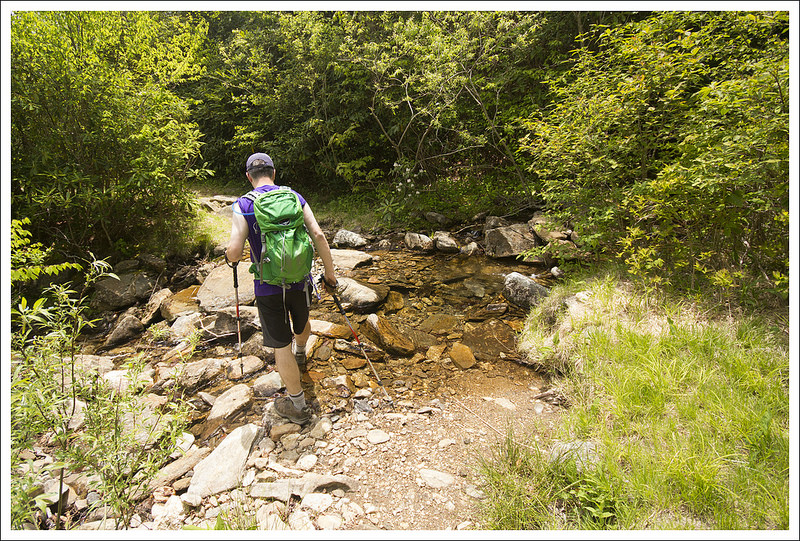
While this hike isn’t the most scenic, this was definitely one I will remember since it was our “finish line” though SNP.  I’m so grateful to have a wonderful hiking partner to share all of these experiences.

Trail Notes

  • Distance – 8 miles (includes a visit to the Compton Peak viewpoint)
  • Elevation Change – About 1900 ft. but mostly downhill.
  • Difficulty – 2.5.  There are really only two climbs on this hike – one up Compton Peak and one shorter one near the end of the hike.  All in all, it’s a moderate, mostly downhill hike.
  • Trail Conditions –  4.  Nicely maintained section of the Appalachian Trail.  In fact, we saw a crew member trimming grass back when we hiked.
  • Views – 2. The view from Compton Peak is decent, but it’s not actually on the trail.  Possums rest is small and a bit obstructed.
  • Streams/Waterfalls – 2.  Moore Run was flowing nicely when we visited.
  • Wildlife – 2.  You may get to catch a glimpse of zoo animals at the Smithsonian facility at the end of this hike!
  • Ease to Navigate – 3.  There are lots of trail junctions and shared paths.  Just make sure you follow the white blazes and you’ll be fine.
  • Solitude – 2.  We saw many dayhikers and backpackers on this stretch of trail.

Download a Trail Map (PDF)

Directions to trailhead:  We parked one car at the parking lot on US-522 in Front Royal, which is 4.7 miles from where US-340 intersects with US-522.  We then drove to northwest on US-522 for 2.8 miles.  Take a left on E. Criser Road.  In .7 miles, take a left on US-340.  In .2 miles, take a left to enter Shenandoah National Park.  Drive 12.3 miles to park at the Jenkins Gap parking lot on the right.  Join the Jenkins Gap Trail from the parking lot for a short distance, before taking a right on to the Appalachian Trail, heading north.