Adam Takes in the View from Red Hill. Below: Trail conservancy sign; Adam makes his way up the trail; The foundation of an old farm house along the trail.
Christine Says…
We considered not hiking at all on our final day in New Hampshire – we needed time to pack and we still wanted to hang out a bit more with my parents. But, it was too gorgeous to stay off the trail – crisp, cool, vivid blue skies punctuated by cottony white clouds. So, for our last hike, we chose something short, relatively easy, and close to my parents’ home in Plymouth.
I remembered a conversation we had earlier in the week with a docent from Castle in the Clouds. We had been asking her about the trails on the property. After talking about options on the Lucknow estate, she asked if we’d ever hiked to the top of Red Hill. She told us the hike was very popular with locals and that we should do it if we had time. We looked at maps, and decided Red Hill was the perfect distance and length.
When we got to the trailhead, we found the parking area blocked by a construction crew repairing a failed drain pipe under the road. There had been heavy rains the day before, and it looked like the road had buckled and crushed the drain. Luckily, we were able to find a small pullout for parking and walk up to the trailhead.
The Red Hill trail is maintained by the Lakes Region Conservation Trust. You’ll see one of their informational panels at the beginning of the trail. Early on, the hiking trail is crossed by snowmobile trails. At about three tenths of a mile in, you’ll find remnants of the old Horne farm and another informational board. Essentially, all that’s left is the foundation, but if you look closely you might see other hints of the farm. Follow signs for the tower, passing a gate indicating an area closed to snowmobiles.
From there, the summit is a steady 1.4 mile climb. The trail is not rocky or rooted, and we found it dry and easily passable – even after heavy rain one day before our hike. The summit has a tall firetower and a couple associated buildings. I read online that this is the only firetower in New Hampshire not run by the state. Instead, this one is tended by the Moultonborough Fire Department.
From the summit we enjoyed a superb look at Lake Winnipesaukee from above. From the tower, we had great views of Squam Lake, the Sandwich Range and the Ossipee Range. It was really windy on the observation platform of the tower, so we didn’t stay on top for long. We shared some snacks and then headed down the way we came.
We were lucky to have the summit all to ourselves! On our way down, we passed dozens of people – not surprising! It’s a very nice hike! After getting back to the car, we called my parents and arranged to meet at the Town Docks in Meredith. It was a beautiful day to enjoy one last lakeside lunch!
The fire tower atop Red Hill. Below: Buildings at the top of Red Hill; Views in both directions from the fire tower.
Adam Says…
With our trip to New Hampshire coming to an end, we couldn’t resist hitting the trail one last time. The previous day we had a lot of rain, so we had spent the day shopping around the area to get some souvenirs. There was some flooding from the previous day in some areas. Since we were facing a 12 hour drive the next day back home, we wanted to get a hike that was fairly close and not too long. We remembered our talk with one of the volunteers at Castle in the Clouds and decided to see what this one was like.
This hike combines two things I always like to think about when visiting New Hampshire – the many lakes and the mountains. From this viewpoint, you get a picturesque view of both. This definitely is a hike for the locals. We couldn’t find any great information in guide books, but we found a few write-ups online, including a winter trek up from Hike New England.
We started on the trail at the kiosk. In .1 mile, the trail splits in half. We opted for the trail to the right, which starts off on a fire road. At .4 miles, the trail comes to the signage for the old farmstead here. The trail takes a sharp left at the sign and continues uphill. The trail was a continuous uphill climb, but the terrain was fairly nice, making for better footing considering the rain from the day before. At 1.5 miles, the trail reaches a junction again with the Red Hill Loop Trail (we did not do the loop option). Continuing to the right for another .2 miles, you’ll reach the summit and fire tower at 1.7 miles.
The summit had a nice picnic table at the top near one of the buildings giving you nice views of the lake below. As I’ve mentioned before, I have a bit of a fear over man-made structures, so I felt uneasy about climbing up to the top of the tower. The tower was a little rickety and the wind was blowing strongly, but I felt I couldn’t end the trip without taking in the view. At the top of the tower, you do get some nice views, but we found it was hard to get clear, unobstructed photos due to all the wires and screen around the top. I made my way back to the bottom to get the views that nature had intended from the safer ground.
When we arrived at the summit, there was one other person there, who quickly handed over the solitude of the views to us. We stayed for a while to eat a snack and reflect on all of the great hiking we accomplished during this trip. It is always a bitter feeling knowing that you have to return home and back to the doldrums of work and everyday living, but we will have the memories of these mountains, lakes, and beautiful skies to lift our hearts until the next adventure.
Difficulty – 2.5. The climbing is moderate, but steady.
Trail Conditions – 3.5. This trail is in great shape. The footing is nice and we didn’t have any trouble with mud, even after heavy rains.
Views – 4.5. Beautiful – a small markdown because the cables and side panels of the tower block a little bit of the view. You must climb the tower if you want the full view, too. The picnic table at the base has a nice, but not panoramic, view.
Waterfalls/streams – 0. None
Wildlife – 0. None
Ease to Navigate – 3.5 – There are a few crossing snowmobile trails, and there is a trail on the other side of the hill, but generally the route is easy to follow.
Solitude– 2. While we enjoyed quite a bit of solitude on our early morning hike, we saw many people hiking up on our hike down.
Directions to trailhead: From I-93: Take exit 24 on I-93 for US-3/NH-25 toward Ashland/Holderness. Turn right on US-3 S/NH-25 E and go 9.2 miles. Turn left on NH-25B E and go 2.9 miles. Turn left on Kelsea Avenue and go .2 miles. Turn left onto Bean Rd and go 1.3 miles. Turn right on to Sibley Road and go 1.1 miles. Take a left on to Red Hill Road and go about .2 miles until you reach the parking area to the right. The trail starts off from the kiosk.
This 5.6 mile route to Zealand Falls is one of the easiest hikes we’ve done in New Hampshire. Most of the footing is smooth, soft, and flat! It was a real treat after climbing Pierce and Madison.
Adam sits at the top of Zealand Falls and takes in the view of mountains beyond and wetlands below. Below: Zealand Falls Hut is a popular hut for people who want to stay at an AMC Hut, but don’t want a tough hike; Christine hikes along; While the trail was generally flat and smooth, there were occasional roots and rocks to negotiate.
Christine Says…
The hike to Zealand Falls is doubtlessly the easiest ‘hut hike’ in the White Mountains. The elevation gain is barely discernible until the last couple tenths of a mile. The route offers mountain views, waterfalls, stream scenery, and lovely ponds. Guidebooks say it’s a great place to bird-watch and spot a moose (though I have my doubts about the actual likelihood of seeing a moose!)
The hike starts out at a parking area at the end of Zealand Road. It’s a fee area, so make sure you bring cash to pay at the self-service parking station.
We made our way along the trail, marveling at how smooth and soft the footing felt. There were certainly some spots with roots and rocks, but generally the trail was level and covered with a bed of pine needles. We could hear the Zealand River, but didn’t reach a close view of the water until .8 miles into the hike. When we hiked (early August), the water was low, clear and running quietly along. Almost all of the water crossings we encountered on this trail were assisted by wooden footbridges – no wading and very little rock hopping necessary!
The Zealand Falls trail passes many ponds and marshes. Below: Several views of the ponds and marshes along the Zealand trail.
As we walked along, the terrain became marshier. At about 1.8 miles in we passed a lovely beaver pond. We could see the dam from the trail, but didn’t see any beavers. The reflections of trees and mountains in the water were especially beautiful! With all the wetlands, I expected biting flies, mosquitoes and gnats to be a major issue, but we didn’t have any trouble at all. Maybe there was just enough of a breeze to keep the bugs at bay.
At 2.3 miles we passed the junction with the A-Z trail, where we continued on the Zealand Trail. A couple tenths of a mile later, we passed Zealand Pond and reached the junction with the Twinway (which is also the Appalachian Trail in this area) and Etlan Pond Trails. The last couple tenths of a mile to the hut follow the Twinway Trail.
Almost immediately after the junction, we reached the bottom of Zealand Falls. The water was running low, but it was still beautiful. There are two places to stop and admire the falls on the way up. The first stop is a view of the gradual, slide-like lower falls. The view of the upper falls is a bit more dramatic. The rocks around the falls are blocky and reddish-orange in color. The water comes plunging steeply over a cliff-side. The last tenth of a mile up to the hut is steep and rocky – honestly, it’s the only challenging part of the hike.
Zealand Falls make a couple distinct drops. Below: New signs were recently posted to mark trails in the area; Adam checks out the falls; The final ascent to the hut was the only steep part of the hike.
Zealand Falls Hut enjoys a lofty perch looking out across two notches. You can see the Bonds and Mt. Carrigain. There’s even a bench available for anyone who wants a nice seat to enjoy the view. We spent some time poking around the hut. The Croo had just made cinnamon rolls and purple frosted blueberry cake, but we weren’t quite ready for a snack. Instead, we decided to take the little side trail to the ledges of Whitewall Brook. It’s just a 25-30 foot walk through the trees. The brook passes over immense slabs of rock. It’s a nice place to sit, soak in the sun, and enjoy the view of the pond below and distant mountains beyond.
After spending some time enjoying the hut, we returned the way we came. The walk back was all downhill, so we made quick work of it. I would highly recommend Zealand Falls to anyone looking for a low-key hike without much climbing. In fact, we gave it such glowing reviews that my parents tried the hike a few weeks later. They enjoyed it and felt it was very approachable for hikers of any level.
Adam Says…
When we go about trying to cover a lot of hiking mileage on our vacation trips, we like to alternate some easier hikes with the tougher ones. Since we had just climbed Mt. Madison, our feet and joints were happy that we chose this easier leg-stretcher.
Christine and I do like to hike with goals in mind. Since we have climbed a few of the 4000-footers in New Hampshire (there are 48), we have thought about possibly trying to bag all of those peaks. Last year on our visit, I picked up AMC’s Passport to AMC’s High Huts in the White Mountains. That book describes each of AMC’s huts through the White Mountains and details the history, features, and interesting stories about each of the huts. It also serves as a passport that you can have stamped at each location to mark that you have been there (you can even earn a patch when you’ve visited them all). This was definitely enough of an incentive to try and reach all the huts.
Zealand Falls Hut sits at the top of a waterfall. A short trail from the side of the hut leads to the streambed; Inside the hut; View from the hut; Christine at the top of the falls.
As Christine mentioned, this trail had nice footing compared to what we were used to in the White Mountains. The trail was fairly smooth as it started through the woods mixed with pine and birch. The trail eventually opened up into some great views over marshy ponds. There was a large boardwalk to walk across that I thought would be a perfect vantage point for spotting a moose. There were such nice views over the dammed-up ponds and it reminded me that we were in a state filled with lots of lakes, ponds, and streams. We took a while to enjoy the scenery around us. The trail continued to give us lots of similar views and short step-offs to pond views. The trail eventually goes back into the woods as you get closer to Zealand Falls Hut.
At 2.3 miles, we reached the junction with the A-Z trail, which I came to realize after looking at our map that it connects the Avalon and Zealand trail, hence the A-Z name. At 2.5 miles, we reached a short side trail to check out Zealand Falls. The falls here were a nice place to get sidetracked. We crossed a few rocks and enjoyed climbing around the rocks at the base of the falls. Looking up towards the top of the fall is where this hike ends, but you should stick to the trail rather than trying to climb up the falls.
We continued our last piece of the hike, which was a steep and rocky .2 miles until we reached the Zealand Falls Hut at 2.8 miles. There were a few day-hikers at the hut, recounting tales of all the places they had visited around the world. We decided to take the short trail from the hut to the streambed of Whitewall Brook, which is the top of the falls we had seen below. Christine got a lot of pictures while I walked around climbing on some of the rocks and collecting a few blueberries from the nearby bushes. We then found a picturesque spot on the large rocks to take in the view of mountains ahead and the waterways below.
The woods along the trail were so beautiful! Below: Adam rock hops; Beautiful, tall, straight trees; A beaver dam.
We stopped back in to the hut to talk to the Croo members who were cleaning up breakfast and starting to prepare some food for lunch. I know they have some busy days, preparing meals, cleaning the hut, and transporting supplies on their backs to and from the hut. I talked to one of the members about how this hut was so much easier to reach than most of the others we had seen. I wondered if there was a selection process that was made to match up Croo members to the huts or if they even had a choice. It seems like maintaining this hut and transporting supplies would be made for those that wanted or needed an easier experience. We made our way back to our car the same way we came up.
I would recommend this hike to anyone that would like to see what one of the AMC huts looks like. It is the easiest one to reach, so people of most abilities should be able to attain the top. This is one I could see us doing many times in the future due to the ease and the serenity that the scenery of the marshes and waterfall evokes.
Difficulty – 2. This is a pleasant, easy walk until the last couple tenths of a mile. The last push to hut is short but steep.
Trail Conditions – 4. The trail is so nicely built and easy to walk. Most of the water crossings and marshy areas are traversed by sturdy bridges and boardwalks.
Views –3.5. Views from the hut and Whitewall Brook are nice, as are several views across the wetlands, but generally the views here are less dramatic than other spots in the White Mountains.
Waterfalls/streams – 4.5. The river, pond, wetlands, brook and waterfalls are all lovely!
Wildlife – 3. It’s supposed to be a nice area to spot wildlife, but we just saw birds and squirrels.
Ease to Navigate – 4. Trail junctions are clearly marked and easy to follow.
Solitude– 3. We saw relatively few people, but we hiked on a weekday in August. I think this is generally a popular trail.
Directions to trailhead: From I-93: Take Exit 35 for Twin Mountain. Follow 3N for 10.4 miles. Turn right onto 302E for 2.2 miles. Turn right onto Zealand Rd. and drive about four miles. The road will turn to gravel. The parking area is at the dead end of the road. There is a $3/day fee to park at the trailhead.
* MapMyHike is not necessarily accurate, as the GPS signal fades in and out – but it still provides some fun and interesting information.
This 8.8 mile hike takes you past Madison Spring Hut and up to the summit of majestic Mt. Madison. The Valley Way Trail is known for being one of the safer, more protected routes into the heart of the White Mountains. While the terrain is less extreme than other trails in the area, the hike still requires a little over 4,100 feet of climbing. It’s a tough hike, but the views make it well worth the effort.
Adam makes his way across the summit ridge of Mt. Madison. The big mountain in the background is Mt. Washington. If you look closely, you can see the Auto Road snaking down the peak. Below: Plenty of parking and access to many trailheads at the Appalachia Parking area; Warning…. danger ahead – seriously, the White Mountains can be pretty extreme; The early part of the trail was fairly soft and gentle.
Adam Says…
My top goal for our 2014 New Hampshire trip was to hike up Mt. Madison. We both went to James Madison University and have worked there for years, so it only seemed fitting to take on the mountain that shared a name with our college. I even wore JMU Dukes gear almost like the guy that goes to a concert wearing a t-shirt for the band’s previous tour to show his super-fandom.
We started out the day on a rough note. Christine had put her hiking shoes and socks in the back of our car, so she could wear sandals on the car ride up. When we pulled over at one point, we realized one of our Camelbak tubes had pressed open and leaked all over the car, soaking her shoes and socks. We debated about if we would have been able to even do the hike in fear of blisters, but Christine decided to push forward.
There are a lot of ways up Mt. Madison, but in our research we found the most popular way was to make our approach by going up the Valley Way trail. We parked at the large Appalachia parking lot (which was so full we needed to park on the road) directly on US-2. We were worried there would be so many people on the trail, but this parking lot holds the beginnings of lots of trails that lead up to many peaks (including Mt. Adams and Mt. Quincy Adams).
The early part trail follows Snyder Brook. By taking a short spur trial, you can visit beautiful 25′ Tama Falls. Below: We saw a couple Croo members on their way down from the Madison Spring Hut; Adam checks out all the rocks on the ‘not as rocky’ New Hampshire trail; The final push to the Madison Spring Hut was very steep and rugged.
The trail starts off from the back of the parking lot. The trail branches off in different directions but follow the signs for the Valley Way trail. The trail begins relatively flat and easy walking, as it runs along Snyder Brook. There were a few places where we could get some nice stream views and even a glimpse at the picturesque Tama Falls at .4 miles. At .7 miles, you reach another large junction, but continue to follow the signs to the Valley Way trail. The trail then begins the steeper uphill climb. Overall, I felt that the trail, while very rocky was not as steep and rocky as some of the other trails in the White Mountains. There is a relentless amount of climbing and many rocks to navigate, but it wasn’t as grueling on my feet as some hikes in New Hampshire have felt to me. At 3.0 miles, the trail gets very steep and rocky (often filled with larger small boulder-sized rocks to hoist onto) and will remain so until you reach the Madison Spring Hut at 3.8 miles. If you’re interested in camping on the mountain, but don’t want to stay at the hut, the Valley Way tentsite is at mile 3.1 on this hike.
Once we arrived at the hut, we saw there were a couple of ways up to the summit of Mt. Madison. At this point, we were above treeline, so we saw the rocky summit up above us. I went in and found one of the Croo members and she told me the Osgood Trail had the most direct route and was a little easier than making our way via the Watson Path. The final ascent up to Mt. Madison was .5 miles along the Osgood Trail (which is also the Appalachian Trail in this area). You basically needed to walk acrpss large boulders, following cairns along the way until you reached the summit. When you are above treeline, the summits of mountains seem so close to reach, but it is very misleading. As we climbed up, we looked back and saw the hut shrink with each step, finally giving us some perspective of how far we had come. We stayed a while at the summit. The views were breathtaking and you could see for miles all around. It definitely was one of the most beautiful scenes I have witnessed hiking and to realize the work we had put in to attain the peak, made it feel even more worthwhile.
Christine makes her way up the Osgood Trail to the summit of Mt. Madison. Below: About to go above treeline; Even though the summits are far away, they always look close; A view of Madison Spring Hut with Mt. Adams in the background.
While we were at the summit, we met a woman who had a sign pinned to her that had 48 over 50 written on it. She was over 50 years old and she had a goal to do all 48 peaks over 4000 ft. in elevation in New Hampshire. She had saved Mt. Madison as her last hike to meet her goal, so we were thrilled to be able to see her experience accomplishing her goal. What an inspiration! We also talked to a gentleman at the summit who was from Colorado that had done this same hike 30 years ago. He was staying at the nearby Crag Camp, run by the Randolph Mountain Club, just as he had done when we was a teenager. He wanted to see if this hike was just as amazing as he had remembered and he told us it definitely was. It made me further realize that everyone likes to hike for their own reasons and it is always a privilege to get to hear people’s stories on the hike.
We made our way back down and ate some lunch at the Madison Spring Hut. We then ventured .2 miles on the Parapet Trail to see Star Lake. This is a spot you definitely shouldn’t miss. The lake is more like a small pond, but it was so beautiful to view the summit of Mt. Madison, as it reflected into Star Lake. We debated about tackling Mt. Adams to bag another peak, but we realized that the summit looked close, but it was still a steep 1 mile away. Not wanting to add even more to our hike, we decided to make our way back down. The trail seemed to be even rockier on the way back down. While you can normally fly down some parts of downhill trails, you need to take your time on this one to navigate all the rocks. On our way down, we came into a rain shower, making the rocks a little slick. The last .8 miles were quite easy again and we did pick up some time at this point. We made our way back to the parking lot to make the round trip 8.8 miles.
Christine Says…
The morning of our Mt. Madison hike started off cheerfully enough. We stopped for breakfast at Dunkin Donuts. I ate both a bagel with cream cheese and a Boston Cream donut. If I’m going to hike almost nine miles with over 4,000 feet of climbing, I’m going to enjoy any and all the baked goods I want! However, I was jolted out of my happy post-carb afterglow when I discovered my socks and sock liners completely soaked in the back of the car. A tough hike with wet socks sounded like a really bad idea. But, driving out of our way to find an outfitter with Thorlo socks seemed like an even worse idea. I’m super picky about socks, and Thorlo’s thick-cushion hiker socks are the only ones that keep my feet happy. I decided wet Thorlo socks were better than dry socks of another brand. (and they were … I hiked all day in wet socks and didn’t get a single blister!)
As Adam said in his post, the Valley Way trail is pretty moderate for White Mountain terrain. The trail is not as rocky and stays under the shelter of trees until you get to Madison Spring Hut. It’s a great choice if you want to visit the northern Presidentials, but stay largely sheltered from wind and other weather. There is still plenty of climbing, but until the last mile, it’s all gradual and moderate. Trails like the Valley Way exist due in part to people like J. Rayner Edmands. He was an early volunteer for the Appalachian Mountain Club. Starting in the 1880’s, he spent over 20 summers building trails in the White Mountains. He believed trails to the high peaks should be passable without stumbles, even in the dark. Backpacker Magazine did a neat article about Edmands in their October 2014 issue. Check it out if you have a few free minutes.
We paid tribute to our alma mater (James Madison University) on the namesake mountain. Go Dukes! Below: The trail was extremely rocky and rugged between the hut and the summit of Mt. Madison; Cairns mark the way; Christine and Adam enjoy a summit view; The descent.
I very much enjoyed the little rapids and waterfalls along Snyder Brook early in the hike. Tama Falls was especially impressive. After we moved away from the stream, the hike was basically just a climb in the woods. As we ascended the trail got rockier, bit by bit. The last half mile to the hut was insanely steep and rocky. In one spot, my shoe got so solidly wedged between two rocks that I had to unlace it and contort my ankle to free myself. It took efforts from both of us to release my shoe from the rocks. It’s a good thing trail runners are so soft and flexible, because my feet definitely needed both shoes on this hike! I think the steepness of the terrain is actually what stopped me from getting hurt when my foot got caught. We were moving very slowly, picking our way across the rocks. Had I been moving at any significant speed, I think I could have easily broken my ankle.
When we arrived at Madison Spring Hut, it was already starting to cloud up a little. It wasn’t really overcast, but the sky had that heavy, hazy look about it. The weather was definitely changing and I wanted to make sure we enjoyed the best views possible. We headed up the Osgood Trail toward the summit of Madison. I don’t know if you can really call the path to the top a ‘trail’. It’s more of a scramble across rocks, following cairns leading you to the summit. The climb to the top is slow going, simply because there is never a simple place to put your feet. On our way up it was fun to look back and marvel at the towering peaks and the tiny hut tucked into the col.
We decided to eat lunch at Madison Spring Hut. Below: Even pretty dogs aren’t allowed inside AMC huts; We always enjoy the baked goods for sale at huts; Compass on the hut porch.
At the top we enjoyed spectacular views of the Presidentials. Seeing the Mt. Washington Auto Road snaking down the mountain was really impressive! While the wind was a little brisk at the summit, it was really a warm, mild day for the White Mountain high peaks. Lots of people were hiking in shorts and t-shirts. Some people even basked shirtless in the summit sunshine. My blood is a little thin for that, but I wasn’t cold like I had been on the summit of Mt. Washington in 2013.
After taking lots of photos and doing our JMU rituals, we climbed back down and enjoyed our packed lunch at Madison Spring Hut. Of course, we supplemented our packed food with baked goods from the Croo. I always hear people talking about how huts are packed with dayhikers all summer long. I’m not sure if it’s our timing (we hike early), but we’ve found almost every hut we’ve visited nearly empty.
Beautiful star lake sits near Madison Spring Hut. Below: As we were leaving the lake, clouds started to roll in and we heard distant rumbles of thunder… time to leave the peaks and head back to the valley below.
After lunch, we walked out to Star Lake. What a beautiful spot. The lake itself is small and shallow, but it makes a gorgeous reflecting pool for Mt. Madison. We were lucky to visit on a picture perfect day! While we were admiring the lake and taking in our final peak views, we started to hear distant rumbles of thunder in the distance.
Being caught in a thunderstorm in the Whites is definitely something I’d be happy to NEVER experience. Lightning strikes happen frequently, wet granite is very slick, and stream levels can change drastically in mere minutes. In fact, just last week I read a harrowing account from a solo hiker caught by storms in the White Mountains. Seriously scary!
We made our way down as quickly as we safely could. With a couple miles of hiking left, the rain started to fall. Fortunately, it was light rain and none of the thunder/lightning seemed close. We got back to the car right before the skies opened up and poured! What a great day with perfect timing. I’m really thankful that we had weather that allowed us to visit two more Presidentials on our 2014 trip!
Difficulty – 5. The trail started off easier, but it is still a very tough, uphill climb.
Trail Conditions – 2.5. The trail was well-maintained, but the rocky parts of the trail make this a challenge. The final push to the summit on the Osgood Trail also took a lot of precision. Bring trekking poles.
Views – 5. It doesn’t get much better than this. If you are lucky enough to catch this on a day where clouds are off the mountain summits, you will be able to see all around you for miles.
Waterfalls/streams – 3. The Snyder Brook runs alongs the trail early on the hike and you can see a few smaller waterfalls along the trail.
Wildlife – 1. We didn’t really see any wildlife on the trail. I wouldn’t expect much at all once you get above treeline.
Ease to Navigate – 2.5. There are a lot of junctions and side trails on the route because there are a lot of trails in this area. Keep following the signs for the Valley Way Trail until you reach the hut and then follow the Osgood Path via the cairns to the summit.
Solitude– 2. We picked a gorgeous day in the summer to do this hike, so we weren’t surprised to see lots of people. We saw the most at the summit and the hut, but there was still places to find our own bit of solitude.
Directions to trailhead: From I-93: Take Exit 35 for Twin Mountain. Follow 3N for 12.4 miles. Turn right onto 115N for 9.7 miles. Turn tight onto 2E for 8 miles. The parking lot will be a large gravel area on the right.
* MapMyHike is not necessarily accurate, as the GPS signal fades in and out – but it still provides some fun and interesting information.
This hike is one of the shorter, more moderate approaches into the Presidential range of New Hampshire. While the hike is only about 6.5 miles, we hiked an extra 2.4 miles for the chance to enjoy some views!
On our second pass-by, we were lucky to hit the summit with mostly clear views! Below: Adam makes his way up the Crawford Connector – a short spur trail from the parking lot to the Crawford Path; Trail signs and a sign for Mizpah Spring Hut; Gibbs Falls.
Adam Says…
Charles Dickens started off A Tale of Two Cities with the line, “It was the worst of times, it was the best of times.” When I was thinking about starting to write about Mt. Pierce, I was thinking, it was A Tale of Two Hikes with the worst and best of times. All of us have good days and bad days on the trail and this was a bad one for me. I wasn’t really feeling the hike deep down and I felt like I was just going through the motions rather than taking a moment to enjoy what I was able to do. The morning started off with a lot of fog around, which didn’t really help my mood. I was thinking it may burn off by the time we got to the top, but we weren’t so lucky.
The first .4 miles along the trail were relatively flat as it meandered through a wooded area. We crossed a footbridge at the base of a small waterfall and at .4 miles, we reached a junction with the Crawford Path. Taking a left at the junction, we began our ascent. The ascent begins while paralleling the Gibbs Brook on the left of the trail. The trail was extremely rocky which was making each step a challenge, as I felt like I was doing a demented, granite-laden version of a StairMaster. Most of the trail to the summit consists of having to step on rocks, so there is little evidence of soft ground to place your feet. I would recommend shoes with good padding, thick comfortable socks, ankle support, and trekking poles to help yourself along.
Even though the Crawford Path to the summit of Pierce is one of the least steep trails in the Whites, it is still very rocky and slick. Below: As we climbed, the woods got foggier and foggier; By the time we made it to the junction with the Mizpah Cutoff Trail we started to worry that we wouldn’t have a view at all; The Mizpah Cut-Off Trail departs the Crawford Path a little over a mile from the summit of Mt. Pierce.
At 1.9 miles, we reached a junction that led to the Mizpah Spring Hut, which is the return trip for this lollipop loop. Stay left and continue to climb up to the summit. The trail continued to be rocky and the fog was just sticking to the mountaintop as we progressed. I was feeling hopeless about being able to spot any views. As we got higher, we could tell the views would have opened up to the left of the trail but all we could see was a sea of gray. At 3.1 miles, we reached a large rocky, outcropping and waited a while for the views to open up. While the wind was picking up, we felt there was no end to the fog. At the outcropping, another sign for a junction pointed us to the summit and the Webster Cliff trail to the Mizpah Spring Hut (continuing on the Crawford Path would lead to the summit of Mt. Eisenhower in 1.6 miles). We took that sharp right and headed up to the top, where we reached the summit of Mt. Pierce in a short distance.
At this point the trail began to descend. The first part of the trail was a gradual descent, but eventually the trail was some of the steepest, rockiest downhill my feet and knees have witnessed. At 4.0 miles, we reached the Mizpah Spring Hut, maintained by the AMC and beds can be reserved in advance. We stopped for a while here and ate lunch. The croo (yes, that is how they spell it) that maintains the hut and cooks dinner and breakfast for overnight guests, had baked some cookies which we purchased and supplemented our lunch. As we were enjoying our lunch, we could see that the fog was finally lifting.
From the hut, we explored the nearby Nauman tent area (also able to be reserved for outside camping) and then proceeded on to the Mizpah Cutoff Trail to complete the lollipop section of the hike. The Cutoff Trail starts off flat, but is a relatively easier descent. We reached the junction with the Crawford Path at 4.7 miles. A return trip to your car by taking a left would make this a 6.6 mile hike. However, we had a debate about what to do. Going back up to the summit would be adding another grueling, rocky 2.4 miles, but the views could finally be opening up. What we had researched before told us how great the views were, so the temptation was hard to resist. I felt like I owed it to myself (and our readers) to change my attitude and fight through to see these views. I could tell Christine wanted to see the views as well, so we decided to hike up to the summit again.
As we climbed, we saw people descending that we had seen earlier on our hikes. I stopped to ask everyone if they had seen views, thinking if there was still little hope we could turn back around. Early on, some were saying that we may get lucky to see things, but as we got closer, we were told the views had opened up. As people were descending, we ran into several people that we had seen before near the summit and they had wondered if we were hiking the summit again. We got looks of admiration, which made us feel like we fit in with New Hampshire hikers – we weren’t just some normal, Virginia couple that isn’t used to hiking the tough, challenging White Mountains. When we reached the rocky outcropping near the summit, the views were spectacular. There were still clouds in the distance that was stuck to Mt. Washington and some of the other high peaks, but we could still see miles of beautiful mountain ranges around us.
We hiked again up to the summit and the views got more amazing as we looked behind us each step. We stayed up here a little longer to take in the views. After getting our fill, we went back down the Crawford Path and made our way back to the car. When we reached the end, we were a little more tired and had covered more miles than we had planned, but it was a rewarding day. At the parking lot, we saw a fox standing next to our car, but it quickly darted off into the woods.
One thing to note about Mt. Pierce is that it was once named Mt. Clinton. When hearing some people refer to it as Mt. Clinton, my initial thought was that Mt. Pierce had been renamed for President Clinton. I thought that would be odd, since Franklin Pierce was the only President born in New Hampshire and I couldn’t see them changing the name for a President from Arkansas. But the original name was from DeWitt Clinton, a governor of New York and U.S. Senator, also known for being largely responsible for the construction of the Erie Canal. Even though the name was changed in 1913, some people have still held onto the original name of Mt. Clinton.
Christine Says…
Summiting Mt. Pierce has been on our New Hampshire ‘To Do’ list for several years now. I’m sad Adam didn’t have a better day on the trail, because I really enjoyed myself and had a strong hiking day. It’s always tough when your hiking partner is in pain or having a hard time with terrain, because there’s really nothing you can do beyond cheer them on (which is sometimes annoying) or stay quiet and let them work through the challenge.
We chose to hike Pierce on a day forecast to be clear and beautiful. As typical in the Whites, the clouds and drizzle stuck to the mountains far longer than the valley. It was sunny and pleasant at the AMC Highlands Center, but the peaks loomed in the clouds. We decided to start our hike on good faith that the clouds would blow off before we reached the summit.
By the time we arrived at Mizpah Spring Hut, the sun was fully out. Below: The Webster Cliffs trail is steep in places and is traversed by ladders and wooden stairs; Inside Mizpah Spring Hut; Cookies!
Hiking along the stream early in the hike was pretty and pleasant. Gibbs falls were lovely and I always enjoy the sound of water running through the woods! As we continued to climb uphill, the fog did the opposite of what we hoped/expected – it just got thicker! In fact, every time I paused to take a photo I had to wipe the lens with my shirt to get the droplets and mist off the glass.
Between the Mizpah Cut-Off trail and the summit, we were passed by a pair of trail runners. Running on mid-Atlantic mountain trails is challenging enough. I can’t even imagine keeping that pace over the rocks and roots of New Hampshire!
As we ascended, the fog enveloped the mountain even more. We debated taking the Mizpah Cut-Off trail, and visiting the hut first, but decided to chance the summit so that we’d hit the hut closer to lunchtime. That turned out to be the wrong call. At the summit of Pierce, we sat on the rocky outcropping looking into a sea of clouds. We couldn’t even tell which direction held the spectacular view we’d heard described in our hiking guide.
We hiked back up to the summit of Pierce to enjoy clear views. Below: The Nauman Tentsite is a short distance from the hut; A typical tent platform in the Whites; More views from the summit.
We sat in the clouds for a few minutes before deciding to push on to the hut. The Webster Cliff trail crossed a ridge for a while, using boardwalks and traditional trail. We stopped at one last high point and checked out the movement of the clouds. Every now and then, the clouds would blow off enough that we could see the shoulder of a mountain or the faint shape of a peak through the mist. We again discussed waiting/going back to the summit versus heading down to the hut. We agreed that it would still be a while before the view would clear, and proceeded to Mizpah Spring.
The Webster Cliff trail got steeper and slippery, using wooden stairs and ladders in a couple places. We eventually reached the hut. While we ate our lunch, the last of the clouds blew off, leaving bright bluebird skies above the White Mountains. We discussed climbing back up to the summit. Neither of us wanted to ascend via Webster Cliff, so we decided to delay our summit decision until after we walked the Mizpah Cut-Off back to its junction with the Crawford Path.
At the junction, we agreed that you don’t climb a presidential peak and pass on the opportunity to take in a spectacular view. We hiked the extra 1.2 miles (2.4 miles round trip) with 1,000 feet of elevation gain a second time. And you know what… it was SO WORTH IT. The views were spectacular, expansive, breathtaking. Even with Mt. Washington still in the clouds, it was a stunning view.
The hike down was long and slippery. We were passed again by the trail runners we had seen earlier. They had been all the way to the summit of Mt. Washington and back. Wow! We didn’t go that far, but we still felt our hike was worthy of celebration with a huge meal at The Italian Farmhouse in Plymouth. It’s always such a gift to have a great view day in the White Mountains!
Difficulty – 4. While there are steeper, more challenging trails in the White Mountains, this one is still challenging.
Trail Conditions – 2. The trail is mostly rock, requiring big steps and unsteady footing.
Views – 4.5. From the summit of Mt. Pierce on a clear day, you can see miles of the Presidential range.
Waterfalls/streams – 3.5. Early in the hike, you can see Gibbs Falls and the start of the Crawford Path part of the hike goes along the scenic Gibbs Brook.
Wildlife – 2. We weren’t expecting to see much, but we were lucky enough to see the fox at the end of our hike. Keep a lookout for the rare Bicknell’s Thrush.
Ease to Navigate – 3.5. Signage was fairly good at the junctions, but we were a little confused on how to get to the Mizpah Cutoff Trail from the hut.
Solitude– 2. This is a popular trail since the Mizpah Spring Hut is one of the easiest of the AMC huts to access. Expect to see people at the summit of Mt. Pierce and the hut mostly. Clear days in the summer could make this quite popular.
Directions to trailhead: From I-93: Take Exit 35 for Twin Mountain. Follow 3N for 10.4 miles. Turn right onto 302E and proceed for 8.2 miles. Turn left onto Mt. Clinton Road. There will be a large gravel parking lot at the trailhead ($3 fee applies).
* MapMyHike is not necessarily accurate, as the GPS signal fades in and out – but it still provides some fun and interesting information.
Adam on the summit of Mt. Pemigewasset. Below: The beginning of the hike follows the bike path for a short distance; One of the three tunnels on the hike; Adam crosses a small stream.
Christine Says…
The day before this hike, we made a quick trip over to Burlington, Vermont. We sampled beers at a couple breweries, stopped at a craft cider maker, toured a chocolate factory, ate lots of good food, enjoyed Lake Champlain, indulged in Ben & Jerry’s, and visited the chapel at Dog Mountain. It was an all-day trip with lots of miles in the car. When we woke up the next morning, we wanted to hike, but we wanted something that wouldn’t require a lot of time in the car. We also knew that thunderstorms were due to pop up starting around lunchtime. So, we chose the nearby and short hike of Mt. Pemigewasset.
There are two routes up Mt. Pemigewasset (also known as Indian Head because of its distinct, face-like profile). One is the Indian Head Trail which departs from a gravel parking area across from Indian Head Resort. We chose the Mt. Pemigewasset Trail that begins at the northern end of the Flume Gorge parking area.
Adam makes his way over the rocks and roots on the Mt. Pemigewasset Trail. Below: Christine climbs.
To start the hike, we followed the bike trail for a short distance before turning left onto the official trail. The trail started off relatively flat, and passed through three tunnels – one under Route 3 and two more under I-93. After a couple small stream crossings, the trail climbed steadily but moderately uphill. Like most New Hampshire trails, the way up was rocky and rooty. Near the top, the Indian Head Trail merged with the Mt. Pemigewasset Trail before emptying us out onto a smooth, wide ledge of granite. The drop-offs here are very steep and the granite can be slick/smooth, so take care!
When we reached the summit, it was still fairly early, so we only shared the vista with one other couple. We spent some time enjoying the views through the notch and watching the dramatic clouds swirling over Kinsman ridge. After about 20 minutes, more people started to arrive to the summit, so we made our way down. We were back at the car before noon. Since it was so early in the day, we decided to get some lunch at White Mountain Bagel Co. (great deli sandwiches) and see a matinee of Guardians of the Galaxy. While we were at lunch, a pressing cold front passed and it started *pouring*! The cold front was a welcome change, as it brought a forecast of clear, pleasant days – perfect for tackling bigger things! After a nice low-key day on Pemigewasset, we were definitely feeling ready to tackle some above-treeline Presidentials! Stay tuned!
The Kinsman Ridge was covered by clouds when we visited. Below: Views looking south along I-93 and the Lakes Region of New Hamsphire; The summit is made of smooth granite; More summit views.
Adam Says…
The names of places in New England (and particularly New Hampshire) always fascinate me. A lot of Native American names are used for mountains, towns, and rivers which leads to a lot of mispronunciations. Mt. Pemigewasset is named after the nearby river, the Pemigewasset River. It is an Abenaki word meaning “where entering current is”. A common joking name you hear is the “Pemi-gee-whats-it”, but many people don’t even attempt to try and pronounce it and just call it “The Pemi” for short.
The hike started at the northern end of the Flume Gorge parking area. You walk on the designated bike path for 150 yards and then you see the trailhead to the left. Take this and you will walk over fairly flat land as you go through three tunnels that go under US-3 and I-93. After the last tunnel, you begin your climb up the trail. Most of the trail is typical of the terrain in New Hampshire, with some rocky steps and roots to navigate. The overall terrain wasn’t too steep, but it is a constant uphill climb. At 1.7 miles, you reach a junction with the Indian Head Trail. Continue to the left and you gain the summit in another .1 mile.
Christine hikes down through the birch trees.
The summit is a huge rock outcropping that allows for views of other mountains, including Mt. Lafayette, Mt. Lincoln, the Tripyramids, and Mt. Moosilauke. The edge of the rock is a sheer cliff face, so be careful if you are approaching the edge, especially when it is wet.
Mt. Pemigewasset is a hike that should be possible for most people if you take your time. It is definitely easier than most of the hiking we have done in the White Mountains. One thing that played into our decision to do this hike was that we saw high clouds in the Presidential range. We felt this mountain, lower in elevation, would allow for some views down below and we predicted correctly. We were also able to do this hike fairly quickly based on the short distance and were back in our car before lunchtime.
Directions to trailhead: From I-93: Take Exit 34A for Franconia Notch State Park. The trailhead is begins from the northernmost point of the parking area.
* MapMyHike is not necessarily accurate, as the GPS signal fades in and out – but it still provides some fun and interesting information.
Mt. Willard is one of the most popular easy day hikes in the White Mountains region. Its highpoint of 2,800 feet is dwarfed by most every other mountain around, but it still offers a dramatic vista looking through Crawford Notch.
Looking through Crawford Notch from the summit of little Mt. Willard. You can see the road and the train tracks. Below: The trail starts across the train tracks at Crawford Notch Depot; Christine’s dad looks down at the Centennial Pool – one of the attractions on this hike; Enjoying the summit with family.
Adam Says…
Mount Willard is an extremely popular family hike in the White Mountains of New Hampshire. It’s quite accessible since the trail takes off from the train depot at Crawford Notch. Many hikes in the Presidential range can be intimidating, but this hike of only 3.2 miles is more manageable. The hike has some rocky, steep sections, but if you take your time most people with a little hiking experience can reach the peak.
We started off the hike by crossing the railroad tracks near the train depot station where the AMC Highland Center is located. The trail quickly leads into the woods and in .1 mile, you reach a junction. Take a left to climb the Mt. Willard Trail (the other trail at the junction is the Avalon Trail, leading to Mount Avalon and Mount Field). The trail has a small stream crossing and then begins the climb. The trail is rocky and somewhat steep, like most of the area in the White Mountains of New Hampshire.
The Centennial Pool has a small waterfall that cascades into a pretty plunge pool. Below: Adam crosses a stream early in the hike; Everyone makes their way uphill; The trail was mildly rocky.
Along the hike up, there is a small waterfall called the Centennial Pool on the right. There are a few steps down to reach the base of the falls, which is a nice cascade to give yourself an excuse to take a break on the way up. Continuing up the trail, eventually the path of the trail consists of smaller, but more abundant rocks. A short distance of climbing through this and then the trail begins to level off around 1.4 miles. It is a short distance at this point to reach the summit at 1.6 miles.
The summit gives you great views down into Crawford Notch as you can see down Rte. 302 and the train tracks that would leave from the depot. You can see the path of the glacier that carved out this area. There are some precipitous drops from the top, so keep a close eye on any children. We stayed at the top for a while until it started to become overcrowded with larger groups, so we made our way back down the way we came.
After the hike, we went into the train depot where they have a small gift shop to purchase shirts or hiking guides. After we left the area, we headed down to one of our favorite lunch spots, Moat Mountain in North Conway, NH. Their nachos are amazing and we’ve always been impressed with the beer they brew there.
Christine Says…
When I say that Mt. Willard is a favorite family day hike, I mean that literally! My parents walk to the summit of Willard several times a year. It’s probably one of my dad’s very favorite hikes in the region. It’s the right distance and right amount of climbing for them, plus they really enjoy the view from the top. They prefer to leave the high peaks and steep climbs for us to do on our own, but we always like to try and find a hike we can all do together. On this visit, Willard fit the bill perfectly.
Before setting out for our hike, we stopped in Sugar Hill for a big pancake breakfast at Polly’s Pancake Parlor. It’s a standing tradition to eat there at least once on every visit. I love all the different batters and pancake fillings. They also have delicious chicken-apple sausage.
Adam checks out the Mt. Willard Summit. Below: Summit scenes.
We got an early enough start that we were able to begin our hike by mid-morning. We set out across the train tracks and headed up the Mt. Willard trail. The climbing on Mt. Willard is steady, but never terribly steep. The trail is rocky, but nowhere nearly as rocky as what you see above treeline. It was a humid day, so everyone was sweating like crazy. Thankfully, the bugs weren’t too bad and we were able to hike without bug spray or constant swatting.
At half a mile, we passed the Centennial Pool. I scrambled down to the base of the falls and snapped a few photos before a large family group caught up to us. The group of twelve included many young children who wanted to scramble on the rocks around the pool. We left the spot to them and continued our uphill climb.
As we continued upward, the trail became rockier and wetter. Thunderstorms the day before left plenty of water still draining off the mountain. There were a couple places that the trail was more like a shallow stream. When we reached the summit, there were only a couple people there. We claimed a nice spot overlooking the notch below. We took photos and enjoyed the view together for a few quiet moments. Soon enough, lots of other hikers began to reach the summit. Children were running pellmell all over the summit. Fortunately, it’s a safe and wide summit. There are steep drop-offs, but the ledge is spacious enough that there is plenty of room to enjoy the view without ever getting close to the edge.
The trail is rocky and cobbled. Below: Some parts of the trail were wet from thunderstorms the night before; The trail is pretty, piney and shady: Returning to the depot.
After exploring the summits different views and angles, we decided it was getting a little too crowded at the top. We gathered our gear and started the descent. The hike down went pretty quickly. We passed many people climbing up as we descended. It’s definitely a popular and well-traveled trail. We soon arrived back at the train depot. After the hike, we headed into North Conway for lunch. It was a great day and I loved spending some time on the trail with my parents.
Directions to trailhead: From I-93, take exit 35 to merge onto US-3 N toward Twin Mountain/Lancaster. Stay on that for 10.4 miles and then take a right on US-302 E. Go 8.3 miles and the AMC Highland Center will be on the right. Park in the parking lot and make your way towards the train depot station. Cross the train tracks and you should see the trailhead leading into the woods.
Note: We’ll be taking you to New Hampshire for our next seven hikes! Enjoy the north country!
This 5.3 mile hike includes open ledges, ladders up cliff faces, caves, tight squeezes, and rock scrambling. At the summits of both Morgan and Percival, you get great views of Squam Lake. Look for blueberries along the way!
A view of Squam Lake from the summit. Below: Papery, white birches are iconic in New England; Eastern red-spotted newt at eft/juvenile stage; Adam slogs across wet trail. It was more like a stream in places.
Christine Says…
After two lengthy days of travel from Virginia to New Hampshire, the last thing we wanted to do was get back into the car for more than a short drive. So, for our first hike in the area, we chose the Mt. Morgan – Mt. Percival Loop. The 5.3 mile hike is just a few minutes from my parents’ house and offers great views of Squam Lake.
We hiked this loop in 2009, before we started including out-of-state hikes on Virginia Trail Guide. I remembered only a few generalities about this hike: challenging, exceedingly buggy, nice views, tons of blueberries. It definitely seemed worth another look!
By New Hampshire standards, this trail is rated moderate. On paper, that seems fair – 5.3 miles and 1,575 feet of climbing. But, by Virginia standards we probably would rate this hike more toward difficult due to the terrain. If you follow the route as we hiked it, there are ladders, exposed ledges, steep rock scrambles, and a tight-squeeze section that passes through a series of caves. It’s also very muddy, rocky and rooty. I would equate the skill-level/fitness needed for this hike to be similar to what you need to hike Old Rag.
We reach the ladder portion of the Mt. Morgan Trail.
We started off early in the morning, but the parking lot was already full when we arrived. We managed to wedge into one small space still remaining in the corner of the lot. I think most of the cars parked in the Mt. Morgan lot belonged to people hiking the Rattlesnakes on the other side of the road, because we saw relatively few people on our hike.
The Mt. Morgan trail started off at the end of the parking lot. The path was wide, gradually ascending, and covered with pine needles. There were beautiful, papery white birch trees all through the woods. As the trail continued, the climbing got rockier and steeper. We passed sections of old stone wall half buried in the forest. There were also several muddy stream-bed areas to traverse. At 1.7 miles, the Mt. Morgan trail and the Crawford-Ridgepole trails joined ways for about .4 miles before reaching a series of ladders affixed to a cliffside.
If you’re not into height and ladders, you can continue on the Mt. Morgan trail for several tenths of a mile to reach the summit. We chose the ladders. I did fine until there was a horizontal move from one ladder to another, followed by a step onto a large metal screw in the rock. I kind of panicked at that point because I couldn’t span the space with my arms. I could get my feet where they needed to be, but I couldn’t reach any solid handhold to pull myself up the rock face. Adam ended up giving me a hand up. We both passed through a small cave onto a steep, exposed ledge with views of Squam Lake. After enjoying the view for a moment, there was still a little more steep, scary boulder scaling we had to do to get to the summit of Mt. Morgan. I stood on the ledge and pondered whether I wanted to go back down the ladders and go around, or figure out a way up the rest of the rocks. I ended up opting for directly up the rock face, but I paid a price for it. I got several huge bruises and two gashes on my legs from the sharp, hard granite. What can I say… I never go home from New Hampshire unbranded!
Even after you reach the top of the ladders, you still have some challenging, steep scrambling to complete. Below: Adam navigates the ladders; At the top of the ladder, you’ll pass through a small cave; The scramble is scary because the granite is so smooth and steep.
The view from Morgan was lovely, albeit misty and hazy on the day we visited. There also weren’t as many blueberries as I remembered. We had a snack, took a few photos and pressed on to the next summit – Mt. Percival.
We followed the Crawford-Ridgepole trail for about .9 of a mile to the summit of Percival. The trail across the saddle between the two mountains was alternately rocky, boggy and piney. There were a few steep spots, by this section of trail was one of the easier parts of the hike.
Right at 3 miles, we reached the summit of Percival. The view was similar to that of Morgan – Squam Lake’s asymmetrical, island-dotted expanse. At the summit of Percival, there are two sets of blazes – one to the side and another that plunges steeply right of the front of the mountain. When we visited, there was no sign indicating where each trail headed, so we used our guidebook and map to make a guess. If you take the trail on the side, you’ll have steep (but normal) climb down the Mt. Percival trail. If you follow the blazes over the cliff, you’ll find yourself wedging your body through a series of caves and opening in boulder tumbles. The cliff route is fun and a little bit unnerving.
There were several places that Adam and I looked at each other and thought NO WAY! We had to pass backpacks and trekking poles through openings. There was even one place I thought I’d make it, but my backpack got hung up and left me stuck! After several squeezes, we came to the junction of the Mt. Percival Cliff Trail and Cave Trail.
After this point, the rest of the climb down Mt. Percival was just a steep, rocky, rooty, slippery, muddy knee grinder. I didn’t particularly enjoy this part of the hike. My knees and feet were hurting and I was being relentlessly menaced by bugs. It’s hard to pay attention to your footing when you’re flailing your hands to swat flies away from your face. I definitely slipped and slid several times.
Adam enjoys the summit of Mt. Morgan. Below: Scenes from the Crawford-Ridgepole Trail between the summits of Mt. Morgan and Percival. The terrain was rolling and varied.
I was pretty happy when, at 4.7 miles, we reached the junction with the Morse Trail, because it meant the hard hiking was behind us and we were almost back to the car. We flew along the Morse Trail, enjoying pretty streams and easier footing. We made one final left turn back onto the Mt. Morgan trail for the final tenth of a mile.
After wiping off the mud and doing a little minor first aid, we were on our way to a well-deserved lunch at Squam Lakeside. They have enormous lobster rolls and sherbet freezes. It’s a great place to eat outside and enjoy a view of the lake.
Adam Says…
This was one of those trails that I first discovered five years ago when I was researching nearby geocaches when we were visiting the White Mountains for the first time. I was also drawn to Mt. Percival due to my love for reading Arthurian legends when I was younger (Percival accompanied Sir Galahad on his quest for the Holy Grail). I remember this being a challenging hike, yet unlike anything we have in Virginia. As a hiking couple, we sometimes find that one of us enjoys a hike more than the other; we also face days where one of us is not having a strong hiking day. This hike was one that I enjoyed more than Christine. For me, if I experience something unusual on a hike (a rock scramble, ladders, exposed cliffside walks, a stream crossing where we have to wade across), I find that I really have fond memories of it. As I’m reflecting, I realize I enjoy the challenge of trying to figure out how to overcome an obstacle. This loop definitely has some of those memorable abnormalities on it.
The summit of Mt. Percival offers a similar view.
We were looking for a decent hike to start off our trip to the White Mountains. Since we had about a 12 hour drive from our home in Virginia to New Hampshire, we were looking forward to doing something active. We found the parking lot and trailhead along Rte. 113. The trail starts off level and at .1 miles, you reach the junction with the Morse Trail, your return route for the loop. Stay straight on the Mount Morgan Trail. The trail starts off with a gradual uphill, but the trail begins to get steeper and rockier as you continue. There wasn’t a lot to note on the hike up, but the sight of white-barked birch trees always makes me happy to be in New England. At 1.7 miles, you reach a junction with the Crawford Ridgepole Trail. Stay on the right to continue your hike up to Mt. Morgan. At 2.1 miles, we reached a sign that shows that you can reach the summit of Mt. Morgan through the ladders or circumvent and reach the summit by continuing on the trail.
During our first visit in 2009, I had decided to go up the ladders and Christine went the other way. In 2009, never having experienced ladders attached to large rocks before, I was very apprehensive and worried about climbing up that way. But when I saw an older man climb the ladders without any difficulty, I dug deep and forced my way up them. This time, I didn’t have any trepidation, most likely from the combination of climbing these ladders before and experiencing more harrowing ladder climbs at Grandfather Mountain in North Carolina. Once we reached the top of the ladders this time, we had some rock scrambling to do up some exposed rocks until we reached the summit of Mt. Morgan. I was proud of Christine tackling the ladders and the rock scramble, because these are definitely things she doesn’t usually enjoy.
Adam expresses disbelief at the way forward. Below: Different sections and tight squeezes on the cave trail.
We had a hazy day from the summit of Mt. Morgan, but the view over Squam Lake always amazes me with the small islands scattered through the lake. We climbed down from the summit and shortly reached the sign which pointed out the other option for reaching the Mt. Morgan summit. We continued on the rocky trail, which is fairly flat on the ridge, but does have some ups and downs as you are climbing over rocky areas of the ridgeline. At 3.0 miles, we reached the summit of Mt. Percival. The summit of Mt. Percival was very hazy and cloudy, which didn’t give us great views this day, but we remember the great views we had from here in 2009. The signage at the summit of Mt. Percival didn’t help us too much. We saw two sets of blazes leading down the mountain, but there was no signage stating where they headed. After consulting my map, we took the rightmost trail (facing the view) that seemed to lead straight down the rocks. It turns out this is the option to go down via the caves (the next trailhead down to the left of this one would be more of a cliffside trail but they join ahead). We climbed down this very steep section and then at one point, I said “You’ve got to be kidding me. How are we getting through that?” The trailblazes led down into a hole that wasn’t much bigger than my body.
This turns out to be the entrance to the cave on this trail. You can still see light shining through in spaces between the rocks, but it is fairly closed off and not a route for any claustrophobic people. We rock scrambled through the cave and then eventually the blazes lead you out of the cave through another hole not much larger than my body. When I peered through this opening, I couldn’t see what was ahead, but I plunged my body through and I felt like I was getting reborn through a rocky birth canal. On the other side was a family heading up, so we had to exit before they could try to enter. We made our way through and then had a little more downhill rock scrambling to do until we reached another sign. This one pointed the way to the summit via the cliffside trail or through the caves. This would have been helpful from the summit.
Christine exits the cave portion of the hike. Below: The descent of Percival was nothing but rock, roots and more rocks; We were glad to finally hit pine-needle covered trail again; Adam crosses one of the streams on the Morse Trail.
The trail at this point continued its rocky climb down and you can hear the sounds of Smith Creek at times. Eventually at 4.7 miles, we reached the junction with the Morse Trail, that ducks to the right. We took the Morse Trail, which was mostly flat but more overgrown and less traveled than the other trails. This trail joins the Mt. Morgan again at 5.2 miles. We took a right and made our way back to our car in just another .1 mile.
At the summit of Mt. Percival, we met a girl hiking with her dog. She was also trying to figure out which way led down Mt. Percival and she took the cave trail as well. I can’t even imagine how she navigated her dog through the caves, but we saw her at the junction with the Morse Trail. She told us how tough it was for her dog. She was training for her goal of trying to hike the 48 peaks of New Hampshire that are above 4000 feet with her dog. This goal has been most popularized by the book Following Atticus by Tom Ryan and you can read more about their adventures on his blog.
As we are always trying to cover new ground whenever possible, I’m not sure how often on our return trips to the White Mountains we will revisit this loop, but this is definitely a hike that you will remember. The interesting features and scenic views give you an introductory glimpse into what hiking is about in New Hampshire.
Difficulty – 4.5. Even with a moderate elevation gain and distance, the terrain of this trail warrants a higher difficulty rating.
Trail Conditions – 3. The trail was a muddy, slippery mess when we hiked, but generally the trail is well maintained and passable.
Views – 4. On a clear day, the view of Squam Lake is beautiful.
Waterfalls/streams – 2. There are lots of small streams and springs on this trail. Nothing mind-blowing (and a lot them just make mud), but a couple crossings along the Morse Trail are pretty.
Wildlife – 1. We saw red squirrels and a salamander.
Ease to Navigate – 2. There are multiple trails that lead the same place. Also, there isn’t a sign differentiating the cave and cliff trails on Mt. Percival.
Solitude– 3. This trail is not as popular as the nearby Rattlesnakes, but you’ll probably still see a number of hiking parties along the way.
Directions to trailhead: From I-93: Take Exit 24 and follow Rt. 3 South to Holderness. From the town Holderness, get on Rt. 113 and follow it northeast for about 5.5 miles. Parking will be in a gravel lot on the left. The large parking lot on the right is for the Rattlesnakes hike. If there is no space left in the Morgan lot, it is fine to park at Rattlesnakes.
* MapMyHike is not necessarily accurate, as the GPS signal fades in and out – but it still provides some fun and interesting information.
Interstate 93 passes through Franconia Notch. While the road is classified as interstate, it narrows to two lanes (total) and has scenery and wildlife along the way. Below: Mt. Washington looms over the historic hotel bearing its name; Inside the AMC’s Lonesome Lake Hut; The Basin… one of the most beautiful spots in Franconia Notch.
Some General Tips for Hiking in the Area
The White Mountains are TOUGH The trails are steep and the rocks are hard. Trails considered moderate in New Hampshire may have 3,000+ feet of elevation gain over just a few miles. Much of the footing on trails is root-snarled and rock-covered, with loads of mud, shifting boulders underfoot and swift-moving streams to cross. The weather changes without warning in the Whites. On a sunny 80 degree day in the valley, you may experience 50mph winds, 45 degree temps and heavy fog on a mountain top. Even in the heat of summer, it’s likely you’ll want a hat, gloves and a windproof/waterproof shell. There aren’t many trails in Virginia that can adequately prepare you for what you’ll see in the Whites.
To a person unused to mountain trails or in less than excellent physical condition, this unrelenting uphill grind can be grueling and intensely discouraging. If you are not an experienced hiker or a trained athlete, you will almost certainly enjoy the ascent of Mount Washington a great deal more if you build up to it with easier climbs in areas with less exposure to potentially severe weather.
So, heed that advice and pick tough Virginia hikes to train/practice on before you make your White Mountains visit.
New Hampshire has a Negligent Hiker Law. Be prepared to take care of yourself in the Whites. Carry the ten essentials in your pack, let someone know your route, stay on the trail, stay with your group, be willing to turn back if the weather or your ability dictates, and don’t do anything stupid. If you need rescue because of your own negligence, you may receive a hefty bill from the state. Visit HikeSafe.com for more information.
Many New Hampshire State Parks Are as Impressive as National Parks. OK… now that we’ve sufficiently scared you with bad weather, tough climbs and personal liability, it’s time for the good stuff! New Hampshire is incredibly spectacular and wild. When you compare many of New Hampshire’s state parks to the state parks we have in Virginia, prepare yourself to be blown away! The scenery, wildlife and expansiveness of New Hampshire parks like Franconia Notch, Mount Cardigan and Mount Washington rivals (OK… let’s be honest – exceeds) what you see in Shenandoah National Park.
Hiking Guides There are lots of great hiking guides for New Hampshire. We recommend the AMC’s White Mountain Guide, Hiking New Hampshire (Falcon Guide) and 50 Hikes in the White Mountains. We suggest photocopying the pages you need for the day of the hike, as it saves you from carrying the extra weight of a guidebook. The website Hike New England is also a super resource.
Stay Alert for Wildlife on Highways
Each time we’ve visited the White Mountains, we’ve seen moose hit by cars on I-93. It’s very sad and dreadfully dangerous to hit a moose. We’ve seen bears and deer along the interstate, too.
Where to Stay in the Area We have free lodging in the Holderness/Plymouth area (thanks Mom & Dad!). It’s a great location – nestled right between the Lakes Region and the White Mountains Region. If you want lodging even closer to prime trails in the Whites, North Conway (very crowded, very touristy) and Lincoln are great choices. Both have tons of amenities and are close to popular trails. The area also has loads of camping, and for the true adventurer, the Appalachian Mountain Club maintains a series of seasonal backcountry lodging.
Must-See Things That Don’t Involve Hiking
Take a Drive on the Scenic Kancamagus Highway. There are great views, cascading streams, opportunities to spot wildlife, and access to many of the area’s easier family trails.
Visit the Squam Lakes Natural Science Center(Christine’s mom is a volunteer). This center has fantastic hands-on displays for children and a nice variety native animals on display (bears, bobcats, eagles, etc). The Center also runs boat excursions to observe loons in the wild on Squam Lake.
Rent Bikes and ride through Franconia Notch. There is a ten-mile paved bike path that runs the length of the notch. You can rent a bike, arrange a shuttle and coast downhill through the park stopping at all the scenic/historical sites along the way.
Watch an Optical Illusion Put the Old Man of the Mountain Back Into Place – In May of 2003, New Hampshire’s most notable natural landmark fell from the face of Cannon Cliffs. Now, due to the generosity and ingenuity of interested individuals and companies, you can visit Profile Plaza and watch the Old Man reappear on the cliffside. This stop was very cool!
Visit Castle in the Clouds – This beautiful, historical mansion overlooks Lake Winnipesaukee. The grounds are beautiful and traversed by an extensive network of trails.
Take a Day Trip to the Coast – In about an hour and a half you can be in York/Ogunquit eating lobsters and chowder by the oceanfront. There are lighthouses, beachfront strolling, mansions, ice cream… everything you expect to see at a New England Beach. York/Ogunquit has the Marginal Way – which is a beautiful walk. If you visit, don’t miss stopping by the Stonewall Kitchen flagship store. If you enjoy cooking or eating, it’s a great stop! Lunch at Lobster Cove in York was especially delicious and memorable.
Take a Day Trip Into Burlington (Vermont) – Burlington is a beautiful city on the shore of Lake Champlain. On various day trips, we’ve stopped at many shops in town and toured the University of Vermont. In 2014, we visited several breweries (Magic Hat, Citizen Cider and Zero Gravity) and took a tour of Lake Champlain Chocolate. We also had a fantastic dinner at the farm-to-table restaurant/brewery Prohibition Pig in Waterbury. If you take the northern route past St. Johnsbury, stops at Ben & Jerry’s, the Cabot Cheese headquarters, and Dog Mountain (an absolute must for pet lovers!) are all worthwhile.
Take a Day Trip to the Quechee Gorge (Vermont) – There is a lot to see on this drive! On the way to Quechee, you’ll get the chance to stop in Hanover and visit the beautiful grounds of Dartmouth College. This route also takes you by the King Arthur Flour headquarters. I know, many of you are thinking ‘flour?’ – but trust me, it’s another super stop for anyone who likes to cook or eat! Quechee is also home to another Cabot Shop and Simon Pearce Glassblowers. A little extra driving will take you to both the Harpoon and the Long Trail breweries.
Above: King Arthur Flour Company Bakers, Simon Pearce Glassblowers, Sampling at Long Trail, The Dog Chapel, Stonewall Kitchen Store & Cooking School, Nubble Lighthouse; Classic Maine Lobster Roll, Along the Marginal Way, Covered Bridges are everywhere, Profile Plaza recreates an optical illusion of the Old Man of the Mountain; Adam enjoys the children’s exhibits at the Squam Natural Science Center
A Restaurant Recap
Six Burner Bistro (Plymouth, NH) offers fantastic casual fine dining. They had a great beer and wine list and all the food was excellent!
Schilling Beer Co. (Littleton, NH) is primarily a brewery – and their beers are top notch. But their food is also top-notch – their hearth-baked pizzas and breads are outstanding. There brats were the best Adam has ever tried.
Polly’s Pancake Parlor (Sugar Hill, NH) is celebrating its 75th year of making customized, made-to-order pancakes. They have several batter choices and several add-in choices, so you can mix-and-match to create an endless number of combinations. Their maple-apple chicken sausage is delicious! Don’t forget to pose on Trot-Trot before or after your breakfast!
Flatbread Company (North Conway, NH) serves handmade, wood-fire cooked pizzas that make heavy use of local, seasonal, organic ingredients. We went there for lunch on the one rainy day of our 2013 trip and loved sitting next to the huge, brick pizza oven. So cozy!
Lucky Dog (Plymouth, NH) is a reliable college-town pub. They serve endless cheese and a wide variety of bar food – burgers, nachos, wings, etc. It’s nothing fancy, but it’s always good when we go.
The Common Man (throughout New Hampshire) is a local chain of unique, independently run restaurants. They exist in many styles and iterations all over New Hampshire. We ate at three different restaurants under the Common Man umbrella on our 2013 visit. Italian Farmhouse, Town Docks and The Common Man – Ashland. All three were equally great!
White Mountain Bagel Company (Lincoln, NH) was a great post-hike stop for sandwiches. Creative combos and everything was very fresh!
Moat Mountain Smokehouse & Brewery (North Conway, NH) is a favorite stop for craft beer, but they also serve fantastic barbecue! We never miss a stop to eat at Moat when we visit the area.
The Woodstock Station Restaurant (Woodstock, NH) is another brewery-restaurant combination. We visited early for dinner on a Monday evening, and the place was packed. The service has a reputation for being slow (and it was), but the food and beer was good. They have the biggest gluten-free menu we’ve ever seen, so if you have to avoid wheat and want a large selection, this is a great place to go!
Above: Town Docks by The Common Man has excellent outdoor, lakeside seating, Moat Mountain nachos, Flatbread Company pizza oven, Polly’s pancakes and maple-apple chicken sausage, Woodstock Station Inn
This 16.5 mile overnight backpacking trip has cooler temperatures in the summer, beautiful streams and waterfalls, high mountain meadows, abundant berry bushes, and even an old plane wreck to explore. It’s a great change of pace from hiking the Appalachian Trail.
The high meadows along this hike were beautiful! Below: Backpacks in the car; Everyone checks out the information at the trailhead; Suzanne picks ripe blueberries along the Huckleberry Trail; The Huckleberry Trail passes through several small meadows; Spruce-shaded areas on the Huckleberry Trail; Signage along the way.
Day One…
Initially, we planned on doing very little hiking in July this year. Our goal was to stay out of the heat and to rest up a bit so we wouldn’t overdo things before we tackle our trip to New Hampshire later this summer. But the weather was too nice and we had lots of invitations to go hiking. Over the 4th of July weekend, our friends Anthony and Suzanne suggested we go on a backpacking trip together. We always enjoy hiking with them, so plans were made to hike in the Spruce Knob area. This was actually the second 4th of July weekend we’ve spent on the trail with Anthony and Suzanne. A couple years ago, we did a trip to Dolly Sods.
Our friends came down and spent the night before the trip at our house. We divided up some group gear and then packed the car and headed out fairly early to start our trip. We arrived at the trailhead mid-morning. We saw the short trail to the Spruce Knob summit fire tower, but we decided to visit that at the end of the loop the next day to feel like we had truly earned it. Spruce Knob is the highest peak in West Virginia.
Adam descends to our junction with the Lumberjack Trail. Below: Anthony makes his way along the Lumberjack Trail. The trail has a reputation of being sloppy/muddy, but it wasn’t too bad when we visited; Someone moved a piece of the plane from the wreck site up to the trail – probably to mark the spot; Even after 4+ decades on the mountainside, the plane wreck is still mostly intact.
We started off our first day of the hike on the Huckleberry Trail (TR533). The trail starts off with a little bit of crushed gravel on the trail, but that goes away in a short distance. This first section of the trail was fairly flat or downhill and alternates from going from dense Spruce forests to more open fields. There are numerous dry campsites along the trail. In the fields, we found tons of blueberries that were just starting to ripen. We stopped along the way for a few handfuls before pressing on. At 3.4 miles, you will reach a campsite and a sign that points to the trail going right. Follow this trail and in another short distance, you’ll come to another sign pointing you to go left as the trail winds around a dense forest area. You’ll soon reach another sign that shows that the Lumberjack Trail is .4 miles away. The last .4 miles of the Huckleberry trail drops rather steeply to the large trail junction at 4.7 miles. Take a right at this junction to join the Lumberjack Trail (TR534).
The Lumberjack Trail is a relatively flat trail. We were warned that it can be very muddy and wet, but we found that even after some recent heavy rains there were only a few 20-foot sections that had mud to slog through. Most of the trail had rocks or logs placed that saved us from having to get our shoes wet or muddy. Around mile 5.8, we saw a plane door hung on a tree and a short, yet steep trail that led down to plane wreckage (a Piper PA-23 that crashed here in 1973 with two casualties). Be respectful if you decide to visit this site. We stayed on the Lumberjack Trail until it came to a junction with the High Meadows Trail at mile 6.7. Take a left to join the High Meadows Trail (TR564).
The High Meadows Trail was the most overgrown trail we came across. There were times that it felt like we were bushwhacking. There are stinging nettles everywhere along the trail and grass was up to our knees in some portions. The High Meadows Trail also has alternating landscapes; you will go from dense forests to large open meadows several times. Keep an eye out for blue blazes on posts or trees as you navigate through these high grass areas. The trail descended through these gorgeous meadows and it is not surprising that we were thinking of the Sound of Music when we were walking through these fields surrounded by mountains.
The high meadows on this hike were so beautiful! Below: Adam admires the high meadows; Grass in the meadows was tall; There were several meadows separated by short sections of shade; Most of the shady spots were densely overgrown with berry brambles; Black-eyed susans; Adam crosses out of the final meadow.
Eventually, you will enter into the woods again and cross a small creek. At 8.6 miles, you will reach another trail junction. Take a right here and you will descend even more as you make your way through a scenic forest landscape. You will soon hear water flowing from Seneca Creek below you. The trail crosses the creek and comes to a junction with the Seneca Creek Trail at 9.1 miles. At this point, you will cross Seneca Creek to reach the trail on the other side. The water was flowing to make a nice small waterfall. Before we crossed, we ventured just a short distance (about 75 yards) to the right down the Seneca Creek Trail and came across one of the most beautiful waterfalls/swimming holes I’ve seen – Seneca Falls. We dropped our bags on the trail and scrambled down to reach the base of the falls. There was a large cavernous rock overhang to the right of the falls. In the water, we could see brook trout swimming around, occasionally breaching the water to catch flies that were dancing along the water surface. Once we climbed back up from the basin, another group came down to the falls jumped into the swimming hole at the base of the falls. From the screams when they jumped in, we could tell the water was extremely cold. We made our way back to our original junction and then determined the best place to cross the creek was at the very top of the small waterfall. We all made it across safely.
Christine hit a wall with her energy level, so we stopped a few minutes to eat a snack on the opposite side of the creek at a nice campsite. Knowing we still had a distance to go, we pressed on further. The Seneca Creek Trail went to the side of Seneca Creek for the entire way. We crossed the creek in a couple of places. Around mile 10.4, we began to see a ton of campsites. We were surprised to see that there were so many people that were camped here overnight. When we kept passing people on the trail, we felt that we would have our picks of campsites, but we didn’t realize how many people come here a different way (mostly from the lower Spruce Knob parking lot and taking the Seneca Creek Trail to these campsites). Anthony and Suzanne hurried ahead, while I waited a while for Christine to try and regain her strength.
Seneca Falls is an impressive waterfall with an emerald green plunge pool. Below: Leaving the high meadows for Seneca Creek; A small waterfall above Seneca Falls; A side view of the falls; The trickiest of the stream crossings; Pretty wildflower; Lovely Seneca Creek.
We caught back up with our friends soon and they had claimed a gorgeous campsite (even though it was hard to imagine a bad one here) at 10.6 miles that was near a waterfall that plunged into the creek. While there were lots of larger groups out here, we found a nice, secluded campsite that had a nice waterslide that created a babbling brook sound throughout the night. We set up camp and started to make some dinner. I always enjoy bringing a card game with us when we do an overnight backpack and this time I brought the game Hike. It was pretty brainless fun and plays similar to Uno with specialty cards that create twists in the game. It was starting to get dark, so we created a small, but nice fire in the pit. Once the sun set and the fire died out, we retired to our tents. It may have been the sound of the brook, but I probably slept the best I have ever slept backpacking that night. What a great first day!
The evening concluded with dinner, card games and a great campfire. Below: There were abundant rosebay rhododendron all along the stream; Our campsite had nice, flat space enough for 2-3 tents; We also had a pretty waterfall and pool for our water source.
Day Two…
As usual on backpacking trips, we both woke up right around first light. We spent a little while longer in our sleeping bags, chatting and stretching. It was a chilly morning, so we weren’t quite ready to climb out into the cold.
Eventually we emerged from our tent to start the day. I put on gloves and a light jacket and headed downstream to take a few photos of the big waterfall at the next campsite over. The folks camping there had packed up and departed very early. Adam went to get the bear bags down while I took photos.
One lucky group gets to camp on a site right across from this pretty waterfall. Below: Our campsite in the morning; You can see smoke from other campsites downriver; Crossing the footbridge across Seneca Creek before our big uphill climb.
We got everything out for breakfast and started taking down our tent, rolling up sleeping pads and stuffing our sleeping bags back into compression sacks. I decided that I was going to eat a huge breakfast, so I wouldn’t bonk again on our second day of hiking. Adam didn’t go into much detail in his day one post, but right around mile ten of our hike the day before, I hit a wall – HARD! It was right after we visited Seneca Falls and crossed the stream. I sat on the ground and told everyone that I was feeling really lightheaded and sick. I didn’t feel hungry. I had been drinking water all day. Regardless, my legs just felt like jelly and I just didn’t want to walk another single step. Adam, Suzanne and Anthony all told me that they thought I needed to eat. Turns out they were right – I had been hiking for ten miles with a 25 lb. pack on under 700 calories. I guess I just didn’t realize how little I had eaten until I did the calorie math. My appetite always goes away when I’m doing strenuous activities. Usually, it doesn’t cause problems and I just eat when I get to camp. I guess this time I just expended all my short term energy before we finished for the day. I need to do a better job forcing myself to eat enough.
Alright… off that tangent and back to breakfast! As promised, I ate a large breakfast – oatmeal, cheese, a honeybun and coffee. It was about 600 calories of food and much more in line with my energy needs for a tough uphill and 6 miles of hiking. Everyone had eaten and packed up camp by around 9:45 and we were on our way again.
Adam climbs steeply uphill across our final large meadow of the hike. Below: Anthony and Suzanne take a look back toward Seneca Creek; We had spectacular skies; Making progress back to our start point.
We had a short distance left to walk along Seneca Creek. Within about a quarter mile, we reached a small wooden footbridge across the stream. We crossed and continued uphill on the Seneca Creek Trail. The steepest climbing was across a beautiful, expansive meadow. We got great views of the valley and our last glimpse into the Seneca Creek watershed. The high meadows on this hike are truly majestic and are definitely one of the trip’s highlights.
After crossing out of the meadow, we continued uphill through the woods back to the four-way junction of Seneca Creek/Lumberjack/Huckleberry. Staying straight took us back onto the Huckleberry Trail. From there, we retraced our steps from the day before. It was a little slower going and felt longer on the second pass. It was all uphill and everyone was a little tired. It’s always funny how different the same four miles can feel under different circumstances.
Hiking the Huckleberry Trail reminded us of hiking in New England. Below: More lovely views from the Huckleberry Trail; The trail was often paved with rock; A well-appointed campsite on the Huckleberry Trail; Ripe berries; A view from the talus slope.
We enjoyed the sunny, unseasonably cool July weather. We stopped and picked many blueberries along the walk back. I also took a little side trail from one of the meadows and found a talus slope with nice views across the mountains.
We got back to the car around noon. We threw our packs into the back of the car and took the short, flat walk to check out views from the observation tower atop Spruce Knob. It’s just a short quarter mile walk and well-worth the extra time and steps. We spent some time enjoying the lofty views and cool breezes. Anthony, Adam and Suzanne decided to walk to one more nearby viewpoint on the Whispering Spruce Trail. It was just a tenth of a mile down the trail and provided even more spectacular views. I headed back to the car to eat some more candy and switch my trail shoes for flip flops.
Anthony and Adam take in views from the observation tower on Spruce Knob. Below: Views from the tower; The hiking crew; Views from the Whispering Spruce Trail; The tower.
After a few minutes, everyone was back at the car and we were on our way back to Harrisonburg for a celebratory meal and beer. We all decided that Jack Brown’s was the best spot for lunch. They have fantastic gourmet burgers and a great beer list. It’s a perfect post-hike indulgence.
We couldn’t have asked for better weather, scenery, or company for this 4th of July weekend backpacking trip. After lunch, we bid farewell to Anthony and Suzanne. They’re such great hiking buddies and we always feel lucky when we get to hit the trail together.
Difficulty – 4. The distance makes it fairly tough and the second day has a lot of uphill on the trail.
Trail Conditions – 3. Most of the trail was well-maintained. The High Meadows Trail was quite overgrown. There are some rocky, loose sections on this trail too, which can be a little rough on the feet.
Views – 5. The best views are from the Spruce Knob trail near the fire tower. The fire tower has wonderful views, but once you take the .5 mile trail around the fire tower, you will have gorgeous, breathtaking views from the highest point in West Virginia. The views along the main backpacking trip were mostly during the High Meadows Trail. There are gorgeous mountain views and no sign of civilization.
Wildlife – 3. There were lots of birds to be found on the High Meadows Trail. We did have a deer visit us several times at camp.
Ease to Navigate – 2. The Huckleberry Trail and High Meadows Trail could use more signage. I would suggest printing out our step-by-step desciption and bringing the midatlantichikes map to help guide your way.
Solitude – 2. This is a popular spot for people to do overnight camping. Expect to see lots at the campsites, but you will have more solitude until you get to Seneca Creek.
Directions to trailhead: Directions vary so greatly depending on the direction you’re coming from. Please refer to the trailhead marked on the map below to determine your best route.
This tough 8.75 mile hike follows a vaguely Y-shaped route to two outstanding viewpoints. There are ample opportunities for backcountry camping on this route. If you’re lucky, you may be joined on part of your hike by the famous House Mountain hiking goat!
The view from Goat Point on Big House Mountain. Below: Parking on this hike is limited and clearly marked; Early portions of the hike take place along a fire road through private property; Some nice views from the fire road.
Christine Says…
Like most hikers in Virginia, Adam and I are fans of Hiking Upward. It’s one of our primary resources for route information. We’ve been in touch with Bryce and Tony (the creators of HU) off and on the past few years. We had casually tossed around the idea of meeting up for a hike or backpacking trip, but our schedules never seemed to work out. Finally, in June, we found a date that suited everyone and made plans to meet up for a hike of House Mountain. The HU guys were working on updating information for the re-routed trail up Little House Mountain and we were hiking the area for the first time.
The morning started off gloomy and gray. I was a bit worried about missing out on views, but we got in the car and hoped for clearing skies. Everyone got to the trailhead around 8:30 a.m. We made our formal introductions and started the hike right away. Our hiking party was made up of Adam and me, Tony and Bryce (HU team), and two of Bryce’s friends from work – Wayne and Bharath. It was a great group to hike with and we all fell into easy conversation on the hike up.
The first couple miles of this route follow the Saddle Ridge Trail. This portion of the hike starts off as a gravel road and passes a number of private residences. After the first half mile, the route becomes more trail-ish and passes through shady woods. There is one decent view of rolling hills and field on the right side of the trail.
At about two miles in, you reach the saddle between the Big House and Little House summits. The saddle was historically a homestead and a fruit orchard before being turned over to public use. There is still plenty of open pasture space for tent camping in the saddle. Take a few minutes to read the informational signs about the area while you’re at the saddle. They provide information about the area’s history and the conservation efforts that made these trails possible.
The Little House trail was recently re-routed to make the climb more gradual. Below: Christine and Adam at the trail board for the new route up Little House; Adam checks out the other informational board in the saddle between Big & Little House. You can see Big House in the background; The ascent of Little House is still pretty steep.
When we visited, we decided to hike Little House first. The trail to the summit is a recent re-route. The old trail was extremely steep, climbing straight up the mountainside without the amelioration of switchbacks. The new trail is still quite steep, but the switchbacks definitely ease the climbing. The trail was just blazed in spring of 2014, so if you hike anytime soon you’ll see plenty of fresh blue blazes marking the way.
We caught some nice views through the trees on the way up before finally gaining the ridge. The ridge made for more moderate walking and included lots of interesting rock formations. There were several small campsites along the ridge walk, too.
Eventually, we reached the end of the trail and a beautiful viewpoint. It was still pretty overcast, but the low clouds had lifted enough to give us a view of the valley below and surrounding mountains. We took time for a snack and a few photos before making our way back down to the saddle. On the return trip, Tony and Bharath decided to take the old trail back down. They beat us back to the saddle by a few minutes.
With everyone regrouped, we headed up the trail to the Big House summit. Within the first couple tenths of a mile, we passed the House Mountain backcountry shelter. It was a nice spot with a new privy and a side trail leading to a spring. We found the shelter stocked with lighter fluid, plastic silverware and other often-forgotten necessities. This hike would make a great beginner backpacking trip! You’d have a couple miles of hiking with a pack. But then you could set up camp and visit the two summits pack-free.
Most of the climb to Big House is along a rugged ATV trail. It’s straight up the mountainside until you reach one large switchback. At the switchback, look carefully for a very rocky, less-worn footpath departing the trail. Depending on the vegetation, this might be an easy spot to miss. If you take the switchback and continue the trail in that direction, you’ll just have a longer walk in the woods and no views.
Nice views from the summit of Little House Mountain. Below: Walking along the ridge was rocky; There were some interesting rock formations; We saw a small eastern box turtle.
We started scrambling up the rocks when all of a sudden a black and white animal wearing a red collar bounded out of the woods. At first, I thought it was another random hunting hound that was lost in the mountains. But no… it was a GOAT! She hiked with us the rest of the way to the viewpoint.
At the summit, she followed us around – begging for food and vigorously licking the salty sweat off our arms and legs. It was a hoot and we really enjoyed such a friendly and novel companion on the trail. We ate more snacks, took more photos and spent time hanging out with our new goat buddy.
On the hike down, the goat left us shortly after the switchback. She gave us several loud farewell bleats before she bounded back into the woods. The return hike to our car was all downhill, passing the saddle one last time before retracing our steps on the Saddle Ridge Trail. Near the end of the hike, we had the privilege of meeting Brian. He lives in one of the houses along the trail and is one of the primary people who works on building/maintaining the trails on these mountains. If you see him, be sure to say thanks!
At our cars, we decided to head into downtown Lexington for some post-hike food and beers! As Bryce put it ‘Every good hike should end in a pub!’ We had a good meal and more fun conversation at ‘The Palms’. It was mid-afternoon and not very crowded when we visited – probably a good thing to not subject too many fellow diners to the smell of dirty hikers. 🙂 After lunch, we made our farewells and parted ways. We had a great day and can’t wait to hit the trail with these guys again.
Adam Says…
It was great to finally meet up with Hiking Upward. We do most of our hiking with just the two of us, so there is always a little anxiety about hiking with new people. Because of all the miles they have covered, I wondered if we would be able to keep up or were going to get left in the dust of their hiking boots. Along with our pace, I also wondered what we’d talk about. However, within a few minutes, I knew we were quite the kindred spirits. We talked about many things from hiking experiences to favorite microbrews. As we were sharing some of our favorite trails, we were bringing up names of trails as if we were consulting maps. I guess when we all write these hiking entries, that knowledge sticks with us. I know this was the first of many adventures we will share together.
We started off from the parking lot (pay attention to the sign to know where to park and respect the boundaries). We made our way up the road and at .3 miles, you reach a gate that begins the official trailhead. Past the gate, you start a gradual ascent up a fire road, passing by a residence to the left. At 2.25 miles, you reach the saddle between Big and Little House Mountain and the junction between the two trails.
It was great to meet the guys from Hiking Upward. Below: Another nice view from a different rocky outcropping on Little House; The old route up Little House was blocked by a bramble of sticks; Making the steep descent; A view through the trees along the trail.
We started off by hitting Little House Mountain first, taking a right at the information signs and following the blue-blazed trail. The trail starts off relatively flat, but as you round the mountain the trail is very narrow and requires you to be mindful of where you step. At 2.5 miles, the trail then begins to climb up the ridge very steeply and you begin a series of switchbacks until you gain the ridge at 3.1 miles. The trail at this point goes through a thick area of rhododendron and remains slightly flat or downhill until you reach the viewpoint. Along the way, you pass through some areas of larger rocks. At 3.6 miles, the trail opened up to breathtaking views. We paused here for a while to eat a snack and take some photos. There are a few different places to get views from the rocks nearby.
We made our way back to the junction and saddle area, which we reached at 5.0 miles. Now, it was time to take on Big House Mountain. We took the opposite trail at the junction (as you were originally climbing up the trail, it is the trail to the left), making our way through some grassy areas before the trail opened up. Within a short distance, we passed a nice overnight shelter to the right. This shelter had it all – there was a sleeping bag someone left behind and even some cans of Yuengling for someone else to enjoy (if warm beer is your thing). There was a privy building a short distance away. We noticed another blue-blazed trail, which we were told later (by Brian, the trail maintainer) leads to a water source.
There is a backcountry shelter a short distance up the Big House Mountain Trail. Below: The saddle is open and grassy – perfect for camping; The shelter was well-stocked with lighter fluid and various other items; Most of the climb up Big House was along an ATV trail.
After we passed the shelter, the trail opened up to a larger fire road again which kept up a steady, tough climb gaining 400 feet in .4 miles. The trail came to a junction with a switchback trail to the right that leads to the true summit of Big House Mountain, but the views are gained by staying straight on the trail. The trail becomes very rocky at this point and we were soon joined by our goat friend. Her nimbleness on the rocks amazed us and she led us to the rocky Goat Point viewpoint at 5.9 miles. There was an upper perch and a lower perch for taking in some of the gorgeous views. As I was heading to the lower outcropping, I spotted a geocache behind one of the rocks. As I was signing the log, the goat jumped down from the high perch, scaring me and almost making me fall down the mountainside. Be careful out there, especially when there are salt-craving goats waiting to pounce.
This cute goat joined us on the final climb to the summit of Big House Mountain. Below: The goat was a strong and agile climber; In the end, she mostly wanted food.
We headed back after taking in the views for a while (and being thoroughly licked by the goat). I will say that I think I was the favorite of the goat. This wasn’t the first time I had been amply licked by a goat while hiking – the other time was when we hiked the Massanutten Ridge trail. Maybe the salt from my sweat tasted the best or I was the most agreeable to being licked – I’m not sure. But, as we headed back down the goat followed us until we reached the rocky junction with the switchback to the summit. She stared at us from the top as if to beg us to come back to his place for more licking. We said our goodbyes to the goat and then made our way back. We reached the saddle junction again at 6.6 miles and made it back to our car at 8.75 miles.
She was a friendly goat! Below: More nice views from Big House summit; It was a hazy, mostly cloudy day; The goat liked the salt in Adam’s sweat.
If you are interested in geocaching, there are 17 different geocaches to find on the Little House Mountain and Big House Mountain trails. I won’t list them all here, but here are the two at the summits:
After we arrived back at our vehicles, we decided to hit The Palms in Lexington for some great food and a few beers. We had such a great day with our new friends! I can’t believe that we had not heard much about this hike before. This is a true gem of a hike with so many panoramic views!
Difficulty – 4.5. There is some pretty serious climbing on this hike. Not many hikes of this length in Virginia have quite so much elevation gain.
Trail Conditions – 4. The trail was in great shape and the hard work put into maintaining this trail is evident. The newer trail to the summit of Little House Mountain is narrow and steep with some loose sections. We recommend a hiking stick or trekking poles to help keep yourself upright!
Views – 4.5. Gorgeous! I’d love to visit on a crystal clear fall day sometime!
Streams/Waterfalls – 0. None – but there is a small piped spring near the camping shelter.
Wildlife – 3. Any trail that has a wild(ish) goat gets a few wildlife bonus points!
Ease to Navigate – 4. The trails in this area are very well-marked. The one tricky spot might be finding the viewpoint on Big House Mountain. If you miss the rocky path departing the trail at the hairpin turn, you might miss the views altogether.
Solitude –3. We saw a fair number of hiking groups along the trail, but had both overlooks to ourselves.
Directions to trailhead: From I-81, take the I-64 exit 191 toward Lexington/Charleston. Follow I-64 for six miles to exit 50 (US 60 East). Follow US 60 East for 2.2 miles, turn right on Route 639. Go .8 miles and bear left onto Route 638. Follow 638 for 1.1 miles. Turn right on Route 641, go 1.1 miles. Turn right onto Route 643. Parking is on the left side of the road in .3 miles. Make sure you follow the parking signs on private property.
* MapMyHike is not necessarily accurate, as the GPS signal fades in and out – but it still provides some fun and interesting information.

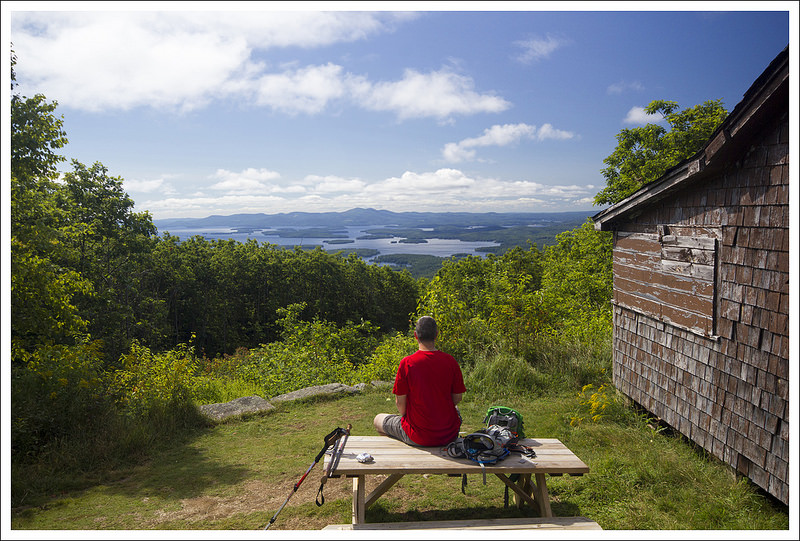


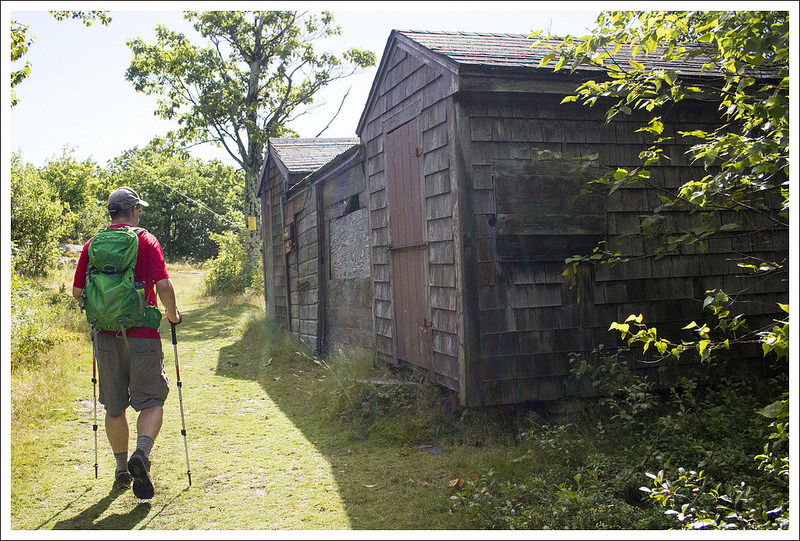


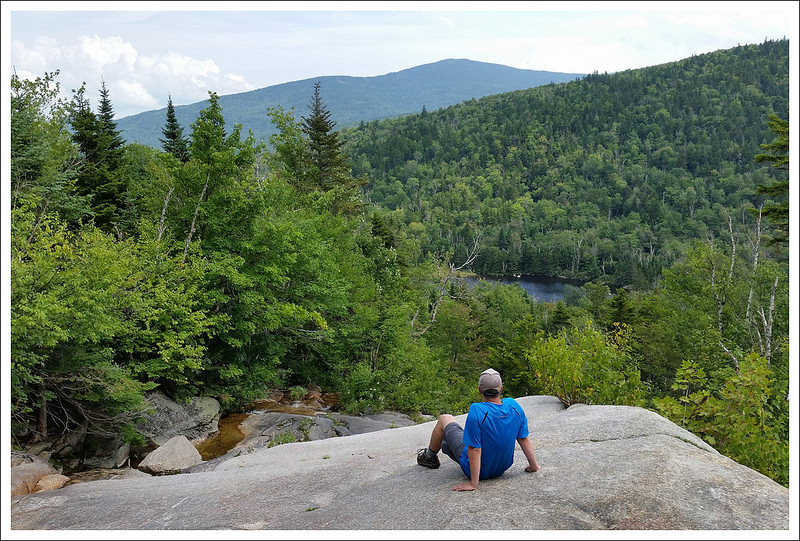
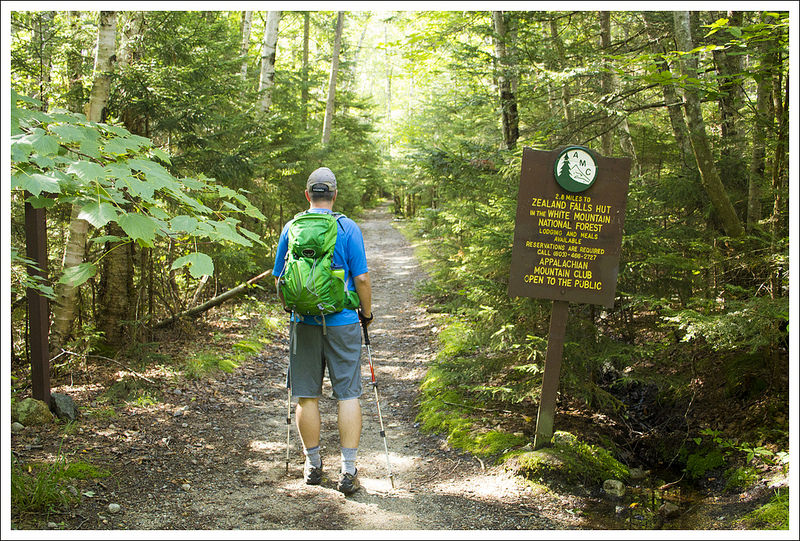
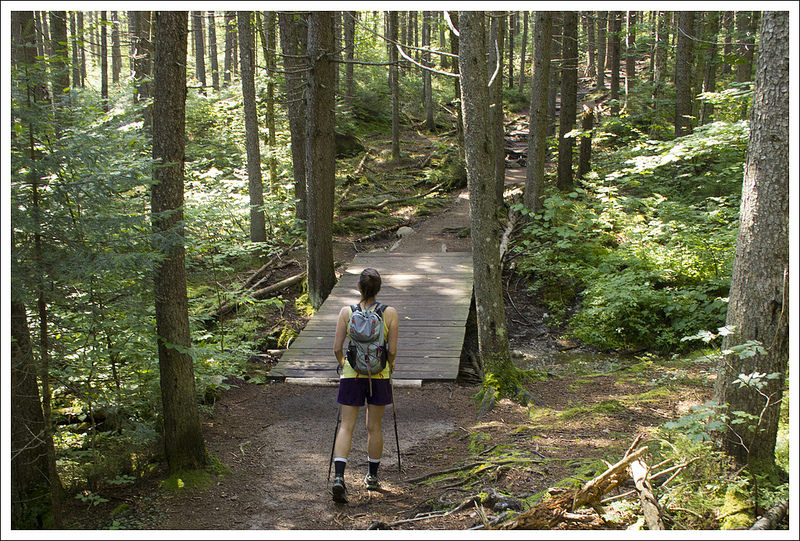


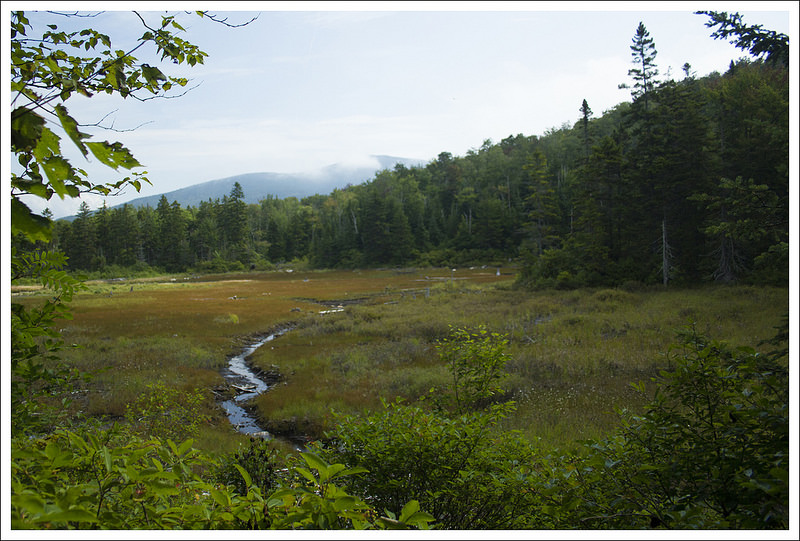


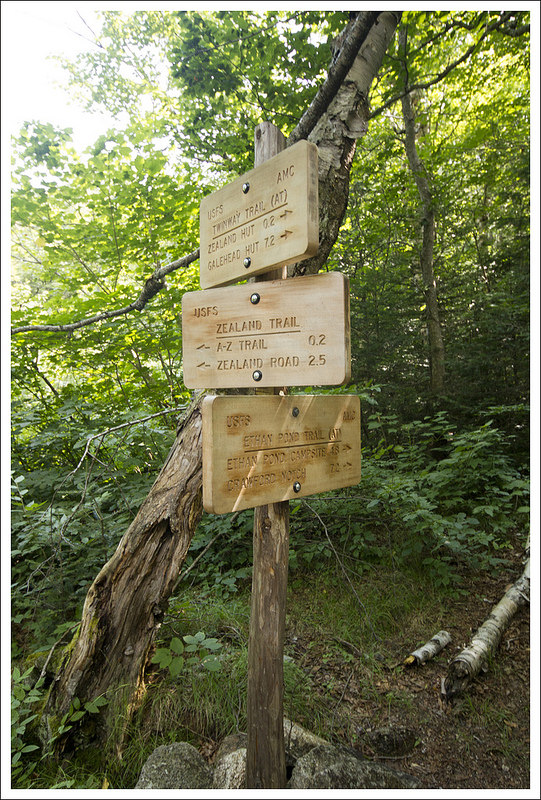

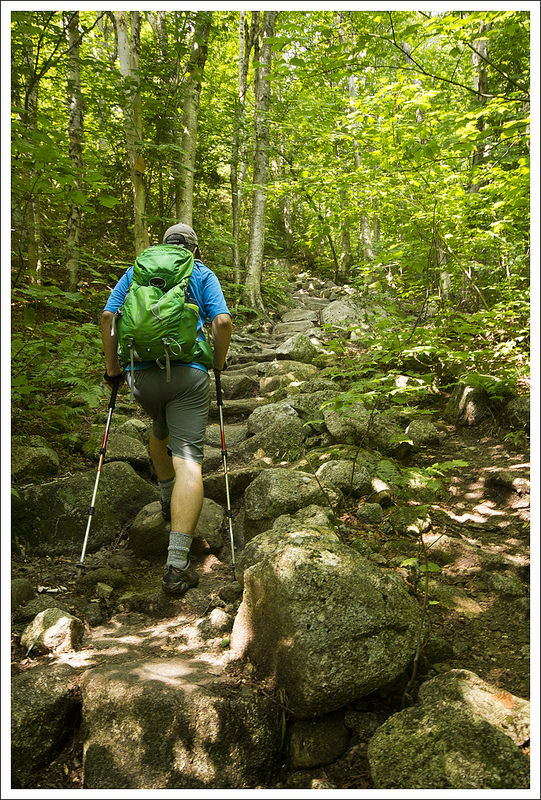

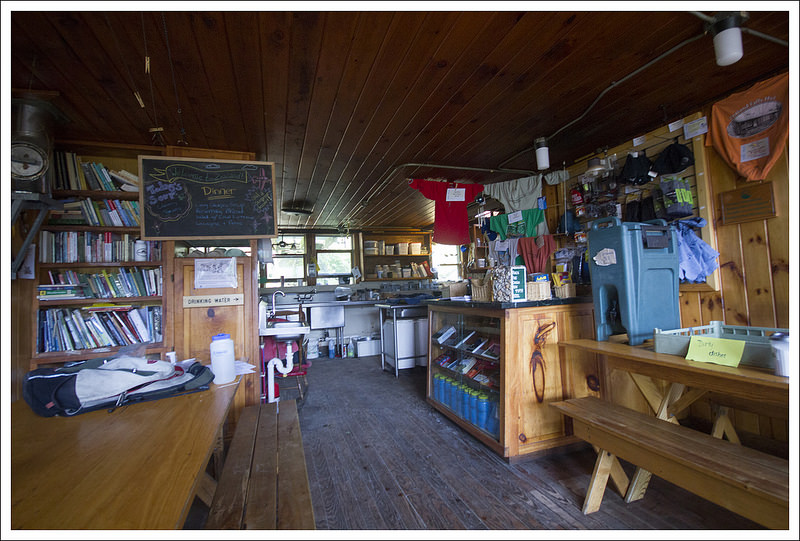


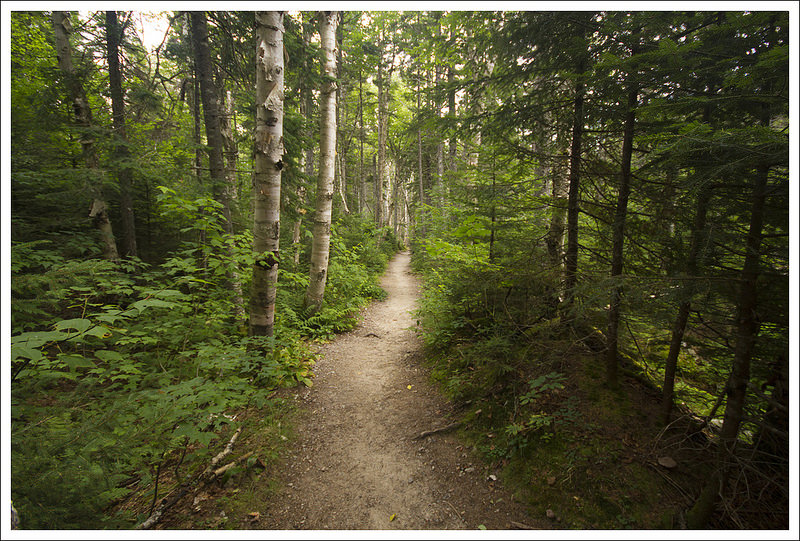


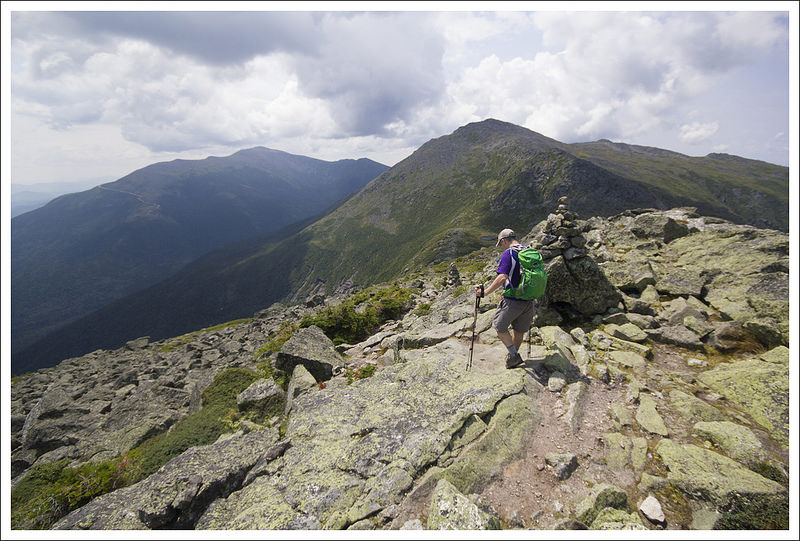
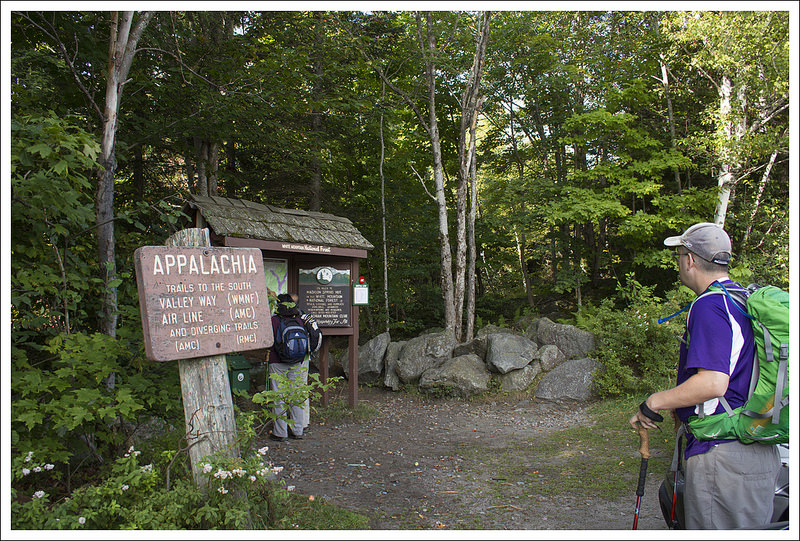
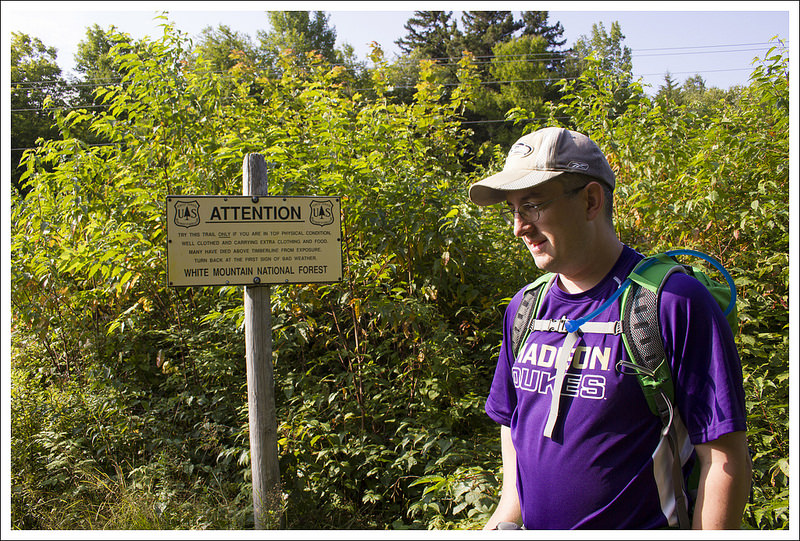
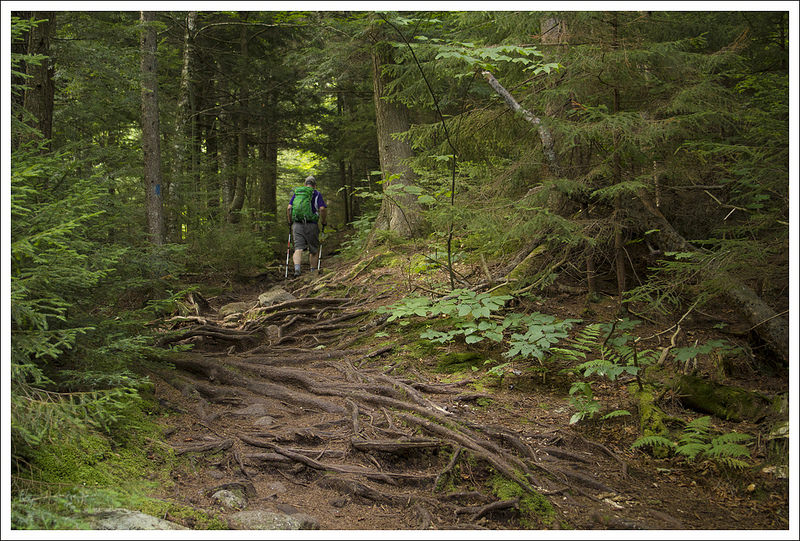
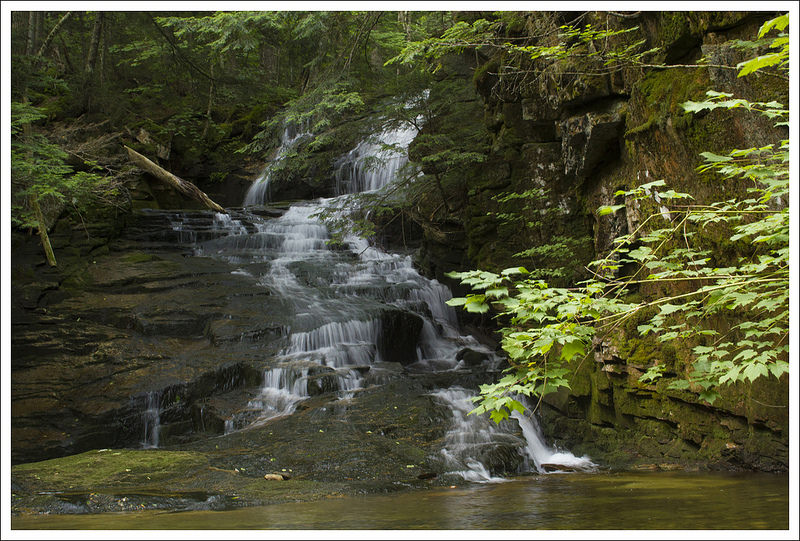
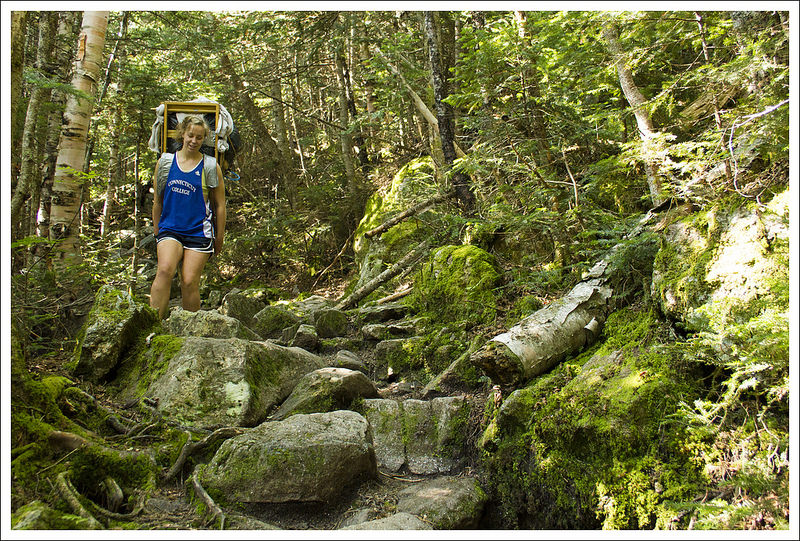
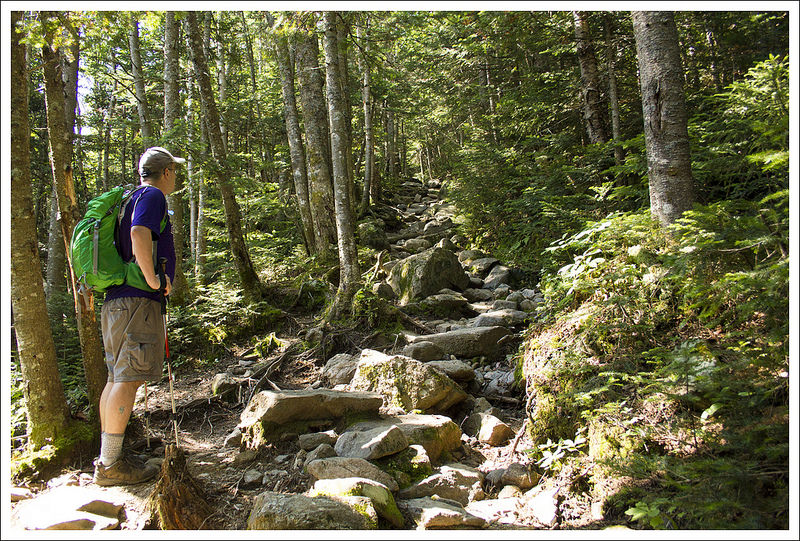
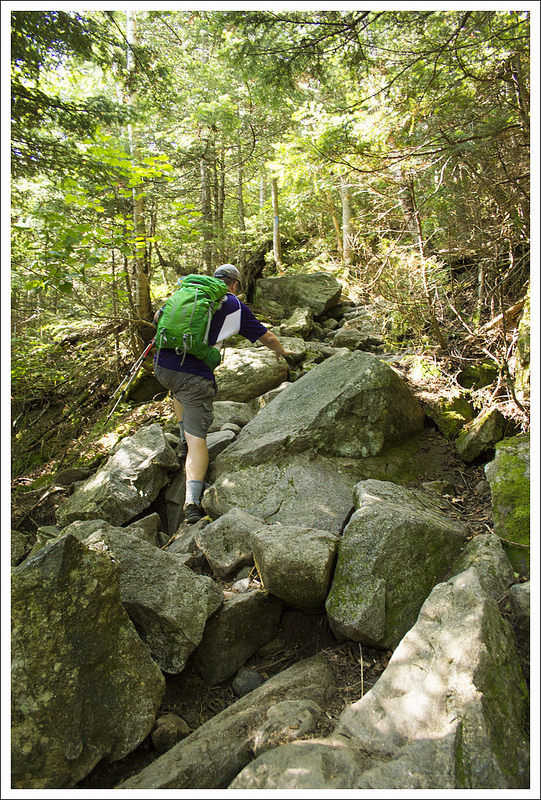
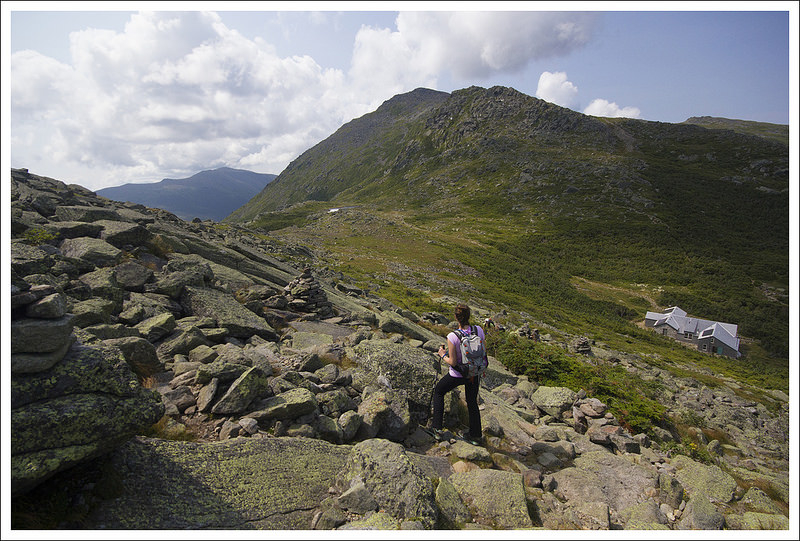
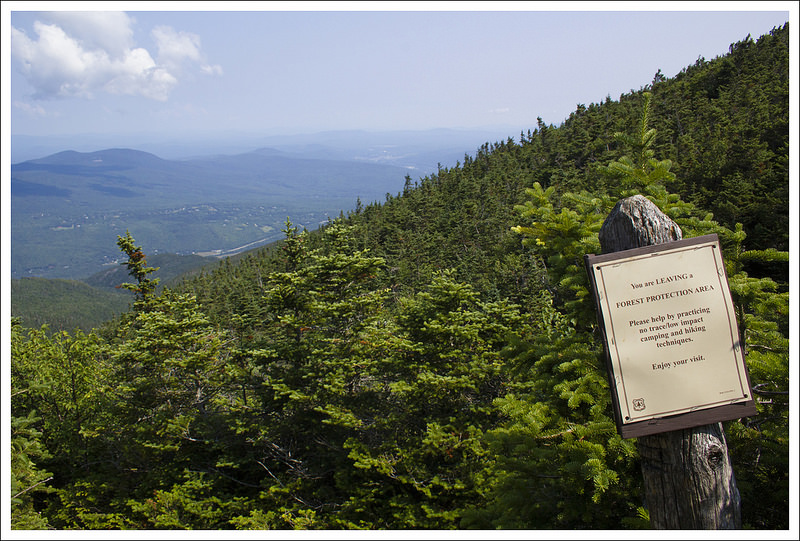
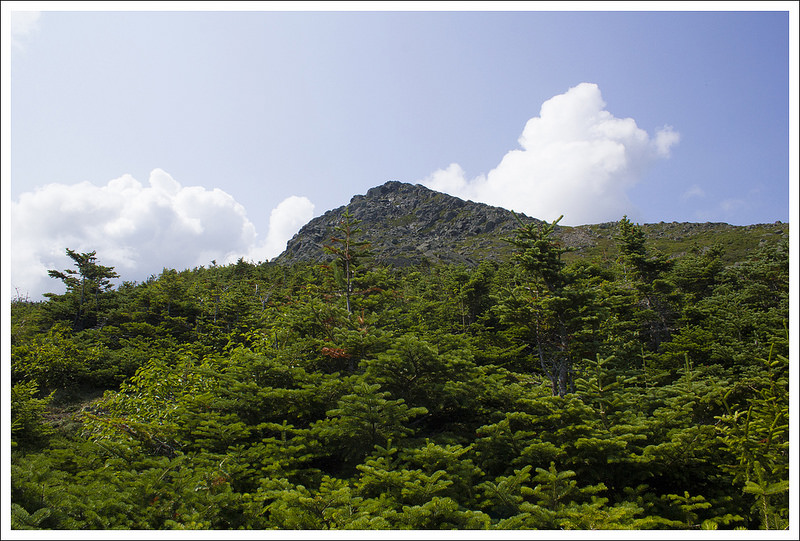
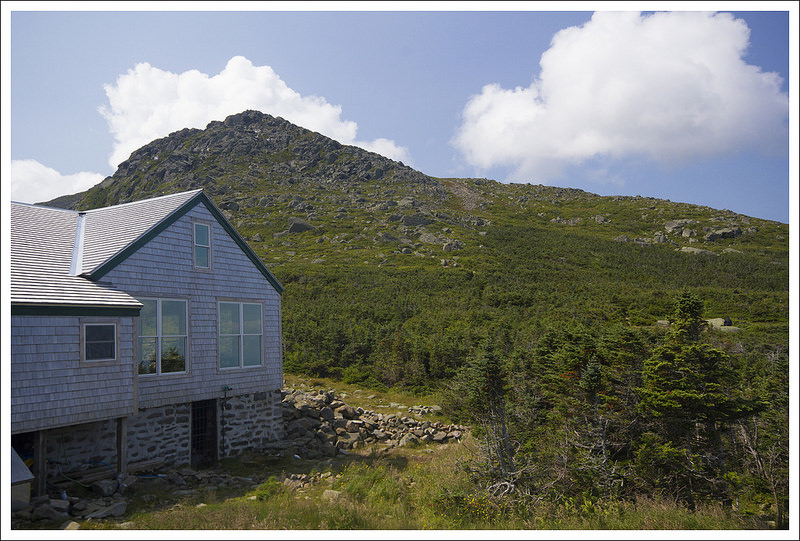
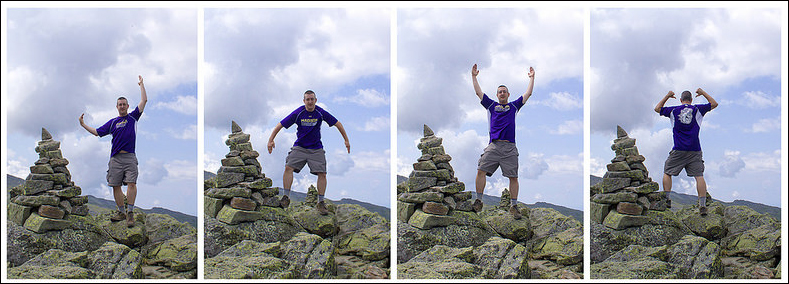
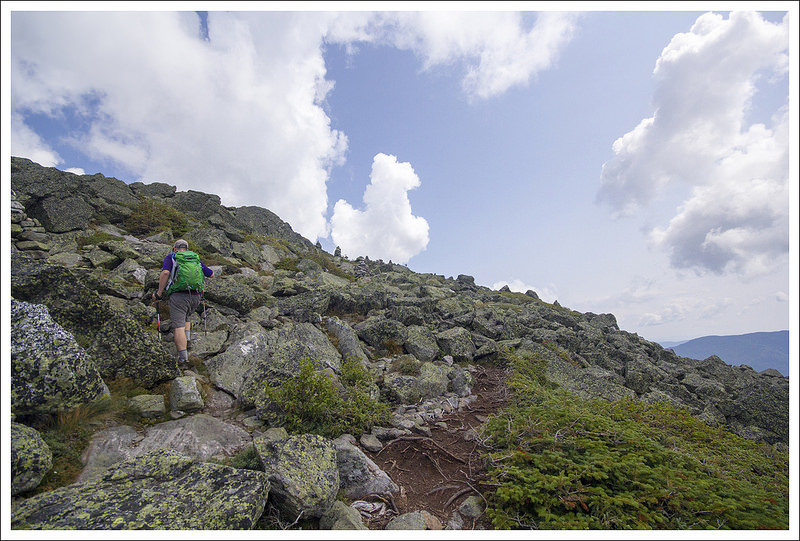
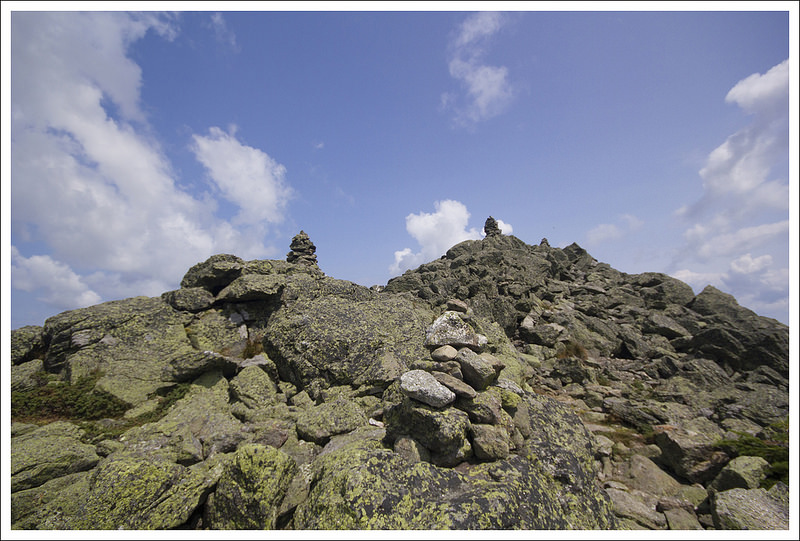
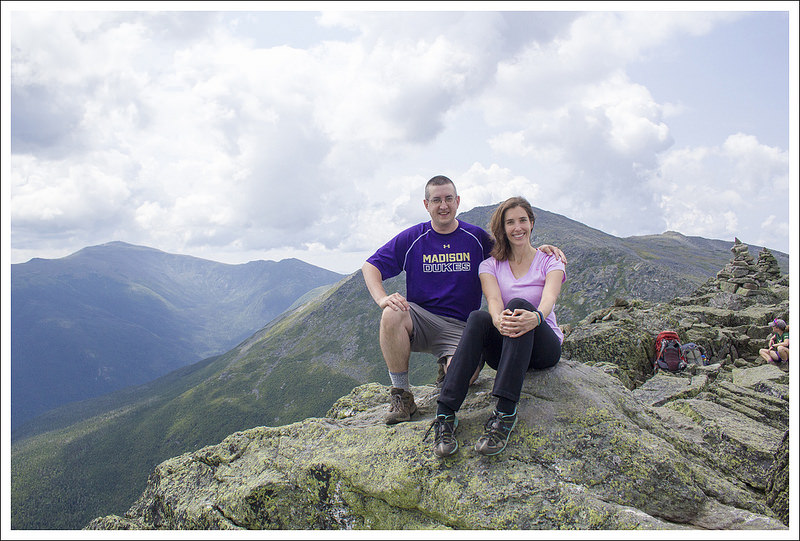
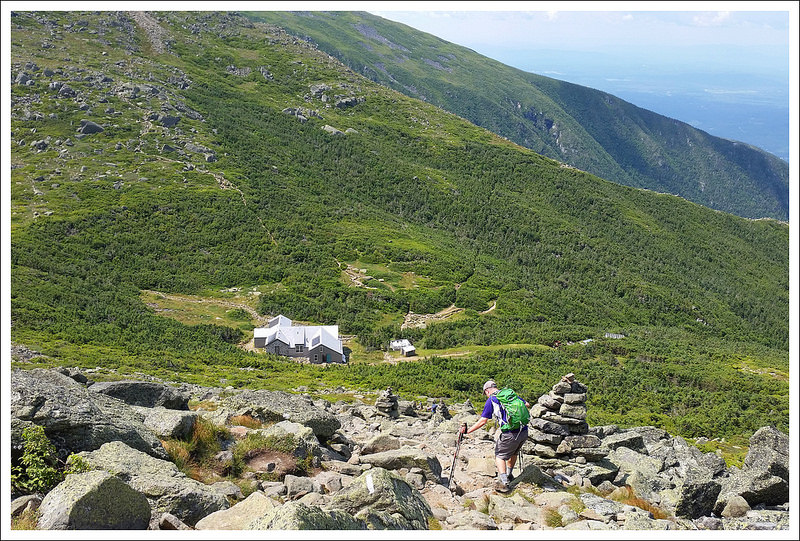
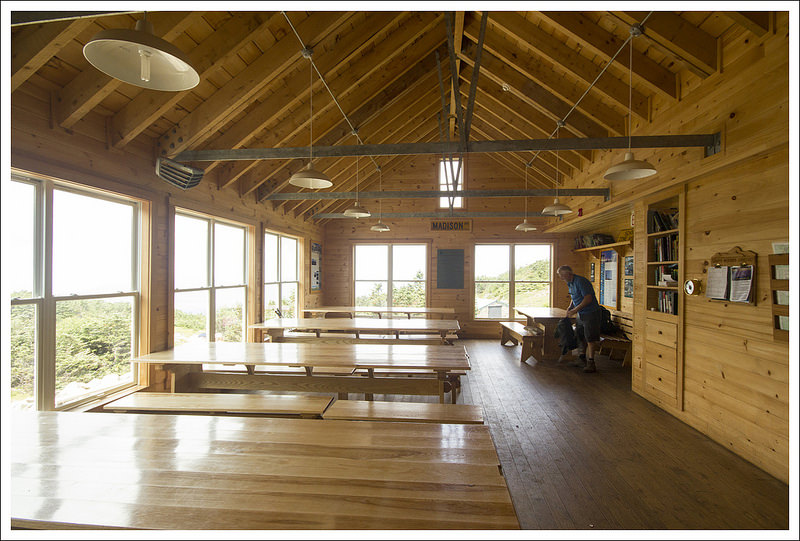
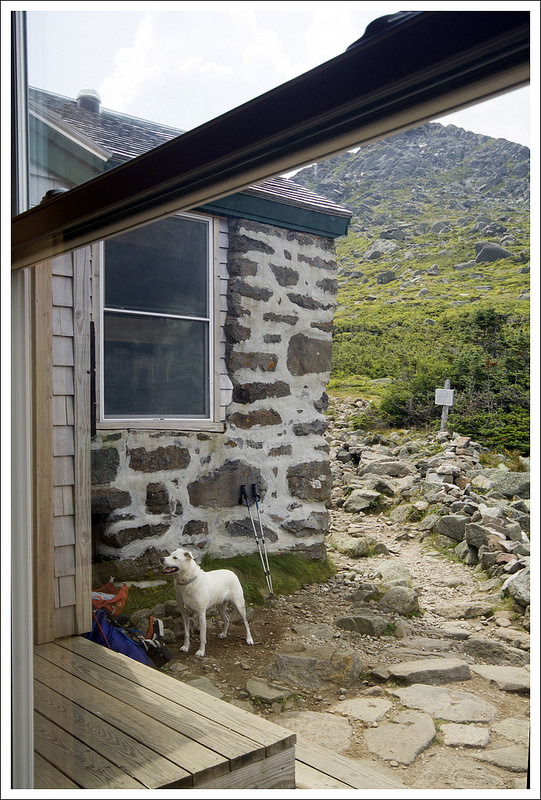
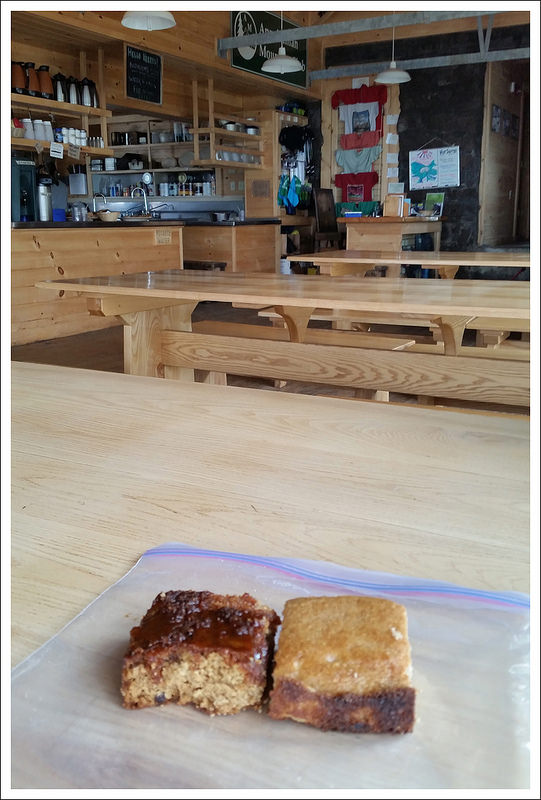
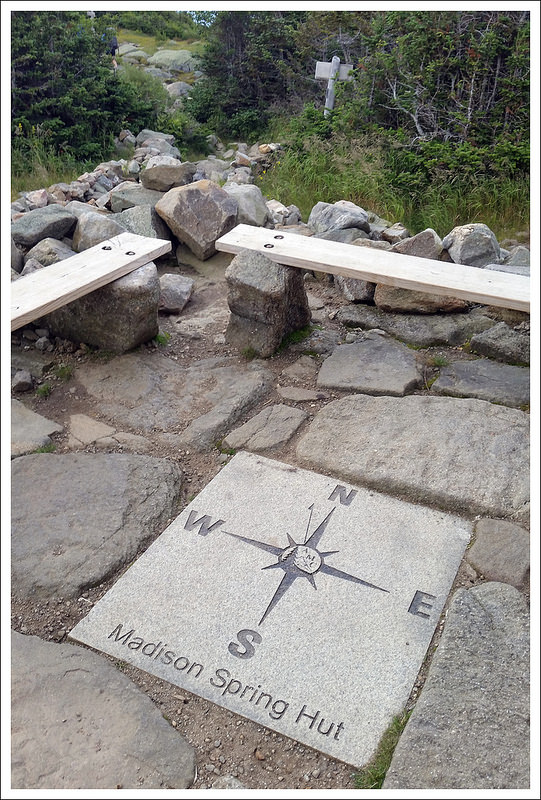
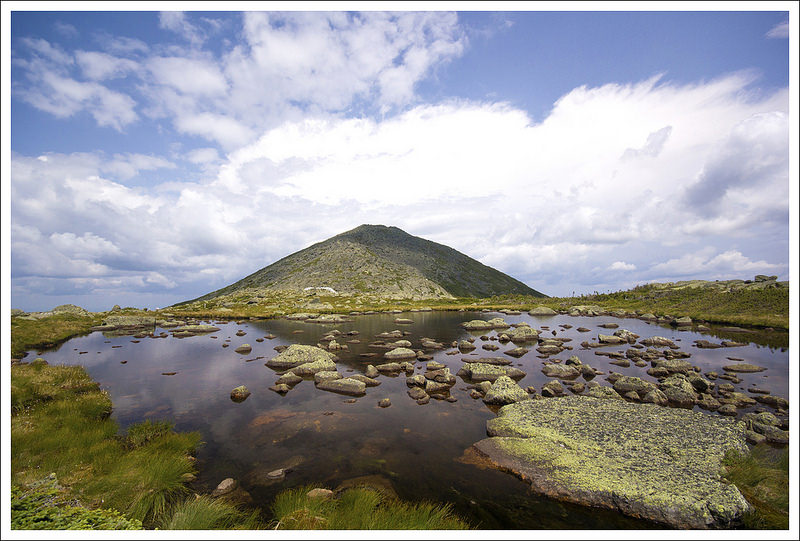
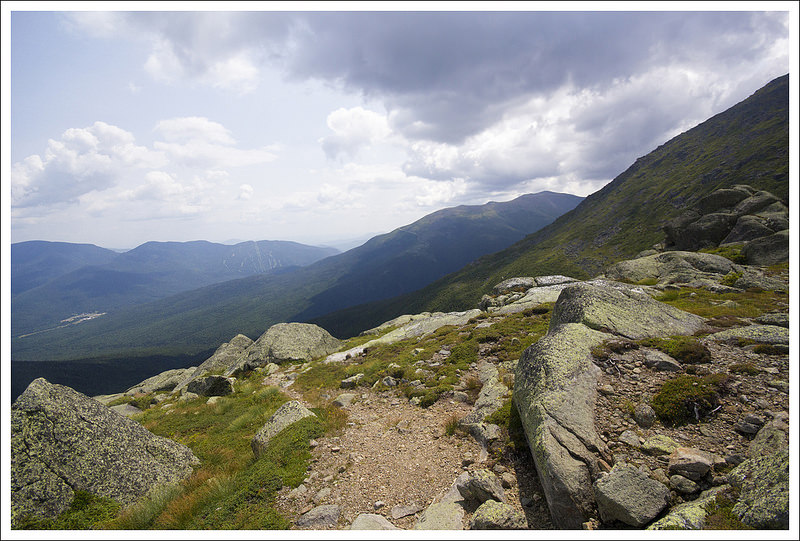
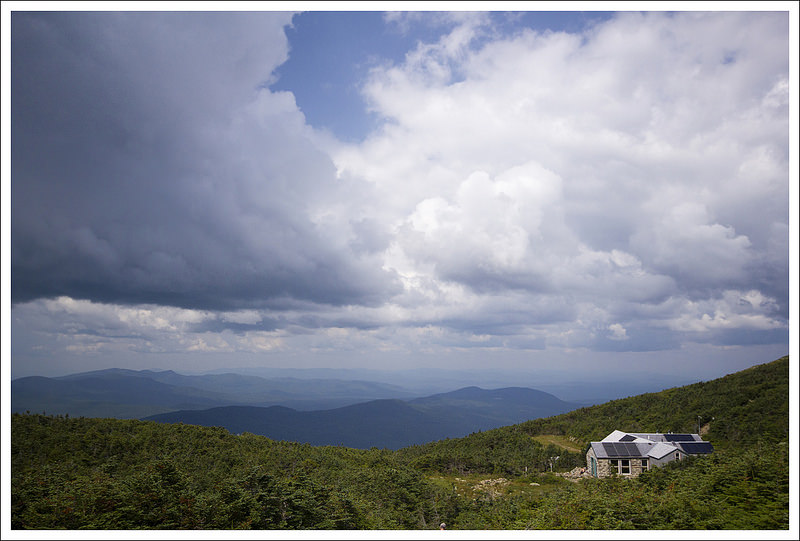


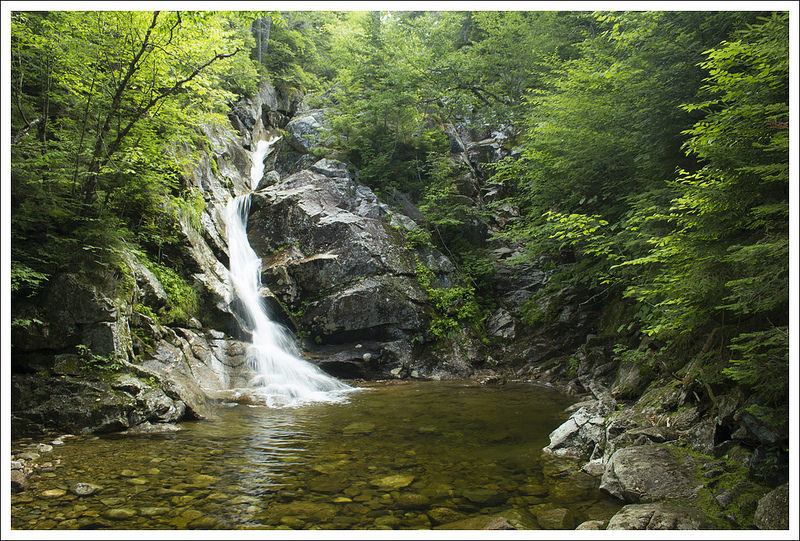


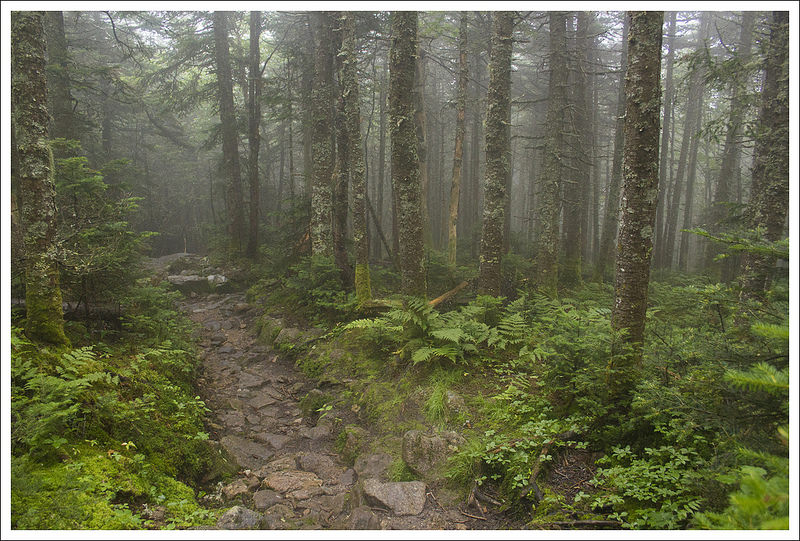


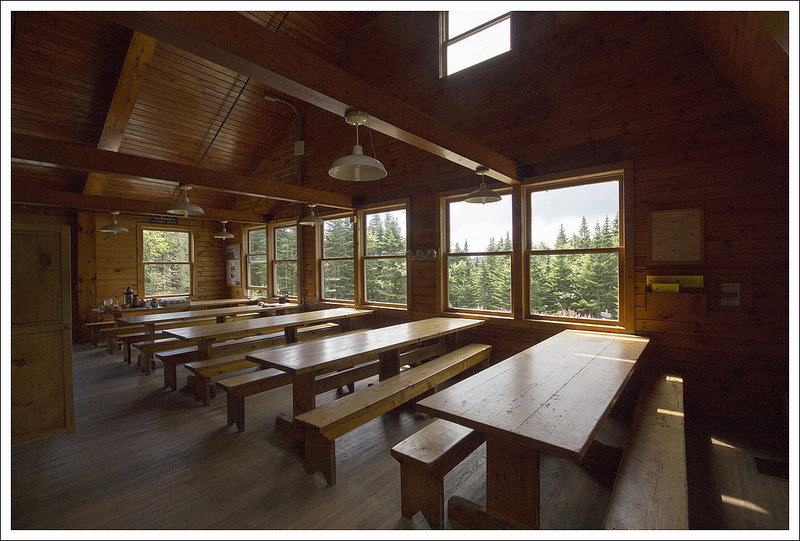


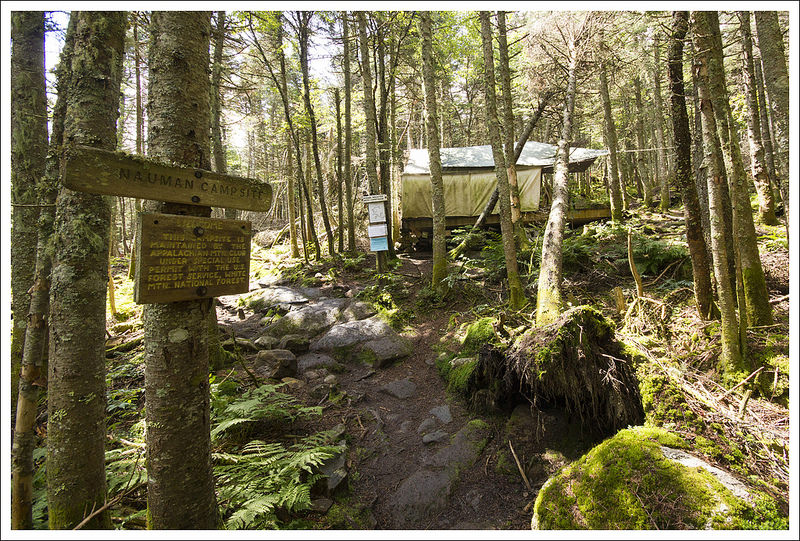


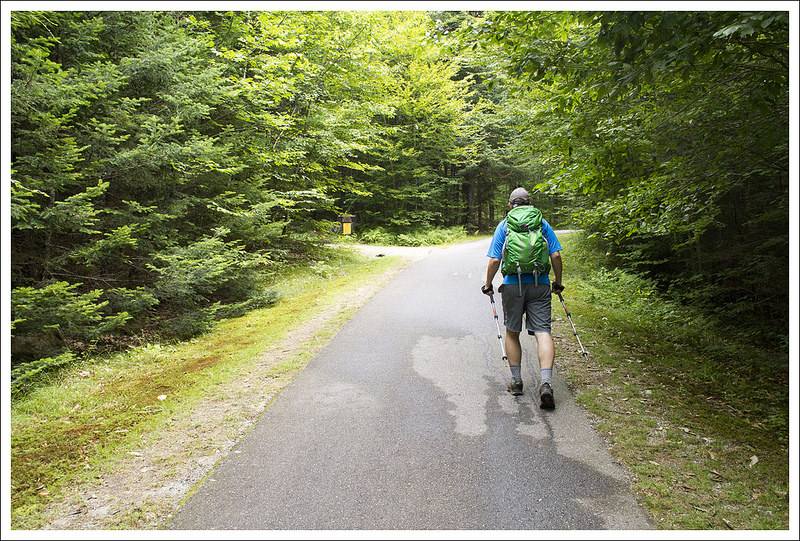
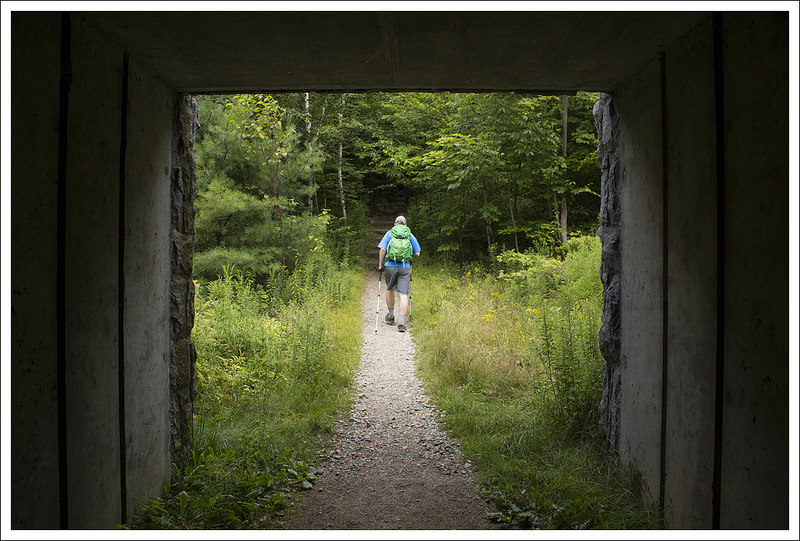


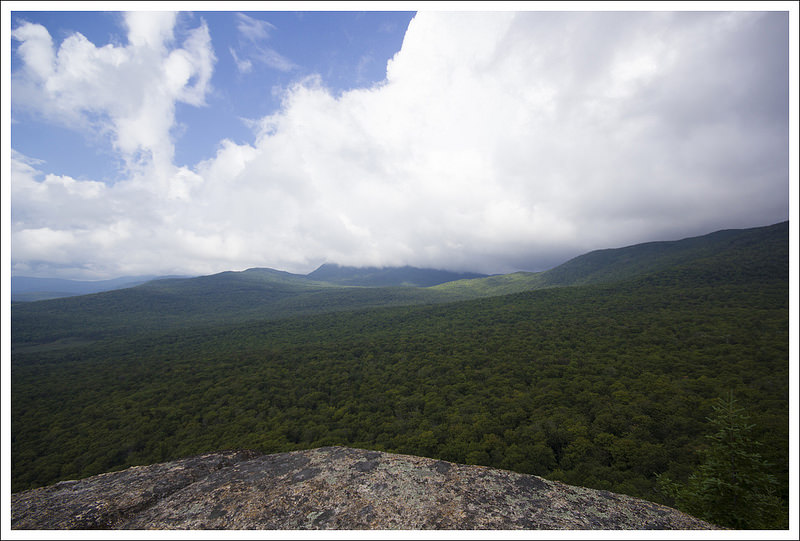

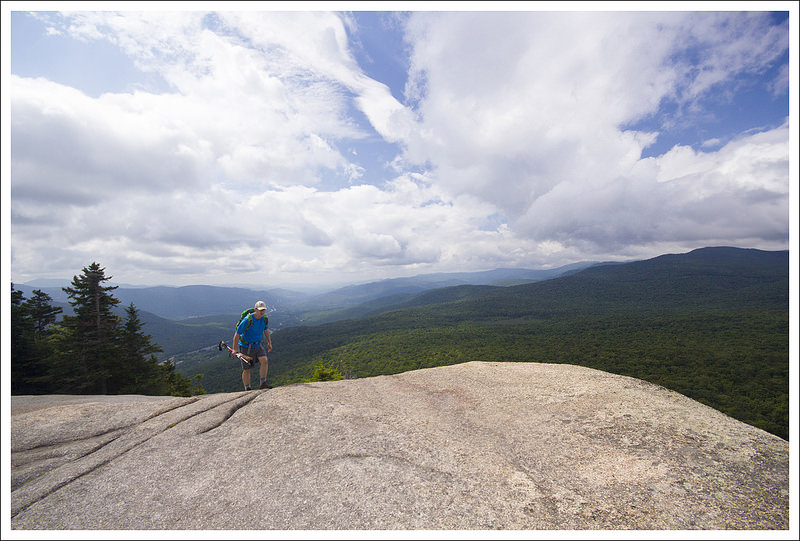
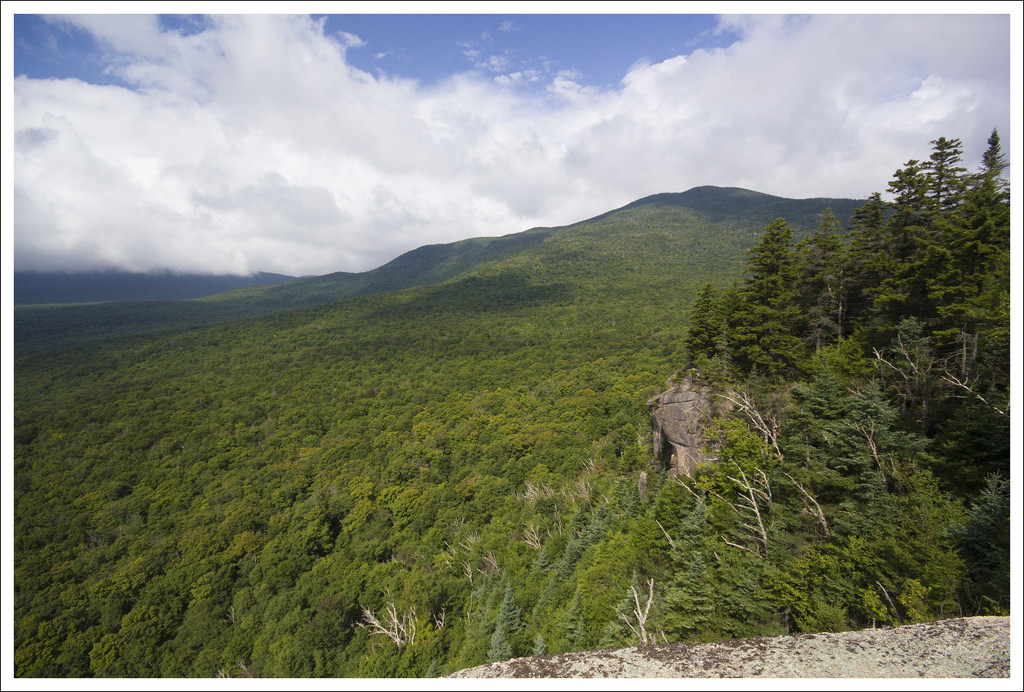


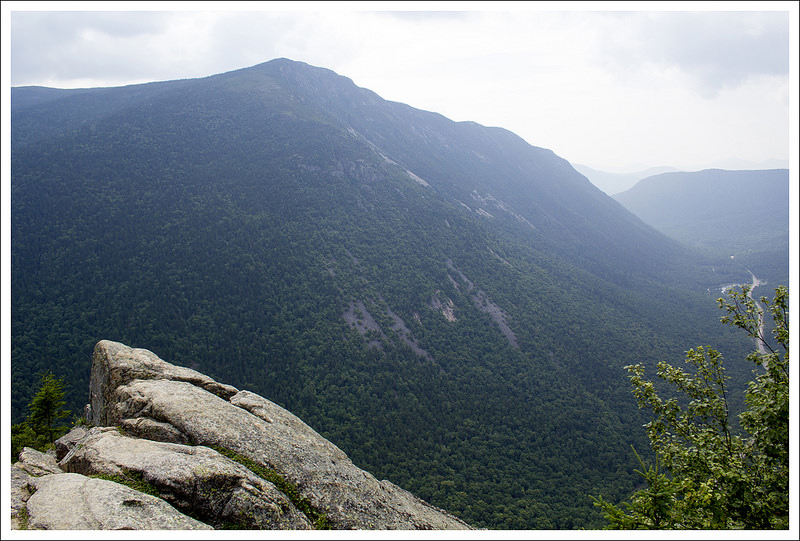
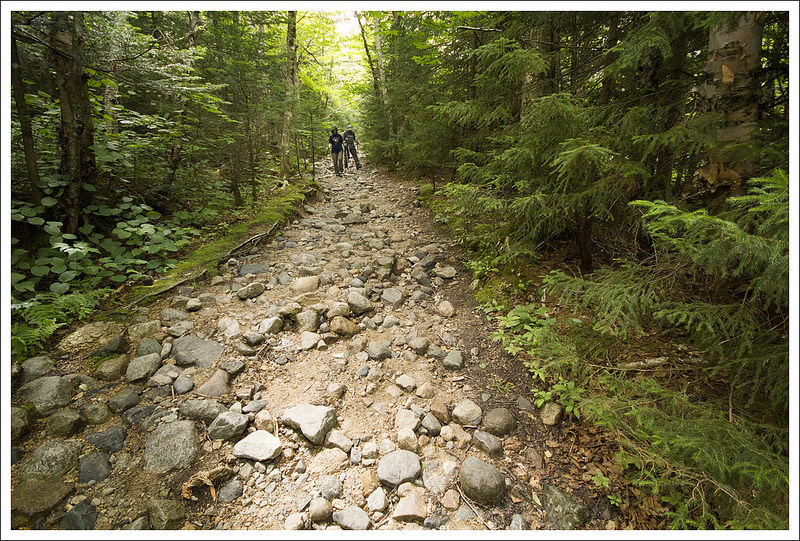

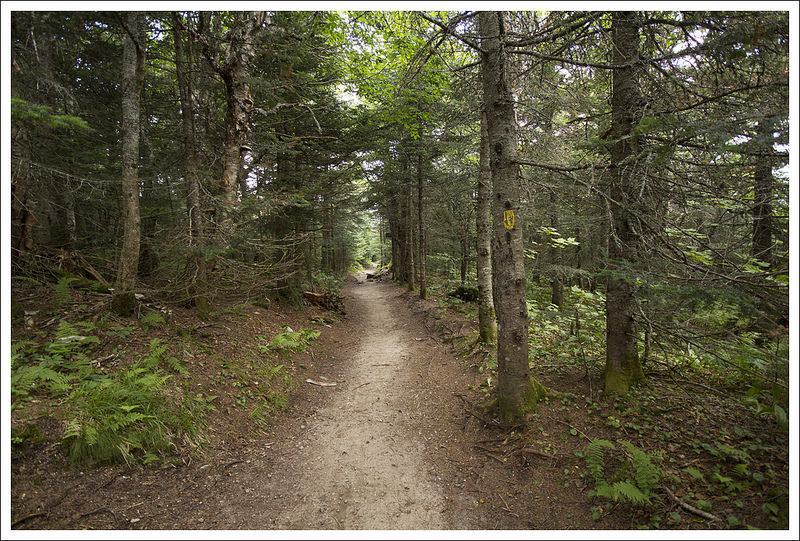


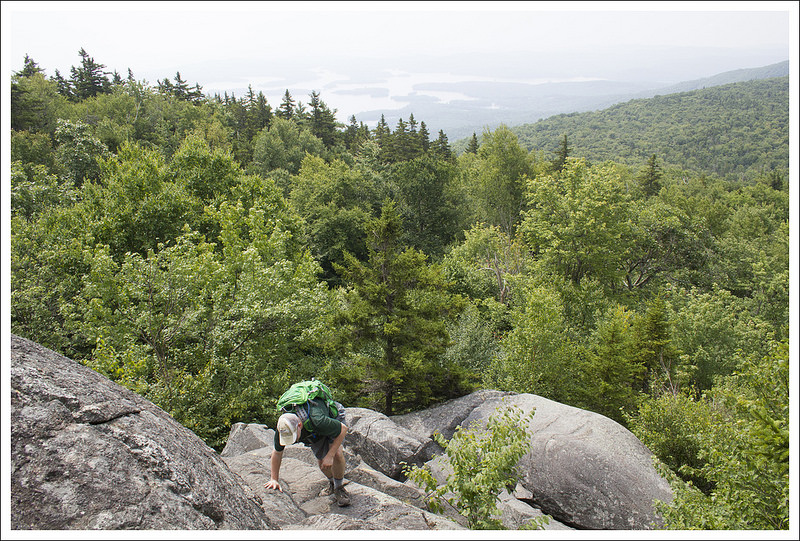
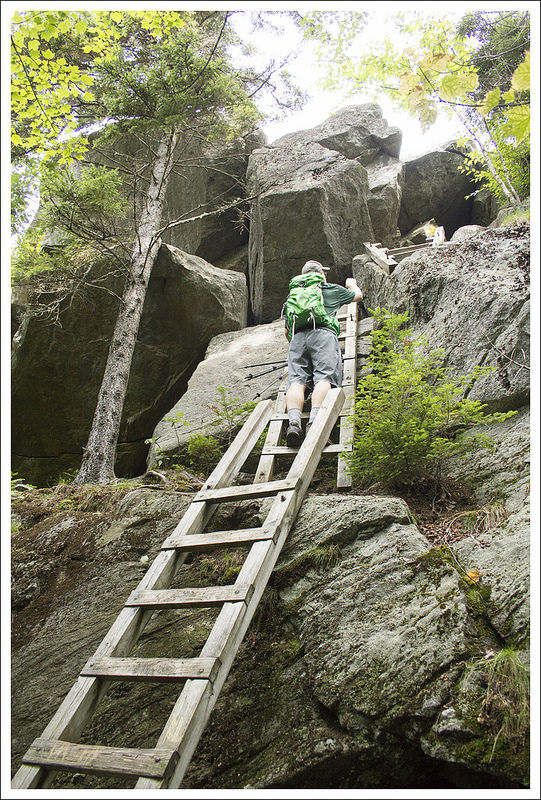


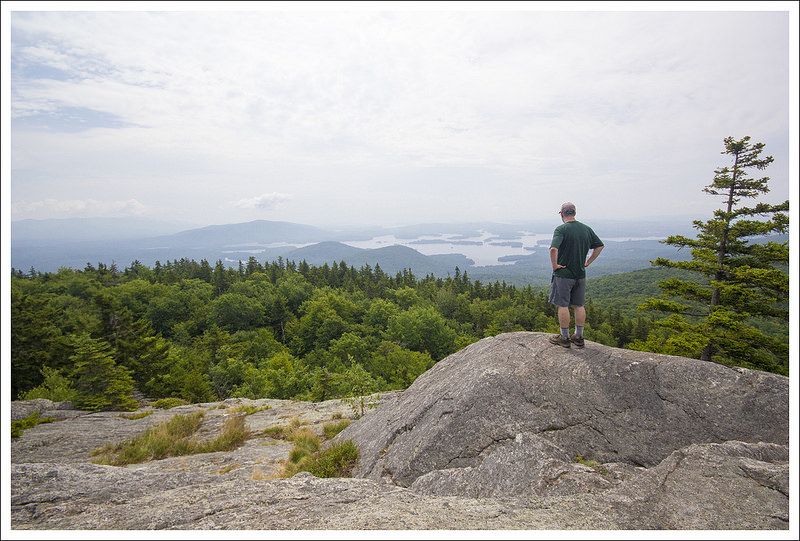


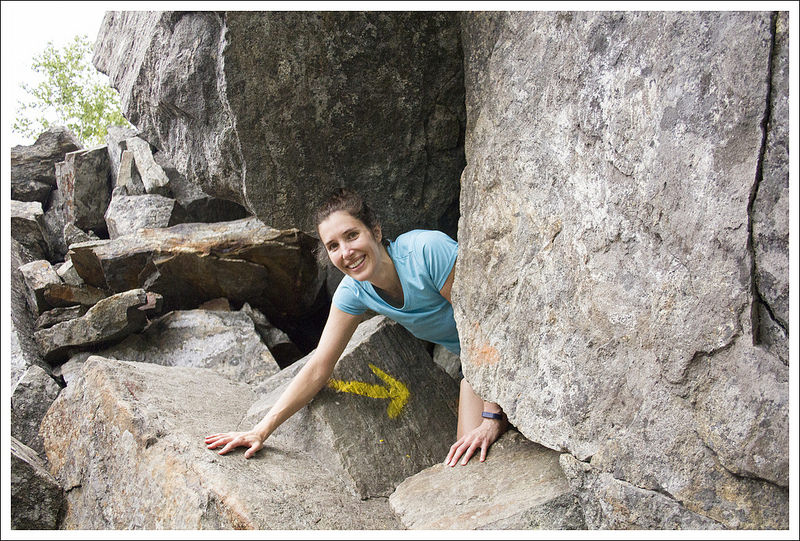








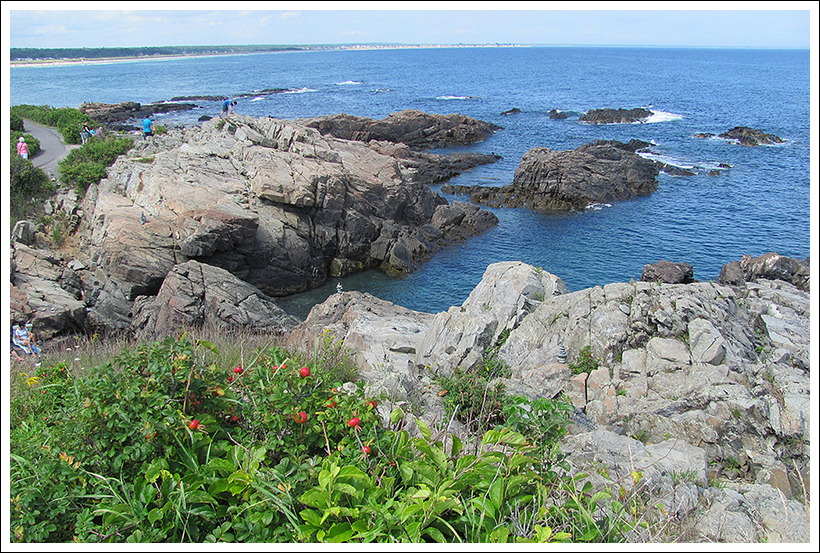
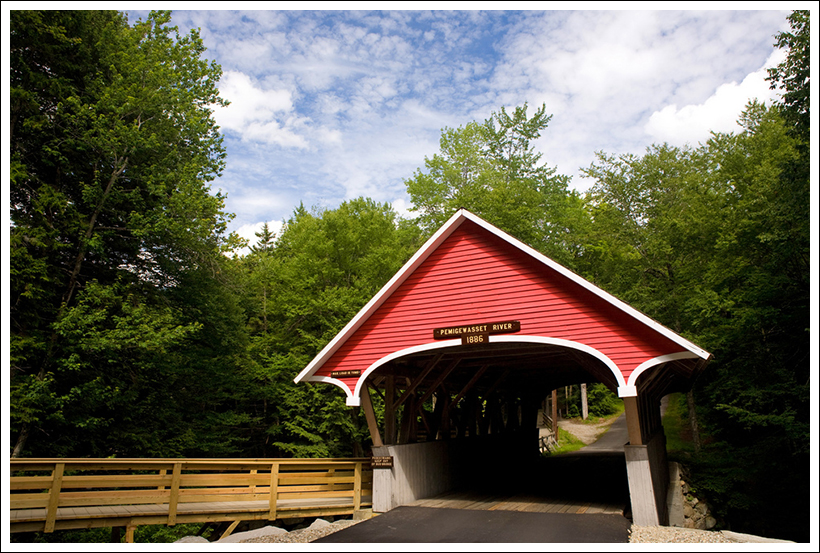
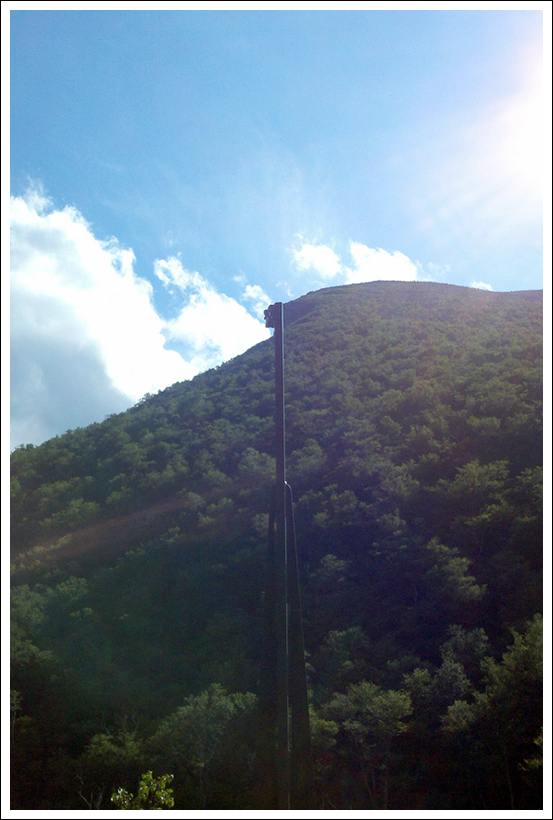




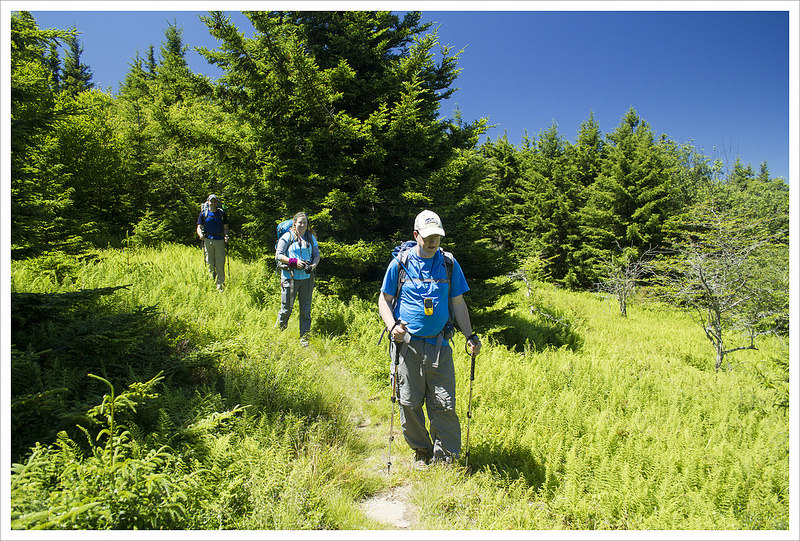


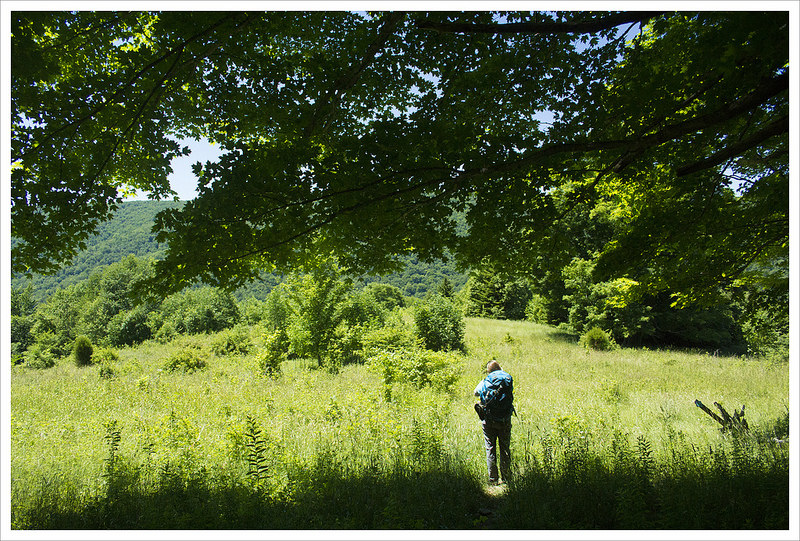





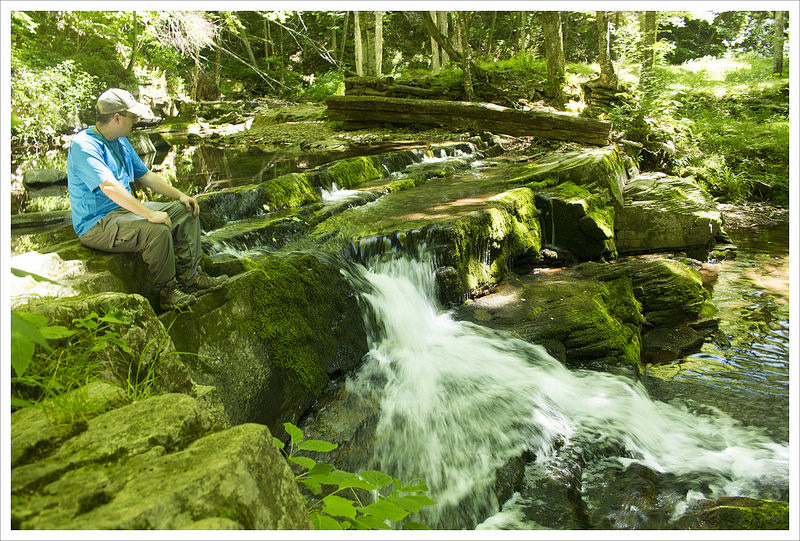





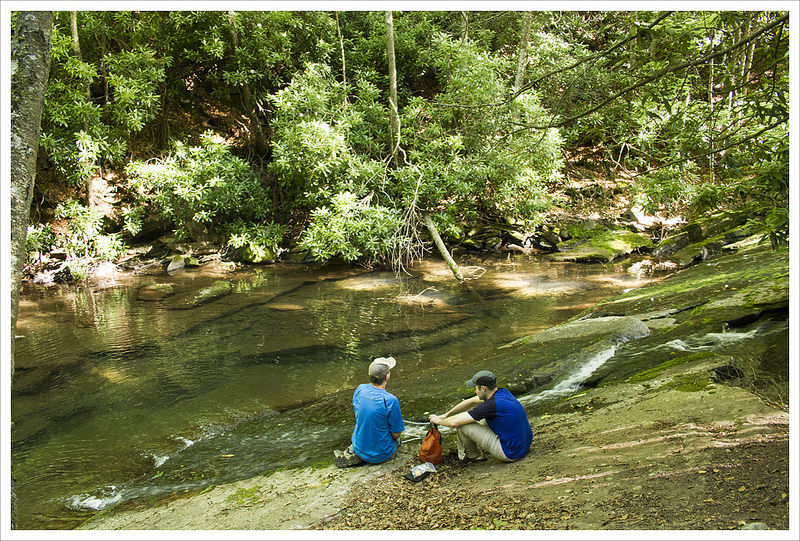
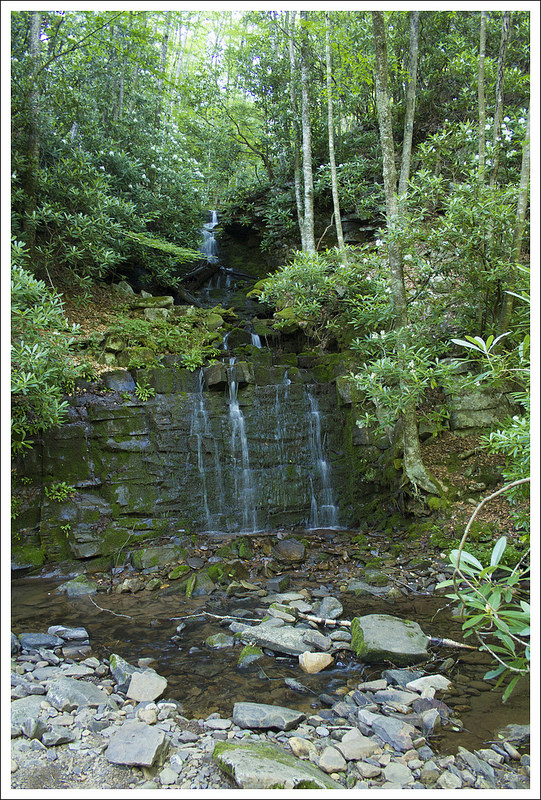
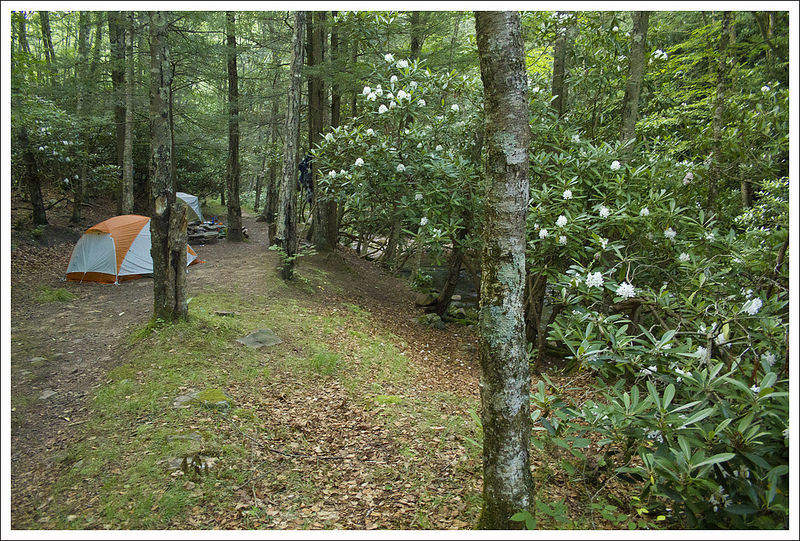

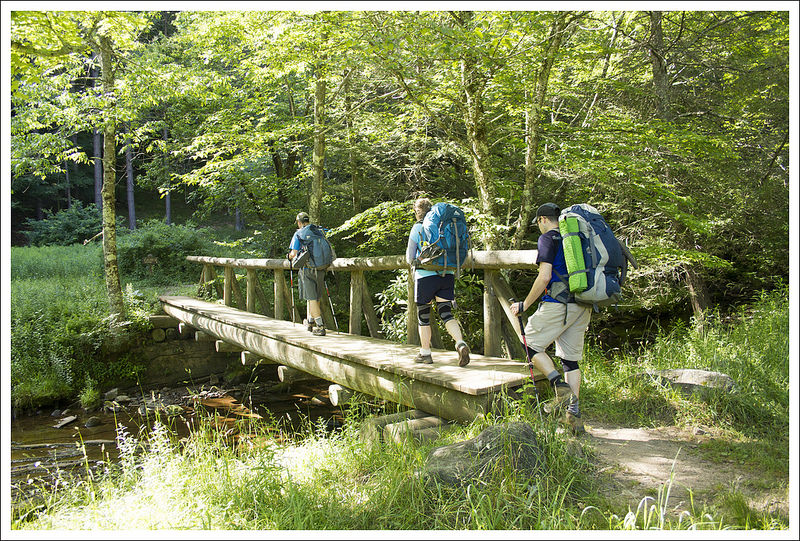

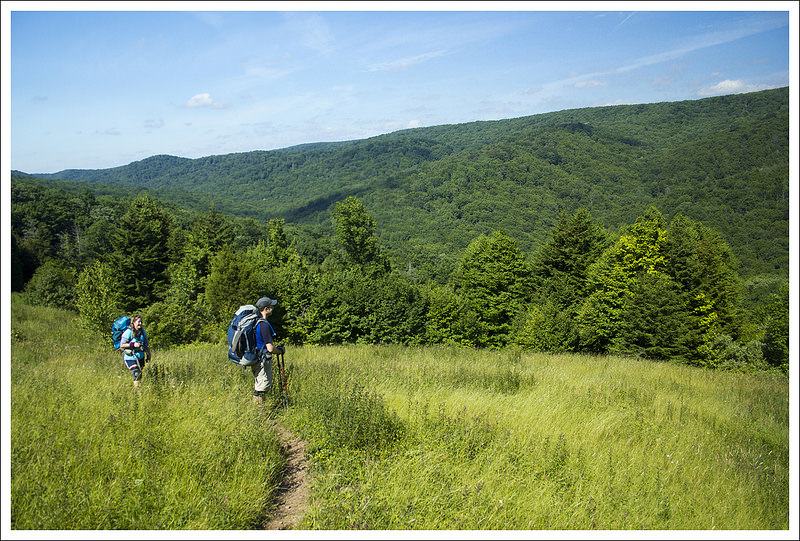


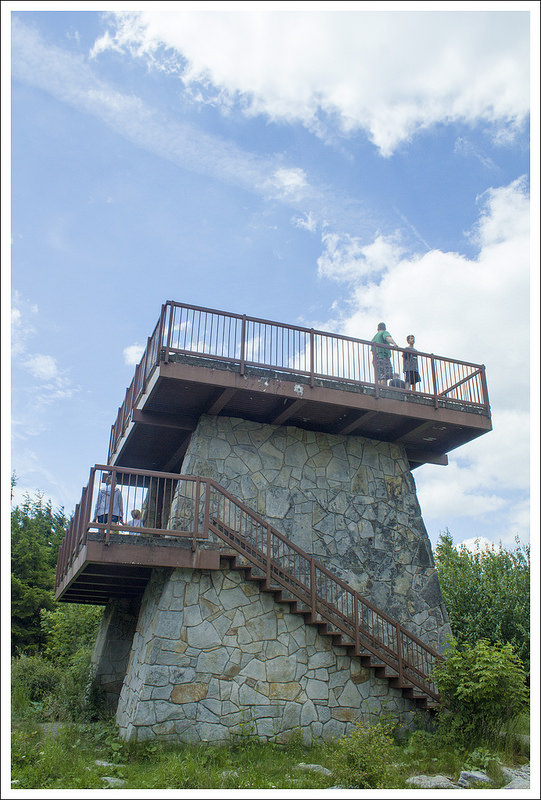


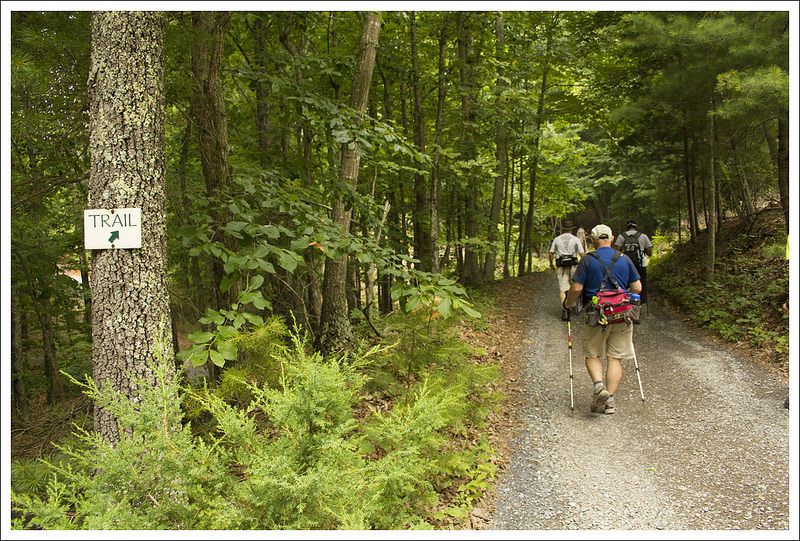

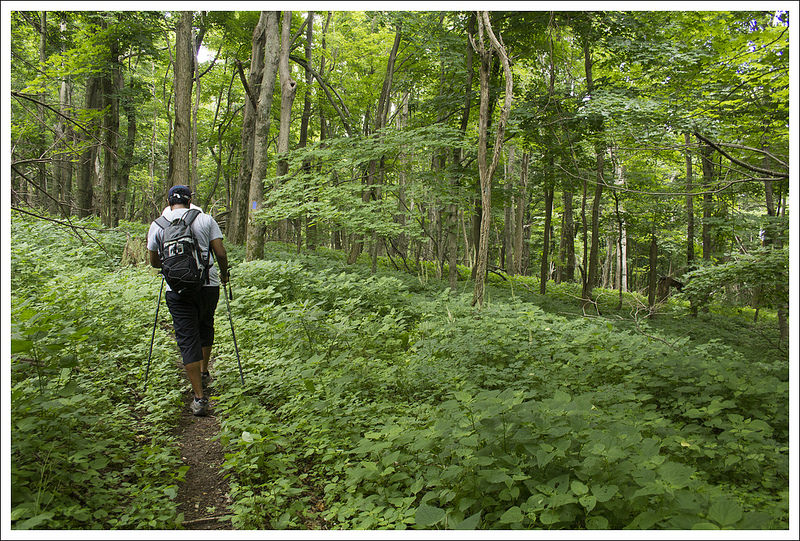


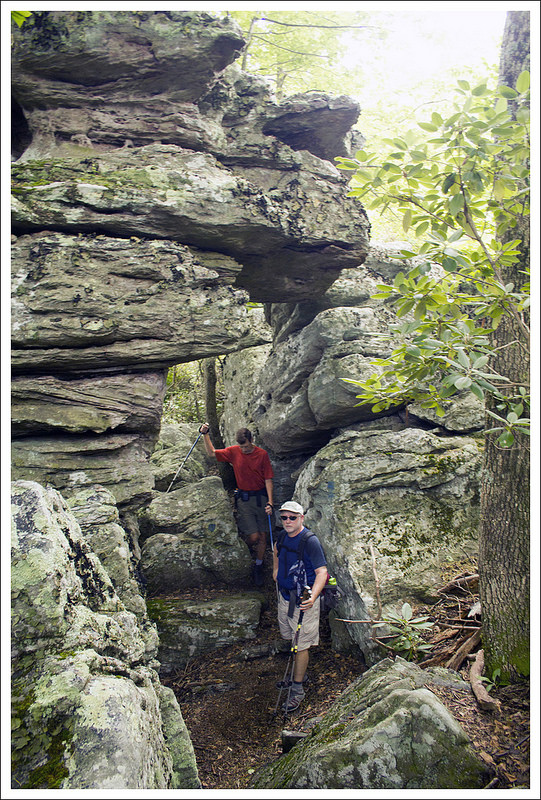

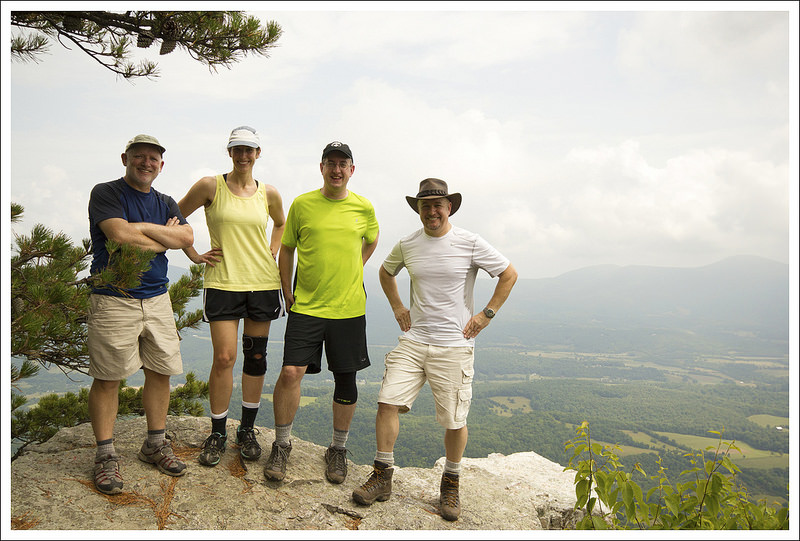




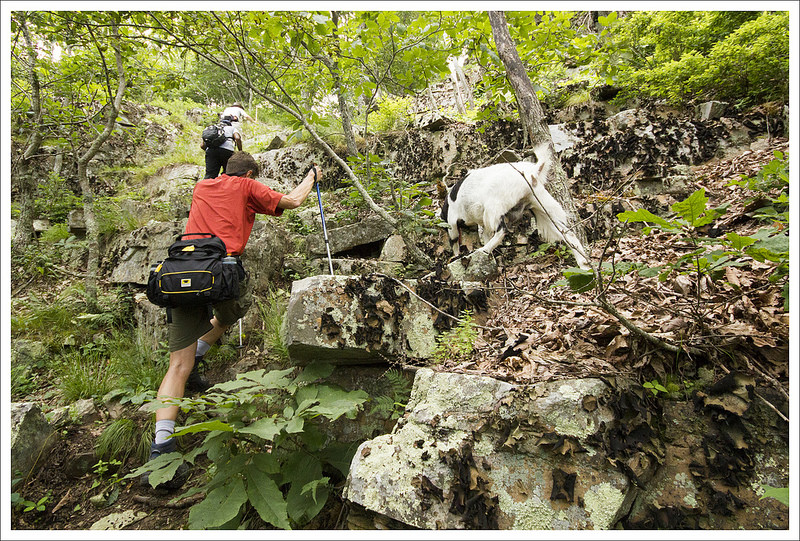


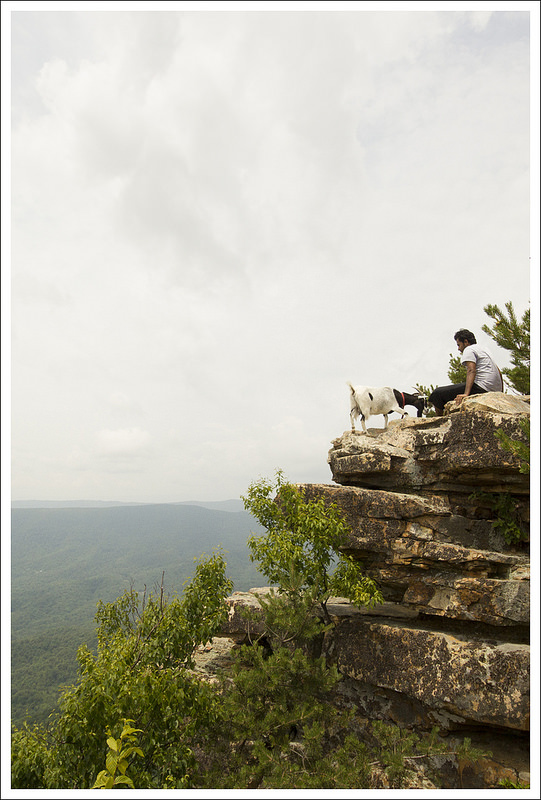


 Virginia Trail Guide

